語彙集

英単語辞書 | 単語の意味、定義、例文

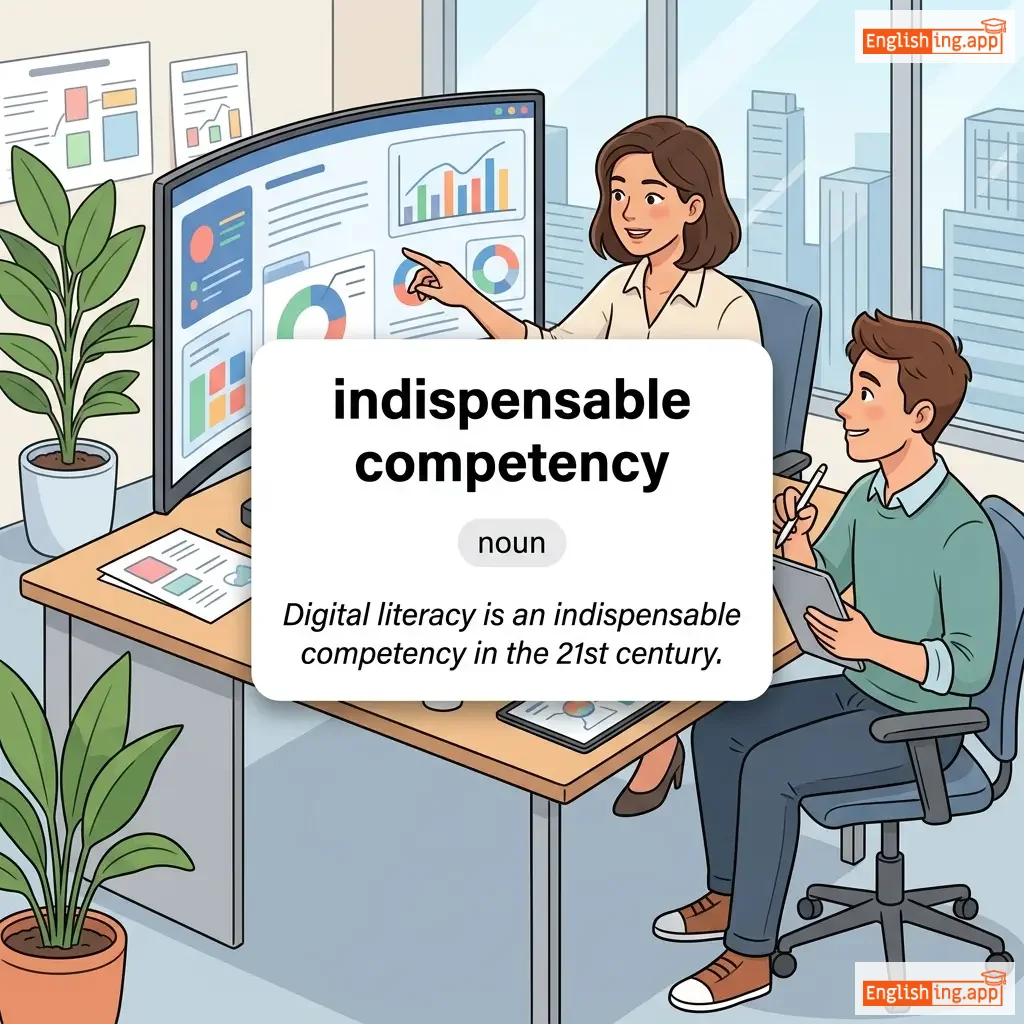
indispensable competency definition card — visual illustration of the meaning
noun
ˌɪndɪˈspensəbl̩ ˈkɒmpɪtənsi
不可欠な能力 (fukaketsu na nōryoku)

Essential skill or ability that cannot be done without; a crucial capability that is absolutely necessary.

"Digital literacy is an indispensable competency in the 21st century."

"デジタルリテラシーは21世紀のインディスペンセブルなコンピテンスです。" (Dejitaru riterashī wa 21 seiki no indisupeinseruburu na konpiteansu desu.)
indispensable support definition card — visual illustration of the meaning
noun
ˌɪndɪˈspensəbl səˈpɔːrt
欠かせないサポート (kakase nai sapōto)

Essential assistance that cannot be done without; absolutely necessary help.

"Volunteers provide indispensable support to communities."

"ボランティアはコミュニティに欠かせないサポートを提供しています。" (Borantia wa komyuniti ni kakase nai sapōto o teikyō shiteimasu.)
adjective
/ˌɪndɪˈspjuːtəbl/
議論の余地がない (giron no yochi ga nai)

Impossible to doubt or question; certain.

"It is an indisputable fact that the earth orbits the sun."

"地球が太陽の周りを回るのは議論の余地がない事実です。" (Chikyū ga taiyō no mawari o mawaru no wa giron no yochi ga nai jijitsu desu.)
adjective
/ˌɪndɪˈsɒljʊbl/
解消できない (Kaishou dekinai)

Unable to be destroyed, broken, or dissolved.

"Marriage was once considered an indissoluble bond."

"結婚はかつて解消できない絆と見なされていました。" (Kekkon wa katsute kaishou dekinai kizuna to minasareremashita.)
adjective
/ˌɪndɪˈstɪŋkt/
不明瞭な (fumiryōna)

Not clear or sharply defined; vague or blurred.

"The sound of voices was indistinct in the distance."

"遠くからの声は不明瞭でした。" (Tōku kara no koe wa fumiryō deshita.)
verb
/ɪnˈdaɪt/
作詞する (sakushisuru)

To write or compose (literary or formal works).

"The poet indited a heartfelt sonnet."

"詩人は心のこもったソネットを作詞した。" (Shijin wa kokoro no komotta sonetto o sakushi shita.)
adjective
/ˌɪndɪˈvɜːrtɪbəl/

Not able to be turned aside or diverted.

"The judge's indivertible attention was on the case."

noun/adjective
/ˌɪndɪˈvɪdʒuəl/
個人 (kojin)

A single human being as distinct from a group; relating to one person.

"Each individual has the right to freedom of speech."

"各個人には表現の自由がある。" (Kaku kojin ni wa hyōgen no jiyū ga aru.)
adjective
/ˌɪndɪˈvɪzəbl/

Not able to be divided or separated.

"The country's unity was indivisible despite differences."

verb
/ɪnˈdɒktrɪˌneɪt/
教義を押し付ける (kyōgi o oshitsukeru)

To teach someone to fully accept a set of beliefs or ideas without question.

"The regime tried to indoctrinate the youth with propaganda."

"その政権は宣伝を通じて若者を洗脳しようとした。" (Sono seiken wa senden o tōjite wakamono o sennō shiyō to shita.)
noun
/ˈɪndələns/
怠惰 (taida)

Avoidance of activity or exertion; laziness.

"His indolence kept him from finishing the project on time."
"彼の怠惰は彼が時間通りにプロジェクトを完成させるのを妨げました。" (kare no taida wa kare ga jikan dōri ni purojekuto o kansei saseru no o samatage mashita.)
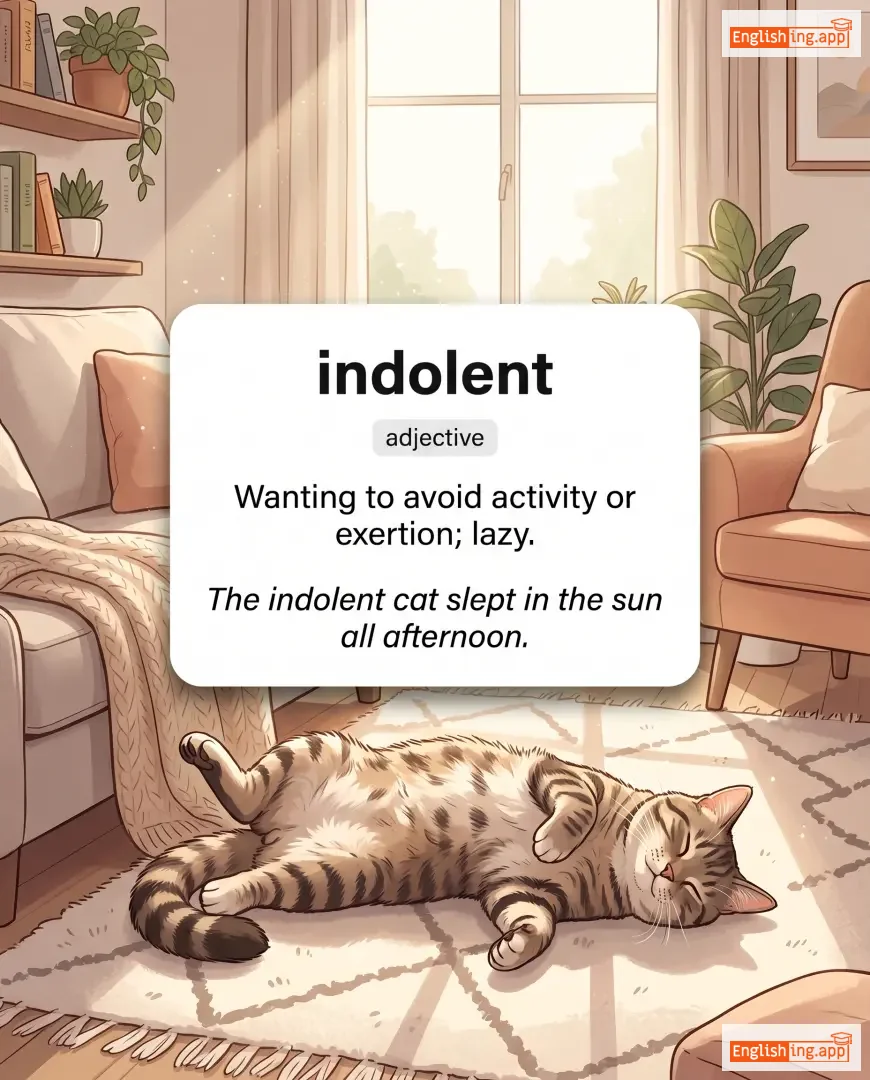
indolent definition card — visual illustration of the meaning
adjective
/ˈɪndələnt/
怠惰 (taida)

Wanting to avoid activity or exertion; lazy.

"The indolent cat slept in the sun all afternoon."
"怠惰な猫は午後ずっと太陽の下で寝ていました。" (Taida na neko wa gogo zutto taiyou no shita de neteimashita.)
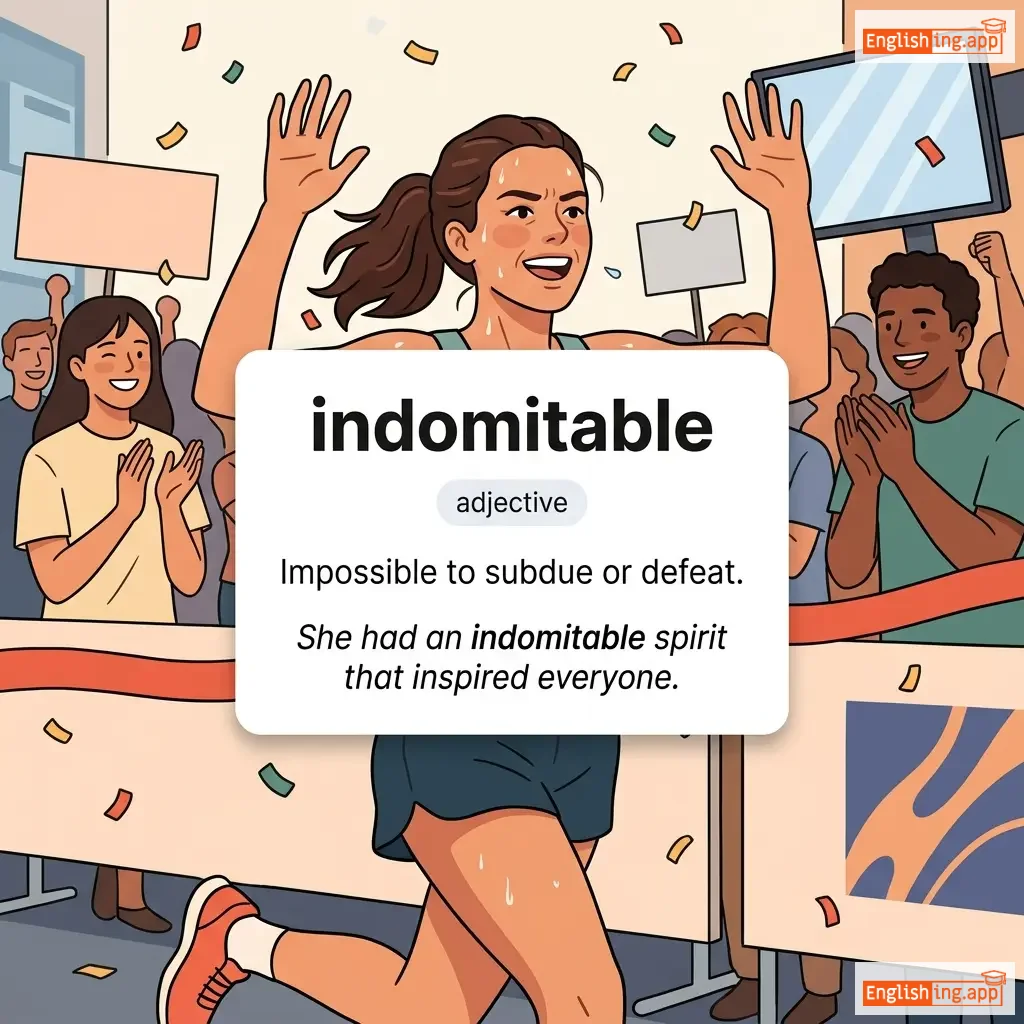
indomitable definition card — visual illustration of the meaning
adjective
/ɪnˈdɒmɪtəbl/
不屈 (fukutsu)

Impossible to subdue or defeat.

"She had an indomitable spirit that inspired everyone."

"彼女は誰もが感動するような不屈の精神を持っていた。" (Kanojo wa daremo ga kandou suru youna fukutsu no seishin wo motte ita.)
adjective
/ˈɪn.dɔːr/
屋内の (okunai no)

situated, occurring, or used inside a building

"Indoor plants can improve air quality at home."

"屋内の植物は家の空気の質を改善できます。" (okunai no shokubutsu wa ie no kuuki no shitsu o kaizen dekimasu)
adverb
/ˌɪnˈdɔːrz/
屋内で (okunai de)

inside a building; within an enclosed space

"Because of the rain, everyone stayed indoors."

"雨のため、みんな屋内で過ごしました。" (ame no tame, minna okunai de sugoshimashita)
adjective
/ɪnˈdjuːbɪtəbl/
疑う余地がない (utagau yochi ga nai)

Impossible to doubt; unquestionable.

"It is indubitable that hard work leads to success."

"努力すれば成功に繋がることは疑う余地がない。" (Doryoku sureba seikou ni tsunagaru koto wa utagau yochi ga nai.)
adverb
/ɪnˈdjuːbɪtəbli/
疑いなく (utagai naku)

Without a doubt; certainly.

"She is indubitably the best candidate for the job."

"彼女は疑いなくその仕事の最良の候補者です。" (Kanojo wa utagai naku sono shigoto no sairyō no kōhosha desu.)
verb
/ɪnˈdjuːs/
誘発する (yūhatsu suru)

to cause or persuade someone to do something; to bring about a result

"The doctor induced sleep with a mild sedative."

"医師は軽い鎮静剤で睡眠を引き起こしました。" (Ishi wa karui chinseizai de suimin o hikiokoshimashita.)
noun
/ɪnˈdjuːsmənt/
誘因 (yōin)

something that persuades or encourages someone to do something

"The company offered a bonus as an inducement to employees."

"会社は従業員にインセンティブとしてボーナスを提供しました。" (Kaisha wa jūgyōin ni insentibu toshite bōnasu o teikyō shimashita.)
verb
/ɪnˈdʌkt/

to formally admit someone into a position, organization, or office

"She was inducted into the university's honor society."

adjective
/ɪnˈdʌktɪv/
帰納的 (kinō-teki)

characterized by the inference of general laws from particular instances; reasoning from specific cases to general principles

"The scientist used inductive reasoning to form a hypothesis."

"科学者は帰納的推論を使って仮説を立てました。" (Kagakusha wa kinō-teki suisoku o tsukatte kasetsu o tatemashita.)
verb
/ɪnˈdʌldʒ/
楽しむ (tanoshimu)

to allow oneself to enjoy something enjoyable, often excessively

"He indulged in a piece of chocolate cake after dinner."
"彼はディナーの後でチョコレートケーキの一切れを楽しんだ。" (Kare wa dinaa no ato de chokoreeto keeki no hitokire o tanoshinda.)
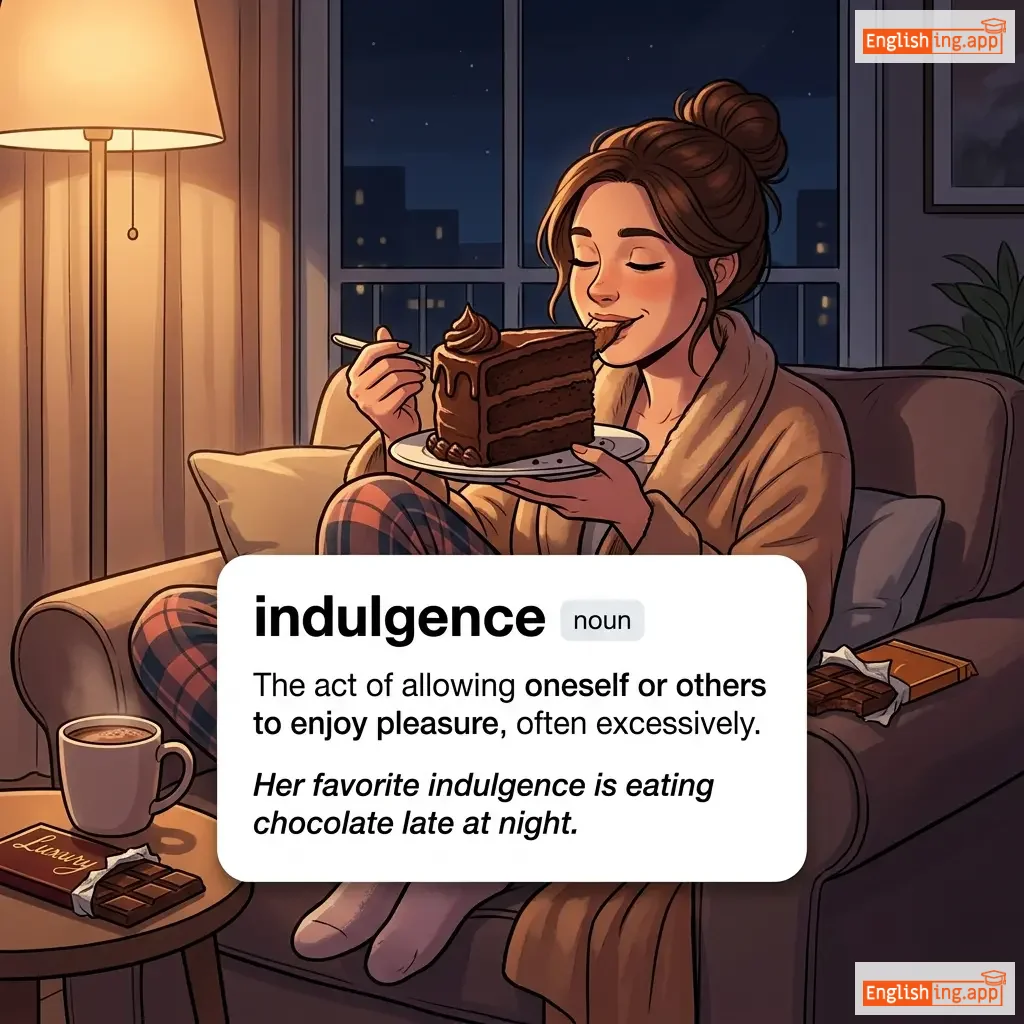
indulgence definition card — visual illustration of the meaning
noun
/ɪnˈdʌldʒəns/
享楽 (kyōraku)

The act of allowing oneself or others to enjoy pleasure, often excessively.

"Her favorite indulgence is eating chocolate late at night."

"彼女の好きな楽しみは夜遅くにチョコレートを食べることです。" (Kanojo no suki na tanoshimi wa yoru osoku ni chokorēto o taberu koto desu.)
adjective
/ɪnˈdʌldʒənt/
寛容な (kan'yō na)

Having a tendency to be overly generous or lenient with someone.

"The indulgent mother allowed her child to stay up late."

"寛容な母は子供を遅くまで起きていることを許しました。" (Kan'yō na haha wa kodomo o osoku made okite iru koto o yurushimashita.)
verb
/ˈɪndjʊˌreɪt/
硬化する (kōka suru)

To harden or make something physically or emotionally tough.

"Years of hardship indurated his spirit."
"長年の困難が彼の精神を鍛えました。" (Nagannen no konnan ga kare no seishin o kitaemashita.)
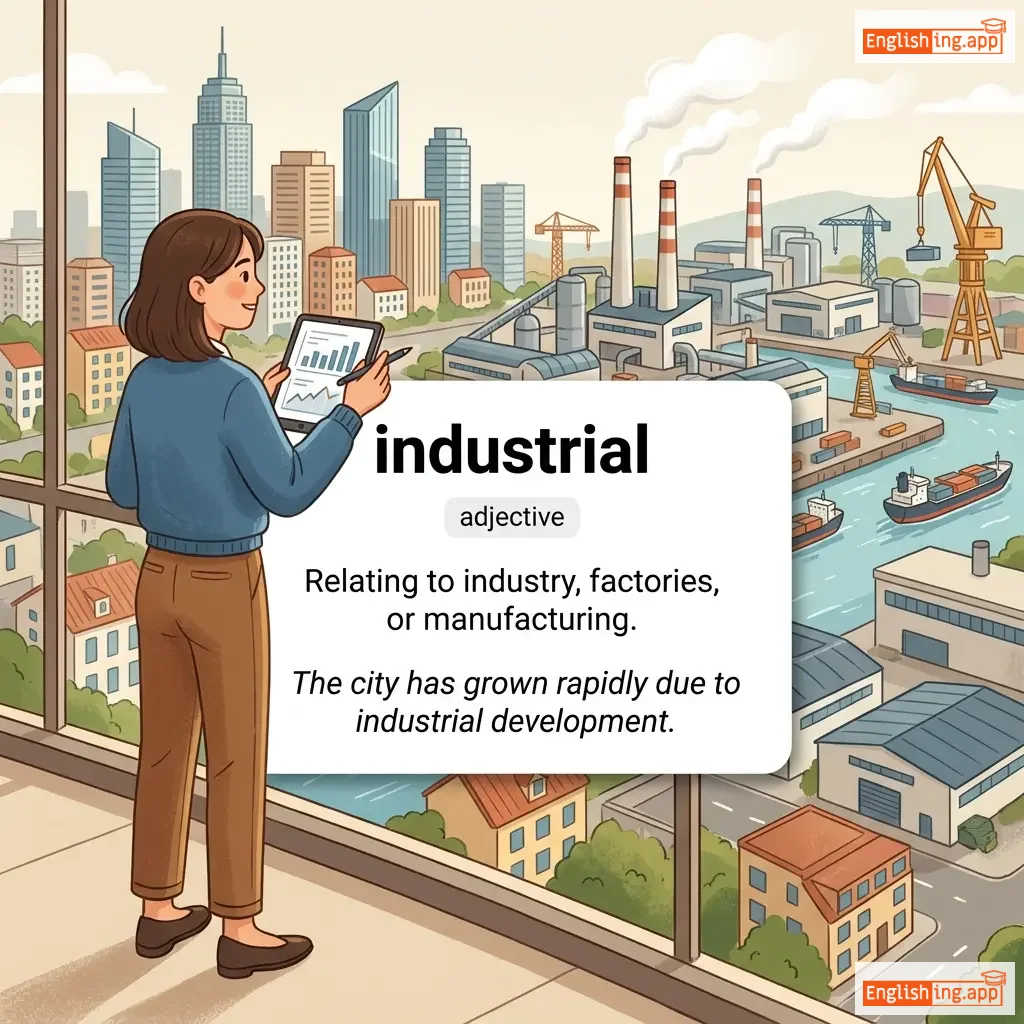
industrial definition card — visual illustration of the meaning
adjective
/ɪnˈdʌstriəl/
産業の (sangyo no)

Relating to industry, factories, or manufacturing.

"The city has grown rapidly due to industrial development."
"その都市は産業の発展により急速に成長しました。" (Sono toshi wa sangyo no haten ni yori kyusoku ni seichou shimashita.)
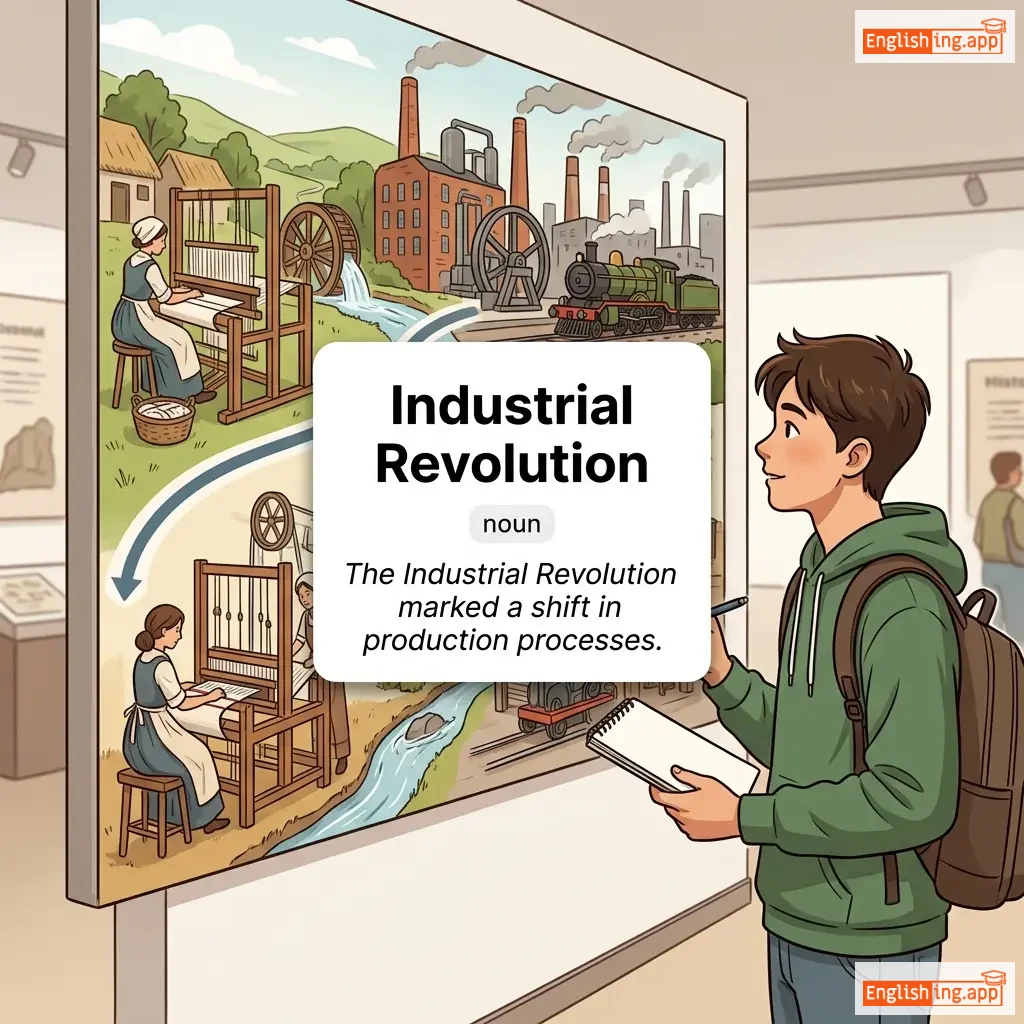
Industrial Revolution definition card — visual illustration of the meaning
noun
/ɪnˈdʌstriəl ˌrɛvəˈluːʃən/
産業革命 (Sangyō kakumei)

The rapid development of industry that occurred in Britain in the late 18th and 19th centuries, brought about by the introduction of machinery and characterized by the use of steam power and the growth of factories.

"The Industrial Revolution marked a shift in production processes."
"産業革命は生産プロセスにおける変化を示しました。" (Sangyō kakumei wa seisan purosesu ni okeru henka o shimeshita.)
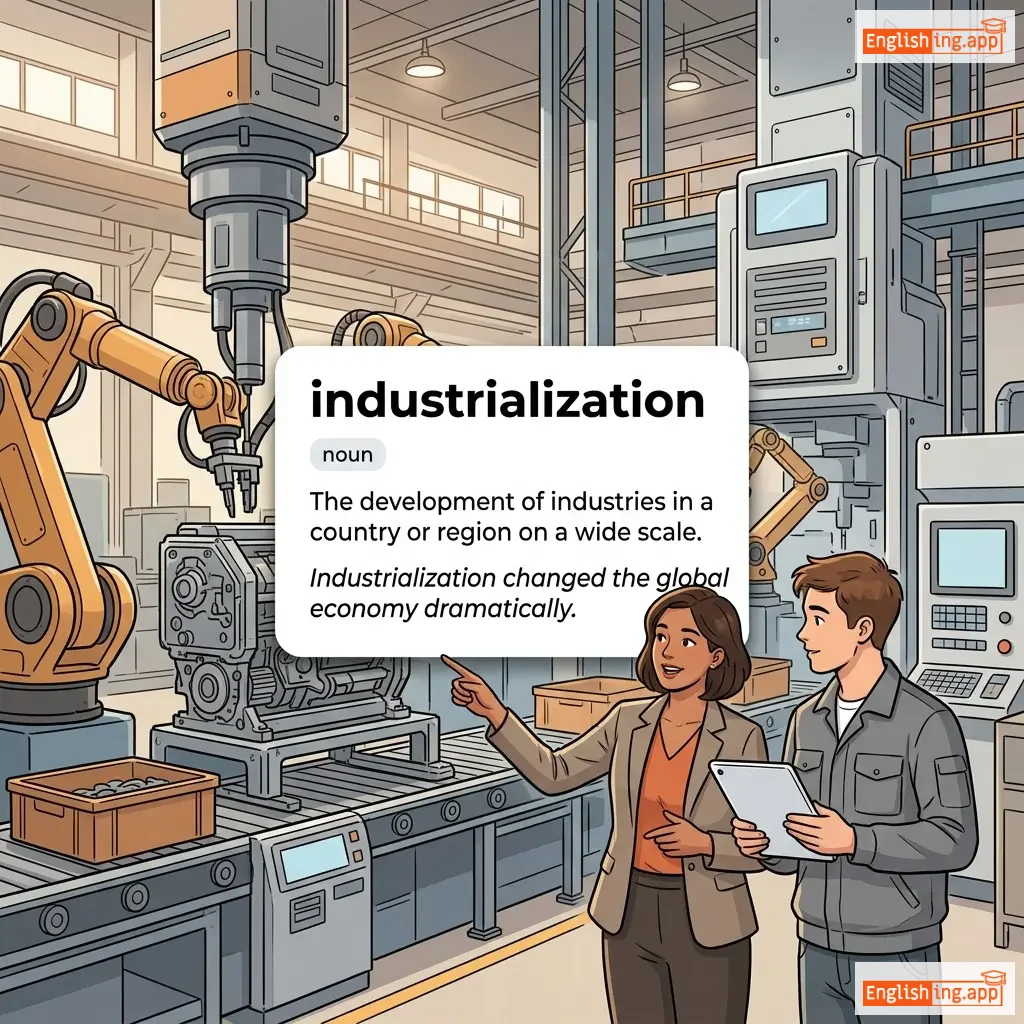
industrialization definition card — visual illustration of the meaning
noun
ɪnˌdʌstrɪəlaɪˈzeɪʃən
産業化 (sangyoka)

The development of industries in a country or region on a wide scale.

"Industrialization changed the global economy dramatically."

"産業化は世界経済を劇的に変えました。" (Sangyōka wa sekai keizai o gekiteki ni kaemashita.)
adjective
/ɪnˈdʌstriəs/
勤勉な (kinben na)

Hardworking and diligent in one's duties.

"She is an industrious student who always completes her assignments on time."

"彼女は常に期限通りに課題を終わらせる勤勉な学生です。" (Kanojo wa tsuneni kigen dōri ni kadai o owaraseru kinben na gakusei desu.)
noun
/ɪnˈdʌstriəsnəs/
勤勉 (kinben)

The quality of being hardworking and diligent.

"His industriousness earned him a promotion at work."

"彼の勤勉さは、仕事で昇進をもたらしました。" (Kare no kinbensa wa, shigoto de shōshin o motarashimashita.)
industry definition card — visual illustration of the meaning
noun
/ˈɪndəstri/
産業 (sangyo)

The production of goods or services within an economy.

"The textile industry employs thousands of workers in the region."

"繊維産業はその地域で何千人もの労働者を雇用しています。" (Sen'i sangyo wa sono chiiki de nanzen-nin mo no rodosha o koyou shiteimasu.)
verb
/ɪˈniː.bri.eɪt/

to intoxicate; to make someone drunk

"The strong wine was enough to inebriate even the most experienced drinker."

adjective
/ɪˈniː.bri.eɪ.tɪd/
酔っ払った (yopparatta)

under the influence of alcohol; drunk

"He stumbled into the room completely inebriated."

"彼は完全に酔っ払って部屋に入ってきた。" (Kare wa kanzen ni yopparatte heya ni haittekita.)
noun
/ˌɪn.ɪˈbraɪ.ə.ti/
酩酊 (meitei)

the state of being drunk or intoxicated

"His frequent inebriety led to the loss of his job."

"彼の頻繁な酩酊は仕事を失う原因となった。" (Kare no hinpan na meitei wa shigoto wo ushinau gen'in to natta.)
🚫🍽️

Inedible

adjective
/ɪˈnɛd.ə.bəl/

not fit to be eaten

"The spoiled food was inedible."

ineffable definition card — visual illustration of the meaning
adjective
/ɪˈnɛf.ə.bəl/
言葉では表現できない (kotoba de wa hyougen dekinai)

too great, extreme, or beautiful to be expressed in words

"The beauty of the sunset was ineffable."
"夕焼けの美しさは言葉では表現できなかった。" (Yūyake no utsukushisa wa kotoba de wa hyougen dekinakatta.)
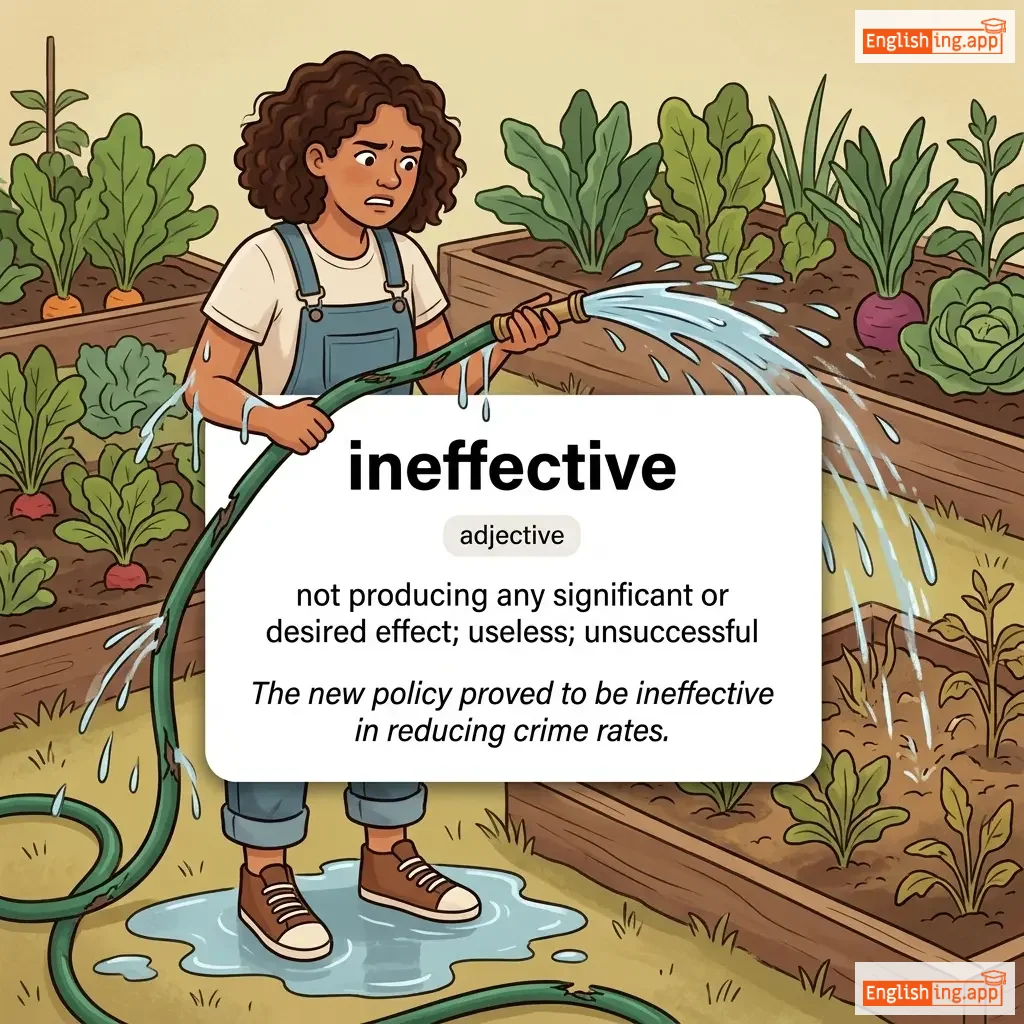
ineffective definition card — visual illustration of the meaning
adjective
/ˌɪnɪˈfɛktɪv/
効果がない; 無駄な; 失敗した (kouka ga nai; muda na; shippai shita)

not producing any significant or desired effect; useless; unsuccessful

"The new policy proved to be ineffective in reducing crime rates."

"新しい政策は犯罪率の削減には効果がないことが証明された。" (atarashii seisaku wa hanzairitsu no sakugen ni wa kouka ga nai koto ga shoumei sareta.)
adjective
/ˌɪn.ɪˈfɛk.tʃu.əl/
効果がない (kouka ga nai)

Not producing any or the desired effect; lacking the ability or qualities to achieve a purpose.

"The manager’s ineffectual leadership caused the team to lose motivation."

"マネージャーの効果がないリーダーシップは、チームがモチベーションを失う原因となった。" (Manejā no kouka ga nai rīdāshippu wa, chīmu ga mochibēshon wo ushinau gen'in to natta.)
inefficacious definition card — visual illustration of the meaning
adjective
ˌɪn.ɪ.fɪˈkeɪ.ʃəs
効果がない (kouka ga nai)

Not producing any or the desired effect; ineffective.

"The treatment was inefficacious in curing the disease."
"その治療法は病気の治癒に効果がありませんでした。" (Sono chiryouhou wa byouki no chiyu ni kouka ga arimasen deshita.)
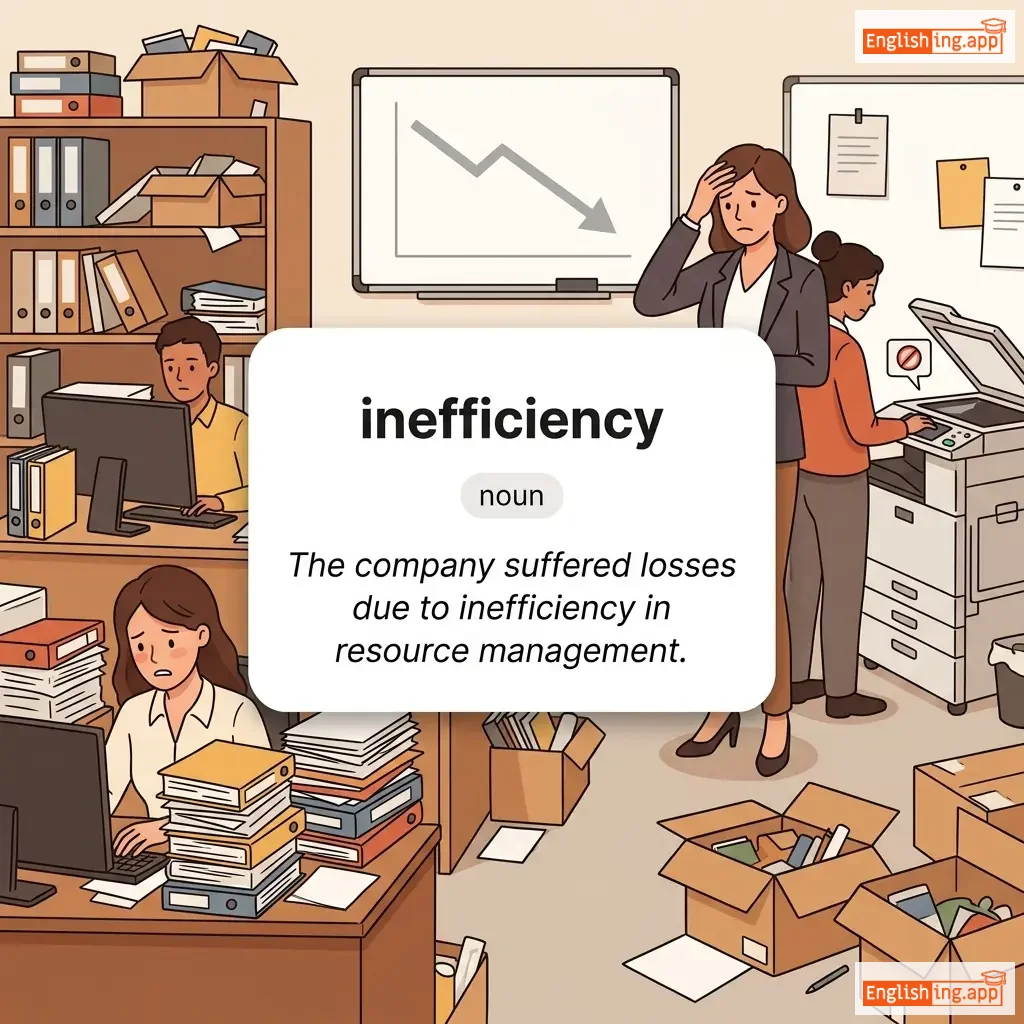
inefficiency definition card — visual illustration of the meaning
noun
/ˌɪn.ɪˈfɪʃ.ən.si/
非効率 (hikouritsu)

The state of not achieving maximum productivity; wastefulness or lack of competence.

"The company suffered losses due to inefficiency in resource management."

"会社は資源管理の非効率のために損失を被った。" (Kaisha wa shigen kanri no hikōritsu no tame ni sonshitsu o kōmotta.)
adjective
/ˌɪn.ɪˈfɪʃ.ənt/
非効率的 (hikouritsuteki)

Not achieving maximum productivity; wasting resources or effort.

"The machine is old and inefficient compared to modern equipment."

"その機械は古く、現代の機器と比較して非効率的です。" (Sono kikai wa furuku, gendai no kiki to hikaku shite hikouritsuteki desu.)
adjective
/ɪnˈɛl.ɪ.dʒə.bəl/
資格なし (shikaku nashi)

Not qualified or permitted to do something or to receive something.

"He was ineligible to apply for the scholarship because of his age."

"年齢のため、彼は奨学金に申し込む資格がなかった。" (Nenrei no tame, kare wa shougakukin ni moushikomu shikaku ga nakatta.)
ineluctable definition card — visual illustration of the meaning
adjective
/ˌɪn.ɪˈlʌk.tə.bəl/

Impossible to avoid or escape; inevitable.

"Death is an ineluctable part of human existence."

adjective
/ɪˈnɛpt/
不器用 (bukiyou)

lacking skill or ability; clumsy or incompetent

"His inept handling of the situation made it worse."
"彼の不器用な状況の対処が状況を悪化させた。" (kare no bukiyou na jōkyō no taisho ga jōkyō o akka saseta.)
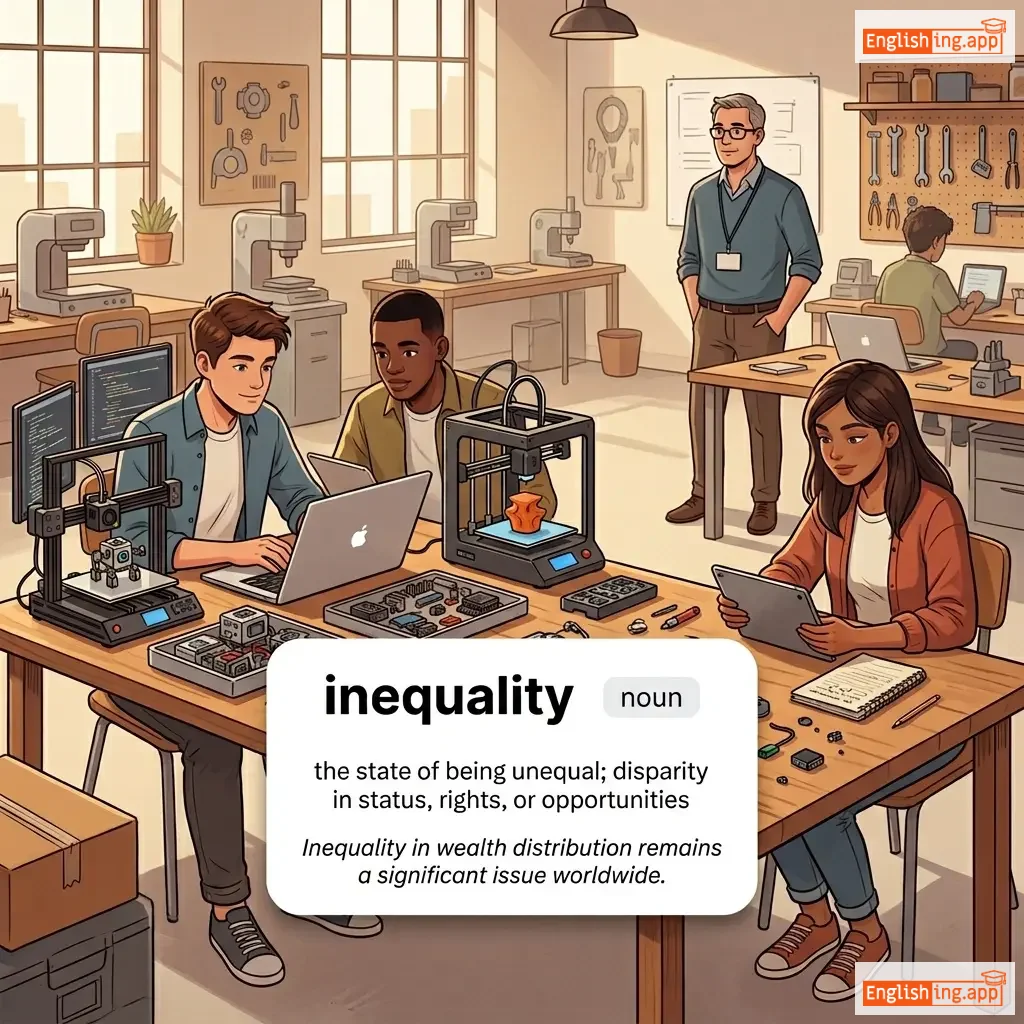
inequality definition card — visual illustration of the meaning
noun
/ˌɪnɪˈkwɒləti/
不平等 (fuheito)

the state of being unequal; disparity in status, rights, or opportunities

"Inequality in wealth distribution remains a significant issue worldwide."
"富の分配における不平等は、依然として世界的な重要な問題です。" (Tomi no bunpai ni okeru fuheito wa, izen toshite sekaiteki na juuyou na mondai desu.)
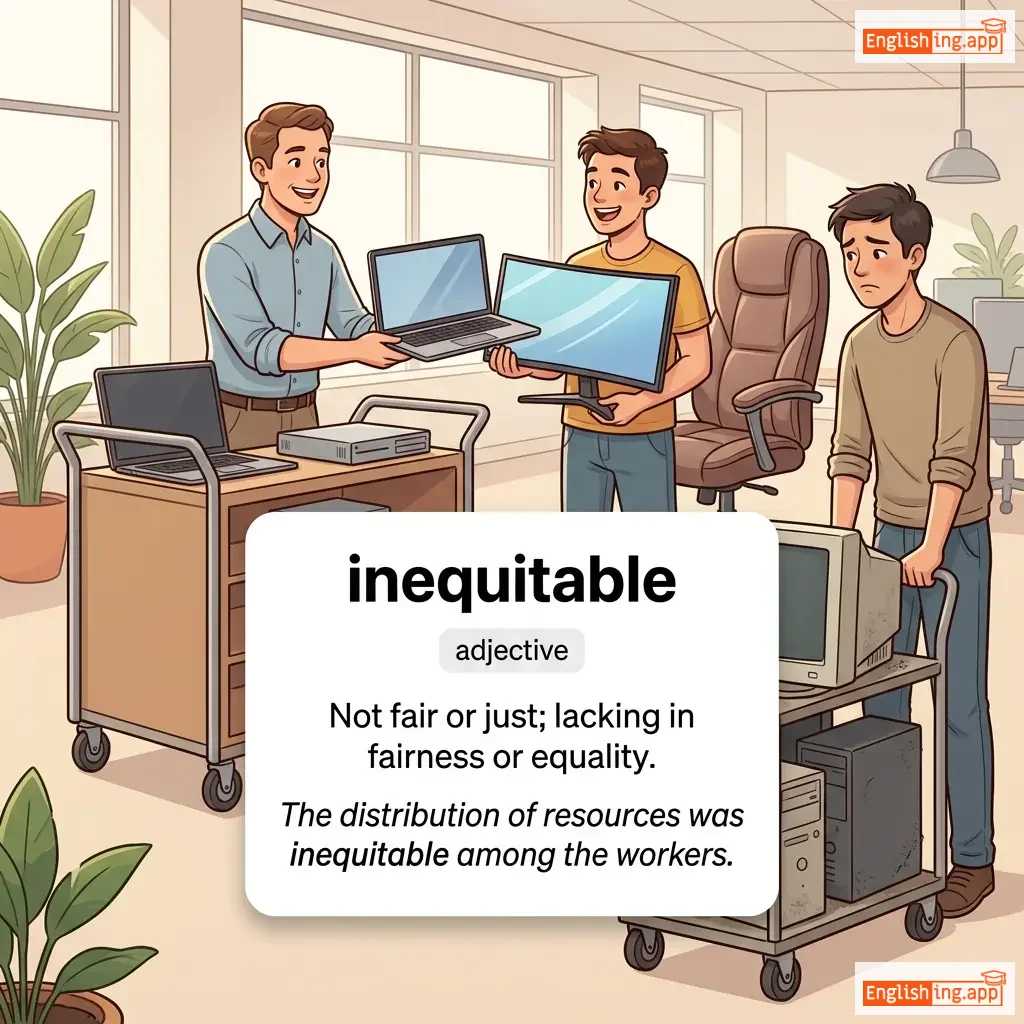
inequitable definition card — visual illustration of the meaning
adjective
/ɪnˈɛk.wɪ.tə.bəl/
不公平な (fukōhei na)

Not fair or just; lacking in fairness or equality.

"The distribution of resources was inequitable among the workers."
"リソースの分配は労働者の間で不平等でした。" (Risōsu no bunpai wa rōdōsha no aida de fubyōdō deshita.)
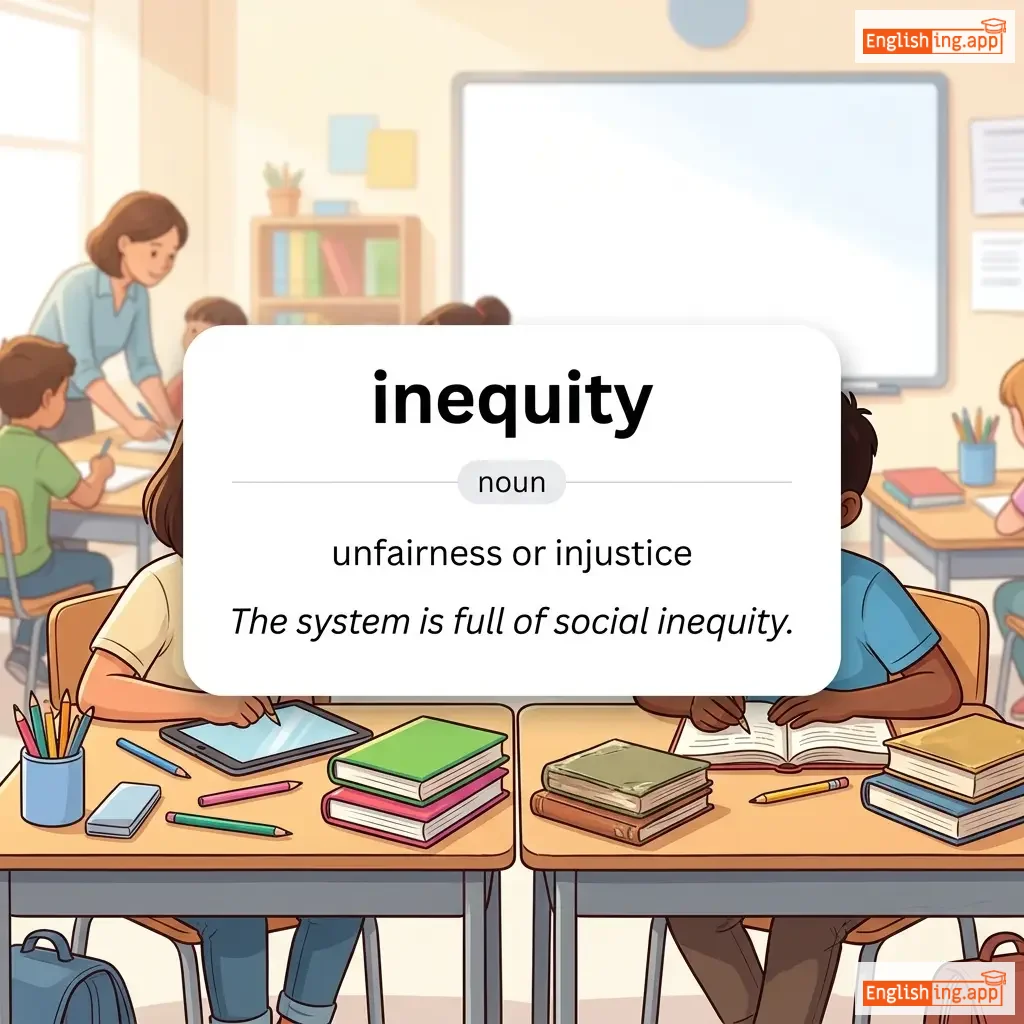
inequity definition card — visual illustration of the meaning
noun
/ɪnˈɛkwɪti/
不平等 (fubyoutou)

unfairness or injustice

"The system is full of social inequity."

"システムは社会的不平等で満ちています。" (shisutemu wa shakaiteki fubyoutou de michiteimasu.)
noun
/ɪnˈɛrənsi/
無謬性 (mubyū-sei)

the belief or quality of being free from error; absolute correctness

"Some religious groups strongly affirm the inerrancy of their sacred texts."
"いくつかの宗教団体は、自分たちの聖典の誤りのなさを強く主張しています。" (Ikutsuka no shūkyō dantai wa, jibun-tachi no seiten no ayamari no nasa o tsuyoku shuchō shiteimasu.)
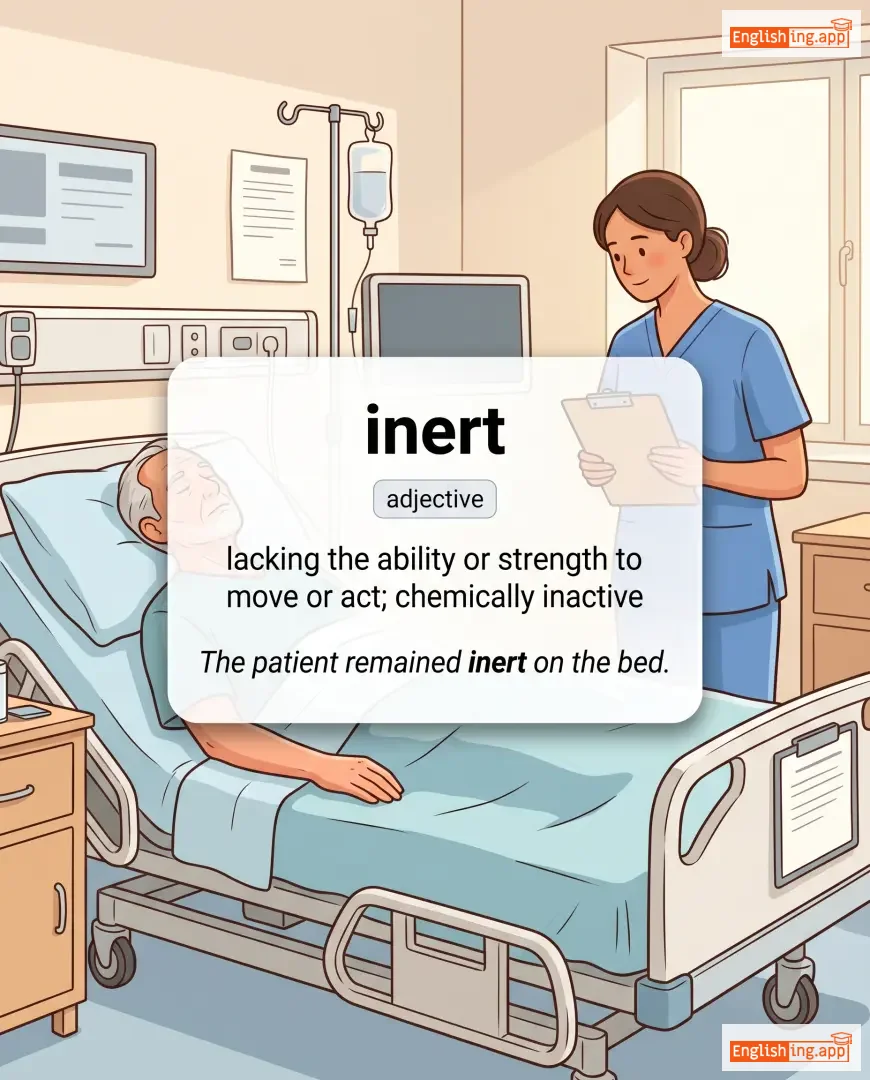
inert definition card — visual illustration of the meaning
adjective
/ɪˈnɜːrt/
不活性 (fukassei)

lacking the ability or strength to move or act; chemically inactive

"The patient remained inert on the bed."

"患者はベッドで動かずにじっとしていました。" (kanja wa beddo de ugokazu ni jitto shite imashita.)
⚖️

Inertia

noun
/ɪˈnɜːrʃə/

A tendency to remain unchanged or continue in the same state of motion unless acted upon.

"The project failed due to the inertia of outdated systems."