語彙集

英単語辞書 | 単語の意味、定義、例文

verb
/ˈhɑːrpɪŋ/
繰り返し不満を言う (kurikaeshi fuman o iu)

continuously talking or complaining about something in a tiresome way

"She kept harping on about the mistakes I made."

"彼女は私が犯した間違いについて繰り返し不満を言っていました。" (Kanojo wa watashi ga okashita machigai ni tsuite kurikaeshi fuman o itteimashita.)
adjective
/ˈhæriːd/
過労や絶え間ない干渉で緊張したりストレスを感じたりする (karou ya taemai kanshou de kinchou shitari sutoresu o kanjitari suru)

feeling strained or stressed due to being overworked or constantly bothered

"The harried teacher struggled to calm the noisy classroom."

"過労の教師は騒々しい教室を静めるのに苦労していました。" (Karo no kyoushi wa souzoushii kyoushitsu o shizumeru no ni kurou shite imashita.)
verb
/ˈhæroʊ/
苦しめる / すき (kurushimeru / suki)

to cause distress or torment; also to break up and smooth soil with a farm tool

"The tragic news harrowed the entire family."
"悲劇的なニュースは家族全員を苦しめました。" (Higeki-teki na nyūsu wa kazoku zen'in wo kurushimemashita.)
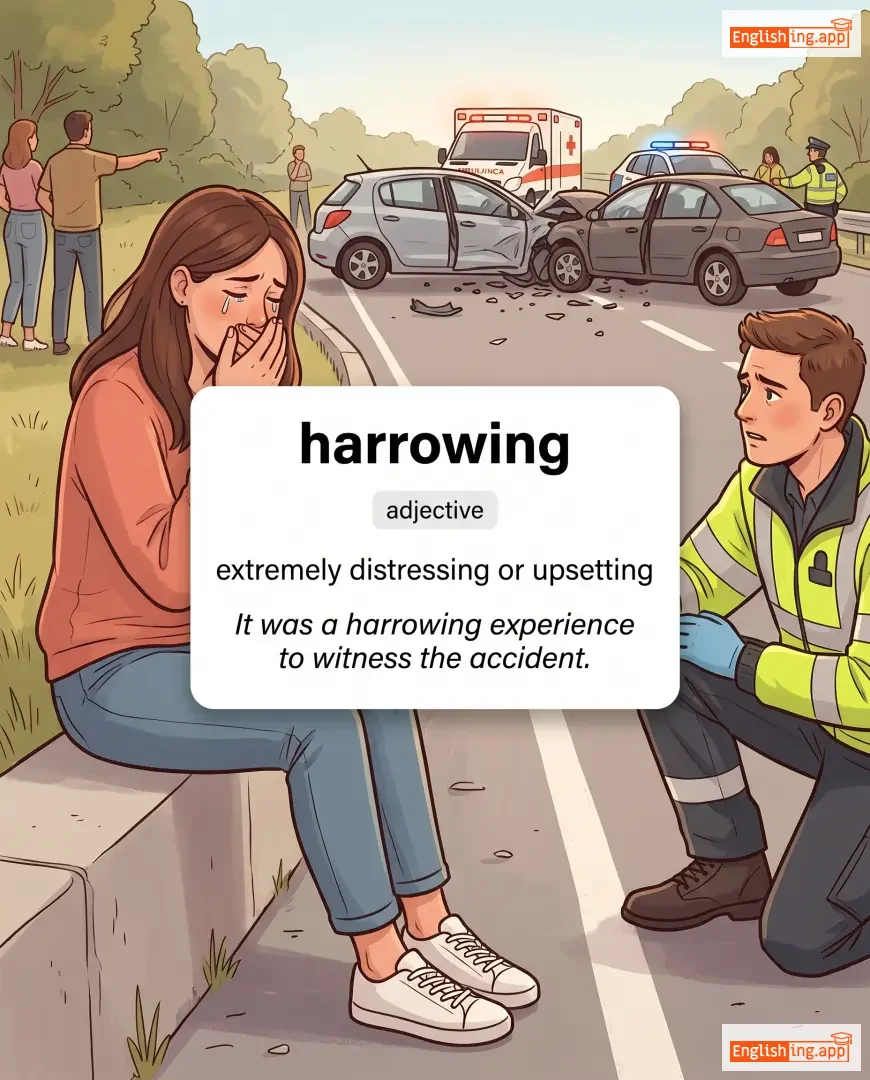
harrowing definition card — visual illustration of the meaning
adjective
/ˈhær.oʊ.ɪŋ/
恐ろしいと苦しみを伴う (osoroshii to kurushimi o tomonau)

extremely distressing or upsetting

"It was a harrowing experience to witness the accident."

"事故を目撃することは恐ろしい経験だった。" (Jiko o mokugeki suru koto wa osoroshii keiken datta.)
verb
/ˈhæri/
悩ます, 攻撃する (nayamasu, kougeki suru)

to constantly attack, harass, or annoy

"The army harried the enemy with sudden raids."

"軍隊は突然の襲撃で敵を攻撃した。" (Guntai wa totsuzen no shugeki de teki o kougeki shita.)
adjective
/hɑːrʃ/
厳しい (kibishii)

Unpleasantly rough or severe in sound, taste, conditions, or treatment.

"The teacher's harsh tone frightened the students."

"先生の厳しい口調が生徒たちを驚かせた。" (Sensei no kibishii kuchou ga seitotachi wo odokaseta.)
noun
/ˈhɑːrvɪst/
収穫 (shūkaku)

the process or period of gathering crops

"Farmers are busy during the rice harvest season."
"農家は米の収穫の季節に忙しい。" (Nōka wa kome no shūkaku no kisetsu ni isogashī.)
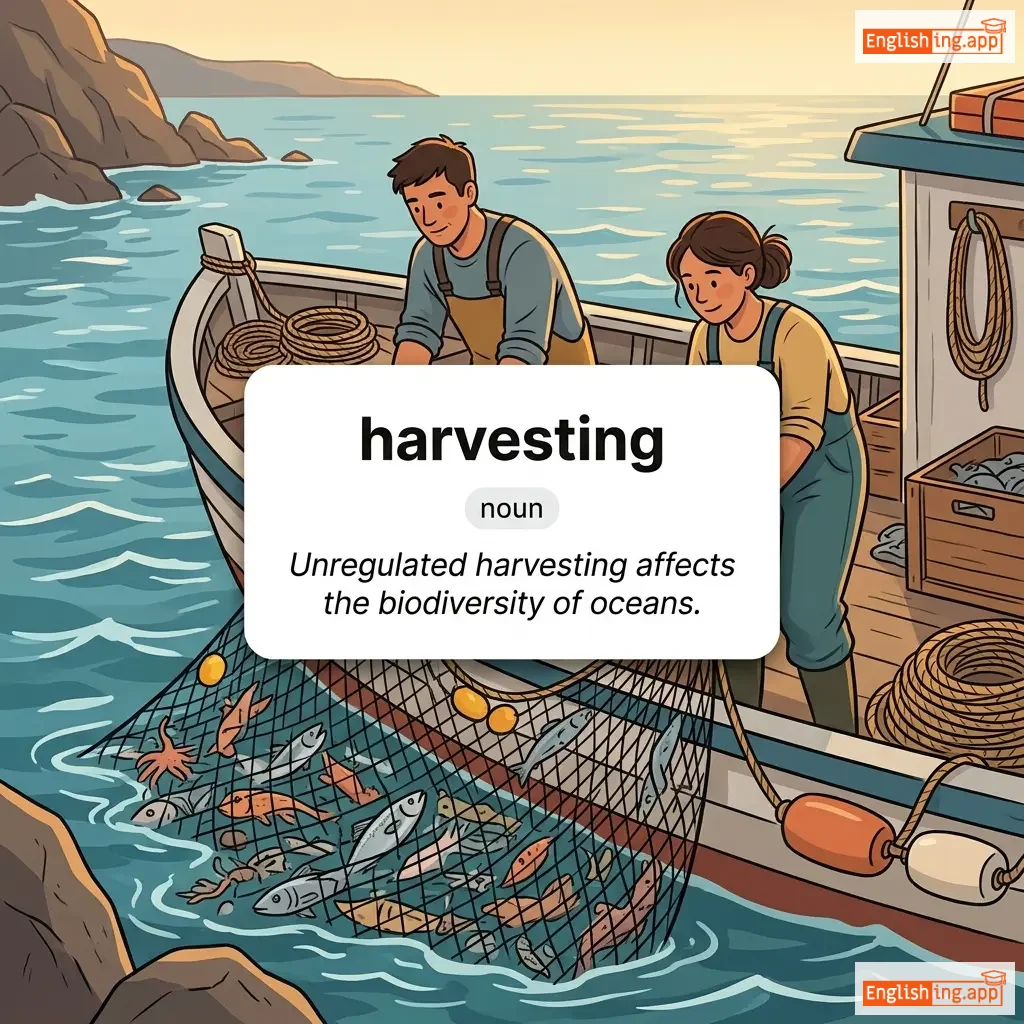
harvesting definition card — visual illustration of the meaning
noun
ˈhɑːrvɪstɪŋ
収穫 (shūkaku)

The process of gathering a ripe crop from the fields or collecting natural resources.

"Unregulated harvesting affects the biodiversity of oceans."

"規制されていない収穫は海洋の生物多様性に影響を与えます。" (Kisei sarete inai shūkaku wa kaiyō no seibutsu tayōsei ni eikyō o ataemasu.)
noun
/hæˈʃiːʃ/
ハシシ (hashishi)

a drug made from the resin of the cannabis plant

"The police arrested him for possessing hashish."

"警察は彼をハシシを所持していたため逮捕した。" (Keisatsu wa kare o hashishi o shoji shite ita tame taiho shita.)
noun
/ˈhæs.əl/
面倒; 困難; 手間 (mendou, konnan, teima)

irritating inconvenience; trouble or difficulty; a situation causing problems

"Booking tickets online can save you the hassle of waiting in long queues at the theater."

"オンラインでチケットを予約すると、劇場で長時間並ぶ手間を省けます。" (Onrain de chiketto o yoyaku suru to, gekijou de choujikan narabu temawokabekimasu.)
noun
/heɪst/
急ぎ; 焦り (isogi, aseri)

swiftness of motion; urgent need of quick action; excessive speed or urgency

"In his haste to catch the train, he forgot to take his wallet from the table."

"列車に乗るための急いで、テーブルから財布を取るのを忘れました。" (Resha ni noru tame no isoide, tēburu kara saifu o toru no o wasuremashita.)
verb
/ˈheɪsən/
急ぐ (isogu)

To move or act quickly; to cause something to happen sooner.

"He hastened to finish his work before the deadline."

"彼は締め切り前に仕事を終わらせるために急いだ。" (Kare wa shimekiri mae ni shigoto o owaraseru tame ni isoida.)
adverb
/ˈheɪs.tɪ.li/
急いで (isoide)

in a hurried or rushed manner; quickly and carelessly

"She hastily packed her bags before leaving for the airport."

"彼女は空港に行く前に急いでバッグを詰めた。" (Kanojo wa kūkō ni iku mae ni isoide baggu o tsumeta.)
adjective
/ˈheɪsti/
急いだ (isoida)

Done with excessive speed or urgency, often without careful thought.

"She made a hasty decision without considering the consequences."

"彼女は結果を考慮せずに慌てた決定を下しました。" (Kanojo wa kekka o koryo sezu ni awateta kettei o oroshimashita.)
noun
/hæt/
帽子 (bōshi)

a shaped covering for the head, often with a brim

"He wore a black hat to the party."

"彼はパーティーに黒い帽子をかぶっていった。" (Kare wa pātii ni kuroi bōshi o kabutte itta.)
verb
/hætʃ/
孵化する / 計画する (fuka suru / keikaku suru)

To cause a young animal to emerge from an egg; to plan secretly.

"The chicks hatched early in the morning."

"ひよこは朝早くに孵化しました。" (Hiyoko wa asa hayaku ni fuka shimashita.)
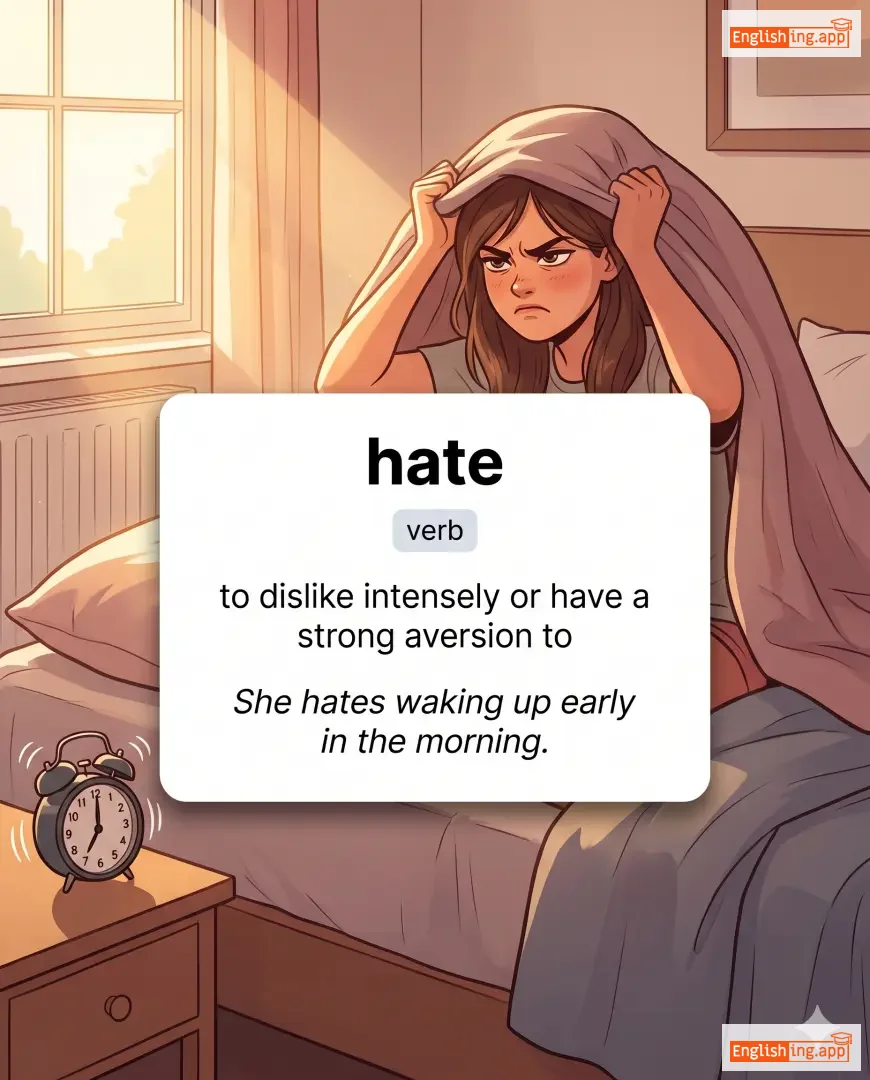
hate definition card — visual illustration of the meaning
💔

hate

verb
/heɪt/

to dislike intensely or have a strong aversion to

"She hates waking up early in the morning."

adjective
/ˈheɪt.fəl/
憎しみの (nikushimi no)

causing or deserving hatred; extremely unpleasant or offensive

"His hateful comments hurt everyone's feelings."

"彼の憎しみを込めたコメントは皆の感情を傷つけました。" (Kare no nikushimi wo kometa komento wa minna no kanjou wo kizutsukemashita.)
noun
/ˈheɪtrɪd/
憎しみ (nikushimi)

intense dislike or ill will

"His hatred for the enemy was evident in his actions."

"敵に対する彼の憎しみは、彼の行動に明らかに現れていた。" (Teki ni taisuru kare no nikushimi wa, kare no kōdō ni akiraka ni arawarete ita.)
noun
/ˈhɔːtɪnəs/
傲慢 (ōman)

The appearance or quality of being arrogantly superior and disdainful.

"His haughtiness made him unpopular among his peers."

"彼の傲慢さは彼を同僚の中で不人気にしました。" (Kare no ōman-sa wa kare o dōryō no naka de funinki ni shimashita.)
adjective
/ˈhɔːti/
高慢 (kōman)

arrogantly superior and disdainful

"She gave him a haughty look and walked away."

"彼女は彼に高慢な目を向けて、歩いて行った。" (Kanojo wa kare ni kōman na me wo mukete, aruite itta.)
verb
/hɔːl/
引っ張る (hipparu)

to pull or drag something heavy with effort

"The workers hauled the boxes into the truck."

"作業員たちは箱をトラックに引きずり込んだ。" (Sagyouin-tachi wa hako o torakku ni hikizurikonda.)
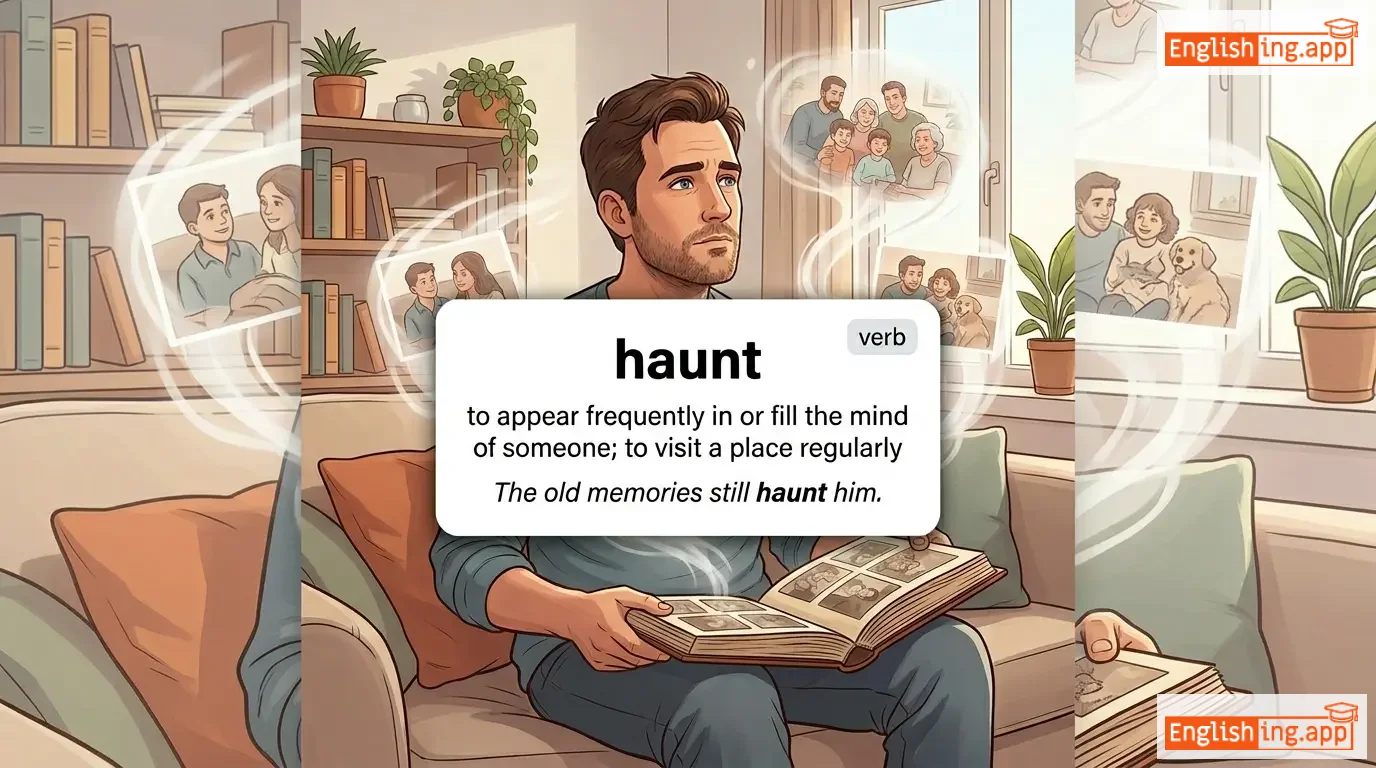
haunt definition card — visual illustration of the meaning
👻

haunt

verb
/hɔːnt/

to appear frequently in or fill the mind of someone; to visit a place regularly

"The old memories still haunt him."

noun
/oʊˈtɜːr/
傲慢 (gōman)

disdainful pride; arrogance

"His hauteur made it difficult for others to approach him."

"彼の傲慢は他の人々が近づくのを難しくさせた。" (Kare no gōman wa hoka no hitobito ga chikaduku no o muzukashiku saseta.)
verb
/hæv/
持っている (motte iru)

to possess, own, or hold

"They have three children."

"彼らは三人の子供がいます。" (Karera wa sannin no kodomo ga imasu.)
noun
/ˈheɪvən/
避難所 (hinanjo)

a safe place or shelter

"The library became a haven for students during exams."

"試験中、図書館は学生たちの避難所となった。" (Shiken-chū, toshokan wa gakusei-tachi no hinanjo to natta.)
noun
/ˈhævək/
大混乱 (daikonran)

widespread destruction or disorder

"The storm caused havoc in the coastal villages."

"嵐は沿岸の村々に大混乱を引き起こしました。" (Arashi wa engan no muramura ni daikonran o hikiokoshimashita.)
noun
/hɔːk/
タカ (taka)

A bird of prey with keen eyesight and sharp talons; also refers to a person who strongly supports aggressive or warlike policies.

"The hawk soared high above the valley."

"タカは谷の上を高く飛んでいました。" (Taka wa tani no ue o takaku tondemashita.)
noun
/ˈhɔː.kər/
屋台販売者 (yatai hanbaisha)

a person who travels about selling goods, typically from door to door or on the street

"The hawker sold fresh fruits from his cart."

"屋台販売者は彼のカートから新鮮な果物を売っていた。" (yatai hanbaisha wa kare no kāto kara shinsen na kudamono o utte ita.)
noun
/ˈhɔːzər/
船を繋ぐための太いロープ (fune o tsunagu tame no futoi rōpu)

A thick rope or cable used in mooring or towing a ship.

"The sailors secured the ship to the dock with a heavy hawser."

"船員たちは重いハウザーを使って船をドックに固定しました。" (Sen'in-tachi wa omoi hawzā o tsukatte fune o dokku ni kotei shimashita.)
noun
/ˈhɔːθɔːrn/
とげのある低木 (toge no aru teboku)

A thorny shrub or small tree with white or pink flowers, often used for hedges.

"The garden was lined with blooming hawthorn bushes."

"庭園は花が咲くホーソーンの茂みで囲まれていました。" (Teien wa hana ga saku hōsōn no shigemi de kakomarete imashita.)
noun
/heɪ/
干し草 (hoshigusa)

grass that has been cut, dried, and stored for use as animal feed

"The cows were eating hay in the barn."

"牛たちは納屋で干し草を食べていました。" (Ushitachi wa noya de hoshigusa o tabete imashita.)
noun
/ˈhæzərd/
危険 (kiken)

A danger or risk.

"Wet floors are a common hazard in the workplace."
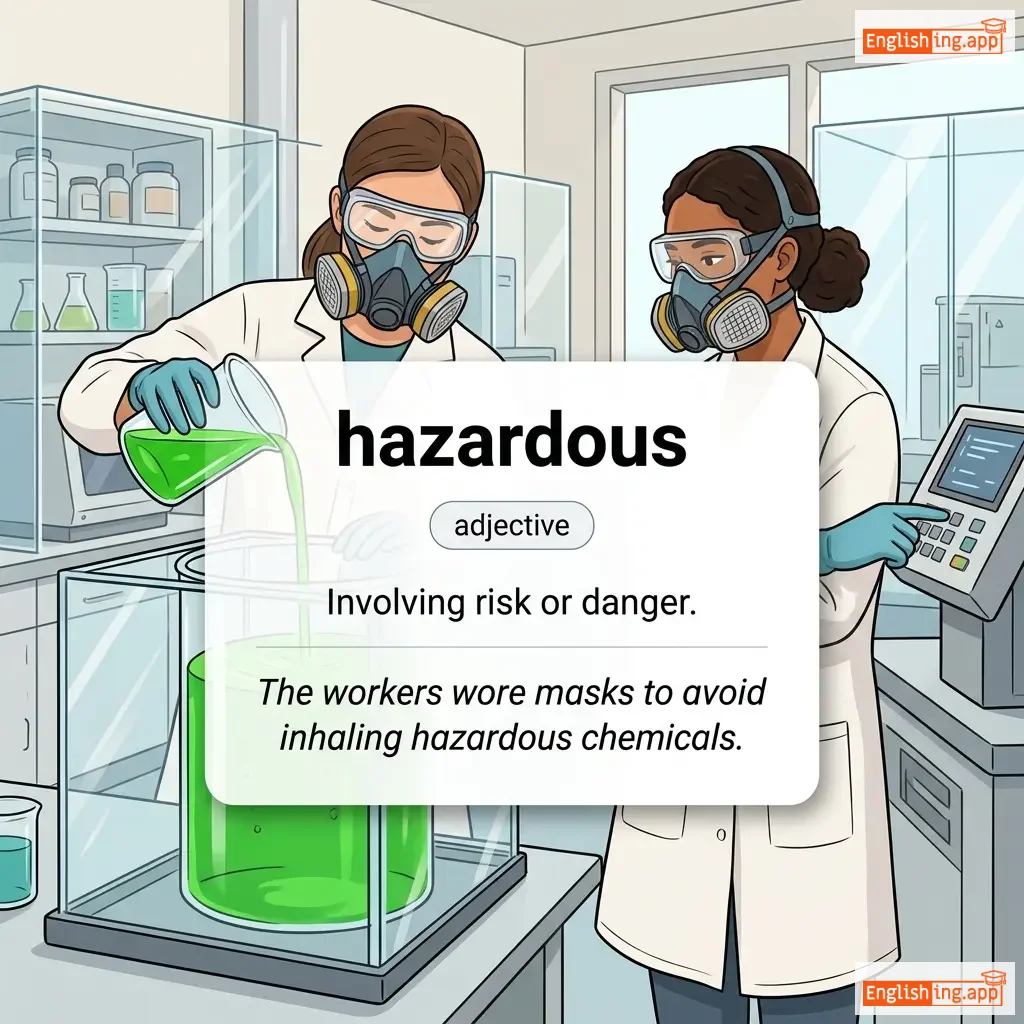
"濡れた床は職場でよくある危険です。" (Nureta yuka wa shokuba de yoku aru kiken desu.)
hazardous definition card — visual illustration of the meaning
adjective
/ˈhæzərdəs/
危険な (kiken na)

Involving risk or danger.

"The workers wore masks to avoid inhaling hazardous chemicals."

"作業員は有害な化学物質を吸い込まないようにマスクを着用していました。" (Sagyouin wa yūgaina kagaku busshitsu o suikomanaio masku o chakuyou shiteimashita.)
noun
/heɪz/
(kasa)

a slight obscuration of the lower atmosphere, typically caused by fine suspended particles; confusion

"The morning haze lifted gradually as the sun rose higher in the sky."

"朝の霞は徐々に晴れ、太陽が空高く昇るにつれて明らかになった。" (Asa no kasa wa jojoni hare, taiyō ga sora takaku noboru ni tsurete akiraka ni natta.)
adjective
/ˈheɪzi/
かすんだ (kasunda)

Unclear, misty, or not easy to see; also vague or uncertain.

"The mountains looked hazy in the morning light."

"朝の光の中で山々はかすんで見えた。" (Asa no hikari no naka de yamayama wa kasunde mieta.)
pronoun
/hiː/
彼 (男性) (kare (dansei))

used to refer to a male person or animal already mentioned or easily identified

"He is my best friend."

"彼は私の親友です。" (Kare wa watashi no shin'yū desu.)
noun, verb
/hɛd/
頭 / リーダー (atama / rīdā)

The upper part of the human body or to lead or be in charge of something.

"She turned her head to look out the window."

"彼女は窓の外を見るために頭を回した。" (kanojo wa mado no soto o miru tame ni atama o mawaseta.)
adverb
/ˈhed ɑn/
正面衝突 (seimen shōtotsu)

directly facing; in direct confrontation or collision

"The two cars collided head-on at the intersection."

"二台の車は交差点で正面衝突しました。" (Nidai no kuruma wa kōsaten de seimen shōtotsu shimashita.)
noun
/ˈhɛdeɪk/
頭痛 (zutsū)

a continuous pain in the head; something that causes worry or difficulty

"Too much screen time can give you a terrible headache."

"長時間画面を見ることはひどい頭痛を引き起こす可能性があります。" (chōjikan gamen o miru koto wa hidoi zutsū o hikiokosu kanōsei ga arimasu.)
adverb
/ˌhɛdˈfɜrst/
頭から (atama kara)

With the head leading; in a reckless or hasty manner.

"He dived headfirst into the pool."

"彼は頭から飛び込んだ。" (Kare wa atama kara tobikonda.)
heading definition card — visual illustration of the meaning
noun
/ˈhed.ɪŋ/
見出し (midashi)

a title at the head of a page or section of a book; the direction or course being followed

"The newspaper article had a bold heading that immediately caught the reader's attention."

"その新聞記事には太字の見出しがあり、すぐに読者の注意を引きました。" (Sono shinbun kiji ni wa fudji no midashi ga ari, sugu ni dokusha no chu-i wo hikimashita.)
noun
/ˈhɛdˌlaɪn/
見出し (midashi)

The title of a newspaper article printed in large letters.

"The scandal made front-page headlines."

"そのスキャンダルはフロントページの見出しになった。" (Sono sukyandaru wa furonto pēji no midashi ni natta.)
adverb
/ˈhɛdˌlɔŋ/
無鉄砲に (mutappou ni)

With the head leading; in a rush or without thinking.

"She rushed headlong into the new project."

"彼女は無鉄砲に新しいプロジェクトに飛び込んだ。" (Kanojo wa mutappou ni atarashii purojekuto ni tobikonda.)
noun
/ˈhɛdˌkwɔːrtərz/
本社 (honsha)

The main office or center of operations of an organization.

"The company’s headquarters is located in New York."

"その会社の本社はニューヨークにあります。" (Sono kaisha no honsha wa Nyūyōku ni arimasu.)
adjective
/ˈhɛdˌstrɔŋ/
頑固 (ganko)

Determined to do what one wants, even if it is not sensible.

"The headstrong child refused to listen to anyone."

"頑固な子供は誰の話も聞こうとしませんでした。" (Ganko na kodomo wa dare no hanashi mo kiko to shimasen deshita.)
noun
/ˈhed.weɪ/
進展; 前進; 発展 (shinten, zenshin, hatten)

forward movement or progress, especially when this is slow or difficult

"Despite the challenges, the research team made significant headway in developing the new vaccine."

"挑戦にもかかわらず、研究チームは新しいワクチンの開発において重要な進展を遂げました。" (Chousen ni mo kakawarazu, kenkyuu chiimu wa atarashii wakuchin no kaihatsu ni oite juuyou na shinten o togemashita.)
adjective
/ˈhɛdi/
酔わせる (yoaseru)

Exciting or intoxicating; having a strong or exhilarating effect.

"The heady aroma of the flowers filled the room."
"花の酔わせる香りが部屋を満たした。" (Hana no yoaseru kaori ga heya o mitashita.)
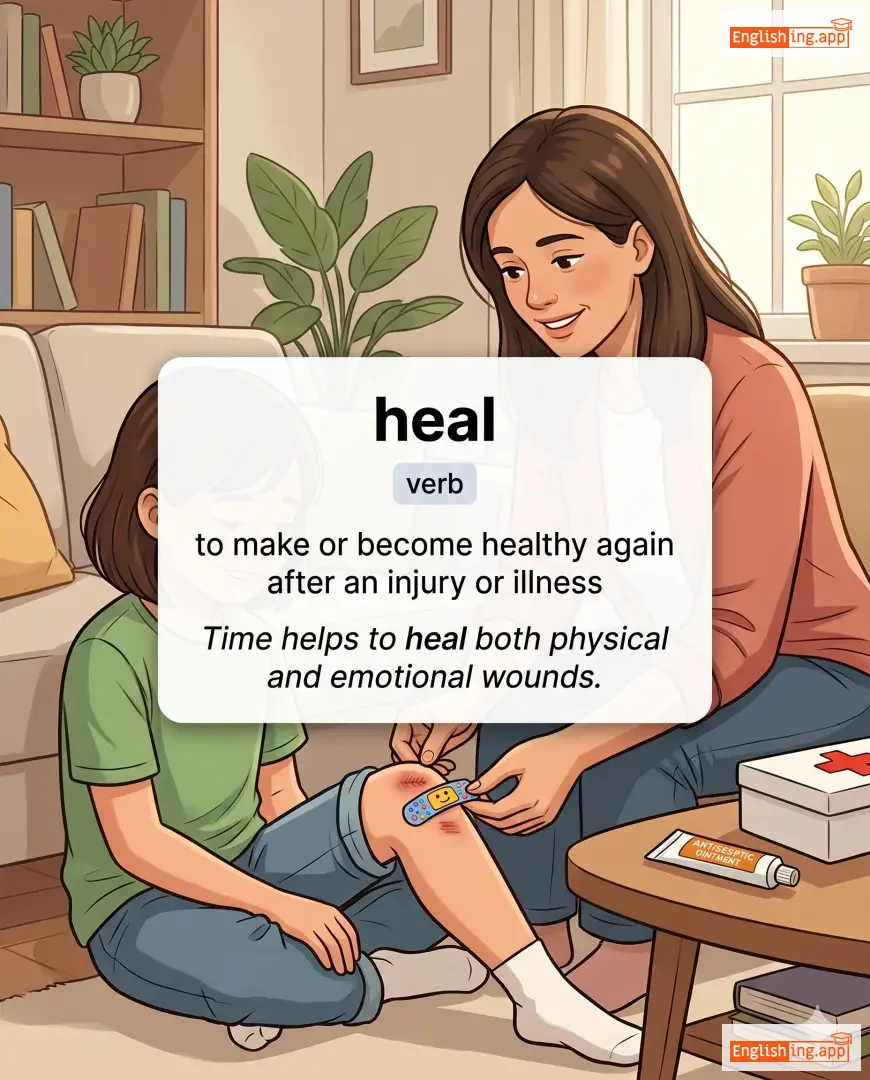
heal definition card — visual illustration of the meaning
verb
/hiːl/
癒す (iyasu)

to make or become healthy again after an injury or illness

"Time helps to heal both physical and emotional wounds."

"時間は身体的および感情的な傷を癒すのに役立ちます。" (Jikan wa shintai-teki oyobi kanjō-teki na kizu o iyasu no ni yakudachimasu.)
noun
/hɛlθ/
健康 (kenkō)

The state of being free from illness or injury.

"Exercise is important for good health."

"運動は良い健康のために重要です。" (Undō wa yoi kenkō no tame ni jūyōdesu.)