語彙集

英単語辞書 | 単語の意味、定義、例文

adjective
/ɪˈkwɪvələnt/
等しい; 同等 (hitoshii; dōtō)

Equal in value, function, meaning, or effect.

"One euro is roughly equivalent to one dollar."

"1ユーロはおおよそ1ドルに相当します。" (1 yūro wa ōyoso 1 doru ni sōtō shimasu.)
adjective
/ɪˈkwɪvəkəl/
曖昧 (aimai)

Open to more than one interpretation; ambiguous.

"His equivocal answer confused everyone."

"彼の曖昧な答えは皆を混乱させた。" (Kare no aimai na kotae wa mina o konran saseta.)
equivocate definition card — visual illustration of the meaning
verb
/ɪˈkwɪvəˌkeɪt/
曖昧に話す (aimai ni hanasu)

To speak ambiguously or avoid giving a clear answer.

"The politician equivocated when asked about the scandal."

"その政治家はスキャンダルについて尋ねられたとき、曖昧に話した。" (Sono seijika wa sukyandaru ni tsuite tazunerareta toki, aimai ni hanashita.)
noun
/ɪˌkwɪvəˈkeɪʃən/
あいまいな言葉の使用 (aimai na kotoba no shiyou)

The use of ambiguous language to conceal the truth or to avoid committing oneself.

"The politician’s equivocation frustrated voters who wanted a clear answer."

"政治家のあいまいな言葉は、明確な答えを求めていた有権者を失望させた。" (Seijika no aimai na kotoba wa, meikaku na kotae o motomete ita yūken-sha o shitsubō saseta.)
noun
/ˈɪərə/
時代 (jidai)

a long and distinct period of history with a particular feature or characteristic

"The invention of the internet marked a new era in communication."
"インターネットの発明は、通信における新しい時代の幕開けを意味しました。" (Intānetto no hatsumei wa, tsūshin ni okeru atarashī jidai no makuake o imi shimashita.)
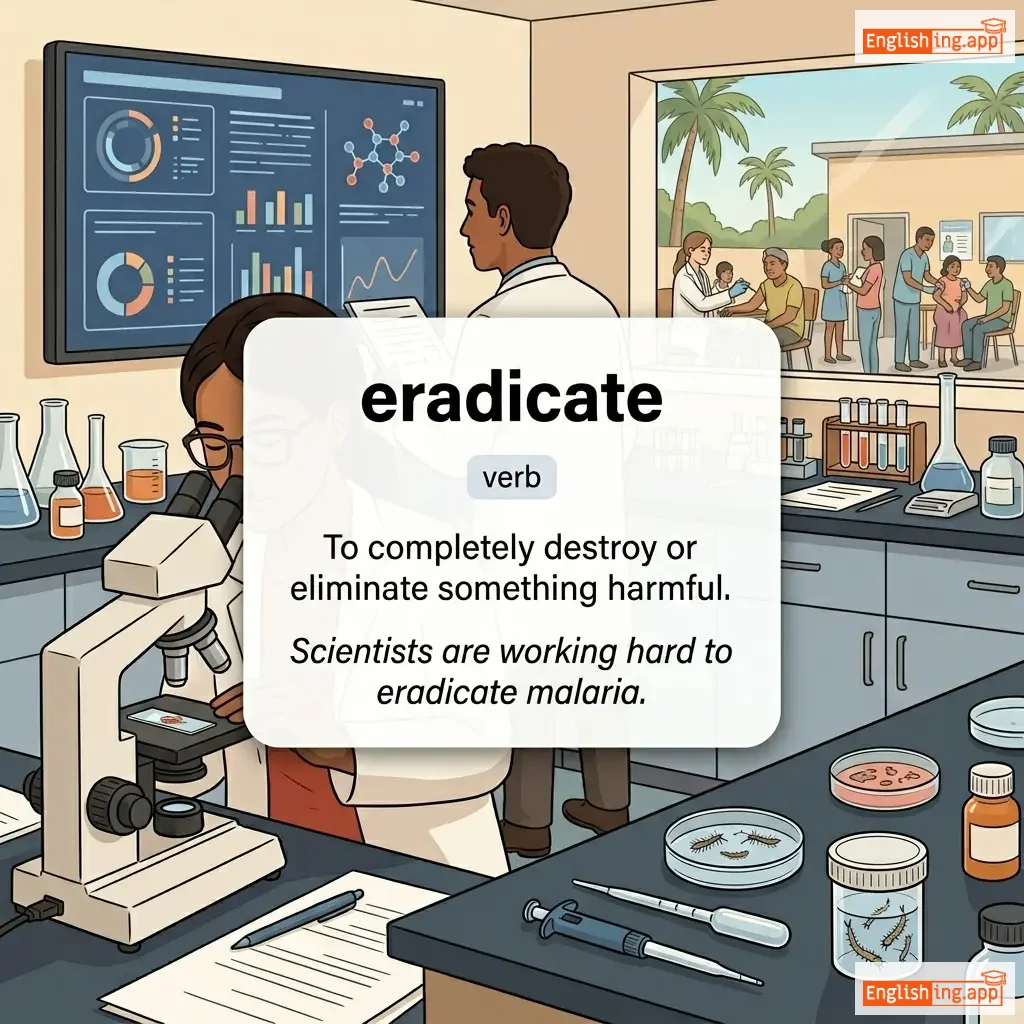
eradicate definition card — visual illustration of the meaning
verb
/ɪˈrædɪˌkeɪt/
根絶する; 排除する (konzetsu suru; haijo suru)

To completely destroy or eliminate something harmful.

"Scientists are working hard to eradicate malaria."
"科学者たちはマラリアを根絶するために懸命に働いています。" (Kagakusha-tachi wa mararia o konzetsu suru tame ni kenmei ni hataraiteimasu.)
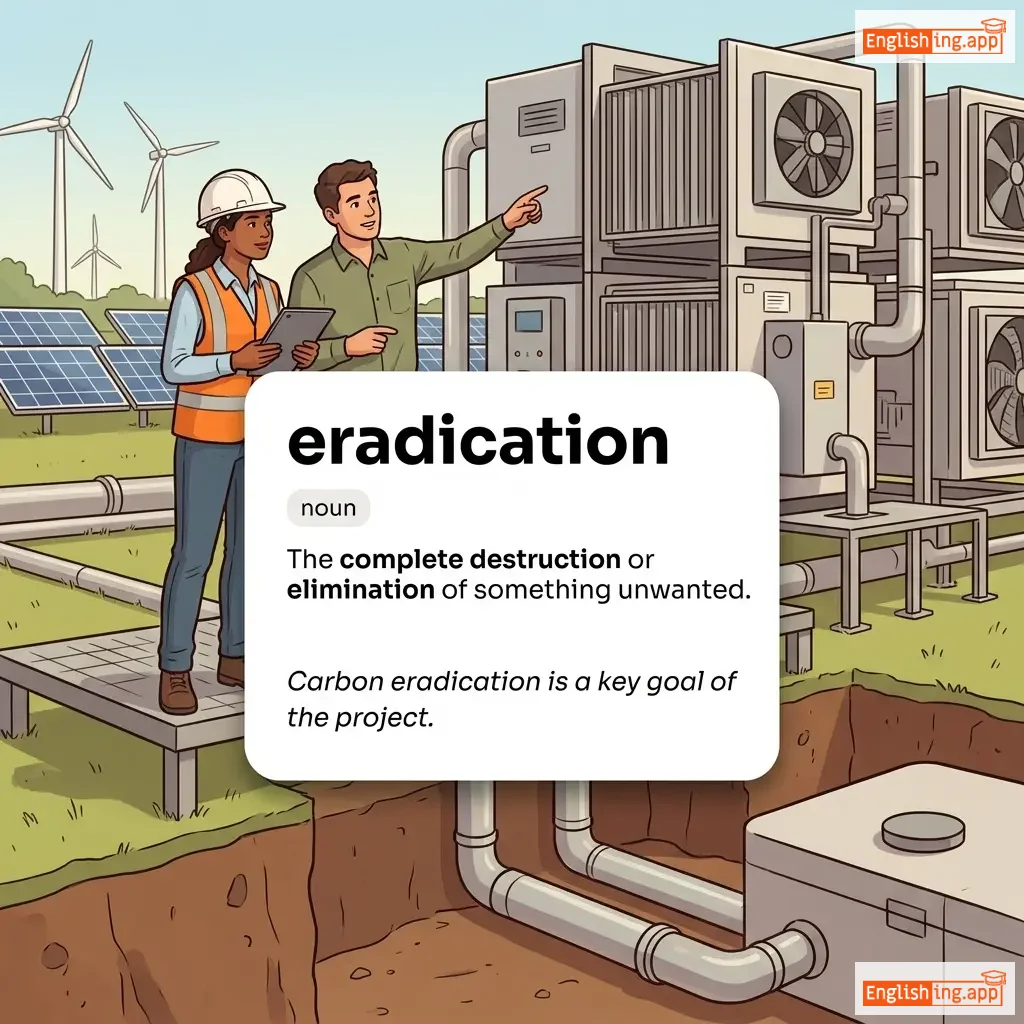
eradication definition card — visual illustration of the meaning
noun
ɪˌræd.ɪˈkeɪ.ʃən
根絶 (nezzetsu)

The complete destruction or elimination of something unwanted.

"Carbon eradication is a key goal of the project."
"カーボンの根絶はプロジェクトの重要な目標です。" (Kābon no nezetsu wa purojekuto no jūyō na mokuhyō desu.)
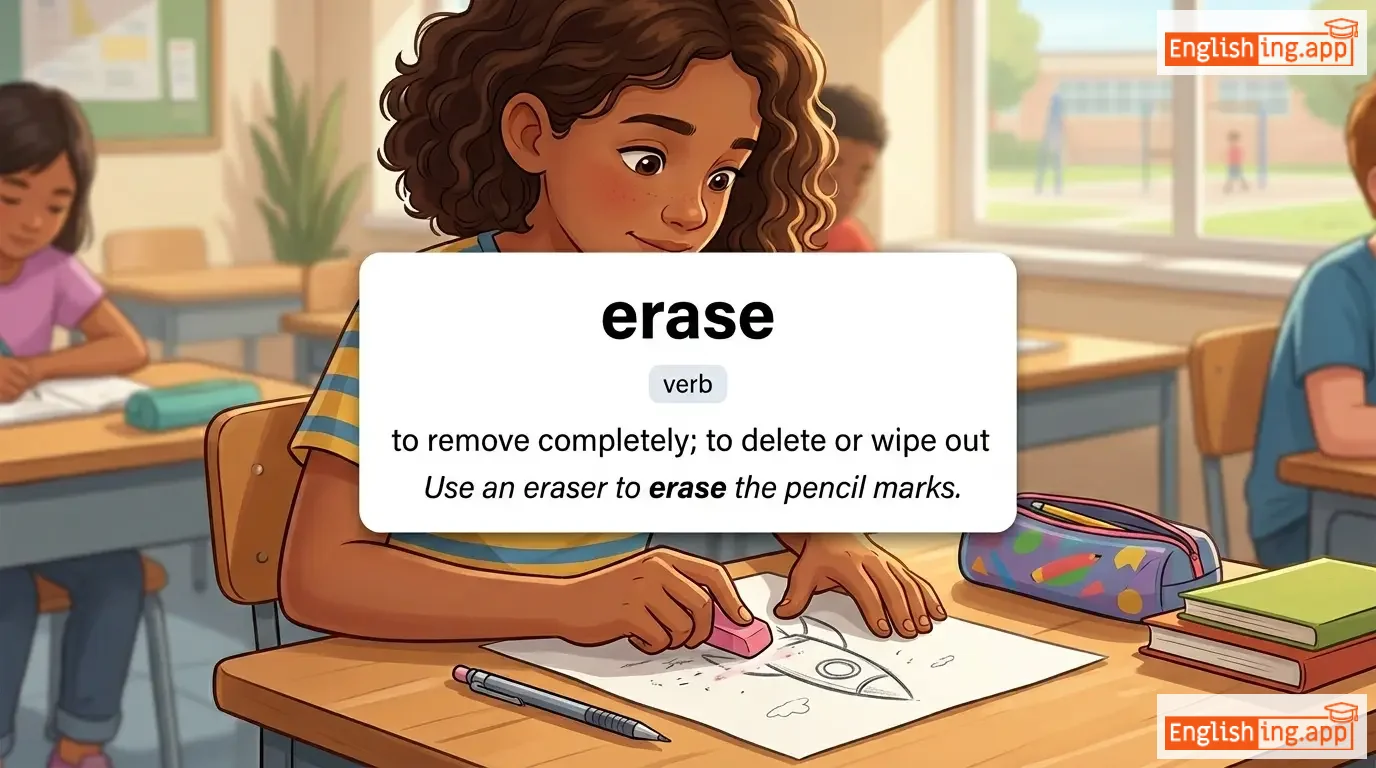
erase definition card — visual illustration of the meaning
verb
/ɪˈreɪs/
消す (kesu)

to remove completely; to delete or wipe out

"Use an eraser to erase the pencil marks."
"鉛筆の跡を消すために消しゴムを使う。" (Enpitsu no ato o kesu tame ni keshigomu o tsukau.)
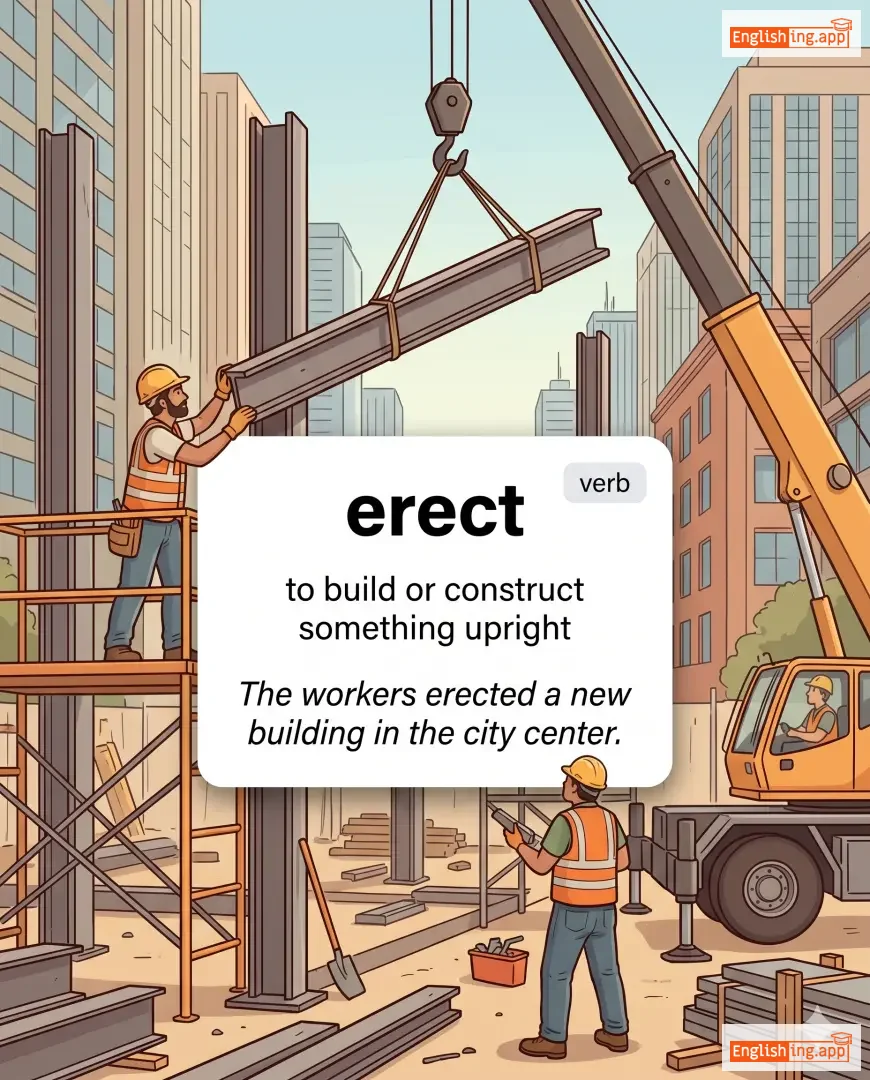
erect definition card — visual illustration of the meaning
verb
/ɪˈrɛkt/
建てる (tateru)

to build or construct something upright

"The workers erected a new building in the city center."
"労働者たちは市の中心に新しいビルをエレクトしました。" (Roudousha tachi wa shi no chuushin ni atarashii biru wo erekuto shimashita.)
erecting definition card — visual illustration of the meaning
verb
ɪˈrɛktɪŋ
建設する (kensetsu suru)

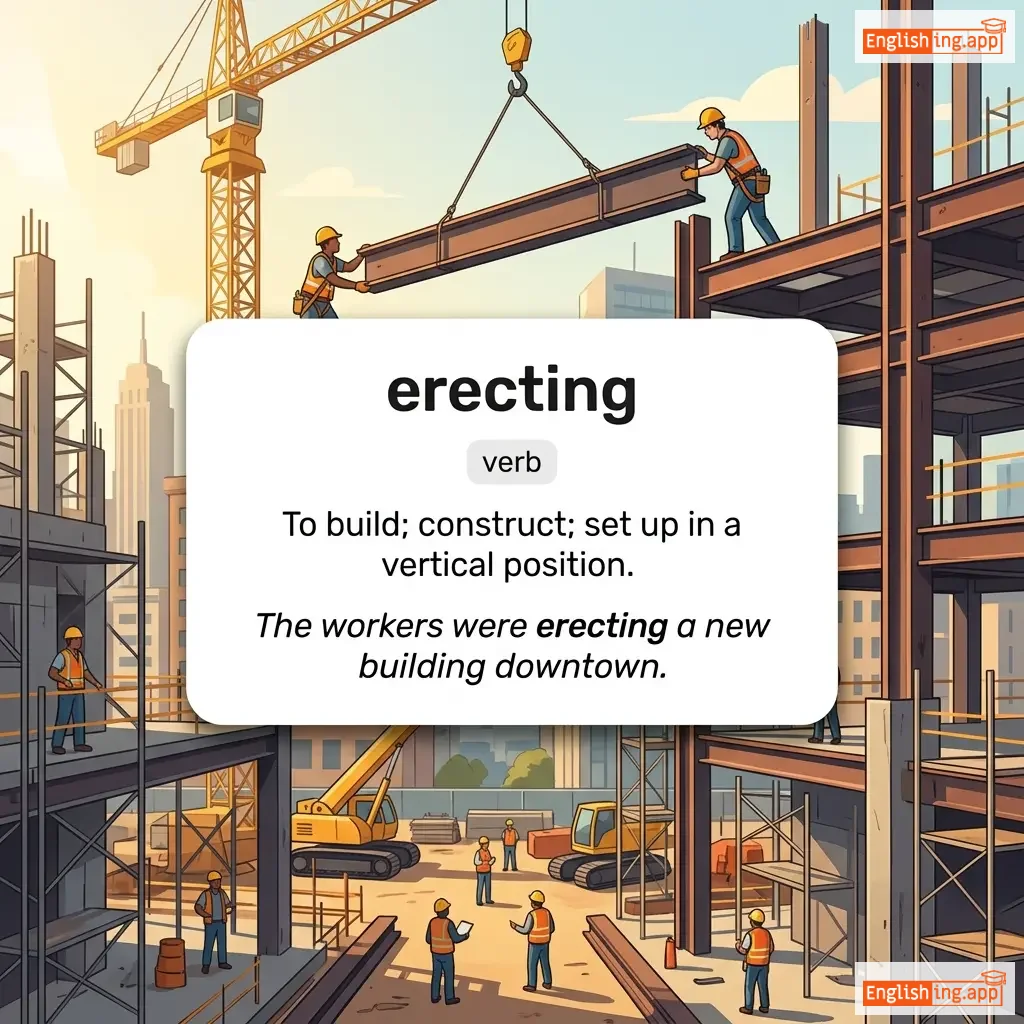
To build; construct; set up in a vertical position.

"The workers were erecting a new building downtown."
"労働者たちは市街地で新しい建物を建てていました。" (Roudou shatachi wa shigaichi de atarashii tatemono wo tateteimashita.)
ergonomic definition card — visual illustration of the meaning
adjective
/ˌɜː.ɡəˈnɒm.ɪk/
エルゴノミック (ergonomikku)

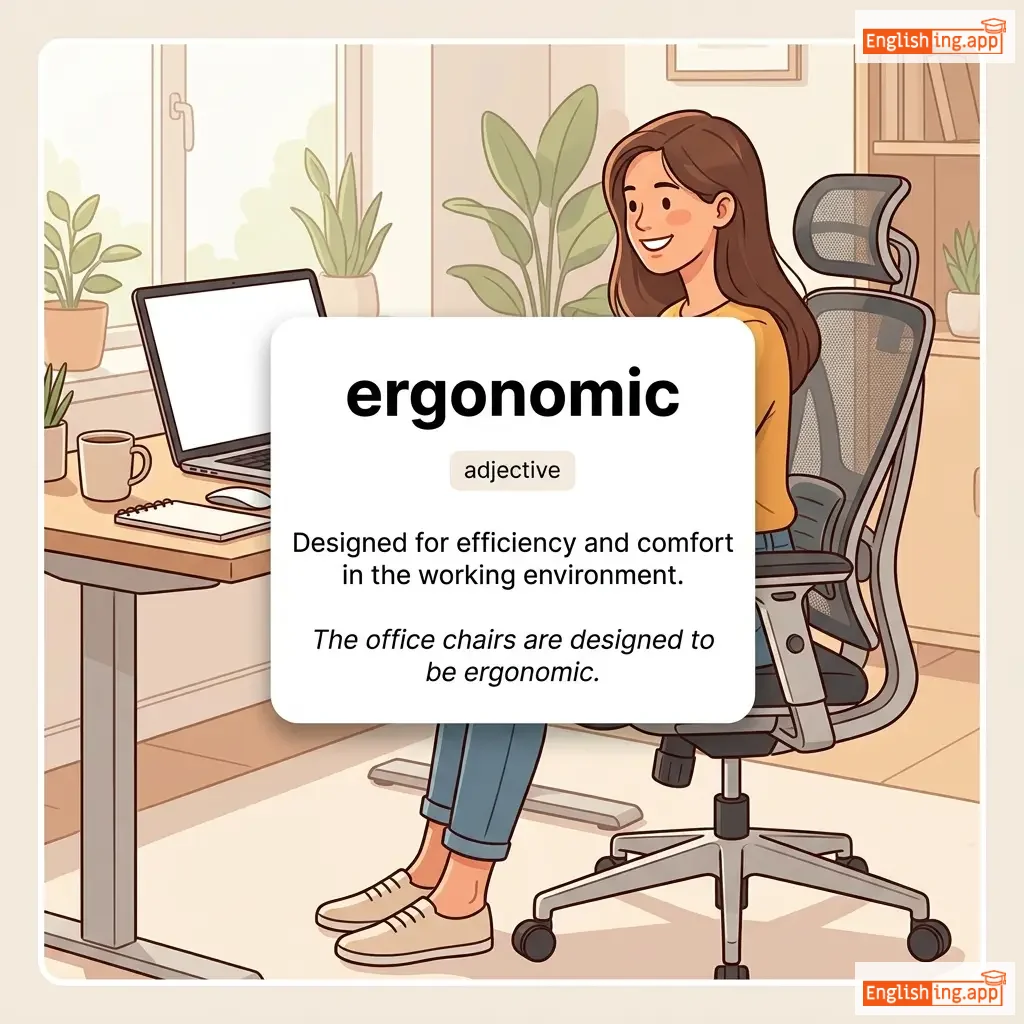
Designed for efficiency and comfort in the working environment.

"The office chairs are designed to be ergonomic."

"オフィスチェアはエルゴノミックにデザインされています。" (Ofisuchie wa erugonomikku ni dezain sareteimasu.)
verb
/ɪˈroʊd/
浸食 (shinshoku)

to gradually wear away or destroy by natural forces such as water, wind, or chemical action

"The coastline has begun to erode due to constant waves."
"海岸線は継続的な波のために浸食し始めた。" (Kaigan-sen wa keizokuteki na nami no tame ni shinshoku shihajimeta.)
erosion definition card — visual illustration of the meaning
noun
/ɪˈroʊ.ʒən/
浸食 (shinshoku)

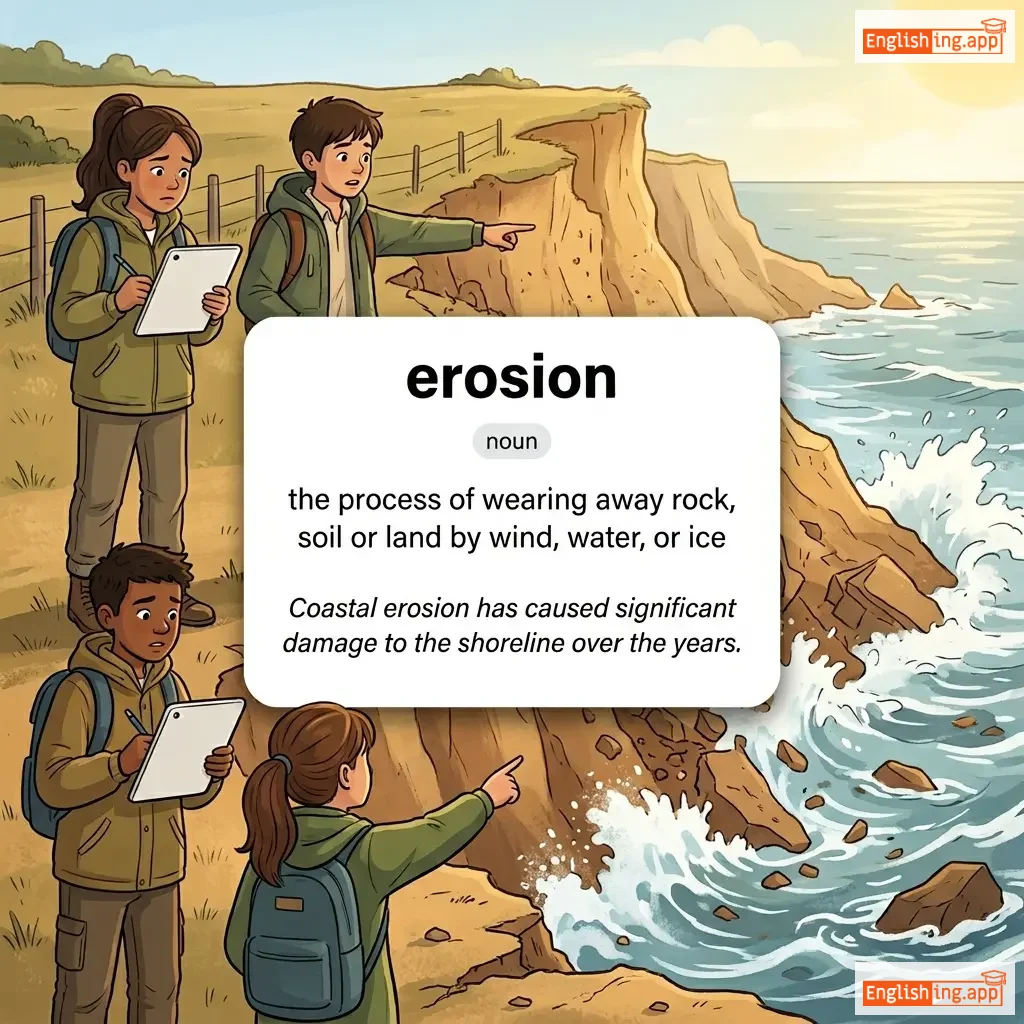
the process of wearing away rock, soil, or land by wind, water, or ice

"Coastal erosion has caused significant damage to the shoreline over the years."

"沿岸浸食は何年にもわたり、海岸線に重大な損傷を与えました。" (Enkan shinshoku wa nannen ni mo watari, kaigan sen ni juudaina sonshou o ataemashita.)
adjective
/ɪˈrɒtɪk/
エロティック (erotikku)

relating to or tending to arouse sexual desire or excitement

"The novel contained several erotic scenes."
"その小説にはいくつかのエロティックなシーンが含まれていました。" (Sono shousetsu ni wa ikutsuka no erotikku na shiin ga fukumarete imashita.)
verb
/ɜːr/
誤る (ayamaru)

to make a mistake or be incorrect

"To err is human, to forgive divine."

"誤ることは人間にとって自然なことであり、許すことは神聖である。" (Ayamaru koto wa ningen ni totte shizen na koto de ari, yurusukoto wa shinsei de aru.)
errant definition card — visual illustration of the meaning
adjective
/ˈɛrənt/
逸脱した (ittsudatsu shita)

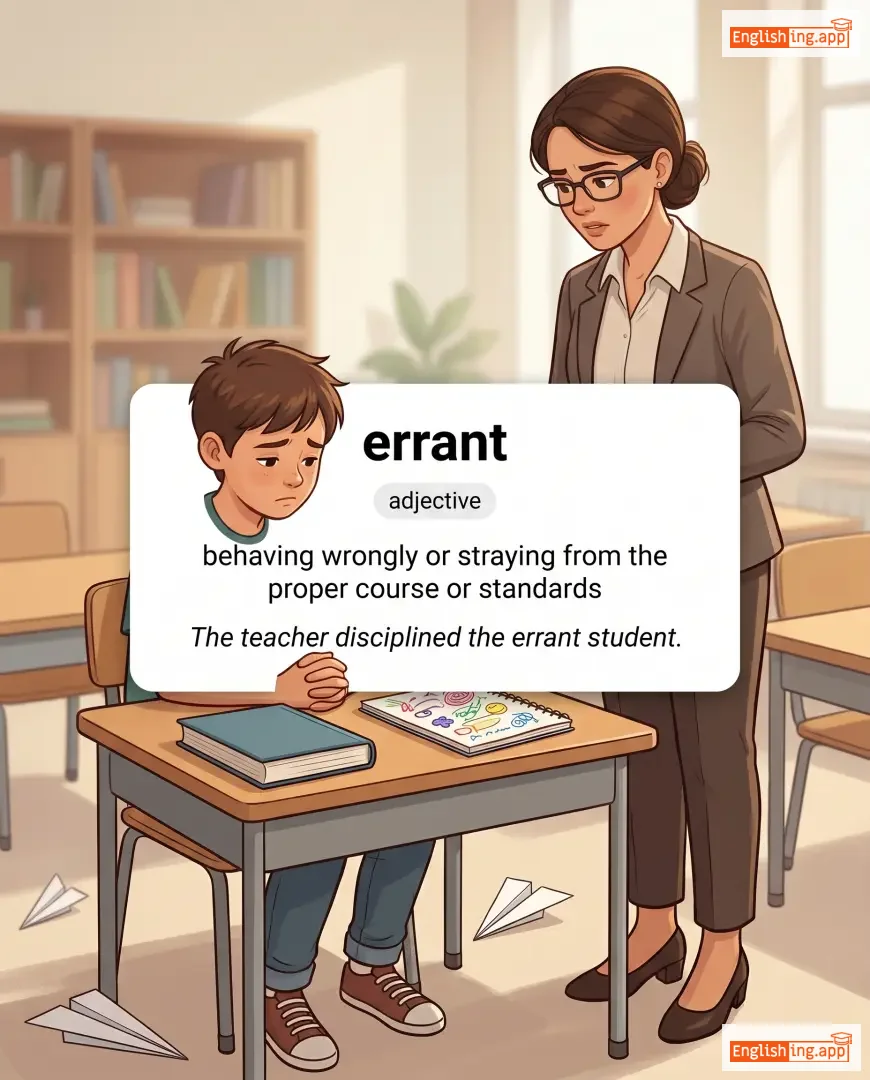
behaving wrongly or straying from the proper course or standards

"The teacher disciplined the errant student."
"教師は逸脱した生徒を罰しました。" (Kyōshi wa ittsudatsu shita seito o basshimashita.)
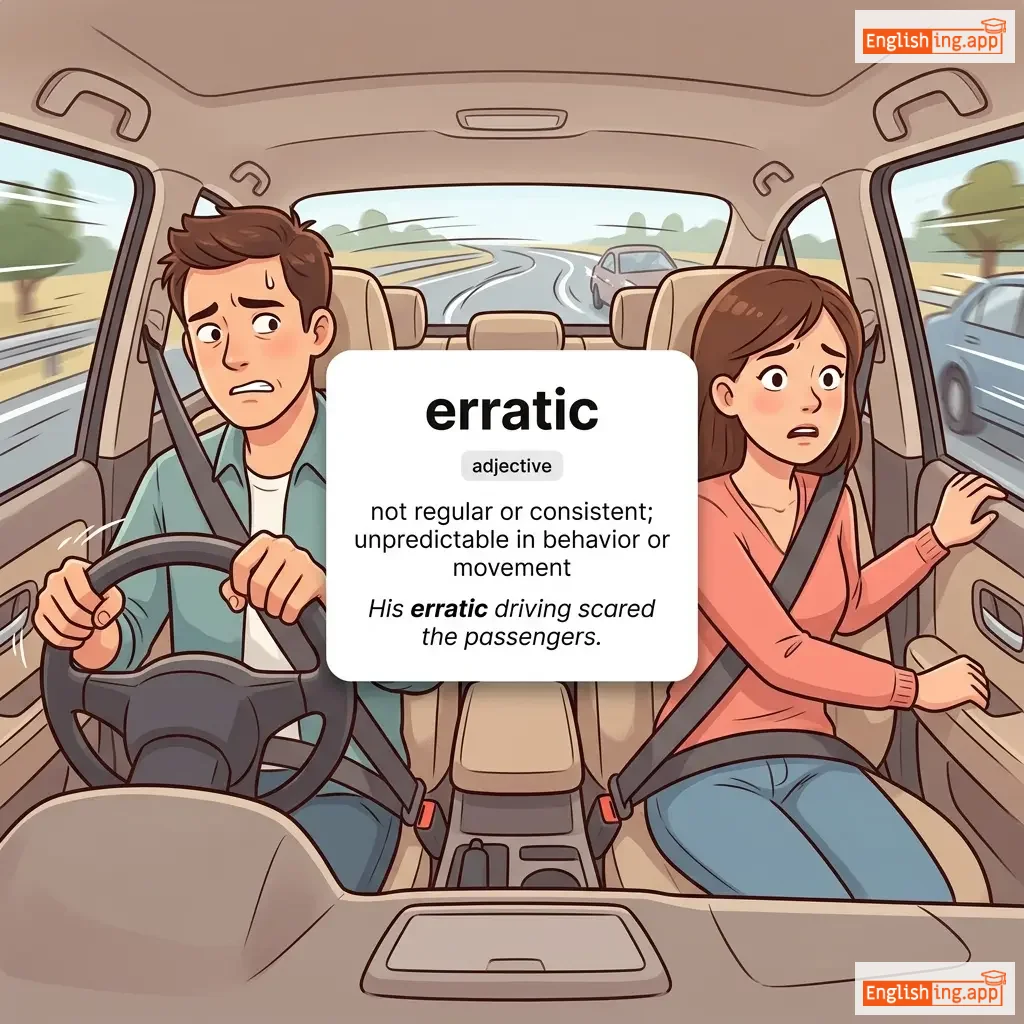
erratic definition card — visual illustration of the meaning
adjective
/ɪˈrætɪk/
不安定 (fuantei)

not regular or consistent; unpredictable in behavior or movement

"His erratic driving scared the passengers."
"彼の不安定な運転は乗客を怖がらせました。" (Kare no fuantei na unten wa jōkyaku o kowagarasemashita.)
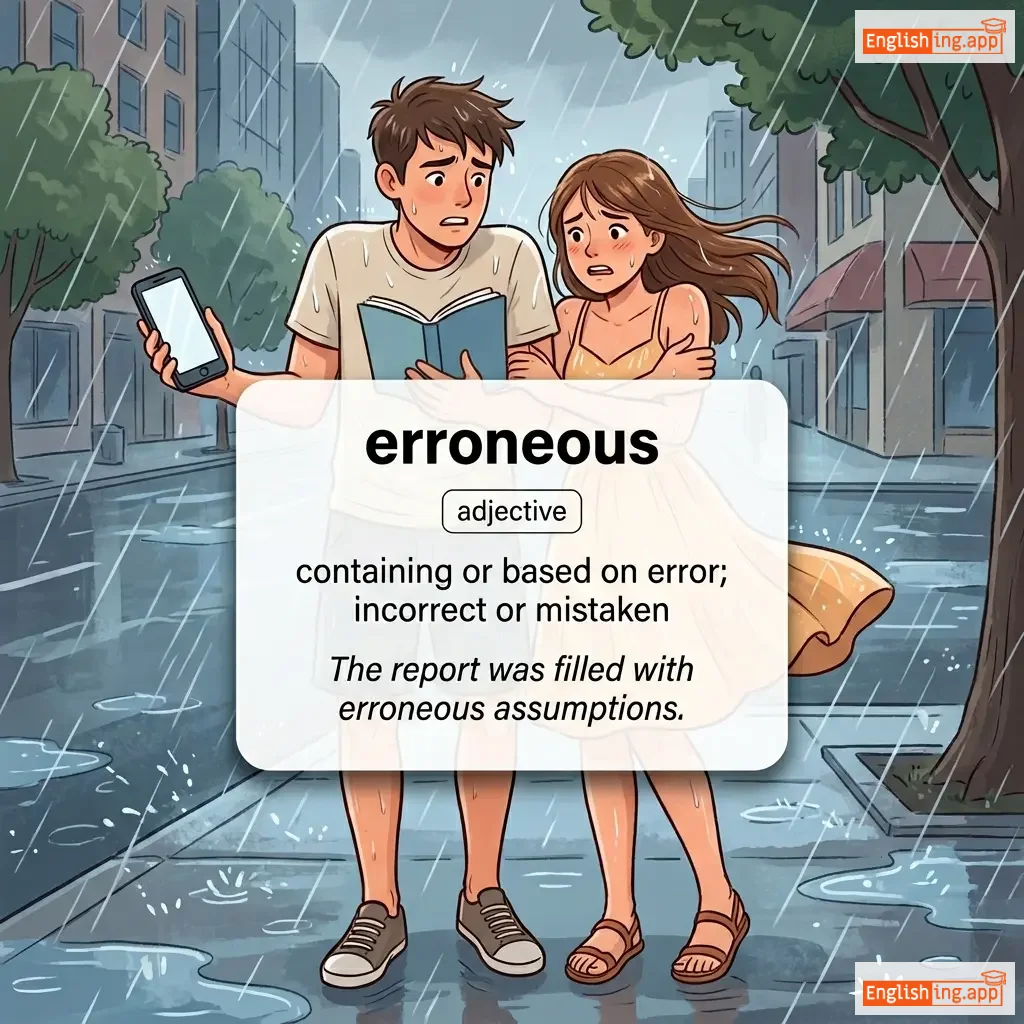
erroneous definition card — visual illustration of the meaning
adjective
/ɪˈrəʊniəs/
誤った (ayamatta)

containing or based on error; incorrect or mistaken

"The report was filled with erroneous assumptions."

"報告書は誤った仮定でいっぱいだった。" (Hōkokusho wa ayamatta katei de ippai datta.)
noun
/ˈɛrər/
誤り (ayamari)

A mistake or inaccuracy in action, thought, or judgment.

"The report contained a major error in the data analysis."

"レポートにはデータ分析における重大な誤りが含まれていました。" (Repoto ni wa deeta bunseki ni okeru juudaina ayamari ga fukumarete imashita.)
adjective
/ˈɛrzæts/
代用品 (daiyōhin)

made or used as a substitute, typically an inferior one

"The cheap shoes were made of ersatz leather."

"安い靴は代用品の合成皮革で作られていました。" (Yasui kutsu wa daiyōhin no gōsei hikaku de tsukurarete imashita.)
adjective
/ˈɜːrstwaɪl/
かつての (katsute no)

former or in the past

"They were erstwhile friends but no longer speak."
"彼らはかつての友達でしたが、今は話しません。" (Karera wa katsute no tomodachi deshita ga, ima wa hanashimasen.)
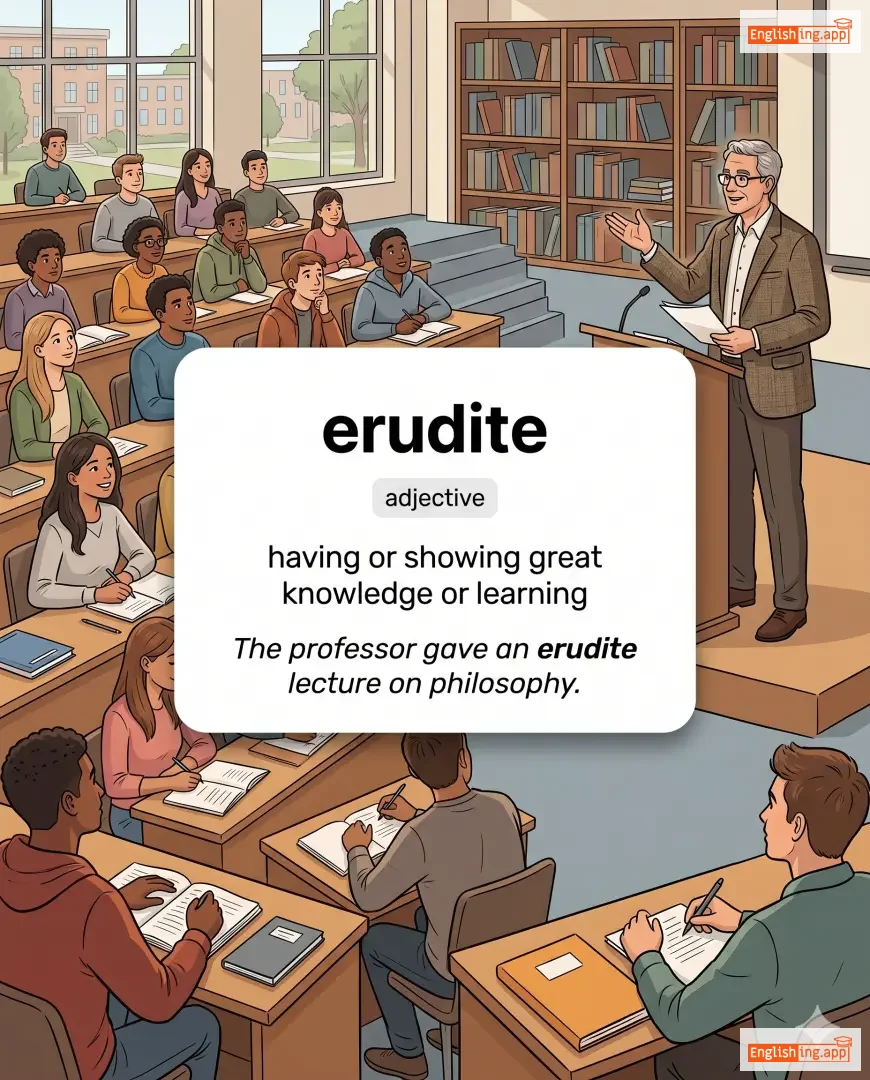
erudite definition card — visual illustration of the meaning
adjective
/ˈɛrjʊˌdaɪt/
博識 (hakushiki)

having or showing great knowledge or learning

"The professor gave an erudite lecture on philosophy."

"教授は哲学について博識な講義をしました。" (Kyouju wa tetsugaku ni tsuite hakushiki na kougi o shimashita.)
erudition definition card — visual illustration of the meaning
noun
/ˌɛrjʊˈdɪʃən/
博識 (hakushiki)

extensive knowledge acquired through reading and study

"Her erudition was evident in her detailed analysis of the text."

"彼女の博識はテキストの詳細な分析に明らかに現れていた。" (Kanojo no hakushiki wa tekisuto no shousai na bunseki ni akirakani arawarete ita.)
verb
/ɪˈrʌpt/
噴火する (funka suru)

to burst forth suddenly and violently

"The volcano erupted after centuries of dormancy."

"火山は何世紀もの間沈黙していた後、エラプトしました。" (Kazan wa nanseiki mono aida chinmoku shite ita ato, eraputo shimashita.)
noun
/ɪˈrʌp.ʃən/
火山の噴火 (kazan no funka)

a sudden violent occurrence or outburst; volcanic explosion

"The volcanic eruption forced thousands of people to evacuate the area."
"火山の噴火は、何千人もの人々にその地域から避難するよう強制した。" (Kazan no funka wa, nansen-nin mo no hitobito ni sono chiiki kara hinan suru yō kyōsei shita.)
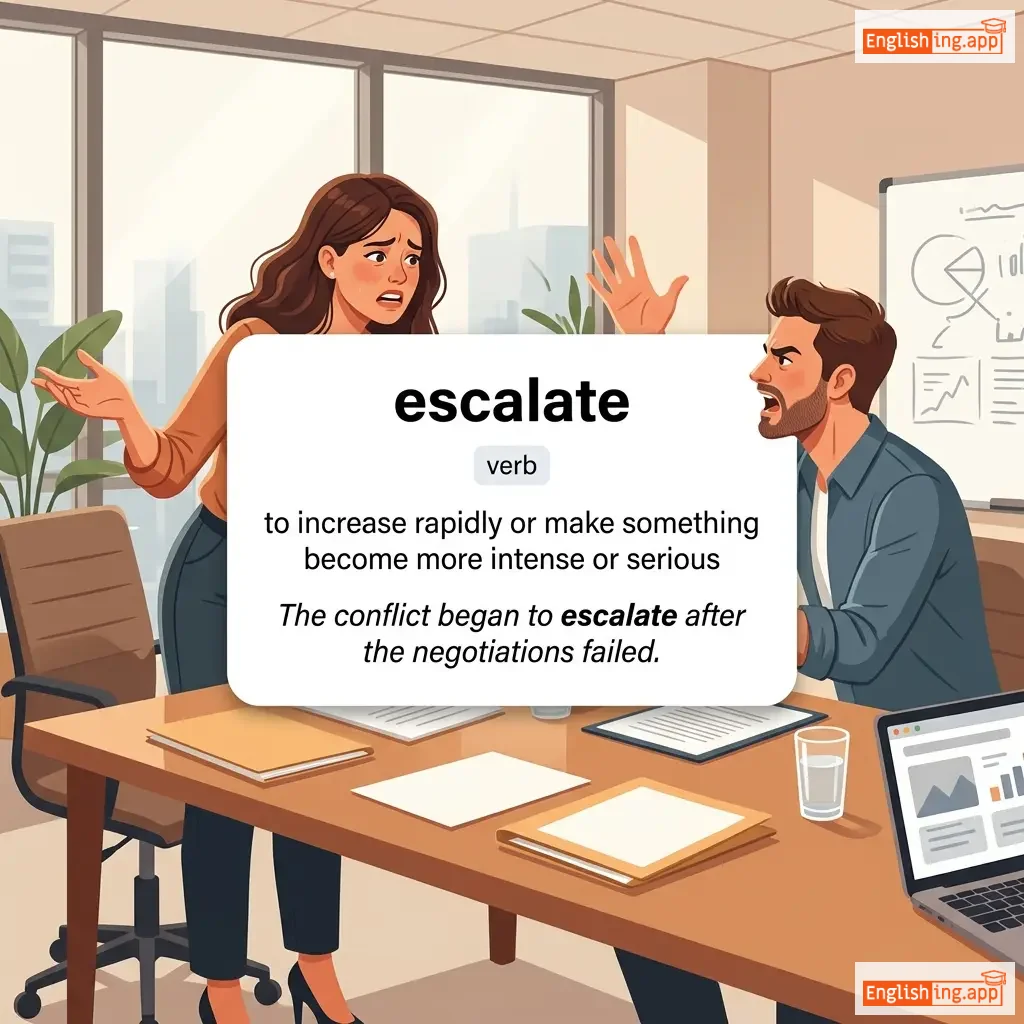
escalate definition card — visual illustration of the meaning
verb
/ˈɛskəleɪt/
エスカレート (esukarēto)

to increase rapidly or make something become more intense or serious

"The conflict began to escalate after the negotiations failed."
"交渉が失敗した後、紛争はエスカレートし始めた。" (Kōshō ga shippai shita ato, funsō wa esukarēto shihajimeta.)
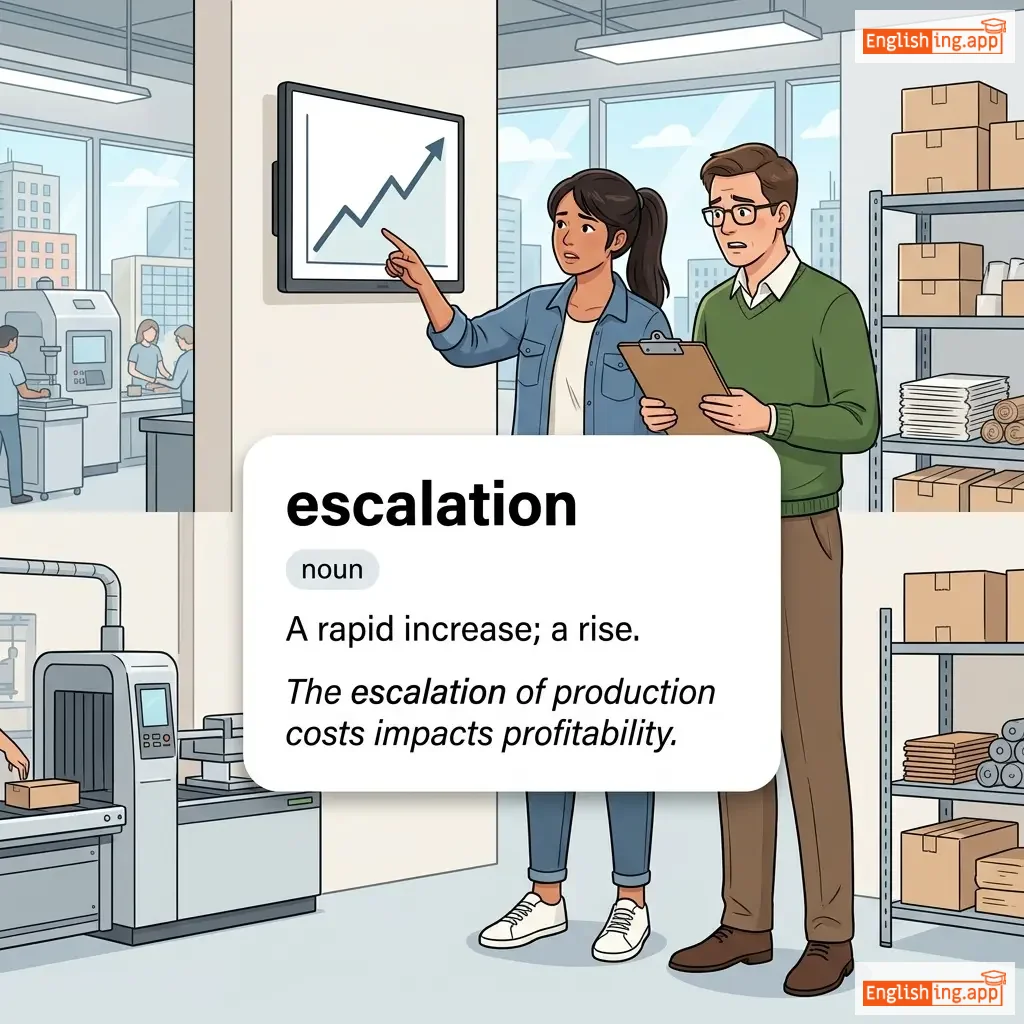
escalation definition card — visual illustration of the meaning
noun
ˌes.kəˈleɪ.ʃən
急激な増加; 上昇。 (kyūgeki na zōka; jōshō)

A rapid increase; a rise.

"The escalation of production costs impacts profitability."

"生産コストの増加は収益性に影響を与えます。" (Seisan kosuto no zōka wa shūekisei ni eikyō o ataemasu.)
noun
/ˈɛskəpeɪd/
冒険 (bōken)

an adventurous, exciting, or reckless act

"Their summer escapade included camping and mountain climbing."

"彼らの夏の冒険にはキャンプと山登りが含まれていました。" (Karera no natsu no bōken ni wa kyampu to yama nobori ga fukumarete imashita.)
🏃‍♂️

Escape (eskeipu)

verb
/ɪˈskeɪp/
逃げる (nigeru)

To break free from confinement or control; to get away.

"The prisoner tried to escape from jail."

"囚人は刑務所から逃げようとした。" (Shuujin wa keimusho kara nigeyou to shita.)
verb
/ɪsˈtʃuː/
避ける (sakeru)

to deliberately avoid or abstain from something

"She chose to eschew junk food for a healthier diet."

"彼女は健康的な食事のためにジャンクフードを避けることを選びました。" (Kanojo wa kenko-teki na shokuji no tame ni janku fudo o sakeru koto o erabimashita.)
verb
/ˈɛskɔrt/
付き添う (tsukisou)

to accompany someone; to guide or protect while going somewhere

"The guard escorted the visitor to the office."

"ガードは訪問者をオフィスにエスコートしました。" (Gaado wa hōmonsha wo ofisu ni esukōto shimashita.)
noun
/ɪˈskʌtʃən/
家族の紋章が描かれた盾 (kazoku no monshō ga egakareta tate)

a shield or emblem bearing a coat of arms

"The family crest was displayed on the escutcheon above the fireplace."

"家族の紋章は暖炉の上の盾に展示されていた。" (Kazoku no monshō wa danro no ue no tate ni tenji sarete ita.)
esoteric definition card — visual illustration of the meaning
adjective
/ˌɛsəˈtɛrɪk/
秘教的 (hikyou teki)

intended for or understood by only a small number of people with special knowledge

"The professor gave an esoteric lecture on ancient philosophy."

"教授は古代哲学に関する秘教的な講義を行いました。" (Kyouju wa kodai tetsugaku ni kansuru hikyou teki na kougi wo okonai mashita.)
adjective
/ɪˈspeʃəl/
特別な (tokubetsu na)

Particularly remarkable or significant; distinguished from others

"This is an especial opportunity you should not miss."

"これは見逃せない特別な機会です。" (Kore wa minogasenai tokubetsu na kikai desu.)
adverb
/ɪˈspɛʃəli/
特に (toku ni)

Used to single out one person, thing, or situation over all others.

"I love all kinds of fruit, especially mangoes."

"私はすべての種類の果物が好きですが、特にマンゴーが好きです。" (Watashi wa subete no shurui no kudamono ga suki desu ga, toku ni mango ga suki desu.)
noun
/ˈɛspiənɑːʒ/
スパイ活動 (supai katsudou)

The practice of spying or using spies to gather secret information, usually for political or military purposes.

"The agent was arrested on charges of espionage against the state."

"そのエージェントは国家に対するスパイ活動の容疑で逮捕されました。" (Sono eejento wa kokka ni taisuru supai katsudou no yougi de taiho saremashita.)
verb
/ɪˈspaʊz/
支持する (shiji suru)

To adopt or support a cause, belief, or way of life.

"She espoused the philosophy of nonviolence throughout her career."

"彼女はキャリアを通じて非暴力の哲学を支持していました。" (Kanojo wa kyaria o tsūjite hibōryoku no tetsugaku o shiji shiteimashita.)
noun
/ɛˌspriː də ˈkɔːr/
チームスピリット (chīmusupiritto)

A feeling of pride, fellowship, and loyalty shared by members of a group.

"The team's esprit de corps was evident in their cooperative effort."

"チームのスピリットは、彼らの協力的な努力に明らかに現れていた。" (Chīmu no supiritto wa, karera no kyōryokuteki na doryoku ni akiraka ni arawarete ita.)
verb
/ɪˈspaɪ/
見る (miru)

To catch sight of or notice something, especially from a distance.

"From the hilltop, she espied a small village in the valley."

"丘の頂上から、彼女は谷間に小さな村を見つけました。" (Oka no chōjō kara, kanojo wa tani ma ni chiisana mura o mitsukemashita.)
noun
/ˈɛskwaɪər/
エスクワイア (esukuwia)

A title of respect often used after a man's name, especially for lawyers in the United States.

"John Smith, Esquire, will be representing the client in court."
"ジョン・スミス、エスクワイア、は法廷でクライアントを代表する予定です。" (Jon Sumisu, Esukuwia, wa hōtei de kuraianto o daihyō suru yotei desu.)
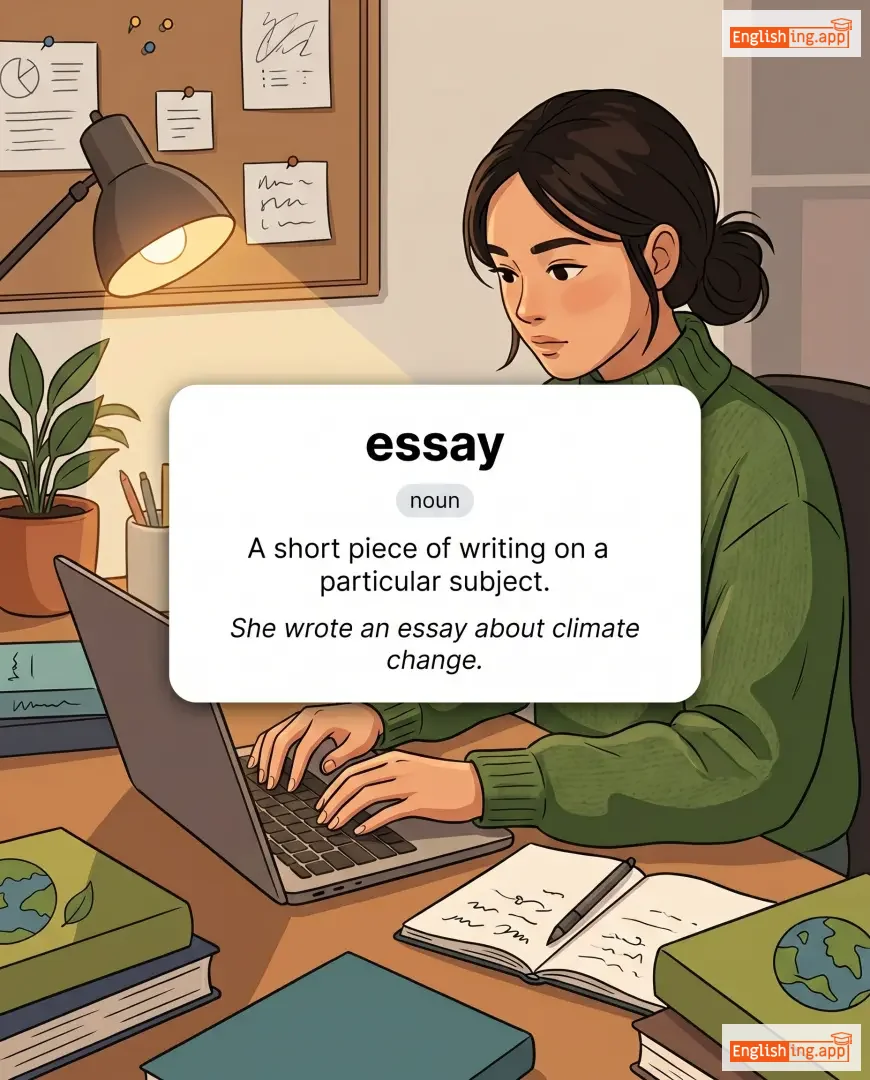
essay definition card — visual illustration of the meaning
noun
/ˈɛseɪ/
エッセイ (essei)

A short piece of writing on a particular subject.

"She wrote an essay about climate change."

"彼女は気候変動についてのエッセイを書きました。" (Kanojo wa kikō hendō ni tsuite no essei o kakimashita.)
noun
/ˈɛsəns/
本質 (honshitsu)

The intrinsic nature or indispensable quality of something that determines its character.

"The essence of democracy is freedom of speech."

"民主主義の本質は言論の自由です。" (Minshu shugi no honshitsu wa genron no jiyū desu.)
adjective
/ɪˈsɛnʃəl/
必要不可欠 (hitsuyō fukaketsu)

Absolutely necessary; extremely important.

"Water is essential for life."

"水は生命にとって必要不可欠です。" (Mizu wa seimei ni totte hitsuyō fukaketsu desu.)
adverb
/ɪˈsɛnʃəli/
本質的に (honshitsuteki ni)

Used to emphasize the basic or fundamental nature of something.

"The two plans are essentially the same."

"その2つの計画は本質的に同じです。" (Sono futatsu no keikaku wa honshitsuteki ni onaji desu.)
verb
/ɪˈstæblɪʃ/
設立する (setsuritsu suru)

To set up, create, or bring into existence something on a firm basis.

"The company plans to establish a new office in Dhaka."
"その会社はダッカに新しいオフィスを設立する予定です。" (Sono kaisha wa Dāka ni atarashī ofisu o setsuritsu suru yotei desu.)
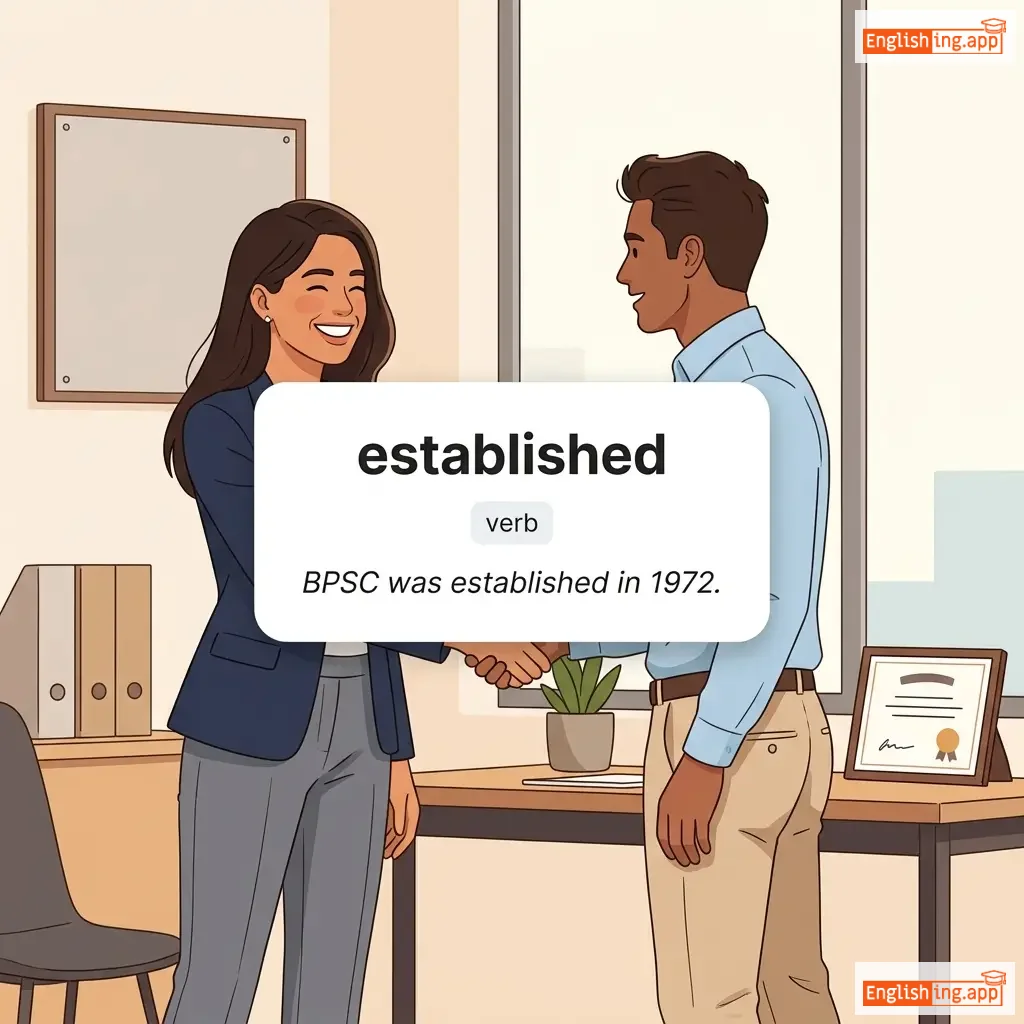
established definition card — visual illustration of the meaning
verb
ɪˈstæb.lɪʃt
設立された (setsuritsusareta)

Set up on a firm or permanent basis; having existed for a long time and therefore recognized.

"BPSC was established in 1972."

"BPSCは1972年に設立されました。" (BPSC wa 1972-nen ni setsuritsu saremashita.)
noun
/ɪˈstæblɪʃmənt/
設立 (setsuritsu)

An organization, business, or system; the act of setting something up.

"The restaurant is a new establishment in town."

"レストランは町の新しい設立です。" (Resutoran wa machi no atarashī setsuritsu desu.)
noun
/ɪˈsteɪt/

A large area of land, property, or possessions owned by someone, often including a big house.

"The family owned a large estate in the countryside."

noun/verb
/ɪˈstiːm/
尊敬 (sonkei)

Respect and admiration, typically for a person.

"She is held in high esteem by her colleagues."

"彼女は同僚から高く評価されています。" (Kanojo wa dōryō kara takaku hyōka sareteimasu.)
adjective
/ɪˈstiːmd/
尊敬される (sonkei sareru)

respected and admired; held in high regard

"He is an esteemed professor at the university."

"彼は大学で尊敬されている教授です。" (Kare wa daigaku de sonkei sarete iru kyōju desu.)