語彙集

英単語辞書 | 単語の意味、定義、例文

noun
/krʊk/
詐欺師 (sagishi)

a dishonest person, especially a criminal

"The police finally caught the crook who had been stealing cars."

"警察は最終的に車を盗んでいた詐欺師を捕まえました。" (Keisatsu wa saishū-teki ni kuruma o nusunde ita sagishi o tsukamaemashita.)
verb
/kruːn/
優しく低く穏やかな声で歌うまたは歌うこと (Yasashiku hikuku odayakana koe de utau matawa utau koto)

to sing or hum in a soft, low, and gentle voice

"She crooned a lullaby to help the baby fall asleep."
"彼女は赤ちゃんを寝かしつけるために子守唄を歌った。" (Kanojo wa akachan o nekashitsukeru tame ni komoriuta o utatta.)
crop definition card — visual illustration of the meaning
noun
/krɒp/
作物 (sakumotsu)

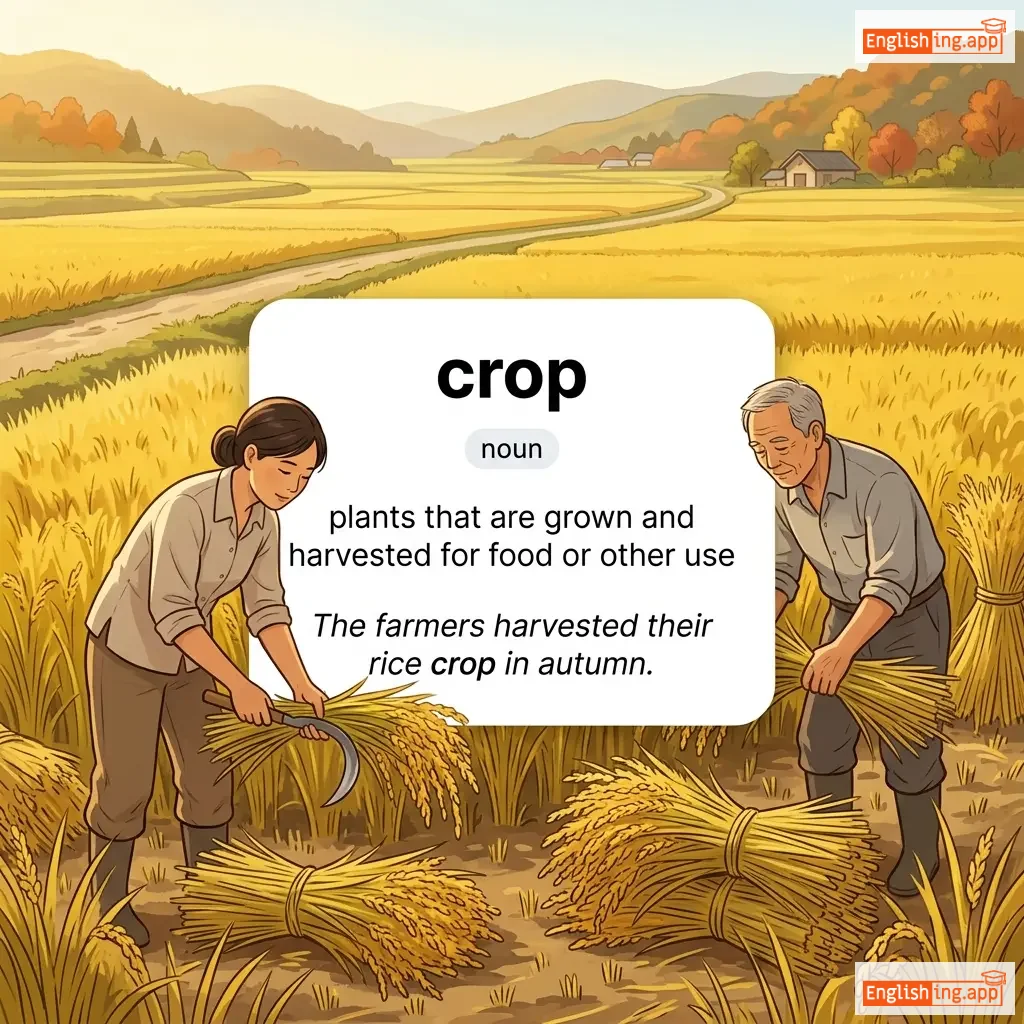
plants that are grown and harvested for food or other use

"The farmers harvested their rice crop in autumn."
"農家は秋に稲作の作物を収穫しました。" (Nōka wa aki ni inasaku no sakumotsu o shūkaku shimashita.)
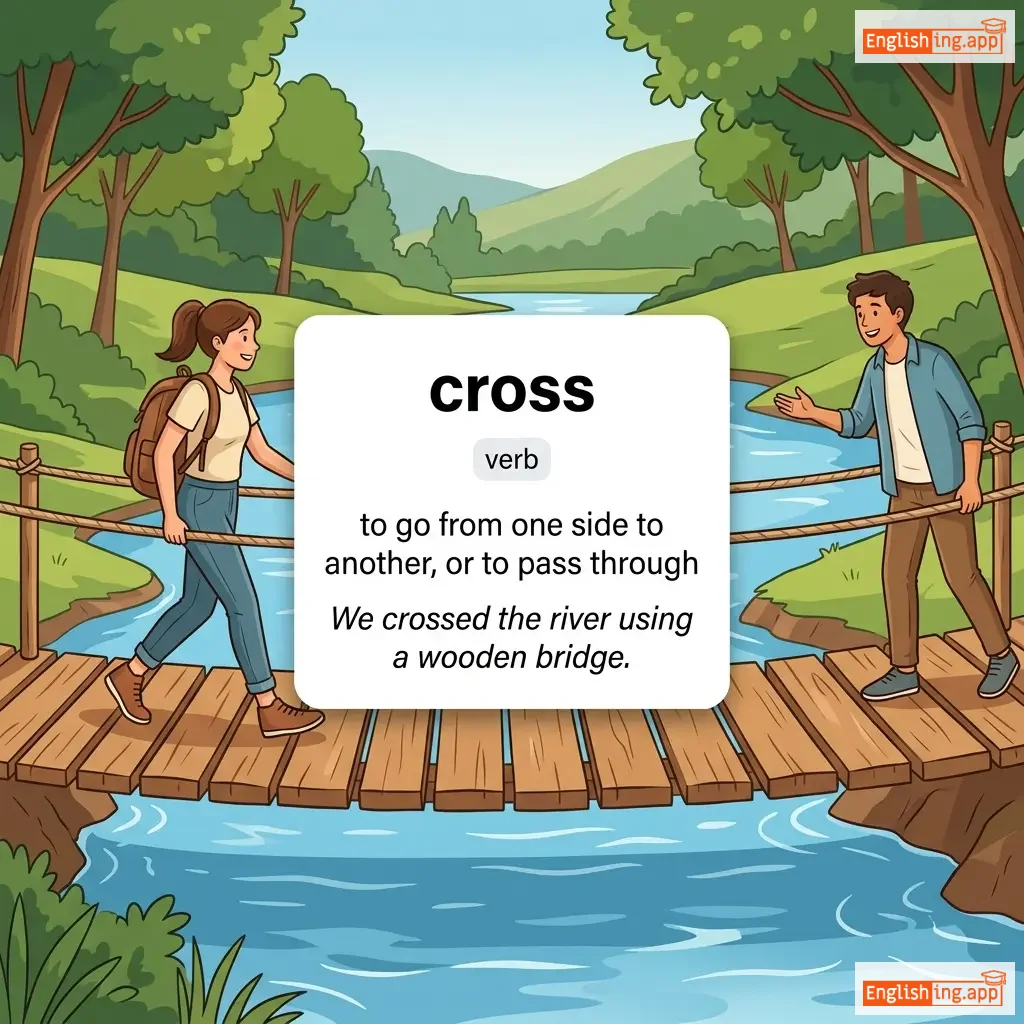
cross definition card — visual illustration of the meaning
verb
/krɒs/
渡る (wataru)

to go from one side to another, or to pass through

"We crossed the river using a wooden bridge."

"私たちは木製の橋を使って川を渡りました。" (Watashitachi wa mokusei no hashi o tsukatte kawa o watarimashita.)
verb
/ˈkrɒs.briːd/
交配 (kōhai)

to produce an animal or plant by mating two different breeds, varieties, or species

"Farmers crossbreed cows to improve milk production."

"農家は牛の乳生産を向上させるために交配します。" (Nōka wa ushi no chū seisan o kōjō saseru tame ni kōhai shimasu.)
adverb
/ˈkrɒswaɪz/
交差方向 (kousa houkou)

in the form of a cross; diagonally across

"Place the logs crosswise to build a stable fire."

"安定した火を作るために丸太を交差方向に置いてください。" (Anteishita hi wo tsukuru tame ni maruta wo kousa houkou ni oite kudasai.)
adjective
/ˈkrɒtʃ.ə.ti/
不機嫌 (bukigen)

bad-tempered, easily annoyed, and often complaining

"The crotchety old man yelled at the children for playing near his house."

"不機嫌な老人は、自分の家の近くで遊んでいる子供たちに叫んだ。" (Bukigen na rōjin wa, jibun no ie no chikaku de asonde iru kodomotachi ni sakenda.)
verb
/kraʊtʃ/

to bend your knees and lower your body close to the ground

"The cat crouched before leaping at its prey."

🐦‍⬛

Crow (クロ)

noun
/kroʊ/
カラス (karasu)

a large black bird known for its intelligence and harsh call

"The crow cawed loudly from the tree branch."

"カラスは木の枝から大きな声で鳴きました。" (Karasu wa ki no eda kara ōkina koe de nakimashita.)
noun
/ˈkroʊ.bɑːr/
バール (bāru)

a heavy iron bar with a curved end used as a lever for prying things apart

"He used a crowbar to remove the old nails."

"彼は古い釘を取り除くためにクローバーを使いました。" (Kare wa furui kugi o torinozoku tame ni kurōbā o tsukaimashita.)
noun
/kraʊd/
群衆 (gunshuu)

a large number of people gathered together

"A huge crowd gathered to watch the concert."

"コンサートを見るために大きな群衆が集まりました。" (Konsaato o miru tame ni ookina gunshuu ga atsumarimashita.)
🚶‍♂️🚶‍♀️

crowded (happiness)

adjective
/ˈkraʊdɪd/
幸せ (shiawase)

filled with too many people or things

"The bus was so crowded that I could hardly move."

"彼女は賞を受け取ったとき、自分の幸せを隠すことができなかった。" (Kanojo wa shō o uketotta toki, jibun no shiawase o kakusu koto ga dekinakatta.)
noun
/kraʊn/
王冠 (ōkan)

a circular ornamental headdress worn by a monarch as a symbol of authority

"The king wore his golden crown at the ceremony."

"王は儀式で金の王冠をかぶった。" (Ō wa gishiki de kin no ōkan o kabutta.)
crucial definition card — visual illustration of the meaning
adjective
/ˈkruːʃəl/
非常に重要 (hijou ni juuyou)

extremely important or necessary

"Trust is crucial for a strong relationship."

"信頼は強い関係にとって非常に重要です。" (Shinrai wa tsuyoi kankei ni totte hijou ni juuyou desu.)
noun
/ˈkruːsɪbəl/
過酷な試練、溶鉱炉 (kakoku na shiren, youkourou)

a severe test or trial; a container used for heating substances to very high temperatures

"The team emerged stronger from the crucible of competition."

"チームは競争の過酷な試練を乗り越えて、より強くなった。" (Chīmu wa kyōsō no kakoku na shiren o norikoete, yori tsuyoku natta.)
adjective
/kruːd/
原油 (genyu)

in a natural or raw state; not yet processed or refined

"The crude oil is processed into fuel and chemicals."

"原油は燃料や化学薬品に加工されます。" (Genyu wa nenryō ya kagaku yakuhin ni kakō saremasu.)
adjective
/ˈkruːəl/
残酷 (zankoku)

Willfully causing pain or suffering to others, or feeling no concern about it.

"It was cruel to make fun of the injured boy."

"負傷した男の子を笑うのは残酷だった。" (Fushō shita otoko no ko o warau no wa zankoku datta.)
noun
/ˈkruː.əl.ti/
残酷; 非人道的な扱い; 苦痛を引き起こす行動 (zankoku, hi jindō-teki na atsukai, kutsū o hikiokosu kōdō)

behavior that causes pain or suffering to others; the quality of being cruel

"The documentary exposed the cruelty of factory farming to animals."

"ドキュメンタリーは、工場式農業が動物に対して行う残酷さを暴露した。" (Dokyumentarī wa, kōjō-shiki nōgyō ga dōbutsu ni taishite okonau zankokusa o bakuro shita.)
noun
/ˈkruːɪt/
小さな容器 (chiisana youki)

a small container, especially for salt, pepper, oil, or vinegar, used at a dining table

"She filled the cruet with olive oil for the salad."

"彼女はサラダのためにオリーブオイルでクルエットを満たしました。" (Kanojo wa sarada no tame ni orību oiru de kuruetto wo mitashimashita.)
🛳️

cruise

verb
/kruːz/
幸せ (shiawase)

to travel smoothly at a moderate speed, especially for pleasure

"They decided to cruise along the coast during their vacation."

"彼女は賞を受け取ったときの幸せを隠すことができませんでした。" (Kanojo wa shō o uketotta toki no shiawase o kakusu koto ga dekimasen deshita.)
verb
/ˈkrʌmpəl/
くしゃくしゃにする (kushakushani suru)

to crush something into folds or wrinkles

"He crumpled the paper and threw it in the bin."

"彼は紙をくしゃくしゃにしてゴミ箱に投げ入れました。" (Kare wa kami o kushakusha ni shite gomibako ni nageiremashita.)
noun/verb
/kruːˈseɪd/
十字軍、激しいキャンペーン (jūjigun, hageshī kyampēn)

a vigorous campaign for a social, political, or religious cause; to fight passionately for a cause

"She has been crusading for women's rights all her life."

"彼女は一生を女性の権利のために戦っています。" (Kanojo wa isshō o josei no kenri no tame ni tatakatte imasu.)
💔

crush

verb
/krʌʃ/

to press or squeeze something so hard that it is damaged or destroyed

"He accidentally crushed the paper cup in his hand."

noun
/krʌst/
外皮 (gaihi)

the hard outer surface of something, especially bread or the Earth's outer layer

"He cut off the crust of the bread before eating."

"彼は食べる前にパンの外皮を切り取った。" (Kare wa taberu mae ni pan no gaihi o kirittotta.)
noun
/krʌˈsteɪʃən/
硬い殻を持つ水生動物 (katai kara o motsu suisei dōbutsu)

an aquatic animal with a hard shell, such as crabs, lobsters, and shrimps

"Crabs and lobsters are well-known crustaceans."

"カニやロブスターはよく知られている甲殻類です。" (Kani ya robusutā wa yoku shirarete iru kōkakurui desu.)
adjective
/krʌˈsteɪʃəs/
硬い殻のある (katai kara no aru)

relating to or having a hard shell like a crustacean

"The scientist studied the crustaceous fossils."

"科学者は硬い殻のある化石を研究しました。" (Kagakusha wa katai kara no aru kaseki o kenkyū shimashita.)
noun
/krʌtʃ/
松葉杖, 支え (matsu yabutsu, sasae)

a support used by someone injured to walk; also something relied upon for support or help

"He had to use crutches after breaking his leg."

"彼は足を骨折した後、松葉杖を使わなければならなかった。" (Kare wa ashi o kossetsu shita ato, matsuyabutsu o tsukawanakereba naranakatta.)
noun
/krʌks/
核心 (kakushin)

the most important or decisive point of an issue

"The crux of the problem lies in poor communication."

"問題の核心はコミュニケーション不足にあります。" (Mondai no kakushin wa komyunikeeshon busoku ni arimasu.)
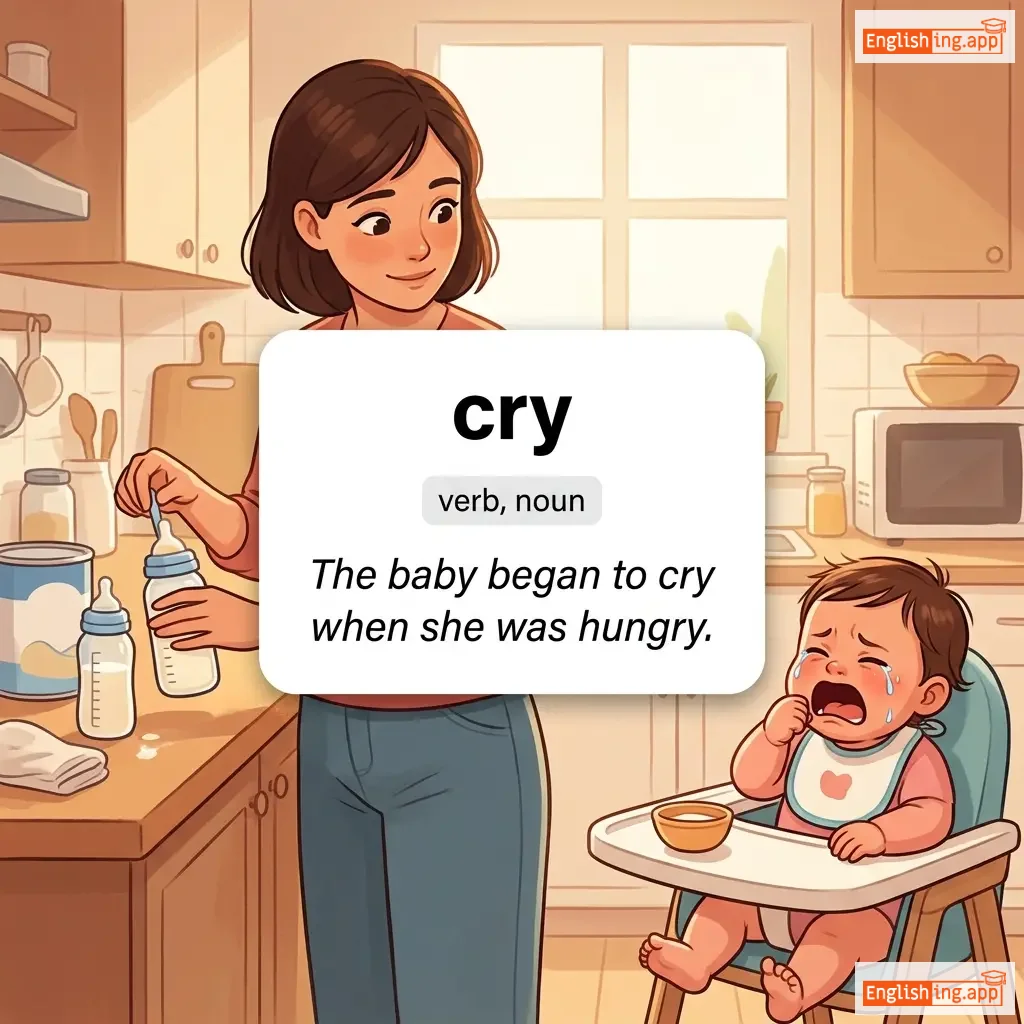
cry definition card — visual illustration of the meaning
😢

cry

verb, noun
/kraɪ/

To shed tears as an expression of emotion such as sadness or pain; also a loud call or shout.

"The baby began to cry when she was hungry."

noun
/krɪpt/
地下室 (chikashitsu)

an underground chamber, especially one beneath a church, used as a burial place

"The tourists explored the ancient crypt beneath the cathedral."

"観光客は大聖堂の下にある古代の地下室を探索しました。" (Kankoukyaku wa daiseidou no shita ni aru kodai no chikashitsu wo tansaku shimashita.)
cryptic definition card — visual illustration of the meaning
adjective
/ˈkrɪptɪk/
謎めいた (nazo meita)

having a meaning that is mysterious or obscure

"She left a cryptic message on his voicemail."

"彼女は彼のボイスメールに謎めいたメッセージを残しました。" (Kanojo wa kare no boisu mēru ni nazo meita messēji o nokoshimashita.)
cryptocurrency definition card — visual illustration of the meaning
noun
/ˌkrɪptəˈkʌrənsɪ/
暗号通貨 (angou touka)

A digital currency in which transactions are verified and records maintained by a decentralized system

"Cryptocurrencies are revolutionizing the financial landscape."

"暗号通貨は金融の風景を革命的に変えています。" (Angou touka wa kin'yuu no fuukei o kakumeiteki ni kaeteimasu.)
noun
/ˈkrɪptəɡræm/
暗号文 (angoubun)

a text written in code or cipher

"The detective solved the cryptogram hidden in the letter."

"探偵は手紙に隠された暗号文を解読しました。" (Tantei wa tegami ni kakusareta angōbun o kaidoku shimashita.)
cryptographic definition card — visual illustration of the meaning
adjective
/ˌkrɪp.təˈɡræf.ɪk/
暗号学的 (angōgakuteki)

Relating to cryptography; involving or using secret codes or ciphers for security.

"Banks use cryptographic technology to protect transactions."

"銀行は取引を保護するために暗号技術を使用します。" (Ginkō wa torihiki o hogo suru tame ni angō gijutsu o shiyō shimasu.)
cryptography definition card — visual illustration of the meaning
noun
/krɪpˈtɒɡ.rə.fi/
暗号化または符号化技術を使用して情報を保護する実践 (Angouka matawa fugouka gijutsu wo shiyou shite jouhou wo hogo suru jissen)

The practice of securing information through encryption or coding techniques

"Modern cryptography ensures secure online transactions."

"現代の暗号技術は、安全なオンライン取引を保証します。" (Gendai no angou gijutsu wa, anzen na onrain torihiki wo hoshou shimasu.)
noun
/ˈkrɪstəl/
クリスタル (kurisutaru)

a clear, transparent mineral or glass that forms a solid structure with regular patterns

"She wore a necklace made of sparkling crystal."

"彼女はきらめくクリスタルのネックレスを身につけていました。" (Kanojo wa kirameku kurisutaru no nekkuresu o mi ni tsukete imashita.)
verb
/ˈkrɪstəlaɪz/
結晶化する (kesshouka suru)

to form crystals; to make an idea or plan clear and definite

"Her vague thoughts began to crystallize into a solid plan."

"彼女のあいまいな考えは、明確な計画に結晶化し始めた。" (Kanojo no aimai na kangae wa, meikaku na keikaku ni kesshouka shi hajimeta.)
noun
/kʌb/
子グマ (koyuma)

a young bear, lion, tiger, or other large carnivorous mammal

"The bear cub stayed close to its mother for protection."

"子グマは保護のために母親の近くにいました。" (Koyuma wa hogo no tame ni hahaoya no chikaku ni imashita.)
adjective
/ˈkjuːbən/
キューバの (kyūba no)

relating to Cuba, its people, or its culture

"We enjoyed delicious Cuban coffee at the café."

"私たちはカフェでおいしいキューバのコーヒーを楽しみました。" (Watashitachi wa kafe de oishī kyūba no kōhī o tanoshimimashita.)
noun, verb
/kjuːb/
立方体 (rippōtai)

As a noun: a solid object with six equal square faces. As a verb: to cut food into small square pieces.

"She put a sugar cube in her tea."

"彼女はお茶に砂糖のキューブを入れました。" (Kanojo wa ocha ni satō no kyūbu o iremashita.)
noun
/ˈkjuːbeb ˈpepər/
キューベブペッパー (kyu-bebu peppā)

aromatic spice with a slightly bitter taste and cooling aftertaste

"Cubeb pepper is used in traditional Indonesian cuisine."

"キューベブペッパーは伝統的なインドネシア料理に使用されます。" (kyu-bebu peppā wa dentō-teki na indoneshia ryōri ni shiyō saremasu)
noun
/ˈkjuː.bɪ.kəl/
仕切られたスペース (shikirareta supēsu)

A small partitioned-off area of a room, typically in an office.

"She works in a cubicle with three other colleagues."

"彼女は他の3人の同僚と一緒に仕切られたスペースで働いています。" (Kanojo wa hoka no sannin no dōryō to issho ni shikirareta supēsu de hataraiteimasu.)
noun
/ˈkʊk.uː/
カッコウ (kakkou)

a bird known for its distinctive call and for laying eggs in other birds' nests

"We heard the cuckoo calling from the forest early in the morning."

"朝早く、森の中でカッコウの声を聞きました。" (Asa hayaku, mori no naka de kakkou no koe o kikimashita.)
noun
/ˈkjuː.kʌm.bər/
きゅうり (kyuuri)

a long green vegetable with watery flesh, eaten raw in salads or cooked

"I added fresh cucumber slices to my salad."

"サラダに新鮮なキュウリのスライスを加えました。" (Sarada ni shinsen na kyuuri no suraisu o kuwaemashita.)
noun/verb
/ˈkʌdʒ.əl/
(bō)

A short, thick stick used as a weapon; to beat with a cudgel.

"The guard used a cudgel to chase away the thief."
"警備員は棒を使って泥棒を追い払った。" (Keibiin wa bō o tsukatte dorobō o oiharatta.)
noun/verb
/kjuː/
合図 (aizu)

A signal or prompt for action; to give a signal.

"The actor waited for his cue before entering the stage."

"俳優はステージに上がる前にキューを待っていました。" (Haiyū wa sutēji ni agaru mae ni kyū o matte imashita.)
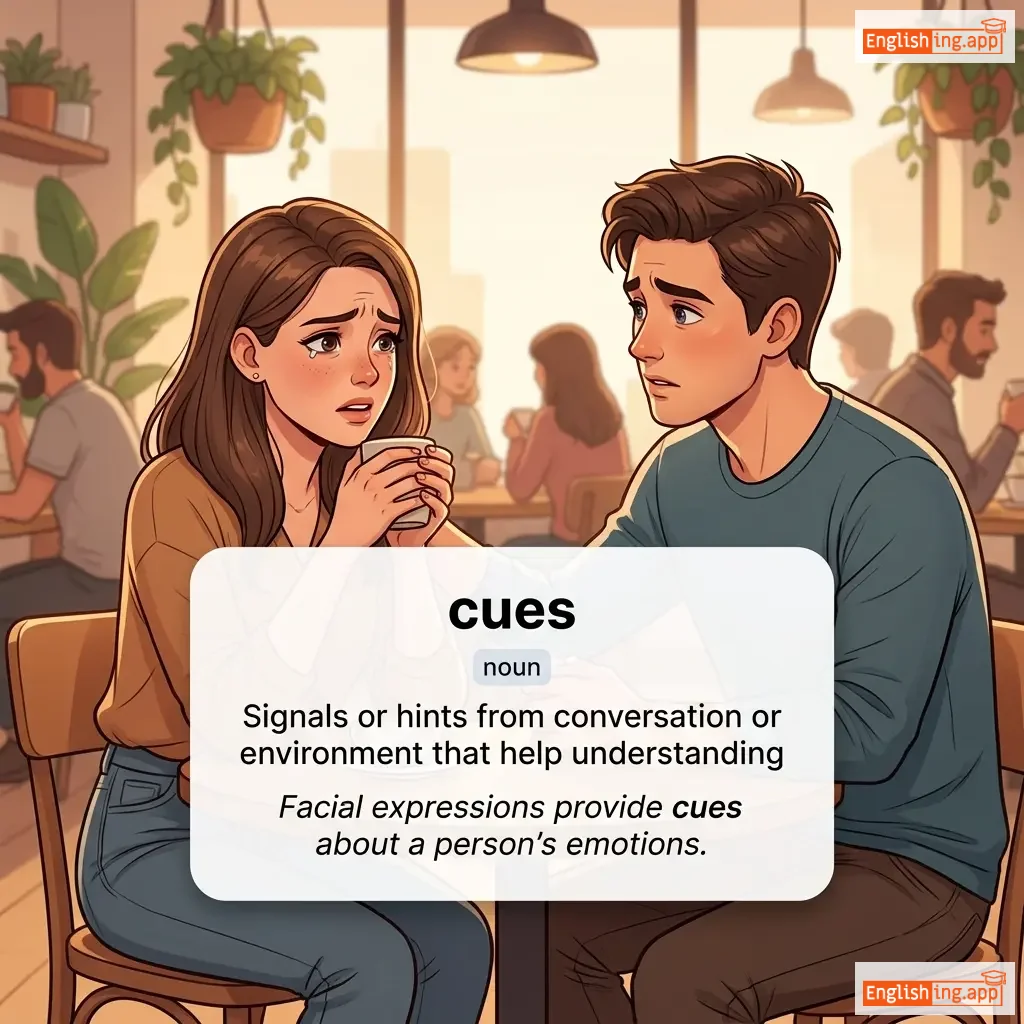
cues definition card — visual illustration of the meaning
noun
kjuːz
手がかり (tegakari)

Signals or hints from conversation or environment that help understanding

"Facial expressions provide cues about a person's emotions."

"顔の表情は人の感情に関する手がかりを提供します。" (Kao no hyōjō wa hito no kanjō ni kansuru tegakari o teikyō shimasu.)
noun
/kwɪˈziːn/
料理 (ryouri)

A style or method of cooking, especially characteristic of a particular country or region.

"Italian cuisine is famous all over the world."

"イタリア料理は世界中で有名です。" (Itaria ryouri wa sekaijuu de yuumei desu.)
noun
/ˌkʌl də ˈsæk/
袋小路 (fukurokouji)

A street or passage closed at one end; a dead end.

"They bought a house at the end of a quiet cul de sac."
"彼らは静かな袋小路の先に家を買いました。" (Karera wa shizukana fukurokouji no saki ni ie o kaimashita.)
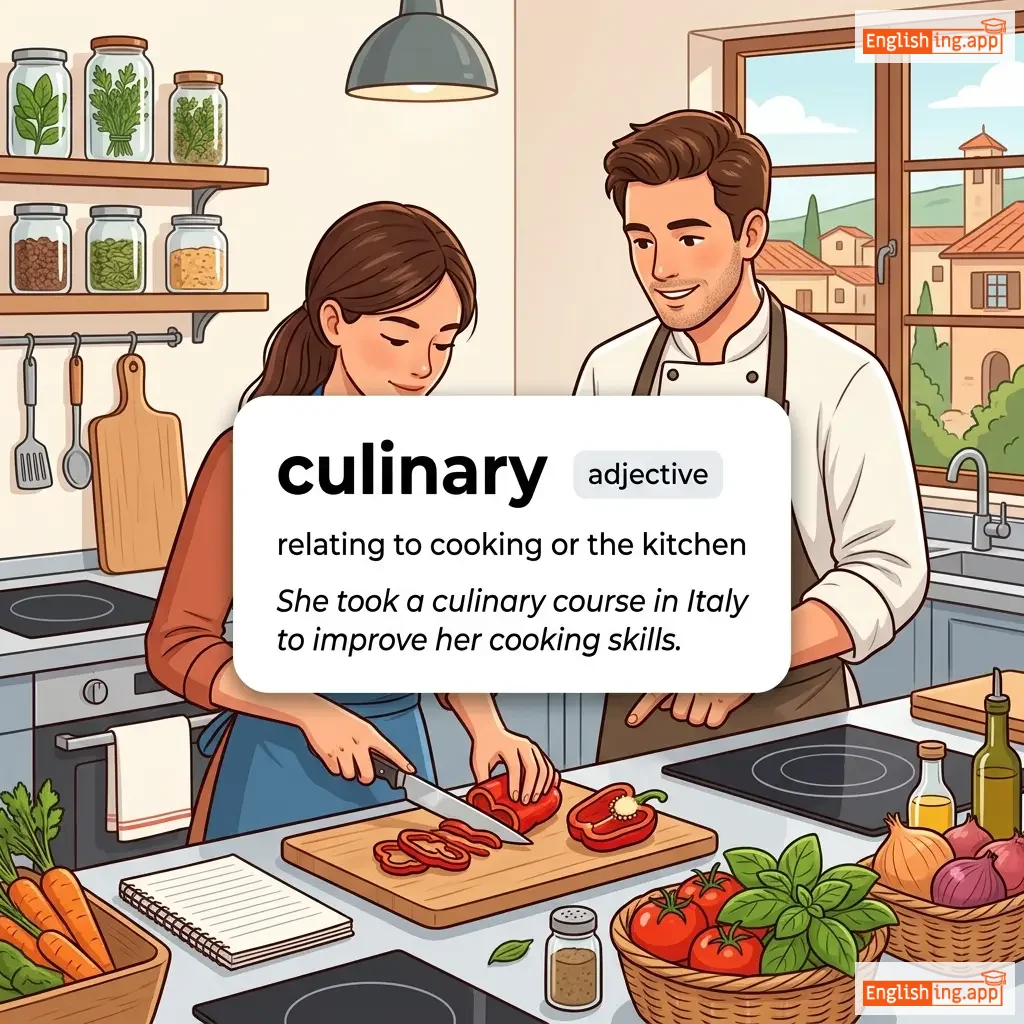
culinary definition card — visual illustration of the meaning
adjective
/ˈkʌl.ɪ.nɛr.i/
料理の (ryōri no)

relating to cooking or the kitchen

"She took a culinary course in Italy to improve her cooking skills."

"彼女はイタリアで料理のスキルを向上させるために料理のコースを受講しました。" (Kanojo wa Itaria de ryōri no sukiru o kōjōsaseru tame ni ryōri no kōsu o jukō shimashita.)