語彙集

英単語辞書 | 単語の意味、定義、例文

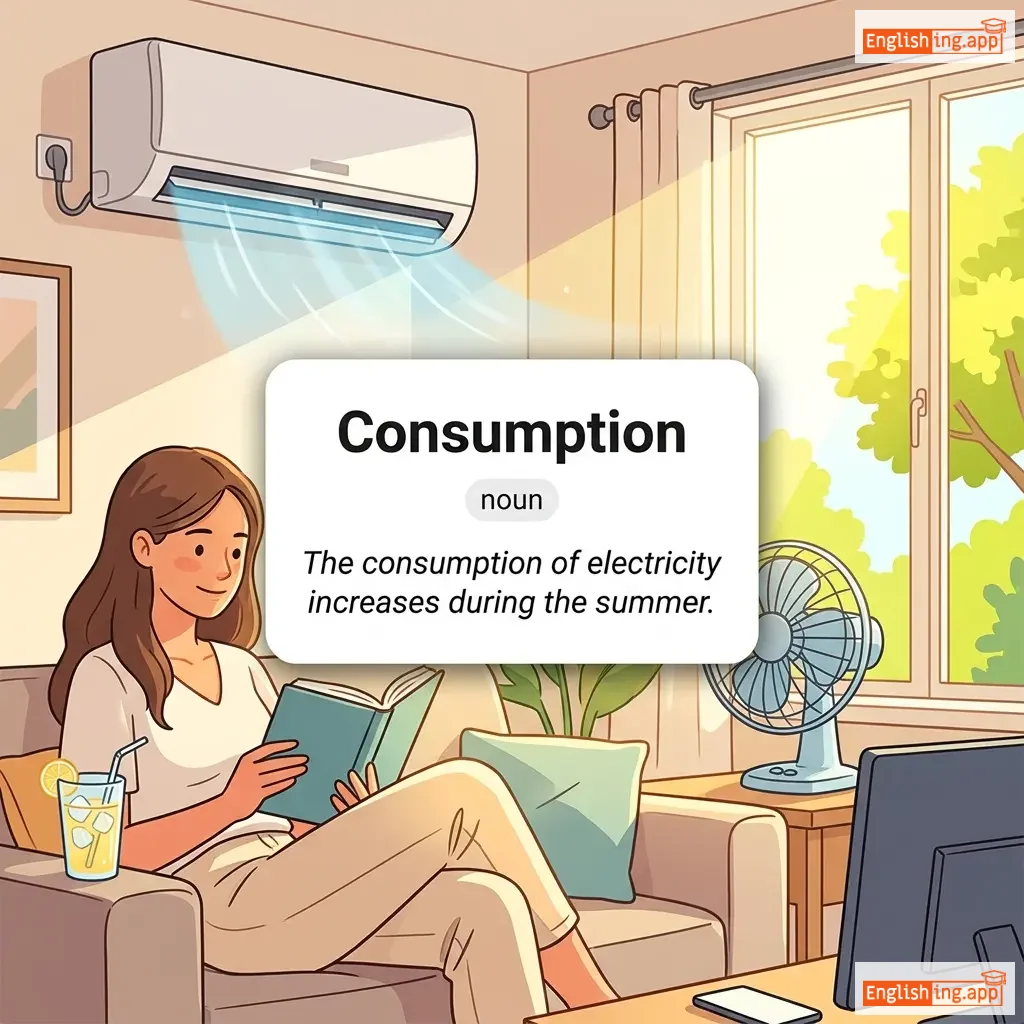
Consumption definition card — visual illustration of the meaning
noun
/kənˈsʌmpʃən/
消費 (shōhi)

The act of using up resources, goods, or energy; also refers to the eating or drinking of something.

"The consumption of electricity increases during the summer."

"夏の間、電力の消費が増加します。" (Natsu no aida, denryoku no shōhi ga zōka shimasu.)
adjective
/kənˈsʌmptɪv/
消費的な (shōhiteki na)

Relating to or characterized by consumption; historically used to describe someone suffering from tuberculosis.

"The doctor advised against consumptive habits."

"医者は消費的な習慣を避けるようにアドバイスした。" (Isha wa shōhiteki na shūkan o sakeru yō ni adobaisu shita.)
noun/verb
/ˈkɒntækt/
接触 (sesshoku)

Communication or connection with someone.

"You should contact your doctor if symptoms persist."

"症状が続く場合は、医師にコンタクトを取るべきです。" (Shōjō ga tsuzuku baai wa, ishi ni kontakuto o toru beki desu.)
noun
/kənˈteɪdʒən/
感染 (kansen)

The communication of disease from one person to another by close contact; also the spread of harmful ideas or behaviors.

"Fear spread like a contagion through the crowd."

"恐怖は群衆の中で感染のように広がった。" (Kyōfu wa gunshū no naka de kansen no yō ni hirogatta.)
adjective
/kənˈteɪdʒəs/
伝染性 (densensei)

Able to be transmitted from one person to another, typically by direct contact; also used for emotions or attitudes that spread quickly.

"Her laughter was so contagious that everyone started laughing."
"彼女の笑い声はとても伝染性があり、みんなが笑い始めました。" (Kanojo no waraigoe wa totemo densensei ga ari, minna ga warai hajimemashita.)
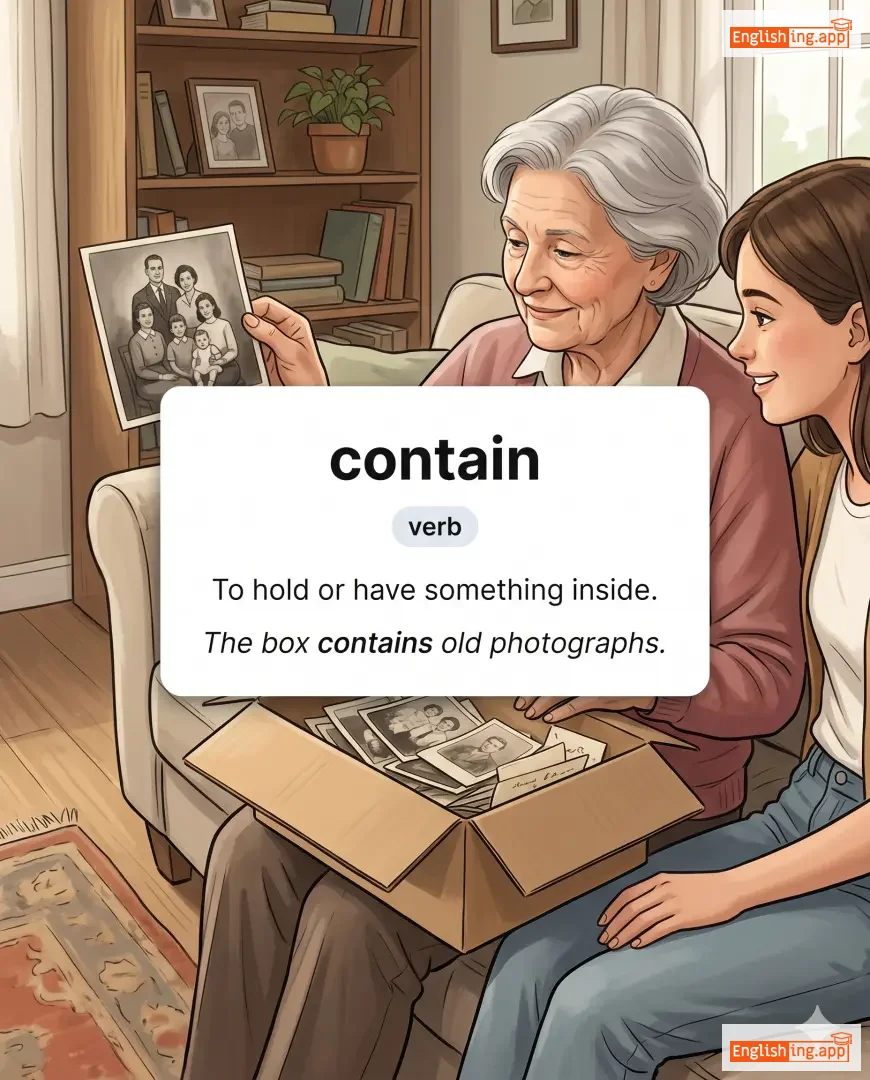
contain definition card — visual illustration of the meaning
verb
/kənˈteɪn/
含む (fukumu)

To hold or have something inside.

"The box contains old photographs."
"箱には古い写真が含まれています。" (Hako ni wa furui shashin ga fukumareteimasu.)
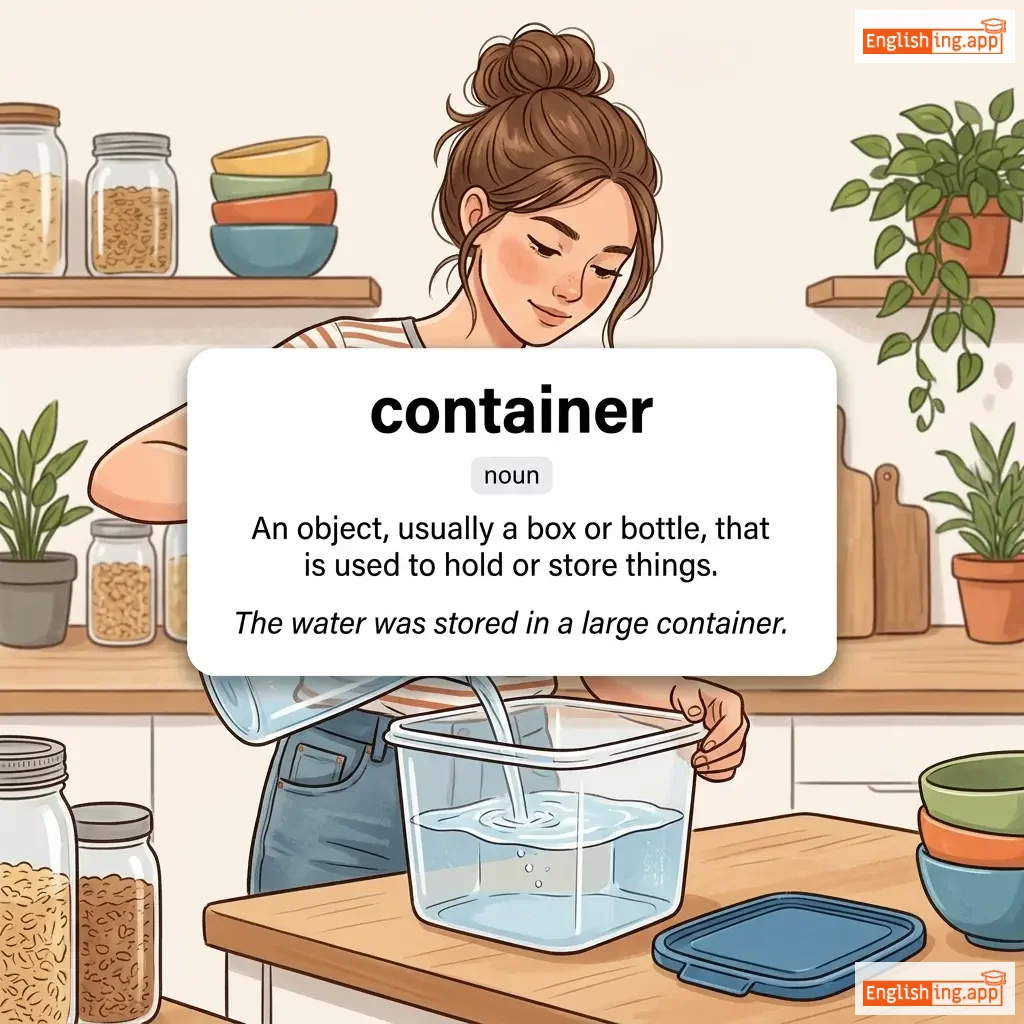
container definition card — visual illustration of the meaning
noun
/kənˈteɪnər/
コンテナ (kontena)

An object, usually a box or bottle, that is used to hold or store things.

"The water was stored in a large container."

"水は大きなコンテナに保存されました。" (Mizu wa ookina kontena ni hozon saremashita.)
verb
/kənˈtæmɪneɪt/

To make something impure, dirty, or harmful by contact with a poisonous or polluting substance.

"The river was contaminated by industrial waste."
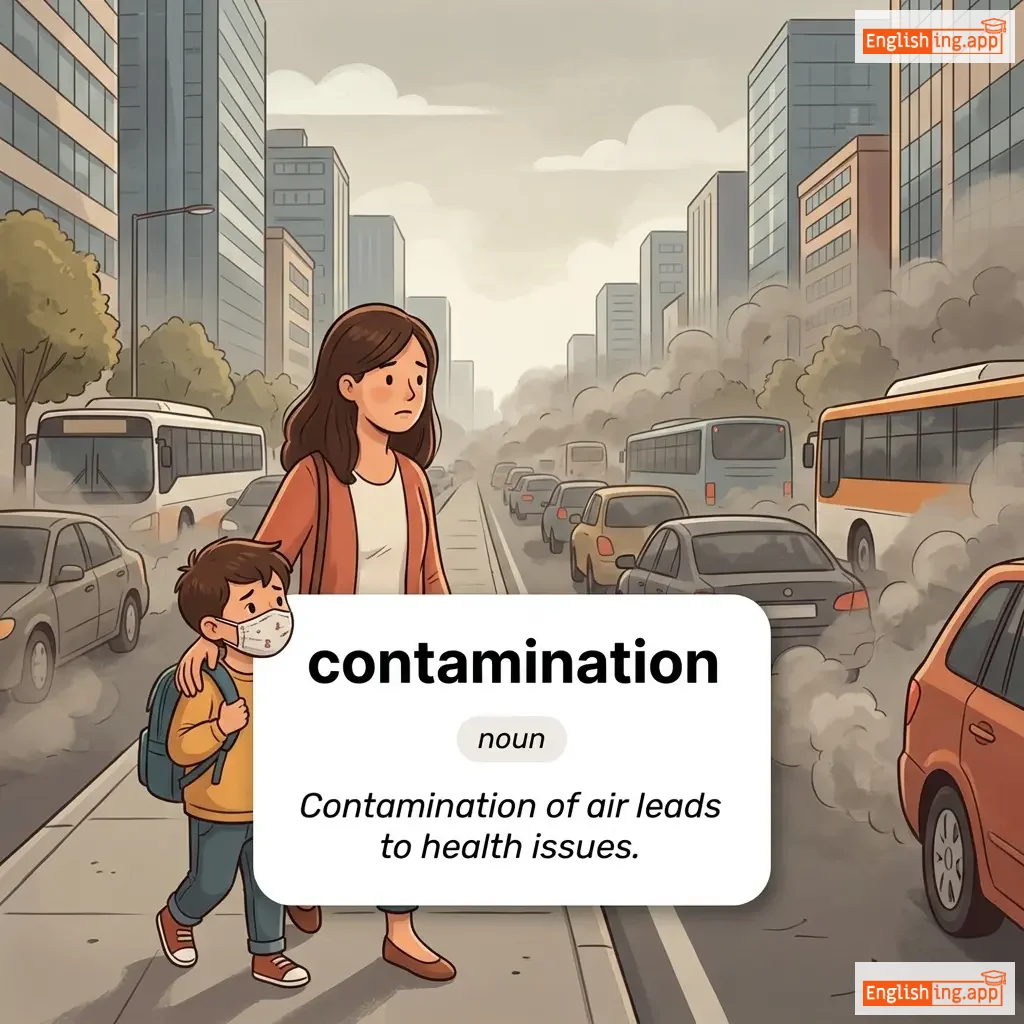
contamination definition card — visual illustration of the meaning
noun
kənˌtæm.ɪˈneɪ.ʃən
汚染 (osen)

The process of making something less pure by exposure to or addition of a poisonous or polluting substance.

"Contamination of air leads to health issues."

"空気の汚染は健康に問題を引き起こします。" (Kūki no osen wa kenkō ni mondai o hikiokoshimasu.)
verb
/kənˈtɛm/
軽蔑する (keibetsu suru)

to treat or regard with disdain, scorn, or contempt

"He would never contemn honest work, no matter how humble."

"彼はどんなに謙虚でも正直な仕事を軽蔑しない。" (Kare wa donna ni kenkyō demo shōjiki na shigoto o keibetsu shinai.)
verb
/ˈkɒntəmpleɪt/

to think deeply and carefully about something; to consider thoughtfully

"She sat quietly to contemplate her future plans."

contemplation definition card — visual illustration of the meaning
noun
ˌkɒn.təmˈpleɪ.ʃən
熟考, 深い思索 (jukou, fukai shisoku)

The action of looking thoughtfully at something for a long time; deep reflective thought.

"He spent hours in contemplation about his future."
"彼は自分の未来について何時間も熟考しました。" (Kare wa jibun no mirai ni tsuite nanjikan mo jukou shimashita.)
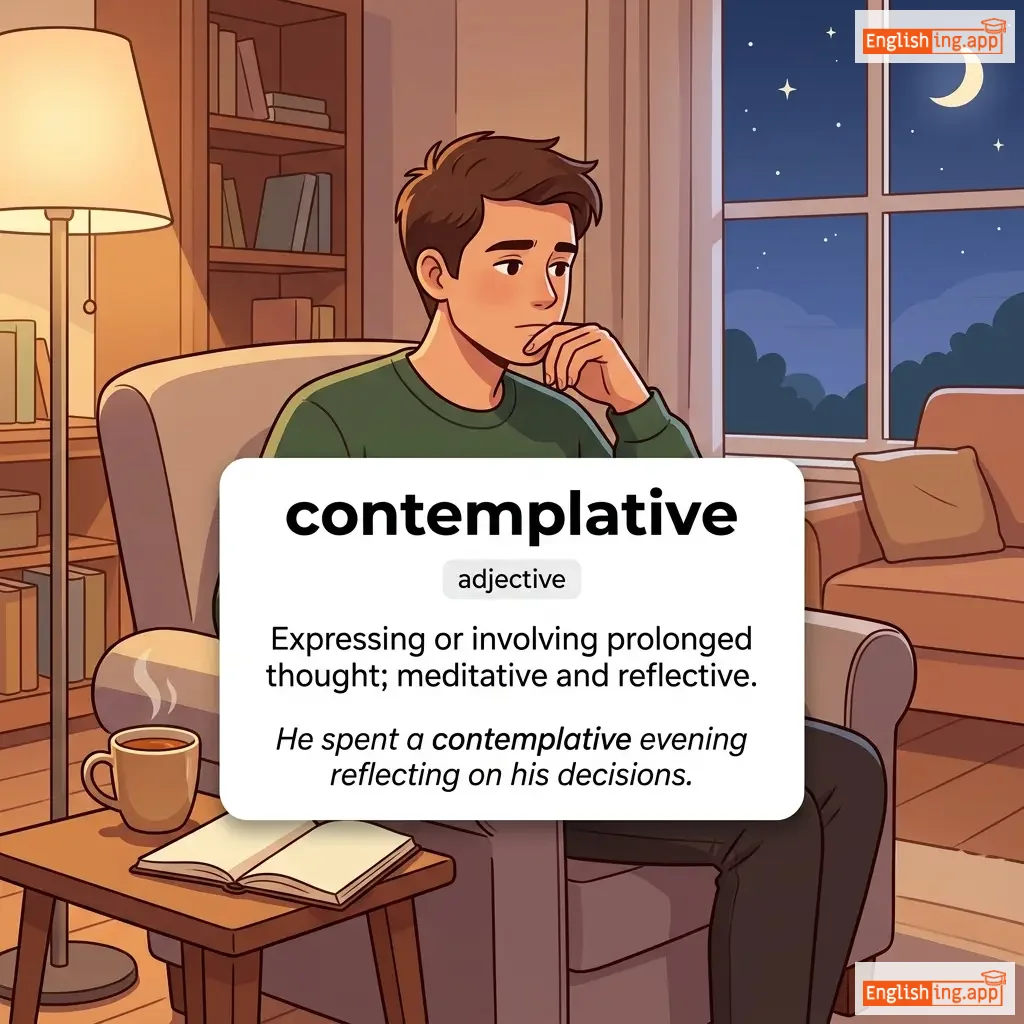
contemplative definition card — visual illustration of the meaning
adjective
ˈkɒn.təm.plə.tɪv
思索的または瞑想的 (shisakuteki matawa meisōteki)

Expressing or involving prolonged thought; meditative and reflective.

"He spent a contemplative evening reflecting on his decisions."

"彼は自分の決断を振り返りながら、思索的な夕べを過ごしました。" (Kare wa jibun no ketsudan o furikaerinagara, shisakuteki na yūbe o sugoshimashita.)
adjective
/kənˌtɛmpəˈreɪniəs/
同時代の (dōjidai no)

existing, happening, or occurring at the same time

"The two artists were contemporaneous and often influenced each other."

"二人のアーティストは同時代のもので、しばしば互いに影響を与えました。" (Futari no ātisuto wa dōjidai no mono de, shibashiba tagai ni eikyō o ataemashita.)
adjective
/kənˈtɛmpərɛri/
現代的な, 現代の (gendai-teki na, gendai no)

belonging to the same time period; modern

"She enjoys contemporary art exhibitions."

"彼女は現代アートの展示を楽しんでいます。" (Kanojo wa gendai āto no tenji o tanoshindeimasu.)
noun
/kənˈtɛmpt/

a strong feeling of dislike and lack of respect towards someone or something

"He spoke with contempt about the corrupt officials."

adjective
/kənˈtɛmptəbl/
軽蔑すべき, 嫌悪すべき (keibetsu subeki, ken'o subeki)

deserving of contempt; despicable

"His deceitful actions were truly contemptible."

"彼の欺瞞的な行動は本当に軽蔑すべきものでした。" (Kare no gimanteki na kōdō wa hontōni keibetsu subeki mono deshita.)
adjective
/kənˈtɛmptʃuəs/
軽蔑的, 侮辱的 (keibetsuteki, bujokuteki)

showing or expressing contempt; scornful

"She gave him a contemptuous glance."

"彼女は彼に軽蔑のまなざしを向けた。" (Kanojo wa kare ni keibetsu no manazashi o muketa.)
contend definition card — visual illustration of the meaning
verb
/kənˈtɛnd/
争う、主張する (arasou, shuchou suru)

to strive or compete for something; to assert earnestly

"Athletes from around the world contend for the championship."

"世界中のアスリートがチャンピオンシップを争っています。" (Sekai juu no asurīto ga chanpionship wo arasotteimasu.)
noun
/kənˈtɛndər/
競争者, 立候補者 (kyousou-sha, rikkou-hosha)

a person or team competing for a title or prize

"She is a strong contender for the mayoral position."

"彼女は市長職の強力な候補者です。" (Kanojo wa shichou shoku no kyouryoku na kouhosha desu.)
adjective
/ˈkɒntɛnt/
満足している, 幸せな (manzoku shite iru, shiawase na)

in a state of satisfaction; pleased

"He felt content after finishing his work."

"彼は仕事を終えた後、満足していた。" (Kare wa shigoto o oeta ato, manzoku shite ita.)
adjective
/kənˈtɛntɪd/
満足した (manzoku shita)

Feeling or expressing happiness and satisfaction.

"She was contented with her simple life."
"彼女はシンプルな生活に満足していた。" (Kanojo wa shinpuruna seikatsu ni manzoku shiteita.)
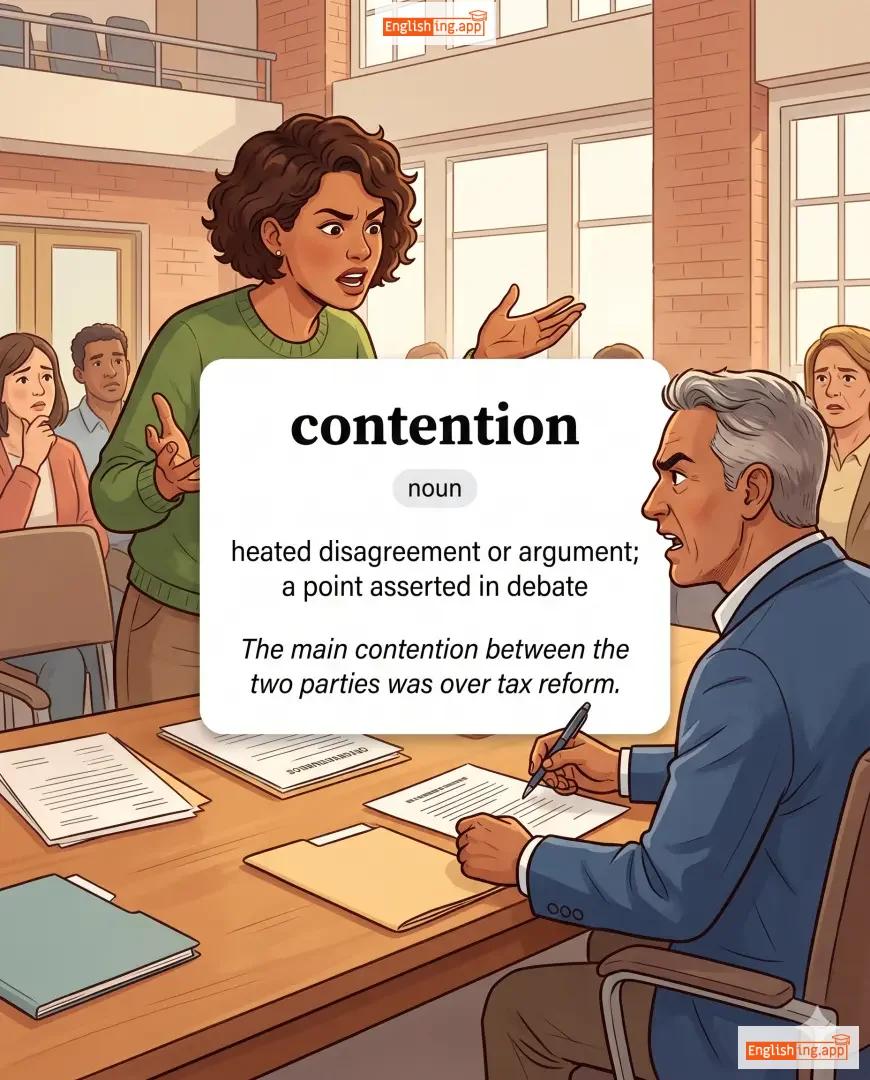
contention definition card — visual illustration of the meaning
noun
/kənˈtɛnʃən/
争い, 意見の相違 (arasoi, iken no soui)

heated disagreement or argument; a point asserted in debate

"The main contention between the two parties was over tax reform."
"二つの党派間での主要な争いは税制改革に関するものでした。" (Futatsu no tōhakanai de no shuyō na arasoi wa zeisei kaikaku ni kansuru mono deshita.)
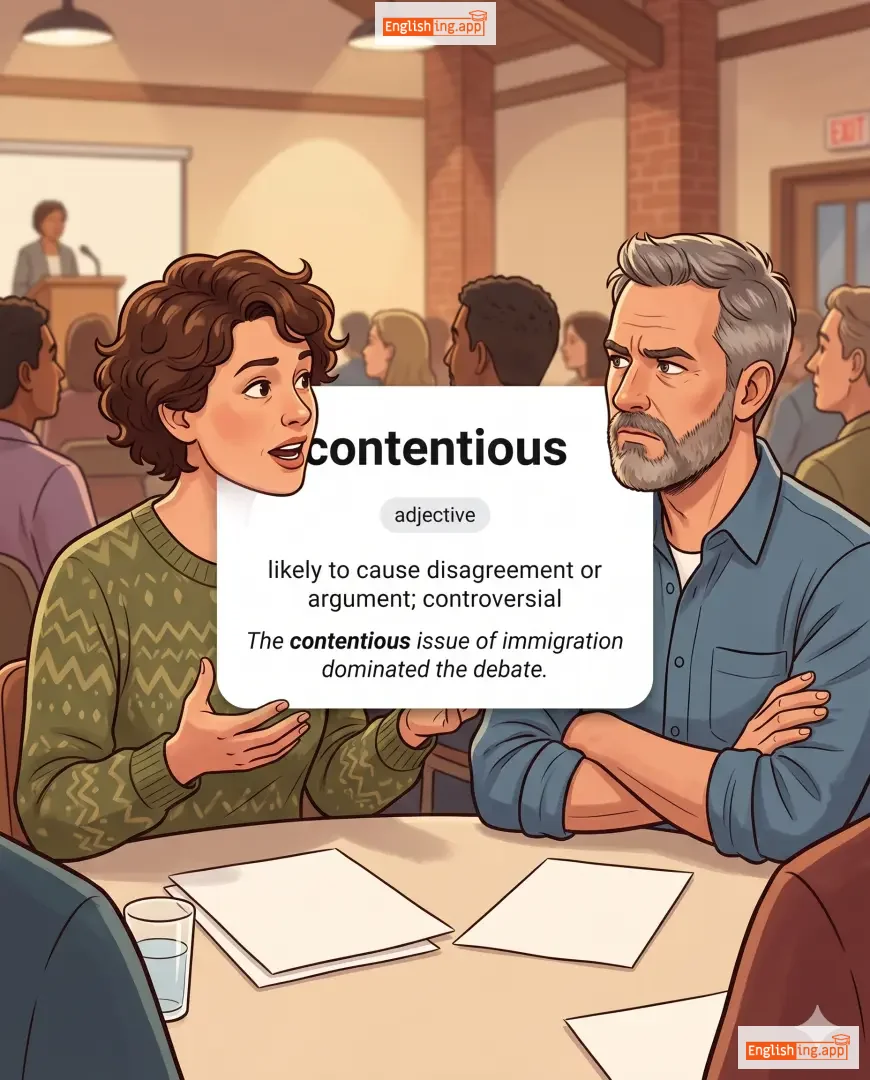
contentious definition card — visual illustration of the meaning
adjective
/kənˈtɛnʃəs/
物議を醸す (butsugi o kasu)

likely to cause disagreement or argument; controversial

"The contentious issue of immigration dominated the debate."

"移民問題の物議を醸す議題は討論を支配した。" (Imin mondai no butsugi o kasu gidai wa tōron o shihaishita.)
noun
/kənˈtentmənt/
満足感 (manzokukan)

a state of happiness and satisfaction with what one has

"She felt a deep sense of contentment after helping others."

"他人を助けた後、彼女は深い満足感を感じた。" (tanin o tasuketa ato kanojo wa fukai manzokukan o kanjita)
verb, noun
/ˈkɒntɛst/
競技, 挑戦 (kyougi, chousen)

verb: to compete or challenge; noun: a competition or dispute

"She decided to contest the election against the incumbent."

"彼女は現職に対して選挙に挑戦することを決定しました。" (Kanojo wa genshoku ni taishite senkyo ni chousen suru koto o kettei shimashita.)
noun
/ˈkɒntɛkst/
文脈 (bunmyaku)

the circumstances or background relevant to an event, statement, or idea

"To understand the quote, you need to know the context in which it was said."
"引用を理解するには、それが言われた文脈を知っている必要があります。" (Inyō o rikai suru ni wa, sore ga iwareta bunmyaku o shitte iru hitsuyō ga arimasu.)
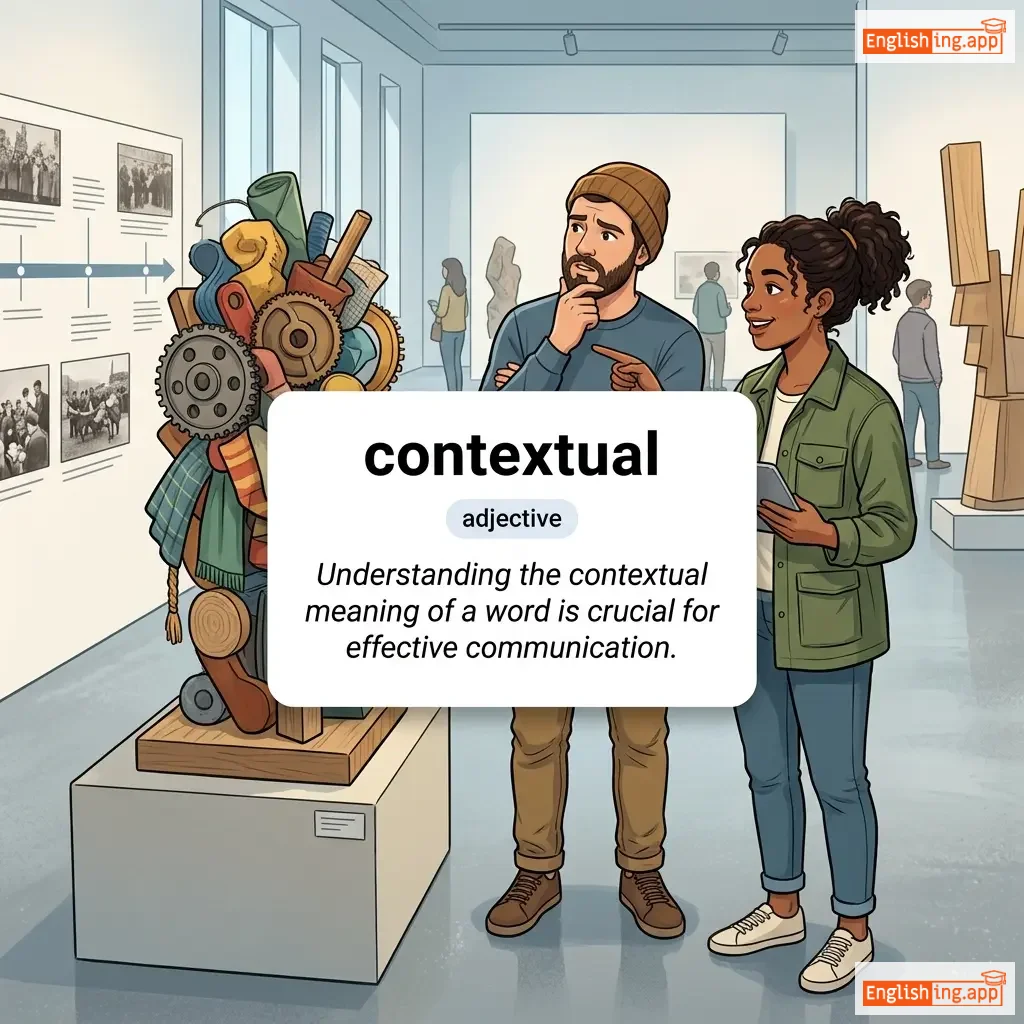
contextual definition card — visual illustration of the meaning
adjective
/kənˈtɛkstʃʊəl/
文脈的、状況に基づく (bunmyaku-teki, jōkyō ni motozuku)

Depending on or relating to the circumstances that form the setting for an event or statement.

"Understanding the contextual meaning of a word is crucial for effective communication."
"言葉の文脈的な意味を理解することは、効果的なコミュニケーションにとって重要です。" (Kotoba no bunmyaku-teki na imi o rikai suru koto wa, kōkateki na komyunikēshon ni totte jūyōdesu.)
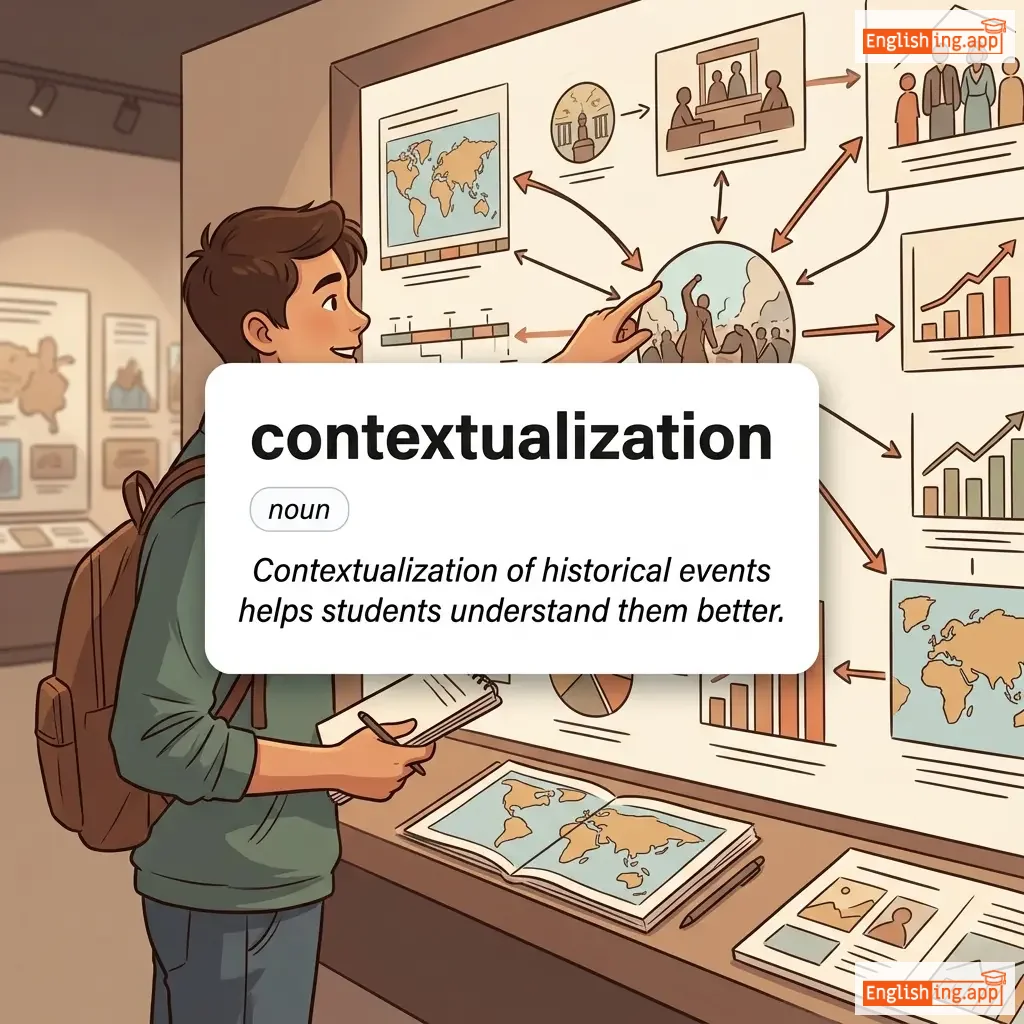
contextualization definition card — visual illustration of the meaning
noun
/kɒnˌtek.stʃu.ə.laɪˈzeɪ.ʃən/
コンテキスト化 (kontekisuto-ka)

The process of placing something in its proper context or setting to understand it better.

"Contextualization of historical events helps students understand them better."

"歴史的な出来事のコンテキスト化は、学生がそれらをよりよく理解するのに役立ちます。" (Rekishiteki na dekigoto no konteki-suto-ka wa, gakusei ga sorera o yori yoku rikai suru no ni yakudachimasu.)
verb
/kənˈtɛkstʃuəlaɪz/
文脈化する (bunmyaku-ka suru)

to place something in a context or interpret it in relation to its surroundings

"The teacher contextualized the historical event to make it more relevant for students."

"先生は歴史的な出来事を学生にとってより関連性のあるものにするために文脈化しました。" (Sensei wa rekishiteki na dekigoto o gakusei ni totte yori kanrensei no aru mono ni suru tame ni bunmyaku-ka shimashita.)
noun
/kɒn.tɪˈɡjuː.ɪ.ti/
隣接性 (rinsetsusei)

the state of being in direct contact or next to each other

"The contiguity of the two countries facilitates trade."
"二国間の隣接性が貿易を促進します。" (Nikkokukan no rinsetsusei ga bōeki o sokushin shimasu.)
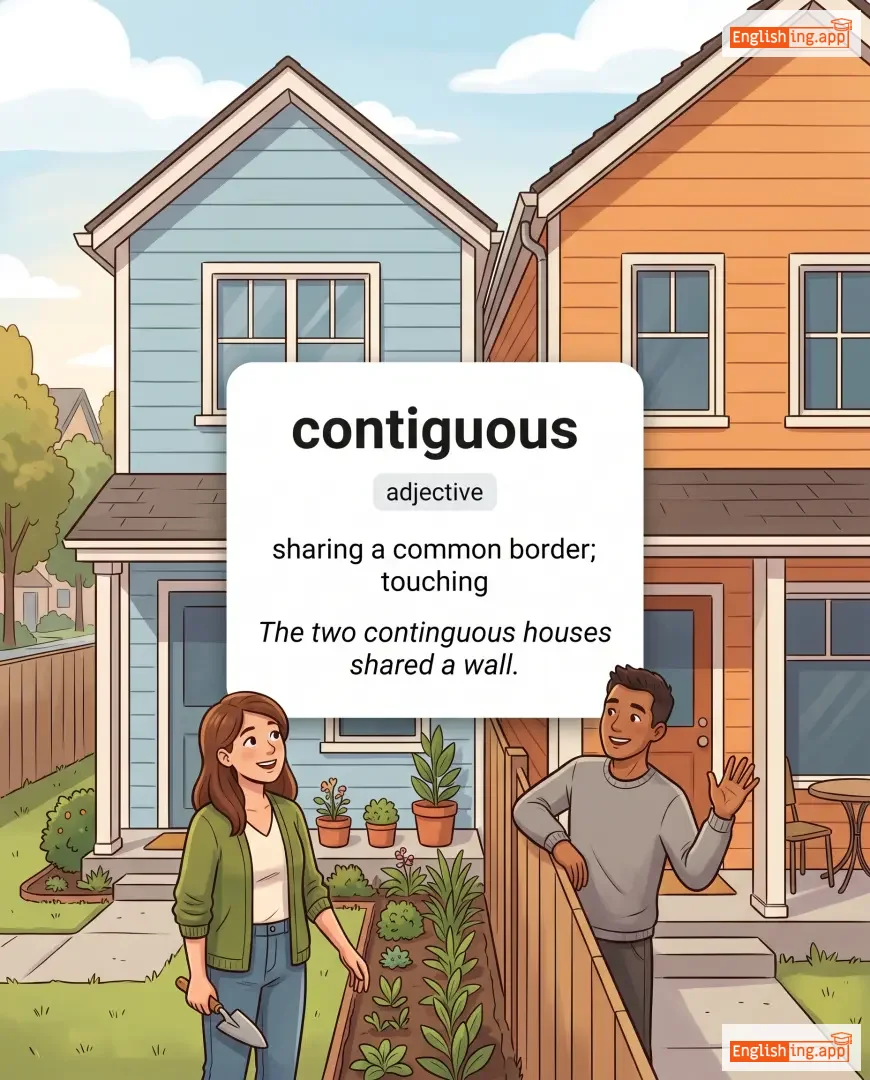
contiguous definition card — visual illustration of the meaning
adjective
/kənˈtɪɡ.ju.əs/
隣接 (rinsetsu)

sharing a common border; touching

"The two continguous houses shared a wall."

"隣接する2軒の家が壁を共有していました。" (Rinsetsu suru 2 ken no ie ga kabe wo kyouyuu shite imashita.)
continence definition card — visual illustration of the meaning
noun
/ˈkɒn.tɪ.nəns/
禁欲 (kinyoku)

self-restraint, especially regarding bodily functions or desires

"He practiced continence to maintain focus on his studies."

"彼は学業に集中するために禁欲を実践した。" (Kare wa gakugyou ni shuuchuu suru tame ni kinyoku o jissen shita.)
noun
/ˈkɒntɪnənt/
大陸 (tairiku)

one of the large landmasses on Earth such as Asia, Africa, or Europe

"Asia is the largest continent in the world."
"アジアは世界で最も大きな大陸です。" (Ajia wa sekai de mottomo ōkina tairiku desu.)
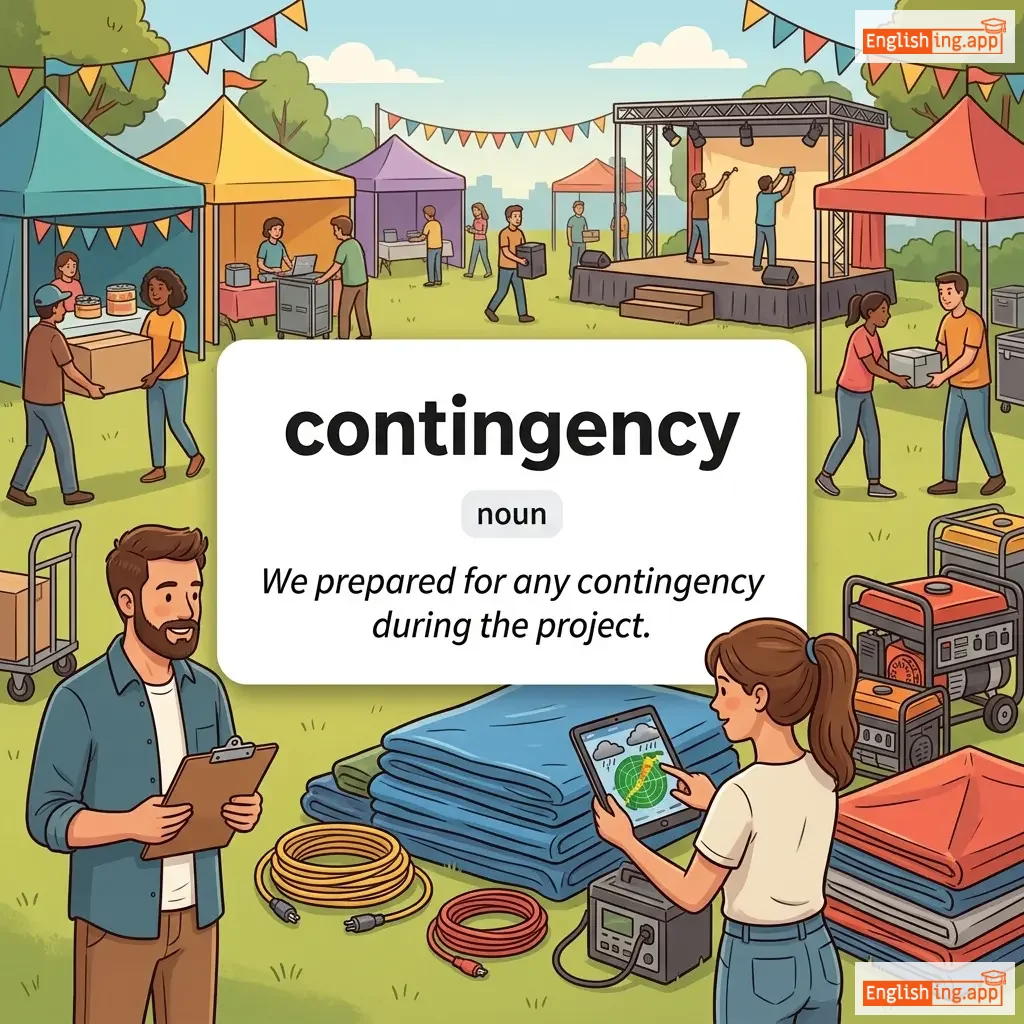
contingency definition card — visual illustration of the meaning
noun
/kənˈtɪn.dʒən.si/
不測の事態 (fusoku no jitai)

a future event or circumstance that is possible but cannot be predicted with certainty

"We prepared for any contingency during the project."

"プロジェクト中にどんな不測の事態にも対応できるように準備しておきました。" (Purojekuto-chū ni donna fusoku no jitai ni mo taio dekiru yō ni junbi shite okimashita.)
adjective,noun
/kənˈtɪn.dʒənt/
依存する / 代表団 (izon suru / daihyōdan)

dependent on something else; a group of people representing an organization

"Attendance is contingent on prior registration. / A contingent of students attended the conference."

"出席は事前登録に依存しています。 / 学生の代表団が会議に出席しました。" (Shusseki wa jizen tōroku ni izon shiteimasu. / Gakusei no daihyōdan ga kaigi ni shusseki shimashita.)
adjective
/kənˈtɪn.ju.əl/
継続的な; 絶え間ない (keizokuteki na; taema nai)

happening repeatedly over a long period of time; constant and uninterrupted

"The continual noise from the construction site was very annoying."

"建設現場からの継続的な音は非常に迷惑でした。" (Kensetsu genba kara no keizokuteki na oto wa hijou ni meiwaku deshita.)
adverb
/kənˈtɪnjuəli/
継続的に (keizokuteki ni)

in a continuous and uninterrupted way

"The rain has been falling continually for hours."

"雨は何時間も継続的に降り続いています。" (Ame wa nan-jikan mo keizokuteki ni furi tsuzuiteimasu.)
noun
/kənˈtɪn.ju.əns/
継続 (keizoku)

the state of continuing or being prolonged; persistence

"The continuance of the project depended on securing additional funding."

"プロジェクトの継続は追加資金の確保に依存していました。" (Purojekuto no keizoku wa tsuika shikin no kakuho ni izon shite imashita.)
noun
/kənˌtɪn.juˈeɪ.ʃən/
継続 (keizoku)

the action of carrying something on over time; extension

"The continuation of the series was announced after the finale."

"シリーズの継続は最終回後に発表されました。" (Shirīzu no keizoku wa saishūkai go ni happyō saremashita.)
verb
/kənˈtɪnjuː/
続ける (tsuzukeru)

To keep happening, existing, or doing something without stopping.

"The rain will continue throughout the night."

"雨は一晩中続きます。" (Ame wa hitobanju tsudzukimasu.)
verb
/kənˈtɪn.juːd/
続ける (tsuzukeru)

Kept happening or carried on without stopping.

"She continued working despite the challenges."

"彼女は挑戦にもかかわらず働き続けました。" (Kanojo wa chousen ni mo kakawarazu hatarakitsuzukemashita.)
verb
/kənˈtɪnjuɪŋ/
続ける (tsuzukeru)

to keep doing something without stopping

"They are continuing their journey despite the rain."

"雨にもかかわらず、彼らは旅を続けています。" (Ame ni mo kakawarazu, karera wa tabi o tsuzuketeimasu.)
noun
/ˌkɒn.tɪˈnjuː.ɪ.ti/
継続性 (keizokusei)

the state of being continuous or connected; consistency over time

"Maintaining continuity in leadership is essential for organizational stability."

"リーダーシップにおける継続性の維持は、組織の安定性にとって不可欠です。" (Ridaashippu ni okeru keizokusei no iji wa, soshiki no antei-sei ni totte fukaketsu desu.)
adjective
/kənˈtɪn.ju.əs/
連続的 (renzokuteki)

forming an unbroken whole; without interruption

"The factory operates on a continuous 24-hour schedule."

"工場は24時間連続したスケジュールで稼働しています。" (Koujou wa 24 jikan renzokushita sukejuuru de kadou shiteimasu.)
adverb
/kənˈtɪnjuəsli/
連続的に; 絶え間なく; 途切れることなく (renzokuteki ni; taemanaku; togereru koto naku)

without interruption; in an unbroken sequence

"The machine operates continuously for 24 hours."

"その機械は24時間連続して稼働します。" (sono kikai wa 24 jikan renzoku shite kadō shimasu.)
noun
/kənˈtɪnjuəm/
連続体 (renzokutai)

A continuous sequence in which adjacent elements are not perceptibly different from each other, but the extremes are quite distinct.

"Life and death are often seen as part of the same continuum."

"生と死はしばしば同じ連続体の一部と見なされます。" (Sei to shi wa shibashiba onaji renzokutai no ichibu to minasarerumasu.)
verb
/kənˈtɔːrt/
歪む (yugamu)

to twist or bend out of the normal shape

"She contorted her face in pain after the injury."

"怪我をした後、彼女は痛みに顔を歪めた。" (Kega o shita ato, kanojo wa itami ni kao o yugameta.)
noun
/kənˈtɔːrʃən/
ねじれたまたは曲がった形; 通常の形から外れてねじる行為 (nejireta mata wa magatta katachi; tsuujou no katachi kara hazurete nejiru koui)

a twisted or bent shape; the act of twisting out of the normal shape

"The gymnast's contortion amazed the audience."

"体操選手のコンターションは観客を驚かせました。" (Taisou senshu no kontaashon wa kankyaku o odoro kase mashita.)
noun
/kənˈtɔːrʃənz/
捻じれの複数形; いくつかのねじれたまたは曲がった形 (nejire no fukusūkei; ikutsuka no nejireta matawa magatta katachi)

plural form of contortion; multiple twisted or bent shapes

"The magician's contortions left the crowd in awe."

"魔術師のコンタ―ションは観客を驚かせた。" (Majutsushi no kontāshon wa kankyaku o odorokaseta.)