語彙集

英単語辞書 | 単語の意味、定義、例文

noun/verb
/ˈkɒmplɪmənt/
賛辞 (sanjii)

a polite expression of praise or admiration; to politely praise someone

"She complimented him on his excellent presentation."

"彼女は彼の素晴らしいプレゼンテーションを褒めました。" (Kanojo wa kare no subarashī purezentēshon o homemashita.)
adjective
/ˌkɒm.plɪˈmen.tər.i/
賛辞的な; 無料で提供される; 礼儀として提供された (sanjiteki na; muryō de teikyō sareru; reigi toshite teikyō sareta)

expressing praise or admiration; given or supplied free of charge as a courtesy

"The hotel offers complimentary breakfast for all guests."

"ホテルはすべてのゲストに無料の朝食を提供します。" (Hoteru wa subete no gesuto ni muryō no chōshoku o teikyō shimasu.)
verb
/kəmˈplaɪ/
従う (shitagau)

to act in accordance with a rule, request, or law

"All companies must comply with safety regulations."

"すべての企業は安全規則を遵守しなければなりません。" (Subete no kigyō wa anzen kisoku o junshu shinakereba narimasen.)
noun
/kəmˈpoʊnənt/
コンポーネント (komponento)

a part or element of a larger whole, especially a machine or system

"The engine is the most important component of the car."

"エンジンは車の最も重要なコンポーネントです。" (Enjin wa kuruma no mottomo jūyōna komponento desu.)
verb
/kəmˈpɔːrt/
振る舞う (furumau)

to behave or conduct oneself in a particular way

"She comported herself with grace during the ceremony."
"彼女は式典中に優雅に振る舞いました。" (Kanojo wa shikiten chuu ni yuuga ni furumaimashita.)
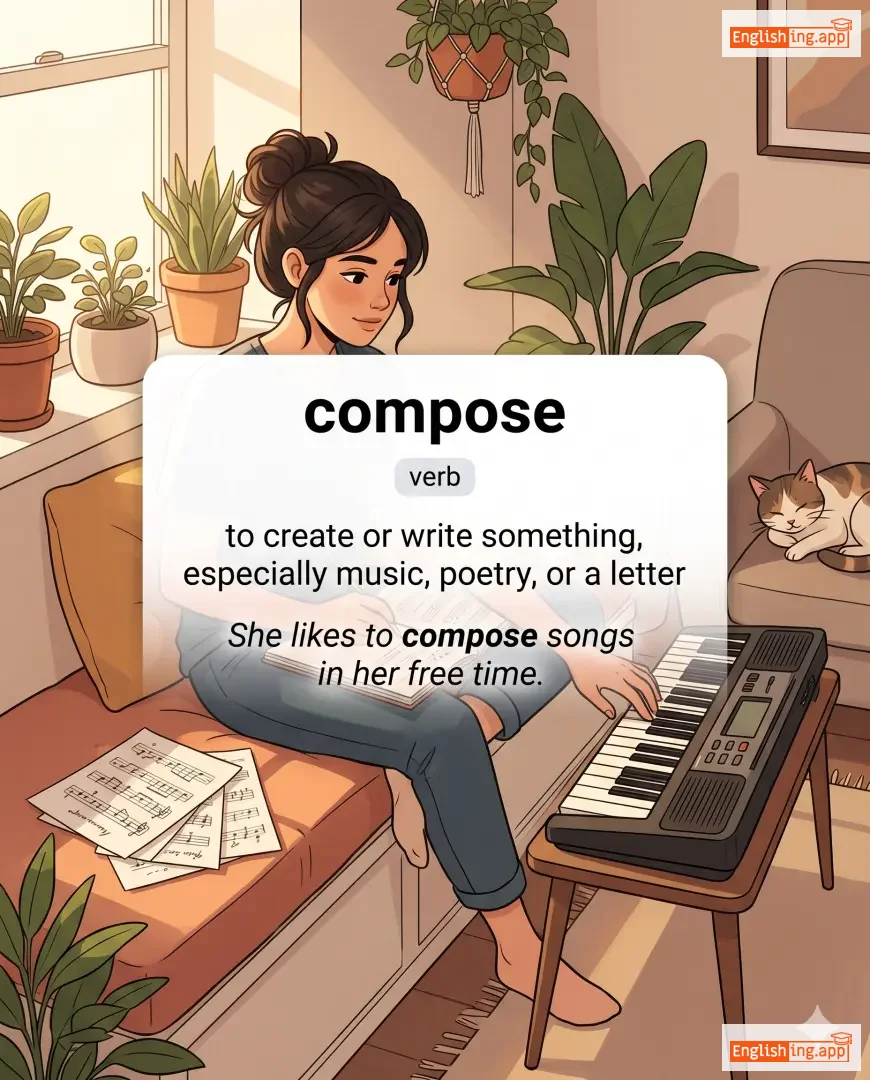
compose definition card — visual illustration of the meaning
verb
/kəmˈpəʊz/
作曲する (sakkyoku suru)

to create or write something, especially music, poetry, or a letter

"She likes to compose songs in her free time."

"彼女は自由時間に曲を作るのが好きです。" (Kanojo wa jiyū jikan ni kyoku o tsukuru no ga suki desu.)
adjective
/kəmˈpoʊzd/
冷静 (reisei)

calm and in control of oneself; made up of or formed from

"He remained composed even under pressure."

"彼はプレッシャーの下で冷静さを保ちました。" (Kare wa puresshā no shita de reisei sa o tamochimashita.)
noun
/kəmˈpəʊzə(r)/
作曲家 (sakkyokuka)

a person who writes music, especially classical music

"The composer is working on a new symphony."

"作曲家は新しい交響曲に取り組んでいます。" (Sakkyokuka wa atarashii koukyoukyoku ni torikundeimasu.)
noun
/ˌkɒmpəˈzɪʃən/
作曲 (sakkyoku)

the act of creating a piece of writing, music, or art; the way parts are arranged

"Her composition won first prize in the contest."

"彼女の作曲はコンテストで第一位を獲得しました。" (Kanojo no sakkyoku wa kontesuto de dai ichi-i o kakutoku shimashita.)
noun
/kəmˈpɒz.ɪ.tər/
作曲家 (sakkyokuka)

a person who arranges type for printing or creates musical compositions

"The compositor carefully arranged the text for the newspaper."

"作曲家は新聞のためにテキストを慎重に整理しました。" (Sakkyokuka wa shinbun no tame ni tekisuto o shinchou ni seiri shimashita.)
noun
/ˈkɒmpoʊst/
堆肥 (taihi)

decayed organic matter used as fertilizer

"The gardener added compost to enrich the soil."
"庭師は土壌を豊かにするために堆肥を追加しました。" (Niwa-shi wa dojō o yutakani suru tame ni taihi o tsuika shimashita.)
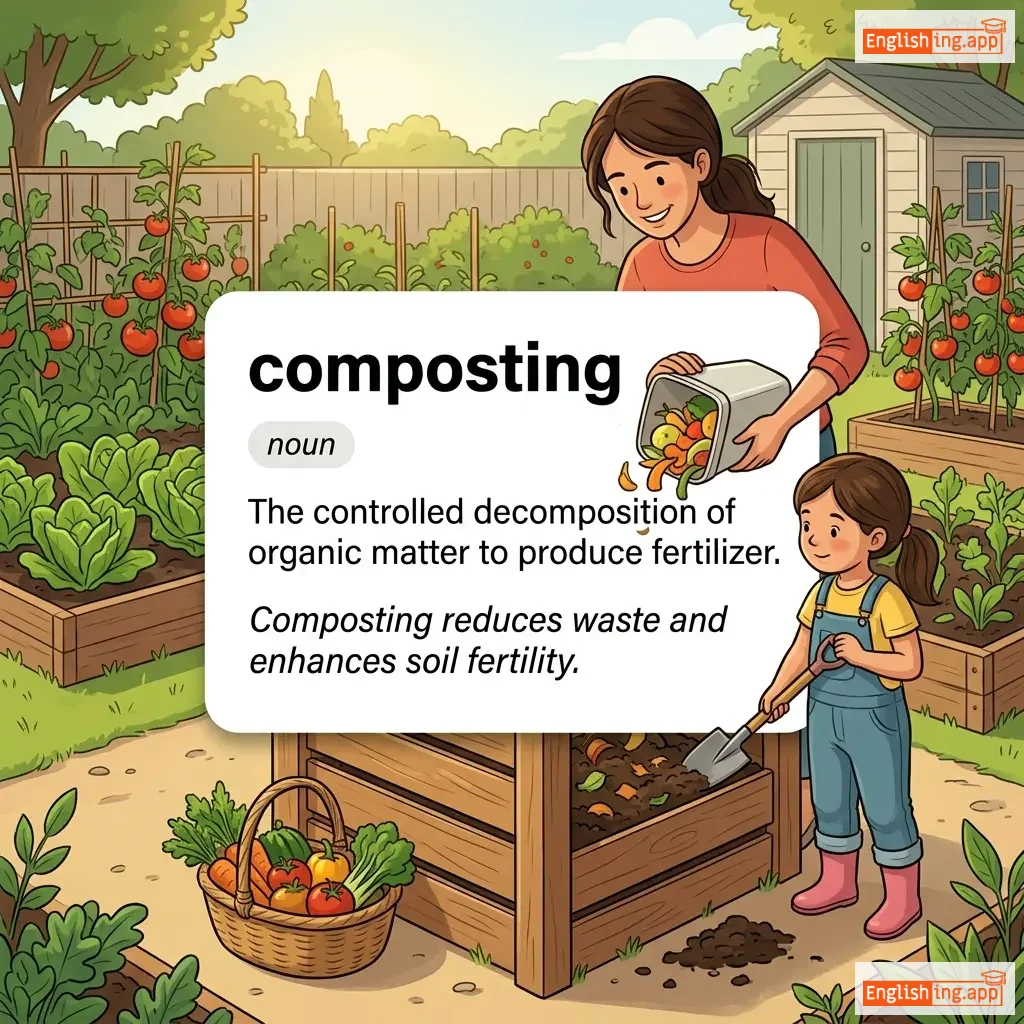
composting definition card — visual illustration of the meaning
noun
/ˈkɒm.pɒ.stɪŋ/
コンポスト化 (konposuto-ka)

The controlled decomposition of organic matter to produce fertilizer.

"Composting reduces waste and enhances soil fertility."

"コンポスティングは廃棄物を減らし、土壌の肥沃度を高めます。" (Konposutingu wa haikibutsu o herashi, dojo no hiwaku-do o takamemasu.)
composure definition card — visual illustration of the meaning
noun
/kəmˈpoʊʒər/
冷静 (reisei)

the state of being calm and in control of oneself

"She managed to keep her composure during the heated debate."

"彼女は熱い議論の中で冷静さを保つことができた。" (Kanojo wa atsui giron no naka de reiseisa o tamotsu koto ga dekita.)
noun
/ˈkɑːmpaʊnd/
化合物 / 閉鎖されたエリア (kagōbutsu / heisa sareta eria)

a thing that is composed of two or more separate elements; an enclosed area with buildings

"The scientist studied the chemical compound in the lab."
"科学者はラボで化学化合物を研究しました。" (Kagakusha wa rabo de kagaku kagōbutsu o kenkyū shimashita.)
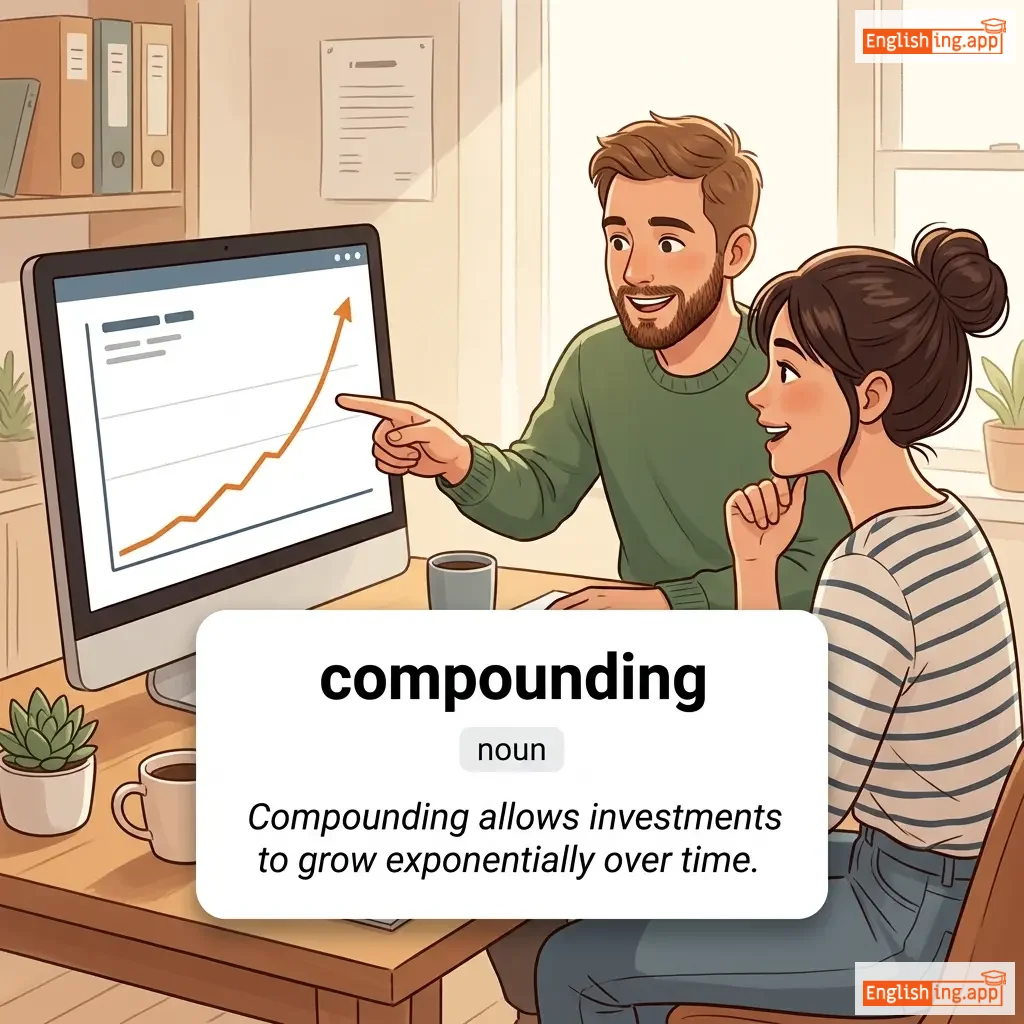
compounding definition card — visual illustration of the meaning
noun
kəmˈpaʊnd.ɪŋ
複利 (fukuri)

The process in which an asset's earnings, from either capital gains or interest, are reinvested to generate additional earnings over time.

"Compounding allows investments to grow exponentially over time."

"複利は、投資を時間とともに指数関数的に成長させます。" (Fukuri wa, tōshi o jikan to tomo ni shisū kansūteki ni seichō sasemasu.)
verb
/ˌkɒmprɪˈhɛnd/
理解する (rikai suru)

to understand or grasp the meaning of something

"It is difficult to comprehend the scale of the disaster."

"災害の規模を理解することは難しい。" (Saigai no kibo o rikai suru koto wa muzukashī.)
adjective
/ˌkɒmprɪˈhɛnsəbl/
理解できる (rikai dekiru)

able to be understood; intelligible

"The teacher explained the topic in a comprehensible way."

"先生はそのトピックを理解しやすい方法で説明しました。" (Sensei wa sono topikku o rikai shiyasui hōhō de setsumei shimashita.)
comprehension definition card — visual illustration of the meaning
noun
/ˌkɒmprɪˈhɛnʃən/
理解 (rikai)

the ability to understand something

"Good reading comprehension is essential for academic success."
"良い読解力は学業の成功に不可欠です。" (Yoi dokkairyoku wa gakugyō no seikō ni fukaketsu desu.)
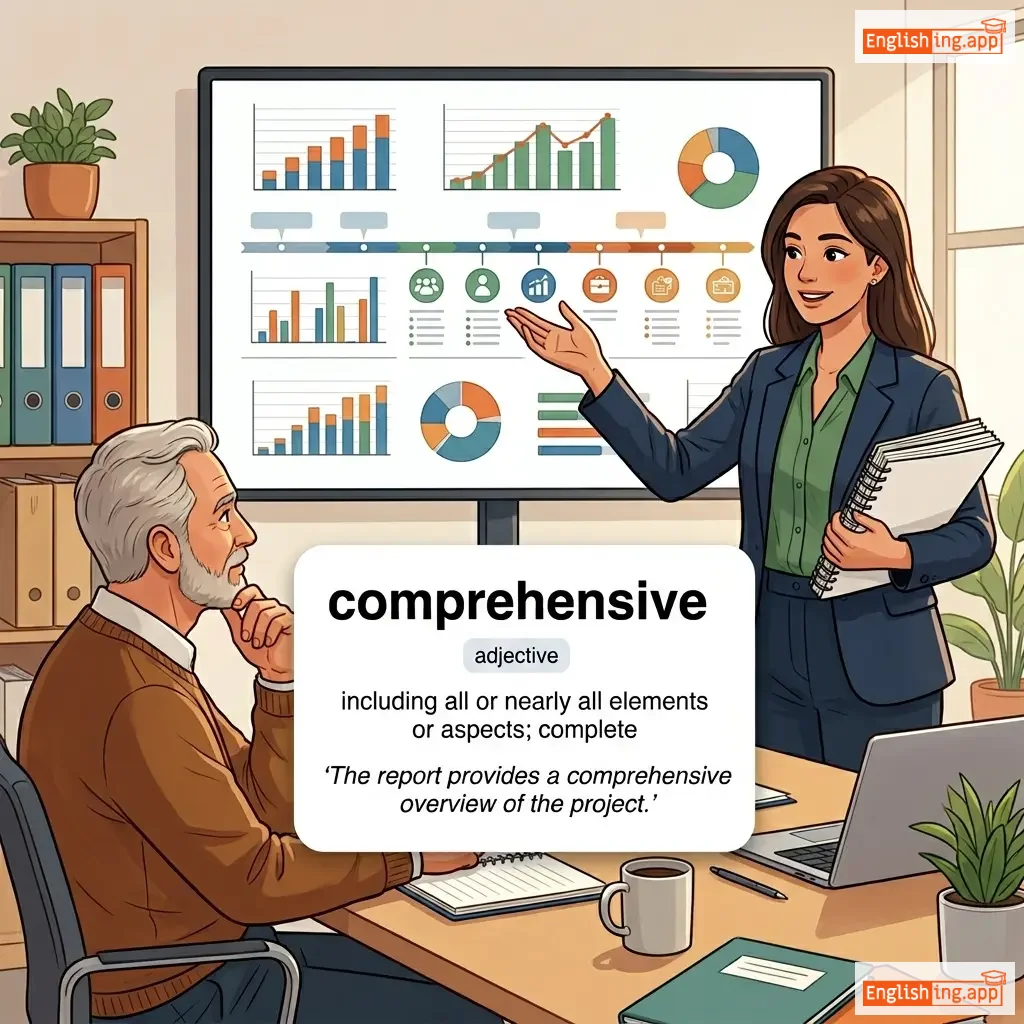
comprehensive definition card — visual illustration of the meaning
adjective
/ˌkɒmprɪˈhɛnsɪv/
包括的 (hōkatsuteki)

including all or nearly all elements or aspects; complete

"The report provides a comprehensive overview of the project."

"レポートはプロジェクトの包括的な概要を提供します。" (Repōto wa purojekuto no hōkatsuteki na gaiyō o teikyō shimasu.)
verb
/kəmˈprɛs/
圧縮する (asshuku suru)

to press or squeeze something so that it becomes smaller

"The file was compressed to save storage space."

"ファイルは圧縮されてストレージスペースを節約しました。" (Fairu wa asshuku sarete sutoressu supēsu o setsuyaku shimashita.)
adjective
/kəmˈprɛsəbl̩/
圧縮可能な (asshuku kanou na)

Capable of being compressed or reduced in volume.

"Air is a compressible substance, unlike water."

"空気は圧縮可能な物質で、水とは異なります。" (Kuki wa asshuku kanou na busshitsu de, mizu to wa kotonaru masu.)
noun
/kəmˈprɛʃn̩/
圧縮 (asshuku)

The act of pressing or squeezing something into a smaller space.

"File compression helps reduce storage requirements."

"ファイル圧縮はストレージ要件を削減するのに役立ちます。" (Fairu asshuku wa sutōreji yōken o sakugen suru no ni yakudachimasu.)
verb
/kəmˈpraɪz/
構成する (kōsei suru)

To consist of or be made up of something.

"The committee comprises five members."

"委員会は五人のメンバーで構成されています。" (Iinkai wa gonin no menbā de kōsei sarete imasu.)
compromise definition card — visual illustration of the meaning
noun, verb
/ˈkɒmprəmaɪz/
妥協 (dakyō)

A settlement of differences in which each side makes concessions; or to weaken or put at risk.

"They reached a compromise after long negotiations."

"彼らは長い交渉の後で妥協に達しました。" (Karera wa nagai kōshō no ato de dakyō ni tasshimashita.)
noun
/kəmˈpʌlʃn̩/
強迫 (kyouhaku)

An irresistible urge to do something, or the act of being forced.

"He felt a strong compulsion to check his phone constantly."

"彼は電話を絶えず確認する強迫感を感じていた。" (Kare wa denwa o taezu kakunin suru kyouhakukan o kanjite ita.)
adjective
/kəmˈpʌlsɪv/
強迫的 (kyouhakuteki)

Resulting from or acting on an irresistible urge, especially one that is against one's conscious wishes.

"He is a compulsive gambler who cannot stop placing bets."

"彼は賭けをやめられない強迫的なギャンブラーです。" (kare wa kake wo yamerarenai kyouhakuteki na gyanburaa desu.)
adjective
/kəmˈpʌlsəri/
義務的 (gimuteki)

Required by law or a rule; obligatory.

"Wearing seat belts is compulsory in most countries."
"ほとんどの国でシートベルトを着用することは義務的です。" (Hotondo no kuni de shīto beruto o chakuyō suru koto wa gimuteki desu.)
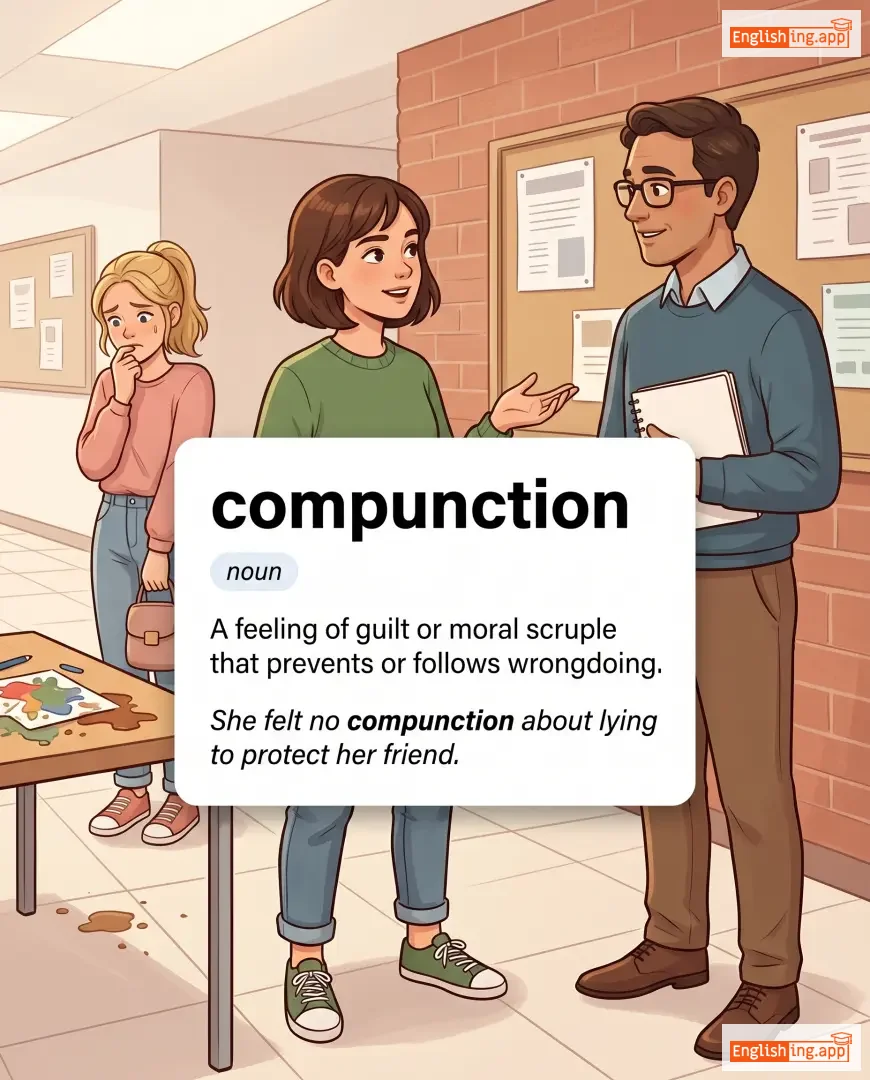
compunction definition card — visual illustration of the meaning
noun
/kəmˈpʌŋkʃən/
良心の呵責 (ryōshin no kaseki)

A feeling of guilt or moral scruple that prevents or follows wrongdoing.

"She felt no compunction about lying to protect her friend."
"彼女は友達を守るために嘘をついたことを良心の呵責を感じなかった。" (Kanojo wa tomodachi o mamoru tame ni uso o tsuita koto o ryōshin no kaseki o kanjinakatta.)
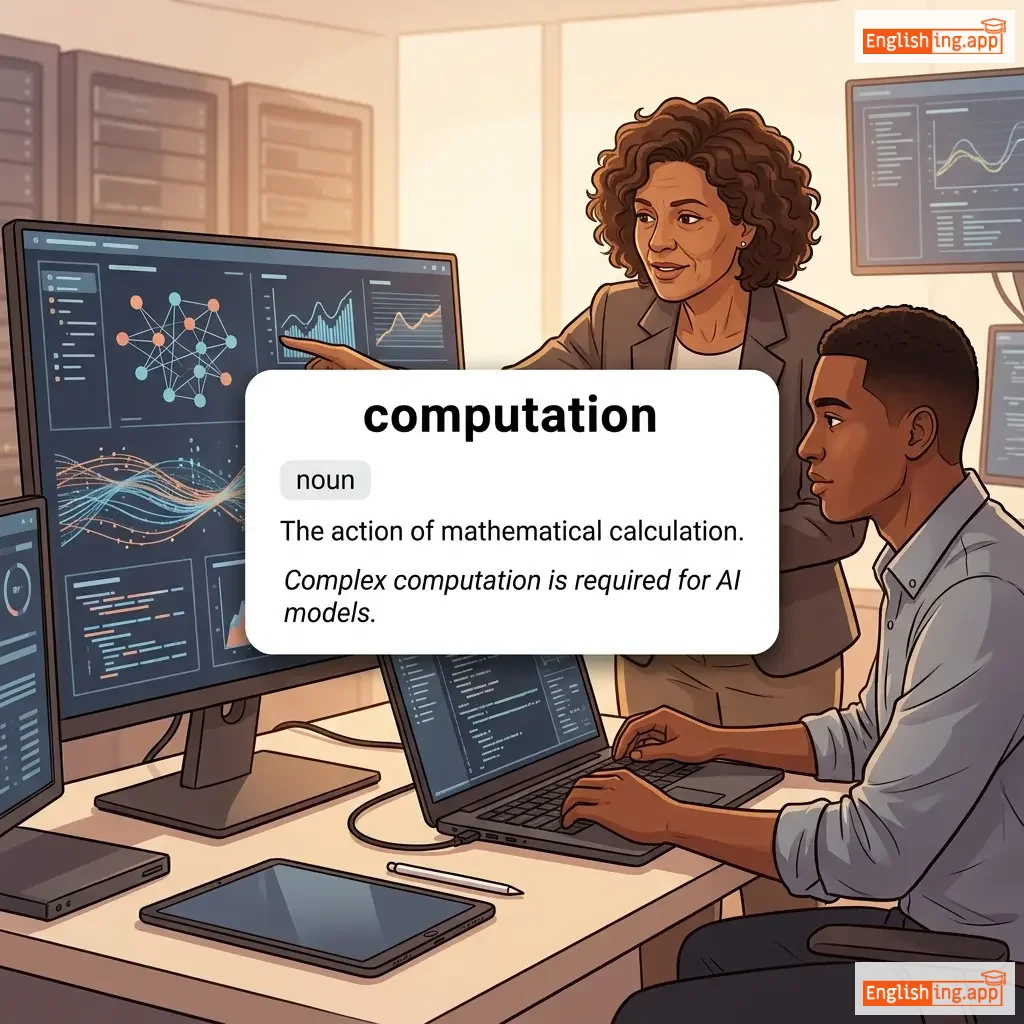
computation definition card — visual illustration of the meaning
noun
ˌkɒm.pjʊˈteɪ.ʃən
計算 (keisan)

The action of mathematical calculation.

"Complex computation is required for AI models."
"AIモデルには複雑な計算が必要です。" (AI moderu ni wa fukuzatsu na keisan ga hitsuyou desu.)
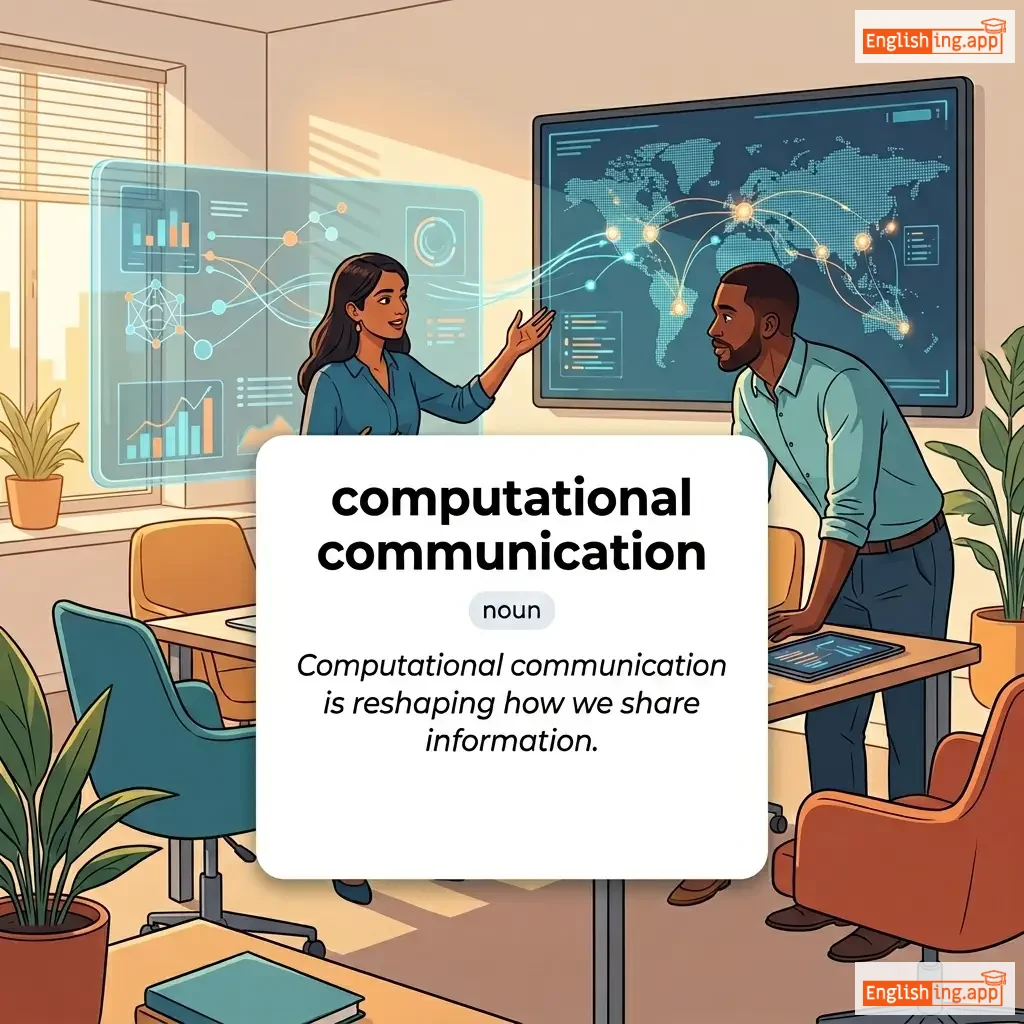
computational communication definition card — visual illustration of the meaning
noun
ˌkɒmpjʊˈteɪʃənəl kəˌmjuːnɪˈkeɪʃən
計算通信 (keisan tsuushin)

Digital exchange and automated interaction; the use of computational methods and systems to facilitate communication and information sharing.

"Computational communication is reshaping how we share information."

"計算通信は私たちが情報を共有する方法を再構築しています。" (Keisan tsuushin wa watashitachi ga jouhou wo kyoyu suru houhou wo saikouchiku shiteimasu.)
verb
/kəmˈpjuːt/
計算する (keisan suru)

To calculate or determine by using a computer or mathematical methods.

"The software can compute the total cost in seconds."

"そのソフトウェアは数秒で総コストを計算できます。" (Sono sofuto wea wa suubyou de sou kosuto wo keisan dekimasu.)
noun
/kəmˈpjuːtə(r)/
コンピュータ (konpyu-ta)

an electronic device for storing and processing data

"I bought a new computer for my office work."

"私はオフィスワークのために新しいコンピュータを購入しました。" (Watashi wa ofisu waaku no tame ni atarashii konpyu-ta o kounyuu shimashita.)
verb
/kɒnˈkætəneɪt/
連結する (renketsu suru)

To link things together in a series or chain.

"The program concatenates two strings into one."

"プログラムは二つの文字列を一つに連結します。" (Puroguramu wa futatsu no moji-retsu o hitotsu ni renketsu shimasu.)
concave definition card — visual illustration of the meaning
adjective
/ˈkɒn.keɪv/
凹形 (oukkei)

curved inward like the inside of a bowl

"The mirror had a concave surface that magnified her reflection."

"鏡は凹形の表面を持ち、彼女の反射を拡大しました。" (Kagami wa oukei no hyoumen o mochi, kanojo no hansha o kakudai shimashita.)
verb
/kənˈsiːl/
隠す (kakusu)

to hide something or keep it secret

"He tried to conceal his disappointment behind a smile."

"彼は微笑みの背後に自分の失望を隠そうとした。" (Kare wa bishoumi no haigo ni jibun no shitsubou o kakusou to shita.)
verb
/kənˈsiːd/

to admit something is true or valid, often reluctantly

"She finally conceded that she was wrong."

noun
/kənˈsiːt/
虚栄心 (kyōeishin)

excessive pride in oneself; vanity

"His conceit made him unpopular among his colleagues."

"彼の虚栄心は彼を同僚の中で不人気にした。" (Kare no kyōeishin wa kare o dōryō no naka de funinki ni shita.)
verb
/kənˈsiːv/
思いつく, 妊娠する (omoitsuku, ninshin suru)

to form or imagine an idea in the mind; to become pregnant

"It is hard to conceive how such an idea could succeed."

"そのようなアイデアが成功する方法を考えるのは難しい。" (Sono you na aidea ga seikou suru houhou wo kangaeru no wa muzukashii.)
verb
/ˈkɒnsəntreɪt/
集中する (shūchū suru)

to focus all one's attention or mental effort on a particular object or activity

"She tried to concentrate on her studies despite the noise."

"騒音にもかかわらず、彼女は勉強に集中しようとした。" (sōon ni mo kakawarazu, kanojo wa benkyō ni shūchū shiyō to shita.)
concentration definition card — visual illustration of the meaning
noun
/ˌkɒnsnˈtreɪʃən/
集中力 (shūchū-ryoku)

the act of focusing one's attention or mental effort on something

"Good concentration is essential for success in exams."

"試験に成功するためには、良い集中力が不可欠です。" (Shiken ni seikou suru tame ni wa, yoi shūchū-ryoku ga fukaketsu desu.)
adjective
/kənˈsɛntrɪk/
同心円の (dōshin'en no)

having a common center, as in circles or spheres

"The artist drew concentric circles on the canvas."
"アーティストはキャンバスに同心円を描きました。" (Ātisuto wa kyanbasu ni dōshin'en o kakimashita.)
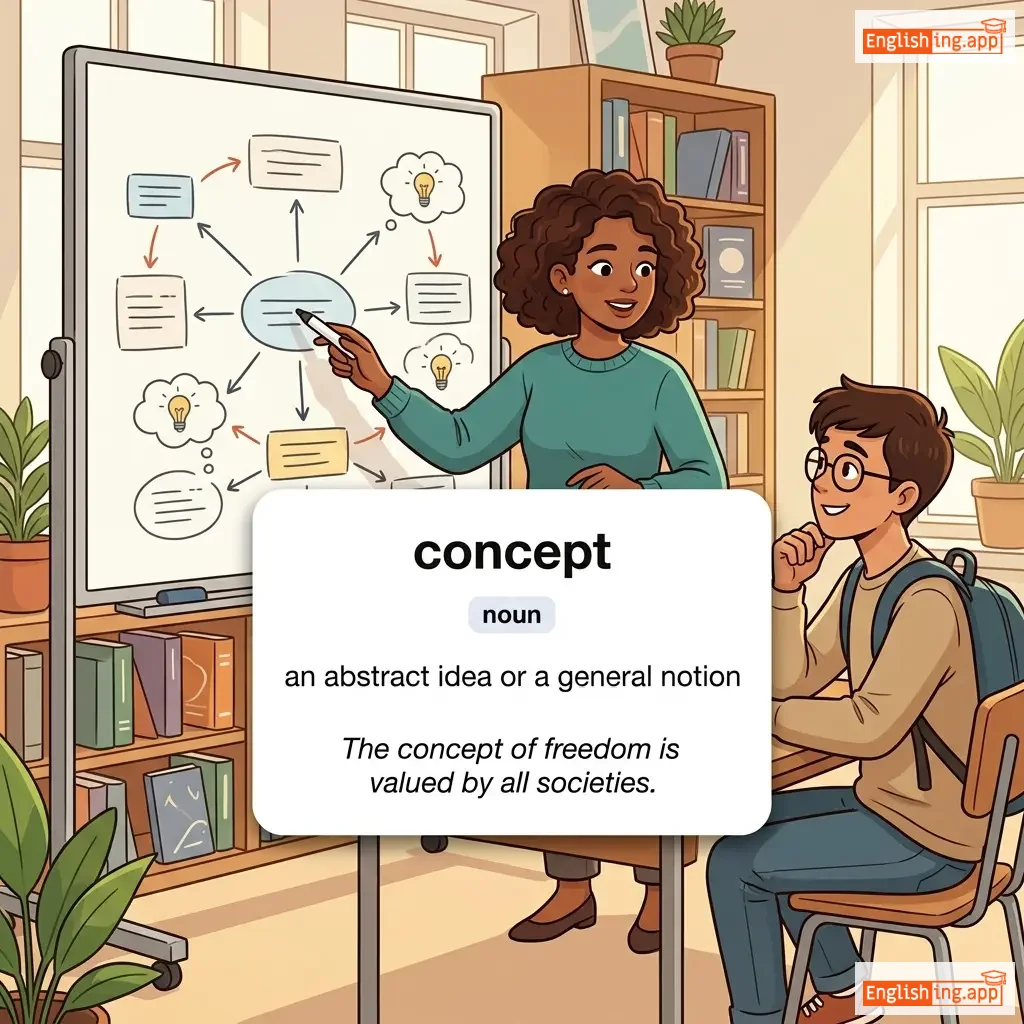
concept definition card — visual illustration of the meaning
noun
/ˈkɒnsɛpt/
概念 (gainen)

an abstract idea or a general notion

"The concept of freedom is valued by all societies."

"自由のコンセプトはすべての社会で価値があるとされています。" (Jiyū no konseputo wa subete no shakai de kachi ga aru to sareteimasu.)
noun
/kənˈsɛpʃən/
概念, 妊娠 (gainen, ninshin)

the forming or understanding of an idea; the act of conceiving a child

"Her conception of the project was very different from ours."
"彼女のプロジェクトの概念は私たちのものとは大きく異なっていました。" (kanojo no purojekuto no gainen wa watashitachi no mono to wa ōkiku kotonatte imashita.)
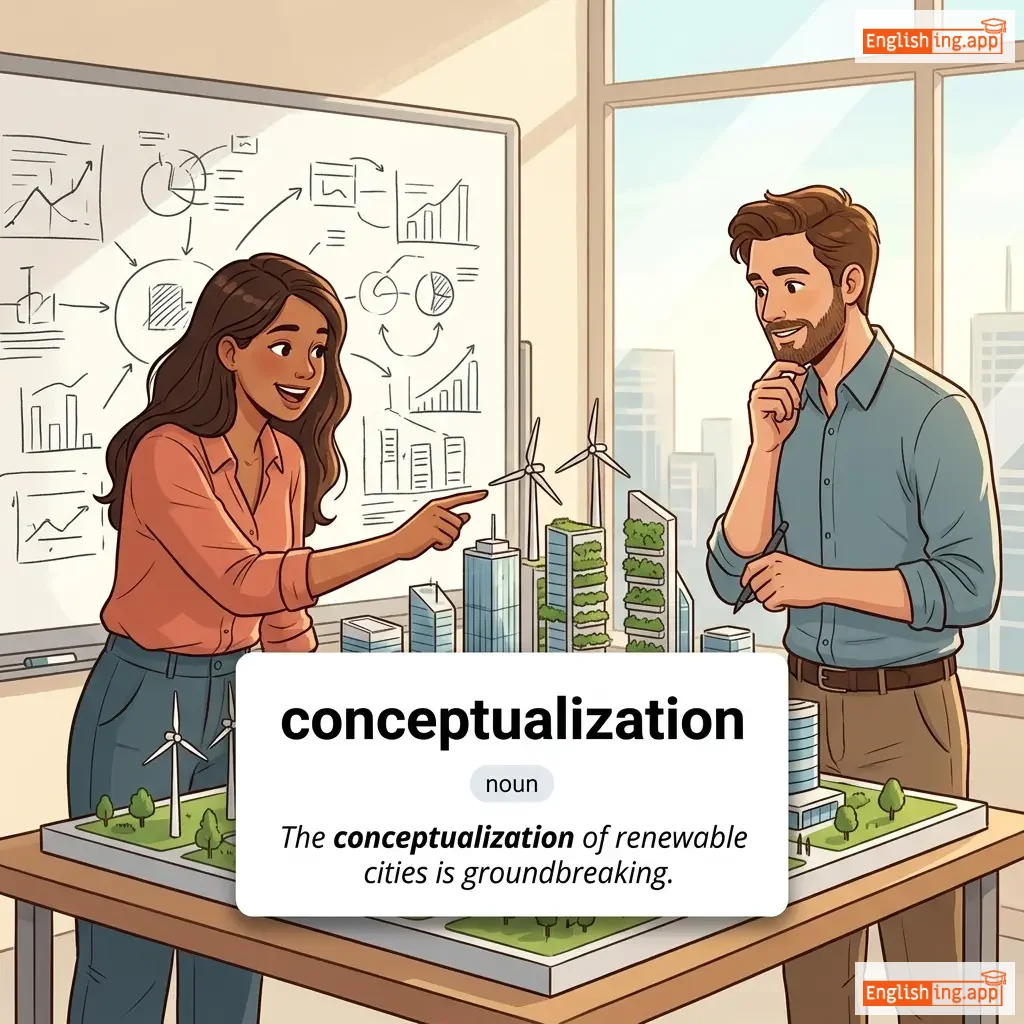
conceptualization definition card — visual illustration of the meaning
noun
kənˌsep.tʃu.ə.laɪˈzeɪ.ʃən
概念化 (gainenka)

The process of forming a concept or idea; the process of developing something in the mind.

"The conceptualization of renewable cities is groundbreaking."

"再生可能な都市の概念化は画期的です。" (Saisei kanō na toshi no gainenka wa kakkiteki desu.)
verb
/kənˈsɛptʃuəlaɪz/
概念化する (gainenka suru)

to form an idea or concept of something in your mind

"The artist conceptualized a new design for the exhibition."

"アーティストは展示のために新しいデザインを構想しました。" (Atisuto wa tenji no tame ni atarashii dezain wo kousou shimashita.)
noun/verb
/kənˈsɜːrn/

to relate to or affect; a matter of worry or interest

"Environmental issues concern all of us."

adjective
/kənˈsɜːnd/
心配な (shinpai na)

worried or anxious about something; involved or interested in something

"She was concerned about her mother's health."

"彼女は母親の健康について心配していた。" (Kanojo wa hahaoya no kenkō ni tsuite shinpai shite ita.)
preposition
/kənˈsɜːnɪŋ/
関する (kansuru)

about or relating to something; causing worry or anxiety

"There are some reports concerning the new project."

"新しいプロジェクトに関する報告があります。" (Atarashī purojekuto ni kansuru hōkoku ga arimasu.)
noun
/ˈkɒnsət/
コンサート (konsaato)

A musical performance given by one or more singers or musicians.

"We went to a concert last night and enjoyed the live music."

"私たちは昨晩コンサートに行き、ライブ音楽を楽しみました。" (Watashitachi wa sakuban konsaato ni iki, raibu ongaku o tanoshimimashita.)
adjective
/kənˈsɜːrtɪd/
協調した (kyōchō shita)

done with great effort, planned and performed together by multiple people

"The workers made a concerted effort to improve conditions."

"労働者たちは状況改善のために協調した努力をしました。" (Rōdōsha-tachi wa jōkyō kaizen no tame ni kyōchō shita doryoku o shimashita.)