語彙集

英単語辞書 | 単語の意味、定義、例文

adverb
/ˈbɪt.ə.li/
ひどく; 激しく (hidoku; hageshiku)

in an angry, hurt, or resentful way; extremely; severely

"She complained bitterly about the unfair treatment."

"彼女は不公平な扱いについてひどく不満を言った。" (Kanojo wa fukōhei na atsukai ni tsuite hidoku fuman o itta.)
noun
/ˈbɪtərnəs/
苦味 (kumami)

a feeling of anger and unhappiness caused by unfair treatment or disappointment

"His bitterness after the breakup was evident to everyone."

"彼の別れた後の苦味は、誰にでも明らかでした。" (Kare no wakareta ato no kumami wa, dare ni demo akiraka deshita.)
noun
/ˈbɪvuˌæk/
仮設キャンプ (kasetsu kyanpu)

a temporary camp without tents or cover, usually used by soldiers or mountaineers

"The climbers set up a bivouac on the mountainside."

"登山者たちは山の斜面に仮設キャンプを設置した。" (Tozanshatachi wa yama no shamen ni kasetsu kyanpu wo setchi shita.)
noun
/bɪz/
ビジネス (bijinesu)

business (informal); commercial enterprise or activity

"He's been in the restaurant biz for twenty years."

"彼は20年間、レストランのビジネスをしてきました。" (Kare wa 20 nenkan, resutoran no bijinesu o shite kimashita.)
adjective
/bɪˈzɑːr/
奇妙な (kimyouna)

very strange or unusual, especially so as to cause interest or amusement

"He told a bizarre story that no one could believe."

"彼は誰も信じられないような奇妙な話をした。" (Kare wa dare mo shinjirarenai you na kimyou na hanashi wo shita.)
verb, noun
/blæb/
ぺらぺら話す;秘密を漏らす (pera pera hanasu; himitsu o morasu)

to talk too much or reveal secrets carelessly; excessive or foolish talk

"He accidentally blabbed the surprise to everyone."

"彼はうっかりサプライズをみんなに話してしまった。" (kare wa ukkari sapuraizu o minna ni hanashite shimatta)
adjective
/blæk/
(kuro)

of the very darkest color due to the absence of light

"She wore a black dress to the party."

"彼女はパーティーに黒いドレスを着ていった。" (Kanojo wa pātī ni kuroi doresu o kite itta.)
noun
/blæk ˈber.i/
ブラックベリー (burakkuberī)

a small dark purple or black fruit that grows on bushes

"We picked fresh blackberries from the garden for our pie."

"私たちは庭から新鮮なブラックベリーを摘んでパイを作りました。" (Watashitachi wa niwa kara shinsen na burakkuberī o tsunde pai o tsukurimashita)
noun
/blæk ˈkɑːr.də.məm/
黒カルダモン (kuro karudamon)

a large aromatic spice pod with a smoky flavor, commonly used in Indian and Middle Eastern cooking

"Add black cardamom to the curry for a rich, smoky flavor."

"カレーに黒カルダモンを加えて、リッチでスモーキーな風味を楽しんでください。" (Karē ni kuro karudamon o kuwaete, ricchi de sumōkī na fūmi o tanoshinde kudasai.)
noun
/blæk ˈpep.ər/
黒胡椒 (kuro koshou)

a hot-tasting spice made from dried peppercorns, widely used for seasoning food

"Season the steak with salt and freshly ground black pepper."

"ステーキに塩と新鮮に挽いたブラックペッパーを振りかけてください。" (sutēki ni shio to shin'sen ni haita burakku peppā o furikakete kudasai.)
noun
/blæk plʌm/
ブラックプラム (burakku puramu)

a dark purple or black colored edible fruit with sweet and sour taste

"I picked some fresh black plums from the tree in our backyard."

"私は庭の木から新鮮なブラックプラムをいくつか摘みました。" (Watashi wa niwa no ki kara shinseina burakku puramu o ikutsu ka tsumimashita.)
noun
/blæk sɔːlt/
ブラックソルト (burakku soruto)

a type of rock salt with a distinctive sulfuric flavor, commonly used in Indian cuisine

"Add a pinch of black salt to enhance the flavor of the fruit salad."

"フルーツサラダの風味を引き立てるために、ブラックソルトをひとつまみ加えてください。" (Furuutsu sarada no fuumi o hikitateru tame ni, burakku soruto o hitotsu mami kuwaete kudasai.)
noun
/blæk sneɪk/
黒い蛇 (kuroi hebi)

a snake with dark or black colored skin

"The black snake slithered through the grass."

"黒い蛇は草の中を這いました。" (kuroi hebi wa kusa no naka o haimashita)
noun
/blæk biː/
黒蜂 (kurobachi)

a large dark-colored bee that makes a loud buzzing sound

"The black-bee was buzzing around the flowers in the garden."

"黒蜂が庭の花の周りをブンブン飛んでいた。" (Kurobachi ga niwa no hana no mawari o bunbun tonde ita.)
verb
/ˈblækˌbɔːl/
排除する (haijo suru)

to exclude someone socially or vote against their membership in a group or club

"He was blackballed from the club after the controversy."

"彼は論争の後、クラブから排除された。" (Kare wa ronsō no ato, kurabu kara haijo sareta.)
verb
/ˈblækən/
黒くする (kuroku suru)

to make something black or darker; to stain, soil, or tarnish

"Smoke from the fire began to blacken the walls."

"火事の煙が壁を黒くし始めた。" (kaji no kemuri ga kabe o kuroku shi hajimeta)
noun, verb
/ˈblækmeɪl/
脅迫する (kyohaku suru)

the act of demanding money or advantage by threatening to reveal secrets; to force someone to act by using such threats

"He tried to blackmail her by threatening to reveal the documents."

"彼は書類を公表すると脅して彼女を脅迫しようとした。" (kare wa shorui o kohyo suru to odoshite kanojo o kyohaku shiyo to shita)
noun
/ˈblæk.smɪθ/
鍛冶屋 (Burakku Sumisu)

a person who makes and repairs things made of iron

"The blacksmith hammered the hot iron into a horseshoe."

"鍛冶屋は熱い鉄を金づちで打って蹄鉄を作った。" (kajiya wa atsui tetsu o kanazuchi de utte teitetsu o tsukutta)
noun
/bleɪd/
(ha)

the flat cutting edge of a tool, knife, or weapon

"The blade of the knife was very sharp."

"ナイフの刃はとても鋭かった。" (Naifu no ha wa totemo surudakatta.)
noun
/bleɪn/
水疱 (suipō)

an inflammatory swelling or sore on the skin; a blister or pustule

"The doctor examined the blain on his arm."
"医者は彼の腕の水疱を検査しました。" (Isha wa kare no ude no suipō o kensa shimashita.)
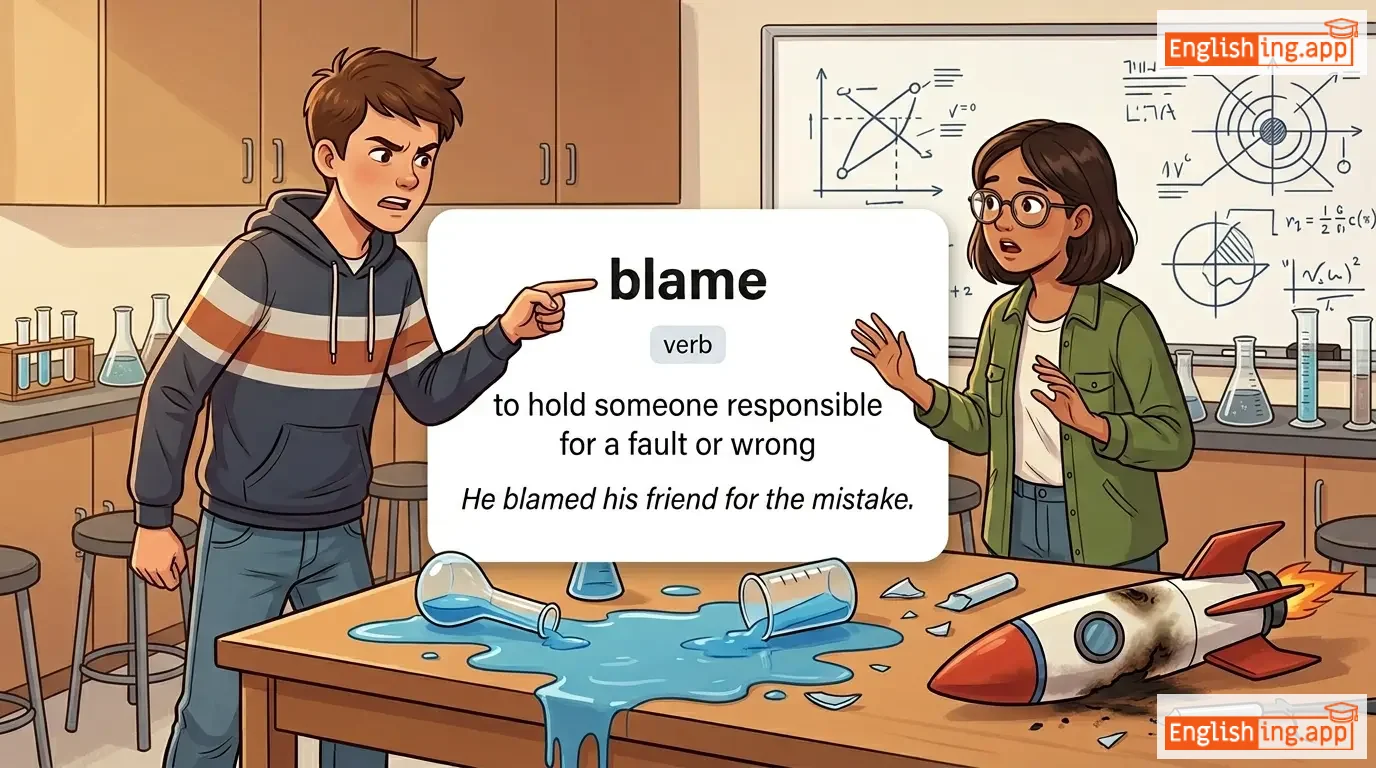
blame definition card — visual illustration of the meaning
verb
/bleɪm/
非難する (hinan suru)

to hold someone responsible for a fault or wrong

"He blamed his friend for the mistake."

"彼はその間違いについて友人を非難しました。" (Kare wa sono machigai ni tsuite yūjin wo hinan shimashita.)
adjective
/ˈbleɪmləs/
非の打ち所がない (hinouchidoshoraganai)

innocent of wrongdoing; not deserving blame

"She remained calm and blameless throughout the investigation."

"彼女は調査中ずっと冷静で非の打ち所がなかった。" (Kanojo wa chōsa-chū zutto reisei de hinouchidoshoraganakatta.)
verb
/blæntʃ/
青ざめる (aosameru)

to turn pale from shock, fear, or to briefly boil food to remove skin or prepare it

"She blanched at the sight of blood."

"彼女は血を見て顔色が青ざめた。" (Kanojo wa chi o mite kaoiro ga aosameta.)
adjective
/blænd/
無味 (mu-mi)

lacking strong features, flavor, or character; dull or uninteresting

"The soup was too bland for my taste."

"このスープは私の好みにとっては無味でした。" (Kono sūpu wa watashi no konomi ni totte wa mumi deshita.)
verb
/ˈblændɪʃ/
お世辞を言う (oseji o iu)

to flatter or coax someone with kind words or praise in order to influence them

"He blandished the officials with compliments to gain their support."
"彼は支持を得るために役人にお世辞を言った。" (kare wa shiji o eru tame ni yakunin ni oseji o itta)
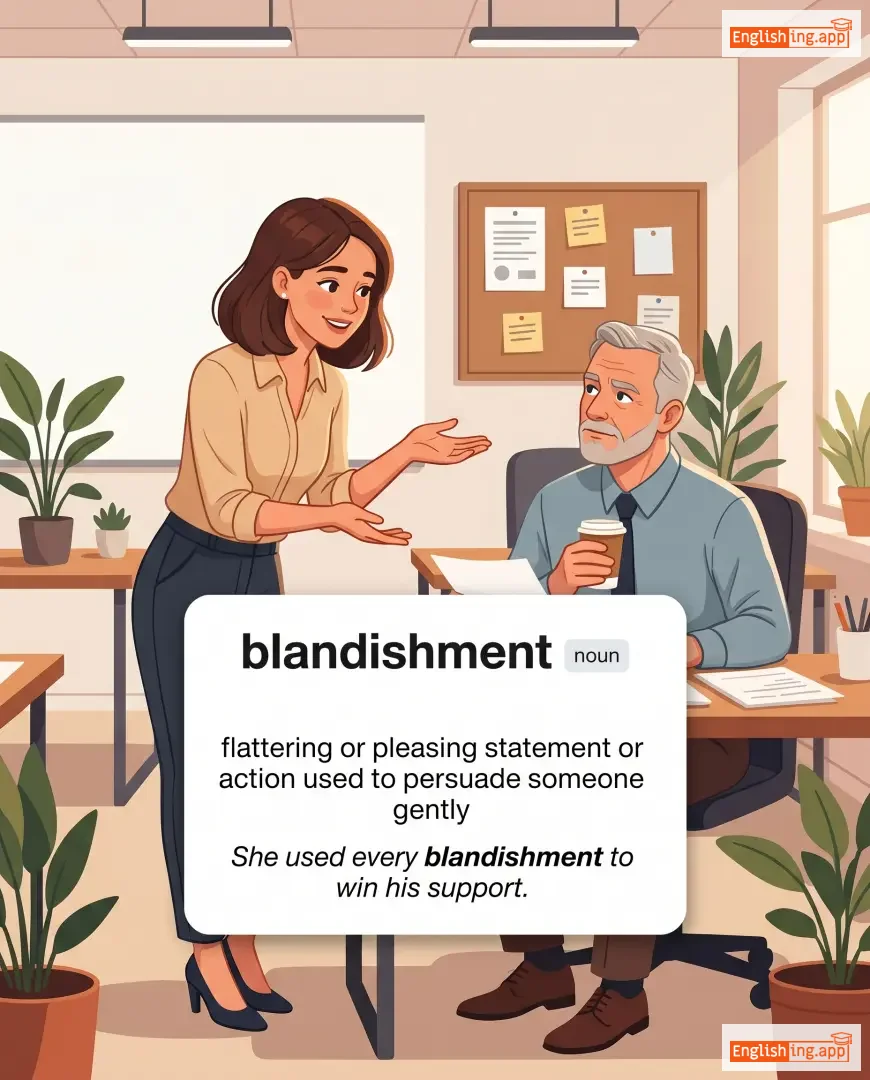
blandishment definition card — visual illustration of the meaning
noun
/ˈblændɪʃmənt/
お世辞 (oseshi)

flattering or pleasing statement or action used to persuade someone gently

"She used every blandishment to win his support."

"彼女は彼の支持を得るためにあらゆるお世辞を使った。" (Kanojo wa kare no shiji o eru tame ni arayuru oseshi o tsukatta.)
adjective
/blæŋk/
空白 (kuhaku)

showing no expression or containing nothing written, printed, or recorded.

"Her face went blank when she heard the bad news."

"悪いニュースを聞いたとき、彼女の顔は空白になった。" (Warui nyuusu o kiita toki, kanojo no kao wa kuhaku ni natta.)
noun
/ˈblæŋ.kɪt/
毛布 (moufu)

A large piece of cloth used for warmth, typically on a bed.

"She pulled the blanket over her shoulders to stay warm."

"彼女は温かく保つために肩にブランケットをかけた。" (Kanojo wa atatakai ho-motsu tame ni kata ni buranketto o kaketa.)
verb
/blɛər/
大きな音を立てる (ōkina oto o tateru)

to make a loud, harsh sound

"The car horns blared all night."

"車のクラクションは一晩中鳴り響いていた。" (Kuruma no kurakushon wa hitobanjuu narihibiite ita.)
adjective
/blɑːˈzeɪ/
無関心, 無感動 (mukanshin, mukandō)

unimpressed or indifferent to something because it has been experienced so often before

"After years of luxury travel, she felt blase about another trip to Paris."

"何年もの贅沢な旅行の後、彼女はパリへの別の旅行に対して無関心を感じた。" (Nannen mono zētaku na ryokō no ato, kanojo wa Pari e no betsu no ryokō ni taishite mukanshin o kanjita.)
verb
/blæsˈfiːm/
冒涜する (bōtoku suru)

to speak irreverently about God or sacred things

"He was accused of blaspheming during the heated argument."

"彼は激しい議論中に冒涜したとして告発されました。" (Kare wa hageshī giron-chū ni bōtoku shita to shite kokuhatsu saremashita.)
adjective
/ˈblæs.fə.məs/
冒涜的 (bōtoku-teki)

showing disrespect or lack of reverence for God or sacred things

"The book was banned for its blasphemous content."

"その本は冒涜的な内容のため禁止されました。" (Sono hon wa bōtoku-teki na naiyō no tame kinshi saremashita.)
noun
/ˈblæs.fə.mi/
冒涜 (bōtoku)

the act of speaking disrespectfully about God or sacred things

"In some countries, blasphemy is a punishable offense."

"いくつかの国では、冒涜は罰せられる犯罪です。" (Ikutsuka no kuni de wa, bōtoku wa bassareru hanzai desu.)
noun, verb
/blæst/
爆発、強い衝撃 (bakuhatsu, tsuyoi shougeki)

a strong gust of wind, an explosion, or a loud sound; to destroy or shatter by explosion

"The explosion sent a powerful blast through the building."

"爆発は建物を通して強力な爆風を送った。" (Bakuhatsu wa tatemono o tōshite kyōryoku na bakufū o okutta.)
adjective
/ˈbleɪtənt/
明白な (meihakuna)

done openly and unashamedly; obvious and offensive

"The company's blatant disregard for safety regulations angered the public."

"その企業の安全規制に対する公然たる軽視が、一般市民の怒りを買った。" (Sono kigyō no anzen kisei ni taisuru kōzen taru keishi ga, ippan shimin no ikari o katta.)
verb
/bleɪz/
燃え上がる炎 (moeagaru honoo)

to burn brightly or powerfully

"The fire blazed for hours before it was brought under control."
"火は何時間も燃え続け、制御下に置かれるまで続いた。" (Hi wa nanjikan mo moe tsuzuke, seigyo ka ni okareru made tsuzuita.)
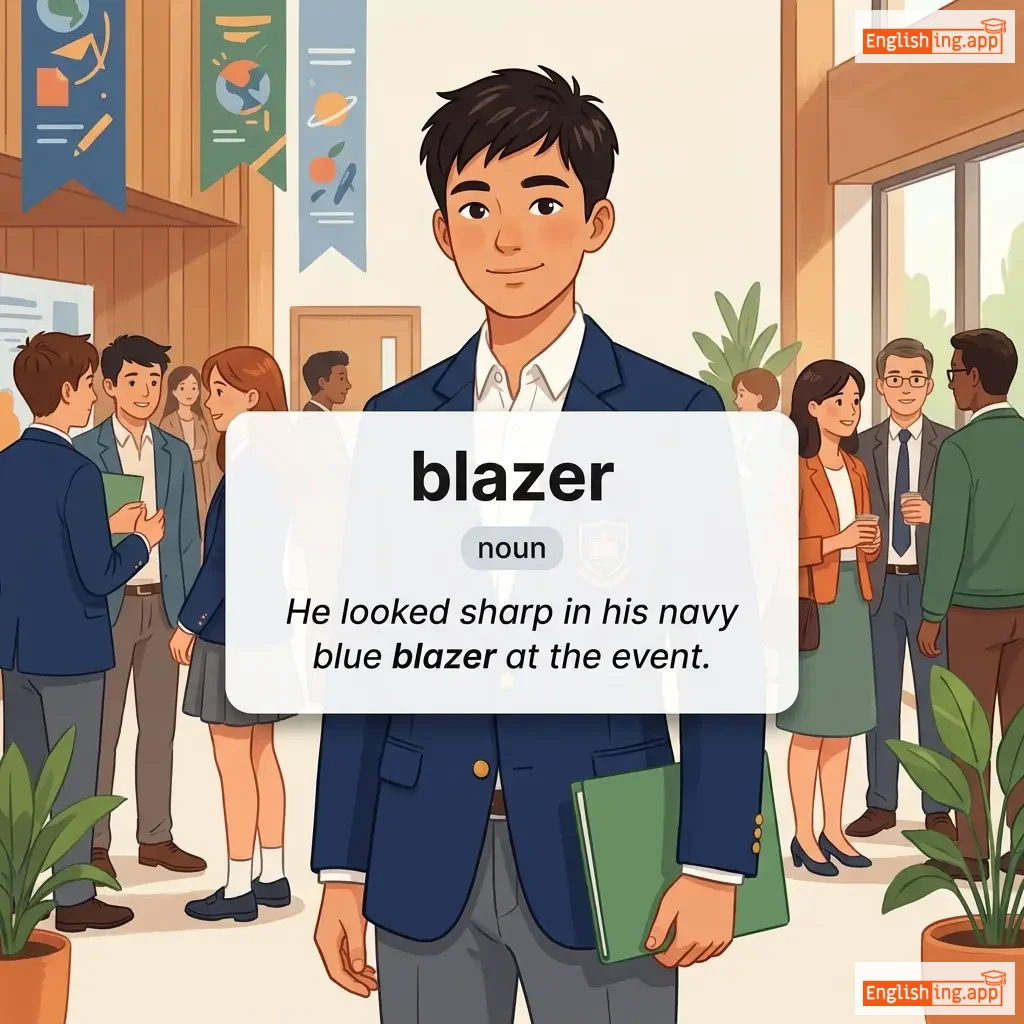
blazer definition card — visual illustration of the meaning
noun
ˈbleɪzə
ブレザー (burezaa)

A coloured jacket worn by members of a club, team, or school as part of a uniform.

"He looked sharp in his navy blue blazer at the event."

"彼はイベントでネイビーブルーのブレザーを着て鋭く見えました。" (Kare wa ibento de neibī burū no burezā o kite surudoku miemashita.)
adjective
/ˈbleɪzɪŋ/
燃えるような; 激しい (moeru yōna; hageshī)

burning fiercely; extremely hot; very bright

"The blazing sun made the day extremely hot."

"燃えるような太陽はその日を非常に暑くした。" (Moeru yōna taiyō wa sono hi o hijō ni atsuku shita)
verb
/ˈbleɪzən/
表示する (hyouji suru)

to display prominently or vividly

"The slogan was blazoned across the banner in bold letters."

"スローガンは太字でバナーに表示されました。" (Surogan wa fudji de banā ni hyōji saremashita.)
adjective
/bliːk/
陰鬱な (in'utsu na)

cold, miserable, or without hope

"The future seemed bleak after the economic downturn."

"経済不況後、未来は陰鬱に見えた。" (Keizai fukyō go, mirai wa in'utsu ni mieteta.)
verb
/bliːd/
出血する (shukketsu suru)

to lose blood from the body, especially due to injury

"She began to bleed from the cut on her arm."
"彼女は腕の切り傷から血を流し始めた。" (Kanojo wa ude no kirikizu kara chi wo nagashihajimeta.)
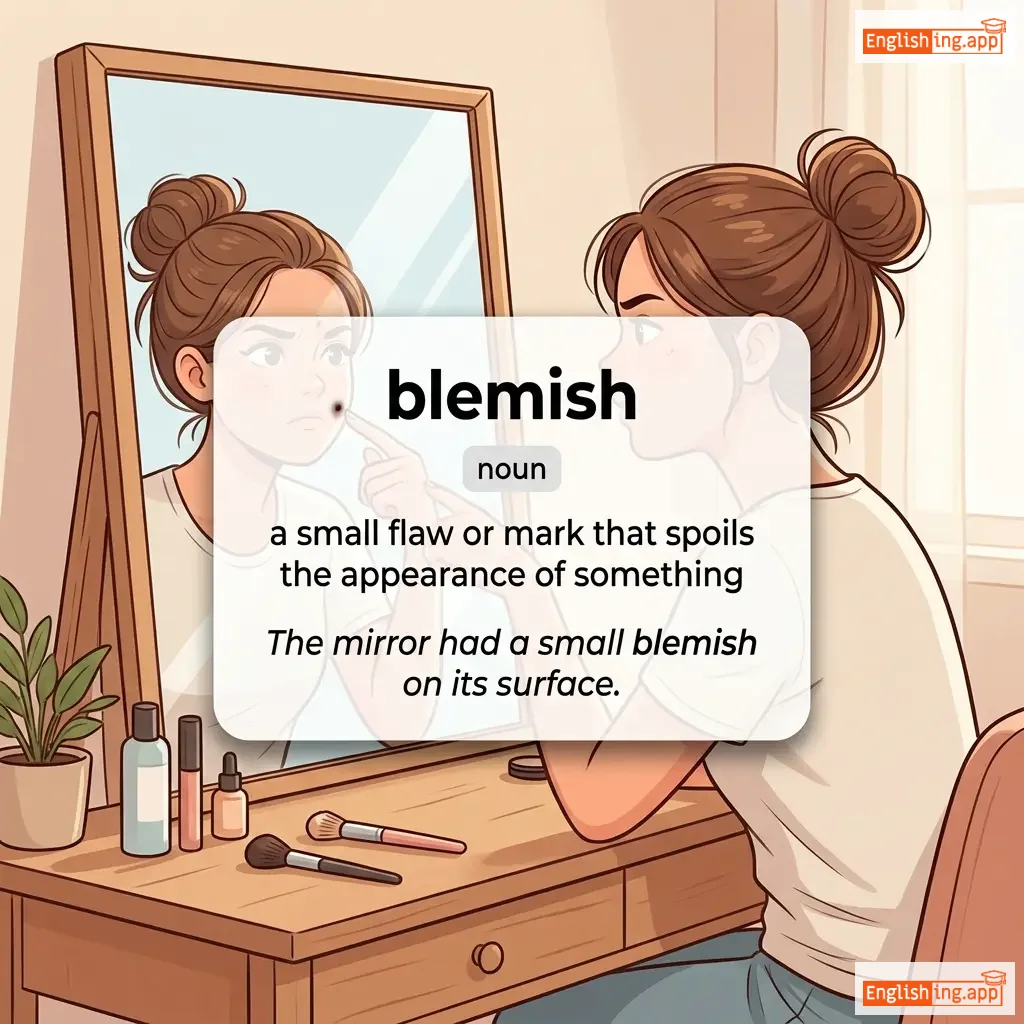
blemish definition card — visual illustration of the meaning
noun
/ˈblɛmɪʃ/

a small flaw or mark that spoils the appearance of something

"The mirror had a small blemish on its surface."

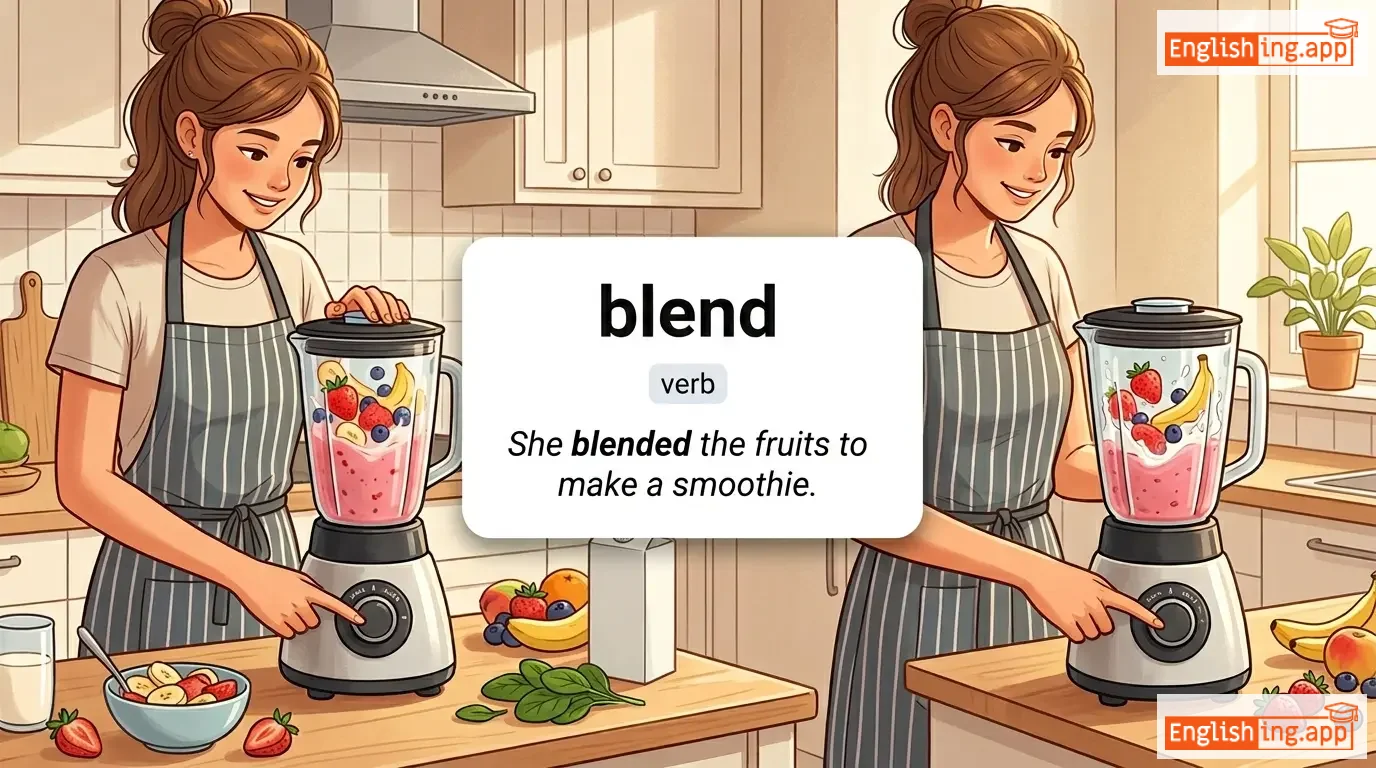
blend definition card — visual illustration of the meaning
verb
/blɛnd/
混ぜる (mazeru)

to mix different substances or elements together so that they form a smooth combination

"She blended the fruits to make a smoothie."

"彼女はスムージーを作るために果物をブレンドしました。" (Kanojo wa sumūjī o tsukuru tame ni kudamono o burendo shimashita.)
noun
/ˈblen.dər/
ブレンダー (burendā)

an electric kitchen appliance used to mix, purée, or emulsify food and liquids

"She used the blender to make a delicious smoothie."
"彼女は美味しいスムージーを作るためにブレンダーを使いました。" (Kanojo wa oishī sumūjī o tsukuru tame ni burendā o tsukaimashita.)
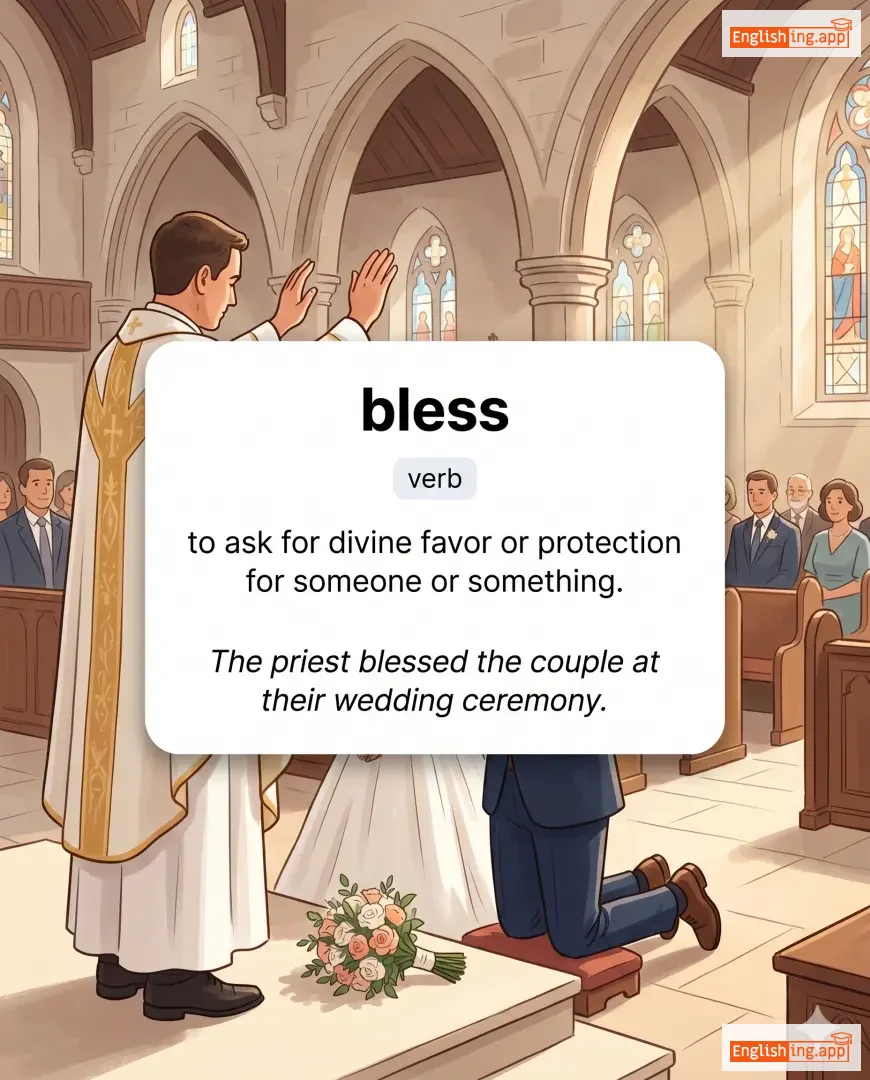
bless definition card — visual illustration of the meaning
verb
/blɛs/
祝福する (shukufuku suru)

to ask for divine favor or protection for someone or something.

"The priest blessed the couple at their wedding ceremony."

"司祭は結婚式でカップルを祝福しました。" (Shisai wa kekkonshiki de kappuru o shukufuku shimashita.)
noun
/ˈblɛsɪŋ/
祝福 (shukufuku)

a prayer asking for divine favor; something that brings happiness or benefit.

"Good health is a blessing we often take for granted."

"健康は私たちが当然のように見過ごす祝福です。" (Kenkou wa watashitachi ga touzen no you ni misugosu shukufuku desu.)
noun
/blaɪt/
枯れ病 (karebyō)

A disease or condition that causes plants to wither; something that spoils or damages.

"The drought was a blight on the farmer’s crops."

"干ばつは農家の作物にとって枯れ病でした。" (Kambatsu wa nōka no sakumotsu ni totte karebyō deshita.)
adjective
/ˈblaɪtɪd/
荒廃した (kouhaishita)

Spoiled, damaged, or destroyed.

"The blighted neighborhood was abandoned by most residents."

"荒廃した地域はほとんどの住民によって放棄されました。" (Kouhaishita chiiki wa hotondo no juumin ni yotte houki saremashita.)
🙈

blind

adjective
/blaɪnd/

Unable to see because of injury, disease, or a congenital condition.

"He has been blind since birth."

verb
/blɪŋk/
まばたきする (mabataki suru)

to close and open the eyes quickly.

"She blinked rapidly to clear the dust from her eyes."

"彼女は目からほこりを取り除くために素早く瞬きをした。" (Kanojo wa me kara hokori o torinozoku tame ni subayaku mabataki shita.)