語彙集

英単語辞書 | 単語の意味、定義、例文

adjective
/ˈbaɪ.fərˌkeɪ.tɪd/
二つに分かれた (futatsu ni wakareta)

Divided into two branches or parts.

"The river became bifurcated as it flowed around the island."

"川は島の周りを流れる際に二つに分かれました。" (Kawa wa shima no mawari o nagareru sai ni futatsu ni wakaremashita.)
adjective
/bɪɡ/
大きい (ookii)

large in size, extent, or importance

"They moved into a big house with plenty of space."

"彼らは広いスペースのある大きな家に引っ越しました。" (Karera wa hiroi supēsu no aru ōkina ie ni hikkoshimashita.)
noun
/bɪɡ boʊl/
大きなボウル (ōkina bōru)

a large, round, shallow container used for serving food, mixing ingredients, or washing

"She mixed the ingredients in a big bowl."

"彼女は大きなボウルで材料を混ぜました。" (Kanojo wa ōkina bōru de zairyō o mazemashita.)
noun
/ˈbɪɡ.ə.mɪst/
重婚者 (juukonsha)

A person who commits the crime of marrying someone while already married to another.

"The man was arrested for being a bigamist."

"その男はビガミストであるため逮捕された。" (Sono otoko wa bigamisuto de aru tame taiho sareta.)
noun
/ˈbɪɡ.ə.mi/
重婚 (jūkon)

The act of marrying one person while still legally married to another.

"He was charged with bigamy after his second marriage was discovered."

"彼は二度目の結婚が発覚した後、重婚で起訴されました。" (Kare wa nidome no kekkon ga hakkaku shita ato, jūkon de kiso saremashita.)
adjective
/ˈbɪɡɪst/
最も大きい (mottomo ookii)

largest in size, amount, degree, or importance; superlative form of big

"This is the biggest challenge we have ever faced."

"これは私たちが直面した中で最も大きな挑戦です。" (kore wa watashitachi ga chokumen shita naka de mottomo ookina chosen desu)
noun
/baɪt/
入り江 (iriga)

A bend or curve in a geographical feature, especially a coastline, or a loop in a rope.

"The sailors anchored in the calm waters of the bight."

"船員たちは入り江の穏やかな水域でアンカーを下ろした。" (Sen'in-tachi wa iriga no odayakana suiki de ankā o oroshita.)
noun
/ˈbɪɡ.ət/
偏見者 (henkensha)

A person who is intolerant toward those holding different opinions or beliefs.

"He was called a bigot for refusing to listen to others' views."

"他人の意見を聞こうとしなかったため、彼は偏見者と呼ばれました。" (Tanin no iken o kikou to shinakatta tame, kare wa henken-sha to yobaremashita.)
noun
/ˈbɪɡətri/
偏見 (henken)

Intolerance toward those who hold different opinions or lifestyles.

"Her bigotry prevented her from accepting people with different beliefs."

"彼女の偏見は、異なる信念を持つ人々を受け入れることを妨げていた。" (Kanojo no henken wa, kotonaru shinnen o motsu hitobito o ukeireru koto o samatamete ita.)
noun, verb
/baɪk/
自転車 (jitensha)

a bicycle or motorcycle; to ride a bicycle

"He biked to school every day."

"彼は毎日自転車で学校に行きました。" (Kare wa mainichi jitensha de gakkou ni ikimashita.)
bilateral definition card — visual illustration of the meaning
adjective
/ˌbaɪˈlætərəl/
二国間の (nikokukan no)

Involving two sides, parties, or countries.

"The two nations signed a bilateral trade agreement."

"二国は二国間貿易協定に署名しました。" (nikoku wa nikokukan bōeki kyōtei ni shomei shimashita.)
bilateral negotiations definition card — visual illustration of the meaning
noun
/ˌbaɪˈlæt.ər.əl nɪˌɡəʊ.ʃiˈeɪ.ʃənz/
二国間交渉 (nikokkann kōshō)

Negotiations or discussions between two parties, typically countries or organizations.

"Bilateral negotiations resolve disputes."

"二国間交渉は紛争を解決する。" (Nikokkann kōshō wa funsō o kaiketsu suru.)
noun
/baɪl/
胆汁 (tan shiu)

a bitter greenish-brown alkaline fluid that aids digestion and is secreted by the liver and stored in the gallbladder

"The liver produces bile to help digest fats."

"肝臓は脂肪の消化を助けるために胆汁を生成します。" (Kanzou wa shibou no shouka wo tasukeru tame ni tan shiu wo seisei shimasu)
adjective
/ˌbaɪˈlɪŋɡwəl/
バイリンガル (bairingaru)

Able to speak two languages fluently.

"She grew up in a bilingual household speaking both English and Spanish."

"彼女はバイリンガルの家庭で育ち、英語とスペイン語の両方を話しました。" (Kanojo wa bairingaru no katei de sodachi, eigo to supeingo no ryōhō o hanashimashita.)
adjective
/ˈbɪliəs/
胆汁の (tanshū no)

Relating to bile or an ill-tempered, irritable disposition.

"He became bilious after hearing the unfair criticism."

"不公平な批判を聞いた後、彼は怒りっぽくなった。" (Fukōhei na hihan o kiita ato, kare wa okorippō kunatta.)
verb
/bɪlk/
だます (damasu)

To cheat or defraud someone of money or rights.

"The scammer tried to bilk elderly people out of their savings."

"詐欺師は高齢者の貯金をだまし取ろうとした。" (sagishi wa kōrei-sha no chokin o damashi torō to shita.)
🧾

Bill

noun
/bɪl/

a written statement of money owed for goods or services; also a proposed law presented to a legislature

"He received the electricity bill yesterday."

noun
/ˈbɪlɪŋzˌɡeɪt/
粗野または侮辱的な言葉 (soya mata wa bujokuteki na kotoba)

Coarse or abusive language; vulgar or offensive speech.

"The heated argument quickly descended into billingsgate."

"激しい議論はすぐに粗野な言葉に変わった。" (Hageshī giron wa sugu ni soya na kotoba ni kawatta.)
noun
/ˈbɪljən/

the number 1,000,000,000 (one thousand million)

"The company is worth more than a billion dollars."

verb
/ˈbɪloʊ/
波のように膨らむ (nami no yō ni fukuramu)

To swell or rise in large waves or surges; to flow outward in a rolling motion.

"Smoke billowed from the burning building."

"煙は燃えている建物から波のように膨らんでいた。" (Kemuri wa moete iru tatemono kara nami no yō ni fukurande ita.)
adjective
/ˈbɪloʊɪŋ/
波打つ (namiutsu)

Describing something that swells or surges outward in waves or large masses.

"She walked through the billowing curtains."

"彼女は波打つカーテンを通り抜けた。" (Kanojo wa namiutsu kāten o tōri nuketa.)
noun
/baɪˈmɛstər/
二ヶ月の期間 (nikagetsu no kikan)

A period of two months.

"The academic program is divided into six bimesters."

"学術プログラムは6つのバイメスターに分かれています。" (Gakujutsu puroguramu wa muttsu no baimesutā ni wakareteimasu.)
bind definition card — visual illustration of the meaning
verb
/baɪnd/
結びつける (musubitsukeru)

to tie or fasten tightly; to unite or restrict

"The contract will bind both parties to the agreement."

"契約は両方の当事者を契約に縛ります。" (Keiyaku wa ryōhō no tōjisha o keiyaku ni shibarimasu.)
noun
/ˈbaɪoʊ ˌdeɪtə/
履歴書 (rirekisho)

biographical data; a resume or curriculum vitae containing personal and professional information

"Please submit your bio-data along with the job application."
"履歴書を求人応募書類と一緒に提出してください。" (Rirekisho wo kyūjin ōbo shorui to issho ni teishutsu shite kudasai.)
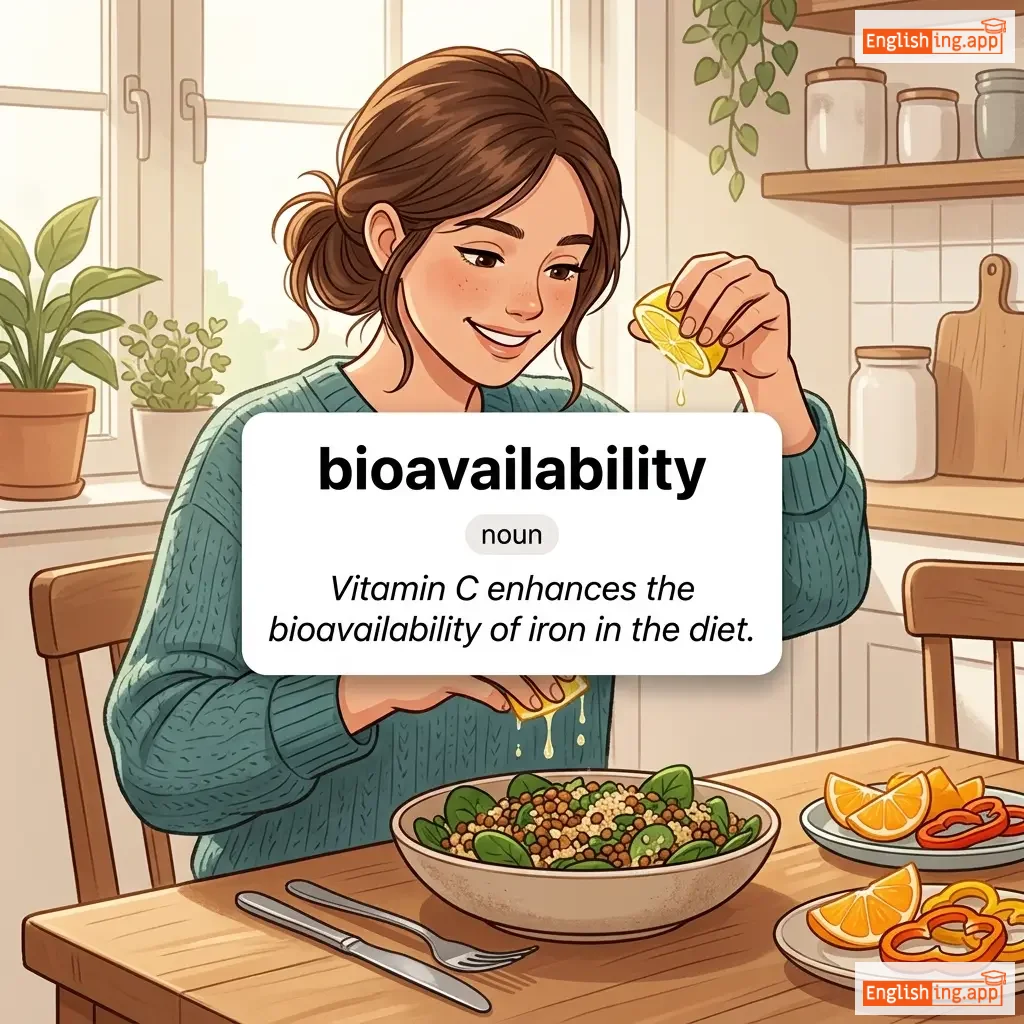
bioavailability definition card — visual illustration of the meaning
noun
/ˌbaɪ.oʊ.əˌveɪ.ləˈbɪl.ə.ti/
バイオアベイラビリティ (baioabeirabiriti)

The degree and rate at which a substance is absorbed or becomes available at the site of physiological activity.

"Vitamin C enhances the bioavailability of iron in the diet."

"ビタミンCは食事中の鉄のバイオアベイラビリティを高めます。" (Bitamin C wa shokuji-chū no tetsu no baioabeirabiriti o takamemasu.)
noun
ˈbaɪəʊˌsaɪd
バイオサイド (baiosaido)

A chemical substance or microorganism intended to destroy, deter, render harmless, or exert a controlling effect on any harmful organism.

"Biocides help control pests and reduce the spread of diseases."
"バイオサイドは害虫をコントロールし、病気の拡散を減らすのに役立ちます。" (Baiosaido wa gaichū o kontorōru shi, byōki no kakusan o herasu no ni yakudachimasu.)
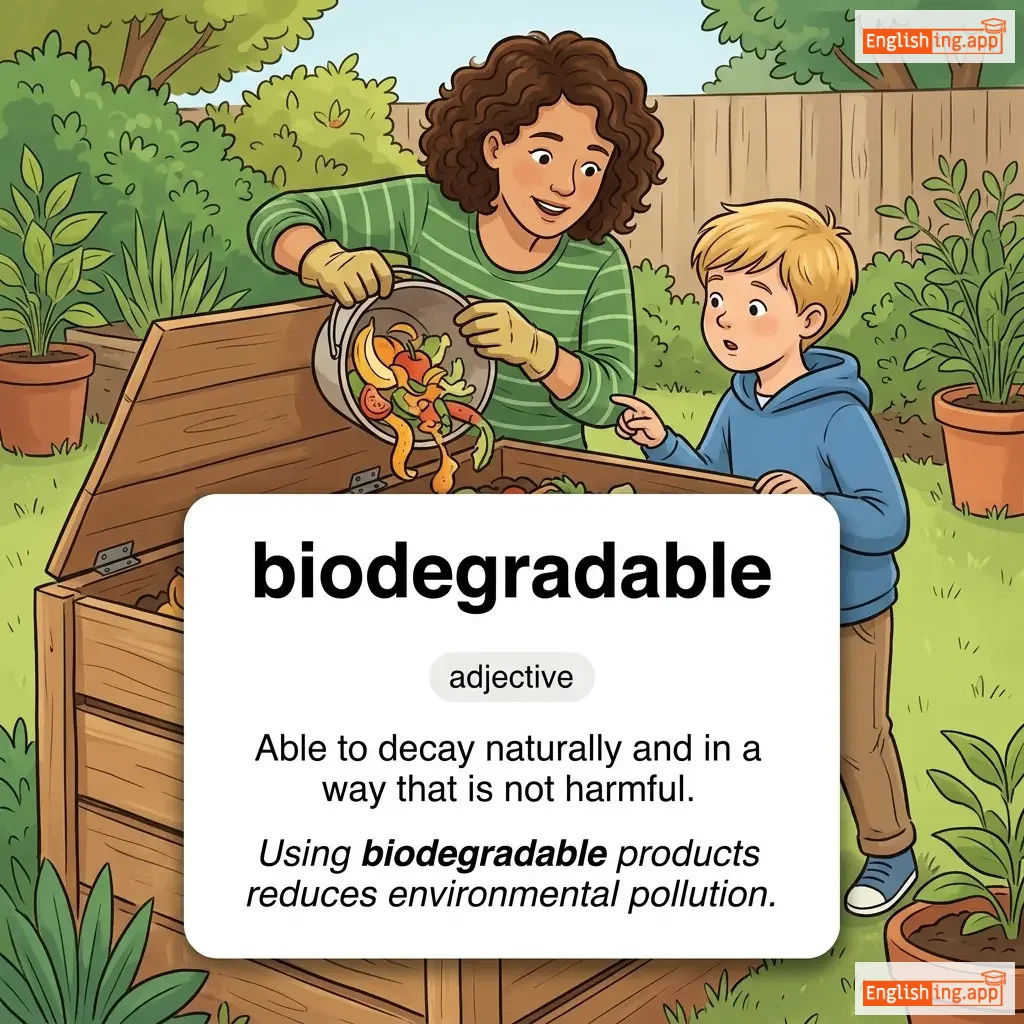
biodegradable definition card — visual illustration of the meaning
adjective
/ˌbaɪ.oʊ.dɪˈɡreɪ.də.bəl/
生分解性 (seibun kaisei)

Able to decay naturally and in a way that is not harmful.

"Using biodegradable products reduces environmental pollution."
"生分解性の製品を使用することにより、環境汚染を減らすことができます。" (Seibun kaisei no seihin o shiyō suru koto ni yori, kankyō osen o herasu koto ga dekimasu.)
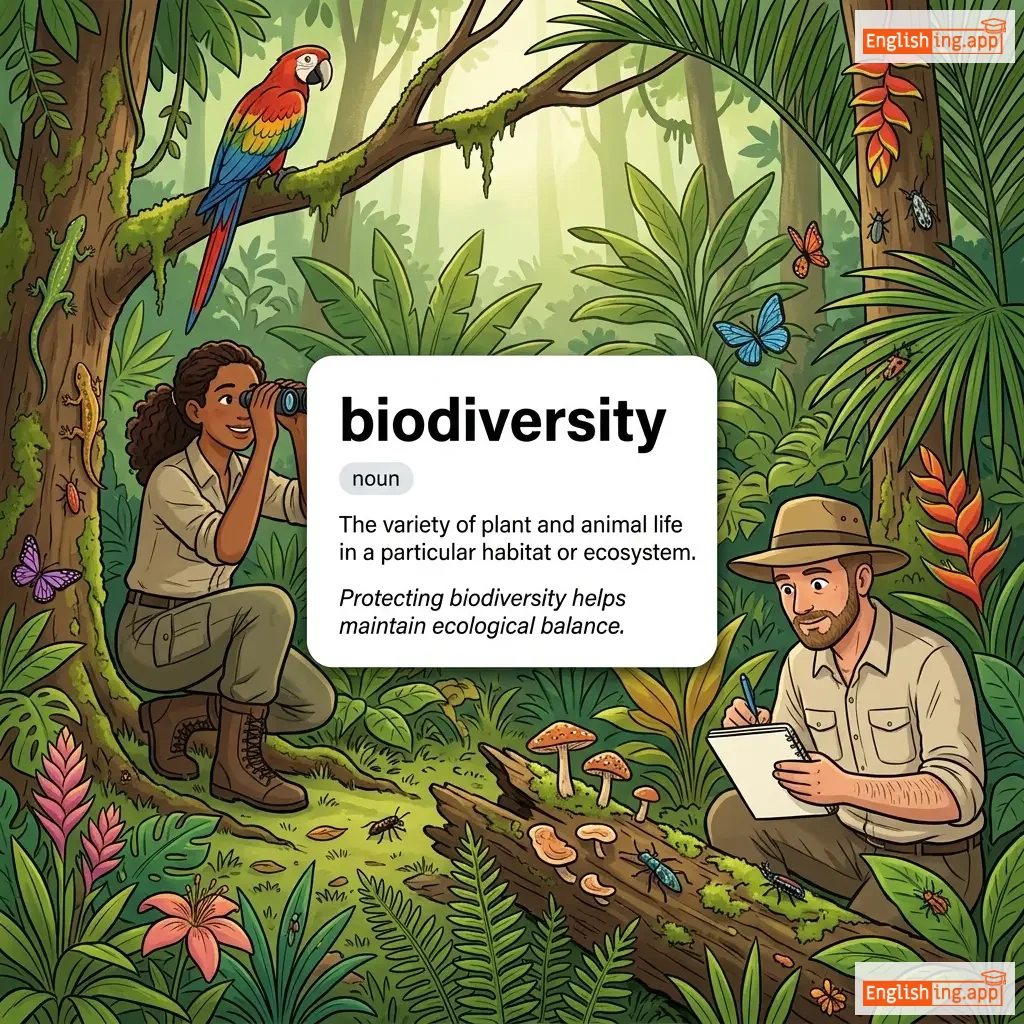
biodiversity definition card — visual illustration of the meaning
noun
/ˌbaɪ.oʊ.daɪˈvɜː.sɪ.ti/
生物多様性 (seibutsu tayousei)

The variety of life in the world or in a particular habitat or ecosystem.

"Deforestation is a major threat to biodiversity."
"森林伐採は生物多様性への大きな脅威です。" (Shinrin bassai wa seibutsu tayousei e no ookina kyoui desu.)
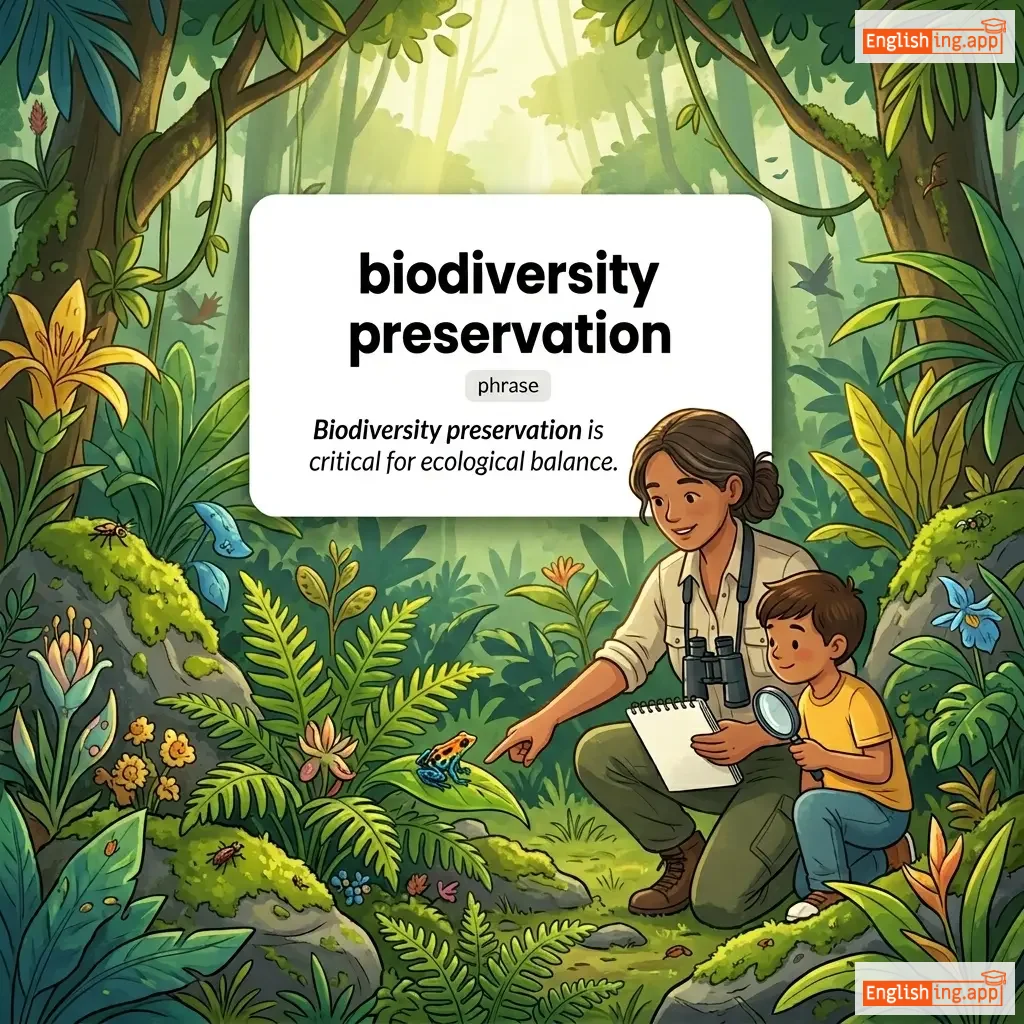
biodiversity preservation definition card — visual illustration of the meaning
phrase
ˌbaɪ.oʊ.daɪˈvɜː.sɪ.ti ˌprez.əˈveɪ.ʃən
生物多様性の保護 (seibutsu tayousei no hogo)

The protection and conservation of the variety of life in all its forms, including different species, genetic diversity, and ecosystems.

"Biodiversity preservation is critical for ecological balance."
"生物多様性の保護は生態系のバランスにとって重要です。" (Seibutsu tayousei no hogo wa seitai kei no baransu ni totte juuyou desu.)
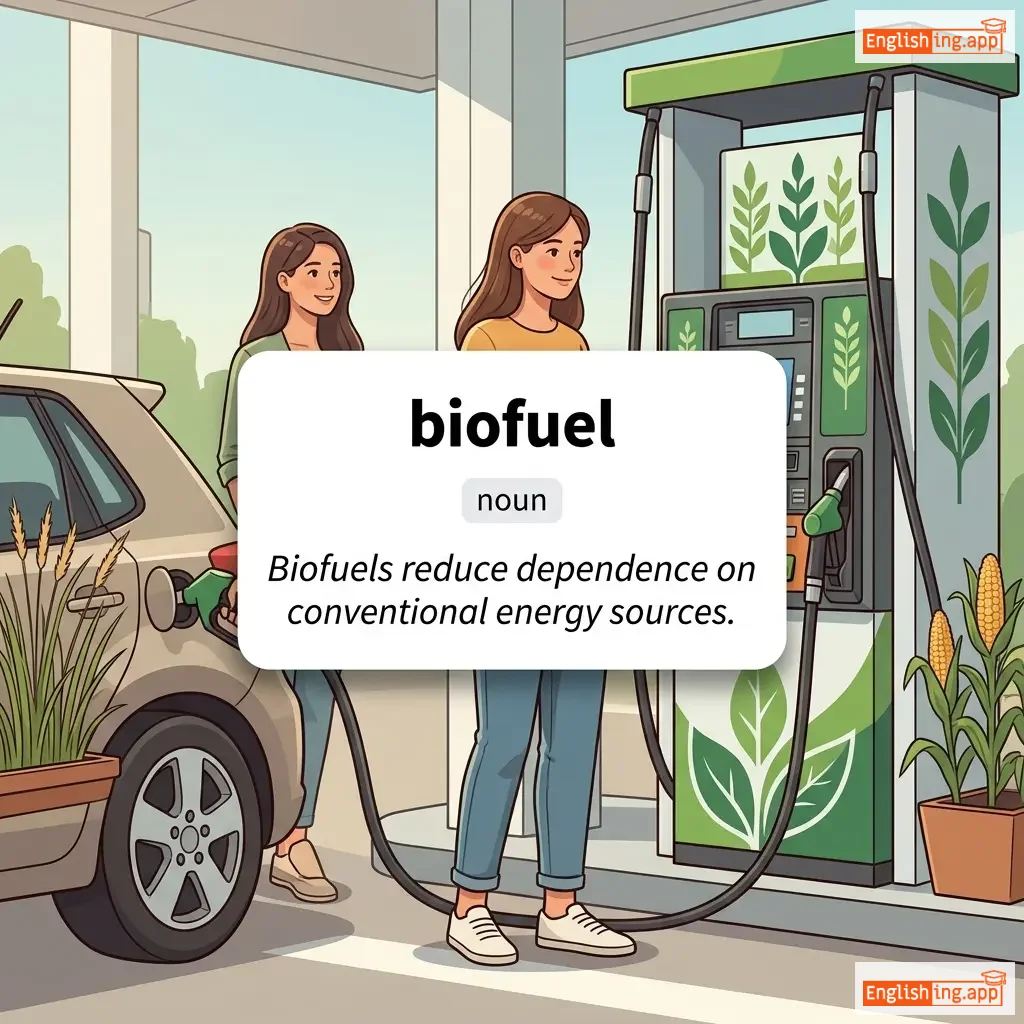
biofuel definition card — visual illustration of the meaning
noun
ˈbaɪ.əʊˌfjuː.əl
バイオ燃料 (baio nenryou)

A fuel derived immediately from living matter, as opposed to fossil fuels derived from long-dead biological matter.

"Biofuels reduce dependence on conventional energy sources."

"バイオ燃料は従来のエネルギー源への依存を減らします。" (Baio nenryou wa jūrai no enerugī gen e no izon o herashimasu.)
noun
/ˈbaɪəˌɡræf/
伝記 (denki)

A written account of a person's life; an early motion-picture projector (historical use).

"The library holds an old biograph of the poet."

"図書館には詩人の古い伝記があります。" (Toshokan ni wa shijin no furui denki ga arimasu.)
noun
/baɪˈɒɡrəfi/
伝記 (denki)

A written account of someone's life.

"She is writing a biography of the famous poet."

"彼女は有名な詩人の伝記を書いています。" (Kanojo wa yuumei na shijin no denki o kaiteimasu.)
adjective
/ˌbaɪəˈlɒdʒɪkl̩/
生物学的 (seibutsugakuteki)

relating to the science of biology or to life and living organisms

"She is studying biological sciences at university."

"彼女は大学で生物学的な科学を学んでいます。" (Kanojo wa daigaku de seibutsugakuteki na kagaku o manandeimasu.)
noun
/baɪˈɒlədʒi/
生物学 (seibutsugaku)

The scientific study of living organisms.

"Biology explains how plants and animals function."
"生物学は植物や動物がどのように機能するかを説明します。" (Seibutsugaku wa shokubutsu ya doubutsu ga dono you ni kinou suru ka wo setsumei shimasu.)
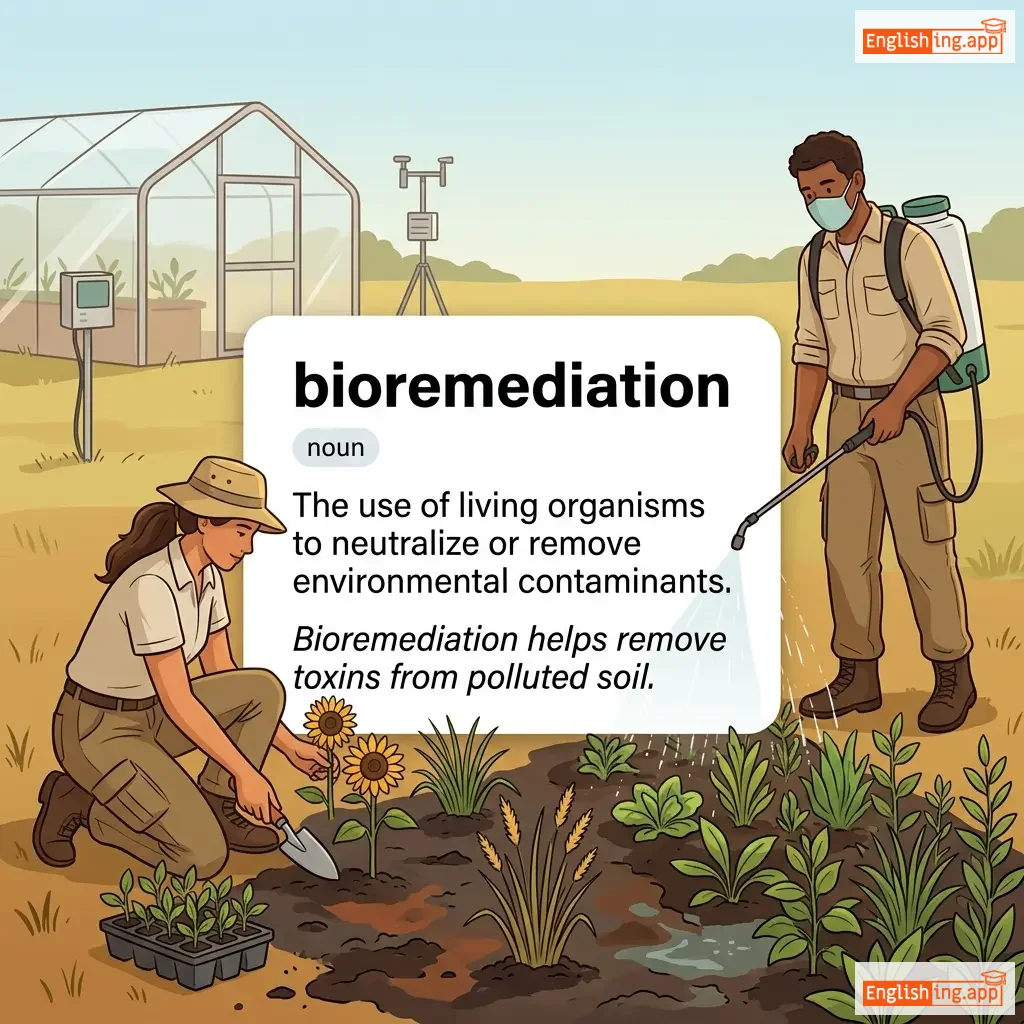
bioremediation definition card — visual illustration of the meaning
noun
/ˌbaɪ.oʊ.rɪˌmiː.diˈeɪ.ʃən/
バイオレメディエーション (baioremediēshon)

The use of living organisms to neutralize or remove environmental contaminants.

"Bioremediation helps remove toxins from polluted soil."

"バイオレメディエーションは汚染された土壌から毒素を取り除くのに役立ちます。" (Baioremediēshon wa osen sareta dojou kara dokuso o torinozoku no ni yakudachimasu.)
noun
/ˈbaɪoʊˌsfɪr/
バイオスフィア (baiosufia)

the regions of the surface and atmosphere of the earth occupied by living organisms

"Climate change is affecting the entire biosphere."

"気候変動はバイオスフィア全体に影響を与えています。" (Kikou hendou wa baiosufia zentai ni eikyou o ataeteimasu.)
noun
/ˈbaɪpɛd/
二足歩行動物 (nisoku hokou doubutsu)

An animal that walks on two feet.

"Humans are examples of biped creatures."

"人間は二足歩行動物の例です。" (Ningen wa nisoku hokou doubutsu no rei desu.)
noun
/bɜːrd/
(tori)

a warm-blooded animal with feathers and wings that usually lays eggs and can often fly

"A bird was singing on the tree branch."

"鳥が木の枝で歌っていました。" (Tori ga ki no eda de utatte imashita.)
noun
/bɜːrθ/
誕生 (tanshō)

the process of being born; the start of life

"The birth of a child brings joy to the whole family."

"子供の誕生は家族全体に喜びをもたらします。" (Kodomo no tanshō wa kazoku zentai ni yorokobi o motarashimasu.)
noun
/ˈbɜːrθ.deɪ/

the anniversary of the day on which a person was born, typically celebrated annually

"We are planning a surprise birthday party for her."

noun
/ˈbɜːrθraɪt/
生まれつきの権利 (umaretsuki no kenri)

A privilege or possession that a person has from birth.

"Freedom is considered a birthright of every individual."

"自由はすべての個人の生まれつきの権利と見なされます。" (Jiyū wa subete no kogin no umaretsuki no kenri to minasaremasu.)
noun
/ˈbɪs.kɪt/
ビスケット (bisketto)

a small, hard, dry cake; a cookie

"Children love to eat chocolate biscuits with milk."

"子供たちはミルクと一緒にチョコレートビスケットを食べるのが好きです。" (Kodomotachi wa miruku to issho ni chokorēto bisketto o taberu no ga suki desu.)
noun
/ˈbɪʃəp/
司教 (shikyō)

a senior member of the Christian clergy, usually in charge of a diocese and empowered to confer holy orders.

"The bishop delivered a powerful sermon during Sunday service."

"司教は日曜日の礼拝で力強い説教をしました。" (Shikyō wa nichiyōbi no reihai de chikara tsuyoi sekkyō o shimashita.)
noun
/bɪsk/
シーフードスープ (shiifoodo suupu)

A rich, creamy soup made from shellfish.

"We ordered lobster bisque at the restaurant."

"レストランでロブスタービスクを注文しました。" (Resutoran de robusutā bisuku o chūmon shimashita.)
noun
/bɪt/
一片 (ippen)

a small piece, amount, or portion of something

"She ate a bit of the cake before leaving."

"彼女は出かける前にケーキの一片を食べました。" (Kanojo wa dekakeru mae ni keeki no ippen wo tabemashita.)
noun
/bɪtʃ/
メス犬 (mesu inu)

a female dog

"The bitch gave birth to five puppies."
"メス犬は五匹の子犬を生んだ。" (Mesu inu wa gohiki no koinu o unda.)
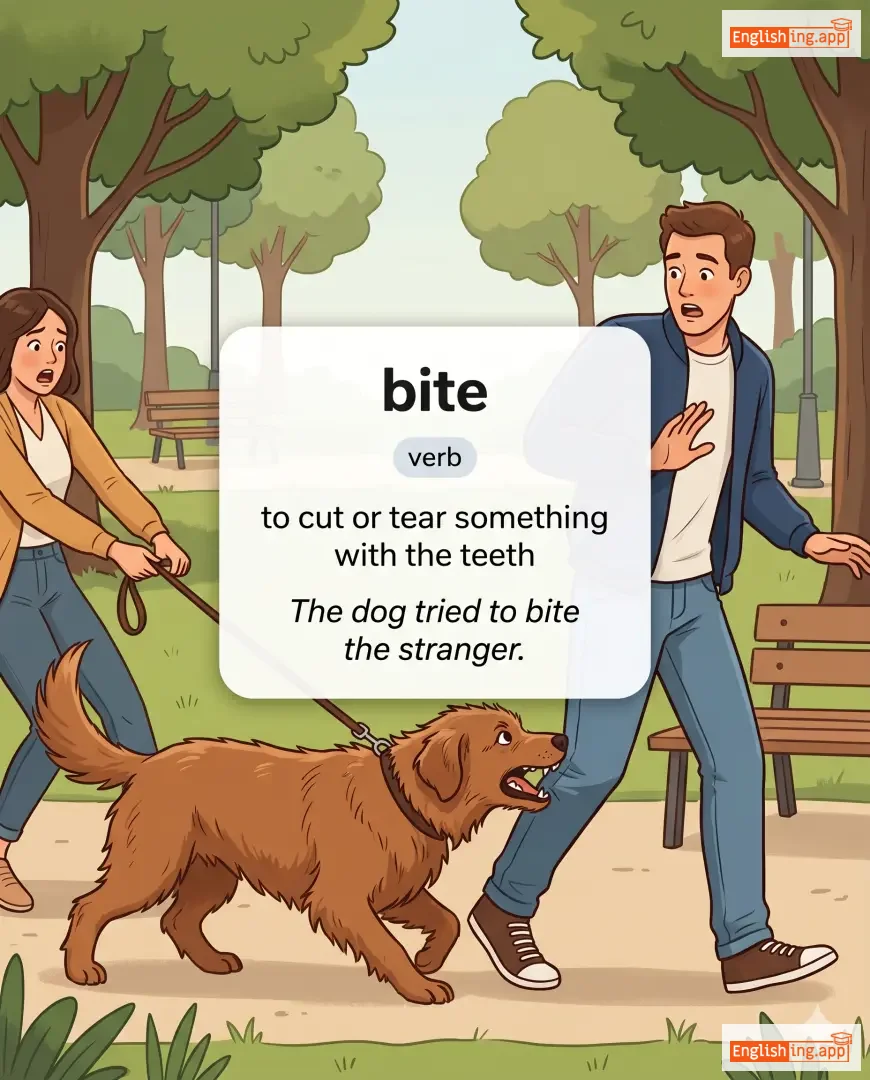
bite definition card — visual illustration of the meaning
verb
/baɪt/
噛む (kamu)

to cut or tear something with the teeth

"The dog tried to bite the stranger."

"犬は見知らぬ人を噛もうとした。" (Inu wa mishiranu hito o kamou to shita.)
adjective
/ˈbaɪtɪŋ/
鋭い / 辛辣 (surudoi / shinratsu)

harsh, sharp, or severely critical; capable of causing physical or emotional pain

"The critic’s biting remarks left the actor speechless."

"批評家の辛辣なコメントは俳優を言葉を失わせた。" (Hihyōka no shinratsu na komento wa haiyū o kotoba o ushinawaseta.)
adjective
/ˈbɪtər/
苦い (nigai)

having a sharp, unpleasant taste or showing strong hostility or resentment

"She felt bitter about losing the competition."

"彼女は競争に負けた後、苦い気持ちを抱えました。" (Kanojo wa kyousou ni maketa ato, nigai kimochi wo kakaemashita.)
noun
/ˈbɪtər ɡɔːrd/
ゴーヤ (gōya)

a green, bumpy vegetable with a very bitter taste, known for its medicinal properties

"Bitter gourd is excellent for controlling blood sugar levels."

"ゴーヤは血糖値をコントロールするのに優れています。" (Gōya wa kettōchi o kontorōru suru no ni sugureteimasu.)