語彙集

英単語辞書 | 単語の意味、定義、例文

verb
/bɪˈsiːdʒ/
包囲する (hōisuru)

to surround a place with armed forces to capture it; to overwhelm with requests or attention

"The city was besieged by enemy troops."

"その都市は敵軍によって包囲されました。" (Sono toshi wa teki gun ni yotte hōi sare mashita.)
verb
/bɪˈsmɪər/
汚す (yogosu)

to smear or cover with a sticky or dirty substance; to soil

"His clothes were besmeared with mud."

"彼の服は泥で汚れていた。" (Kare no fuku wa doro de yogorete ita.)
verb
/bɪˈsmɜːrtʃ/
汚す (yogosu)

to damage someone's reputation; to make dirty or stained

"He tried to besmirch her good name with false rumors."

"彼は虚偽の噂で彼女の良い名前を汚そうとした。" (Kare wa kyogi no uwasa de kanojo no yoi namae o yogosou to shita.)
adjective
/bɪˈsɒtɪd/
夢中な、恋に狂った (muchuu na, koi ni kurutta)

strongly infatuated or obsessed with someone or something

"He was completely besotted with her charm."

"彼は彼女の魅力に完全に夢中だった。" (Kare wa kanojo no miryoku ni kanzen ni muchuu datta.)
adjective
/bɛst/
最高 (saikou)

Of the highest quality, excellence, or standing.

"She is the best student in the class."

"彼女はクラスで最高の生徒です。" (Kanojo wa kurasu de saikou no seito desu.)
best effort definition card — visual illustration of the meaning
phrase
bɛst ˈɛf.ərt
最善の努力 (saizen no doryoku)

The maximum amount of effort or energy that someone can give.

"He gave his best effort to complete the task on time."

"彼は時間通りに仕事を終えるために最善の努力をした。" (kare wa jikan doori ni shigoto o oeru tame ni saizen no doryoku o shita)
adjective
/ˈbiːstiəl/
獣のような (kemono no yōna)

Relating to beasts; showing savagery, brutality, or lacking human sensibility.

"The prisoners were treated in a bestial manner."

"囚人たちは獣のような扱いを受けた。" (Shūnin-tachi wa kemono no yōna atsukai o uketa.)
verb
/bɪˈstoʊ/
授与する (juyo suru)

To give or present something as a gift or honor.

"The king bestowed honors upon the brave soldiers."

"王は勇敢な兵士に栄誉を授けました。" (Ō wa yūkan na heishi ni eiyo o sazukemashita.)
verb
/bɪˈstruː/
撒く (maku)

To scatter or cover something with objects or substances.

"The ground was bestrewn with autumn leaves."

"地面は秋の葉で覆われていた。" (Jimen wa aki no ha de owarete ita.)
verb
/bɪˈstraɪd/
支配する (shihai suru)

To sit or stand astride something; to dominate over.

"The statue bestrides the city square."

"その像は都市広場を支配しています。" (Sono zō wa toshi hiroba wo shihai shiteimasu.)
bet definition card — visual illustration of the meaning
verb, noun
/bɛt/
賭ける (kakeru)

to risk money or something valuable on the result of a future event

"He likes to bet on football matches."

"彼はサッカーの試合にベットするのが好きです。" (Kare wa sakkā no shiai ni betto suru no ga suki desu.)
verb
/bɪˈteɪk/
向かう;取りかかる (mukau; torikakaru)

to go or resort to a place or course of action, especially as a response; to apply oneself

"After dinner, she betook herself to her room to read."

"夕食後、彼女は読書のため自分の部屋へ向かった。" (yushoku go kanojo wa dokusho no tame jibun no heya e mukatta)
noun
/ˌbeɪt ˈnwɑːr/
特に嫌われるもの (toku ni kirawareru mono)

A person or thing that one particularly dislikes or fears.

"Grammar has always been his bete noire."

"文法は常に彼のベットノワールでした。" (Bunpō wa jōni kare no bettonwāru deshita.)
noun
/ˈbiː.təl nʌt/
ベテルナッツ (beteru nattsu)

seed of the areca palm tree, often chewed as a stimulant

"Betel-nut is commonly chewed in many South Asian countries."

"ベテルナッツは南アジアの多くの国で一般的に噛まれています。" (Beteru nattsu wa minami ajia no ōku no kuni de ippanteki ni kamareteimasu.)
verb
/bɪˈθɪŋk/
思い出す (omoidasu)

to cause oneself to consider or remember something

"He bethought himself of the promise he had made."

"彼は自分がした約束を思い出した。" (Kare wa jibun ga shita yakusoku o omoidasita.)
verb
/bɪˈtaɪd/
起こる (okoru)

to happen or occur, usually of something that befalls someone

"Woe betide anyone who breaks the rules."

"ルールを破る者は災難を被るだろう。" (Rūru o yaburu mono wa sainan o kaburu darou.)
adverb
/bɪˈtaɪmz/
早く (hayaku)

early; in good time

"She rose betimes to finish her work."

"彼女は仕事を終わらせるために早く起きました。" (Kanojo wa shigoto o owaraseru tame ni hayaku okimashita.)
verb
/bɪˈtəʊkən/
示唆する (shisa suru)

to be a sign or indication of something

"Dark clouds betoken an approaching storm."

"暗い雲は迫り来る嵐を示唆している。" (Kurai kumo wa semari kuru arashi o shisa shite iru.)
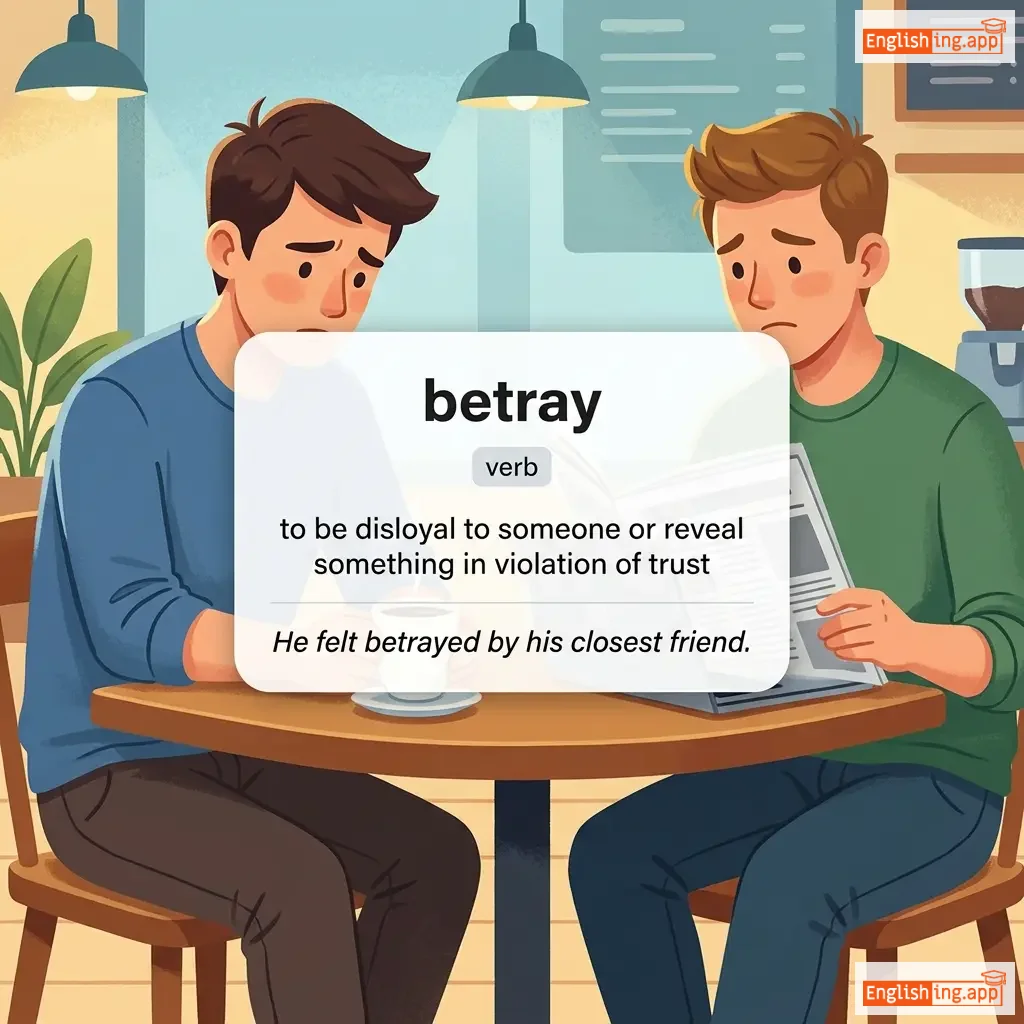
betray definition card — visual illustration of the meaning
🗡️

betray

verb
/bɪˈtreɪ/

to be disloyal to someone or reveal something in violation of trust

"He felt betrayed by his closest friend."

noun
/bɪˈtreɪəl/
裏切り; 不忠 (uragiri; fuchū)

the action of betraying one's country, group, or person; disloyalty

"His betrayal of their friendship hurt her deeply."

"彼の友情に対する裏切りは、彼女を深く傷つけました。" (Kare no yūjō ni taisuru uragiri wa, kanojo o fukaku kizutsukemashita.)
noun
/bɪˈtreɪər/
裏切り者; 不忠者 (uragirimono, fuchūsha)

a person who betrays someone or something; one who is disloyal

"The betrayer was exposed and faced severe consequences."

"裏切り者は暴露され、厳しい結果に直面しました。" (Uragirimono wa bakuro sare, kibishī kekka ni chokumen shimashita.)
verb
/bɪˈtroʊð/
婚約する (kon'yaku suru)

To formally promise to marry someone; to engage.

"He was betrothed to the princess at a young age."

"彼は若い頃、王女と婚約していた。" (Kare wa wakai koro, ōjo to kon'yaku shite ita.)
noun
/bɪˈtroʊðəl/
婚約 (kon'yaku)

The formal engagement to be married.

"Their betrothal was announced to the whole village."

"彼らの婚約は村中に発表されました。" (Karera no kon'yaku wa murajuu ni happyou saremashita.)
adjective, noun
/bɪˈtroʊðd/
婚約者 (konyakusha)

Engaged to be married; a person who is engaged.

"She introduced him as her betrothed."

"彼女は彼を婚約者として紹介しました。" (Kanojo wa kare o konyakusha toshite shōkai shimashita.)
adjective, adverb, verb
/ˈbɛtər/

of a more excellent or effective type or quality; to surpass or improve

"He felt better after taking the medicine."

preposition, adverb
/bɪˈtwiːn/
(aida)

at, into, or across the space separating two objects or regions

"She sat between her two friends."

"彼女は二人の友達の間に座っていた。" (Kanojo wa futari no tomodachi no aida ni suwatte ita.)
noun, verb
/ˈbɛvəl/
斜面 (shamen)

A sloping edge or surface; to cut or shape an edge at an angle.

"The carpenter beveled the edges of the table."

"大工はテーブルの端を斜めに切りました。" (Daiku wa tēburu no hashi o naname ni kirimashita.)
noun
/ˈbɛvərɪdʒ/
飲み物 (nomimono)

a drink, especially one other than water

"I ordered a cold beverage to cool down on a hot day."

"暑い日に冷たい飲み物を注文しました。" (Atsui hi ni tsumetai nomimono o chūmon shimashita.)
noun
/ˈbɛvi/
群れ, グループ (mure, gurūpu)

A large group of people or things of a particular kind.

"A bevy of swans floated on the lake."

"一群の白鳥が湖を泳いでいた。" (Ikun no hakuchō ga mizuumi o oyoideita.)
verb
/bɪˈweɪl/
嘆き悲しむ (nageki kanashimu)

to express deep sorrow or regret over something; to mourn openly

"She bewailed the loss of her childhood home."

"彼女は子どもの頃の家を失ったことを嘆き悲しんだ。" (Kanojo wa kodomo no koro no ie o ushinatta koto o nageki kanashinda)
verb
/bɪˈwɛər/
気をつける (ki wo tsukeru)

to be cautious or alert about a potential danger or problem

"Beware of the dog near the gate."

"ゲート近くの犬に気をつけてください。" (Gēto chikaku no inu ni ki wo tsukete kudasai.)
verb
/bɪˈwɪldər/
困惑させる (konwaku saseru)

to cause someone to be confused or puzzled

"The complex instructions bewildered the students."

"複雑な指示は学生を困惑させました。" (Fukuzatsu na shiji wa gakusei o konwaku sasemashita.)
verb
/bɪˈwɪtʃ/
魅了する (miryō suru)

to enchant or fascinate someone as if by magic

"The dancer's performance bewitched the audience."

"ダンサーのパフォーマンスは観客を魅了した。" (Dansā no pafōmansu wa kankyaku o miryō shita.)
adjective
/bɪˈwɪtʃɪŋ/
魅惑的 (miwaku-teki)

charming, enchanting, or captivating in a magical or irresistible way

"She wore a bewitching smile that captivated everyone in the room."

"彼女は魅惑的な笑顔を見せ、部屋の中の全員を魅了しました。" (Kanojo wa miwaku-teki na egao o misete, heya no naka no zen'in o miryō shimashita.)
preposition, adverb
/bɪˈjɒnd/
向こう側 (mukougawa)

at or to the further side of; more than

"The village lies beyond the river."
"村は川の向こう側にあります。" (Mura wa kawa no mukougawa ni arimasu.)
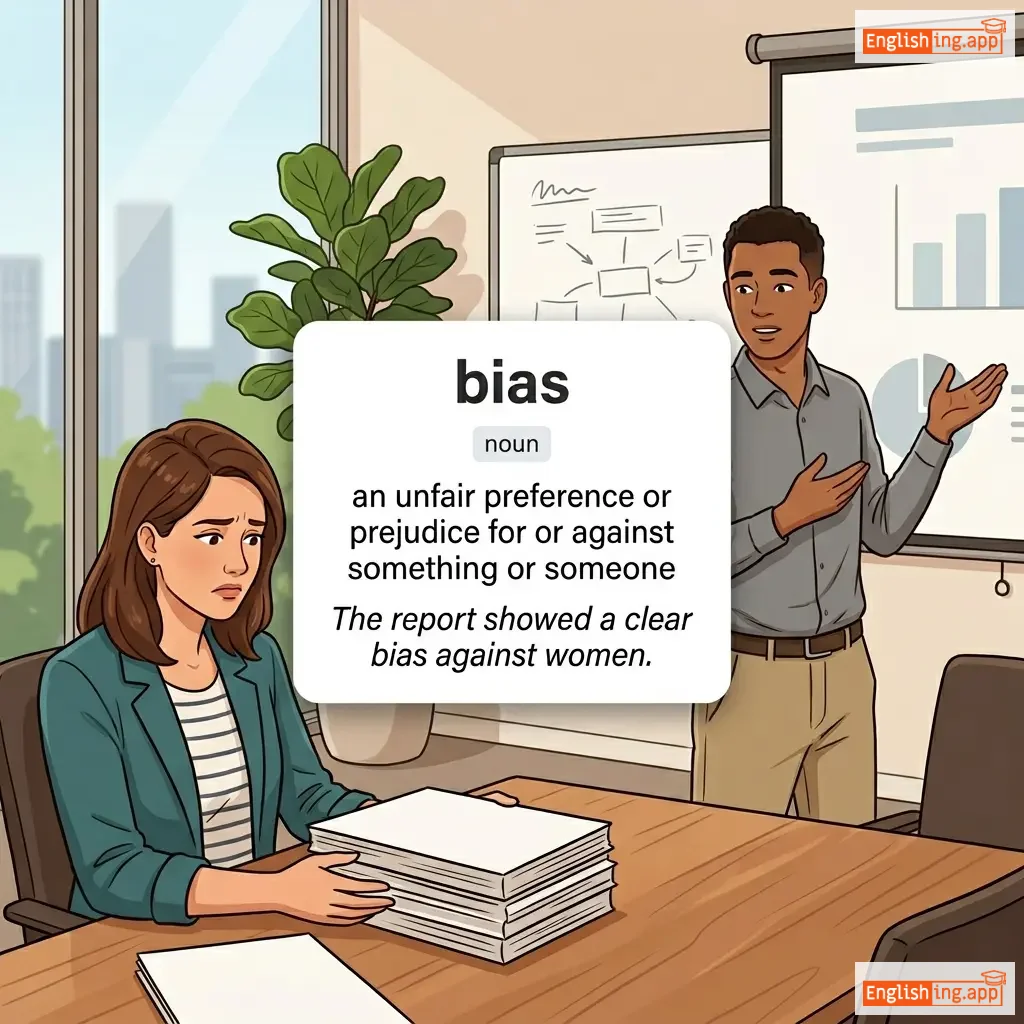
bias definition card — visual illustration of the meaning
noun
/ˈbaɪəs/
偏見 (henken)

an unfair preference or prejudice for or against something or someone

"The report showed a clear bias against women."

"報告書は女性に対する明確な偏見を示しました。" (Hōkokusho wa josei ni taisuru meikaku na henken o shimeshimashita.)
adjective
/ˈbaɪəst/
偏見のある (henken no aru)

having or showing an unfair tendency to favor one side or opinion

"The judge must not be biased in the case."

"裁判官は事件に偏見を持ってはいけません。" (Saibankan wa jiken ni henken o motte wa ikemasen.)
noun
/ˈbaɪbəl/
聖書 (seisho)

the Christian scriptures consisting of the Old and New Testaments; also used for any authoritative book

"She reads the Bible every morning."

"彼女は毎朝聖書を読みます。" (Kanojo wa mai asa seisho o yomimasu.)
noun
/ˌbɪbliˈɒɡrəfi/
参考文献リスト (sankō bunken risuto)

a list of books, articles, or other sources used or referred to in scholarly work

"The report includes a detailed bibliography at the end."

"レポートには最後に詳細な参考文献リストが含まれています。" (Repōto ni wa saigo ni shōsai na sankō bunken risuto ga fukumarete imasu.)
noun
/ˌbɪbliəʊˈmeɪniə/
ビブリオマニア (biburiomania)

An extreme obsession with collecting or possessing books.

"His bibliomania led him to fill every room with books."

"彼のビブリオマニアは、彼を本で部屋をいっぱいにさせた。" (Kare no biburiomania wa, kare o hon de heya o ippai ni saseta.)
noun
/ˈbɪbliəfaɪl/
書籍愛好者 (shoseki aihōsha)

A person who loves or collects books.

"She is a true bibliophile who spends weekends at old bookstores."

"彼女は古い本屋で週末を過ごす本の愛好者です。" (Kanojo wa furui honya de shūmatsu o sugosu hon no aikōsha desu.)
adjective
/ˈbɪbjələs/
酒好き (sakezuki)

Excessively fond of drinking alcohol.

"His bibulous habits worried his family."

"彼の酒好きな習慣は家族を心配させた。" (Kare no sakezuki na shūkan wa kazoku o shinpai saseta.)
adjective
/baɪˈkæmərəl/
二院制 (ni-insei)

Having two branches or chambers, especially in a legislature.

"The United States has a bicameral legislature consisting of the Senate and the House of Representatives."

"アメリカ合衆国には上院と下院から成る二院制の立法機関があります。" (Amerika gasshūkoku ni wa jōin to ka'in kara naru ni-insei no rippō kikan ga arimasu.)
verb
/ˈbɪkər/
些細なことで言い争う (sasai na koto de iarasou)

To argue or quarrel about trivial matters.

"The children began to bicker over the last piece of cake."

"子供たちは最後のケーキの一切れをめぐって言い争いを始めた。" (Kodomotachi wa saigo no kēki no hitokire o megutte iarasoi o hajimeta.)
noun
/ˈbaɪsɪkl/
幸福 (kōfuku)

a vehicle with two wheels that you ride by pedaling

"He rides his bicycle to school every day."

"彼女は賞を受け取ったとき、幸せを隠すことができませんでした。" (Kanojo wa shō o uketotta toki, kōfuku o kakusu koto ga dekimasen deshita.)
💸

Bid

verb
/bɪd/

to offer a certain amount of money for something, especially at an auction

"She bid $200 for the antique vase."

verb
/baɪd/
待つ (matsu)

to wait patiently for the right time or opportunity

"He decided to bide his time before making a move."

"彼は動きを起こす前に時間を待つことに決めました。" (Kare wa ugoki wo okosu mae ni jikan wo matsu koto ni kimemashita.)
adjective
/baɪˈɛniəl/
隔年の (kakunen no)

happening every two years

"The biennial festival attracts thousands of visitors."
"その隔年の祭りは何千人もの訪問者を引き付けます。" (Sono kakunen no matsuri wa nan-sen nin mo no hōmon-sha o hikitsukemasu.)
noun
/bɪər/
死体置き台 (shitai okidai)

a frame or stand on which a coffin or body is placed before burial or cremation

"The coffin was placed on the bier during the funeral service."

"棺は葬儀の際、死体置き台に置かれました。" (Kan wa sougi no sai, shitai okidai ni okaremashita.)
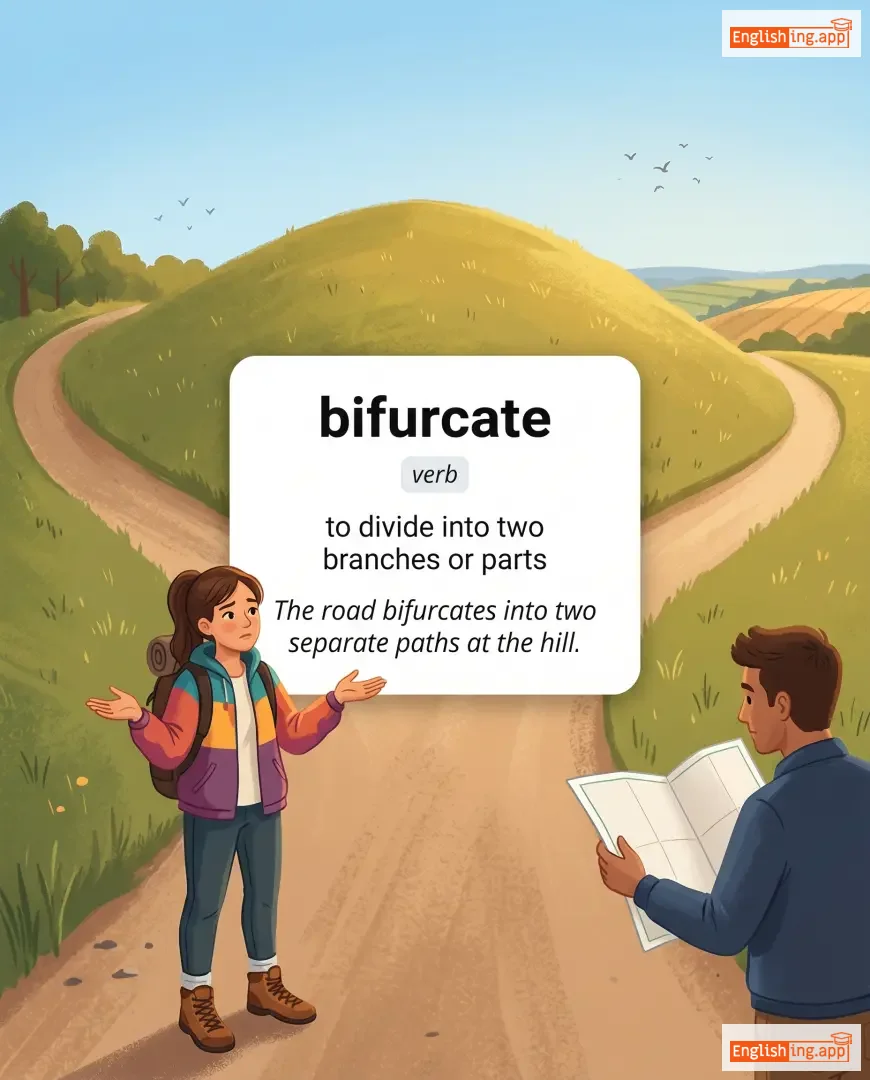
bifurcate definition card — visual illustration of the meaning
verb
/ˈbaɪfərˌkeɪt/
二つに分かれる (futatsu ni wakareru)

to divide into two branches or parts

"The road bifurcates into two separate paths at the hill."

"その道路は丘の上で2つの分かれ道に分かれます。" (Sono doro wa oka no ue de futatsu no wakare michi ni wakaremasu.)