語彙集

英単語辞書 | 単語の意味、定義、例文

noun/verb
/ˈbætəl/
戦い (tatakai)

A fight between armed forces or a struggle to achieve or resist something.

"The soldiers prepared for the final battle."

"兵士たちは最終決戦の準備をしました。" (Heishi-tachi wa saishū kessen no junbi o shimashita.)
noun
/ˈbætəlˌfiːld/
戦場 (senjō)

a place where a battle is fought

"The battlefield was covered with the remnants of the fight."

"戦場は戦いの残骸で覆われていた。" (Senjō wa tatakai no zangai de ōwarete ita.)
adjective
/ˈbæti/
変わり者 (kawari-mono)

crazy or eccentric in behavior

"The old man down the street is a bit batty but harmless."

"通りの古い男は少し変わり者だが、無害だ。" (Toori no furui otoko wa sukoshi kawari-mono da ga, mugai da.)
noun
/ˈbɔːbəl/
小さな装飾品 (chiisana shoushokuhin)

A small, decorative trinket or ornament, often of little value.

"She wore a shiny bauble around her neck."

"彼女は首に輝く小さな装飾品をつけていた。" (Kanojo wa kubi ni kagayaku chiisana shoushokuhin wo tsukete ita.)
bawdy definition card — visual illustration of the meaning
adjective
/ˈbɔːdi/
下品 (gehin)

humorously indecent or obscene, often in a sexual way

"The comedian’s bawdy jokes made the audience laugh and blush."

"コメディアンの下品なジョークは観客を笑わせ、顔を赤らめさせた。" (Komedian no gehin na jōku wa kankyaku o warawase, kao o akaramesaseta.)
verb
/bɔːl/
大声で泣く (ōgoe de naku)

to shout or cry loudly

"The baby bawled all night, keeping everyone awake."

"赤ちゃんは一晩中泣き続け、みんなを起こしてしまった。" (Akachan wa hitobanjuu naki tsudzuke, minna o okoshite shimatta.)
noun
/beɪ/
(wan)

a broad inlet of the sea where the land curves inward

"The ship anchored safely in the bay."

"船は湾内で安全にアンカーを下ろしました。" (Fune wa wan-nai de anzen ni ankā o oroshimashita.)
noun
/beɪ liːf/
ローリエの葉 (rōrie no ha)

dried aromatic leaf of the bay laurel tree used as a culinary herb

"Add a bay leaf to the soup for extra flavor."

"スープにローリエの葉を加えて、風味を増します。" (Sūpu ni rōrie no ha o kuwaete, fūmi o mashimasu)
verb
/ˈbeɪɪŋ/
吠える (hoeru)

making a loud, prolonged barking or howling sound, especially of dogs

"The baying of the hounds echoed through the forest."

"犬の鳴き声が森を通り抜けて響いた。" (Inu no nakigoe ga mori o tōri nukete hibiita.)
verb
/biː/
である (dearu)

To exist, to occur, or to have a particular quality.

"She wants to be a doctor."

"彼女は医者になりたい。" (Kanojo wa isha ni naritai.)
noun
/biːtʃ/
ビーチ (bi-chi)

An area of sand or small stones beside the sea or a lake.

"They spent the day relaxing on the beach."

"彼らはビーチでリラックスして一日を過ごしました。" (Karera wa bi-chi de rirakkusu shite ichinichi o sugoshimashita.)
noun
/biːd/
ビーズ (biizu)

a small round object with a hole through it for threading

"She made a necklace with colorful beads."

"彼女はカラフルなビーズでネックレスを作った。" (Kanojo wa karafuru na biizu de nekkuresu wo tsukutta.)
noun
/biːk/
くちばし (kuchibashi)

the hard pointed part of a bird's mouth

"The eagle has a sharp beak for tearing meat."

"ワシは肉を引き裂くために鋭いくちばしを持っています。" (Washi wa niku o hikisaku tame ni surudoi kuchibashi o motteimasu.)
noun
/biːm/
光線 / 梁 (kōsen / ryō)

a ray or shaft of light; a long piece of wood or metal used to support weight

"A beam of sunlight entered through the window."

"一筋の光線が窓から入ってきた。" (Hitosuji no kōsen ga mado kara haitte kita.)
noun
/biːn/
(mame)

A seed that is eaten as a vegetable or used to make food products.

"She cooked a pot of bean soup."

"彼女は豆のスープを一鍋作った。" (Kanojo wa mame no suupu o hitonabe tsukutta.)
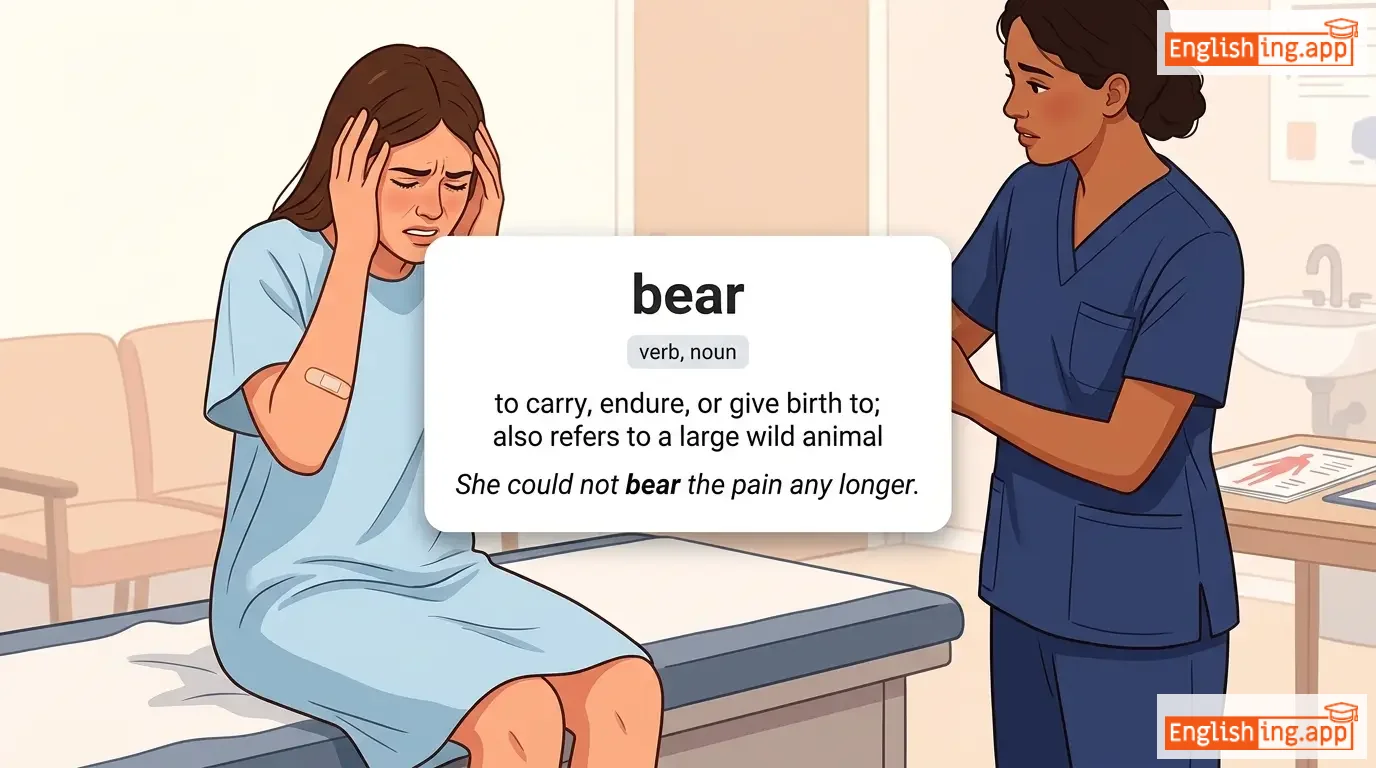
bear definition card — visual illustration of the meaning
verb, noun
/bɛər/
耐える / クマ (taeru / kuma)

to carry, endure, or give birth to; also refers to a large wild animal

"She could not bear the pain any longer."

"彼女はもはや痛みを耐えられなかった。" (Kanojo wa mohaya itami o taerarenakatta.)
adjective
/ˈbeə.rə.bəl/
耐えられる; 我慢できる; あまり不快で痛みのない (bearable)

able to be endured; tolerable; not too unpleasant or painful

"The pain became bearable after taking the medicine."

"薬を飲んだ後、痛みは耐えられるようになった。" (Kusuri o nonda ato, itami wa taeraru you ni natta.)
🧔

Beard

noun
/bɪəd/

the hair growing on the lower part of a man's face

"He decided to grow a beard during his vacation."

noun
/ˈbeə.rər/
運び手; 書類の保持者 (hakobite; shorui no hojisha)

a person who carries or brings something; holder of a document

"The bearer of this message must deliver it quickly."

"このメッセージの運び手はそれを迅速に届けなければなりません。" (Kono messeeji no hakobite wa sore wo jinsoku ni todokena kereba narimasen.)
noun
/ˈbɛərɪŋ/
態度 / 姿勢 (taido / shisei)

a person's way of standing or moving; relevance or connection to something

"Her calm bearing impressed everyone in the room."

"彼女の落ち着いた姿勢は部屋の中の誰にでも印象を与えました。" (Kanojo no ochitsuita shisei wa heya no naka no dare ni demo inshou o ataemashita.)
noun
/biːst/
獣 / 動物 (kemono / dōbutsu)

a large or dangerous animal; a cruel or brutal person

"The lion is known as the king of beasts."
"ライオンは獣の王として知られています。" (Raion wa kemono no ō toshite shirareteimasu.)
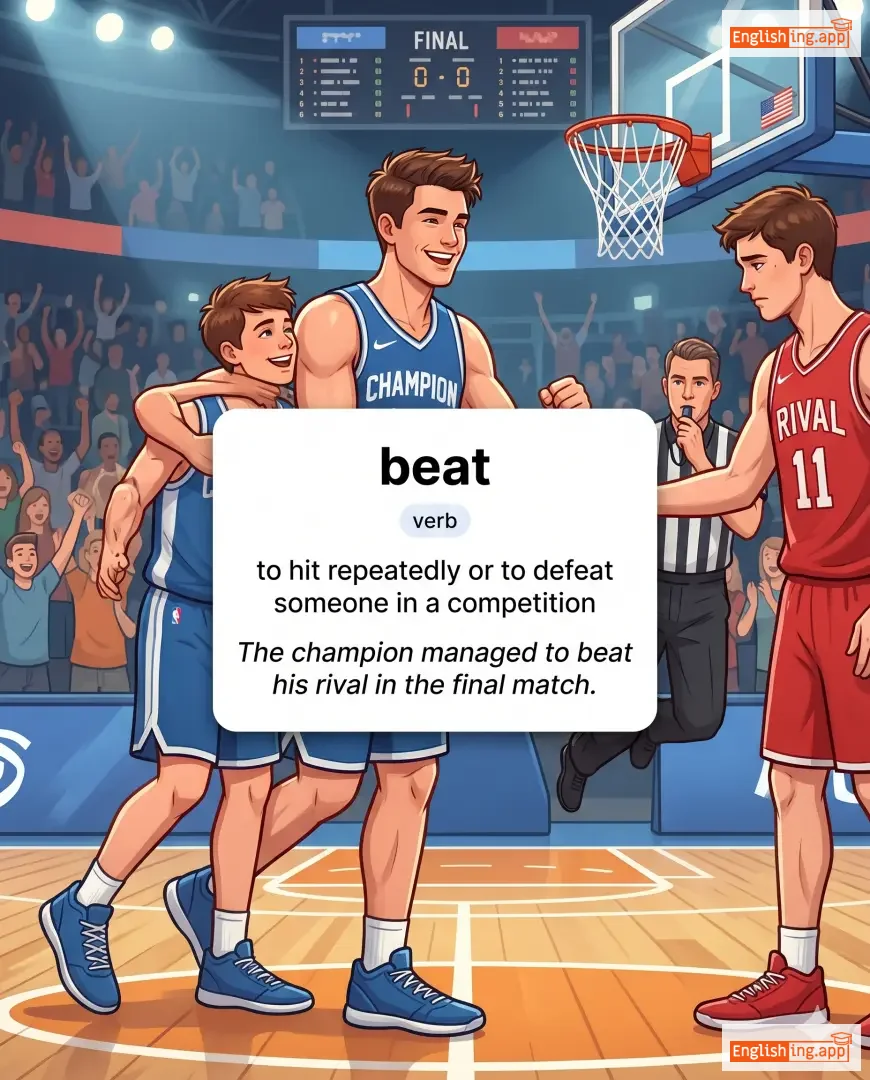
beat definition card — visual illustration of the meaning
verb
/biːt/
打つ, 打ち勝つ (utsu, uchi katsu)

to hit repeatedly or to defeat someone in a competition

"The champion managed to beat his rival in the final match."

"チャンピオンは決勝戦でライバルを打ち負かすことができました。" (Champiyon wa kesshōsen de raibaru o uchi makasu koto ga dekimashita.)
noun
/ˈbiːtənd raɪs/
ビート米 (bīto mai)

flattened rice; rice that has been parboiled, dried, and beaten into flat flakes

"Beaten rice is commonly eaten with milk and sugar for breakfast."

"ビート米は通常、朝食で牛乳と砂糖と一緒に食べられます。" (Bīto mai wa tsūjō, chōshoku de gyūnyū to satō to issho ni taberaremasu.)
adjective
/ˌbiːəˈtɪfɪk/
至福の (shifuku no)

blissfully happy or showing great joy

"She had a beatific smile after hearing the good news."

"彼女は良い知らせを聞いた後、至福の笑顔を浮かべていた。" (Kanojo wa yoi shirase o kiita ato, shifuku no egao o ukabete ita.)
beatify definition card — visual illustration of the meaning
verb
/biˈætɪfaɪ/
列聖 (ressai)

to make blessed or holy, especially in the Roman Catholic Church, to declare a deceased person to be among the blessed

"The pope decided to beatify the martyr for his faith and sacrifice."

"教皇はその信仰と犠牲により、殉教者をビーティファイすることを決定しました。" (Kyōkō wa sono shinkō to gisei ni yori, junkyōsha o beatify suru koto o kettei shimashita.)
noun
/biˈætɪtjuːd/
至高の幸福または祝福、しばしば山上の説教でのイエスの言葉に関連して使用される (shikou no koufuku matawa shukufuku, shibashiba sanzou no setsukyou de no Iesu no kotoba ni kanrenshite shiyou sareru)

supreme blessedness or happiness, often used in reference to the sayings of Jesus in the Sermon on the Mount

"She felt a state of beatitude after receiving the good news."

"良い知らせを受け取った後、彼女は幸福の状態を感じていた。" (Yoi shirase wo uketotta ato, kanojo wa koufuku no joutai wo kanjite ita.)
noun
/boʊ/
ボーイフレンド (boifurendo)

a male admirer or boyfriend; a fashionable young man

"She arrived at the party with her beau."

"彼女は彼氏と一緒にパーティーに来ました。" (Kanojo wa kareshi to issho ni pātii ni kimashita.)
adjective
/ˈbjuː.tɪ.fəl/
美しい (utsukushii)

pleasing to the senses or mind; very attractive

"The garden looked beautiful in the morning sunlight."

"庭は朝の陽光の中で美しく見えました。" (Niwa wa asa no yōkō no naka de utsukushiku miemashita.)
adverb
/ˈbjuːtɪfəli/
美しく (utsukushiku)

in a beautiful or pleasing manner; excellently or skillfully

"She sang beautifully at the concert."

"彼女はコンサートで美しく歌った。" (kanojo wa konsaato de utsukushiku utatta)
verb
/ˈbjuːtɪfaɪ/
美化する (bika suru)

to make something more beautiful or attractive

"The city plans to beautify the old park with trees and lights."

"その都市は木や照明で古い公園を美化する計画です。" (sono toshi wa ki ya shoumei de furui kouen o bika suru keikaku desu)
noun
/ˈbjuːti/
美しさ (utsukushisa)

a combination of qualities that please the senses or mind

"The beauty of the sunset took her breath away."

"夕日の美しさは彼女の息をのませた。" (Yuuhi no utsukushisa wa kanojo no iki o nomaseta.)
verb
/bɪˈkɑːm/
落ち着かせる (ochitsukaseru)

to make calm or still; to deprive a sailing vessel of wind

"The captain tried to becalm the anxious crew."

"キャプテンは不安な乗組員を落ち着かせようとした。" (Kyaputen wa fuan na norikumiin o ochitsukaseyou to shita.)
conjunction
/bɪˈkɔːz/
だから (dakara)

for the reason that; since

"He stayed home because it was raining."

"彼は雨が降っていたので家にいた。" (Kare wa ame ga futte ita node ie ni ita.)
noun
/bɛk/
合図 / 小川 (aizu / ogawa)

a gesture of beckoning; a small stream or brook (chiefly Northern English)

"The servant came at his master's beck and call."

"召使いは主人の合図に即座に来ました。" (Shoukai wa shujin no aizu ni sokuza ni kimashita.)
verb
/ˈbɛkən/
手招きする (temaneki suru)

to signal or call someone to come closer, often with a gesture; to attract or invite

"She beckoned him to come closer with a wave of her hand."

"彼女は手を振って彼に近くへ来るよう合図した。" (kanojo wa te o futte kare ni chikaku e kuru you aizushita)
verb
/bɪˈkʌm/
なる (naru)

to begin to be; to develop into

"He became a successful doctor after years of hard work."

"彼は何年もの努力の末、成功した医者になった。" (Kare wa nan-nen mono doryoku no sue, seikou shita isha ni natta.)
adjective
/bɪˈkʌmɪŋ/
似合う (niau)

attractive, suitable, or flattering to the wearer or situation

"That dress is very becoming on her."

"そのドレスは彼女にとても似合っています。" (Sono doresu wa kanojo ni totemo niautemasu.)
🛏️

Bed

noun
/bɛd/

a piece of furniture for sleeping or resting on

"She lay down on the bed and fell asleep quickly."

noun
/ˈbed ˌkʌv.ər/
ベッドカバー (beddo kabā)

a protective covering for a bed, typically a bedspread or comforter

"She pulled the bed cover up to her chin to stay warm."

"彼女は暖かさを保つためにベッドカバーを顎まで引き上げました。" (Kanojo wa atatakasa o tamotsu tame ni beddo kabā o ago made hikiagemashita.)
noun
/ˈbed ʃiːt/
ベッドシーツ (beddoshītsu)

a large rectangular piece of cloth used as bedding to lie on or under

"The clean white bed sheet felt soft against her skin."

"清潔な白いベッドシーツは彼女の肌に柔らかく感じました。" (Seiketsu na shiroi beddo shītsu wa kanojo no hada ni yawarakaku kanjimashita.)
noun
/ˈbed sted/
ベッドフレーム (beddo fureemu)

the framework of a bed; a bed frame without bedding

"The wooden bed stead was very sturdy."

"木製のベッドフレームは非常に丈夫でした。" (Mokusei no beddo fureemu wa hijō ni jōbu deshita)
verb
/bɪˈdɔːb/
塗る (nuru)

to smear or cover with a sticky or dirty substance

"The children bedaubed the wall with paint."

"子供たちは壁にペンキを塗った。" (Kodomotachi wa kabe ni penki o nutta.)
verb
/bɪˈdɛk/
飾る (kazaru)

to decorate or adorn something in a showy way

"The hall was bedecked with flowers for the wedding."

"ホールは結婚式のために花で飾られました。" (Hooru wa kekkonshiki no tame ni hana de kazara remashita.)
bedizen definition card — visual illustration of the meaning
verb
/bɪˈdaɪzən/
派手に飾る (hade ni kazaru)

to dress up or decorate in a showy or tasteless way

"She was bedizened with cheap jewelry."

"彼女は安いジュエリーで派手に飾られていた。" (Kanojo wa yasui juērī de hade ni kazararete ita.)
noun
/ˈbɛdləm/
混乱 (konran)

a scene of uproar and confusion; chaos

"There was bedlam in the market after the news spread."

"ニュースが広まった後、市場は混乱していた。" (Nyūsu ga hiromatta ato, ichiba wa konran shite ita.)
verb
/bɪˈdræɡəl/
泥や水を引きずって物を濡らし、汚し、乱れさせる (doro ya mizu o hikizutte mono o nurashi, yogoshi, midare saseru)

to make something wet, dirty, and untidy by dragging it through mud or water

"The children came home bedraggled after playing in the rain."

"子供たちは雨の中で遊んだ後、濡れて泥だらけで家に帰った。" (Kodomotachi wa ame no naka de asonda ato, nurete doro darake de ie ni kaetta.)
adjective
/ˈbed.rɪd.ən/
寝たきり (netakiri)

confined to bed; unable to leave one's bed due to illness or infirmity

"The elderly man has been bedridden for several months."

"高齢の男性は数ヶ月間寝たきりになっています。" (Kourei no dansei wa suukagetsukan netakiri ni natteimasu.)
noun
/ˈbɛd.rɒk/
基盤 (kiban)

the solid rock layer beneath the soil; the fundamental basis of something

"Trust is the bedrock of a healthy relationship."

"信頼は健康な関係の基盤です。" (Shinrai wa kenkou na kankei no kiban desu.)
noun
/ˈbɛdruːm/
寝室 (shinshitsu)

A room used for sleeping in.

"The children were playing in the bedroom."

"子供たちは寝室で遊んでいました。" (Kodomotachi wa shinshitsu de asonde imashita.)
noun
/biː/
(hachi)

a flying insect that collects nectar and produces honey

"A bee landed on the flower to collect nectar."

"蜂が花に止まって花蜜を集めていました。" (Hachi ga hana ni tomatte hanmitsu wo atsume te imashita.)