語彙集

英単語辞書 | 単語の意味、定義、例文

noun
/ˈbɒdi/
(karada)

the physical structure of a person or animal

"Exercise helps keep the body healthy."

"運動は体を健康に保つのに役立ちます。" (undō wa karada o kenkō ni tamotsu no ni yakudachimasu.)
noun
/ˈbɒdiɡɑːrd/
ボディガード (bodigaado)

a person employed to protect someone from harm

"The celebrity arrived with her bodyguard."

"その有名人はボディガードと一緒に到着した。" (Sono yuumeijin wa bodigaado to issho ni touchakushita.)
noun
/bɒɡ/
沼地 (numachi)

an area of wet, spongy ground; a swamp or marsh

"The hikers got stuck in a bog."

"ハイカーたちは沼地に足を取られました。" (Haikaa-tachi wa numachi ni ashi o toraremashita.)
verb
/ˈbɒɡəl/
困惑させる (konwaku saseru)

to overwhelm or confuse; to be astonished or puzzled by something

"The complexity of the puzzle boggled his mind."

"パズルの複雑さが彼の頭を困惑させた。" (Pazuru no fukuzatsusa ga kare no atama o konwaku saseta.)
adjective
/ˈboʊɡəs/
偽物 (nisemono)

false, fake, or not genuine

"The police arrested him for using a bogus ID card."

"警察は偽のIDカードを使用したため、彼を逮捕しました。" (Keisatsu wa nise no ID kaado o shiyou shita tame, kare o taiho shimashita.)
adjective
/boʊˈhiːmiən/
ボヘミアン (bohemian)

unconventional, artistic, and free-spirited in lifestyle or appearance

"She decorated her apartment in a bohemian style with colorful fabrics."

"彼女はカラフルな布でボヘミアンスタイルでアパートを飾りました。" (Kanojo wa karafuru na nuno de bohemian sutairu de apāto o kazarimashita.)
🥘

Boil

verb
/bɔɪl/

to heat a liquid until it starts to bubble and turn into vapor.

"Please boil some water for tea."

adjective
/bɔɪld/
ゆでた (yudeta)

cooked in boiling water

"She served boiled eggs for breakfast."

"彼女は朝食に茹で卵を出しました。" (Kanojo wa chōshoku ni yudetamago o dashimashita.)
adjective
/ˈbɔɪstərəs/
騒々しい (sōzōshī)

noisy, energetic, and cheerful; rowdy

"The children were boisterous during the birthday party."

"誕生日パーティーで子供たちは騒々しかった。" (Tanjōbi pātii de kodomotachi wa sōzōshikatta.)
adjective
/boʊld/
大胆 (daitan)

showing courage, confidence, or willingness to take risks

"She made a bold decision to start her own business."

"彼女は自分のビジネスを始める大胆な決断を下した。" (Kanojo wa jibun no bijinesu o hajimeru daitan na ketsudan o kudashita.)
adverb
/ˈbəʊld.li/
大胆に; 恐れずに (daitan ni; osorezu ni)

in a confident and brave way; without fear

"She boldly stepped forward to face the challenge."

"彼女は挑戦に立ち向かうために大胆に前進した。" (Kanojo wa chōsen ni tachimukau tame ni daitan ni zenshin shita.)
noun
/ˈboʊld.nəs/
大胆さ; 勇気 (daitan-sa, yūki)

willingness to take risks; confidence and courage in behavior

"Her boldness in confronting the problem impressed everyone."

"問題に立ち向かう彼女の大胆さは、皆を感動させた。" (Mondai ni tachimukau kanojo no daitansa wa, mina o kandō saseta.)
noun
/boʊl/
木の幹 (ki no miki)

the trunk of a tree

"The bole of the tree was thick and strong."

"木の幹は太くて強かった。" (Ki no miki wa futokute tsuyokatta.)
noun
/bəˈlɛəroʊ/
ボレロ(スペインのダンスまたは前が開いた短いジャケット) (bolero)

A Spanish dance in slow triple time, or a short jacket open at the front.

"The dancers performed a passionate bolero at the festival."

"ダンサーたちはフェスティバルで情熱的なボレロを演奏しました。" (Dansa-tachi wa fesutibaru de jounetsuteki na bolero o ensou shimashita.)
noun
/boʊl/
丸い種子のカプセル(綿花や亜麻のような) (bo-ru)

The rounded seed capsule of plants such as cotton or flax.

"The farmer examined the cotton boll to check its quality."

"農夫は綿のボールを調べて、その品質を確認しました。" (Noufu wa men no bo-ru o shirabete, sono hinshitsu o kakunin shimashita.)
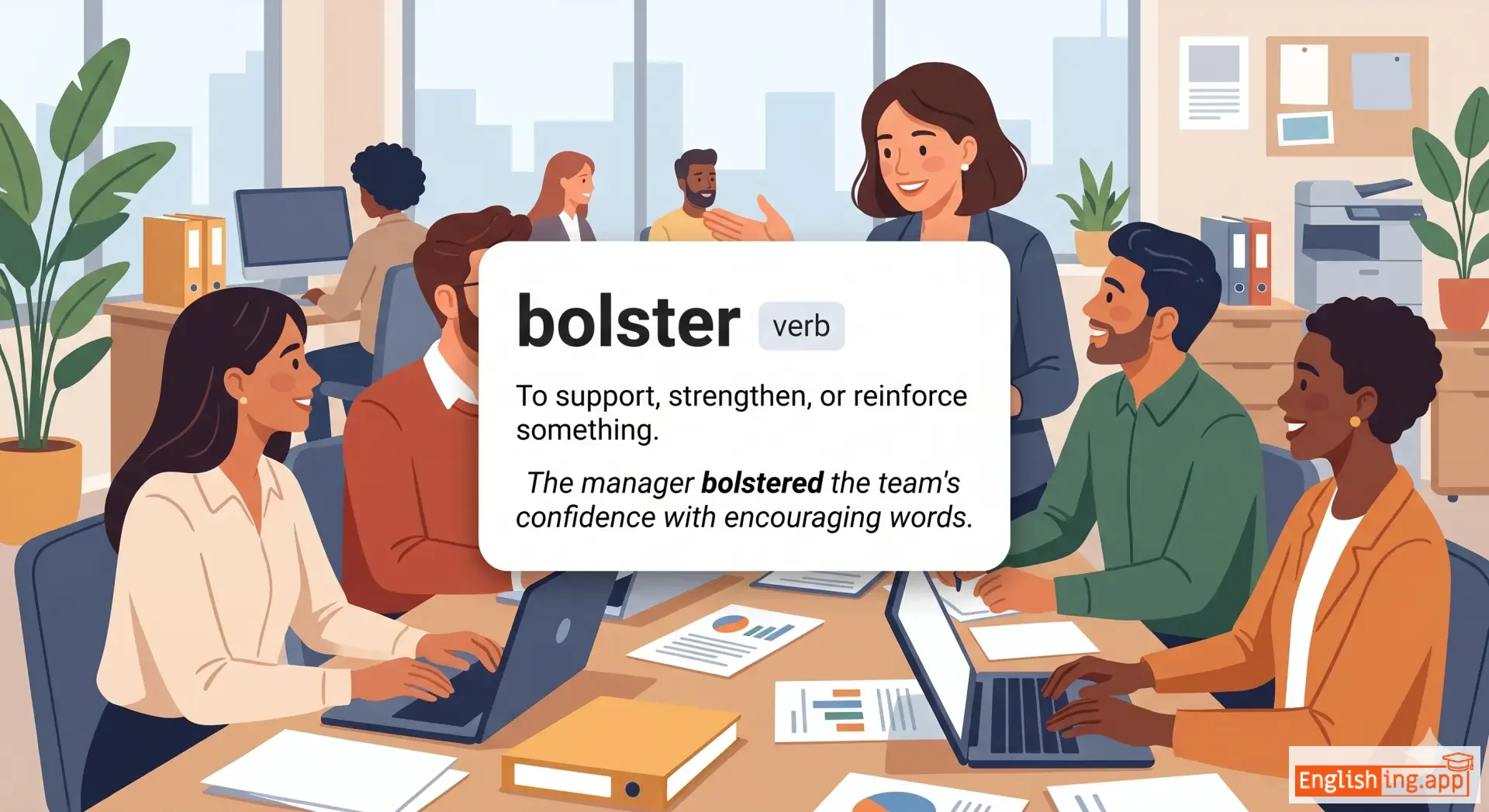
bolster definition card — visual illustration of the meaning
🛏️

bolster

verb
/ˈboʊlstər/

To support, strengthen, or reinforce something.

"The manager bolstered the team's confidence with encouraging words."

verb
/boʊlt/
突然走り出す; ボルトで固定する (bolt)

To move suddenly and quickly; also to fasten something with a bolt.

"The horse bolted from the stable after hearing a loud noise."

"馬は大きな音を聞いて、厩舎から飛び出しました。" (Uma wa ōkina oto o kiite, kyūsha kara tobidashimashita.)
noun/verb
/bɑːm/
爆弾 (bakudan)

A weapon that explodes; also to attack with bombs or to fail badly.

"The city was bombed heavily during the war."

"その都市は戦争中に激しく爆撃された。" (Sono toshi wa sensō chū ni hageshiku bakugeki sareta.)
verb
/bɒmˈbɑːrd/

to attack continuously with bombs, questions, or other forces

"Reporters bombarded the minister with difficult questions."

noun
/ˌbɒmbərˈdɪər/
爆撃手 (bakugekishu)

a member of a bomber crew responsible for releasing bombs

"The bombardier released the bombs with precision."

"爆撃手は正確に爆弾を投下した。" (Bakugekishu wa seikaku ni bakudan o tōka shita.)
noun
/bɒmˈbɑːrdmənt/
爆撃 (bakugeki)

a continuous attack with bombs or other projectiles

"The city endured a heavy bombardment during the war."

"その都市は戦争中に激しい爆撃に耐えた。" (Sono toshi wa sensou-chuu ni hageshii bakugeki ni taeta.)
noun
/ˈbɒmbæst/
大げさな言葉 (oogesa na kotoba)

speech or writing that is overly pompous and inflated

"His campaign speech was full of bombast but lacked real substance."
"彼の選挙演説はボンバストに満ちていたが、実際の実質は欠けていた。" (Kare no senkyo enzetsu wa bombasutoni michite ita ga, jissai no jisshitsu wa kakete ita.)
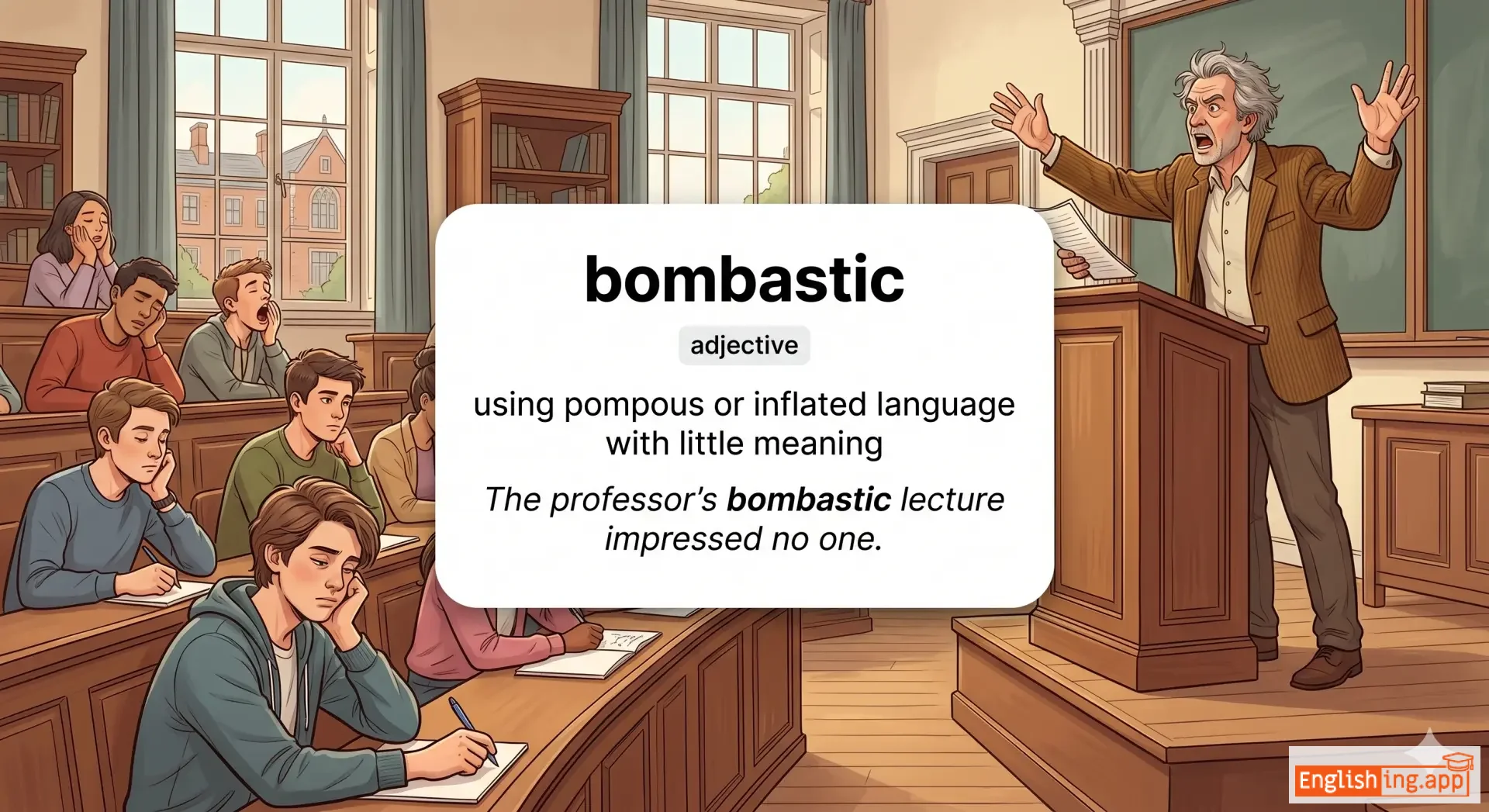
bombastic definition card — visual illustration of the meaning
adjective
/bɒmˈbæstɪk/
派手な (hade na)

using pompous or inflated language with little meaning

"The professor’s bombastic lecture impressed no one."

"教授の派手な講義は誰にも印象を与えませんでした。" (Kyoushu no hade na kougi wa dare ni mo inshou o ataemasen deshita.)
noun
/bɒmˈbeɪ dʌk/
ボンベイフィッシュ (bonbei fisshu)

a type of lizardfish found in coastal waters, commonly eaten dried and salted in South Asia

"Bombay duck is a popular delicacy when dried and fried."

"ボンベイダックは乾燥して揚げると人気の珍味です。" (bonbei dakku wa kanso shite ageru to ninki no chinmi desu)
noun
/ˈbɒmər/
爆撃機 (bakugekiki)

military aircraft designed to drop bombs on targets

"The bomber squadron flew over the city at dawn."

"爆撃機部隊は夜明けに都市の上を飛んだ。" (bakugekiki butai wa yoake ni toshi no ue o tonda.)
noun
/ˈbɒmɪŋ/
爆撃 (bakugeki)

an attack using bombs or explosives

"The city was devastated by the bombing."

"その都市は爆撃で壊滅的な被害を受けました。" (Sono toshi wa bakugeki de kaimetsuteki na higai o ukemashita.)
adjective
/ˌboʊnəˈfaɪdi/
本物の; 正当な; 合法の (honmono no; seitō na; gōhō no)

genuine; authentic; legitimate

"She is a bonafide expert in her field."

"彼女はその分野の本物の専門家です。" (Kanojo wa sono bunya no honmono no senmonka desu.)
noun
/bəˈnæn.zə/
富、運、または利益の突然の増加を引き起こす状況や出来事 (tomi, un, matawa rieki no totsuzen no zōka o hikiokosu jōkyō ya dekigoto)

a situation or event that creates a sudden increase in wealth, good fortune, or profits

"The oil discovery was a bonanza for the small country."

"石油の発見は小さな国にとってボナンザでした。" (Sekiyu no hakken wa chiisana kuni ni totte bonanza deshita.)
🤝

Bond

noun
/bɒnd/

a connection or relationship between people or things

"The sisters share a close bond."

noun
/ˈbɑn.dɪdʒ/
奴隷状態; 拘束 (dorei joutai, kousoku)

the state of being a slave; the state of being under the control of a force or influence

"The people fought to escape from the bondage of oppression."

"人々は圧政の束縛から逃れるために戦った。" (Hitobito wa assē no sokubaku kara nogareru tame ni tatakatta.)
noun
/boʊn/
(hone)

the hard parts of a skeleton that form the structure of the body

"The dog buried a bone in the garden."

"犬は庭に骨を埋めた。" (Inu wa niwa ni hone o umeta.)
noun
/ˈbɒnəmi/
友好 (yūkō)

Cheerful friendliness and geniality.

"The meeting was filled with laughter and bonhomie."

"会議は笑いと友好で満ちていた。" (Kaigi wa warai to yūkō de michite ita.)
adjective
/ˈbɒni/
美しい; かわいい; 楽しい (utsukushii; kawaii; tanoshii)

cheerful; pretty; attractive

"The bonny child played happily in the garden."

"美しい子供は庭で幸せに遊んでいました。" (Utsukushii kodomo wa niwa de shiawase ni asonde imashita.)
noun
/ˈbəʊnəs/
ボーナス (bōnasu)

an extra payment or reward given in addition to what is usual or expected.

"Employees received a year-end bonus for their hard work."

"従業員はその努力に対して年末のボーナスを受け取った。" (Jūgyōin wa sono doryoku ni taishite nenmatsu no bōnasu o uketotta.)
😮

boo

verb/noun
/buː/

To show disapproval by shouting 'boo'; or a sound made to surprise or scare.

"The audience began to boo the bad performance."

noun
/buːb/
ばか者;胸(俗語) (bakemono; mune)

a foolish or clumsy person; an informal and sometimes rude term for a woman's breast

"He felt like a complete boob after forgetting the meeting."

"会議を忘れて、彼は完全なばか者だと感じた。" (kaigi o wasurete kare wa kanzen na bakamono da to kanjita)
noun
/ˈbuːbi/
ばか (baka)

a foolish or gullible person; a silly individual

"He felt like a booby after making such a simple mistake."

"そんな簡単な間違いをして、彼は自分をばかだと感じた。" (sonna kantan na machigai o shite kare wa jibun o baka da to kanjita)
📖

book

noun, verb
/bʊk/

A set of written, printed, or blank pages fastened together; to arrange for someone to have a seat, room, or ticket in advance.

"I booked a table at the restaurant for dinner."

noun
/bʊk ˈbaɪn.dər/
本の製本工 (hon no seihon kō)

a person whose job is to fasten the pages of books together and put covers on them

"The old book binder carefully restored the antique manuscript."

"古い本の製本工は古文書を慎重に修復しました。" (Furui hon no seihon kō wa kobunsho o shinchō ni shūfuku shimashita.)
noun
/bʊk ˈsel.ər/
本屋 (honya)

a person who sells books, especially as a business

"The book seller recommended a great novel for my summer reading."

"本屋は私の夏の読書のために素晴らしい小説を勧めました。" (Honya wa watashi no natsu no dokusho no tame ni subarashī shōsetsu o susumemashita.)
noun
/ˈbʊkɪŋ/
予約 (yoyaku)

the act of reserving accommodations, tickets, etc.

"I made a booking for a hotel room in advance."

"私は事前にホテルの部屋を予約しました。" (Watashi wa jizen ni hoteru no heya o yoyaku shimashita.)
adjective
/ˈbʊkɪʃ/
本好き (honzuki)

Spending much time reading or studying; scholarly but lacking practical experience.

"He was too bookish to enjoy outdoor activities."

"彼は屋外活動を楽しむには本好きすぎた。" (Kare wa okuzai katsudō o tanoshimu ni wa honzuki sugita.)
noun
/ˈbʊkʃɒp/
書店 (shoten)

a retail store where books are sold

"She spent an hour browsing in the small bookshop."

"彼女は小さな書店で一時間過ごした。" (kanojo wa chiisana shoten de ichijikan sugoshita)
noun
/ˈbʊkstɔːr/
書店 (shoten)

a shop where books are sold

"She spent an entire afternoon browsing in the bookstore."

"彼女は午後ずっと書店で過ごした。" (kanojo wa gogo zutto shoten de sugoshita)
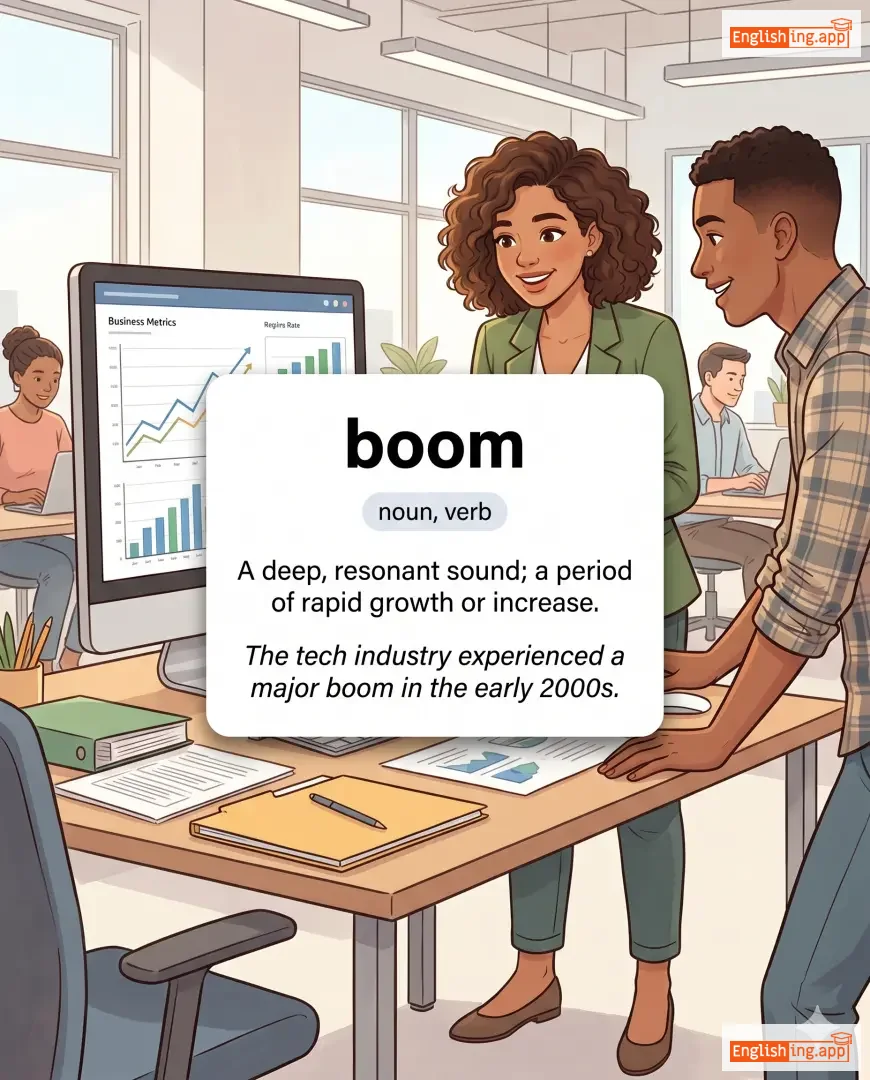
boom definition card — visual illustration of the meaning
📈

boom

noun, verb
/buːm/

A deep, resonant sound; a period of rapid growth or increase.

"The tech industry experienced a major boom in the early 2000s."

noun
/buːn/
恩恵 (onkei)

A thing that is helpful or beneficial.

"The internet is a boon to modern education."

"インターネットは現代教育にとって恩恵です。" (inta-netto wa gendai kyouiku ni totte onkei desu.)
noun
/bʊər/
野暮な人 (yobuna hito)

A rude, insensitive, or ill-mannered person.

"He was such a boor at the dinner table."
"彼はディナーの席でとても野暮だった。" (Kare wa dinā no seki de totemo yobudaった。)
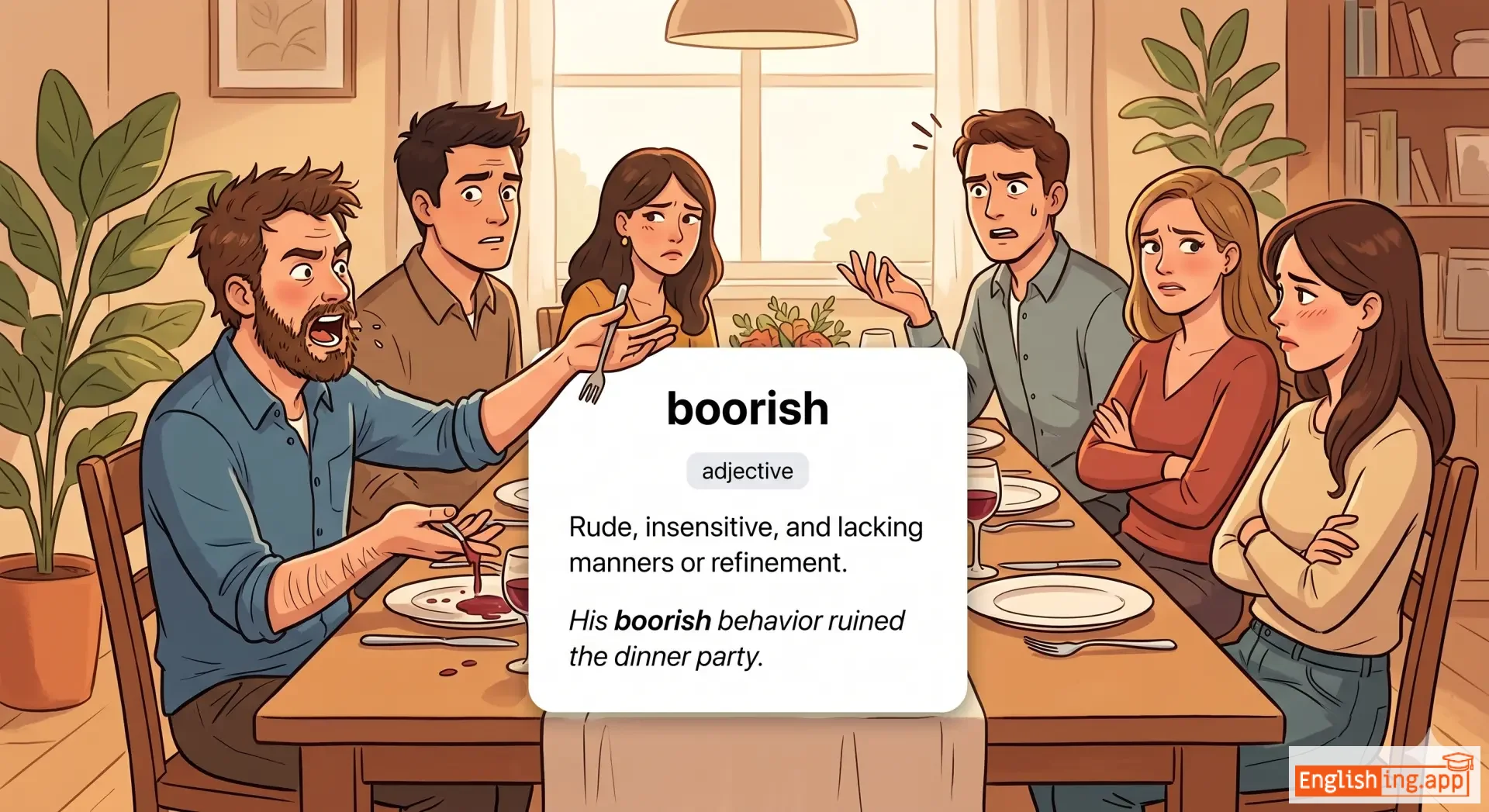
boorish definition card — visual illustration of the meaning
adjective
/ˈbʊərɪʃ/
粗野 (soya)

Rude, insensitive, and lacking manners or refinement.

"His boorish behavior ruined the dinner party."

"彼の粗野な行動はディナーパーティーを台無しにした。" (Kare no soya na kōdō wa dinā pāti o dainashi ni shita.)
verb
/buːst/
増加させる (zōka saseru)

To increase, improve, or raise something.

"The company launched a campaign to boost sales."

"会社は売上を増加させるためのキャンペーンを開始しました。" (Kaisha wa uriage o zōka saseru tame no kyanpēn o kaishi shimashita.)
noun, verb
/buːt/
ブーツ (butsu)

A type of shoe that covers the ankle or higher; to start up a computer system.

"He put on his boots before going hiking."

"彼はハイキングに行く前にブーツを履いた。" (Kare wa haikingu ni iku mae ni butsu wo haita.)