語彙集

英単語辞書 | 単語の意味、定義、例文

adjective
/əkˈsɛptəbl/
受け入れ可能 (ukeireru kanou)

able to be tolerated or agreed upon

"His excuse was not acceptable to the teacher."

"彼の言い訳は先生には受け入れられませんでした。" (Kare no iiwake wa sensei ni wa ukeireraremasen deshita.)
noun
/əkˈsɛptəns/
受け入れ (ukeire)

the action of receiving or agreeing to something

"Her acceptance of the offer was a surprise."
"彼女の提案を受け入れることは驚きでした。" (Kanojo no teian o ukeireru koto wa odoroki deshita.)
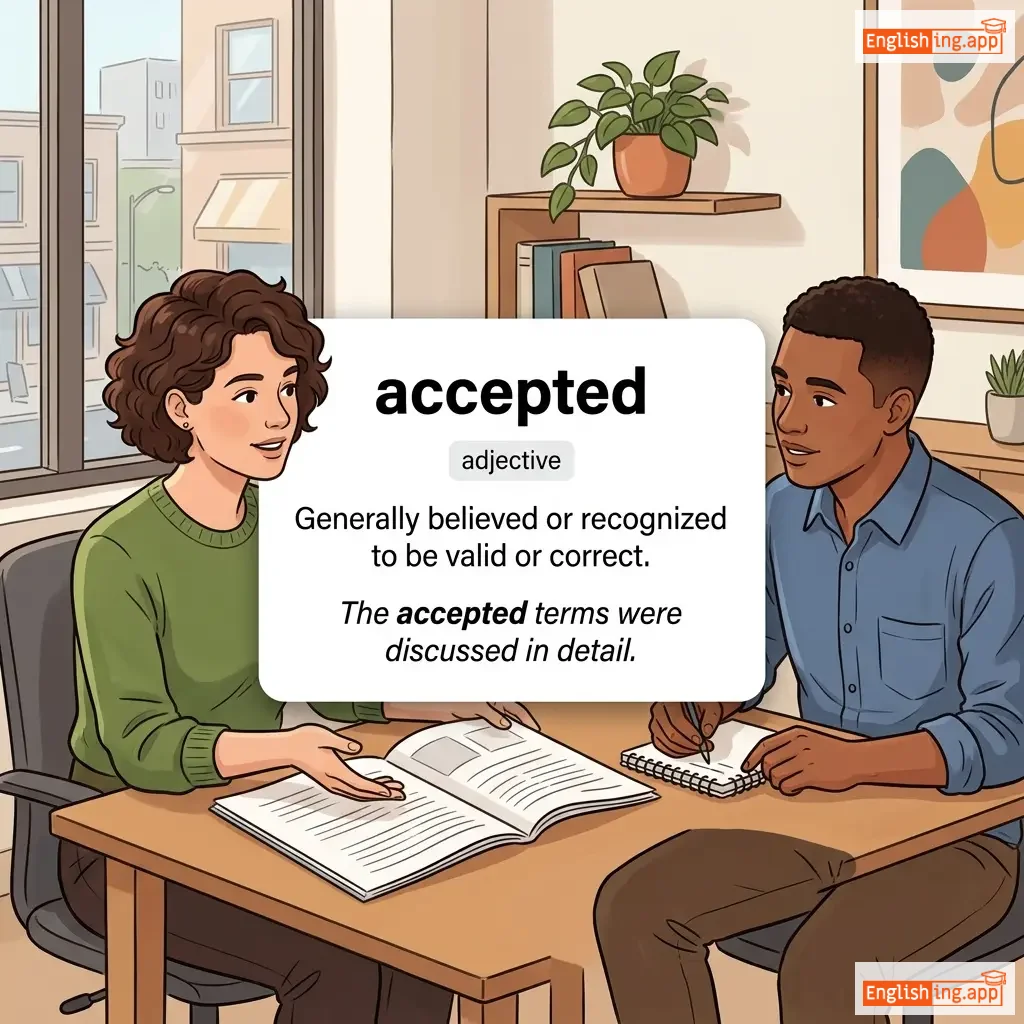
accepted definition card — visual illustration of the meaning
adjective
əkˈsep.tɪd
受け入れられた (ukeirareta)

Generally believed or recognized to be valid or correct.

"The accepted terms were discussed in detail."

"受け入れられた条件は詳細に議論されました。" (Ukeirareta jōken wa shōsai ni giron saremashita.)
noun/verb
/ˈæksɛs/
アクセス (akusesu)

the ability to enter or use something; to reach or use something

"Students have free access to the library."
"学生は図書館への無料アクセスがあります。" (Gakusei wa toshokan e no muryou akusesu ga arimasu.)
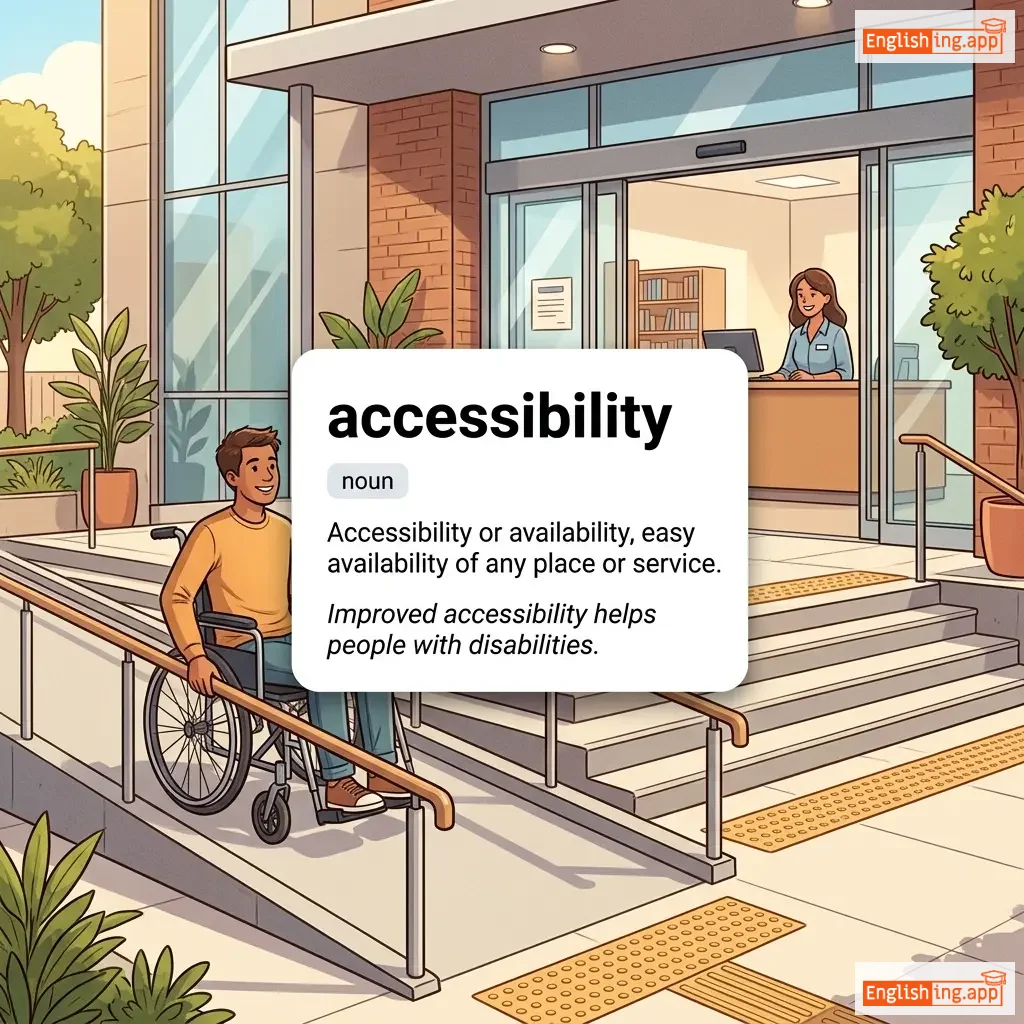
accessibility definition card — visual illustration of the meaning
noun
/əkˌsɛs.əˈbɪl.ə.ti/
アクセシビリティ (akuseshibiriti)

Accessibility or availability, easy availability of any place or service.

"Improved accessibility helps people with disabilities."

"改善されたアクセシビリティは、障害を持つ人々を助けます。" (Kaizen sareta akuseshibiriti wa, shougai wo motsu hitobito wo tasukemasu.)
adjective
/əkˈsɛsəbl/
アクセス可能 (akusesu kanou)

easy to reach, use, or understand

"The museum is easily accessible by public transport."

"その博物館は公共交通機関で簡単にアクセス可能です。" (Sono hakubutsukan wa kōkyō kōtsū kikan de kantan ni akusesu kanō desu.)
noun
/əkˈsɛʃən/
即位 / 条約の受諾 (sokui / jōyaku no judaku)

the attainment of a position of rank or power, especially a monarch or president; the formal acceptance of an agreement or treaty

"The king's accession to the throne was celebrated with great ceremony."

"王の即位は大きな儀式で祝われました。" (Ō no sokui wa ōkina gishiki de iwai mashi ta.)
noun
/əkˈsɛsəri/
アクセサリー; 犯罪に加担する人物 (akusesari; hanzai ni katansu suru jinbutsu)

a thing which can be added to something else to make it more useful, versatile, or attractive; a person who assists in committing a crime

"She bought some stylish accessories for her new phone."
"彼女は新しい電話のためにいくつかのスタイリッシュなアクセサリーを買いました。" (Kanojo wa atarashī denwa no tame ni ikutsu ka no sutairisshu na akusesari o kaimashita.)
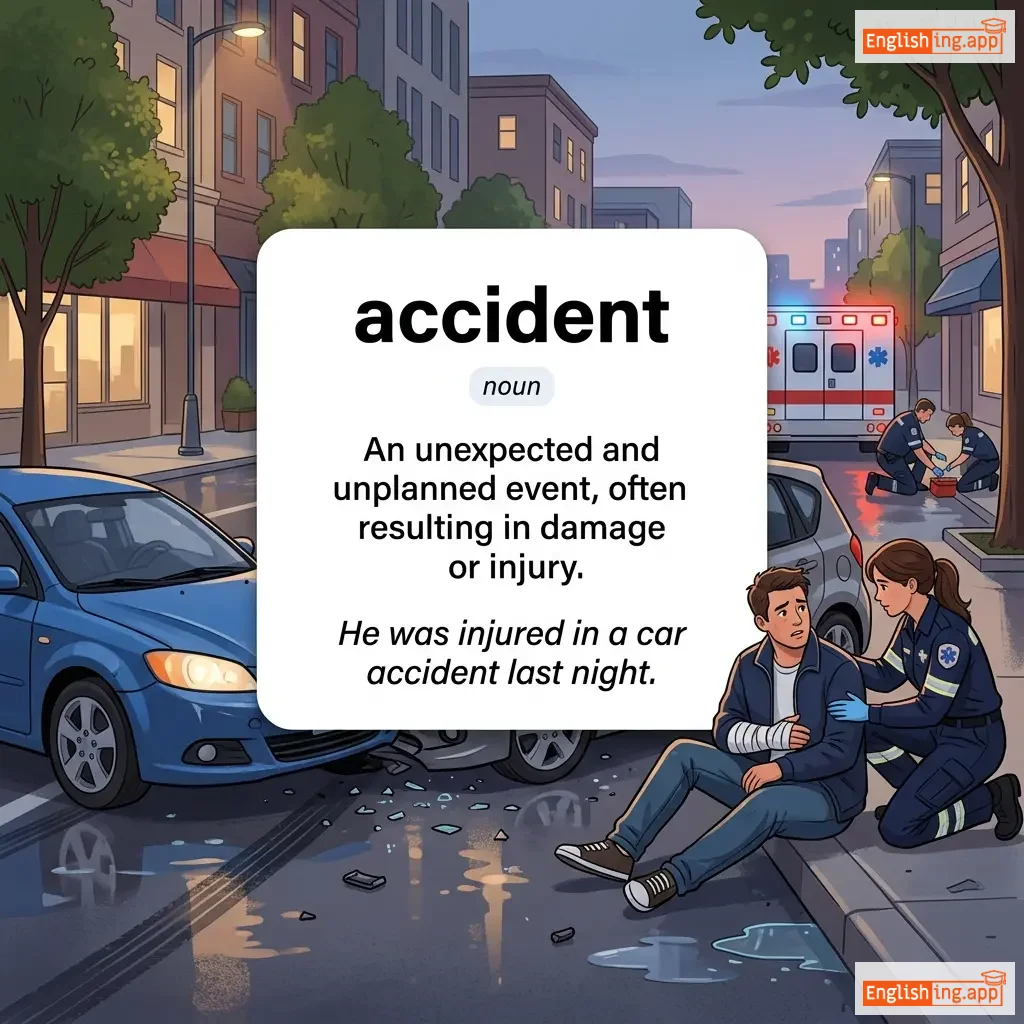
accident definition card — visual illustration of the meaning
noun
/ˈæksɪdənt/
事故 (jiko)

An unexpected and unplanned event, often resulting in damage or injury.

"He was injured in a car accident last night."

"彼は昨晩の車の事故で怪我をしました。" (Kare wa sakuban no kuruma no jiko de kega o shimashita.)
adjective
/ˌæksɪˈdɛntl/
偶然の (gūzen no)

happening by chance, unintentionally

"The fire was caused by an accidental spark."

"火事は偶然の火花によって引き起こされました。" (Kaji wa gūzen no hibana ni yotte hikiokosaremashita.)
adverb
/ˌæksɪˈdɛntəli/
偶然に (gūzen ni)

happening by chance or unexpectedly

"He accidentally dropped the glass."

"彼はうっかりグラスを落としてしまった。" (Kare wa ukkari gurasu o otoshite shimatta.)
verb
/əˈkleɪm/
称賛する (shōsan suru)

to praise enthusiastically and publicly

"The audience acclaimed the actor for his outstanding performance."
"観客はその俳優の素晴らしい演技に喝采を送った。" (Kankyaku wa sono haiyū no subarashī engi ni kassai o okutta.)
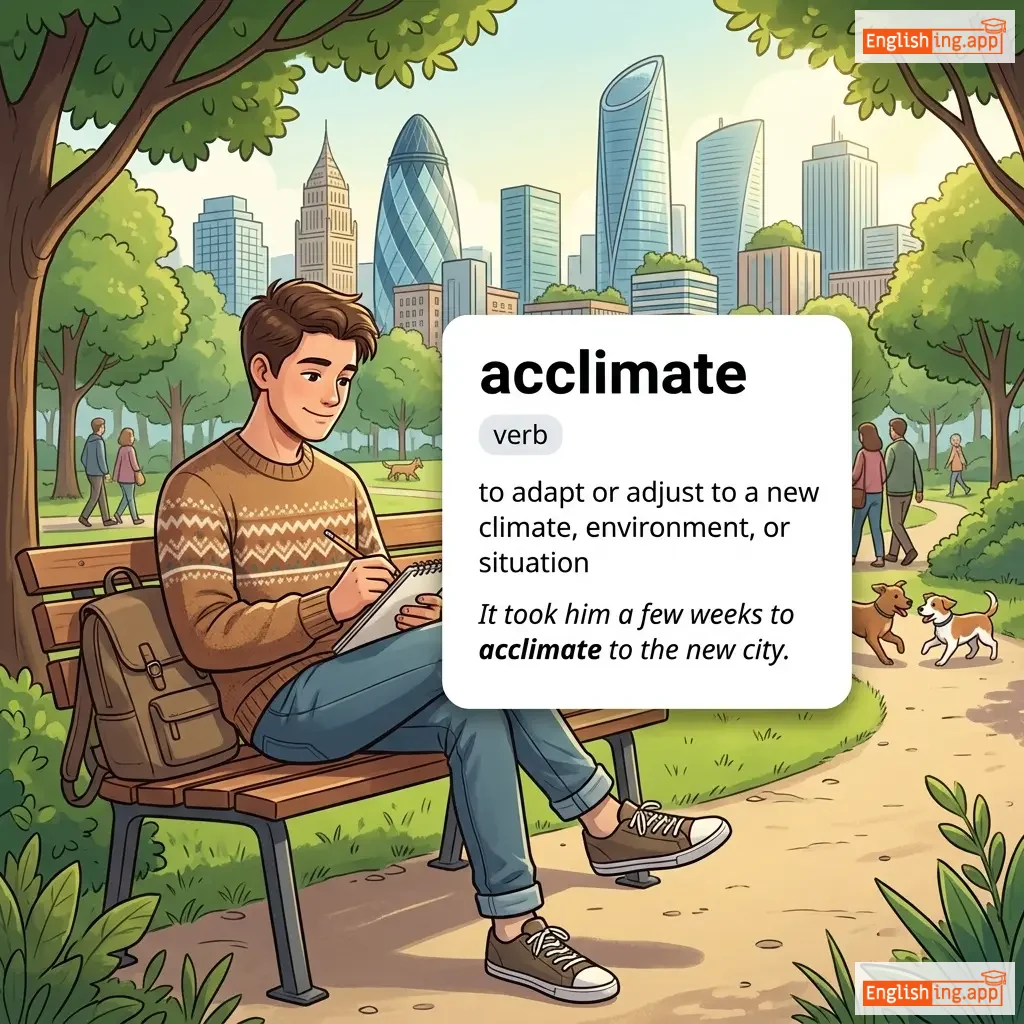
acclimate definition card — visual illustration of the meaning
verb
/ˈæklɪˌmeɪt/
順応する (junou suru)

to adapt or adjust to a new climate, environment, or situation

"It took him a few weeks to acclimate to the new city."
"彼は新しい街に順応するのに数週間かかりました。" (Kare wa atarashī machi ni junou suru noni suū shūkan kakarimashita.)
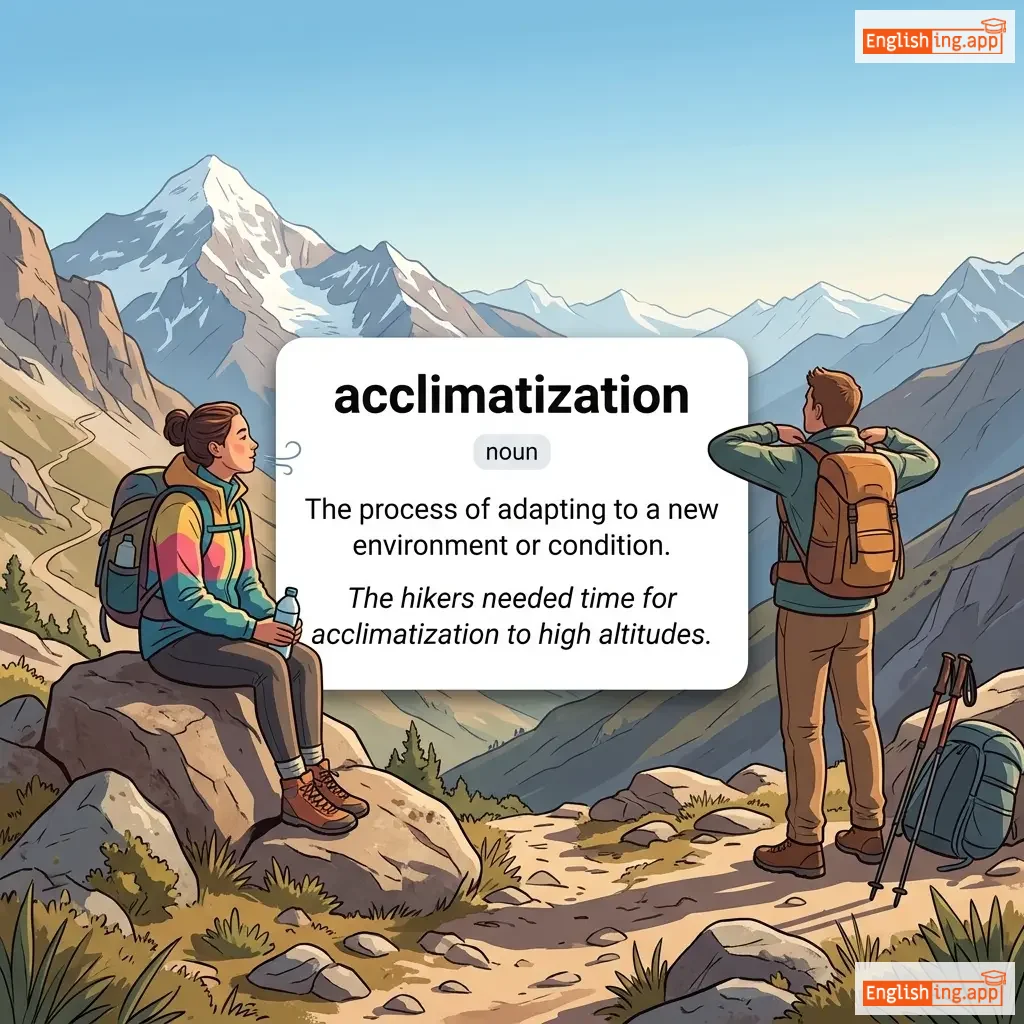
acclimatization definition card — visual illustration of the meaning
noun
əˌklaɪ.mə.tɪˈzeɪ.ʃən
適応 (tekiou)

The process of adapting to a new environment or condition.

"The hikers needed time for acclimatization to high altitudes."

"登山者は高い標高に適応するために時間が必要でした。" (Tozansha wa takai hyōkō ni tekiō suru tame ni jikan ga hitsuyō deshita.)
noun
/əˈklɪvɪti/
上り坂 (noborisaka)

An upward slope or incline on the ground.

"The hikers struggled as they climbed the steep acclivity."

"登山者たちは急な上り坂を登るときに苦労しました。" (Tōzansha-tachi wa kyū na noborisaka o noboru toki ni kurō shimashita.)
noun
/ˈækəleɪd/
栄誉 (eiyo)

An award, honor, or expression of praise.

"She received an accolade for her outstanding performance."

"彼女は卓越したパフォーマンスで栄誉を受けました。" (Kanojo wa takuetsu shita pafōmansu de eiyo o ukemashita.)
verb
/əˈkɒmədeɪt/
収容する (shūyō suru)

To provide lodging, space, or meet the needs of someone.

"The hotel can accommodate up to 200 guests."

"ホテルは最大200人を収容できます。" (hoteru wa saidai 200 nin o shūyō dekimasu.)
noun
/əˌkɒməˈdeɪʃən/
宿泊施設 (shukuhaku shisetsu)

a place to stay or live, especially for a short period

"We found affordable accommodation near the beach."

"ビーチの近くで手頃な価格の宿泊施設を見つけました。" (Bīchi no chikaku de tegoto na kakaku no shukuhaku shisetsu o mitsukemashita.)
accommodations definition card — visual illustration of the meaning
noun
/əˌkɒm.əˈdeɪ.ʃənz/
宿泊施設 (shukuhaku shisetsu)

Lodging; room and board; places to stay.

"The students had proper accommodations."

"学生たちは適切な宿泊施設を持っていた。" (Gakuseitachi wa tekisetsu na shukuhaku shisetsu o motte ita.)
noun
/əˈkʌmpənɪmənt/
伴奏 (bansou)

Something that goes together with or complements another thing, often music or food.

"The dish was served with a spicy sauce as an accompaniment."

"その料理はスパイシーなソースを添えて提供されました。" (Sono ryouri wa supaishī na sōsu wo soete teikyō saremashita.)
noun
/əˈkʌmpənɪst/
伴奏者 (bansou-sha)

A person who plays a musical instrument to support a singer or another musician.

"The pianist served as the accompanist for the singer during the concert."

"コンサート中にピアニストは歌手の伴奏者として活躍しました。" (konsāto-chū ni pianisuto wa kashu no bansou-sha to shite katsuyaku shimashita.)
verb
/əˈkʌmpəni/
同行する (dōkō suru)

to go somewhere with someone as a companion or escort

"She asked her friend to accompany her to the concert."

"彼女は友達にコンサートに一緒に行ってほしいと頼んだ。" (Kanojo wa tomodachi ni konsāto ni issho ni itte hoshī to tanonda.)
noun
/əˈkʌmplɪs/
共犯者 (kyōhansha)

a person who helps another commit a crime

"The thief was arrested along with his accomplice."

"泥棒は共犯者と一緒に逮捕されました。" (Dorobo wa kyōhansha to issho ni taiho saremashita.)
verb
/əˈkʌmplɪʃ/
達成する (tassei suru)

to achieve or complete successfully

"She managed to accomplish all her goals for the year."

"彼女はその年の目標をすべて達成することができました。" (Kanojo wa sono toshi no mokuhyō o subete tassei suru koto ga dekimashita.)
noun
/əˈkʌmplɪʃmənt/
達成 (tassei)

something achieved successfully after effort

"Graduating from college was her greatest accomplishment."

"大学を卒業することは彼女の最大の達成でした。" (Daigaku o sotsugyō suru koto wa kanojo no saidai no tassei deshita.)
accord definition card — visual illustration of the meaning
noun, verb
/əˈkɔːrd/
協定 (kyoutei)

agreement or harmony; to grant or give recognition

"The two nations signed a peace accord."

"二国は平和協定に署名しました。" (Nikoku wa heiwa kyōtei ni shomei shimashita.)
noun
/əˈkɔːrdəns/
一致 (icchi)

agreement or harmony with something; compliance with rules, laws, or wishes

"The policy was implemented in accordance with international law."

"その方針は国際法に従って実施された。" (sono houshin wa kokusaihou ni shitagatte jisshi sareta)
preposition/adverb
/əˈkɔːrdɪŋ/
によると (niyoruto)

As stated by or in agreement with.

"According to the report, sales increased last quarter."

"報告書によると、売上は前四半期に増加しました。" (Houkokusho niyoruto, uriage wa zenshihanki ni zouka shimashita.)
adverb
/əˈkɔːdɪŋli/
それに応じて (sore ni ōjite)

in a way that is suitable or appropriate for the situation

"She was informed about the changes and acted accordingly."

"彼女は変更について通知され、その後、それに応じて行動しました。" (Kanojo wa henkō ni tsuite tsūchi sare, sono ato, sore ni ōjite kōdō shimashita.)
noun
/əˈkɔːrdiən/
アコーディオン (楽器) (akōdion (gakki))

a musical instrument played by squeezing and expanding with keys and buttons

"The musician played a cheerful tune on the accordion."

"ミュージシャンはアコーディオンで陽気なメロディーを演奏しました。" (Myūjishan wa akōdion de yōkina merodī o ensō shimashita.)
verb
/əˈkɒst/
強引に話しかける (gōin ni hanashikakeru)

to approach and speak to someone boldly or aggressively

"The reporter was accosted by protesters outside the courthouse."
"報道陣は裁判所の外で抗議者にアコストされた。" (Hōdōjin wa saibansho no soto de kōgisha ni akosuto sareta.)
noun
/əˈkaʊnt/

a record or statement of financial expenditure or receipts; a report or description of an event or experience

"She opened a new bank account to save for her studies."

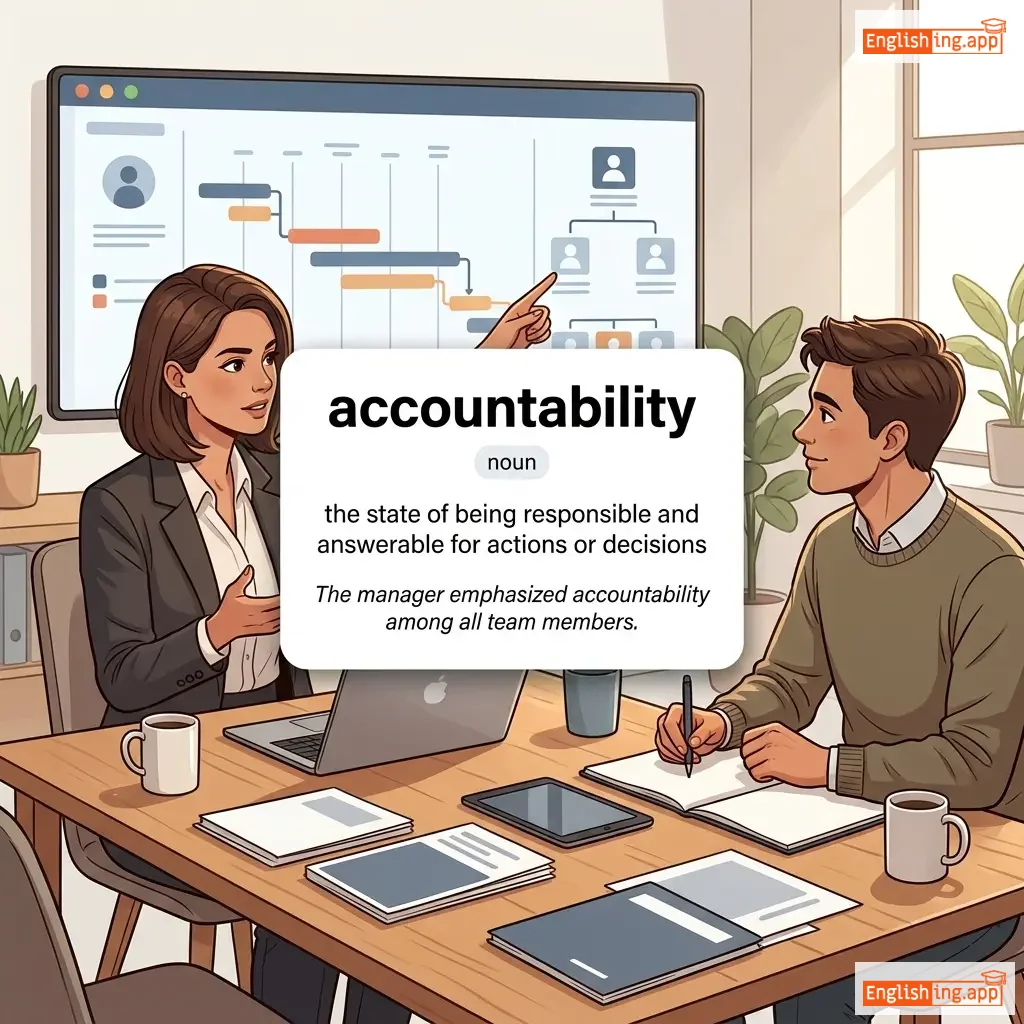
accountability definition card — visual illustration of the meaning
noun
/əˌkaʊntəˈbɪləti/
責任 (sekinin)

the fact of being responsible for something

"The manager's accountability for the project was clear from the start."

"プロジェクトに対するマネージャーの責任は最初から明確でした。" (Purojekuto ni taisuru manējā no sekinin wa saisho kara meikaku deshita.)
accountable definition card — visual illustration of the meaning
adjective
/əˈkaʊntəbl/
責任がある (sekinin ga aru)

responsible for actions or decisions

"The manager is accountable for the team's performance."

"マネージャーはチームのパフォーマンスに対して責任があります。" (Manējā wa chīmu no pafōmansu ni taishite sekinin ga arimasu.)
noun
/əˈkaʊntənt/
会計士 (kaikeishi)

a person whose job is to keep or check financial accounts

"The accountant prepared the financial reports for the company."

"会計士は会社の財務報告書を準備しました。" (Kaikeishi wa kaisha no zaimu hōkokusho o junbi shimashita.)
noun
/əˈkaʊntɪŋ/
会計 (kaikei)

the process or work of keeping financial accounts

"The accounting department manages all the company's financial transactions."

"会計部門は、会社のすべての財務取引を管理します。" (Kaikei bumon wa, kaisha no subete no zaimu torihiki o kanri shimasu.)
verb
/əˈkuːtər/
装備する (sōbi suru)

to equip or outfit, typically with military or ceremonial attire

"The soldiers were accoutered in full battle gear."

"兵士たちは完全な戦闘装備を整えていた。" (Heishitachi wa kanzen na sentō sōbi o totonoete ita.)
verb
/əˈkuːtə/
装備する (sōbi suru)

to dress or equip, especially in something impressive or elaborate

"The knight was accoutred in shining armor."

"騎士は輝く鎧で装備されていました。" (Kishi wa kagayaku yoroi de sōbi sarete imashita.)
verb
/əˈkrɛdɪt/
認証 (ninshou)

to officially recognize, authorize, or approve someone or something

"The university is accredited by the national education board."

"その大学は国の教育委員会から認定されています。" (Sono daigaku wa kuni no kyouiku iin kai kara nintei sareteimasu.)
accreditation definition card — visual illustration of the meaning
noun
əˌkred.ɪˈteɪ.ʃən
認定 (nintei)

The action or process of officially recognizing someone or something as having a particular status or being qualified to perform a particular activity.

"Accreditation ensures institutional credibility."

"認定は組織の信頼性を保証します。" (Nintei wa soshiki no shinraisei o hoshō shimasu.)
verb
/əˈkriːt/
蓄積する (chikuseki suru)

to grow or increase gradually by accumulation or addition

"Dust particles accrete over time to form larger celestial bodies."
"塵の粒子は時間とともに集まって、より大きな天体を形成します。" (Chiri no ryouji wa jikan to tomo ni atsumatte, yori ookina tentai wo keisei shimasu.)
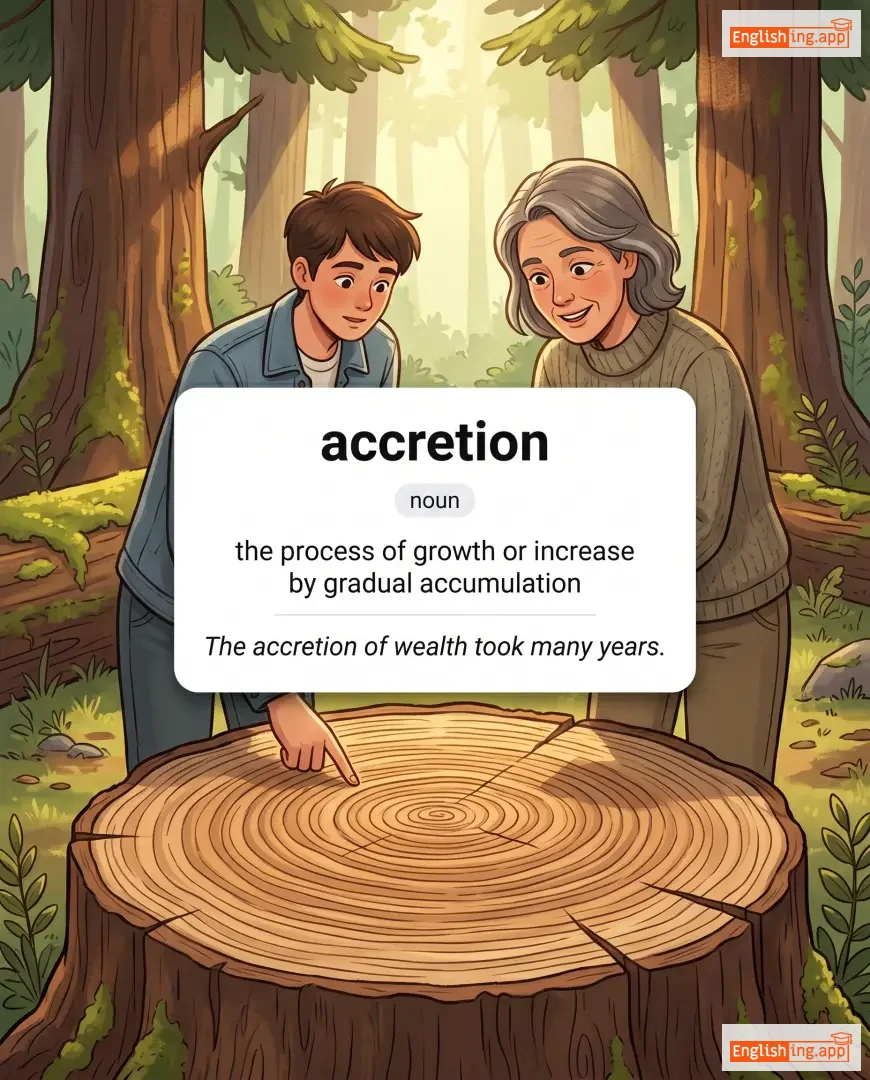
accretion definition card — visual illustration of the meaning
noun
/əˈkriːʃən/
徐々に蓄積 (jojoni chikuseki)

the process of growth or increase by gradual accumulation

"The accretion of wealth took many years."

"富の蓄積には多くの年がかかりました。" (Tomi no chikuseki ni wa ooku no toshi ga kakarimashita.)
accrue definition card — visual illustration of the meaning
verb
/əˈkruː/
積み立てる (tsumetateru)

to accumulate or receive over time, especially payments or benefits

"Interest will accrue on the savings account monthly."

"利息は毎月貯金口座に積み立てられます。" (Risoku wa maitsuki chokin kōza ni tsumetateraremasu.)
verb
/əˈkjuːmjəleɪt/
蓄積する (chikuseki suru)

to gather or collect things gradually over time

"She managed to accumulate a small fortune through wise investments."
"彼女は賢明な投資を通じて少しの富を積み上げることができました。" (Kanojo wa kenmei na tōshi o tōjite sukoshi no tomi o tsumiageru koto ga dekimashita.)
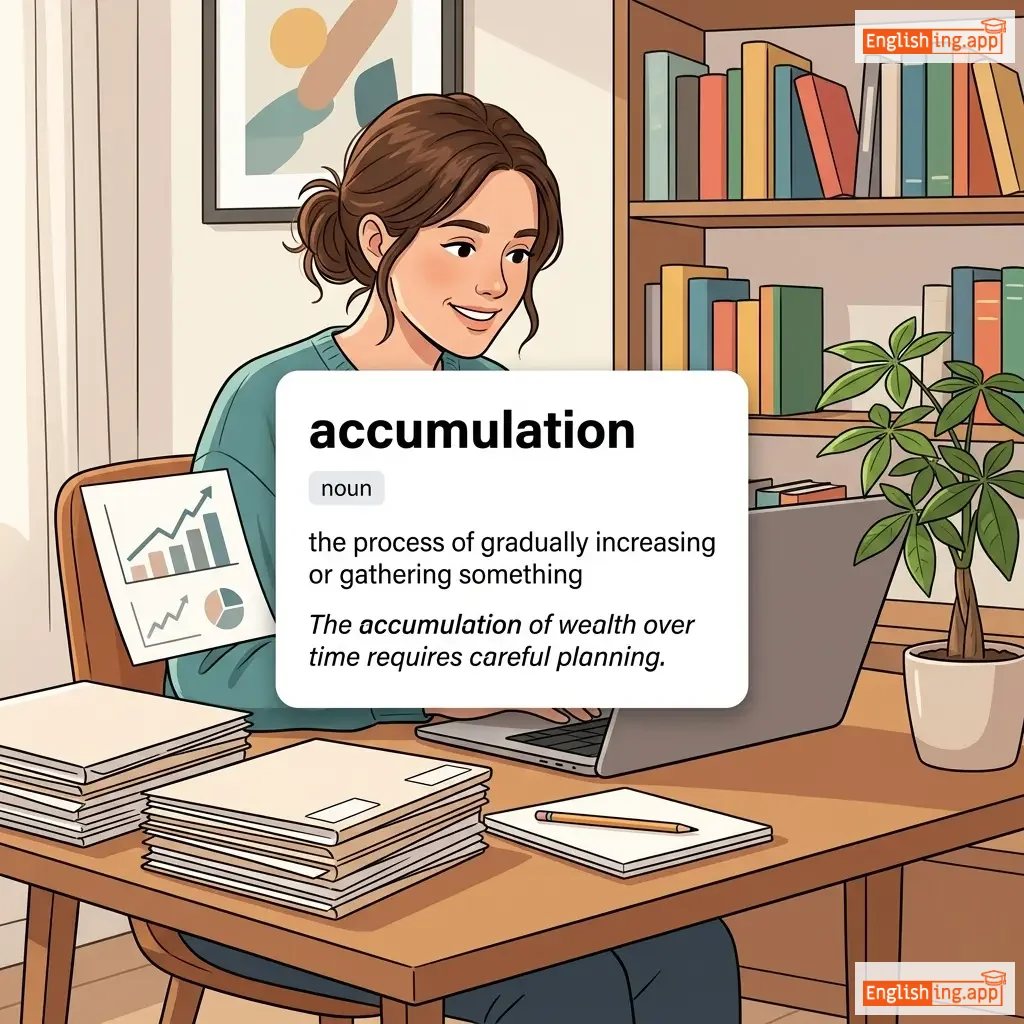
accumulation definition card — visual illustration of the meaning
noun
/əˌkjuːmjʊˈleɪʃən/
蓄積 (chikuseki)

the process of gradually increasing or gathering something

"The accumulation of wealth over time requires careful planning."

"時間の経過とともに富の蓄積には慎重な計画が必要です。" (Jikan no keika to tomo ni tomi no chikuseki ni wa shinchou na keikaku ga hitsuyou desu.)
noun
/ˈækjərəsi/
精度 (seido)

the quality or state of being correct or precise

"The accuracy of the report was confirmed by experts."

"報告書の精度は専門家によって確認されました。" (hōkokusho no seido wa senmonka ni yotte kakunin saremashita.)
adjective
/ˈæk.jʊ.rət/
正確 (seikaku)

Free from errors; correct and precise.

"The information provided in the report was accurate."

"レポートに提供された情報は正確でした。" (Repōto ni teikyō sareta jōhō wa seikaku deshita.)
adverb
/ˈækjʊrətli/
正確に (seikaku ni)

in a way that is correct, precise, and free from errors

"The data was collected accurately and analyzed thoroughly."

"データは正確に収集され、徹底的に分析されました。" (Dēta wa seikaku ni shūshū sare, tetteiteki ni bunseki saremashita.)
adjective
/əˈkɜːrsɪd/
呪われた (norowareta)

Doomed, detestable, or under a curse.

"The villagers avoided the accursed house on the hill."

"村人たちは丘の上の呪われた家を避けていた。" (Mura hitotachi wa oka no ue no norowareta ie o saketeta.)
noun
/ˌæk.jʊˈzeɪ.ʃən/
告発 (kokuhatsu)

A statement that someone has done something wrong or illegal.

"She made an accusation of theft against her colleague."

"彼女は同僚に対して窃盗の告発を行いました。" (Kanojo wa dōryō ni taishite settō no kokuhatsu o okonai mashita.)