語彙集

英単語辞書 | 単語の意味、定義、例文

noun
/ˌɑːrbɪˈtreɪʃən/
仲裁 (chuusai)

the process of resolving a dispute through an impartial third party whose decision is binding; formal judgment outside a court

"The contract requires arbitration to settle any disputes."

"契約では紛争を仲裁で解決することが定められています。" (keiyaku dewa funsou o chuusai de kaiketsu suru koto ga sadamerarete imasu)
noun
/ˈɑːrbər/
木々や蔓植物によって作られた日陰の庭の避難所 (kigi ya tsuru shokubutsu ni yotte tsukurareta hikage no niwa no hinansho)

a shady garden shelter formed by trees, climbing plants, or latticework

"They rested under the arbor covered with roses."
"彼らはバラで覆われたアーボーの下で休憩していました。" (Karera wa bara de owareta aboo no shita de kyukei shiteimashita.)
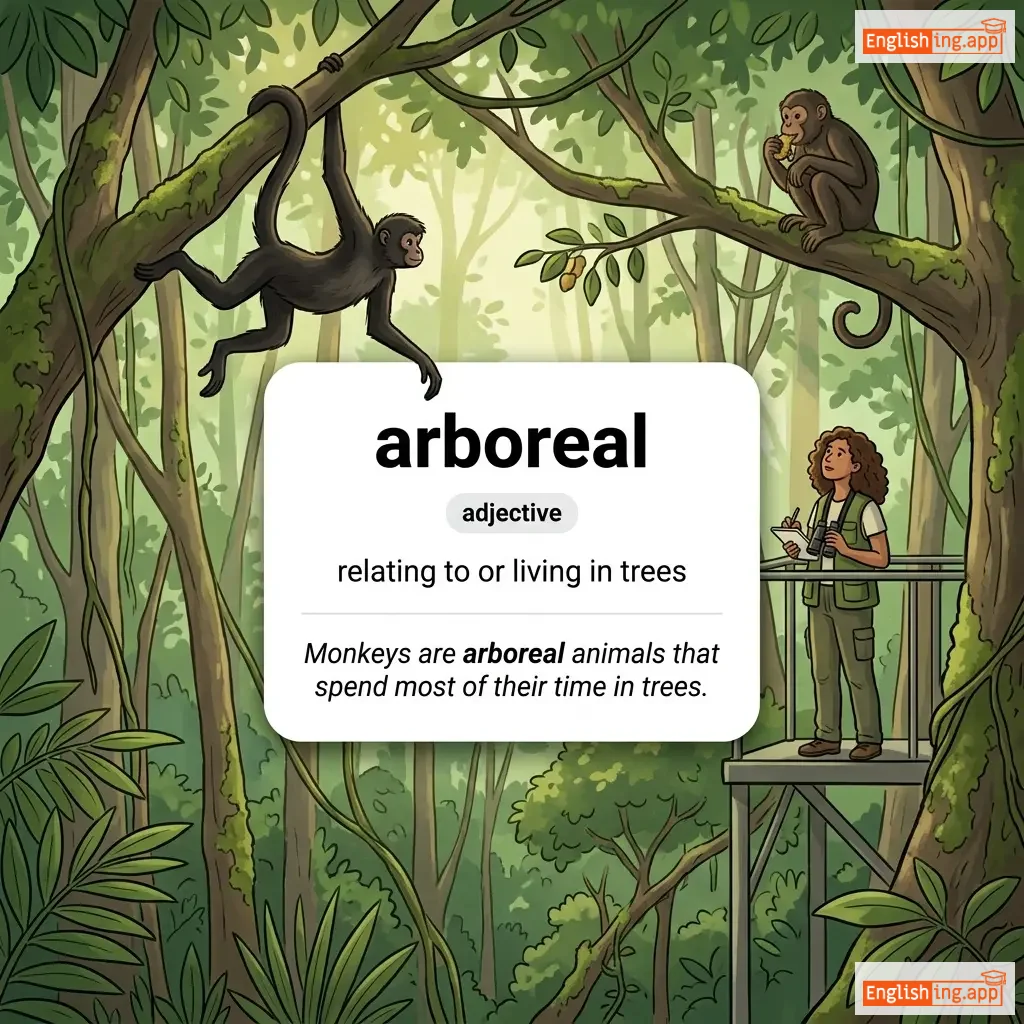
arboreal definition card — visual illustration of the meaning
adjective
/ɑːrˈbɔːriəl/
樹上性の (jujou-sei no)

relating to or living in trees

"Monkeys are arboreal animals that spend most of their time in trees."

"サルは木の中で大部分の時間を過ごす樹上性の動物です。" (Saru wa ki no naka de daibubun no jikan wo sugosu jujou-sei no doubutsu desu.)
adjective
/ˌɑːrbəˈrɛsənt/
樹木のような (jumoku no you na)

having the appearance or characteristics of a tree; tree-like

"The coral had an arborescent form that resembled a miniature forest."

"サンゴは、小さな森に似た樹木のような形をしていた。" (Sango wa, chiisana mori ni nita jumoku no you na katachi o shite ita.)
noun
/ˌɑːrbəˈriːtəm/
植物園 (shokubutsuen)

a place where trees, shrubs, and plants are grown for scientific study or public display

"We visited the city’s arboretum to learn about exotic trees."

"私たちはエキゾチックな木々について学ぶために、市の植物園を訪れました。" (Watashitachi wa ekizochikkuna kigi ni tsuite manabu tame ni, shi no shokubutsuen o otozuremashita.)
noun
/ˈɑːrbərɪˌkʌltʃər/
樹木栽培 (jumoku saibai)

the cultivation and management of trees and shrubs

"He studied arboriculture to improve urban green spaces."

"彼は都市の緑地を改善するために樹木栽培を学びました。" (Kare wa toshi no ryokuchi o kaizen suru tame ni jumoku saibai o manabimashita.)
noun
/ɑːrˈkeɪd/
アーケード (ākeedo)

a covered passage with arches along one or both sides; also a place with coin-operated games

"The children spent the afternoon playing games at the arcade."

"子供たちはゲームセンターで午後を過ごしました。" (Kodomotachi wa gēmu sentā de gogo o sugoshimashita.)
adjective
/ɑːrˈkeɪn/
難解な (nankai na)

understood by few; mysterious or secret

"The professor’s lecture was full of arcane details that only specialists could follow."

"教授の講義は専門家だけが理解できるようなアーケインな詳細で満ちていました。" (Kyōju no kōgi wa senmonka dake ga rikai dekiru yō na ākein na shōsai de michite imashita.)
prefix
/ɑːrtʃ-/
主要な / 極端な (shuyōna / kyokutanna)

a prefix meaning chief, principal, or extreme in rank, importance, or degree

"The word 'archenemy' uses the prefix 'arch-' to mean the main enemy."

"'アーチエネミー' という言葉は、'アーチ-' 接頭辞を使って、主要な敵を意味します。" ('āchi enemī' to iu kotoba wa, 'āchi-' settōji o tsukatte, shuyō na teki o imi shimasu.)
noun
/ˌɑːrkiˈɑːlədʒi/
考古学 (koukogaku)

the study of human history and prehistory through excavation and analysis of artifacts, monuments, and other physical remains

"She studied archaeology to learn about ancient civilizations."

"彼女は古代文明について学ぶために考古学を学びました。" (Kanojo wa kodai bunmei ni tsuite manabu tame ni koukogaku wo manabimashita.)
adjective
/ɑːrˈkeɪɪk/

very old or old-fashioned; belonging to an earlier time

"Some laws are considered archaic and no longer relevant."

noun
/ˈɑːrkeɪˌɪzəm/
古語 (kogo)

a word, expression, or style of language that is no longer in everyday use

"The poem is full of archaisms that give it an old-fashioned flavor."

"その詩は古語で満たされており、それが古風な味わいを与えています。" (Sono shi wa kogo de mitasarete ori, sore ga kofuu na ajiwai o ataete imasu.)
noun
/ˈɑːrkeɪndʒəl/

A high-ranking angel, often considered a chief messenger or leader among angels.

"Michael is often depicted as the most powerful archangel."

noun
/ˌɑːrtʃˈbɪʃəp/
大司教 (daishikyo)

A senior bishop in charge of an archdiocese in the Christian Church.

"The archbishop delivered a sermon to thousands of people."

"アーチビショップは何千人もの人々に説教をしました。" (Aachibisshop wa nanzen-nin mono hitobito ni sekkyo o shimashita.)
noun
/ˌɑːrtʃˈdiːkən/
大執事 (daishitsuji)

A senior clergyman in the Christian Church ranking below a bishop.

"The archdeacon assisted the bishop in administrative duties."
"アーチディーコンは行政業務で主教を支援した。" (Āchidīkon wa gyōsei gyōmu de shukyo o shien shita.)
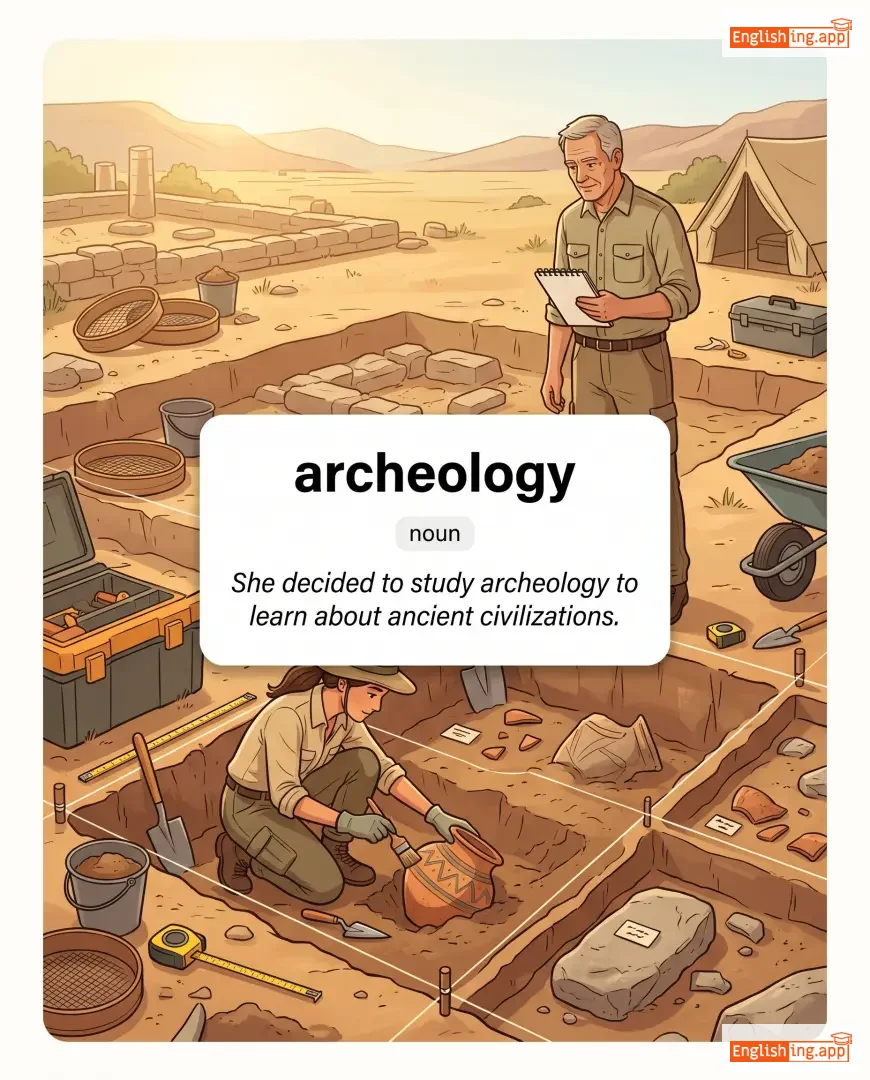
archeology definition card — visual illustration of the meaning
noun
/ˌɑːr.kiˈɑː.lə.dʒi/
考古学 (koukagaku)

the study of human history and prehistory through excavation and analysis of artifacts and structures

"She decided to study archeology to learn about ancient civilizations."

"彼女は古代文明について学ぶために考古学を学ぶことに決めました。" (Kanojo wa kodai bunmei ni tsuite manabu tame ni koukagaku o manabu koto ni kimemashita.)
archetype definition card — visual illustration of the meaning
noun
/ˈɑːrkɪtaɪp/
原型 (genkei)

The original model or perfect example from which others are copied or derived.

"He is the archetype of a successful entrepreneur."
"彼は成功した起業家の原型です。" (Kare wa seikō shita kigyōka no genkei desu.)
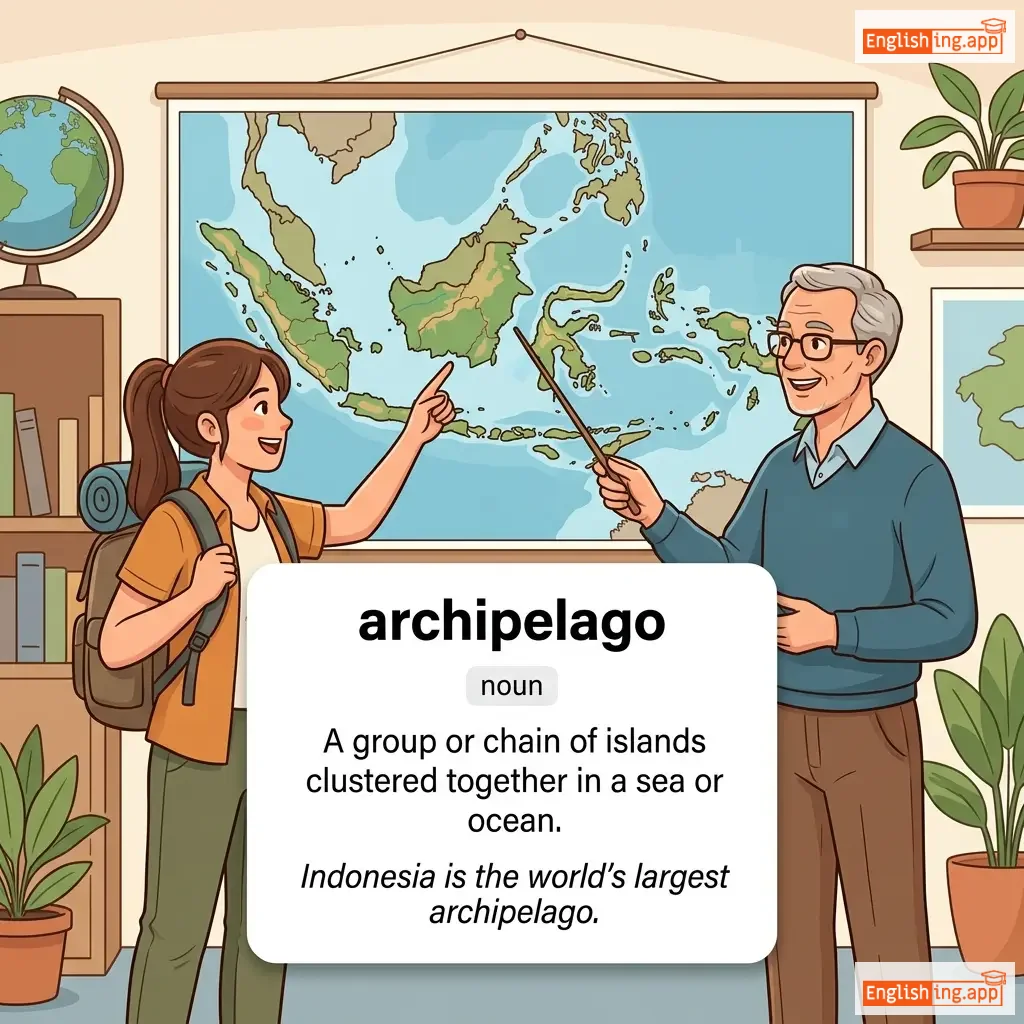
archipelago definition card — visual illustration of the meaning
noun
/ˌɑːrkəˈpɛləɡoʊ/
群島 (kunto)

A group or chain of islands clustered together in a sea or ocean.

"Indonesia is the world’s largest archipelago."

"インドネシアは世界最大の群島です。" (Indoneshia wa sekai saidai no kuntō desu.)
noun
/ˈɑː.kɪ.tekt/
建築家 (kenchikuka)

a person who designs buildings and oversees their construction

"The architect designed a modern office building."

"建築家は現代的なオフィスビルを設計しました。" (Kenchikuka wa gendaiteki na ofisubiru o sekkei shimashita.)
adjective
/ˌɑːrkɪˈtɛktʃərəl/
建築的な (kenchikuteki na)

relating to the design and style of buildings and structures

"The city is known for its beautiful architectural designs."
"その都市は美しい建築デザインで知られています。" (Sono toshi wa utsukushī kenchiku dezain de shirareteimasu.)
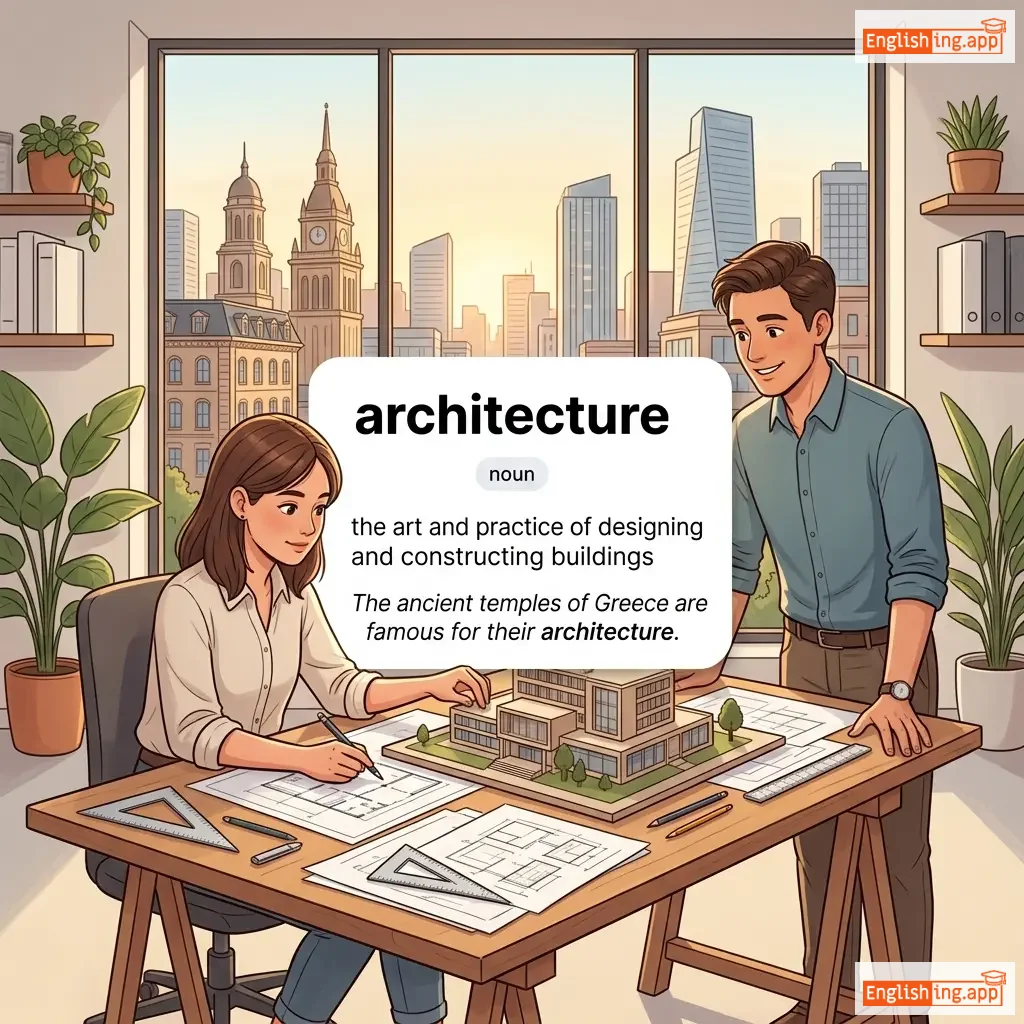
architecture definition card — visual illustration of the meaning
noun
/ˈɑːkɪˌtɛktʃər/
建築学 (kenchikugaku)

the art and practice of designing and constructing buildings

"The ancient temples of Greece are famous for their architecture."

"古代ギリシャの寺院はその建築学で有名です。" (Kodai Girisha no jiin wa sono kenchikugaku de yuumei desu.)
🗄️

archive

noun, verb
/ˈɑːrkaɪv/

A collection of historical documents or records; to store or preserve information for future use.

"The library decided to archive all the old manuscripts."

noun
/ˈɑːrkaɪvz/
アーカイブズ (ākaibuzu)

A place or collection where historical records and documents are stored.

"She visited the national archives to research her family history."

"彼女は家族の歴史を調べるために国立アーカイブズを訪れました。" (Kanojo wa kazoku no rekishi o shiraberu tame ni kokuritsu ākaibuzu o otozuremashita.)
adjective
/ˈɑːrdənt/
熱心な, 情熱的な (ardent)

Having or showing very strong feelings or passion.

"He is an ardent supporter of environmental protection."

"彼は環境保護の熱心な支持者です。" (Kare wa kankyō hogo no nesshin na shijisha desu.)
ardor definition card — visual illustration of the meaning
noun
/ˈɑːrdər/
情熱、熱意 (ardor)

Great enthusiasm or passion.

"She spoke with ardor about her new project."
"彼女は新しいプロジェクトについて情熱をもって話していました。" (Kanojo wa atarashī purojekuto ni tsuite jōnetsu o motte hanashite imashita.)
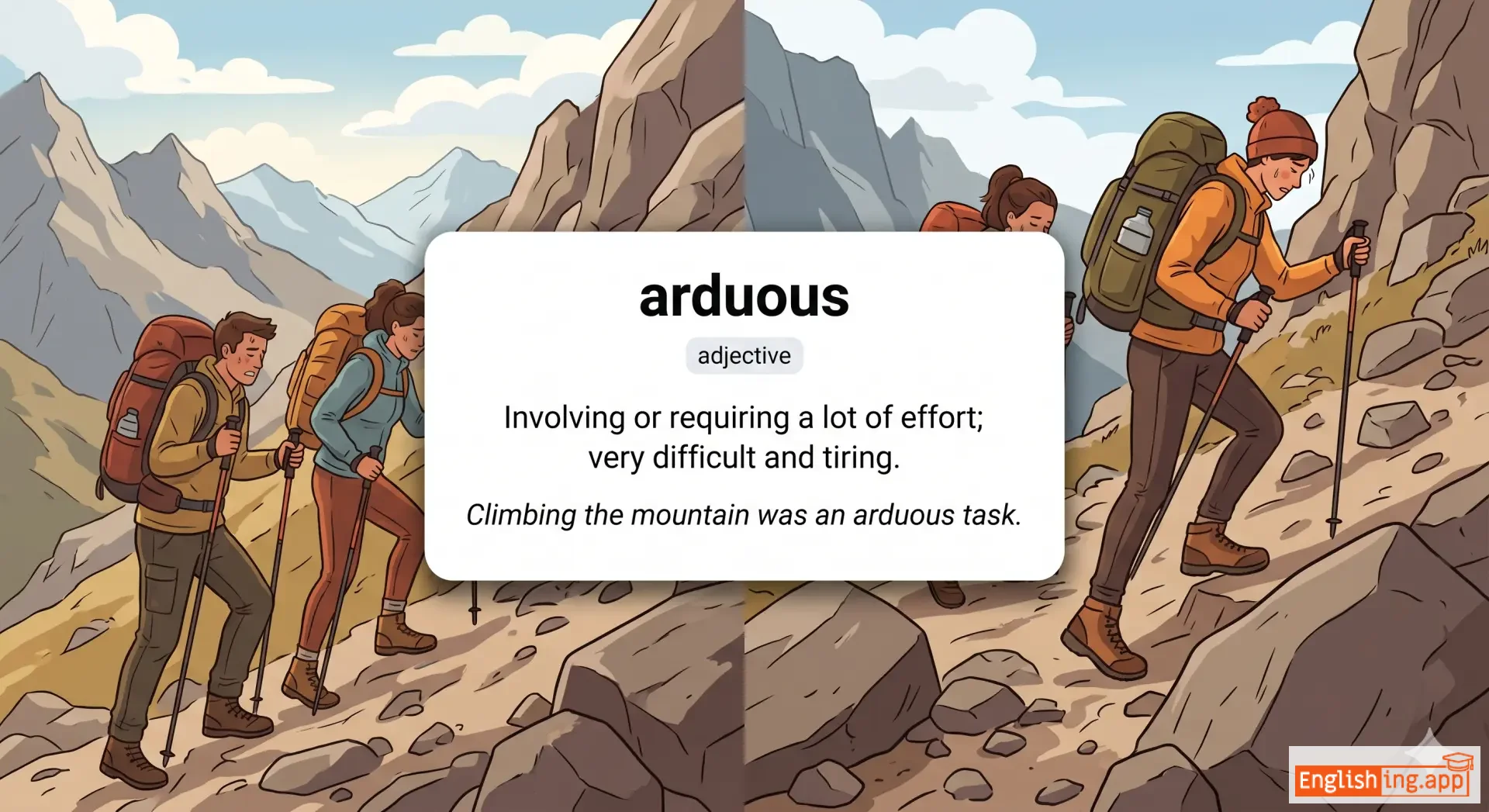
arduous definition card — visual illustration of the meaning
adjective
/ˈɑːrdʒuəs/
困難 (konnan)

Involving or requiring a lot of effort; very difficult and tiring.

"Climbing the mountain was an arduous task."

"山を登ることは困難な仕事だった。" (Yama o noboru koto wa konnan na shigoto datta.)
📍

area

noun
/ˈeə.ri.ə/

a particular region or space; the extent of a surface

"This area is known for its beautiful parks."

noun
/əˈriːnə/
アリーナ, 会場 (arīna, kaijō)

a large area surrounded by seats for sports, entertainment, or other events

"The basketball game will be held in the new arena downtown."

"バスケットボールの試合は市内中心部の新しいアリーナで行われます。" (Basukettobōru no shiai wa shinai chūshinbu no atarashī arīna de okonawaremasu.)
argot definition card — visual illustration of the meaning
noun
/ˈɑːrɡoʊ/
専門用語 (senmon yōgo)

the specialized vocabulary or jargon of a particular group, especially one with a common interest or occupation

"The thieves communicated in an argot that outsiders could not understand."

"泥棒たちは外部の人々が理解できないアルゴでコミュニケーションを取った。" (Dorobō-tachi wa gaibu no hitobito ga rikai dekinai argo de komyunikeeshon o totta.)
adjective
/ˈɑːrɡjuəbl/
議論の余地がある (giron no yochi ga aru)

open to debate or discussion; not certain and capable of being argued for or against

"It is arguable that technology has improved our quality of life."

"テクノロジーが私たちの生活の質を向上させたと言うのは議論の余地がある。" (tekunoroji ga watashitachi no seikatsu no shitsu o koujou saseta to iu no wa giron no yochi ga aru)
adverb
/ˈɑːɡjuːəbli/
おそらく (osoraku)

used to say that a statement is open to argument or is considered true by many people

"She is arguably the most talented player on the team."
"彼女はおそらくチームで最も才能のある選手だ。" (Kanojo wa osoraku chiimu de mottomo sainou no aru senshu da)
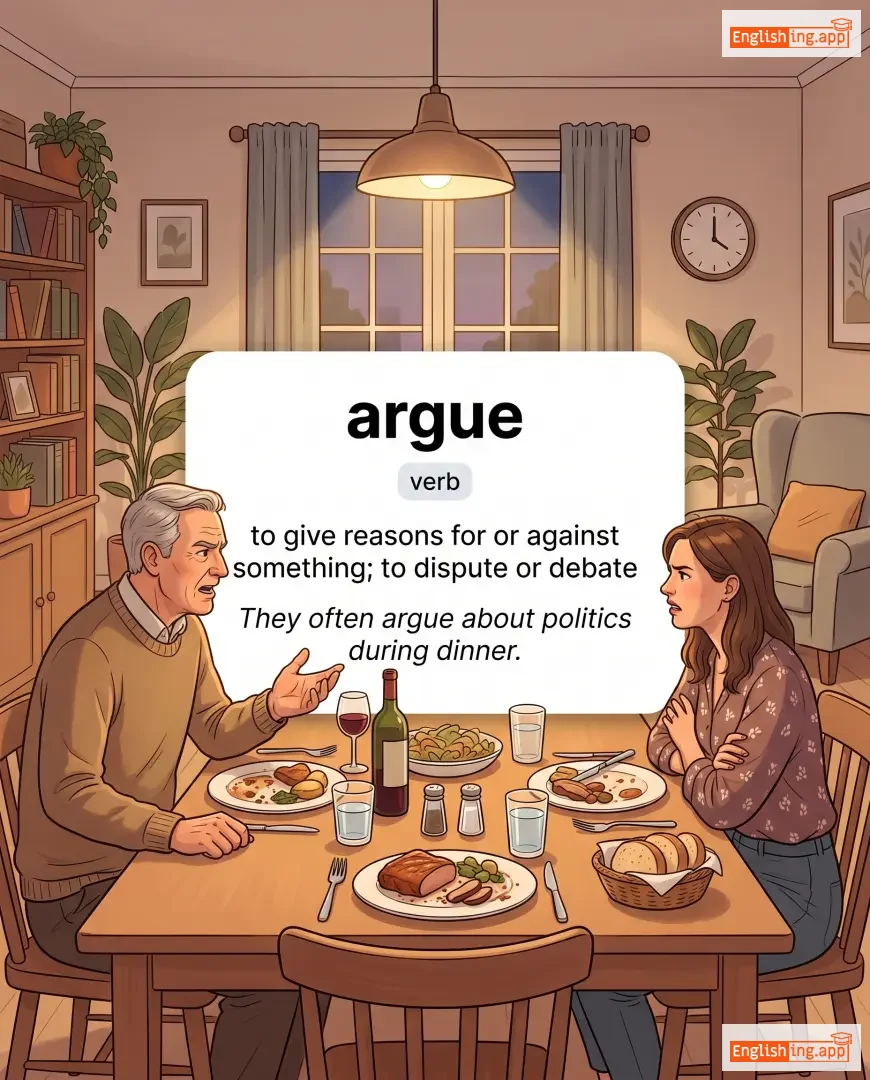
argue definition card — visual illustration of the meaning
verb
/ˈɑːrɡjuː/
議論する (giron suru)

to give reasons for or against something; to dispute or debate

"They often argue about politics during dinner."

"彼らは夕食時に政治についてよく議論します。" (Karera wa yūshoku-ji ni seiji ni tsuite yoku giron shimasu.)
argument definition card — visual illustration of the meaning
noun
/ˈɑːrɡjumənt/
議論, 論争 (giron, ronsou)

a disagreement, or a reason given to support or oppose an idea

"They had a heated argument about money."

"彼らはお金について激しい議論をしました。" (Karera wa okane ni tsuite hageshii giron o shimashita.)
noun
/ˈɑːriə/
ソロの歌唱曲 (soro no kashōkyoku)

a solo vocal piece with instrumental accompaniment, typically in an opera

"The soprano performed a moving aria during the second act."

"ソプラノは第2幕で感動的なアリアを披露しました。" (Soprano wa dai 2 maku de kandō-teki na aria o hirō shimashita.)
adjective
/ˈærɪd/
乾燥した (kansou shita)

extremely dry; lacking in interest or excitement

"The desert is known for its arid climate."
"砂漠はその乾燥した気候で知られています。" (Sabaku wa sono kansou shita kikō de shirareteimasu.)
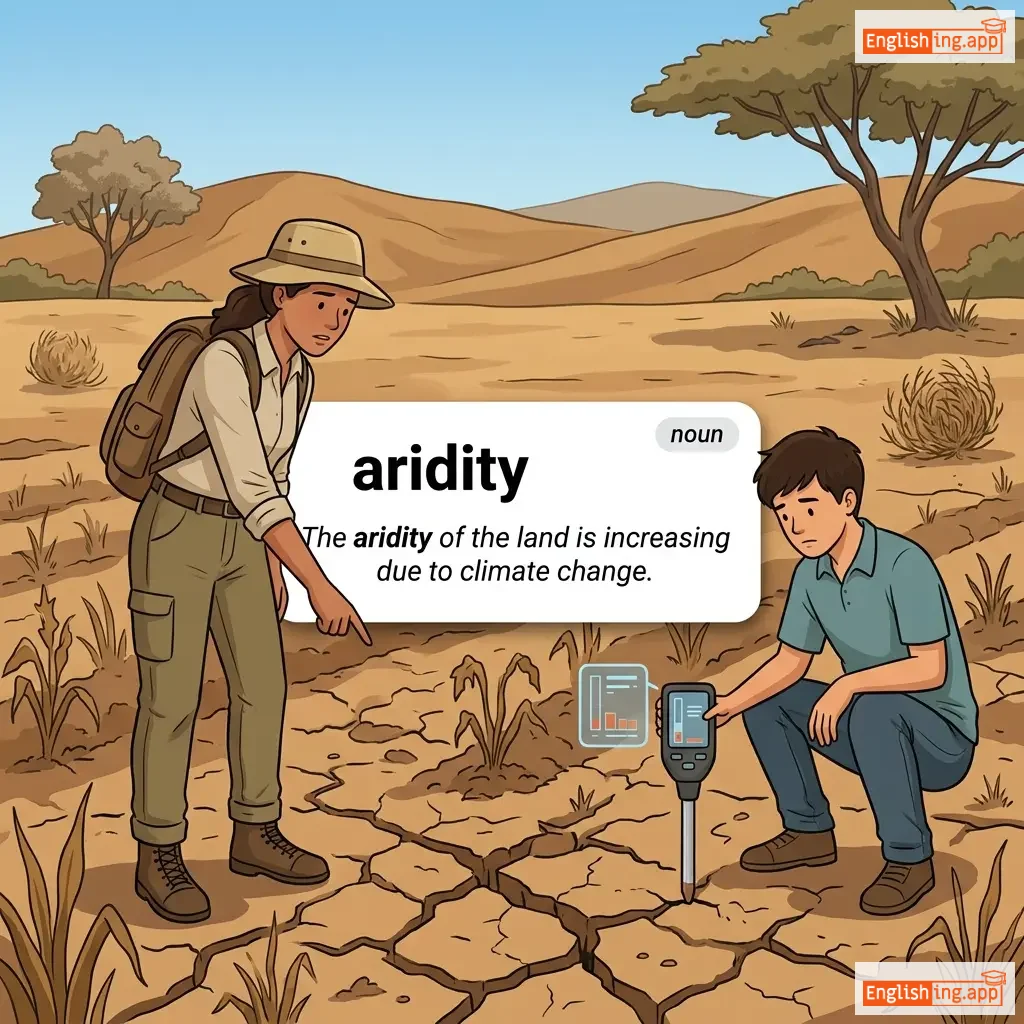
aridity definition card — visual illustration of the meaning
noun
əˈrɪd.ɪ.ti
干ばつ (kanbatsu)

The state of being extremely dry, especially having insufficient rainfall to support vegetation.

"The aridity of the land is increasing due to climate change."

"気候変動の影響で土地の干ばつが進行しています。" (Kikō hendō no eikyō de tochi no kanbatsu ga shinkō shiteimasu.)
verb
/əˈraɪz/
現れる (arawareru)

to begin to exist or to happen

"Problems may arise if you don't plan ahead."

"計画を立てないと問題が現れることがあります。" (Keikaku o tatenai to mondai ga arawareru koto ga arimasu.)
noun
/ˌærɪˈstɑːkrəsi/
貴族階級 (kizoku kaikyū)

a class of people holding exceptional rank and privileges, especially hereditary nobility

"The aristocracy often had influence over political decisions."

"貴族階級はしばしば政治的決定に影響を与えた。" (Kizoku kaikyū wa shibashiba seijiteki kettei ni eikyō o ataeta.)
noun
/ˈærɪstəkræt/
アリストクラット (arisutokuratto)

a member of the aristocracy; a nobleman or woman

"The aristocrat lived in a lavish mansion."

"アリストクラットは豪華な邸宅に住んでいました。" (Arisutokuratto wa gouka na teitaku ni sunde imashita.)
adjective
/ˌærɪˈstɒkrætɪk/
アリストクラティック; 上流階級の (arisutorakutikku)

noble; having the manners of the upper class

"She had an aristocratic bearing that commanded respect."

"彼女はアリストクラティックな態度を持っていて、尊敬を集めていた。" (Kanojo wa arisutorakutikku na taido o motte ite, sonkei o atsumete ita.)
noun
/ɑːrm/
(ude)

the part of the body from the shoulder to the hand; also a branch or division of an organization

"She broke her arm while playing football."

"彼女はサッカーをしているときに腕を折った。" (kanojo wa sakkaa o shite iru toki ni ude o otta.)
noun
/ɑːrˈmɑːdə/
戦艦艦隊 (senkan kantai)

A large fleet of warships.

"The Spanish Armada sailed against England in 1588."

"スペインのアルマダは1588年にイギリスに対して出航した。" (Supein no Arumada wa 1588-nen ni Igirisu ni taishite shukkō shita.)
adjective
/ɑːrmd/
武装した (busou shita)

equipped with or carrying weapons

"The bank was robbed by armed men."
"銀行は武装した男たちに襲われた。" (Ginkou wa busou shita otoko-tachi ni osowareta.)
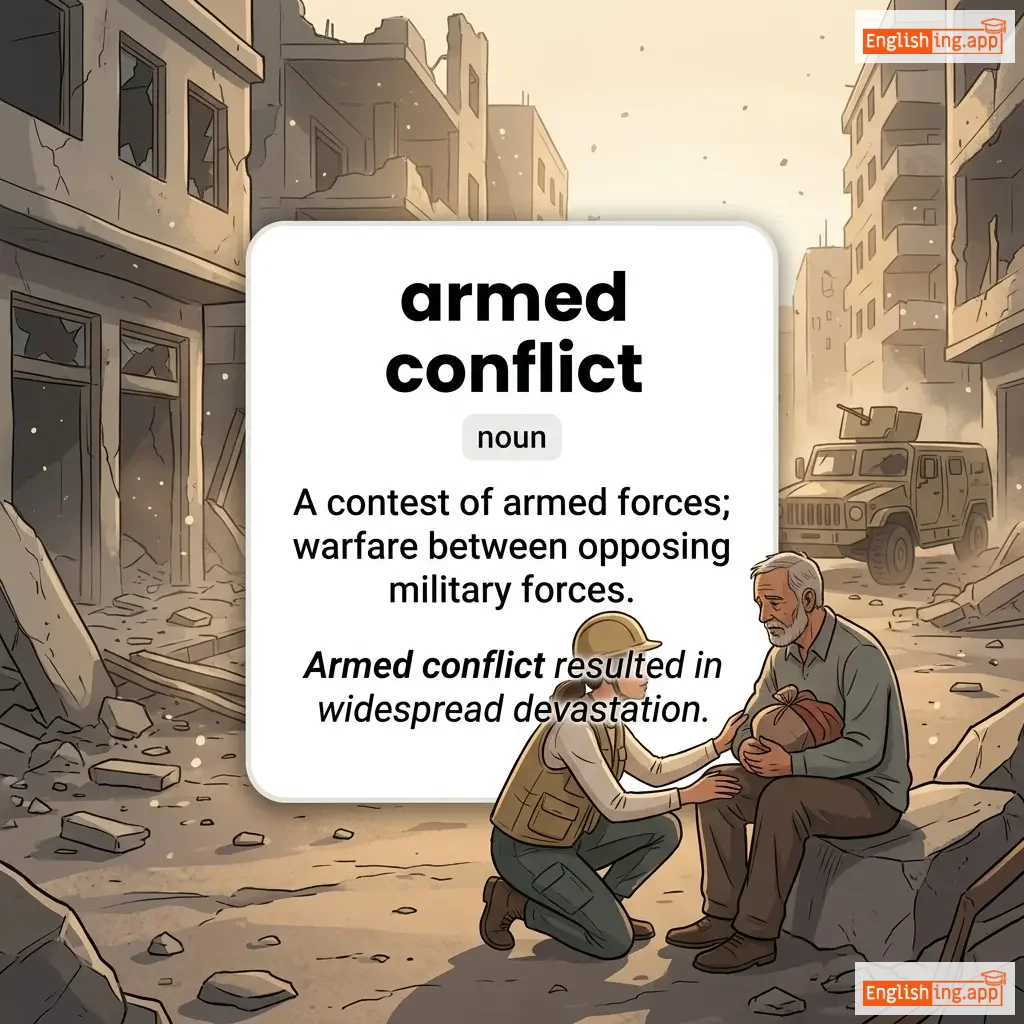
armed conflict definition card — visual illustration of the meaning
noun
ɑːmd ˈkɒn.flɪkt
武装紛争 (busou funsou)

A contest of armed forces; warfare between opposing military forces.

"Armed conflict resulted in widespread devastation."

"武装紛争は広範な破壊を引き起こしました。" (Busou funsou wa kouhan na hakai o hikiokoshimashita.)
noun
/ˈɑːrmfʊl/
腕いっぱい (ude ippai)

As much as can be carried in one or both arms.

"She carried an armful of books into the library."

"彼女は図書館に腕いっぱいの本を持っていった。" (Kanojo wa toshokan ni ude ippai no hon o motte itta.)
noun
/ˈɑːm.lət/
アームレット (armlet)

a band worn around the upper arm as an ornament

"The traditional dancer wore golden armlets that gleamed in the spotlight."

"伝統的なダンサーは、スポットライトの中で輝く金色のアームレットを着けていました。" (dentō-teki na dansā wa, supotto raito no naka de kagayaku kin'iro no āmuretto o tsuketeimashita.)
noun
/ˈɑːrməri/
武器庫 (bukiko)

A place where weapons are stored; a supply of resources or skills.

"The soldiers kept their weapons in the armory."

"兵士たちは武器を武器庫に保管していた。" (Heishi-tachi wa buki o bukiko ni hokan shite ita.)
noun
/ˈɑːr.mər/
(yoroi)

protective covering worn by soldiers; metal plating for military vehicles

"The knight wore heavy armour to protect himself in battle."

"騎士は戦いの中で自分を守るために重い鎧を着ていました。" (kishi wa tatakai no naka de jibun o mamoru tame ni omoi yoroi o kite imashita.)
noun
/ˈɑːrm.pɪt/
脇の下 (waki no shita)

the hollow area under the arm where it joins the shoulder

"He applied deodorant to his armpit."

"彼は脇の下にデオドラントを塗った。" (kare wa waki no shita ni deodoranto o nuttā)
noun
/ɑːrmz/
武器 / 腕 (buki / ude)

weapons and ammunition; or the upper limbs of the human body

"The country decided to reduce its stock of arms."

"その国は武器の在庫を減らすことに決めました。" (Sono kuni wa buki no zaiko o herasu koto ni kimemashita.)