

The Detective's Dilemma
Detective Arman was talking to his client. The case was quite complicated. A wealthy adult had died, and the police were passing it off as a natural death. But Arman's agency believed it was a crime. Arman went to the scene and found some evidence that the police had failed to detect. He called his agent and said, 'I'm sure this is a murder.' His agent agreed with him. Going deeper into the investigation, Arman learned that everyone in the deceased's family was accusing each other. At one point, a family member admitted to being present at the time of the incident. Arman decided to arrest him. But his gut told him that the real killer was still apart from the scene. He understood that if he blamed the wrong person, the real culprit would escape. Arman had to find the end of this deadly game.
Upgrade to Access All Vocabulary
Get unlimited access to all vocabulary items with Pro membership
Upgrade to ProTranslation
Past
Past Participle
Third Person Singular
Gerund
Meaning
Example Sentence
Example Sentence Translation
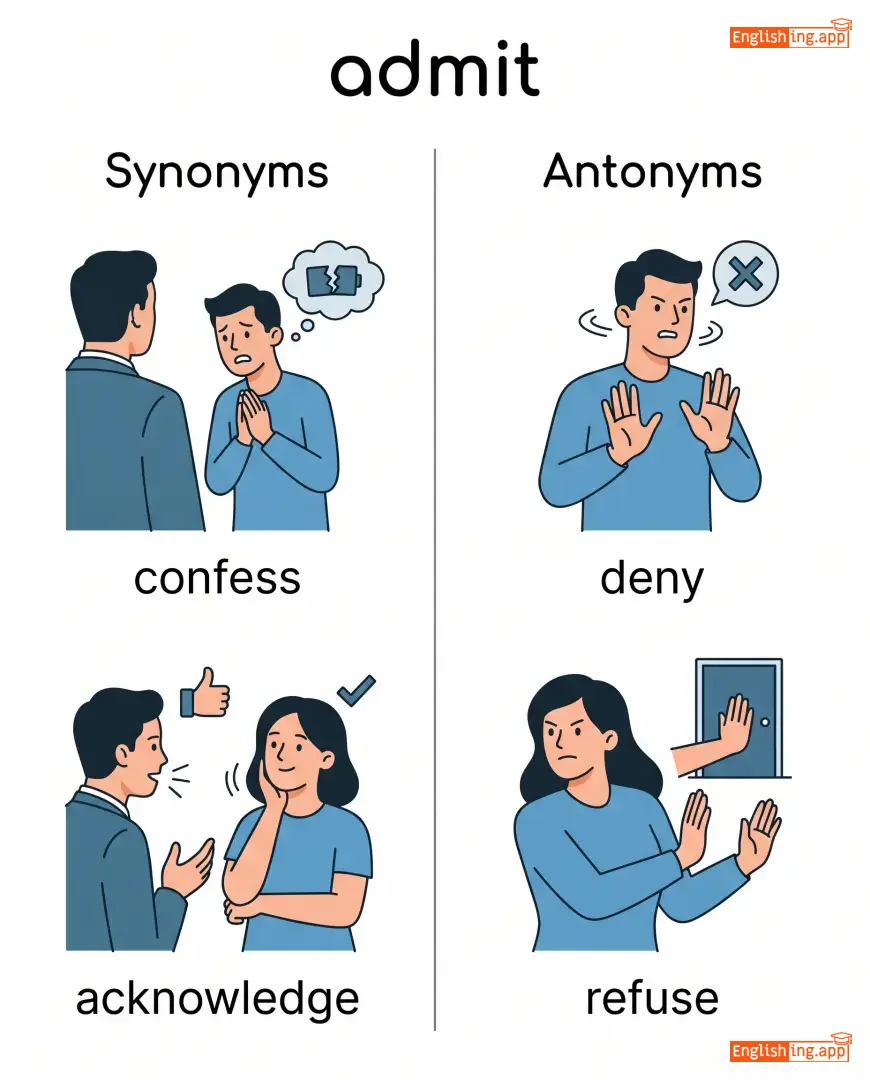
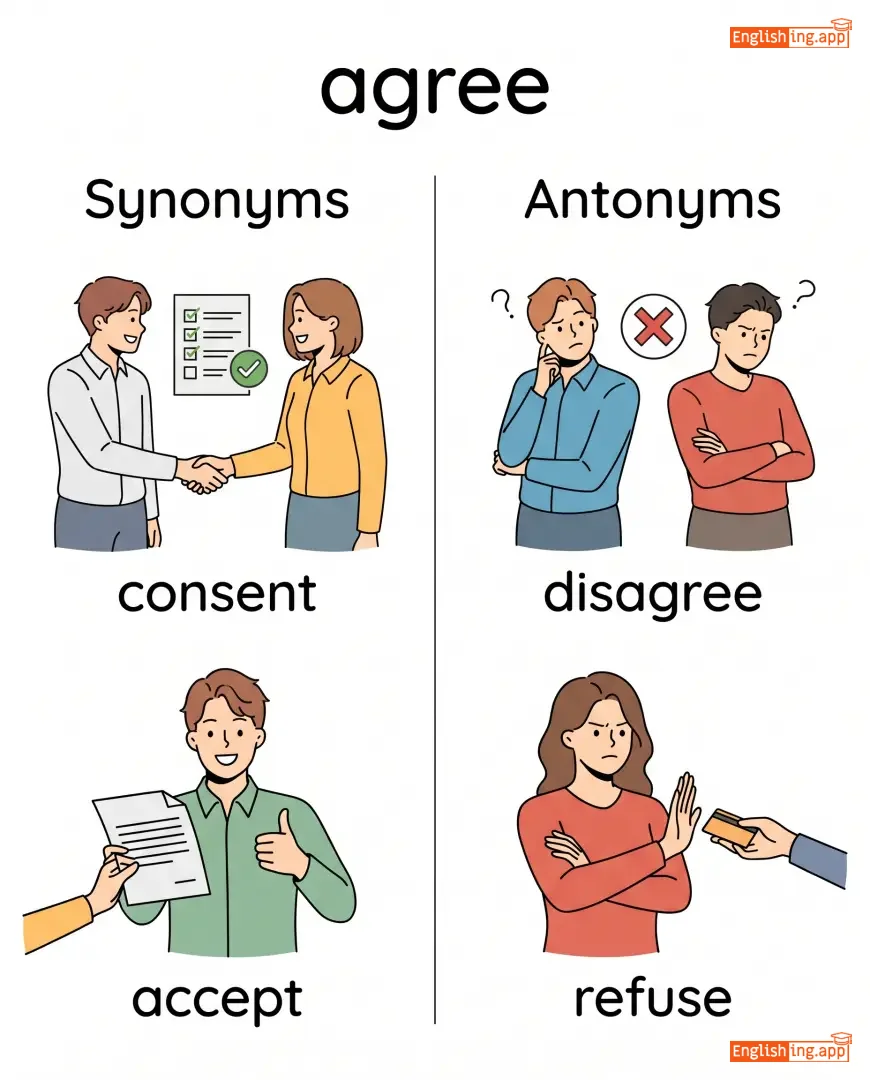
Synonyms
Antonyms
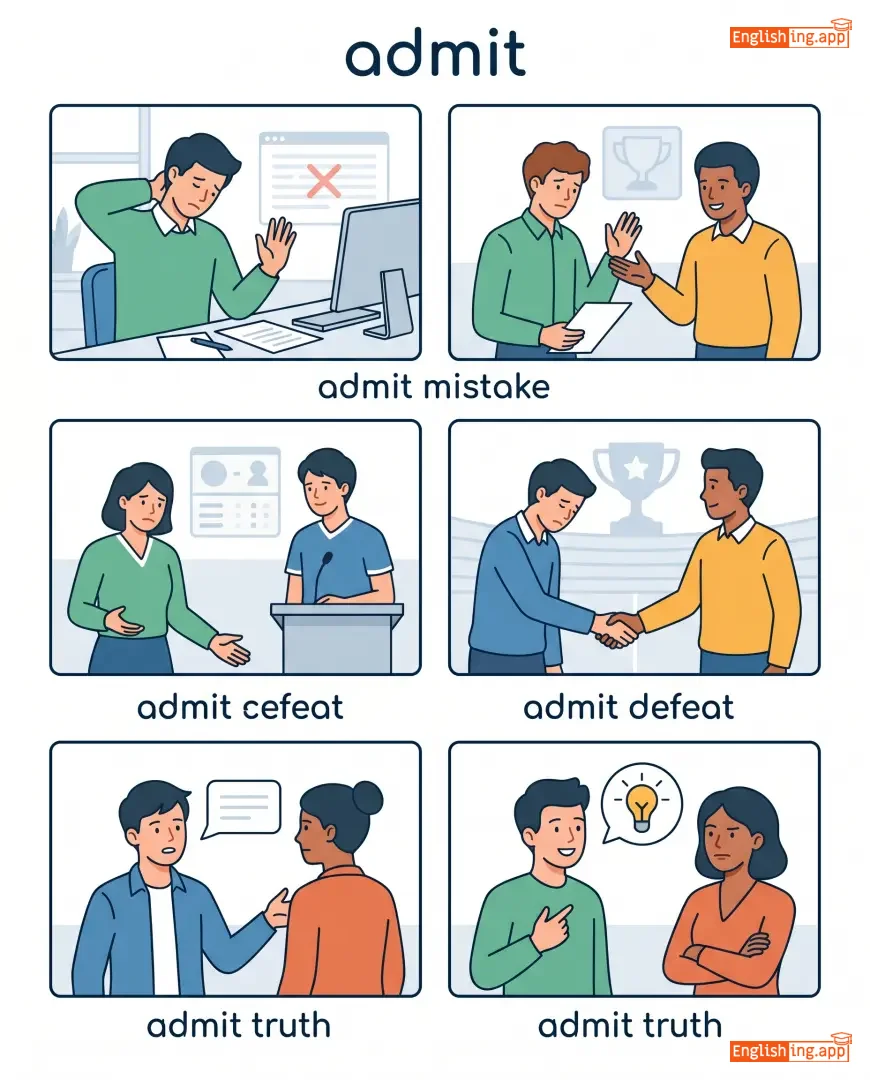
Collocations
Mnemonic
Swipe left or right, or use the buttons. Tap image to zoom.
Upgrade to Access All Sentences
Get unlimited access to all sentences with Pro membership
Upgrade to ProExample Sentence Translation
Word
The Detective's Dilemma - Mask Toggle
|
Emoji
|
Word | Images | Past | Past Participle | Third Person Singular | Gerund | Meaning | Example Sentence | Example Expression | Example Expression Meaning | Synonyms | Antonyms | Collocations |
|---|---|---|---|---|---|---|---|---|---|---|---|---|---|
|
#0
👉
|
/əˈkjuːz/
verb
••••••
|
|
accused
••••••
|
accused
••••••
|
accuses
••••••
|
accusing
••••••
|
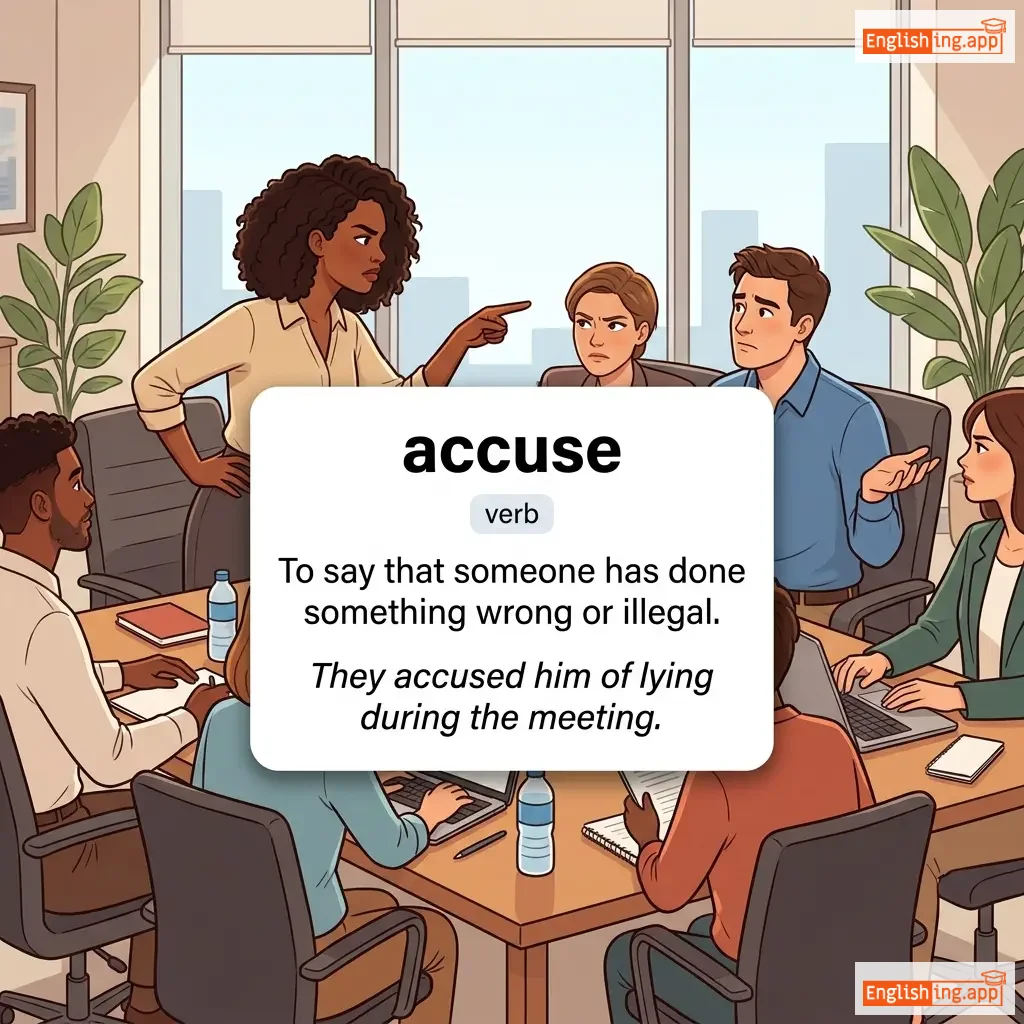
To say that someone has done something wrong or illegal.
••••••
|
They accused him of lying during the meeting. |
accuse someone falsely |
Blame someone without evidence.
••••••
|
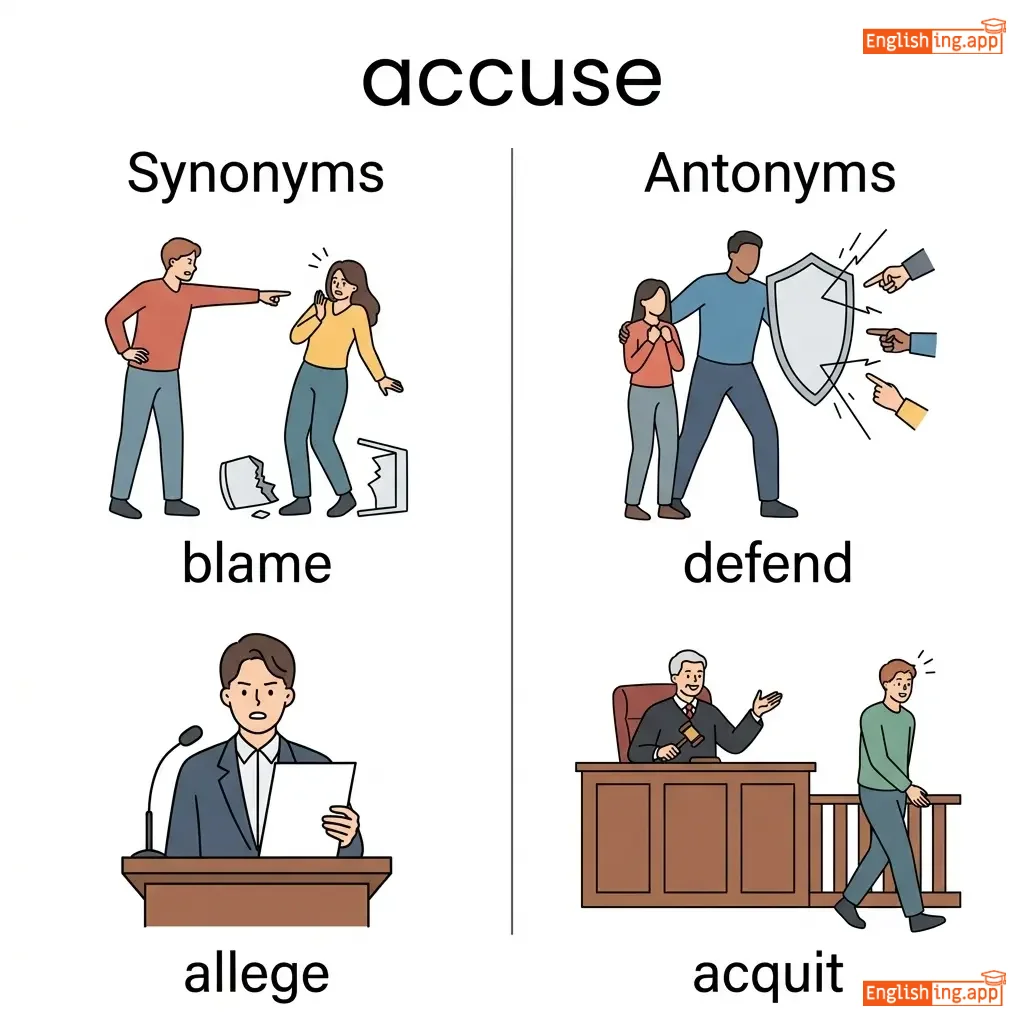
blame, allege, charge, indict
••••••
|
defend, acquit
••••••
|
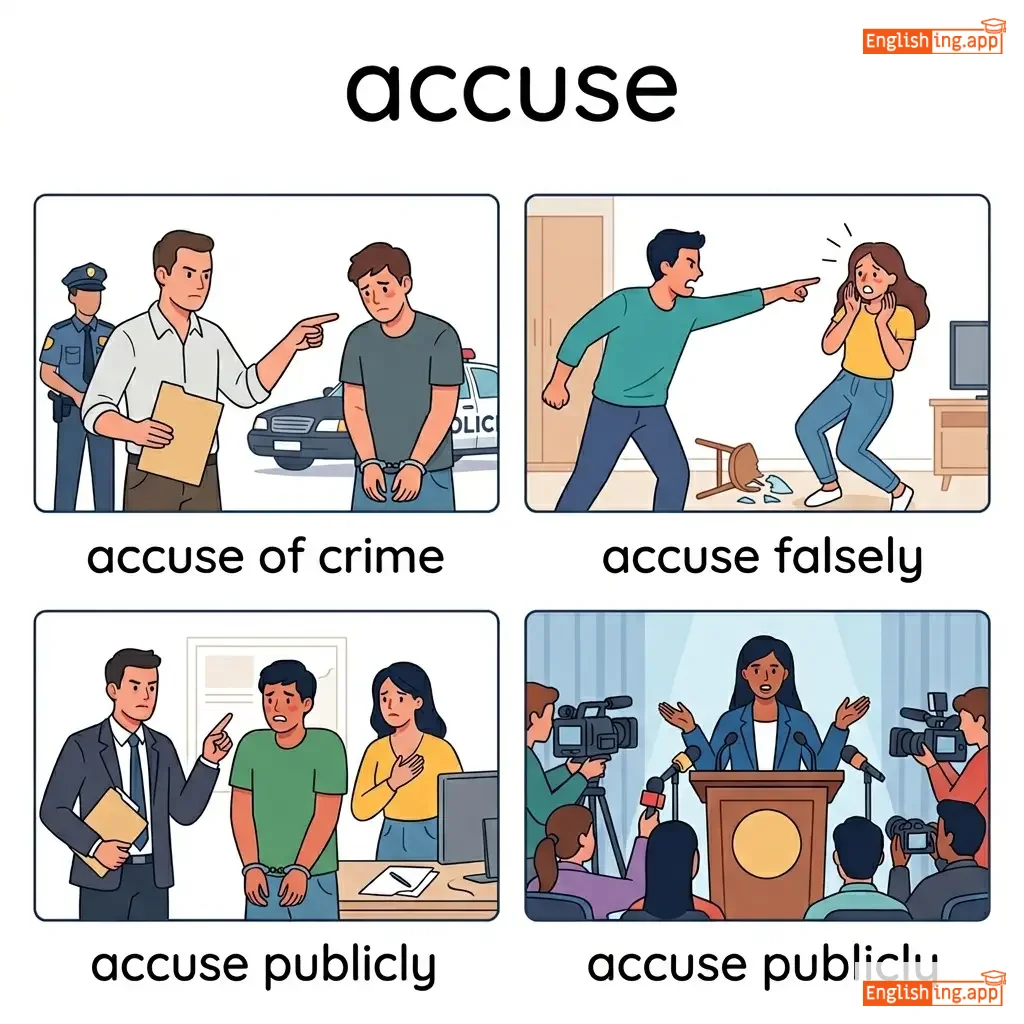
accuse of crime, accuse falsely, accuse publicly
••••••
|
|
#0
🙋
|
/ədˈmɪt/
verb
••••••
|
|
admitted
••••••
|
admitted
••••••
|
admits
••••••
|
admitting
••••••
|
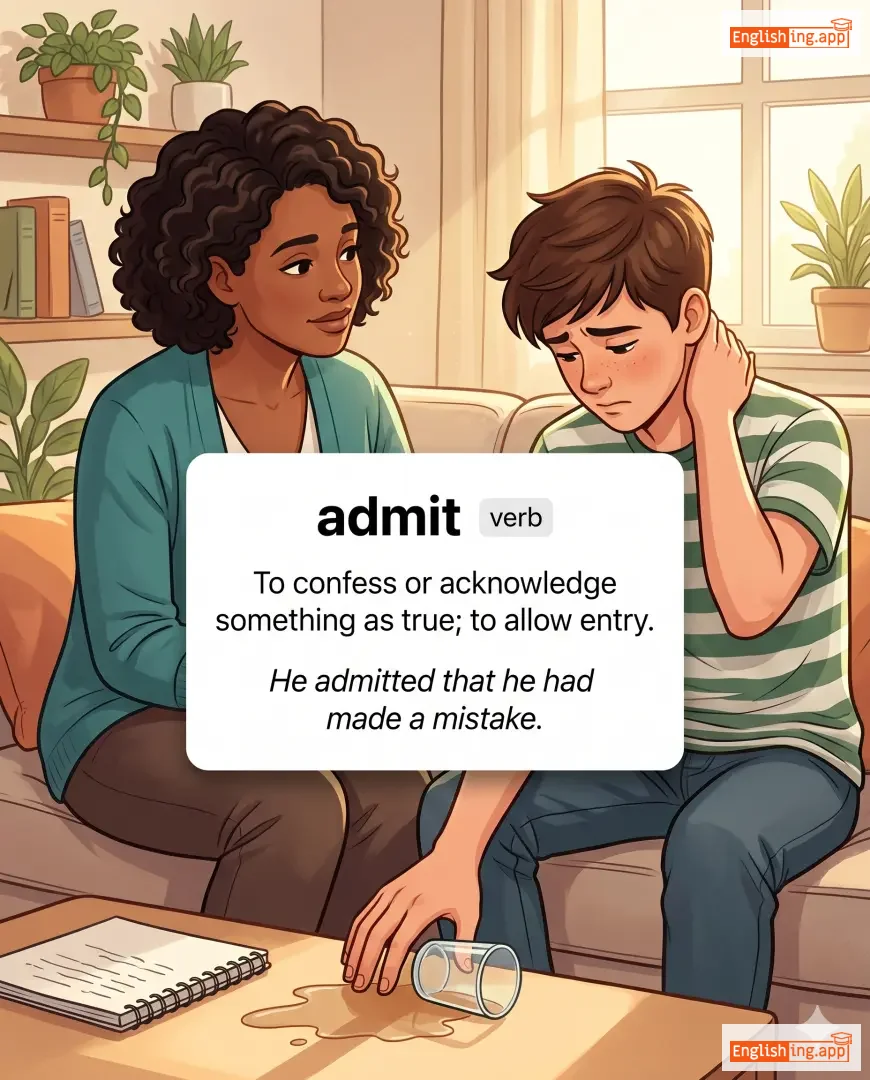
To confess or acknowledge something as true; to allow entry.
••••••
|
He admitted that he had made a mistake. |
admit defeat |
To accept that you have failed.
••••••
|
confess, acknowledge, accept, allow, grant
••••••
|
deny, refuse, reject
••••••
|
admit mistake, admit defeat, admit truth, admit into
••••••
|
|
#0
🧑
|
/ˈædʌlt/ or /əˈdʌlt/
noun
••••••
|
- •••••• | - •••••• | - •••••• | - •••••• | - •••••• |
A fully grown or developed person; mature.
••••••
|
Children must be accompanied by an adult. |
young adult |
A person in their late teens or early twenties.
••••••
|
grown-up, mature person, elder, senior
••••••
|
child, minor, infant
••••••
|
adult education, adult content, adult life, adult supervision
••••••
|
|
#0
🏢
|
/ˈeɪ.dʒən.si/
noun
••••••
|
- •••••• | - •••••• | - •••••• | - •••••• | - •••••• |
An organization or business that provides a particular service.
••••••
|
She works at a travel agency. |
advertising agency |
A company that creates and manages advertisements for clients.
••••••
|
organization, firm, bureau, office, service
••••••
|
individual, client, customer
••••••
|
government agency, real estate agency, news agency, travel agency
••••••
|
|
#0
🕵️
|
/ˈeɪ.dʒənt/
noun
••••••
|
- •••••• | - •••••• | - •••••• | - •••••• | - •••••• |
A person who acts on behalf of another person or organization.
••••••
|
The real estate agent showed us several houses. |
secret agent |
A spy working for a government or organization.
••••••
|
representative, delegate, envoy, broker, spy
••••••
|
principal, client, customer
••••••
|
travel agent, real estate agent, sports agent, insurance agent
••••••
|
|
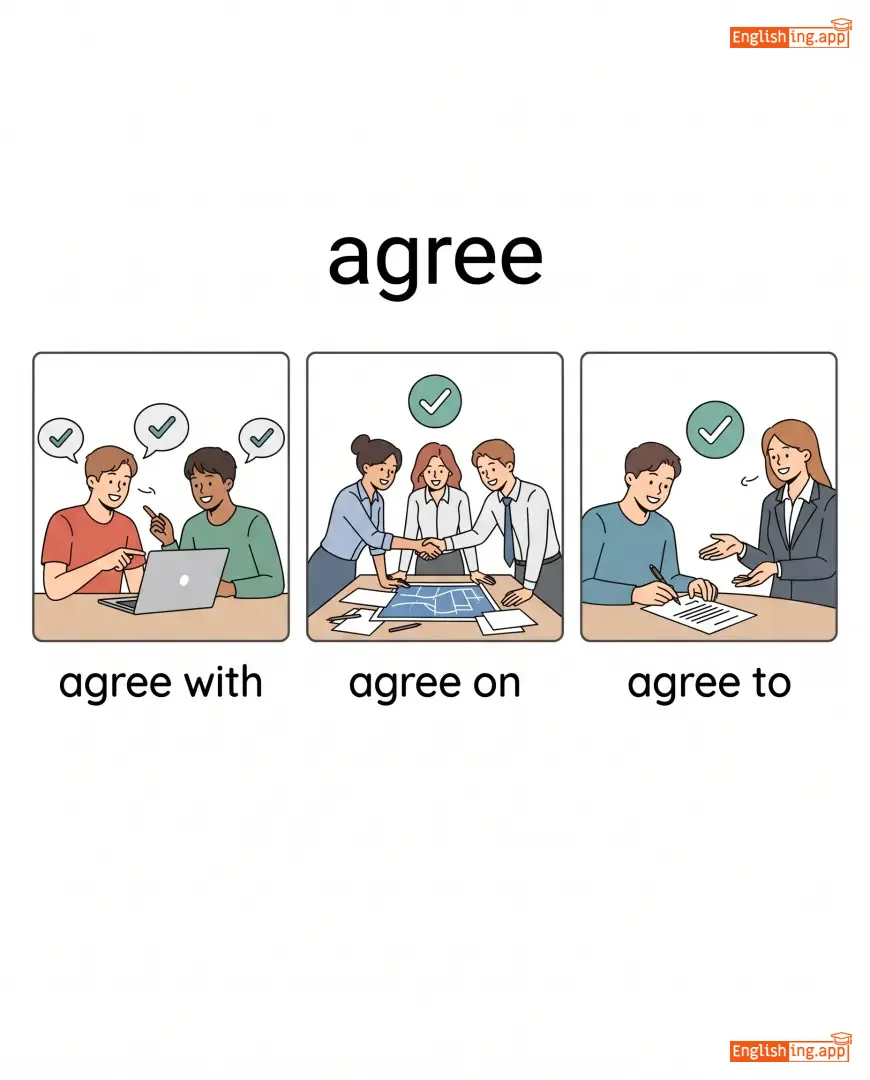
#0
👍
|
/əˈɡriː/
verb
••••••
|
|
agreed
••••••
|
agreed
••••••
|
agrees
••••••
|
agreeing
••••••
|
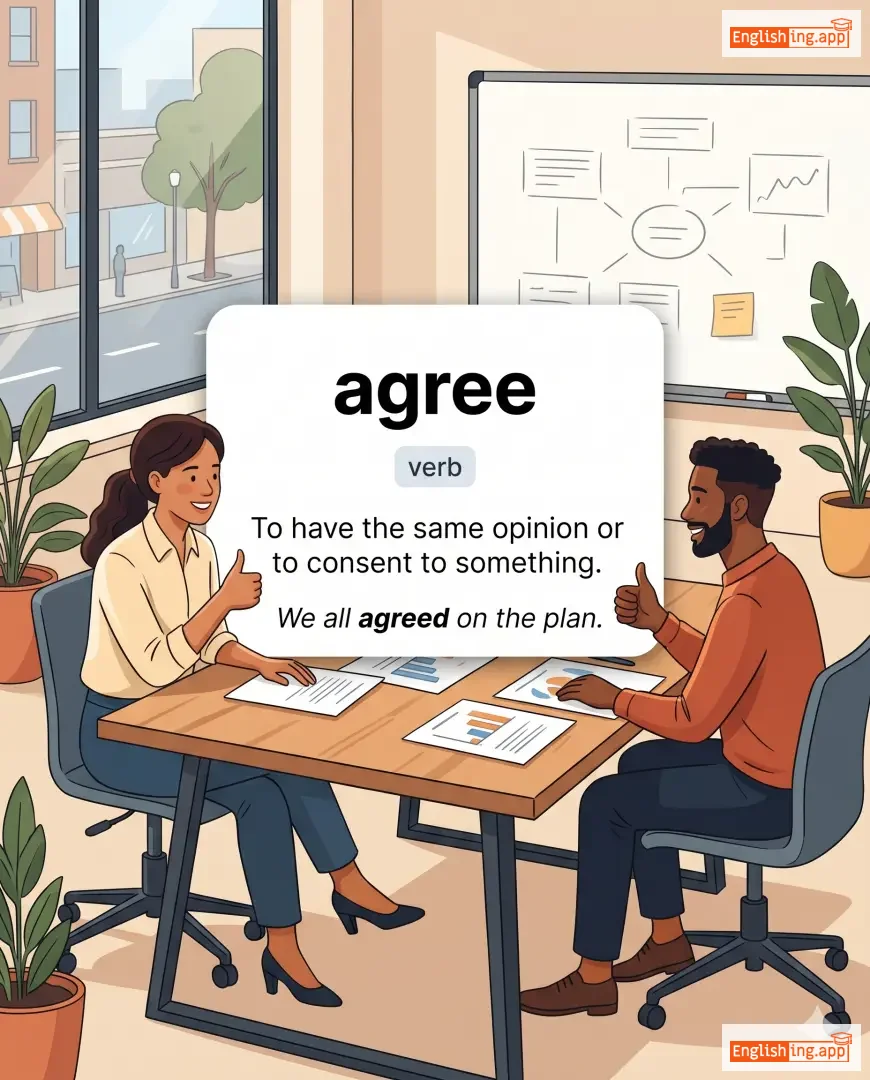
To have the same opinion or to consent to something.
••••••
|
We all agreed on the plan. |
agree to disagree |
To accept different opinions without conflict.
••••••
|
consent, accept, approve, concur, assent
••••••
|
disagree, refuse, oppose
••••••
|
agree with, agree on, agree to, strongly agree
••••••
|
|
#0
↔️
|
/əˈpɑːrt/
adverb
••••••
|
- •••••• | - •••••• | - •••••• | - •••••• | - •••••• |
separated by distance or time; into pieces
••••••
|
They live miles apart from each other. |
fall apart |
to break into pieces or fail completely
••••••
|
separately, away, aside, alone, divided
••••••
|
together, close
••••••
|
miles apart, set apart, apart from, fall apart
••••••
|
|
#0
🚓
|
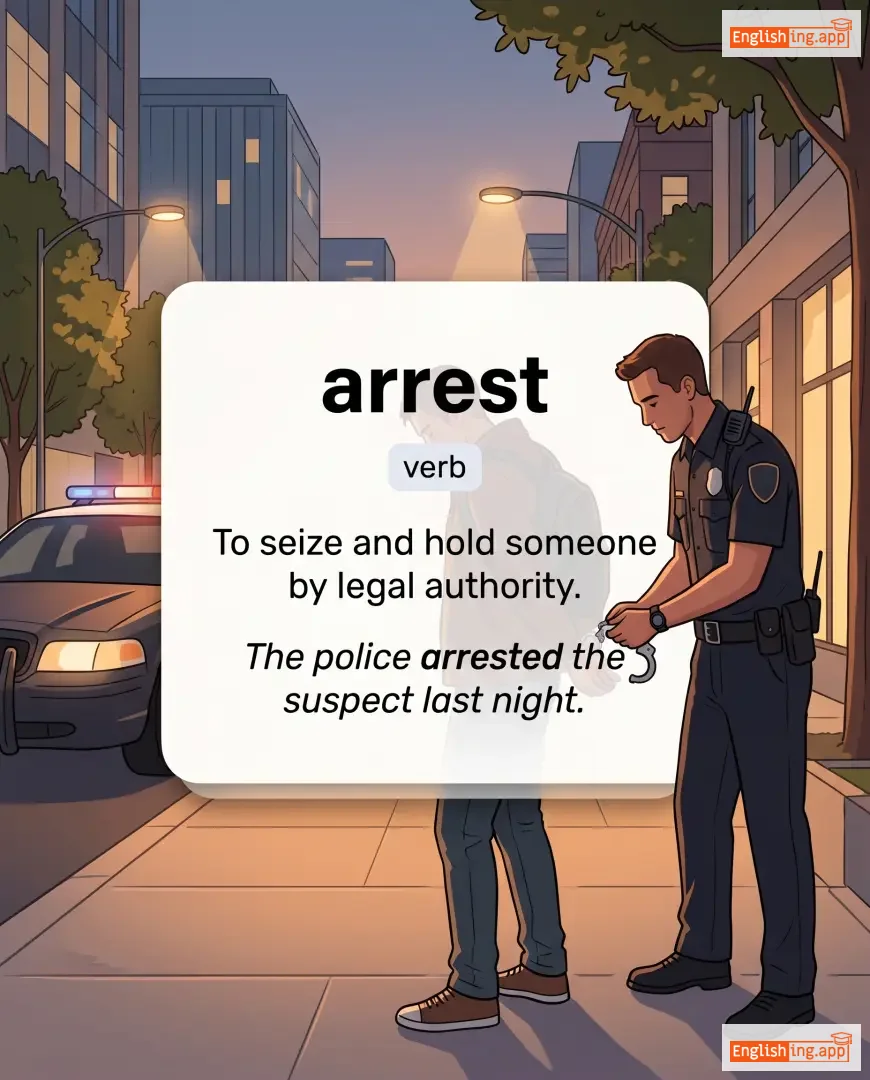
/əˈrɛst/
verb
••••••
|
|
arrested
••••••
|
arrested
••••••
|
arrests
••••••
|
arresting
••••••
|
To seize and hold someone by legal authority.
••••••
|
The police arrested the suspect last night. |
under arrest |
In the custody of the police.
••••••
|
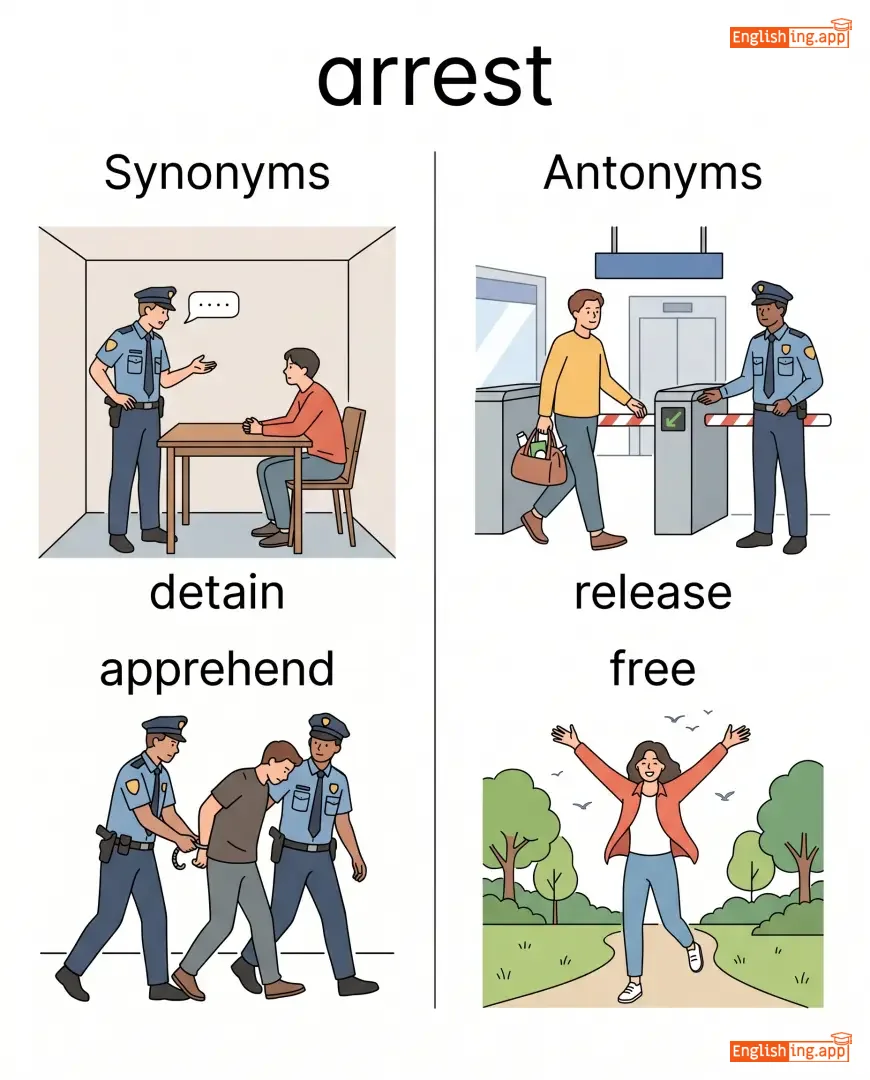
detain, apprehend, capture, seize, stop
••••••
|
release, free, liberate
••••••
|
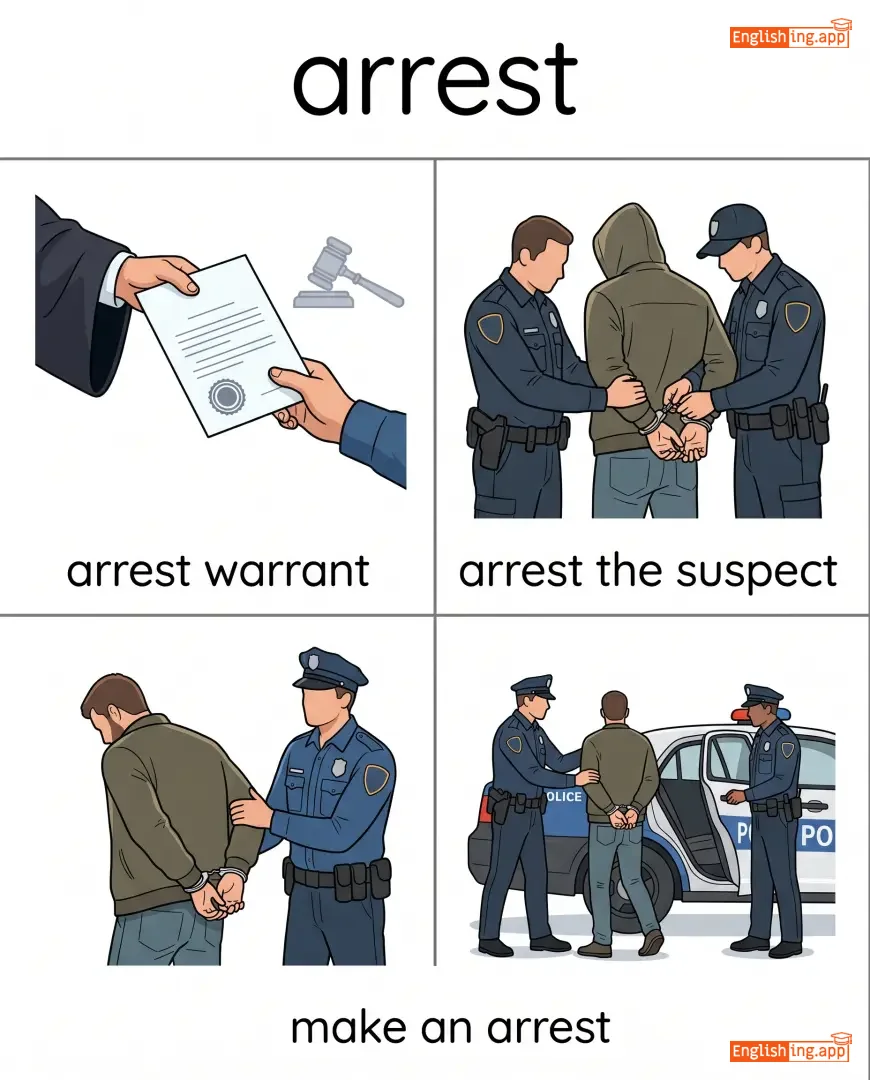
arrest warrant, arrest the suspect, make an arrest
••••••
|
|
#0
☝️
|
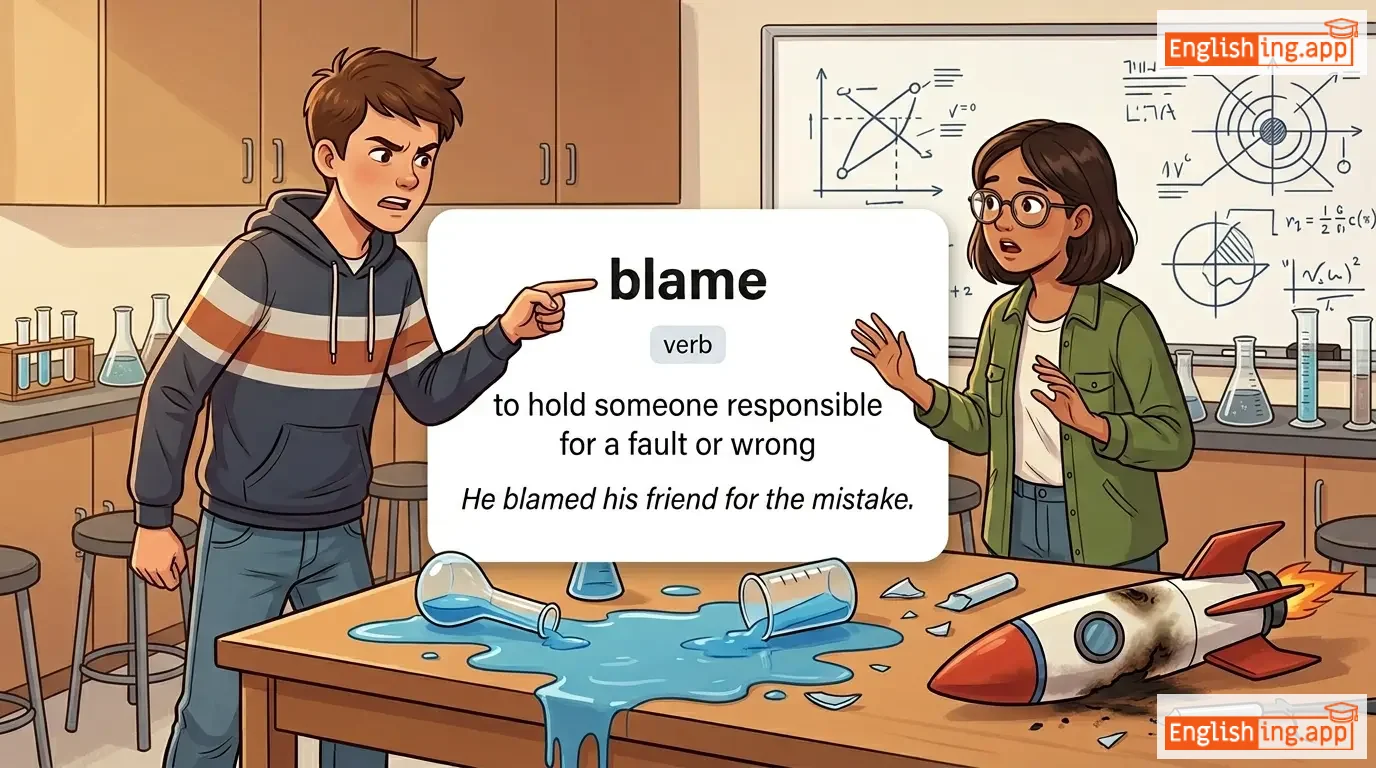
/bleɪm/
verb
••••••
|
|
blamed
••••••
|
blamed
••••••
|
blames
••••••
|
blaming
••••••
|
to hold someone responsible for a fault or wrong
••••••
|
He blamed his friend for the mistake. |
put the blame on |
to make someone responsible for something bad
••••••
|
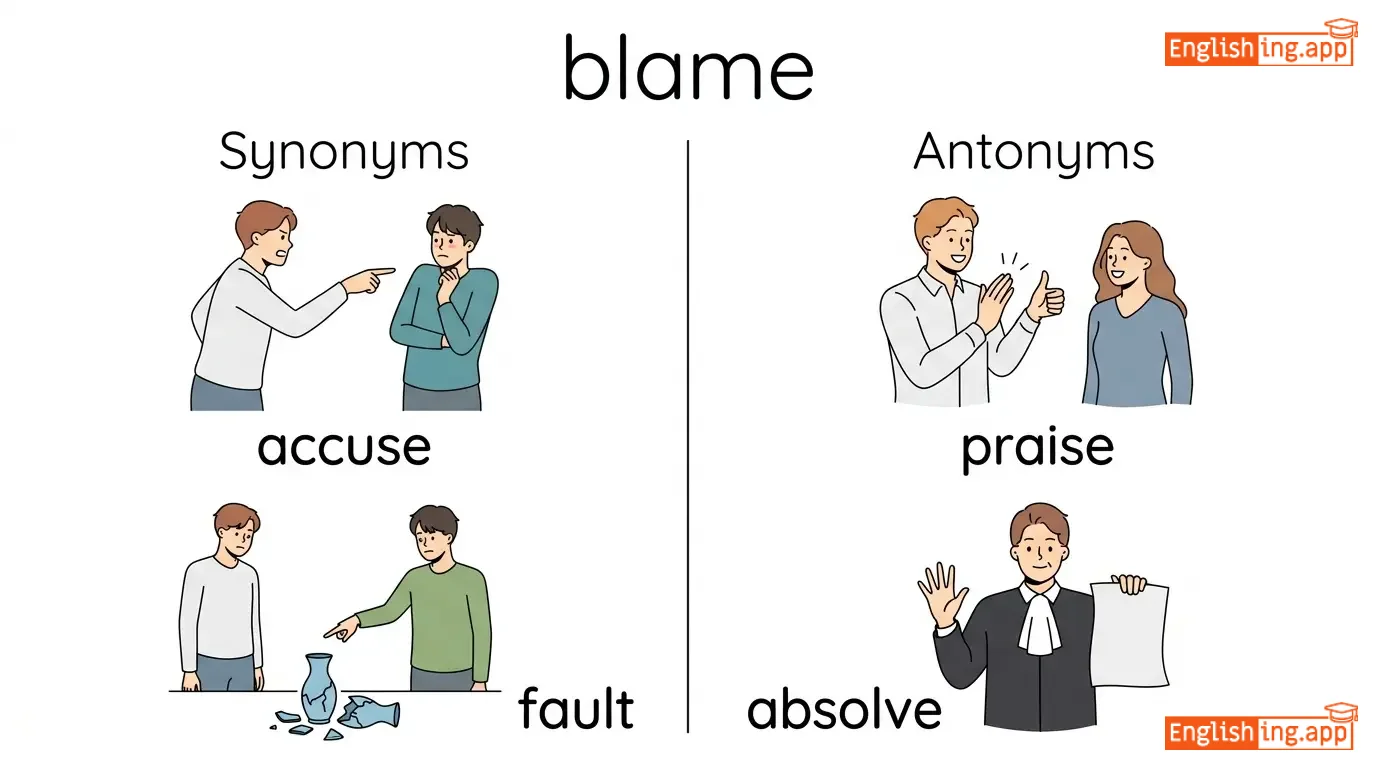
accuse, fault, charge, condemn
••••••
|
praise, absolve, forgive
••••••
|
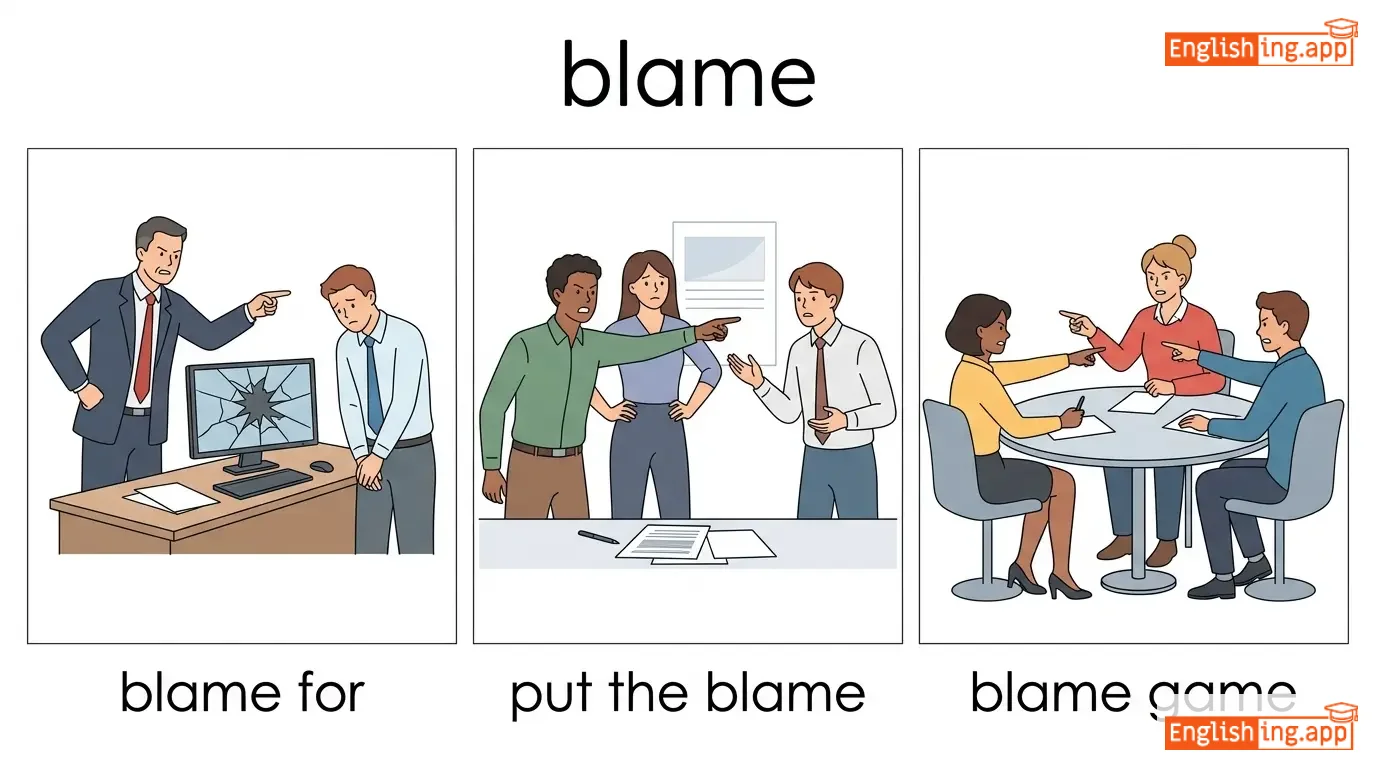
blame for, put the blame, blame game, blame others
••••••
|
|
#0
📦
|
/keɪs/
noun
••••••
|
- •••••• | - •••••• | - •••••• | - •••••• | - •••••• |
A particular situation, occurrence, or an instance of something; also a container or covering for something.
••••••
|
In this case, we should wait for further instructions. |
in any case |
whatever happens; regardless of the situation
••••••
|
instance, example, situation, container, box
••••••
|
whole, entirety
••••••
|
in case of, legal case, strong case, special case
••••••
|
|
#0
👤
|
/ˈklaɪənt/
noun
••••••
|
- •••••• | - •••••• | - •••••• | - •••••• | - •••••• |
A person or organization using the services of a professional or company.
••••••
|
The lawyer met with her client to discuss the case. |
client base |
The group of clients a company serves.
••••••
|
customer, patron, consumer, buyer
••••••
|
seller, provider
••••••
|
client meeting, client relationship, client support, client base
••••••
|
|
#0
🚔
|
/kraɪm/
noun
••••••
|
- •••••• | - •••••• | - •••••• | - •••••• | - •••••• |
An illegal act punishable by law.
••••••
|
The police are investigating the crime. |
crime does not pay |
crime ultimately brings punishment, not profit
••••••
|
offense, felony, wrongdoing, violation
••••••
|
lawfulness, obedience
••••••
|
commit a crime, crime rate, crime scene, organized crime
••••••
|
|
#0
☠️
|
/ˈdedli/
adjective
••••••
|
- •••••• | - •••••• | - •••••• | - •••••• | - •••••• |
causing or able to cause death; extremely dangerous
••••••
|
The snake's bite is deadly to humans. |
deadly serious |
completely serious; not joking
••••••
|
fatal, lethal, dangerous, mortal, poisonous
••••••
|
harmless, safe, mild
••••••
|
deadly weapon, deadly virus, deadly poison, deadly attack
••••••
|
|
#0
💀
|
/dɛθ/
noun
••••••
|
- •••••• | - •••••• | - •••••• | - •••••• | - •••••• |
The end of life; the permanent cessation of all vital functions.
••••••
|
The news of his death shocked everyone in the village. |
a matter of life and death |
something extremely important or urgent
••••••
|
demise, passing, end, expiration, departure
••••••
|
birth, life, existence
••••••
|
sudden death, tragic death, death penalty, cause of death, near death
••••••
|
|
#0
🕵️
|
/dɪˈtɛkt/
verb
••••••
|
|
detected
••••••
|
detected
••••••
|
detects
••••••
|
detecting
••••••
|
To discover or identify the presence of something.
••••••
|
The device can detect smoke in the room. |
detect a problem |
To notice or discover an issue.
••••••
|
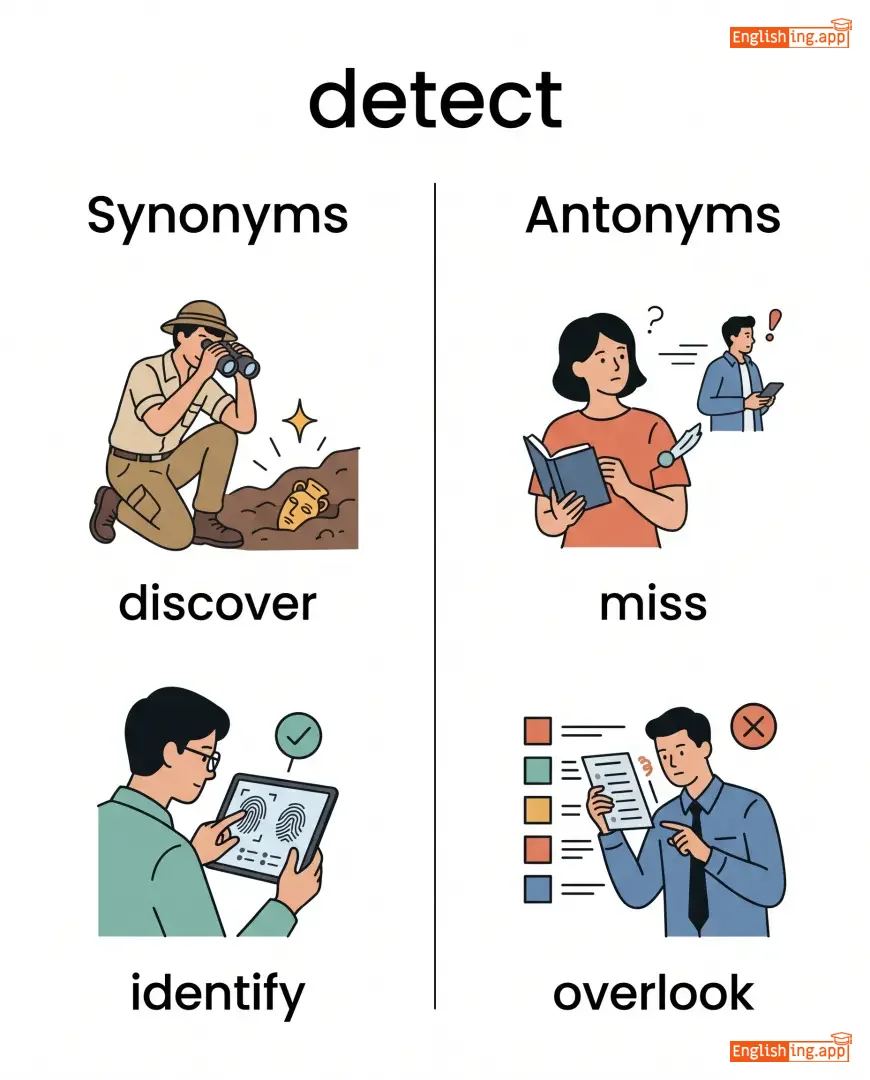
discover, identify, notice, sense, recognize
••••••
|
miss, overlook, ignore
••••••
|
detect a signal, detect movement, detect fraud, detect error
••••••
|
|
#0
🔍
|
/ˈɛv.ɪ.dəns/
noun
••••••
|
- •••••• | - •••••• | - •••••• | - •••••• | - •••••• |
facts or information that show whether something is true or not
••••••
|
The lawyer presented new evidence in court. |
hard evidence |
strong, undeniable proof
••••••
|
proof, testimony, confirmation, validation, indication
••••••
|
denial, contradiction, disproof
••••••
|
present evidence, gather evidence, strong evidence, lack of evidence
••••••
|
Comments (0)
Share your thoughts and join the discussion.
Join the discussion by logging in
Login to CommentNo comments yet
Be the first to share your thoughts!