词汇表

英语词汇词典 | 单词含义、定义和示例

adjective
/ˈsɛksi/
性感的 (xìnggǎn de)

sexually attractive or exciting

"She wore a sexy red dress to the party."

"她穿着一条性感的红色连衣裙去参加派对。" (Tā chuānzhuó yītiáo xìnggǎn de hóngsè liányīqún qù cānjiā pàiduì.)
adjective
/ˈʃæbi/
破旧 (pojiu)

In poor condition through long use or lack of care; of low quality.

"The hotel room looked shabby and old-fashioned."

"酒店的房间看起来破旧而过时。" (Jiǔdiàn de fángjiān kàn qǐlái pòjiù ér guòshí.)
noun
/ʃæk/
简陋的小屋 (jiǎnlòu de xiǎo wū)

a small, roughly built house or hut, often poor or temporary

"They spent the weekend in a small wooden shack by the river."

"他们在河边的小木屋里度过了周末。" (Tāmen zài hé biān de xiǎo mùwū lǐ dùguòle zhōumò.)
verb
/ˈʃækəl/
束缚 (shùfù)

to chain or restrain; to restrict someone’s actions or freedom

"Outdated regulations shackle small businesses and slow innovation."

"过时的规定束缚了小企业并减缓了创新。" (Guòshí de guīdìng shùfùle xiǎo qǐyè bìng jiǎnhuǎnle chuàngxīn.)
noun
/ˈʃæd.ək/
柚子 (youzi)

a large citrus fruit similar to grapefruit; pomelo

"The shaddock is the largest citrus fruit in the world."
"沙多克是世界上最大的柑橘类水果。" (Shā duō kè shì shìjiè shàng zuìdà de gānjú lèi shuǐguǒ.)
🌳

shade

noun, verb
/ʃeɪd/

a sheltered or darker area where direct light is blocked; to block light from something

"We sat under the tree for some shade."

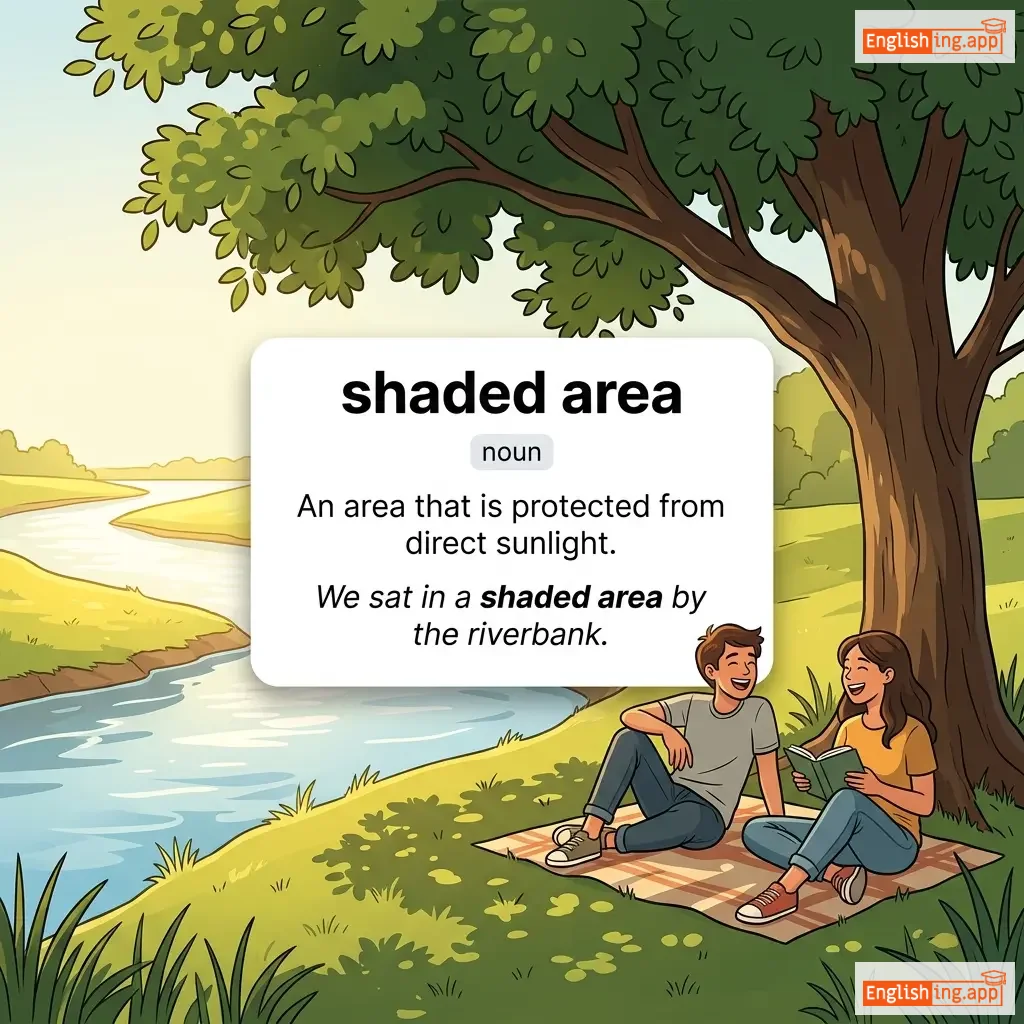
shaded area definition card — visual illustration of the meaning
noun
ˈʃeɪdɪd ˈɛəriə
遮阳区 (zhē yáng qū)

An area that is protected from direct sunlight.

"We sat in a shaded area by the riverbank."

"我们坐在河岸的遮阳区。" (Wǒmen zuò zài hé'àn de zhē yáng qū.)
noun, verb
/ˈʃæd.oʊ/
阴影 (yīnyǐng)

a dark area or shape made when something blocks light; to follow or observe secretly

"His shadow stretched long in the evening sun."

"他的阴影在傍晚的阳光下拉长。" (Tā de yīnyǐng zài bàngwǎn de yángguāng xià lācháng.)
adjective
/ˈʃeɪ.di/
有阴影的; 可疑的; 不诚实的; (yǒu yīnyǐng de; kěyí de; bù chéngshí de)

providing shade; dishonest; suspicious

"The shady businessman made a suspicious deal."
"那个有阴影的商人做了一笔可疑的交易。" (Nàgè yǒu yīnyǐng de shāngrén zuòle yī bǐ kěyí de jiāoyì.)
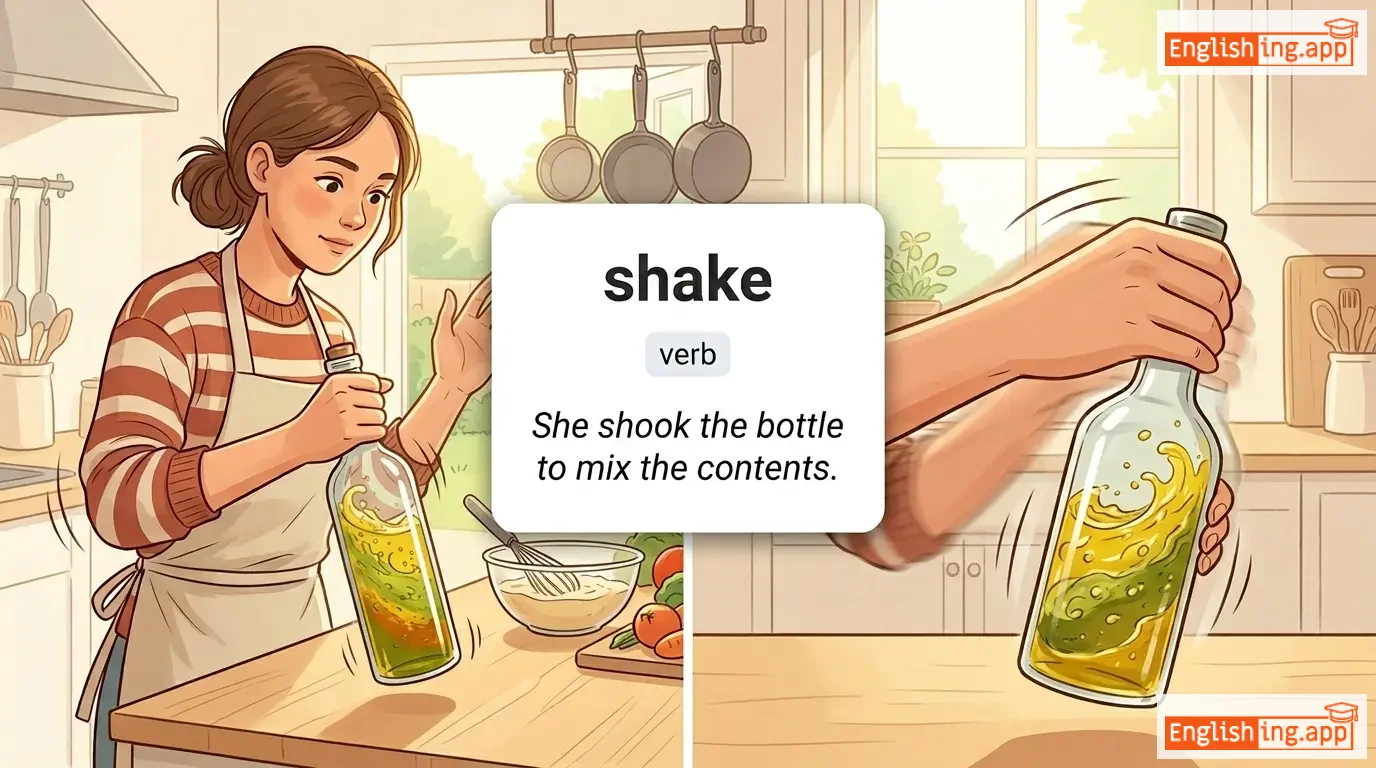
shake definition card — visual illustration of the meaning
verb
/ʃeɪk/
摇动 (yao dong)

to move or cause to move up and down or from side to side with rapid, short movements

"She shook the bottle to mix the contents."

"她摇动了瓶子以混合内容。" (Tā yáo dòngle píngzi yǐ hùnhé nèiróng.)
adjective
/ˈʃeɪ.ki/
不稳定的; 发抖的; 不可靠的; 弱的 (bù wěndìng de; fādǒu de; bù kěkào de; ruò de)

unstable; trembling; unreliable; weak

"His voice was shaky with nervousness."

"他的声音因紧张而颤抖。" (Tā de shēngyīn yīn jǐnzhāng ér chàndǒu.)
noun
/ʃeɪl/
页岩 (yè yán)

a fine-grained sedimentary rock that can be split into thin layers

"The region is rich in shale and natural gas deposits."

"该地区富含页岩和天然气储备。" (gāi dìqū fù hán yè yán hé tiānránqì chǔbèi.)
modal verb
/ʃæl/
(jiang)

used to express the future or indicate an intention or determination

"I shall return before sunset."

"我将在日落之前回来。" (Wǒ jiāng zài rìluò zhīqián huílái.)
adjective
/ˈʃæl.oʊ/
(qian)

not deep; lacking depth of thought or feeling

"The children played in the shallow water near the shore."

"孩子们在靠近岸边的浅水中玩耍。" (Haizimen zai kaojin anbian de qianshui zhong wanshua.)
noun, adjective, verb
/ʃæm/
虚假 (xujia)

something that is not what it appears to be; a false or fake thing; to pretend

"The deal turned out to be a sham."

"这笔交易被证明是虚假的。" (Zhè bǐ jiāo yì bèi zhèng míng shì xū jiǎ de.)
noun
/ˈʃæmbəlz/
一片混乱 (yī piàn hùnluàn)

a state of complete disorder or ruin

"After the storm, the whole town was in shambles."

"风暴过后,整个城镇陷入了一片混乱。" (Fēngbào guòhòu, zhěnggè chéngzhèn xiànrùle yī piàn hùnluàn.)
noun
/ʃeɪm/
羞耻 (xiūchǐ)

a painful feeling of humiliation or distress caused by the consciousness of wrong or foolish behavior

"He felt deep shame after lying to his friend."

"他在对朋友撒谎后感到深深的羞耻。" (Tā zài duì péngyǒu sāhuǎng hòu gǎndào shēnshēn de xiūchǐ.)
adjective
/ˈʃeɪm.fəl/
可耻的; 不光彩的; 令人尴尬的 (kěchǐ de; bù guāngcǎi de; lìng rén gāngà de)

causing shame; disgraceful; embarrassing

"His shameful behavior embarrassed the entire family."

"他可耻的行为让整个家庭感到尴尬。" (Tā kěchǐ de xíngwéi ràng zhěnggè jiātíng gǎndào gāngà.)
adjective
/ˈʃeɪm.ləs/
无耻的 (shameless)

having no shame; bold and rude; impudent

"The shameless politician refused to apologize for his mistakes."

"那个无耻的政治家拒绝为他的错误道歉。" (na ge wu chi de zheng zhi jia ju jue wei ta de cuo wu dao qian)
noun
/ˌʃæŋɡriˈlɑː/
虚构的乐园 (xūgòu de lèyuán)

a remote, beautiful, imaginary place where life is perfect and peaceful

"They described the island as a modern-day Shangri-La."

"他们将这个岛屿描述为现代版的香格里拉。" (Tāmen jiāng zhège dǎoyǔ miáoshù wéi xiàndài bǎn de xiānggélǐlā.)
noun
/ʃeɪp/
形状 (xingzhuang)

the external form, contours, or outline of someone or something

"The shape of the mountain was clearly visible from the valley."

"山的形状从山谷里清晰可见。" (Shan de xingzhuang cong shangu li qingxi kejian.)
adjective
/ʃeɪpt/
成形的 (chengxing de)

having a particular form or appearance

"The sculpture was shaped like a human figure."

"雕塑被塑造成一个人形。" (Diaosu bei sushao chengwei yige renxing.)
adjective
/ˈʃeɪp.ləs/
无形的 (wúxíng de)

having no definite or well-defined shape or form

"The fog created a shapeless mass in the distance."
"雾气在远处形成了无形的团块。" (Wùqì zài yuǎnchù xíngchéngle wúxíng de tuánkuài.)
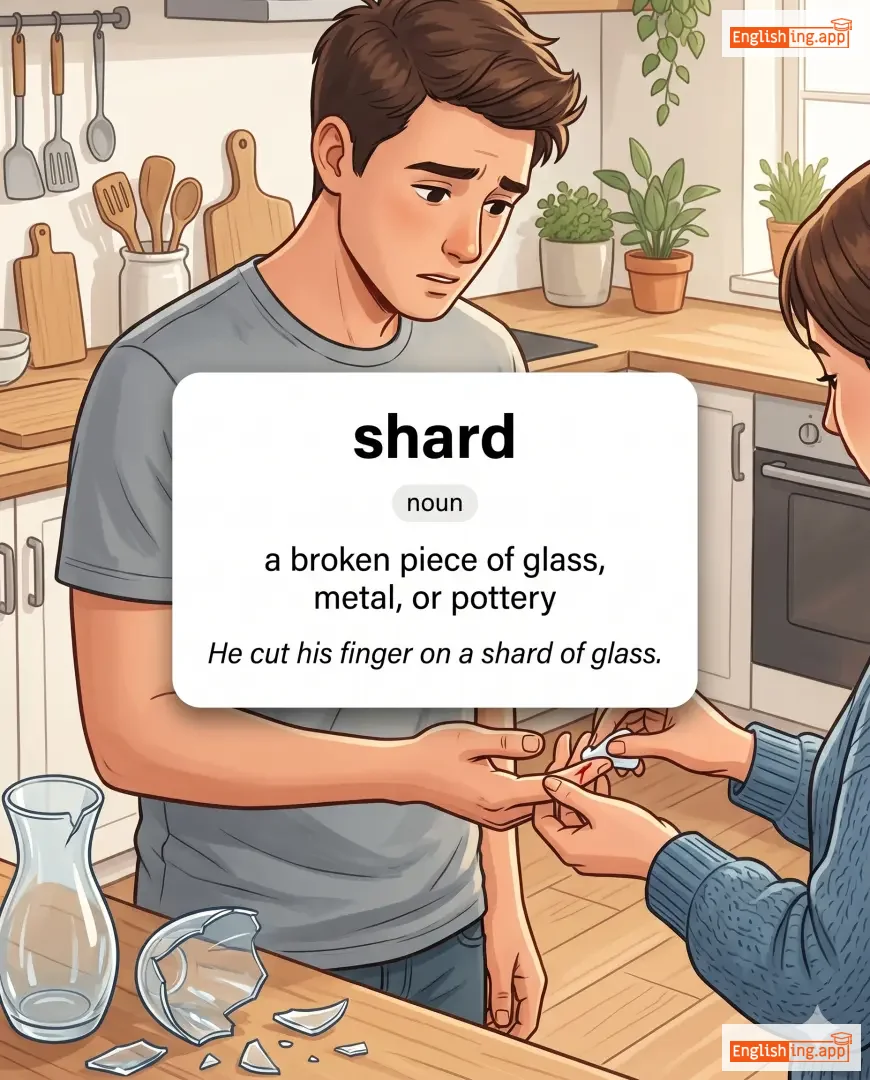
shard definition card — visual illustration of the meaning
noun
/ʃɑːrd/
碎片 (suipian)

a broken piece of glass, metal, or pottery

"He cut his finger on a shard of glass."

"他用玻璃碎片割伤了手指。" (Tā yòng bōli suìpiàn gē shāngle shǒuzhǐ.)
verb
/ʃɛər/
分享 (fenxiang)

to give a portion of (something) to others or allow others to use or enjoy it

"She decided to share her lunch with her friends."

"她决定与朋友们分享她的午餐。" (Tā juédìng yǔ péngyǒumen fēnxiǎng tā de wǔcān.)
adjective
/ʃɛrd/
共享 (gongxiang)

used, done, or experienced by two or more people together

"They live in a shared apartment near the university."

"他们住在大学附近的一间共享公寓里。" (Tāmen zhù zài dàxué fùjìn de yī jiān gòngxiǎng gōngyù lǐ.)
noun
/ˈʃɛərˌhoʊldər/
股东 (gǔdōng)

an individual or organization that owns shares in a company

"Each shareholder has the right to vote at the annual meeting."

"每个股东都有权在年度大会上投票。" (Měi gè gǔdōng dōu yǒu quán zài nián dù dà huì shàng tóu piào.)
noun
/ʃɑːrk/
鲨鱼 (shayu)

a large fish with sharp teeth known for being a strong predator in the ocean

"The shark swam silently beneath the boat."

"鲨鱼在船下悄悄地游泳。" (Shāyú zài chuán xià qiāoqiāo de yóuyǒng.)
noun
/ˈʃær.ən fruːt/
沙龙水果 (Shā lóng shuǐguǒ)

a sweet orange persimmon fruit that can be eaten when firm

"The Sharon fruit is sweet and can be eaten like an apple."

"沙龙水果很甜,可以像苹果一样食用。" (Shā lóng shuǐguǒ hěn tián, kěyǐ xiàng píngguǒ yīyàng shíyòng.)
adjective
/ʃɑːrp/
锋利 (fengli)

having a fine edge or point; keen

"The knife is sharp enough to cut through the meat easily."

"这把刀足够锋利,可以轻松切割肉类。" (Zhe ba dao zhu gou fengli, keyi qingsong qiege roulei.)
adverb
/ˈʃɑːrpli/
急剧地 (jíjù de)

suddenly and strongly; in a cutting or intense way

"Prices rose sharply after the announcement."

"价格在公告后急剧上涨。" (Jiàgé zài gōnggào hòu jíjù shàngzhǎng.)
verb
/ˈʃætər/
打碎 (dǎ suì)

To break suddenly into many small pieces.

"The glass will shatter if you drop it."

"玻璃会碎掉,如果你把它摔下去。" (Bōlí huì suì diào, rúguǒ nǐ bǎ tā shuāi xiàqù.)
verb, noun
/ʃeɪv/
刮胡子 (gua huzi)

To remove hair from the body, typically using a razor; the act of removing hair

"He likes to shave every morning before work."

"他喜欢每天上班前刮胡子。" (Ta xihuan meitian shangban qian gua huzi)
noun
/ˈʃeɪvɪŋ/
剃须 (tìxū)

the act of removing hair with a razor; a thin strip or piece shaved from something

"He bought a new cream for shaving."

"他买了一款新的剃须膏。" (Tā mǎile yī kuǎn xīn de tìxū gāo.)
pronoun
/ʃi/
(ta)

a female person or animal previously mentioned or easily identified

"She is going to the market to buy vegetables."

"她去市场买蔬菜。" (Ta qu shichang mai shucai.)
noun
/ʃiːf/
麦束 (mài shù)

a bundle of grain stalks laid lengthwise and tied together after reaping; a bundle of objects tied together

"The farmer carried a sheaf of wheat on his shoulder."

"农民肩上背着一捆小麦。" (Nóngmín jiān shàng bèizhe yī kǔn xiǎomài.)
verb
/ʃɪə/
修剪 (xiūjiǎn)

to cut the wool off a sheep or to cut something with sharp tools like scissors or shears

"The farmer will shear the sheep in the spring."

"农民将在春天修剪羊毛。" (Nóngmín jiāng zài chūntiān xiūjiǎn yángmáo.)
noun
/ʃiːt fɪʃ/
鲶鱼 (nian yu)

A large freshwater catfish with a broad flat head and long barbels

"The sheat-fish is one of the largest freshwater fish in South Asia."

"鲶鱼是南亚最大的淡水鱼之一。" (Nian yu shi nan ya zui da de dan shui yu zhi yi)
verb
/ʃiːð/
放回剑鞘 (fàng huí jiàn qiào)

to put a sword or knife back into its cover

"He quickly sheathed his sword after the duel."

"他在决斗后迅速把剑重新放回剑鞘。" (Tā zài juéduì hòu xùnsù bǎ jiàn chóngxīn fàng huí jiàn qiào.)
verb
/ʃɛd/
掉落 (diao luo)

to let something fall off naturally, such as leaves, hair, or tears

"Trees shed their leaves in autumn."

"树木在秋天落叶。" (Shumu zai qiutian luoye.)
noun
/ʃiːp/
(yang)

a farm animal with thick wool that is raised for its wool, meat, and milk

"The farmer keeps a large flock of sheep."

"农民养着一大群羊。" (nong min yang zhe yi da qun yang.)
adjective
/ʃɪə/
完全 (wanquan)

complete and utter; very steep or transparent

"The cliff was a sheer drop into the sea."

"悬崖是一个完全的落差进入大海。" (Xuán yá shì yī gè wánquán de luòchā jìnrù dàhǎi.)
noun
/ʃiːt/
床单 (chuángdān)

a large piece of cloth or paper, typically used to cover or protect something

"I need a clean sheet to cover the bed."

"我需要一张干净的床单来覆盖床铺。" (Wǒ xūyào yī zhāng gānjìng de chuángdān lái fùgài chuángpù.)
noun
/ʃɛlf/
架子 (jiazi)

a flat surface used for storing or displaying things, typically fixed to a wall or inside a cabinet

"I placed the books on the shelf next to the window."

"我把书放在靠窗的架子上。" (Wǒ bǎ shū fàng zài kào chuāng de jiàzi shàng.)
noun
/ʃɛl/
贝壳 (bèiké)

the hard outer covering of a mollusk or a crustacean, or something similar

"She picked up a beautiful seashell on the beach."

"她在沙滩上捡起了一个漂亮的贝壳。" (Tā zài shātān shàng jiǎn qǐle yīgè piàoliang de bèiké.)
noun
/ˈʃɛltər/
避难所 (bì nàn suǒ)

a place giving temporary protection from bad weather or danger

"They found shelter from the storm in the nearby barn."

"他们在附近的谷仓找到了避难所。" (Tāmen zài fùjìn de gǔcāng zhǎodào le bì nàn suǒ.)
noun
/ˈʃepərd/
牧羊人 (mù yáng rén)

a person who tends and guards sheep

"The shepherd guided his flock to the green pasture."

"牧羊人把他的羊群引导到绿色的牧场。" (mù yáng rén bǎ tā de yángqún yǐndǎo dào lǜsè de mùchǎng.)
noun
/ˈʃɜːrbət/
雪葩 (xuě pā)

a sweet flavored drink or a frozen dessert made from sweetened fruit juice

"On hot days, she enjoys a glass of lemon sherbet."

"在炎热的日子里,她喜欢喝一杯柠檬雪葩。" (zài yánrè de rìzi lǐ, tā xǐ huān hē yī bēi níng méng xuě pā.)
noun
/ˈʃɪbəˌlɛθ/
区分特定群体的习语或信仰 (qufen tedian qunti de xiyi huo xinyang)

A custom, phrase, or belief distinguishing a particular group of people, often used to identify outsiders.

"The phrase became a political shibboleth during the campaign."

"这句话在竞选期间成为了一个政治性的shibboleth。" (Zhe ju hua zai jingxuan qijian chengwei le yige zhengzhixing de shibboleth.)
verb
/ʃɪft/
转移 (zhuan yi)

To move or change from one place, position, or situation to another.

"She had to shift her focus to the new project."

"她不得不将注意力转向新项目。" (Ta budebu jiang zhuyi li zhuan xiang xin xiangmu.)