词汇表

英语词汇词典 | 单词含义、定义和示例

adverb
/ˈmeɪbi/
也许 (yěxǔ)

used to express possibility or uncertainty

"Maybe we will go to the park tomorrow."

"也许我们明天会去公园。" (Yěxǔ wǒmen míngtiān huì qù gōngyuán.)
noun
/ˈmeɪhɛm/
混乱 (hùnluàn)

Violent or extreme disorder; chaos and destruction.

"The protest turned into mayhem when the crowd clashed with the police."

"当抗议者与警方发生冲突时,抗议活动变成了混乱。" (Dāng kàngyì zhě yǔ jǐngfāng fāshēng chōngtū shí, kàngyì huódòng biàn chéngle hùnluàn.)
noun
/ˈmeɪər/
市长 (shì zhǎng)

The elected head of a city, town, or municipality.

"The mayor announced a new policy to improve public transport."

"市长宣布了一项新政策,以改善公共交通。" (Shì zhǎng xuānbùle yī xiàng xīn zhèngcè, yǐ gǎishàn gōnggòng jiāotōng.)
noun
/meɪz/
迷宫 (migong)

A complex network of paths or passages that are difficult to navigate.

"Tourists often get lost in the maze of narrow streets in the old city."

"游客经常在老城区狭窄街道的迷宫中迷路。" (Yóukè jīngcháng zài lǎo chéngqū xiázhǎi jiēdào de mígōng zhōng mílù.)
pronoun
/miː/
(wǒ)

Used by a speaker to refer to themselves as the object of a verb or preposition.

"She gave me a beautiful gift."

"她给了我一份美丽的礼物。" (Tā gěi le wǒ yī fèn měilì de lǐwù.)
noun
/miːd/
蜂蜜酒 (fēngmì jiǔ)

An alcoholic drink made from fermented honey and water.

"The Vikings were known to drink large amounts of mead during feasts."

"维京人以在宴会上喝大量的蜂蜜酒而闻名。" (Wéijīngrén yǐ zài yànhuì shàng hē dàliàng de fēngmì jiǔ ér wénmíng.)
noun
/ˈmedoʊ/
草地 (meido)

A piece of grassland, especially one used for hay

"The cows grazed peacefully in the green meadow."

"奶牛在绿色的草地上安静地吃草。" (Nai niu zai lüse de caodi shang anjing de chi cao.)
adjective
/ˈmiːɡər/
贫乏 (pinfá)

Lacking in quantity or quality; inadequate.

"He could barely survive on his meager salary."

"他几乎无法靠他微薄的薪水生存。" (Tā jīhū wúfǎ kào tā wēibó de xīnshuǐ shēngcún.)
noun
/miːl/
幸福 (xingfu)

An occasion when food is eaten, or the food that is eaten on such an occasion.

"We had a delicious meal at the restaurant."

"当她收到奖项时,她无法掩饰她的幸福。" (Dang ta shoudao jiangxiang shi, ta wu fa yanshi ta de xingfu.)
adjective
/ˈmiːli ˌmaʊðd/
虚伪的 (xūwěi de)

Unwilling to speak directly and honestly; insincere or evasive in speech.

"The manager gave a mealy-mouthed excuse instead of admitting the mistake."

"经理给出了一个虚伪的借口,而不是承认错误。" (Jīnglǐ gěi chūle yīgè xūwěi de jièkǒu, ér bùshì chéngrèn cuòwù.)
adjective
/ˈmiːliˌmaʊðd/
含糊其辞 (hán hú qí cí)

not willing to speak directly and honestly; evasive in speech

"The politician gave a mealymouthed response to the tough question."

"那位政治家对这个难题的回答含糊其辞。" (Nà wèi zhèngzhìjiā duì zhège nántí de huídá hán hú qí cí.)
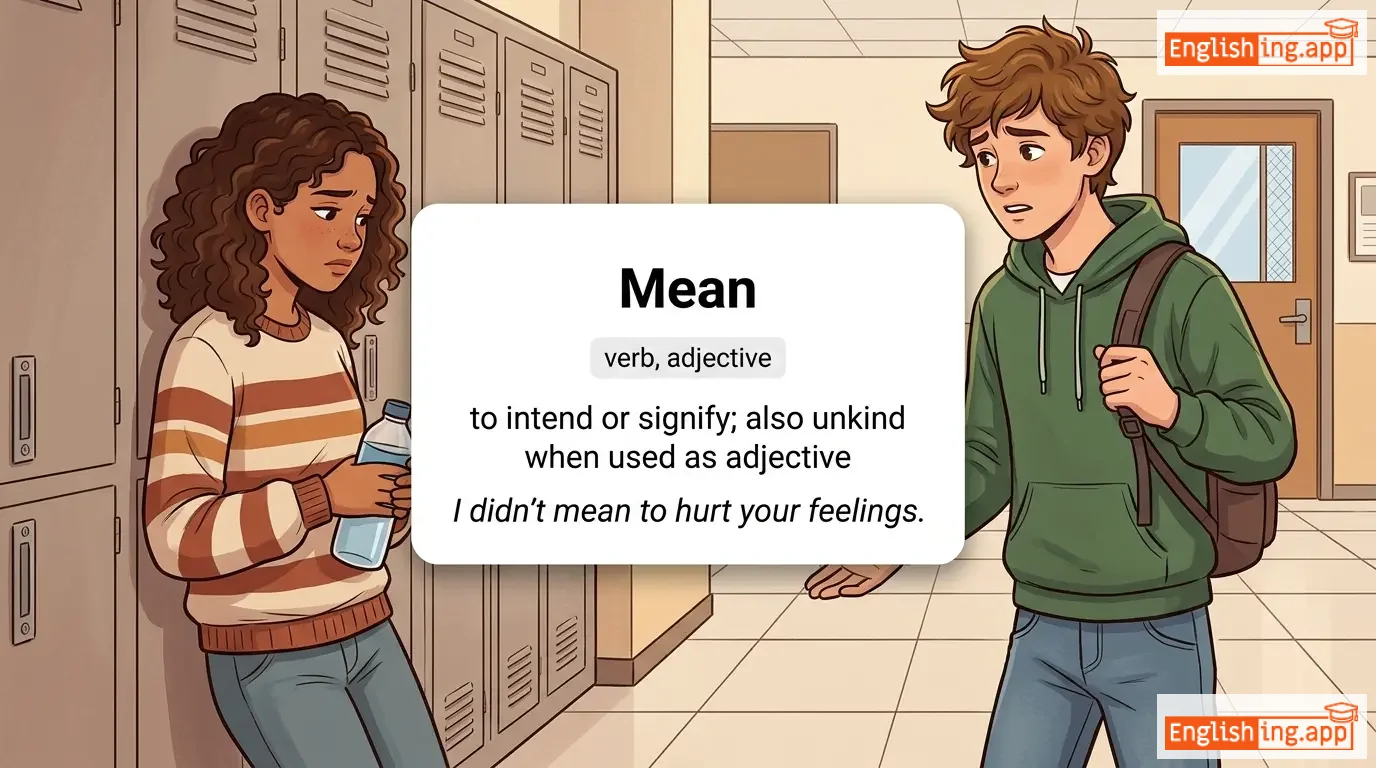
Mean definition card — visual illustration of the meaning
👉

Mean

verb, adjective
/miːn/

to intend or signify; also unkind when used as adjective

"I didn’t mean to hurt your feelings."

verb, noun
/miˈændər/
漫游 (mànyóu)

to wander aimlessly or follow a winding course

"We meandered through the old streets of the city."

"我们在城市的老街道上漫步。" (Wǒmen zài chéngshì de lǎo jiēdào shàng mànbù.)
noun
/ˈmiːnɪŋ/
意义 (yìyì)

The definition, purpose, or significance of something.

"The meaning of the word is explained in the dictionary."

"这个词的意义在字典中有解释。" (Zhège cí de yìyì zài zìdiǎn zhōng yǒu jiěshì.)
adjective
/ˈmiːnɪŋfəl/
有意义的 (you yiyi de)

having purpose, value, or significance

"He gave a meaningful smile before leaving the room."

"他在离开房间前给了一个有意义的微笑。" (Tā zài líkāi fángjiān qián gěile yīgè yǒu yìyì de wéixiào.)
adjective
/ˈmiː.nɪŋ.ləs/
毫无意义; 没有目的; 无意义 (háo wú yìyì; méi yǒu mùdì; wú yìyì)

without purpose; having no significance; pointless

"The data became meaningless without proper context."

"数据在没有适当背景的情况下变得毫无意义。" (Shùjù zài méiyǒu shìdàng bèijǐng de qíngkuàng xià biàn dé háo wú yìyì.)
noun
/ˈmiːnnəs/
恶意; 吝啬 (mines)

The quality of being unkind, spiteful, or unfair; stinginess

"His meanness towards the poor children shocked everyone in the neighborhood."

"他对贫困孩子的恶意让邻里的人都感到震惊。" (Ta dui pinkun haizi de eyi rang linli de ren dou gandao zhenjing.)
noun
/miːnz/
手段; 资源; 方法; (means)

An action or system by which a result is achieved; financial resources

"They don't have the means to afford such an expensive vacation."

"他们没有足够的手段支付如此昂贵的度假费用。" (tāmen méiyǒu zúgòu de shǒuduàn zhīfù rúcǐ ángguì de dùjià fèiyòng.)
noun/adverb
/ˈmiːnˌtaɪm/
同时 (tóng shí)

the period of time between two events; meanwhile

"The train will be late, so in the meantime let's have some tea."

"火车会迟到,所以同时我们来喝点茶。" (huǒchē huì chídào, suǒyǐ tóngshí wǒmen lái hē diǎn chá.)
adverb
/ˈmiːnˌwaɪl/
与此同时 (yú cǐ tóng shí)

At the same time; in the intervening period.

"She was cooking dinner; meanwhile, I set the table."

"她正在做晚饭;与此同时,我摆好了餐桌。" (Tā zhèngzài zuò wǎn fàn; yú cǐ tóng shí, wǒ bǎi hǎo le cānzhuō.)
adjective
/ˈmiːzli/
微不足道 (wēi bù zú dào)

contemptibly small or insignificant

"He was paid a measly sum for the hard work."

"他为辛苦的工作得到了微不足道的报酬。" (Tā wèi xīnkǔ de gōngzuò dédàole wēi bù zú dào de bào chóu.)
adjective
/ˈmeʒ.ər.ə.bəl/
可测量的; 可量化的 (ke ce shi de; ke lianghua de)

able to be measured; quantifiable

"The project's success was measurable by increased sales."
"项目的成功可以通过销售增长来衡量。" (xiangmu de chenggong keyi tongguo xiaoshou zengzhang lai hengliang.)
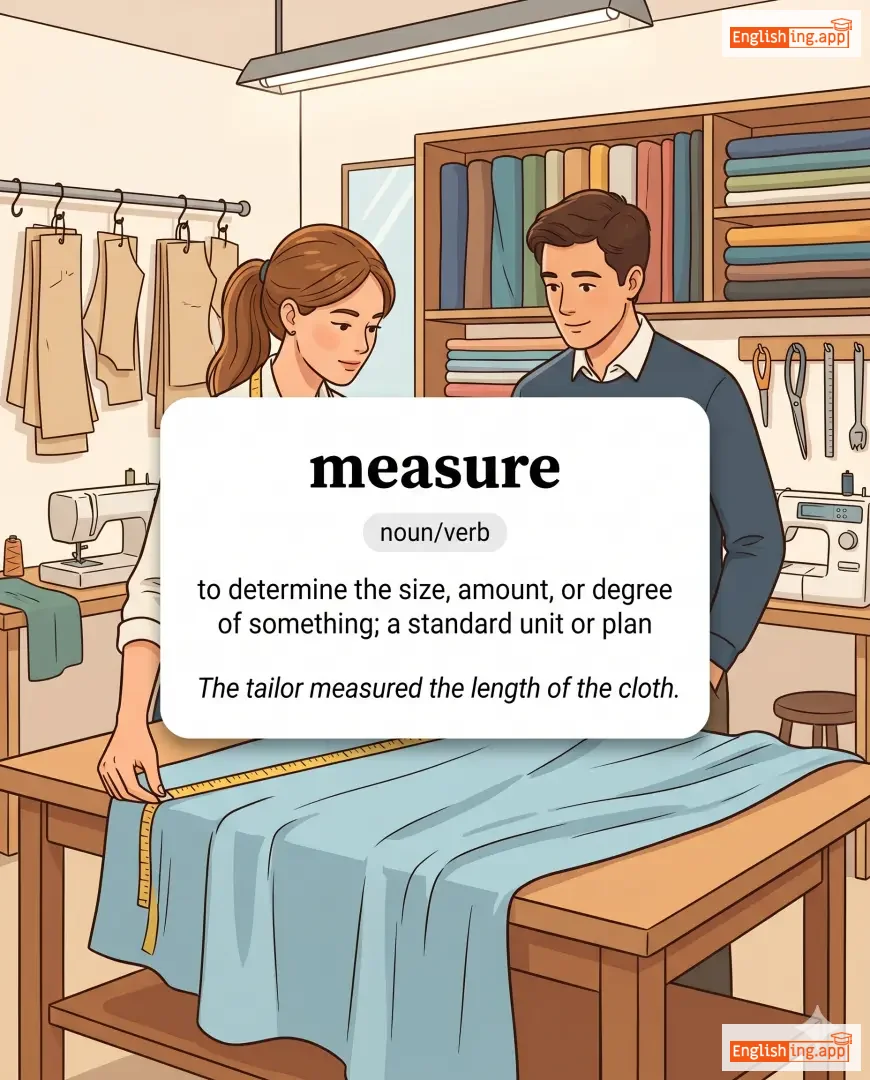
measure definition card — visual illustration of the meaning
noun/verb
/ˈmɛʒər/
测量 / 尺度 (cèliàng / chǐdù)

to determine the size, amount, or degree of something; a standard unit or plan

"The tailor measured the length of the cloth."

"裁缝量了布料的长度。" (cáifeng liàngle bùliào de chángdù.)
adjective
/ˈmɛʒərd/
衡量 (hengliang)

carefully considered and deliberate

"She spoke in a calm, measured tone."

"她以冷静和衡量的语气说话。" (Ta yi lengjing he hengliang de yuqi shuohua.)
noun
/ˈmeʒərmənt/
测量 (ce liang)

the size, length, or amount of something, as determined by measuring

"The tailor took my waist measurement before stitching the suit."
"裁缝在缝制西装前先测量了我的腰围。" (Caifeng zai fengzhi xizhuang qian xian ce liang le wo de yaowei.)
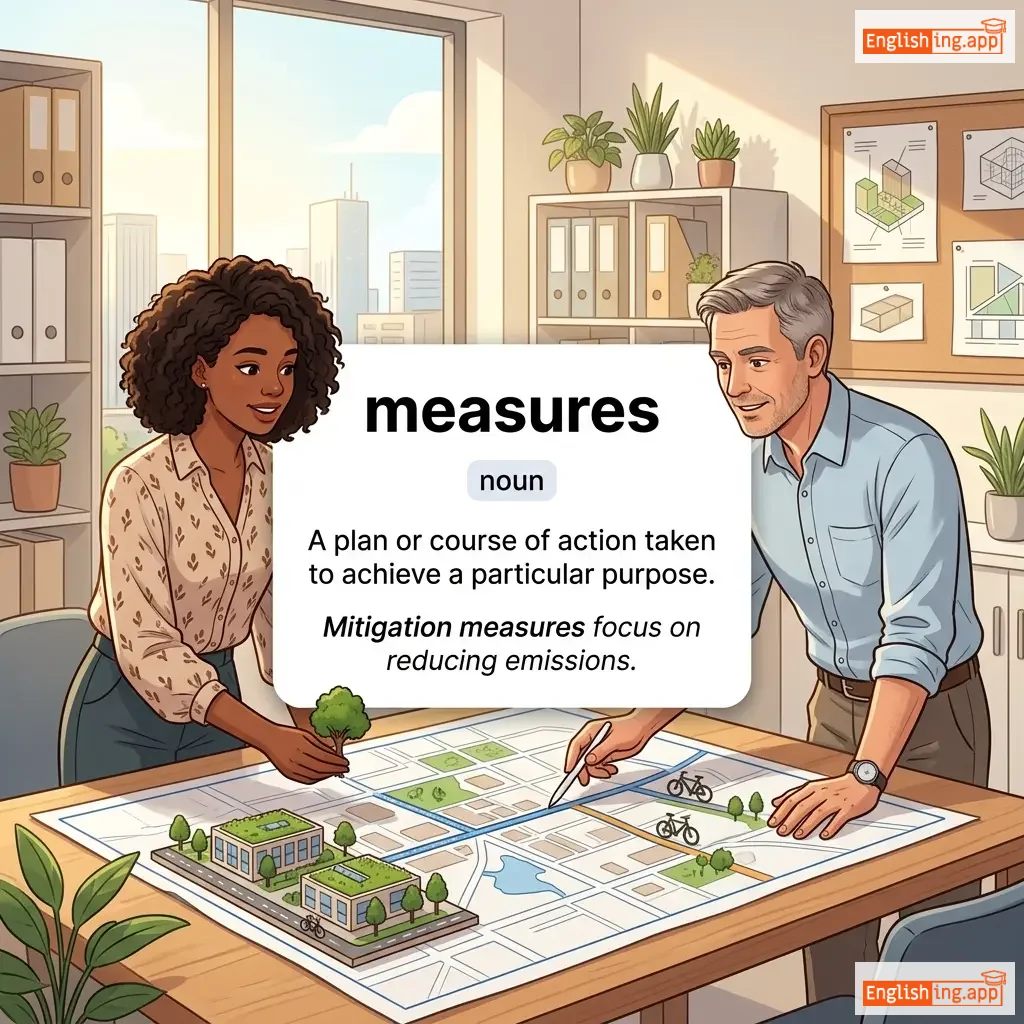
measures definition card — visual illustration of the meaning
noun
ˈmeʒ.ərz
措施 (cuòshī)

A plan or course of action taken to achieve a particular purpose.

"Mitigation measures focus on reducing emissions."

"缓解措施专注于减少排放。" (Huǎnjiě cuòshī zhuānzhù yú jiǎnshǎo páifàng.)
noun
/miːt/
(rou)

the flesh of animals used as food

"She bought fresh meat from the market."

"她在市场上买了新鲜的肉。" (Ta zai shichang shang mai le xinxian de rou.)
noun
/məˈkænɪk/
机械师 (jixieshi)

a person who repairs and maintains machines or vehicles

"The mechanic fixed the engine in less than an hour."

"机械师在不到一个小时的时间内修好了引擎。" (Jixieshi zai budao yi ge xiaoshi de shijian nei xiuli hao le yinqing.)
adjective
/məˈkænɪkəl/
幸福 (xìngfú)

relating to machines or the way they work

"She has a good understanding of mechanical systems."

"当她收到奖项时,她无法掩饰自己的幸福。" (Dāng tā shōu dào jiǎngxiàng shí, tā wúfǎ yǎnshì zìjǐ de xìngfú.)
noun
/məˈkænɪks/
力学 (lìxué)

the branch of physics concerned with the motion of objects and the forces acting on them; also refers to the practical details of how something works

"He studied the mechanics of the machine before fixing it."

"在修理机器之前,他研究了这台机器的力学。" (Zài xiūlǐ jīqì zhīqián, tā yánjiūle zhè tái jīqì de lìxué.)
noun
/ˈmɛkəˌnɪzəm/
机制 (jīzhì)

A system of parts working together in a machine; a process or technique for achieving something.

"The mechanism of the clock stopped working after years of use."
"钟表的机制在多年使用后停止工作。" (Zhōngbiǎo de jīzhì zài duō nián shǐyòng hòu tíngzhǐ gōngzuò.)
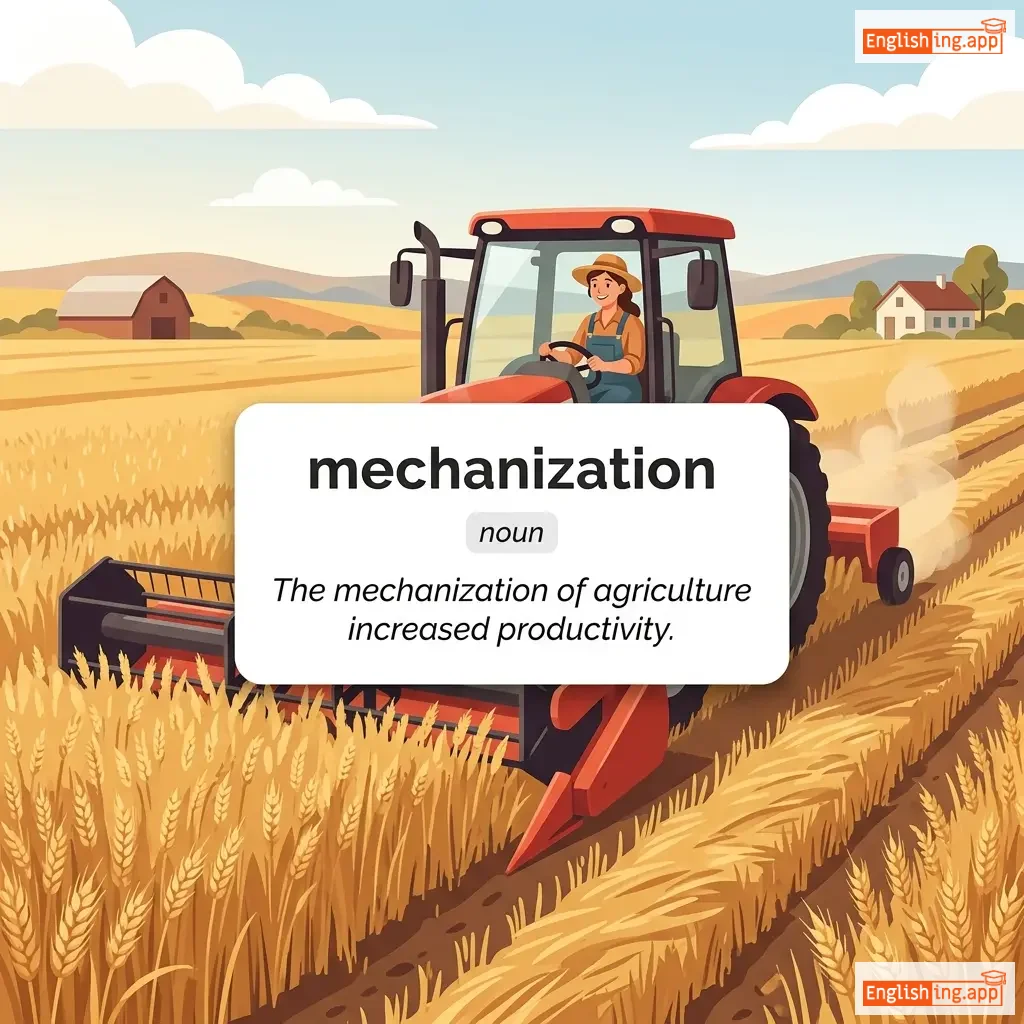
mechanization definition card — visual illustration of the meaning
noun
ˌmɛk.ə.nɪˈzeɪ.ʃən
机械化 (jīxièhuà)

The use of machines in agriculture or industry to increase production efficiency.

"The mechanization of agriculture increased productivity."

"农业机械化提高了生产力。" (Nongye jixiehua tigao le shengchan li.)
noun
/ˈmɛdəl/
奖牌 (jiangpai)

a piece of metal given as an award for achievement

"She won a gold medal in the 100-meter race."

"她在100米赛跑中获得了金牌。" (Ta zai 100 mi saipao zhong huodele jinpai.)
noun
/məˈdæliən/
奖章 (jiangzhang)

a large medal or decorative piece, often worn as jewelry or used in architecture

"She wore a gold medallion around her neck."

"她戴着一个金色的奖章在脖子上。" (Tā dàizhe yīgè jīnsè de jiǎngzhāng zài bózi shàng.)
verb
/ˈmɛdəl/
干涉与自己无关的事情 (gānshè yǔ zìjǐ wúguān de shìqíng)

to interfere in something that is not one's concern

"He always tries to meddle in other people’s business."

"他总是试图干涉别人的事务。" (Tā zǒng shì shìtú gānshè biérén de shìwù.)
adjective
/ˈmɛdəlsəm/
爱干涉他人事务的人 (ài gānshè tārén shìwù de rén)

fond of interfering in other people’s affairs

"She found her neighbor to be meddlesome and annoying."

"她发现她的邻居爱干涉他人事务且令人烦恼。" (Tā fāxiàn tā de línjū ài gānshè tārén shìwù qiě lìng rén fánnǎo.)
noun
/ˈmiːdiə/
媒体 (mei ti)

the main means of mass communication such as newspapers, television, radio, and the internet

"The story quickly spread across the media."
"故事很快通过媒体传播开来。" (gùshì hěn kuài tōngguò méitǐ chuánbō kāilái.)
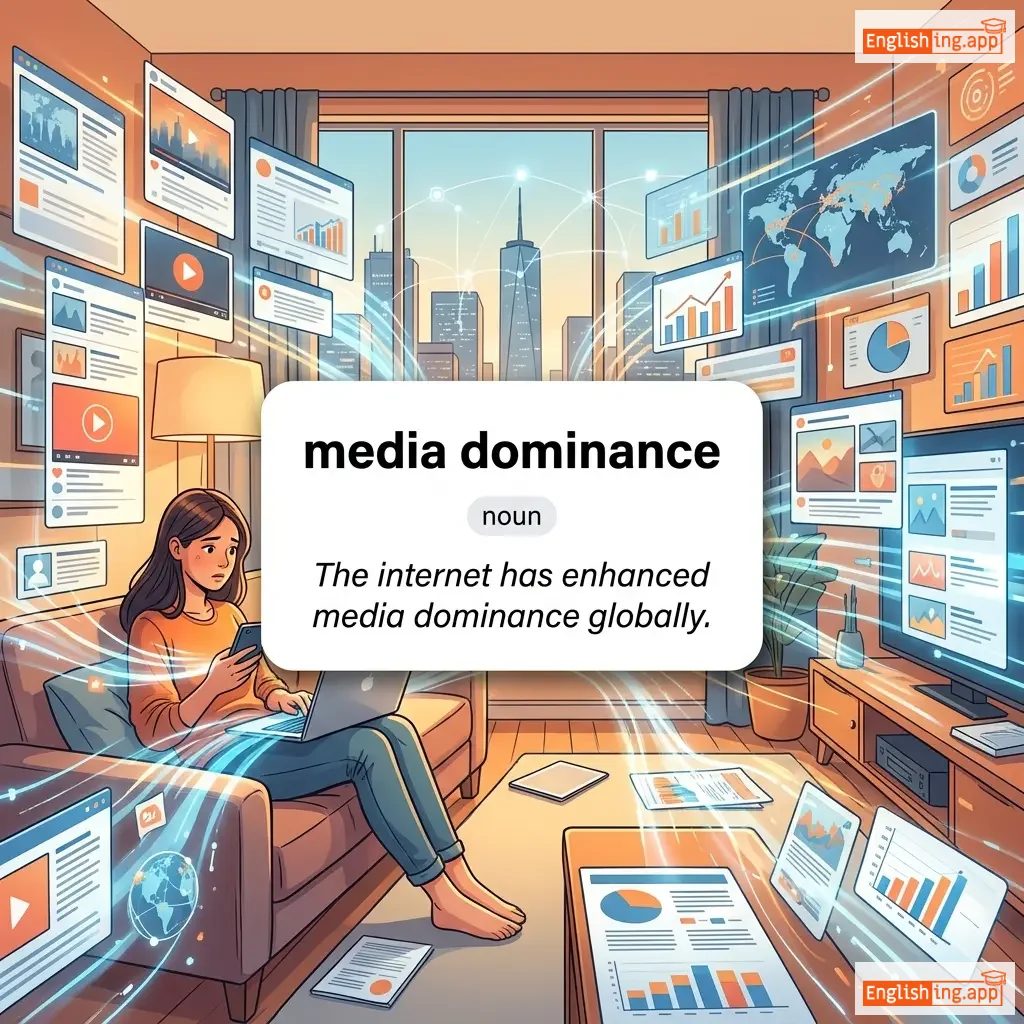
media dominance definition card — visual illustration of the meaning
noun
ˈmiːdiə ˈdɒmɪnəns
媒体主导地位 (méitǐ zhǔdǎo dìwèi)

The control and powerful influence that media has over communication and information distribution in society.

"The internet has enhanced media dominance globally."

"互联网增强了全球媒体主导地位。" (Hùliánwǎng zēngqiángle quánqiú méitǐ zhǔdǎo dìwèi.)
adjective
/ˌmed.iˈiː.vəl/
中世纪的 (zhōngshìjì de)

relating to the Middle Ages; medieval

"The castle displayed mediaeval architecture and design."

"城堡展示了中世纪的建筑风格和设计。" (Chéngbǎo zhǎnshìle zhōngshìjì de jiànzhú fēnggé hé shèjì.)
adjective
/ˈmiː.di.əl/
内侧 (nèi cè)

Situated in or pertaining to the middle; located toward the midline of the body or structure.

"The medial side of the knee is more prone to injury."

"膝盖的内侧更容易受伤。" (xīgài de nèi cè gèng róngyì shòushāng.)
verb
/ˈmiː.di.eɪt/
调解 (tiaojie)

To act as an intermediary in bringing about agreement or reconciliation between parties.

"She was asked to mediate between the two companies."

"她被要求在两家公司之间调解。" (Ta bei yaoqiu zai liang jia gongsi zhi jian tiaojie.)
mediation definition card — visual illustration of the meaning
noun
/ˌmiːdɪˈeɪʃən/
调解 (tiaojie)

Intervention between parties to promote reconciliation, settlement, or compromise.

"The mediation helped resolve the conflict between the two teams."

"调解帮助解决了两队之间的冲突。" (Tiaojie bangzhu jiejuele liang dui zhijian de chongtu.)
mediative definition card — visual illustration of the meaning
adjective
/ˈmiː.di.eɪ.tɪv/
与调解相关 (yǔ tiáojiě xiāngguān)

Related to mediation, helping to resolve conflicts through diplomatic means.

"His mediative skills helped resolve the conflict."

"他的调解技巧帮助解决了冲突。" (Tā de tiáojiě jìqiǎo bāngzhù jiějué le chōngtú.)
noun
/ˈmiːdieɪtər/
调解员 (tiaojieyuan)

A person who attempts to make people involved in a conflict agree

"The United Nations often acts as a mediator in international disputes."
"联合国常常在国际争端中充当调解员。" (Liánhéguó chángcháng zài guójì zhēngduān zhōng chōngdāng tiáojiěyuán.)
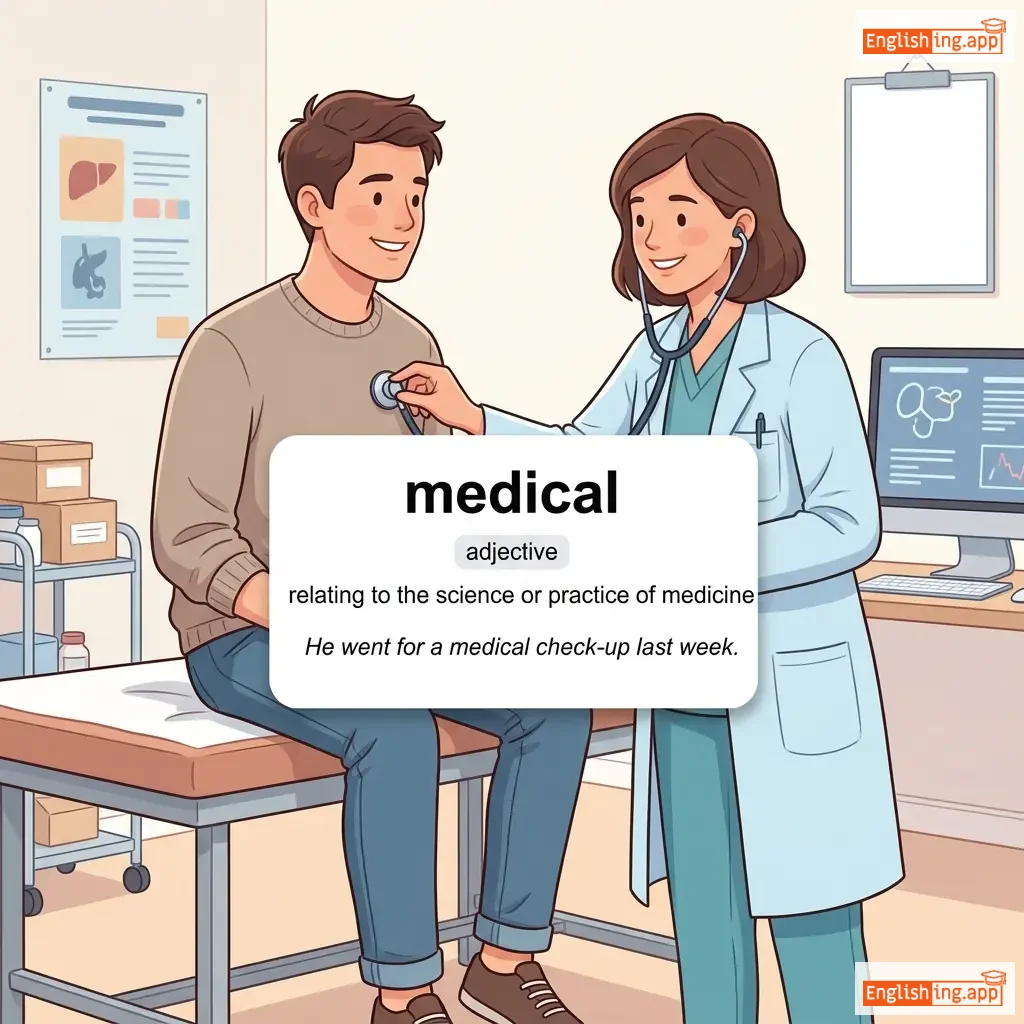
medical definition card — visual illustration of the meaning
adjective
/ˈmedɪkəl/
医学的 (yīxué de)

relating to the science or practice of medicine

"He went for a medical check-up last week."
"他上周去做了体检。" (Tā shàng zhōu qù zuò le tǐjiǎn.)
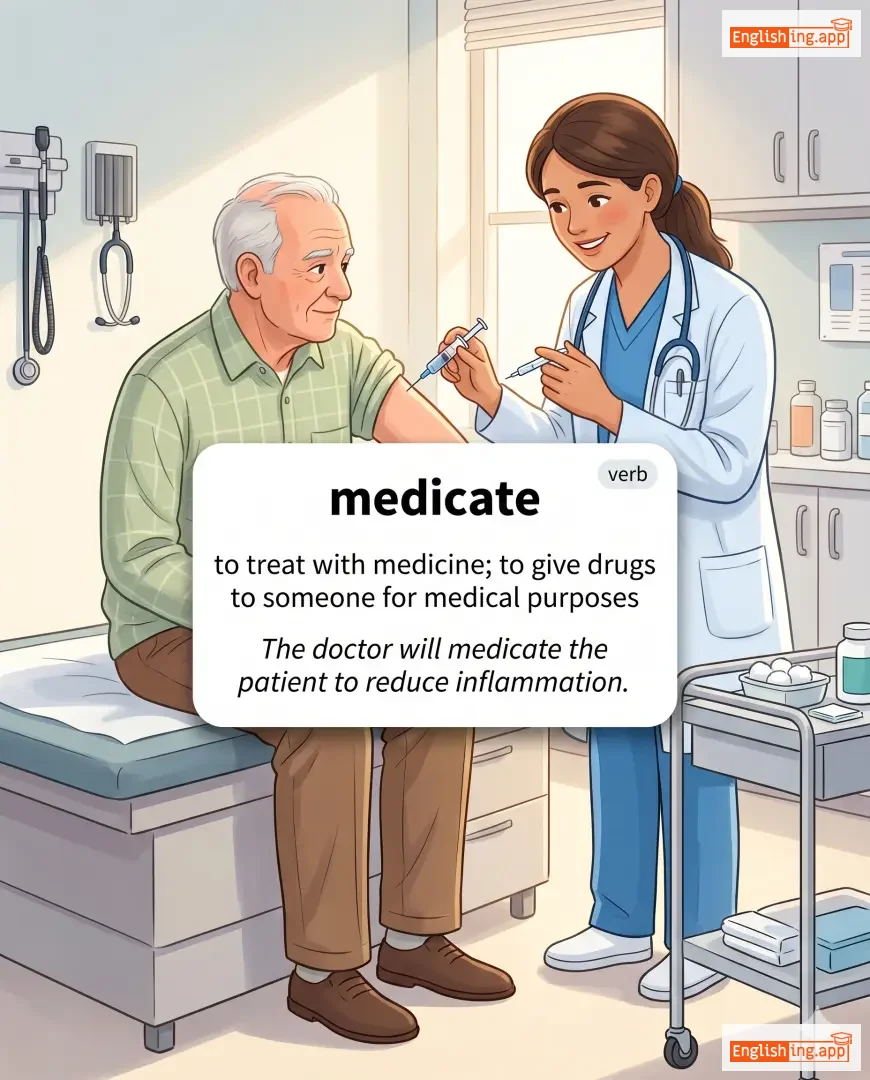
medicate definition card — visual illustration of the meaning
verb
/ˈmedɪkeɪt/
用药治疗 (yòng yào zhìliáo)

to treat with medicine; to give drugs to someone for medical purposes

"The doctor will medicate the patient to reduce inflammation."

"医生将为病人治疗以减轻炎症。" (Yīshēng jiāng wèi bìngrén zhìliáo yǐ jiǎnqīng yánzhèng.)
noun
/ˌmedɪˈkeɪʃən/
药物 (yaowu)

a drug or other form of medicine used to treat or prevent disease

"The doctor prescribed medication for his headache."

"医生为他的头痛开了药物。" (Yisheng wei tā de tóutòng kāile yàowù.)
medicine definition card — visual illustration of the meaning
noun
/ˈmed.ɪ.sən/
药物 (yaowu)

A substance used to treat illness, injury, or disease.

"He took some medicine for his headache."

"他吃了些药物来治疗头痛。" (Tā chīle xiē yàowù lái zhìliáo tóutòng.)
adjective
/ˌmiː.diˈiː.vəl/
中世纪的 (zhōng shìjì de)

Relating to the Middle Ages, the period in European history from about the 5th to the 15th century.

"The castle is a famous medieval monument."

"这座城堡是一个著名的中世纪纪念碑。" (Zhè zuò chéngbǎo shì yīgè zhùmíng de zhōng shìjì jìniànbēi.)
adjective
/ˌmiː.diˈoʊ.kər/
平庸 (pingyong)

Of only average quality; not very good.

"The movie was entertaining but overall mediocre."

"这部电影很有趣,但总体来说平庸。" (Zhè bù diànyǐng hěn yǒuqù, dàn zǒngtǐ lái shuō píngyōng.)