👉mean (mīn)

verb, adjective
/miːn/
意味着 (yìwèi zhe)

含义

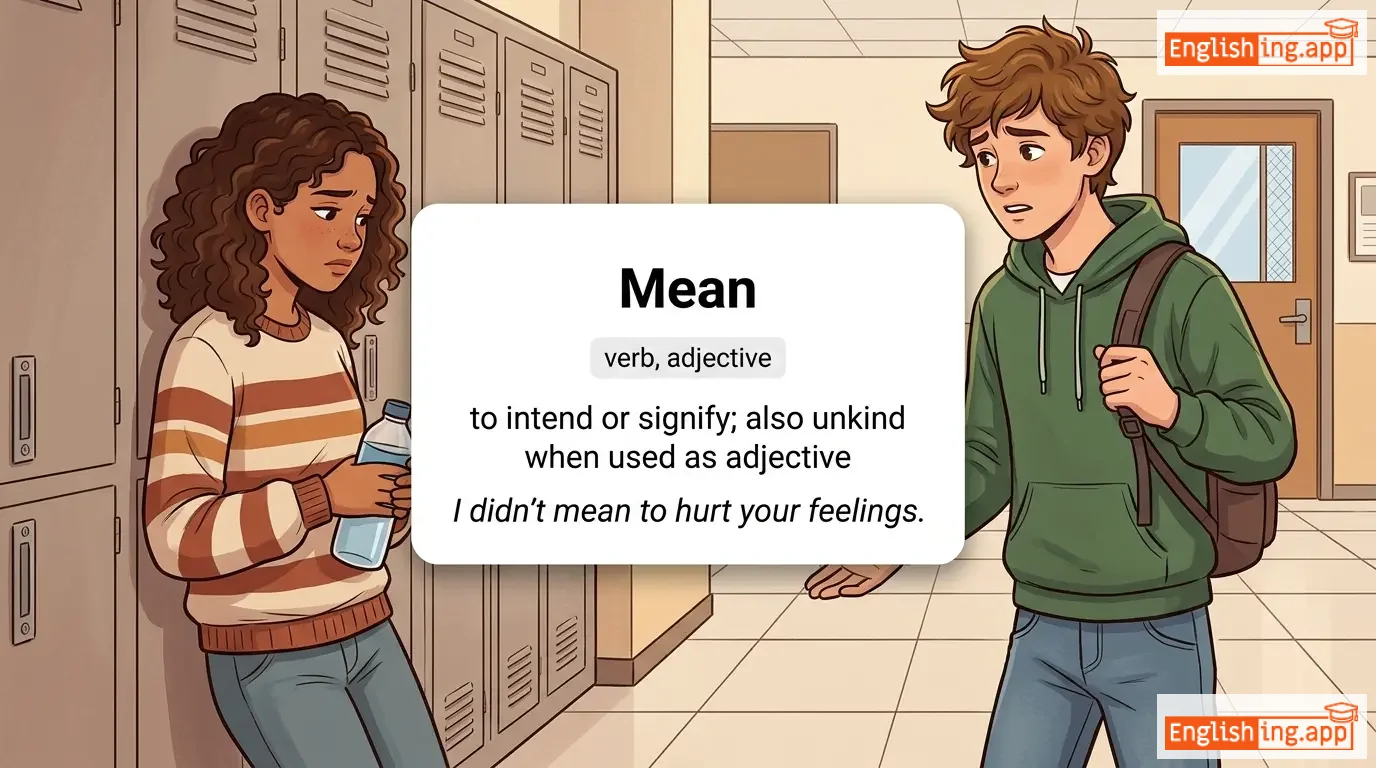
to intend or signify; also unkind when used as adjective
to signify or indicate; to intend or plan; to have significance
unkind; cruel; nasty
含义翻译
表示或指示; 意图或计划; 有意义
biǎoshì huò zhǐshì; yìtú huò jìhuà; yǒu yìyì

例句

I didn’t mean to hurt your feelings.

What does this word mean in English?

这个词在英语中是什么意思?
Zhège cí zài yīngyǔ zhōng shì shénme yìwèi?

Don't be so mean to your little sister.

不要对你的小妹妹这么残忍。
Bù yào duì nǐ de xiǎo mèimei zhème cánrěn.

示例表达

mean business

同义词

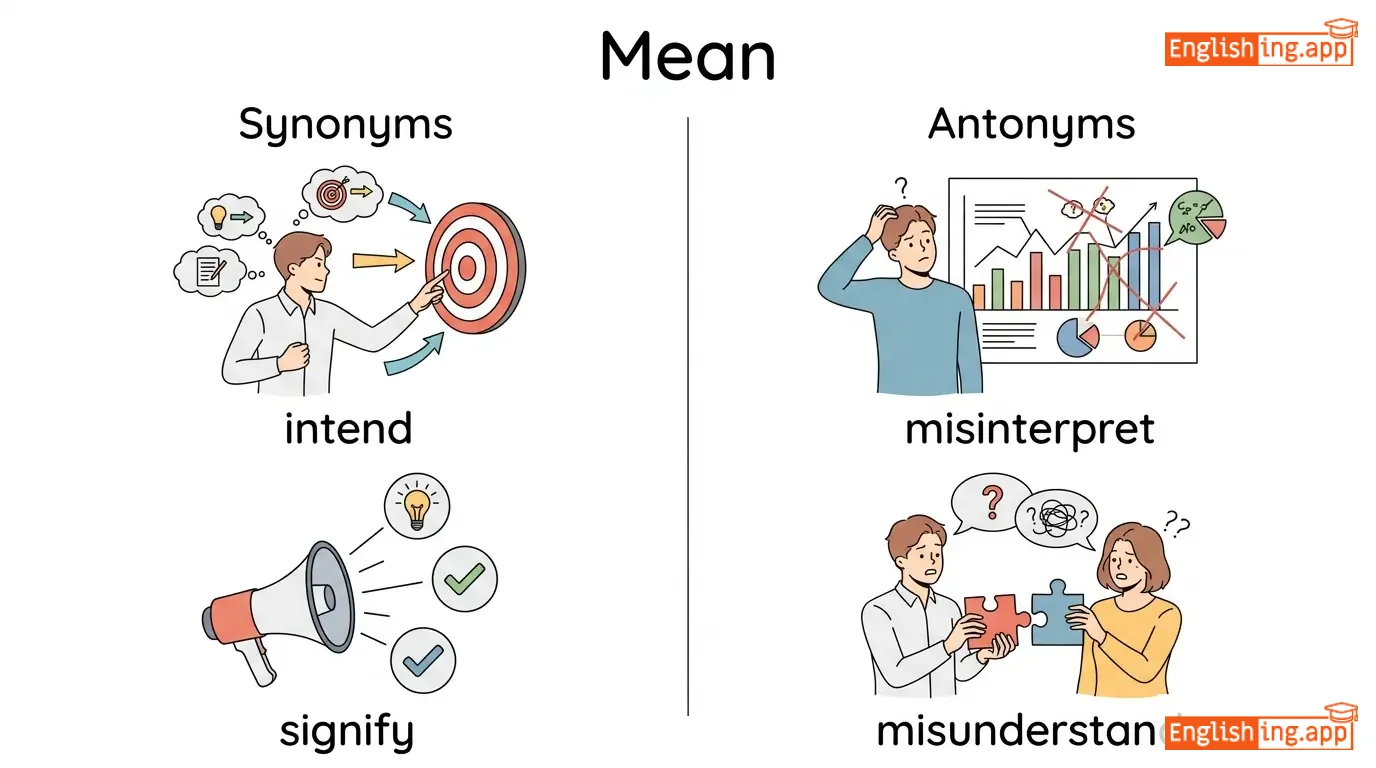
intend, signify, denote, imply, indicate, suggest, cruel, unkind, nasty, spiteful
条目 1
intend, signify, denote, imply
条目 2
signify, indicate, denote, imply, suggest
条目 3
cruel, unkind, nasty, spiteful

反义词

misinterpret, misunderstand, meaningless, insignificant, kind, nice, generous, friendly
条目 1
misinterpret, misunderstand
条目 2
meaningless, insignificant
条目 3
kind, nice, generous, friendly

搭配词

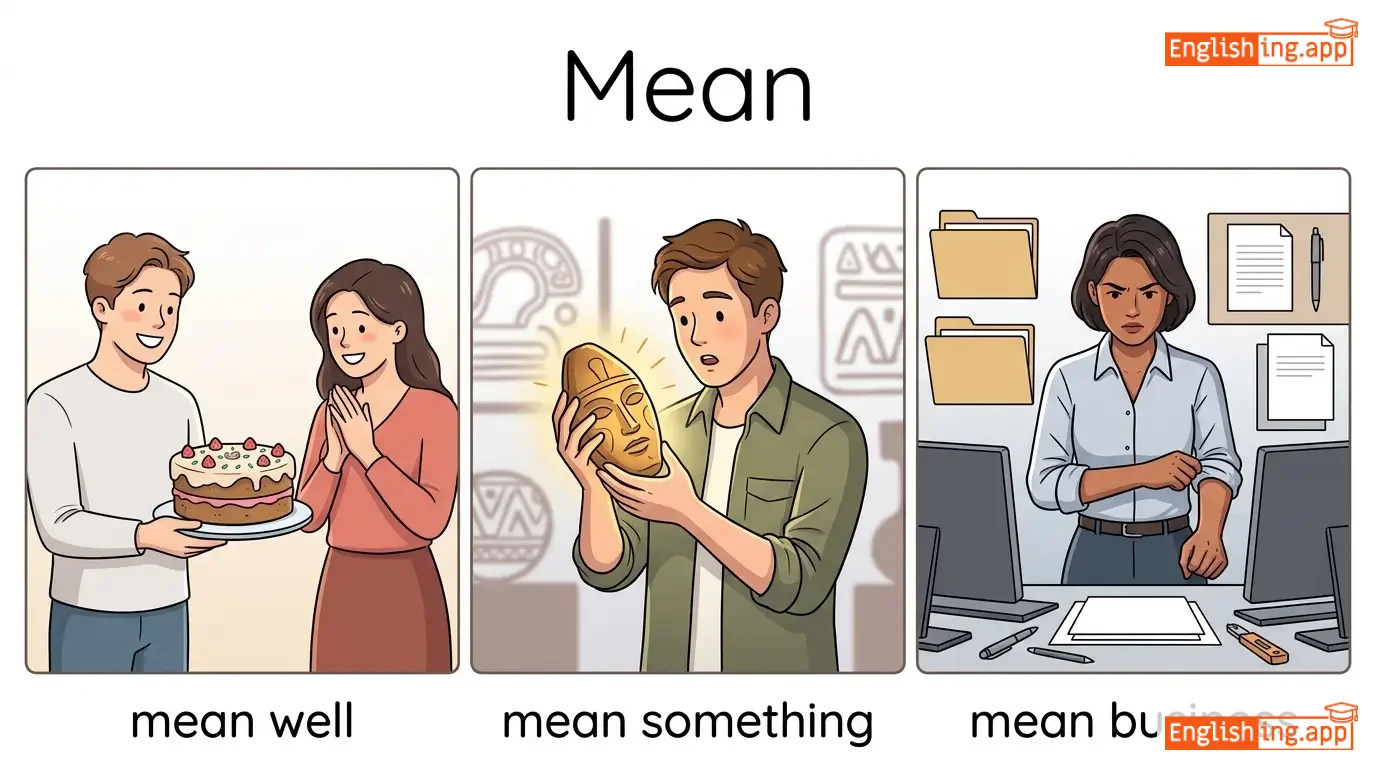
mean well, mean something, mean business, really mean, mean seriously, mean no harm, mean person, mean comment, mean behavior
条目 1
mean well, mean something, mean business, really mean
条目 2
mean something, mean well, mean business, mean seriously, mean no harm
条目 3
mean person, mean comment, mean behavior

更多例句

We ended up spending more without meaning to.

我们最后无意中花多了钱。
Women zuihou wuyi zhong hua duo le qian.

The answer depends on what you mean ultimately.

答案归根结底取决于你的意思。
Daan guigenjiedi qujue yu ni de yisi.

Sorry, but just to clarify, is this what you meant?

抱歉,但只是为了澄清,这就是你想表达的吗?
Bàoqiàn, dàn zhǐshì wèile chéngqīng, zhè jiùshì nǐ xiǎng biǎodá de ma?

She ended up missing the meeting without meaning to.

她最后无意中错过了会议。
Ta zuihou wuyi zhong cuoguo le huiyi.

He ended up saying the wrong thing without meaning to.

他最后无意中说错了话。
Ta zuihou wuyi zhong shuo cuo le hua.

Has the drama on Broadway been popular in the meantime?

百老汇的戏剧在此期间受欢迎吗?
Bǎilǎohuì de xìjù zài cǐ qījiān shòu huānyíng ma?

I’ll begin by outlining the issues and then go on to describe what they mean for you.

我将通过概述问题开始,然后继续描述它们对你的意义。
Wǒ jiāng tōngguò gàishuò wèntí kāishǐ, ránhòu jìxù miáoshù tāmen duì nǐ de yìyì.

I’ll begin by highlighting the issues and then go on to describe what they mean for you.

我将通过突出问题开始,然后继续描述它们对你意味着什么。
Wǒ jiāng tōngguò túchū wèntí kāishǐ, ránhòu jìxù miáoshù tāmen duì nǐ yìwèi zhe shénme.

Okay, that covers the new policies. Now, I would like to move to what they mean for you.

好的,这涵盖了新的政策。现在,我想谈谈这些对你意味着什么。
Hao de, zhe han gai le xin de zheng ce. Xian zai, wo xiang tan tan zhe xie dui ni yi wei zhe shen me.

Okay, that covers the new policies. Next, I would like to move to what they mean for you.

好的,这涵盖了新的政策。接下来,我想讲一下它们对你意味着什么。
hao de, zhe han gai le xin de zheng ce. jie xia lai, wo xiang jiang yi xia ta men dui ni yi wei zhe shen me.

相关词汇

To shut something (verb); near in space or relationship (adjective).
Past tense and past participle of 'spend'; also used as an adjective meaning exhausted or used up.
to show or display clearly; obvious or evident
to mark with stripes or grooves; striped or streaked in appearance
verb: to explain something in detail; adjective: detailed and complicated in design
To make something less extreme (verb); average in amount, intensity, quality, or degree (adjective).

探索更多