词汇表

英语词汇词典 | 单词含义、定义和示例

noun
/ˌɪntərˈmiːdiˌɛri/
中介 (zhongjie)

A person who acts as a link between people in order to try to bring about an agreement; a mediator.

"The diplomat served as an intermediary between the two conflicting nations."

"外交官作为两国冲突中的中介起到了作用。" (Wàijiāo guān zuòwéi liǎng guó chōngtú zhōng de zhōngjiè qǐ dào le zuòyòng.)
adjective
/ˌɪntərˈmiːdiət/
中级 (zhōngjí)

Coming between two things in time, place, or order; in the middle level or stage.

"She is taking an intermediate-level French course."

"她正在上一个中级法语课程。" (Tā zhèngzài shàng yīgè zhōngjí fǎyǔ kèchéng.)
noun
/ɪnˈtɜːrmənt/
埋葬 (mái zàng)

The act of burying a dead body in a grave or tomb.

"The interment took place at the family cemetery."

"埋葬仪式在家庭墓地举行。" (Mái zàng yíshì zài jiātíng mùdì jǔxíng.)
adjective
/ɪnˈtɜːrmənəbl/
无尽 (wujin)

Seemingly endless; having no apparent end.

"The meeting felt interminable and exhausting."

"会议感觉无尽且令人疲惫。" (Huiyi ganjue wujin qie lingren pibei.)
noun
/ˌɪntərˈmɪʃən/
中场休息 (zhōngchǎng xiūxí)

A pause or break, especially during a performance or event.

"The play had a twenty-minute intermission."

"话剧有二十分钟的中场休息。" (Huàjù yǒu èrshí fēnzhōng de zhōngchǎng xiūxí.)
verb
/ˌɪntərˈmɪt/
中断 (zhongduan)

To suspend or stop for a time; to pause intermittently.

"The rain would intermit and then start again."
"雨会暂停然后再开始。" (Yu hui zanting ranhou zai kaishi.)
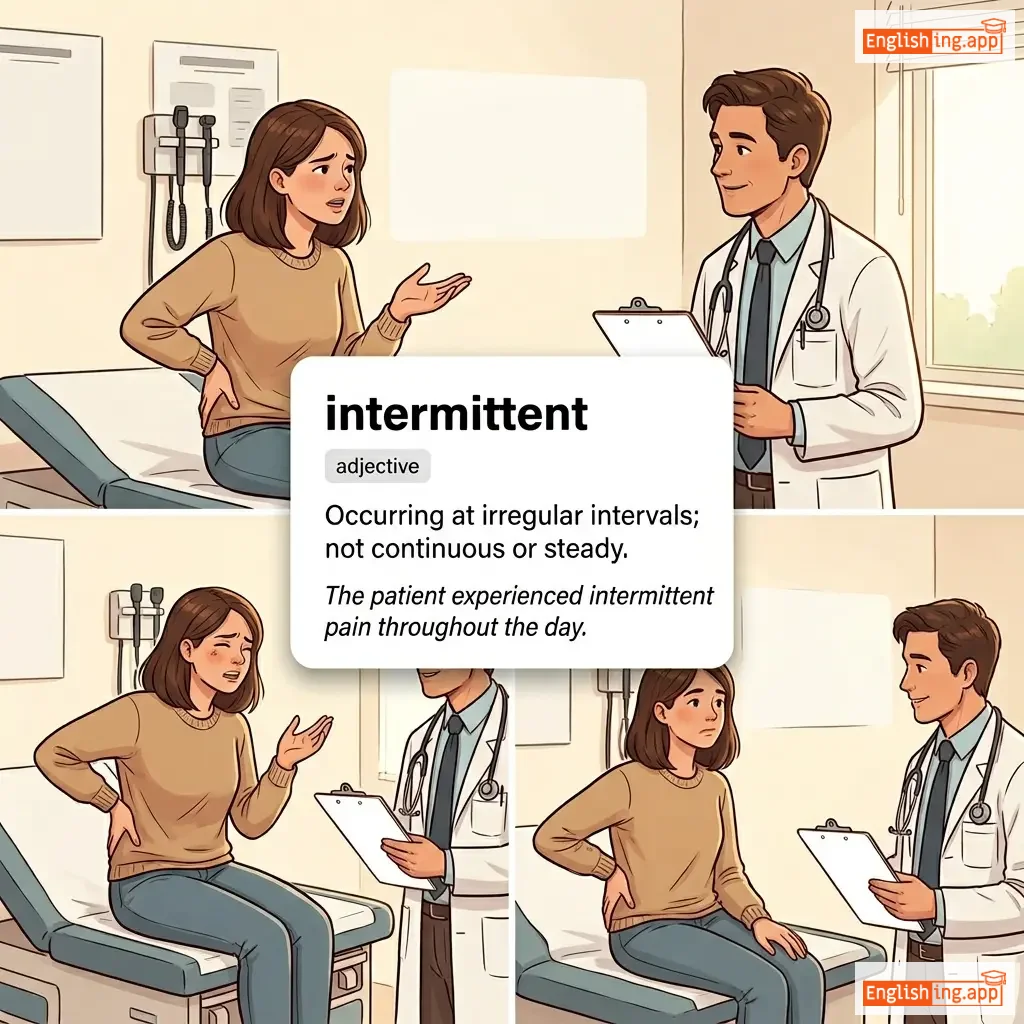
intermittent definition card — visual illustration of the meaning
adjective
/ˌɪntərˈmɪtənt/
间歇的 (jiànxiē de)

Occurring at irregular intervals; not continuous or steady.

"The patient experienced intermittent pain throughout the day."

"患者在一天内经历了间歇性的疼痛。" (Huànzhě zài yītiān nèi jīnglìle jiànxiē xìng de téngtòng.)
adjective
/ɪnˈtɜːrnəl/
内部 (neibu)

situated inside; relating to the inside or inner part of something

"The company is conducting an internal audit this month."

"公司本月正在进行内部审计。" (Gongsi ben yue zhengzai jinxing neibu shenji.)
international definition card — visual illustration of the meaning
adjective
/ˌɪntərˈnæʃənəl/
国际的 (guoji de)

Existing, occurring, or carried on between nations.

"The company is planning to expand into international markets."
"该公司计划扩展到国际市场。" (Gāi gōngsī jìhuà kuòzhǎn dào guójì shìchǎng.)
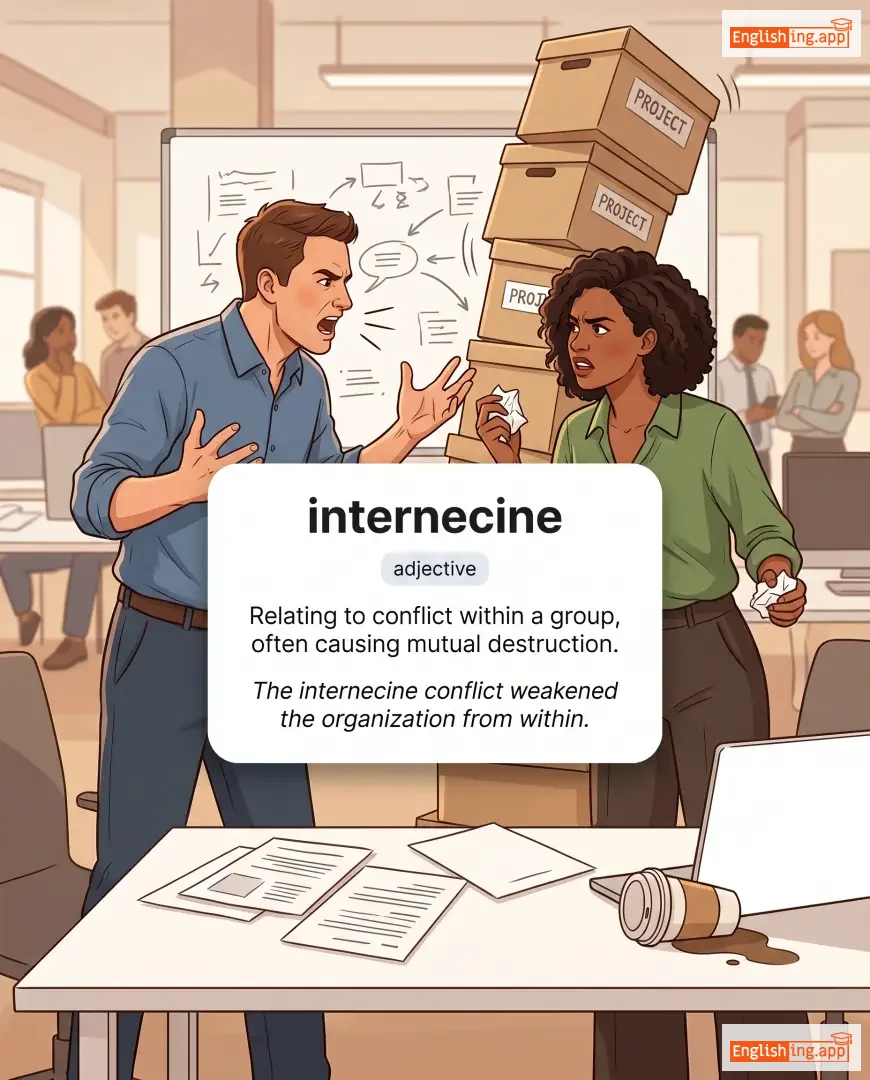
internecine definition card — visual illustration of the meaning
adjective
/ˌɪntərˈniːsaɪn/
内部冲突 (neibu chongtu)

Relating to conflict within a group, often causing mutual destruction.

"The internecine conflict weakened the organization from within."
"内部冲突削弱了组织内部的力量" (Neibu chongtu xueren le zuzhi neibu de liliang)
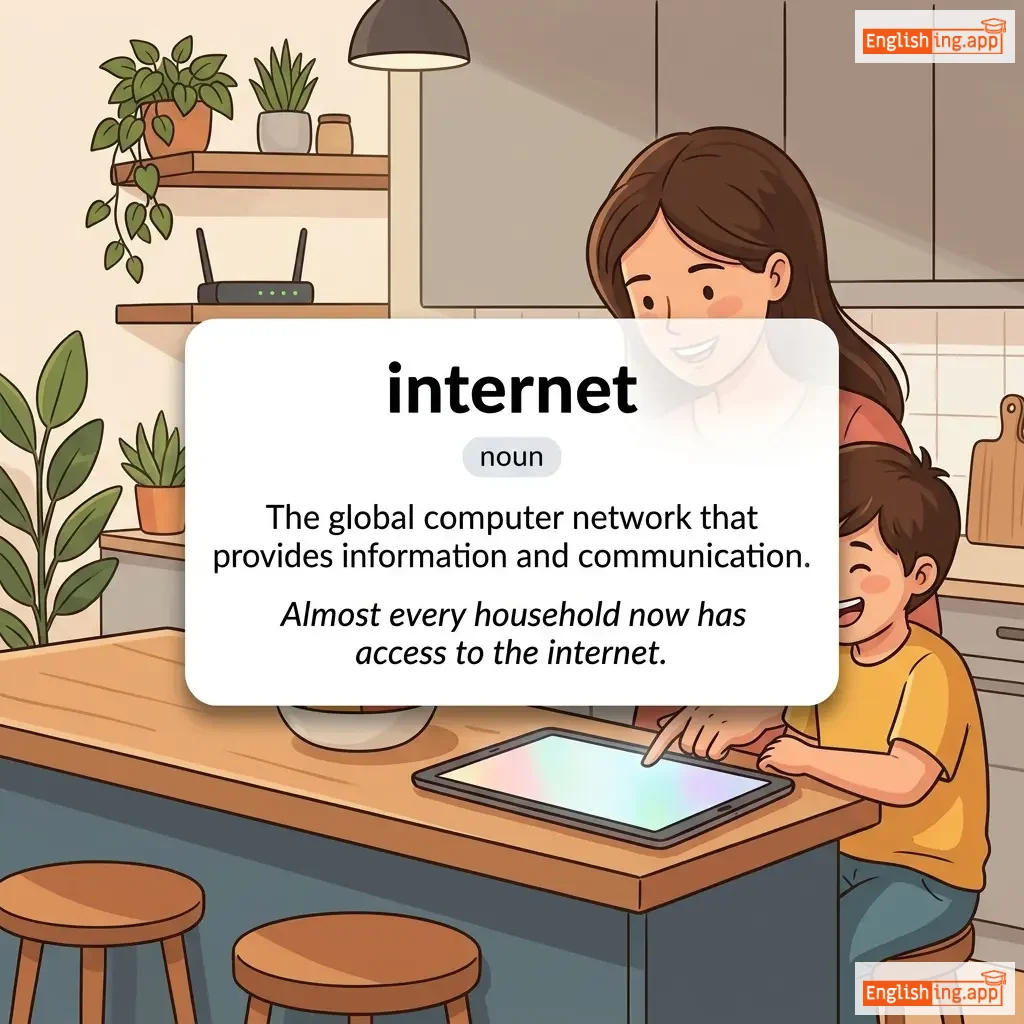
internet definition card — visual illustration of the meaning
noun
/ˈɪntərˌnɛt/
互联网 (hulianwang)

The global computer network that provides information and communication.

"Almost every household now has access to the internet."
"几乎每个家庭现在都有互联网访问。" (Jīhū měi gè jiātíng xiànzài dōu yǒu hùliánwǎng fǎngwèn.)
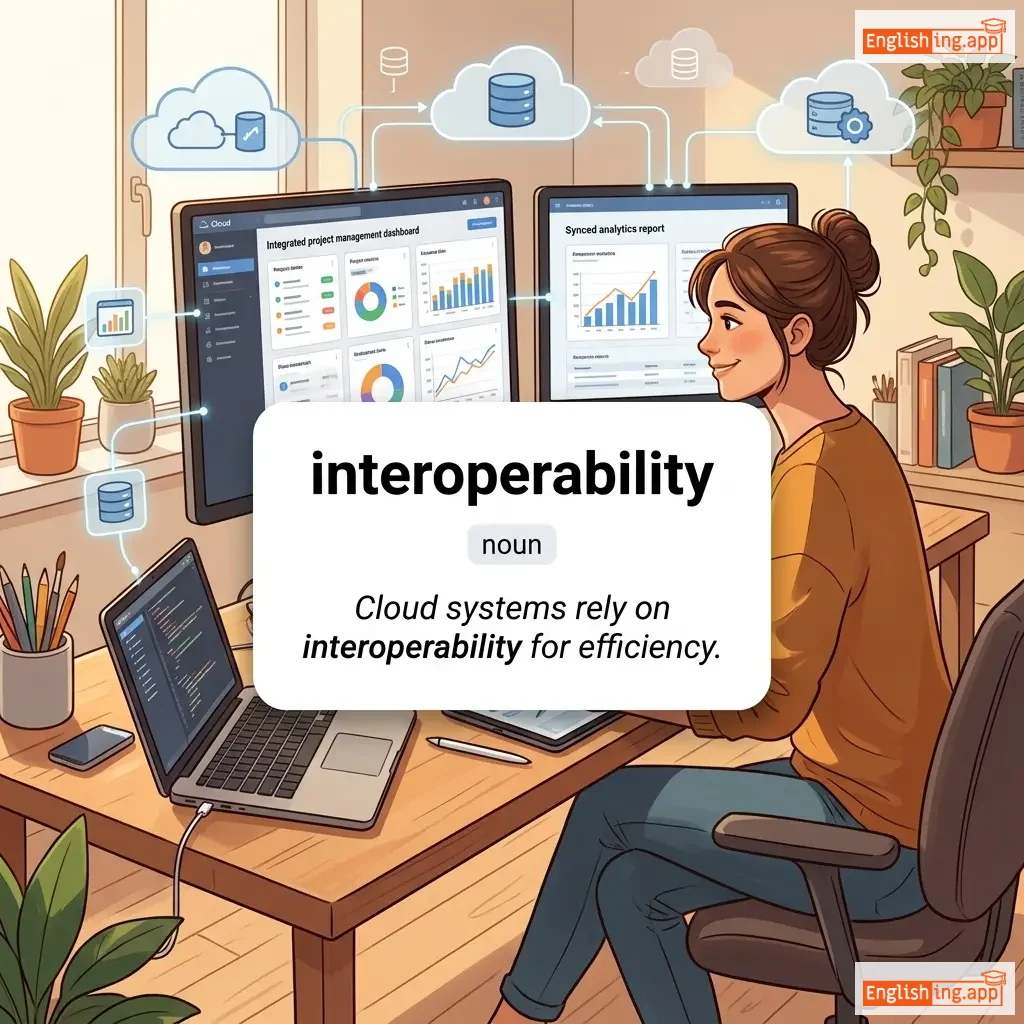
interoperability definition card — visual illustration of the meaning
noun
ˌɪn.tərˌɒp.ər.əˈbɪl.ɪ.ti
互操作性 (hù cāo zuò xìng)

The ability of computer systems or software to exchange and make use of information.

"Cloud systems rely on interoperability for efficiency."
"云系统依赖互操作性来提高效率。" (Yún xìtǒng yīlài hù cāo zuò xìng lái tígāo xiàolǜ.)
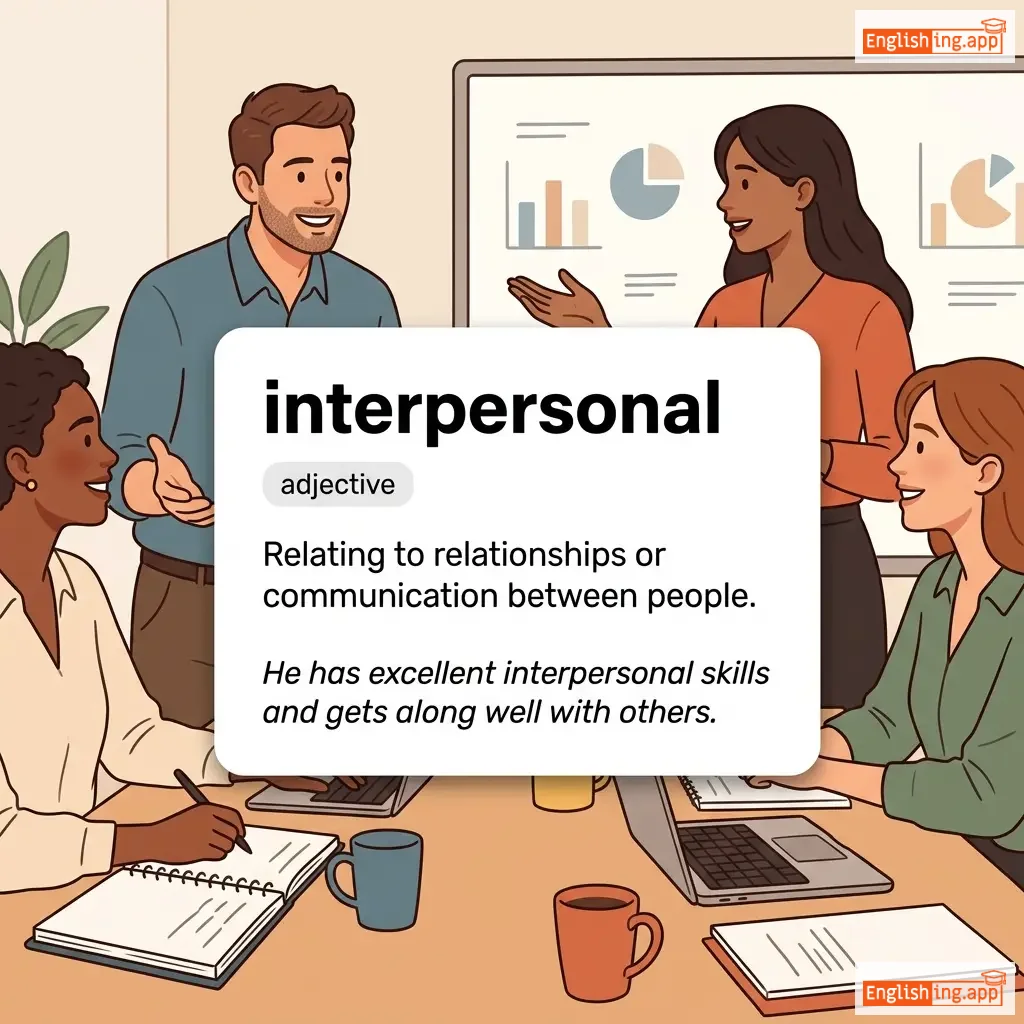
interpersonal definition card — visual illustration of the meaning
adjective
/ˌɪntəˈpɜːsənl/
人际 (rénjì)

Relating to relationships or communication between people.

"He has excellent interpersonal skills and gets along well with others."

"他拥有出色的人际交往技巧,并且能与他人和谐相处。" (Tā yǒngyǒu chūsè de rénjì jiāowǎng jìqiǎo, bìngqiě néng yǔ tārén héxié xiāngchǔ.)
noun
/ˈɪntərˌpleɪ/
相互作用 (xiānghù zuòyòng)

The way in which two or more things have an effect on each other.

"The interplay between culture and technology shapes modern life."

"文化与技术之间的相互作用塑造了现代生活。" (Wénhuà yǔ jìshù zhījiān de xiānghù zuòyòng sùzào le xiàndài shēnghuó.)
interpolate definition card — visual illustration of the meaning
verb
/ɪnˈtɜːrpəˌleɪt/
插入 (chārù)

To insert something, often words, into a text or conversation; to estimate values between known data points.

"The editor interpolated a missing paragraph into the manuscript."

"编辑在手稿中插入了一个缺失的段落。" (Biānjí zài shǒugǎo zhōng chārùle yīgè quēshī de duànluò.)
noun
/ɪnˌtɜːrpəˈleɪʃən/
插值 (chā zhí)

The act of inserting something into a text or estimating values within a sequence of data.

"The scientist used interpolation to predict the missing data points."

"科学家使用插值法来预测缺失的数据点。" (Kēxuéjiā shǐyòng chāzhí fǎ lái yùcè quēshī de shùjù diǎn.)
verb
/ˌɪntərˈpoʊz/

To place or insert between one thing and another; to intervene in a situation.

"He quickly interposed himself between the fighters to stop the quarrel."

noun
/ˌɪntərpəˈzɪʃən/
干预 (gānyù)

The act of intervening or coming between two things, often to influence or prevent an outcome.

"The manager’s interposition prevented a heated argument from escalating."

"经理的干预阻止了激烈争论的升级。" (Jīnglǐ de gānyù zǔzhǐle jīliè zhēnglùn de shēngjí.)
🗣️

interpret

verb
/ɪnˈtɜːrprət/

to explain the meaning of something; to translate orally

"She had to interpret the speech for the foreign guests."

noun
/ɪnˌtɜːrprəˈteɪʃən/
解释 (jieshi)

the action of explaining the meaning of something

"The teacher gave her own interpretation of the poem."

"老师给出了她对这首诗的解释。" (Lǎoshī gěi chūle tā duì zhè shǒu shī de jiěshì.)
noun
/ɪnˈtɜːrprɪtər/
翻译员 (fānyìyuán)

A person who translates spoken language orally in real time.

"The interpreter helped the tourists communicate with the locals."
"翻译员帮助游客与当地人沟通。" (Fānyìyuán bāngzhù yóukè yǔ dāngdì rén gōutōng.)
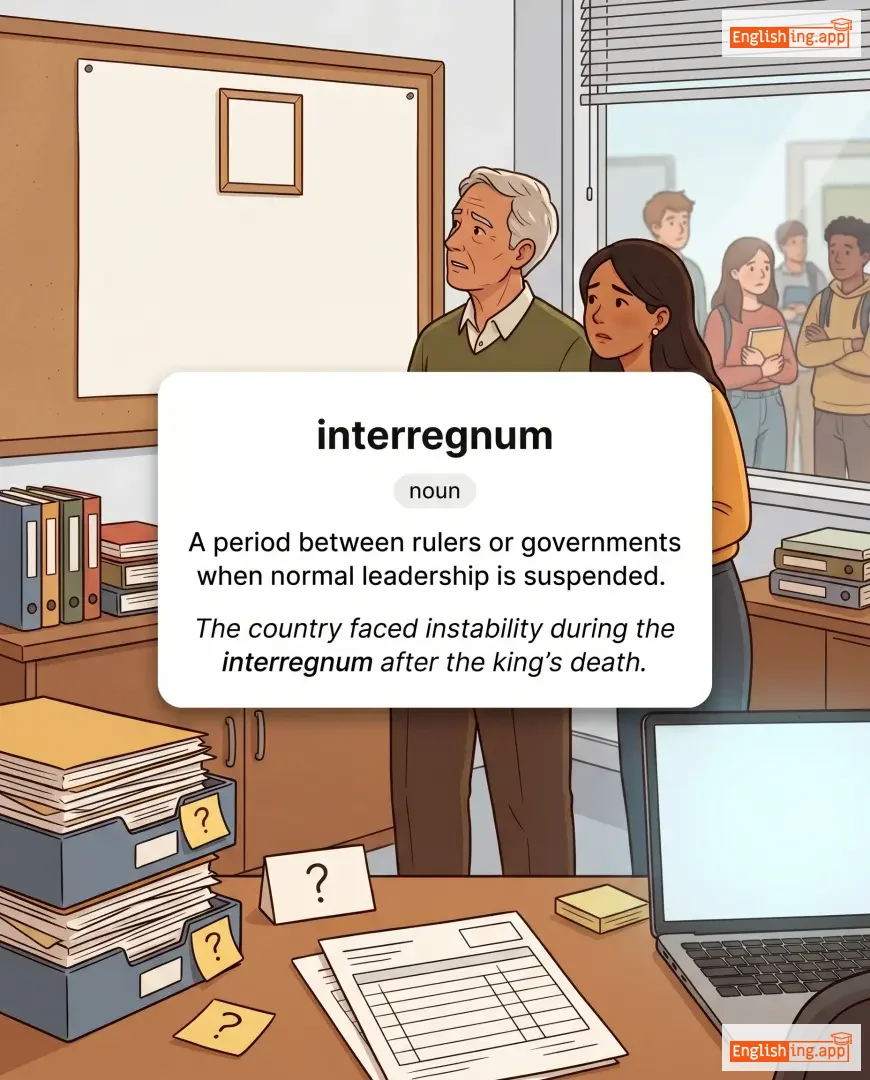
interregnum definition card — visual illustration of the meaning
noun
/ˌɪntərˈrɛɡnəm/
过渡期 (guòdùqī)

A period between rulers or governments when normal leadership is suspended.

"The country faced instability during the interregnum after the king’s death."

"在国王去世后的过渡期,该国经历了不稳定。" (Zài guówáng qùshì hòu de guòdùqī, gāi guó jīnglìle bù wěndìng.)
interrogate definition card — visual illustration of the meaning
verb
/ɪnˈtɛrəˌɡeɪt/
讯问 (xunwen)

To question someone closely and aggressively, often by an authority.

"The detective interrogated the suspect for hours."

"侦探讯问嫌疑人好几个小时。" (Zhentan xunwen xianyi ren hao ji ge xiaoshi.)
adjective
/ˌɪntəˈrɑːɡətɪv/
疑问的 (yíwèn de)

Relating to or conveying a question; in grammar, used to form questions.

"She raised an interrogative eyebrow when she heard the news."

"她听到消息时,抬起了疑问的眉毛。" (Tā tīngdào xiāoxī shí, táiqǐle yíwèn de méimáo.)
adjective
/ˌɪntəˈrɒɡətəri/
询问的 (xunwen de)

expressed in the form of a question; relating to questioning

"The lawyer’s interrogatory tone made the witness uncomfortable."

"律师的询问语气让证人感到不舒服。" (Lüshi de xunwen yuqi rang zhengren gandao bu shufu.)
verb
/ˌɪntəˈrʌpt/
打断 (dǎduàn)

to stop someone from speaking or doing something by suddenly saying or doing something

"She tried not to interrupt while he was speaking."

"她尽量不在他说话时打断他。" (Tā jǐnliàng bù zài tā shuōhuà shí dǎduàn tā.)
noun
/ˌɪntəˈrʌpʃən/
中断 (zhongduan)

the act of stopping or breaking the continuity of something; a pause caused by an external action

"The meeting was delayed due to an unexpected interruption."

"会议因为一次意外的中断而被推迟。" (huiyi yinwei yici yiwai de zhongduan er bei tuichi)
verb
/ˌɪntəˈsɛkt/
交叉 (jiāochā)

to cross or pass through each other

"The two roads intersect at the city center."

"这两条道路在市中心交汇。" (Zhè liǎng tiáo dàolù zài shì zhōngxīn jiāohuì.)
noun
/ˌɪntərˈsɛkʃən/
交叉口 (jiaochakou)

a point where two or more things intersect, especially a road or path

"The intersection of Main Street and 5th Avenue is always busy."

"主街和第五大道的交叉口总是很忙。" (Zhu jie he di wu da dao de jiao cha kou zong shi hen mang.)
interstellar definition card — visual illustration of the meaning
adjective
ˌɪn.təˈstel.ər
星际的,星际间,宇宙的 (xingji de, xingji jian, yuzhou de)

Occurring or situated between stars.

"Scientists study interstellar travel possibilities."

"科学家研究星际旅行的可能性。" (Kexuejia yanjiu xingji lvxing de kenengxing.)
noun
/ɪnˈtɜːrstɪs/
缝隙 (fengxi)

a small space that lies between things

"Light filtered through the narrow interstices of the wall."
"光线透过墙壁的狭窄缝隙照射进来。" (Guangxian touguo qiangbi de xiazhai fengxi zhaoshe jinlai.)
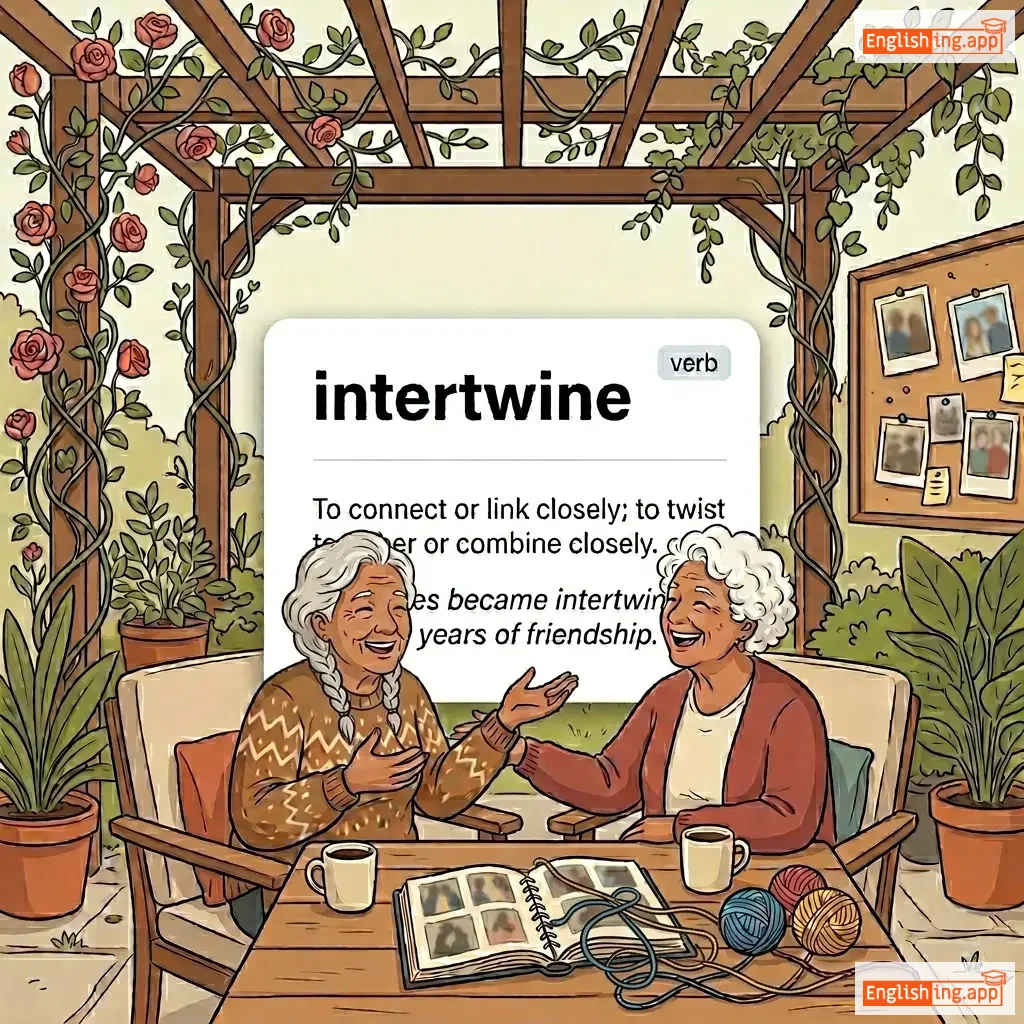
intertwine definition card — visual illustration of the meaning
verb
/ˌɪn.tɚˈtwaɪn/
紧密连接或联系;一起扭曲或紧密结合 (jinmi lianjie huo lianxi; yiqi niuqu huo jinmi jiehe)

To connect or link closely; to twist together or combine closely.

"Their lives became intertwined through years of friendship."

"他们的生活通过多年的友谊紧密交织在一起。" (Tamen de shenghuo tongguo duonian de youyi jinmi jiao zhi zai yiqi.)
adjective
/ˌɪntərˈtwaɪnd/
幸福 (xìngfú)

closely connected or twisted together

"Their lives became deeply intertwined after the accident."

"当她获得奖项时,她无法掩饰自己的幸福。" (Dāng tā huòdé jiǎngxiàng shí, tā wúfǎ yǎnshì zìjǐ de xìngfú.)
noun
/ˈɪntərvəl/
间隔 (jiange)

a period of time between two events or points; a pause or break in activity

"There was a short interval between the two performances."

"两个表演之间有一个短暂的间隔。" (Liang ge biaoyan zhi jian you yi ge duanzan de jiange.)
noun
/ˈɪntərˌveɪl/
沿河低洼的土地,通常肥沃而平坦 (yán hé dī wā de tǔdì, tōngcháng féi wò ér píng tǎn)

A low-lying tract of land along a river, usually fertile and flat.

"The farmers cultivated crops on the lush intervale by the river."

"农民在河边的肥沃土地上种植庄稼。" (Nóngmín zài hé biān de féi wò tǔdì shàng zhòngzhí zhuāngjià.)
verb
/ˌɪntərˈviːn/
介入 (jiè rù)

To come between people, groups, or events, often to prevent conflict or improve a situation.

"The teacher had to intervene to stop the fight between the students."
"老师不得不介入,阻止学生之间的打架。" (Lǎoshī bùdébù jièrù, zǔzhǐ xuéshēng zhījiān de dǎjià.)
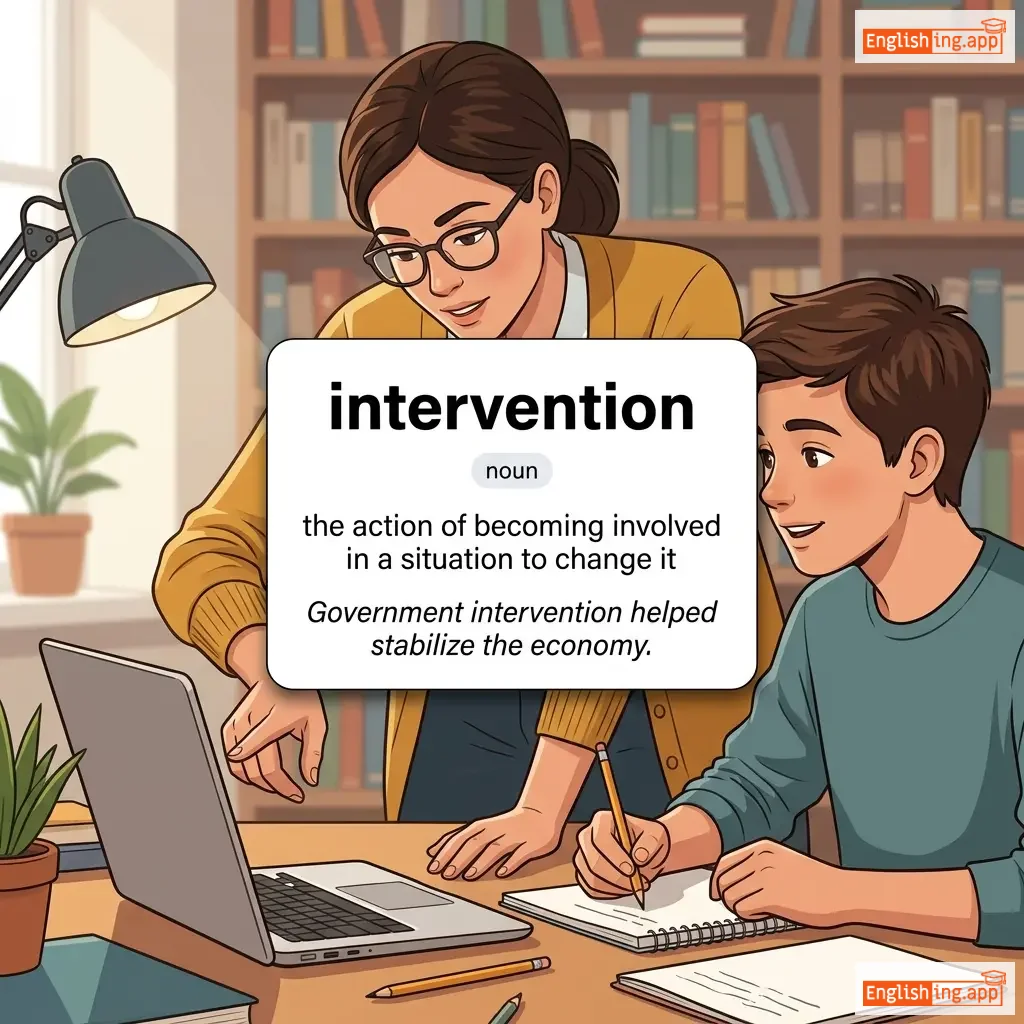
intervention definition card — visual illustration of the meaning
noun
/ˌɪntərˈvɛnʃən/
干预 (gānyù)

the action of becoming involved in a situation to change it

"Government intervention helped stabilize the economy."
"政府的干预帮助稳定了经济。" (Zhèngfǔ de gānyù bāngzhù wěndìngle jīngjì.)
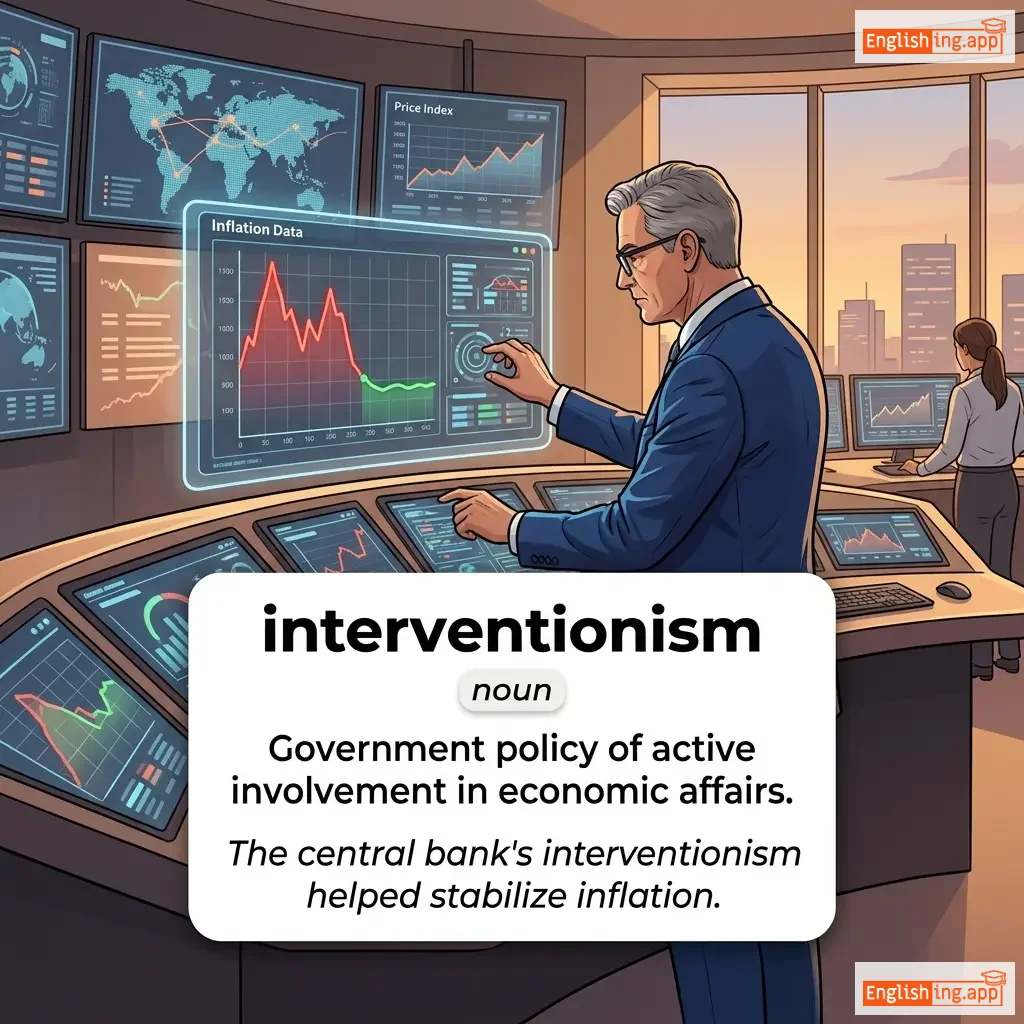
interventionism definition card — visual illustration of the meaning
noun
/ˌɪn.təˈvɛn.ʃə.nɪ.zəm/
干预主义 (gānyù zhǔyì)

Government policy of active involvement in economic affairs.

"The central bank's interventionism helped stabilize inflation."

"中央银行的干预主义帮助稳定了通货膨胀。" (Zhōngyāng yínháng de gānyù zhǔyì bāngzhù wěndìngle tōnghuò péngzhàng.)
interview definition card — visual illustration of the meaning
noun, verb
/ˈɪntərvjuː/
面试 (miànshì)

a formal meeting in which one person asks another questions

"She prepared well for the job interview."

"她为工作面试做了充分的准备。" (Tā wèi gōngzuò miànshì zuòle chōngfèn de zhǔnbèi.)
noun
/ɪnˈtɛstəsi/
无遗嘱的死亡 (wú yízhǔ de sǐwáng)

The condition of dying without having made a valid will.

"His estate was divided according to the laws of intestacy."

"他的财产根据无遗嘱的法律被分配。" (tā de cáichǎn gēnjù wú yízhǔ de fǎlǜ bèi fēnpèi.)
adjective
/ɪnˈtɛsteɪt/
死于无遗嘱 (si yu wu yizhu)

Having died without leaving a valid will.

"She died intestate, so her assets were distributed by law."

"她死于无遗嘱,因此她的财产由法律分配。" (ta si yu wu yizhu, yinci ta de caichan you falü fenpei.)
noun
/ɪnˈtɛstɪn/
(chang)

The part of the digestive system where food is digested and absorbed, extending from the stomach to the anus.

"The doctor explained how nutrients are absorbed in the small intestine."

"医生解释了营养物质如何在小肠中被吸收。" (Yi sheng jie shi le ying yang wu zhi ru he zai xiao chang zhong bei xi shou.)
noun
/ˈɪntɪməsi/
亲密 (qinmi)

A close familiarity or friendship; a close personal relationship.

"Their friendship developed into a deep intimacy over the years."

"他们的友谊随着岁月发展成深厚的亲密关系。" (Tamen de youyi suizhe sui yue fazhan cheng shenhoush de qinmi guanxi.)
Intimate definition card — visual illustration of the meaning
adjective
/ˈɪntɪmət/
亲密 (qīn mì)

Closely acquainted; very familiar and personal.

"They shared an intimate dinner by candlelight."

"他们在烛光下共享了一顿亲密的晚餐。" (Tāmen zài zhúguāng xià gòngxiǎngle yī dùn qīnmì de wǎncān.)
noun
/ˌɪntɪˈmeɪʃən/
暗示 (anshi)

A subtle or indirect hint or suggestion.

"She gave no intimation of her plans."

"她没有给出任何关于她计划的暗示。" (Tā méiyǒu gěichū rènhé guānyú tā jìhuà de ànshì.)
verb
/ɪnˈtɪmɪdeɪt/

To frighten or overawe someone, especially to make them do what one wants.

"The bully tried to intimidate the smaller kids."

noun
/ɪnˌtɪmɪˈdeɪʃən/
威胁 (wēixié)

The action of frightening or threatening someone to make them do something.

"The workers reported cases of intimidation by the management."

"工人报告了管理层威胁的案例。" (Gōngrén bàogào le guǎnlǐ céng wēixié de ànlì.)
preposition
/ˈɪntuː/
进去 (jinqu)

expressing movement or direction to the inside of something

"She walked into the room quietly."

"她安静地走进了房间。" (Ta anjing de zou jinle fangjian.)
adjective
/ɪnˈtɒlərəbl̩/
无法忍受 (wúfǎ rěnshòu)

so bad, difficult, or unpleasant that it cannot be endured

"The heat during the summer was almost intolerable."

"夏季的高温几乎是无法忍受的。" (Xiàjì de gāowēn jīhū shì wúfǎ rěnshòu de.)
noun
/ɪnˈtɒlərəns/
不容忍 (burongren)

unwillingness to accept or endure beliefs, behaviors, or conditions different from one's own

"The leader was criticized for his intolerance toward other religions."

"领导人因对其他宗教的不容忍而受到批评。" (Lingdaoren yin dui qita zongjiao de burongren er shoudao piping.)