词汇表

英语词汇词典 | 单词含义、定义和示例

adjective
/ɛsˈθɛtɪk/
美学的 (meixuede)

Concerned with beauty or the appreciation of beauty.

"The building’s esthetic design attracted many visitors."

"建筑的美学设计吸引了许多游客。" (Jianzhu de meixuede sheji xiyin le xu duo youke.)
estimable definition card — visual illustration of the meaning
adjective
/ˈɛstɪməbl/
值得尊敬的 (zhí dé zūn jìng de)

Worthy of great respect.

"Her estimable achievements inspired the whole community."

"她值得尊敬的成就鼓舞了整个社区。" (Tā zhí dé zūn jìng de chéng jiù gǔ wǔ le zhěng gè shè qū.)
verb
/ˈɛstɪˌmeɪt/
估算 (gūsuàn)

To roughly calculate or judge the value, number, quantity, or extent of something.

"The engineer estimated the cost of the project at $5 million."

"工程师估算了项目的成本为500万美元。" (Gōngchéngshī gūsuànle xiàngmù de chéngběn wèi 500 wàn měiyuán.)
adjective
/ˈɛstɪmeɪtɪd/
估计的 (gū jì de)

roughly calculated or judged; an approximate value or amount

"The estimated cost of the project is five million dollars."

"该项目的估计成本为五百万美元。" (Gāi xiàngmù de gū jì chéngběn wèi wǔ bǎi wàn měiyuán.)
verb
/ɪˈstreɪndʒ/

to cause someone to no longer be close or affectionate; to alienate

"His constant criticism began to estrange him from his friends."

adjective
/ɪˈstreɪndʒd/
疏远 (shūyuǎn)

no longer close or affectionate with someone; alienated

"She felt estranged from her family after the long dispute."

"她在长时间的争执后感到与家人疏远。" (Tā zài cháng shíjiān de zhēngzhí hòu gǎndào yǔ jiārén shūyuǎn.)
noun
/ˈɛstjʊəri/
河口 (hékǒu)

the tidal mouth of a large river, where the tide meets the stream

"The city is located near the estuary of the river."

"这座城市位于河口附近。" (zhè zuò chéng shì wèi yú hé kǒu fù jìn.)
abbreviation
/ɛtˈsɛtərə/
等等 (deng deng)

Used to indicate additional, similar items in a list that are not mentioned.

"The shop sells fruits, vegetables, dairy, etc."

"商店出售水果、蔬菜、乳制品等等。" (Shāngdiàn chūshòu shuǐguǒ, shūcài, rǔzhìpǐn děng děng.)
adverb
/ɛtˈsɛtərə/
等等 (deng deng)

used at the end of a list to indicate that other similar items are included

"She bought apples, oranges, bananas, etcetera from the market."

"她从市场买了苹果、橙子、香蕉等等。" (Ta cong shichang mai le pingguo, chengzi, xiangjiao deng deng.)
verb
/ɛtʃ/
(ke)

to cut or carve a design onto a surface

"The artist etched her initials into the glass."

"艺术家把她的名字刻在玻璃上。" (Yishujia ba ta de mingzi ke zai boli shang.)
adjective
/ɪˈtɜːrnəl/
永恒 (yongheng)

lasting or existing forever; without end

"They pledged their eternal love for each other."

"他们誓言永远相爱。" (Tamen shi yan yongyuan xiang ai.)
ethereal definition card — visual illustration of the meaning
adjective
/ɪˈθɪəriəl/
空灵的 (kongling de)

extremely delicate, light, or airy; heavenly or otherworldly

"The dancer moved with an ethereal grace that captivated the audience."

"舞者以一种空灵的优雅动作,吸引了观众。" (Wuzhe yi zhong kongling de youya dongzuo, xiqin le guanzhong.)
noun
/ˈɛθɪk/
伦理 (lunli)

a set of moral principles, especially ones relating to a particular group, system, or profession

"He has a strong work ethic and always meets deadlines."

"他有很强的工作伦理,总是能按时完成任务。" (Ta you hen qiang de gongzuo lunli, zong shi neng an shi wancheng renwu.)
ethical definition card — visual illustration of the meaning
adjective
/ˈɛθɪkəl/
道德的 (daode de)

relating to moral principles or the right and wrong behavior

"The company follows strict ethical standards in its business practices."

"公司在其商业实践中遵循严格的道德标准。" (Gongsi zai qi shangye shijian zhong zunxun yange de daode biaozhun.)
noun
/ˈɛθɪks/
伦理 (lunli)

moral principles that govern a person's behavior or the conduct of an activity

"Business ethics require companies to act fairly and responsibly."

"商业伦理要求公司公平且负责任地行事。" (Shāngyè lúnlǐ yāoqiú gōngsī gōngpíng qiě fùzérèn de xíngshì.)
adjective
/ˈɛθnɪk/
民族的 (mínzú de)

relating to a population subgroup with a common national or cultural tradition

"The festival celebrated the city's diverse ethnic communities."
"这个节日庆祝了城市中各种民族的社区。" (Zhège jiérì qìngzhùle chéngshì zhōng gè zhǒng mínzú de shèqū.)
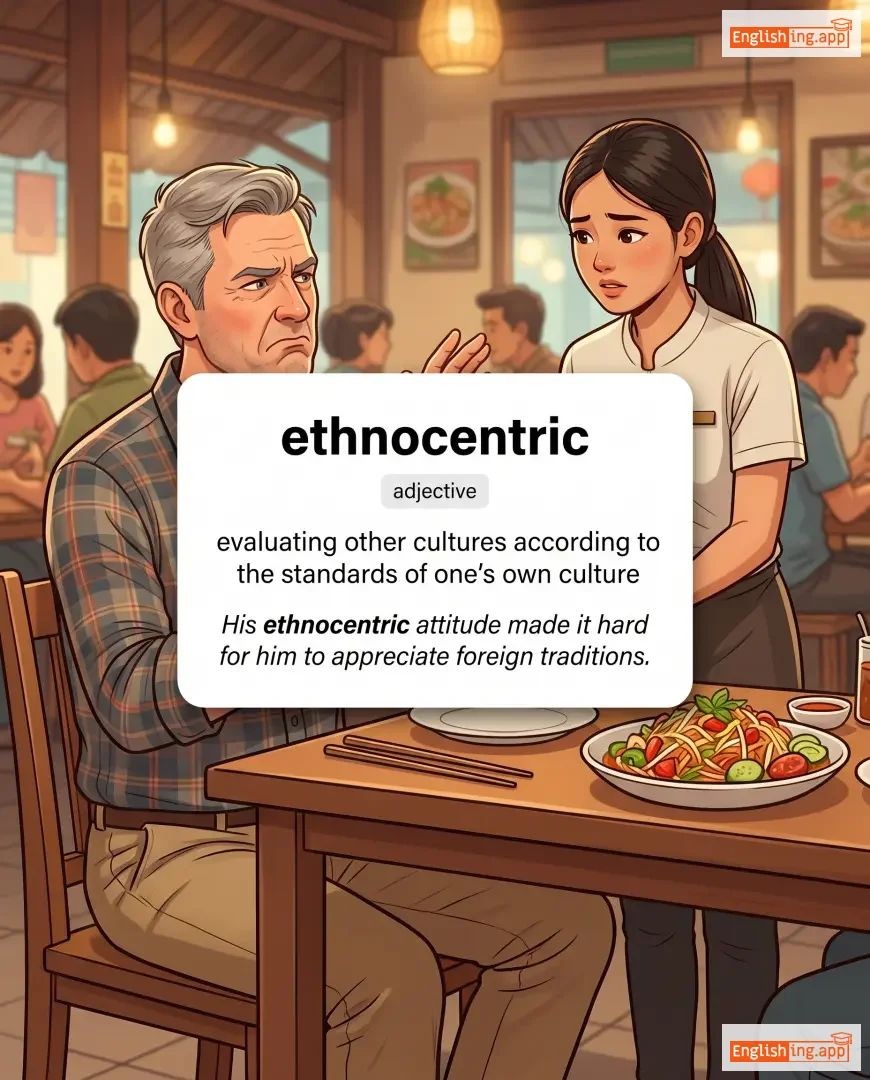
ethnocentric definition card — visual illustration of the meaning
adjective
/ˌeθ.noʊˈsen.trɪk/
民族中心主义 (minzu zhongxin zhuyi)

evaluating other cultures according to the standards of one's own culture

"His ethnocentric attitude made it hard for him to appreciate foreign traditions."

"他的民族中心主义态度让他很难欣赏外国的传统。" (Tā de mínzú zhōngxīn zhǔyì tàidù ràng tā hěn nán xīnshǎng wàiguó de chuántǒng.)
noun
/ɛθˈnɒlədʒi/
民族学 (minzuxue)

the study of the characteristics of different peoples and the differences and relationships between them

"She specialized in ethnology to better understand cultural diversity."

"她专攻民族学,以更好地理解文化多样性。" (Ta zhuangong minzuxue, yi genghao de lijie wenhua duoyangxing.)
ethos definition card — visual illustration of the meaning
noun
/ˈiːθɒs/
精神特质 (jīngshén tèzhì)

the characteristic spirit, values, or beliefs of a community, culture, or organization

"The company’s ethos emphasizes innovation and customer service."

"公司的精神特质强调创新和客户服务。" (Gōngsī de jīngshén tèzhì qiángdiào chuàngxīn hé kèhù fúwù.)
etiology definition card — visual illustration of the meaning
noun
/ˌiː.tiˈɒ.lə.dʒi/
病因学 (bìng yīn xué)

the cause or origin of a disease or condition

"Doctors are studying the etiology of the new virus."

"医生们正在研究新病毒的病因学。" (Yīshēngmen zhèngzài yánjiū xīn bìngdú de bìng yīn xué.)
noun
/ˈet.ɪ.kət/
礼仪 (li yi)

the customary code of polite behavior in society or among members of a particular profession

"Proper etiquette requires standing when a lady enters the room."

"适当的礼仪要求在女士进入房间时起立。" (shidang de liyi yaoqiu zai nushi jinru fangjian shi qili.)
etymology definition card — visual illustration of the meaning
noun
/ˌɛtɪˈmɒlədʒi/
词源学 (ciyuanxue)

The study of the origin of words and how their meanings and forms have evolved.

"The etymology of the word 'salary' comes from the Latin word for salt."

"'工资'这个词的词源来自拉丁语中的盐的词汇。" ('Gongzi' zhege ci de cuyuan laizi ladingyu zhong de yan de cihui.)
adjective
/juːˈdʒɛnɪk/
优生学 (yōushēngxué)

Relating to or aiming at improving the genetic quality of a population.

"In the early 20th century, some scientists supported eugenic policies."
"20世纪初,一些科学家支持优生学政策。" (20 shìjì chū, yīxiē kēxuéjiā zhīchí yōushēngxué zhèngcè.)
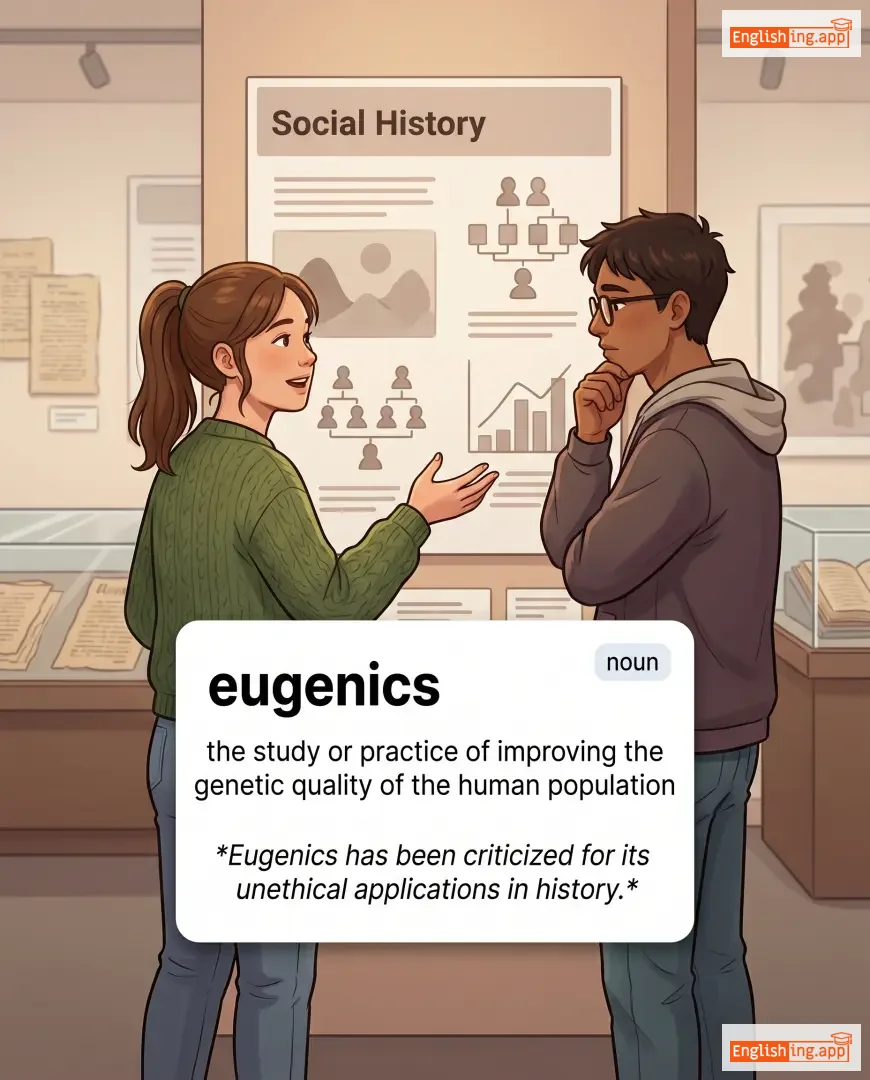
eugenics definition card — visual illustration of the meaning
noun
/juːˈdʒen.ɪks/
优生学 (youshengxue)

the study or practice of improving the genetic quality of the human population

"Eugenics has been criticized for its unethical applications in history."

"优生学因其在历史上的不道德应用而受到批评。" (Youshengxue yin qi zai lishi shang de budaode yingyong er shoudao piping.)
adjective
/ˌjuːləˈdʒɪstɪk/
赞美的 (zanmei de)

Expressing praise or admiration, often formally.

"The speaker gave a eulogistic account of the leader’s achievements."

"演讲者对领导人的成就给予了赞美的评价。" (Yanjiangzhe dui lingdaoren de chengjiu jiyule zanmei de pingjia.)
verb
/ˈjuːləˌdʒaɪz/
颂扬 (sòngyáng)

To praise highly in speech or writing, especially in honor of someone who has died.

"They gathered to eulogize their beloved teacher."

"他们聚集在一起,悼念他们亲爱的老师。" (Tāmen jùjí zài yīqǐ, dàoniàn tāmen qīn'ài de lǎoshī.)
eulogy definition card — visual illustration of the meaning
noun
/ˈjuːlədʒi/
悼词 (daoci)

A speech or piece of writing that praises someone, especially after their death.

"Her brother delivered a heartfelt eulogy at the funeral."

"她的哥哥在葬礼上发表了感人的悼词。" (Ta de gege zai zangli shang fabiao le ganren de daoci.)
euphemism definition card — visual illustration of the meaning
noun
/ˈjuːfəmɪzəm/
委婉语 (weiwanyu)

A mild or indirect word or expression used to replace one considered too harsh or blunt.

"He used the euphemism 'passed away' instead of saying 'died'."

"他用了'去世'这一委婉语,而不是直接说'死了'。" (Tā yòngle 'qùshì' zhè yī wěiwǎn yǔ, ér bùshì zhíjiē shuō 'sǐle'.)
adjective
/juːˈfoʊniəs/
悦耳的声音 (yue'er de shēngyīn)

Pleasing to the ear; having a sweet sound.

"The poet's euphonious language made the verse a delight to read."

"诗人的优美语言使这首诗成为一种阅读的享受。" (Shīrén de yōuměi yǔyán shǐ zhè shǒu shī chéngwéi yī zhǒng yuèdú de xiǎngshòu.)
noun
/ˈjuːfəni/
和谐的音调 (hexie de yintiao)

The quality of being pleasing to the ear, especially through harmonious combination of words.

"The orator's speech was full of euphony and rhythm."
"演讲者的演讲充满了和谐的音韵和节奏。" (Yǎnjiǎng zhě de yǎnjiǎng chōngmǎnle héxié de yīnyùn hé jiézòu.)
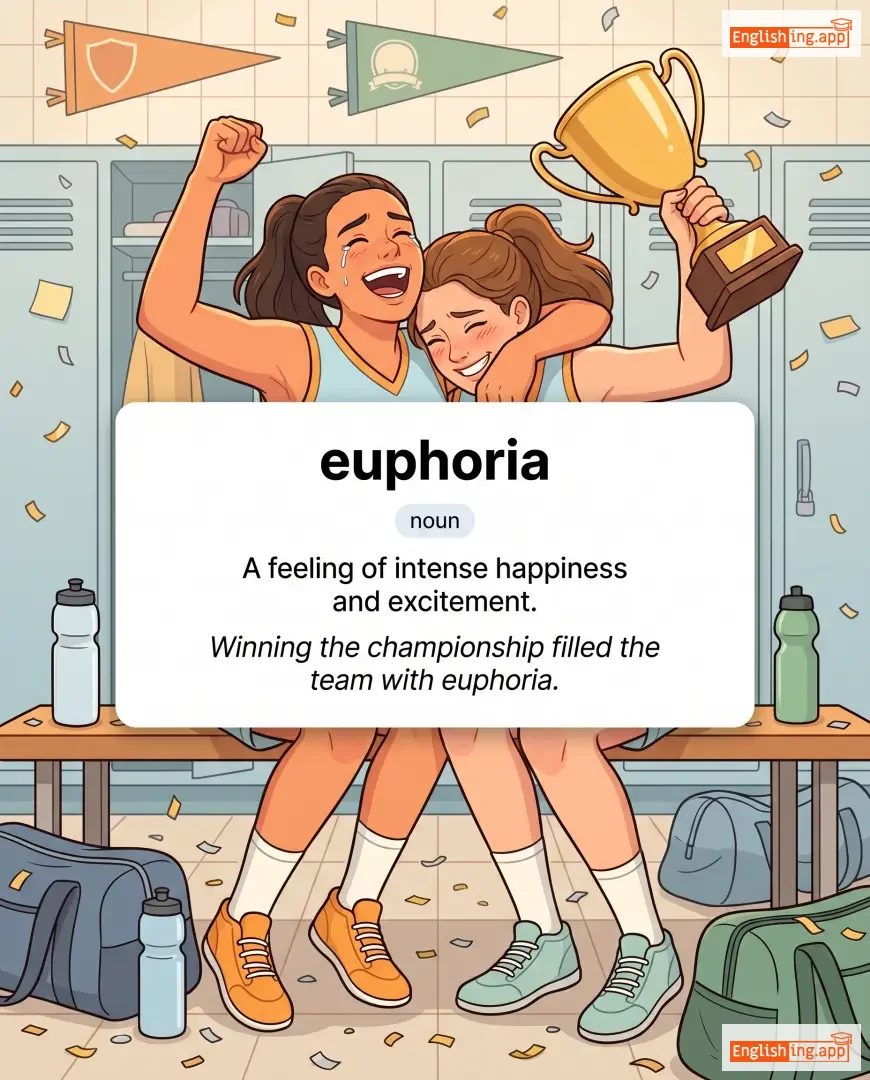
euphoria definition card — visual illustration of the meaning
noun
/juːˈfɔːriə/
极度的幸福 (jídu de xìngfú)

A feeling of intense happiness and excitement.

"Winning the championship filled the team with euphoria."

"赢得冠军让队伍充满了幸福感。" (Yíngdé guànjūn ràng duìwǔ chōngmǎnle xìngfú gǎn.)
adjective
/juːˈfɔːrɪk/
欣快的 (xīnkuài de)

Characterized by or feeling intense excitement and happiness.

"The fans were euphoric after their team's victory."

"球迷们在他们队伍获胜后欣快不已。" (Qiúmímen zài tāmen duìwǔ huòshèng hòu xīnkuài bù yǐ.)
exclamation
/juˈriːkə/
尤里卡! (Yourika!)

An exclamation used to express a sudden discovery or realization.

"When the solution finally came to him, he shouted, 'Eureka!'"

"当解决方案最终浮现在他脑海中时,他喊道:'尤里卡!'" (Dāng jiějué fāng'àn zuìzhōng fúxiàn zài tā nǎohǎi zhōng shí, tā hǎn dào: 'Yóulíkǎ!')
adjective
/ˌjʊərəˈpiːən/
欧洲的 (Ouzhou de)

Relating to Europe or its people.

"She studied European history at university."
"她在大学学习了欧洲历史。" (Ta zai daxue xuexi le Ouzhou lishi.)
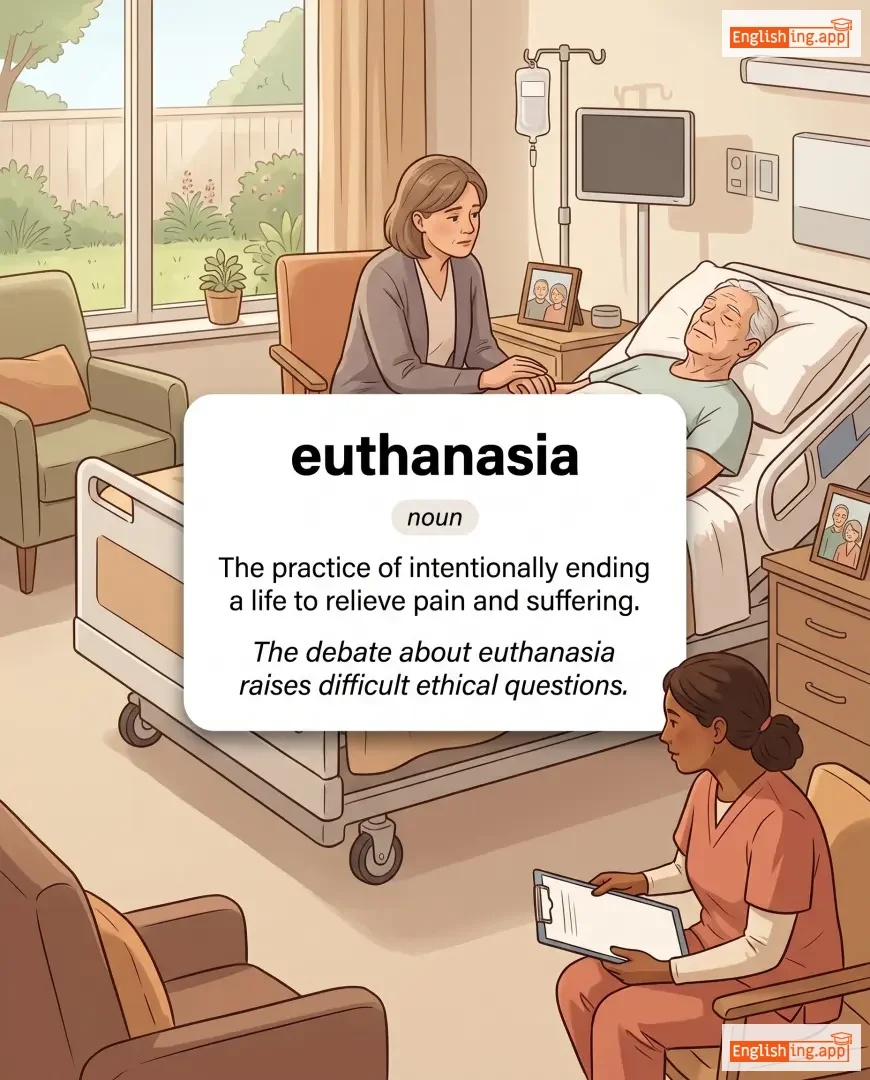
euthanasia definition card — visual illustration of the meaning
noun
/ˌjuːθəˈneɪʒə/
安乐死 (ān lè sǐ)

The practice of intentionally ending a life to relieve pain and suffering.

"The debate about euthanasia raises difficult ethical questions."
"关于安乐死的辩论提出了困难的伦理问题。" (Guānyú ānlè sǐ de biànlùn tíchūle kùnnán de lúnlǐ wèntí.)
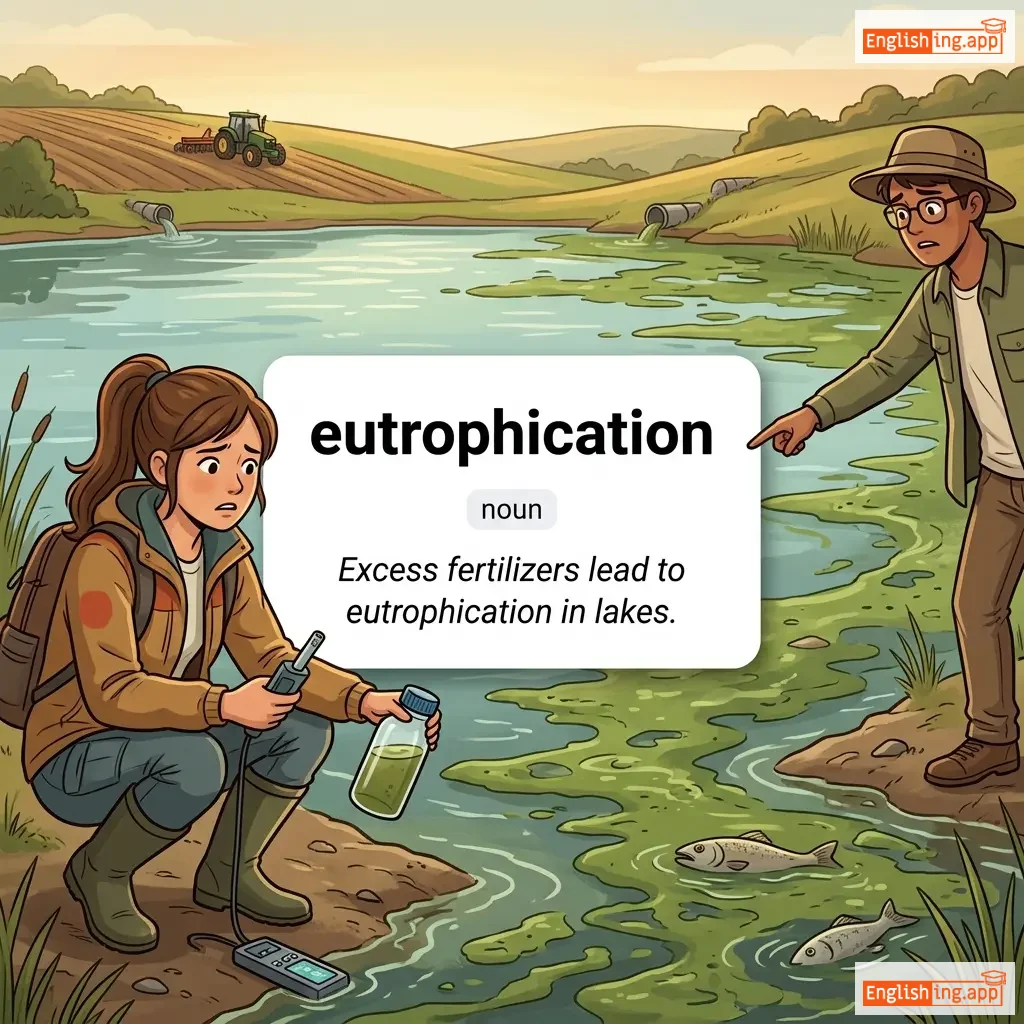
eutrophication definition card — visual illustration of the meaning
noun
/juːˌtrɑː.fɪˈkeɪ.ʃən/
湖泊或其他水体中过多的营养物质 (hupō huò qítā shuǐtǐ zhōng duō shēng de yíngyǎng wùzhì)

Excessive richness of nutrients in a lake or other body of water, frequently due to runoff from the land, which causes a dense growth of plant life and death of animal life from lack of oxygen.

"Excess fertilizers lead to eutrophication in lakes."

"过多的肥料导致湖泊中的优氮化。" (Guò duō de féiliào dǎozhì húpō zhōng de yōu tán huà.)
verb
/ɪˈvækjueɪt/
撤离 (che li)

To remove people from a dangerous place to safety.

"The residents were ordered to evacuate the building after the fire alarm."

"火警响后,居民们被命令撤离大楼。" (Huo jing xiang hou, juminmen bei mingling cheli da lou.)
verb
/ɪˈveɪd/
回避 (huíbì)

To escape or avoid something, especially by cleverness or trickery.

"He tried to evade the question by changing the subject."

"他通过换话题来回避问题。" (Tā tōngguò huàn huàtí lái huíbì wèntí.)
verb
/ɪˈvæljueɪt/
评估 (pinggu)

To assess or judge the value, quality, or significance of something.

"The teacher will evaluate the students’ projects tomorrow."

"老师明天将评估学生的项目。" (Laoshi mingtian jiang pinggu xuesheng de xiangmu.)
evaluation definition card — visual illustration of the meaning
noun
/ɪˌvæljʊˈeɪʃən/
评估 (pinggu)

The process of assessing or judging the value, quality, or importance of something.

"The teacher’s evaluation of the project was very positive."

"老师对项目的评估非常积极。" (Lǎoshī duì xiàngmù de pínggū fēicháng jījí.)
evaluative definition card — visual illustration of the meaning
adjective
/ɪˈvæljʊətɪv/
评估的 (pínggū de)

Relating to or involving evaluation or assessment.

"The evaluative phase of the project involves assessing its success."

"项目的评估阶段包括评估其成功。" (Xiàngmù de pínggū jiēduàn bāokuò pínggū qí chénggōng.)
verb
/ˌɛvəˈnɛs/
逐渐消失 (zhújiàn xiāoshī)

To disappear gradually; to fade away.

"The mist began to evanesce as the sun rose higher."

"雾气在太阳升高时开始逐渐消失。" (Wùqì zài tàiyáng shēnggāo shí kāishǐ zhújiàn xiāoshī.)
adjective
/ˌɛvəˈnɛsənt/
短暂的 (duǎnzàn de)

Quickly fading or disappearing; lasting for only a very short time.

"The beauty of the sunset was evanescent, fading within minutes."

"夕阳的美丽是短暂的,在几分钟内消失了。" (Xīyáng de měilì shì duǎnzàn de, zài jǐ fēnzhōng nèi xiāoshī le.)
adjective
/ˌiːvænˈdʒɛlɪkəl/
福音派 (fúyīn pài)

Relating to the Christian gospel, especially the teachings that emphasize personal faith and the authority of the Bible.

"She grew up in an evangelical church community."

"她在一个福音派教会社区长大。" (Tā zài yīgè fúyīn pài jiàohuì shèqū zhǎngdà.)
noun
/ɪˈvændʒəlɪst/
传教士 (chuánjiàoshì)

A person who seeks to convert others to the Christian faith, especially by public preaching.

"The evangelist traveled across the country spreading his message."

"传教士旅行穿越全国,传播他的消息。" (Chuánjiàoshì lǚxíng chuānyuè quánguó, chuánbò tā de xiāoxi.)
noun
/ɪˈvæp.ər.ə.tɪv ˈkuː.lər/
蒸发冷却器 (zhēngfā lěngquè qì)

a cooling device that uses water evaporation to reduce air temperature

"The evaporative cooler works best in dry climates."

"蒸发冷却器在干燥的气候中效果最好。" (zhēngfā lěngquè qì zài gānzào de qìhòu zhōng xiàoguǒ zuì hǎo)
evasion definition card — visual illustration of the meaning
noun
/ɪˈveɪʒən/
逃避 (táobì)

The act of avoiding something, especially by cleverness or trickery.

"He was arrested for tax evasion."
"他因逃税被逮捕。" (Tā yīn táoshuì bèi dàibǔ.)
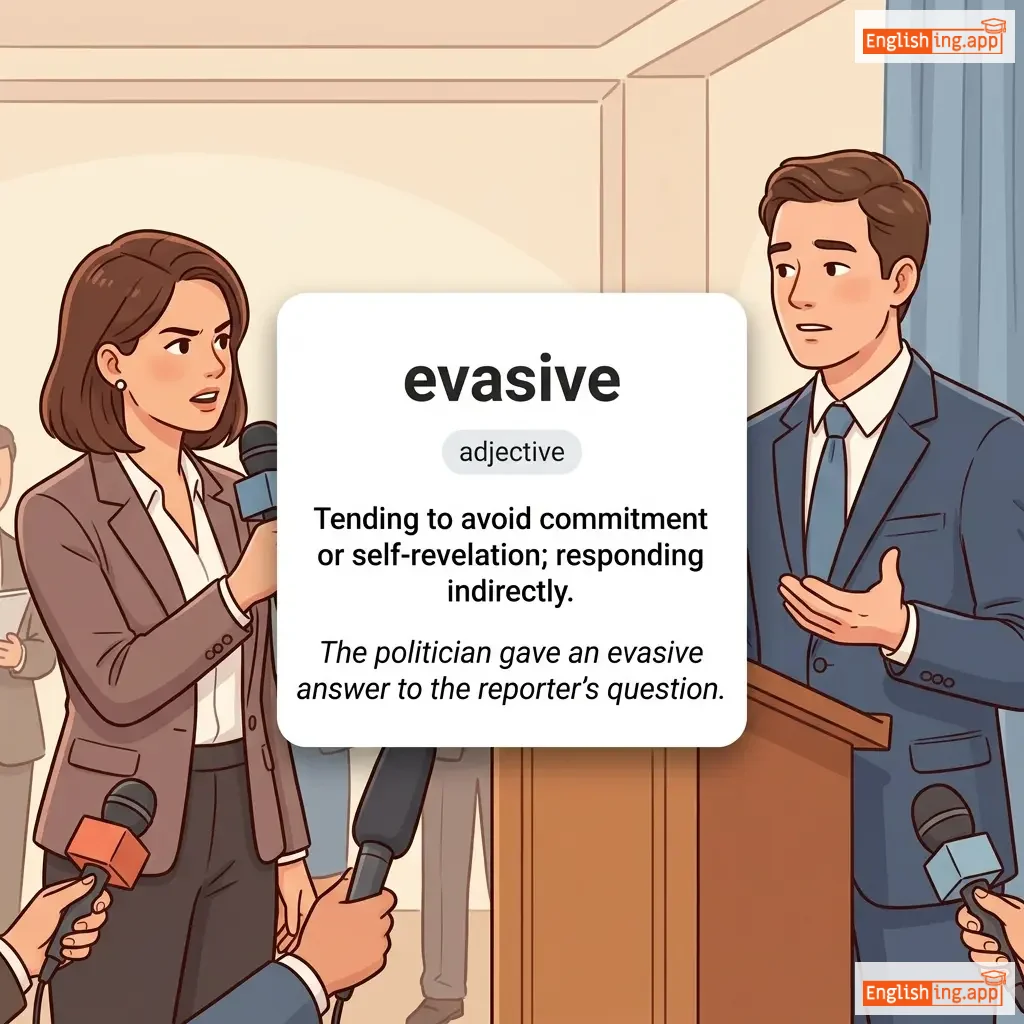
evasive definition card — visual illustration of the meaning
adjective
/ɪˈveɪsɪv/
回避的 (huíbì de)

Tending to avoid commitment or self-revelation; responding indirectly.

"The politician gave an evasive answer to the reporter's question."

"政治家对记者的问题给出了回避的回答。" (Zhèngzhìjiā duì jìzhě de wèntí gěi chūle huíbì de huídá.)
adjective, adverb
/ˈiː.vən/
平坦 (pingtan)

flat or smooth; equal in degree or amount; used to emphasize something surprising

"The road was surprisingly even after the storm."

"道路在暴风雨后出奇的平整。" (Daolu zai baofengyu hou chuqi de pingzhen.)
adjective
/ˌiːvənˈhændɪd/
公正无私 (gongzheng wusi)

Fair and impartial; showing no bias or favoritism.

"The judge was praised for her evenhanded approach to the case."

"法官因其公正无私的案件处理方式而受到赞扬。" (Faguanzhen yinqi gongzheng wusi de anjian chuli fangshi er shoudao zanyang.)