词汇表

英语词汇词典 | 单词含义、定义和示例

noun
/ˈbuːt.leɪs/
靴带 (xuedai)

a cord or string used to fasten a boot or shoe

"I need to tie my boot-lace before going for a walk."

"我需要在散步前系好我的靴带。" (Wo xuyao zai sanbu qian xi hao wode xuedai.)
noun
/buːθ/
电话亭 (dianhua ting)

a small enclosed space or area used for a specific purpose, such as voting or selling.

"He went into the voting booth to cast his ballot."

"他进入了投票亭,准备投票。" (Ta jin ru le tou piao ting, zhun bei tou piao.)
adjective
/ˈbuːtləs/
无用的 (wuyong de)

Useless or futile; of no benefit.

"His bootless attempt to fix the machine only wasted time."

"他修理机器的无用尝试只是浪费了时间。" (ta xiuli jiqi de wuyong changshi zhishi langfei le shijian.)
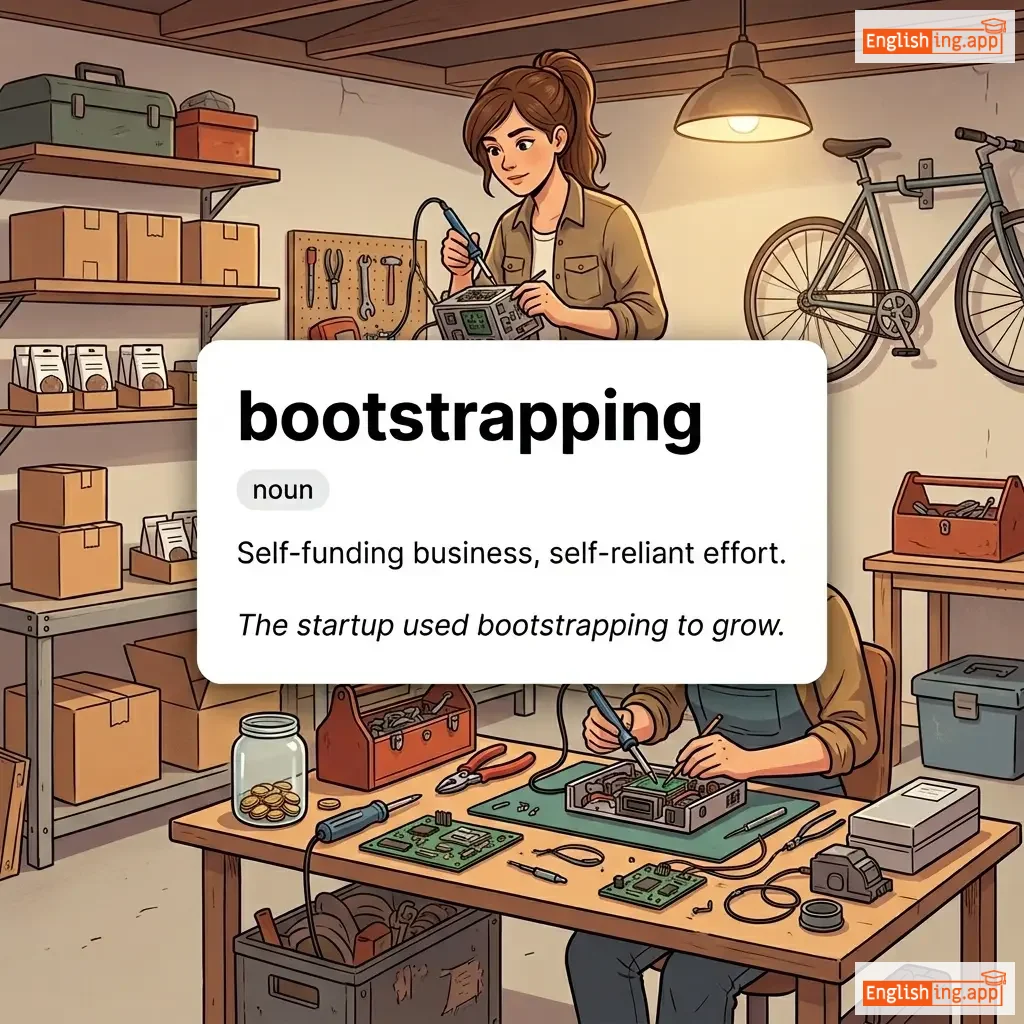
bootstrap definition card — visual illustration of the meaning
verb/noun
ˈbuːt.stræp
通过使用个人资源而非外部资金启动并发展一个企业 (tong guo shi yong ge ren zi yuan er fei wai bu zi jin qi dong bing fa zhan yi ge qi ye)

To start and develop a business using personal resources without external funding.

"He bootstrapped his company with minimal resources."
"他用最小的资源启动了自己的公司。" (Ta yong zui xiao de zi yuan qi dong le zi ji de gong si.)
bootstrapping definition card — visual illustration of the meaning
noun
ˈbuːt.stræp.ɪŋ
自我资助企业,自力更生的努力 (zìwǒ zīzhù qǐyè, zìlì gēngshēng de nǔlì)

Self-funding business, self-reliant effort.

"The startup used bootstrapping to grow."

"初创公司通过自筹资金实现了增长。" (Chūchuàng gōngsī tōngguò zìchóu zījīn shíxiànle zēngzhǎng.)
noun, verb
/buːz/
(jiu)

alcoholic drink, especially strong liquor; to drink alcohol, often excessively

"They bought some booze for the party."

"他们为派对买了酒。" (tamen wei paidui mai le jiu)
adjective
/ˈbuːzi/
酒气的 (jiu qi de)

containing or involving a lot of alcohol; slightly drunk from alcohol

"The party became boozy as the night went on."

"随着夜晚的进行,派对变得很有酒气。" (sui zhe ye wan de jin xing pai dui bian de hen you jiu qi)
noun, verb
/ˈbɔːrdər/
边界 (bianjie)

A line separating two political or geographical areas.

"Bangladesh shares a long border with India."

"孟加拉国与印度共享一条长边界。" (Meng jiala guo yu Yindu gongxiang yi tiao chang bianjie.)
verb/noun
/bɔːr/
使……感到无聊 (shǐ...gǎndào wúliáo)

Verb: To make someone feel uninterested or tired; Noun: A dull or tiresome person.

"The lecture began to bore the students."

"讲座开始让学生感到无聊。" (Jiǎngzuò kāishǐ ràng xuéshēng gǎndào wúliáo.)
adjective
/bɔːrd/
无聊的 (wuliao de)

feeling weary or uninterested because of lack of activity or excitement

"She felt bored during the long meeting."

"她在漫长的会议中感到很无聊。" (ta zai manchang de huiyi zhong gandao hen wuliao)
adjective
/ˈbɔːrɪŋ/
无聊 (wú liáo)

not interesting or exciting; dull.

"The lecture was so boring that several students fell asleep."

"这场讲座无聊到让几个学生都睡着了。" (Zhè chǎng jiǎngzuò wú liáo dào ràng jǐ gè xuéshēng dōu shuìzháo le.)
verb (past participle of 'bear'), adjective
/bɔːrn/
出生 (chūshēng)

To come into life; brought into existence.

"He was born in Dhaka in 1995."

"他于1995年在达卡出生。" (Tā yú 1995 nián zài Dākā chūshēng.)
noun
/ˈbʌrə, ˈbʊrə/
(qu)

A town, district, or administrative division, especially one with its own local government.

"Brooklyn is a borough of New York City."
"布鲁克林是纽约市的一个区。" (Bùlǔkè lín shì Niǔyuē shì de yī gè qū.)
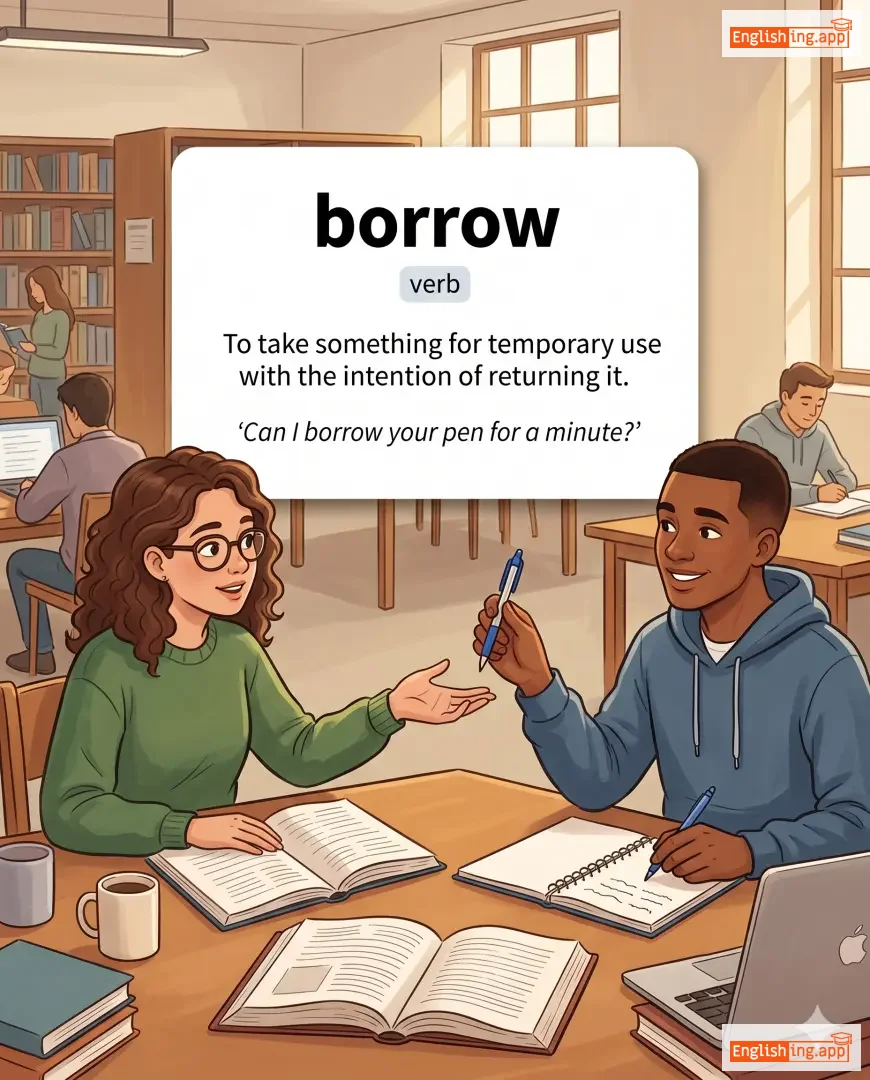
borrow definition card — visual illustration of the meaning
verb
/ˈbɑːroʊ/
(jie)

To take something for temporary use with the intention of returning it.

"Can I borrow your pen for a minute?"

"我可以借你的笔一分钟吗?" (Wǒ kěyǐ jiè nǐ de bǐ yī fēnzhōng ma?)
noun
/ˈbʊzəm/
胸部 (xiōngbù)

the human chest, especially a woman’s breast; also used metaphorically to refer to closeness or intimacy

"She kept the secret close to her bosom."

"她把秘密藏在胸口。" (Tā bǎ mìmì cáng zài xiōngkǒu.)
👨‍💼

boss (bó sī)

noun
/bɒs/
老板 (lǎobǎn)

a person who is in charge of a worker, group, or organization

"Her boss gave her a new project to complete."

"她的老板给她分配了一个新的项目来完成。" (Tā de lǎobǎn gěi tā fēnpèi le yīgè xīn de xiàngmù lái wánchéng.)
adjective
/bəˈtænɪkəl/
植物学的 (zhíwùxué de)

relating to plants or plant life

"She works at the botanical garden."

"她在植物园工作。" (Tā zài zhíwùyuán gōngzuò.)
verb
/ˈbɒtənaɪz/
研究植物 (yanjiu zhuwu)

to study plants in their natural environment

"They went to the forest to botanize during their vacation."

"他们在度假时去森林里研究植物。" (Tamen zai dujia shi qu senlin li yanjiu zhuwu.)
noun
/ˈbɒtəni/
植物学 (zhíwùxué)

the scientific study of plants

"She is studying botany at the university."

"她在大学里学习植物学。" (Tā zài dàxué lǐ xuéxí zhíwùxué.)
verb
/bɒtʃ/
搞砸 (gǎo zá)

to carry out a task badly or carelessly

"He completely botched the repair job."

"他完全搞砸了维修工作。" (Tā wánquán gǎo zá le wéixiū gōngzuò.)
determiner/pronoun
/boʊθ/
两个 (liǎng ge)

referring to two people or things together

"Both of the children were excited about the trip."

"这两个孩子对旅行感到兴奋。" (Zhè liǎng ge háizi duì lǚxíng gǎndào xīngfèn.)
verb
/ˈbɒðər/
打扰 (dǎrǎo)

to annoy, worry, or cause trouble to someone

"I don't want to bother you while you're working."

"我不想在你工作的时候打扰你。" (Wǒ bù xiǎng zài nǐ gōngzuò de shíhòu dǎrǎo nǐ.)
noun
/ˈbɒt.əl/
瓶子 (pingzi)

a container, typically made of glass or plastic, with a narrow neck used to hold liquids

"He poured water into the bottle."

"他把水倒进瓶子里。" (Tā bǎ shuǐ dào jìn píngzi lǐ.)
adjective
/ˈbɒt.əl ɡriːn/
瓶绿色 (ping lü se)

a dark green color similar to that of a green glass bottle

"She wore a beautiful bottle-green dress to the evening party."
"她穿了一件漂亮的瓶绿色连衣裙参加晚宴。" (Ta chuan le yi jian piao liang de ping lü se lian yi qun can jia wan yan.)
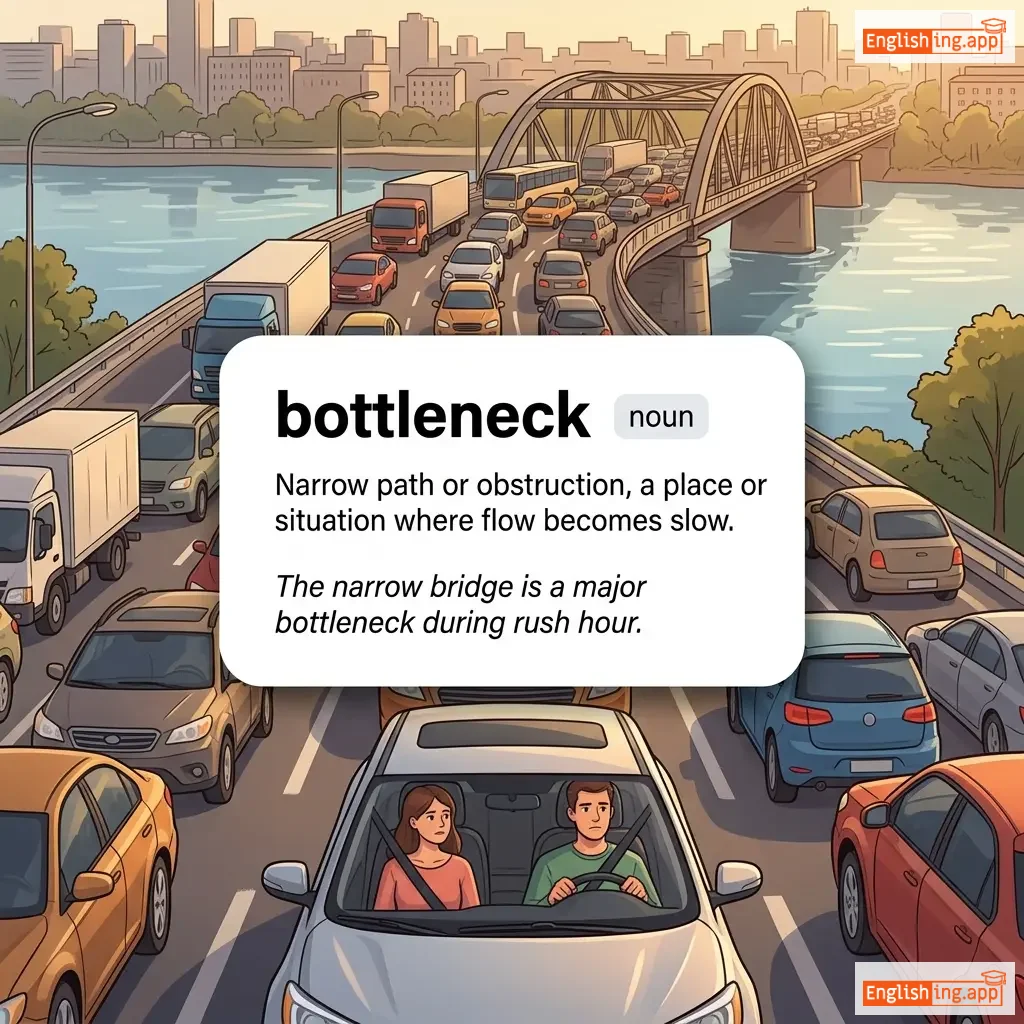
bottleneck definition card — visual illustration of the meaning
noun
/ˈbɒt.əl.nek/
瓶颈 (pingjǐng)

Narrow path or obstruction, a place or situation where flow becomes slow.

"The narrow bridge is a major bottleneck during rush hour."

"窄桥在高峰期间是一个瓶颈。" (Zhǎi qiáo zài gāofēng qījiān shì yīgè píngjǐng.)
noun, adjective
/ˈbɒtəm/
底部 (dǐbù)

The lowest part of something.

"The keys fell to the bottom of the bag."

"钥匙掉到了包的底部。" (Yàoshi diàole bāo de dǐbù.)
noun
/ˌbuː.ɡənˈvɪl.i.ə/
九重葛 (jiu chong ge)

a tropical climbing plant with colorful bracts surrounding small flowers

"The bougainvillea climbing over the garden wall creates a beautiful purple display."

"攀爬在花园墙上的九重葛创造了美丽的紫色展示。" (Pānpá zài huāyuán qiáng shàng de jiǔchónggé chuàngzàole měilì de zǐsè zhǎnshì.)
noun
/ˈbuː.jɒ̃/
高汤 (gaotang)

A clear, seasoned broth made by simmering meat, fish, or vegetables in water.

"She added vegetables to the bouillon for extra flavor."

"她在高汤中加入了蔬菜以增强味道。" (Tā zài gāotāng zhōng jiārùle shūcài yǐ zēngqiáng wèidào.)
verb
/baʊns/
反弹 (fǎntán)

to spring back after hitting something; to rebound.

"The ball bounced off the wall and hit the window."

"球投在墙上反弹,然后打到窗户。" (qiú tóu zài qiáng shàng fǎntán, ránhòu dǎ dào chuānghù.)
verb, noun, adjective
/baʊnd/
有界的 / 受限的 (youjie de / shouxian de)

To move with large strides or jumps; also refers to being tied, limited, or certain.

"The dog bounded across the field with joy."
"狗带着快乐跳过了田野。" (Gou daizhe kuaile tiao guo le tianye.)
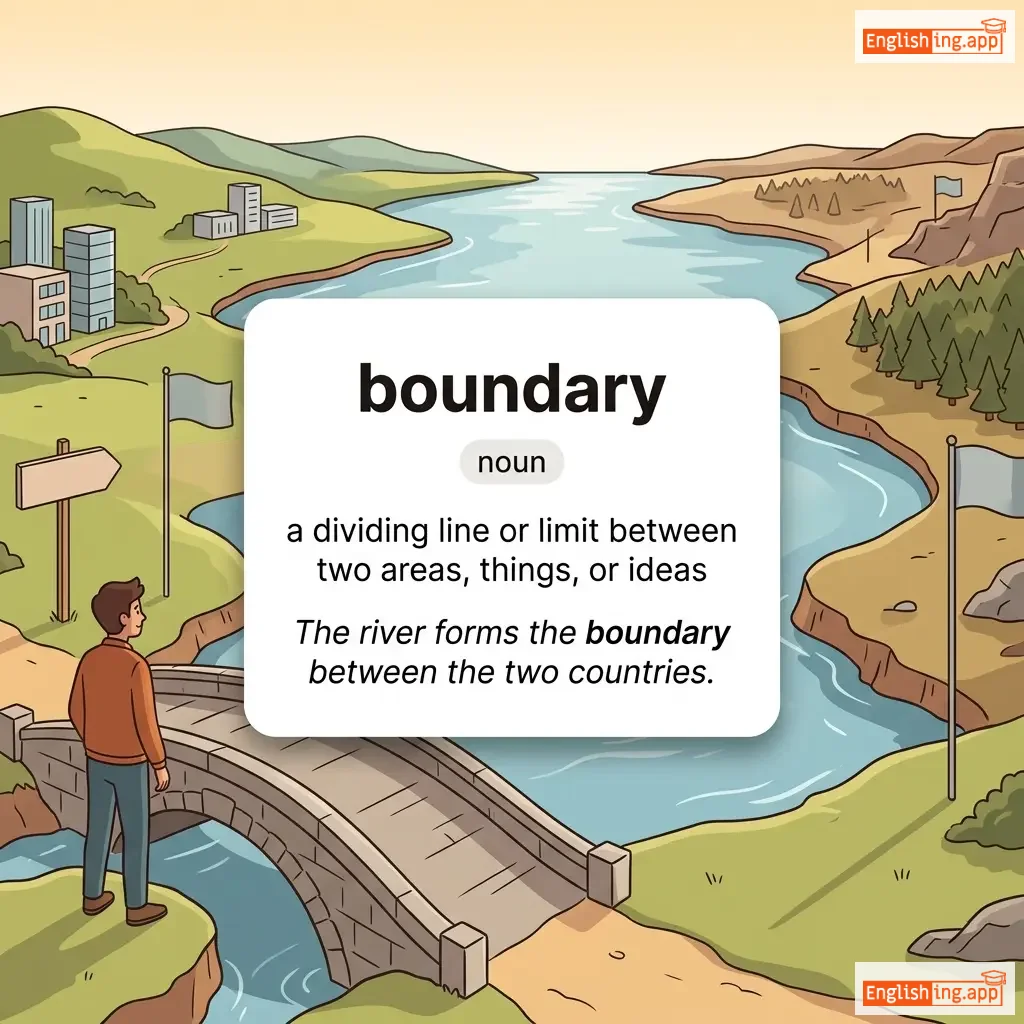
boundary definition card — visual illustration of the meaning
noun
/ˈbaʊn.dri/
边界 (bianjie)

a dividing line or limit between two areas, things, or ideas

"The river forms the boundary between the two countries."

"这条河流形成了两国之间的边界。" (Zhe tiao heliu xingchengle liangguo zhijian de bianjie.)
adjective
/ˈbaʊn.tɪ.fəl/
丰盛的 / 慷慨的 (fēngshèng de / kāngkǎi de)

Large in quantity; abundant; generous in giving.

"The farmer was grateful for the bountiful harvest."

"农民感激丰收的成果。" (Nóngmín gǎnjī fēngshōu de chéngguǒ.)
noun
/buˈkeɪ/
花束 (huā shù)

A bunch of flowers arranged together, often given as a gift or decoration.

"He gave her a bouquet of roses on her birthday."

"他在她的生日送给她一束玫瑰花。" (Tā zài tā de shēngrì sòng gěi tā yī shù méiguī huā.)
adjective, noun
/ˈbʊrʒ.wɑː/
布尔乔亚 (bu'erqiaoya)

Relating to the middle class, often with materialistic values or conventional attitudes.

"The novel criticizes the bourgeois lifestyle of the city dwellers."

"这本小说批评了城市居民的布尔乔亚生活方式。" (Zhe ben xiaoshuo piping le chengshi jumin de bu'erqiaoya shenghuo fangshi.)
noun
/baʊt/
一段短暂而剧烈的活动期或比赛,特别是在运动或生病时 (yi duan duǎnzhàn ér jùliè de huódòng qī huò bǐsài, tèbié shì zài yùndòng huò shēngbìng shí)

a short period of intense activity or a contest, especially in sports or illness

"He had a severe bout of flu last winter."

"他去年冬天得了严重的流感。" (Tā qùnián dōngtiān déle yánzhòng de liúgǎn.)
noun
/buːˈtiːk/
时尚店 (shíshàng diàn)

a small shop that sells fashionable clothes or accessories

"She bought a beautiful dress from a boutique downtown."
"她在市中心的时尚店里买了一件漂亮的裙子。" (Tā zài shì zhōngxīn de shíshàng diàn lǐ mǎile yī jiàn piàoliang de qúnzi.)
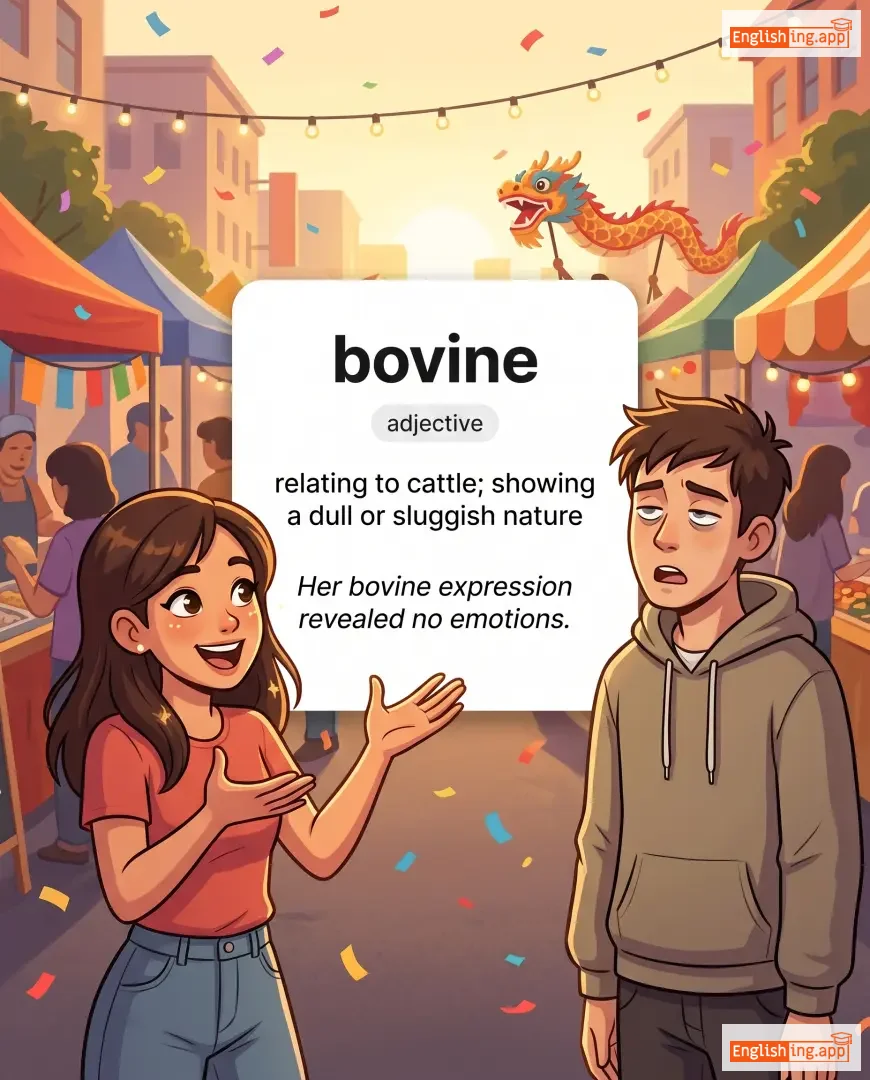
bovine definition card — visual illustration of the meaning
adjective
/ˈboʊvaɪn/
与牛相关的 (yu niu xiangguan de)

relating to cattle; showing a dull or sluggish nature

"Her bovine expression revealed no emotions."

"她的牛性表情没有表达任何情感。" (Tā de niúxìng biǎoqíng méiyǒu biǎodá rènhé qínggǎn.)
verb
/baʊ/ (verb), /boʊ/ (noun)
鞠躬 (jūgōng)

to bend the upper part of the body forward as a sign of respect or greeting.

"The performer bowed deeply after the show."

"表演者在演出后深深鞠躬。" (Biǎoyǎn zhě zài yǎnchū hòu shēn shēn jūgōng.)
verb
/ˈbaʊdləˌraɪz/
去除冒犯性部分 (quchu maofanxing bufen)

to remove or modify parts of a text considered offensive or inappropriate

"The editor bowdlerized the novel to make it suitable for children."

"编辑将小说修改,以使其适合儿童。" (Bianji jiang xiaoshuo xiu gai, yi shi qi shihua ertong.)
noun
/boʊl/
(wan)

a round, deep dish used for holding food or liquids

"She poured the soup into a large bowl."

"她把汤倒进了一个大碗里。" (Tā bǎ tāng dào jìnle yīgè dà wǎn lǐ.)
noun
/ˈboʊlər/
投球员 (tóu qiú yuán)

a person who delivers the ball in cricket; also a type of hard felt hat with a rounded crown

"The bowler took three wickets in the first over."

"投球员在第一轮中拿下了三个wicket。" (Tóu qiú yuán zài dì yī lún zhōng ná xià le sān gè wicket.)
noun
/bɑːks/
盒子 (hezi)

a container with flat sides, typically square or rectangular, used for storing things

"He packed his clothes in a cardboard box."

"他把衣服打包进一个纸箱里。" (Ta ba yifu dabao jin yi ge zhi xiang li.)
noun
/ˈbɒksər/
拳击手; 平角内裤; 拳师犬 (quanjishou; pingjiao neiku; quanshi quan)

a person who fights in the sport of boxing; a type of short loose-fitting underwear; a breed of medium-to-large dog

"The boxer trained hard every morning before the championship match."

"那名拳击手在冠军赛前每天早上刻苦训练。" (na ming quanjishou zai guanjunsai qian meitian zaoshang keku xunlian)
noun; gerund
/ˈbɒksɪŋ/
拳击 (quanji)

the sport of fighting with fists using padded gloves; the act of putting something into a box

"He has been training hard for a professional boxing match."

"他正在为一场职业拳击比赛刻苦训练。" (ta zhengzai wei yi chang zhiye quanji bisai keku xunlian)
noun
/bɔɪ/
男孩 (nánhái)

a male child or young male person

"The boy ran across the playground."
"那个男孩跑过了操场。" (Nàgè nánhái pǎo guòle cāochǎng.)
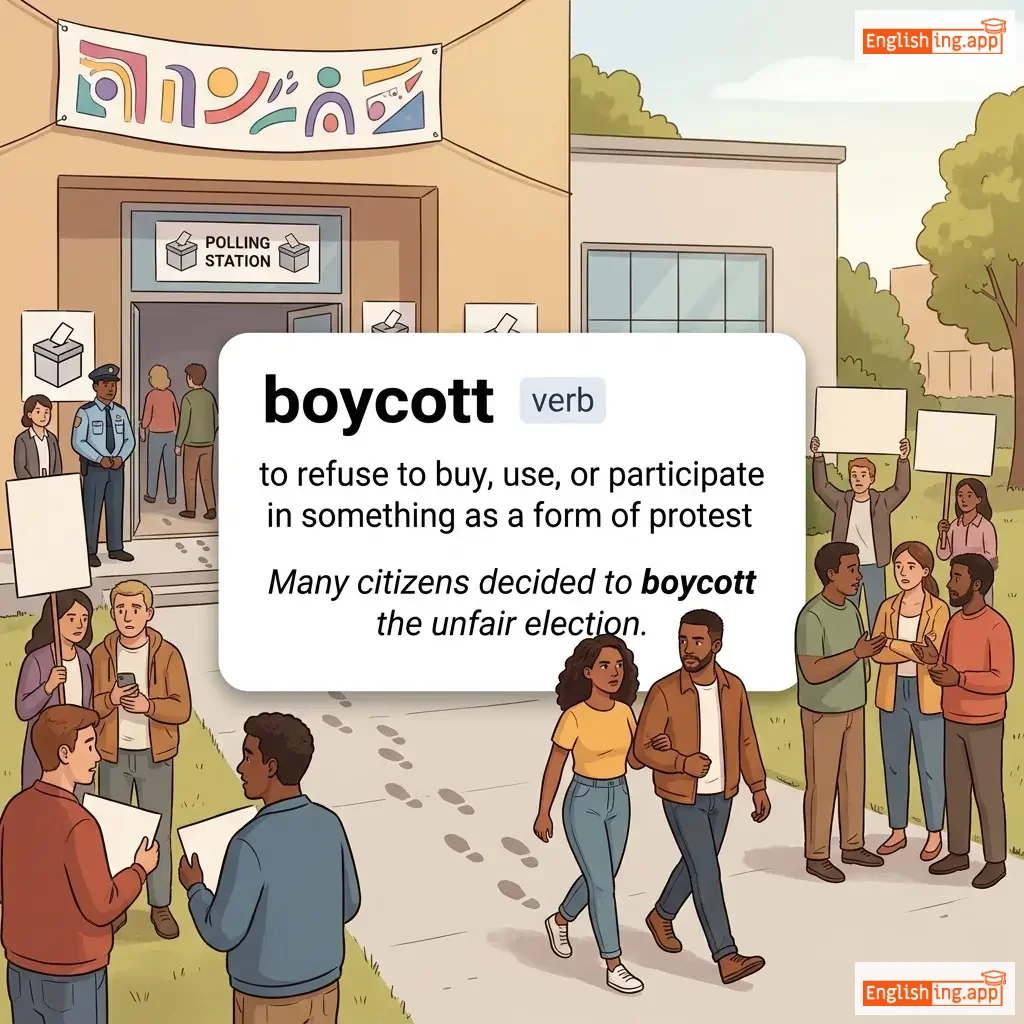
boycott definition card — visual illustration of the meaning
verb
/ˈbɔɪkɒt/
抵制 (dizhi)

to refuse to buy, use, or participate in something as a form of protest

"Many citizens decided to boycott the unfair election."

"许多市民决定抵制不公正的选举。" (xuduo shimin jueding dizhi bugongzheng de xuanju.)
👨‍❤️‍👩

boyfriend

noun
/ˈbɔɪˌfrɛnd/

a man or boy that someone is having a romantic or close relationship with

"She introduced her boyfriend to her parents."

noun
/brɑː/
文胸 (wenxiong)

a woman's undergarment worn to support and cover the breasts

"She bought a comfortable bra for everyday wear."

"她买了一件舒适的文胸用于日常穿着。" (ta mai le yi jian shushi de wenxiong yongyu richang chuanzhuo)
noun; verb
/breɪs/
支架;做好准备 (zhijia; zuohao zhunbei)

a device that supports or strengthens something; to prepare mentally or physically for something difficult

"She braced herself for the strong wind."

"她为强风做好了准备。" (ta wei qiang feng zuohao le zhunbei)
noun
/ˈbreɪs.lət/
手链 (shǒu liàn)

an ornamental band worn around the wrist

"She received a gold bracelet as a birthday gift."

"她收到了一条金手链作为生日礼物。" (Tā shōudào le yītiáo jīn shǒuliàn zuòwéi shēngrì lǐwù.)