Словари

Словарь английского языка | Значения слов, определения и примеры

adjective
/ˈvɛə.ri.əs/
разные (raznye)

different from one another; of several different kinds

"She owns various kinds of books."

"Она имеет различные виды книг." (Ona imeyet razlichnye vidy knig.)
noun
/vəˈraɪəti/
разнообразие (razoobrazije)

the quality or state of being different or diverse; a range of different things

"There is a variety of fruits available in the market."

"На рынке есть разнообразие фруктов." (Na rynke est' razoobrazie fruktov.)
noun
/ˌvɛəriəˈɡeɪʃən/
вариегация (variegatsiya)

The appearance of differently colored zones in the leaves, flowers, or stems of plants.

"Variegation makes the foliage look more attractive."

"Вариегация делает листву более привлекательной." (Variegatsiya delayet listvu boleye privlekatelnoy.)
adjective
/ˈvɛəriəˌɡeɪtɪd/
пестрый (pestryy)

Having different colors, especially in irregular patches or streaks.

"The garden was full of variegated plants."

"Сад был полон пёстрых растений." (sad byl polon pestrykh rasteniy)
verb
/ˈvɛəriəˌɡeɪt/
разнообразить (raznobrazit')

To diversify or mark with different colors or patterns.

"The artist used different shades to variegate the design."

"Художник использовал разные оттенки, чтобы разнообразить дизайн." (Khudozhnik ispol'zoval raznye ottenki, chtoby raznoobrazit' dizajn.)
adjective
/ˈvɛərɪd/
разнообразный (razoobrazny)

showing many different kinds or forms

"The menu offers a varied selection of dishes."

"Меню предлагает разнообразный выбор блюд." (Menyu predlagaet razoobraznyy vybor blyud.)
noun
/ˌvɛəriˈeɪʃən/
вариация (variatsiya)

A change or slight difference in condition, amount, or level.

"There is a wide variation in climate across the country."

"Существует большая вариация в климате по всей стране." (Sushchestvuet bol'shaya variatsiya v klimaty po vsei strane.)
noun
/ˈvɛəriənt/
вариант (variant)

A form or version of something that differs in some way from other forms of the same thing.

"The new variant of the virus spread rapidly."

"Новая версия вируса быстро распространилась." (Novaya versiya virusa bystro rasprostranilas'.)
noun
/ˈvɛriəns/
дисперсия (dispersiya)

the state of being different or inconsistent; in statistics, a measure of the spread between numbers

"There is a wide variance in students' performance levels."

"Существует большая дисперсия в уровнях успеваемости студентов." (Sushchestvuet bol'shaya dispersiya v urovnyakh uspevayemosti studentov.)
noun
/veɪn/
вена (vena)

a tube in the body that carries blood to the heart

"The nurse checked the patient's veins for an IV insertion."

"Медсестра проверила вены пациента для установки внутривенной инъекции." (Medsestra proverila veni patsiyenta dlya ustanovki vnutrivennoy in'ektsii.)
noun
/ˈtrɒɡlədaɪt/
пещерный человек (peshchernyy chelovek)

A person who lives in a cave or is considered old-fashioned and out of touch.

"Some called him a troglodyte for refusing to use modern technology."

"Некоторые называли его пещерным человеком за отказ использовать современные технологии." (Nekotorye nazyvali ego peshchernym chelovekom za otkaz ispol'zovat' sovremennye tekhnologii.)
adjective
/ˈtrɪviəl/
тривиальный (trivial'nyy)

Of little value or importance.

"He often gets upset over the most trivial matters."

"Он часто расстраивается из-за самых тривиальных вещей." (On chasto rasstraivayetsya iz-za samykh trivial'nykh veshchey.)
noun
/ˈtrɪviə/
тривиальные факты (trivial'nye fakty)

Details or information that are considered unimportant or of little value.

"The quiz was filled with fun trivia about movies and music."

"В викторине было много забавных тривий о фильмах и музыке." (V viktorine bylo mnogo zabavnykh triviy o fil'makh i muzyke.)
noun
/traɪˈʌmvɪrət/
триумвират (triumvirat)

A political regime ruled or dominated by three powerful individuals.

"The Roman Republic was once governed by a triumvirate."

"Римская Республика когда-то была правлена триумвиратом." (Rimskaya Respublika kogda-to byla pravlena triumviratom.)
noun
/traɪˈʌmvɪər/
триумвир (triumvir)

One of a group of three men holding power in ancient Rome.

"Caesar was a triumvir in the first Roman triumvirate."

"Цезарь был триумвиром в первом римском триумвирате." (Tsezar' byl triumvirom v pervom rimskom triumvirate.)
adjective
/traɪˈʌmfənt/
триумфальный; радостный (triumfalny; radostny)

having won a battle or contest; rejoicing as a result of success

"The team was triumphant after winning the championship."

"Команда была триумфальной после победы в чемпионате." (Komanda byla triumfal'noy posle pobedy v chempionate.)
triumph definition card — visual illustration of the meaning
noun
/ˈtraɪʌmf/
триумф (triumf)

a great victory or achievement

"Winning the championship was a moment of triumph for the team."

"Победа в чемпионате стала моментом триумфа для команды." (Pobeda v chempionate stala momentom triumfa dlya komandy.)
adjective
/traɪt/
банальный (banal'nyy)

Overused and lacking originality.

"The speech was full of trite phrases."

"Речь была полна избитых фраз." (Rech' byla polna izbitykh fraz.)
verb
/traɪˈsɛkt/
делить на три части (delit na tree chasti)

To divide into three parts.

"The teacher asked the students to trisect the line segment."

"Учитель попросил учеников разделить отрезок на три части." (Uchitel' poprosil uchenikov razdelit' otrezok na tree chasti.)
noun
/ˈtraɪ.pɒd/
треножник (trenozhnik)

A three-legged stand used to support a camera, telescope, or other object.

"The photographer set up his camera on a tripod."

"Фотограф установил свою камеру на треножнике." (Fotograf ustanovil svoyu kameru na trenozhnike.)
noun
/trɪˈplɪs.ə.ti/
триплицитет (triplitset)

The state of being triple or consisting of three parts.

"The design shows a triplicity of forms combined harmoniously."

"Дизайн показывает триплицитет форм, гармонично комбинированных." (Dizayn pokazivayet triplitset form, garmonichno kombiniruyemykh.)
noun
/ˈtrɪp.lɪ.kət/
три экземпляра (tri ekzemplarya)

A set of three identical copies of something.

"The documents were prepared in triplicate for official use."

"Документы были подготовлены в трех экземплярах для официального использования." (Dokumenty byli podgotovleny v trekh ekzemplaryakh dlya ofitsial'nogo ispol'zovaniya.)
noun
/ˈtrɪp.lət/
тройня (troynya)

One of three children or animals born at the same time to the same mother.

"The family was surprised to have triplets instead of twins."

"Семья была удивлена, когда у них родились тройняшки вместо близнецов." (Sem'ya byla udivlena, kogda u nikh rodilis' troynjashki vmesto bliznetcov.)
verb
/ˈtrɪp.əl/

To increase or become three times as much.

"The company tripled its profits in just one year."

noun
/trɪp/
поездка (poezdka)

a journey or excursion, especially for pleasure

"They took a trip to the mountains last summer."

"Они отправились в поездку в горы прошлым летом." (Oni otpravilis' v poyezdku v gory proshlym letom.)
noun
/ˈtriː.oʊ/
трио из трех человек (trio iz trekh chelovek)

A group of three people or things, especially in music or performance.

"The jazz trio played beautifully at the concert."

"Джазовое трио сыграло великолепно на концерте." (Dzhazovoye trio sygralo velichestvenno na kontserte.)
noun
/ˈtrɪŋkɪt/
маленькое украшение (malenkoye ukrasheniye)

a small ornament or piece of jewelry that is not expensive

"She bought a little trinket from the beach market as a souvenir."

"Она купила маленькое украшение на пляжном рынке как сувенир." (Ona kupila malenkoye ukrasheniye na plyazhnom rynke kak suvenir.)
noun
/ˈtrɪnɪti/
троица (troitsa)

a group of three closely related things; in Christianity, the Father, the Son, and the Holy Spirit

"The museum’s exhibit focused on a trinity of themes: memory, identity, and power."

"Выставка в музее была сосредоточена на троице тем: память, идентичность и власть." (Vystavka v muzeye byla sosredotochena na troitse tem: pamyat', identichnost' i vlast'.)
noun
/ˈtrɪmnəs/
порядок (poryadok)

the quality of being neat, orderly, or slender and well-proportioned

"Her room’s trimness reflected a habit of putting everything back in its place."

"Порядок в её комнате отражал привычку всё класть на место." (Poryadok v yeye komnate otrazhal prigizhu klyast' na mesto.)
verb
/trɪm/
обрезать (obrezat')

to cut away small parts to make something neat, tidy, or the right size

"I need to trim the video to remove the awkward pause at the end."

"Мне нужно обрезать видео, чтобы удалить неловкую паузу в конце." (Mne nuzhno obrezat' video, chtoby udalit' nelovkuyu pauzu v kontse.)
noun
/ˈtrɪlədʒi/
трилогия (trilogiya)

a set of three related works, usually books or films, that form a connected story

"The director finally released the third film to complete the sci-fi trilogy."

"Режиссер наконец выпустил третий фильм, чтобы завершить научно-фантастическую трилогию." (Rezhissyor nakonec vypustil tretiy film, chtoby zavershit' nauchno-fantasticheskuyu trilogiyu.)
noun
/ˈtrɪl.jən/
триллион (trillion)

a number equal to 1,000 billion, or 10^12

"The company's worth has risen to over a trillion dollars."

"Стоимость компании выросла до более чем триллиона долларов." (Stoimost' kompanii virosla do bolee chem trilliona dollarov.)
triggers definition card — visual illustration of the meaning
verb
ˈtrɪɡərz
вызывать (vyzyvat)

To cause or initiate something to happen

"Air pollution triggers chronic diseases."

"Загрязнение воздуха вызывает хронические болезни." (Zagryaznenie vozdukha vyzyvayet khronicheskie bolezni.)
noun
/trɪk/
трюк (tryuk)

a cunning or deceitful action or plan intended to mislead or deceive someone

"She pulled a trick to win the game."

"Она сделала трюк, чтобы выиграть игру" (Ona sdelala tryuk, chtoby vyigrat' igru)
noun
/ˈtrɛsəl/
подпорка (podporka)

a frame or support consisting of a horizontal beam held up by two pairs of sloping legs, used especially for supporting a bridge or table

"The workers built a wooden trestle to support the temporary bridge."

"Рабочие построили деревянную подпорку, чтобы поддержать временный мост." (Rabochie postroili derevyannuyu podporku, chtoby podderzhat' vremennyy most.)
noun
/ˈtraɪæd/
триада (triada)

a group of three closely related people or things

"The project was managed by a triad of experts."

"Проект был управляем триадой экспертов." (Proyekt byl upravlyayem triadoy eksperty.)
noun
/ˈtraɪəl/
судебное разбирательство (sudebnoe razbiratel'stvo)

a formal examination of evidence in a court of law

"The trial will start next week."

"Судебное разбирательство начнется на следующей неделе." (Sudebnoe razbiratel'stvo nachnyotsya na sleduyushchey nedele.)
adjective
/ˈtraɪbəl/
племенной (plemennoy)

relating to a tribe or tribes, especially indigenous people

"The tribal community has preserved its culture for centuries."

"Племенное сообщество сохранило свою культуру на протяжении веков." (Plemennoye soobshchestvo sokhranylo svoyu kul'turu na protyazhenii vekov.)
noun
/traɪb/
племя (plemya)

a social group consisting of people with common customs, language, and culture

"The tribe lived in harmony with nature."
"Племя жило в гармонии с природой." (Plemya zhilo v garmonii s prirodoy.)
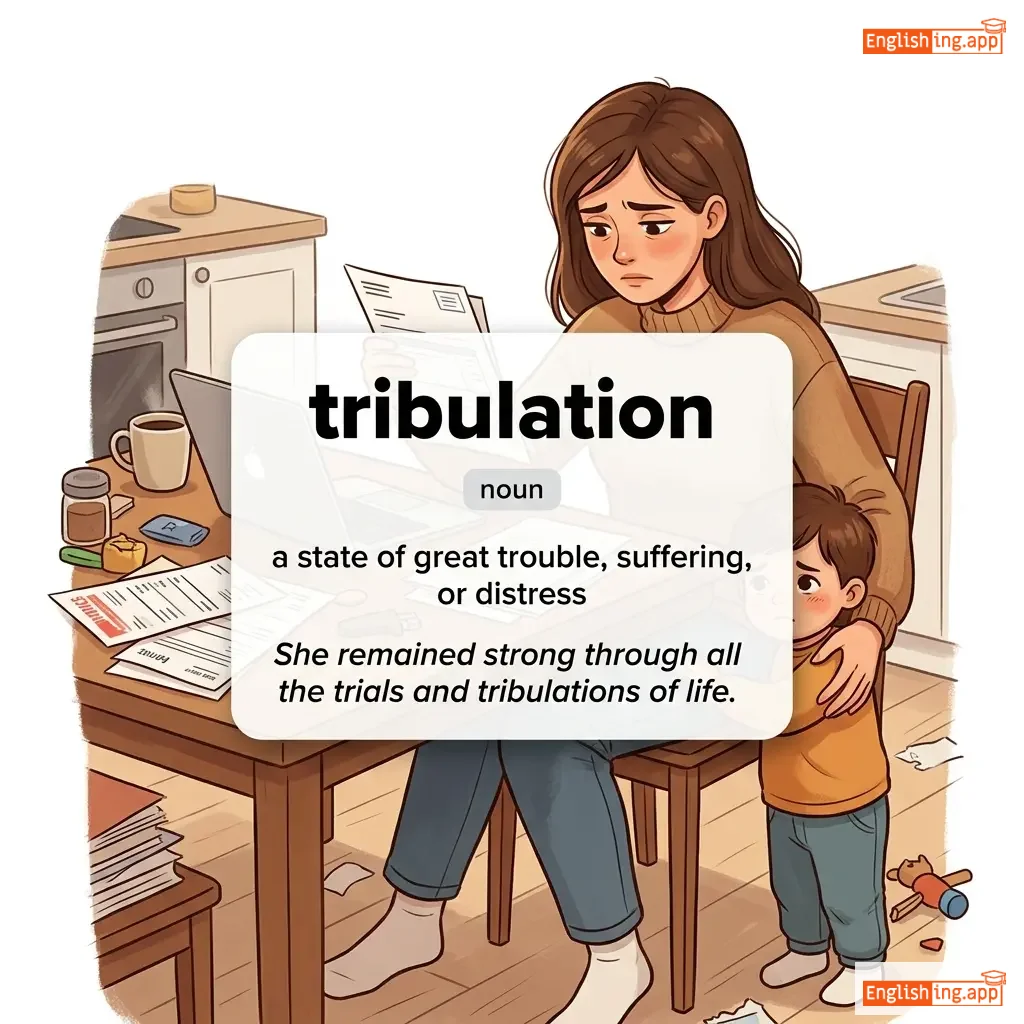
tribulation definition card — visual illustration of the meaning
noun
/ˌtrɪbjʊˈleɪʃən/

a state of great trouble, suffering, or distress

"She remained strong through all the trials and tribulations of life."

noun
/traɪˈbjuːnəl/
трибунал (tribunal)

a court of justice or body established to settle disputes

"The case was heard in an international tribunal."
"Дело рассматривалось в международном трибунале." (Delo rassmatrivalos' v mezhdunarodnom tribunale.)
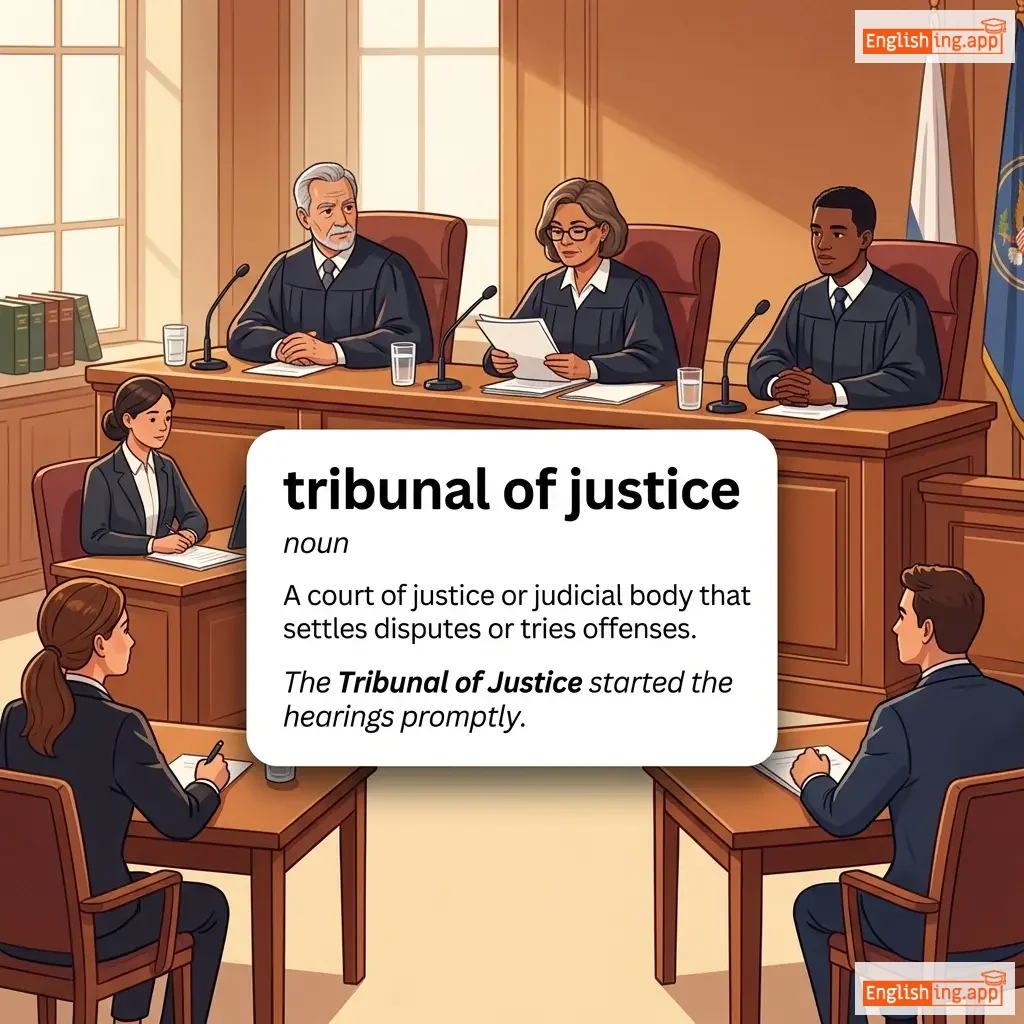
tribunal of justice definition card — visual illustration of the meaning
noun
ˌtraɪ.bjuˈnæl əv ˈdʒʌs.tɪs
трибунал правосудия (tribunal pravosudiya)

A court of justice or judicial body that settles disputes or tries offenses.

"The Tribunal of Justice started the hearings promptly."

"Трибунал правосудия немедленно начал слушания." (Tribunal pravosudiya nemedlenno nachal slushaniya.)
noun
/ˈtrɪbjuːn/
трибун (tribun)

a person or platform representing the people; historically, a Roman official elected to protect citizens' rights

"He was seen as a tribune of the common people."

"Его считали трибуном народа." (Ego schitali tribunom naroda.)
noun
/ˈtrɪb.jə.ter.i/
приток (pritok)

a river or stream flowing into a larger river or lake

"The tributary joins the main river near the city."
"Приток соединяется с главной рекой рядом с городом." (pritok soedinyaetsya s glavnoy rekoy ryadom s gorodom)
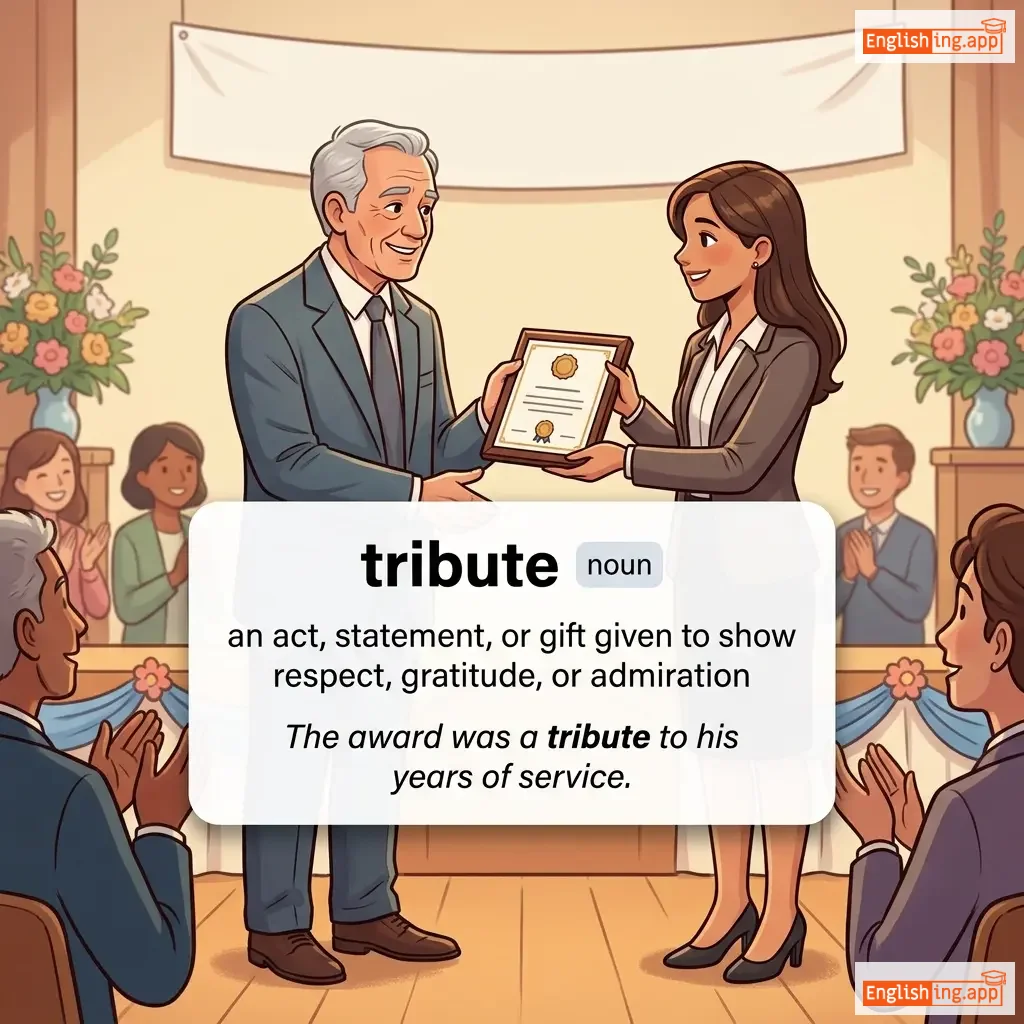
tribute definition card — visual illustration of the meaning
noun
/ˈtrɪbjuːt/
дань (dan')

an act, statement, or gift given to show respect, gratitude, or admiration

"The award was a tribute to his years of service."

"Награда была данью его годам службы." (Nagrada byla danyu ego godam sluzhby.)
adjective
/traɪˈɛniəl/
триенальный (trienalny)

Occurring once every three years.

"The art festival is a triennial event in the city."

"Художественный фестиваль — это триенальное событие в городе." (Kudozhestvennyy festival' — eto trienal'noye sobytiye v gorode.)
noun
/ˈtraɪsɪkl̩/
трицикл (tritsikl)

A small vehicle with three wheels, usually for children.

"The child rode happily on his red tricycle around the park."

"Ребёнок с радостью катался на своём красном трицикле по парку." (Rebyonok s radostyu katalsya na svoyem krasnom tritsikle po parku.)
noun
/ˈtraɪdənt/
трезубец (trezubets)

A three-pronged spear, often associated with Neptune or Poseidon.

"The statue of Poseidon holds a mighty trident."

"Статуя Посейдона держит могущественный трезубец." (Statuya Poseidona derzhit mogushchestvennyy trezubets.)
noun/adjective
/ˈtraɪkʌlər/
триколор (trikolor)

A flag with three colors; consisting of three colors.

"The French tricolor is one of the most famous national flags in the world."

"Французский триколор — один из самых известных национальных флагов в мире." (Frantsuzskiy trikolor — odin iz samykh izvestnykh natsional'nykh flagov v mire.)
noun
/ˈtraɪfəl/
мелочь (meloch)

A thing of little value or importance; also a layered dessert.

"He dismissed the issue as a mere trifle."

"Он отклонил этот вопрос как пустую мелочь." (On otklonil etot vopros kak pustuyu meloch'.)