語彙集

英単語辞書 | 単語の意味、定義、例文

preposition
/wɪð/
と一緒に (to issho ni)

indicating the person or thing that is accompanying or involved with someone or something else

"She went to the market with her friend."

"彼女は友達と一緒に市場に行きました。" (Kanojo wa tomodachi to issho ni ichiba ni ikimashita.)
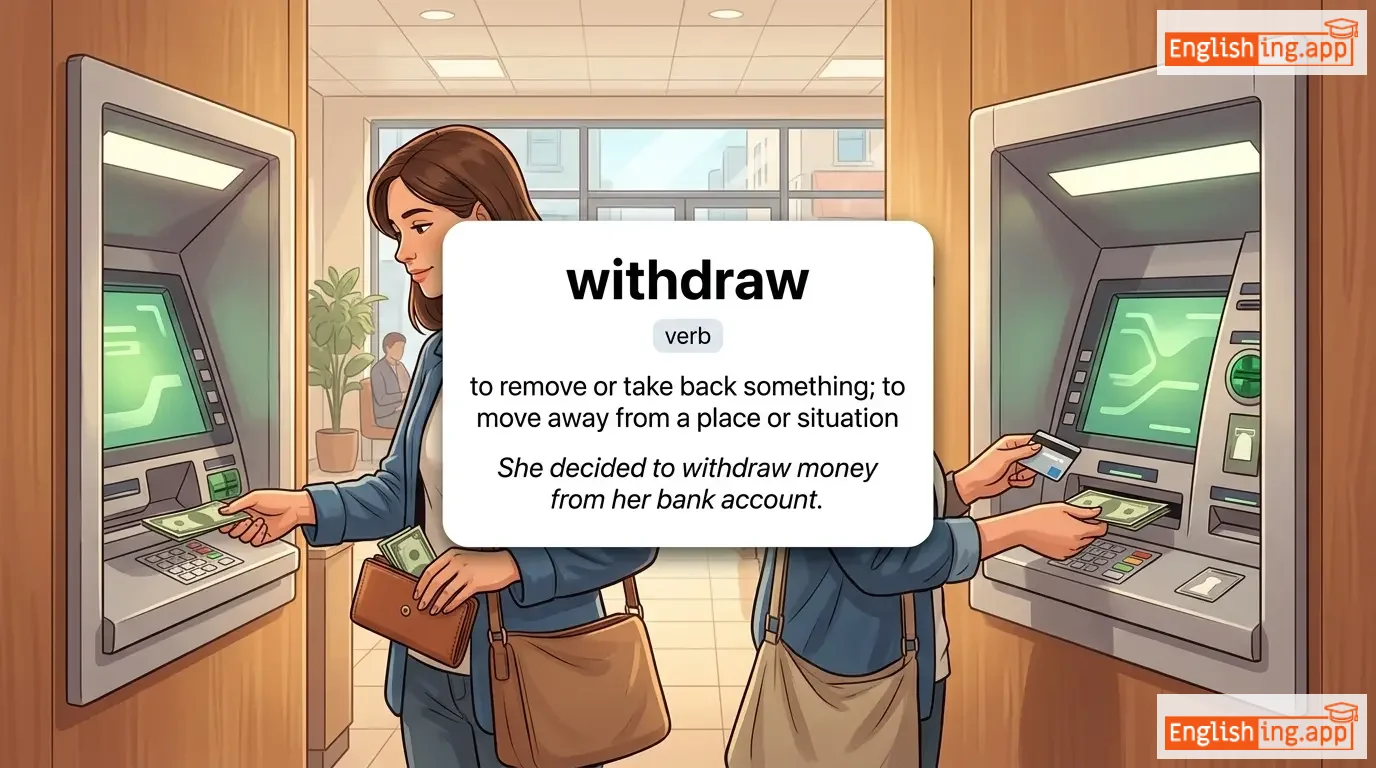
withdraw definition card — visual illustration of the meaning
verb
/wɪðˈdrɔː/

to remove or take back something; to move away from a place or situation

"She decided to withdraw money from her bank account."

noun
/wɪðˈdrɔːəl/
引き出し (hikidashi)

the act of taking something back or removing oneself from a situation

"He made a withdrawal of $500 from his bank account."

"彼は銀行口座から500ドルを引き出しました。" (Kare wa ginkō kōza kara 500 doru o hikidashimashita.)
adjective
/wɪðˈdrɔːn/
内向的 (naikouteki)

quiet and shy; not wanting to talk to others

"After the incident, he became withdrawn and avoided his friends."

"その事件の後、彼は内向的になり、友達を避けるようになった。" (Sono jiken no ato, kare wa naikouteki ni nari, tomodachi wo sakeru you ni natta.)
verb
/ˈwɪð.ər/
枯れる (kareru)

to dry up and die, typically used for plants

"The flowers will wither without enough water."

"花は十分な水がないと枯れてしまう。" (Hana wa jūbun na mizu ga nai to karete shimau.)
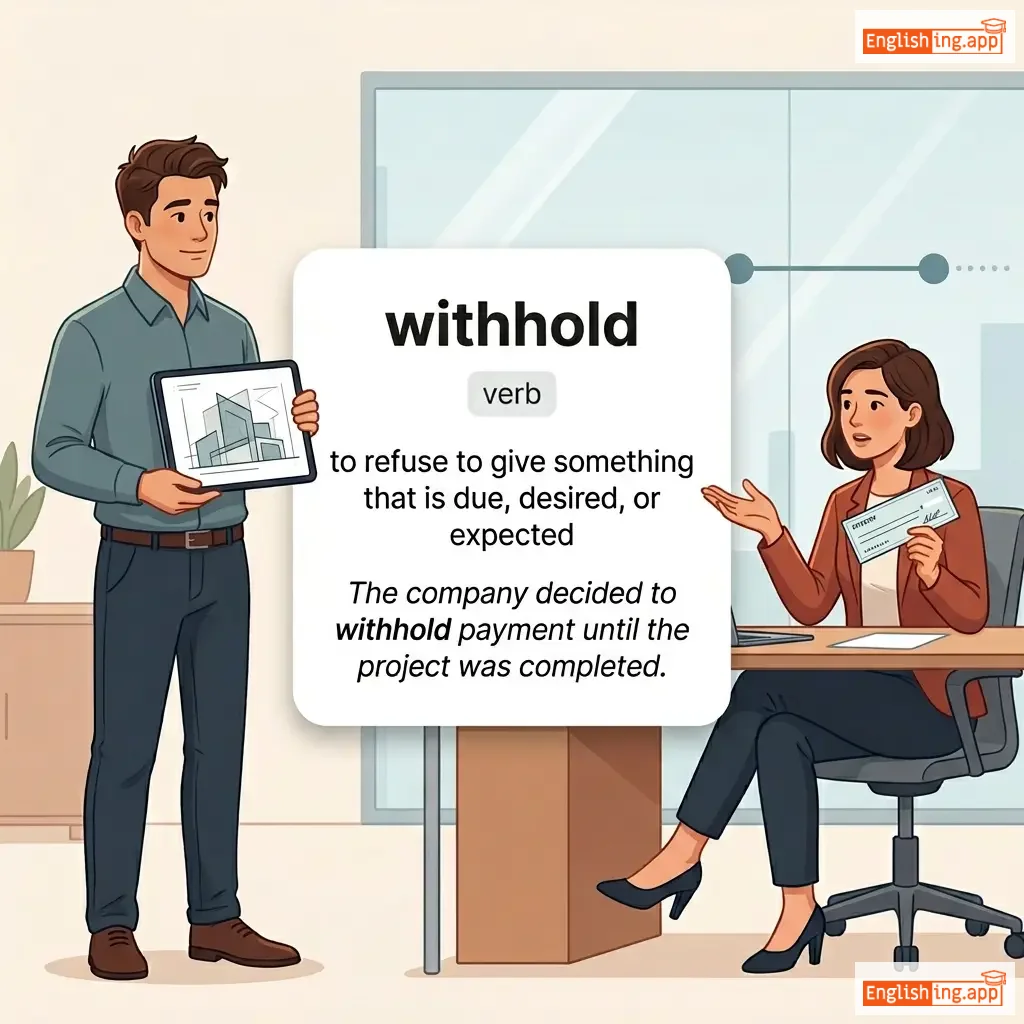
withhold definition card — visual illustration of the meaning
verb
/wɪðˈhoʊld/

to refuse to give something that is due, desired, or expected

"The company decided to withhold payment until the project was completed."

preposition
/wɪðˈɪn/
内側 (uchigawa)

inside the limits of something, or as part of a particular space or time

"The keys are within the drawer."

"鍵は引き出しの中にあります。" (Kagi wa hikidashi no naka ni arimasu.)
preposition
/wɪðˈaʊt/
なし (nashi)

in the absence of, or not having something

"He left without saying goodbye."

"彼はさよならを言わずに出て行った。" (Kare wa sayonara o iwazu ni dete itta.)
verb
/wɪðˈstænd/
耐える / 抵抗する (taeru / teikou suru)

to resist or endure something without being harmed

"This building can withstand strong earthquakes."

"この建物は強い地震に耐えることができます。" (Kono tatemono wa tsuyoi jishin ni taeru koto ga dekimasu.)
adjective
/ˈwɪtləs/
愚かな (orokana)

lacking intelligence or good sense

"It was a witless decision to leave the door unlocked."

"ドアを解除したままにするのは愚かな決断だった。" (Doa o kaijo shita mama ni suru no wa orokana ketsudan datta.)
noun
/ˈwɪtlɪŋ/
馬鹿 / 偽の賢い人 (baka / nise no kashikoi hito)

a person who has little wit or pretends to be witty

"He acted like a witling among scholars."
"彼は学者たちの中で馬鹿のように振る舞った。" (Kare wa gakusha-tachi no naka de baka no yō ni furumatta.)
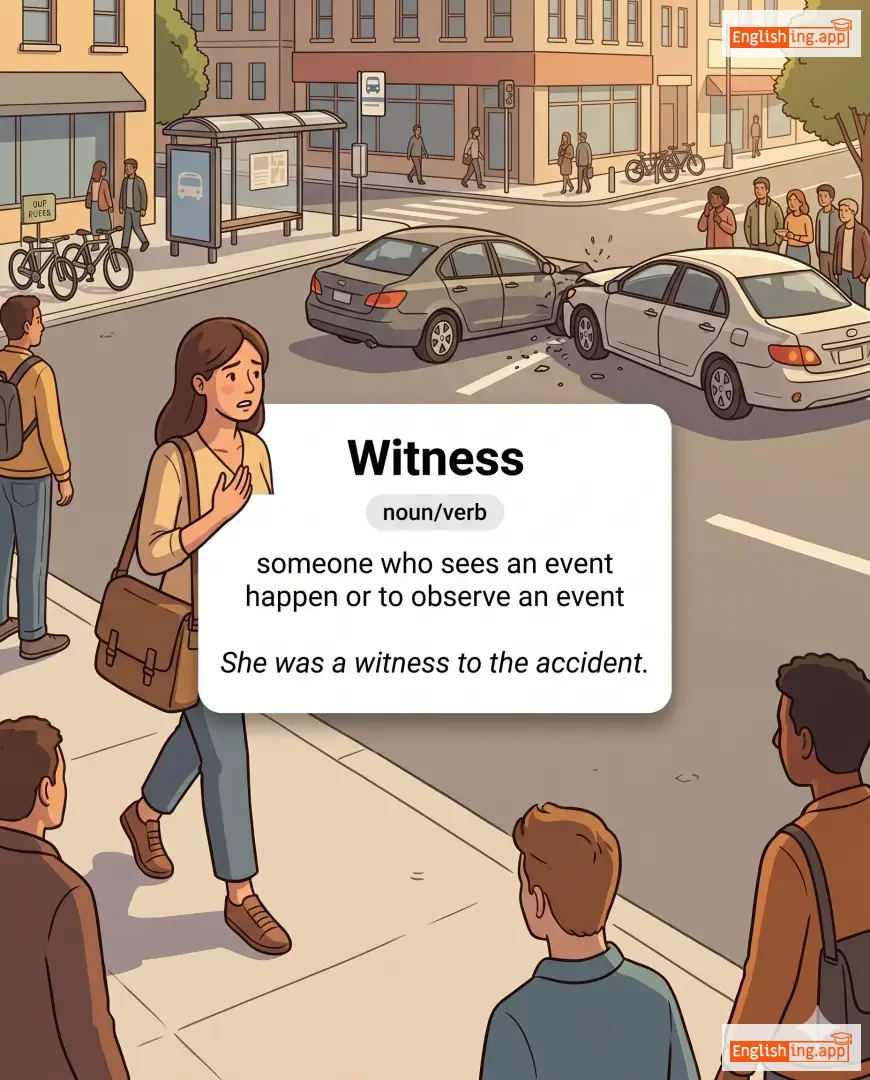
Witness definition card — visual illustration of the meaning
noun/verb
/ˈwɪtnɪs/
目撃者 (mokugekisha)

someone who sees an event happen or to observe an event

"She was a witness to the accident."

"彼女は事故の目撃者でした。" (Kanojo wa jiko no mokugekisha deshita.)
noun
/ˈwɪtɪˌsɪzəm/
機知に富んだ言葉 / 冗談 (kichi ni tondan kotoba / joudan)

a clever or funny remark

"Her witticism made everyone laugh during the meeting."

"彼女の機知に富んだ言葉は会議中、みんなを笑わせた。" (Kanojo no kichi ni tondan kotoba wa kaigi chuu, minna o warawase ta.)
adverb
/ˈwɪtɪŋli/
意図的に (itoteki ni)

Consciously and intentionally; on purpose.

"He wittingly withheld information from the police."

"彼は意図的に警察に情報を隠した。" (Kare wa itoteki ni keisatsu ni jōhō o kakushita.)
adjective
/ˈwɪt.i/
機知に富んだ; 面白い (kichi ni tonda; omoshiroi)

having or showing quick intelligence; amusing in a clever way

"Her witty response to the critic's question impressed the entire audience."

"彼女の機知に富んだ答えは、批評家の質問に対して観客全体を感動させました。" (Kanojo no kichi ni tonda kotae wa, hihyōka no shitsumon ni taishite kankyaku zentai o kandō sasemashita.)
noun
/ˈwɪzərd/
魔法使い (mahou tsukai)

a man who is supposed to have magical powers; a person who is very skilled in a particular area

"The wizard performed amazing magic tricks."

"その魔法使いは驚くべき魔法のトリックを披露しました。" (sono mahou tsukai wa odoro ku beki mahou no torikku o hirou shimashita)
noun
/ˈwɪzərdri/
魔法の技術 (mahō no gijutsu)

The art or practice of magic; great skill or expertise in something.

"The programmer's wizardry amazed everyone in the room."

"プログラマーの魔法の技術は部屋の中の全員を驚かせました。" (Puroguramā no mahō no gijutsu wa heya no naka no zen'in o odorokasemashita.)
verb
/ˈwɪzn/
しおれる (shioreru)

To become dry, shrunken, and wrinkled.

"The flowers began to wizen after days without water."

"花は数日間水なしでしおれ始めました。" (Hana wa suūjitsukann mizu nashi de shiore hajimemashita.)
adjective
/ˈwɪzn feɪst/
乾燥ししわだらけの顔 (kansou shi shiwadarake no kao)

Having a dry, wrinkled, and withered face.

"A wizen-faced old man sat quietly in the corner."

"乾燥ししわだらけの顔をした老人が静かに隅に座っていた。" (Kansou shi shiwadarake no kao o shita rōjin ga shizuka ni sumi ni suwatte ita.)
adjective
/ˈwɪznd/
しわくちゃな (shiwakuchana)

Shriveled, wrinkled, or withered, often due to age.

"The wizened tree stood in the field for centuries."

"そのしわくちゃな木は何世代にもわたって野原に立っていた。" (Sono shiwakuchana ki wa nan-sedai ni mo watatte nohara ni tatte ita.)
verb
/ˈwɒb.l̩/
揺れる (yureru)

to move unsteadily from side to side; to shake or tremble slightly

"The table began to wobble when he leaned on it."

"彼がそれに寄りかかったとき、テーブルは揺れ始めました。" (Kare ga sore ni yorikakatta toki, teeburu wa yurehajimemashita.)
noun
/woʊ/
悲哀 (hiai)

great sorrow, distress, or trouble

"Her heart was filled with woe after hearing the sad news."

"悲しいニュースを聞いて、彼女の心は悲哀でいっぱいでした。" (Kanashii nyuusu wo kiite, kanojo no kokoro wa hiai de ippai deshita.)
adjective
/ˈwoʊ.fəl/
悲惨な (hisan na)

full of woe; very sad or miserable; also used to mean very bad or deplorable

"He gave me a woeful look when he lost the match."

"彼は試合に負けたとき、悲惨な顔をして僕を見た。" (Kare wa shiai ni maketa toki, hisan na kao o shite boku o mita.)
noun
/woʊz/
悩み (nayami)

great sorrow or distress; troubles

"The company faced financial woes after the market crash."

"市場の崩壊後、会社は財政的な問題に直面しました。" (Shijō no hōkai go, kaisha wa zaisei-teki na mondai ni chokumen shimashita.)
noun
/wʊlf/
オオカミ (ōkami)

a wild carnivorous animal related to the dog, living and hunting in packs

"The wolf howled loudly under the full moon."

"オオカミは満月の下で大声で遠吠えした。" (Ōkami wa mangetsu no shita de ōgoe de tōboe shita.)
noun
/ˈwɪmən/
女性 (josei)

an adult human female

"The woman at the counter helped me."

"カウンターにいる女性が私を助けてくれました。" (Kauntaa ni iru josei ga watashi o tasukete kuremashita.)
noun
/ˈwʌndər/
驚異 (kyoui)

a feeling of amazement and admiration, caused by something beautiful, remarkable, or unfamiliar

"The view from the mountain was a true wonder."

"山からの景色は本当に驚異的でした。" (Yama kara no keshiki wa hontōni kyoi-teki deshita.)
adjective
/ˈwʌndərfəl/
素晴らしい (subarashii)

extremely good or impressive

"She had a wonderful time at the party."

"彼女はパーティーで素晴らしい時間を過ごしました。" (Kanojo wa pātī de subarashī jikan o sugoshimashita.)
adjective
/ˈwɒŋki/
不安定な; 信頼できない; 正常に動作しない (wonki)

unstable; unreliable; not working properly

"The old chair was wonky and wobbled every time someone sat on it."

"古い椅子は不安定で、誰かが座るたびに揺れていました。" (Furui isu wa fuantei de, dareka ga suwaru tabi ni yurete imashita)
adjective
/woʊnt/ or /wɔːnt/
習慣 (shūkan)

accustomed or used to doing something

"She rose early, as she was wont to do."
"彼女は早く起きました、彼女がするのが習慣だったように。" (Kanojo wa hayaku okimashita, kanojo ga suru no ga shūkan datta yō ni.)
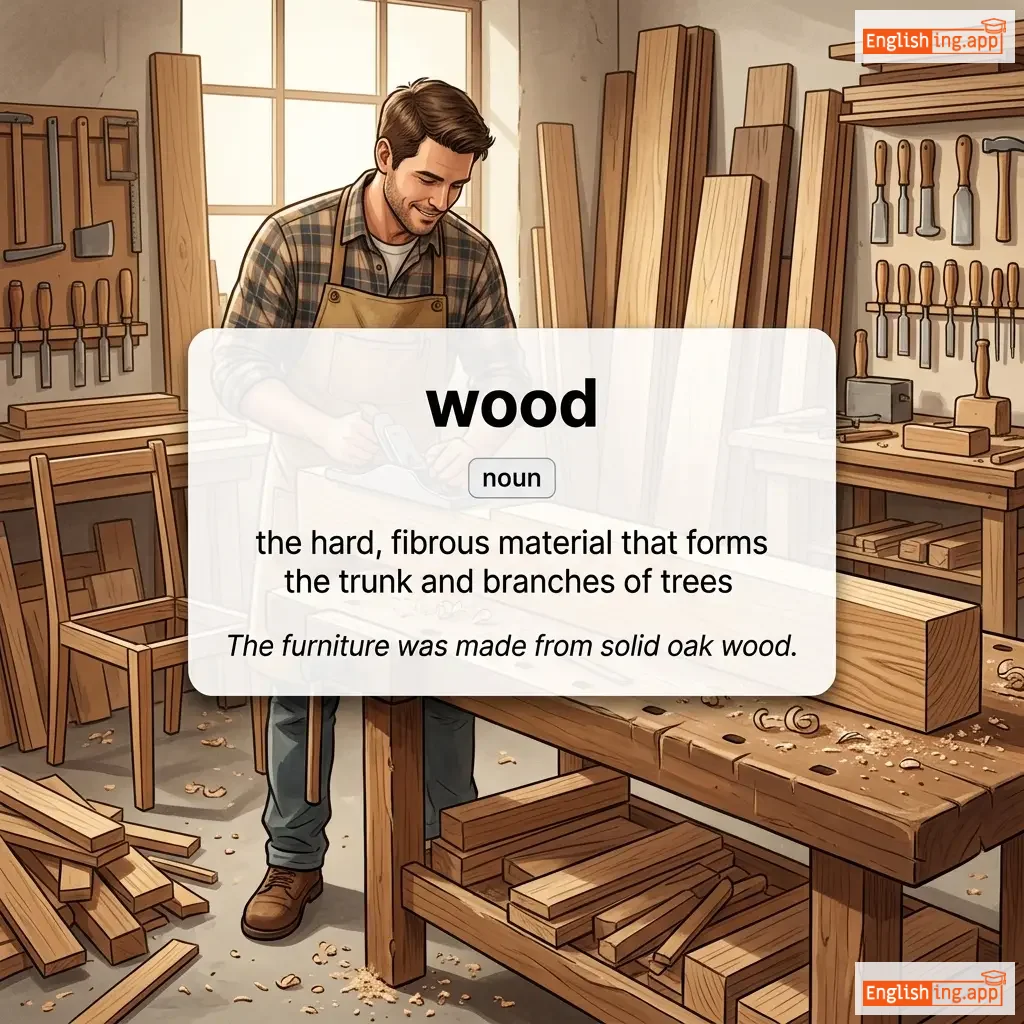
wood definition card — visual illustration of the meaning
noun
/wʊd/
木材 (mokuzai)

the hard, fibrous material that forms the trunk and branches of trees

"The furniture was made from solid oak wood."

"家具は頑丈なオーク材で作られていました。" (Kagu wa ganjou na o-kuzai de tsukurarete imashita.)
noun
/wʊd ˈæp.əl/
ウッドアップル (uddo appuru)

a hard-shelled tropical fruit with aromatic pulp used in beverages and medicine

"The wood apple has a hard shell but sweet pulp inside."

"ウッドアップルは硬い殻を持っていますが、内部には甘い果肉があります" (Uddo appuru wa katai kara wo motteimasu ga, naibu ni wa amai kaniku ga arimasu)
adjective
/ˈwʊdən/
木製の (mokusei no)

made of wood

"The house had beautiful wooden floors."

"その家には美しい木製の床がありました。" (Sono ie ni wa utsukushī mokusei no yuka ga arimashita.)
noun
/ˈwʊd.ən ˈsæn.dəl/
木製サンダル (mokusei sandaru)

a type of footwear made of wood, typically worn as traditional shoes

"She wore wooden sandals to the traditional ceremony."

"彼女は伝統的な儀式で木製サンダルを履いていた。" (Kanojo wa dentō-teki na gishiki de mokusei sandaru o haite ita.)
noun
/ˈwʊd.pek.ər/
キツツキ (kitsutuki)

a bird that pecks at tree bark to find insects and create nesting holes

"The woodpecker hammered against the oak tree."

"キツツキはオークの木を叩いた。" (Kitsutuki wa ooku no ki o tataita)
noun
/ˈwʊlən dres/
ウールのドレス (ūru no doresu)

a dress made from wool fabric, typically worn in cold weather

"She wore a warm woolen dress during the winter months."

"彼女は冬の月に暖かいウールのドレスを着ていました。" (Kanojo wa fuyu no tsuki ni atatakai ūru no doresu o kiteimashita.)
noun
/wɜːrd/
単語 (tango)

a single distinct meaningful element of speech or writing

"He looked up the word in the dictionary."

"彼は辞書でその単語を調べました。" (Kare wa jisho de sono tango o shirabemashita.)
noun
/wɜːrd fɔːrˈmeɪʃən/
語形成 (go keisei)

the process by which new words are created or existing words are modified in a language

"Word formation helps learners understand how new vocabulary develops in English."
"語形成は言語学の重要な分野です。" (go keisei wa gengogaku no juuyou na bunya desu)
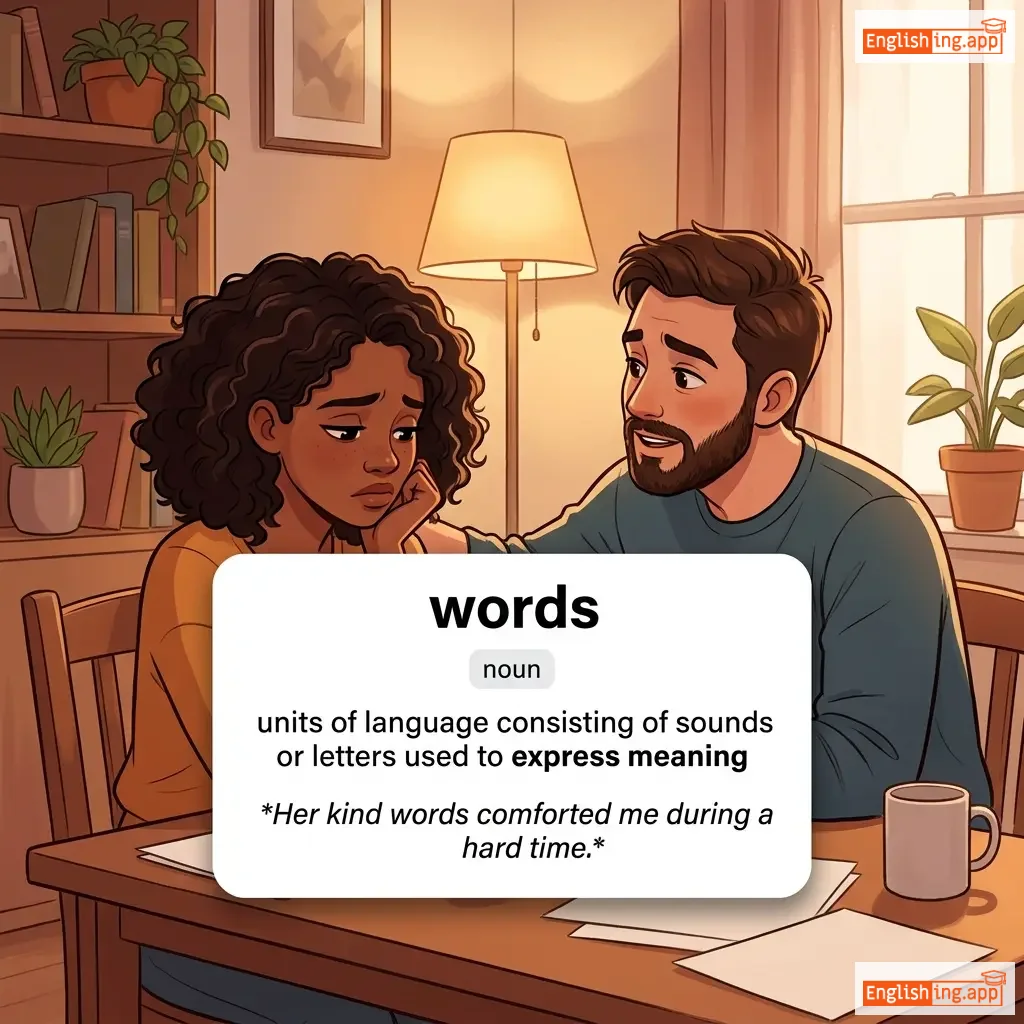
words definition card — visual illustration of the meaning
noun
/wɜːdz/
言葉 (kotoba)

units of language consisting of sounds or letters used to express meaning

"Her kind words comforted me during a hard time."
"彼女の優しい言葉は私を困難な時に慰めてくれました。" (Kanojo no yasashii kotoba wa watashi o konnan na toki ni nagusamete kuremashita.)
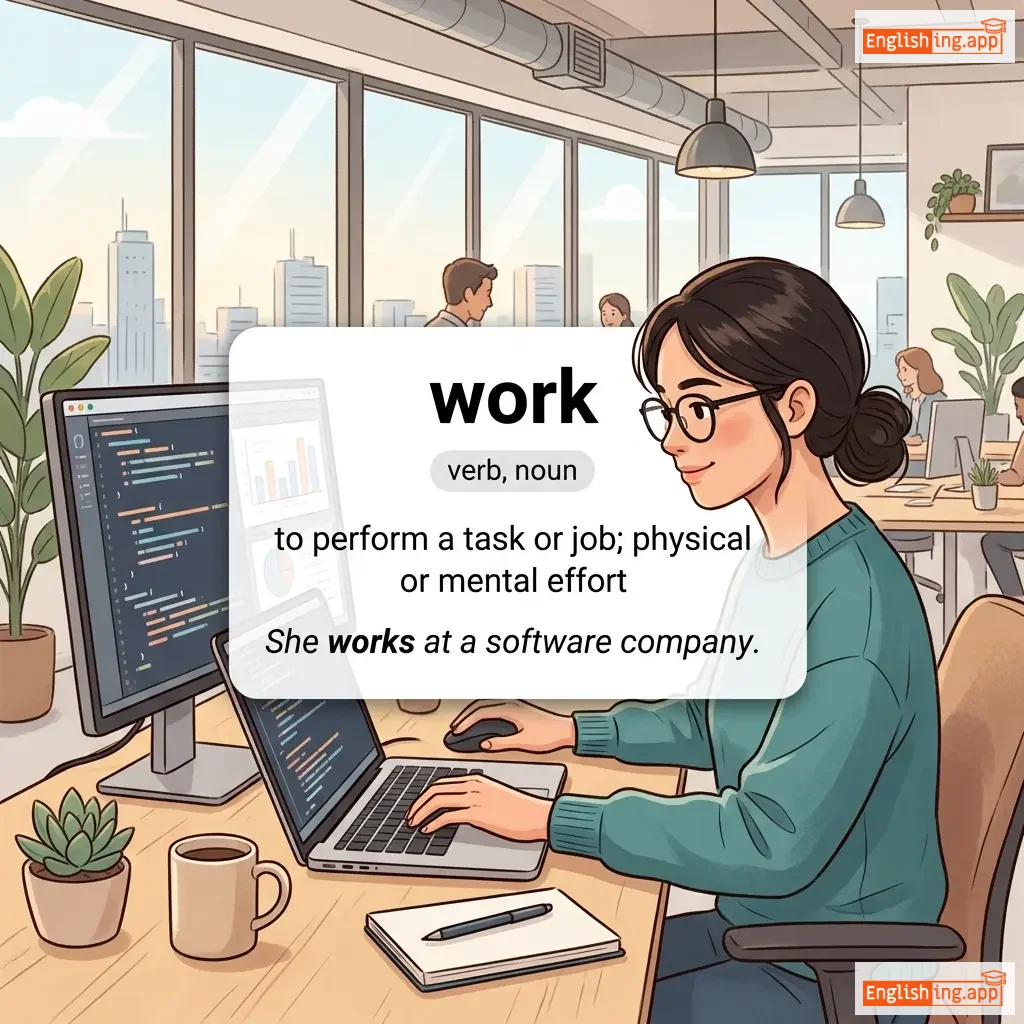
work definition card — visual illustration of the meaning
verb, noun
/wɜːrk/
仕事 (shigoto)

to perform a task or job; physical or mental effort

"She works at a software company."
"彼女はソフトウェア会社で働いています。" (Kanojo wa sofuto wea kaisha de hataraiteimasu.)
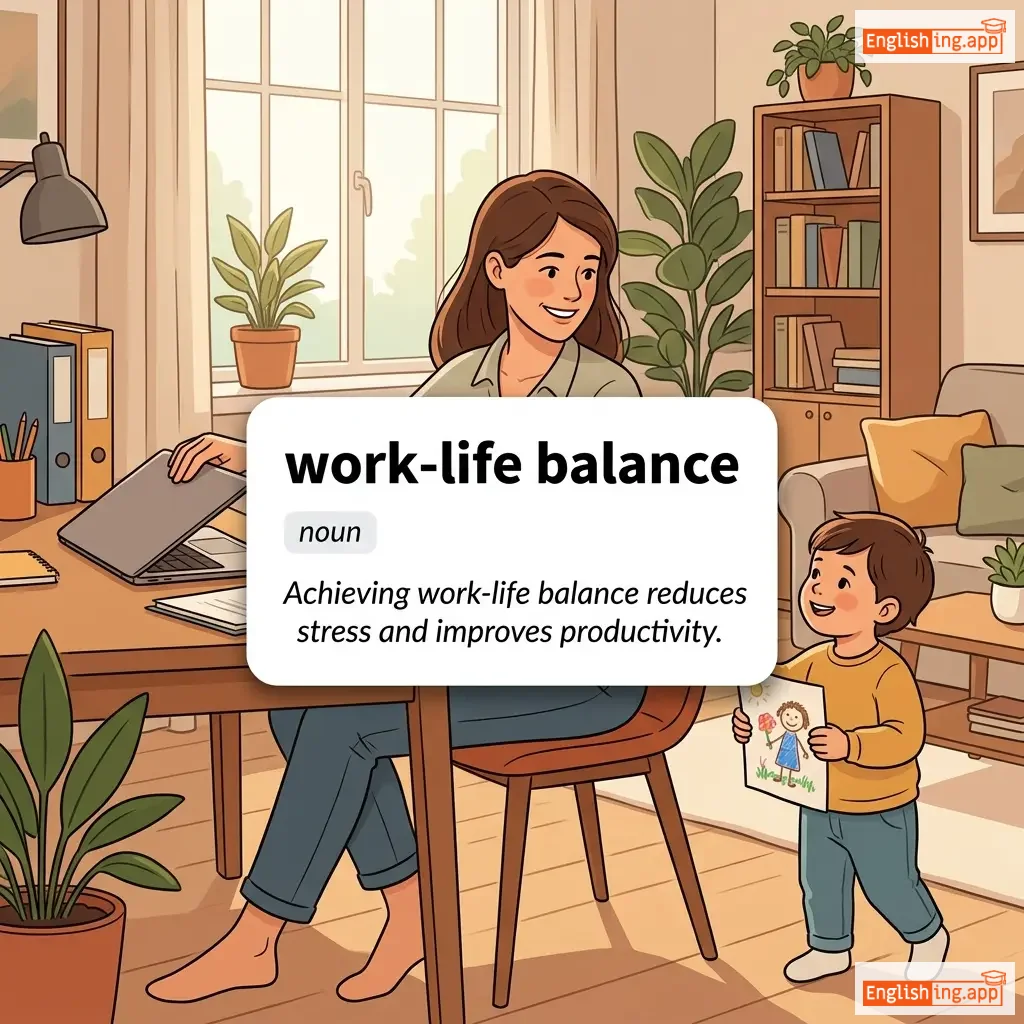
work-life balance definition card — visual illustration of the meaning
noun
/ˈwɜːrk laɪf ˈbæl.əns/
ワークライフバランス (wākuraifubaransu)

The equilibrium between personal and professional life, ensuring neither dominates at the expense of the other.

"Achieving work-life balance reduces stress and improves productivity."

"ワークライフバランスを達成することで、ストレスが減り、生産性が向上します。" (Wākuraifubaransu wo tassei suru koto de, sutoresu ga heri, seisansei ga kōjō shimasu.)
adjective
/ˈwɜːrkəbəl/
実行可能な; 実用的な (jikkou kanou na; jitsuyouteki na)

capable of being done or put into effect; practical

"We need a workable solution to solve this problem quickly."

"この問題を迅速に解決するために、実行可能な解決策が必要です。" (Kono mondai o jinsoku ni kaiketsu suru tame ni, jikkou kanou na kaiketsu saku ga hitsuyou desu.)
noun
/ˈwɜːrkər/
労働者 (rōdōsha)

a person who is employed to perform tasks or duties

"The workers were busy building the bridge."

"労働者たちは橋を建設するのに忙しかった。" (Rōdōsha-tachi wa hashi o kensetsu suru no ni isogashikatta.)
workflow definition card — visual illustration of the meaning
noun
/ˈwɜːk.fləʊ/
作業の流れ、プロセスの順序 (sagyō no nagare, purosesu no junjo)

The sequence of processes through which a piece of work passes from initiation to completion.

"A well-structured workflow enhances productivity."

"よく構成されたワークフローは生産性を高めます。" (Yoku kōsei sareta wāku furō wa seisansei o takamemasu.)
noun
/ˈwɜːrkˌfɔːrs/
労働力 (rōdōryoku)

the people engaged in or available for work

"The company is looking to expand its workforce by 20%."

"その会社は労働力を20%拡大する計画を立てています。" (Sono kaisha wa rōdōryoku o 20% kakudai suru keikaku o tateteimasu.)
adjective
/ˈwɜːrkɪŋ/
働いている (hatarai teiru)

engaged in physical or mental effort to achieve a goal or task

"She is working on her project right now."

"彼女は今、プロジェクトに取り組んでいます。" (Kanojo wa ima, purojekuto ni torikundeimasu.)
noun
/ˈwɜːrkɪŋ mæn/
労働者 (roudousha)

a man engaged in manual labor or industrial work, often considered as part of the working class

"The working-man fought hard for better wages and conditions."

"労働者はより良い賃金と条件のために懸命に戦った。" (Roudousha wa yori yoi chingin to jouken no tame ni kenmei ni tatakatta.)
workload definition card — visual illustration of the meaning
noun
ˈwɜːrkˌləʊd
作業負荷 (sagyou fuka)

The amount of work to be done by someone or something.

"His workload has increased dramatically in the past month."

"彼のワークロードは先月劇的に増加しました。" (Kare no wākurōdo wa sengetsu gekiteki ni zōka shimashita.)
adjective
/ˈwɜːkmənˌlaɪk/
職人仕事 (shokunin shigoto)

Showing efficient, competent, and practical skill, but without flair or creativity.

"The carpenter delivered a workmanlike performance on the project."
"大工はプロジェクトで職人仕事のようなパフォーマンスを発揮しました。" (Daiku wa purojekuto de shokunin shigoto no yōna pafōmansu o hakki shimashita.)
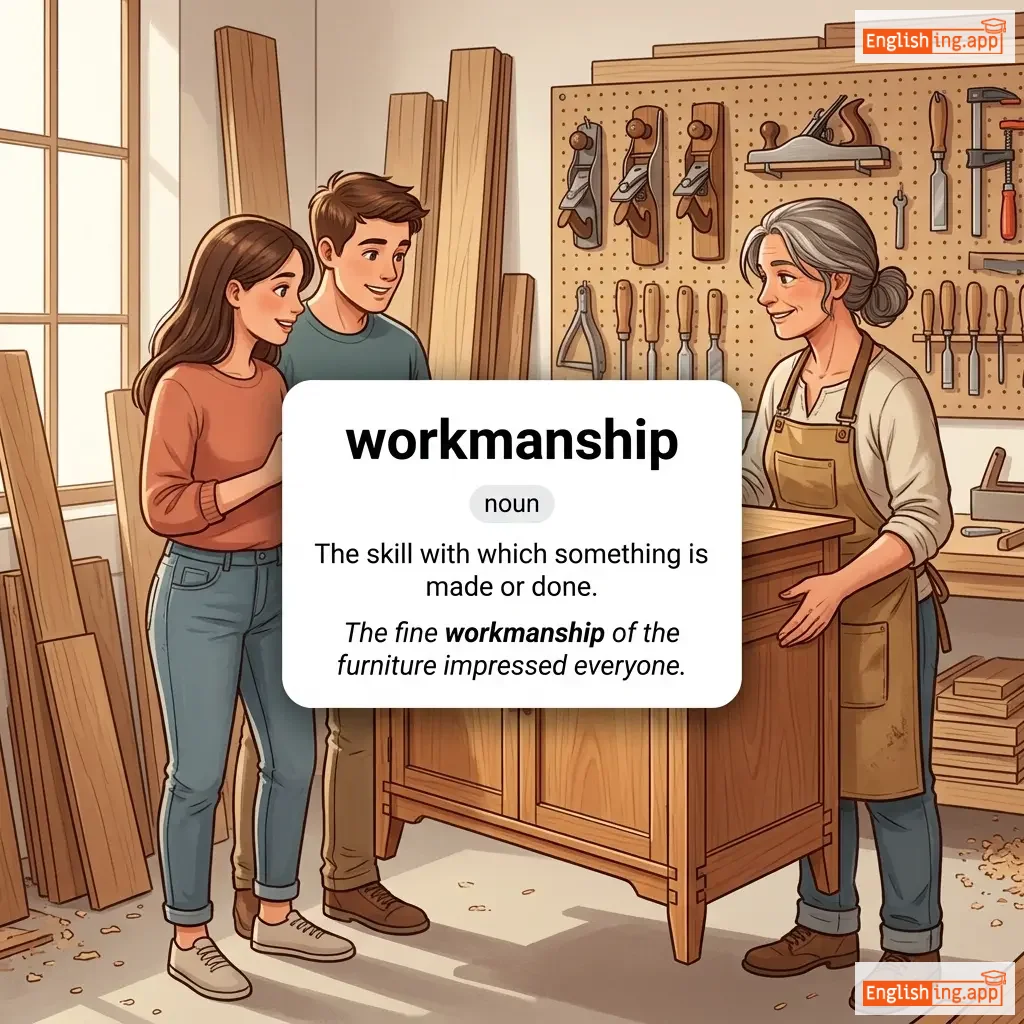
workmanship definition card — visual illustration of the meaning
noun
/ˈwɜːkmənˌʃɪp/
職人技 (shokuninwaza)

The skill with which something is made or done.

"The fine workmanship of the furniture impressed everyone."

"家具の優れた職人技は、皆に感銘を与えました。" (Kagu no sugureta shokuninwaza wa, mina ni kanmei o ataemashita.)