語彙集

英単語辞書 | 単語の意味、定義、例文

adverb
/wɛr/
どこ (doko)

in or at what place or position

"Where do you live?"

"あなたはどこに住んでいますか?" (Anata wa doko ni sundeimasu ka?)
noun
/ˈwɛrəˌbaʊts/
所在場所 (sokai basho)

the place where someone or something is

"The police are trying to find out the suspect's whereabouts."

"警察は容疑者の所在場所を探そうとしています。" (Keisatsu wa yōgisha no sokai basho o sagasō to shiteimasu.)
conjunction
/wɛərˈæz/
〜一方で (ippō de)

used to introduce a contrast or comparison between two facts

"She prefers tea, whereas he likes coffee."

"彼女はお茶が好きですが、彼はコーヒーが好きです。" (Kanojo wa ocha ga suki desu ga, kare wa kōhī ga suki desu.)
adverb
/wɛərˈbaɪ/
によって (ni yotte)

by which; because of which

"The company agreed to a contract whereby it would pay the penalty."

"その会社は、罰金を支払う契約に同意しました。" (Sono kaisha wa, bakkin o shiharau keiyaku ni dōi shimashita.)
adverb
/ˌwɛr.əˈpɒn/
その後すぐに (sono ato sugu ni)

Immediately after which; as a result of which.

"He confessed his mistake, whereupon she forgave him."

"彼は自分の間違いを認め、すぐに彼女は彼を許しました。" (Kare wa jibun no machigai o mitome, sugu ni kanojo wa kare o yurushimashita.)
adverb
/wɛrˈɛv.ər/
どこでも (dokodemo)

In or to any place.

"You can find good people wherever you go."

"あなたはどこでも良い人を見つけることができます。" (Anata wa dokodemo yoi hito o mitsukeru koto ga dekimasu.)
adverb, noun
/ˈwɛə.wɪð/
手段 (shudan)

With which; the means or resources needed for something.

"He lacked the money wherewith to buy a new house."

"彼は新しい家を買うためのお金がなかった。" (Kare wa atarashī ie o kau tame no okane ga nakatta.)
🍴

whet

verb
/wɛt/

To sharpen the blade of a tool or to stimulate interest or appetite.

"The smell of food whetted my appetite."

conjunction
/ˈwɛðər/
かどうか (kadouka)

used to express a doubt or choice between alternatives

"I don’t know whether I should go."

"私は行くべきかどうか分かりません。" (Watashi wa iku beki ka dō ka wakarimasen.)
noun
/weɪ/
ホエイ (hoe)

the watery part of milk that separates from the curds when making cheese

"Protein powder is often made from whey."

"プロテインパウダーは通常、ホエイから作られます。" (Purotein paudā wa tsūjō, hoei kara tsukuraremasu.)
pronoun
/wɪtʃ/
どれ (dore)

used to ask about one or more items from a defined set

"Which one do you prefer, the red or the blue?"

"赤と青、どちらを選びますか?" (Aka to ao, dochira o erabimasu ka?)
👃

whiff

noun, verb
/wɪf/

A brief, faint smell or puff of air; to get a quick smell of something.

"I caught a whiff of perfume as she passed by."

conjunction
/waɪl/
その間 (sono aida)

during the time that something is happening

"She was reading while waiting for the bus."

"彼女はバスを待っている間に読書をしていた。" (Kanojo wa basu wo matteiru aida ni dokusho wo shite ita.)
noun
/wɪm/
気まぐれ (kimagure)

a sudden or unpredictable idea, desire, or decision

"She bought the dress on a whim."
"彼女は気まぐれでそのドレスを買いました。" (Kanojo wa kimagure de sono doresu o kaimashita.)
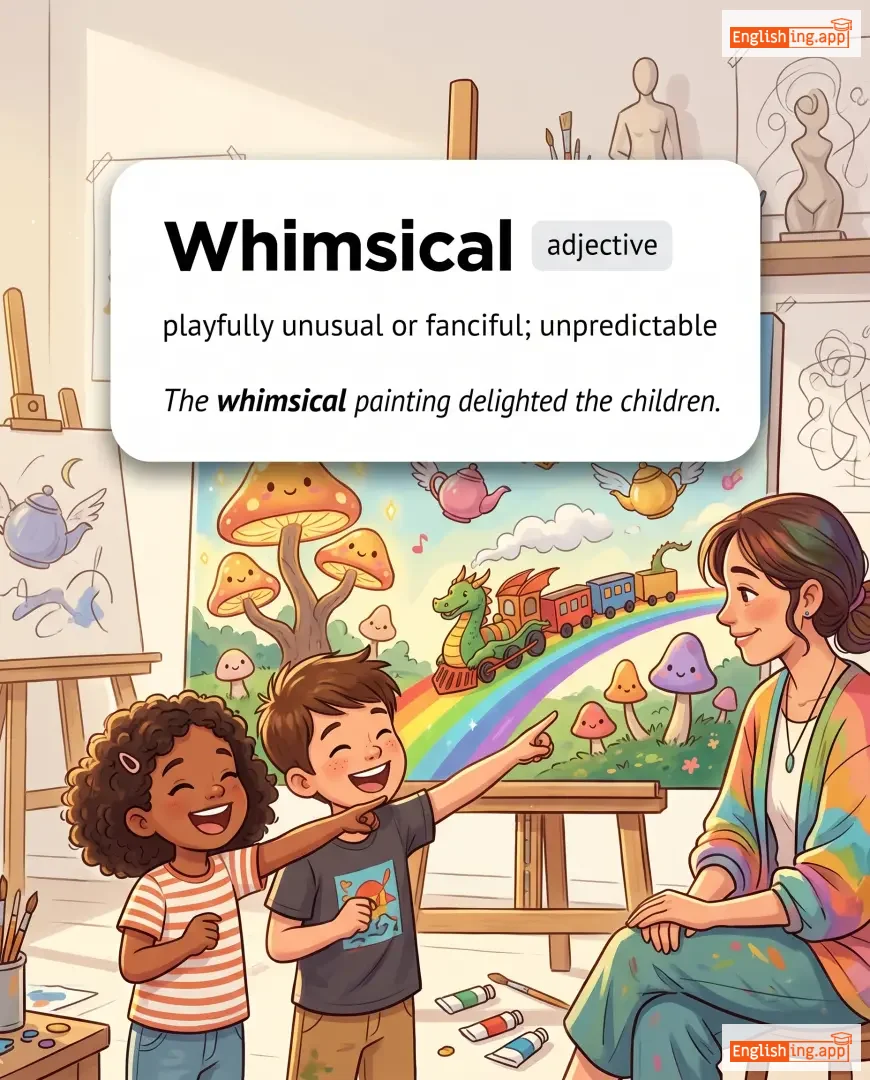
Whimsical definition card — visual illustration of the meaning
adjective
/ˈwɪmzɪkəl/
奇想天外 (kisō tengai)

playfully unusual or fanciful; unpredictable

"The whimsical painting delighted the children."

"その奇想天外な絵画は子供たちを喜ばせました。" (Sono kisō tengai na kaiga wa kodomotachi o yorokobasemashita.)
adverb
/ˈwɪmzɪkli/
遊び心いっぱいに (uimuzikarii)

In a playful, fanciful, or capricious manner; with sudden changes of mind

"She decorated her room whimsically with colorful balloons."

"彼女は部屋をカラフルな風船で遊び心いっぱいに飾った。" (Kanojo wa heya o karafuru na fuusen de asobigokoro ippai ni kazatta.)
noun
/ˈwɪmzi/
奇抜さ (kibatsusa)

playful or fanciful behavior or humor

"Her stories were full of whimsy and imagination."

"彼女の話は奇抜さと想像力にあふれていました。" (Kanojo no hanashi wa kibatsusa to sōzōryoku ni afurete imashita.)
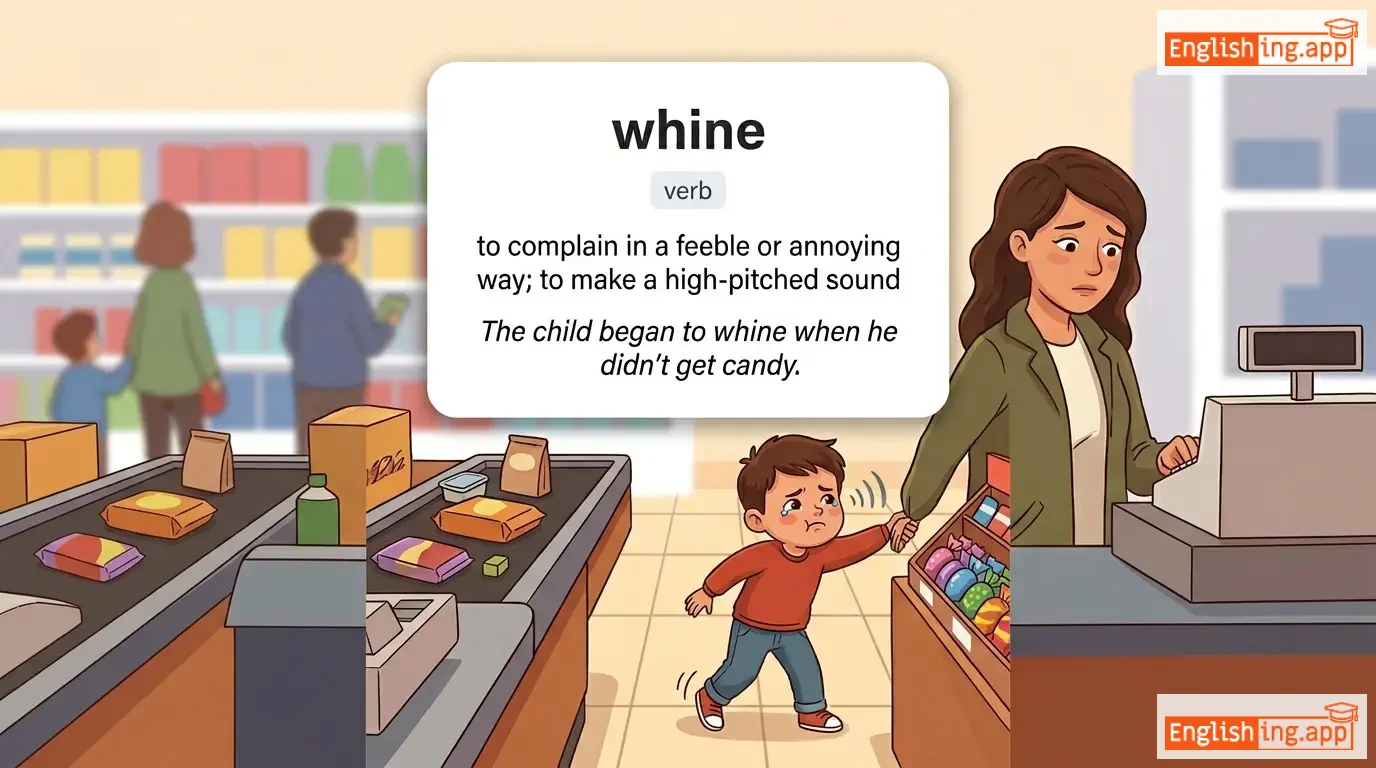
whine definition card — visual illustration of the meaning
😩

whine

verb
/waɪn/

to complain in a feeble or annoying way; to make a high-pitched sound

"The child began to whine when he didn’t get candy."

verb
/ˈwɪni/
いななき (inanaki)

to make the high-pitched sound a horse makes

"The horse whinnied when it saw its rider."

"馬は騎手を見たときにいななきました。" (Uma wa kishu wo mita toki ni inanakimashita.)
verb
/wɪp/
ムチで打つ (muchi de utsu)

to strike or beat with a flexible instrument such as a rope or cord

"The trainer whipped the horse to make it run faster."
"トレーナーは馬を速く走らせるために鞭で打った。" (Toreenaa wa uma wo hayaku hashiraseru tame ni muchi de utta.)
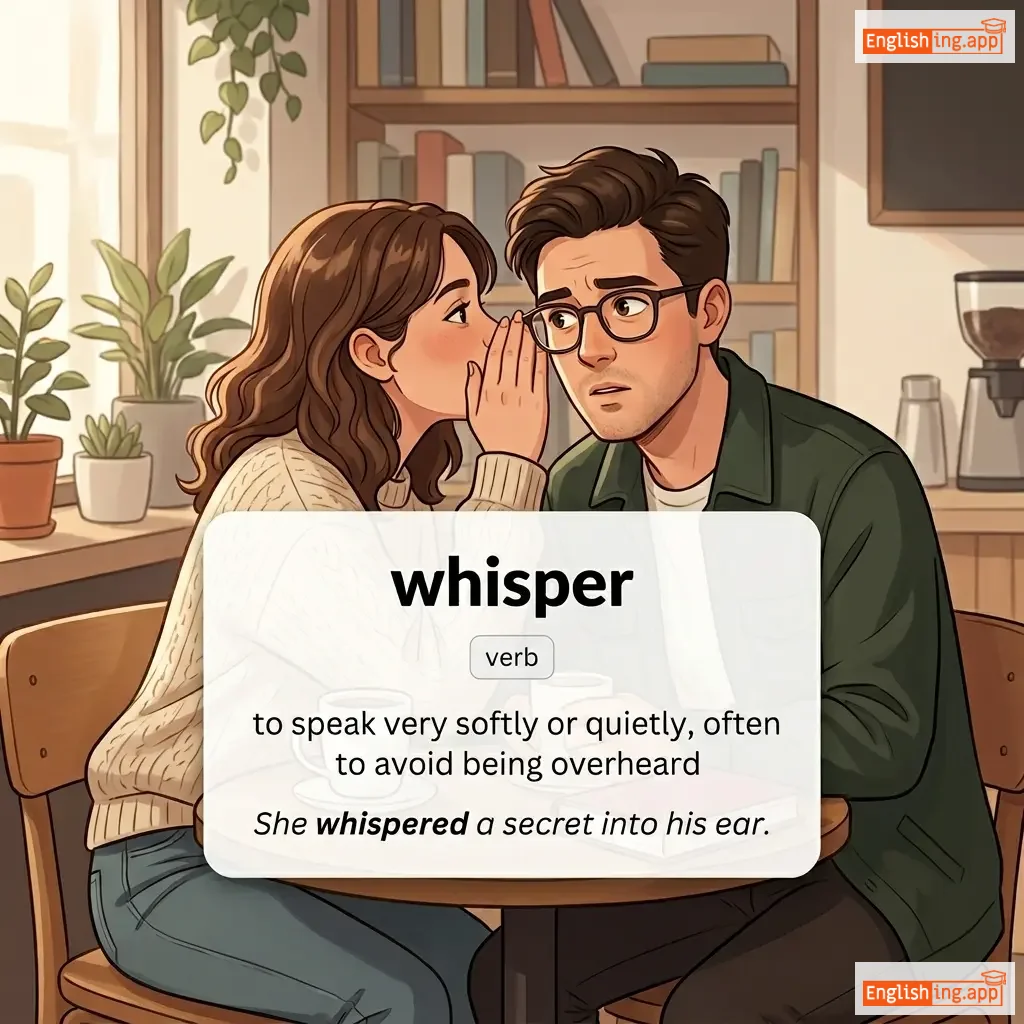
whisper definition card — visual illustration of the meaning
verb
/ˈwɪspər/
ささやく (sasayaku)

to speak very softly or quietly, often to avoid being overheard

"She whispered a secret into his ear."
"彼女は彼の耳に秘密をささやいた。" (Kanojo wa kare no mimi ni himitsu o sasayaita.)
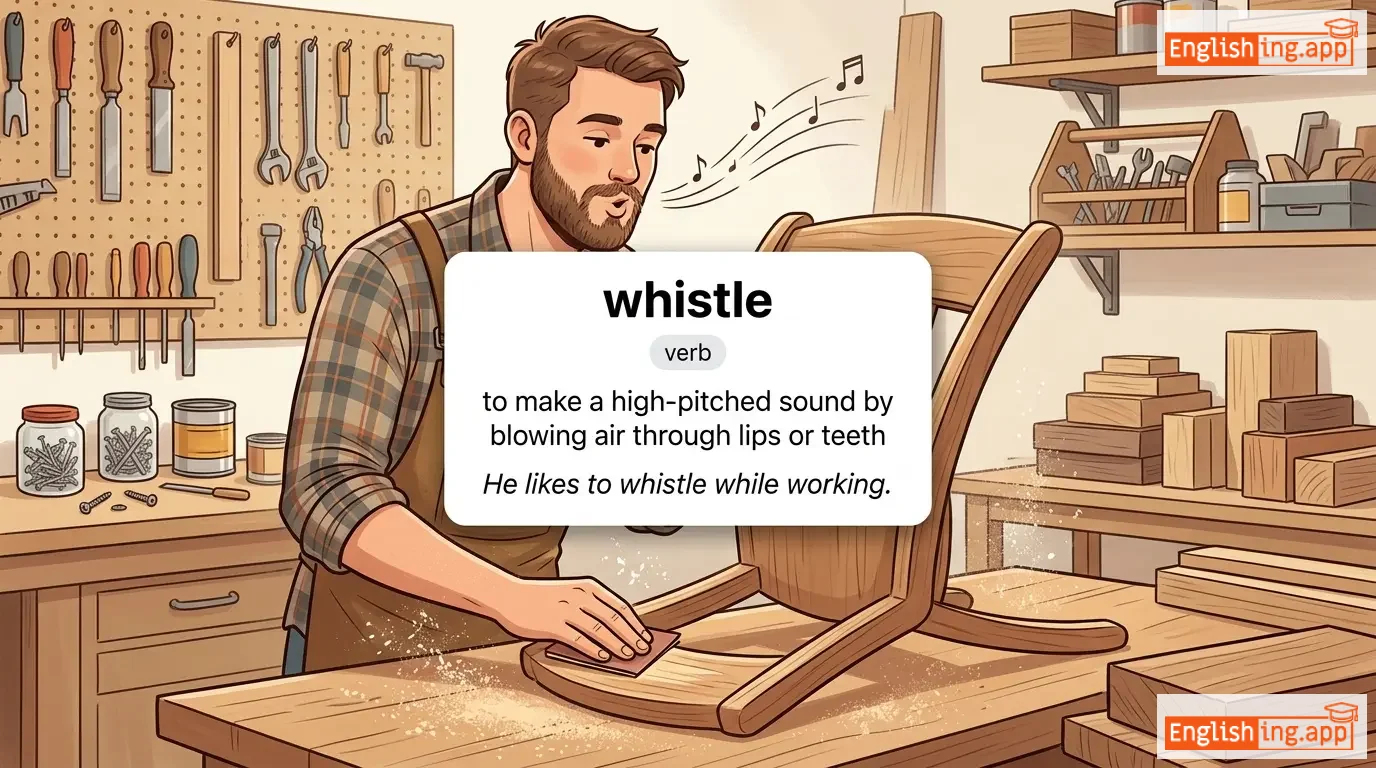
whistle definition card — visual illustration of the meaning
noun
/ˈwɪsəl/
ホイッスル (hoissuru)

a small wind instrument that produces a high-pitched sound when blown

"The referee blew his whistle to start the game."

"審判はゲームを開始するためにホイッスルを吹いた。" (Shinpan wa gēmu o kaishi suru tame ni hoissuru o fuita.)
noun
/wɪt/
ほんの少し (honno sukoshi)

a very small part or amount

"He doesn't care a whit about the outcome."

"彼は結果について少しも気にしない。" (Kare wa kekka ni tsuite sukoshi mo ki ni shinai.)
adjective
/waɪt/
(shiro)

having the color of milk or fresh snow, the opposite of black

"She wore a beautiful white dress to the party."

"彼女はパーティーで美しい白いドレスを着ていた。" (Kanojo wa pātī de utsukushī shiroi doresu o kite ita.)
noun
/waɪt ˈpɛpər/
ホワイトペッパー (howaito peppā)

a spice made from dried peppercorns with the outer husk removed

"She added white pepper to the cream soup for a mild spicy flavor."

"彼女はクリームスープにホワイトペッパーを加え、まろやかな辛味を加えました。" (kanojo wa kurīmu sūpu ni howaito peppā o kuwae, maroyakana karami o kuwaemashita)
noun
/waɪt ænt/
シロアリ (shiroari)

a small social insect that lives in colonies and feeds on wood and plant matter

"White ants damaged the wooden furniture in our house."
"シロアリは私たちの家の木製家具を傷つけました。" (Shiroari wa watashitachi no ie no mokusei kagu o kizutsukemashita.)
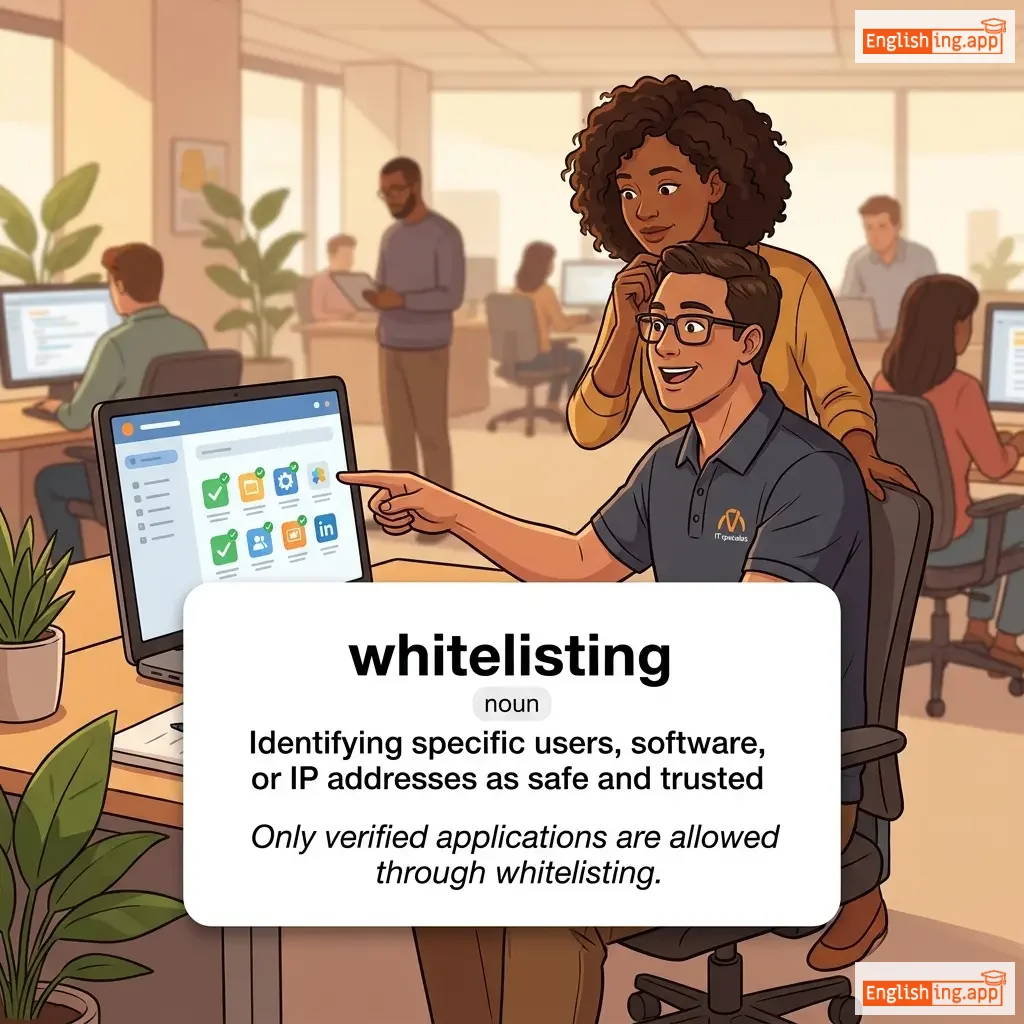
whitelisting definition card — visual illustration of the meaning
noun
/ˈwaɪt.lɪst.ɪŋ/
特定のユーザー、ソフトウェア、またはIPアドレスを安全で信頼できるものとして識別する (Tokutei no yūzā, sofutowea, matawa IP adoresu o anzen de shinrai dekiru mono toshite shikibetsu suru)

Identifying specific users, software, or IP addresses as safe and trusted

"Only verified applications are allowed through whitelisting."

"認証済みのアプリケーションのみがホワイトリストを通過できます。" (Ninshouzumino apurikeeshon nomi ga howaitorisuto o tsuuka dekimasu.)
verb
/ˈwaɪtˌwɑːʃ/

to cover up faults, errors, or unpleasant facts; to paint with white paint or lime

"The report was criticized for trying to whitewash the company's failures."

verb
/ˈwɪtl/

to carve or shape something by cutting off small pieces; to gradually reduce

"He spent the afternoon whittling a piece of wood into a toy."

pronoun
/huː/
(dare)

used to ask about a person or people

"Who is coming to the party tonight?"

"今晩パーティーに誰が来ますか?" (Konban pātī ni dare ga kimasu ka?)
pronoun
/huːˈɛvər/
誰でも (dare demo)

any person who; no matter who

"Whoever wants to join the trip must register today."

"誰でもこの旅行に参加したい場合は、今日中に登録する必要があります。" (Dare demo kono ryokō ni sanka shitai baai wa, kyōjū ni tōroku suru hitsuyō ga arimasu.)
adjective
/hoʊl/
全体 (zentai)

all of something; complete or entire

"He ate the whole cake by himself."

"彼はケーキを全部一人で食べました。" (Kare wa kēki o zenbu hitori de tabemashita.)
adjective
/ˌhoʊlˈhɑːrtɪd/
全力で (zenryoku de)

showing complete sincerity and commitment; fully enthusiastic

"She gave her wholehearted support to the project."

"彼女はそのプロジェクトに全力でサポートを与えた。" (Kanojo wa sono purojekuto ni zenryoku de sapōto o ataeta.)
adjective
/ˈhoʊlsəm/
健康的な (kenkō-teki na)

promoting health or well-being; morally good and beneficial

"The retreat offered wholesome food and peaceful surroundings."

"そのリトリートは健康的な食事と平穏な環境を提供しました。" (Sono ritorīto wa kenkō-teki na shokuji to heion na kankyō o teikyō shimashita.)
adverb
/ˈhoʊlli/
完全に (kanzen ni)

completely; entirely

"She is wholly devoted to her family."

"彼女は家族に完全に捧げています。" (Kanojo wa kazoku ni kanzen ni sasage teimasu.)
pronoun
/huːm/
誰に (dare ni)

used to refer to the person or people that something is done to

"The man whom I met yesterday is my friend."

"昨日会ったその男性は私の友達です。" (Kinō atta sono dansei wa watashi no tomodachi desu.)
noun
/wɜːrl/
渦巻き (uzumaki)

A pattern of spirals or concentric circles, often found in fingerprints, shells, or flowers.

"The fingerprint displayed a clear whorl pattern."

"指紋に明確な渦巻きのパターンが表示されていました。" (Shimon ni meikaku na uzumaki no patān ga hyōji sareteimashita.)
pronoun
/huːz/
誰の (dare no)

used to ask or talk about the person or thing that owns something

"The girl whose phone was stolen is my cousin."

"電話が盗まれた女の子は私のいとこです。" (Denwa ga nusumareta onnanoko wa watashi no itoko desu.)
adverb
/waɪ/
なぜ (naze)

used to ask or talk about the reason for something

"Why did you leave so early?"

"なぜこんなに早く帰ったのですか?" (Naze konna ni hayaku kaetta no desu ka?)
noun
/wɪk/
キャンドルの芯 (kyandoru no shin)

a cord or strand of cotton that burns to provide light in a candle or lamp

"The candle wick needs to be trimmed for better burning."

"キャンドルの芯は、より良く燃えるために切る必要があります。" (Kyandoru no shin wa, yori yoku moeru tame ni kiru hitsuyō ga arimasu.)
adjective
/ˈwɪkɪd/
悪い (warui)

morally bad or evil; also informally very good or impressive

"The villain in the story was truly wicked."

"物語の中の悪役は本当に悪かった。" (Monogatari no naka no akuyaku wa hontou ni warukatta.)
noun
/ˈwɪkɪdnəs/
邪悪、悪行 (jaaku, akugyou)

Evil or morally bad behavior.

"The story highlights the wickedness of the cruel king."

"その物語は、残虐な王の悪行を強調しています。" (Sono monogatari wa, zangyaku na ou no akugyou o kyoucho shiteimasu.)
adjective
/waɪd/
広い (hiroi)

having a great extent from side to side; broad

"The river is wide enough to fit a boat."

"その川は十分に広く、ボートが入ることができます。" (Sono kawa wa juubun ni hiroku, bōto ga hairu koto ga dekimasu.)
adverb
/ˈwaɪdli/
広く (hiroku)

to a great extent or degree

"The news of his promotion spread widely across the company."
"彼の昇進のニュースは会社全体に広がりました。" (Kare no shōshin no nyūsu wa kaisha zentai ni hirogarimashita.)
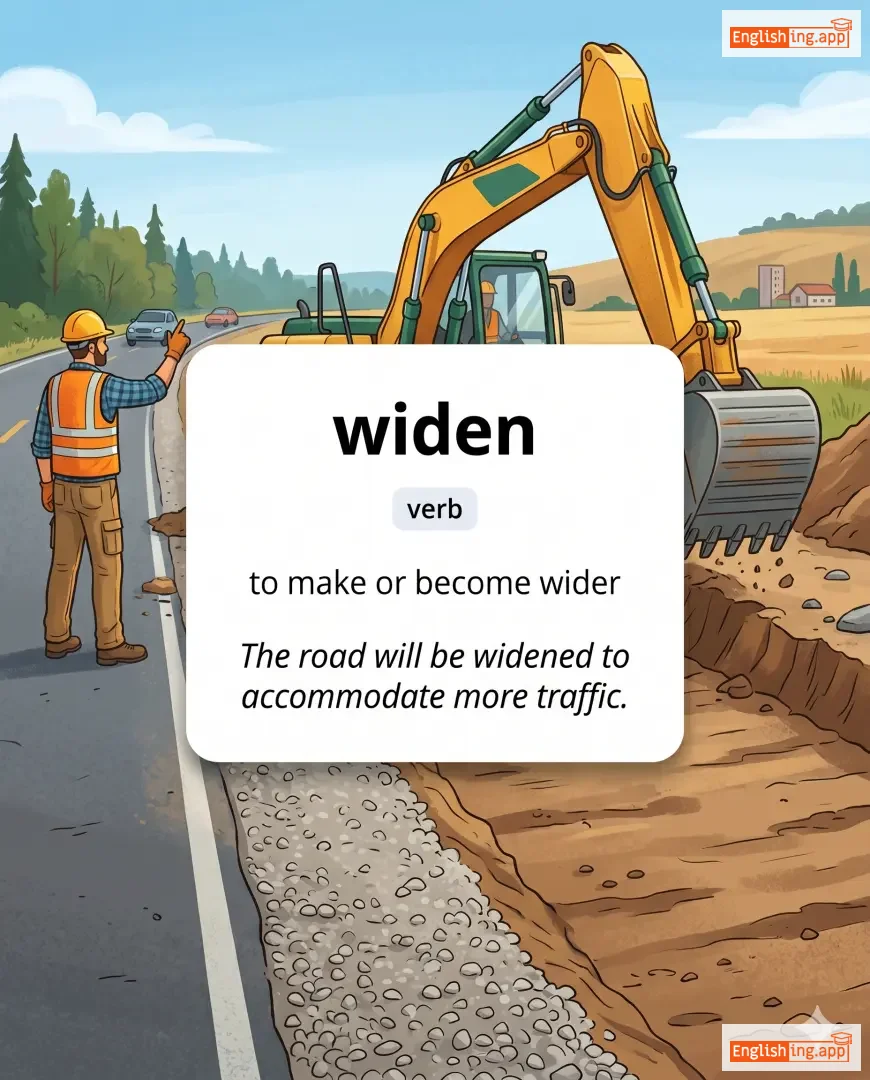
widen definition card — visual illustration of the meaning
verb
/ˈwaɪdən/
広げる (hirogeru)

to make or become wider

"The road will be widened to accommodate more traffic."
"道路はより多くの交通を収容できるように広げられます。" (Dōro wa yori ōku no kōtsū o shūyō dekiru yō ni hirogeraremasu.)
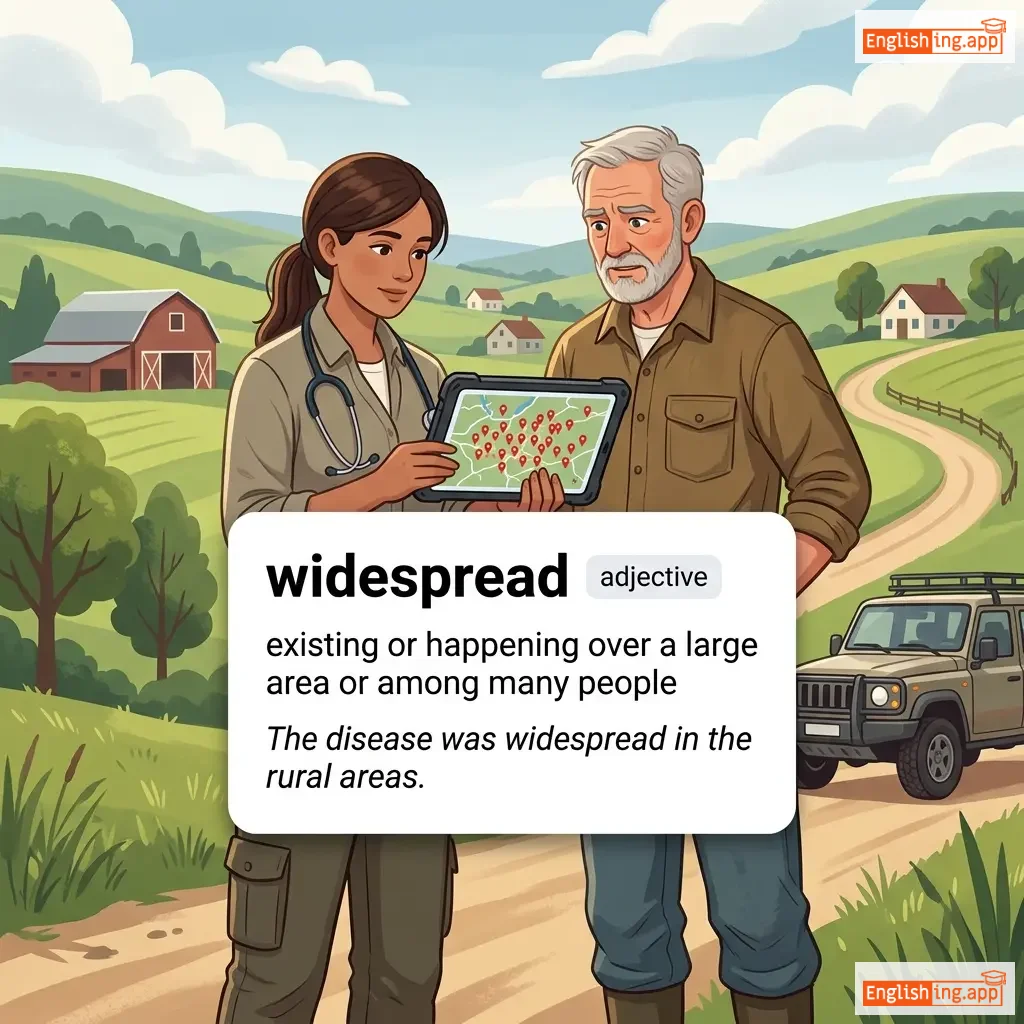
widespread definition card — visual illustration of the meaning
adjective
/ˈwaɪdˌsprɛd/
広範囲にわたる (kōhan'i ni wataru)

existing or happening over a large area or among many people

"The disease was widespread in the rural areas."

"その病気は農村地域で広範囲にわたっていました。" (Sono byōki wa nōson chiiki de kōhan'i ni watatte imashita.)
noun
/ˈwɪdəʊ/
未亡人 (miboujin)

a woman whose husband has died and who has not married again

"She became a widow at a very young age."

"彼女はとても若い年齢で未亡人になりました。" (Kanojo wa totemo wakai nenrei de miboujin ni narimashita.)
noun
/ˈwɪd.oʊ.ər/
未亡人の夫 (mibōjin no otto)

a man whose wife has died and who has not married again

"The elderly widower lived alone but had regular visits from his children."

"高齢の未亡人の夫は一人で住んでいましたが、子供たちから定期的に訪問を受けていました。" (Kōrei no mibōjin no otto wa hitori de sunde imashita ga, kodomotachi kara teikiteki ni hōmon o ukete imashita.)
noun
/wɪdθ/
(haba)

the measurement or extent of something from side to side

"The width of the table is 2 meters."

"テーブルの幅は2メートルです。" (Tēburu no haba wa 2 mētoru desu.)
verb
/wiːld/
持つ、使う (motsu, tsukau)

To hold and use a weapon, tool, or power effectively.

"The warrior wielded his sword with great skill."

"戦士はその剣を大きな技術で使いました。" (Senshi wa sono ken o ōkina gijutsu de tsukaimashita.)