語彙集

英単語辞書 | 単語の意味、定義、例文

adjective
/ˈwɪəri/
疲れた (tsukareta)

feeling or showing extreme tiredness, especially as a result of exertion or lack of sleep

"After the long journey, she felt weary and wanted to rest."
"長い旅の後、彼女は疲れて休みたがっていた。" (Nagai tabi no ato, kanojo wa tsukarete yasumitakagatteita.)
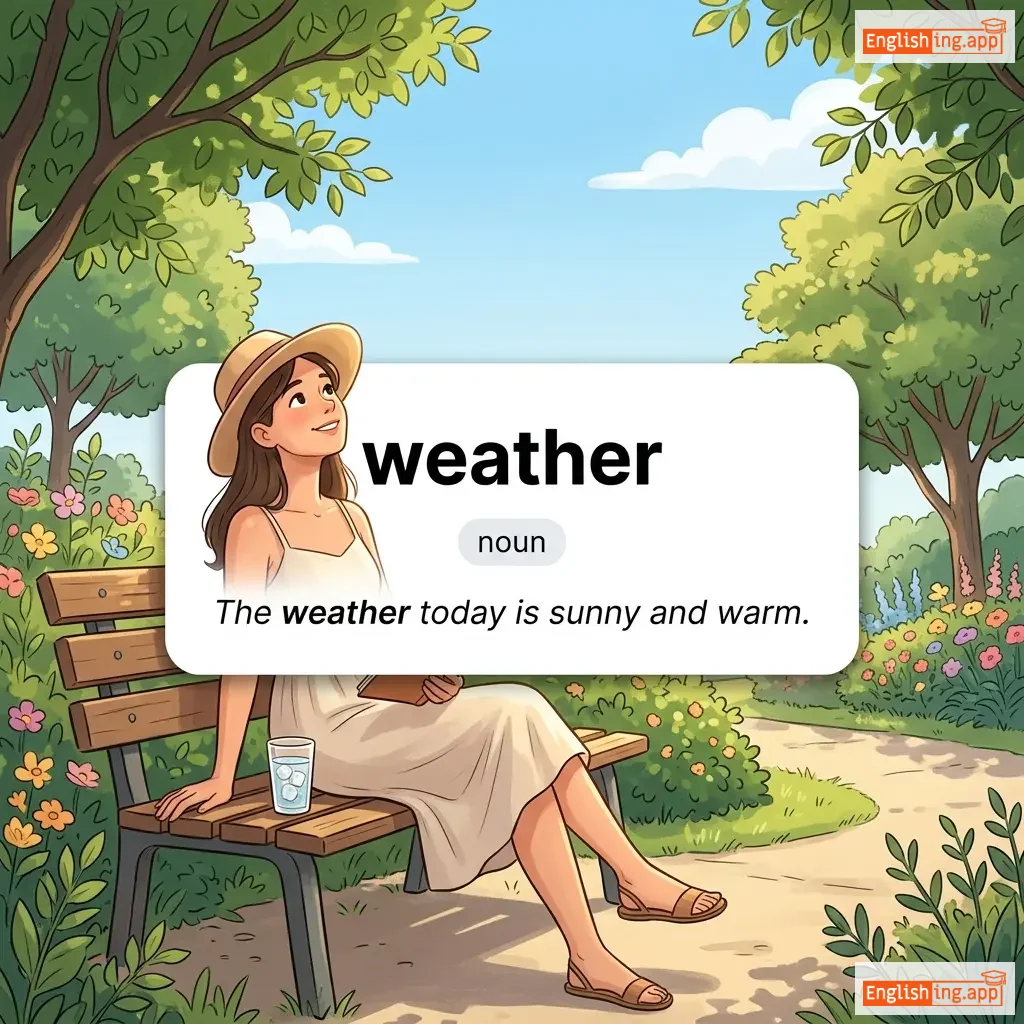
weather definition card — visual illustration of the meaning
noun
/ˈwɛðər/
天気 (tenki)

the state of the atmosphere at a particular place and time in terms of heat, cloudiness, dryness, sunshine, wind, rain, etc.

"The weather today is sunny and warm."
"今日は晴れて暖かい天気です。" (Kyou wa harete atatakai tenki desu.)
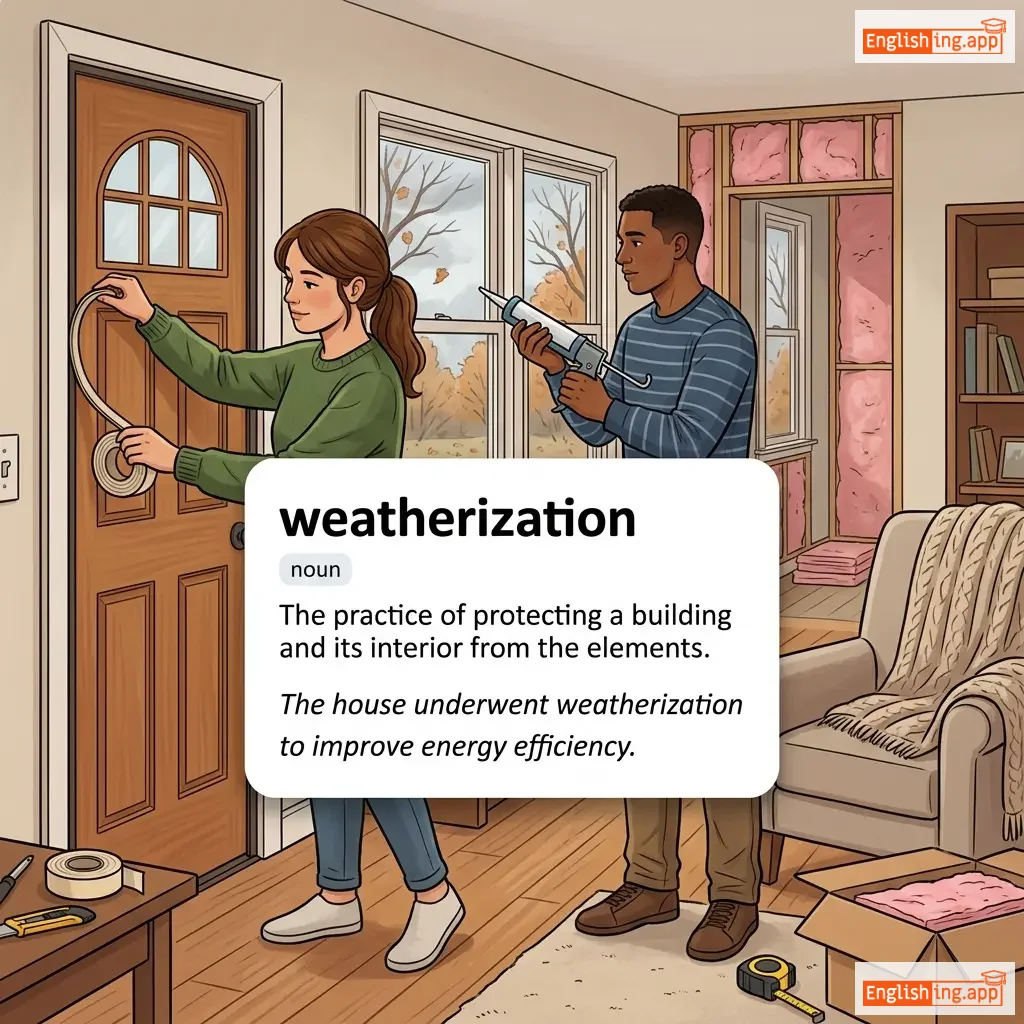
weatherization definition card — visual illustration of the meaning
noun
ˌwɛðəraɪˈzeɪʃən
気候適応処理 (kikou tekiou shori)

The practice of protecting a building and its interior from the elements.

"The house underwent weatherization to improve energy efficiency."
"家はエネルギー効率を向上させるために気候適応処理を受けました。" (Ie wa enerugī kōritsu o kōjō saseru tame ni kikō tekiō shori o ukemashita.)
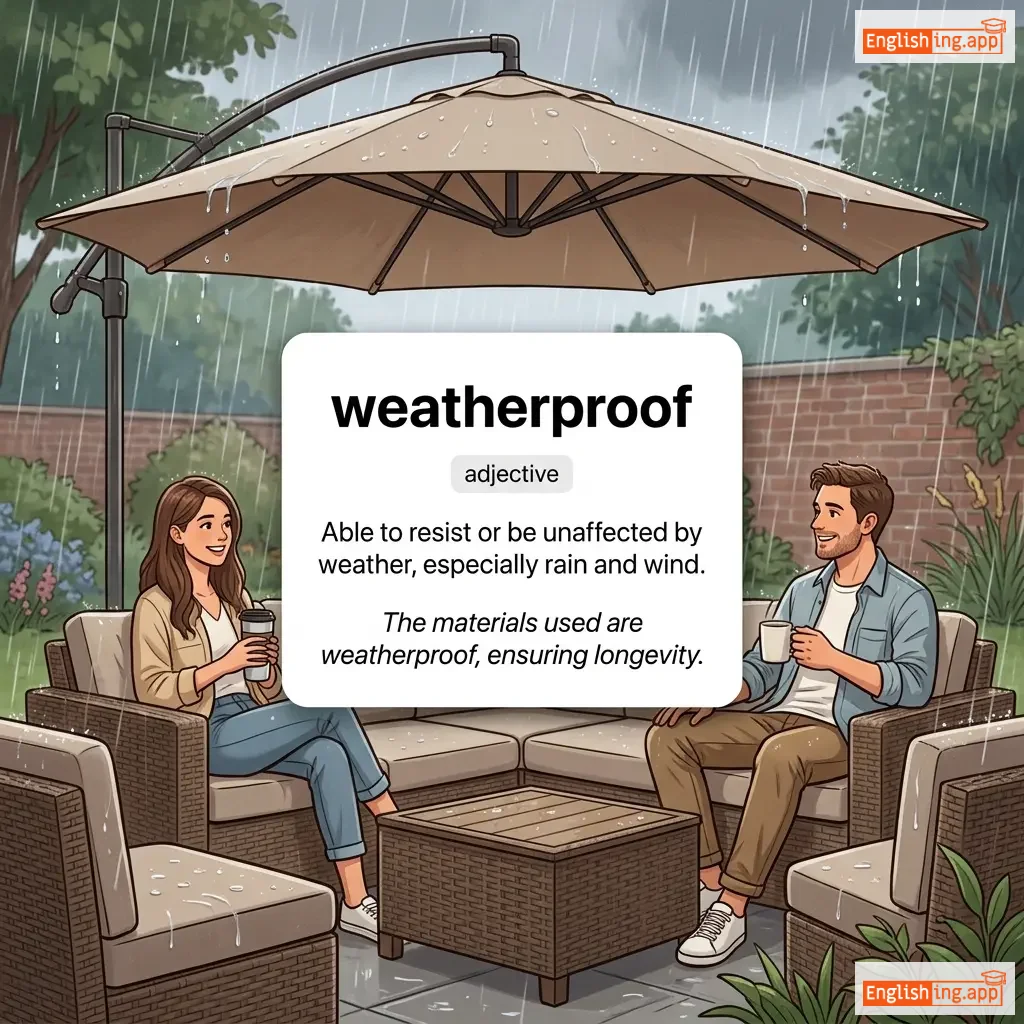
weatherproof definition card — visual illustration of the meaning
adjective
ˈwɛðərpruːf
防水 (bousui)

Able to resist or be unaffected by weather, especially rain and wind.

"The materials used are weatherproof, ensuring longevity."

"使用される材料は防水で、耐久性を保証します。" (Shiyō sareru zairyō wa bousui de, taikyū-sei o hoshō shimasu.)
verb
/wiːv/
織る (oru)

to make cloth by interlacing threads or to combine elements into a whole

"She weaves beautiful patterns on her loom."

"彼女は自分の織機で美しいパターンを織っています。" (Kanojo wa jibun no oriki de utsukushii patān wo otteimasu.)
noun
/ˈwiː.vər/
織り手 (orite)

a person who makes cloth by interlacing threads on a loom

"The skilled weaver created intricate patterns on the silk fabric."

"熟練した織り手は、シルク生地に複雑な模様を作り出しました。" (Jukuren shita orite wa, shiruku kiji ni fukuzatsu na moyō o tsukuridashimashita.)
noun
/ˈwiː.vər bɜːd/
織り鳥 (oritori)

a small bird that builds elaborate woven nests from grass and twigs

"The weaver bird skillfully constructs its intricate nest."

"織り鳥は巧みに複雑な巣を作る" (oritori wa takumi ni fukuzatsu na su wo tsukuru)
🕸️

web

noun
/wɛb/

a network of fine threads spun by a spider or a complex interconnected system

"The spider spun a large web in the corner of the room."

verb
/wɛd/
結婚する (kekkon suru)

to marry someone; to enter into a marriage

"They decided to wed in a small ceremony by the beach."

"彼らはビーチで小さな式を挙げることを決めました。" (Karera wa bīchi de chiisana shiki o ageru koto o kimemashita.)
noun
/ˈwed.lɒk/
結婚 (kekkon)

the state of being married; matrimony

"They have been happily united in wedlock for twenty years."

"彼らは二十年間幸せに結婚しています。" (Karera wa nijū nenkan shiawase ni kekkon shiteimasu.)
noun
/ˈwɛdɪŋ/
結婚式 (けっこんしき)

a marriage ceremony, especially considered as including the associated celebrations

"They are planning a wedding in the summer."

"彼らは夏に結婚式を計画しています。" (Karera wa natsu ni kekkonshiki o keikaku shiteimasu.)
noun
/wedʒ/
くさび; ける; 割る (kusabi; keru; waru)

a triangular piece of wood or metal used for splitting or securing; a piece of cheese or cake

"He used a wooden wedge to split the log into smaller pieces."

"彼は木のくさびを使って丸太を小さな部分に割りました。" (Kare wa ki no kusabi wo tsukatte maruta wo chiisana bubun ni warimashita.)
noun
/ˈwɛnzdeɪ/
水曜日 (suiyoubi)

the fourth day of the week, following Tuesday and preceding Thursday

"The meeting has been scheduled for Wednesday afternoon."
"会議は水曜日の午後に予定されています。" (kaigi wa suiyoubi no gogo ni yotei sareteimasu)
adjective
/wiː/
とても小さい (totemo chiisai)

very small in size; tiny

"She gave me a wee smile before leaving."

"彼女は去る前に小さな笑顔をくれました。" (Kanojo wa saru mae ni chiisana egao o kuremashita.)
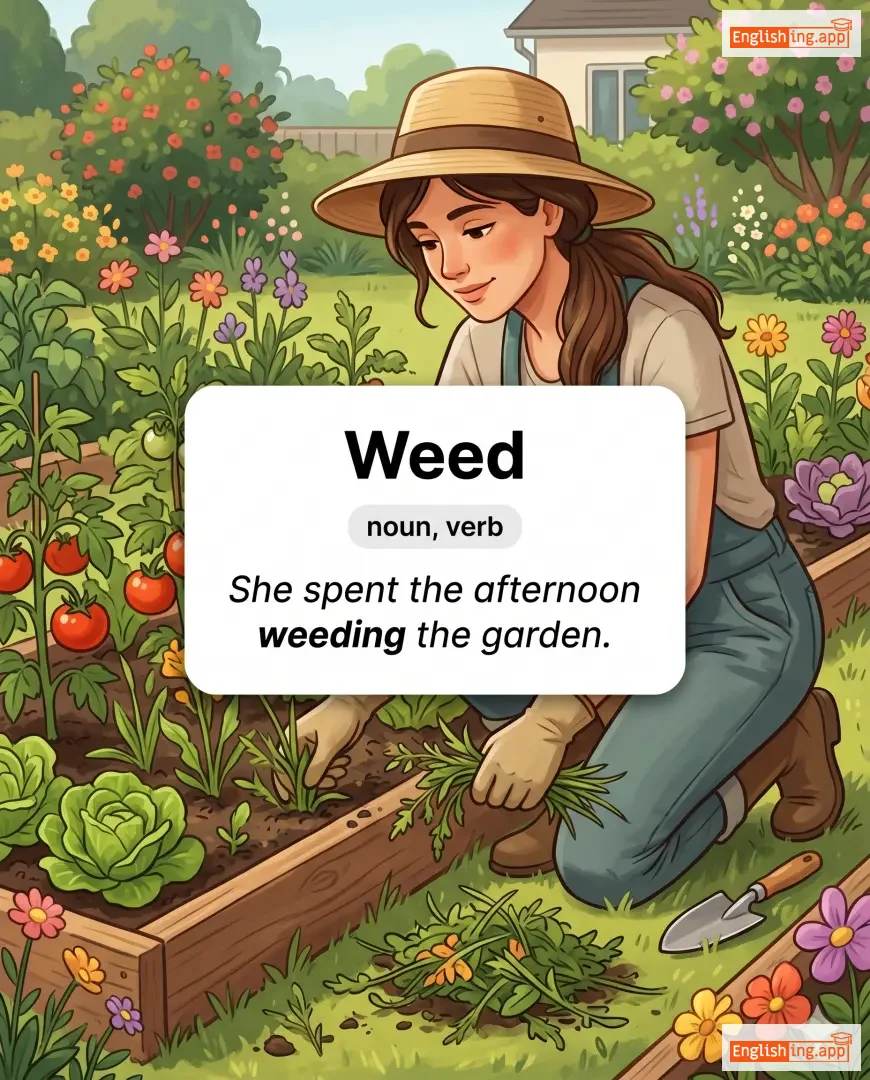
Weed definition card — visual illustration of the meaning
noun, verb
/wiːd/
雑草 (zassou)

a wild plant growing where it is not wanted, especially among crops; to remove such plants

"She spent the afternoon weeding the garden."

"彼女は午後を庭の雑草取りに費やした。" (Kanojo wa gogo wo niwa no zassou tori ni tsuiyashita.)
noun
/wiːk/
(shū)

a period of seven days

"I will finish the project by the end of the week."

"私は今週末までにプロジェクトを終わらせます。" (Watashi wa konshūmatsu made ni purojekuto o owarasemasu.)
noun
/ˈwiːkˌɛnd/
週末 (shūmatsu)

the end of the week, typically regarded as Saturday and Sunday

"They are planning a trip for the weekend."

"彼らは週末に旅行の計画を立てています。" (Karera wa shūmatsu ni ryokō no keikaku o tateteimasu.)
adjective
/ˈwiːkli/
毎週の (maishuu no)

occurring or done every week

"We have a weekly meeting on Mondays."
"私たちは毎週月曜日に会議があります。" (Watashitachi wa maishuu getsuyoubi ni kaigi ga arimasu.)
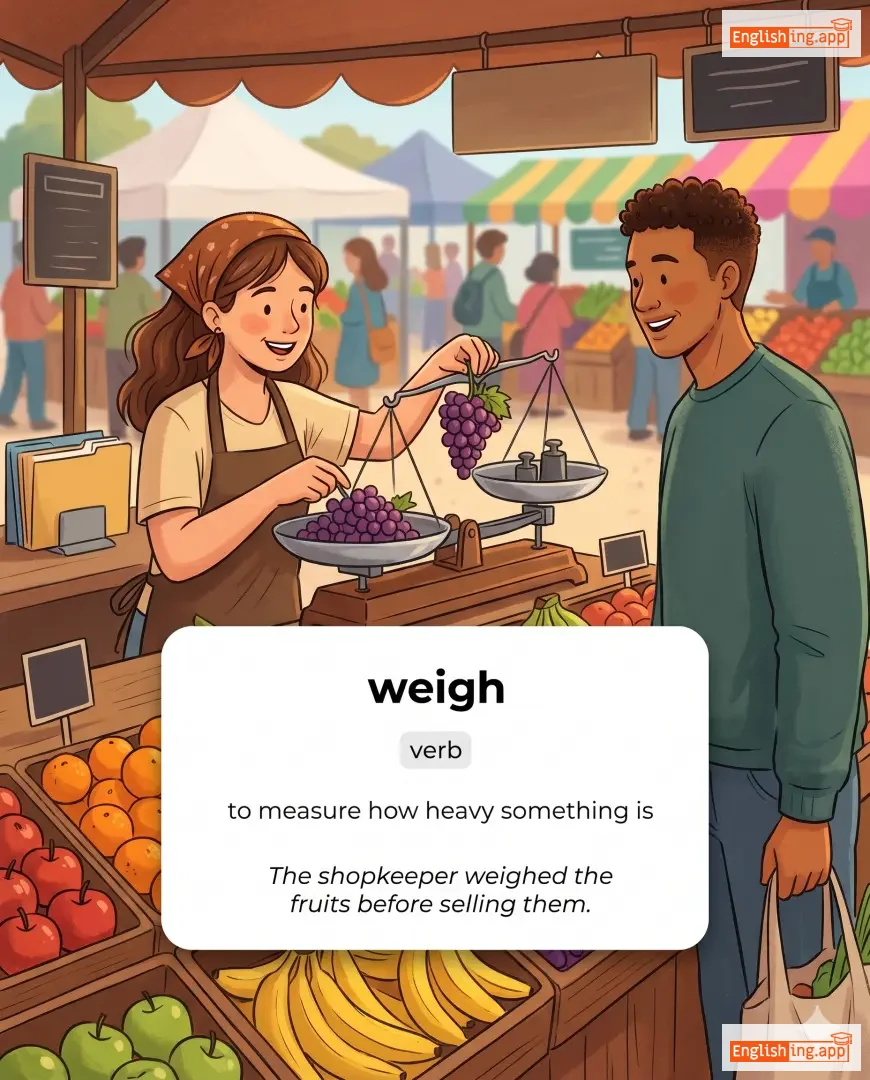
weigh definition card — visual illustration of the meaning
verb
/weɪ/
重さを量る (omosa o hakaru)

to measure how heavy something is

"The shopkeeper weighed the fruits before selling them."

"店主は果物を販売する前に重さを量った。" (Ten-shu wa kudamono o hanbai suru mae ni omosa o hakatta.)
noun
/weɪt/
重さ (omosa)

a measure of how heavy something is

"The weight of the package was 10 kilograms."

"パッケージの重さは10キログラムでした。" (Pakkēji no omosa wa 10 kiroguramu deshita.)
noun
/ˈweɪtˌlɪftɪŋ/
重量挙げ (juuryo age)

the sport or activity of lifting heavy weights to build strength and muscle

"Weightlifting requires discipline, proper technique, and consistent training."

"重量挙げには規律と正しい技術が必要です。" (juuryo age ni wa kiritsu to tadashii gijutsu ga hitsuyou desu)
adjective
/wɪrd/
奇妙 (kimyou)

suggesting something supernatural or very strange; unusual

"The movie had a weird ending that nobody expected."

"映画には誰も予期しなかった奇妙な結末がありました。" (Eiga ni wa dare mo yokishinakatta kimyou na ketsumatsu ga arimashita.)
Welcome definition card — visual illustration of the meaning
verb
/ˈwɛlkəm/
歓迎 (kangei)

to greet someone in a friendly way

"They welcomed us with open arms at the party."

"彼らはパーティーで私たちを暖かく迎えてくれました。" (Karera wa pātii de watashitachi o atatakai mu kaete kuremashita.)
noun
/ˈwɛlfɛr/
福祉 (fukushi)

the health, happiness, and fortunes of a person or group

"The government provides welfare to low-income families."

"政府は低所得の家庭に福祉を提供します。" (Seifu wa teishōtoku no katei ni fukushi o teikyō shimasu.)
noun
/ˈwɛlkɪn/
(sora)

The sky, the heavens, or the upper air.

"The eagle soared high into the welkin."

"イーグルは空に高く舞い上がった。" (Iiguru wa sora ni takaku maiagatta.)
adverb
/wɛl/
うまく (umaku)

in a good or satisfactory way

"She did well in her exams."

"彼女は試験でうまくいった。" (Kanojo wa shiken de umaku itta.)
adjective
/ˌwel bɪˈheɪvd/
行儀が良い (gyōgi ga yoi)

conducting oneself in a proper and polite manner; showing good manners

"The children were well-behaved during the ceremony."
"儀式の間、子供たちは行儀が良かった。" (Gishiki no aida, kodomotachi wa gyōgi ga yokatta.)
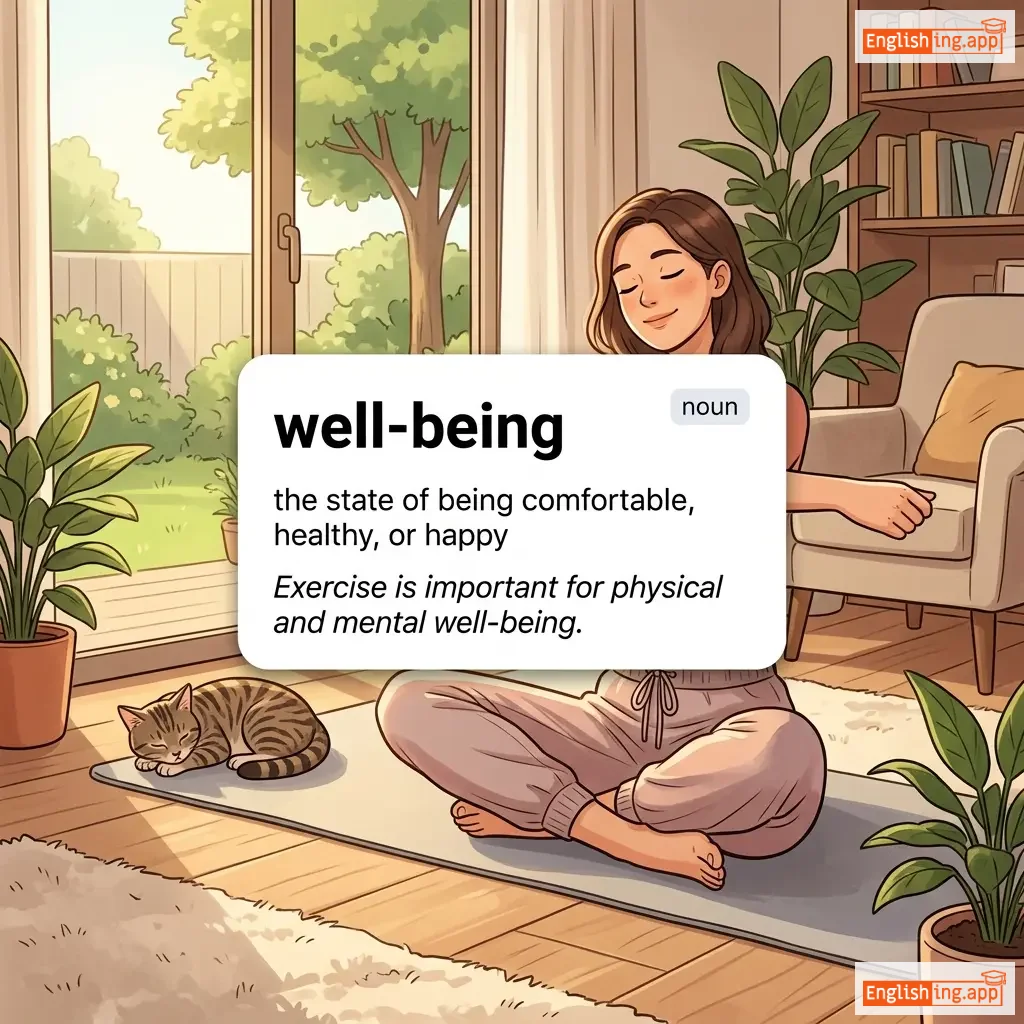
well-being definition card — visual illustration of the meaning
noun
/ˌwelˈbiːɪŋ/
ウェルビーイング (werubīingu)

the state of being comfortable, healthy, or happy

"Exercise is important for physical and mental well-being."

"運動は身体的および精神的なウェルビイングに重要です。" (Undō wa shintai-teki oyobi seishin-teki na werubīingu ni jūyō desu.)
adjective
/ˌwɛlˈbrɛd/
育ちが良い (sodachi ga yoi)

Having or showing good manners; properly raised.

"She is a well-bred young lady with excellent manners."

"彼女は素晴らしいマナーを持つ育ちの良い若い女性です。" (Kanojo wa subarashī manā o motsu sodachi no yoi wakai josei desu.)
noun
/ˈwɛlˌduːər/
善行者 (zenkōsha)

A person who does good deeds; a benefactor.

"The community praised the well-doer for his charity."

"コミュニティはその善行者を称賛しました。" (Komyuniti wa sono zenkōsha o shōsan shimashita.)
adjective
/ˌwel ˈdʌn/
よくできた; 完全に調理された (yoku dekita; kanzen ni chōri sareta)

performed skillfully and successfully; cooked thoroughly

"The project was well-done and impressed everyone."

"そのプロジェクトはよくできており、皆を感動させました。" (Sono purojekuto wa yoku dekite ori, minna o kandō saseshimashita.)
adjective
/ˌwelˈnoʊn/
有名 (yūmei)

known by many people; famous or recognized

"He is a well-known actor in his country."

"彼は自国で有名な俳優です。" (Kare wa jikoku de yūmei na haiyū desu.)
adjective
/ˌwɛl tə ˈduː/
裕福 (yūfuku)

Prosperous, wealthy, or financially comfortable.

"They belong to a well-to-do family in the city."

"彼らは都市の裕福な家族に属しています。" (Karera wa toshi no yūfuku na kazoku ni zoku shiteimasu.)
noun
/ˈwel.wɪʃ.ər/
ウェルウィッシャー (wēru wisshā)

a person who desires happiness or success for another

"Many well-wishers came to congratulate her on her graduation."

"多くのウェルウィッシャーが彼女の卒業を祝うために来ました。" (Ōku no wēru wisshā ga kanojo no sotsugyō o iwau tame ni kimashita.)
noun
/wɛlt/
膨らみ (fukurami)

A raised mark on the skin, usually from a blow or allergic reaction.

"He had a red welt on his arm after the bee sting."
"蜂に刺された後、彼の腕に赤い膨らみができていた。" (Hachi ni sāsareta ato, kare no ude ni akai fukurami ga dekite ita.)
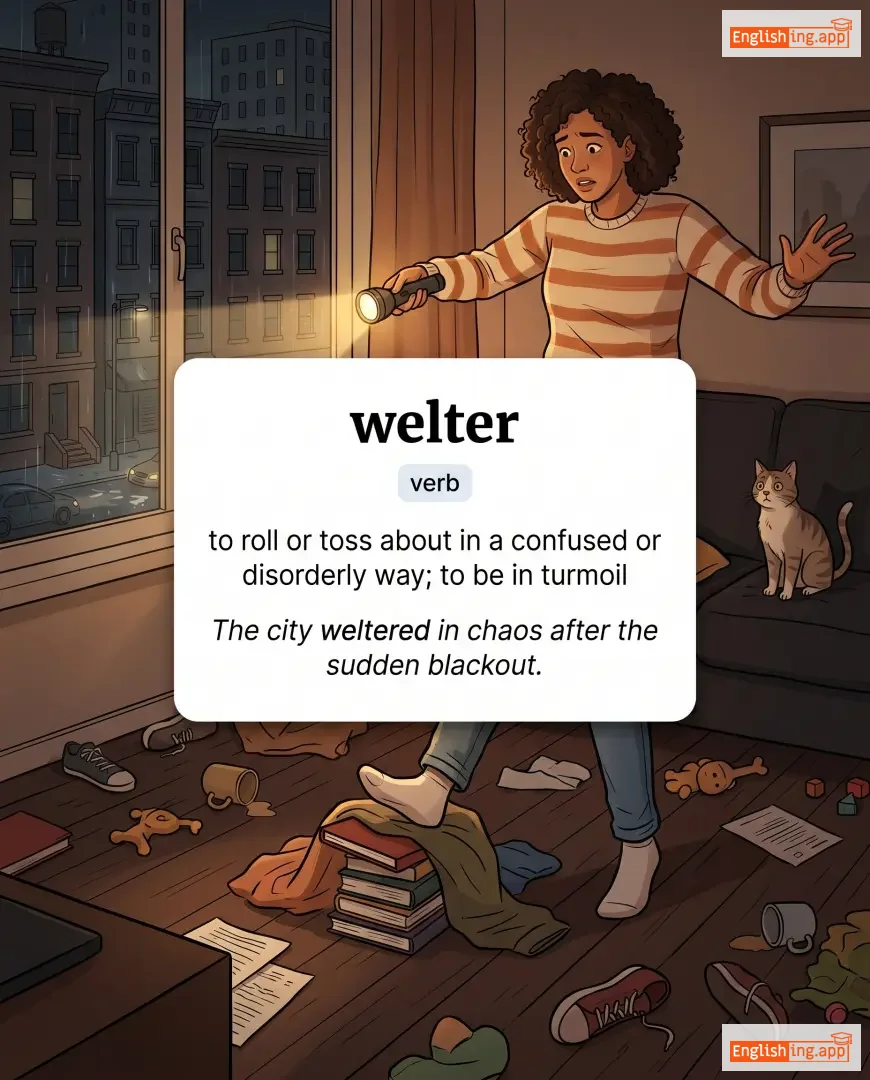
welter definition card — visual illustration of the meaning
verb
/ˈwɛltər/
混乱の中で転がる (konran no naka de korogaru)

to roll or toss about in a confused or disorderly way; to be in turmoil

"The city weltered in chaos after the sudden blackout."

"突然の停電後、都市は混乱の中に沈んだ。" (Totsuzen no teiden go, toshi wa konran no naka ni shizunda.)
noun
/wɛst/
西 (nishi)

the direction to the left of the north and to the right of the south, typically associated with the sunset

"The sun sets in the west."

"太陽は西に沈みます。" (Taiyō wa nishi ni shizumimasu.)
adjective
/ˈwɛstərn/
西洋の (seiyō no)

relating to or characteristic of the West, especially Europe and the Americas

"She loves western music and culture."

"彼女は西洋の音楽と文化が大好きです。" (Kanojo wa seiyō no ongaku to bunka ga daisuki desu.)
adjective
/wɛt/
濡れた (nureta)

covered with, or saturated with liquid (usually water)

"The ground is wet after the rain."

"雨の後、地面は濡れている。" (Ame no ato, jimen wa nureteiru.)
noun
/weɪl/
クジラ (kujira)

a very large marine mammal that lives in the ocean

"We saw a huge whale swimming near the boat."

"私たちはボートの近くで巨大なクジラが泳いでいるのを見ました。" (Watashitachi wa bōto no chikaku de kyodaina kujira ga oyoide iru no o mimashita.)
pronoun
/wɒt/
(nani)

used to ask for information about something

"What is your name?"

"あなたの名前は何ですか?" (Anata no namae wa nan desu ka?)
pronoun
/wɒtˈɛvər/
何でも (nandemo)

used to refer to anything or everything that is of the type mentioned

"You can choose whatever you like."

"あなたは何でも好きなものを選んでください。" (Anata wa nandemo sukina mono o erande kudasai.)
adverb
/wɒtˈsəʊɛvər/
全く (mattaku)

used for emphasis after a negative statement to mean 'at all'

"She has no interest in the matter whatsoever."

"彼女はその問題に全く興味がありません。" (Kanojo wa sono mondai ni mattaku kyōmi ga arimasen.)
noun
/wiːt/
小麦 (komugi)

a cereal plant whose grain is used to make flour for bread and other foods

"Farmers harvested the wheat in early summer."

"農家は初夏に小麦を収穫しました。" (Nouka wa shoka ni komugi o shuukaku shimashita.)
verb
/ˈwiːdəl/
お世辞で説得する (oseshi de settoku suru)

to persuade or coax someone by using flattery or smooth talk

"She managed to wheedle extra pocket money from her father."

"彼女は父親から追加の小遣いを得ることに成功した。" (Kanojo wa chichioya kara tsuika no kozutsukai wo eru koto ni seikou shita.)
noun
/wiːl/
車輪 (sharin)

a circular object that revolves on an axle and is used to move or carry things

"The wheel of the car broke down on the way."

"車の車輪が道で壊れた。" (Kuruma no sharin ga michi de kowareta.)
noun
/ˈwiːltʃeər/
車椅子 (kurumaisu)

a chair with wheels, used by people who cannot walk easily or at all

"The hospital provided a wheelchair for the injured patient."

"病院は怪我をした患者のために車椅子を提供した。" (byōin wa kega o shita kanja no tame ni kurumaisu o teikyō shita.)
noun
/wɛlp/
子犬 (koinu)

a young offspring of a dog or other carnivorous mammal; sometimes used to mean an impudent young person

"The farmer found a wolf whelp hiding near the barn."

"農夫は小屋の近くで隠れている狼の子犬を見つけました。" (Nōfu wa koya no chikaku de kakurete iru ōkami no koinu o mitsukemashita.)
adverb
/wɛn/
いつ (itsu)

at what time

"Do you know when the train leaves?"

"電車がいつ出発するか知っていますか?" (Densha ga itsu shuppatsu suru ka shitteimasu ka?)
adverb
/wɛnˈɛvər/
いつでも (itsudemo)

at any time, or whenever it happens

"You can call me whenever you want."

"あなたはいつでも私に電話できます。" (Anata wa itsudemo watashi ni denwa dekimasu.)