語彙集

英単語辞書 | 単語の意味、定義、例文

adjective
/ʌnˈedjʊkeɪtɪd/
未教育; 教育を受けていない (mi-kyōiku; kyōiku o ukete inai)

lacking education; not having received formal schooling or training

"Many uneducated workers struggle to find well-paying jobs."

"多くの未教育の労働者は、良い給料の仕事を見つけるのに苦労しています。" (Ōku no mi-kyōiku no rōdōsha wa, yoi kyūryō no shigoto o mitsukeru no ni kurō shiteimasu)
adjective
/ˌʌnɪmˈplɔɪəbəl/
雇用不適格 (koyou futekikaku)

Not able to be employed; lacking the skills or qualities necessary for employment

"Due to his criminal record, he was considered unemployable in most companies."

"彼の犯罪歴のため、ほとんどの会社で雇用不適格と見なされた。" (kare no hanzai-reki no tame, hotondo no kaisha de koyou futekikaku to minasa reta)
adjective
/ʌnɪmˈplɔɪd/
失業中 (shitsugyōchū)

without a job; not having paid work

"He has been unemployed for six months now."

"彼はすでに6ヶ月間失業しています。" (Kare wa sude ni 6 kagetsu-kan shitsugyō shiteimasu.)
noun
/ˌʌnɪmˈplɔɪmənt/
失業 (shitsugyou)

the state of not having a paid job despite being able and willing to work

"High unemployment is a major issue in the country."

"高い失業率は、国の大きな問題です。" (Takai shitsugyou ritsu wa, kuni no ookina mondai desu.)
adjective
/ʌnˈendɪŋ/
終わりのない (owari no nai)

continuing forever; without end

"The unending rain made the day feel gloomy."

"終わりのない雨が一日を憂鬱にした。" (owari no nai ame ga ichinichi o yuuutsu ni shita)
adjective
/ʌnˈiːkwəl/
不平等; 不正; (fubyōdō; fusei)

not the same in quantity, size, or value; not fair or just

"The distribution of wealth is unequal in many countries."

"多くの国々では、富の分配は不平等です。" (Ōku no kuniguni de wa, tomi no bunpai wa fubyōdō desu.)
adjective
/ˌʌnɪˈkwɪvəkəl/
明確 (meikaku)

Leaving no doubt; clear and unambiguous

"She gave an unequivocal answer to the question."

"彼女は質問に対して明確な答えを出しました。" (Kanojo wa shitsumon ni taishite meikaku na kotae o dashimashita.)
adverb
/ʌnˈɜːrɪŋli/
間違いなく (machigainaku)

Without making any mistakes; always accurate

"The archer aimed unerringly at the target."

"弓矢は間違いなくターゲットに向かって狙いを定めた。" (Yumiya wa machigainaku tāgetto ni mukatte nerai o sadameta.)
adjective
/ʌnˈiːvən/
不均一; 凹凸のある (fukinhitsu; ōtotsu no aru)

not level or smooth; not regular or consistent

"The road was uneven and full of potholes."

"その道は不均一で、穴だらけだった。" (Sono michi wa fukinhitsu de, anadarake datta.)
adjective
/ˌʌnɪkˈsɛpʃənəbl/
非の打ち所がない (hi no uchi tokoro ga nai)

Not open to objection; acceptable and unobjectionable

"His behavior was unexceptionable throughout the event."

"彼の行動はイベント中ずっと非の打ち所がなかった。" (Kare no koudou wa ibento-chuu zutto hi no uchi tokoro ga nakatta.)
adjective
/ˌʌnɪkˈspɛktɪd/
予期しない (yoki shinai)

not anticipated or predicted; surprising

"We had an unexpected visitor last night."

"昨晩、予期しない訪問者が来ました。" (Sakuban, yoki shinai hōmon-sha ga kimashita.)
adjective
/ʌnˈfɛər/
不公平 (fukouhei)

not based on or behaving according to the principles of equality or justice

"It’s unfair to blame her for the team’s failure."

"チームの失敗を彼女のせいにするのは不公平です。" (Chiimu no shippai wo kanojo no sei ni suru no wa fukouhei desu.)
adverb
/ʌnˈfɛərli/
不公平に (fukouhei ni)

In a manner that is not just, reasonable, or impartial

"He was treated unfairly by the committee."

"彼は委員会によって不公平に扱われた。" (Kare wa iinkai ni yotte fukouhei ni atsukawareta.)
adjective
/ʌnˈfeɪθ.fəl/
不忠実 (fuchūjitsu)

not loyal or true to a spouse, partner, or commitment

"He was unfaithful to his wife for many years."

"彼は何年も妻に不忠実でした。" (Kare wa nannen mo tsuma ni fuchūjitsu deshita.)
noun
/ʌnˈfeɪθfʊlnəs/
不貞 (futei)

the quality of being disloyal or not faithful; breach of trust or fidelity

"His unfaithfulness led to the end of their marriage."

"彼の不貞は結婚の終わりをもたらした。" (Kare no futei wa kekkon no owari o motarashita.)
adjective
/ʌnˈfɔːltərɪŋ/
不屈不挠 (fuketsu funou)

Steady and resolute; not weakening or hesitating

"She continued with unfaltering determination."

"彼女は不屈不挠の決意で続けた。" (Kanojo wa fuketsu funou no ketsui de tsuzuketa.)
adjective
/ʌnfəˈmɪl.jər/
不明な; 見知らぬ (fumei na; mishiranu)

not known or recognized; strange

"The city was unfamiliar to me since I had never been there before."

"その都市は私にとって見知らぬ場所でした。なぜなら、私はそこに行ったことがなかったからです。" (Sono toshi wa watashi ni totte mishiranu basho deshita. Nazenara, watashi wa soko ni itta koto ga nakatta kara desu.)
adjective
/ʌnˈfeɪv(ə)rəbəl/
不利な (furi na)

not beneficial or advantageous; showing disapproval or opposition

"The proposal received an unfavorable response from the committee."

"その提案は委員会から不利な反応を受けました。" (Sono teian wa iinkai kara furi na hannō o ukemashita.)
adjective
/ʌnˈfeɪ.vər.ə.bəl/
不利な; 逆境の (furi na; gyakkyo no)

not helpful or advantageous; adverse

"The weather conditions were unfavourable for our outdoor event."
"悪天候は私たちの屋外イベントには不利でした。" (akutenkō wa watashitachi no okugai ibento ni wa furi deshita.)
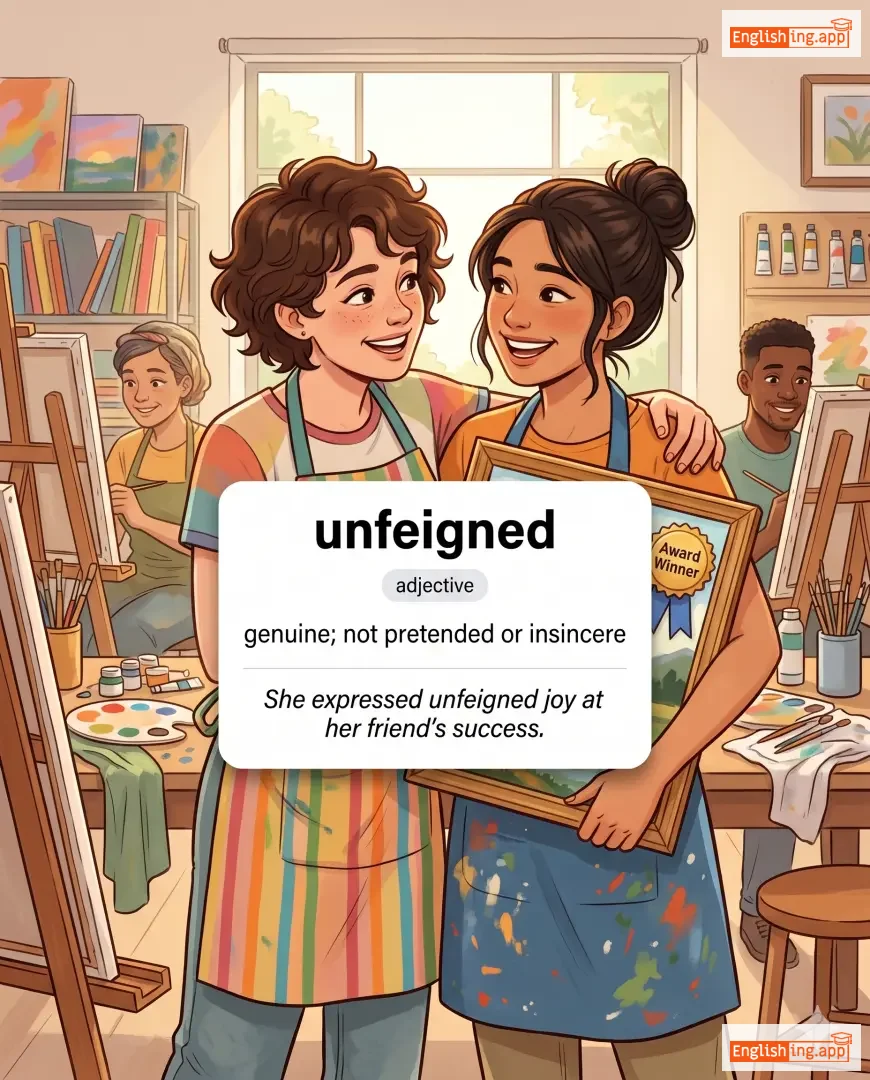
unfeigned definition card — visual illustration of the meaning
adjective
/ʌnˈfeɪnd/
本物 (honmono)

genuine; not pretended or insincere

"She expressed unfeigned joy at her friend's success."

"彼女は友達の成功に対して本物の喜びを表現しました。" (Kanojo wa tomodachi no seikou ni taishite honmono no yorokobi o hyougen shimashita.)
verb
/ʌnˈfɛtər/
制約から解放する (seiyaku kara kaihō suru)

to release from restraint or restriction; to free

"The new law will unfetter small businesses from excessive regulations."

"新しい法律は小規模なビジネスを過剰な規制から解放します。" (Atarashī hōritsu wa shōkibō na bijinesu o kajō na kisei kara kaihō shimasu.)
adjective
/ʌnˈfɛtərd/
自由な (jiyūna)

not restricted or confined; free

"The artist enjoyed unfettered freedom of expression."

"アーティストは制限のない表現の自由を楽しんだ。" (Ātisuto wa seigen no nai hyōgen no jiyū o tanoshinda.)
adjective
/ʌnˈfɪt/
不適格; 不適当; (futekikaku; futekitou)

not in good physical condition; unsuitable or inappropriate

"He was declared unfit for military service due to his poor health."

"彼は健康状態が悪いため、軍務には不適格と宣告されました。" (Kare wa kenko joutai ga warui tame, gunmu ni wa futekikaku to senkoku saremashita.)
adjective
/ʌnˈflæpəbəl/
冷静沈着 (reisei chinchou)

calm and composed, especially in difficult situations

"Despite the crisis, he remained unflappable and confident."

"危機にもかかわらず、彼は冷静沈着で自信に満ちていた。" (Kiki ni mo kakawarazu, kare wa reisei chinchou de jishin ni michite ita.)
adjective
/ʌnˈflɛdʒd/
未熟な (mijukuna)

Inexperienced, immature, or not fully developed.

"The unfledged writer struggled to complete his first novel."

"未熟な作家は、最初の小説を完成させるのに苦労しました。" (Mijukuna sakka wa, saisho no shousetsu o kansei saseru no ni kurou shimashita.)
verb
/ʌnˈfəʊld/
広げるまたは開く (hirogeru matawa hiraku)

to open or spread out something that was folded; to gradually reveal or develop

"She unfolded the letter carefully."

"彼女は手紙を慎重に広げました。" (Kanojo wa tegami o shinchou ni hirogemashita.)
adjective
/ˌʌnfɔːrˈsiːn/

Not anticipated or predicted; unexpected.

"The project faced unforeseen challenges that delayed its completion."

adjective
/ˌʌnfɔːrθˈkʌmɪŋ/
協力的でない (kyōryokuteki denai)

Not willing to talk or provide information; uncooperative.

"The witness was unforthcoming about what he had seen."

"証人は見たことについて協力的でなかった。" (Shōnin wa mita koto ni tsuite kyōryokuteki denakatta.)
adjective
/ʌnˈfɔːrtʃənət/
不運 (fuun)

Having or marked by bad luck; unlucky.

"It was unfortunate that the meeting was canceled at the last minute."

"会議が最後の瞬間にキャンセルされたのは不運でした。" (Kaigi ga saigo no shunkan ni kyanseru sareta no wa fuan deshita.)
adverb
/ʌnˈfɔːtʃənətli/
残念ながら (zannen nagara)

used to express regret or disappointment about something that has happened or is going to happen

"Unfortunately, the event was canceled due to the rain."

"残念ながら、イベントは雨のため中止されました。" (Zannen nagara, ibento wa ame no tame chūshi sare mashita.)
adjective
/ʌnˈfrɛndli/
不親切な (fushinsetsu na)

not kind or welcoming; hostile or cold in behavior or attitude

"The shop owner seemed unfriendly to new customers."

"店のオーナーは新しい客に不親切なようだった。" (Mise no oonaa wa atarashii kyaku ni fushinsetsu na you datta)
verb
/ʌnˈfrɒk/
神父の職を剥奪する (shinpu no shoku o hadatsu suru)

To remove a priest from his position or deprive someone of a rank.

"The corrupt priest was unfrocked after the investigation."

"腐敗した神父は調査後に職を剥奪されました。" (fuhai shita shinpu wa chousa go ni shoku o hadatsu saremashita.)
adjective
/ʌnˈɡeɪnli/
不器用 (bukiyou)

Awkward, clumsy, or lacking grace in movement or appearance.

"The tall boy moved in an ungainly manner."

"背の高い男の子は不器用な仕草で動いた。" (Se no takai otokonoko wa bukiyou na shigusa de uita.)
adjective
/ʌnˈɡreɪt.fəl/
恩知らず (on shirazu)

not feeling or showing thanks for something done or given; not appreciating kindness

"She felt he was ungrateful for all the help she had given him."

"彼女は、彼が彼女が与えたすべての助けに対して恩知らずだと感じた。" (Kanojo wa, kare ga kanojo ga ataeta subete no tasuke ni taishite on shirazu da to kanjita.)
adjective
/ʌnˈɡɑː.dɪd/
無防備な (muboubi na)

not protected or defended; careless about revealing private thoughts or information

"In an unguarded moment, she revealed her true feelings about the project."

"油断した瞬間、彼女はそのプロジェクトについての本当の気持ちを明かした。" (yudan shita shunkan, kanojo wa sono purojekuto ni tsuite no hontou no kimochi o akashita.)
noun
/ˈʌŋɡwənt/
軟膏 (nankou)

A soothing or healing ointment applied to the skin.

"The doctor applied an unguent to heal the burn."

"医者は火傷を治すために軟膏を塗った。" (Isha wa yakedo o naosu tame ni nankou o nutta.)
noun
/ʌnˈhæp.i.nəs/
不幸 (fukou)

the state of being unhappy; sadness or dissatisfaction

"Her constant unhappiness affected everyone around her."

"彼女の絶え間ない不幸は周囲の人々に影響を与えた。" (Kanojo no taemanai fukou wa shuui no hitobito ni eikyou wo ataeta.)
adjective
/ʌnˈhæpi/
不満または悲しい (fuman matawa kanashii)

not happy; sad, disappointed, or dissatisfied

"He was unhappy with the final decision."

"彼は最終決定に不満を抱いていた。" (kare wa saishuu kettei ni fuman o daite ita.)
adjective
/ʌnˈhel.θi/
不健康な; 健康に悪い (fukenkou na, kenko ni warui)

harmful to health; not in good health; detrimental to well-being

"Eating too much fast food is unhealthy for your body."

"ファーストフードを食べ過ぎることは、あなたの体に不健康です。" (Fāsuto fūdo o tabesugiru koto wa, anata no karada ni fukenkou desu.)
adjective
/ʌnˈhɜːd/
聞かれなかった; 未知の (kikarenakatta; michi no)

not heard or listened to; not given a hearing; unknown or unfamiliar

"His complaints went unheard by the management."

"彼の苦情は経営陣に無視されました。" (Kare no kujou wa keieijin ni mushi saremashita.)
adjective
/ʌnˈhɛlpfəl/
役に立たない (yaku ni tatanai)

not providing help or support; making a situation harder rather than easier

"His unhelpful attitude slowed down the entire project."

"彼の役に立たない態度はプロジェクト全体を遅らせた。" (kare no yaku ni tatanai taido wa purojekuto zentai o okuraseta)
adjective
/ʌnˈhoʊli/
不浄な; 邪悪な; 不敬な (fujō na; jaaku na; fukei na)

wicked; sinful; profane

"The unholy alliance between the two companies caused public outrage."

"その二つの会社の間の不浄な提携は、公共の怒りを引き起こしました。" (Sono futatsu no kaisha no aida no fujō na teikei wa, kōkyō no ikari o hikiokoshimashita.)
adjective
/ʌnˈɒnəd/
敬われない (uyamawarenai)

not respected or given the recognition that is deserved; treated without honor

"He felt unhonoured after his years of service were ignored."

"長年の奉仕が無視され、彼は敬われないと感じた。" (naganen no houshi ga mushi sare kare wa uyamawarenai to kanjita)
adjective
/ʌnˈhɜːrt/
無傷 (mukizu)

Not injured or harmed.

"She walked away from the accident unhurt."

"彼女は事故から無傷で歩き去った。" (Kanojo wa jiko kara mukizu de aruki satta.)
adjective
/ʌnhaɪˈdʒiːnɪk/
不衛生な; 適切な衛生状態の欠如 (bu eisei na; tekisetsu na eisei joutai no ketsujo)

not clean; lacking proper sanitation

"The restaurant was closed due to unhygienic conditions in the kitchen."

"レストランは不衛生な厨房の状態で閉店しました。" (Resutoran wa bu eisei na chūbō no jōtai de heiten shimashita.)
adjective
/ˌjuːnɪˈsɛljʊlər/
単細胞 (tansai-bou)

Consisting of a single cell.

"Amoebas are unicellular organisms."
"アメーバは単細胞生物です。" (Ameeba wa tansai-bou seibutsu desu.)
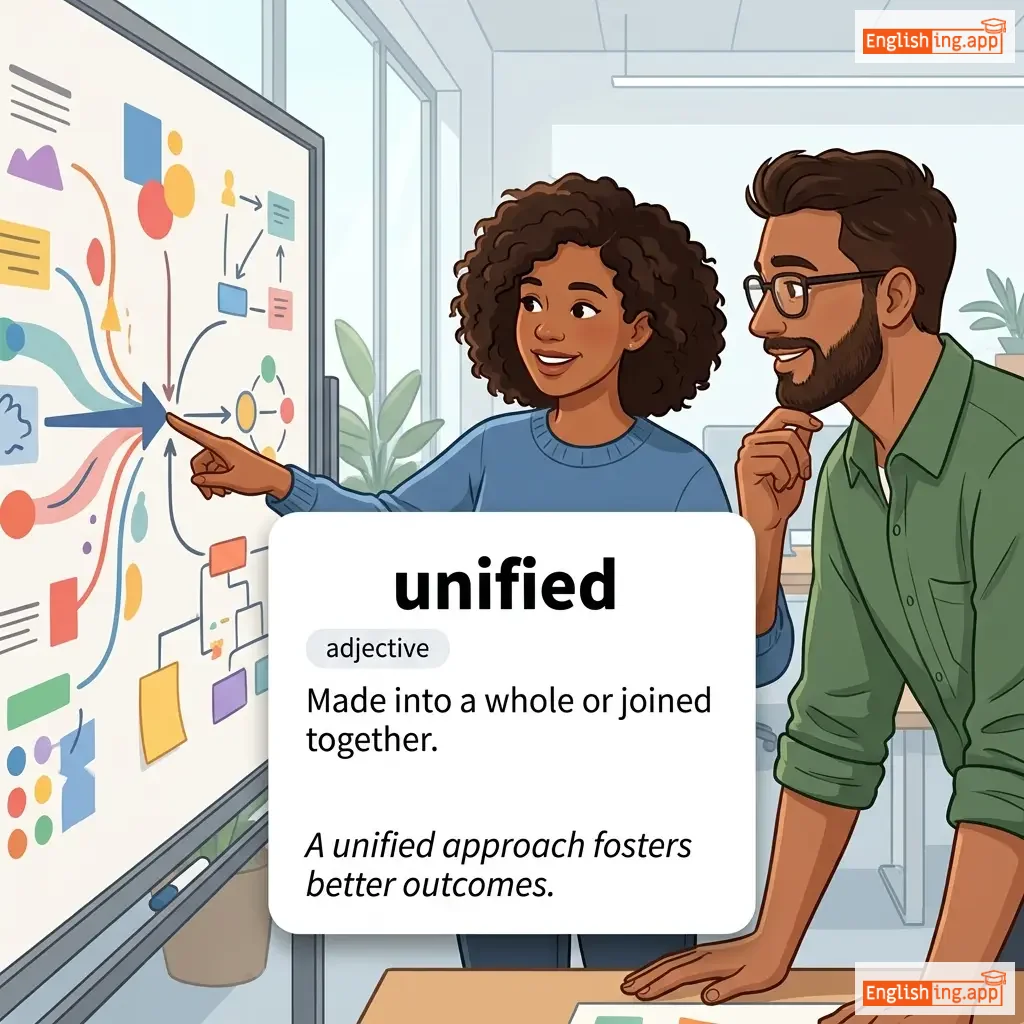
unified definition card — visual illustration of the meaning
adjective
/ˈjuː.nɪ.faɪd/
統一された (tōitsu sareta)

Made into a whole or joined together.

"A unified approach fosters better outcomes."

"統一されたアプローチはより良い結果を促進します。" (Tōitsu sareta apurōchi wa yori yoi kekka o sokushin shimasu.)
adjective
/ˈjuːnɪfɔːm/
ユニフォーム (uniform)

consistent or the same in form, manner, or degree

"The students were required to wear a uniform to school."

"生徒たちは学校で制服を着ることが求められました。" (Seito-tachi wa gakkō de seifuku o kiru koto ga motomeraremashita.)
noun
/ˌjuːnɪˈfɔːrmɪti/
均一性 (kin'itsusei)

The quality or state of being the same, consistent, or without variation.

"The teacher insisted on uniformity in the students' dress code."

"教師は生徒の服装の均一性を主張しました。" (Kyoushi wa seito no fukusou no kin'itsusei o shuchou shimashita.)
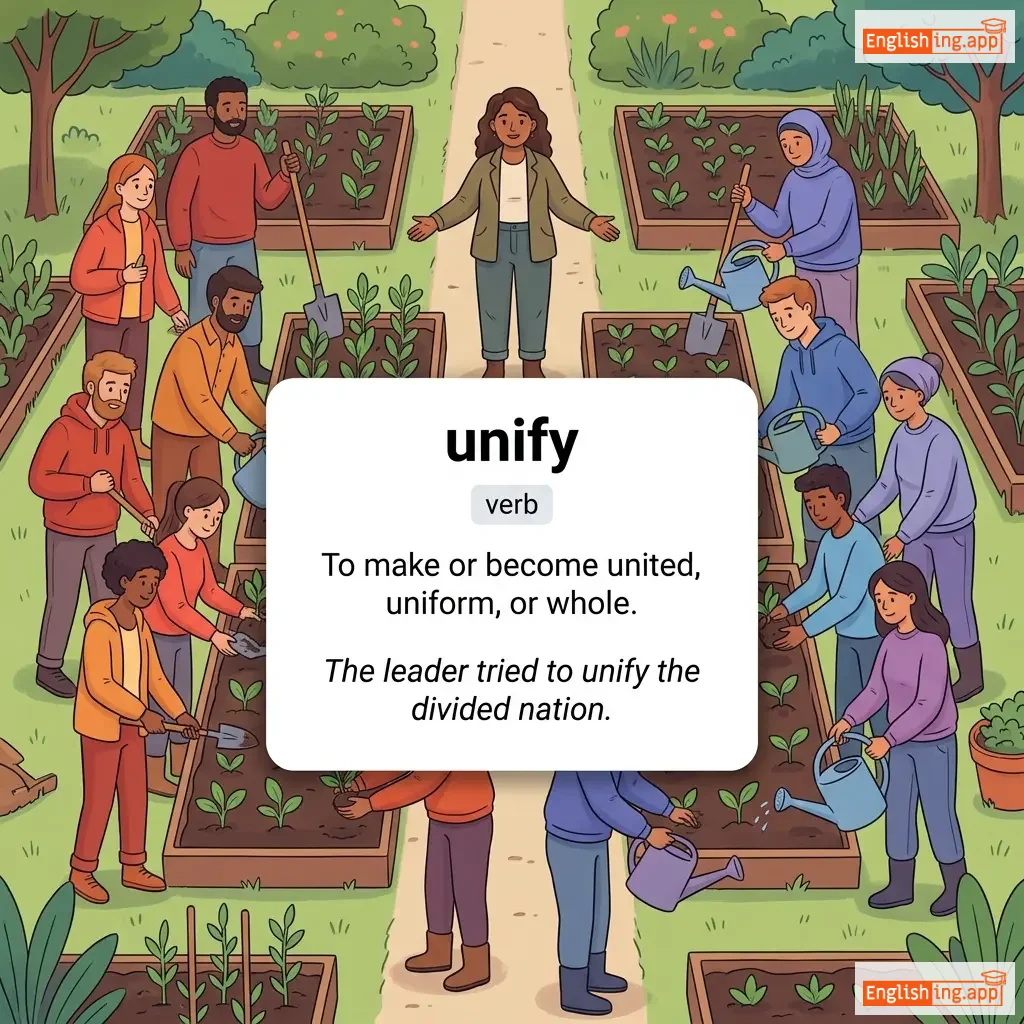
unify definition card — visual illustration of the meaning
🤝

unify

verb
/ˈjuːnɪfaɪ/

To make or become united, uniform, or whole.

"The leader tried to unify the divided nation."