語彙集

英単語辞書 | 単語の意味、定義、例文

adjective
/ˌθiːəˈrɛtɪkl/
理論的 (riron-teki)

Concerned with or based on theory rather than practical application.

"The idea remains largely theoretical without real-world evidence."

"そのアイデアは実際の証拠がなくても、主に理論的なものとして残ります。" (Sono aidea wa jissai no shouko ga nakute mo, omoni riron-teki na mono toshite nokorimasu.)
noun
/ˈθiːərɪst/
理論家 (rironka)

A person who develops, studies, or explains theories in a particular field.

"The political theorist explained the impact of democracy on social structures."

"政治的な理論家は、民主主義が社会構造に与える影響について説明しました。" (Seijiteki na rironka wa, minshushugi ga shakai kozo ni ataeru eikyo ni tsuite setsumei shimashita.)
verb
/ˈθiːəraɪz/
理論化する (rironkasuru)

To form a theory or set of ideas to explain something.

"Scientists often theorize about the origins of the universe."

"科学者たちはしばしば宇宙の起源について理論化します。" (Kagakusha-tachi wa shibashiba uchuu no kigen ni tsuite rironka shimasu.)
noun
/ˈθiːəri/
理論 (riron)

An explanation of an idea or principle based on facts, reasoning, and evidence.

"Einstein's theory of relativity changed the way we understand physics."

"アインシュタインの相対性理論は、物理学の理解方法を変えました。" (Ainshutain no sōtaisei riron wa, butsurigaku no rikai hōhō o kaemashita.)
noun
/θiˈɒsəfi/
テオソフィー (teosofī)

A religious or philosophical belief system that seeks direct knowledge of the mysteries of life and the divine.

"Theosophy attracted people interested in mysticism and spiritual growth."

"テオソフィーは神秘主義や精神的成長に興味を持つ人々を引き寄せた。" (Teosofī wa shinpi shūgi ya seishinteki seichō ni kyōmi o motsu hitobito o hiki yose ta.)
therapeutic definition card — visual illustration of the meaning
adjective
/ˌθɛrəˈpjuːtɪk/
治療的な (chiryō-teki na)

Related to healing, treatment, or providing a beneficial effect on the body or mind.

"Yoga can have a therapeutic effect on stress and anxiety."

"ヨガはストレスや不安に治療的な効果を与えることができます。" (Yoga wa sutoresu ya fuan ni chiryō-teki na kōka o ataeru koto ga dekimasu.)
noun
/ˈθɛrəpɪst/
セラピスト (serapisuto)

a person trained to provide treatment or counseling for physical or mental health

"The therapist helped him overcome his anxiety."

"セラピストは彼の不安を克服する手助けをしました。" (Serapisuto wa kare no fuan o kokufuku suru tedasuke o shimashita.)
therapy definition card — visual illustration of the meaning
noun
/ˈθɛrəpi/
セラピー (serapii)

treatment intended to relieve or heal a disorder

"She is receiving therapy for her injury."

"彼女は怪我のためにセラピーを受けています。" (Kanojo wa kega no tame ni serapii o uketeimasu.)
adverb
/ðɛə/
そこ (soko)

in, at, or to that place or position

"We are going there tomorrow."

"私たちは明日そこに行きます。" (Watashitachi wa ashita soko ni ikimasu.)
adverb
/ˌðɛrəˈbaʊt/
おおよそ (ooyoso)

Approximately or around that place, amount, or time.

"The repairs will cost five hundred dollars or thereabout."

"修理費は約五百ドルになるでしょう。" (Shuurihi wa yaku gohyaku doru ni naru deshou.)
adverb
/ðɛrˈæftər/
その後 (sono go)

from that time on

"He moved to Canada and thereafter started a new life."

"彼はカナダに引っ越し、その後新しい人生を始めました。" (Kare wa Kanada ni hikkoshi, sono go atarashii jinsei o hajimemashita.)
adverb
/ˈðeə.baɪ/
その結果 (sono kekka)

by that means; as a result of that

"She forgot to set the alarm, thereby missing her early flight."

"彼女はアラームを設定し忘れたため、その結果早朝のフライトを逃した。" (Kanojo wa arāmu o settei wasureta tame, sono kekka sōchō no furaito o nogashita.)
adverb
/ˈðɛərfɔːr/
それに対して (sore ni taishite)

For that or for it.

"He received payment and gave a receipt therefor."

"彼は支払いを受け取り、それに対する領収書を渡しました。" (Kare wa shiharai o uketori, sore ni taishite ryoushuusho o watashimashita.)
conjunction
/ðɛəˈfɔː/

for that reason; because of that

"She was tired; therefore, she went to bed early."

adverb
/ˌðɛərˈɪn/
その中に; (sono naka ni)

in that place; in that respect

"The box contains many treasures, and therein lies its value."

"箱には多くの宝物があり、その中にその価値がある。" (Hako ni wa ōku no hōmotsu ga ari, sono naka ni sono kachi ga aru.)
adverb
/ˌðɛərˈʌv/
それによって (sore ni yotte)

of that; from that

"The contract and all amendments thereof must be signed."

"契約とそのすべての修正はそれによって署名される必要があります。" (Keiyaku to sono subete no shūsei wa sore ni yotte shomei sareru hitsuyō ga arimasu.)
adverb
/ˌðɛərˈtu/
それとともに; (sore to tomoni)

to that; in addition to that

"The house and the garden attached thereto were sold."

"家とそれに付随する庭が売却されました。" (Ie to sore ni fuzui suru niwa ga baikyaku saremashita.)
adverb
/ˌðeərəˈpɒn/
その後すぐに; (sono ato sugu ni)

immediately after that; following that event

"He finished his speech and thereupon left the stage."

"彼はスピーチを終え、その後すぐにステージを離れました。" (Kare wa supīchi o oe, sono ato sugu ni sutēji o hanaremashita.)
adverb
/ˌðeərˈwɪð/
それと一緒に; (sore to issho ni)

together with that; in addition to that

"He handed me the contract and the pen therewith."

"彼は契約書とペンをそれと一緒に私に渡した。" (Kare wa keiyaku-sho to pen o sore to issho ni watashita.)
adjective
/ˈθɜːrməl/
サーマル (saamaru)

Related to heat or temperature.

"She wore a thermal jacket to stay warm in winter."
"彼女は冬に暖かさを保つためにサーマルジャケットを着ていた。" (Kanojo wa fuyu ni atatakasa o tamotsu tame ni saamaru jaketto o kite ita.)
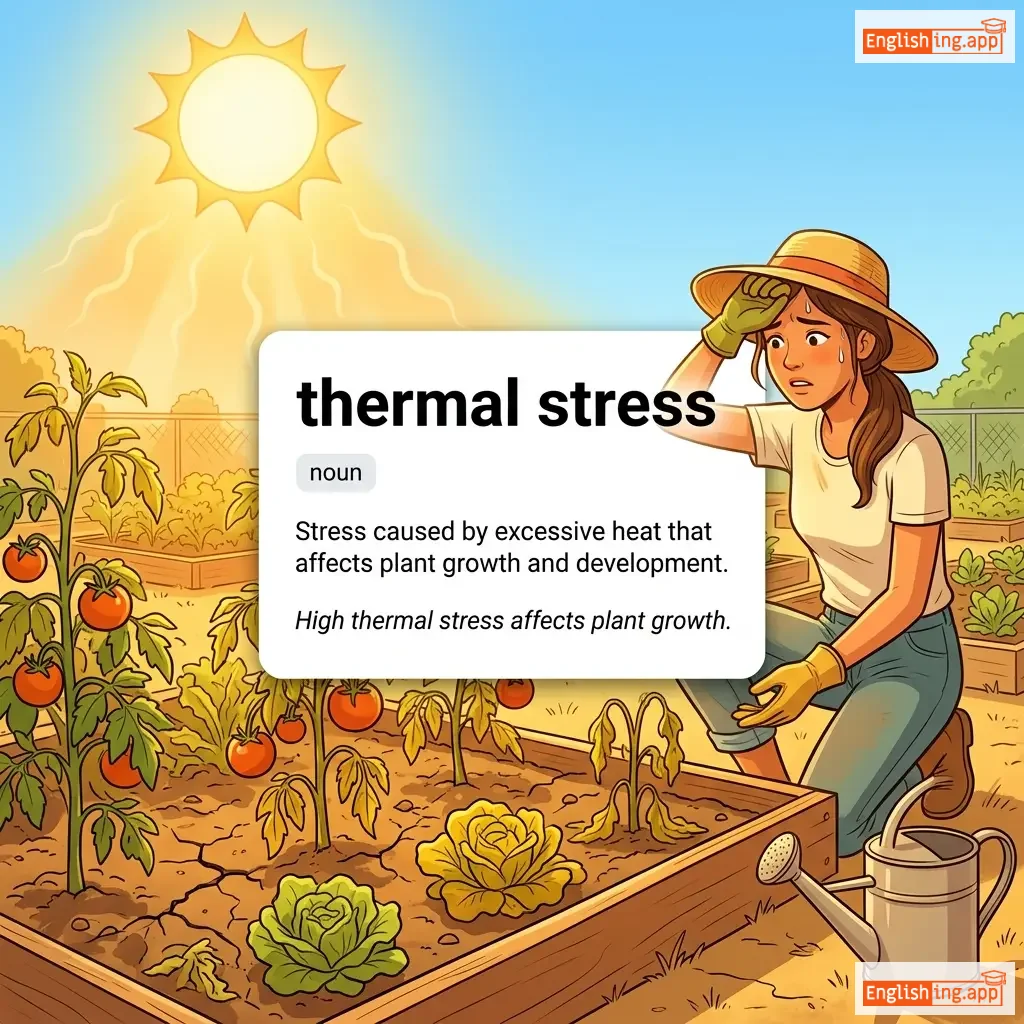
thermal stress definition card — visual illustration of the meaning
noun
ˈθɜː.məl stres
熱応力 (netsu ōryoku)

Stress caused by excessive heat that affects plant growth and development.

"High thermal stress affects plant growth."
"高い熱的ストレスは植物の成長に影響を与えます。" (Takai netsuteki sutoresu wa shokubutsu no seichō ni eikyō o ataemasu.)
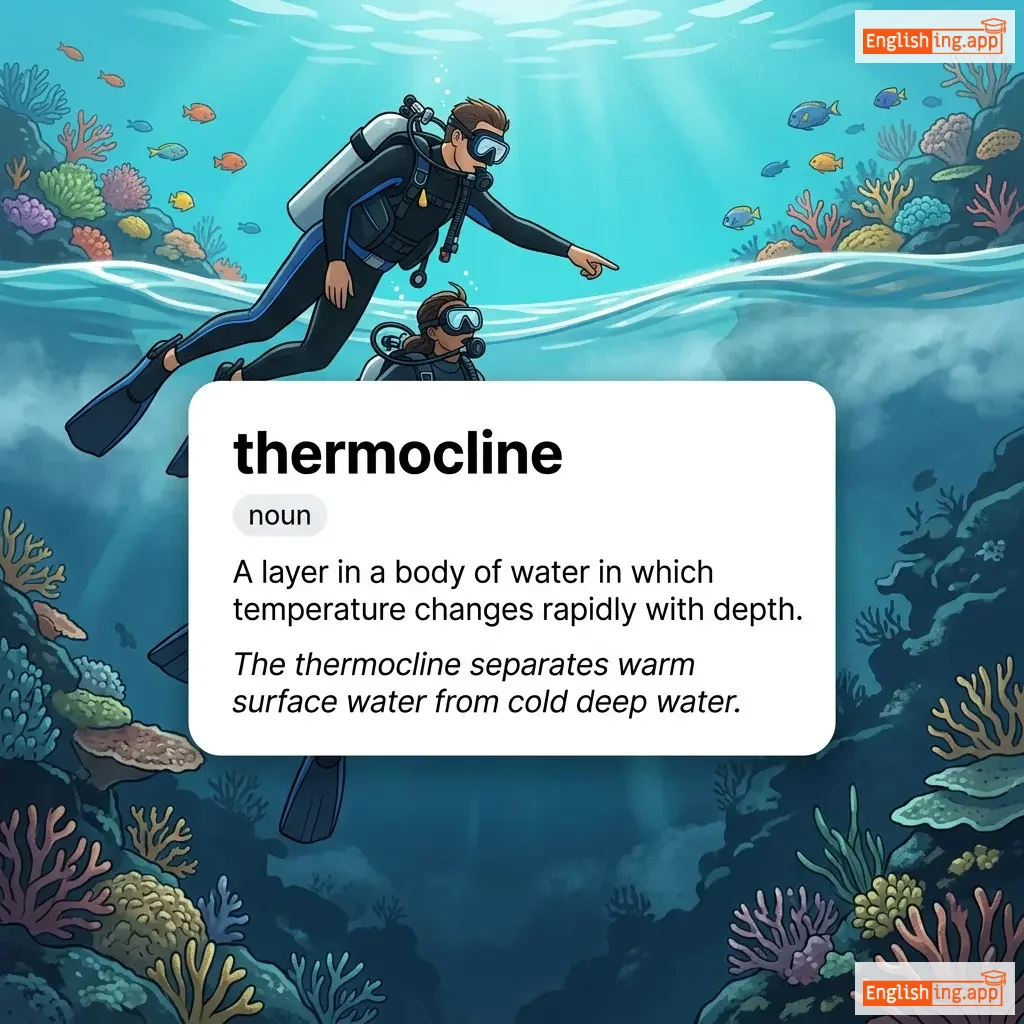
thermocline definition card — visual illustration of the meaning
noun
/ˈθɝː.moʊ.klaɪn/
サーモクライン (saamokurain)

A layer in a body of water in which temperature changes rapidly with depth.

"The thermocline separates warm surface water from cold deep water."
"サーモクラインは、暖かい表面水と冷たい深層水を分けます。" (Saamokurain wa, atatakai hyōmen sui to tsumetai shinsō sui o wakemasu.)
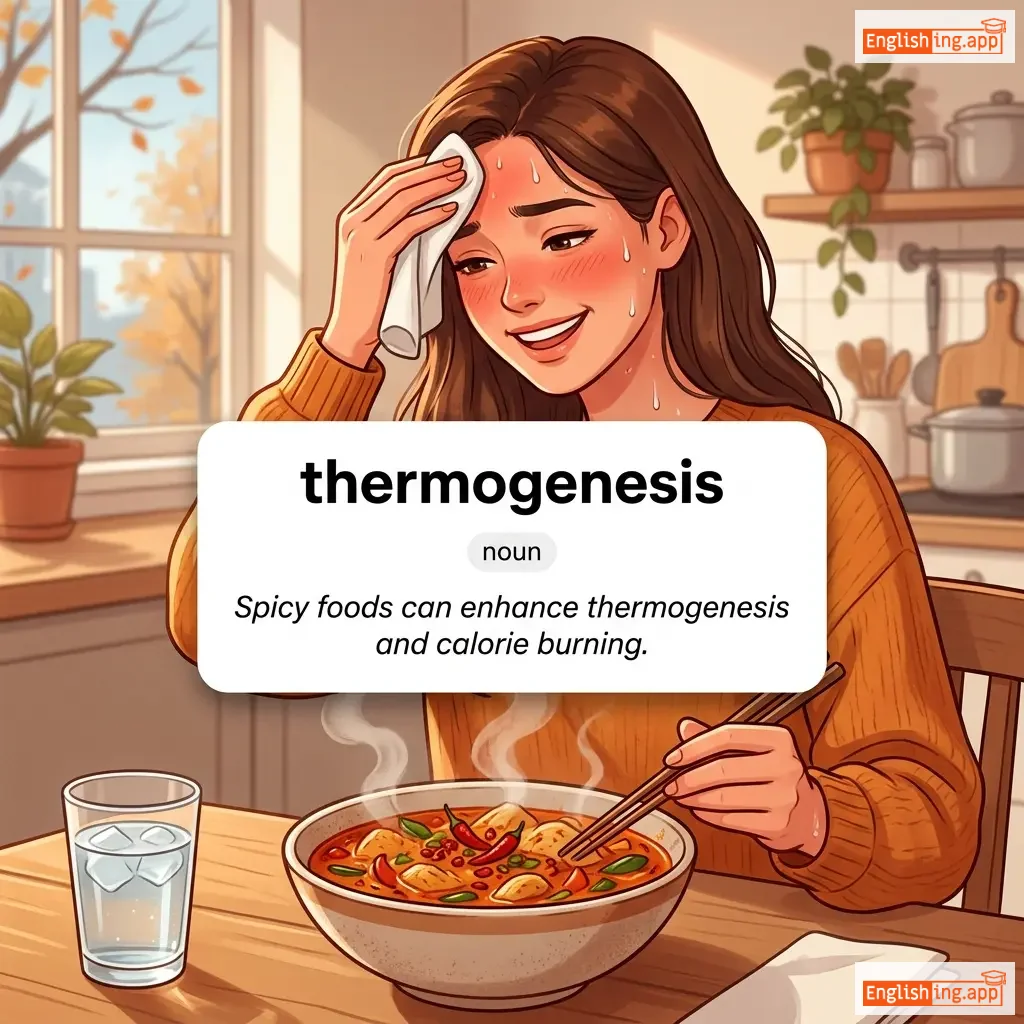
thermogenesis definition card — visual illustration of the meaning
noun
/ˌθɜː.məʊˈdʒen.ɪ.sɪs/
熱の生成過程 (netsu no seisei katei)

The process of heat production in living organisms, often associated with burning calories and energy expenditure.

"Spicy foods can enhance thermogenesis and calorie burning."

"スパイシーな食品はサーモジェネシスとカロリー燃焼を促進できます。" (Supai-shī na shokuhin wa sāmojeneshisu to karorii nenshō o sokushin dekimasu.)
pronoun
/ðiːz/
これら (korera)

used to refer to things or people that are near or present

"These are my friends."

"これらは私の友達です。" (Korera wa watashi no tomodachi desu.)
noun
/ˈθiːsɪs/
テーシス (teshisu)

A long piece of writing on a particular subject, usually for a degree at a university.

"She spent two years writing her doctoral thesis."

"彼女は博士論文を書くのに2年を費やしました。" (Kanojo wa hakase ronbun o kaku no ni 2-nen o tsuiyashimashita.)
thespian definition card — visual illustration of the meaning
noun
/ˈθɛspiən/
俳優 (haiyū)

An actor or actress; relating to drama or theater.

"The festival was filled with talented thespians from across the country."

"フェスティバルは、国内各地から集まった才能豊かな俳優たちで満たされていました。" (Fesutibaru wa, kokunai kakuchi kara atsumatta sainō yutakana haiyū-tachi de mitasarete imashita.)
pronoun
/ðeɪ/
彼ら (karera)

used to refer to people or things previously mentioned or easily identified

"They are going to the park."

"彼らは公園に行きます。" (Karera wa kōen ni ikimasu.)
adjective
/θɪk/
厚い (atsui)

having a large distance between two sides; not thin

"The book was so thick it took weeks to finish."

"その本はとても厚くて、終わらせるのに数週間かかりました。" (Sono hon wa totemo atsukute, owaraseru noni suushukan kakarimashita.)
noun
/ˈθɪk.ɪt/
茂み; 低木の成長 (thiket)

a dense group of bushes or trees; a thick growth of shrubs

"The rabbit disappeared into the thicket."

"ウサギは茂みに消えました。" (Usagi wa shigemi ni kiemashita.)
adverb
/ˈθɪkli/
密集して (misshū shite)

in a thick manner; densely; heavily

"The forest was thickly wooded with tall pine trees."

"森は高い松の木で密集して覆われていた。" (Mori wa takai matsu no ki de misshū shite ōwarete ita.)
noun
/ˈθɪk.nəs/
厚さ (atsusa)

The measure of how thick or dense something is

"The thickness of the book made it hard to carry."

"その本の厚さのため、持ち運びが大変だった。" (sono hon no atsusa no tame, mochi hakobi ga taihen datta.)
🦹‍♂️

Thief (θiːf)

noun
/θiːf/
泥棒 (dorobo)

a person who steals things from others

"The thief was caught stealing from the jewelry store."

"泥棒は宝石店で盗んでいるところを捕まえられました。" (Dorobo wa housekiten de nusundeiru tokoro wo tsukamaeraremashita.)
noun
/θaɪ/
太もも (thighmomo)

the part of the leg between the hip and the knee

"He felt pain in his right thigh after running for an hour."

"1時間走った後、右太ももに痛みを感じました。" (1 jikan hashitta ato, migi thighmomo ni itami o kanjimashita.)
adjective
/θɪn/
薄い (usui)

having little thickness or width

"She wore a thin scarf in the winter."

"彼女は冬に薄いスカーフを着ていました。" (Kanojo wa fuyu ni usui sukāfu o kite imashita.)
noun
/θɪŋ/
(mono)

an object, idea, or matter that is being referred to or dealt with

"This is the thing I was looking for."

"これは私が探していた物です。" (Kore wa watashi ga sagashite ita mono desu.)
think definition card — visual illustration of the meaning
verb
/θɪŋk/
考える (kangaeru)

to use one's mind to consider or reason about something

"I think this is a great idea."

"私はこれが素晴らしいアイデアだと思います。" (Watashi wa kore ga subarashī aidea da to omoimasu.)
adjective
/ˈθɪŋ.kə.bəl/
考えられる (kangaerareru)

Capable of being imagined or conceived; possible to consider or believe

"It is hard to believe that such an outcome is even thinkable."

"そのような結果が考えられるとは信じがたい。" (Sono you na kekka ga kangaerareru to wa shinjigatai)
noun
/ˈθɪŋkɪŋ/
考え (kangae)

the process of considering or reasoning about something

"Her thinking was clear and precise."

"彼女の考えは明確で正確でした。" (Kanojo no kangae wa meikaku de seikaku deshita.)
adjective
/θɜrd/
三番目 (sanbanme)

constituting number three in a sequence

"She finished in third place."

"彼女は三番目に終わった。" (Kanojo wa sanbanme ni owatta.)
adjective
/ˈθɜːr.sti/
喉が渇いた (nodo ga kawaita)

feeling a need to drink; having a strong desire for something

"I am very thirsty after running in the heat."

"暑さで走った後、私はとても喉が渇いています。" (atsusa de hashitta ato, watashi wa totemo nodo ga kawaitaimasu.)
adjective
/ˈθɜrti/
三十 (san-ju)

equivalent to the number 30

"He is thirty years old."

"彼は三十歳です。" (Kare wa san-ju sai desu.)
pronoun
/ðɪs/
これ (kore)

used to refer to a person or thing that is close or near in space, time, or thought

"This is my favorite book."

"これは私のお気に入りの本です。" (Kore wa watashi no okiniiri no hon desu.)
noun
/θɔːn/
とげ (toge)

a sharp pointed part of a plant; something that causes pain or annoyance

"Be careful of the thorns on the rose bush."

"バラの茂みの中のとげに気をつけてください。" (Bara no shigemi no naka no toge ni ki o tsukete kudasai.)
adjective
/ˈθɔːrni/
とげのある、複雑な (toge no aru, fukuzatsu na)

covered with thorns; causing difficulty or trouble

"They faced a thorny issue during the negotiation."

"彼らは交渉中に難しい問題に直面しました。" (Karera wa kōshō chū ni muzukashī mondai ni chokumen shimashita.)
adjective
/ˈθʌroʊ/
徹底的な, 詳細な (tettai-tekina, shousaina)

complete with regard to every detail; not superficial or partial

"The report was thorough and well-researched."

"そのレポートは徹底的で、十分に調査されていました。" (sono repōto wa tettai-teki de, juubun ni chousa sarete imashita.)
noun
/ˈθʌroʊˌbrɛd/
純血種の馬 (jun ketsu-shu no uma)

a horse of pure and recognized breed; a person of good breeding or education

"The jockey rode a fast thoroughbred in the race."

"ジョッキーはレースで速いサラブレッドに乗った。" (jokkī wa rēsu de hayai sarabureddo ni notta.)
noun
/ˈθʌroʊˌfɛr/
大通り (ōdōri)

a main road or public highway that goes through a place

"The new mall is located along the main thoroughfare."

"新しいショッピングモールは大通り沿いにあります。" (atarashī shoppingu mōru wa ōdōri soi ni arimasu.)
adjective
/ˈθʌroʊˌɡoʊɪŋ/
完全な、徹底的な (kanzen na, tetteiteki na)

carried out to the full extent; absolute and complete

"She is a thoroughgoing professional in every sense."

"彼女はあらゆる意味で徹底的なプロフェッショナルです。" (Kanojo wa arayuru imi de tetteiteki na purofesshonaru desu.)
adverb
/ˈθʌr.ə.li/
徹底的に (tettiteki ni)

completely and carefully; in a detailed way

"Please clean the kitchen thoroughly before the guests arrive."

"ゲストが到着する前に、キッチンを徹底的に掃除してください。" (Gesuto ga touchaku suru mae ni, kicchin o tetteiteki ni souji shite kudasai.)
pronoun
/ðoʊz/
それら (sorera)

used to refer to people or things that are far away or distant in space, time, or thought

"Those are the shoes I want."

"それらは私が欲しい靴です。" (Sorera wa watashi ga hoshī kutsu desu.)