語彙集

英単語辞書 | 単語の意味、定義、例文

noun
/ˈtɛmpoʊ/
テンポ, リズム (tenpo, rizumu)

The speed or pace at which a piece of music or activity is performed.

"The band played the song at a faster tempo than usual."

"バンドは普段よりも速いテンポで曲を演奏しました。" (Bando wa fudan yori mo hayai tenpo de kyoku wo ensou shimashita.)
adjective
/ˈtɛmpərəl/
世俗的な、時間的な (sesokuteki na, jikan teki na)

Relating to worldly affairs or to time rather than spiritual matters.

"The monk gave up his temporal possessions to live a simple life."

"僧侶は彼の世俗的な所有物を放棄して、簡素な生活を送りました。" (Sōryo wa kare no sesokuteki na shoyūbutsu o hōki shite, kanso na seikatsu o okurimashita.)
adverb
/ˈtɛmpərɛrɪli/
一時的に (ichijiteki ni)

for a limited time; not permanently

"The road is closed temporarily for repairs."

"道路は修理のため一時的に閉鎖されています。" (Dōro wa shūri no tame ichijiteki ni heisa sareteimasu.)
adjective
/ˈtɛmpərɛri/
一時的な (ichijiteki na)

Lasting for only a limited period of time; not permanent.

"She found a temporary job during the summer break."
"彼女は夏休み中に一時的な仕事を見つけました。" (Kanojo wa natsuyasumi chū ni ichijiteki na shigoto o mitsukemashita.)
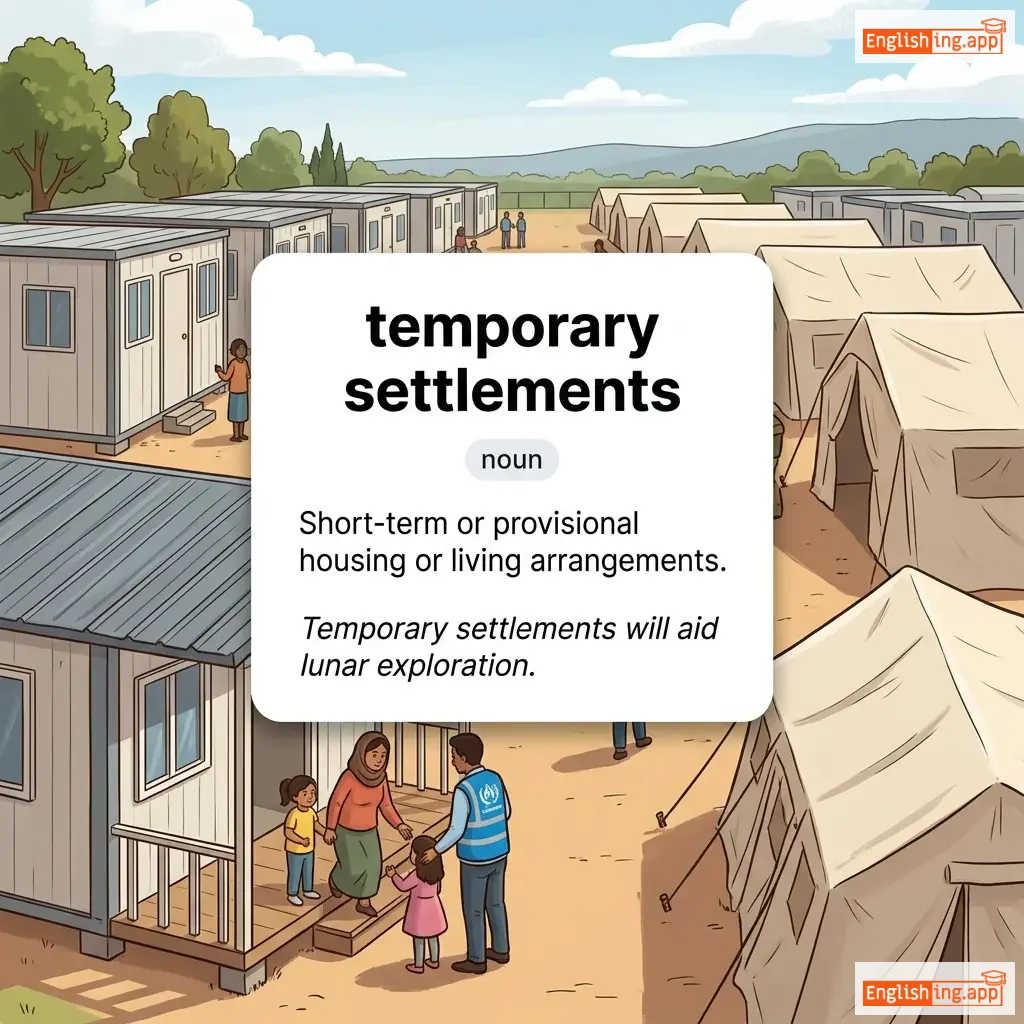
temporary settlements definition card — visual illustration of the meaning
noun
ˈtempəreri ˈsetlmənts
一時的な集落 (ichijiteki na shūraku)

Short-term or provisional housing or living arrangements.

"Temporary settlements will aid lunar exploration."

"一時的な集落は月面探査を支援するでしょう。" (Ichijiteki na shūraku wa getsumen tansa o shien suru deshō.)
verb
/ˈtɛmpəˌraɪz/
先延ばしにする (saki nobashi ni suru)

To delay making a decision or taking action in order to gain time.

"The politician temporized when asked about the controversial issue."

"政治家はその論争の的になっている問題について質問されると、先延ばしにした。" (Seijika wa sono ronsō no mato ni natte iru mondai ni tsuite shitsumon sareru to, saki nobashi ni shita.)
verb
/tɛmpt/
誘惑する (yūwaku suru)

to entice or attract someone to do something, often something wrong or unwise

"The smell of fresh bread tempted him to enter the bakery."

"新鮮なパンの匂いが彼をパン屋に入らせました。" (Shinsen na pan no nioi ga kare o panya ni irasemashita.)
noun
/temp.ˈteɪ.ʃən/
誘惑 (yūwaku)

the desire to do something wrong or unwise; an urge to have or do something

"He resisted the temptation to eat the entire chocolate cake."

"彼は全てのチョコレートケーキを食べる誘惑に抵抗した。" (Kare wa subete no chokorēto kēki o taberu yūwaku ni teikō shita.)
noun
/ˈtɛmptər/
誘惑者 (yūwaku-sha)

a person or thing that entices someone into doing something wrong

"The tempter whispered false promises into his ear."

"誘惑者は彼の耳に嘘の約束をささやいた。" (Yūwaku-sha wa kare no mimi ni uso no yakusoku o sasayaita.)
adjective
/ˈtemptɪŋ/
魅力的 (miryokuteki)

appealing to or attracting someone, even if wrong or inadvisable; alluring

"The chocolate cake looked very tempting in the bakery window."

"ベーカリーの窓にチョコレートケーキがとても魅力的に見えた。" (Beekarii no mado ni chokoreeto keeki ga totemo miryokuteki ni mieta.)
noun
/tɛn/
(juu)

the number following nine and preceding eleven

"I have ten apples in the basket."

"バスケットには十個のリンゴがあります。" (Basuketto ni wa juu ko no ringo ga arimasu.)
adjective
/ˈtɛnəbl/
防御可能な (bōgyo kanō na)

able to be defended or maintained against attack or objection

"His argument was strong and tenable in court."
"彼の主張は強力で、法廷で防御可能だった。" (Kare no shuchō wa kyōryoku de, hōtei de bōgyo kanō datta.)
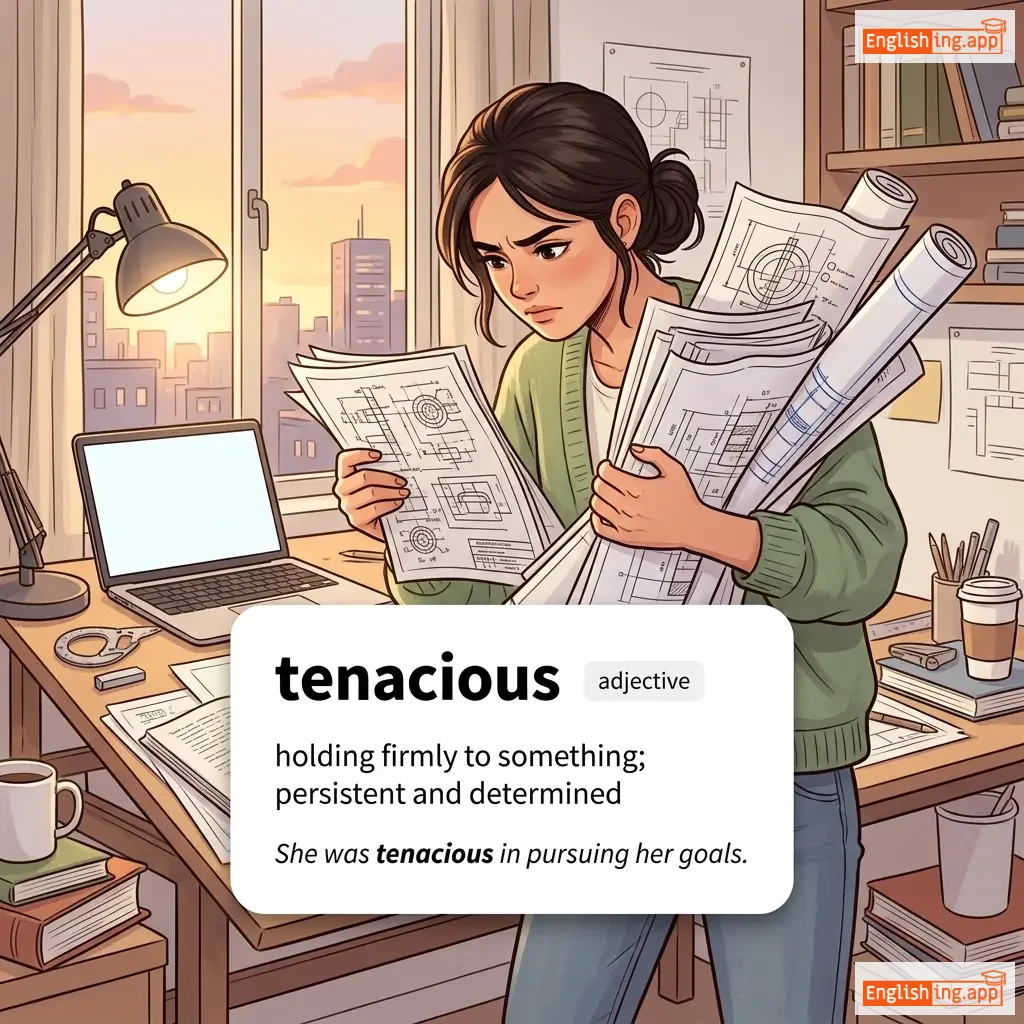
tenacious definition card — visual illustration of the meaning
adjective
/təˈneɪʃəs/
粘り強い (nebarizuyoi)

holding firmly to something; persistent and determined

"She was tenacious in pursuing her goals."
"彼女は目標を追求するのに粘り強かった。" (Kanojo wa mokuhyou wo tsuikyuu suru no ni nebarizuyokatta.)
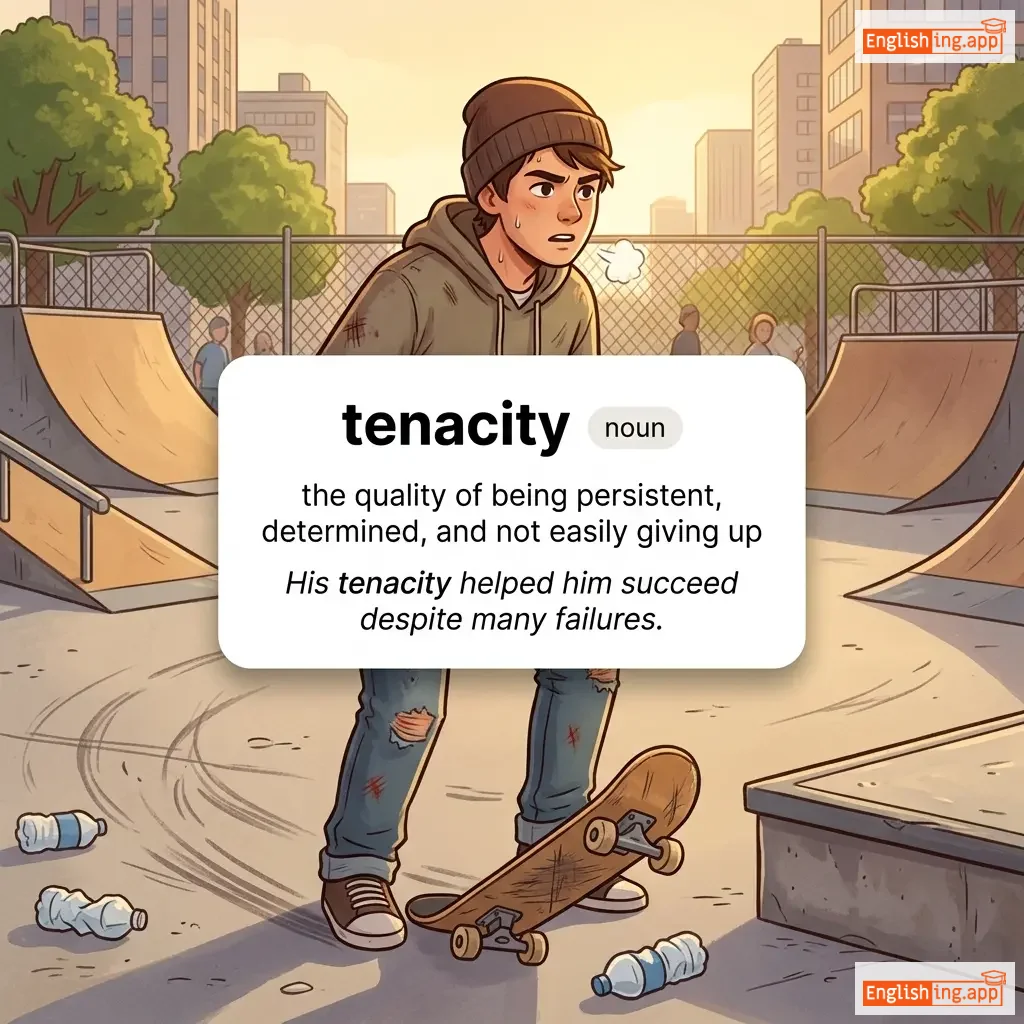
tenacity definition card — visual illustration of the meaning
noun
/təˈnæsəti/
粘り強さ (nebarizuyosa)

the quality of being persistent, determined, and not easily giving up

"His tenacity helped him succeed despite many failures."

"彼の粘り強さが、数々の失敗を乗り越え成功に導いた。" (Kare no nebarizuyosa ga, kazukazu no shippai o norikoete seikou ni michibita.)
noun
/ˈtɛnənsi/
賃貸契約 (chintai keiyaku)

The possession or occupation of land or property as a tenant.

"The tenancy agreement was signed for two years."

"賃貸契約は2年間で署名されました。" (Chintai keiyaku wa 2-nenkan de shomei saremashita.)
noun
/ˈtɛnənt/
テナント (tenanto)

A person who occupies land or property rented from a landlord.

"The tenant paid the rent on time every month."

"テナントは毎月時間通りに家賃を支払った" (Tenanto wa maitsuki jikan dōri ni yachin o shiharatta)
verb
/tɛnd/
傾向がある/世話をする (keikou ga aru/sewa o suru)

To regularly behave in a particular way or to take care of something.

"She tends to wake up early in the morning."

"彼女は朝早く起きる傾向があります。" (Kanojo wa asa hayaku okiru keikou ga arimasu.)
noun
/ˈtɛndənsi/
傾向 (keikou)

An inclination or likelihood to behave in a certain way.

"He has a tendency to forget small details."

"彼は小さな詳細を忘れる傾向があります。" (Kare wa chiisana shousai o wasureru keikou ga arimasu.)
adjective
/tɛnˈdɛnʃəs/
偏向的 (henkō-teki)

Expressing or promoting a particular cause or point of view, often biased.

"The article was criticized for its tendentious tone."

"その記事は偏向的な口調で批判されました。" (Sono kiji wa henko-teki na kuchō de hihan saremashita.)
verb, noun, adjective
/ˈtɛndər/
提案 / 優しい (teian / yasashii)

to offer formally; soft and delicate in texture or character; a formal offer or proposal

"The company tendered its resignation to the board."

"会社は取締役会に辞表を提出しました。" (Kaisha wa torishimariyakukai ni jihyō o teishutsu shimashita.)
noun
/ˈten.dər.nəs/
優しさ (yasashisa)

gentleness and kindness; the quality of being easily hurt or damaged

"The mother showed great tenderness while caring for her sick child."

"母親は病気の子供を世話しながら大きな優しさを示しました。" (Hahaoya wa byōki no kodomo o sewa shinagara ōkina yasashisa o shimeshimashita.)
adjective
/ˈtɛnɪbrəs/
陰鬱な (in'utsu na)

dark, shadowy, or obscure

"The cave was damp and tenebrous, filled with eerie sounds."

"洞窟は湿っぽくて、陰気で不気味な音が響いていました。" (Doukutsu wa shippo kutte, in'ki de bukimi na oto ga hibiiteimashita.)
noun
/ˈtɛnəmənt/
アパートメント (apātomento)

a large building divided into separate apartments, often in poor condition

"The family lived in a crowded tenement in the city."
"その家族は街の混雑したアパートメントに住んでいました。" (Sono kazoku wa machi no konzatsu shita apātomento ni sunde imashita.)
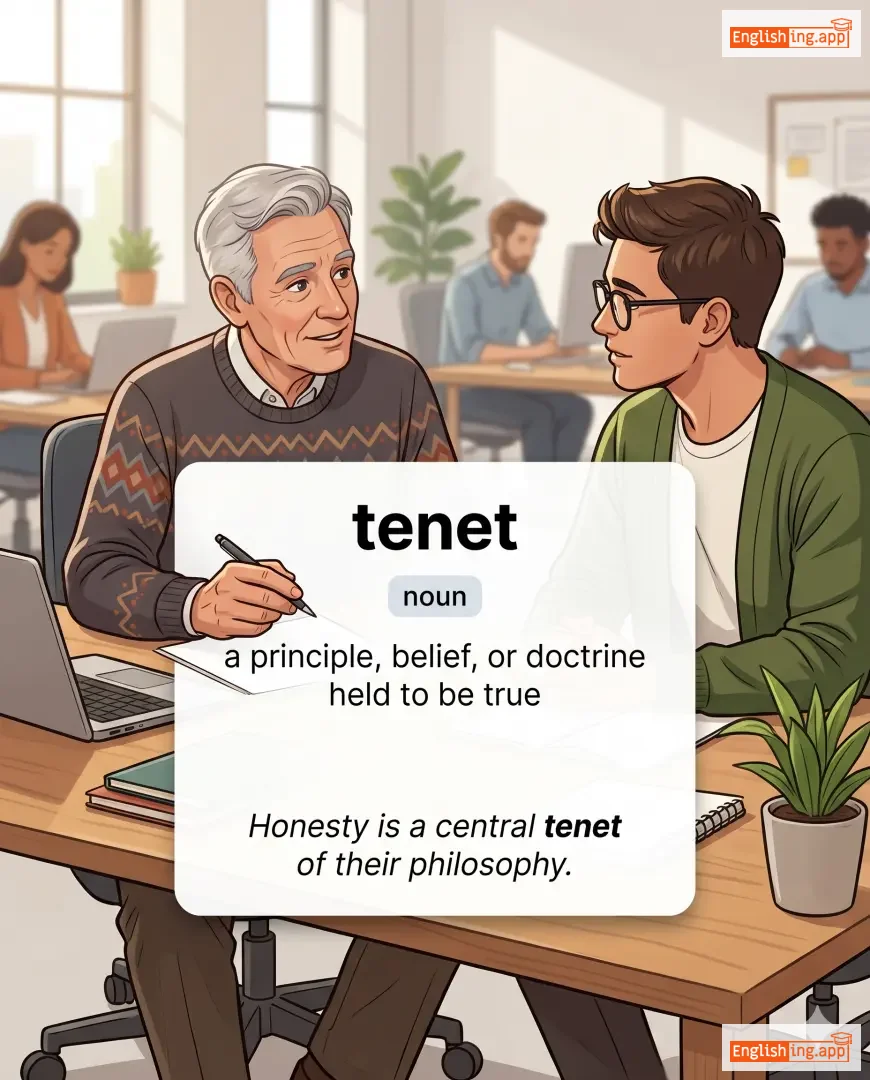
tenet definition card — visual illustration of the meaning
noun
/ˈtɛnɪt/
原則 (gensoku)

a principle, belief, or doctrine held to be true

"Honesty is a central tenet of their philosophy."

"誠実は彼らの哲学の中心的な原則です。" (Seijitsu wa karera no tetsugaku no chūshin-tekina gensoku desu.)
noun
/ˈtɛnɪs/
テニス (tenisu)

a sport played with rackets and a ball on a rectangular court

"He enjoys playing tennis with his friends on the weekends."

"彼は週末に友達とテニスをするのが好きです。" (Kare wa shūmatsu ni tomodachi to tenisu o suru no ga suki desu.)
noun
/ˈtɛnər/
テノール / 一般的なトーン (tenooru / ippantekina toon)

the general meaning, drift, or character of something; a male singing voice between baritone and alto

"The overall tenor of his speech was hopeful and reassuring."

"彼のスピーチの全体的なトーンは希望に満ち、安心感を与えるものでした。" (Kare no supīchi no zentaiteki na tōn wa kibō ni michi, anshinkan o ataeru mono deshita.)
noun, adjective, verb
/tɛns/
緊張 / 時制 (kinchou / jisei)

a grammatical category showing time reference; stretched tight or anxious

"She felt tense before the interview."
"彼女はインタビューの前に緊張していた。" (Kanojo wa intabyu no mae ni kinchou shite ita.)
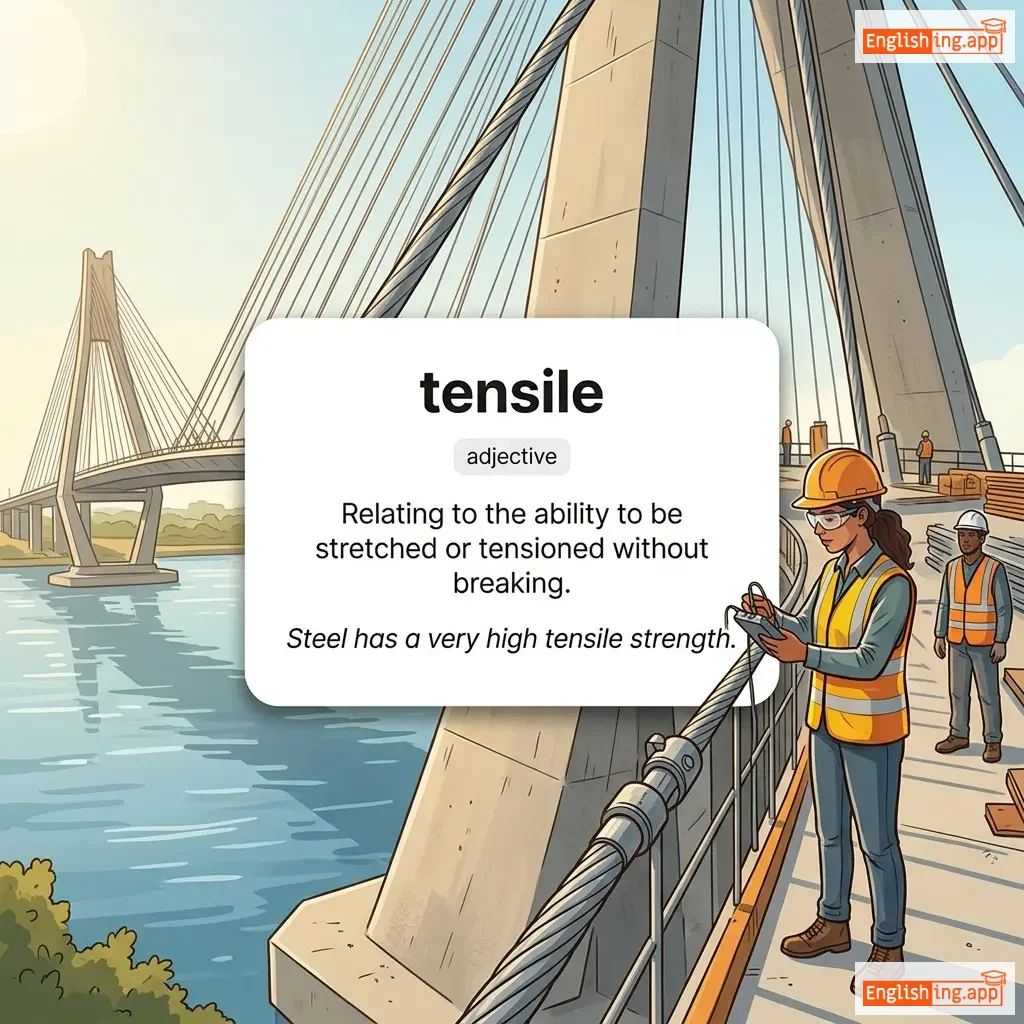
tensile definition card — visual illustration of the meaning
adjective
/ˈtɛn.saɪl/
伸張性 (shinchou-sei)

Relating to the ability to be stretched or tensioned without breaking.

"Steel has a very high tensile strength."

"鋼鉄は非常に高い伸張性を持っています。" (kōtetsu wa hijō ni takai shinchō-sei o motteimasu.)
noun
/ˈtɛn.ʃən/
緊張 (kinchou)

A state of being stretched tight; mental or emotional strain.

"There was a lot of tension in the room before the exam results were announced."

"試験結果が発表される前、部屋には多くのテンションがありました。" (Shiken kekka ga happyou sareru mae, heya ni wa ooku no tenshon ga arimashita.)
noun
/tɛnt/
テント (tento)

a portable shelter made of fabric, supported by poles and ropes

"We set up a tent for the camping trip."

"キャンプのためにテントを設置しました。" (Kyanpu no tame ni tento o setchi shimashita.)
adjective
/ˈtɛn.tə.tɪv/
仮の (kari no)

Not certain or fixed; done without confidence.

"She gave a tentative smile before agreeing."
"彼女は同意する前に仮の笑顔を見せた。" (Kanojo wa dōi suru mae ni kari no egao o miseta.)
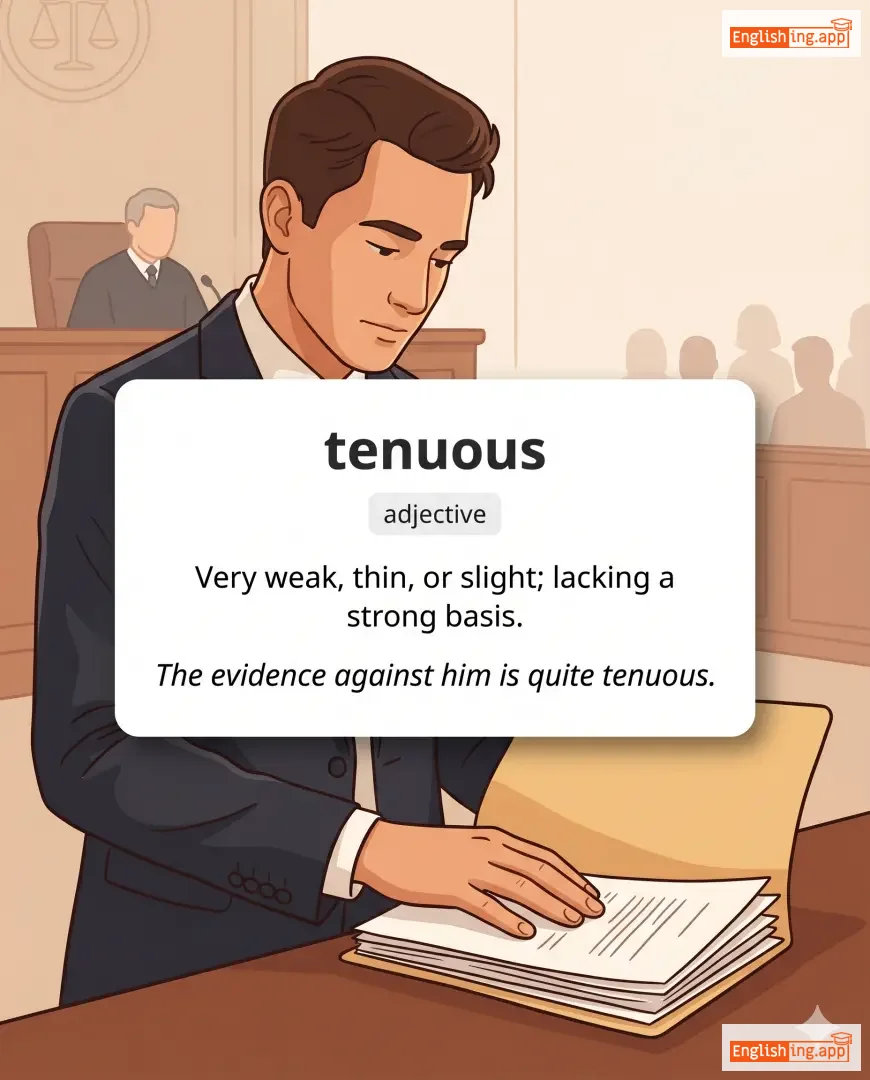
tenuous definition card — visual illustration of the meaning
adjective
/ˈtɛn.ju.əs/
弱い / 薄い (yowai / usui)

Very weak, thin, or slight; lacking a strong basis.

"The evidence against him is quite tenuous."

"彼に対する証拠はかなり弱いです。" (Kare ni taisuru shōko wa kanari yowai desu.)
noun
/ˈtɛnjər/
任期 (ninki)

The period of time during which someone holds a position, office, or land.

"His tenure as president lasted for five years."

"彼の大統領としての任期は5年間続きました。" (Kare no daitōryō toshite no ninki wa 5-nenkan tsuzukimashita.)
adjective
/ˈtɛpɪd/
ぬるい, 無関心 (nurui, mukanshin)

Lukewarm; showing little enthusiasm or force.

"His speech received only a tepid response from the audience."

"彼のスピーチは観客からただのぬるい反応しか受けなかった。" (Kare no supīchi wa kankyaku kara tada no nurui hannō shika ukenakatta.)
noun
/ˌtɜːsənˈtɛnəri/
三百周年記念 (sanbyaku shuunen kinen)

The 300th anniversary of an event.

"The city celebrated its tercentenary with a grand festival."

"その都市は盛大な祭りで三百年祭を祝いました。" (Sono toshi wa seidaina matsuri de sanbyaku nen sai o iwaimashita.)
noun
/ˌtɜːdʒɪvərˈseɪʃən/
回避, 二重性 (kaibi, nijūsei)

Evasion of straightforward action or speech; changing sides or being inconsistent.

"The politician’s tergiversation frustrated his supporters."

"その政治家のタージヴァーセイションは彼の支持者を失望させた。" (Sono seijika no tājivāseishon wa kare no shijisha o shitsubō saseta.)
noun
/tɜːm/
用語 (yōgo)

a word or phrase used to describe a thing or to express a concept

"The term 'machine learning' is commonly used in technology."

"「機械学習」という用語は、技術分野で広く使われています。" ('Kikai gakushū' to iu yōgo wa, gijutsu bun'ya de hiroku tsukawareteimasu.)
noun
/ˈtɜːrməɡənt/
気難しく支配的な女性 (kimuzukashiku shihai-tekina josei)

A harsh-tempered or overbearing woman.

"The character was portrayed as a loud and domineering termagant."

"キャラクターは騒々しく支配的なターマガントとして描かれました。" (Kyarakutā wa sōzōshiku shihai-tekina tāmaganto to shite egakaremashita.)
noun/adjective
/ˈtɜːrmɪnəl/
ターミナル、終点、末期の病 (taaminaru, shūten, maki no yamai)

As a noun: A place where transport routes begin or end. As an adjective: Relating to the end or final stage of something, often an illness.

"He waited for the bus at the central terminal."

"彼は中央ターミナルでバスを待っていた。" (kare wa chūō taaminaru de basu o matte ita.)
verb
/ˈtɜːrmɪˌneɪt/
終了する (shūryō suru)

to bring something to an end or to stop something from continuing

"The company decided to terminate his contract."

"会社は彼の契約を終了することを決定した。" (Kaisha wa kare no keiyaku o shūryō suru koto o kettei shita.)
noun
/ˌtɜːrmɪˈneɪʃən/
終了 (shuuryou)

the act of ending something or the state of being ended

"The termination of the contract caused financial loss."

"契約の終了は財務的損失を引き起こしました。" (Keiyaku no shuuryou wa zaimutekisonshitsu wo hikiokoshimashita.)
noun
/ˌtɜːrməˈnɑːlədʒi/
用語 (yōgo)

the set of technical or special words used in a particular subject

"Medical terminology can be difficult for new students to understand."

"医学用語は新しい学生にとって理解が難しいことがあります。" (Igaku yōgo wa atarashī gakusei ni totte rikai ga muzukashī koto ga arimasu.)
noun
/ˈtɜːrmɪnəs/
終点 (shūten)

the final point or end of something, especially the final station on a railway line

"The train finally arrived at the terminus after a long journey."

"長い旅の後、電車はついに終点に到着しました。" (Nagai tabi no ato, densha wa tsuini shūten ni tōchaku shimashita.)
noun
/tɜːmz/
条件 (jouken)

plural of term; conditions or rules in a contract or agreement

"The terms of the agreement are clearly outlined in the contract."

"契約条件は契約書に明確に記載されています。" (Keiyaku jouken wa keiyakusho ni meikaku ni kisai sareteimasu.)
noun
/təˈreɪn/
地形 (chikei)

a stretch of land, especially with regard to its physical features

"The soldiers had to cross rough terrain during the mission."

"兵士たちは任務中に険しい地形を越えなければならなかった。" (Heishi-tachi wa ninmu-chuu ni kewashii chikei o koenakereba naranakatta.)
noun
/ˈterəpɪn/
小さな淡水カメ (chiisana tansui kame)

a small freshwater turtle, especially one found in North America

"The terrapin slowly crawled into the pond."
"テラピンはゆっくりと池に這い込んだ。" (Terapin wa yukkuri to ike ni haikonda.)
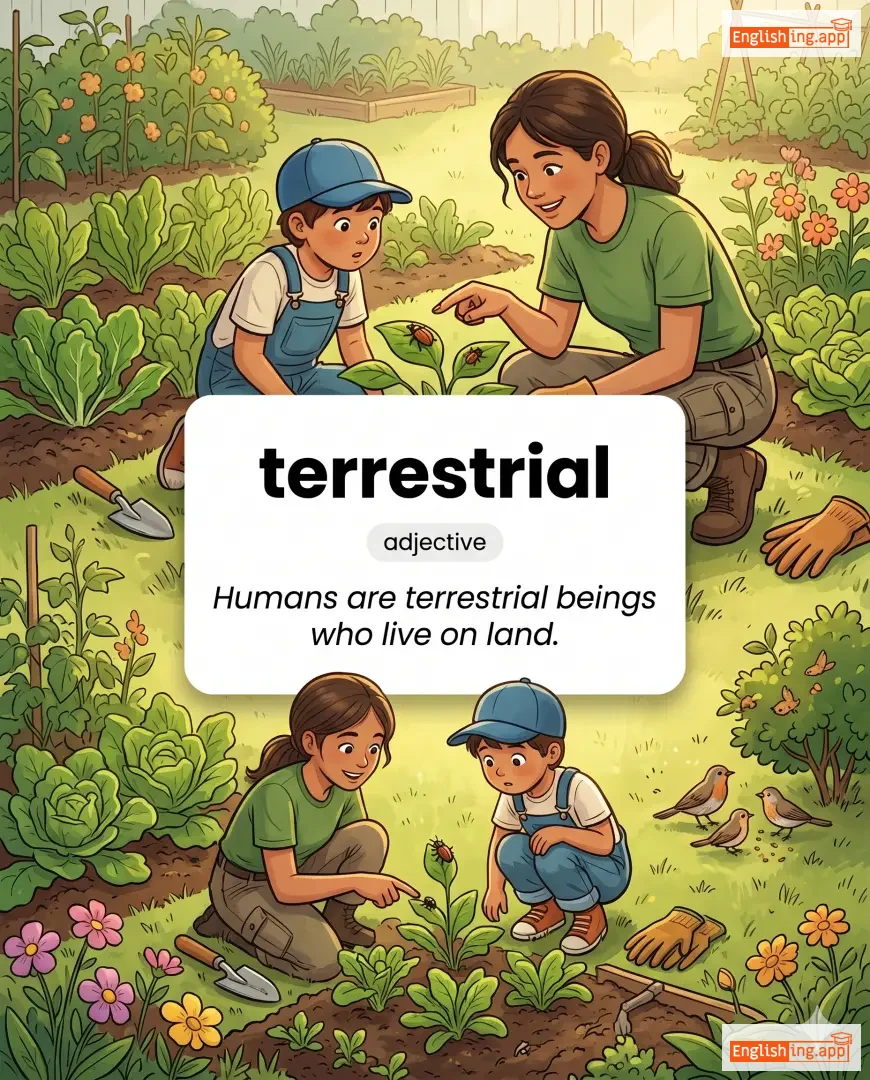
terrestrial definition card — visual illustration of the meaning
adjective
/təˈrɛstriəl/
陸生 (rikusei)

Relating to the Earth or land as opposed to the sea or air; living or growing on land.

"Humans are terrestrial beings who live on land."

"人間は陸上で生きる陸生の生物です。" (Ningen wa rikujō de ikiru rikusei no seibutsu desu.)
adjective
/ˈtɛrɪbəl/

extremely bad or unpleasant

"The food at that restaurant was terrible."

adverb
/ˈtɛrəbli/
ひどく (hidoku)

to a very great or extreme degree; very badly or unpleasantly

"He felt terribly sad after hearing the news."

"彼はそのニュースを聞いた後、ひどく悲しく感じました。" (Kare wa sono nyūsu o kiita ato, hidoku kanashiku kanjimashita.)
adjective
/təˈrɪfɪk/
素晴らしい (subarashii)

extremely good or excellent; very great or intense

"The concert last night was absolutely terrific."

"昨夜のコンサートは絶対に素晴らしかった。" (Sakuya no konsāto wa zettai ni subarashikatta.)