語彙集

英単語辞書 | 単語の意味、定義、例文

noun
/ˈswɪmɪŋ/
水泳 (suiei)

the activity or sport of moving through water using the limbs

"Swimming is a great way to stay fit and healthy."

"水泳は健康でフィットな状態を保つための素晴らしい方法です。" (Suiei wa kenko de fitto na jōtai wo tamotsu tame no subarashii hōhō desu.)
verb
/ˈswɪndl/
詐欺する (sagi suru)

to cheat someone out of money or possessions by deceit

"The con artist tried to swindle the old man out of his savings."

"コンアーティストは、老人の貯金を騙し取ろうとした。" (kon ātisuto wa, rōjin no chokin o damashitorō to shita.)
noun
/ˈswɪndlɚ/
詐欺師 (sagishi)

a person who cheats or deceives others for money or gain

"The police finally caught the notorious swindler."
"警察はついに悪名高い詐欺師を捕まえた。" (Keisatsu wa tsuini akumei takai sagishi o tsukamaeta.)
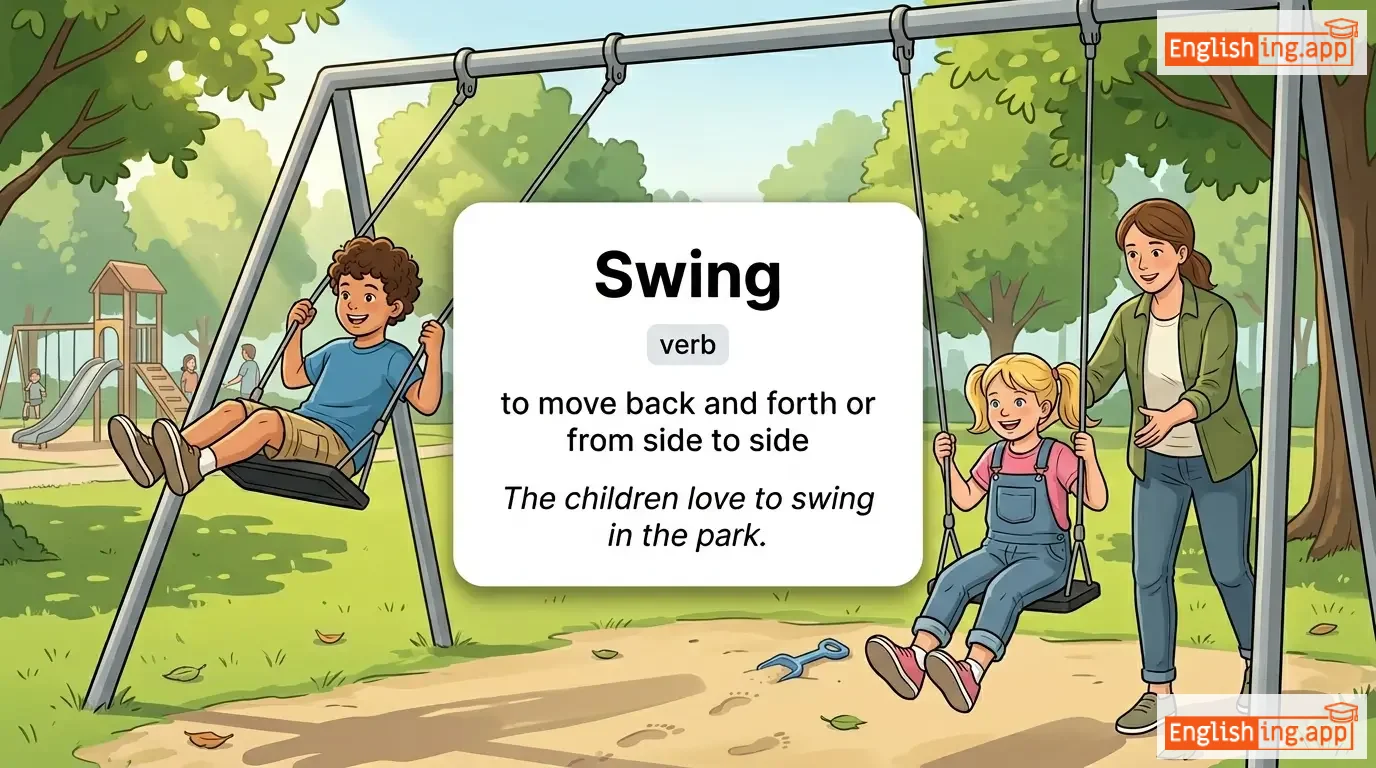
Swing definition card — visual illustration of the meaning
verb
/swɪŋ/
ブランコをする (buranko wo suru)

to move back and forth or from side to side

"The children love to swing in the park."

"子供たちは公園でブランコをするのが大好きです。" (Kodomotachi wa kōen de buranko o suru no ga daisuki desu.)
verb
/swaɪp/
スワイプする (suaipu suru)

to move your finger across a touch screen or to hit with a sweeping motion

"He swiped left on the photo."
"彼は写真で左にスワイプしました。" (Kare wa shashin de hidari ni suaipu shimashita.)
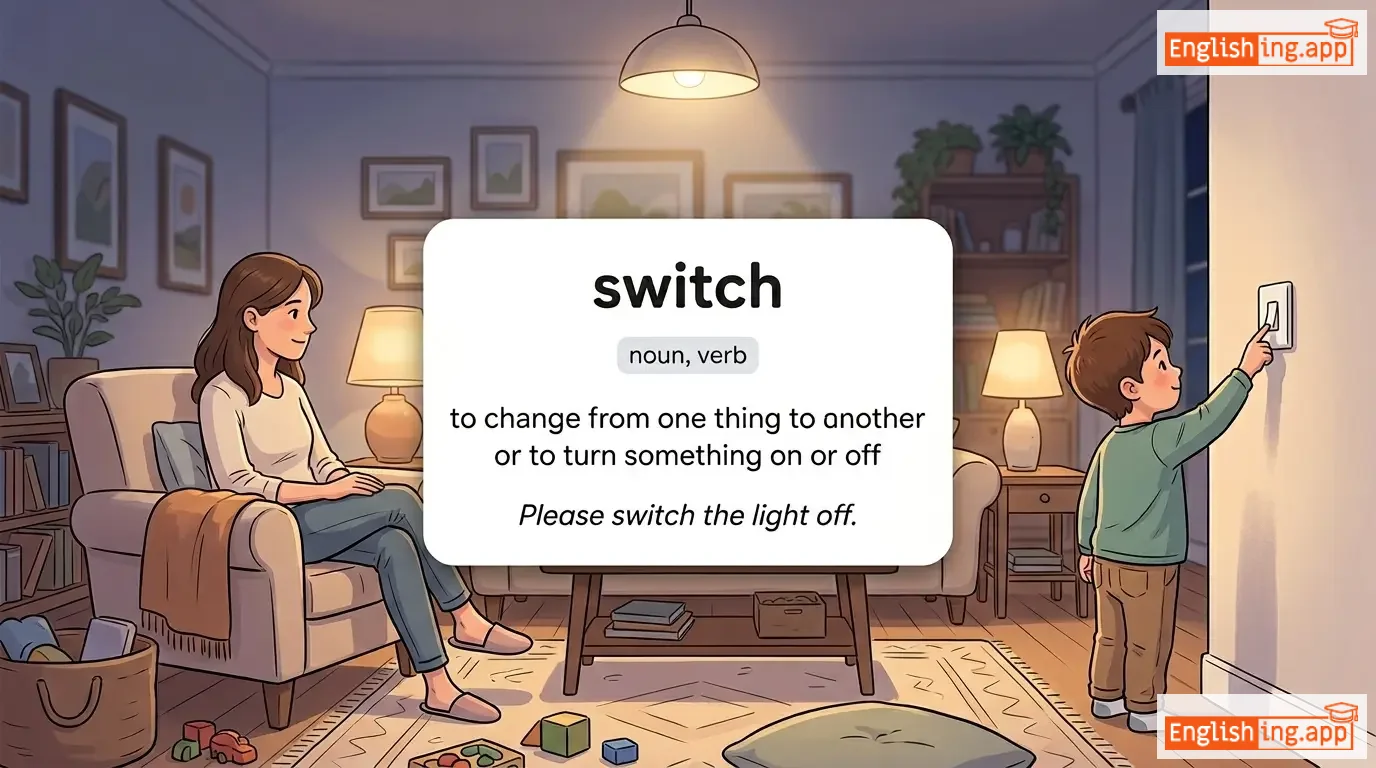
switch definition card — visual illustration of the meaning
noun, verb
/swɪtʃ/
スイッチ (suicchi)

to change from one thing to another or to turn something on or off

"Please switch the light off."

"ライトを消してください。" (Raito o keshite kudasai.)
adjective
/ˈswoʊlən/
腫れた (hareta)

Enlarged or puffed up, usually due to injury, inflammation, or fluid accumulation

"Her ankle was swollen after she twisted it during the hike."

"ハイキング中に足首をひねった後、足首が腫れていました。" (Haikingu-chuu ni ashikubi o hinetta ato, ashikubi ga harete imashita.)
noun
/sɔːrd/
(ken)

a weapon with a long metal blade used for fighting

"The knight drew his sword to defend the castle."

"騎士は城を守るために剣を抜いた。" (Kishi wa shiro o mamoru tame ni ken o nuīta.)
noun
/sɔːd fɪʃ/
メカジキ (mekajiki)

A large marine fish with an elongated bill resembling a sword

"The swordfish can swim at speeds up to 60 mph."

"メカジキは時速60マイルで泳ぐことができます。" (mekajiki wa jisoku rokuju mairu de oyogu koto ga dekimasu)
noun
/ˈsɪbəraɪt/
贅沢主義者 (zeitakushugisha)

a person who loves luxury and pleasure

"The millionaire was a true sybarite who lived only for comfort and enjoyment."

"その百万長者は真の贅沢主義者で、快適さと楽しみだけを求めて生きていました。" (sono hyakuman chōja wa shin no zeitakushugisha de, kaitekisa to tanoshimi dake o motomete ikite imashita.)
noun
/ˈsɪkəfənt/
お世辞使い (oseji tsukai)

A person who acts obsequiously toward someone important in order to gain advantage.

"The manager was surrounded by sycophants who agreed with everything he said."

"マネージャーは、彼が言ったことすべてに同意するお世辞を言う人々に囲まれていました。" (Manējā wa, kare ga itta koto subete ni dōi suru oseji o iu hitobito ni kakomarete imashita.)
adjective
/ˌsɪkəˈfæntɪk/
お世辞 (oseji)

Behaving in a way that is excessively obedient or servile to gain favor.

"His sycophantic behavior annoyed his colleagues."

"彼のお世辞な振る舞いは同僚をうんざりさせた。" (Kare no oseji na furumai wa douriou wo unzari saseta.)
adjective
/sɪˈlæbɪk/
音節の (onsen no)

Relating to or based on syllables.

"The teacher explained the syllabic structure of the word."

"先生はその言葉の音節構造を説明しました。" (Sensei wa sono kotoba no onsetsu kōzō o setsumei shimashita.)
noun
/ˌsɪləbɪˈkeɪʃən/
音節分け (onsetsu wake)

The division of words into syllables.

"Proper syllabication helps in correct pronunciation."

"適切な音節分けは正しい発音に役立ちます。" (Tekisetsu na onsetsu wake wa tadashii hatsuon ni yakudachimasu.)
noun
/ˈsɪləbəl/
音節 (onsetsu)

A unit of pronunciation having one vowel sound, with or without surrounding consonants, forming the whole or part of a word.

"The word 'computer' has three syllables."

"‘コンピュータ’という言葉は3つの音節から成り立っています。" ('Konpyu-ta' to iu kotoba wa mittsu no onsetsu kara naritatte imasu.)
noun
/ˈsɪləbəs/
シラバス (shirabasu)

An outline or summary of topics to be covered in a course of study.

"The professor handed out the syllabus on the first day of class."
"教授は初日にシラバスを配布しました。" (Kyōju wa shonichi ni shirabasu o haifu shimashita.)
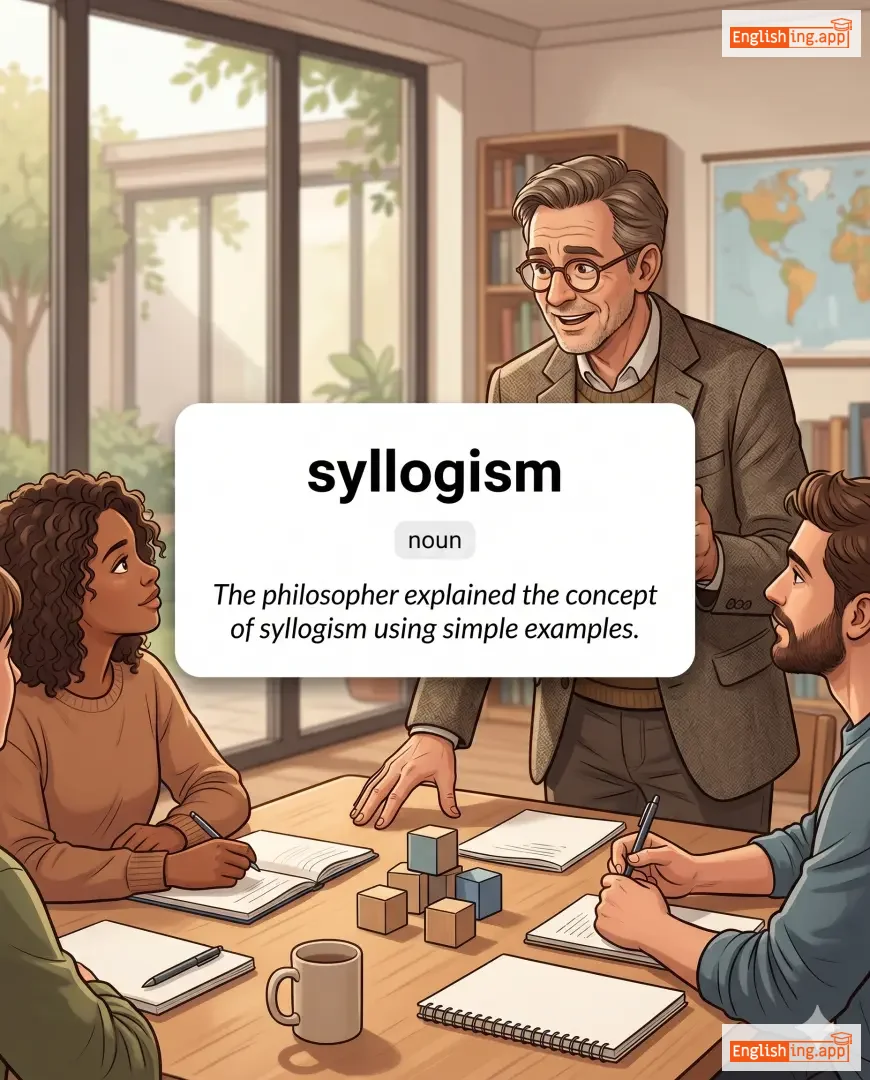
syllogism definition card — visual illustration of the meaning
noun
/ˈsɪlədʒɪzəm/
三段論法 (sandanonpou)

A form of reasoning in which a conclusion is drawn from two given or assumed premises.

"The philosopher explained the concept of syllogism using simple examples."

"哲学者は簡単な例を使って三段論法の概念を説明しました。" (Tetsugakusha wa kantan na rei o tsukatte sandanonpou no gainen o setsumei shimashita.)
noun
/sɪlf/
シルフィード (shirufīdo)

A mythical spirit of the air; also refers to a slender, graceful woman.

"She moved across the stage like a sylph, light and graceful."
"彼女は舞台上をシルフィードのように軽やかで優雅に動いていました。" (Kanojo wa butaijō o shirufīdo no yō ni karoyaka de yūga ni ugōite imashita.)
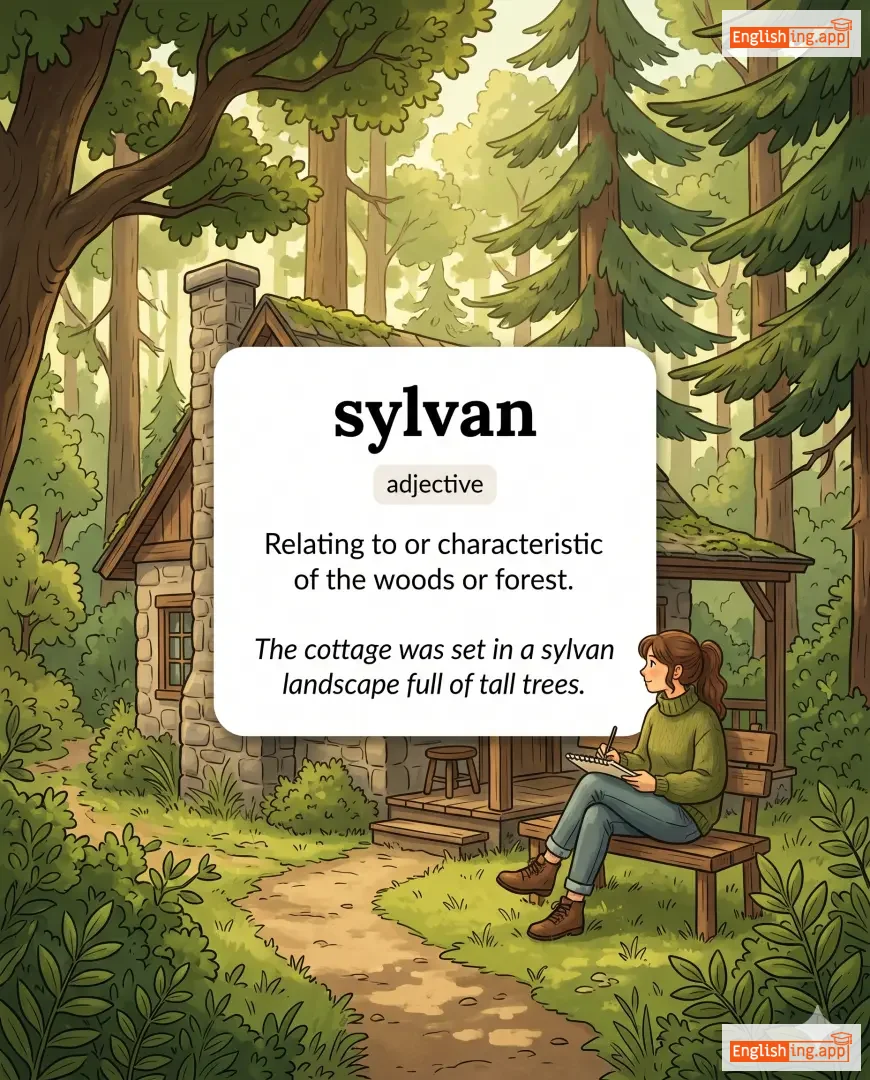
sylvan definition card — visual illustration of the meaning
adjective
/ˈsɪlvən/
森林の (shinrin no)

Relating to or characteristic of the woods or forest.

"The cottage was set in a sylvan landscape full of tall trees."
"その小屋は、高い木々に囲まれた森林の風景の中にありました。" (Sono koya wa, takai kigi ni kakomareta shinrin no fuukei no naka ni arimashita.)
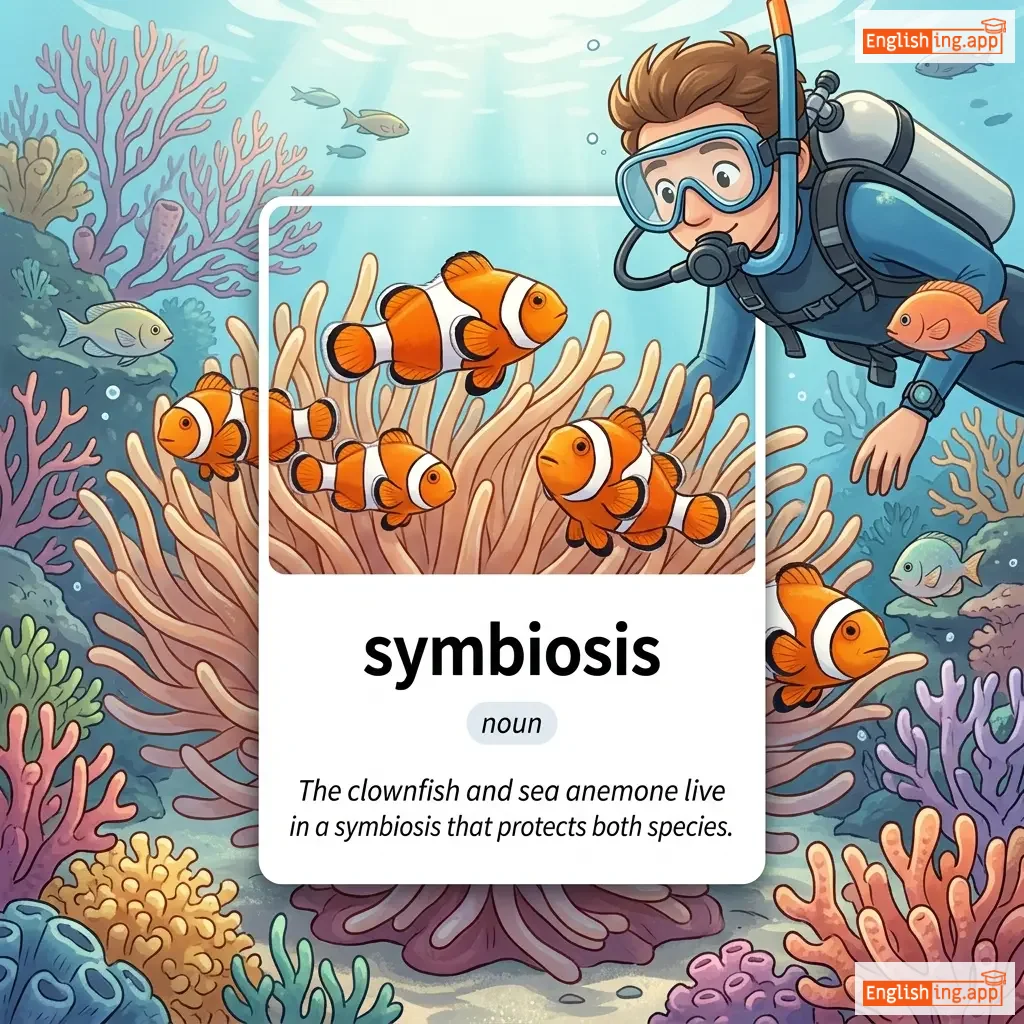
symbiosis definition card — visual illustration of the meaning
noun
/ˌsɪmbaɪˈoʊsɪs/
共生 (kyousei)

A close and often long-term interaction between two different species that benefits both.

"The clownfish and sea anemone live in a symbiosis that protects both species."
"クマノミとイソギンチャクは、両方の種を保護する共生関係の中で生活しています。" (Kumanomi to isoginchaku wa, ryōhō no shū wo hogo suru kyōsei kankei no naka de seikatsu shiteimasu.)
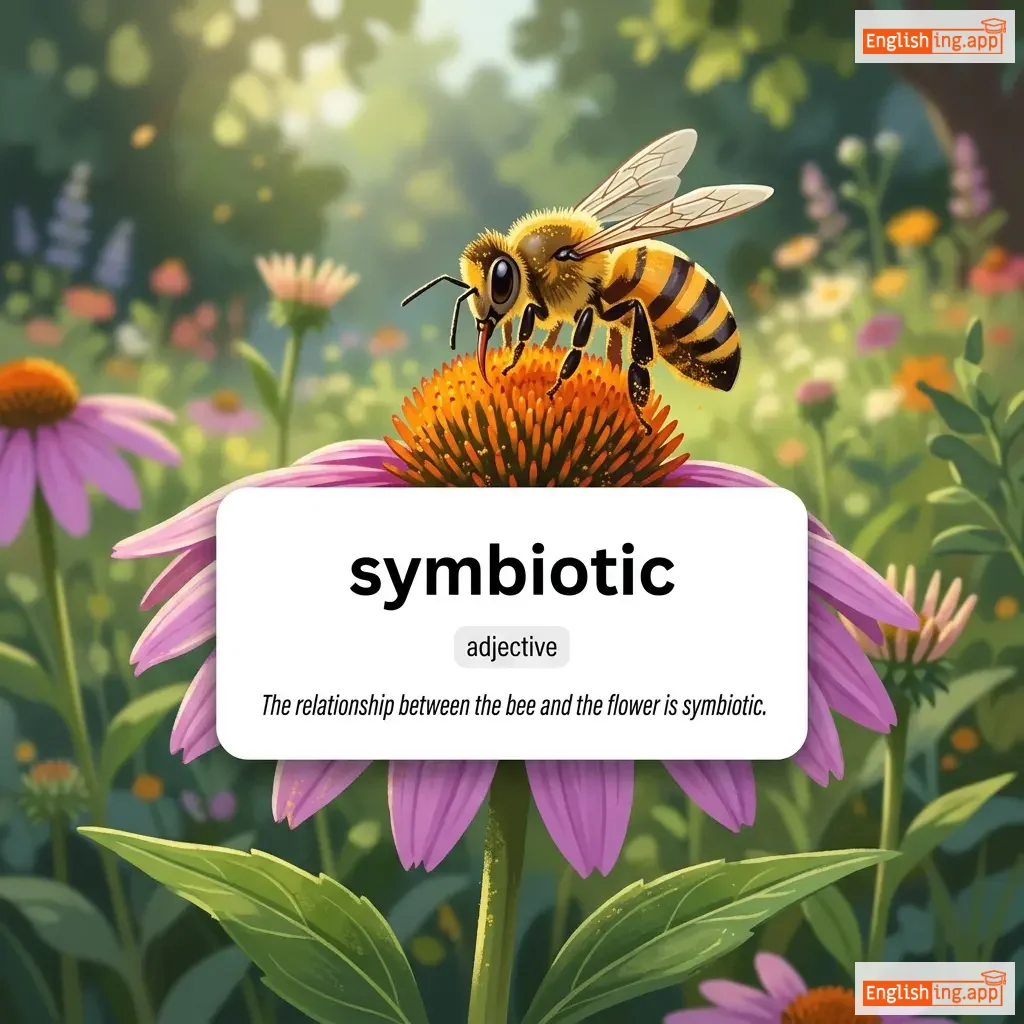
symbiotic definition card — visual illustration of the meaning
adjective
ˌsɪmbɪˈɒtɪk
共生的な (kyōsei-teki na)

Involving interaction between two different organisms living in close physical association.

"The relationship between the bee and the flower is symbiotic."
"ミツバチと花の関係は共生的です。" (Mitsubachi to hana no kankei wa kyōsei-teki desu.)
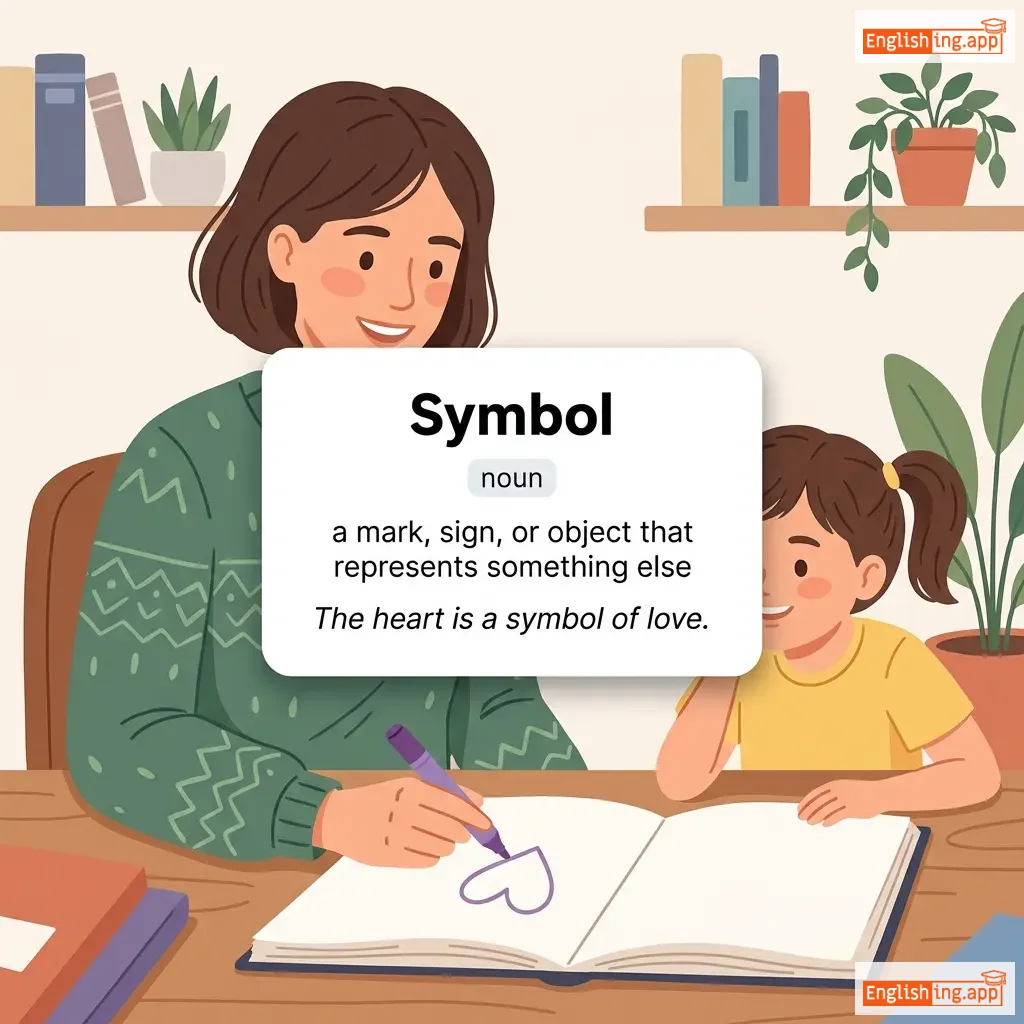
Symbol definition card — visual illustration of the meaning
noun
/ˈsɪmbəl/
シンボル (shinboru)

a mark, sign, or object that represents something else

"The heart is a symbol of love."

"心は愛のシンボルです。" (Kokoro wa ai no shinboru desu.)
adjective
/sɪmˈbɒlɪk/
象徴的 (shouchouteki)

serving as a symbol or representing something else

"The dove is symbolic of peace and freedom."
"鳩は平和と自由の象徴的存在です。" (Hato wa heiwa to jiyū no shōchōteki sonzai desu.)
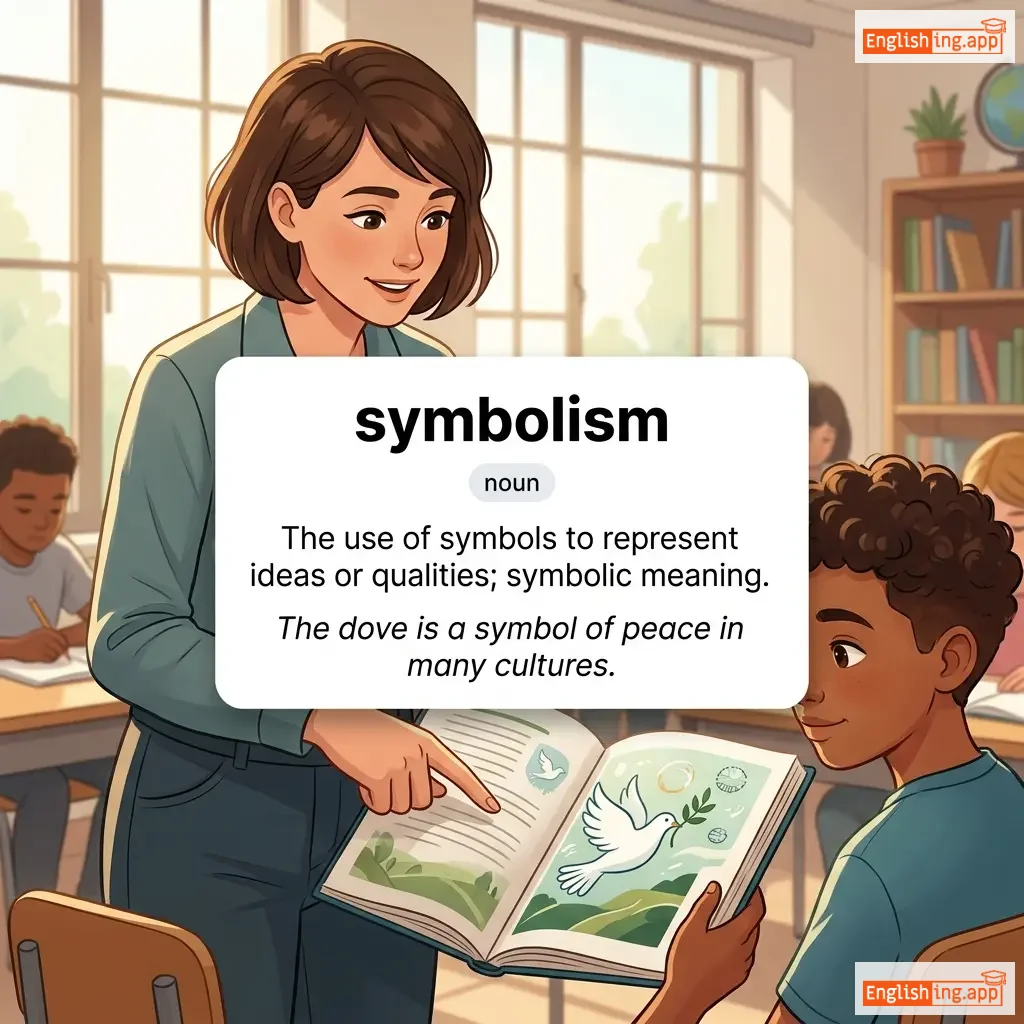
symbolism definition card — visual illustration of the meaning
noun
ˈsɪmbəlɪzəm
象徴主義 (shōchō shugi)

The use of symbols to represent ideas or qualities; symbolic meaning.

"The dove is a symbol of peace in many cultures."

"鳩は多くの文化で平和の象徴です。" (Hato wa ōku no bunka de heiwa no shōchō desu.)
verb
/ˈsɪmbəlaɪz/
象徴する (shouchou suru)

to represent or stand for something else

"The dove symbolizes peace across cultures."

"鳩は文化を超えて平和を象徴しています。" (Hato wa bunka wo koete heiwa wo shouchou shiteimasu.)
adjective
/sɪˈmɛtrɪkəl/
対称的 (taishō-teki)

having parts on either side that match or are the same in shape, size, or arrangement

"The artist designed a symmetrical pattern on the floor."

"アーティストは床に対称的なパターンをデザインしました。" (Ātisuto wa yuka ni taishō-teki na patān o dezain shimashita.)
noun
/ˈsɪmətri/
対称 (taishou)

the quality of having balanced proportions or identical parts facing each other

"The building’s symmetry impressed the visitors."

"建物の対称性は訪問者に感銘を与えました。" (Tatemono no taishousei wa hōmonsha ni kanmei o ataemashita.)
adjective
/ˌsɪmpəˈθɛtɪk/
共感的 (kyoukanteki)

showing understanding or compassion for someone’s feelings or situation

"She was very sympathetic when he lost his job."
"彼女は彼が仕事を失ったとき、とても共感的でした。" (Kanojo wa kare ga shigoto wo ushinatta toki, totemo kyoukanteki deshita.)
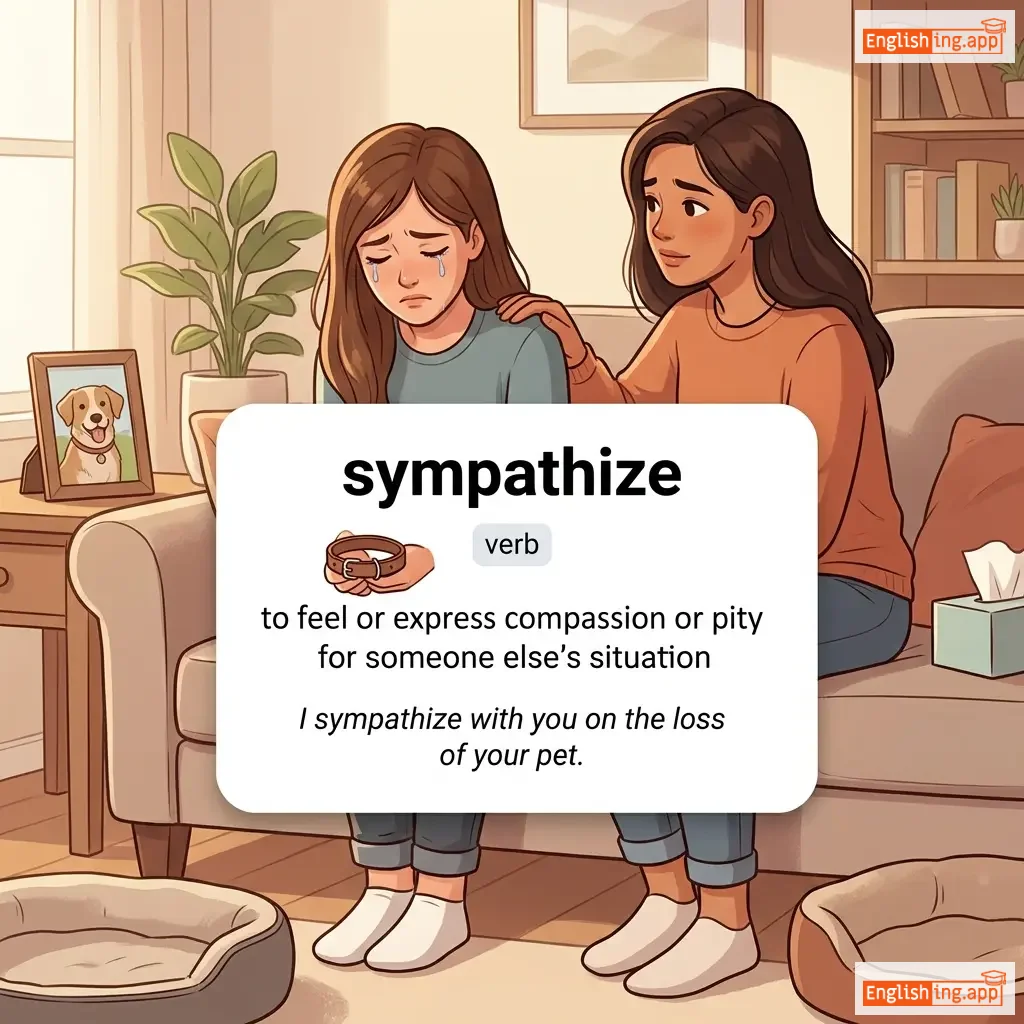
sympathize definition card — visual illustration of the meaning
verb
/ˈsɪmpəˌθaɪz/

to feel or express compassion or pity for someone else’s situation

"I sympathize with you on the loss of your pet."

noun
/ˈsɪmpəθi/
同情 (doujou)

feelings of pity and compassion for someone else's suffering

"She expressed her sympathy for the grieving family."

"彼女は悲しんでいる家族に同情を示しました。" (Kanojo wa kanashinde iru kazoku ni doujou o shimeshimashita.)
adjective
/sɪmˈfɒnɪk/
交響曲の (koukyoukyoku no)

relating to or having the character of a symphony or symphony orchestra

"The concert featured a symphonic masterpiece."

"コンサートでは交響曲の傑作が披露されました。" (Konsaato de wa koukyoukyoku no kessaku ga hirou saremashita.)
adjective
/sɪmˈfoʊniəs/

Harmonious; producing a pleasant sound or agreement of sound.

"The choir's voices were symphonious and filled the hall with beauty."

noun
/ˈsɪmfəni/
交響曲、精緻な音楽作品 (koukyoukyoku, seichi na ongaku sakuhin)

An elaborate musical composition for a full orchestra, typically in four movements.

"Beethoven's Fifth Symphony is one of the most famous works in classical music."

"ベートーヴェンの第5交響曲はクラシック音楽の最も有名な作品の1つです。" (Beetooven no dai go koukyoukyoku wa kurashikku ongaku no mottomo yuumei na sakuhin no hitotsu desu.)
noun
/ˈsɪmptəm/
症状 (shōjō)

a sign or indication of something, especially of an illness

"Fever is a common symptom of the flu."
"熱はインフルエンザの一般的な症状です。" (Netsu wa infuruenza no ippanteki na shōjō desu.)
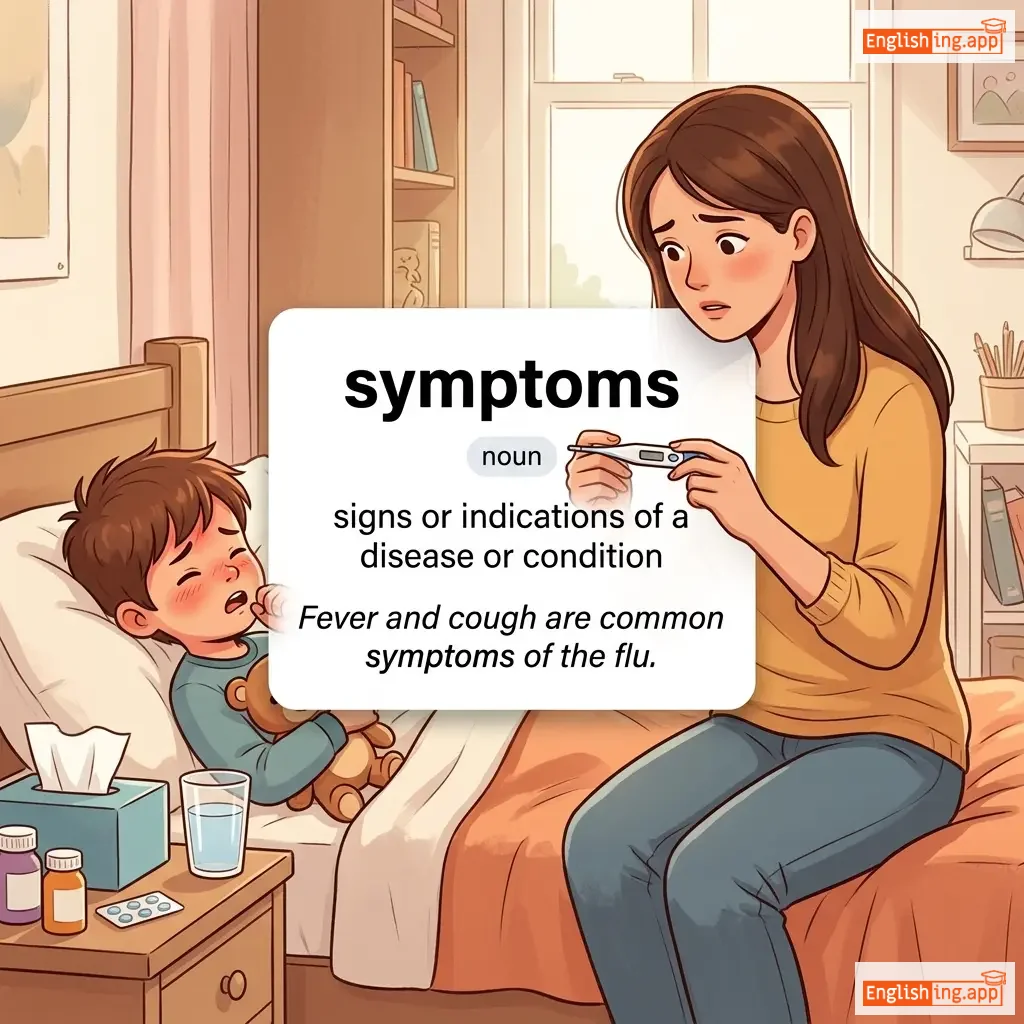
symptoms definition card — visual illustration of the meaning
noun
/ˈsɪmp.təmz/
症状 (shōjō)

signs or indications of a disease or condition

"Fever and cough are common symptoms of the flu."
"熱と咳はインフルエンザの一般的な症状です。" (Netsu to seki wa infuruenza no ippantekina shōjō desu.)
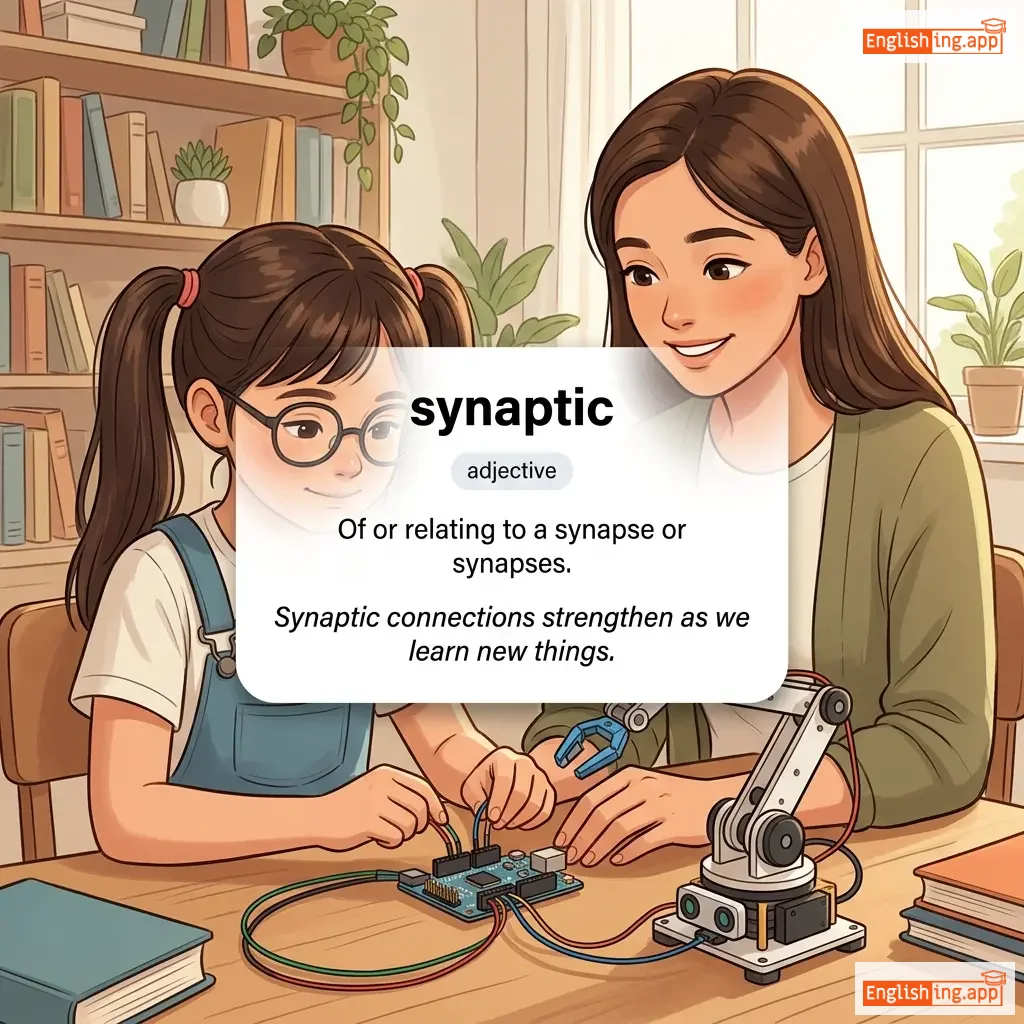
synaptic definition card — visual illustration of the meaning
adjective
sɪˈnæp.tɪk
シナプスまたはシナプスに関連する (shinapusu-teki)

Of or relating to a synapse or synapses.

"Synaptic connections strengthen as we learn new things."
"シナプスの接続は、新しいことを学ぶと強化されます。" (Shinapusu no setsuzoku wa, atarashī koto o manabu to kyōka saremasu.)
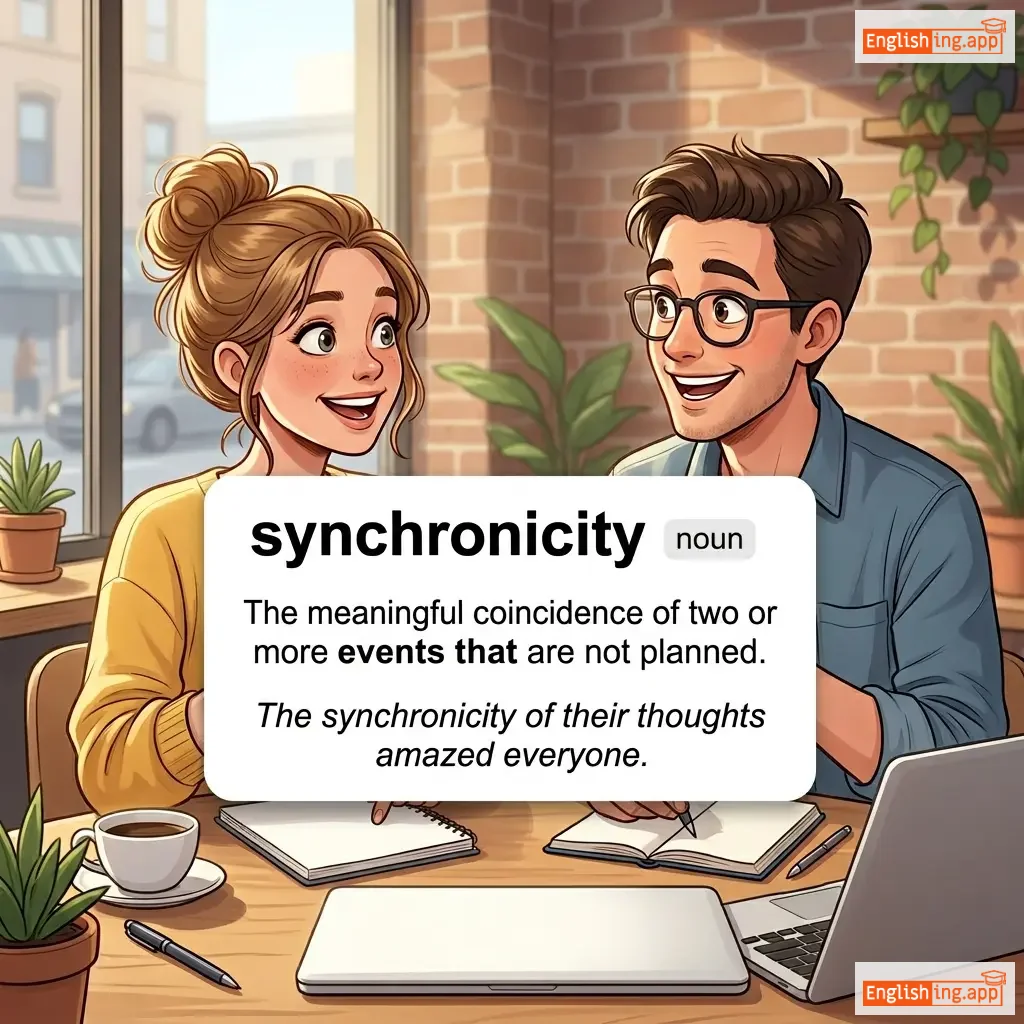
synchronicity definition card — visual illustration of the meaning
noun
/ˌsɪŋ.krəˈnɪs.ɪ.ti/
シンクロニシティ (shinkuronishiti)

The meaningful coincidence of two or more events that are not planned.

"The synchronicity of their thoughts amazed everyone."

"彼らの思考のシンクロニシティは皆を驚かせました。" (Karera no shikō no shinkuronishiti wa mina o odorokasemashita.)
noun
/ˈsɪŋkrəˌnɪzəm/
シンクロニズム (shinkuronizumu)

The simultaneous occurrence of events or actions.

"The synchronism of the dancers' movements amazed the audience."
"ダンサーの動きのシンクロニズムは観客を驚かせました。" (Dansā no ugoki no shinkuronizumu wa kankyaku o odorokasemashita.)
synchronize definition card — visual illustration of the meaning
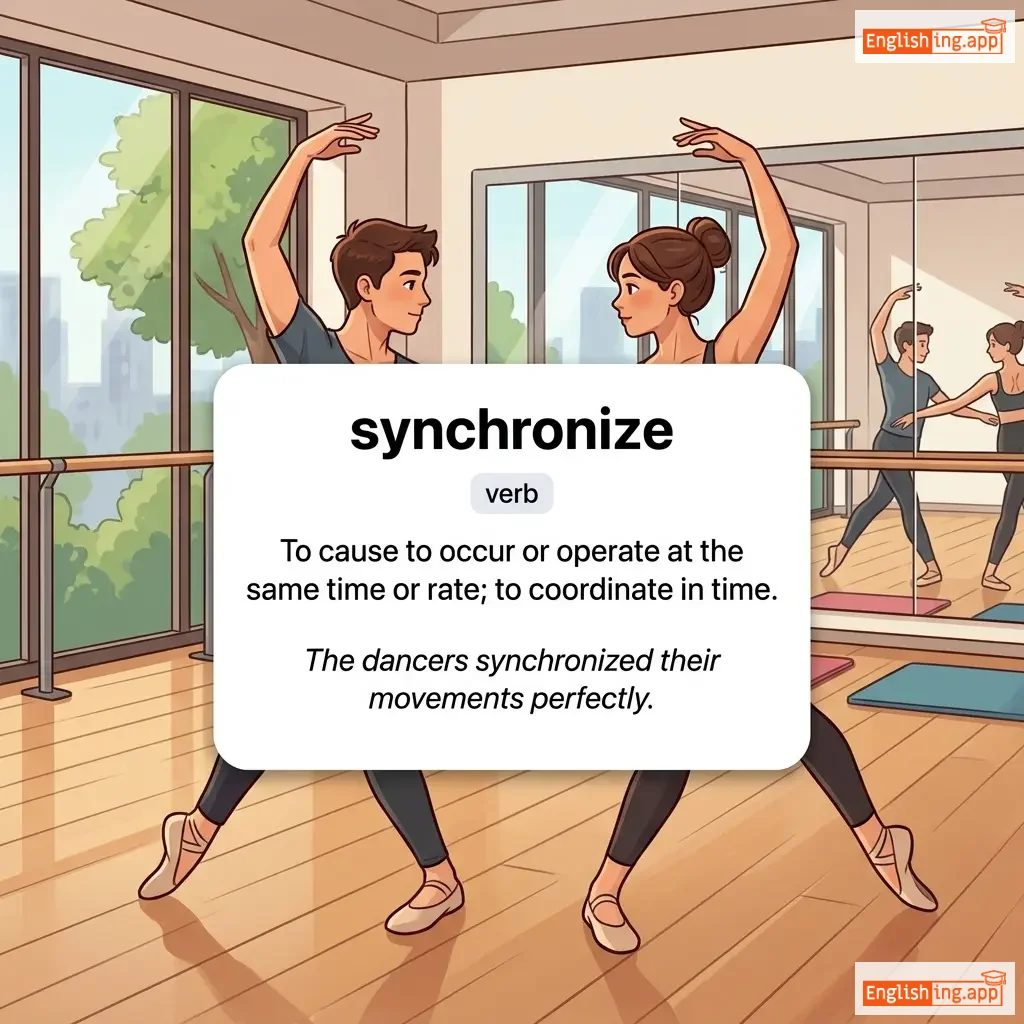
verb
/ˈsɪŋ.krə.naɪz/
同期する (dōki suru)

To cause to occur or operate at the same time or rate; to coordinate in time.

"The dancers synchronized their movements perfectly."
"ダンサーたちは完璧に動きを同期させた。" (Dansā-tachi wa kanpeki ni ugoki o dōki saseta.)
synchronous definition card — visual illustration of the meaning
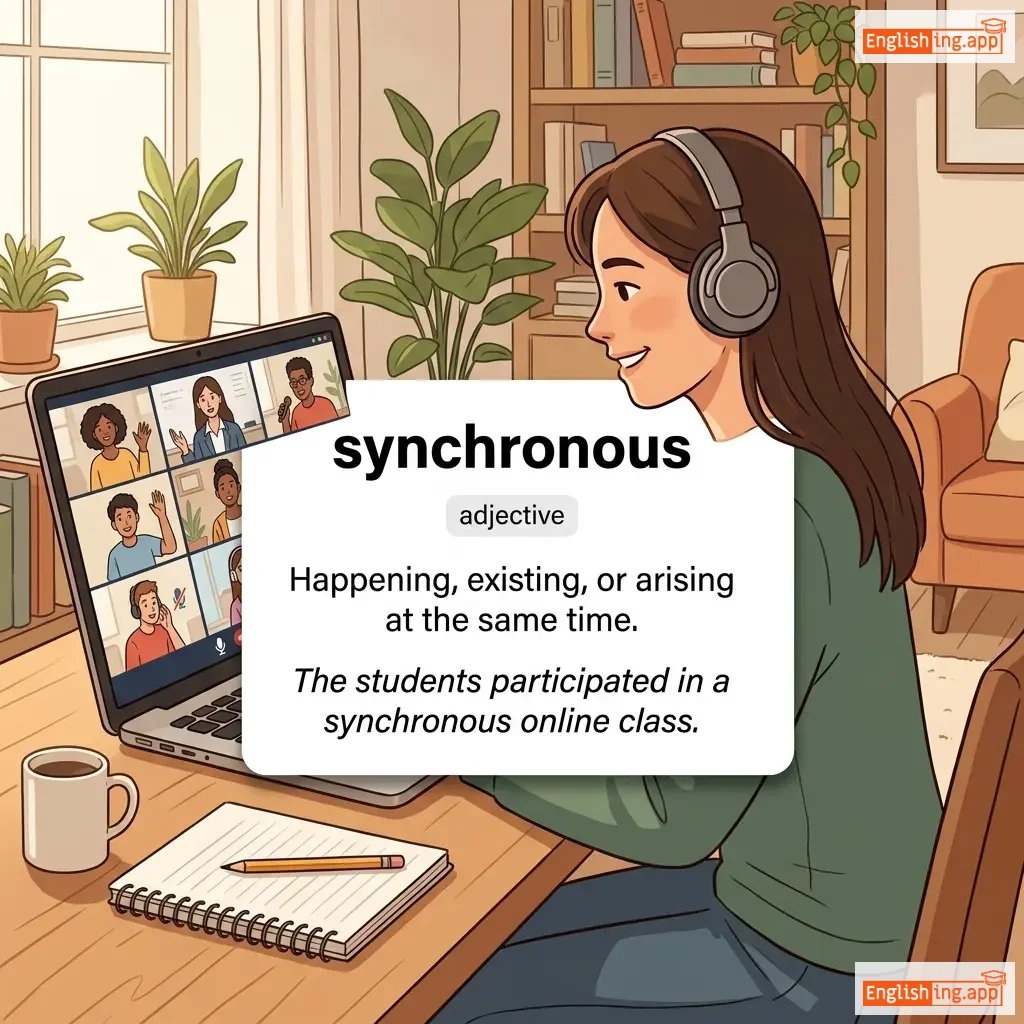
adjective
/ˈsɪŋkrənəs/
同期の (dōki no)

Happening, existing, or arising at the same time.

"The students participated in a synchronous online class."
"学生たちは同期のオンラインクラスに参加しました。" (Gakuseitachi wa dōki no onrain kurasu ni sankashimashita.)
synchrony definition card — visual illustration of the meaning
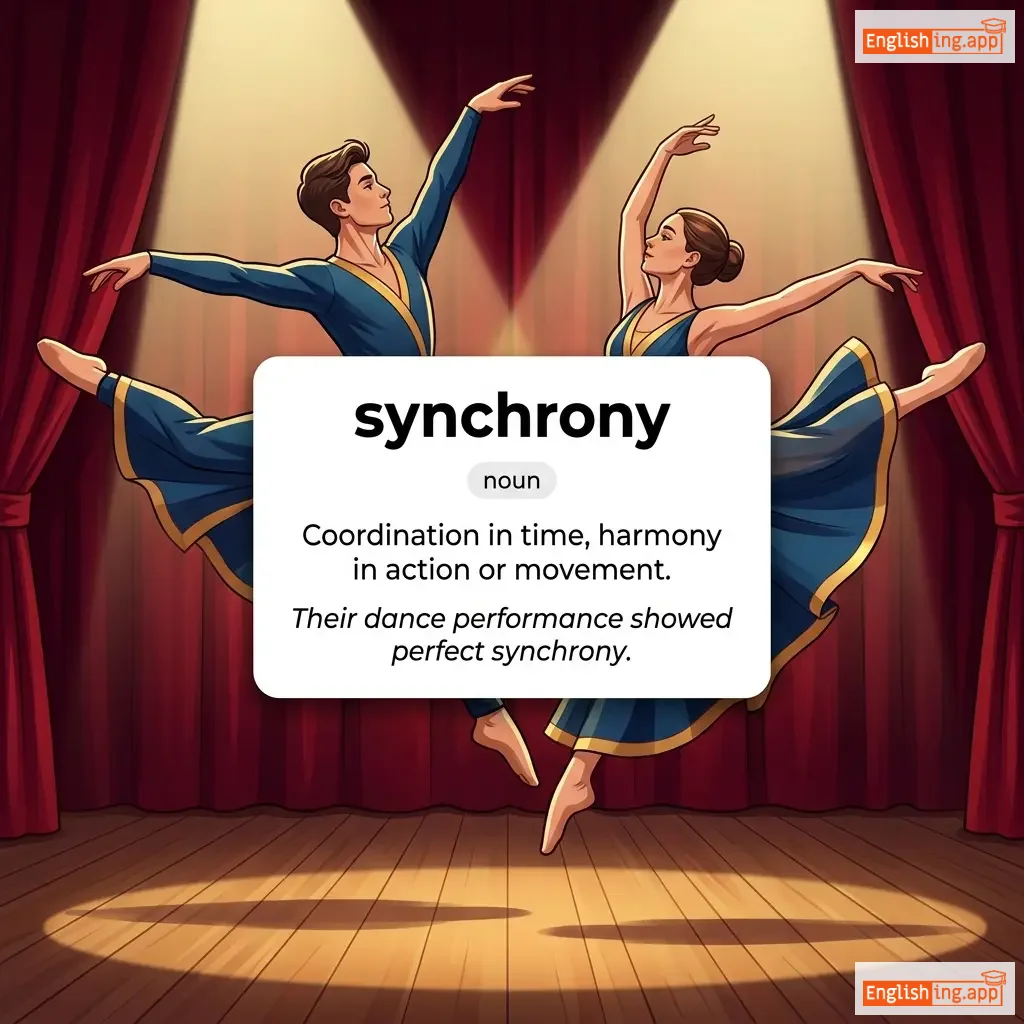
noun
/ˈsɪŋ.krə.ni/
シンクロニシティ (shinkuronishiti)

Coordination in time, harmony in action or movement.

"Their dance performance showed perfect synchrony."

"彼らのダンスパフォーマンスは完璧なシンクロニシティを示しました。" (Karera no dansu pafōmansu wa kanpeki na shinkuronishiti o shimeshimashita.)
adjective
/ˈsɪŋkəˌpeɪtɪd/
シンコペイテッド (shinkopeiteddo)

Characterized by displaced beats or rhythms, especially in music.

"The jazz piece had a syncopated rhythm that energized the crowd."

"ジャズの曲には、群衆を元気づけたシンコペイテッドのリズムがありました。" (Jazu no kyoku ni wa, gunshū o genki zuketa shinkopeiteddo no rizumu ga arimashita.)
noun
/ˈsɪndɪkət/
シンジケート (shinjikēto)

A group of individuals or organizations combined to promote a common interest or carry out a business venture.

"A syndicate of investors bought the struggling company."

"投資家のシンジケートが困難な会社を買収しました。" (Tōshika no shinjikēto ga konnan na kaisha o baishū shimashita.)
noun
/ˈsɪnˌdroʊm/
症候群 (shōkōgun)

a group of symptoms that occur together and characterize a condition or disease

"Down syndrome affects a person's physical and mental development."

"ダウン症は、個人の身体的および精神的な発達に影響を与えます。" (Daun-shō wa, kojin no shintai-teki oyobi seishin-teki na hattatsu ni eikyō o ataemasu.)
noun
/sɪˈnɛrəsɪs/
シネレシス (syneresis)

The contraction of two adjacent vowels into a single syllable or the separation of liquid from a gel.

"The yogurt showed syneresis when liquid separated on top."

"ヨーグルトは液体が上に分離するとシネレシスを示しました。" (Yooguruto wa ekitai ga ue ni bunri suru to shinereshi su wo shimeshimashita.)
adjective
/sɪˈnɜːrdʒɪk/
シナジック (shinajikku)

Working together in a cooperative and effective manner.

"The two departments have a synergic relationship that boosts productivity."
"2つの部署は生産性を高めるシナジックな関係を持っています。" (Futatsu no busho wa seisansē o takameru shinajikkuna kankei o motteimasu.)
synergistic definition card — visual illustration of the meaning
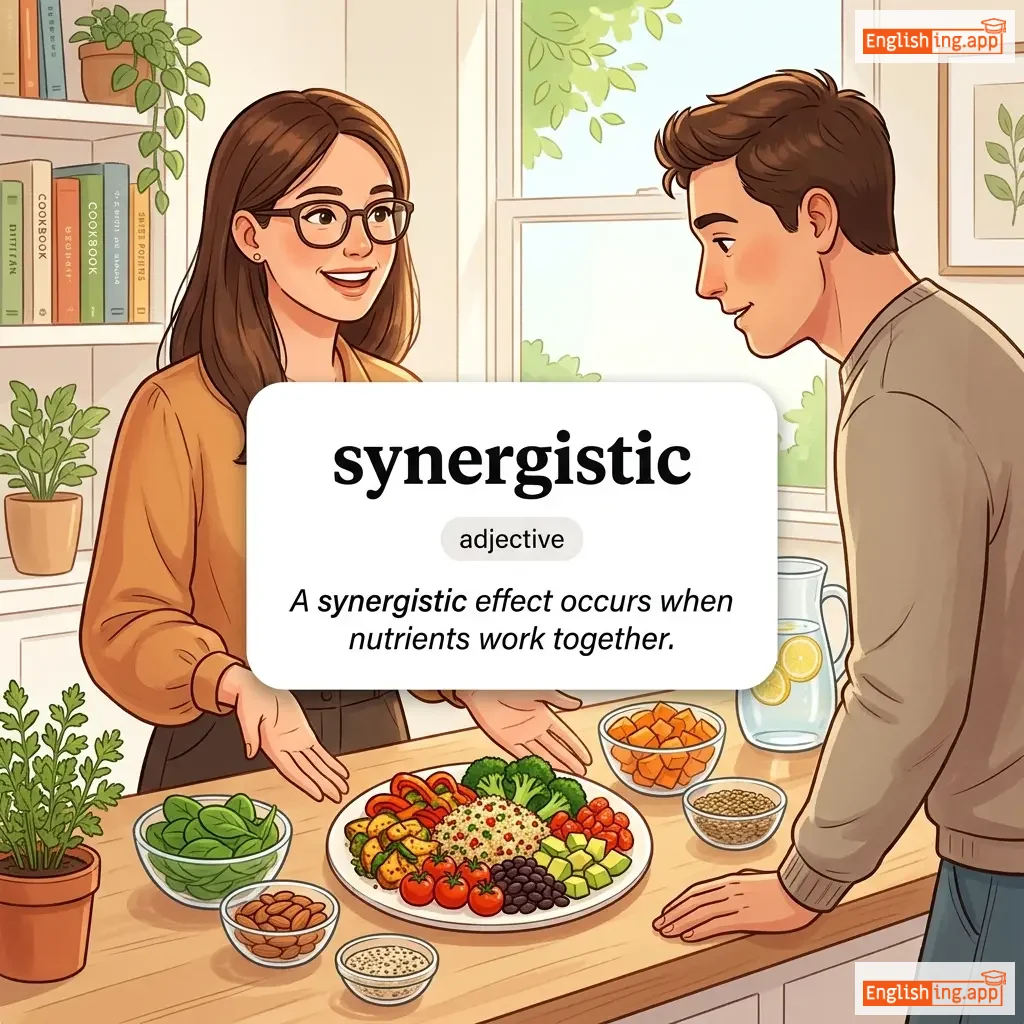
adjective
ˌsɪn.əˈdʒɪs.tɪk
相乗的な (sōjōteki na)

Relating to the interaction of elements that when combined produce a greater effect than the sum of their individual effects.

"A synergistic effect occurs when nutrients work together."

"相乗的な効果は、栄養素が一緒に働くときに発生します。" (Sōjōteki na kōka wa, eiyōso ga issho ni hataraku toki ni hasseishimasu.)
synergize definition card — visual illustration of the meaning
verb
ˈsɪnərdʒaɪz
協力する, 一緒に働く (kyōryoku suru, issho ni hataraku)

To combine in such a way that the total effect is greater than the sum of the individual effects; to work together cooperatively.

"The two companies plan to synergize their efforts for greater success."
"2つの企業は、より大きな成功を収めるために協力する計画です。" (Futatsu no kigyō wa, yori ōkina seikō o osameru tame ni kyōryoku suru keikaku desu.)
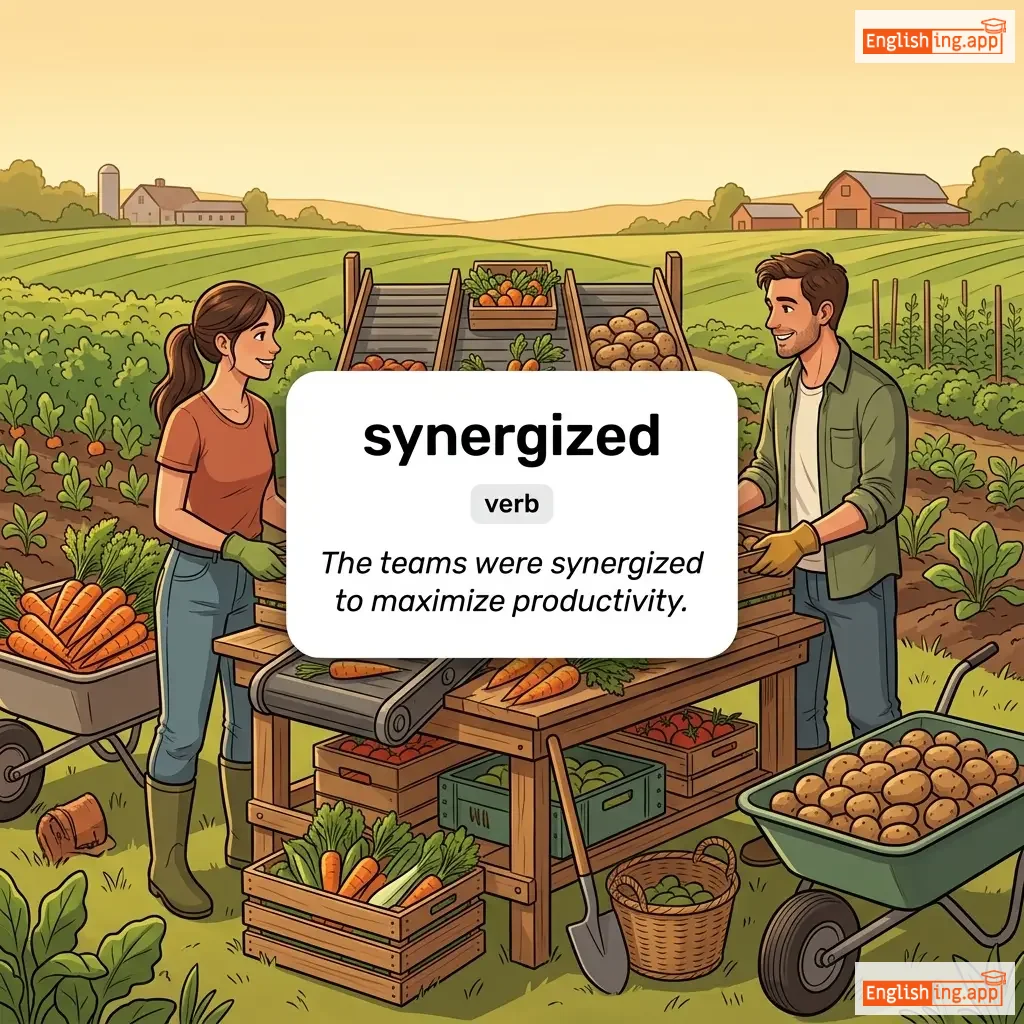
synergized definition card — visual illustration of the meaning
verb
/ˈsɪnɚdʒaɪzd/
シナジー効果が得られるようにする, 力を合わせる, 協力する (shinajī kōka ga erareru yō ni suru, chikara o awaseru, kyōryoku suru)

Combine in such a way that the total effect is greater than the sum of the individual effects.

"The teams were synergized to maximize productivity."
"チームは生産性を最大化するために協力しました。" (Chīmu wa seisan-sei o saidaika suru tame ni kyōryoku shimashita.)
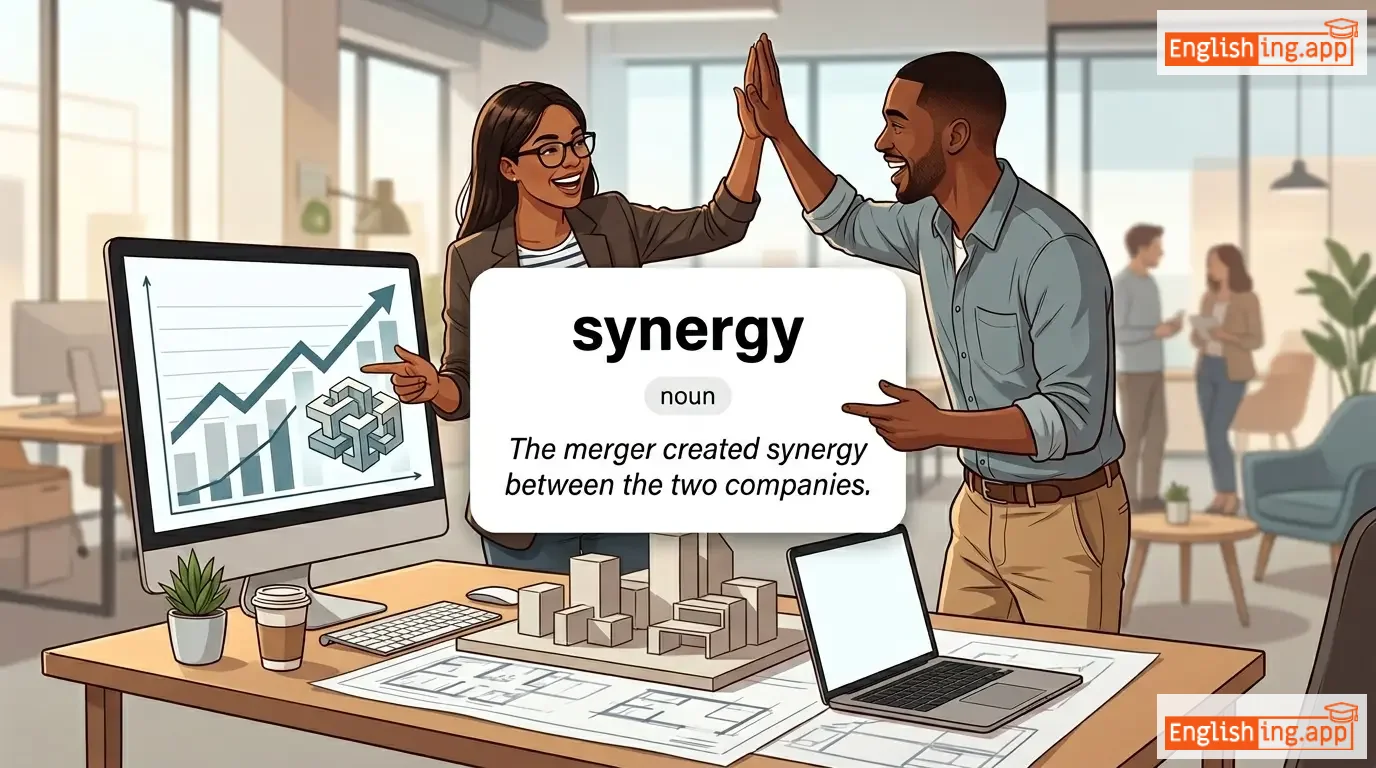
synergy definition card — visual illustration of the meaning
noun
/ˈsɪnərdʒi/
シナジー (shinajī)

The increased effectiveness that results when two or more people or organizations work together.

"The merger created synergy between the two companies."

"合併は二つの企業間にシナジーを生み出した。" (Gōbetsu wa futatsu no kigyō-kan ni shinajī o umidashita.)