語彙集

英単語辞書 | 単語の意味、定義、例文

noun
/səˈplaɪə(r)/
供給者 (kyoukyuusha)

a person or company that provides goods or services

"The supplier delivered the products on time."
"供給者は時間通りに商品を納品しました。" (Kyoukyuusha wa jikan doori ni shouhin wo nouhin shimashita.)
supply definition card — visual illustration of the meaning
noun
/səˈplaɪ/

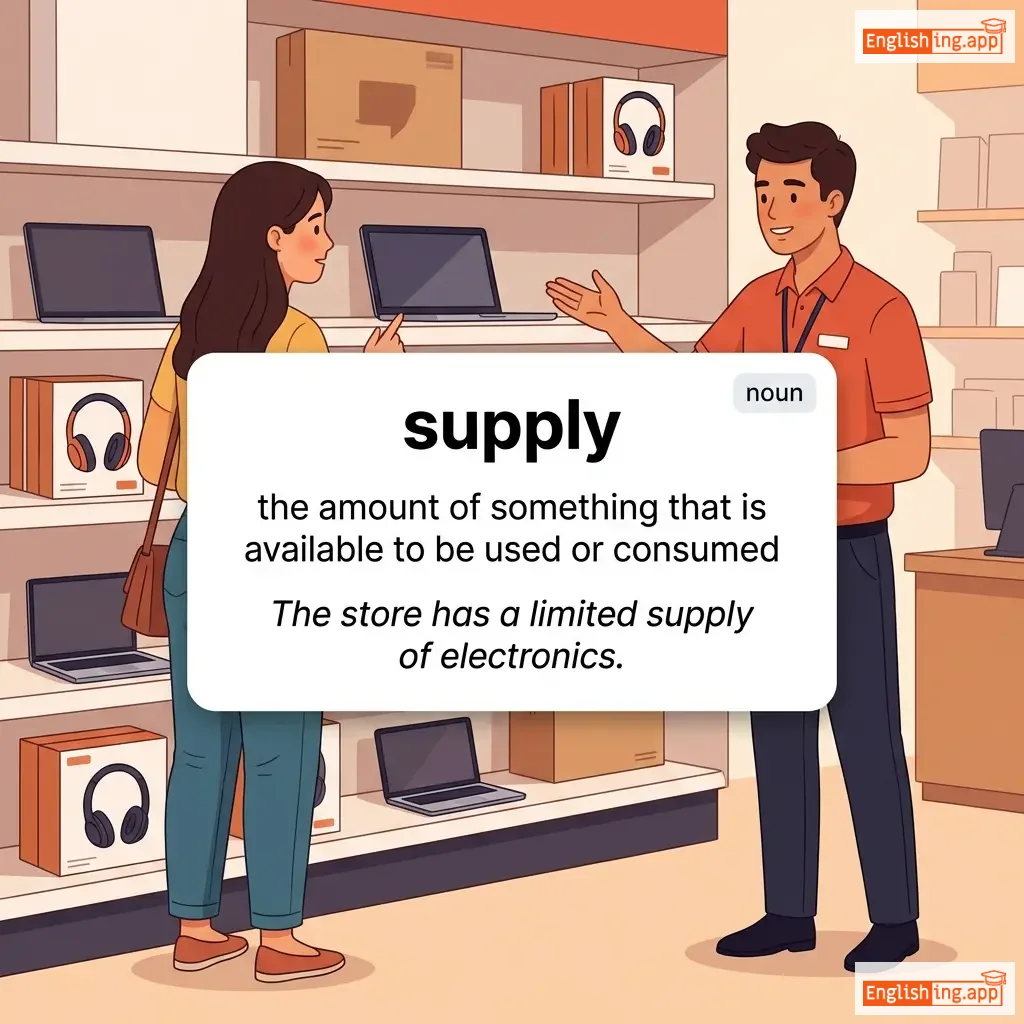
the amount of something that is available to be used or consumed

"The store has a limited supply of electronics."

support definition card — visual illustration of the meaning
verb
/səˈpɔːrt/
サポート (sapōto)

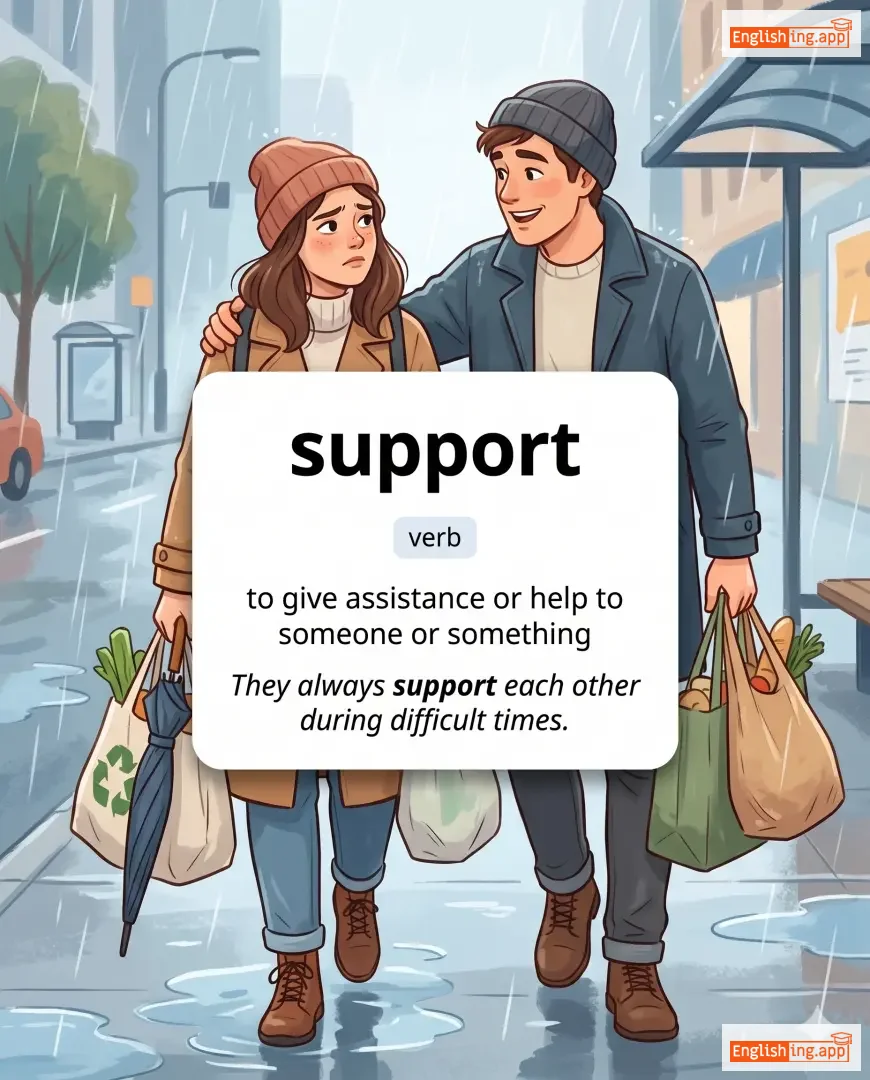
to give assistance or help to someone or something

"They always support each other during difficult times."

"彼らはいつも困難な時にお互いをサポートしています。" (Karera wa itsumo konnan na toki ni otagai o sapōto shiteimasu.)
noun
/səˈpɔːtər/
サポーター (sapōtā)

a person who supports someone or something

"She is a strong supporter of the local animal shelter."
"彼女は地元の動物シェルターの強力なサポーターです。" (Kanojo wa jimoto no dōbutsu shertā no kyōryokuna sapōtā desu.)
supporting definition card — visual illustration of the meaning
verb
səˈpɔːrtɪŋ
支援する (shien suru)

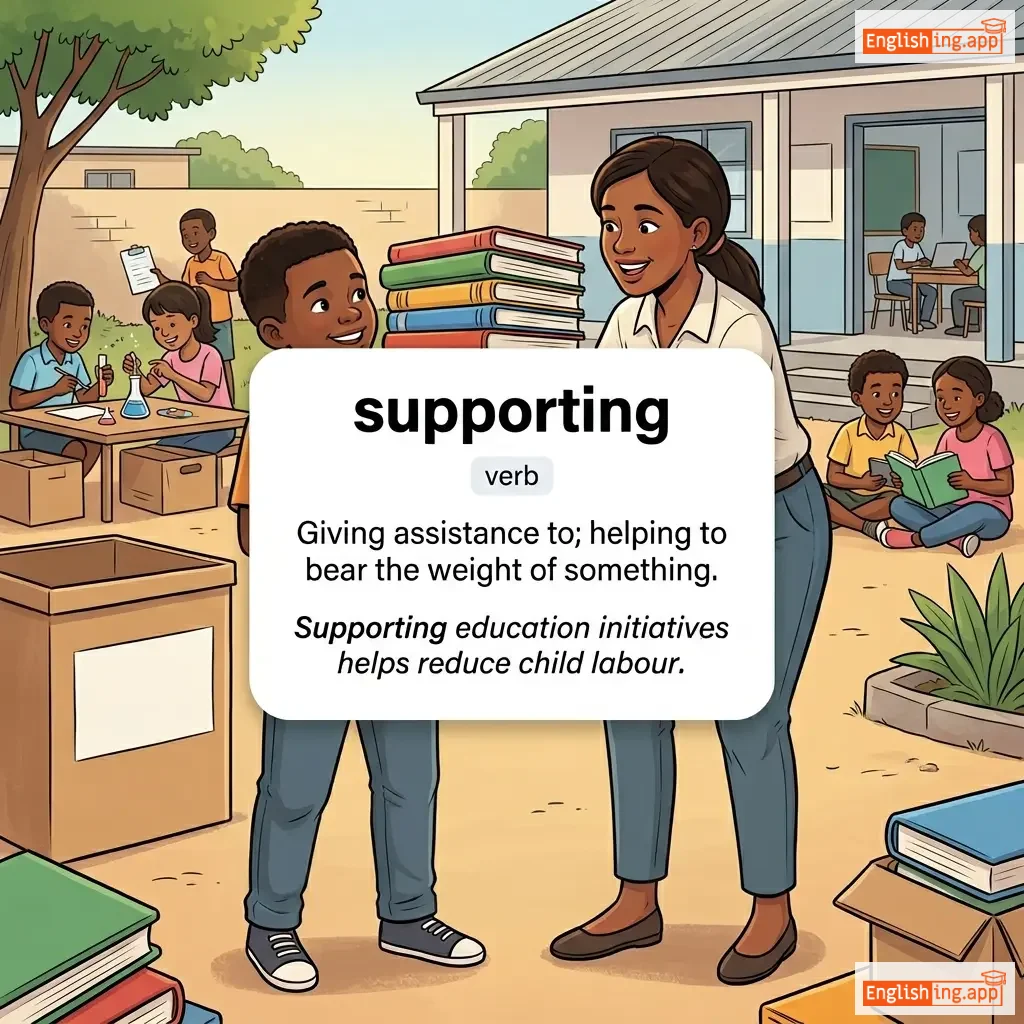
Giving assistance to; helping to bear the weight of something.

"Supporting education initiatives helps reduce child labour."

"教育の取り組みを支援することは、児童労働を減らすのに役立ちます。" (Kyōiku no torikumi o shien suru koto wa, jidō rōdō o herasu no ni yakudachimasu.)
adjective
/səˈpɔːtɪv/
支援的な (shien-teki na)

providing encouragement or emotional help to someone

"She was very supportive during my difficult times."

"彼女は私の困難な時期に非常に支援的でした。" (Kanojo wa watashi no konnan na jiki ni hijō ni shien-teki deshita.)
verb
/səˈpəʊz/
仮定する (katei suru)

to assume or believe something is true without proof

"I suppose she will be here soon."

"私は彼女がすぐにここに来ると思います。" (Watashi wa kanojo ga sugu ni koko ni kuru to omoimasu.)
adjective
/səˈpəʊzd/
仮定された (katei sareta)

generally believed or assumed, but not necessarily true

"This is the supposed solution to the problem."

"これは問題の仮定された解決策です。" (Kore wa mondai no katei sareta kaiketsusaku desu.)
adverb
/səˈpəʊzɪdli/
いわゆる (iwayuru)

used to show that something is believed or claimed to be true, though it may not be

"He is supposedly the best player on the team."
"彼はチームで一番うまい選手だと言われている。" (Kare wa chīmu de ichiban umai senshu da to iwarete iru.)
supposition definition card — visual illustration of the meaning
noun
/ˌsʌpəˈzɪʃən/
仮定 (katei)

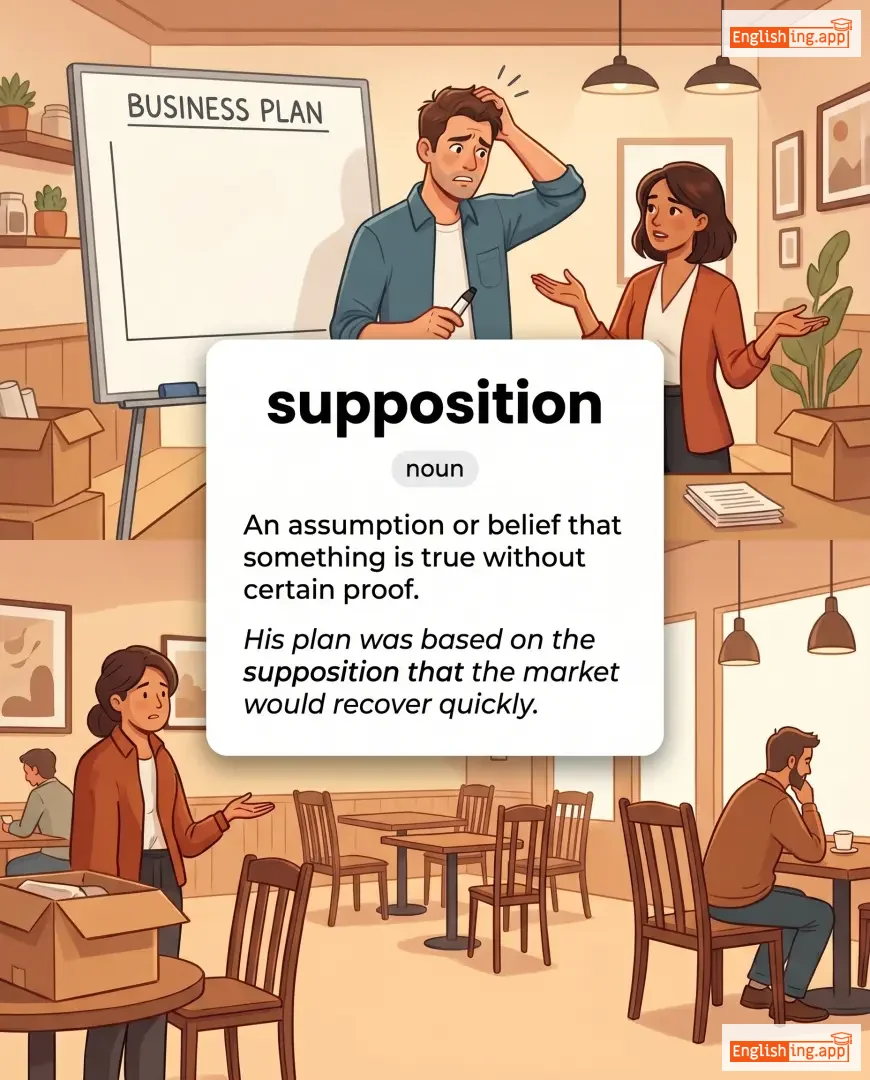
An assumption or belief that something is true without certain proof.

"His plan was based on the supposition that the market would recover quickly."

"彼の計画は、市場がすぐに回復するという仮定に基づいていました。" (Kare no keikaku wa, shijō ga sugu ni kaifuku suru to iu katei ni motozuite imashita.)
adjective
/ˌsʌpəzɪˈtɪʃəs/
仮定的 (kateiteki)

Based on assumption rather than fact; not genuine or authentic.

"The story turned out to be supposititious, with no evidence to support it."
"その話は仮定的であり、それを支持する証拠はありませんでした。" (Sono hanashi wa kateiteki de ari, sore o shiji suru shōko wa arimasen deshita.)
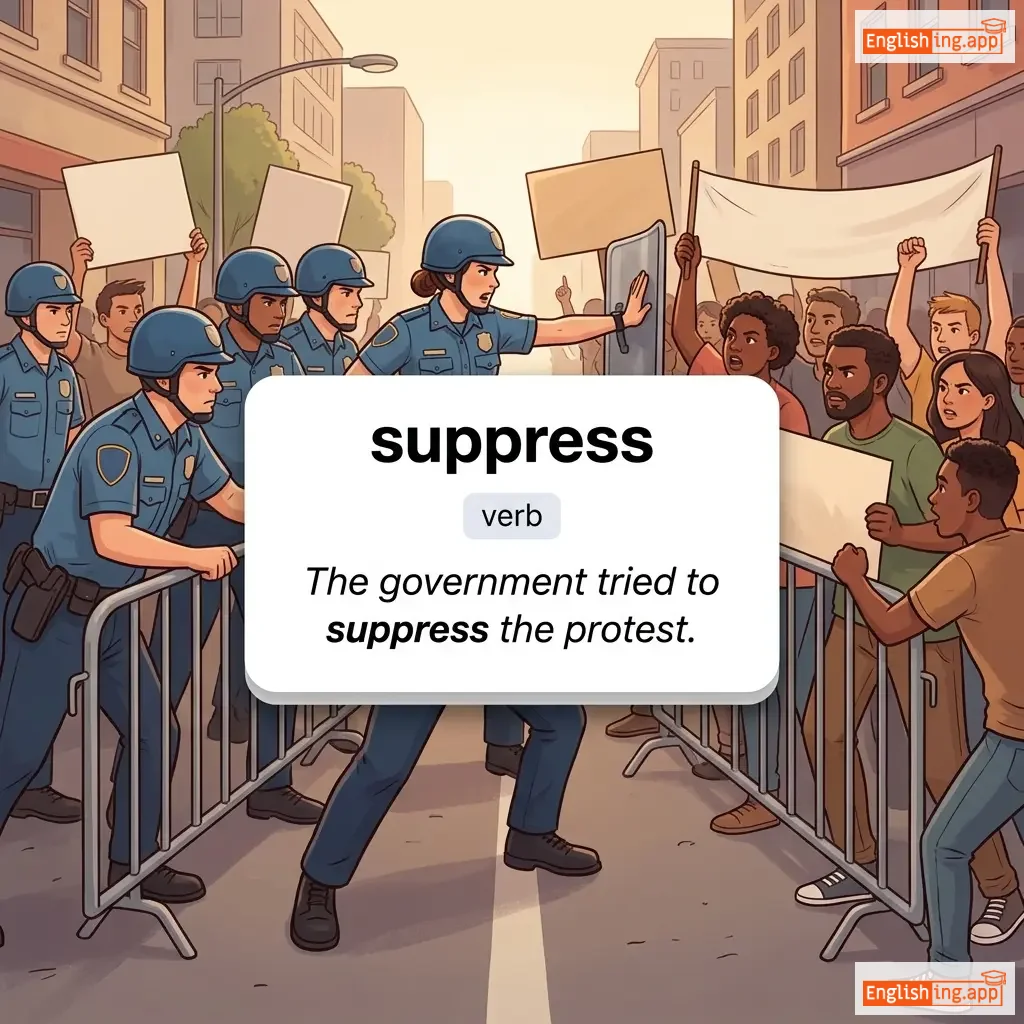
suppress definition card — visual illustration of the meaning
verb
/səˈprɛs/
抑える (osaeru)

to forcibly put an end to something; to restrain or hold back an action, feeling, or development

"The government tried to suppress the protest."

"政府は抗議を抑え込もうとした。" (Seifu wa kougi o osaekomou to shita.)
adjective
/səˈprɛsəbl̩/
抑制可能な (yokusei kanou na)

capable of being restrained, controlled, or prevented

"The symptoms of the disease are suppressible with medication."

"病気の症状は薬で抑制可能です。" (Byouki no shoujou wa kusuri de yokusei kanou desu.)
noun
/səˈprɛʃən/
抑制 (yokusei)

the act of forcibly stopping something or holding back feelings or actions

"The suppression of free speech led to protests."

"言論の自由の抑制は抗議を引き起こした。" (Genron no jiyū no yokusei wa kōgi o hikiokoshita.)
verb
/ˈsʌpjʊˌreɪt/
膿が出る (nō ga deru)

to form or discharge pus, usually as a result of infection

"The wound began to suppurate after a few days."

"傷口は数日後に膿を出し始めました。" (Kizuguchi wa sūjitsugo ni nō o dashi hajimemashita.)
adjective
/ˌsuːprəˈmʌndeɪn/
超俗的 (chōzokuteki)

beyond the physical or ordinary world; transcendent

"The monk spoke of supramundane peace beyond material life."

"僧侶は物質的な生活を超えた超俗的な平和について話しました。" (Sōryo wa busshitsuteki na seikatsu o koeta chōzokuteki na heiwa ni tsuite hanashimashita.)
noun
/suˈpriː.mə.si/
至高性; 最高の権威または力 (shikōsei)

the state of being supreme; highest authority or power

"The country established naval supremacy in the region."

"その国は地域で海軍の至高性を確立しました。" (Sono kuni wa chiiki de kaigun no shikōsei o kakuritsu shimashita.)
adjective
/suˈpriːm/
最高 (saikou)

highest in rank or authority

"He is the supreme leader of the country."

"彼はその国の最高指導者です。" (Kare wa sono kuni no saikou shidousha desu.)
noun
/sɜːrˈsiːs/
停止 (teishi)

a temporary or final ending or stopping of something

"The noise finally came to a surcease after midnight."

"騒音は真夜中を過ぎて最終的に停止しました。" (Sōon wa mayonaka o sugite saishūteki ni teishi shimashita.)
noun
/ˈsɜːrtʃɑːrdʒ/
追加料金 (tsuika ryōkin)

an additional charge or payment added to the usual cost

"The airline ticket had a fuel surcharge added to it."

"航空券に燃料サーチャージが追加されていました。" (Kōkūken ni nenryō sāchāji ga tsuika sarete imashita.)
adjective
/ʃʊər/ or /ʃɔːr/
確か (tashika)

Confident about something; without doubt.

"I am sure that he will succeed."

"私は彼が成功することを確信しています。" (Watashi wa kare ga seikou suru koto o kakushin shiteimasu.)
adverb
/ˈʃʊəli/
きっと (kitto)

used to emphasize that something is definitely true or certain

"Surely, he must know about the meeting."

"きっと彼は会議について知っているはずだ。" (Kitto kare wa kaigi ni tsuite shitteru hazuda.)
noun
/ˈʃʊərəti/
保証人 (hoshounin)

a person who takes responsibility for another's performance of an undertaking, such as appearing in court or paying a debt

"The landlord required a surety before renting the apartment."

"家主はアパートを貸す前に保証人を要求しました。" (Yajuu wa apato o kasu mae ni hoshounin o youkyuu shimashita.)
noun
/ˈsɜːfɪs/
表面 (hyoumen)

the outermost layer or boundary of something

"The surface of the water was calm."

"水の表面は穏やかでした。" (Mizu no hyoumen wa odayaka deshita.)
noun
/ˈsɜːrfɪt/
過剰 (kajou)

an excessive amount of something

"There was a surfeit of food at the festival."

"祭りでは食べ物が過剰にあった。" (Matsuri de wa tabemono ga kajou ni atta.)
verb
/sɜːrdʒ/
急増 (kyuuzou)

to move suddenly and powerfully forward or upward

"The crowd surged forward when the gates opened."

"ゲートが開くと、群衆は前方に押し寄せました。" (Geeto ga hiraku to, gunshuu wa zenpou ni oshiyosemashita.)
noun
/ˈsɜːdʒən/
外科医 (kaiki)

a doctor who performs medical operations

"The surgeon performed a complex heart operation."

"外科医は複雑な心臓手術を行いました。" (Kaiki wa fukuzatsu na shinzou shujutsu o okonaimashita.)
noun
/ˈsɜːdʒəri/

a medical procedure involving the cutting of the body to treat a condition

"She underwent surgery to remove the tumor."

adjective
/ˈsɜːdʒɪkəl/
外科手術に関連する (kaishujutsu ni kanren suru)

relating to or involving surgery

"She underwent surgical treatment to repair the damage."

"彼女は損傷を修復するために外科的治療を受けました。" (Kanojo wa sonshō o shūfuku suru tame ni kaishutekina chiryō o ukemashita.)
adjective
/ˈsɜːrli/
不機嫌な (fukigen na)

bad-tempered and unfriendly

"The waiter gave us a surly look when we asked for more water."

"水をもっと頼んだとき、ウェイターは不機嫌な顔をしました。" (Mizu o motto tanonda toki, weitaa wa fukigen na kao o shimashita.)
noun
/ˈsʊrmə fɪʃ/
スルマ魚 (suruma sakana)

a freshwater fish species found in the Surma river system of Bangladesh and northeastern India

"Surma fish is native to the rivers of Sylhet region."

"スルマ魚はシレット地域の川に生息しています。" (suruma sakana wa shiretto chiiki no kawa ni seisoku shiteimasu)
verb
/sərˈmaɪz/
推測する (suikoku suru)

to suppose something is true without having evidence

"She surmised that he was not coming to the meeting."

"彼女は彼が会議に来ないだろうと推測した。" (Kanojo wa kare ga kaigi ni konai darou to suisoku shita.)
verb
/sərˈmaʊnt/
克服する (kokufuku suru)

to overcome a difficulty or obstacle

"He surmounted all the challenges to achieve his dream."

"彼はすべての挑戦を乗り越えて夢を実現しました。" (Kare wa subete no chousen wo norikoete yume wo jitsugen shimashita.)
noun
/ˈsɜr.neɪm/
苗字 (myouji)

a hereditary name common to all members of a family; family name

"Please write your first name and surname on the form."

"フォームに名前と苗字を書いてください。" (Fōmu ni namae to myouji o kaite kudasai.)
verb
/sərˈpæs/
超える (koeru)

to exceed or go beyond

"Her performance surpassed all expectations."

"彼女のパフォーマンスはすべての期待を上回った。" (Kanojo no pafōmansu wa subete no kitai o uwamatta.)
adjective
/sər'pæs.ɪŋ/
卓越; 優れた; 非常に優れた (takuwetsu, sugureta, hijō ni sugureta)

exceeding; going beyond; outstanding

"Her surpassing beauty made everyone stop and stare."

"彼女の卓越した美しさは、誰もが立ち止まり、見入ってしまった。" (Kanojo no takuwetsu shita utsukushisa wa, dare mo ga tachidomari, miitte shimatta.)
noun
/ˈsɜːr.plʌs/
余剰 (yojo)

An amount that is more than what is needed.

"The country has a surplus of food this year."

"今年、その国には食料の余剰があります。" (Kotoshi, sono kuni ni wa shokuryou no yojou ga arimasu.)
noun
/səˈpraɪz/
驚き (odoroki)

a sudden and unexpected event or situation

"His arrival was a pleasant surprise."

"彼の到着は嬉しい驚きでした。" (kare no touchaku wa ureshii odoroki deshita.)
adjective
/səˈpraɪzd/
驚いた (odoroita)

feeling or showing astonishment or shock

"She was surprised by the news."

"彼女はそのニュースに驚きました。" (Kanojo wa sono nyūsu ni odoroimashita.)
adjective
/səˈpraɪzɪŋ/
驚くべき (odorokubeki)

causing surprise or astonishment

"The sudden storm was surprising."

"突然の嵐は驚くべきものでした。" (Totsuzen no arashi wa odorokubeki mono deshita.)
adverb
/səˈpraɪzɪŋli/
驚くべきことに (odorokubeki koto ni)

in a way that causes surprise or amazement

"Surprisingly, she finished the entire project in just one day."

"驚くべきことに、彼女は1日でプロジェクト全体を終わらせました。" (Odorokubeki koto ni, kanojo wa 1 nichi de purojekuto zentai o owarasemashita.)
verb
/səˈrɛndər/
降伏する (kōfuku suru)

to give up or yield to an opponent or authority

"The army finally surrendered after weeks of fighting."
"数週間の戦闘の後、軍隊は最終的に降伏しました。" (Sū shūkan no sentō no ato, guntai wa saishū-teki ni kōfuku shimashita.)
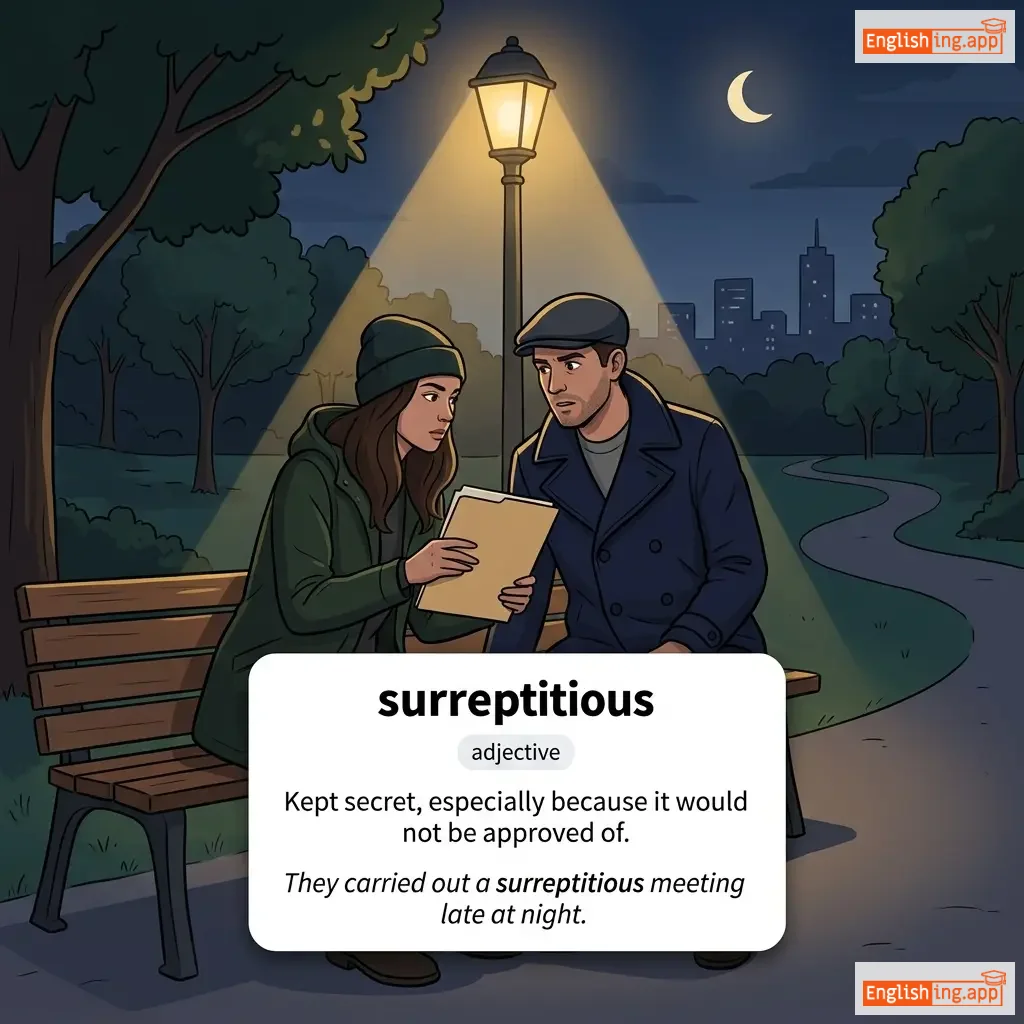
surreptitious definition card — visual illustration of the meaning
adjective
/ˌsʌrəpˈtɪʃəs/
秘密 (himitsu)

Kept secret, especially because it would not be approved of.

"They carried out a surreptitious meeting late at night."
"彼らは夜遅くに秘密の会議を開いた。" (karera wa yoru osoku ni himitsu no kaigi o hiraita.)
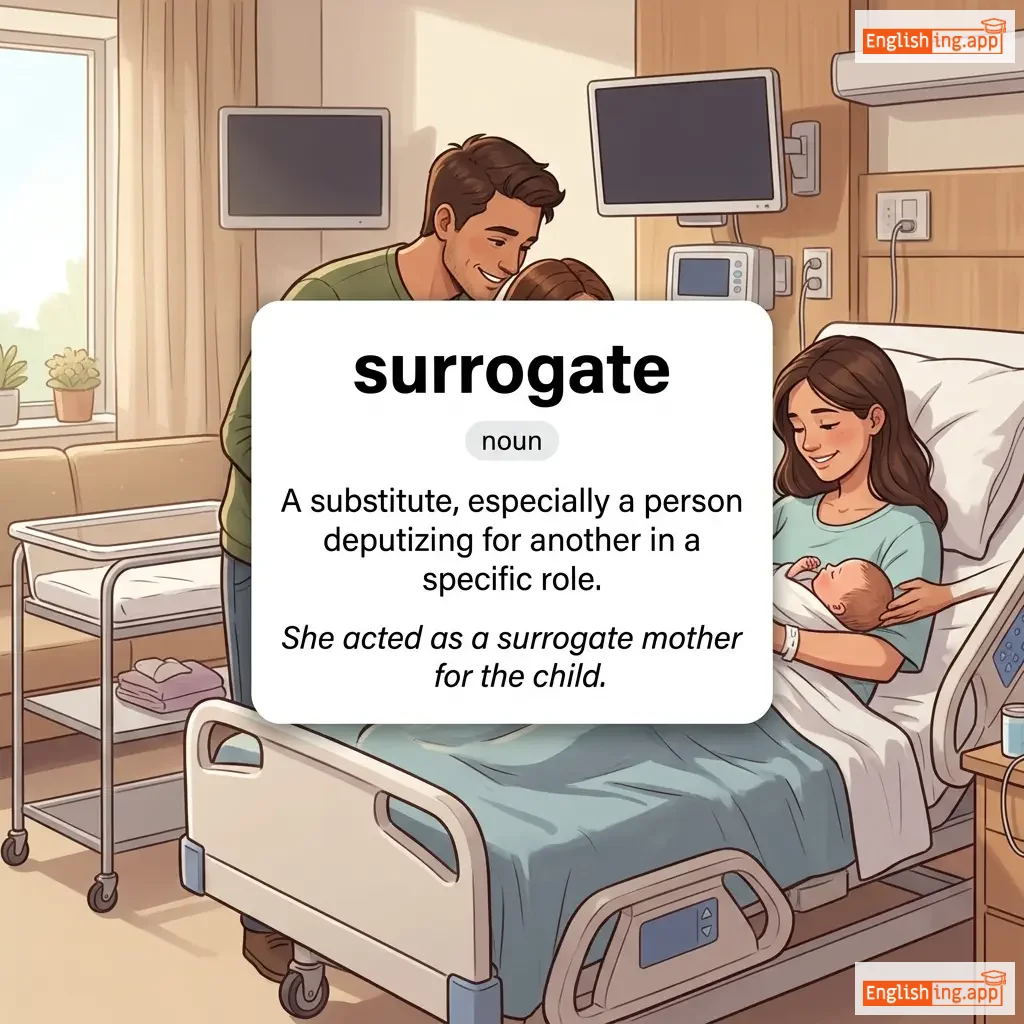
surrogate definition card — visual illustration of the meaning
noun
/ˈsʌrəɡət/
代理 (dairi)

A substitute, especially a person deputizing for another in a specific role.

"She acted as a surrogate mother for the child."

"彼女はその子供の代理母親として働きました。" (Kanojo wa sono kodomo no dairi hahaoya toshite hatarakimashita.)
verb
/səˈraʊnd/
囲む (kakomu)

To be all around someone or something.

"Mountains surround the small village."

"山々が小さな村を囲んでいます。" (Yamayama ga chiisana mura wo kakondeimasu.)
adjective
/səˈraʊndɪŋ/
周囲の (shūi no)

located all around a particular place or thing; nearby

"The surrounding hills were covered in mist."

"周囲の丘は霧に包まれていました。" (Shūi no oka wa kiri ni tsutsumarete imashita.)
noun
/səˈraʊn.dɪŋz/
周囲 (shuui)

The area around a person, place, or thing.

"She quickly adapted to her new surroundings."
"彼女は新しい環境にすぐに適応しました。" (Kanojo wa atarashī kankyō ni sugu ni tekiō shimashita.)
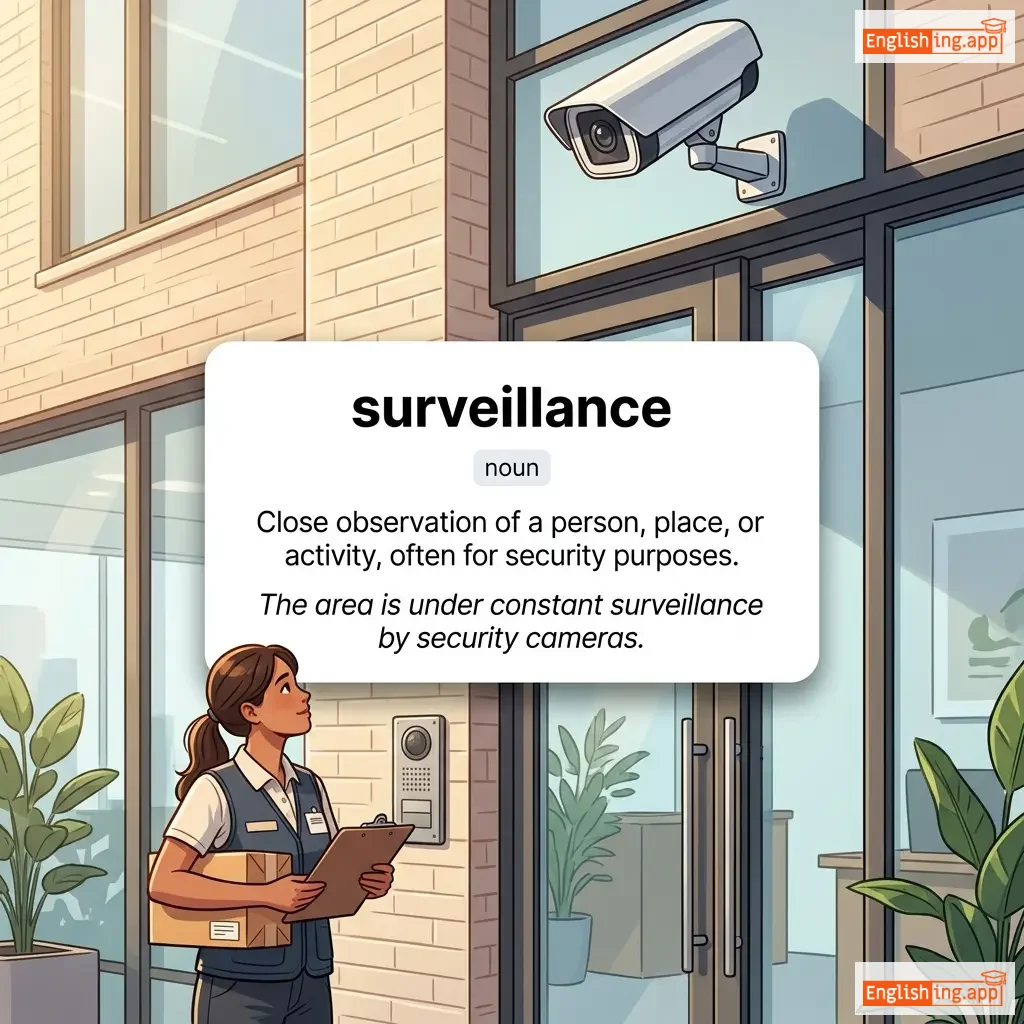
surveillance definition card — visual illustration of the meaning
noun
/sɜːrˈveɪləns/
監視 (kanshi)

Close observation of a person, place, or activity, often for security purposes.

"The area is under constant surveillance by security cameras."

"その地域はセキュリティカメラによって常に監視されています。" (Sono chiiki wa sekyuriti kamera ni yotte jō ni kanshi sareteimasu.)
noun/verb
/ˈsɜːveɪ/
調査, アンケート (chousa, ankeeto)

noun: an examination or inspection; verb: to examine or measure (an area or subject)

"They conducted a survey to understand customer preferences."

"彼らは顧客の好みを理解するために調査を行いました。" (Karera wa kokyaku no konomi o rikai suru tame ni chousa o okonai mashita.)
noun
/sərˈveɪər/
測量士 (sokuryō-shi)

A person who measures and maps land, buildings, or other features.

"The surveyor measured the land for construction."

"測量士は建設のために土地を測定した。" (Sokuryō-shi wa kensetsu no tame ni tochi o sokutei shita.)