語彙集

英単語辞書 | 単語の意味、定義、例文

noun
/stʌf/
(mono)

a collection of things or materials, typically unspecified or uncountable

"She packed all her stuff into the suitcase."

"彼女はすべての物をスーツケースに詰め込んだ。" (Kanojo wa subete no mono wo suutsukeesu ni tsumekonda.)
adjective
/ˈstʌf.i/
新鮮な空気が不足している; 通気性が悪い; 形式的で保守的な態度 (shinsen na kūki ga fusokushiteiru; tsūki-sei ga warui; keishikiteki de hoshuteki na taido)

lacking fresh air; poorly ventilated; formal and conservative in attitude

"The room was stuffy and needed fresh air."

"部屋はこもっていて、新鮮な空気が必要でした。" (heya wa komotte ite, shinsen na kūki ga hitsuyō deshita.)
verb
/ˈstʌltɪfaɪ/
愚かに見せる、または効果や熱意を妨げる (oroka ni miseru, matawa kōka ya netsui o samatageru)

to make someone or something appear foolish, or to hinder effectiveness and enthusiasm

"The repetitive tasks seemed to stultify the workers' creativity."

"繰り返しの仕事が労働者の創造性を鈍らせているようだった。" (Kurikaeshi no shigoto ga rōdōsha no sōzō-sei o noborasete iru yō datta.)
verb
/ˈstʌmbəl/
つまずく (tsumazuku)

to trip or lose balance while walking or running; to make a mistake or falter

"He stumbled on the uneven pavement."

"彼はでこぼこな歩道でつまずいた。" (Kare wa dekoboka na hodō de tsumazuita.)
noun/verb
/stʌmp/
木の切り株、困惑させる (ki no kirikabu, konwaku saseru)

the base of a tree left after the trunk is cut down; to puzzle or confuse

"The question completely stumped the students."

"その質問は学生たちを完全に困らせました。" (Sono shitsumon wa gakusei-tachi wo kanzen ni komarasemashita.)
adjective
/ˈstʌm.pi/
短くて太い (mijikakute futoi)

short and thick; having a short, thick appearance

"The stumpy little dog wagged its tail enthusiastically."

"その短くて太い小さな犬は、興奮して尾を振っていました。" (Sono mijikakute futoi chiisana inu wa, kōfun shite o o futte imashita.)
verb
/stʌn/
驚かす, 気絶させる (odorokasu, kizetsu saseru)

to shock or surprise someone greatly; to knock someone unconscious or dazed

"The news of her sudden resignation stunned everyone."

"彼女の突然の辞任のニュースは皆を驚かせた。" (Kanojo no totsuzen no jin'in no nyūsu wa mina o odorokaseta.)
adjective
/ˈstʌnɪŋ/
驚くべき (odorokubeki)

extremely impressive or attractive

"The view from the top of the mountain was absolutely stunning."

"山の頂上からの景色は本当に驚くべきものでした。" (Yama no chōjō kara no keshiki wa hontōni odorokubeki mono deshita.)
🤸

stunt

noun/verb
/stʌnt/

a daring or unusual action performed for entertainment or publicity; to hinder growth or development

"The actor performed a dangerous stunt in the movie."

verb
/ˈstjuːpɪˌfaɪ/
驚かす (odorokasu)

to make someone unable to think clearly, usually because of surprise or shock

"The magician's tricks stupefied the audience."

"マジシャンのトリックは観客を驚かせた。" (Majishan no torikku wa kankyaku o odorokaseta.)
adjective
/stjuːˈpɛndəs/
素晴らしい (subarashii)

extremely impressive; amazing in size, degree, or excellence

"The magician’s performance was simply stupendous."

"マジシャンのパフォーマンスはまさに素晴らしいものでした。" (Majishan no pafōmansu wa masani subarashī mono deshita.)
adjective
/ˈstjuːpɪd/

lacking intelligence or common sense

"It was a stupid mistake to leave the keys inside the car."

noun
/stjuːˈpɪdəti/
愚かさ (orokasa)

lack of intelligence or common sense

"His stupidity caused a lot of problems for the team."

"彼の愚かさはチームに多くの問題を引き起こした。" (kare no orokasa wa chiimu ni ooku no mondai o hikiokoshita)
noun
/ˈstjuːpər/
昏迷 (konmi)

a state of near-unconsciousness or insensibility

"He remained in a stupor after hearing the shocking news."

"彼は衝撃的なニュースを聞いた後、昏迷状態に陥った。" (Kare wa shougeki-tekina nyuusu o kiita ato, konmi joutai ni ochiitta.)
adjective
/ˈstɜːrdi/
頑丈 (ganjō)

strongly and solidly built; not easily weakened

"The carpenter made a sturdy wooden table."
"大工は頑丈な木製のテーブルを作った。" (Daiku wa ganjō na mokusei no tēburu o tsukutta.)
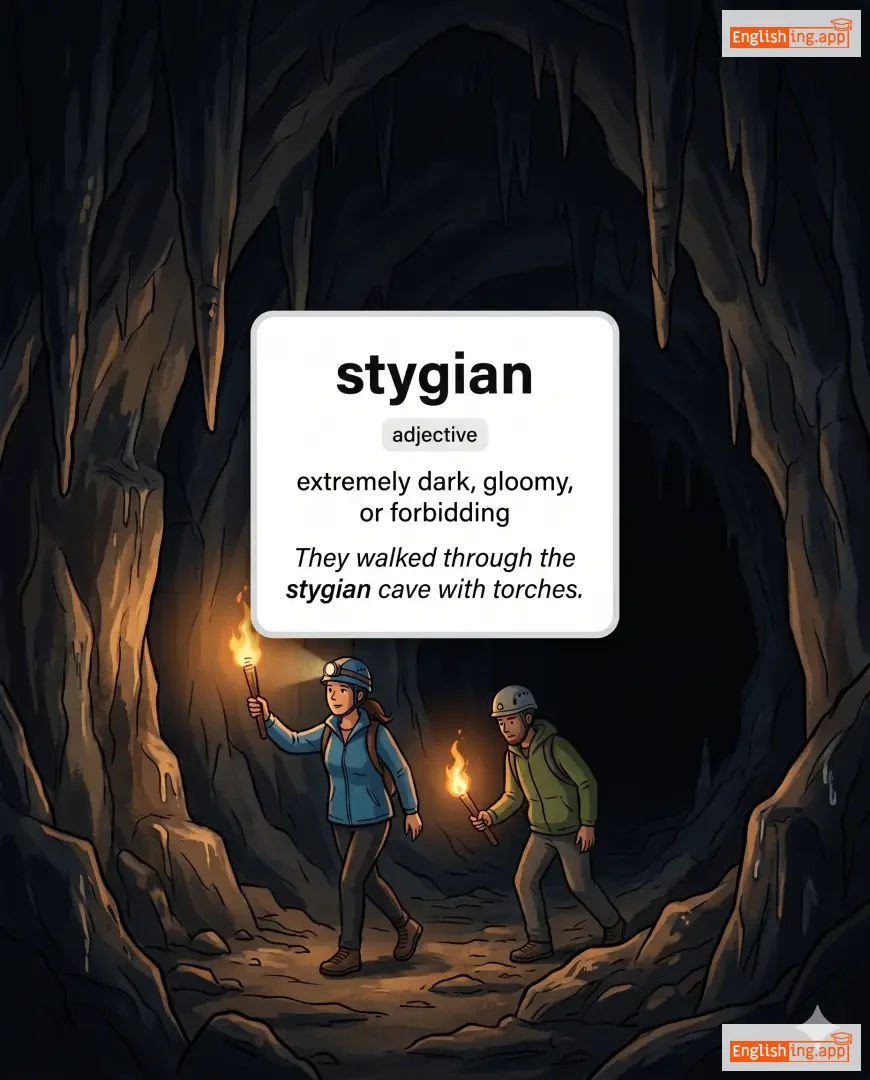
stygian definition card — visual illustration of the meaning
adjective
/ˈstɪdʒiən/
暗黒 (ankoku)

extremely dark, gloomy, or forbidding

"They walked through the stygian cave with torches."

"彼らは松明を持って暗黒の洞窟を歩いていました。" (Karera wa taima o motte ankoku no dōkutsu o aruiteimashita.)
noun
/staɪl/
スタイル (sutairu)

a particular way of doing or presenting something, often reflecting individual preferences or trends

"Her style of dress is both elegant and modern."

"彼女の服装のスタイルは、優雅でありながら現代的です。" (Kanojo no fukusō no sutairu wa, yūga de arinagara gendai-teki desu.)
adjective
/ˈstaɪ.lɪʃ/
流行に敏感で魅力的な; 外見に優雅さや味を持つ (ryūkō ni binkan de miryokuteki na; gaiken ni yūgasa ya aji o motsu)

fashionable and attractive; having elegance or taste in appearance

"She wore a stylish dress to the party."

"彼女はパーティーでスタイリッシュなドレスを着ていた。" (Kanojo wa pāti de sutairisshu na doresu o kite ita.)
noun
/ˈstaɪləs/
スタイラス (sutairasu)

a small tool used for writing, drawing, or touching screens

"She used a stylus to draw on her tablet."

"彼女はタブレットで絵を描くためにスタイラスを使用しました。" (Kanojo wa taburetto de e o kaku tame ni sutairasu o shiyō shimashita.)
verb
/ˈstaɪmi/
妨げる (samatageru)

to prevent or hinder the progress of something

"The new regulations could stymie small businesses."

"新しい規制は小規模なビジネスに障害をもたらす可能性があります。" (Atarashī kisei wa shōkibō na bijinesu ni shōgai o motarasu kanōsei ga arimasu.)
noun
/ˈsweɪʒən/
説得 (settoku)

the act of persuading or influencing someone

"The leader used gentle suasion to win support for the plan."

"リーダーは計画への支援を得るために穏やかな説得を使用しました。" (Rīdā wa keikaku e no shien o eru tame ni odayakana settoku o shiyō shimashita.)
adjective
/swɑːv/
魅力的で洗練された (miryokuteki de senren sareta)

charming, confident, and elegant, often in a smooth or polished way

"He was a suave gentleman who impressed everyone at the party."

"彼はパーティーで全員に感銘を与えた洗練された紳士だった。" (Kare wa pātii de zen'in ni kanmei o ataeta senren sareta shinshi datta.)
noun
/ˈswɑːvɪti/
優雅さと魅力 (yūgasa to miryoku)

smoothness and charm in manner

"His suavity made him popular in social gatherings."

"彼の優雅さと魅力は社交の場で彼を人気者にした。" (Kare no yūgasa to miryoku wa shakō no ba de kare o ninkimono ni shita.)
adverb
/ˌsʌb ˈroʊzə/
秘密裏に (himitsuri ni)

secretly, in confidence, or in private

"The deal was made sub rosa to avoid public scrutiny."

"取引はサブ ローザで行われ、公衆の監視を避けるためでした。" (Torihiki wa sub rosa de okonaware, kōshū no kanshi o sake ru tame deshita.)
noun
/ˈsʌb.mə.riːn/
潜水艦 (sensuikan)

a warship with a streamlined hull designed to operate completely submerged in the sea

"The submarine dived deep into the ocean to avoid detection."

"潜水艦は海中深く潜水して、発見を避けました。" (Sensuikan wa kaichū fukaku sensui shite, hakken o sake mashita.)
adjective
/ˈsʌb.æs.ɪd/
やや酸っぱい (yaya suppai)

Slightly sour or acidic in taste or nature.

"The fruit had a subacid flavor that was refreshing on a hot day."

"その果物はやや酸っぱい味がして、暑い日にさっぱりとした味わいだった。" (Sono kudamono wa yaya suppai aji ga shite, atsui hi ni sappari to shita ajiwai datta.)
noun
/sʌbˈɔːl.tən/
下級の立場にある人;軍隊では、若い将校 (sabornā)

A person holding a subordinate position; in the military, a junior officer.

"The subaltern was responsible for leading a small platoon of soldiers."

"サブオルターナは小さな小隊を指揮する責任がありました。" (Sabornā wa chīsana shōtai o shiki suru sekinin ga arimashita.)
adjective
/ˌsʌb.əˈkwɒt.ɪk/
水中 (suichū)

Existing, living, or located under water.

"Divers explored the subaquatic cave system filled with rare fish."
"ダイバーたちは珍しい魚でいっぱいの水中洞窟システムを探査しました。" (Daibā-tachi wa mezurashī sakana de ippai no suichū dōkutsu shisutemu o tansa shimashita.)
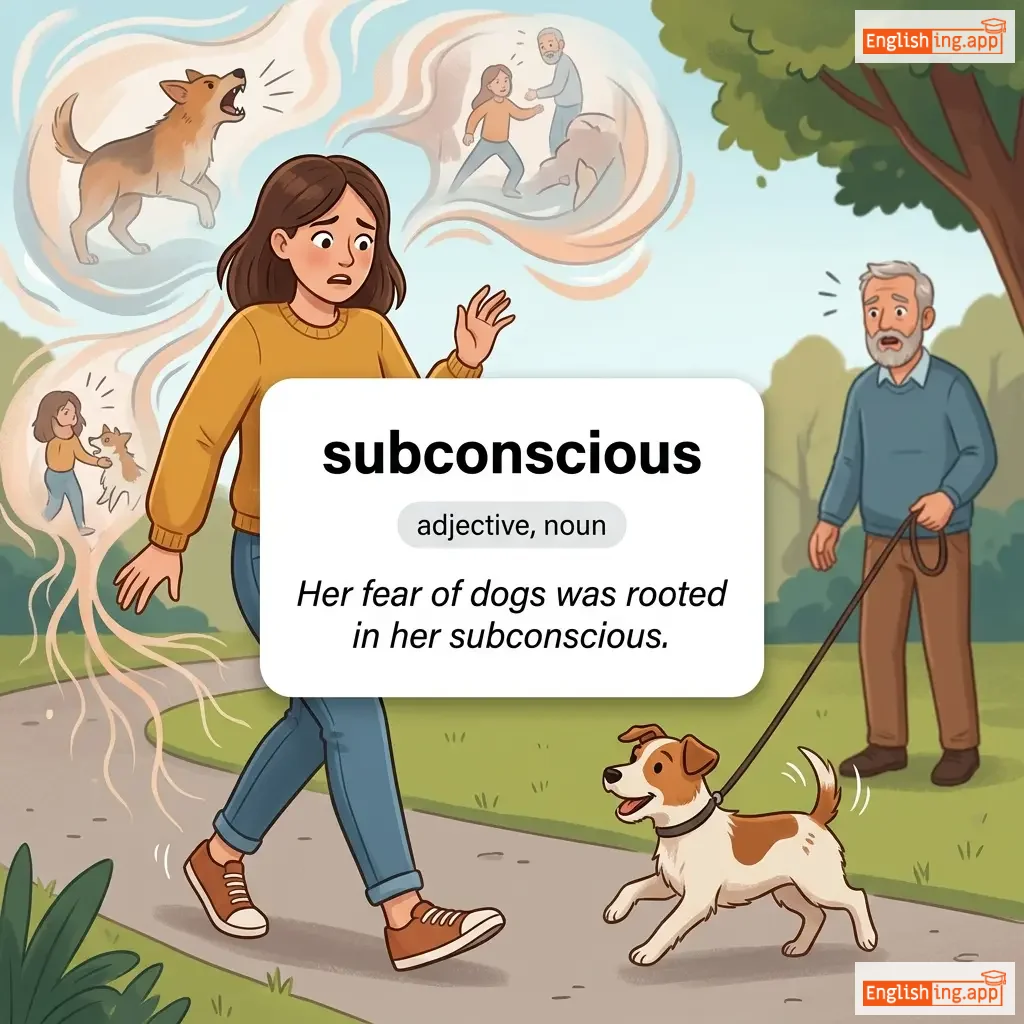
subconscious definition card — visual illustration of the meaning
adjective, noun
/ˌsʌbˈkɒn.ʃəs/
潜在意識 (senzai ishiki)

Relating to the part of the mind that influences thoughts and actions without full awareness.

"Her fear of dogs was rooted in her subconscious."
"彼女の犬に対する恐怖は彼女の潜在意識に根ざしていた。" (Kanojo no inu ni taisuru kyoufu wa kanojo no senzai ishiki ni nezashite ita.)
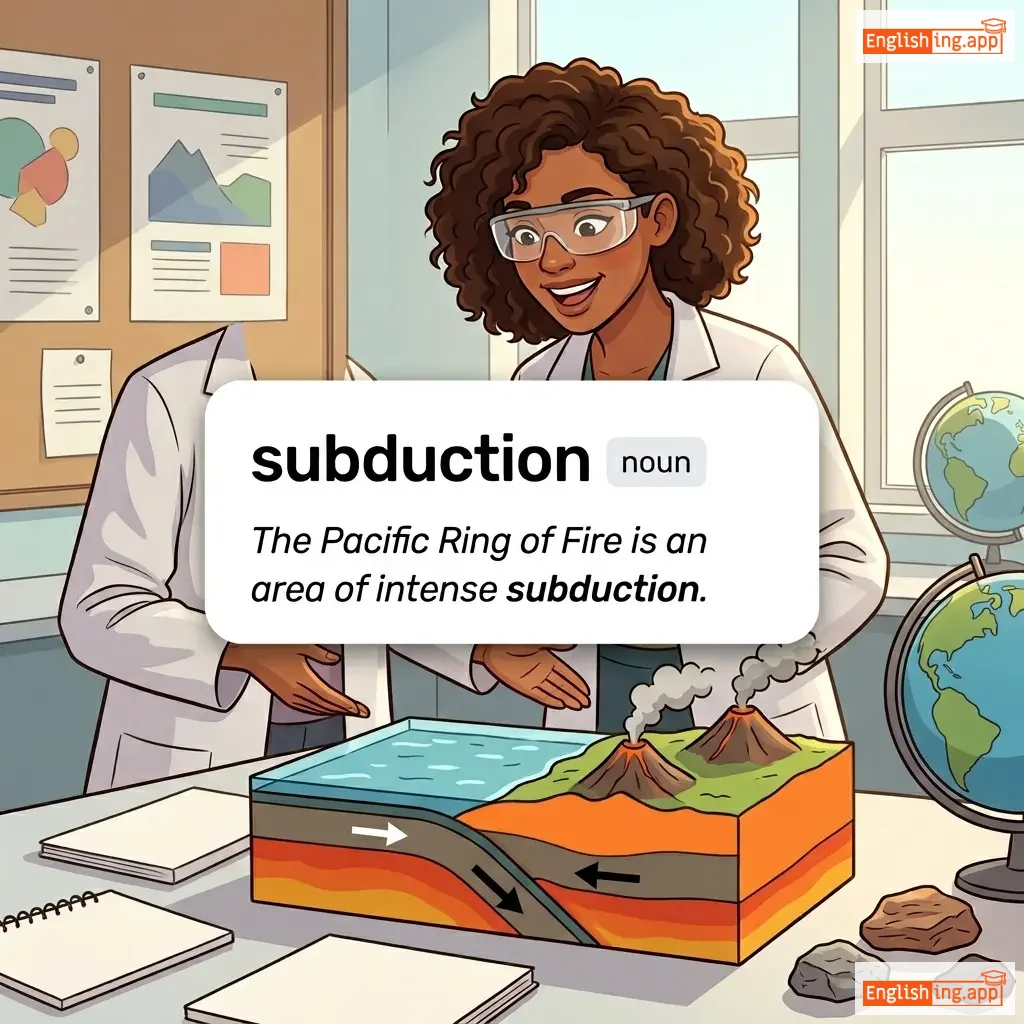
subduction definition card — visual illustration of the meaning
noun
/səbˈdʌk.ʃən/
地殻の一層が別の層の下に移動すること。 (Chikaku no issō ga betsu no sō no shita ni idō suru koto.)

The lateral and downward movement of the edge of a plate of the earth's crust into the mantle beneath another plate.

"The Pacific Ring of Fire is an area of intense subduction."

"太平洋の火の輪は激しいサブダクションの領域です。" (Taiheiyō no hi no wa wa hageshī sabudakushon no ryōiki desu.)
⚔️

subdue

verb
/səbˈdjuː/

To bring under control, especially by force; to overcome or quiet.

"The army was able to subdue the rebellion quickly."

adjective
/sʌbˈdʒeɪsənt/
下層の (kasō no)

lying immediately beneath; underlying

"The geological survey revealed subjacent layers of rock."

"地質調査は下層の岩層を明らかにした。" (Chishitsu chōsa wa kasō no gansō o akiraka ni shita.)
noun/verb/adjective
/ˈsʌbdʒɪkt/ (noun), /səbˈdʒɛkt/ (verb)
科目 (kamoku)

noun: a topic or theme; verb: to cause to undergo; adjective: dependent or under authority

"The teacher introduced a new subject in class."

"先生はクラスで新しい科目を紹介しました。" (Sensei wa kurasu de atarashī kamoku o shōkai shimashita.)
noun
/səbˈdʒɛkʃən/
服従 (fukujū)

the act of bringing someone or something under control or domination

"The people suffered under the subjection of a cruel ruler."

"人々は残虐な支配者の下で苦しんでいた。" (Hitobito wa zangyaku na shihaisha no moto de kurushinde ita.)
adjective
/səbˈdʒɛktɪv/
主観的 (shukanteki)

based on personal feelings, tastes, or opinions rather than facts

"Beauty is often considered a subjective concept."
"美しさはしばしば主観的な概念と見なされます。" (Utsukushisa wa shibashiba shukanteki na gainen to minasaremasu.)
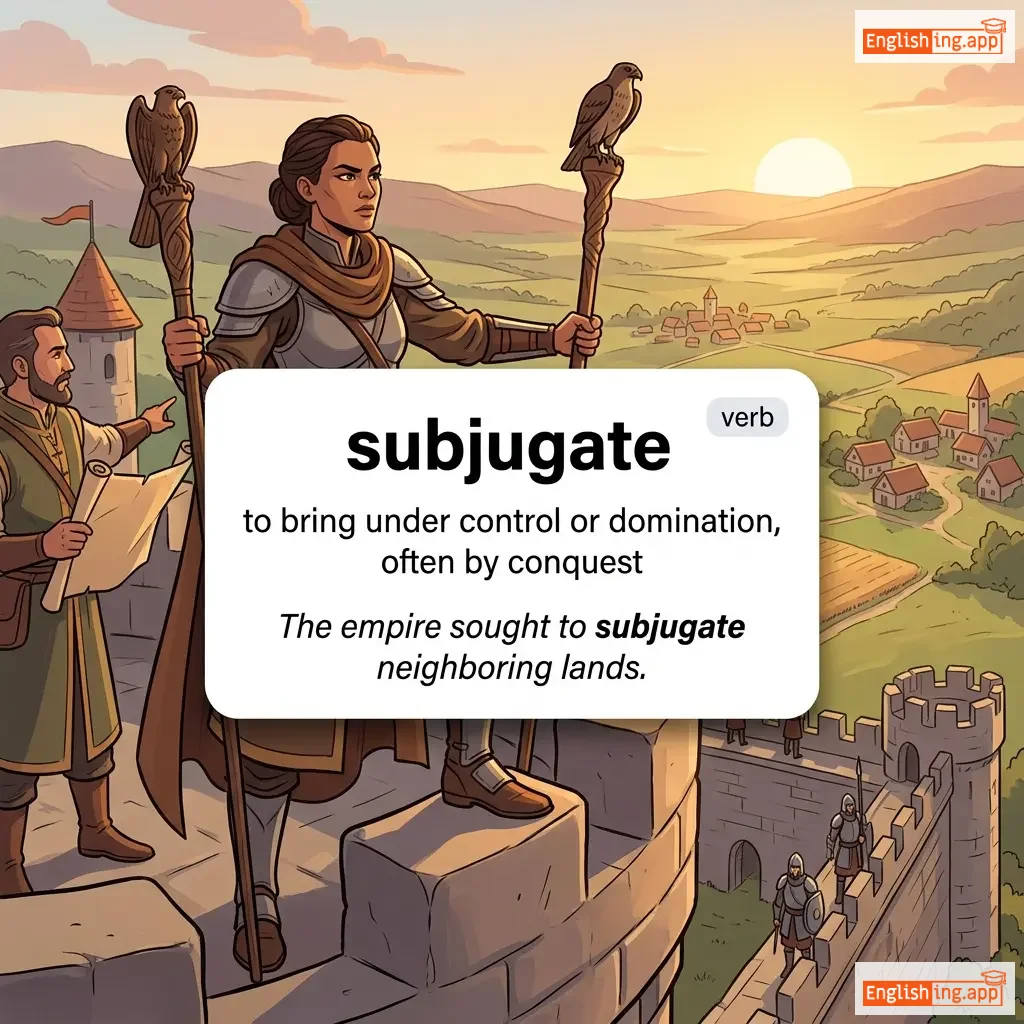
subjugate definition card — visual illustration of the meaning
verb
/ˈsʌbdʒʊˌɡeɪt/
征服する (seifuku suru)

to bring under control or domination, often by conquest

"The empire sought to subjugate neighboring lands."
"帝国は隣接する土地を征服しようとした。" (Teikoku wa rinsetsu suru tochi wo seifuku shiyou to shita.)
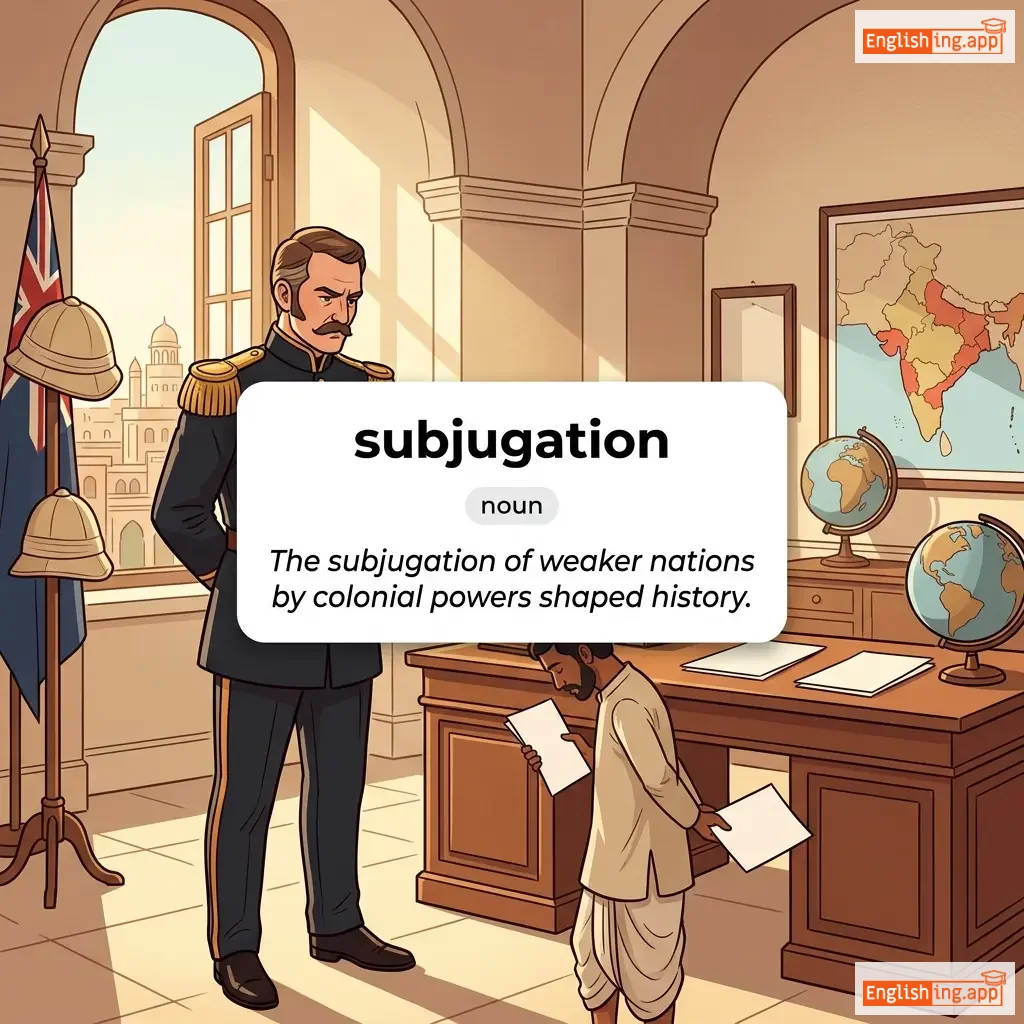
subjugation definition card — visual illustration of the meaning
noun
ˌsʌb.dʒʊˈɡeɪ.ʃən
支配または征服 (shihai matawa seifuku)

The action of bringing someone or something under domination or control, especially by force.

"The subjugation of weaker nations by colonial powers shaped history."

"植民地の強国による弱小国の支配は歴史を形作った。" (Shokuminchi no kyōkoku ni yoru jakushōkoku no shihai wa rekishi o katachi zukutta.)
verb
/ˈsʌblɪmeɪt/
より高い活動に変換する (yori takai katsudō ni henkan suru)

to redirect strong emotions or desires into socially acceptable activities or channels

"She sublimated her anger into painting beautiful landscapes."
"彼女は美しい風景を描くことで怒りをサブリメートしました。" (Kanojo wa utsukushī fūkei o kaku koto de ikari o saburimēto shimashita.)
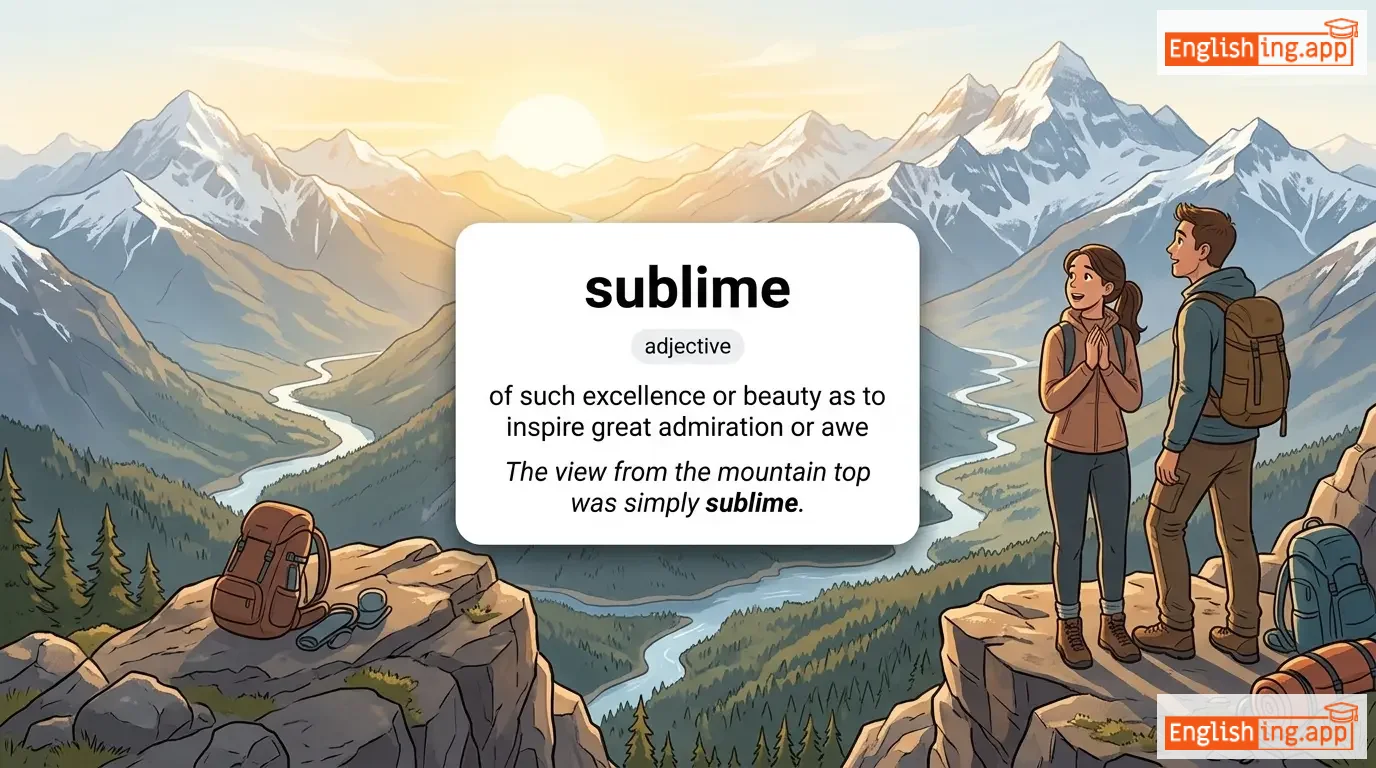
sublime definition card — visual illustration of the meaning
adjective
/səˈblaɪm/
崇高 (sūkō)

of such excellence or beauty as to inspire great admiration or awe

"The view from the mountain top was simply sublime."

"山頂からの景色は本当に崇高でした。" (Sanchō kara no keshiki wa hontōni sūkō deshita.)
subliminal definition card — visual illustration of the meaning
adjective
/sʌbˈlɪmɪnəl/
潜在意識 (senzai ishiki)

below the threshold of conscious perception but still influencing behavior or feelings

"The advertisement contained subliminal messages to influence consumers."

"広告には消費者に影響を与えるための潜在意識メッセージが含まれていた。" (Koukoku ni wa shouhisha ni eikyou wo ataeru tame no senzai ishiki messeeji ga fukumarete ita.)
adjective
/sʌbˈlɪŋɡwəl/
舌下 (zetsuka)

situated or applied under the tongue

"The doctor prescribed a sublingual tablet for faster absorption."
"医師は吸収を早めるために舌下錠を処方しました。" (Ishi wa kyūshū o hayameru tame ni zetsuka jō o shohō shimashita.)
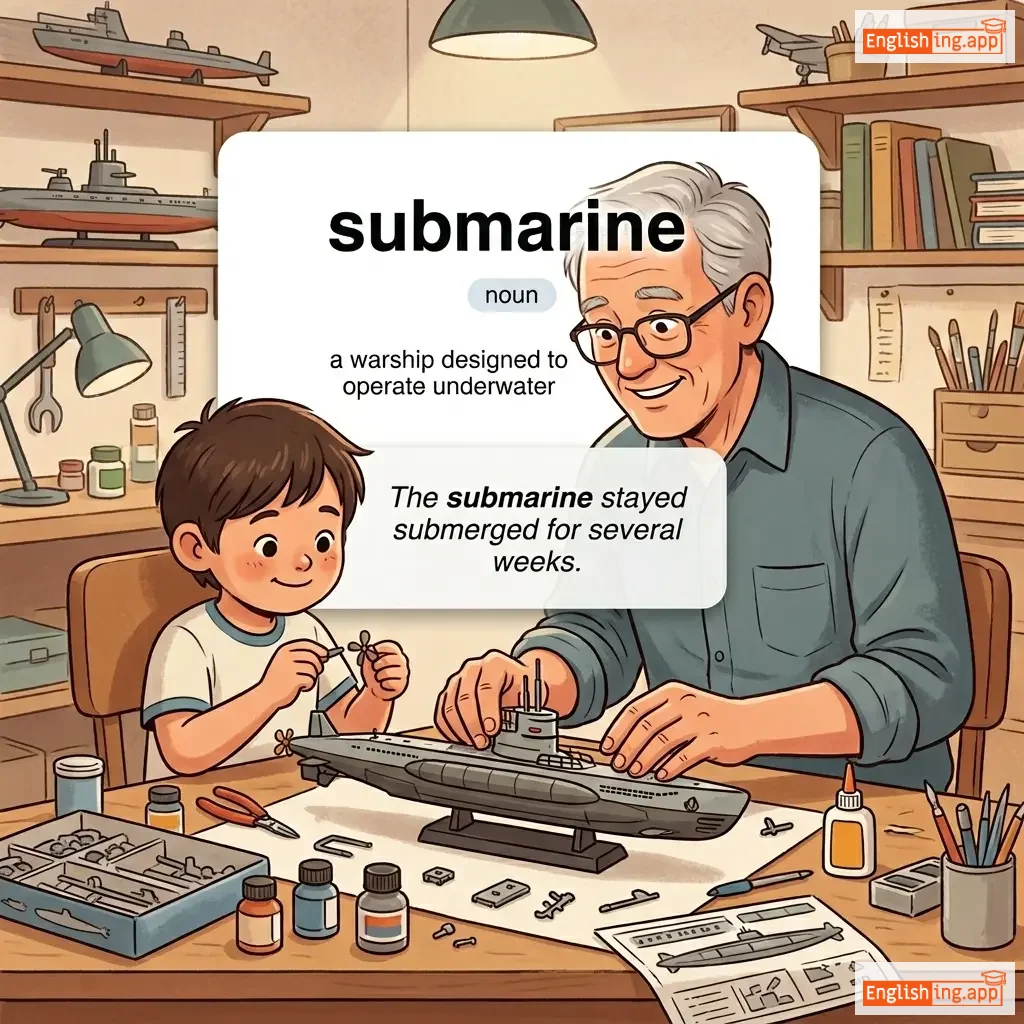
submarine definition card — visual illustration of the meaning
noun
/ˈsʌbməriːn/
潜水艦 (sensuikan)

a warship designed to operate underwater

"The submarine stayed submerged for several weeks."

"潜水艦は数週間水中に留まっていました。" (Sensuikan wa suū shūkan suichū ni todomatte imashita.)
verb
/səbˈmɜːrdʒ/
沈める (shizumeru)

to put under water or cover with liquid

"The floodwaters threatened to submerge the village."

"洪水の水が村を沈めると脅かしていました。" (kōzui no mizu ga mura o shizumeru to odokashite imashita.)
noun
/səbˈmɜːrdʒəns/
水没 (suibotsu)

the act or process of being submerged or going underwater

"The submergence of coastal areas is a major concern due to rising sea levels."

"海面上昇による沿岸地域の水没は重大な懸念事項です。" (Kaimen joushou ni yoru engan chiiki no suibotsu wa juudaina ken'en jikou desu.)
adjective, noun
/səbˈmɜːrsəbl/
潜水艇 (sensuitei)

capable of being submerged; a small underwater craft

"The scientists explored the deep ocean using a submersible."

"科学者たちは潜水艇を使って深海を探査した。" (Kagakusha-tachi wa sensuitei o tsukatte shinkai o tansa shita.)
noun
/səbˈmɜːrʒən/
沈没 (chinmotsu)

the state of being under water

"The submersion of the fields lasted for several days after the heavy rain."

"激しい雨の後、畑の沈没は数日間続いた。" (Hageshii ame no ato, hatake no chinmotsu wa suujitsukan tsuzita.)
noun
/səbˈmɪʃən/
提出, 服従 (teishutsu, fukujū)

the act of yielding to authority or presenting something for consideration

"Her submission of the report was appreciated by the manager."

"彼女の報告書の提出は、マネージャーに評価されました。" (Kanojo no hōkokusho no teishutsu wa, manējā ni hyōka saremashita.)
adjective
/səbˈmɪsɪv/
従順な (jūjun na)

ready to conform to the authority or will of others; meekly obedient or passive

"She was too submissive to challenge her boss's unfair decision."

"彼女は上司の不公平な決定に挑戦するには従順すぎた。" (Kanojo wa jōshi no fukōhei na kettei ni chōsen suru ni wa jūjun sugita.)
submit definition card — visual illustration of the meaning
verb
/səbˈmɪt/
提出する (teishutsu suru)

to present or deliver something formally or for approval

"Please submit your report by the end of the day."

"レポートをその日の終わりまでに提出してください。" (Repōto o sono hi no owari made ni teishutsu shite kudasai.)
noun
/səbˈmɪtəl/
提出 (teishutsu)

the act of submitting something, especially a document for consideration or approval

"The contractor sent the submittal to the client for approval."

"請負業者は承認のために提出物を顧客に送信しました。" (Keiyaku gyōsha wa shōnin no tame ni teishutsumono o kokyaku ni sōshin shimashita.)