語彙集

英単語辞書 | 単語の意味、定義、例文

verb
/ˈstɪp.əl/
小さな点で覆う (chiisana ten de oou)

to cover a surface with numerous small dots or specks, often in drawing or painting

"The artist stippled the canvas to create a textured effect."
"アーティストはキャンバスに小さな点をつけて、テクスチャ効果を作り出しました。" (Aatisuto wa kyanbasu ni chiisana ten o tsukete, tekusuchā kōka o tsukuridashimashita.)
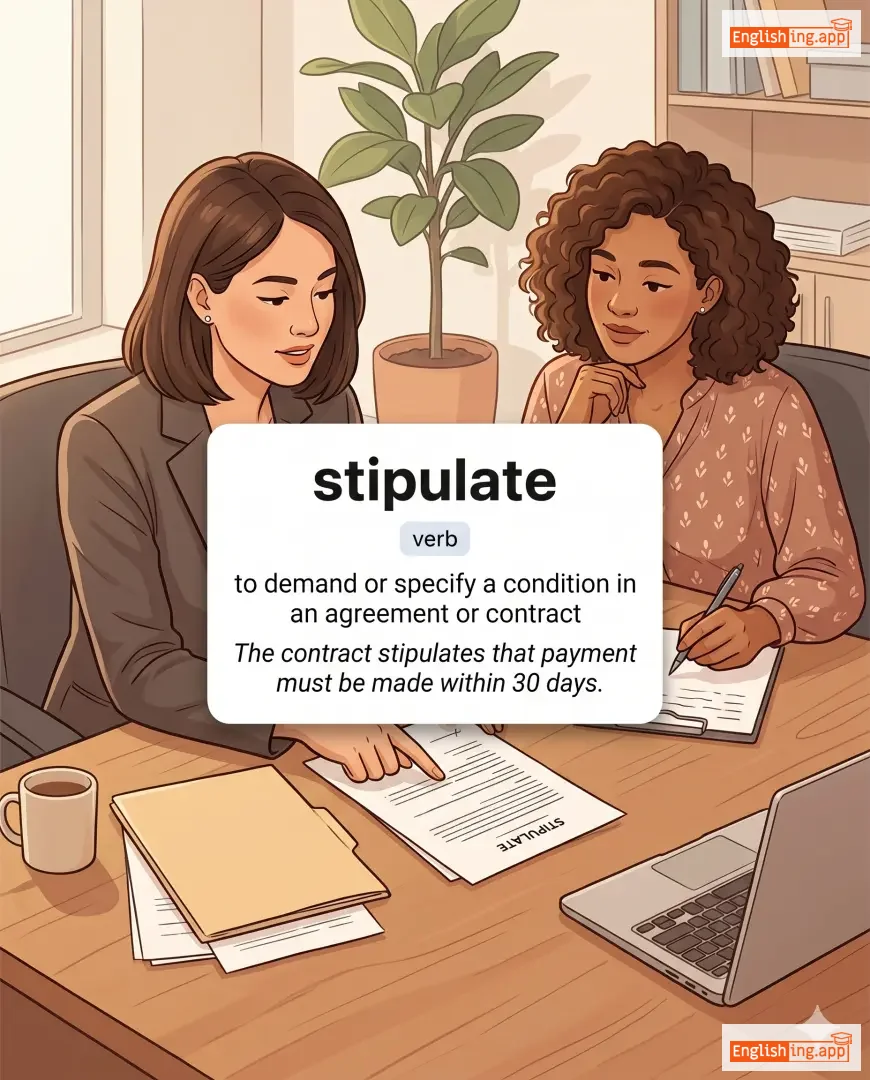
stipulate definition card — visual illustration of the meaning
verb
/ˈstɪp.jʊ.leɪt/
規定する (kitei suru)

to demand or specify a condition in an agreement or contract

"The contract stipulates that payment must be made within 30 days."

"契約書には、支払いは30日以内に行われるべきであると明記されています。" (Keiyakusho ni wa, shiharai wa 30 nichi inai ni okonawareru beki de aru to meiki sareteimasu.)
verb
/stɜːr/
かき混ぜる (kakimazeru)

to mix or move something in a circular motion, especially in liquid

"She stirred the soup to make sure it didn't burn."

"彼女はスープをかき混ぜて、焦げないようにした。" (Kanojo wa suupu o kakimazete, kogenai you ni shita.)
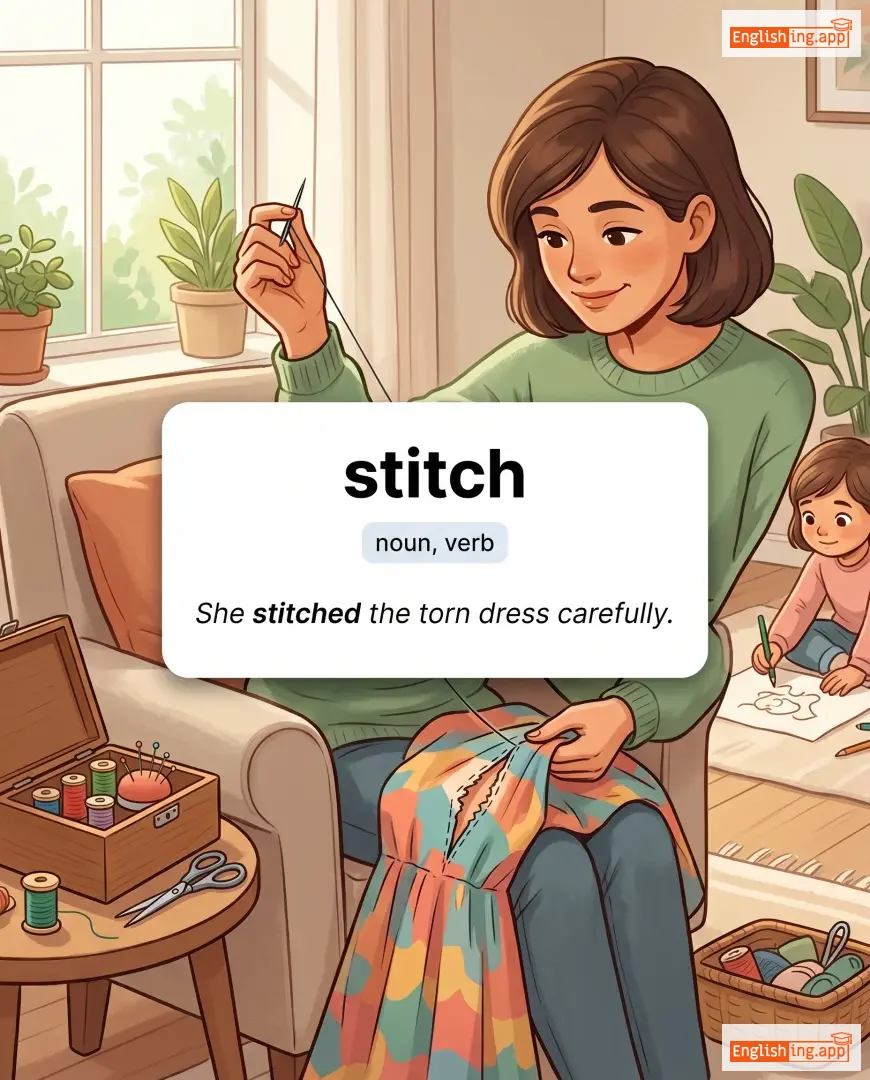
stitch definition card — visual illustration of the meaning
noun, verb
/stɪtʃ/

to sew fabric together using a needle and thread; also a single loop of thread in sewing

"She stitched the torn dress carefully."

noun, verb
/stɒk/
在庫 (zaiko)

a supply of goods kept for sale or use; to keep or fill with goods

"The shop stocks a wide variety of products."

"その店はさまざまな製品を在庫しています。" (Sono mise wa samazama na seihin o zaiko shiteimasu.)
noun
/stɒˈkeɪd/
木製の塀 (mokusei no hei)

a defensive barrier made of strong posts or timbers, often around a fort or prison

"The prisoners were kept inside the wooden stockade."

"囚人は木製の塀の中に閉じ込められていました。" (Shūjin wa mokusei no hei no naka ni tojikomere rarete imashita.)
adjective
/ˈstɒdʒi/
退屈な、時代遅れな (taikutsu na, jidaiokure na)

Dull, uninspired, or old-fashioned; also heavy and hard to digest when referring to food.

"The lecture was so stodgy that many students struggled to stay awake."

"その講義はあまりにも退屈で、多くの学生が目を覚ますのに苦労しました。" (Sono kōgi wa amari ni mo taikutsu de, ōku no gakusei ga me o samasu no ni kurō shimashita.)
adjective
/ˈstoʊɪk/
冷静な, 無感情な (reiseina, mugannōna)

Showing little or no emotion, even in difficult situations.

"She remained stoic during the crisis, never showing fear or panic."
"彼女は危機の間、冷静で恐怖やパニックを示さなかった。" (Kanojo wa kiki no aida, reisei de kyōfu ya panikku o shimesanakatta.)
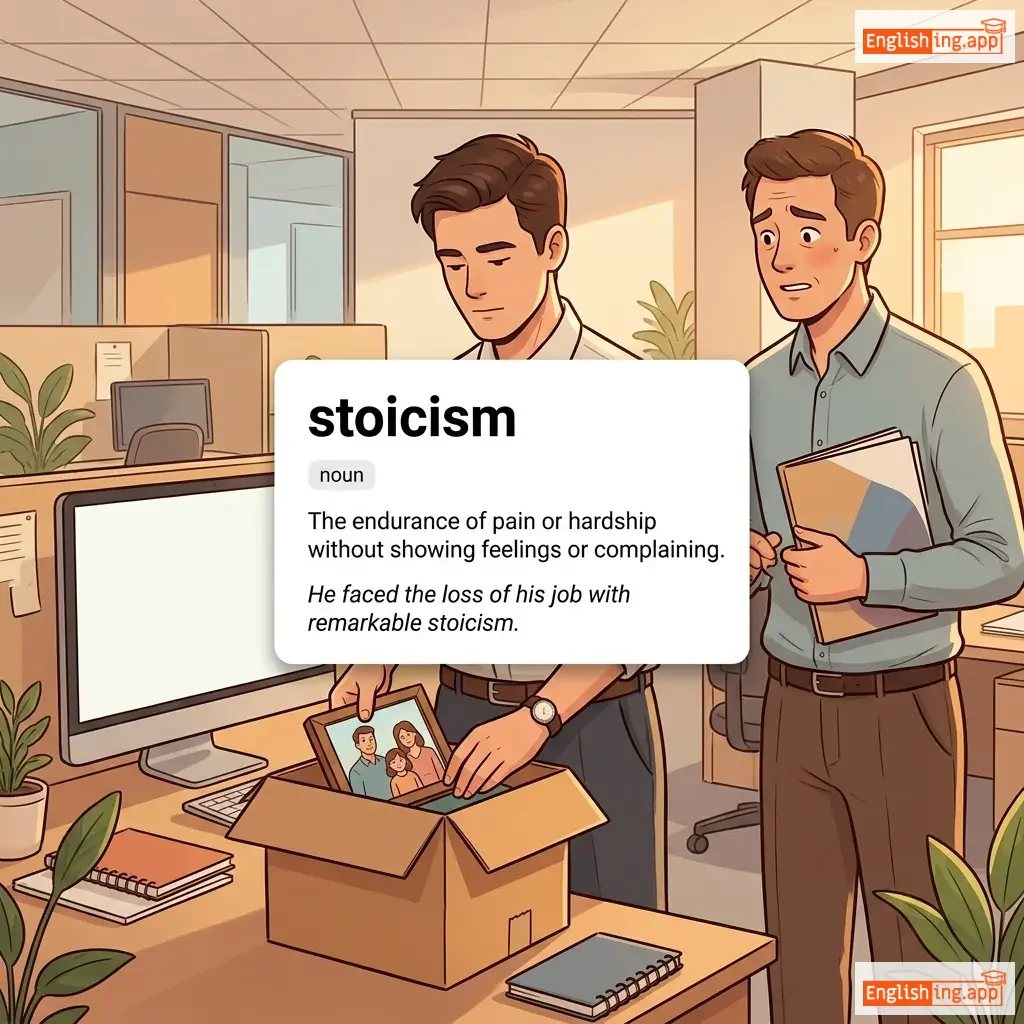
stoicism definition card — visual illustration of the meaning
noun
/ˈstoʊɪˌsɪzəm/
ストイック主義 (sutoikku shugi)

The endurance of pain or hardship without showing feelings or complaining.

"He faced the loss of his job with remarkable stoicism."
"彼は仕事を失ったことを並外れたストイック主義で乗り越えた。" (Kare wa shigoto o ushinatta koto o namihazureta sutoikku shugi de norikoeta.)
🔥

stoke

verb
/stoʊk/

To add fuel to a fire; to encourage or increase a strong feeling or activity.

"The politician’s speech stoked anger among the crowd."

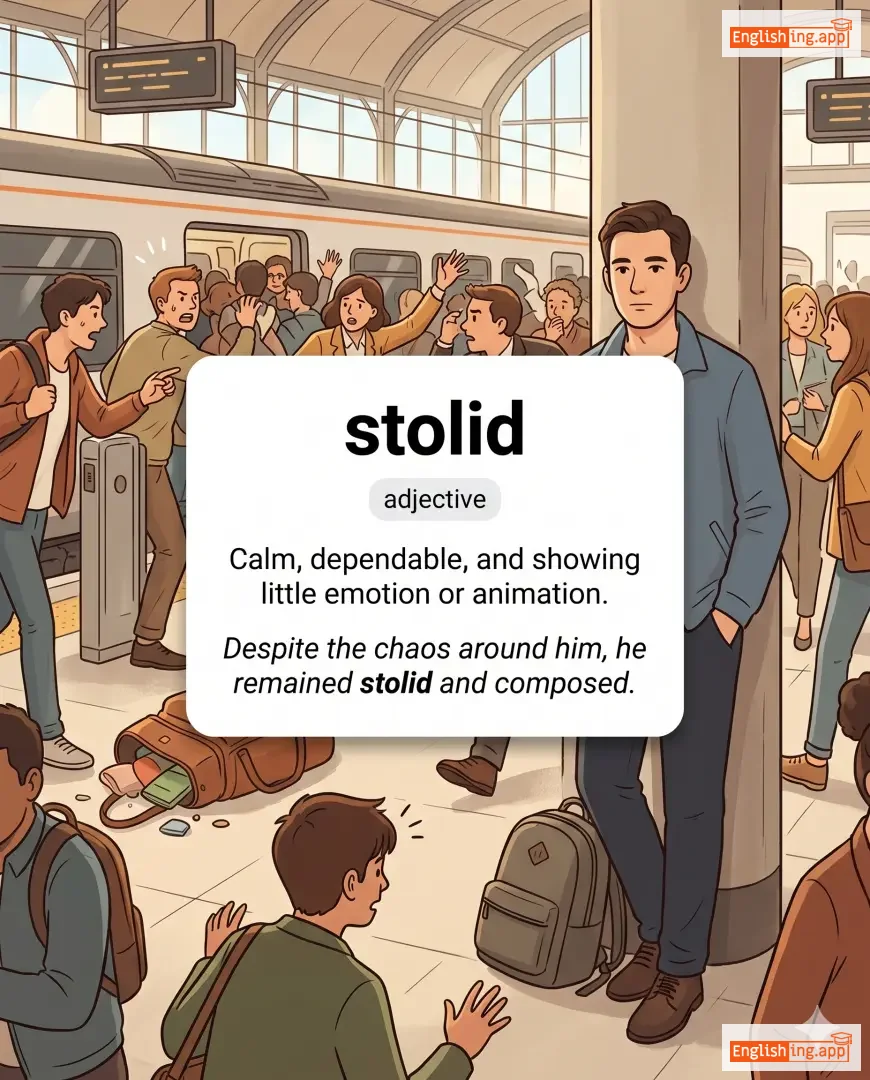
stolid definition card — visual illustration of the meaning
adjective
/ˈstɒlɪd/
冷静な、無表情な (reisei na, muhyoujou na)

Calm, dependable, and showing little emotion or animation.

"Despite the chaos around him, he remained stolid and composed."

"周りの混乱にもかかわらず、彼は冷静で落ち着いていました。" (Mawari no konran ni mo kakawarazu, kare wa reisei de ochitsuite imashita.)
noun/verb
/ˈstʌmək/
胃 / 耐える (i / taeru)

The internal organ in which food is digested; also to tolerate or endure something

"She couldn’t stomach the sight of violence."

"彼女は暴力の光景に耐えられなかった。" (Kanojo wa bōryoku no kōkei ni taerarenakatta.)
noun
/ˈstʌmək eɪk/
腹痛 (fukutsuu)

Pain in the stomach or abdominal area

"I have a stomach ache after eating too much."

"食べ過ぎた後、腹痛があります。" (Tabesugita ato, fukutsuu ga arimasu)
noun
/stoʊn/
(ishi)

a hard, naturally occurring mineral material found in the earth

"He threw a stone into the lake."

"彼は湖に石を投げました。" (Kare wa mizūmi ni ishi o nagemashita.)
verb
/ˈstoʊnwɔːl/
妨害する (bōgai suru)

To delay or block progress by refusing to cooperate or answer

"The witness tried to stonewall during the investigation."

"証人は調査中にストーンウォールしようとしました。" (Shōnin wa chōsa-chū ni sutōn wōru shiyō to shimashita.)
verb/noun
/stuːp/
幸福 (kōfuku)

To bend one's body forward and downward; also a small porch or staircase at the entrance of a house

"He had to stoop to pick up the coin."

"彼女は賞を受け取ったとき、自分の幸福を隠すことができませんでした。" (Kanojo wa shō o uketotta toki, jibun no kōfuku o kakusu koto ga dekimasen deshita.)
verb
/stɑːp/
止める (tomeru)

to bring to an end or cause to cease

"Please stop talking while I’m working."

"私が作業している間、話すのをやめてください。" (Watashi ga sagyo shite iru aida, hanasu no wo yamete kudasai.)
noun
/ˈstɒpɪdʒ/
停止; 中断 (teishi; chudan)

The act of stopping or ceasing; a halt in operation or activity

"The sudden stoppage of the train caused delays for all passengers."
"電車の突然の停止で、すべての乗客に遅れが生じた。" (Densha no totsuzen no teishi de, subete no jokyaku ni okure ga shojita.)
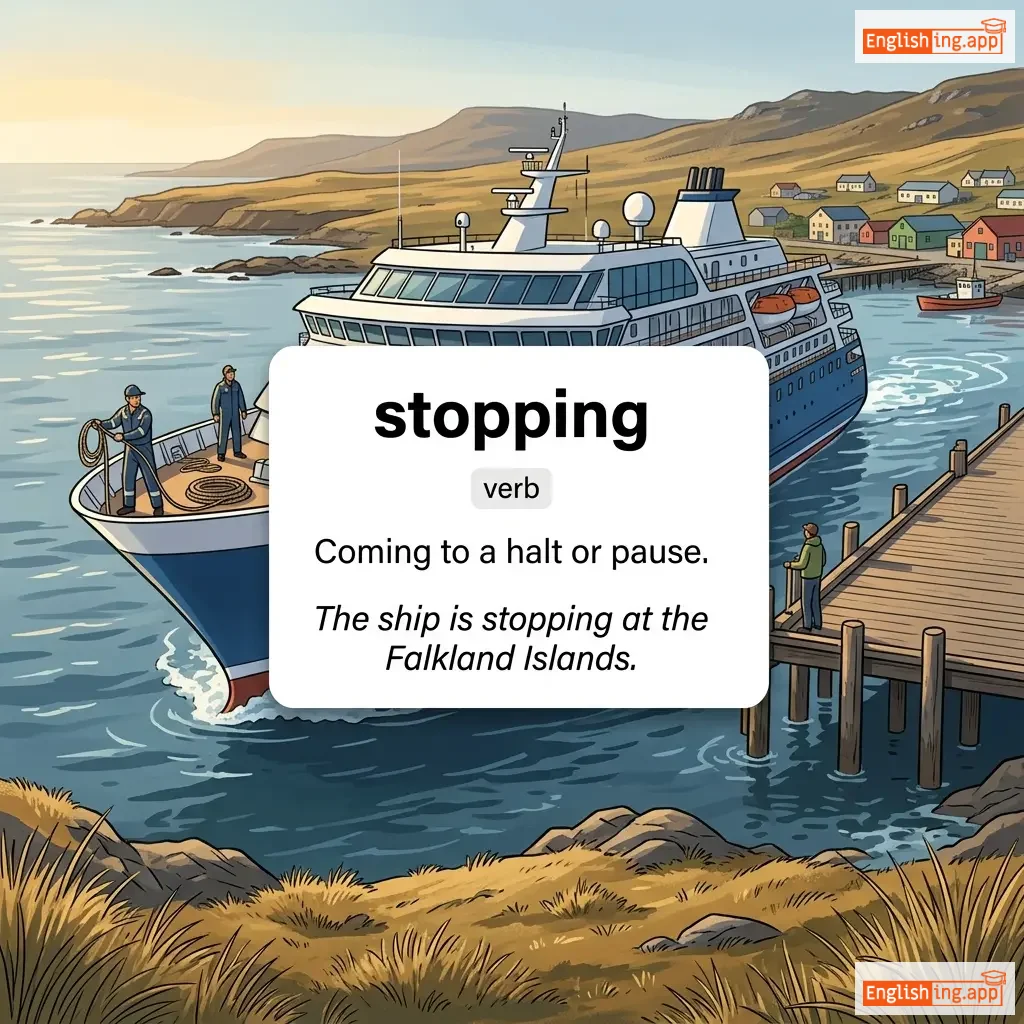
stopping definition card — visual illustration of the meaning
verb
/ˈstɒpɪŋ/
停止 (teishi)

Coming to a halt or pause.

"The ship is stopping at the Falkland Islands."

"船はフォークランド諸島で停泊しています。" (Fune wa Fōkurando shotō de teihaku shiteimasu.)
noun
/ˈstɔːrɪdʒ/
保存 (hozon)

the action or method of storing something for future use

"The warehouse offers plenty of storage space."
"倉庫にはたくさんの保存スペースがあります。" (Sōko ni wa takusan no hozon supēsu ga arimasu.)
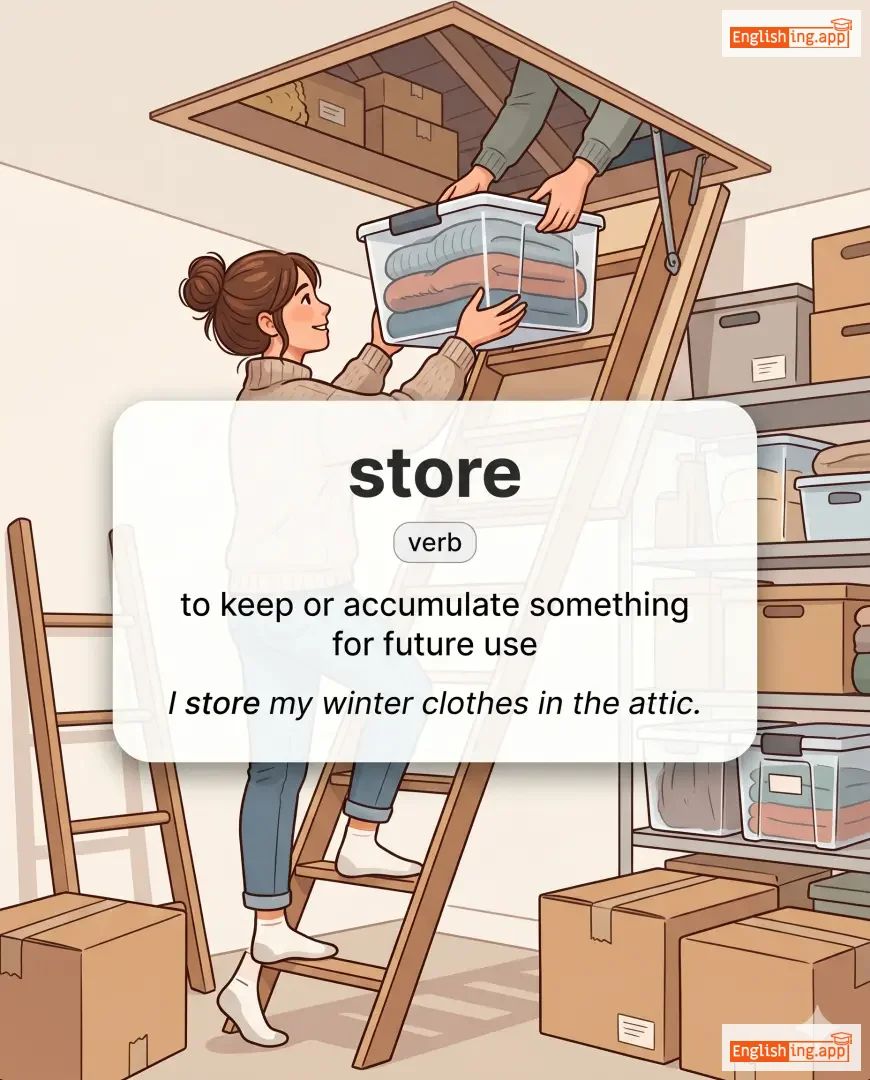
store definition card — visual illustration of the meaning
verb
/stɔːr/
保管する (hokan suru)

to keep or accumulate something for future use

"I store my winter clothes in the attic."

"私は冬の服を屋根裏部屋に保管しています。" (Watashi wa fuyu no fuku o yaneura heya ni hokan shiteimasu.)
noun
/ˈstɔːrhaʊs/
倉庫 (soko)

A place where goods, supplies, or valuables are stored; a repository

"The warehouse acted as a storehouse for all the imported goods."

"その倉庫はすべての輸入品のストアハウスとして機能していた。" (Sono soko wa subete no yunyuhin no storehouse to shite kinou shiteita.)
noun
/stɔːrk/
コウノトリ (kounotori)

large wading bird with long legs and a long neck

"The stork built its nest on top of the tall chimney."

"そのコウノトリは高い煙突の上に巣を作った。" (Sono kounotori wa takai entotsu no ue ni su o tsukutta.)
noun
/stɔːrm/
(arashi)

a violent disturbance of the atmosphere with strong winds, rain, and often thunder

"The storm caused major flooding in the area."
"その嵐は地域で大きな洪水を引き起こしました。" (Sono arashi wa chiiki de ookina kouzui wo hikiokoshimashita.)
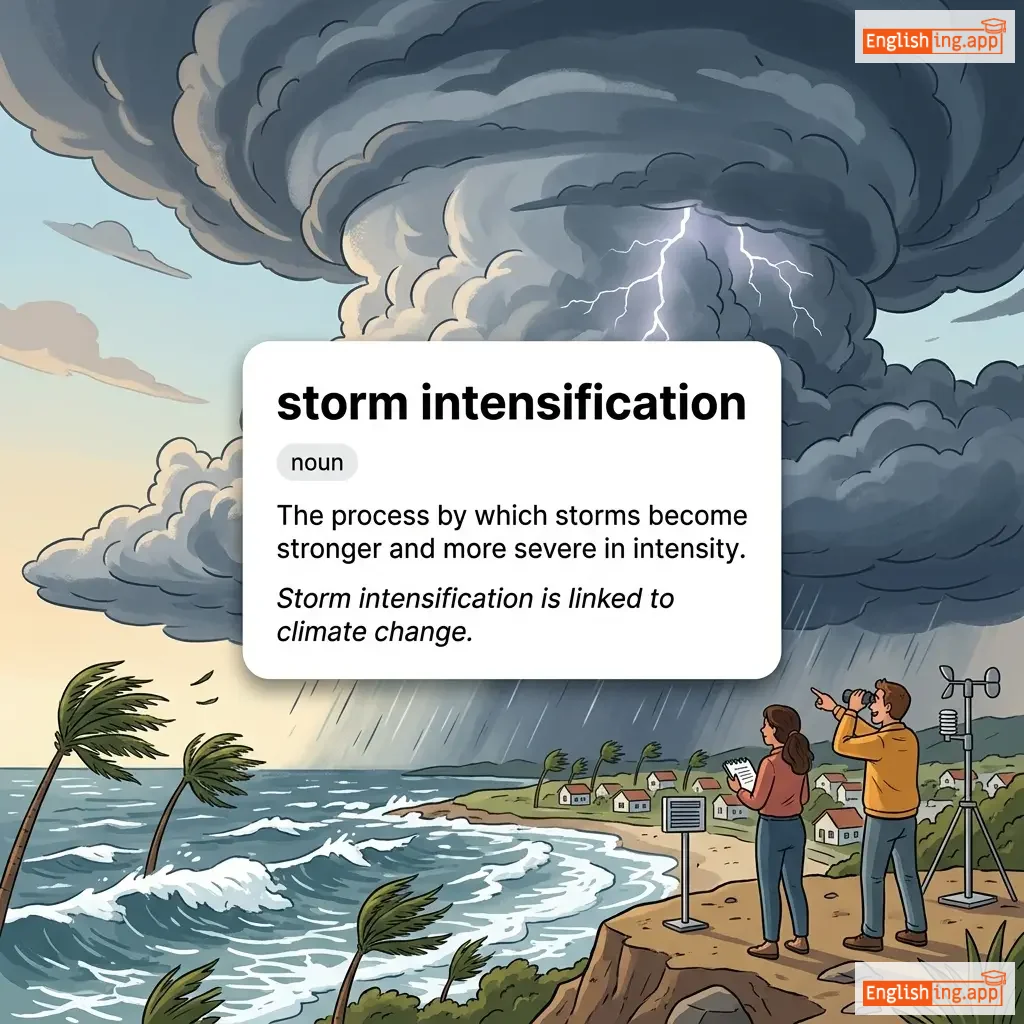
storm intensification definition card — visual illustration of the meaning
noun
stɔːrm ɪnˌtensɪfɪˈkeɪʃən
嵐の強化 (arashi no kyōka)

The process by which storms become stronger and more severe in intensity.

"Storm intensification is linked to climate change."

"嵐の強化は気候変動に関連しています。" (Arashi no kyōka wa kikō hendō ni kanren shiteimasu.)
noun
/ˈstɔːri/
物語 (monogatari)

a narrative of real or imaginary events

"She told a fascinating story about her travels."

"彼女は旅行についての魅力的なストーリーを話しました。" (Kanojo wa ryokō ni tsuite no miryokuteki na sutōrī o hanashimashita.)
adjective/noun
/staʊt/
丈夫 / ぶ厚い (jōbu / buatsui)

Strong, thick, or heavily built; also a kind of dark beer

"The stout man lifted the heavy box with ease."

"その丈夫な男性は重い箱を簡単に持ち上げました。" (Sono jōbu na dansei wa omoi hako o kantan ni mochiagemashita.)
adjective
/ˌstaʊtˈhɑːrtɪd/
勇敢な (yūkan na)

Brave, determined, and courageous

"The stouthearted soldier never gave up."

"勇敢な兵士は決して諦めなかった。" (Yūkan na heishi wa kesshite akiramenakatta.)
noun
/stoʊv/
ストーブ (sutōbu)

a device that produces heat for cooking or heating

"She cooked rice on the gas stove."

"彼女はガスストーブでご飯を炊いた。" (Kanojo wa gasu sutōbu de gohan o taita.)
noun
/ˈstoʊəˌweɪ/
密航者 (mikkōsha)

A person who hides on a ship, plane, or other vehicle in order to travel secretly without paying.

"The crew discovered a stowaway hiding in the cargo hold."

"乗組員は貨物室に隠れている密航者を発見しました。" (Nōkumiin wa kamotsushitsu ni kakurete iru mikkōsha o hakken shimashita.)
verb
/ˈstræɡəl/
不規則に動く (fukisoku ni ugoku)

To move or spread in an irregular, scattered, or untidy way.

"The children began to straggle behind on the long hike."

"子供たちは長いハイキングで後れを取るようになった。" (Kodomotachi wa nagai haikingu de okure wo toru you ni natta.)
adjective, adverb
/streɪt/
まっすぐ (massugu)

Extending or moving uniformly in one direction only; not curved or bent.

"He walked straight to the door without stopping."

"彼は立ち止まることなく、まっすぐドアに向かって歩いていきました。" (Kare wa tachidomaru koto naku, massugu doa ni mukatte aruite ikimashita.)
adjective
/ˌstreɪt ˈfɔːr.wərd/
率直で明確; 複雑ではない; 理解しやすい (Sotchoku de meikaku; fukuzatsu de wa nai; rikai shiyasui)

honest and open; not complicated; easy to understand

"His explanation was very straightforward and easy to follow."

"彼の説明はとても率直で、簡単に理解できました。" (Kare no setsumei wa totemo sōtokude, kantan ni rikai dekimashita.)
verb
/ˈstreɪtən/
整える (totonoeru)

to make something straight or tidy; to correct or organize

"She straightened her hair before the meeting."

"会議の前に彼女は髪を整えた。" (Kaigi no mae ni kanojo wa kami o totonoeta.)
adjective
/ˌstreɪtˈfɔːwəd/
簡単 (kantan)

easy to understand or do; simple

"Her explanation was straightforward and clear."

"彼女の説明は簡単で明確でした。" (Kanojo no setsumei wa kantan de meikaku deshita.)
noun, verb
/streɪn/
緊張 / 引っ張り (kinchou / hippa-ri)

To force something beyond its normal limits; to injure by overexertion; or a type or variety of something.

"He strained his back while lifting the heavy box."

"彼は重い箱を持ち上げるときに背中を痛めました。" (Kare wa omoi hako o mochiageru toki ni senaka o itamemashita.)
noun
/ˈstreɪnər/
こし器 (koshiki)

a device having holes punched in it or made of crossed wires for separating solid matter from a liquid

"Use a strainer to drain the pasta water."

"パスタの水を切るためにこし器を使ってください。" (Pasuta no mizu o kiru tame ni koshiki o tsukatte kudasai.)
noun
/streɪt/
海峡 (kaikyō)

A narrow passage of water connecting two seas or two large areas of water.

"The Strait of Gibraltar connects the Atlantic Ocean and the Mediterranean Sea."

"ジブラルタル海峡は大西洋と地中海を繋いでいます。" (Jiburataru kaikyou wa Taiseiyou to Chichuukai o tsunaideimasu.)
noun
/strəˈmoʊ.ni.əm ˌflaʊ.ər/
ジムソンウィードの花 (jimusonwīdo no hana)

A trumpet-shaped white or purple flower from the jimsonweed plant, known for its toxic properties

"The stramonium flower blooms at night with a sweet fragrance."

"ジムソンウィードの花は夜に咲き、甘い香りを放ちます。" (jimusonwīdo no hana wa yoru ni saki, amai kaori wo hanachimasu)
noun, verb
/strænd/
糸 / 取り残された (ito / torinosokareta)

Noun: A single thin length of thread, wire, or similar. Verb: To leave someone or something without a way of moving or leaving.

"The storm stranded many tourists on the island."

"嵐は多くの観光客を島に取り残しました。" (Arashi wa ooku no kankōkyaku o shima ni torinoshimashita.)
adjective
/streɪndʒ/
奇妙 (kimyō)

unusual or not normal

"It was strange to see him at the party after so long."

"そんなに長い時間後にパーティーで彼を見るのは奇妙だった。" (Sonnani nagai jikan go ni pātī de kare o miru no wa kimyō datta.)
noun
/ˈstreɪndʒər/
見知らぬ人 (mishiranu hito)

A person whom one does not know.

"A stranger knocked on the door at midnight."

"見知らぬ人が真夜中にドアをノックしました。" (Mishiranu hito ga mayonaka ni doa o nokkushimashita.)
verb
/ˈstræŋɡəl/

to kill or stop someone or something by squeezing the throat or restricting flow

"The villain tried to strangle his opponent in the dark alley."

noun
/ˈstrætədʒəm/
策略 (sakuryaku)

a plan or scheme designed to achieve a particular goal, often by trickery

"The general devised a clever stratagem to outwit the enemy."

"将軍は敵を欺くために巧妙な策略を考案しました。" (Shōgun wa teki o azamuku tame ni kōmyōna sakuryaku o kōan shimashita.)
strategic definition card — visual illustration of the meaning
adjective
/strəˈtiːdʒɪk/
戦略的 (senryakuteki)

relating to the identification of long-term or overall aims and interests and the means of achieving them

"His strategic thinking helped the company grow."

"彼の戦略的思考は会社の成長に役立ちました。" (Kare no senryakuteki shikō wa kaisha no seichō ni yakudachimashita.)
strategic insights definition card — visual illustration of the meaning
noun
/strəˈtiː.dʒɪk ˈɪn.saɪts/
戦略的洞察 (senryakuteki dōsatsu)

Deep understanding and wisdom gained through careful analysis for planning purposes.

"Strategic insights guide policymaking."

"戦略的洞察は政策立案を導く。" (Senryakuteki dōsatsu wa seisaku ritsuan o michibiku.)
strategies definition card — visual illustration of the meaning
noun
ˈstræt.ə.dʒiz
戦略 (senryaku)

A plan of action designed to achieve a long-term or overall aim.

"Effective strategies ensure success."

"効果的な戦略は成功を保証する。" (Kōkateki na senryaku wa seikō o hoshō suru.)
strategy definition card — visual illustration of the meaning
noun
/ˈstrætədʒi/
戦略 (senryaku)

a plan of action designed to achieve a long-term or overall aim

"They developed a new strategy to increase sales."
"彼らは売上を増加させるために新しい戦略を開発しました。" (Karera wa uriage o zōka saseru tame ni atarashī senryaku o kaihatsu shimashita.)
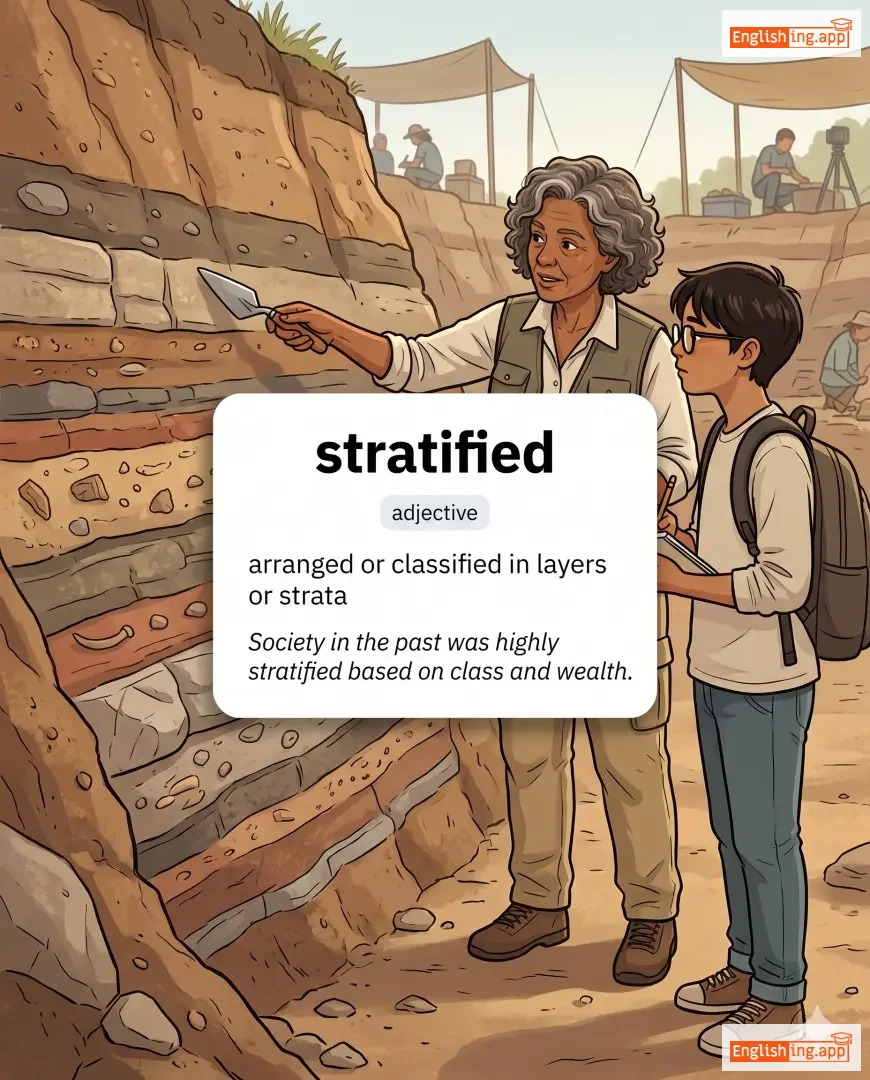
stratified definition card — visual illustration of the meaning
adjective
/ˈstrætɪfaɪd/

arranged or classified in layers or strata

"Society in the past was highly stratified based on class and wealth."

verb
/ˈstrætɪfaɪ/
階層化する (kaisōka suru)

to arrange or divide into layers, classes, or categories

"The researchers plan to stratify the data based on age groups."

"研究者たちは年齢層に基づいてデータを階層化する予定です。" (Kenkyūsha-tachi wa nenreisō ni motozuite dēta o kaisōka suru yotei desu.)