語彙集

英単語辞書 | 単語の意味、定義、例文

adjective
/spraɪ/
活発 (kappatsu)

active and lively, especially in old age

"The spry grandmother surprised everyone with her quick dance steps."

"活発な祖母は素早いダンスステップで皆を驚かせました。" (Kappatsu na sobo wa subayai dansu suteppu de mina o odorokasemashita.)
noun
/spjuːm/
(awa)

Froth or foam, especially found on waves or liquids.

"The waves crashed against the rocks, leaving spume in the air."

"波が岩にぶつかり、空気中に泡を残した。" (Nami ga iwa ni butsukari, kuuchichuu ni awa wo nokoshita.)
verb
/spɜːr/
促す / 奨励する (unagasu / shōrei suru)

To encourage or motivate someone to take action.

"The teacher's praise spurred him to study harder."

"教師の賞賛は彼にもっと一生懸命勉強するように促した。" (Kyōshi no shōsan wa kare ni motto isshōkenmei benkyō suru yō ni unagashita.)
adjective
/ˈspjʊəriəs/
偽の / 虚偽の (nise no / kyogi no)

Not genuine, authentic, or true; false or fake.

"The report was based on spurious claims."

"その報告書は偽の主張に基づいていた。" (Sono houkokusho wa nise no shuchou ni motozuite ita.)
verb
/spɜːrn/
軽蔑して拒絶する (keibetsu shite kyozetsu suru)

To reject something or someone with disdain or contempt.

"She spurned his offer of help."

"彼女は軽蔑の気持ちで彼の助けの申し出を拒絶した。" (Kanojo wa keibetsu no kimochi de kare no tasuke no mōshide o kyozetsu shita.)
🕵️‍♂️

spy (supai)

verb
/spaɪ/
スパイする (supai suru)

to secretly collect information about a person, group, or country

"He was caught spying on his neighbor through the window."

"彼は窓越しに隣人をスパイしているところを捕まえられた。" (Kare wa madogoshi ni rinjin o supai shite iru tokoro o tsukamaerareta.)
verb
/ˈskwɒbəl/
些細なことで口論する (sasai na koto de kōron suru)

To argue noisily over something small or unimportant.

"The children squabbled over the last piece of cake."

"子供たちはケーキの最後の一切れを巡って争っていました。" (Kodomotachi wa kēki no saigo no hitokire o megutte arasotte imashita.)
noun
/skwɒd/
チーム (chiimu)

a small group of people organized for a specific purpose or task, often in the military or sports

"The football squad trained hard before the championship match."

"サッカーチームはチャンピオンシップの試合の前に一生懸命練習した。" (Sakkaa chiimu wa chanpionship no shiai no mae ni isshoukenmei renshuu shita.)
adjective
/ˈskwɒlɪd/
非常に汚い (hijō ni kitanai)

extremely dirty and unpleasant, often due to poverty or neglect

"He lived in a squalid room with broken furniture."

"彼は壊れた家具のある汚い部屋に住んでいた。" (Kare wa kowareta kagu no aru kitanai heya ni sunde ita.)
noun
/skwɔːl/
突風 (toppu)

a sudden violent gust of wind, often accompanied by rain, snow, or sleet

"A sudden squall caught the sailors off guard."
"突然の突風が船員たちを驚かせた。" (Totsuzen no toppu ga sen'in tachi wo odorokaseta.)
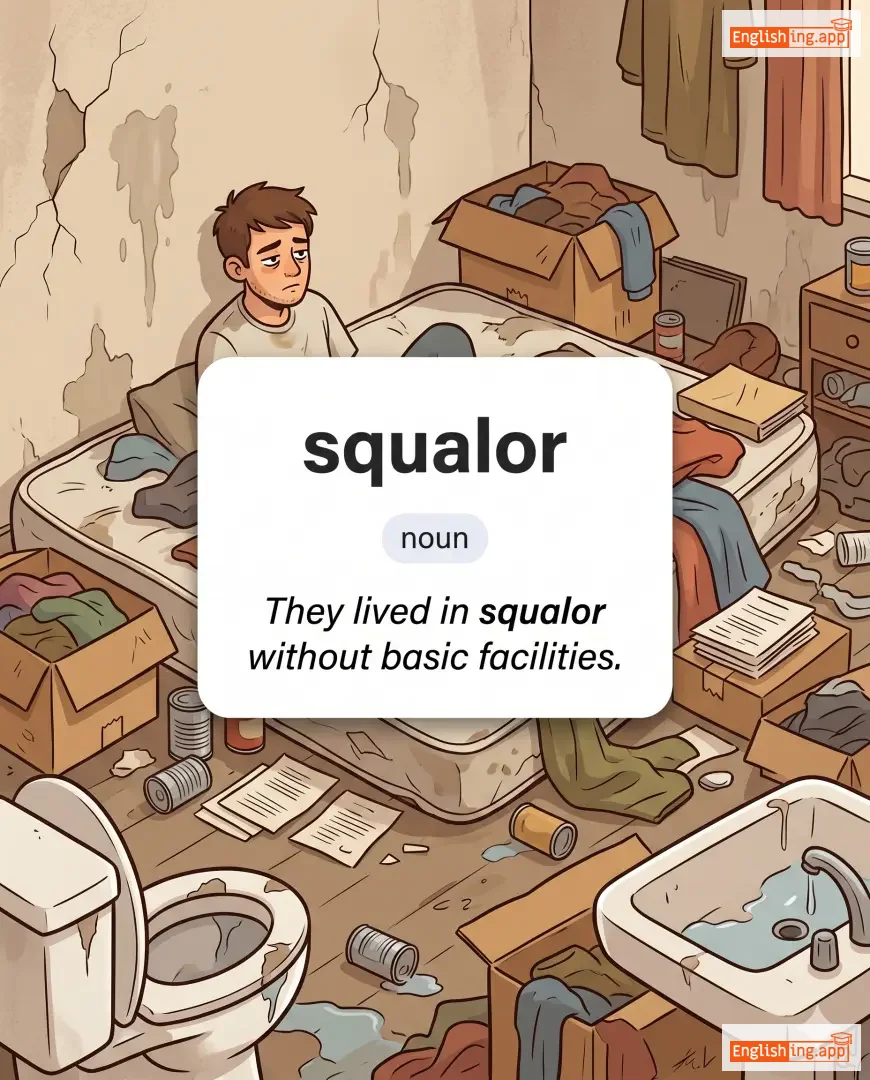
squalor definition card — visual illustration of the meaning
noun
/ˈskwɒlər/
貧困 (hinkon)

the state of being extremely dirty and unpleasant, especially due to poverty or neglect

"They lived in squalor without basic facilities."
"彼らは基本的な施設なしで貧困に住んでいました。" (Karera wa kihonteki na shisetsu nashi de hinkon ni sundeimashita.)
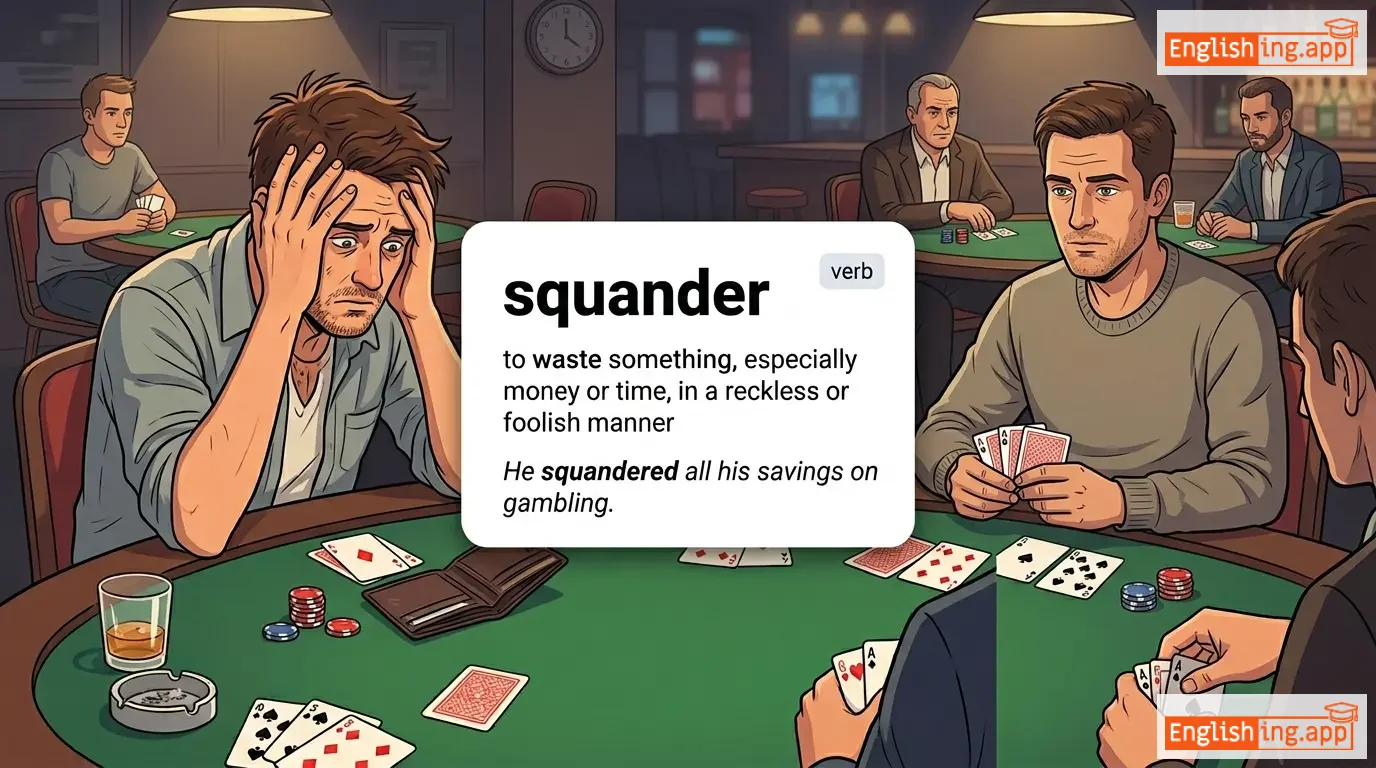
squander definition card — visual illustration of the meaning
verb
/ˈskwɒndər/
浪費する (rouhi suru)

to waste something, especially money or time, in a reckless or foolish manner

"He squandered all his savings on gambling."

"彼はギャンブルに全ての貯金を浪費した。" (Kare wa gyanburu ni subete no chokin o rouhi shita.)
noun
/skwɛə(r)/
四角形 (shikakkei)

a shape with four equal straight sides and four right angles

"The table has a square shape."

"テーブルは四角い形をしています。" (Tēburu wa shikakai katachi o shiteimasu.)
verb
/skwɒʃ/
潰す (tsubusu)

to crush or squeeze something with force so that it becomes flat or broken

"She accidentally squashed the bug with her shoe."

"彼女はうっかり靴で虫を潰しました。" (Kanojo wa ukkari kutsu de mushi o tsubushimashita.)
/skwɒt/
しゃがむ (shagamu)

to crouch or sit with knees bent and body close to the ground

"He squatted down to tie his shoes."

"彼は靴を結ぶためにしゃがんだ。" (Kare wa kutsu o musubu tame ni shaganda.)
noun
/ˈskwɒtər/
不法占拠者 (fuhō senkyo-sha)

a person who unlawfully occupies an uninhabited building or unused land

"The police removed the squatters from the abandoned house."
"警察は廃墟から不法占拠者を追い出しました。" (Keisatsu wa haikyo kara fuhō senkyo-sha o oidasimashita.)
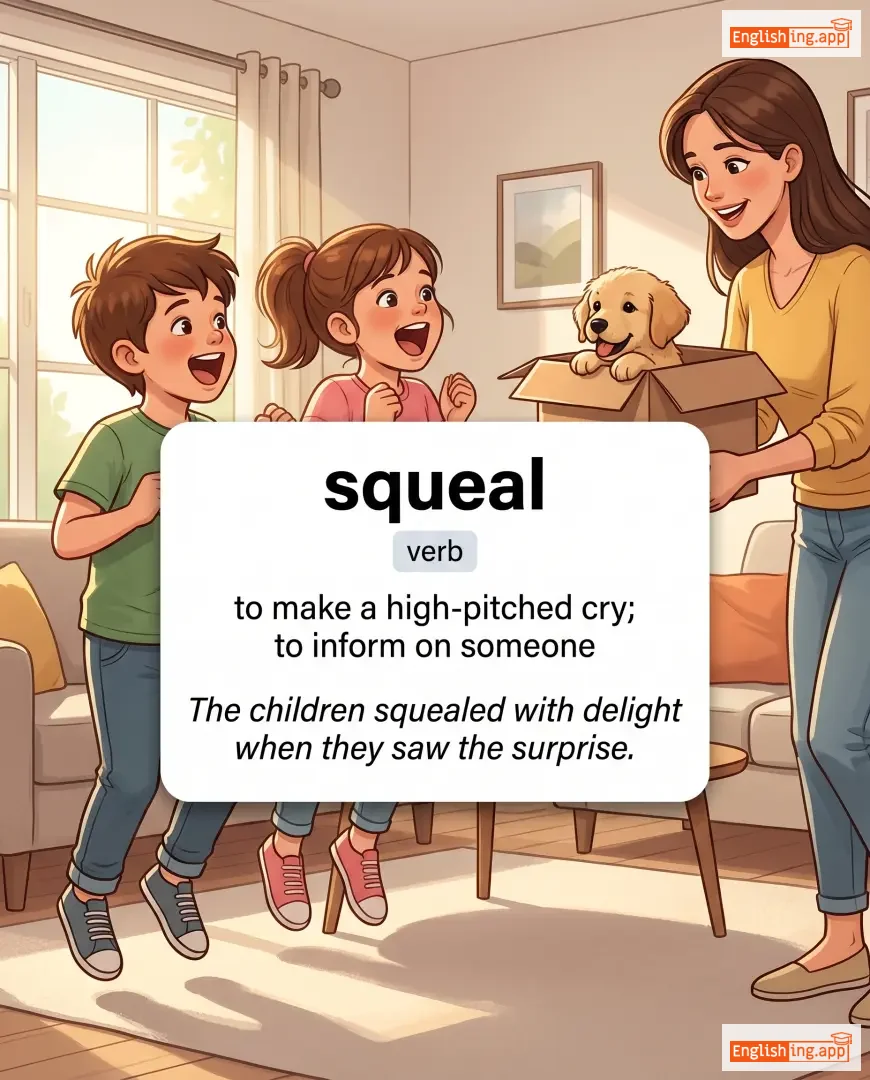
squeal definition card — visual illustration of the meaning
verb
/skwiːl/
叫ぶ (sakebu)

to make a high-pitched cry; to inform on someone

"The children squealed with delight when they saw the surprise."

"子供たちはサプライズを見て喜んで叫びました。" (Kodomotachi wa sapuraizu o mite yorokonde sakebimashita.)
adjective
/ˈskwiːmɪʃ/
簡単に気分が悪くなったり、吐き気を催したり、嫌悪感を抱いたりする (kantan ni kibun ga warukunattari, hakike o moyōshitari, ken'okan o idaishitari suru)

easily made to feel sick, faint, or disgusted

"She felt squeamish at the sight of blood."

"彼女は血を見て気分が悪くなった。" (Kanojo wa chi o mite kibun ga warukunatta.)
verb
/skwiːz/
絞る (shiboru)

to press something firmly, especially from all sides in order to extract or compress it

"She squeezed the toothpaste to get the last bit."

"彼女は歯磨き粉のチューブを絞って、最後の一滴を出しました。" (Kanojo wa hamigakiko no chūbu o shibotte, saigo no itteki o dashimashita.)
🌧️

squelch

verb
/skwɛltʃ/

to make a soft sucking sound, such as when walking on mud; to suppress or silence

"His boots squelched in the wet ground."

verb
/skwɪnt/
目を細める (me wo hosomeru)

to look with partly closed eyes

"She squinted at the bright sunlight."

"彼女は明るい日差しで目を細めた。" (Kanojo wa akarui hizashi de me wo hosometa.)
noun
/ˈskwɪr.əl/
リス (risu)

a small agile tree-dwelling rodent with a long bushy tail

"The squirrel gathered nuts for winter."

"リスは冬のために木の実を集めていました。" (Risu wa fuyu no tame ni ki no mi o atsume te imashita.)
verb, noun
/stæb/
刺す (sasu)

to pierce or wound with a pointed weapon or object

"He was stabbed in the back during the altercation."
"彼は口論中に背中を刺されました。" (Kare wa kōron-chū ni senaka o sasarimashita.)
noun
/stəˈbɪləti/

the quality of being steady and unchanging over time

"The stability of the economy is crucial for growth."

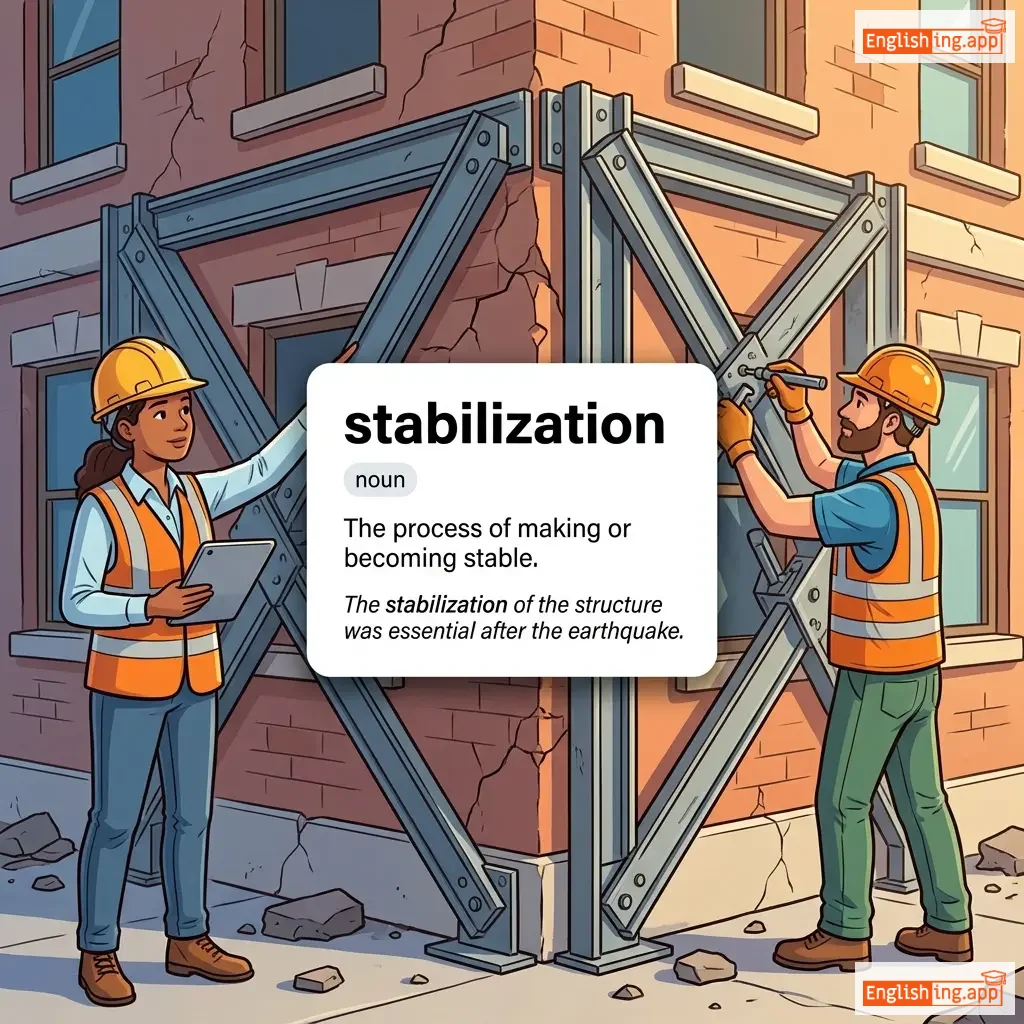
stabilization definition card — visual illustration of the meaning
noun
ˌsteɪbəlaɪˈzeɪʃən
安定化 (anteika)

The process of making or becoming stable.

"The stabilization of the structure was essential after the earthquake."

"地震後、構造の安定化が不可欠でした。" (Jishin go, kouzou no anteika ga fukaketsu deshita.)
verb
/ˈsteɪ.bə.laɪz/
安定させる (antei saseru)

to make something steady, secure, or unlikely to change suddenly

"The government took measures to stabilize the economy."
"政府は経済を安定させるための措置を講じた。" (seifu wa keizai o antei saseru tame no sochi o kōjita.)
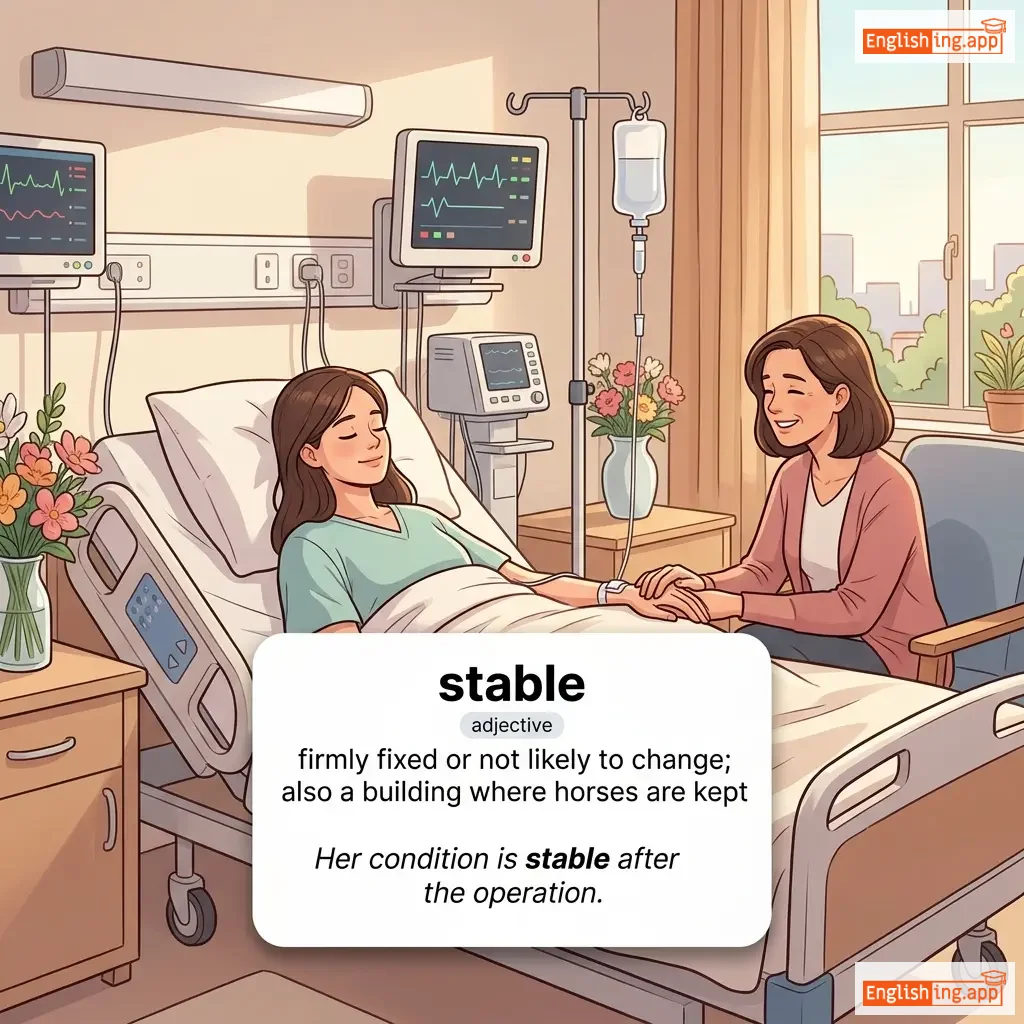
stable definition card — visual illustration of the meaning
adjective
/ˈsteɪ.bəl/
安定した / 馬小屋 (antei shita / uma koya)

firmly fixed or not likely to change; also a building where horses are kept

"Her condition is stable after the operation."
"手術後、彼女の状態は安定しています。" (Shujutsu go, kanojo no jōtai wa antei shiteimasu.)
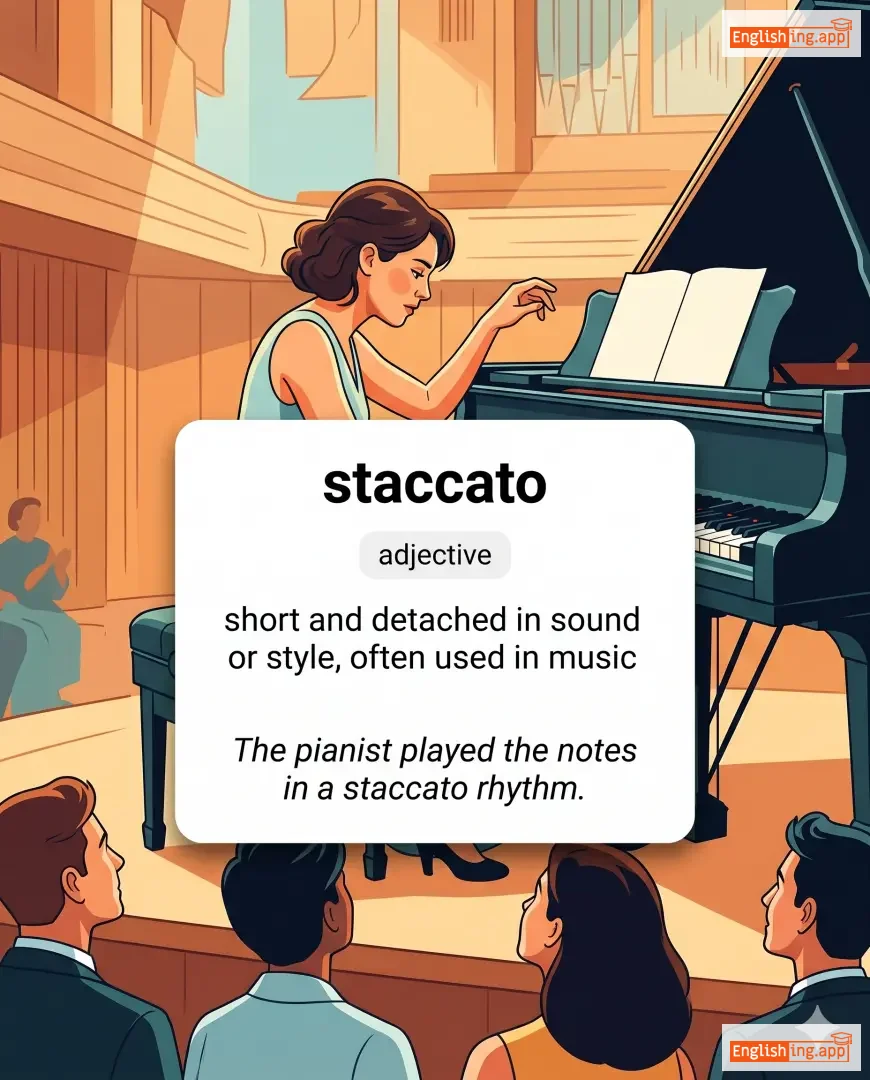
staccato definition card — visual illustration of the meaning
adjective
/stəˈkɑː.təʊ/
スタッカート (suttakāto)

short and detached in sound or style, often used in music

"The pianist played the notes in a staccato rhythm."

"ピアニストはスタッカートのリズムで音符を弾きました。" (Pianisuto wa suttakāto no rizumu de onpu o hikimashita.)
📚

stack

verb
/stæk/

to arrange things in a neat pile or one on top of another

"He stacked the books neatly on the shelf."

🏟️

stadium

noun
/ˈsteɪdiəm/

a large structure with seating for sports, concerts, or other events

"Thousands of fans filled the stadium to watch the final match."

noun
/stæf/
スタッフ (sutaffu)

a group of employees working together in an organization

"The staff at the hospital are very helpful."

"病院のスタッフはとても役に立ちます。" (Byōin no sutaffu wa totemo yaku ni tachimasu.)
noun
/steɪdʒ/
ステージ (suteeji)

a raised platform or area for performances or presentations

"The actor stepped onto the stage to deliver his speech."

"俳優は演説をするためにステージに上がった。" (Haiyū wa enzetsu o suru tame ni suteeji ni agatta.)
adjective
/ˈstæɡ.nənt/
停滞 (teitai)

not moving, changing, or developing; inactive

"The company’s growth remained stagnant for several years."

"会社の成長は数年間停滞していました。" (Kaisha no seichō wa suunenkan teitai shite imashita.)
verb
/ˈstæɡ.neɪt/
停滞する (teitai suru)

to stop developing, progressing, or moving

"Without innovation, the business will stagnate."
"革新がなければ、ビジネスは停滞する。" (kakushin ga nakereba, bijinesu wa teitai suru.)
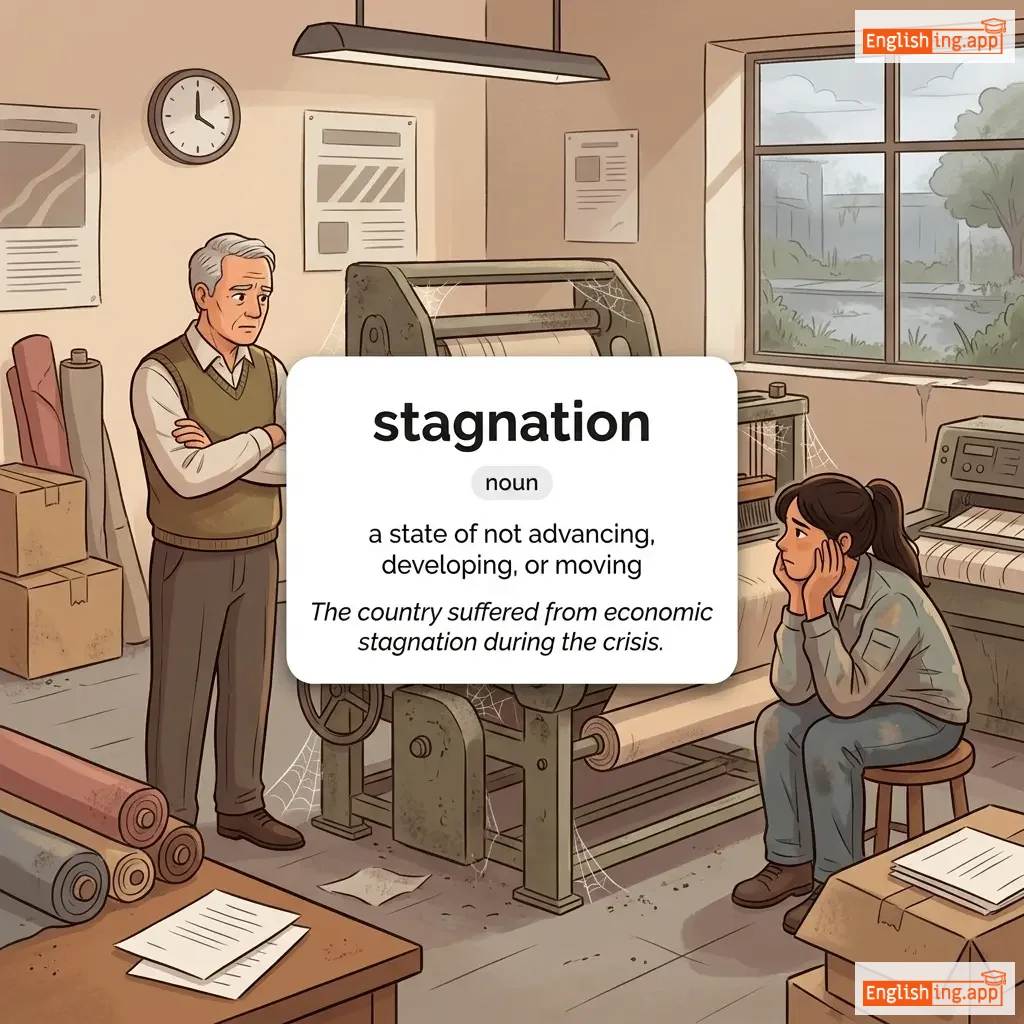
stagnation definition card — visual illustration of the meaning
noun
/stæɡˈneɪ.ʃən/
停滞 (teitai)

a state of not advancing, developing, or moving

"The country suffered from economic stagnation during the crisis."

"その国は危機の間、経済的停滞に苦しんでいました。" (Sono kuni wa kiki no aida, keizaiteki teitai ni kurushinde imashita.)
adjective
/ˈsteɪ.dʒi/
過剰に演劇的 (kajou ni engekiteki)

Overly theatrical, artificial, or exaggerated in manner or style.

"Her performance felt stagy and unnatural."

"彼女のパフォーマンスは過剰に演劇的で不自然に感じられた。" (Kanojo no pafomansu wa kajou ni engekiteki de fushizen ni kanjirareta.)
adjective
/steɪd/
堅実、尊敬される (kenjitsu, sonkei sareru)

Serious, respectable, and unadventurous.

"He came from a staid family background."

"彼は堅実な家庭から来た。" (Kare wa kenjitsu na katei kara kita.)
🩸

Stain

verb
/steɪn/

to mark or discolor something permanently; a spot or mark left behind

"The coffee spilled and stained the tablecloth."

noun
/stɛə/
階段 (kaidan)

a step or set of steps leading from one level to another

"He tripped on the stair and fell down."

"彼は階段でつまずいて転んだ。" (Kare wa kaidan de tsumazuite koronda.)
noun, verb
/steɪk/
株式, リスク (kabushiki, risuku)

A share or interest in a business or venture; to risk or support something of value.

"He has a major stake in the new company."
"彼は新しい会社に大きな利害関係を持っています。" (Kare wa atarashī kaisha ni ōkina rigai kankei o motteimasu.)
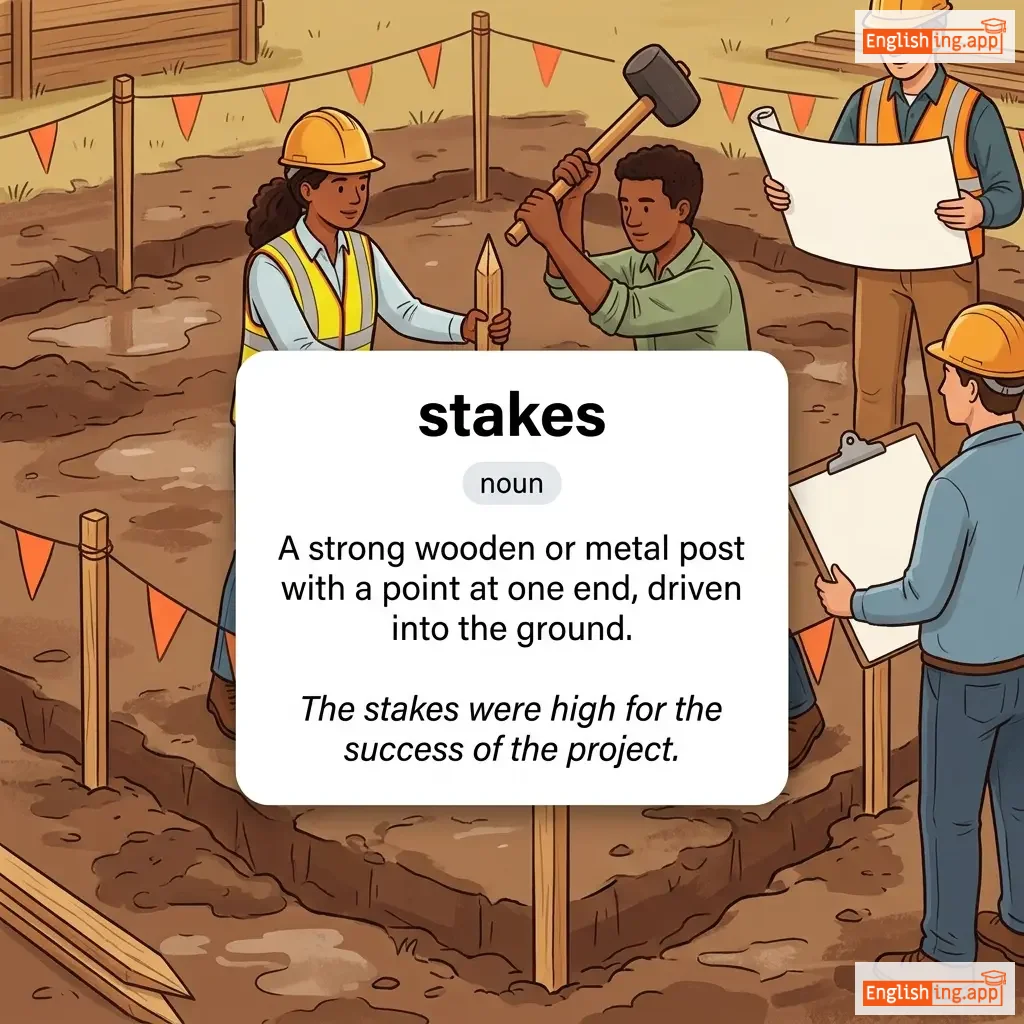
stakes definition card — visual illustration of the meaning
noun
steɪks
賭け (kake)

A strong wooden or metal post with a point at one end, driven into the ground.

"The stakes were high for the success of the project."

"プロジェクトの成功のために賭けが大きかった。" (Purojekuto no seikou no tame ni kake ga ookikatta.)
adjective
/steɪl/
古くなった; しけた; 新鮮でない (furukunatta; shiketa; shinsen de nai)

no longer fresh; lacking originality or novelty

"The bread became stale after sitting out for three days."

"パンは三日後に古くなった。" (Pan wa mikka go ni furukunatta.)
noun
/ˈsteɪl.meɪt/
行き詰まり (ikizumari)

A situation in which no progress can be made or no party can win.

"Negotiations ended in a stalemate."

"交渉は行き詰まりました。" (Kōshō wa ikizumarimashita.)
verb, noun
/stɔːl/
止める, 屋台 (tomeru, yatai)

to stop or cause to stop temporarily; a small shop or stand

"The car stalled on the way to the office."

"車はオフィスに向かう途中で停まった。" (Kuruma wa ofisu ni mukau tochu de tomatta.)
noun
/ˈstæl.i.ən/
繁殖用の牡馬 (han shokuyou no osuma)

An adult male horse that is not castrated, often used for breeding.

"The farm owns a powerful stallion for breeding purposes."

"その農場は繁殖用の強力なスタリオンを所有しています。" (Sono noujou wa hanshoku you no kyouryoku na sutarion wo shoyuu shiteimasu.)
adjective
/ˈstɔːlwərt/
忠実, 頑強 (chuujitsu, gankyō)

Loyal, reliable, and hardworking; strongly built or sturdy.

"She has always been a stalwart supporter of the community."

"彼女は常にコミュニティの忠実な支持者でした。" (Kanojo wa tsuneni komyuniti no chuujitsuna shijisha deshita.)
noun
/ˈstæmɪnə/
スタミナ (sutamina)

The physical or mental strength to sustain prolonged effort or activity.

"Marathon runners need great stamina to finish the race."

"マラソンランナーはレースを終えるために大きなスタミナが必要です。" (Marason rannā wa rēsu o oeru tame ni ōkina sutamina ga hitsuyōdesu.)
verb
/ˈstæmər/
どもる (domoru)

To speak with sudden involuntary pauses and a tendency to repeat the initial letters of words.

"The nervous student began to stammer during his speech."

"緊張した学生はスピーチ中にどもり始めた。" (Kinchou shita gakusei wa supīchi chū ni domori hajimeta.)
📮

stamp

verb
/stæmp/

To bring down (one's foot) heavily on the ground; to imprint a mark or seal.

"She stamped her foot in frustration."

noun/verb
/stæmˈpiːd/
パニック状態の群衆 (panikku joutai no gunshuu)

A sudden, uncontrolled rush of people or animals; to cause a mass movement.

"The loud noise caused a stampede of the crowd."

"大きな音が群衆の中でスタンピードを引き起こしました。" (Ookina oto ga gunshuu no naka de sutampiido o hikiokoshimashita.)