語彙集

英単語辞書 | 単語の意味、定義、例文

noun
/səˈprɑːnoʊ/
女性または子供の最も高い歌声 (josei matawa kodomo no mottomo takai utagoe)

the highest female or boy’s singing voice

"She sang beautifully in the soprano range during the concert."

"彼女はコンサートでソプラノの範囲で美しく歌いました。" (Kanojo wa konsaato de soprano no han'i de utsukushiku utaimashita.)
noun
/ˈsɔːrsəri/
魔法 (mahou)

the use of magical powers, especially through spells and enchantments

"The villagers believed the illness was caused by sorcery."
"村人たちは病気が魔法によって引き起こされたと信じていました。" (Murabito-tachi wa byouki ga mahou ni yotte hikiokosareta to shinjiteimashita.)
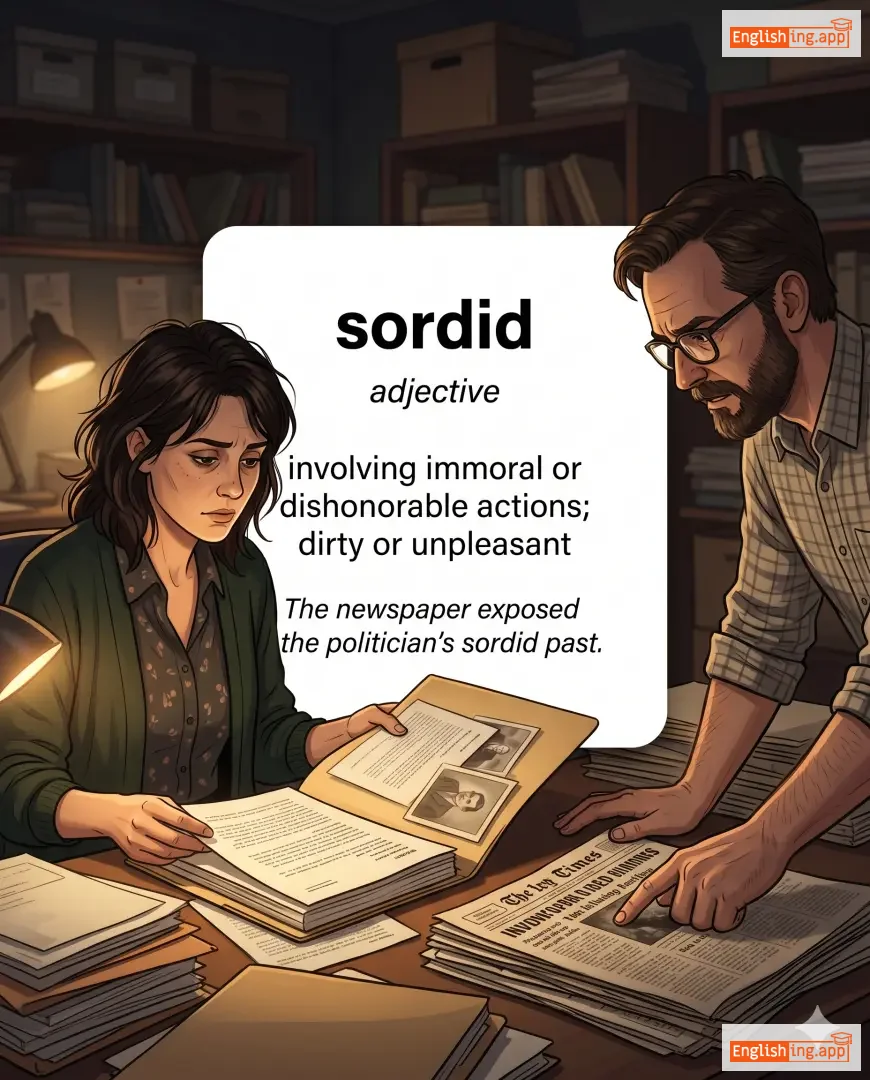
sordid definition card — visual illustration of the meaning
adjective
/ˈsɔːrdɪd/
卑劣な (hiretsuna)

involving immoral or dishonorable actions; dirty or unpleasant

"The newspaper exposed the politician's sordid past."

"新聞は政治家の卑劣な過去を暴露した。" (Shimbun wa seijika no hiretsuna kako o bakuro shita.)
adjective
/sɔːr/
痛い (itai)

painful or aching, usually in a specific part of the body

"After the long run, my legs were sore."

"長いランニングの後、私の足は痛かった。" (nagai running no ato, watashi no ashi wa itakatta)
noun
/ˈsɑːroʊ/
悲しみ (kanashimi)

a feeling of deep sadness or grief

"She was filled with sorrow after the loss of her friend."

"彼女は友達を失った後、悲しみに満たされていました。" (Kanojo wa tomodachi o ushinatta ato, kanashimi ni mitasarete imashita.)
adjective
/ˈsɔːri/
ごめん (gomen)

feeling regret or sympathy

"She felt sorry for what had happened."

"彼女は起こったことを後悔していた。" (Kanojo wa okotta koto o kōkai shite ita.)
verb
/sɔːrt/
並べ替える (narabekaeru)

to arrange or categorize something

"Please sort the files by date."

"ファイルを日付順にソートしてください。" (Fairu o hizuke-jun ni sōto shite kudasai.)
noun
/soʊl/
(tamashī)

the spiritual or immaterial part of a person, often thought of as eternal

"She believed her soul would live on after death."

"彼女は死後も自分の魂が生き続けると信じていました。" (Kanojo wa shigo mo jibun no tamashī ga ikitsuzukeru to shinjiteimashita.)
🔊

sound

noun, verb, adjective
/saʊnd/

a sensation perceived by the ear; to make or cause to make a noise; in good condition

"The bell sounded across the valley."

adjective
/ˈsaʊnd.pruːf/
防音; 音の出入りを防ぐ (bōon)

impervious to sound; preventing sound from entering or leaving

"The recording studio has sound-proof walls."

"レコーディングスタジオには防音壁があります。" (rekōdingu sutajio ni wa bōon kabe ga arimasu.)
noun
/suːp/
スープ (suupu)

a liquid dish, typically made with meat, vegetables, or legumes, and often served hot

"She made a delicious tomato soup for dinner."

"彼女は夕食に美味しいトマトスープを作った。" (Kanojo wa yuushoku ni oishii tomato suupu o tsukutta.)
noun
/ˈsuːpsɒ̃/
少量 (shoryo)

a very small quantity of something; a trace

"She added just a soupcon of spice to the dish."

"彼女は料理にほんの少しスパイスを加えた。" (Kanojo wa ryori ni honno sukoshi supaisu o kuwaeta.)
adjective
/ˈsaʊər/
酸っぱい (suppai)

having an acidic taste; unpleasant or bad-tempered

"The milk has gone sour."

"ミルクが酸っぱくなった。" (Miruku ga suppaku natta.)
noun
/ˈsaʊər wʊd ˈæp.əl/
ゾウのリンゴ (zou no ringo)

a tropical fruit with hard shell and tangy flesh; elephant apple

"The sour wood apple has a unique taste that many people enjoy."

"ゾウのリンゴはユニークな味があり、多くの人々が楽しんでいます。" (Zou no ringo wa yuniiku na aji ga ari, ooku no hitobito ga tanoshindeimasu)
noun
/sɔːrs/
(minamoto)

a place, person, or thing from which something originates or is obtained

"The internet is a vast source of information."

"インターネットは情報の膨大な源です。" (Intānetto wa jōhō no bōdaina minamoto desu.)
noun/adjective
/saʊθ/
(minami)

the direction towards the bottom of a map, opposite to north

"The sun rises in the east and sets in the south."

"太陽は東で昇り、南で沈みます。" (Taiyō wa higashi de nobori, minami de shizumimasu.)
proper noun
/ˌsaʊθ əˈmɛrɪkə/
南アメリカ (minami amerika)

a continent located in the Western Hemisphere, mostly in the Southern Hemisphere

"Brazil is the largest country in South America."

"ブラジルは南アメリカで最も大きな国です。" (Burajiru wa minami amerika de mottomo ookina kuni desu.)
noun
/ˌsaʊθˈiːst/
南東 (nantou)

the direction that is between south and east; a region in that direction

"The city is located in the southeast of the country."

"その都市は国の南東に位置しています。" (Sono toshi wa kuni no nantou ni ichi shiteimasu.)
adjective
/ˈsʌðərn/
南の (minami no)

located in or facing the south; southern regions

"She moved to a southern city for work."

"彼女は仕事のために南の都市に引っ越した。" (Kanojo wa shigoto no tame ni minami no toshi ni hikkoshita.)
noun
/ˌsaʊθˈwɛst/
南西 (nansei)

the direction that is between south and west; a region in that direction

"They traveled to the southwest of the country for their vacation."

"彼らは休暇のために国の南西部に行きました。" (Karera wa kyūka no tame ni kuni no nansēbu ni ikimashita.)
noun
/ˌsuːvəˈnɪər/
お土産 (omiyage)

an object kept as a reminder of a place, person, or event

"She bought a small souvenir from Paris."
"彼女はパリから小さなお土産を買いました。" (Kanojo wa Pari kara chiisana omiyage o kaimashita.)
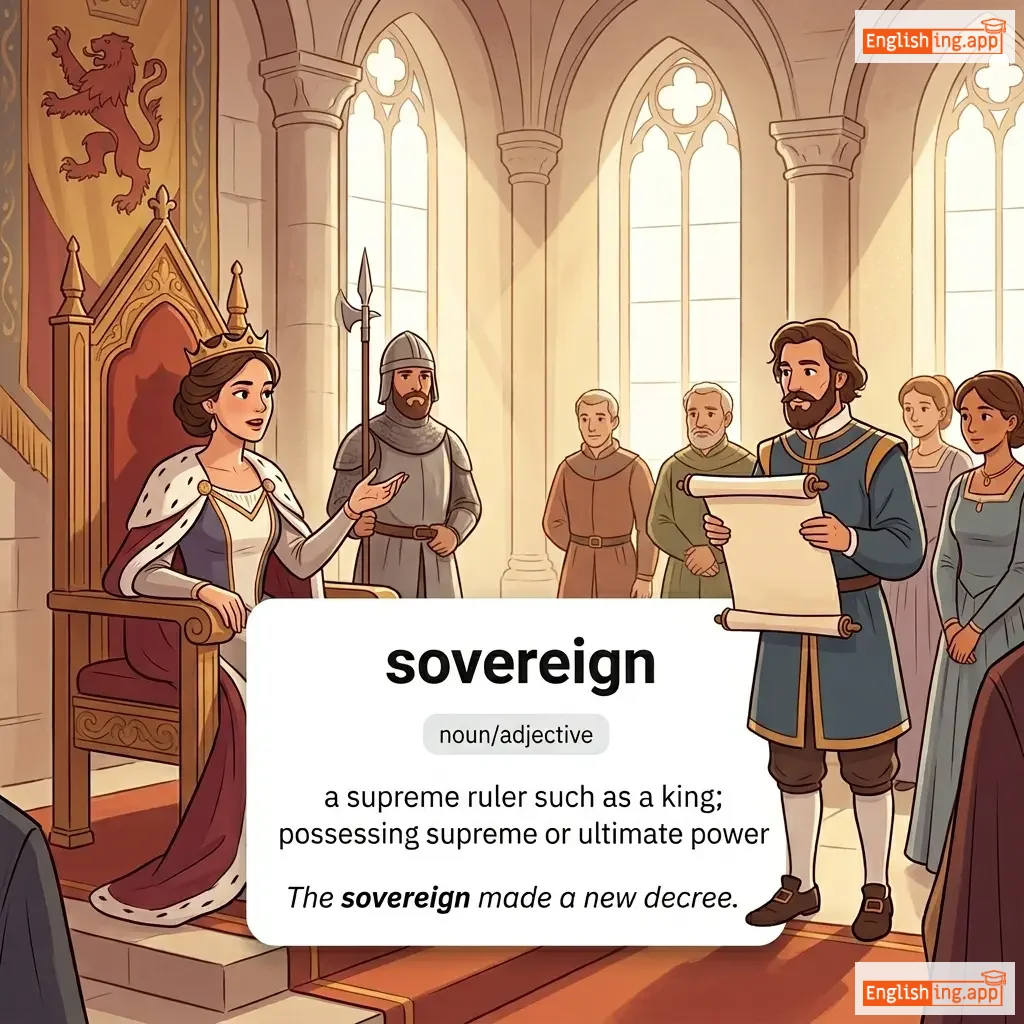
sovereign definition card — visual illustration of the meaning
noun/adjective
/ˈsɒvərɪn/
主権 (shuken)

a supreme ruler such as a king; possessing supreme or ultimate power

"The sovereign made a new decree."
"主権者は新しい命令を出しました。" (Shuken-sha wa atarashī meirei o dashimashita.)
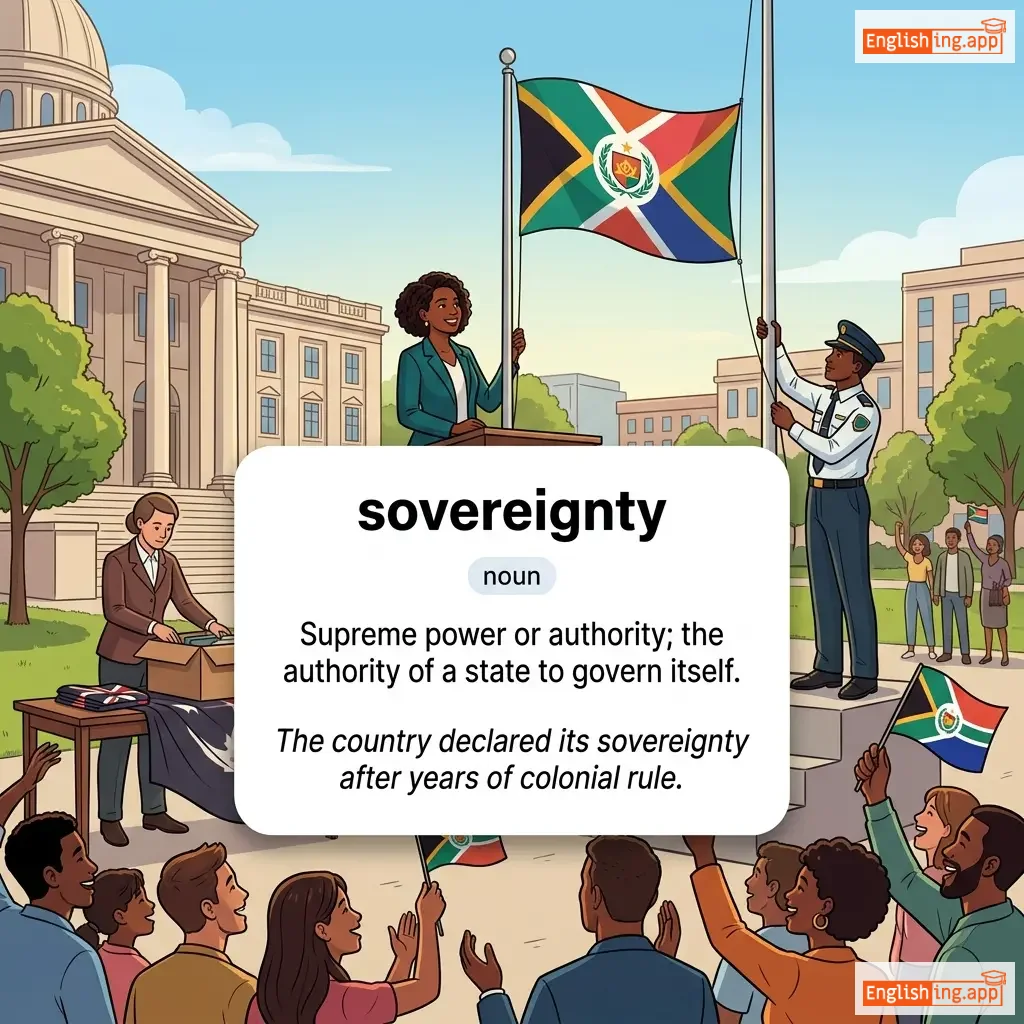
sovereignty definition card — visual illustration of the meaning
noun
/ˈsɒvrənti/
主権 (shuken)

Supreme power or authority; the authority of a state to govern itself.

"The country declared its sovereignty after years of colonial rule."

"その国は植民地支配の後、主権を宣言した。" (Sono kuni wa shokuminchi shihai no ato, shuken o sengen shita.)
adjective
/ˈsoʊ.vi.ət/
ソビエト (sovieto)

relating to the Soviet Union or its government

"The Soviet era saw significant changes in Eastern Europe."
"ソビエト時代には東ヨーロッパで重要な変化がありました。" (Sobieto jidai niwa higashi yōroppa de jūyō na henka ga arimashita.)
sow definition card — visual illustration of the meaning
verb
/səʊ/
蒔く (maku)

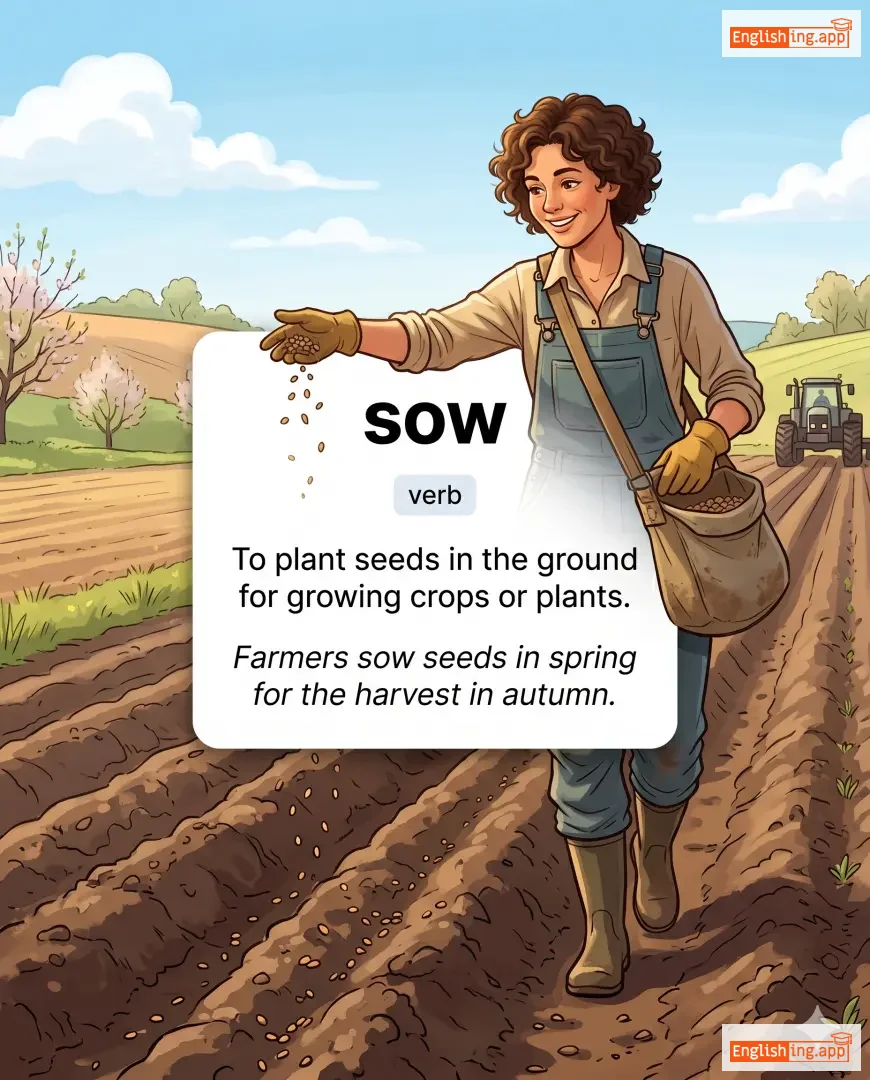
To plant seeds in the ground for growing crops or plants.

"Farmers sow seeds in spring for the harvest in autumn."

"農家は春に種を蒔き、秋に収穫をする。" (Nōka wa haru ni tane o maki, aki ni shūkaku o suru.)
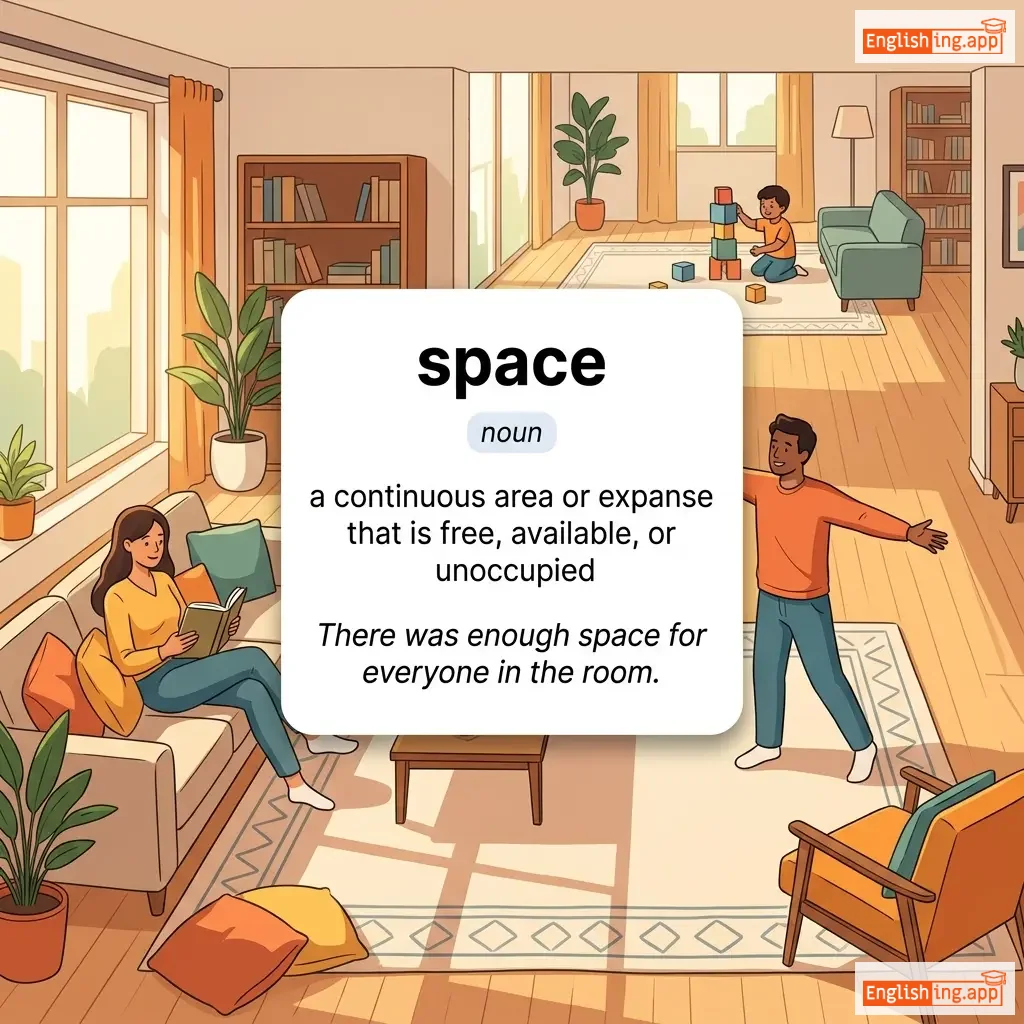
space definition card — visual illustration of the meaning
noun
/speɪs/
スペース (supeesu)

a continuous area or expanse that is free, available, or unoccupied

"There was enough space for everyone in the room."
"部屋には皆が十分なスペースがありました。" (Heya ni wa mina ga juubun na supeesu ga arimashita.)
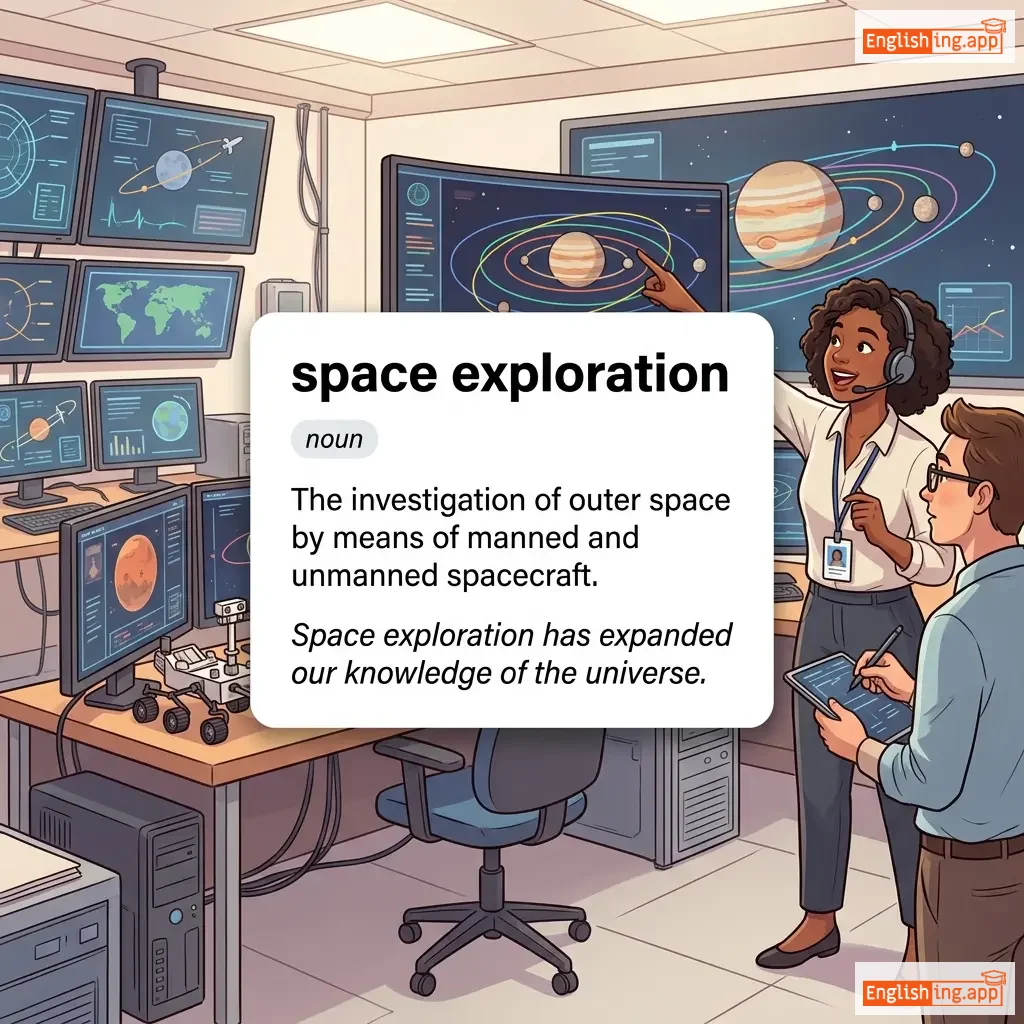
space exploration definition card — visual illustration of the meaning
noun
speɪs ɪksplɔːˈreɪʃən
宇宙探査 (uchū tansa)

The investigation of outer space by means of manned and unmanned spacecraft.

"Space exploration has expanded our knowledge of the universe."
"宇宙探査は私たちの宇宙に対する知識を広げました。" (Uchū tansa wa watashitachi no uchū ni taisuru chishiki o hirogemashita.)
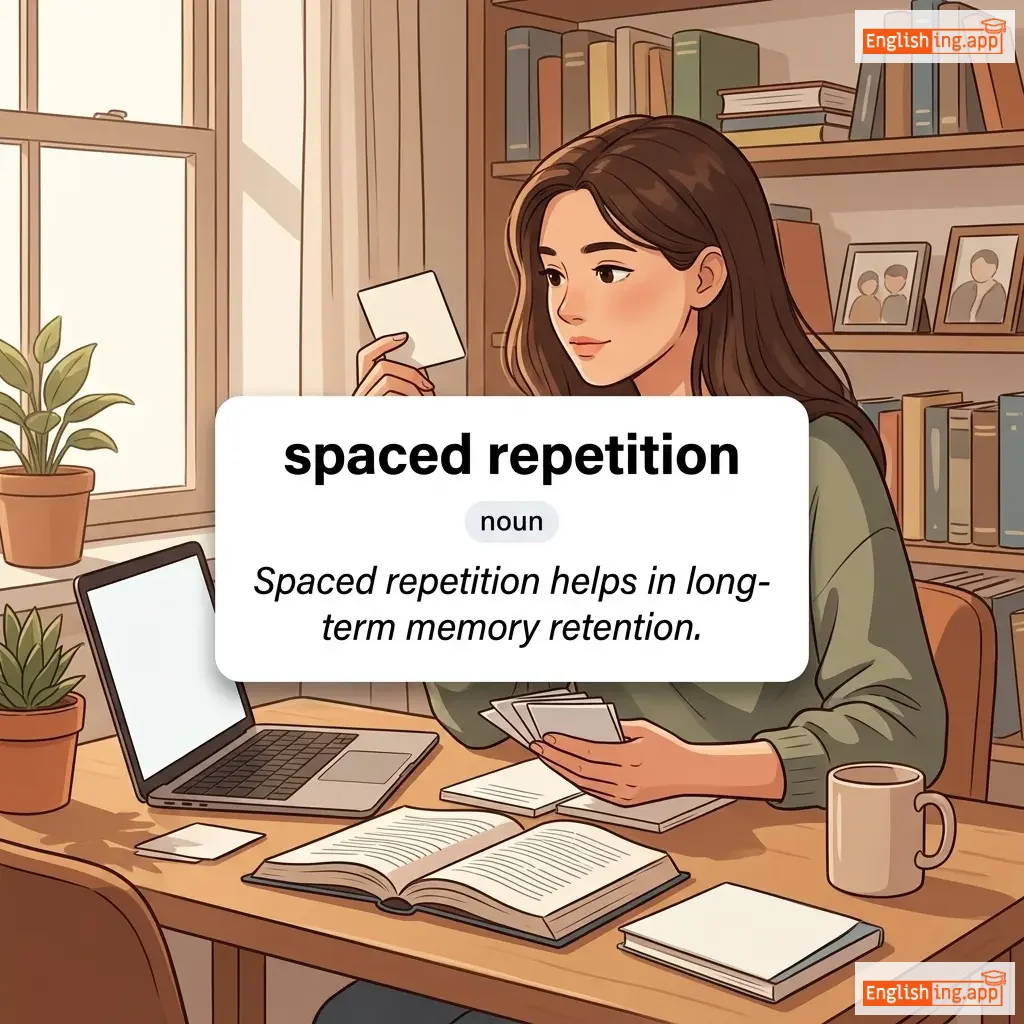
spaced repetition definition card — visual illustration of the meaning
noun
speɪst ˌrep.ɪˈtɪʃ.ən
間隔反復 (kankaku hanfuku)

A learning technique that involves reviewing information at increasing intervals to improve long-term retention.

"Spaced repetition helps in long-term memory retention."

"スペースド・リピティションは長期記憶を保持するのに役立ちます。" (Supesudo ripitishon wa chouki kioku wo hoji suru no ni yakudachimasu.)
adjective
/ˈspeɪ.ʃəs/
広々とした; 快適な (hirobirō to shita; kaiteki na)

having a lot of space; roomy and comfortable

"The house has a spacious living room with high ceilings."

"その家には高い天井を持つ広々としたリビングルームがあります。" (Sono ie ni wa takai tenjō o motsu hirobiro to shita ribingu rūmu ga arimasu.)
noun
/speɪd/
シャベル (shaberu)

a tool with a flat blade for digging; a playing card suit

"The gardener used a spade to dig holes for planting flowers."

"庭師は花を植えるために穴を掘るためにシャベルを使いました。" (Niwa-shi wa hana o ueru tame ni ana o horu tame ni shaberu o tsukaimashita.)
noun
/spæm/
スパム (supamu)

unsolicited or unwanted electronic communication, typically in the form of email

"My inbox is full of spam emails that I need to delete."

"私の受信箱はスパムメールでいっぱいで、削除する必要があります。" (Watashi no jushinbako wa supamu meeru de ippai de, sakujo suru hitsuyou ga arimasu.)
noun
/spæn/
スパン (supan)

the full extent or length of something from one end to another

"The bridge has a span of over 500 meters."

"橋のスパンは500メートル以上です。" (Kyo no supan wa 500 meetoru ijou desu.)
noun
/ˈspæŋɡəl/
スパンコール (supankōru)

A small shiny piece of metal or plastic used for decoration on clothes.

"Her dress was covered with silver spangles that glittered in the light."

"彼女のドレスは銀色のスパンコールで覆われていて、光の中でキラキラ光っていた。" (Kanojo no doresu wa giniro no supankōru de ōwarete ite, hikari no naka de kirakira hikatte ita.)
adjective
/ˈspænɪʃ/
スペイン語 (supeingo)

relating to Spain or the Spanish language

"She is fluent in Spanish and French."

"彼女はスペイン語とフランス語に堪能です。" (kanojo wa supeingo to furansugo ni tanno desu.)
verb
/spɛər/
余分に与える / 節約する (yobun ni ataeru / setsuyaku suru)

To give something that one has extra of; to refrain from harming or killing.

"Could you spare me a few minutes of your time?"

"あなたは私に少し時間を割いてくれますか?" (Anata wa watashi ni sukoshi jikan o saite kuremasu ka?)
adjective
/ˈspɛərɪŋ/
控えめ / 節約 (hikaeme / setsuyaku)

Using or giving only a little of something; economical.

"She is sparing in her use of words."

"彼女は言葉を使うのを控えめにしています。" (Kanojo wa kotoba o tsukau no o hikaeme ni shiteimasu.)
verb
/spɑːrk/
火花 (hibana)

to cause the start of something, especially an emotion or activity

"The news sparked a heated debate across the country."

"そのニュースは国中で激しい議論を引き起こしました。" (sono nyūsu wa kokunaka de hageshī giron o hikiokoshimashita.)
noun
/ˈspæroʊ/
スズメ (suzume)

small brown and grey bird commonly found in cities and towns

"The sparrow chirped cheerfully from the tree branch."

"スズメは木の枝から楽しそうにさえずっていました。" (Suzume wa ki no eda kara tanoshisou ni saezuttemashita.)
adjective
/spɑːrs/
まばら (mabara)

thinly scattered or distributed; not dense or abundant

"Vegetation was sparse in the desert."

"砂漠では植生がまばらだった。" (Sabaku de wa shokusei ga mabara datta.)
adjective
/ˈspɑːrtn/
スパルタン (suparutan)

showing simplicity and lack of luxury; austere

"He lived in a spartan room with just a bed and a chair."

"彼はスパルタンな部屋に住んでいて、ベッドと椅子だけがありました。" (Kare wa suparutan na heya ni sunde ite, beddo to isu dake ga arimashita.)
adjective
/spæzˈmɒdɪk/
痙攣性 (keirensei)

occurring irregularly or in sudden bursts

"The patient experienced spasmodic coughing during the night."

"患者は夜間に痙攣性の咳を経験しました。" (Kanja wa yakan ni keirensei no seki o keiken shimashita.)
noun
/spæt/
小さな口論 (chiisana kōron)

a short, petty quarrel or argument

"They had a brief spat about who should do the dishes."

"誰が皿を洗うべきかについて小さな口論がありました。" (Dare ga sara o arau beki ka ni tsuite chiisana kōron ga arimashita.)
noun
/speɪt/
(nami)

a large number of things occurring in quick succession

"There has been a spate of robberies in the city."

"市内で盗難が立て続けに発生しています。" (Shinai de tōnan ga tatezuzuke ni hassei shiteimasu.)
adjective
/ˈspeɪʃəl/
空間の (kūkan no)

relating to space or the position, area, and size of things

"The scientist studied the spatial arrangement of stars."

"科学者は星の空間配置を研究しました。" (Kagakusha wa hoshi no kūkan haichi o kenkyū shimashita.)
noun
/ˈspætʃələ/
スパチュラ (supachura)

a flat, broad tool used for mixing, spreading, or lifting food

"She used a spatula to flip the pancakes."

"彼女はパンケーキをひっくり返すためにスパチュラを使いました。" (Kanojo wa pancake o hikkurikaesu tame ni supachura o tsukaimashita.)
verb
/spɔːn/
生み出す (umidasu)

to produce or generate, often in large numbers

"The video game has spawned many sequels."

"そのビデオゲームは多くの続編を生み出しました。" (Sono bideo gēmu wa ōku no zokuhen o umidashimashita.)
verb
/spiːk/
話す (hanasu)

to say something in order to convey information or express feelings

"She speaks five languages fluently."

"彼女は五か国語を流暢に話します。" (Kanojo wa go kakkokugo wo ryuuchou ni hanashimasu.)
noun
/ˈspiːkər/
スピーカー (supiikaa)

a person who speaks or talks, especially as an occupation

"The speaker delivered an inspiring speech at the conference."

"スピーカーは会議で感動的なスピーチを行いました。" (Supiikaa wa kaigi de kandouteki na supiichi o okonai mashita.)
verb
/ˈspɪərˌhɛd/
先導する (sendou suru)

to lead or initiate an action, project, or movement

"She spearheaded the campaign for environmental awareness."

"彼女は環境意識のキャンペーンを先導しました。" (Kanojo wa kankyō ishiki no kyanpēn o sendō shimashita.)
adjective
/ˈspɛʃəl/
特別 (tokubetsu)

different from what is usual; better or greater than normal

"This gift is very special to me."

"このギフトは私にとってとても特別です。" (Kono gifuto wa watashi ni totte totemo tokubetsu desu.)