語彙集

英単語辞書 | 単語の意味、定義、例文

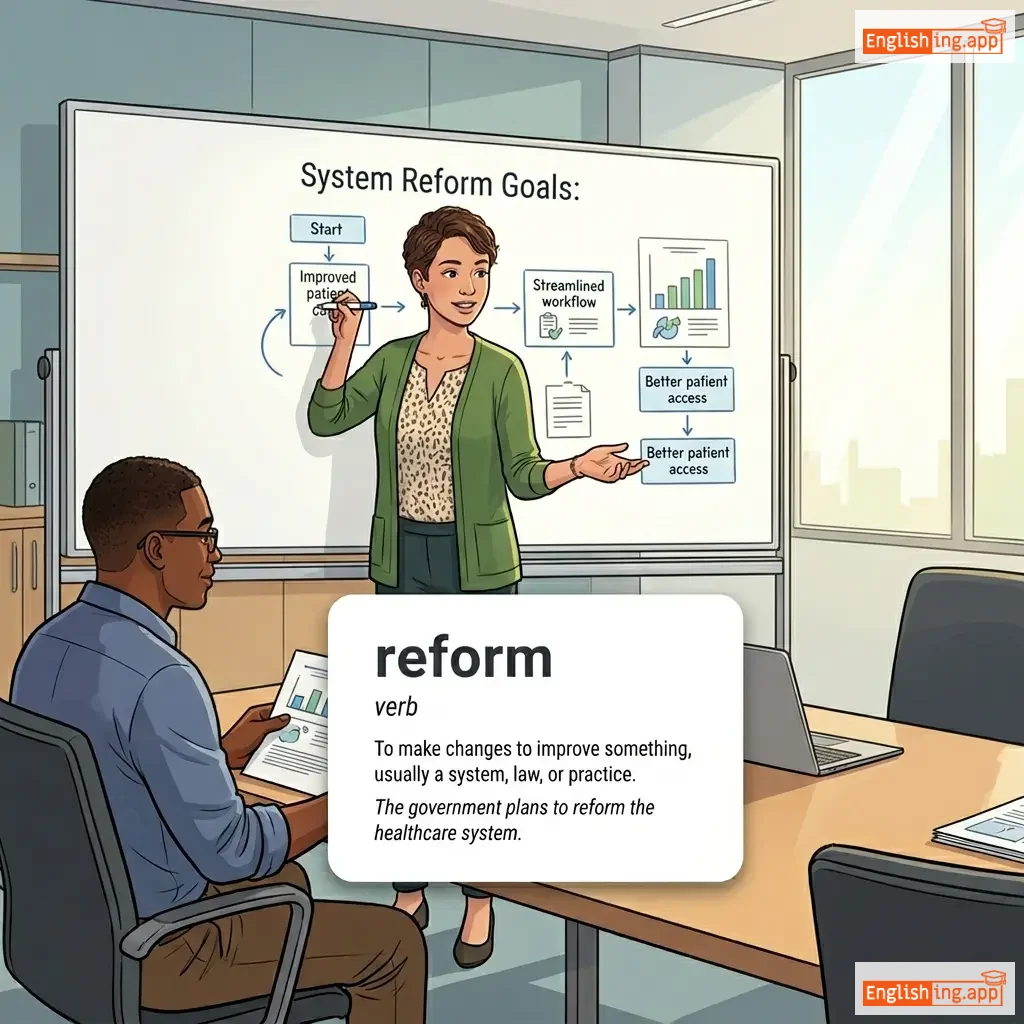
reform definition card — visual illustration of the meaning
verb
/rɪˈfɔːrm/
改革する (kaikaku suru)

To make changes to improve something, usually a system, law, or practice.

"The government plans to reform the healthcare system."

"政府は医療制度を改革する予定です。" (seifu wa iryou seido o kaikaku suru yotei desu.)
noun
/rɪˈfɔːrmər/
改革者 (kaikakusha)

A person who works to improve laws, institutions, or social practices.

"Martin Luther King Jr. was a great social reformer."

"マーティン・ルーサー・キング・ジュニアは偉大な社会改革者でした。" (Mātin Rūsā Kinga Junia wa idaina shakai kaikakusha deshita.)
verb
/rɪˈfrækt/
屈折する (kusseki suru)

To bend light, sound, or heat as it passes through a medium.

"The water refracts light, making the straw look bent."

"水は光を屈折させ、ストローが曲がって見える。" (Mizu wa hikari o kussetsu sase, sutoroo ga magatte mieru.)
noun
/rɪˈfrækʃən/
屈折 (kussetsu)

The bending of light, sound, or other waves when they pass from one medium to another of different density.

"The refraction of light in water makes objects appear bent."

"水中の光の屈折により、物体が曲がって見えます。" (Suichuu no hikari no kussetsu ni yori, butsu ga magatte mie masu.)
refractor definition card — visual illustration of the meaning
noun
/rɪˈfræk.tər/
屈折望遠鏡 (kusseki bōenkyō)

A type of telescope that uses lenses to focus light.

"Refractor telescopes use lenses to focus light."
"屈折望遠鏡は光を集中させるためにレンズを使用します。" (Kusseki bōenkyō wa hikari o shūchū saseru tame ni renzu o shiyō shimasu.)
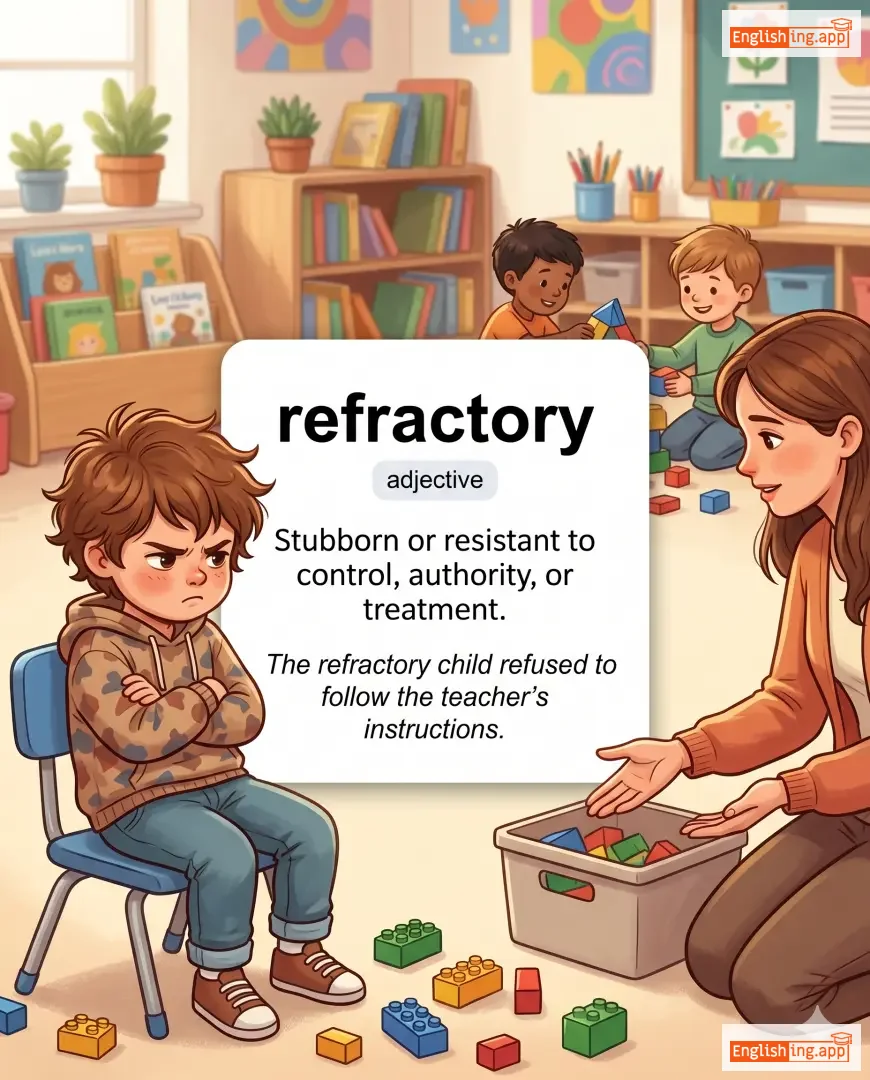
refractory definition card — visual illustration of the meaning
adjective
/rɪˈfræktəri/
反抗的 (hankou teki)

Stubborn or resistant to control, authority, or treatment.

"The refractory child refused to follow the teacher's instructions."

"反抗的な子供は教師の指示に従うのを拒否した。" (Hankō teki na kodomo wa kyōshi no shiji ni shitagau no o kyohi shita.)
adjective
/rɪˈfræɡəbəl/
反論可能な (hanron kanōna)

Capable of being refuted or disproved.

"His argument was weak and easily refragable."

"彼の議論は弱く、簡単に反論可能だった。" (Kare no giron wa yowaku, kantan ni hanron kanōdatta.)
verb
/rɪˈfreɪn/
控える (hikaeru)

To hold oneself back from doing something.

"Please refrain from smoking in this area."
"このエリアでの喫煙はご遠慮ください。" (Kono eria de no kitsuen wa goenryo kudasai.)
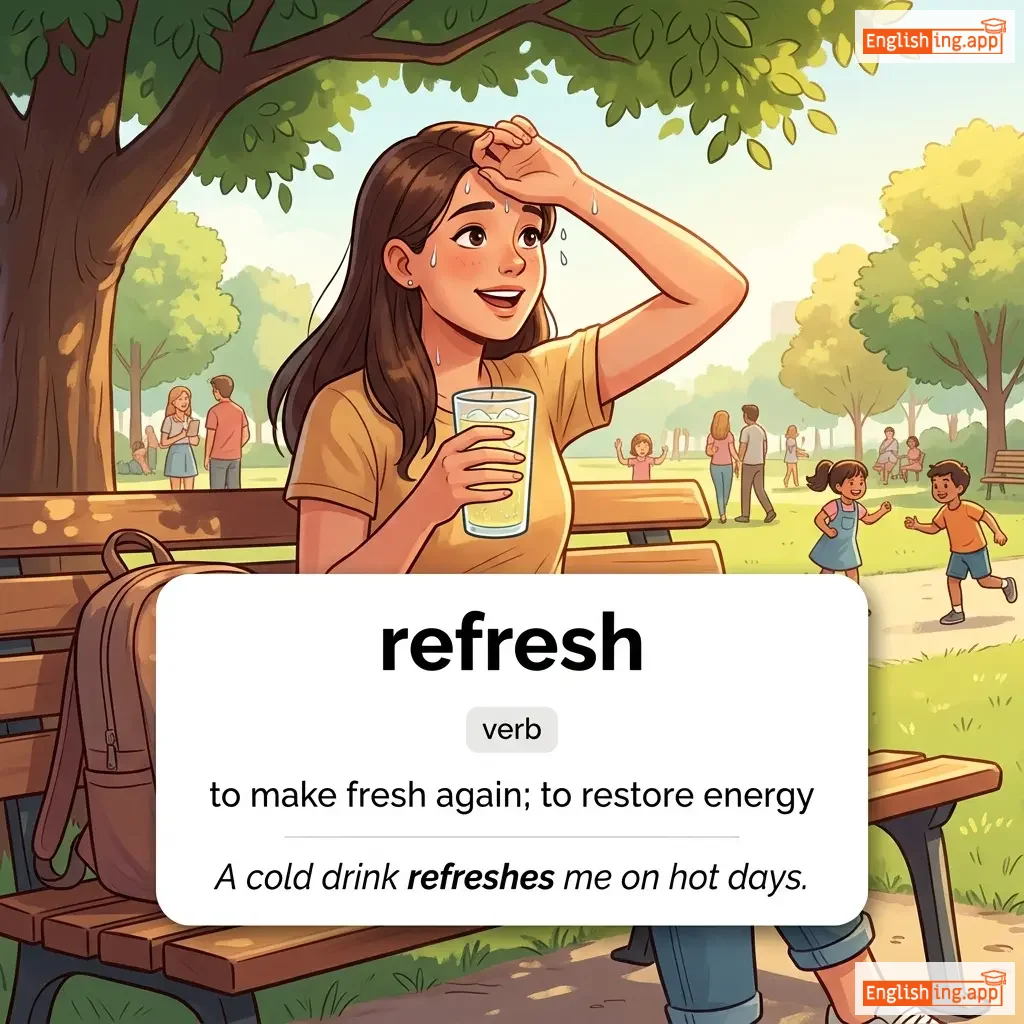
refresh definition card — visual illustration of the meaning
verb
/rɪˈfreʃ/
リフレッシュする (rifuresshu suru)

to make fresh again; to restore energy

"A cold drink refreshes me on hot days."

"暑い日には冷たい飲み物が私をリフレッシュさせます。" (atsui hi ni wa tsumetai nomimono ga watashi o rifuresshu sasemasu)
adjective
/rɪˈfreʃ.ɪŋ/
さわやか (sawayaka)

making one feel energized and renewed; pleasantly new or different

"The cool breeze was refreshing after the hot day."

"暑い一日後の涼しい風はさわやかだった。" (Atsui ichinichi go no suzushī kaze wa sawayakada.)
noun
/rɪˈfreʃ.mənt/
軽食 (keishoku)

food and drink that is served as a light meal; something that refreshes

"We served light refreshments after the meeting."

"会議の後、軽食を提供しました。" (kaigi no ato, keishoku o teikyō shimashita)
noun
/rɪˈfrɪdʒəreɪtər/
冷蔵庫 (reizōko)

an appliance used to keep food and drinks cold

"She kept the milk in the refrigerator to prevent it from spoiling."

"彼女は牛乳が腐らないように冷蔵庫に入れました。" (Kanojo wa gyūnyū ga kusaranai yō ni reizōko ni iremashita.)
noun
/rɪˈfrɪndʒənsi/
屈折率 (kussetsu-ritsu)

The ability of a substance to bend light; refractive power.

"Glass has a higher refringency than water."

"ガラスは水よりも高いリフリンジェンシーを持っています。" (Garasu wa mizu yori mo takai rifurinjenshī o motteimasu.)
adjective
/rɪˈfrɪndʒənt/
屈折性 (kussetsusei)

Capable of refracting light or other waves.

"The refringent properties of the crystal bent the light into a spectrum."

"結晶の屈折性の特性は光をスペクトルに曲げました。" (Kesshō no kussetsusei no tokusei wa hikari o supekutoru ni magemashita.)
noun
/ˈrɛfjuːdʒ/
避難所 (hinanjo)

a place that provides shelter or protection from danger or distress

"The villagers took refuge in the temple during the storm."

"村人たちは嵐の間、寺院に避難した。" (Murabito-tachi wa arashi no aida, jiin ni hinan shita.)
noun
/ˌrɛfjuˈʤi/
難民 (nanmin)

a person who has been forced to leave their country in order to escape war, persecution, or natural disaster

"Thousands of refugees fled the war-torn region."
"何千人もの難民が戦争で荒廃した地域から逃げました。" (Nanzen-nin mono nanmin ga sensou de kouhai shita chiiki kara nigemashita.)
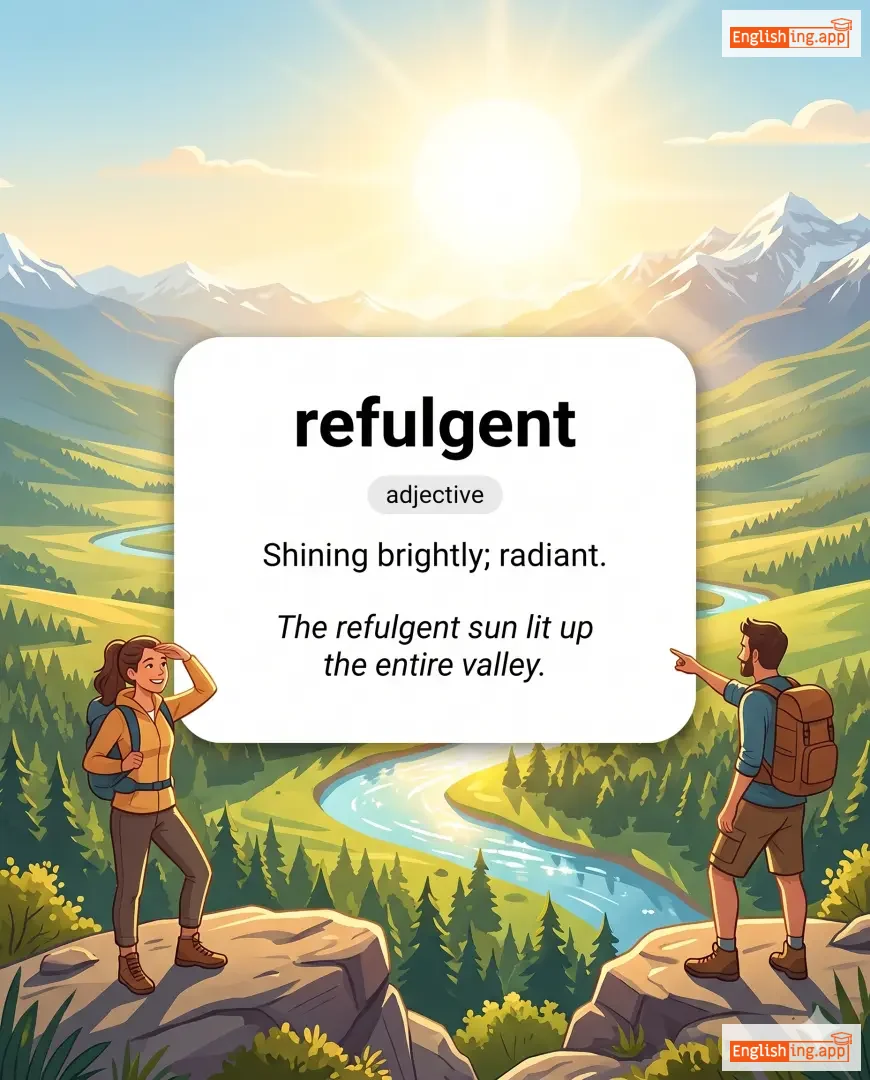
refulgent definition card — visual illustration of the meaning
adjective
/rɪˈfʌldʒənt/
輝く (kagayaku)

Shining brightly; radiant.

"The refulgent sun lit up the entire valley."

"輝く太陽が谷全体を照らした。" (Kagayaku taiyō ga tani zentai o terashita.)
verb
/riːˈfɜːrbɪʃ/
改装する (kaisou suru)

To renovate or redecorate something, especially a building.

"The company decided to refurbish its old office."

"その会社は古いオフィスを改装することを決定しました。" (Sono kaisha wa furui ofisu o kaisō suru koto o kettei shimashita.)
noun
/rɪˈfjuːzəl/
拒否 (kyohi)

An act of saying or showing that one will not do or accept something.

"Her refusal to cooperate delayed the project."

"彼女の協力しないという拒否がプロジェクトを遅らせた。" (Kanojo no kyouryoku shinai to iu kyohi ga purojekuto wo okuraseta.)
♻️

Refuse

verb, noun
/rɪˈfjuːz/ (verb), /ˈrɛfjuːs/ (noun)

As a verb: to say no to something offered or requested; as a noun: waste material; rubbish.

"He refused to answer the question, and the street was full of refuse."

adjective
/rɪˈfjuː.tə.bəl/
反証可能 (hanshō kanō)

capable of being proven wrong or false; able to be disproved

"His theory was refutable because it could be tested experimentally."

"彼の理論は実験的にテストできるので反証可能でした。" (kare no riron wa jikken-teki ni tesuto dekiru node hanshō kanō deshita.)
noun
/ˌrɛfjʊˈteɪʃən/
反証 (hanshō)

The act of proving a statement or argument to be false or incorrect.

"Her essay was a strong refutation of the opposing theory."
"彼女のエッセイは反対の理論に対する強い反証でした。" (Kanojo no essei wa hantai no riron ni taisuru tsuyoi hanshō deshita.)
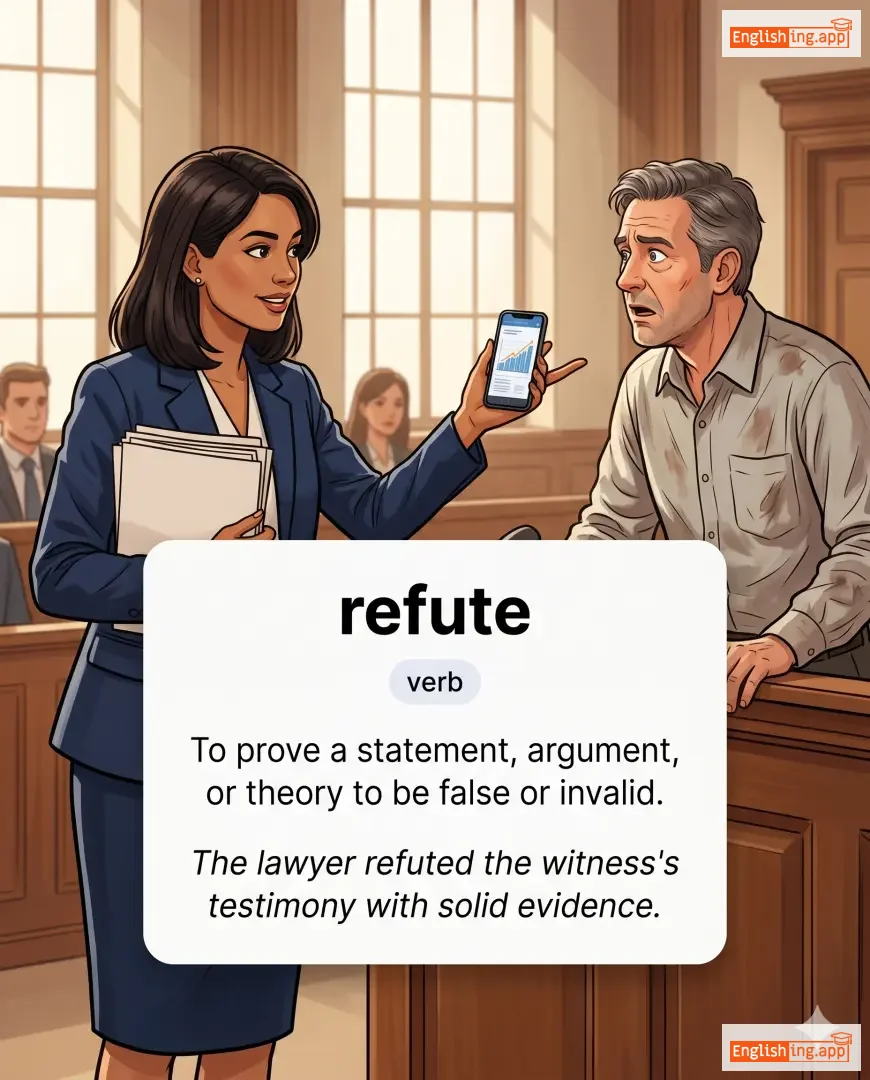
refute definition card — visual illustration of the meaning
verb
/rɪˈfjuːt/
反論する (hanron suru)

To prove a statement, argument, or theory to be false or invalid.

"The lawyer refuted the witness's testimony with solid evidence."
"弁護士は証人の証言を確かな証拠で反論しました。" (Bengoshi wa shounin no shougen wo tashikana shouko de hanron shimashita.)
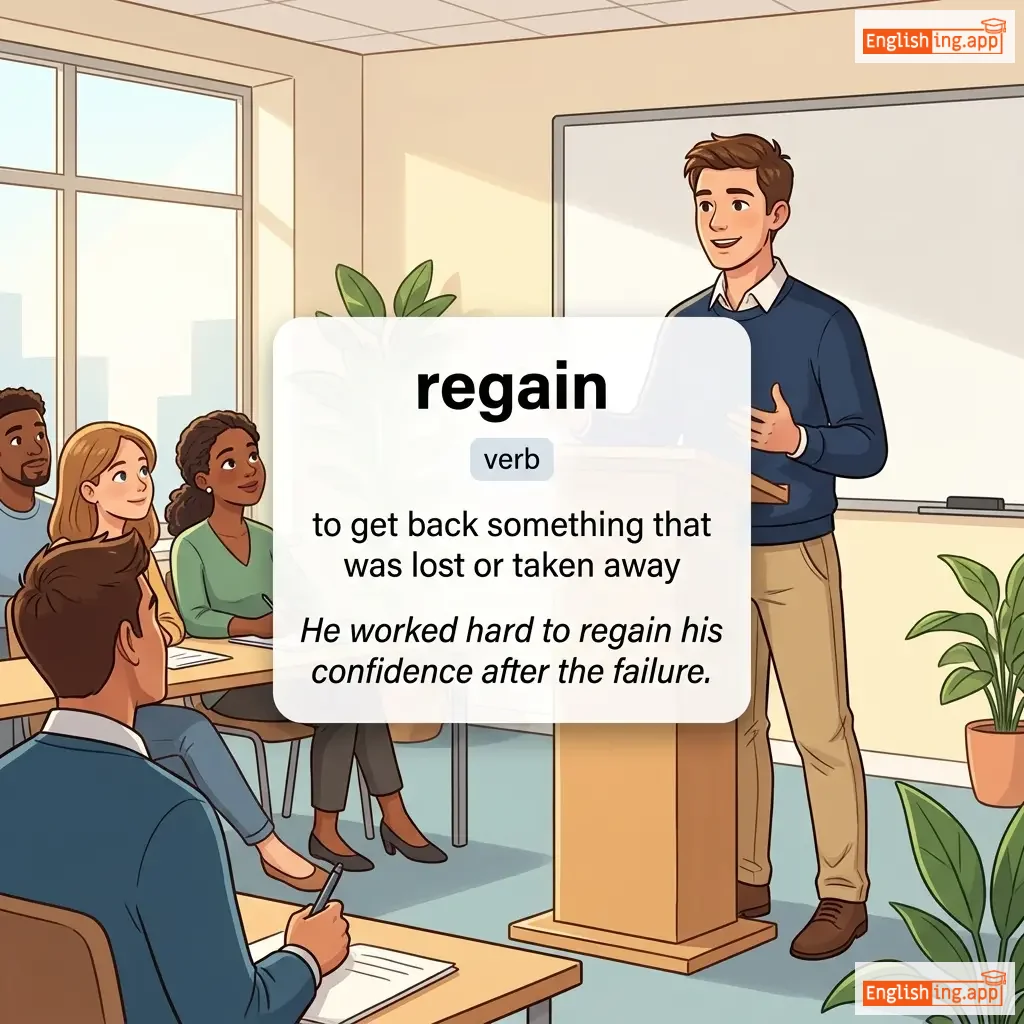
regain definition card — visual illustration of the meaning
verb
/rɪˈɡeɪn/
取り戻す (torimodosu)

to get back something that was lost or taken away

"He worked hard to regain his confidence after the failure."

"失敗後、彼は自信を取り戻すために一生懸命働いた。" (Shippai go, kare wa jishin o torimodosu tame ni isshoukenmei hataraita.)
adjective
/ˈriːɡəl/
王室の (ōshitsu no)

Resembling or fit for a king; majestic or royal.

"The queen entered the hall with a regal presence."

"女王は王室のような存在感でホールに入った。" (Joō wa ōshitsu no yōna sonzai-kan de hōru ni haitta.)
regale definition card — visual illustration of the meaning
verb
/rɪˈɡeɪl/
楽しませる (tanoshimaseru)

To entertain or amuse someone with stories, food, or drink.

"He regaled us with stories of his travels around the world."

"彼は世界中を旅した話で私たちを楽しませました。" (Kare wa sekaijū o tabishita hanashi de watashitachi o tanoshimashita.)
noun/verb
/rɪˈɡɑrd/
尊敬、考慮 (sonkei, koryo)

consider or think of in a specified way

"She regarded him as her mentor."

"彼女は彼をメンターとして見なしました。" (Kanojo wa kare wo mentaa to shite minashimashita.)
preposition
/rɪˈɡɑrdɪŋ/
に関して (ni kanshite)

concerning or relating to

"The decision regarding the meeting will be made tomorrow."

"会議に関する決定は明日行われます。" (Kaigi ni kanshite kettei wa ashita okonawaremasu.)
adverb
/rɪˈɡɑrdləs/
関係なく (kankeinaku)

without paying attention to the current situation or condition

"She will go to the party regardless of the weather."

"彼女は天気に関係なくパーティーに行きます。" (Kanojo wa tenki ni kankeinaku paatii ni ikimasu.)
noun
/rɪˈɡætə/
ボート競走 (booto kyoso)

A sporting event consisting of a series of boat or yacht races.

"The annual regatta attracted competitors from around the world."

"毎年のレガッタは世界中から競技者を引き付けた。" (mainen no regatta wa sekaiju kara kyogisha o hikitsuketa)
verb
/rɪˈdʒɛnəreɪt/
再生する (saisei suru)

to grow or produce again; to renew or restore

"The lizard can regenerate its lost tail."
"トカゲは失われた尾を再生できます。" (Tokage wa ushinawareta o wo saisei dekimasu.)
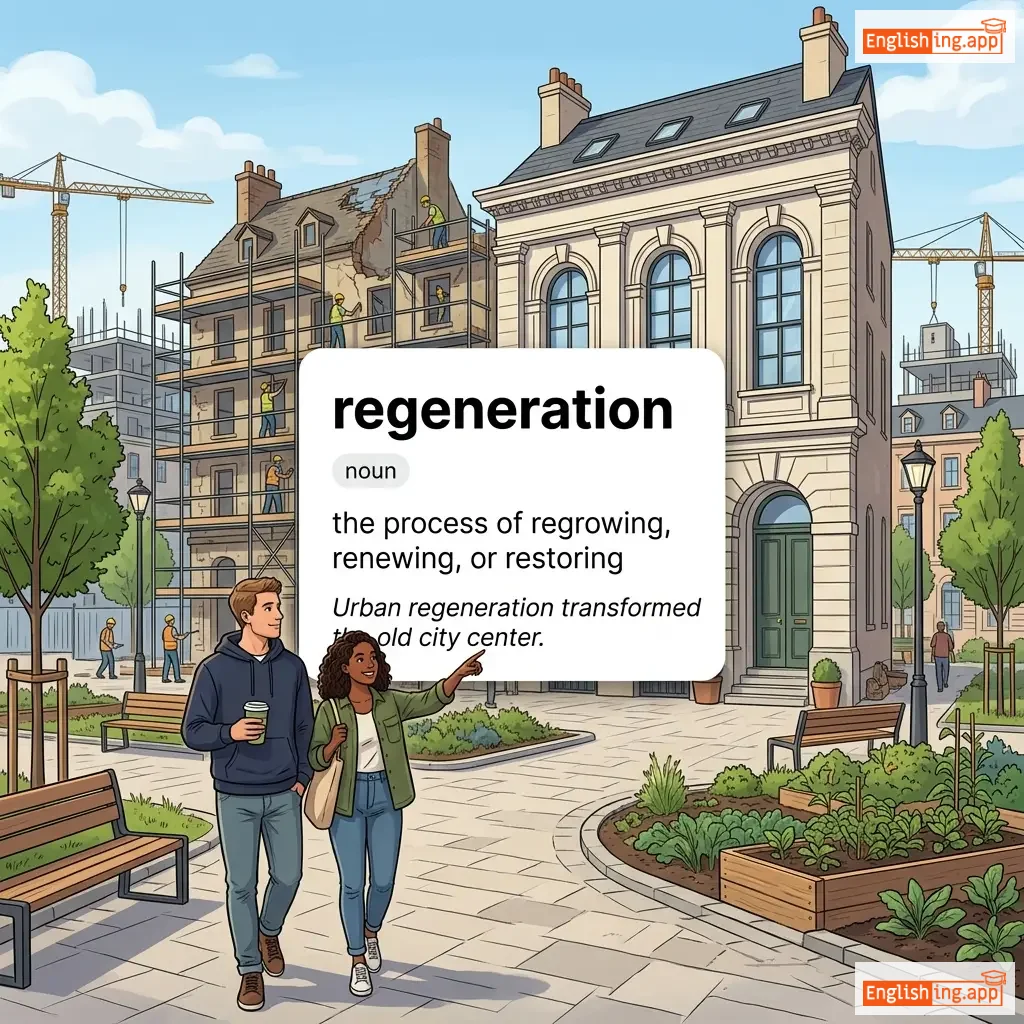
regeneration definition card — visual illustration of the meaning
noun
/rɪˌdʒɛnəˈreɪʃən/
再生 (saisei)

the process of regrowing, renewing, or restoring

"Urban regeneration transformed the old city center."
"都市の再生は古い市街地を変革しました。" (Toshi no saisei wa furui shigaichi o henka shimashita.)
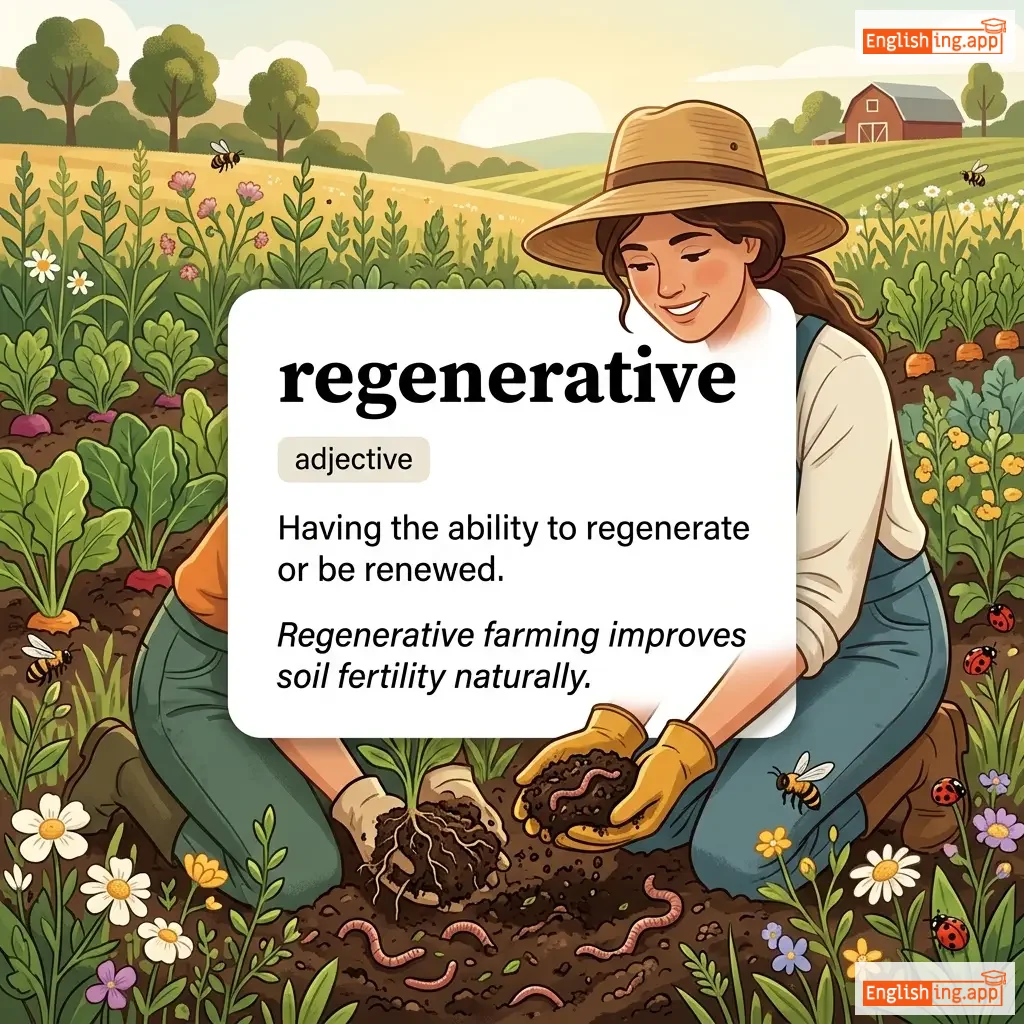
regenerative definition card — visual illustration of the meaning
adjective
rɪˈdʒɛn.ər.ə.tɪv
再生可能または再生的 (saisei kanou mata wa saisei-teki)

Having the ability to regenerate or be renewed.

"Regenerative farming improves soil fertility naturally."
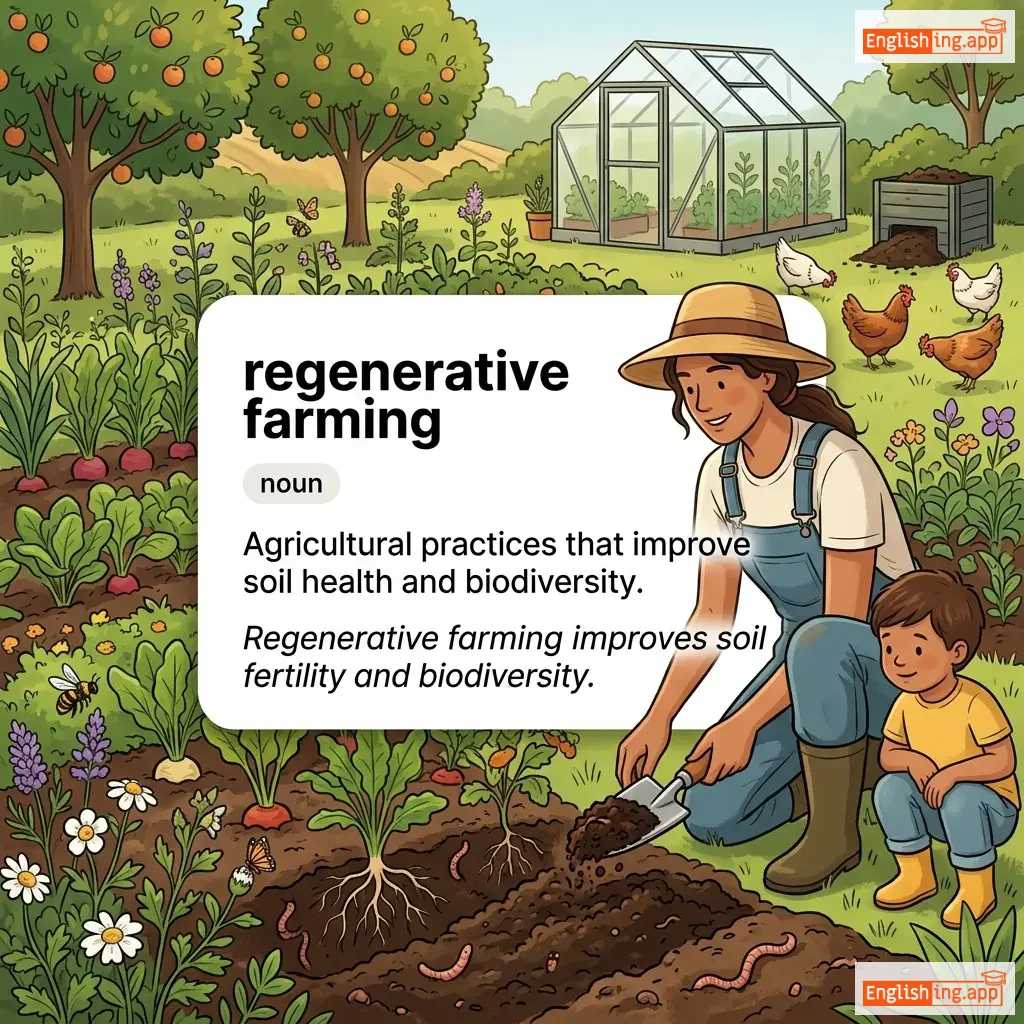
"再生農業は自然に土壌の肥沃度を向上させます。" (Saisei nougyou wa shizen ni dojou no hiyokudo o koujou sasemasu.)
regenerative farming definition card — visual illustration of the meaning
noun
rɪˈdʒɛn.ər.ə.tɪv ˈfɑːr.mɪŋ
再生農業 (saisei nōgyō)

Agricultural practices that improve soil health and biodiversity.

"Regenerative farming improves soil fertility and biodiversity."

"再生農業は土壌の肥沃度と生物多様性を向上させます。" (Saisei nōgyō wa dojo no hiwokudo to seibutsu tayōsei o kōjō sasemasu.)
noun
/ˈriːdʒənt/
摂政 (sesshō)

a person who rules in place of a monarch when the monarch is absent or too young

"The prince acted as regent until the king came of age."

"王子は王が成人するまで摂政として行動した。" (Ōji wa ō ga seijin suru made sesshō toshite kōdō shita.)
noun
/ˈrɛdʒɪsaɪd/
王殺し (ōgoroshi)

the act of killing a king

"The conspirators were executed for committing regicide."

"陰謀者たちは王殺しを犯したため、処刑されました。" (Inbō-sha-tachi wa ōgoroshi o okashita tame, shokei saremashita.)
noun
/reɪˈʒiːm/
政権 (seiken)

a system or form of government, often authoritarian

"The military regime controlled the country for decades."

"軍事政権は数十年間国を支配していました。" (Gunji seiken wa suujun nenkan kuni o shihaishiteimashita.)
regimen definition card — visual illustration of the meaning
noun
/ˈrɛdʒɪmən/

A prescribed course of medical treatment, diet, or exercise for the promotion or restoration of health.

"She followed a strict fitness regimen to recover after surgery."

🎖️

regiment

noun
/ˈrɛdʒɪmənt/

A permanent unit of an army, typically commanded by a colonel and divided into several companies.

"The regiment marched proudly through the streets after returning from the mission."

noun
/ˈriːdʒən/
地域 (chiiki)

an area or division, especially part of a country or the world having definable characteristics but not always fixed boundaries

"The region is known for its beautiful landscapes."
"その地域は美しい景観で知られています。" (sono chiiki wa utsukushii keikan de shirareteimasu)
region-specific definition card — visual illustration of the meaning
adjective
ˈriːdʒən spəˈsɪfɪk
地域特有 (chiiki tokuyu)

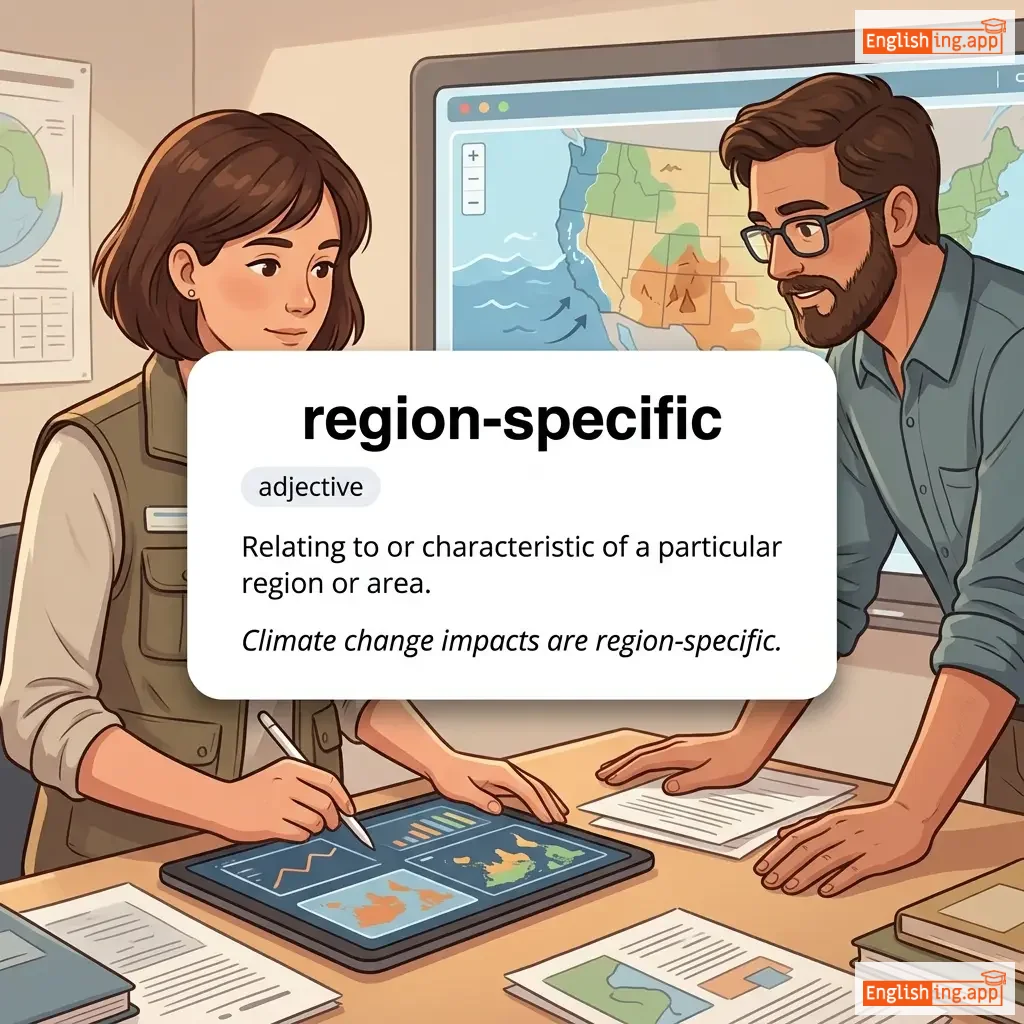
Relating to or characteristic of a particular region or area.

"Climate change impacts are region-specific."
"気候変動の影響は地域特有です。" (Kikou hendou no eikyou wa chiiki tokuyu desu.)
regional definition card — visual illustration of the meaning
adjective
/ˈriːdʒənl/
地域の (chiiki no)

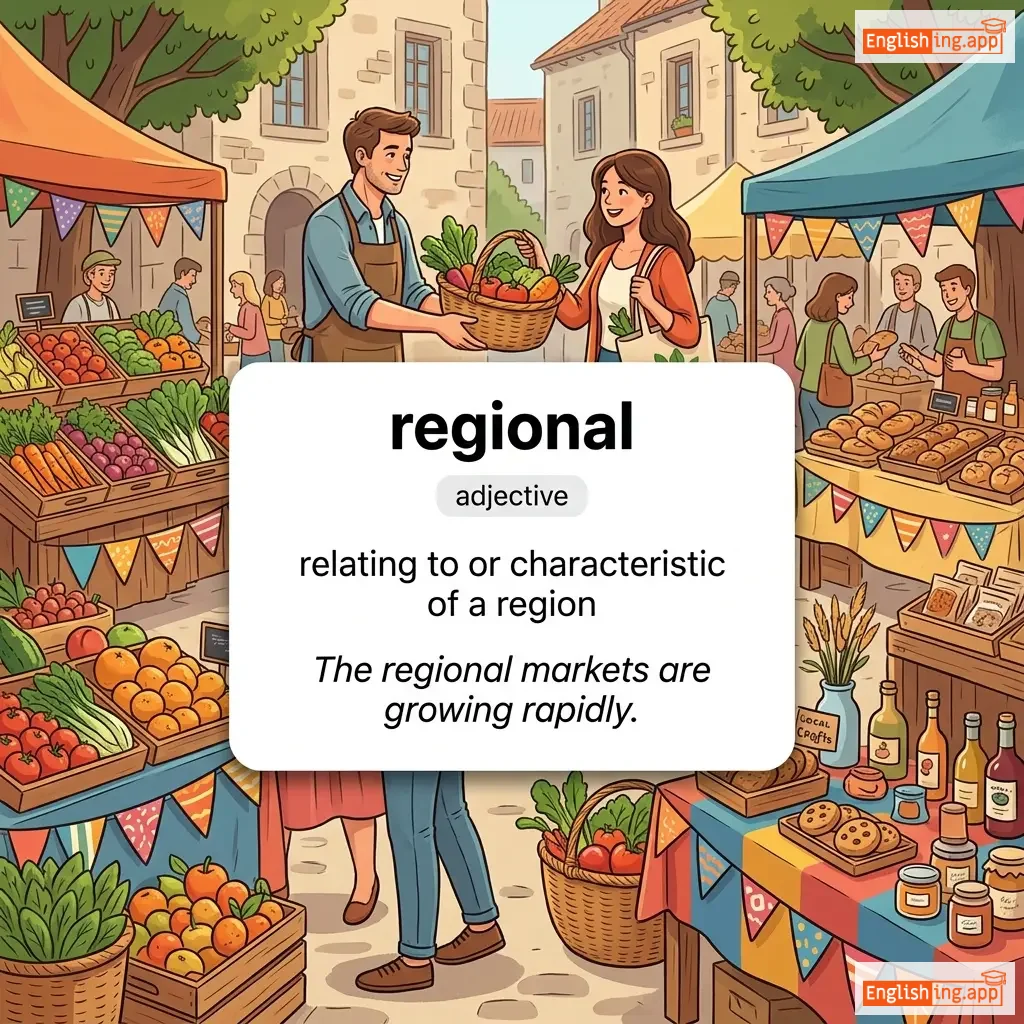
relating to or characteristic of a region

"The regional markets are growing rapidly."
"地域の市場は急速に成長しています。" (Chiiki no shijou wa kyūsoku ni seichou shiteimasu.)
regional forum definition card — visual illustration of the meaning
phrase
ˈriː.dʒən.əl ˈfɔː.rəm
地域フォーラム (chiiki fōramu)

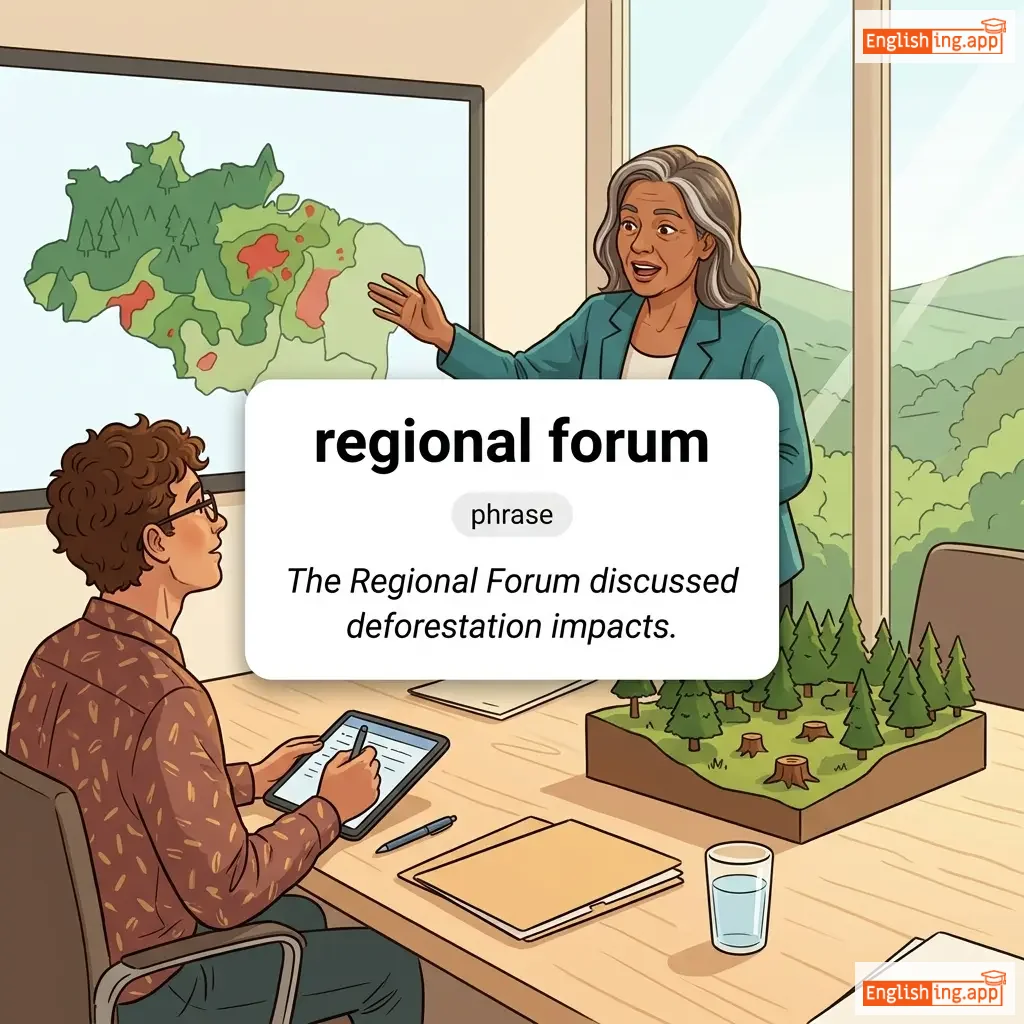
A meeting or conference where representatives from countries or organizations in a specific geographical area discuss issues of common interest.

"The Regional Forum discussed deforestation impacts."

"地域フォーラムでは、森林伐採の影響について議論されました。" (Chiiki fōramu de wa, shinrin bassai no eikyō ni tsuite giron saremashita.)
verb
/ˈrɛdʒɪstər/
登録する (tōroku suru)

To enter or record officially on a list or in a book.

"You must register for the conference before the deadline."
"期限前に会議に登録する必要があります。" (Kigen mae ni kaigi ni tōroku suru hitsuyō ga arimasu.)
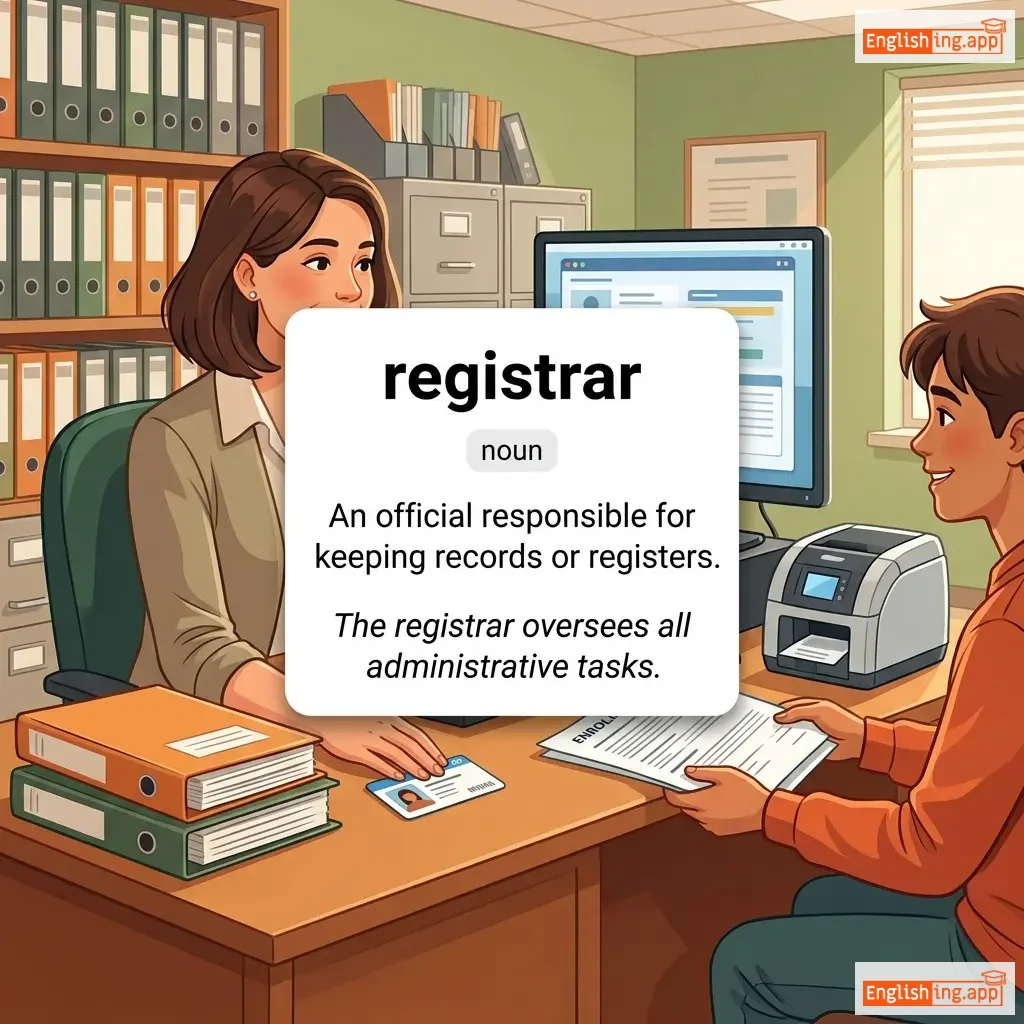
registrar definition card — visual illustration of the meaning
noun
ˈredʒ.ɪ.strɑːr
レジストラー (rejisutora)

An official responsible for keeping records or registers.

"The registrar oversees all administrative tasks."

"レジストラーはすべての行政業務を監督しています。" (Rejisutora wa subete no gyōsei gyōmu o kantoku shiteimasu.)
noun
/ˌrɛdʒɪˈstreɪʃən/
登録 (tōroku)

the action or process of enrolling or signing up for something

"The registration for the event will close tomorrow."

"イベントの登録は明日締め切りです。" (Ibento no tōroku wa ashita shimekiri desu.)
adjective
/ˈrɛɡnənt/
統治している (tōchi shiteiru)

Reigning; currently holding power, authority, or dominance.

"The regnant queen introduced several reforms during her reign."

"統治している女王は、彼女の統治期間中にいくつかの改革を導入しました。" (Tōchi shiteiru joō wa, kanojo no tōchi kikan-chū ni ikutsuka no kaikaku o dōnyū shimashita.)
verb
/rɪˈɡrɛs/

To return to a former or less developed state.

"Without proper guidance, the child's progress began to regress."

verb
/rɪˈɡrɛt/
後悔する (kōkai suru)

to feel sad or disappointed about something that has happened or been done

"I deeply regret saying those harsh words to her."

"私は彼女にその厳しい言葉を言ったことを深く後悔しています。" (Watashi wa kanojo ni sono kibishii kotoba o itta koto o fukaku kōkai shiteimasu.)
adjective
/rɪˈɡrɛtfəl/
後悔している (kōkai shite iru)

feeling or showing sadness or disappointment about something that has happened or been done

"She gave him a regretful smile as she turned away."

"彼女は振り返りながら後悔している笑顔を彼に向けた。" (Kanojo wa furikaeri nagara kōkai shite iru egao o kare ni muketa.)