語彙集

英単語辞書 | 単語の意味、定義、例文

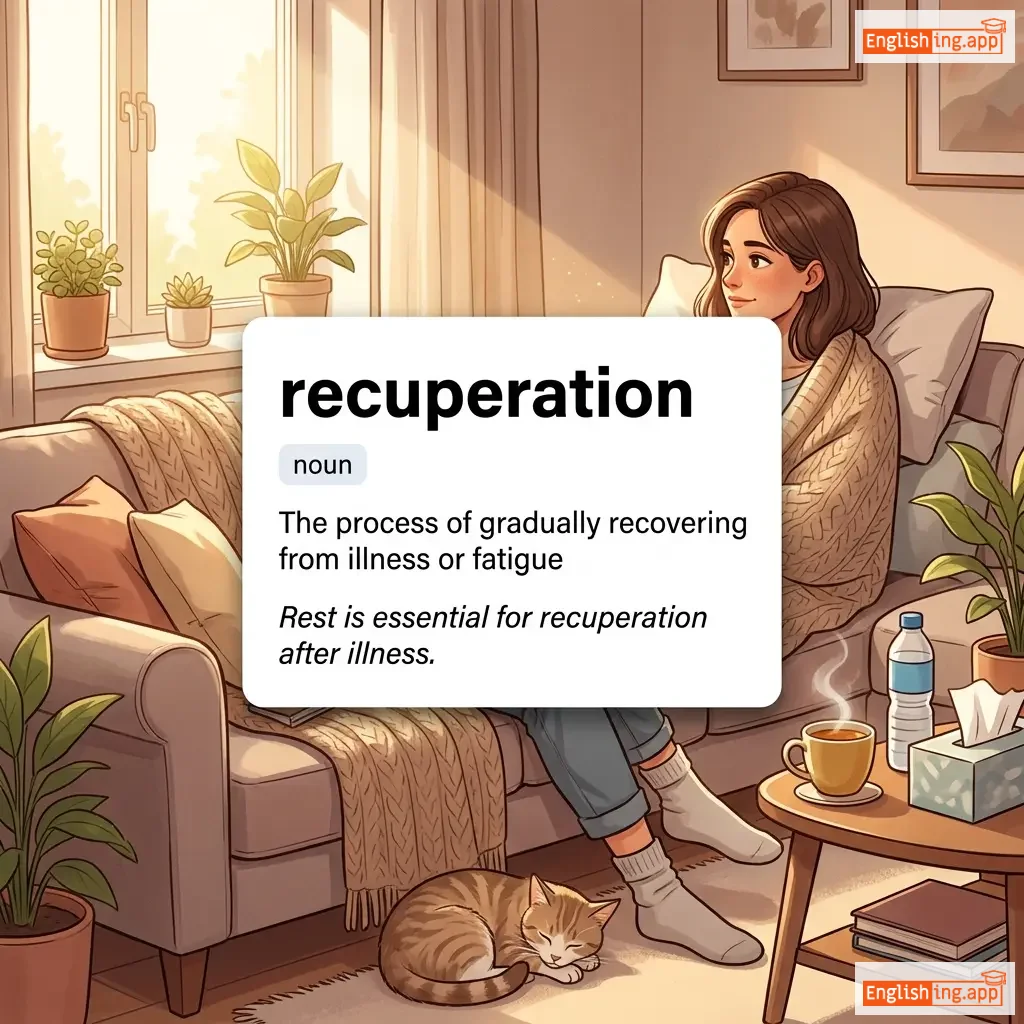
recuperation definition card — visual illustration of the meaning
noun
rɪˌkuːpərˈeɪʃən
回復 (kaifuku)

The process of gradually recovering from illness or fatigue

"Rest is essential for recuperation after illness."

"病気からの回復には休息が不可欠です。" (Byōki kara no kaifuku ni wa kyūsoku ga fukaketsu desu.)
🔁

recur

verb
/rɪˈkɜːr/

to happen again, especially repeatedly or at regular intervals

"The headache tends to recur every few weeks."

verb
/rɪˈkjʊə/
再治療する (sai chiryō suru)

to cure again; to remedy a second time

"The doctor had to recure the wound after it reopened."

"医者は傷が再び開いた後、傷を再治療する必要がありました。" (Isha wa kizu ga futatabi hiraita ato, kizu o sai chiryō suru hitsuyō ga arimashita.)
noun
/rɪˈkɜr.əns/
再発 (saihatsu)

the fact of something happening again; an instance of something happening again

"The doctor was concerned about the recurrence of the patient's symptoms."

"医師は患者の症状の再発について懸念していました。" (Ishi wa kanja no shoujou no saihatsu ni tsuite kenen shite imashita.)
adjective
/rɪˈkʌrənt/
再発する (saihatsu suru)

happening again and again, repeatedly

"She suffers from recurrent nightmares."

"彼女は繰り返し現れる悪夢に悩まされています。" (Kanojo wa kurikaeshi arawareru akumu ni nayamasareteimasu.)
noun
/ˈrɛkjʊzənt/
反抗者 (hankōsha)

a person who refuses to submit to authority or comply with rules

"The recusant opposed the new law."

"反抗者は新しい法律に反対しました。" (Hankōsha wa atarashī hōritsu ni hantai shimashita.)
verb
/riːˈsaɪ.kəl/
リサイクル (risaikuru)

to process used materials so they can be used again instead of being thrown away

"We should recycle paper and plastic to reduce waste."
"私たちは廃棄物を減らすために紙とプラスチックをリサイクルするべきです。" (Watashitachi wa haikibutsu o herasu tame ni kami to purasuchikku o risaikuru suru beki desu.)
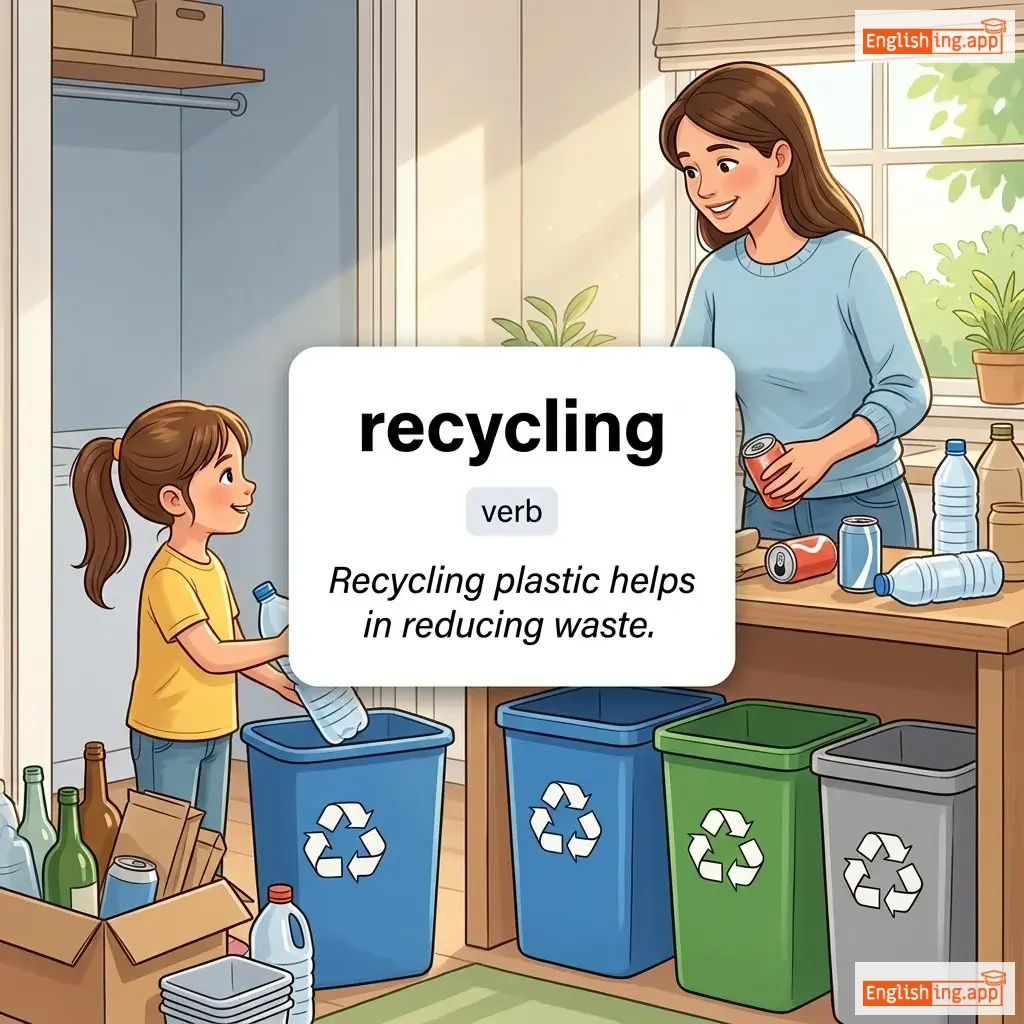
recycling definition card — visual illustration of the meaning
verb
riˈsaɪklɪŋ
リサイクリング (risaikuringu)

The process of converting waste materials into new materials and objects to prevent waste.

"Recycling plastic helps in reducing waste."

"プラスチックのリサイクリングは、廃棄物の削減に役立ちます。" (Purasuchikku no risaikuringu wa, haikimono no sakugen ni yakudachimasu.)
adjective
/rɛd/
(aka)

having the color of blood or rubies; a primary color

"She wore a red dress to the party."

"彼女はパーティーに赤いドレスを着て行った。" (Kanojo wa pātii ni akai doresu o kite itta.)
noun
/red liːf/
赤い葉 (akai ha)

red-colored leafy vegetable; amaranth leaves used as greens

"Red leaf is rich in iron and is commonly eaten in Bengali households."

"赤い葉は鉄分が豊富で、ベンガルの家庭でよく食べられます。" (Akai ha wa tetsubun ga houfu de, bengaru no katei de yoku taberaremasu.)
noun
/red ˌəʊ.liˈæn.dər/
赤いオリンダー (akai orindā)

a poisonous flowering shrub with bright red or pink flowers

"The red oleander blooms throughout the summer months."

"赤いオリンダーは夏の数ヶ月間咲きます。" (akai orindā wa natsu no sūkkagetsu-kan sakimasu)
verb
/rɪˈdiːm/
償う (omou)

to compensate for faults or mistakes; to exchange something for value

"He managed to redeem his reputation after the scandal."
"彼はスキャンダル後に自分の評判を回復しました。" (kare wa sukyandaru go ni jibun no hyouban wo kaifuku shimashita.)
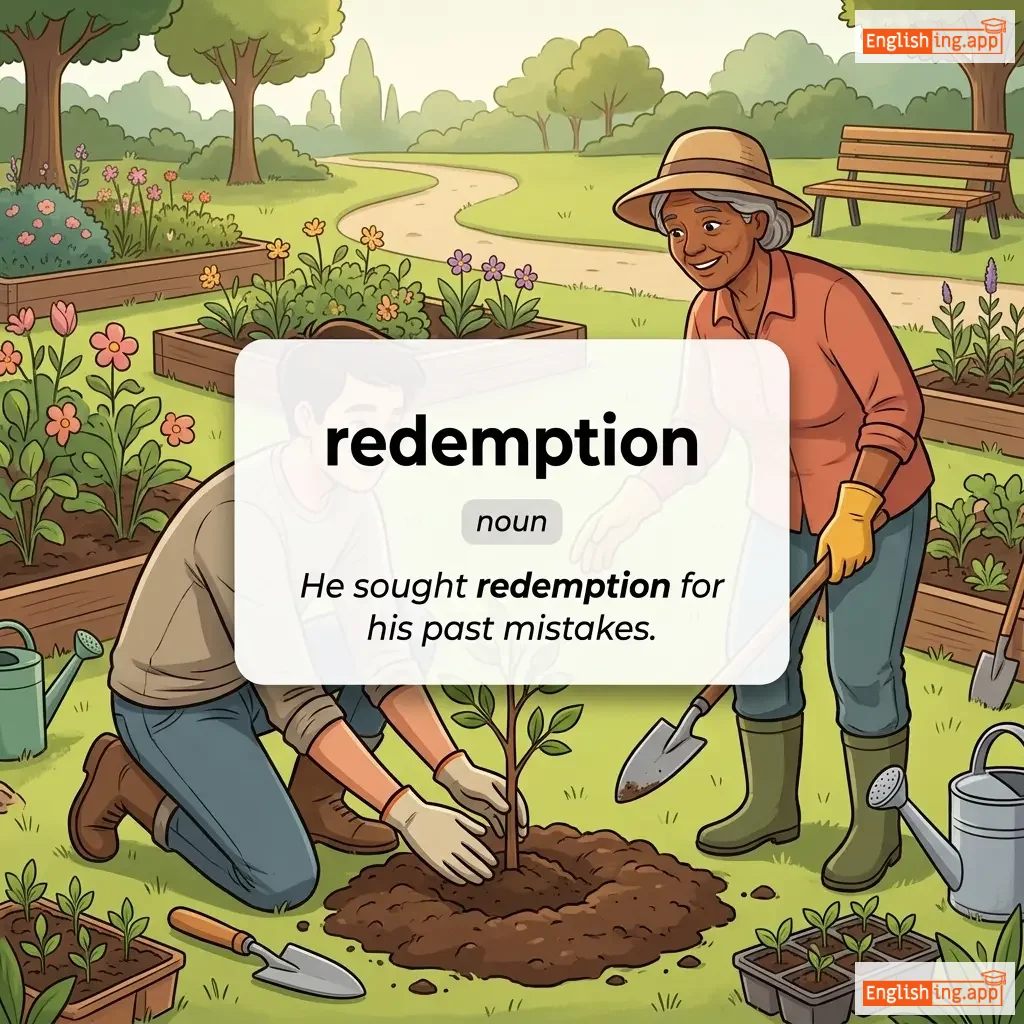
redemption definition card — visual illustration of the meaning
noun
/rɪˈdɛmpʃən/
贖罪 (shokuzai)

the act of being saved from sin, error, or evil; also the act of regaining possession or making something better

"He sought redemption for his past mistakes."
"彼は過去の過ちから贖罪を求めました。" (Kare wa kako no ayamachi kara shokuzai o motomemashita.)
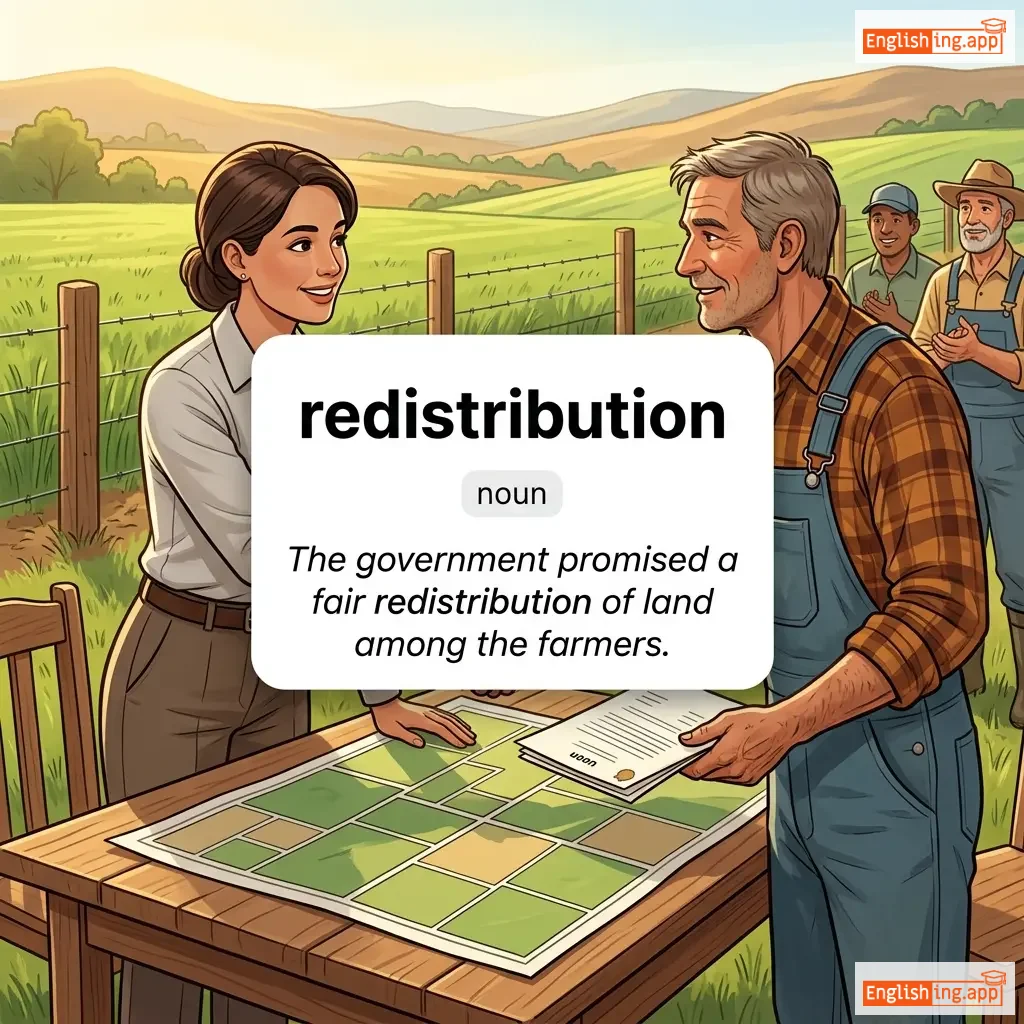
redistribution definition card — visual illustration of the meaning
noun
/ˌriː.dɪ.strɪˈbjuː.ʃən/
再分配 (saibunpei)

the act of sharing something out differently from before, often wealth or resources

"The government promised a fair redistribution of land among the farmers."

"政府は農民たちの間で公正な土地の再分配を約束しました。" (Seifu wa nōminta chi no aida de kōsei na tochi no saibunpai o yakusoku shimashita.)
noun
/ˈrɛd.ə.ləns/
香り (kaori)

a pleasant smell or the quality of suggesting something strongly

"The redolence of jasmine filled the evening air."

"ジャスミンの香りが夕方の空気を満たした。" (Jasumin no kaori ga yūgata no kūki o mitashita.)
adjective
/ˈrɛd.ələnt/

having a strong pleasant smell; strongly reminiscent or suggestive of something

"The kitchen was redolent of spices and fresh herbs."

adjective
/rɪˈdaʊ.tə.bəl/
恐ろしい/尊敬すべき (osoroshii/sonkei subeki)

formidable, especially as an opponent; inspiring fear or respect

"She was a redoubtable leader who commanded respect from all."

"彼女は全員から尊敬を集める恐ろしいリーダーだった。" (Kanojo wa zen'in kara sonkei o atsumeru osoroshī rīdā datta.)
verb
/rɪˈdaʊnd/
貢献する (kōken suru)

to contribute greatly to a result or consequence, usually beneficial

"His hard work will redound to the success of the company."

"彼の努力は会社の成功に貢献するでしょう。" (Kare no doryoku wa kaisha no seikō ni kōken suru deshō.)
verb
/rɪˈdrɛs/
是正する (seisei suru)

to set right, remedy, or compensate for a wrong or grievance

"The company promised to redress the complaints of its customers."
"その会社は顧客の苦情を是正すると約束しました。" (Sono kaisha wa kokyaku no kujou wo seisei suru to yakusoku shimashita.)
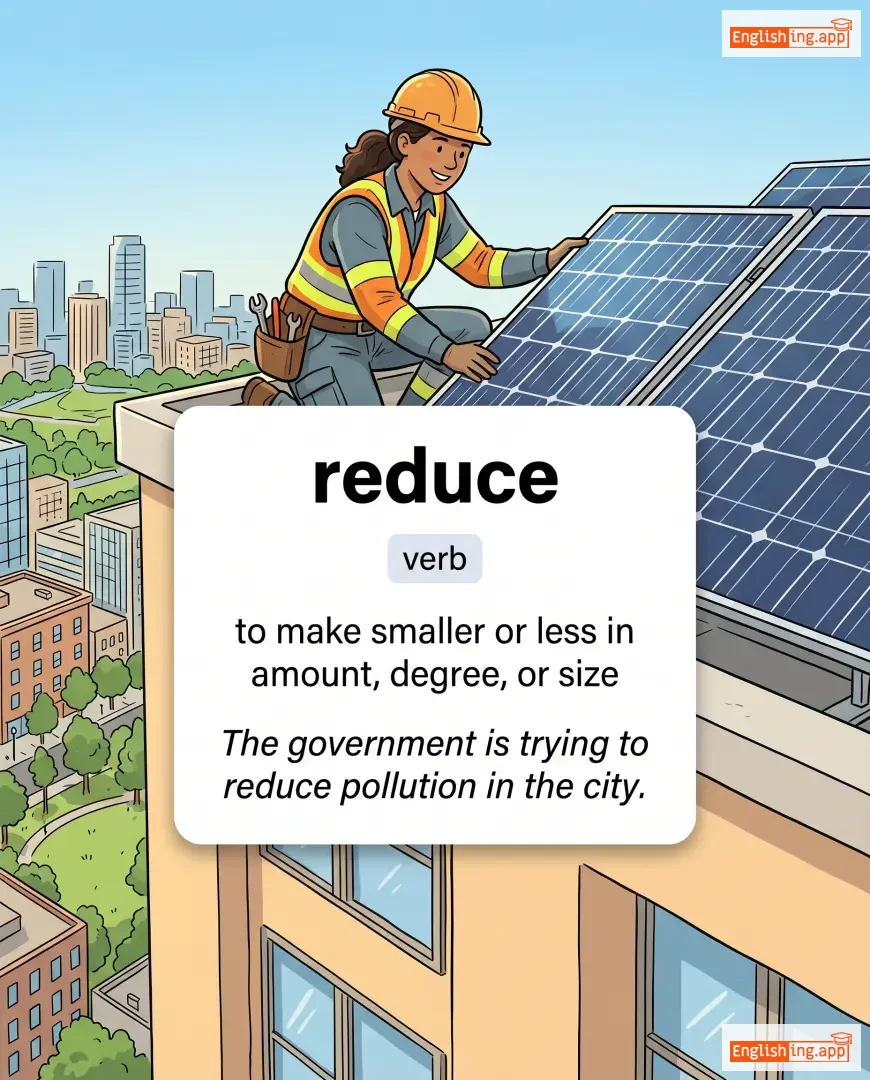
reduce definition card — visual illustration of the meaning
verb
/rɪˈdjuːs/
減らす (herasu)

to make smaller or less in amount, degree, or size

"The government is trying to reduce pollution in the city."
"政府は都市の汚染を減らそうとしています。" (Seifu wa toshi no osen wo herasou to shiteimasu.)
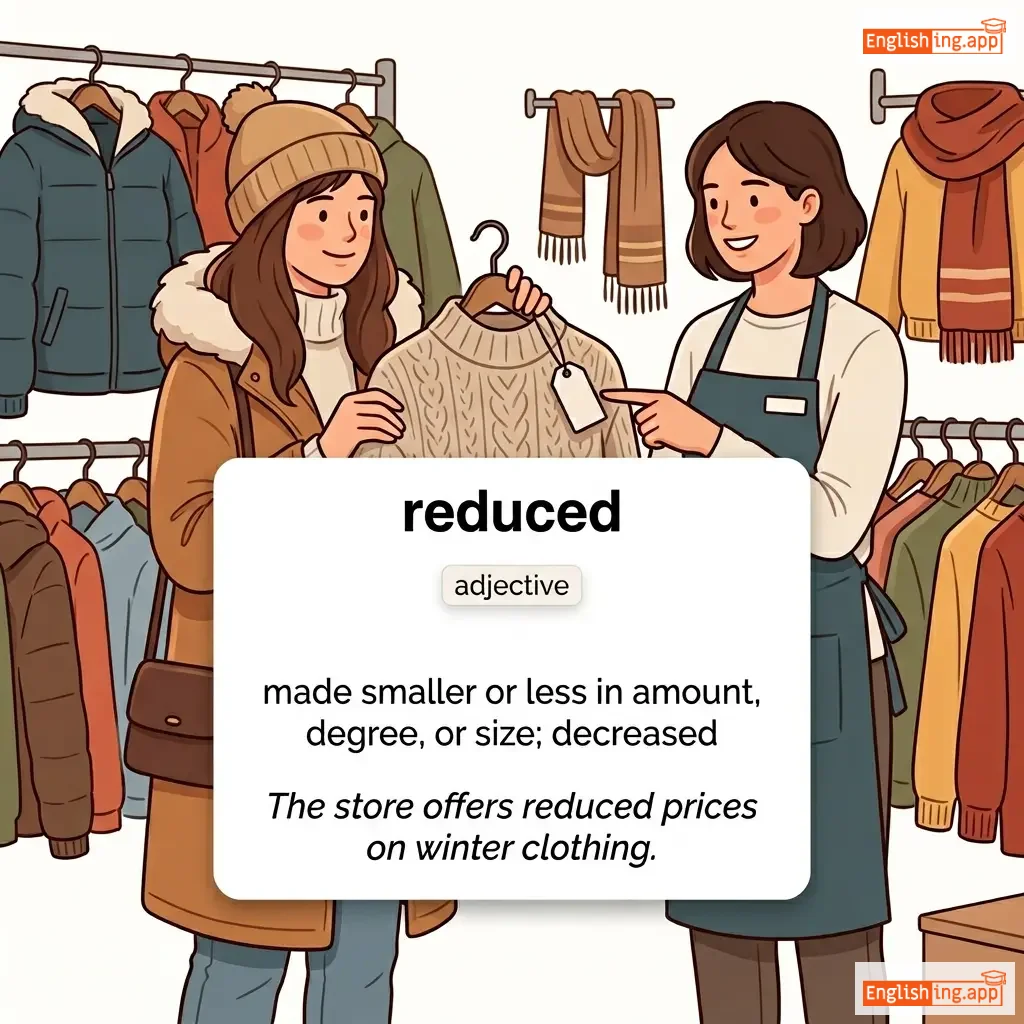
reduced definition card — visual illustration of the meaning
adjective
/rɪˈdjuːst/
減少された; 小さくされた; 制限された (genshō sareta; chiisaku sareta; seigen sareta)

made smaller or less in amount, degree, or size; decreased

"The store offers reduced prices on winter clothing."
"店は冬服の価格を減少させた。" (Mise wa fuyu fuku no kakaku o genshō sa seta.)
adjective
/rɪˈdjuːsəbl̩/

capable of being simplified, lessened, or made smaller

"The problem is complex but reducible to a few basic principles."

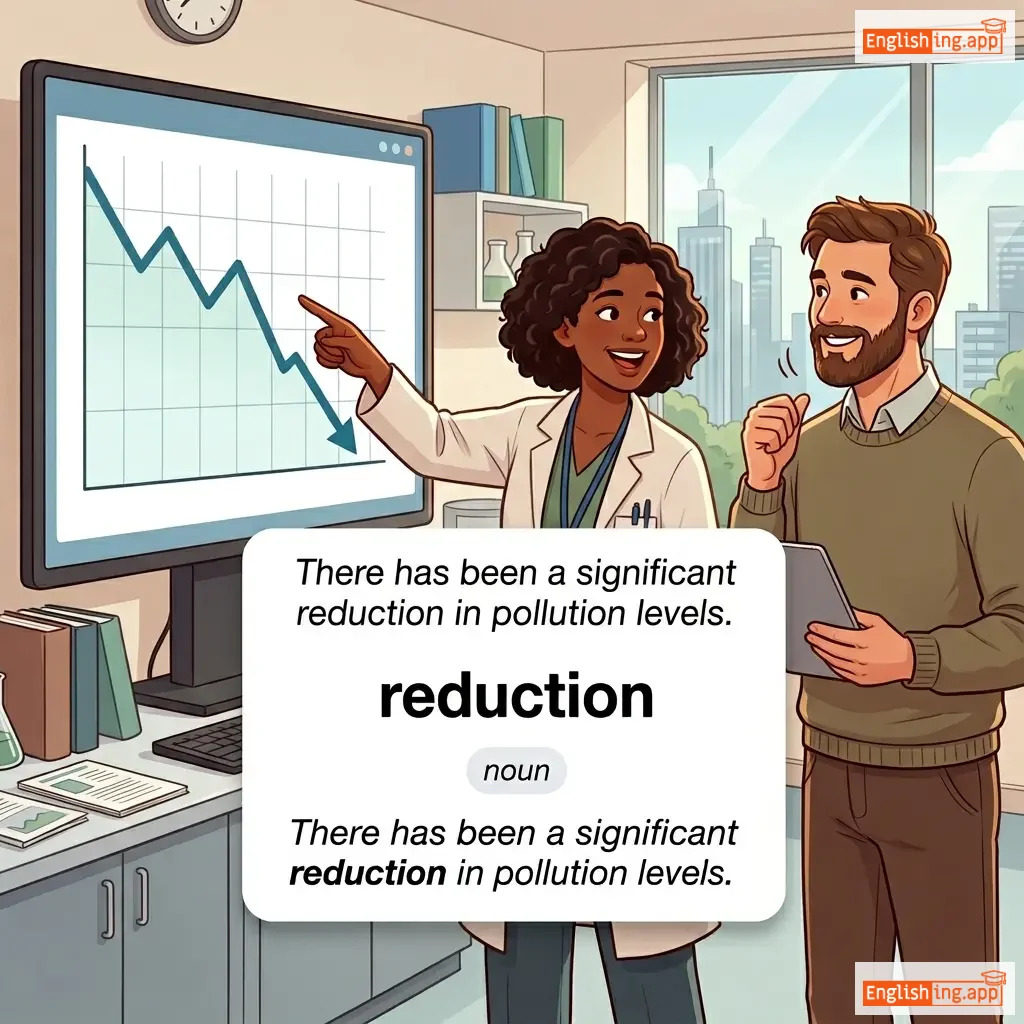
reduction definition card — visual illustration of the meaning
noun
/rɪˈdʌkʃən/
削減 (saku-gen)

the action or process of making something smaller or less in amount, degree, or size

"There has been a significant reduction in pollution levels."

"汚染レベルの重要なリダクションがありました。" (Osengēberu no jūyōna ridakushon ga arimashita.)
noun
/rɪˈdʌndəns/
冗長 (jōchō)

the state of being unnecessary or more than needed

"The report contained too much redu ndance and repetition."
"報告書には冗長性と繰り返しが多すぎた。" (Hōkokusho ni wa jōchō-sei to kurikaeshi ga ōsugita.)
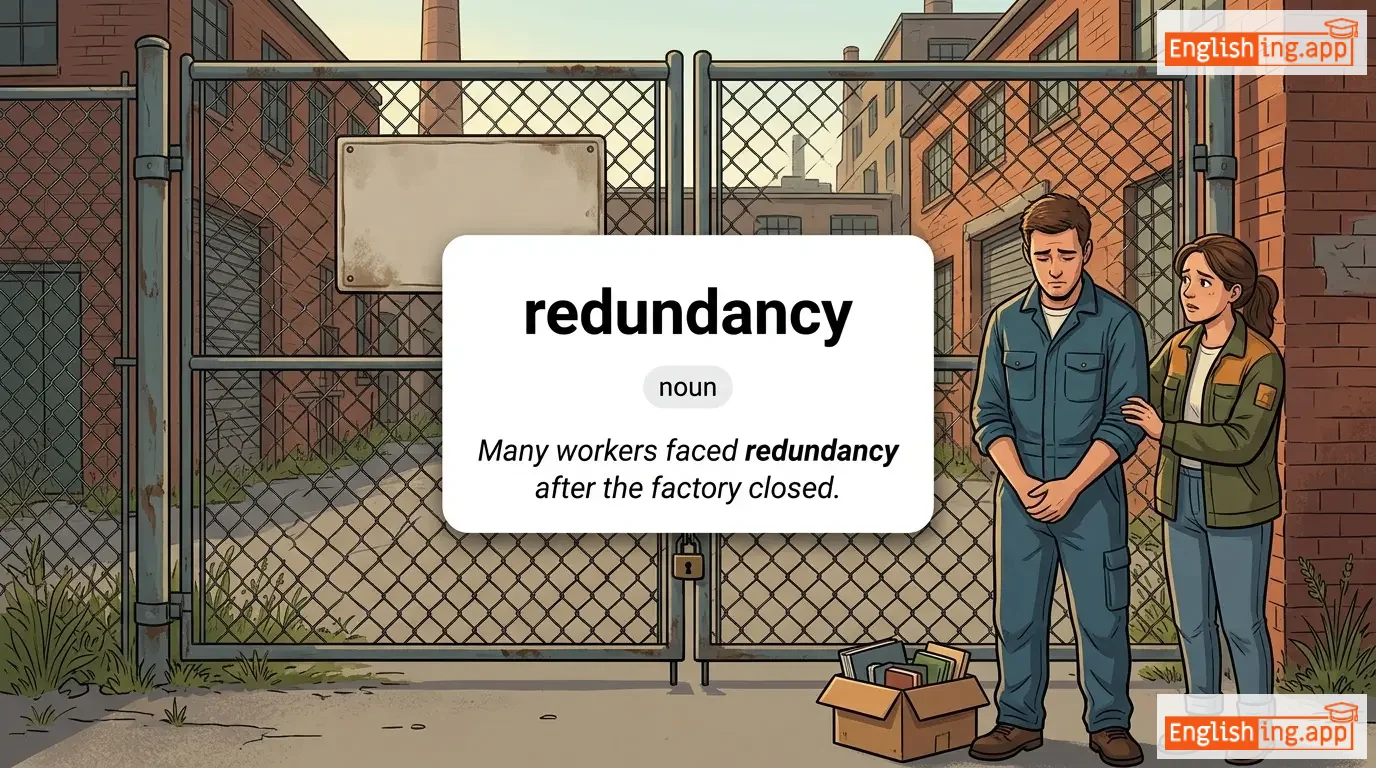
redundancy definition card — visual illustration of the meaning
noun
/rɪˈdʌndənsi/
冗長性 / 解雇 (jōchō-sei / kaiko)

the state of being unnecessary or no longer needed; dismissal from a job due to lack of work

"Many workers faced redundancy after the factory closed."
"工場が閉鎖された後、多くの労働者が冗長性に直面しました。" (Kōjō ga heisa sareta ato, ōku no rōdōsha ga jōchō-sei ni chokumen shimashita.)
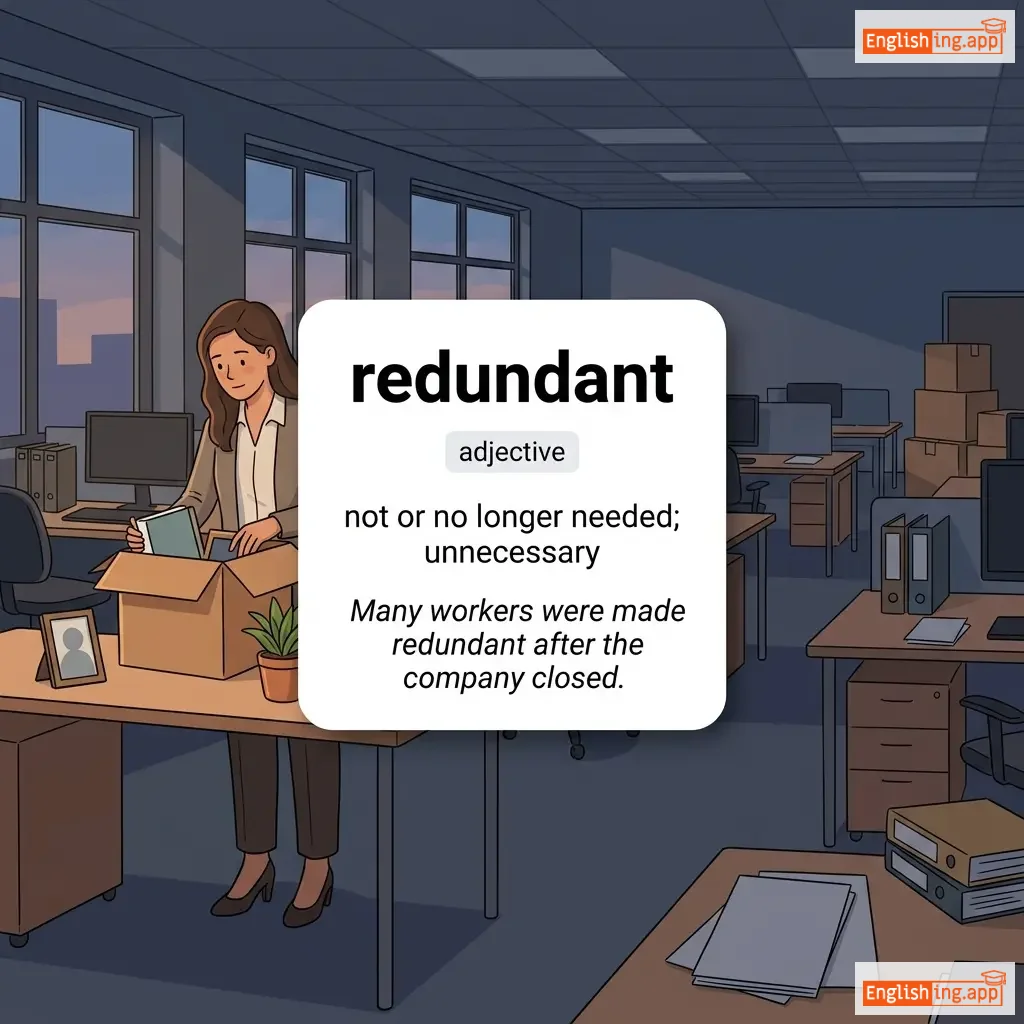
redundant definition card — visual illustration of the meaning
adjective
/rɪˈdʌndənt/
冗長な (jōchōna)

not or no longer needed; unnecessary

"Many workers were made redundant after the company closed."

"会社が閉鎖された後、多くの労働者は冗長だと見なされました。" (Kaisha ga heisa sareta ato, ōku no rōdōsha wa jōchō da to minasaremashita.)
verb
/riːk/
悪臭を放つ (akushuu wo hanatsu)

to smell strongly and unpleasantly; to give off a bad odor

"The garbage bin reeked after being left in the sun."

"ゴミ箱は太陽の下に放置された後、悪臭を放ちました。" (Gomibako wa taiyou no shita ni houchi sareta ato, akushuu wo hanachimashita.)
verb
/riːl/
つまずく / 巻き取る (tsumazuku / makitoru)

to lose balance and stagger; to wind or spin something onto a reel

"He reeled backward after being punched."

"彼は殴られた後、後ろに転んだ。" (Kare wa nagurareta ato, ushiro ni koronda.)
verb
/ˌriː.ɪˈstæblɪʃ/
再建する (saiken suru)

to set up or restore something again after it has been disrupted

"The government worked hard to reestablish peace in the region."

"政府は地域の平和を再建するために懸命に働きました。" (Seifu wa chiiki no heiwa o saiken suru tame ni kenmei ni hatarakimashita.)
noun
/rɪˈfɛkʃən/
食事 / 反省 (shokuji / hansei)

a meal or the act of taking food and drink

"The monks gathered for their evening refection."

"僧侶たちは夕食のために集まりました。" (Sōryo-tachi wa yūshoku no tame ni atsumarimashita.)
noun
/rɪˈfɛktəri/
食堂 (shokudou)

a dining hall, especially in a monastery, convent, or school

"Students had lunch in the refectory."

"学生たちは食堂で昼食をとった。" (Gakuseitachi wa shokudou de chuushoku o totta.)
verb
/rɪˈfɜːr/
紹介する (shoukai suru)

to direct someone to another source of help, information, or decision

"The doctor will refer you to a specialist."

"医者はあなたを専門家に紹介するでしょう。" (Isha wa anata o senmonka ni shoukai suru deshou.)
adjective
/rɪˈfɛrəbəl/
参照可能な (sanshō kanō na)

able to be related or directed to something

"The issue is referable to the new policy changes."

"その問題は新しい政策変更に関連付けることができます。" (Sono mondai wa atarashī seisaku henkō ni kanrendzukeru koto ga dekimasu.)
noun
/ˌrɛfəˈriː/
審判 (shinpan)

a person who oversees a game or match to ensure the rules are followed

"The referee stopped the game after a foul."

"審判はファウルの後、試合を停止しました。" (Shinpan wa fauru no ato, shiai o teishi shimashita.)
noun
/ˈrɛfərəns/
参照 (sanshō)

the action of mentioning or alluding to something

"I need to check the reference for this article."

"この記事の参照を確認する必要があります。" (Kono kiji no sanshō o kakunin suru hitsuyō ga arimasu.)
noun
/ˌrɛfəˈrɛndəm/
国民投票 (kokumin touhyou)

a general vote by the population on a single political issue

"The government held a referendum on the new constitution."

"政府は新しい憲法について国民投票を実施しました。" (Seifu wa atarashii kenpou ni tsuite kokumin touhyou o jisshi shimashita.)
noun
/rɪˈfɜːrər/
紹介者 (shōkaisha)

a person who directs someone to another person or service

"The referrer earned a bonus for recommending a new client."
"紹介者は新しい顧客を推薦したことでボーナスを得ました。" (Shōkaisha wa atarashī kokyaku o suisen shita koto de bōnasu o emashita.)
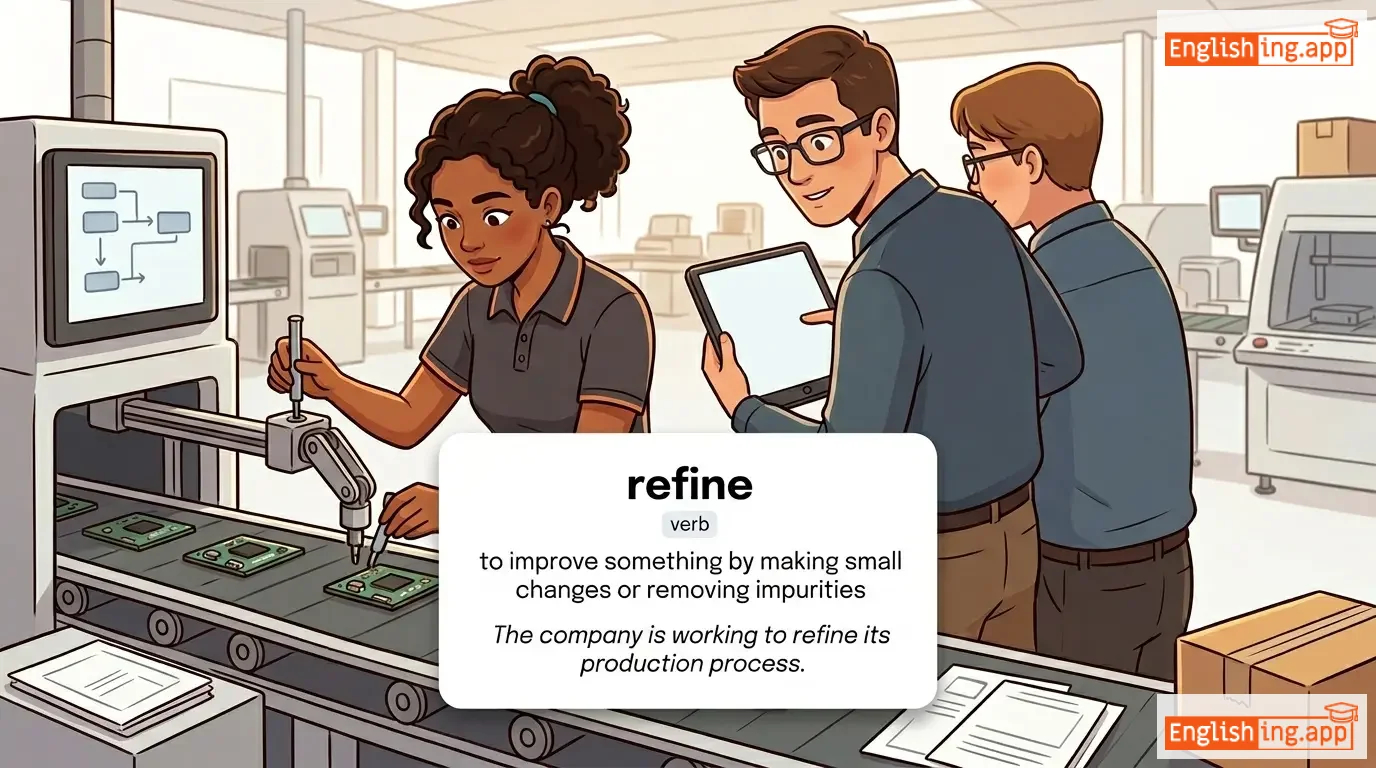
refine definition card — visual illustration of the meaning
verb
/rɪˈfaɪn/
改善する (kaizen suru)

to improve something by making small changes or removing impurities

"The company is working to refine its production process."

"会社は生産プロセスを改善するために努力しています。" (Kaisha wa seisan purosezu o kaizen suru tame ni doryoku shiteimasu.)
adjective
/rɪˈfaɪnd/
洗練された; 精製された (senren sareta; seisei sareta)

elegant and cultured in appearance, manner, or taste; purified

"She has very refined taste in art and music."
"彼女は芸術と音楽に非常に洗練された趣味を持っています。" (Kanojo wa geijutsu to ongaku ni hijō ni senren sareta shumi o motteimasu.)
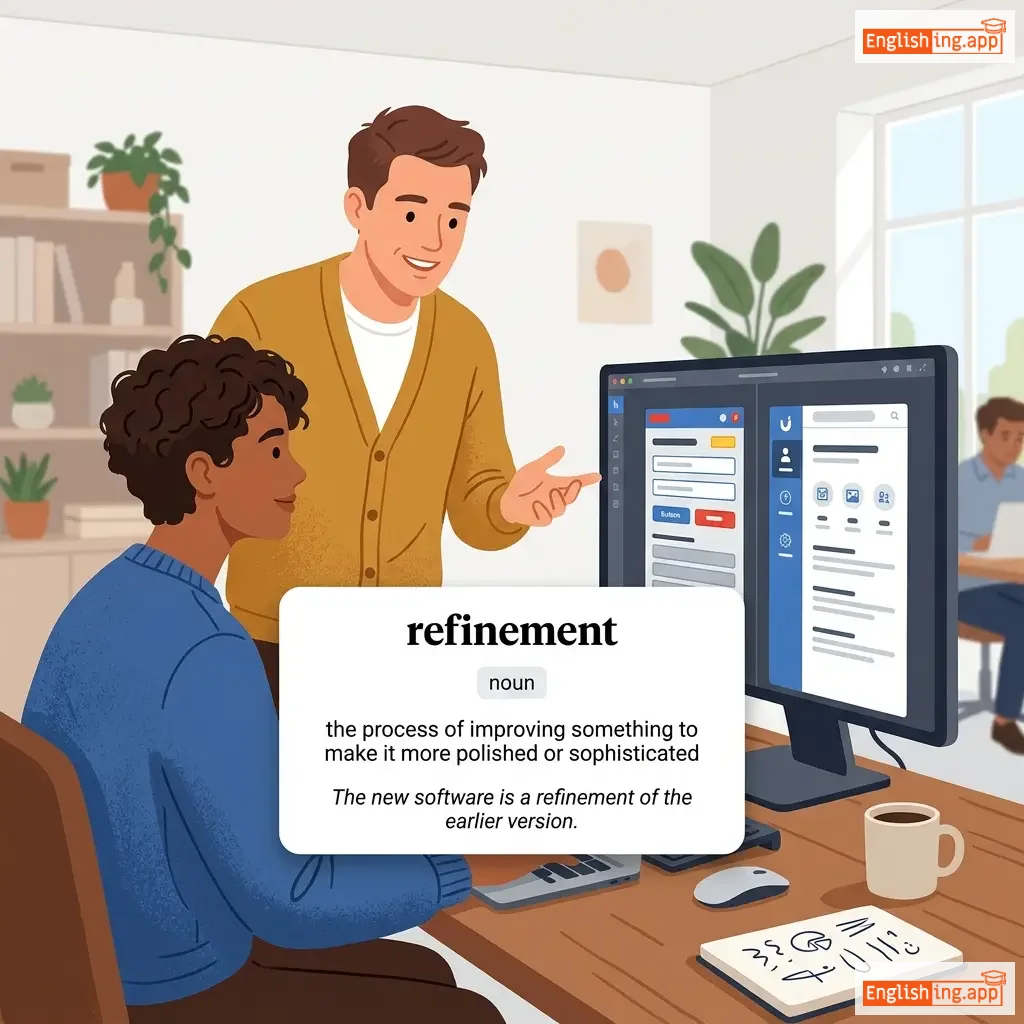
refinement definition card — visual illustration of the meaning
noun
/rɪˈfaɪnmənt/
洗練 (suren)

the process of improving something to make it more polished or sophisticated

"The new software is a refinement of the earlier version."

"新しいソフトウェアは、以前のバージョンの洗練です。" (Atarashī sofutowea wa, izen no bājon no suren desu.)
noun
/rɪˈfaɪnəri/
製油所 (seiyujo)

an industrial facility where raw materials are processed and purified

"The oil refinery processes thousands of barrels daily."

"石油精製所は毎日何千バレルもの石油を処理します。" (Sekiyu seisējo wa mainichi nanzenbareru mono sekiyu o shori shimasu.)
reflect definition card — visual illustration of the meaning
verb
/rɪˈflɛkt/
反映する (hanei suru)

to show an image as in a mirror, or to think deeply about something

"The mirror reflects her smiling face."

"鏡は彼女の笑顔を反映しています。" (Kagami wa kanojo no egao o hanei shiteimasu.)
adjective
/rɪˈflɛktɪbəl/
反射可能 (hansha kanou)

capable of being reflected, as light or an image

"The surface of the lake is highly reflectible in the morning sun."
"湖の表面は朝の太陽の下で非常に反射可能です。" (Mizuumi no hyōmen wa asa no taiyō no shita de hijō ni hansha kanō desu.)
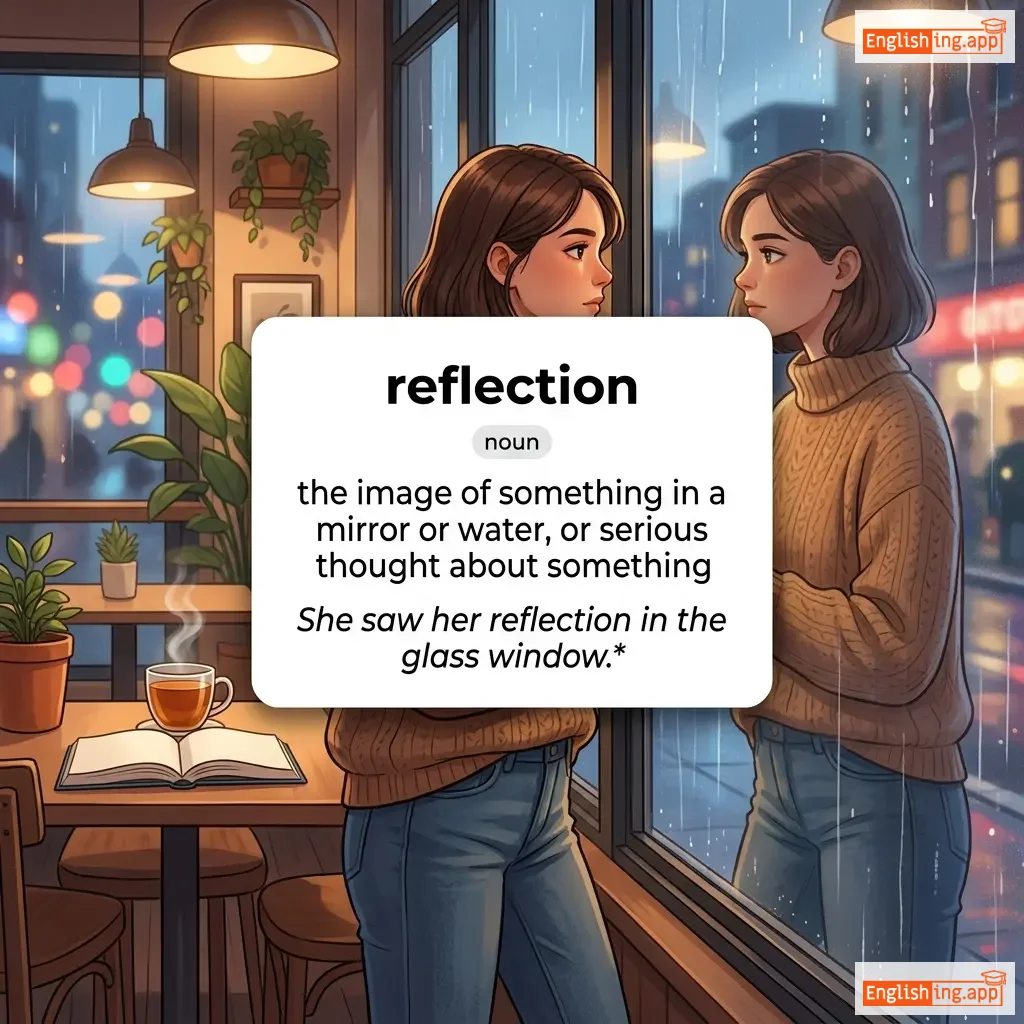
reflection definition card — visual illustration of the meaning
noun
/rɪˈflɛkʃən/
反映 (hanei)

the image of something in a mirror or water, or serious thought about something

"She saw her reflection in the glass window."

"彼女はガラスの窓に自分の反映を見ました。" (Kanojo wa garasu no mado ni jibun no hanei o mimashita.)
adjective
/rɪˈflektɪv/
反射的; 思慮深い; 光や画像を反射できる (hanshateki; shiryo fukai; hikari ya gazō o hansha dekiru)

thoughtful; contemplative; able to reflect light or images

"After the meeting, he was in a reflective mood."

"会議の後、彼は反射的な気分だった。" (Kaigi no ato, kare wa hanshateki na kibun datta.)
noun
/rɪˈflɛktər/
反射器 (hanshaki)

A surface or device that reflects light, heat, or sound, often used to direct beams or improve visibility.

"The cyclist attached a red reflector to the back of his bike for safety."

"自転車のライダーは安全のために自分の自転車の後ろに赤い反射器を取り付けました。" (Jitensha no raidā wa anzen no tame ni jibun no jitensha no ushiro ni akai hanshaki o toritsukemashita.)
adjective
/ˈriː.fleks/
反射 (hansha)

an action performed without conscious thought; relating to reflection

"The doctor tested her reflex response by tapping her knee."

"医師は彼女の膝を軽く叩いて反射的な反応をテストしました。" (Ishi wa kanojo no hiza wo karuku tataite hansha-teki na hannou wo tesuto shimashita.)
adjective
/rɪˈflɛksəbl/
反射可能な (hansha kanō na)

Capable of being reflected or bent back.

"The surface was highly reflexible, bouncing light in different directions."

"その表面は非常に反射可能で、光を異なる方向に反射させていました。" (Sono hyōmen wa hijō ni hansha kanō de, hikari o kotonaru hōkō ni hansha sasete imashita.)
adjective
/rɪˈflek.sɪv/
反射的; 内省的 (hanshateki; naiseiteki)

directed back on itself; showing deep thought about oneself

"She became more reflexive about her behavior after the feedback."
"フィードバックの後、彼女は自分の行動についてもっと反省的になりました。" (Fīdobakku no ato, kanojo wa jibun no kōdō ni tsuite motto hanseiteki ni narimashita.)
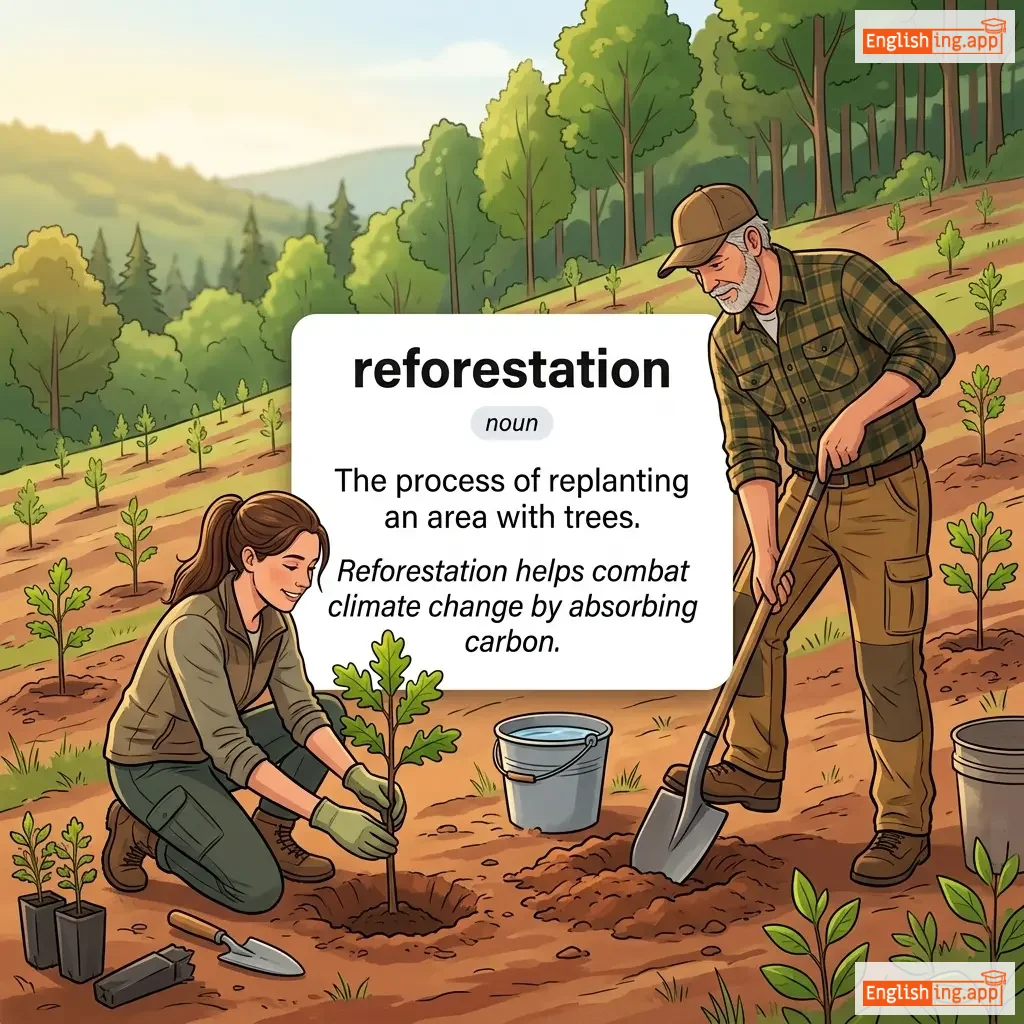
reforestation definition card — visual illustration of the meaning
noun
ˌriːfɔːrɪˈsteɪʃən
再植林 (saishokurin)

The process of replanting an area with trees.

"Reforestation helps combat climate change by absorbing carbon."

"再植林は炭素を吸収することによって気候変動に対して対抗するのに役立ちます。" (saishokurin wa tanso o kyuushuu suru koto ni yotte kikou hendou ni taishite taikou suru noni yakudachimasu)