語彙集

英単語辞書 | 単語の意味、定義、例文

verb
/rɪˈsaɪt/
暗唱する (anshō suru)

To say aloud something learned, especially poetry or text, from memory.

"The child recited a poem in front of the class."

"その子はクラスの前で詩を暗唱しました。" (Sono ko wa kurasu no mae de shi o anshō shimashita.)
noun
/rɪˈsaɪtər/
朗誦者 (roshosha)

a person who recites or repeats something aloud from memory, especially poetry, prayers, or formal texts

"The reciter delivered the poem with clarity and emotion."

"朗誦者は明瞭さと感情を込めて詩を朗読した。" (roshosha wa meiryosa to kanjo o komete shi o rodoku shita)
verb (archaic/rare)
/rɛk/
気にする (ki ni suru)

To care about or be concerned with (something); to have regard for.

"He does not reck the dangers of his actions."

"彼は自分の行動の危険を気にしない。" (Kare wa jibun no kōdō no kiken o ki ni shinai.)
adjective
/ˈrɛkləs/
無謀な (mubou na)

Acting without thinking or caring about the consequences.

"His reckless driving caused a serious accident."

"彼の無謀な運転が重大な事故を引き起こした。" (Kare no mubou na unten ga juudaina jiko o hikiokoshita.)
verb
/ˈrɛkən/
推測する (suikoku suru)

To think, believe, or expect something; to calculate or estimate.

"I reckon it will rain later today."

"今日は後で雨が降るだろうと思います。" (Kyou wa ato de ame ga furu darou to omoimasu.)
♻️

reclaim

verb
/rɪˈkleɪm/

To take back or recover something; to restore to a usable state.

"The farmer worked to reclaim the barren land."

verb
/rɪˈklaɪn/
リクライニングする (rikurainingu suru)

To lean or lie back in a relaxed position.

"She reclined on the sofa with a book."
"彼女はソファで本を持ってリクライニングしていた。" (Kanojo wa sofa de hon o motte rikurainingu shite ita.)
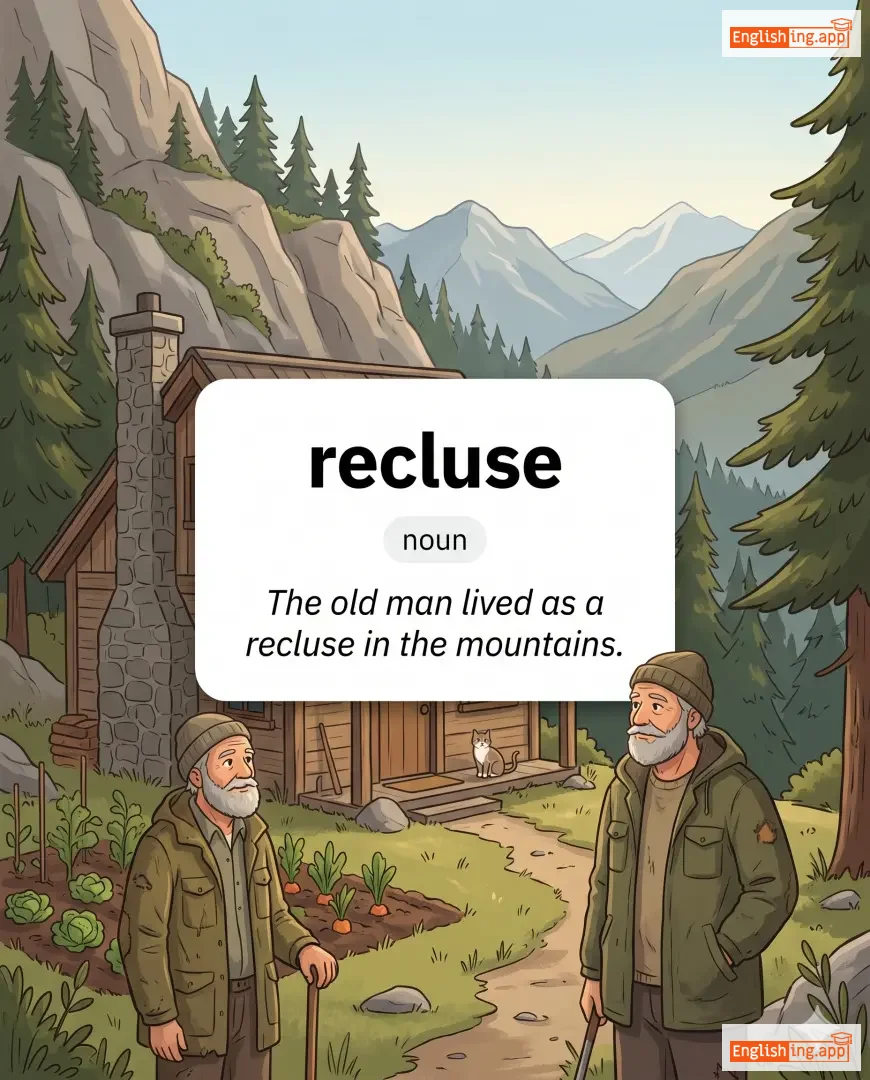
recluse definition card — visual illustration of the meaning
noun
/rɪˈkluːs/
隠者 (inja)

A person who lives alone and avoids other people; someone who lives a solitary life.

"The old man lived as a recluse in the mountains."

"その老人は山の中で隠者として暮らしていた。" (Sono rōjin wa yama no naka de inja to shite kurashite ita.)
noun
/ˈrɛkluːsəri/
隠遁場所 (inton basho)

A place for seclusion or retreat, especially for a recluse or hermit.

"The monk spent years in the reclusory away from society."
"その僧侶は社会から離れた隠遁場所で数年を過ごしました。" (Sono sōryo wa shakai kara hanareta inton basho de sūnen o sugoshimashita.)
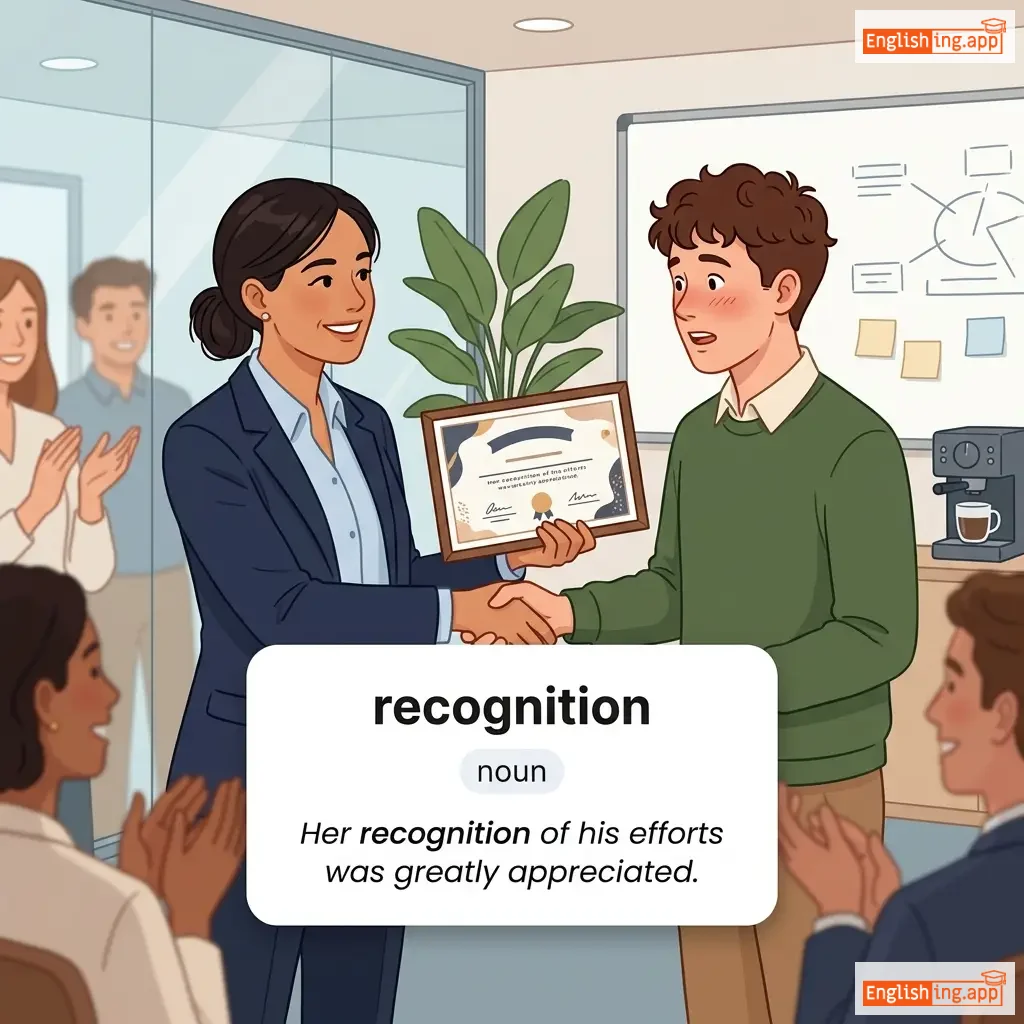
recognition definition card — visual illustration of the meaning
noun
/ˌrɛkəɡˈnɪʃən/
認識 (ninshiki)

the action or process of recognizing or being recognized, in particular, the appreciation or acknowledgement of something

"Her recognition of his efforts was greatly appreciated."

"彼女の努力に対する認識は非常に高く評価されました。" (Kanojo no doryoku ni taisuru ninshiki wa hijō ni takaku hyōka saremashita.)
noun
/rɪˈkɒɡnɪzəns/
法的義務 (hōteki gimu)

A legal obligation or bond entered into before a court, especially to ensure future appearance.

"He was released on his own recognizance."

"彼は自分の法的義務で釈放されました。" (Kare wa jibun no hōteki gimu de shakuho saremashita.)
verb
/ˈrɛkəɡnaɪz/

To identify someone or something seen before; to acknowledge or accept.

"She did not recognize him in the crowd."

verb
/rɪˈkɔɪl/
後退する (kōtai suru)

To suddenly spring back in fear, horror, or from force such as a gun's kickback.

"She recoiled at the sight of the snake."
"彼女はヘビを見て後退した。" (Kanojo wa hebi o mite kōtai shita.)
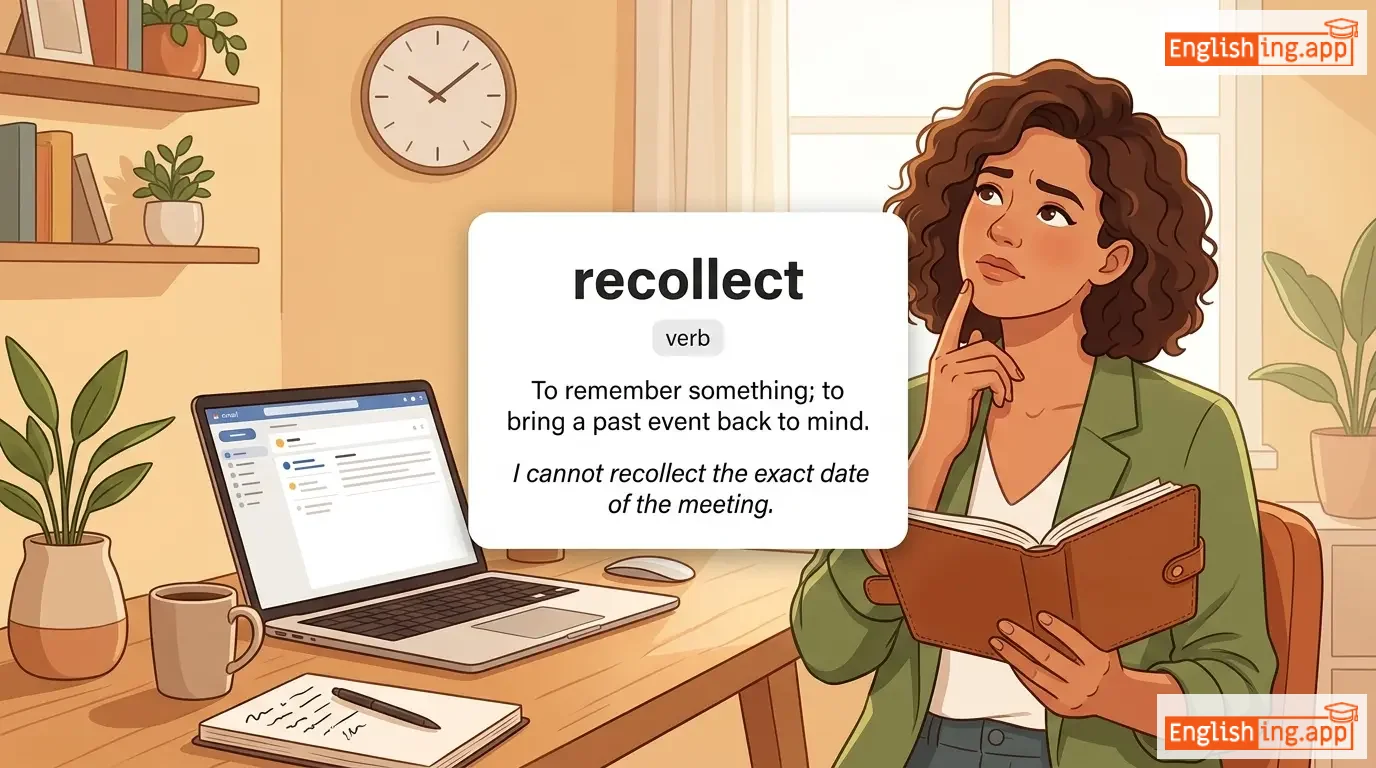
recollect definition card — visual illustration of the meaning
verb
/ˌrɛkəˈlɛkt/
思い出す (omoidasu)

To remember something; to bring a past event back to mind.

"I cannot recollect the exact date of the meeting."
"私は会議の日付を正確に思い出せません。" (Watashi wa kaigi no hizuke wo seikaku ni omoidase masen.)
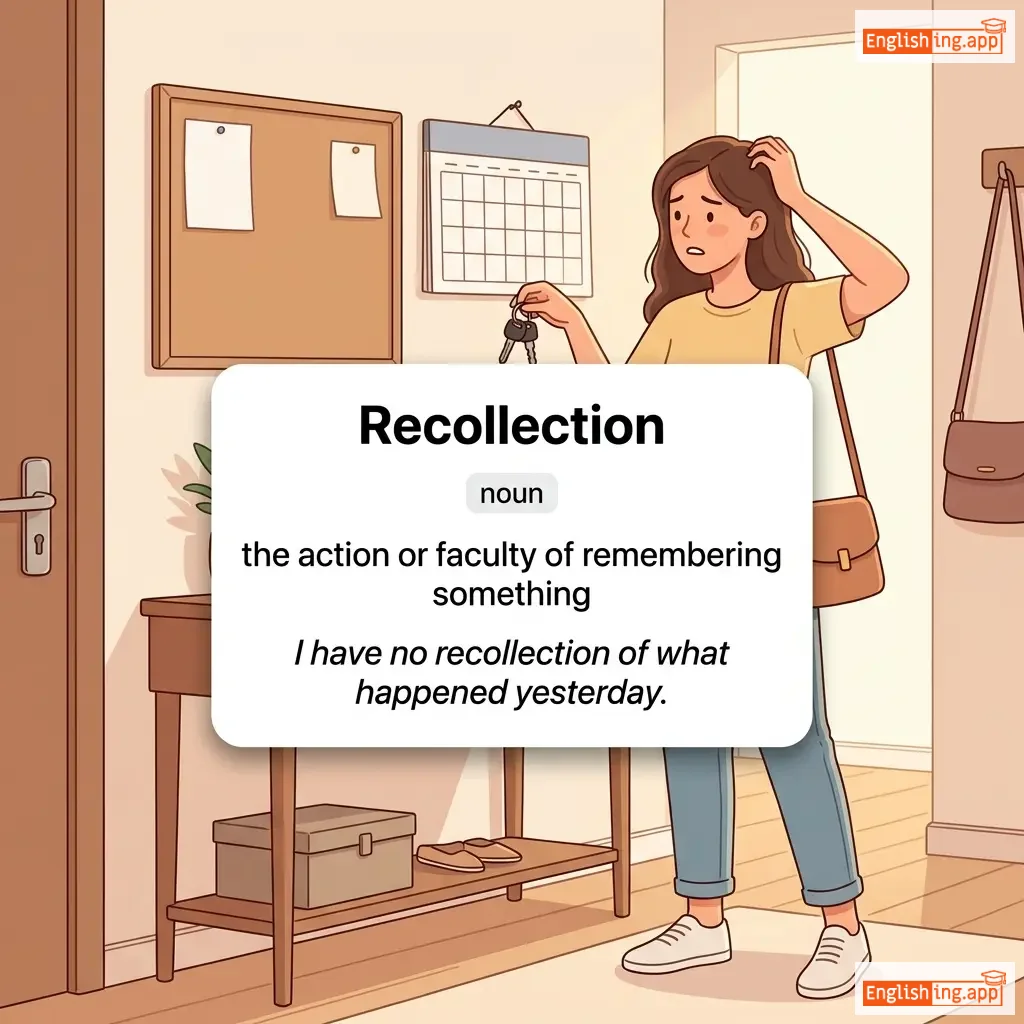
Recollection definition card — visual illustration of the meaning
noun
/ˌrek.əˈlek.ʃən/
記憶 (kioku)

the action or faculty of remembering something

"I have no recollection of what happened yesterday."

"昨日何が起こったか全く覚えていません。" (Kinō nani ga okotta ka mattaku oboeteimasen.)
verb
/ˌrɛkəˈmɛnd/
勧める (susumeru)

to suggest or advise something as being good or suitable

"I recommend trying the new restaurant downtown."

"私はダウンタウンの新しいレストランを試すことをリコメンドします。" (Watashi wa dauntaun no atarashī resutoran o tamesu koto o rikomendo shimasu.)
noun
/ˌrɛkəmɛnˈdeɪʃən/
推薦 (suishin)

a suggestion or proposal as to the best course of action

"Her recommendation for the job was highly valued."
"彼女の仕事に対する推薦は非常に高く評価されました。" (Kanojo no shigoto ni taisuru suishin wa hijou ni takaku hyouka saremashita.)
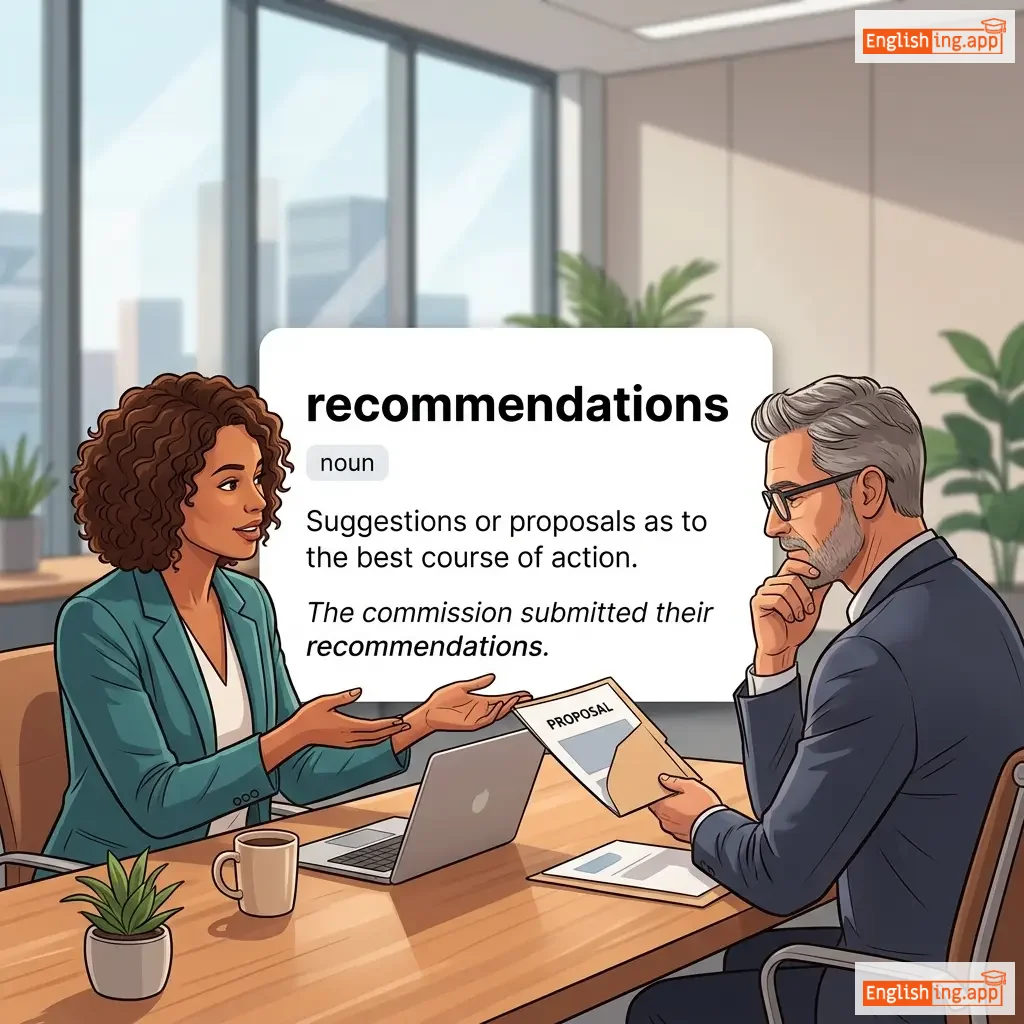
recommendations definition card — visual illustration of the meaning
noun
ˌrek.ə.menˈdeɪ.ʃənz
推薦 (suisen)

Suggestions or proposals as to the best course of action.

"The commission submitted their recommendations."

"委員会はその推薦を提出しました。" (Iinkai wa sono suisen o teishutsu shimashita.)
noun/verb
/ˈrɛkəmˌpɛns/
賠償 (baishou)

to compensate someone for loss or harm suffered; compensation given for damage or injury

"The company offered financial recompense to the injured worker."

"その会社は負傷した労働者に対して金銭的な賠償を提供しました。" (Sono kaisha wa fushou shita roudousha ni taishite kinseiteki na baishou o teikyoushimashita.)
adjective
/ˈrɛkənˌsaɪləbl̩/

Capable of being resolved or made consistent.

"Their differences are reconcilable with honest communication."
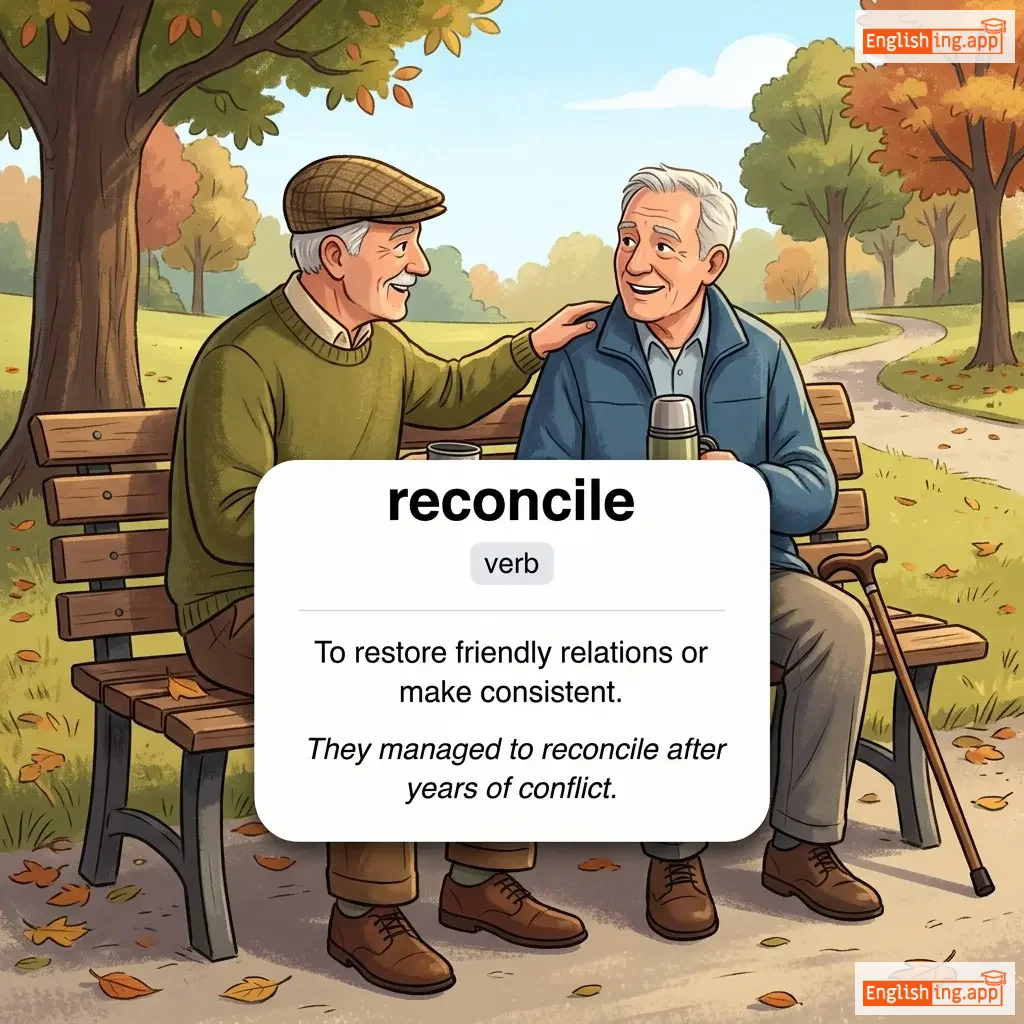
reconcile definition card — visual illustration of the meaning
verb
/ˈrɛkənˌsaɪl/

To restore friendly relations or make consistent.

"They managed to reconcile after years of conflict."

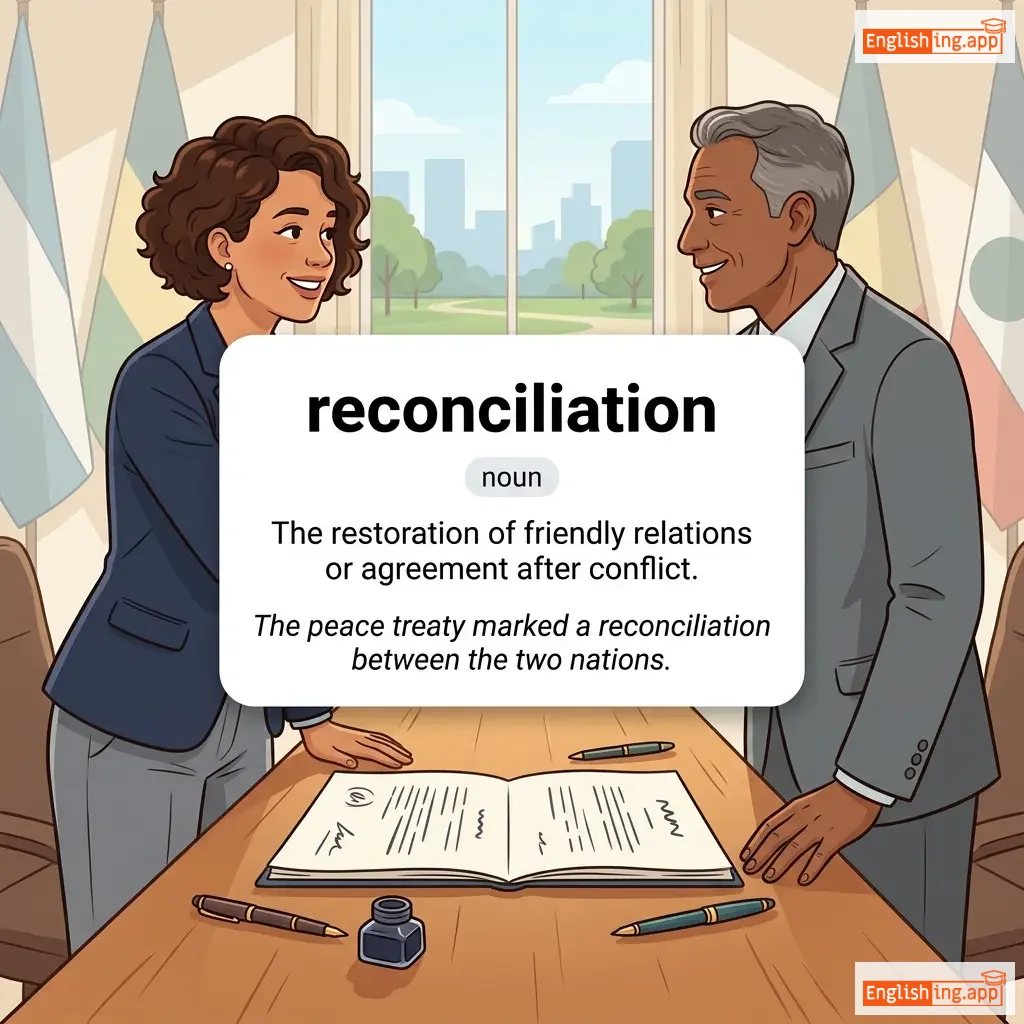
reconciliation definition card — visual illustration of the meaning
noun
/ˌrɛkənsɪliˈeɪʃən/

The restoration of friendly relations or agreement after conflict.

"The peace treaty marked a reconciliation between the two nations."
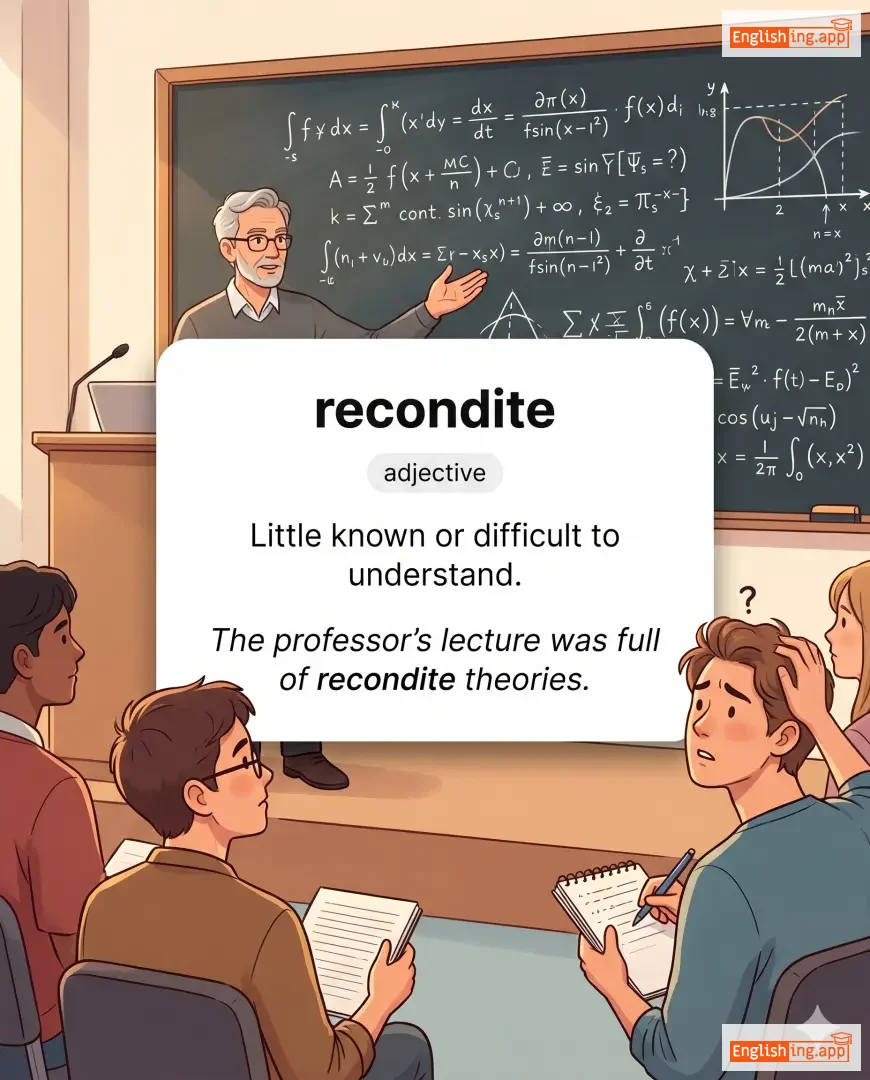
recondite definition card — visual illustration of the meaning
adjective
/ˈrɛkənˌdaɪt/ or /ˈrɛkəndaɪt/
ほとんど知られていない、または理解しにくい (hotondo shirarete inai, matawa rikai shinikui)

Little known or difficult to understand.

"The professor’s lecture was full of recondite theories."

"教授の講義は難解な理論で満ちていた。" (Kyoju no kogī wa nankai na riron de michite ita.)
noun
/rɪˈkɒnɪsəns/
偵察 (teisatsu)

A survey or exploration, especially for military or strategic purposes.

"The soldiers conducted a reconnaissance of the enemy camp."

"兵士たちは敵のキャンプの偵察を行った。" (Heishi-tachi wa teki no kyanpu no teisatsu o okonatta.)
verb
/ˌriː.kəˈnɔɪ.tər/
偵察する (teisatsu suru)

to make a preliminary inspection or survey, especially of an area for military or strategic purposes

"The soldiers reconnoitered the area before advancing."

"兵士たちは進軍する前にその地域を偵察しました。" (Heishitachi wa shingun suru mae ni sono chiiki o teisatsu shimashita.)
verb
/ˌriː.kənˈsɪd.ər/
再考する (saikou suru)

to think about something again, especially to change a decision or opinion

"She decided to reconsider her decision about moving abroad."

"彼女は海外に引っ越すという決断を再考することに決めました。" (Kanojo wa kaigai ni hikkosu to iu ketsudan wo saikou suru koto ni kimemashita.)
verb
/ˌriːˈkɒn.stɪ.tʃuːt/
再構成する (saikōsei suru)

to restore something to its original form or state; to reassemble

"The group was reconstituted after the leader returned."

"リーダーが戻った後、グループは再構成されました。" (Rīdā ga modotta ato, gurūpu wa saikōsei saremashita.)
verb
/ˌriː.kənˈstrʌkt/
再建する (saiken suru)

to build or form something again after it has been damaged or destroyed

"The city was reconstructed after the earthquake."
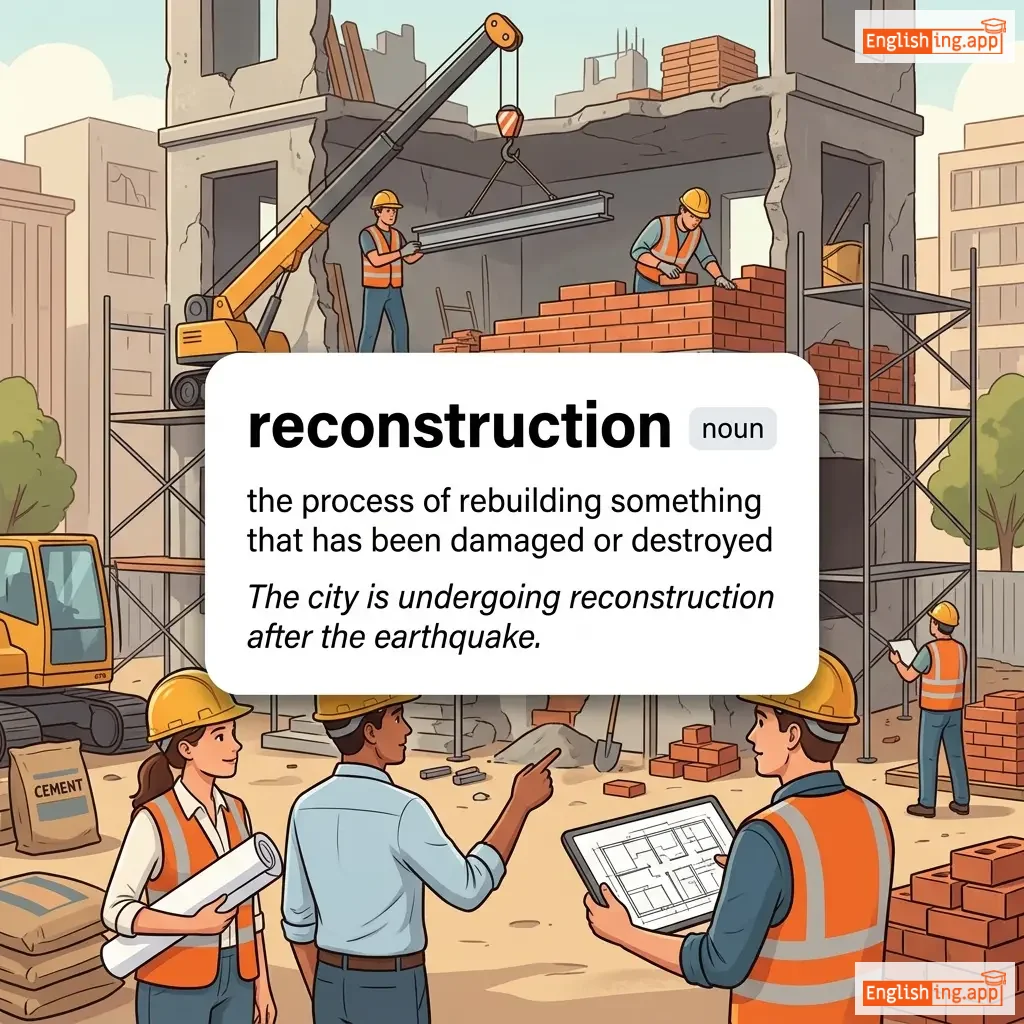
"その都市は地震後に再建されました。" (Sono toshi wa jishin go ni saiken saremashita.)
reconstruction definition card — visual illustration of the meaning
noun
/ˌriːkənˈstrʌkʃən/
再建 (saiken)

the process of rebuilding something that has been damaged or destroyed

"The city is undergoing reconstruction after the earthquake."

"その都市は地震後、再建の最中です。" (Sono toshi wa jishin go, saiken no saichū desu.)
verb
/ˌriː.kənˈviːn/
再開する (saikai suru)

to gather or assemble again, especially for a meeting

"The committee will reconvene after lunch."

"委員会は昼食後に再開します。" (Iinkai wa chūshoku-go ni saikai shimasu.)
noun
/ˈrɛkɔːd/
記録 (kiroku)

a written or spoken account of something

"I kept a record of all the meetings."

"私はすべての会議の記録を保持していました。" (Watashi wa subete no kaigi no kiroku o hoji shite imashita.)
noun
/rɪˈkɔːdɪŋ/
録音 (rokuon)

the act or process of recording something

"The recording of the interview was clear and loud."

"インタビューの録音は明瞭で大きかった。" (Intabyū no rokuon wa meiryō de ōkikatta.)
verb
/rɪˈkaʊnt/
語る (kataru)

to narrate or tell the details of an event or experience

"She recounted her adventures during the summer trip."

"彼女は夏の旅行中の冒険について語った。" (Kanojo wa natsu no ryokou-chuu no bouken ni tsuite katatta.)
noun
/ˈriːkɔːrs/
助け, 対処 (tasuke, taisho)

a source of help or protection in a difficult situation

"The students had no recourse but to appeal to the principal."

"学生たちは校長に訴える以外に方法がなかった。" (Gakusei-tachi wa kōchō ni uttae ru igai ni hōhō ga nakatta.)
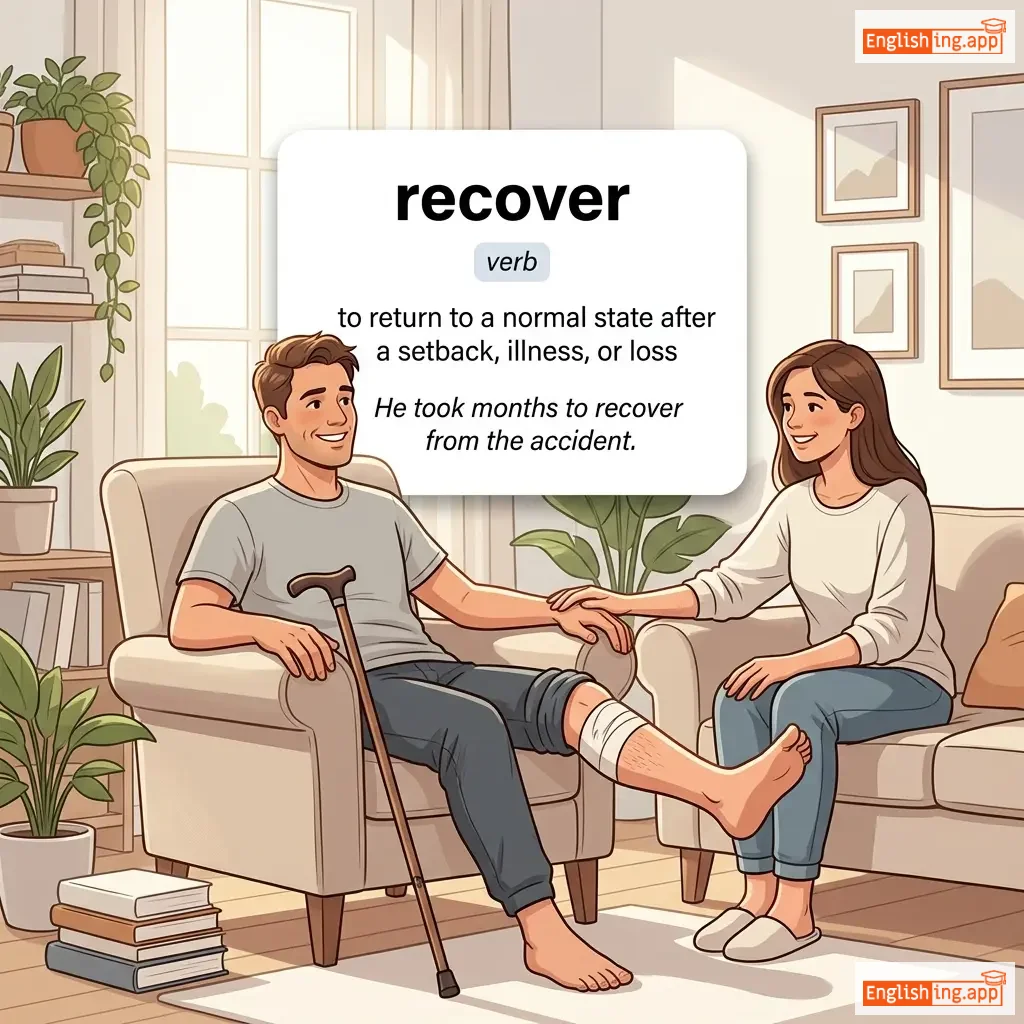
recover definition card — visual illustration of the meaning
verb
/rɪˈkʌvər/

to return to a normal state after a setback, illness, or loss

"He took months to recover from the accident."

verb
/rɪˈkʌvərɪŋ/
回復 (kaifuku)

the process of getting better after illness, loss, or difficulty

"She is still recovering from the flu."

"彼女はまだインフルエンザから回復しています。" (Kanojo wa mada infuruenza kara kaifuku shiteimasu.)
noun
/rɪˈkʌvəri/
回復 (kaifuku)

the process of recovering or returning to a normal state

"The patient is in recovery after the surgery."

"患者は手術後、回復中です。" (Kanja wa shujutsu go, kaifuku-chu desu.)
adjective
/ˈrɛkriənt/
臆病な, 裏切り者 (okubyou na, uragirimono)

cowardly or unfaithful to duty

"The recreant soldier abandoned his post in fear."

"その臆病な兵士は恐怖で自分のポストを放棄した。" (Sono okubyou na heishi wa kyōfu de jibun no posuto o hōki shita.)
verb
/ˌriːkriˈeɪt/
再創造する (saizō suru)

to create or produce something again, especially a new version of something lost or destroyed

"The team recreated the lost dataset from backups."

"チームはバックアップから失われたデータセットを再作成しました。" (chīmu wa bakkappu kara ushinawareta dētasetto o saizō shimashita.)
noun
/ˌrɛkriˈeɪʃən/

activity done for enjoyment and relaxation during free time

"Reading books is his favorite form of recreation."

noun
/rɪˌkrɪmɪˈneɪʃən/
相互非難 (sōgo hinan)

an accusation made in response to an accusation; mutual blaming

"The debate quickly descended into mutual recriminations."

"討論はすぐに相互非難に陥った。" (Tōron wa sugu ni sōgo hinan ni ochitta.)
verb
/ˌriːkruːˈdɛs/
再発 (saihatsu)

to break out or appear again after a period of dormancy or decline

"After months of calm, violence recrudesced in the region."

"数ヶ月の静けさの後、暴力が再発しました地域で。" (Sū-kagetsu no shizukesa no ato, bōryoku ga saihatsu shimashita chiiki de.)
noun
/ˌriːkruːˈdɛsəns/
再発 (saihatsu)

a new outbreak or revival of something that had subsided, especially an undesirable condition

"Health officials warned of a recrudescence of measles in several districts."

"保健当局は複数の地区で麻疹の再発の警告を出しました。" (Hoken toukyoku wa fukusuu no chiku de hashi no saihatsu no keikoku wo dashimashita.)
adjective
/ˌriːkruːˈdɛsənt/
再発 (saihatsu)

reviving or breaking out again after a period of abatement

"Recrudescent tensions threatened the fragile ceasefire."

"再発した緊張が脆弱な停戦を脅かしました。" (Saihatsu shita kinchou ga zeijaku na teisen o odokoshimashita.)
verb
/rɪˈkruːt/
採用する (saiyō suru)

to enlist or hire people for a job, service, or membership

"The company is trying to recruit more software engineers."

"その会社はもっと多くのソフトウェアエンジニアをリクルートしようとしています。" (Sono kaisha wa motto ōku no sofutowea enjinia o rikurūto shiyou to shiteimasu.)
recruitment definition card — visual illustration of the meaning
noun
/rɪˈkruːtmənt/
採用 (saiyō)

the process of finding new people to join an organization or become employees

"The company's recruitment process is very thorough."
"会社の採用プロセスは非常に徹底しています。" (Kaisha no saiyō purosesu wa hijō ni tettei shiteimasu.)
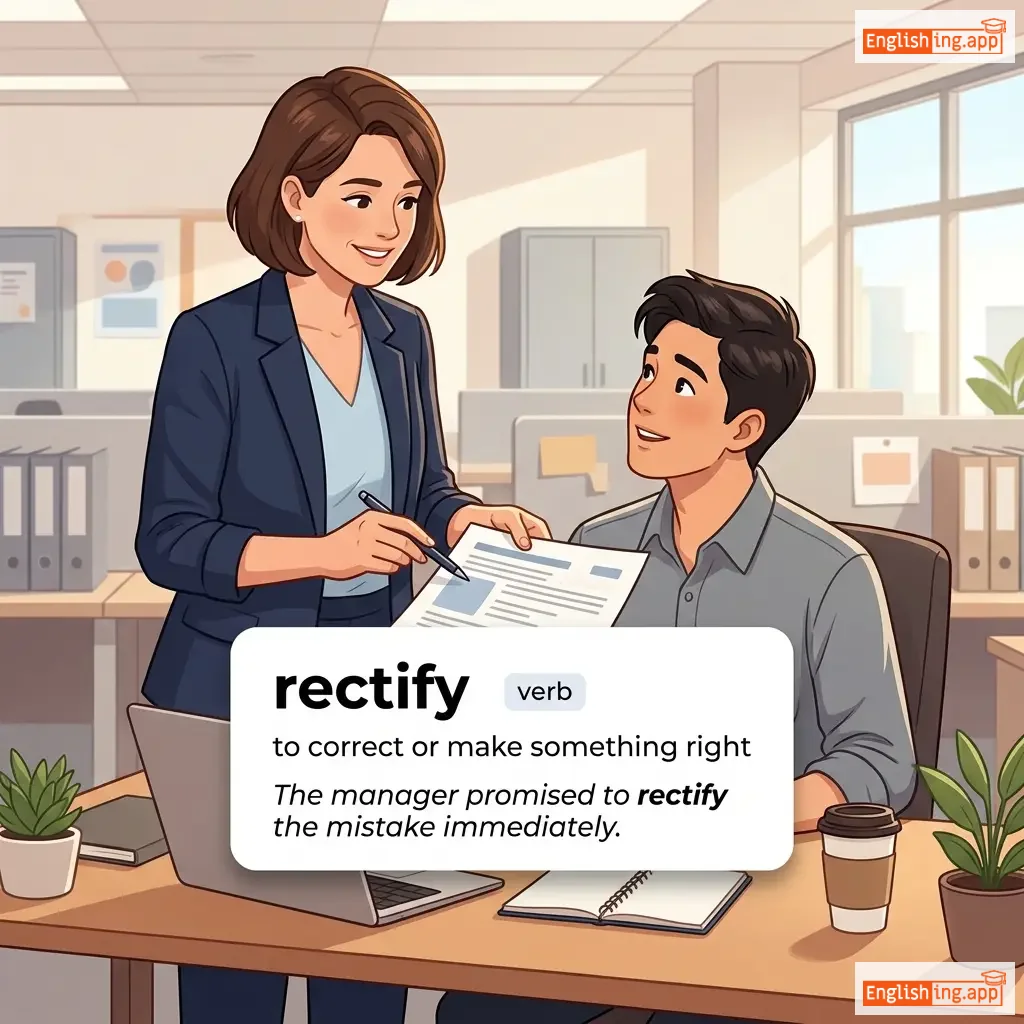
rectify definition card — visual illustration of the meaning
verb
/ˈrɛktɪfaɪ/
訂正する (teisei suru)

to correct or make something right

"The manager promised to rectify the mistake immediately."
"マネージャーはすぐに間違いを訂正することを約束しました。" (Manējā wa sugu ni machigai o teisei suru koto o yakusoku shimashita.)
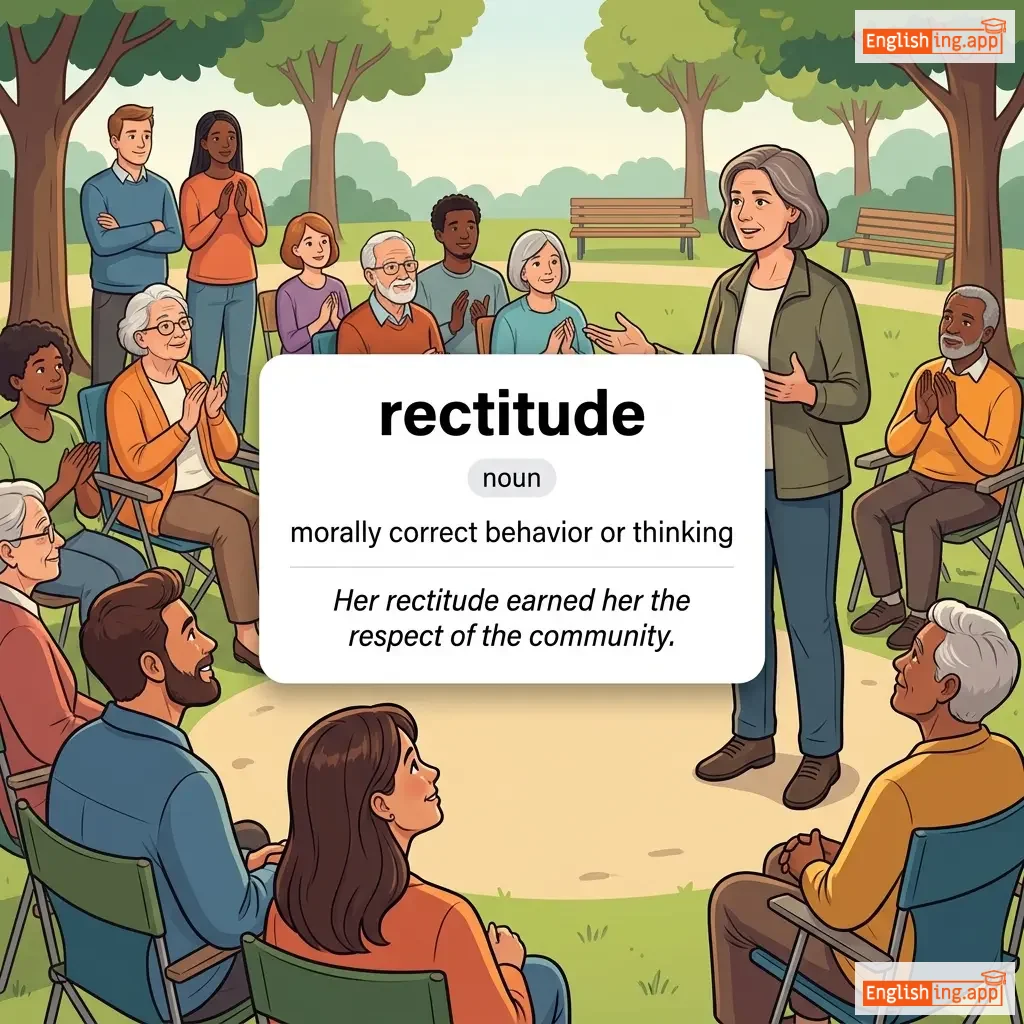
rectitude definition card — visual illustration of the meaning
noun
/ˈrɛktɪtjuːd/
(toku)

morally correct behavior or thinking

"Her rectitude earned her the respect of the community."

"彼女の徳はコミュニティの尊敬を得ました。" (Kanojo no toku wa komyuniti no sonkei o emashita.)
adjective
/rɪˈkʌmbənt/
横たわる (yokotawaru)

lying down or in a resting position

"He was found recumbent on the sofa after a long day."

"彼は長い一日の後、ソファで横になっているのが見つかりました。" (Kare wa nagai ichinichi no ato, sofa de yokonatte iru no ga mitsukarimashita.)
verb
/rɪˈkuːpəreɪt/
回復する (kaifuku suru)

to recover from illness or regain strength

"She went to the countryside to recuperate after surgery."

"彼女は手術後、回復するために田舎に行った。" (Kanojo wa shujutsu go, kaifuku suru tame ni inaka ni itta.)