語彙集

英単語辞書 | 単語の意味、定義、例文

noun, verb
/rɪər/
後ろ / 育てる (ushiro / sodateru)

the back part of something; to bring up or raise children or animals

"The mother cat reared her kittens in a quiet corner."

"母猫は静かな隅で子猫たちを育てました。" (Haha neko wa shizuka na sumi de koneko-tachi o sodatemashita.)
verb
/ˌriːəˈreɪndʒ/
再配置する (saīhaichi suru)

to change the order or position of something

"She decided to rearrange the furniture in her living room."

"彼女はリビングルームの家具を再配置することに決めました。" (Kanojo wa ribingu rūmu no kagu o saīhaichi suru koto ni kimemashita.)
noun, verb
/ˈriːzən/
理由、原因 (riyū, gen'in)

A cause, explanation, or justification for an action or event; to think or argue logically.

"There is no reason to be upset."

"怒る理由はありません。" (okoru riyū wa arimasen.)
adjective
/ˈriːzənəbl/
合理的 (gōriteki)

Fair and sensible; having sound judgment; not extreme or excessive.

"The price of the meal was quite reasonable."

"その食事の価格はかなりリーズナブルでした。" (Sono shokuji no kakaku wa kanari rīzunaburu deshita.)
adverb
/ˈriːzənəbli/
合理的に (gōriteki ni)

in a fair, sensible, or logical manner

"The price was reasonably low compared to other products."

"他の製品と比較して、価格は合理的に低かった。" (Hoka no seihin to hikaku shite, kakaku wa gōriteki ni hikukatta.)
noun
/ˈriːzənɪŋ/
推論 (tsuiron)

the process of thinking about something in a logical way in order to form a conclusion or judgment

"Her reasoning for leaving was clear and logical."
"彼女の出発の推論は明確で論理的でした。" (Kanojo no shuppatsu no tsuiron wa meikaku de ronriteki deshita.)
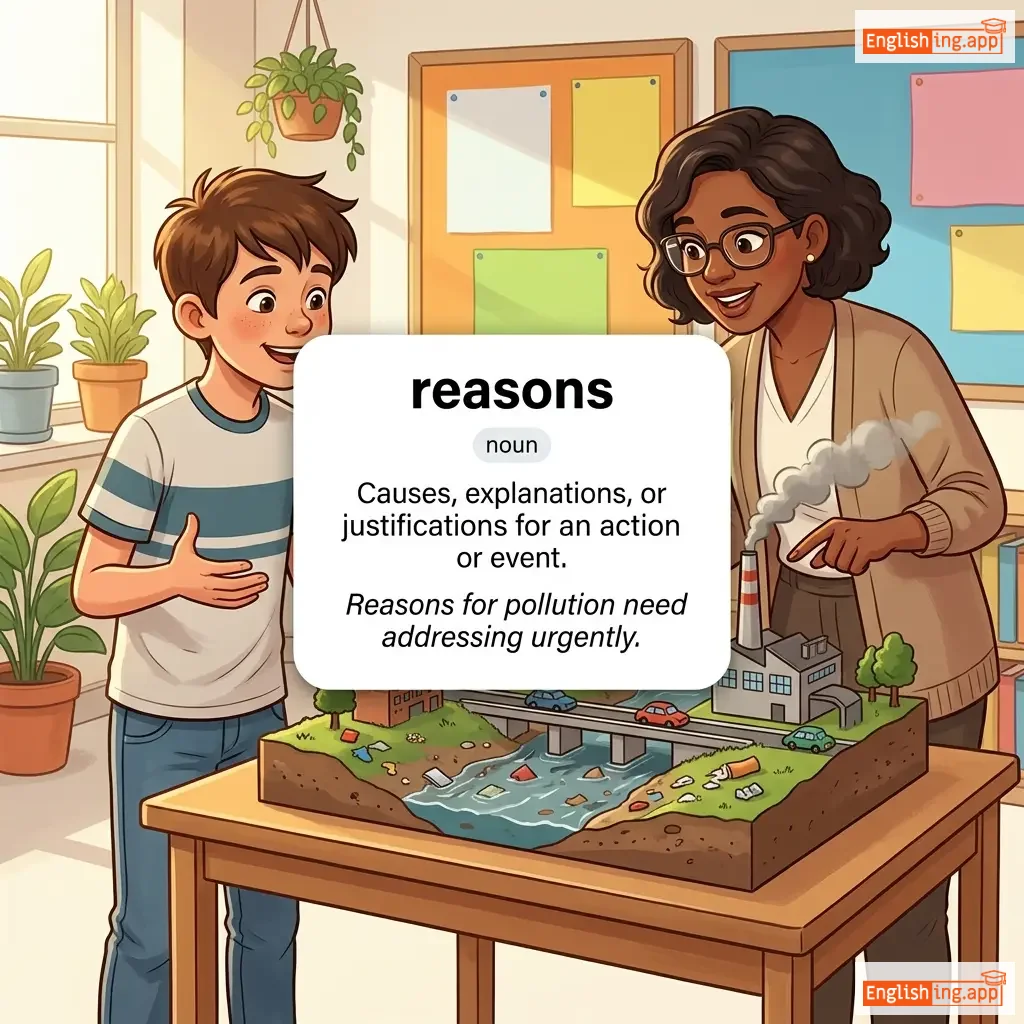
reasons definition card — visual illustration of the meaning
noun
/ˈriː.zənz/
理由 (riyuu)

Causes, explanations, or justifications for an action or event.

"Reasons for pollution need addressing urgently."

"汚染の理由は緊急に対処する必要があります。" (Osen no riyuu wa kinkyuu ni taisho suru hitsuyou ga arimasu.)
noun
/ˌriː.əˈʃʊr.əns/
安心 (anshin)

comfort or confidence given to someone to remove their fears or doubts

"She needed reassurance that everything would be okay."

"彼女はすべてがうまくいくことを確認するために安心が必要でした。" (Kanojo wa subete ga umaku iku koto o kakunin suru tame ni anshin ga hitsuyō deshita.)
verb
/ˌriːəˈʃʊr/
安心させる (anshin saseru)

to say or do something to remove someone's doubts or fears

"The teacher reassured the students before the exam."

"教師は試験前に生徒を安心させました。" (Kyōshi wa shiken mae ni seito o anshin sasemashita.)
noun
/ˈriːbeɪt/
リベート/払い戻し (ribeeto/harai modoshi)

a partial refund given to someone who has paid too much money for something

"The store offered a rebate on bulk purchases."

"その店は大量購入に対してリベートを提供しました。" (Sono mise wa tairyou kounyuu ni taishite ribeeto wo teikyoushimashita.)
noun, verb
/ˈreb.əl/
反抗者 / 反抗する (hankousha / hankou suru)

a person who resists authority or control; to resist or fight against authority

"The students rebelled against the new dress code."

"学生たちは新しい服装規定に反抗した。" (Gakusei-tachi wa atarashī fukusō kitei ni hankō shita.)
noun
/rɪˈbɛljən/
反乱 (hanran)

an act of violent or open resistance to an established government or ruler

"The rebellion was crushed by the army after a few months."

"反乱は数ヶ月後、軍隊によって鎮圧されました。" (Hanran wa suukagetsu go, guntai ni yotte chin'atsu saremashita.)
adjective
/rɪˈbɛljəs/
反抗的な (hankōteki na)

resisting authority or control; showing a desire to rebel

"The rebellious teenager refused to follow the school rules."

"その反抗的なティーンエイジャーは学校の規則に従うことを拒否しました。" (Sono hankōteki na tīneijā wa gakkō no kisoku ni shitagau koto o kyohi shimashita.)
verb
/rɪˈbʌf/
拒絶する (kyozetsu suru)

to reject or refuse in a sharp or abrupt way

"She rebuffed his invitation to dinner."

"彼女はディナーの招待を断った。" (Kanojo wa dinā no shōtai o kotowatta.)
verb
/ˌriːˈbɪld/
再建する (saiken suru)

to build something again after it has been damaged or destroyed

"The villagers worked together to rebuild the bridge after the flood."

"村人たちは洪水の後、橋を再建するために協力しました。" (Murabito-tachi wa kōzui no ato, hashi o saiken suru tame ni kyōryoku shimashita.)
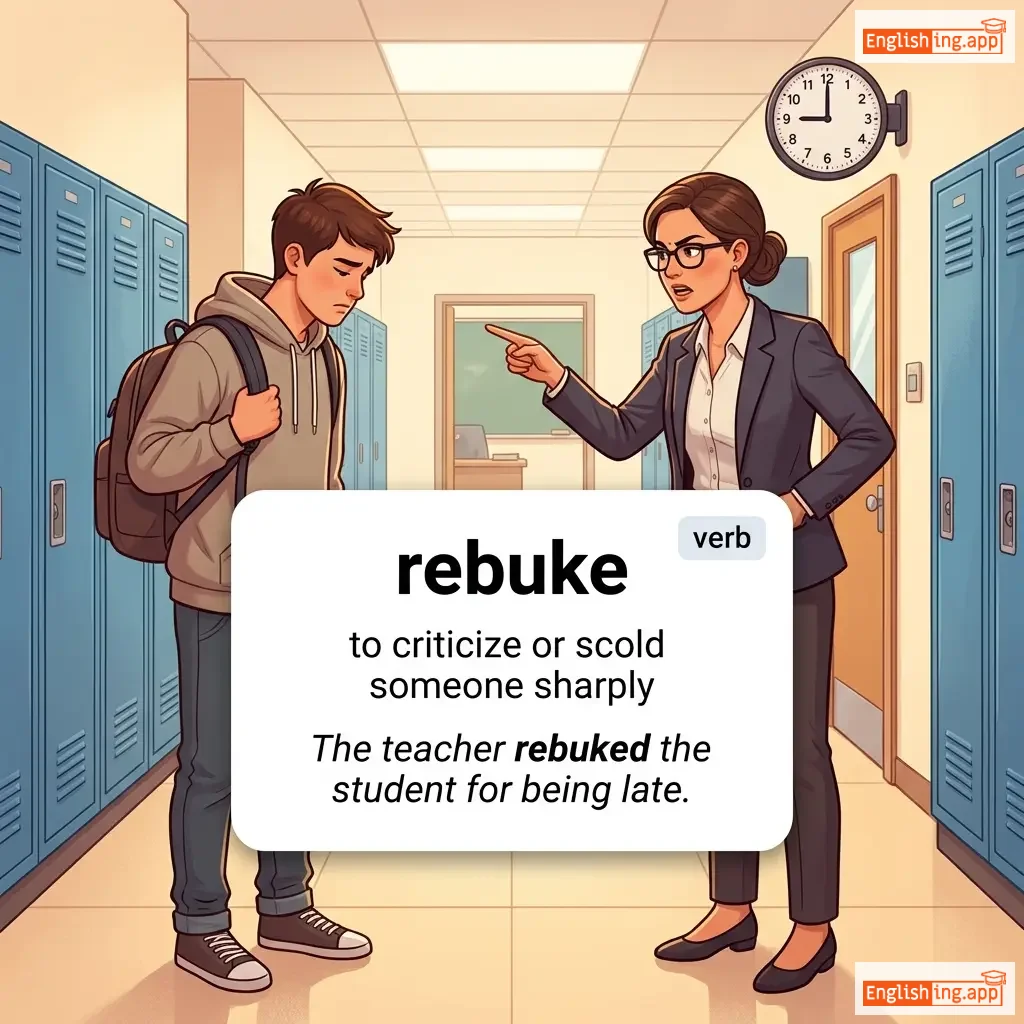
rebuke definition card — visual illustration of the meaning
verb
/rɪˈbjuːk/

to criticize or scold someone sharply

"The teacher rebuked the student for being late."

noun
/ˈriːbəs/
なぞなぞ (nazonazo)

a puzzle in which words are represented by pictures, symbols, or letters

"The children enjoyed solving the rebus puzzles in the magazine."

"子供たちは雑誌のなぞなぞを解くのを楽しみました。" (Kodomotachi wa zasshi no nazo nazo o toku no o tanoshimimashita.)
verb
/rɪˈbʌt/
反論する (hanron suru)

to argue against or prove wrong; to refute

"The lawyer rebutted the false accusations with strong evidence."

"弁護士は強力な証拠で虚偽の告発を反論しました。" (Bengoshi wa kyōryoku na shōko de kyogi no kokuhatsu o hanron shimashita.)
noun
/rɪˈbʌtəl/
反論 (hanron)

a statement or argument made to oppose or disprove another

"Her rebuttal was clear and convincing."
"彼女の反論は明確で説得力がありました。" (Kanojo no hanron wa meikaku de settokuryoku ga arimashita.)
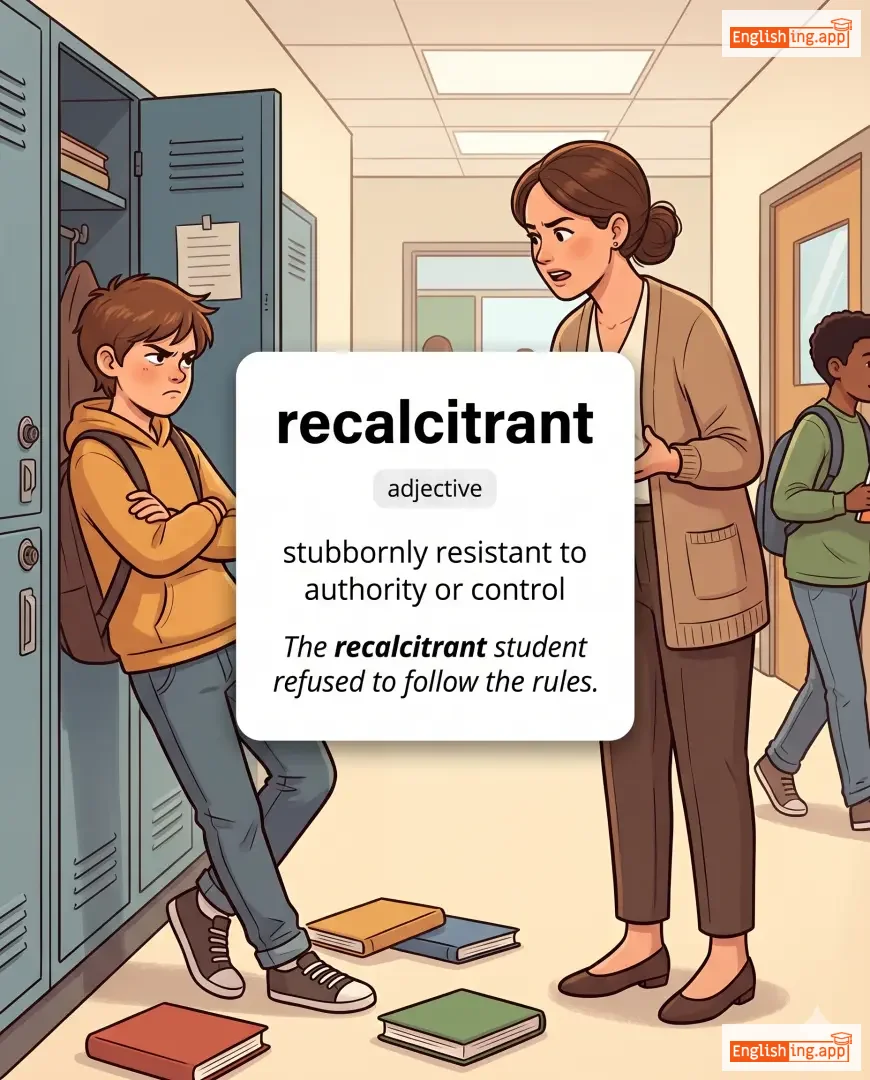
recalcitrant definition card — visual illustration of the meaning
adjective
/rɪˈkælsɪtrənt/

stubbornly resistant to authority or control

"The recalcitrant student refused to follow the rules."

recalibrate definition card — visual illustration of the meaning
verb
ˌriːˈkæl.ɪ.breɪt
再調整する (saichōsei suru)

To adjust or modify according to a new standard or plan; to reassess and realign.

"He had to recalibrate his strategy after the market crash."

"彼は市場の崩壊後、自分の戦略を再調整しなければならなかった。" (Kare wa shijō no hōkai-go, jibun no senryaku o saichōsei shinakereba naranakatta.)
verb
/rɪˈkɔːl/
思い出す (omoidasu)

to bring (a memory, fact, or situation) back into one's mind

"I can't recall the last time we met."
"最後に会った時のことを思い出せません。" (Saigo ni atta toki no koto o omoidase masen.)
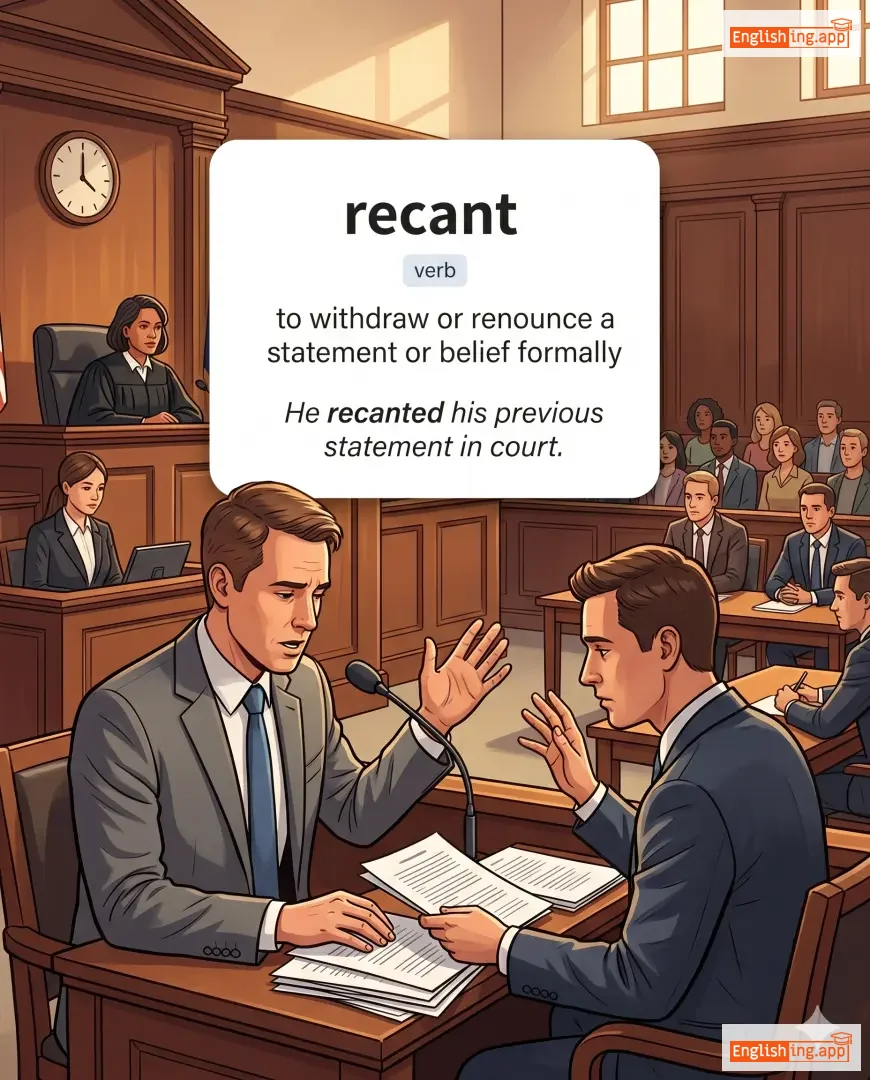
recant definition card — visual illustration of the meaning
verb
/rɪˈkænt/
撤回する (tekkai suru)

to withdraw or renounce a statement or belief formally

"He recanted his previous statement in court."
"彼は裁判で以前の発言を撤回しました。" (Kare wa saiban de izen no hatsugen o tekkai shimashita.)
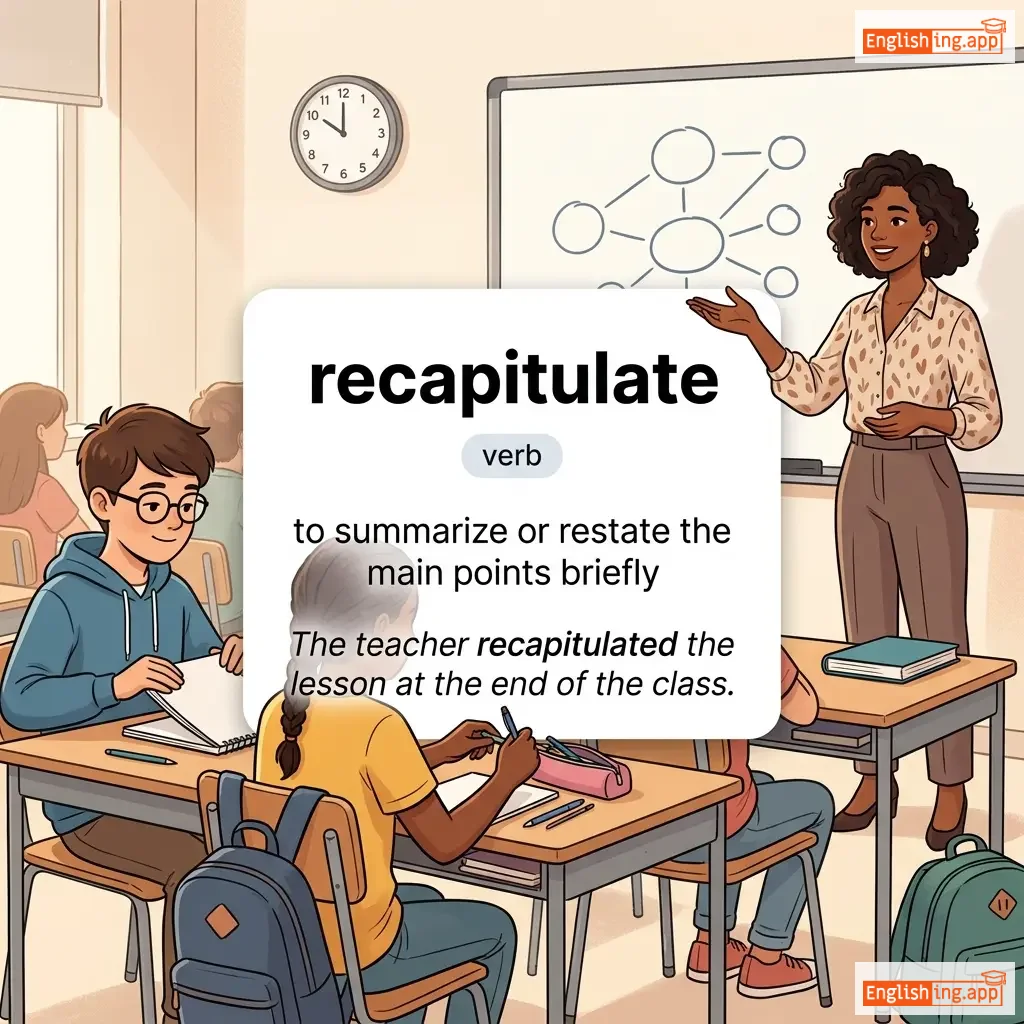
recapitulate definition card — visual illustration of the meaning
verb
/ˌriːkəˈpɪtjʊleɪt/
要約する (yōyaku suru)

to summarize or restate the main points briefly

"The teacher recapitulated the lesson at the end of the class."

"先生はクラスの最後に授業を要約しました。" (Sensei wa kurasu no saigo ni jugyō o yōyaku shimashita.)
noun
/ˌriːkəˌpɪtjʊˈleɪʃən/
要約 (yōyaku)

The act of summarizing or repeating the main points of something.

"The professor gave a brief recapitulation of the lecture before ending the class."

"教授はクラスを終える前に講義の簡単な要約を行いました。" (Kyōju wa kurasu o oeru mae ni kōgi no kantan na yōyaku o okonaimashita.)
verb
/riːˈkæptʃər/
再び奪回する (futatabi dakai suru)

To take back or regain possession of something.

"The army managed to recapture the lost territory."

"軍隊は失われた領土を再び奪回することに成功しました。" (Guntai wa ushinawareta ryōdo o futatabi dakai suru koto ni seikō shimashita.)
verb
/ˌriːˈkæst/
再キャスティング (saikasutingu)

To present or change something in a different form or style.

"The director decided to recast the role with a younger actor."

"監督は役を若い俳優でリキャストすることに決めました。" (Kantoku wa yaku o wakai haiyu de rikyasuto suru koto ni kimemashita.)
verb
/rɪˈsiːd/
後退する (kōtai suru)

To move back or further away from a previous position.

"The floodwaters began to recede after the heavy rain stopped."

"激しい雨が止んだ後、洪水は後退し始めました。" (Hageshī ame ga yanda ato, kōzui wa kōtai shi hajimemashita.)
adjective, noun
/rɪˈsiːvəbl/
回収可能 (kaishū kanō)

Money that is owed to a company and is expected to be paid.

"The company's receivables increased significantly this quarter."
"会社の売掛金は今四半期に大幅に増加しました。" (Kaisha no urikakekin wa ima shihanki ni ōhaba ni zōka shimashita.)
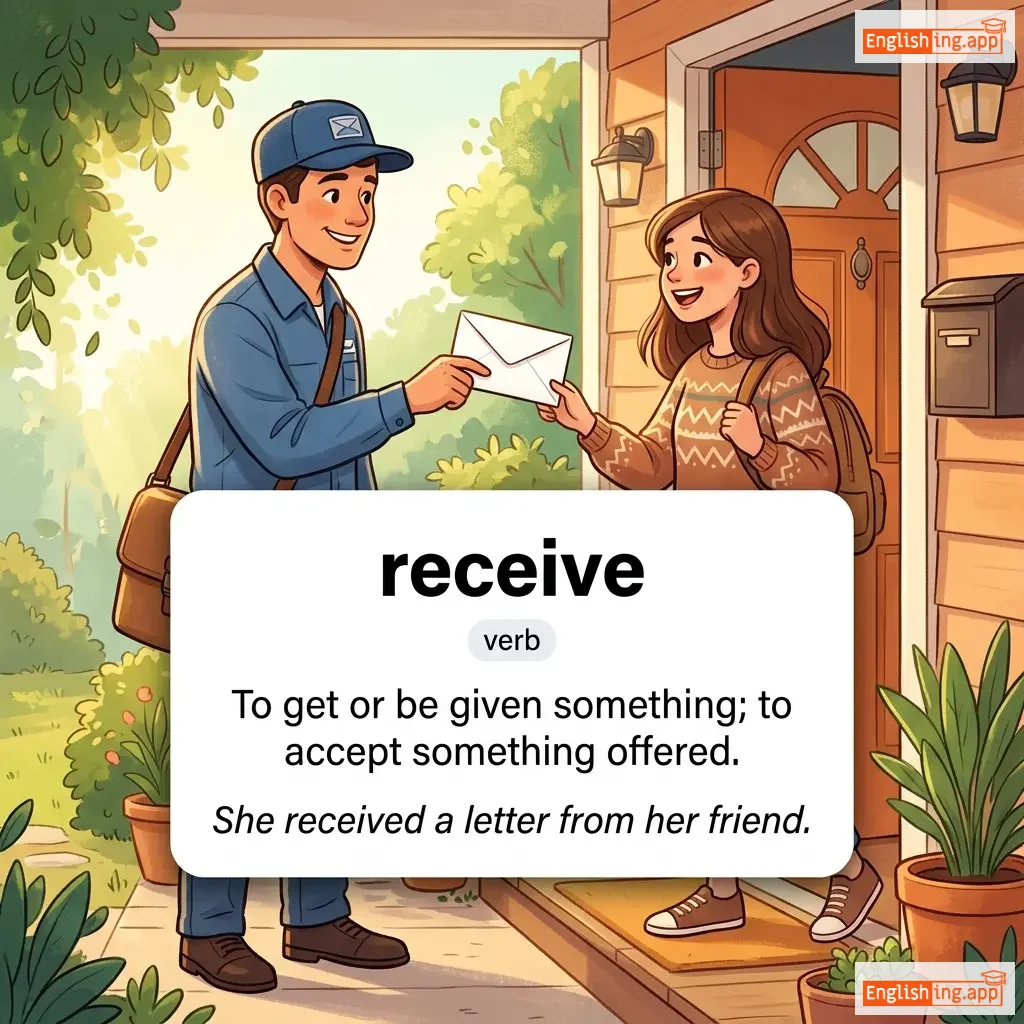
receive definition card — visual illustration of the meaning
verb
/rɪˈsiːv/
受け取る (uketoru)

To get or be given something; to accept something offered.

"She received a letter from her friend."

"彼女は友達から手紙を受け取った。" (Kanojo wa tomodachi kara tegami o uketotta.)
noun
/rɪˈsiːvər/
受信機 (jushinki)

a person or device that receives something such as a signal, message, or object

"The radio receiver picks up signals from distant stations."

"ラジオの受信機は遠くの局から信号を受信します。" (Rajio no jushinki wa tooku no kyoku kara shingou wo jushin shimasu.)
adjective
/ˈriːsənt/
最近の (saikin no)

having happened or started only a short time ago

"The recent developments have been quite exciting."

"最近の出来事はかなり興奮させるものでした。" (Saikin no dekigoto wa kanari kōfun saseru mono deshita.)
adverb
/ˈriːsəntli/
最近 (saikin)

in the recent past; not long ago

"I recently visited the museum."

"最近博物館を訪れました。" (Saikin hakubutsukan o otozuremashita.)
noun
/rɪˈsepʃən/
レセプション (resepushon)

the act of receiving something or someone; a formal social gathering

"We attended a wedding reception at the hotel."

"私たちはホテルで結婚式のレセプションに参加しました。" (Watashitachi wa hoteru de kekkonshiki no resepushon ni sanka shimashita.)
adjective
/rɪˈsɛptɪv/
受容的 (juyouteki)

Willing to listen to or accept new ideas, suggestions, or experiences.

"She was receptive to feedback from her colleagues."
"彼女は同僚からのフィードバックを受け入れる姿勢を持っていました。" (Kanojo wa doryou kara no feedback wo ukeireru shisei wo motteimashita.)
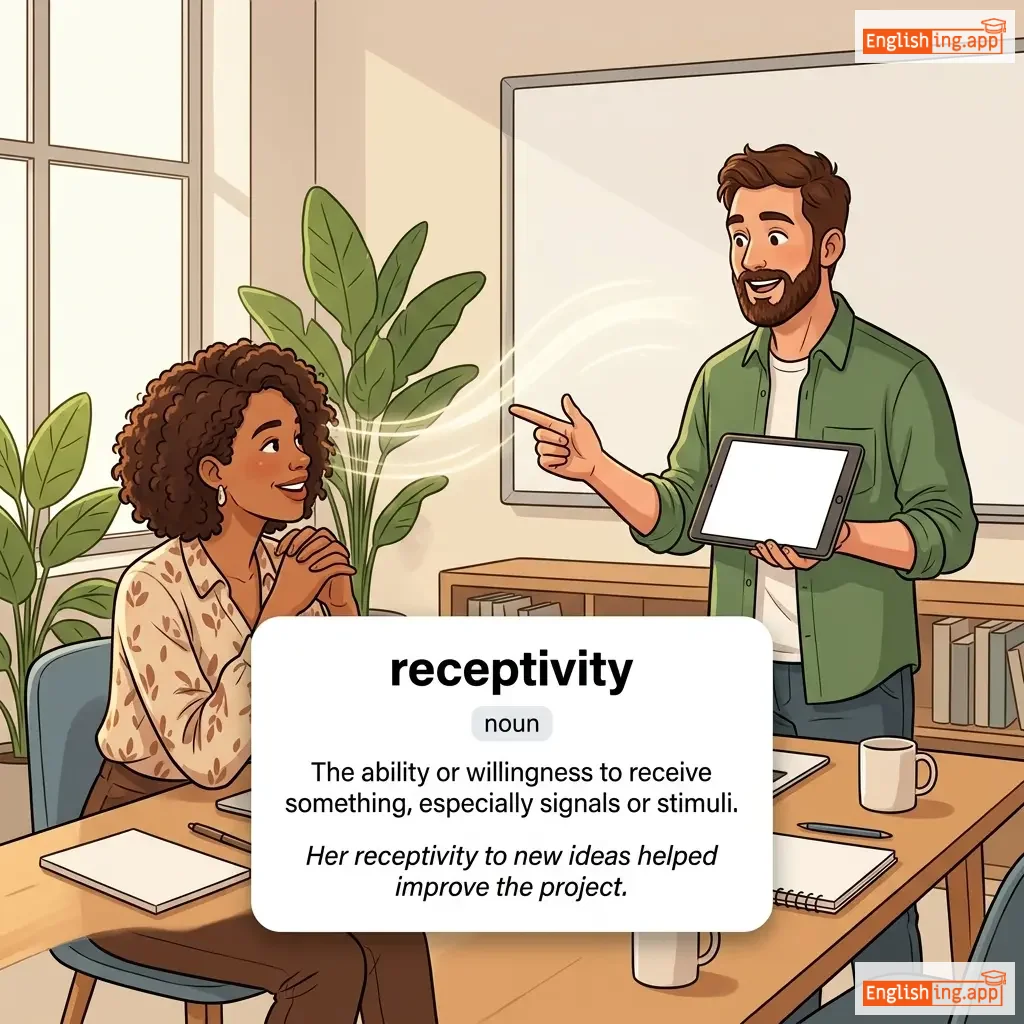
receptivity definition card — visual illustration of the meaning
noun
/rɪˌsɛptɪˈvɪti/
受容性 (juyou-sei)

The ability or willingness to receive something, especially signals or stimuli.

"Her receptivity to new ideas helped improve the project."

"新しいアイデアへの受容性がプロジェクトの改善に役立った。" (Atarashii aidea e no juyou-sei ga purojekuto no kaizen ni yakudatta.)
noun
/rɪˈsɛs/
休憩 (kyūkei)

A short break from work or school; also a small space set back in a wall.

"The children played outside during recess."
"子供たちは休憩中に外で遊びました。" (Kodomotachi wa kyūkei-chū ni soto de asobimashita.)
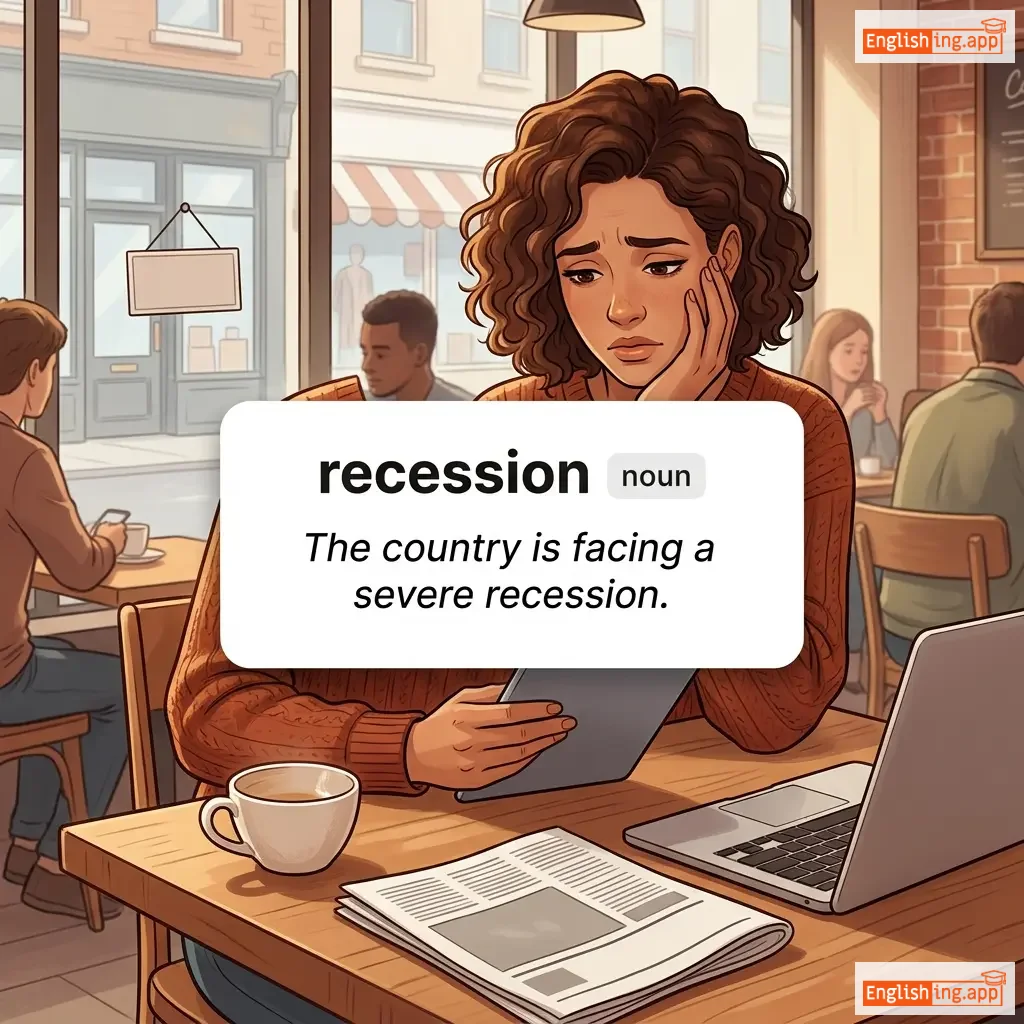
recession definition card — visual illustration of the meaning
noun
/rɪˈsɛʃən/

A period of temporary economic decline during which trade and industrial activity are reduced.

"The country is facing a severe recession."

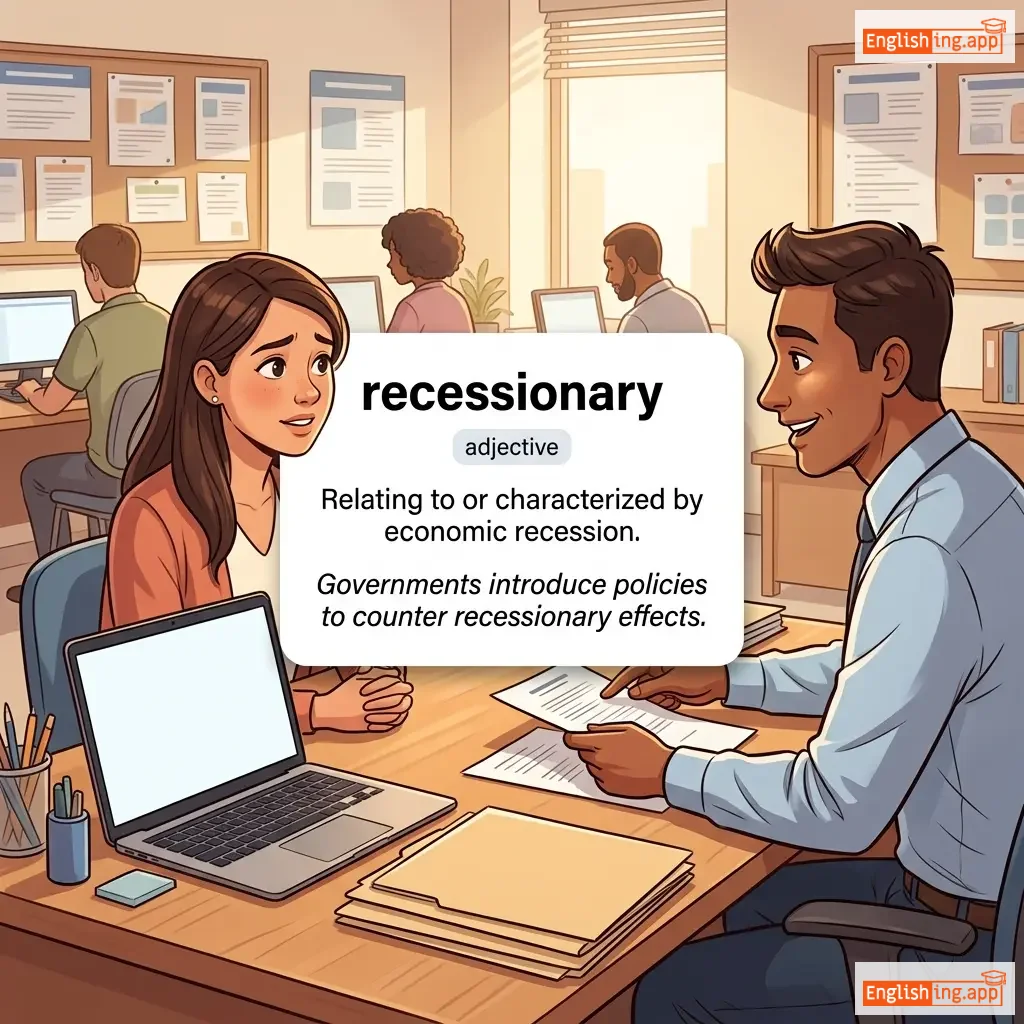
recessionary definition card — visual illustration of the meaning
adjective
rɪˈsɛʃ.ən.er.i
不況に関する (fukyou ni kansuru)

Relating to or characterized by economic recession.

"Governments introduce policies to counter recessionary effects."

"政府は景気後退の影響に対処するために政策を導入しています。" (Seifu wa keiki koutai no eikyō ni taisho suru tame ni seisaku o dōnyū shiteimasu.)
adjective
/rɪˈsɛsɪv/
潜性 (qiansheng)

In genetics, relating to a trait that is expressed only when two copies of the gene are present.

"Blue eye color is often a recessive trait."

"青い目の色はしばしばリセシブな特徴です。" (Aoi me no iro wa shibashiba riseshibu na tokuchou desu.)
adjective
/rəˈʃɛrʃ/
希少 (kishō)

Rare, exotic, or obscure, often in a sophisticated or refined way.

"The gallery displayed many recherche artworks from unknown artists."

"ギャラリーは、未知のアーティストによる多くの希少なアート作品を展示しました。" (Gyararī wa, michi no ātisuto ni yoru ōku no kishō na āto sakuhin o tenji shimashita.)
noun
/rɪˈsɪdɪˌvɪzəm/

The tendency of a convicted criminal to reoffend or relapse into criminal behavior.

"The government introduced new programs to reduce recidivism among former inmates."

noun
/rɪˈsɪdɪvɪst/
再犯者 (saihansha)

A person who repeatedly commits crimes, especially after having been punished.

"The police identified him as a recidivist who had been arrested several times before."

"警察は彼を再犯者として特定し、以前に何度も逮捕されていた。" (Keisatsu wa kare o saihansha toshite tokutei shi, izen ni nando mo taiho sarete ita.)
noun
/ˈrɛsɪpi/
レシピ (reshipi)

a set of instructions for preparing a particular dish, including a list of the ingredients required

"I found a great recipe for chocolate cake."

"チョコレートケーキの素晴らしいレシピを見つけました。" (Chokoreeto keeki no subarashii reshipi o mitsukemashita.)
noun
/rɪˈsɪpiənt/
受取人 (uketorinin)

A person who receives something, such as an award, gift, or message.

"She was the recipient of the award for best performance."

"彼女は最優秀なパフォーマンスのための賞の受取人でした。" (Kanojo wa saiyuushuu na pafomansu no tame no shou no uketorinin deshita.)
adjective
/rɪˈsɪprəkəl/
相互の (sōgo no)

Given, felt, or done in return; mutual.

"Their relationship is based on reciprocal respect and trust."

"彼らの関係は相互の尊敬と信頼に基づいています。" (Karera no kankei wa sōgo no sonkei to shinrai ni motozuiteimasu.)
verb
/rɪˈsɪprəˌkeɪt/
応答する (oudou suru)

To respond to an action or gesture by making a corresponding one.

"She smiled at him, and he reciprocated with a warm hug."
"彼女は彼に微笑み、彼は温かい抱擁で応じた。" (Kanojo wa kare ni hohoemi, kare wa atatakai houyou de oujita.)
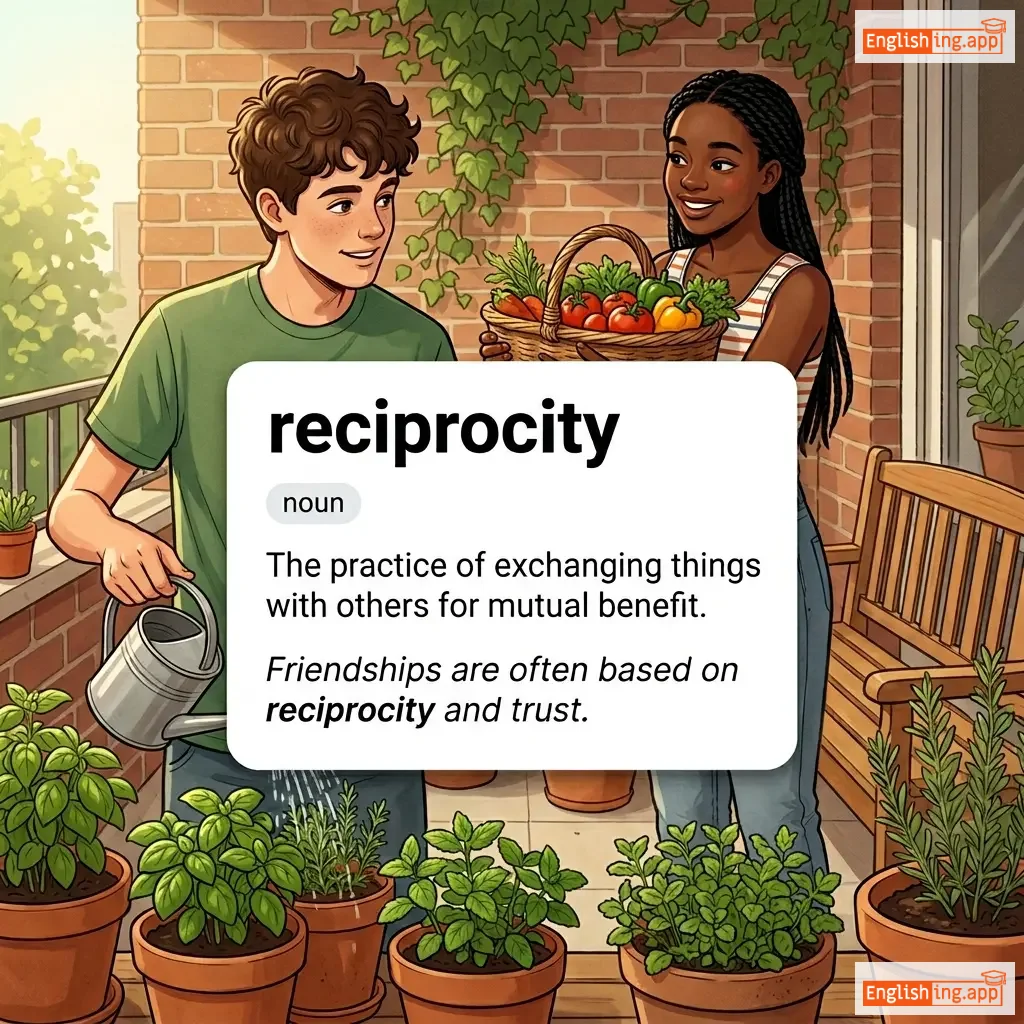
reciprocity definition card — visual illustration of the meaning
noun
/ˌrɛsɪˈprɒsɪti/
相互利益 (sōgo rieki)

The practice of exchanging things with others for mutual benefit.

"Friendships are often based on reciprocity and trust."

"友情はしばしば相互利益と信頼に基づいています。" (Yūjō wa shibashiba sōgo rieki to shinrai ni motozuiteimasu.)
noun
/rɪˈsaɪtl/
リサイタル (risaitaru)

A performance of music, dance, or poetry, usually by a soloist.

"She gave a piano recital at the concert hall."

"彼女はコンサートホールでピアノのリサイタルを行いました。" (Kanojo wa konsāto hōru de piano no risaitaru o okonai mashita.)
noun
/ˌrɛsɪˈteɪʃən/
朗読 (roudoku)

The act of reading or repeating something aloud, especially poetry or passages.

"The student won the prize for her poetry recitation."

"その学生は詩の朗読で賞を受賞しました。" (Sono gakusei wa shi no roudoku de shou o jushou shimashita.)