語彙集

英単語辞書 | 単語の意味、定義、例文

adjective
/ˈrɪdʒɪd/
硬直 (kōchoku)

stiff, unbending, or strictly inflexible

"The teacher had a rigid set of rules for the class."

"先生はクラスに厳格な規則を持っていました。" (Sensei wa kurasu ni genkaku na kisoku o motte imashita.)
noun
/rɪˈdʒɪdəti/
剛性 (gōsei)

inability to bend or be forced out of shape; unwillingness to change or compromise

"The rigidity of the old system prevented any innovation."

"古いシステムの剛性は、どんな革新も妨げました。" (Furui shisutemu no gōsei wa, donna kakushin mo samatagemashita.)
adverb
/ˈrɪdʒɪdli/
厳格に; 柔軟性なしで (genkaku ni; jūnan-sei nashi de)

in a strict, inflexible manner; without compromise

"The rules are rigidly enforced in this institution."

"この機関ではルールは厳格に適用されます。" (Kono kikan de wa rūru wa genkaku ni tekiyō saremasu.)
noun
/ˈrɪɡməˌroʊl/
面倒なこと (mendō na koto)

a long, complicated, and confusing process or story

"Getting a visa was such a rigmarole of paperwork and interviews."

"ビザを取得するのは、書類とインタビューの面倒なことだった。" (Biza o shūtoku suru no wa, shorui to intabyū no mendō na koto datta.)
noun
/ˈrɪɡər/
厳格さ (genkakusa)

strictness, severity, or demanding conditions

"The training was carried out with great rigor."
"訓練は大変厳格に行われました。" (Kunren wa taihen genkaku ni okonawaremashita.)
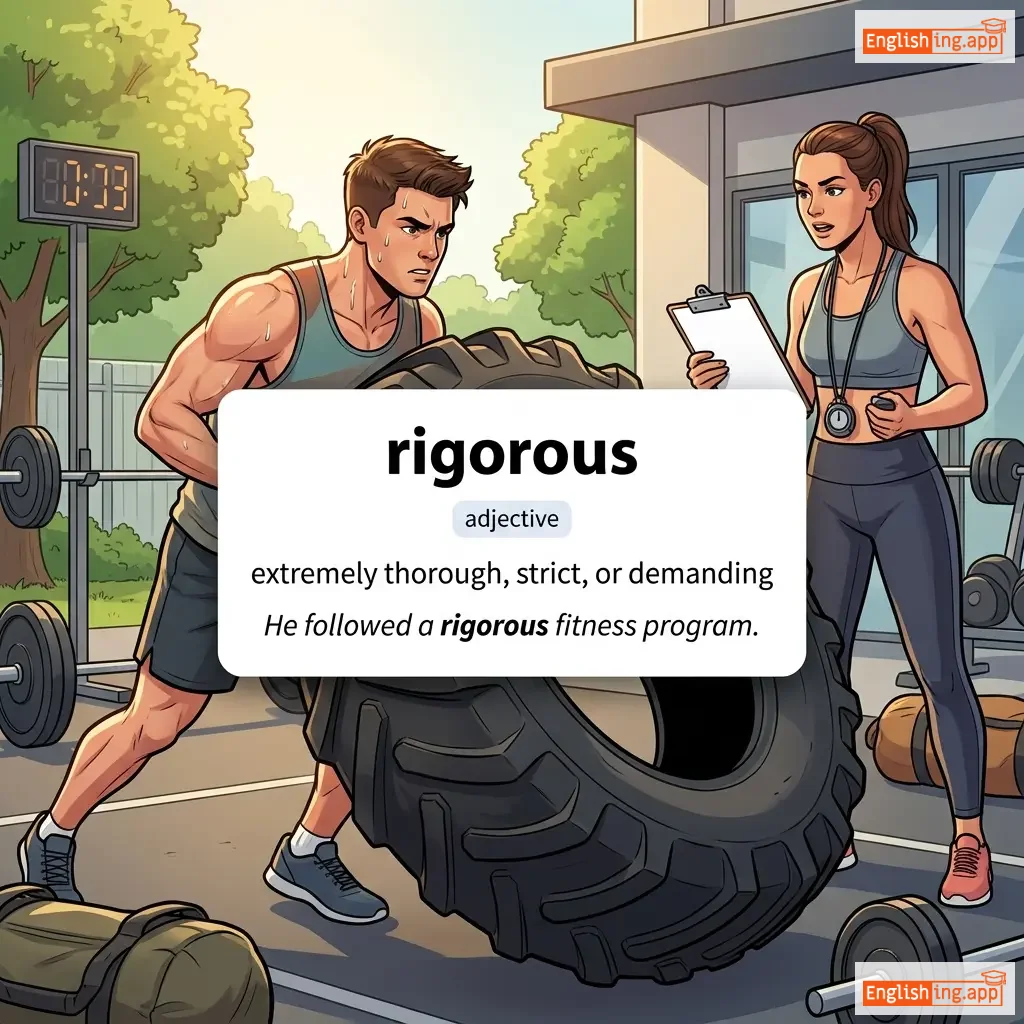
rigorous definition card — visual illustration of the meaning
adjective
/ˈrɪɡərəs/
厳格 (genkaku)

extremely thorough, strict, or demanding

"He followed a rigorous fitness program."

"彼は厳格なフィットネスプログラムに従った。" (Kare wa genkaku na fittonesu puroguramu ni shitagatta.)
😠

rile

verb
/raɪl/

to irritate or annoy someone

"His careless comments really riled her."

noun
/rɪm/
(fuchi)

the outer edge or border of a circular object

"The coffee cup had a chip on its rim."

"コーヒーカップの縁にひびが入っていました。" (Kōhī kappu no fuchi ni hibi ga haitte imashita.)
noun
/raɪm/
(shimo)

frost formed on cold surfaces by freezing water vapor

"The trees were covered with a white rime after the cold night."
"木々は冷たい夜の後、白い霜で覆われていました。" (Kigi wa tsumetai yoru no ato, shiroi shimo de ōwarete imashita.)
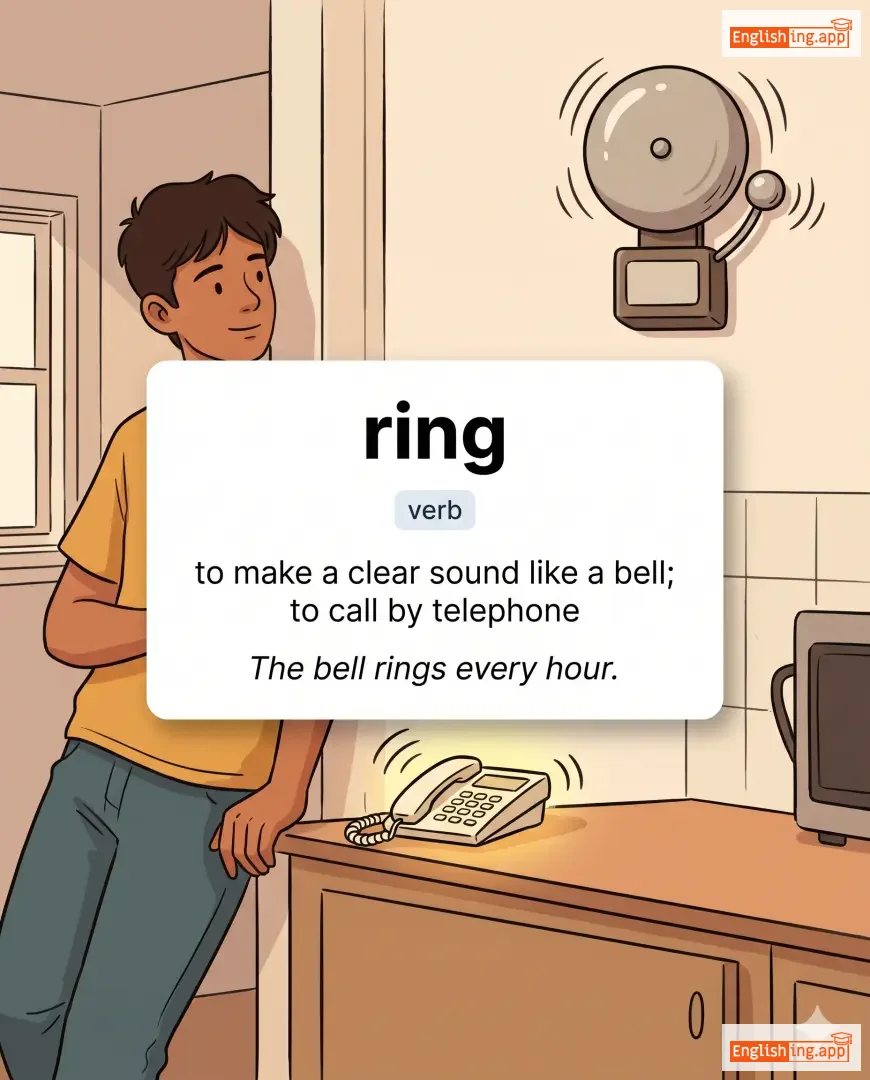
ring definition card — visual illustration of the meaning
noun
/rɪŋ/
指輪 (yubiwa)

a small circular band, typically worn on the finger as jewelry or a symbol

"She received a beautiful engagement ring."

"彼女は美しい婚約指輪を受け取りました。" (Kanojo wa utsukushii kon'yaku yubiwa wo uketorimashita.)
noun
/ˈraɪət/
暴動 (boudou)

a violent disturbance by a crowd

"The protest turned into a violent riot."
"抗議は暴力的な暴動に変わった。" (Kougi wa bouryokuteki na boudou ni kawatta.)
verb
/rɪp/
裂ける (sakeru)

to tear something quickly or violently

"He accidentally ripped his shirt on the fence."

"彼はフェンスでシャツをうっかり裂けてしまいました。" (Kare wa fensu de shatsu o ukkari sakete shimaimashita.)
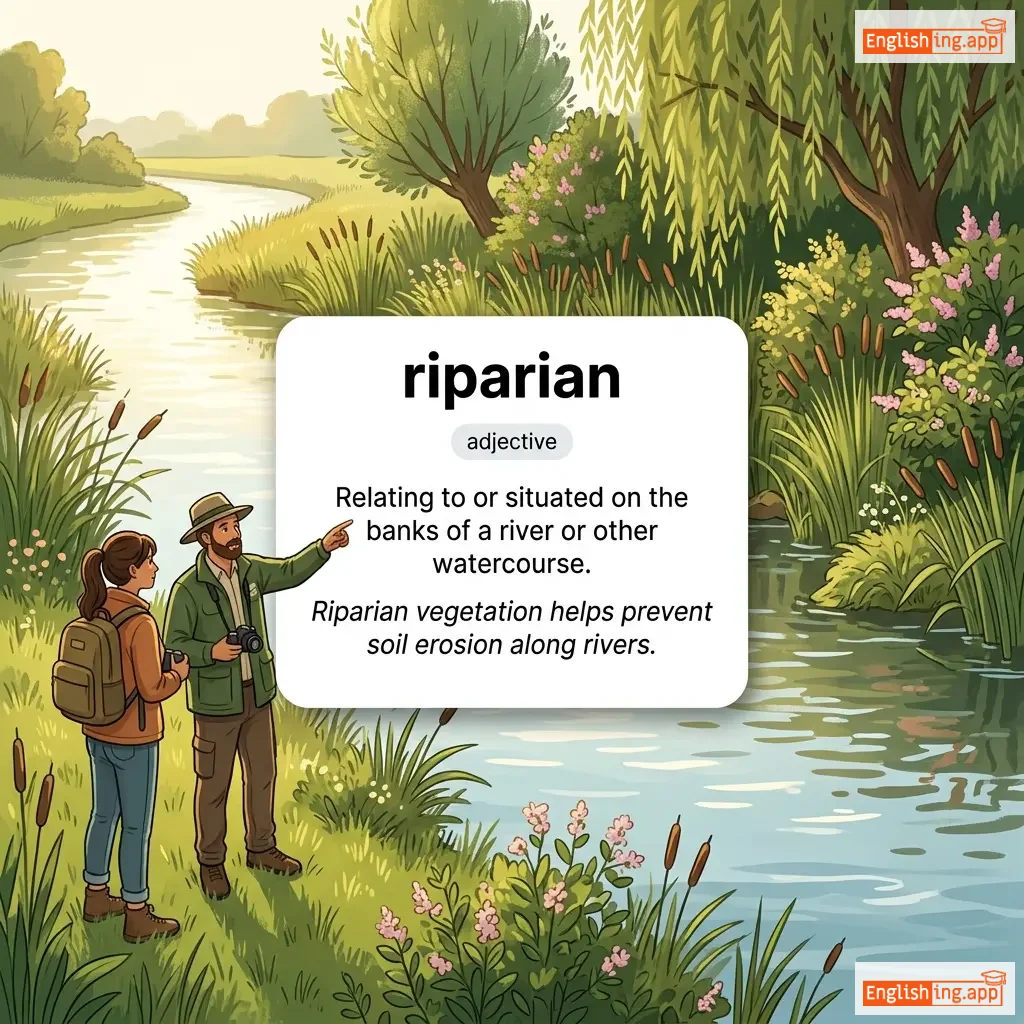
riparian definition card — visual illustration of the meaning
adjective
/raɪˈpɛə.ri.ən/
河川や他の水路の岸辺に関連する (kasen ya hoka no suiro no kishibe ni kanren suru)

Relating to or situated on the banks of a river or other watercourse.

"Riparian vegetation helps prevent soil erosion along rivers."

"河川沿いの植生は、河川沿いの土壌浸食を防ぐのに役立ちます。" (Kasen-zoi no shokusei wa, kasen-zoi no dojo shinsoku o fusegu no ni yakudachimasu.)
adjective
/raɪp/
熟した; 食べる準備ができた (jukushita; taberu junbi ga dekita)

fully developed and ready to eat; mature; ready for action or use

"The bananas are ripe and ready to eat."

"バナナは熟して食べる準備ができています。" (banana wa jukushite taberu junbi ga dekiteimasu.)
verb
/ˈraɪpən/
幸せ (shiawase)

to become or make something ready to eat or fully developed

"The bananas ripened quickly in the warm weather."
"彼女は賞を受け取ったとき、幸せを隠せなかった。" (kanojo wa shō o uketotta toki, shiawase o kakusenakatta.)
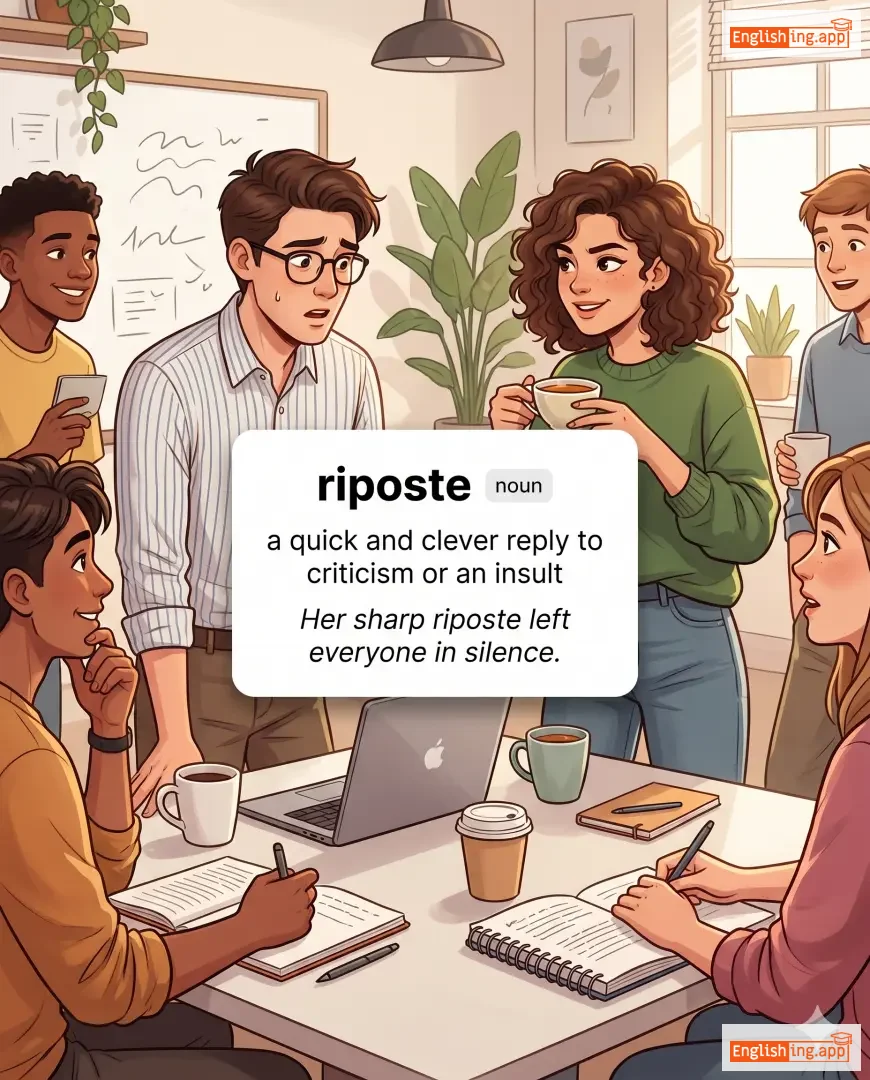
riposte definition card — visual illustration of the meaning
noun
/rɪˈpoʊst/
鋭い返答 (surudoi hentou)

a quick and clever reply to criticism or an insult

"Her sharp riposte left everyone in silence."

"彼女の鋭い返答は皆を黙らせた。" (Kanojo no surudoi hentou wa mina o damaraseta.)
verb
/ˈrɪp.l̩/
波紋 (hamon)

to form or cause small waves on the surface of water or spread through like waves

"The wind rippled the surface of the pond."

"風は池の表面を波紋させた。" (Kaze wa ike no hyoumen wo hamon saseta.)
noun
/ˈrɪp.lɪt/
小さな波 (chiisana nami)

a small or tiny ripple

"Tiny ripplets appeared on the lake as the fish moved."

"魚が動くと湖に小さな波が現れました。" (Sakana ga ugoku to mizūmi ni chiisana nami ga arawaremashita.)
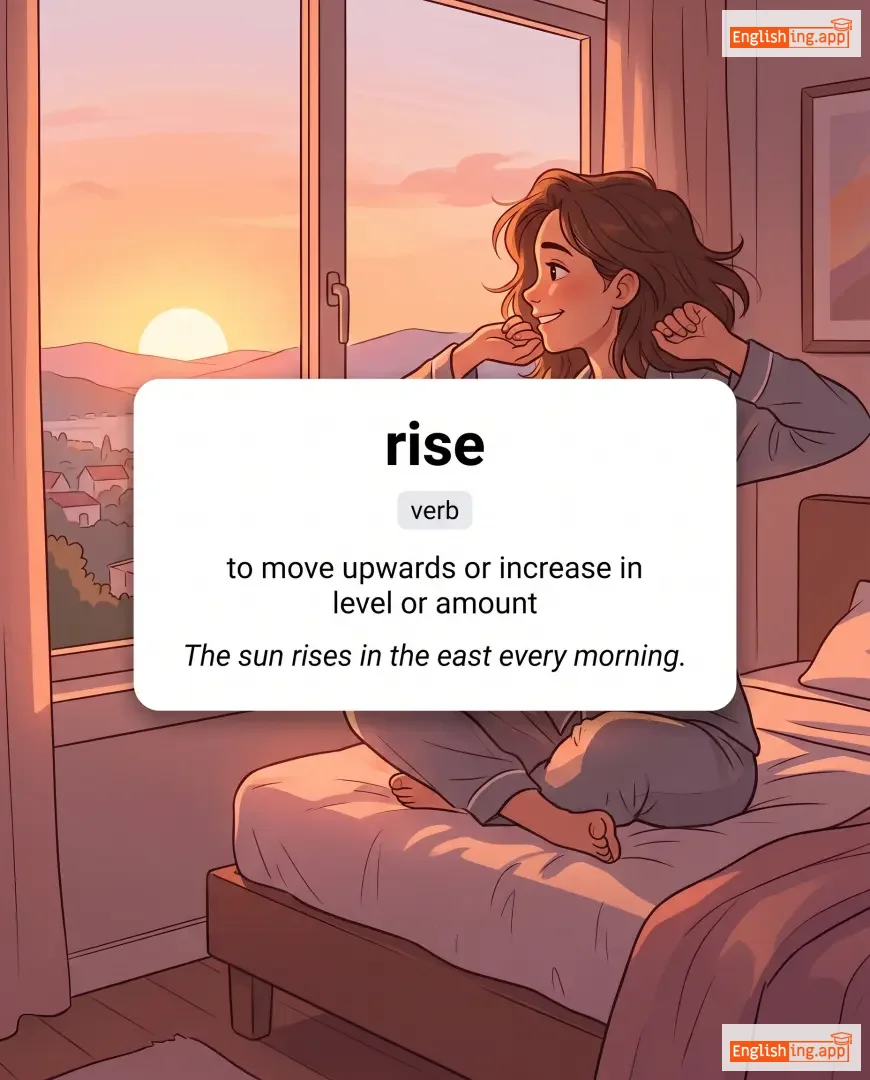
rise definition card — visual illustration of the meaning
🌅

rise

verb
/raɪz/

to move upwards or increase in level or amount

"The sun rises in the east every morning."

adjective
/ˈrɪz.ə.bəl/
滑稽な (kokkei na)

so absurd or ridiculous that it deserves to be laughed at

"The idea of flying pigs is completely risible."
"飛ぶ豚のアイデアは完全に滑稽です。" (Tobu buta no aidea wa kanzen ni kokkei desu.)
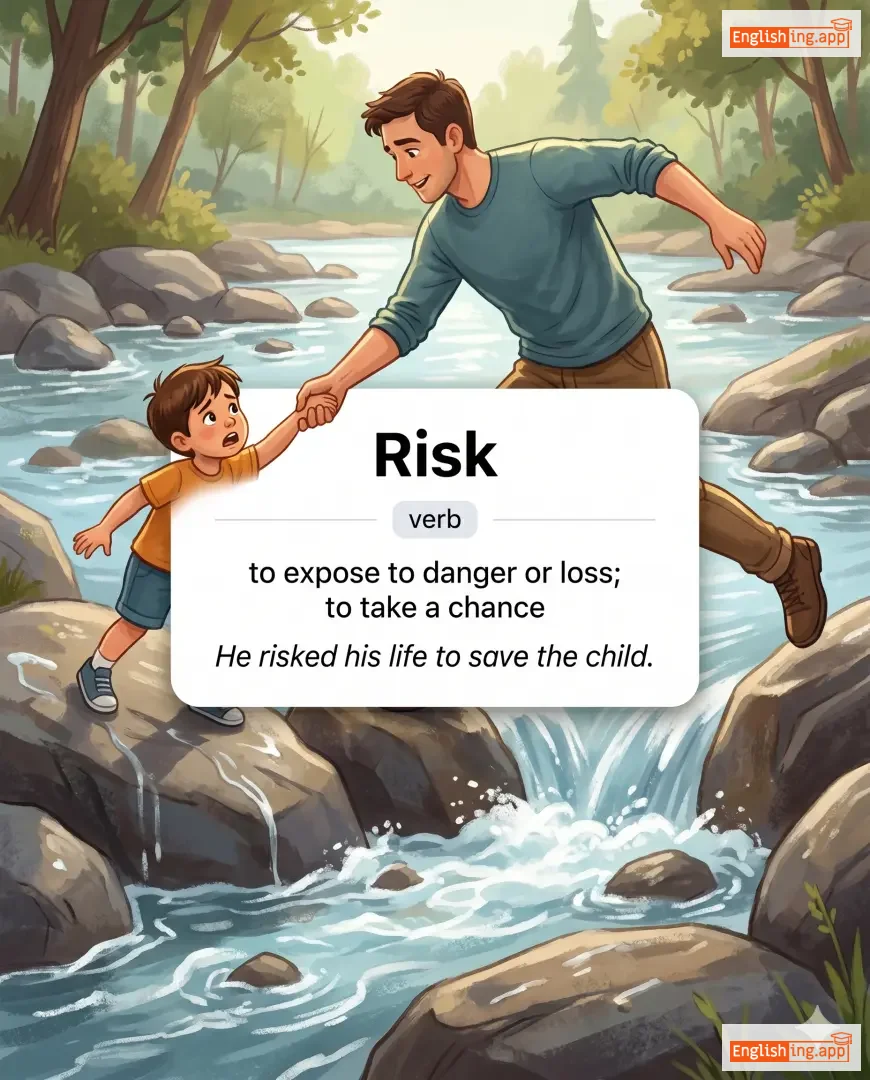
Risk definition card — visual illustration of the meaning
noun
/rɪsk/
リスク (risuku)

the possibility of harm, loss, or danger

"There is a risk of rain this afternoon."
"今日は午後に雨のリスクがあります。" (Kyou wa gogo ni ame no risuku ga arimasu.)
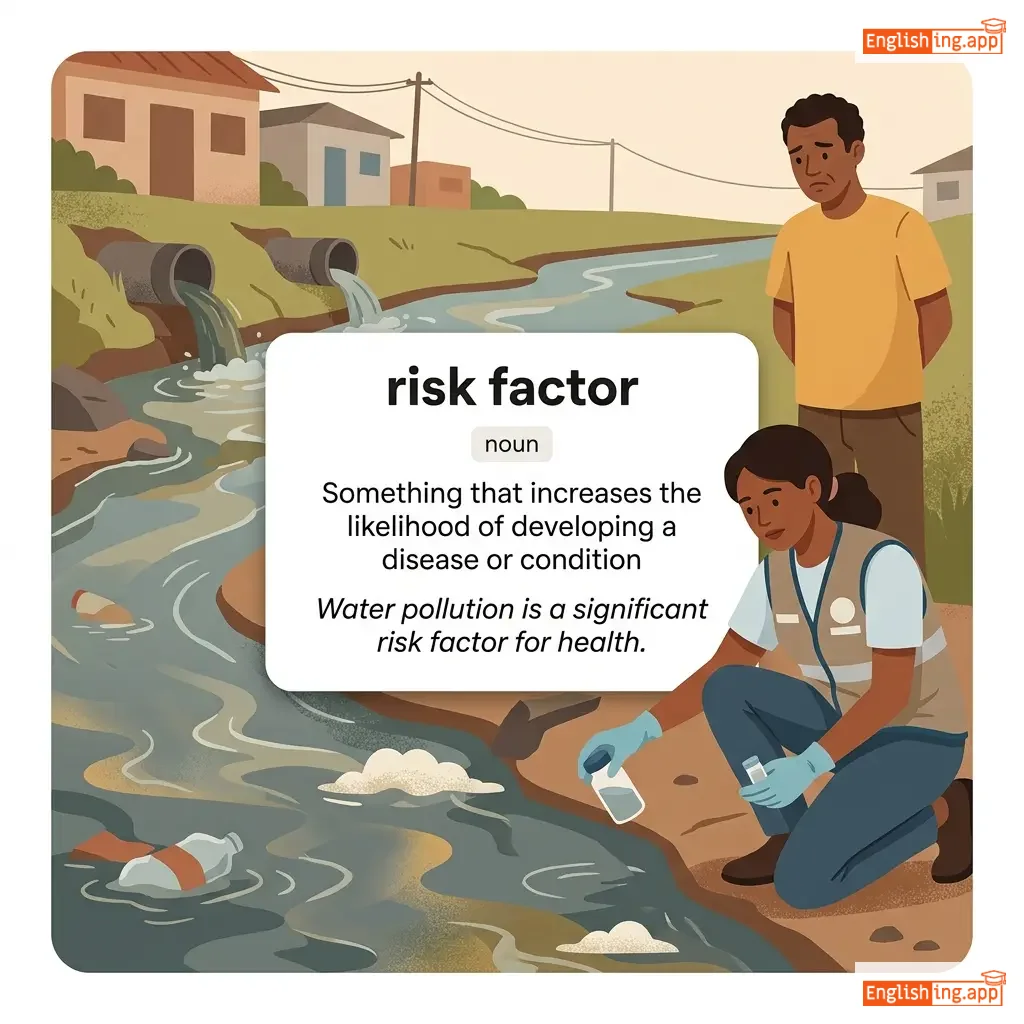
risk factor definition card — visual illustration of the meaning
noun
rɪsk ˈfæktər
リスク要因 (risuku youin)

Something that increases the likelihood of developing a disease or condition

"Water pollution is a significant risk factor for health."

"水質汚染は健康にとって重要なリスク要因です。" (Suishitsu osen wa kenkou ni totte juuyou na risuku youin desu.)
risk-adjusted definition card — visual illustration of the meaning
adjective
rɪsk-ədˈʤɛstɪd
リスク調整済み (risuku chōsei zumi)

Modified or calibrated to account for risk factors in investment returns.

"Risk-adjusted returns consider both potential profit and loss."

"リスク調整後のリターンは、潜在的な利益と損失の両方を考慮します。" (Risuku chōsei go no ritān wa, senzai-tekina rieki to sonshitsu no ryōhō o kōryo shimasu.)
⚠️

risky

adjective
/ˈrɪski/

Involving the possibility of danger, harm, or loss

"Investing in that startup is risky but could bring high rewards."

noun
/raɪt/
儀式 (gishiki)

a religious or ceremonial act

"The wedding rite was performed with great solemnity."

"結婚式の儀式は厳粛に行われました。" (Kekkon-shiki no gishiki wa genshuku ni okonawaremashita.)
🕯️

Ritual

noun
/ˈrɪtʃ.u.əl/
幸福 (kōfuku)

a set of fixed actions and sometimes words performed regularly, especially as part of a ceremony or religion

"Morning coffee has become a daily ritual for him."

"彼女は賞を受け取ったとき、自分の幸せを隠すことができませんでした。" (Kanojo wa shō o uketotta toki, jibun no kōfuku o kakusu koto ga dekimasen deshita.)
noun, verb
/ˈraɪvəl/
ライバル (raibaru)

a person or thing competing with another for the same goal or superiority in the same field

"The two companies are fierce rivals in the smartphone market."

"二つの企業はスマートフォン市場で激しいライバルです。" (Futatsu no kigyo wa sumātofon shijō de hageshī raibaru desu.)
noun
/ˈraɪvəlri/
ライバル関係; 競争 (raibaru kankei; kyousou)

competition for the same objective or for superiority in the same field; the state of being rivals

"The rivalry between the two teams made the match exciting."

"二つのチーム間のライバル関係が試合を興奮させた。" (Futatsu no chīmu-kan no raibaru kankei ga shiai o kōfun saseta.)
verb
/raɪv/
裂ける (sakeru)

to tear apart violently

"The earthquake rived the ground in several places."

"地震がいくつかの場所で地面を裂けました。" (Jishin ga ikutsuka no basho de jimen o sakemashita.)
noun
/ˈrɪvər/
(kawa)

a large, flowing body of water

"The river flows through the city."

"川は都市を流れています。" (Kawa wa toshi o nagareteimasu.)
verb
/ˈrɪvɪt/
リベットで固定する / 注意を引く (ribetto de kotei suru / chūi o hiku)

to fasten or secure with a rivet; to hold someone’s attention firmly

"The craftsman riveted the metal plates together."

"職人は金属の板をリヴェットで留めました。" (Shokunin wa kinzoku no ita o ribetto de tome mashita.)
adjective
/ˈrɪvɪtɪŋ/
魅力的な (miryokuteki na)

extremely interesting; holding the complete attention

"The movie was so riveting that nobody looked away."

"その映画はとても魅力的で、誰も目を離すことができませんでした。" (Sono eiga wa totemo miryokuteki de, dare mo me o hanasu koto ga dekimasen deshita.)
noun
/ˈrɪvjʊlət/
小川 (ogawa)

a small stream of water; a tiny brook

"A rivulet ran down the hillside after the rain."

"雨の後、小川が丘を下った。" (Ame no ato, ogawa ga oka o kudatta.)
noun
/roʊd/
道路 (douro)

a wide way leading from one place to another

"We drove along the road to the village."
"私たちは村に向かってその道路を運転していました。" (Watashitachi wa mura ni mukatte sono douro o unten shite imashita.)
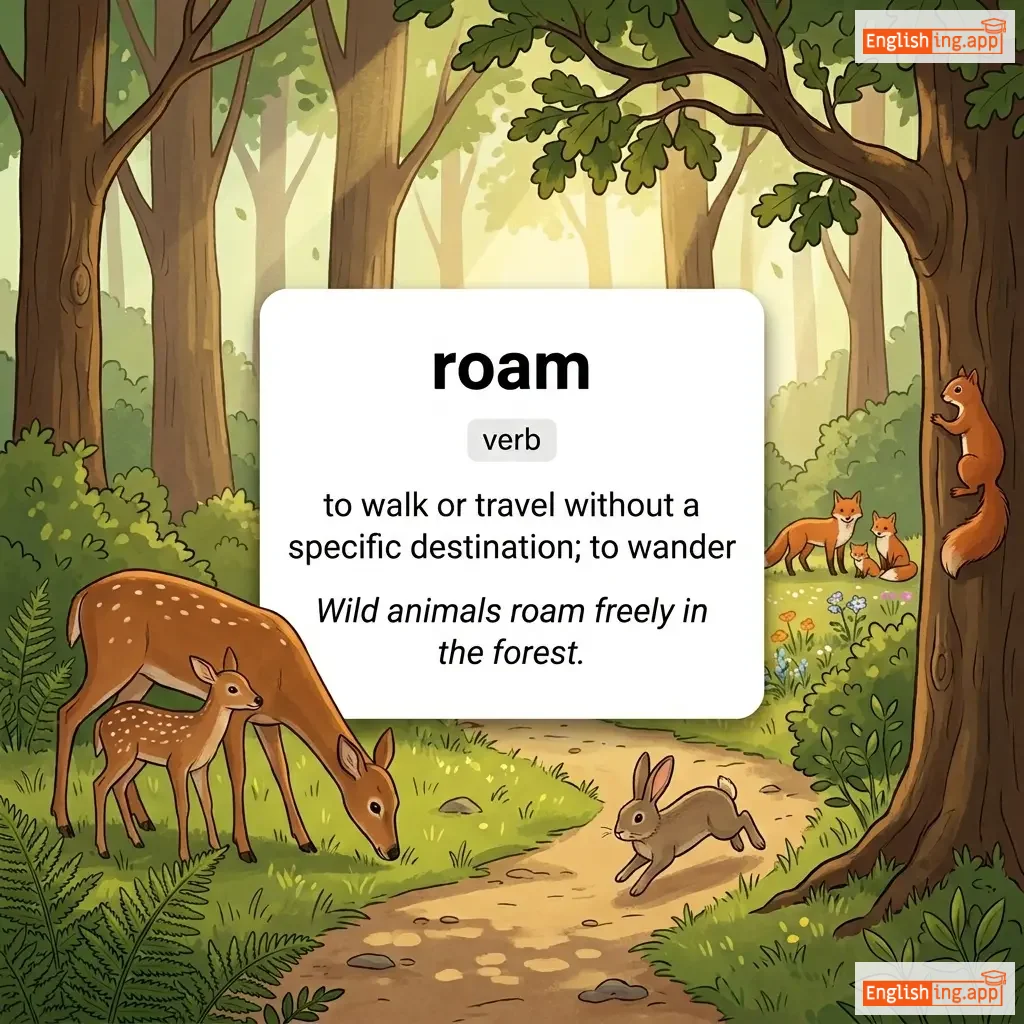
roam definition card — visual illustration of the meaning
verb
/roʊm/
歩き回る (arukimawaru)

to walk or travel without a specific destination; to wander

"Wild animals roam freely in the forest."

"野生動物は森の中を自由に歩き回っています。" (Yasei doubutsu wa mori no naka wo jiyuu ni arukimawatteimasu.)
adjective
/roʊn/
ロアン馬 (roan uma)

denoting an animal, especially a horse, having a coat of mixed colors, typically reddish-brown and white

"The rider mounted a roan horse with a speckled coat."

"騎手は斑点のあるコートを持ったロアン馬に乗った。" (Kishu wa banten no aru kōto o motta roan uma ni notta.)
noun
/roʊst/
ロースト肉 (roosuto niku)

Meat cooked by dry heat in an oven or over an open fire

"The Sunday roast was perfectly cooked and very tender."

"日曜日のローストは完璧に調理され、とても柔らかかった。" (Nichiyoobi no roosuto wa kanpeki ni chori sare, totemo yawarakakatta)
noun
/ˈroʊstɪd miːt/
ロースト肉 (roosuto niku)

meat cooked by dry heat in an oven or over fire

"The roasted meat was perfectly seasoned and tender."

"ロースト肉は完璧に調味され、柔らかかった。" (Roosuto niku wa kanpeki ni choumi sare, yawarakakatta.)
verb
/rɒb/
強奪 (gōdatsu)

to take something by force or threat, especially from a person or place

"He was caught trying to rob the bank."

"彼は銀行を襲おうとして捕まった。" (Kare wa ginkō o osō to shite tsukamatta.)
noun
/ˈrɒbər/
強盗 (goutou)

a person who steals property from others, often using force or threat

"The robber was caught after a quick police chase."

"素早い警察の追跡の後、強盗は捕まった。" (Subayai keisatsu no tsuiseki no ato, goutou wa tsukamatta)
noun
/ˈrɒbəɹi/
強盗 (gōtō)

the crime of stealing from someone or somewhere using force or threat

"The police are investigating the robbery at the local store."

"警察は地元の店での強盗事件を調査しています。" (Keisatsu wa jimoto no mise de no gōtō jiken o chōsa shiteimasu.)
noun
/ˈroʊbɒt/
ロボット (robotto)

a machine capable of carrying out a complex series of actions automatically

"The factory uses robots to assemble cars efficiently."
"工場はロボットを使って効率的に車を組み立てています。" (Kōjō wa robotto o tsukatte kōritsutekini kuruma o kumitateteimasu.)
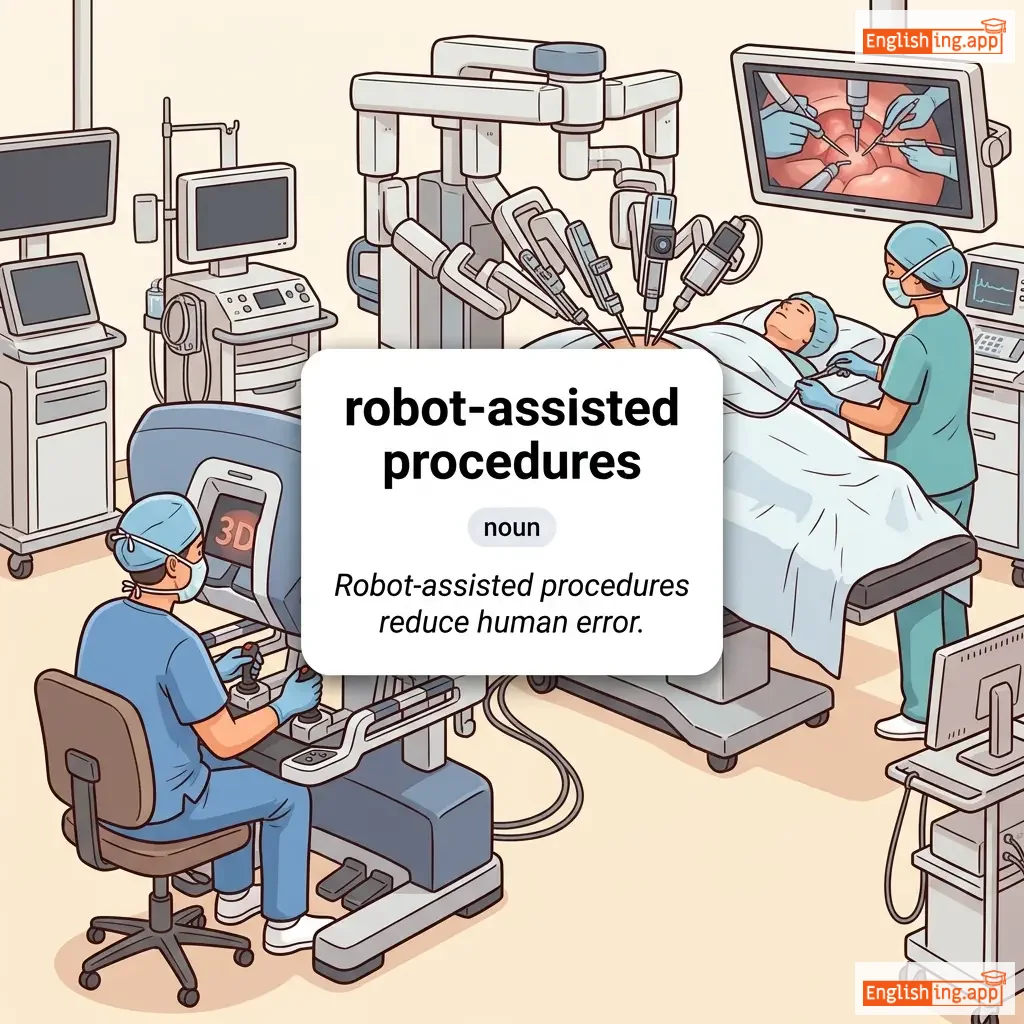
robot-assisted procedures definition card — visual illustration of the meaning
noun
/ˈrəʊ.bɒt əˈsɪs.tɪd prəˈsiː.dʒərz/
ロボット支援手術 (robotto shien shujutsu)

Medical operations performed with the help of robotic systems to enhance precision and control.

"Robot-assisted procedures reduce human error."
"ロボット支援手術は人為的な誤りを減らします。" (Robotto shien shujutsu wa jin'iteki na ayamari o herashimasu.)
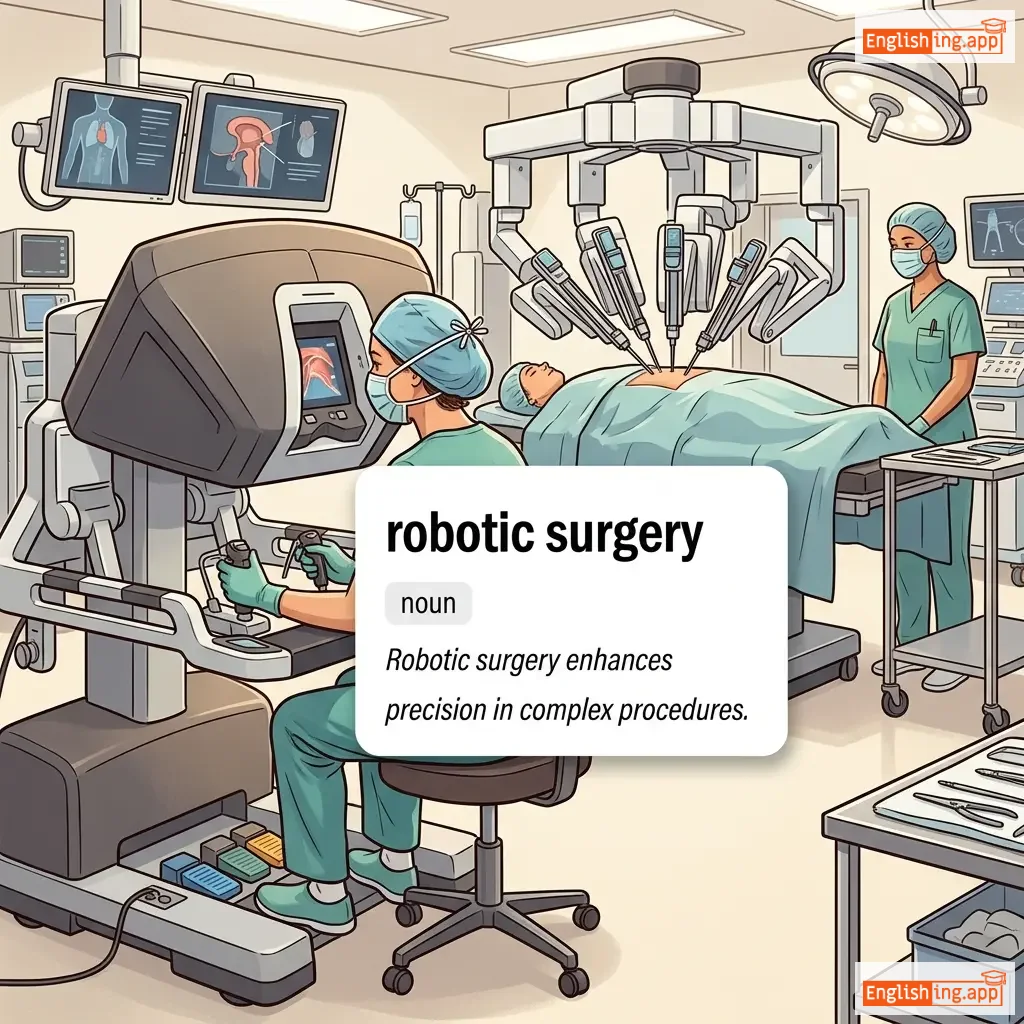
robotic surgery definition card — visual illustration of the meaning
noun
/rəʊˈbɒt.ɪk ˈsɜː.dʒər.i/
ロボット手術 (robotto shujutsu)

Surgery performed with the assistance of robotic systems to enhance precision and reduce invasiveness.

"Robotic surgery enhances precision in complex procedures."
"ロボット手術は複雑な手順で精度を高めます。" (Robotto shujutsu wa fukuzatsu na tejun de seido wo takamemasu.)
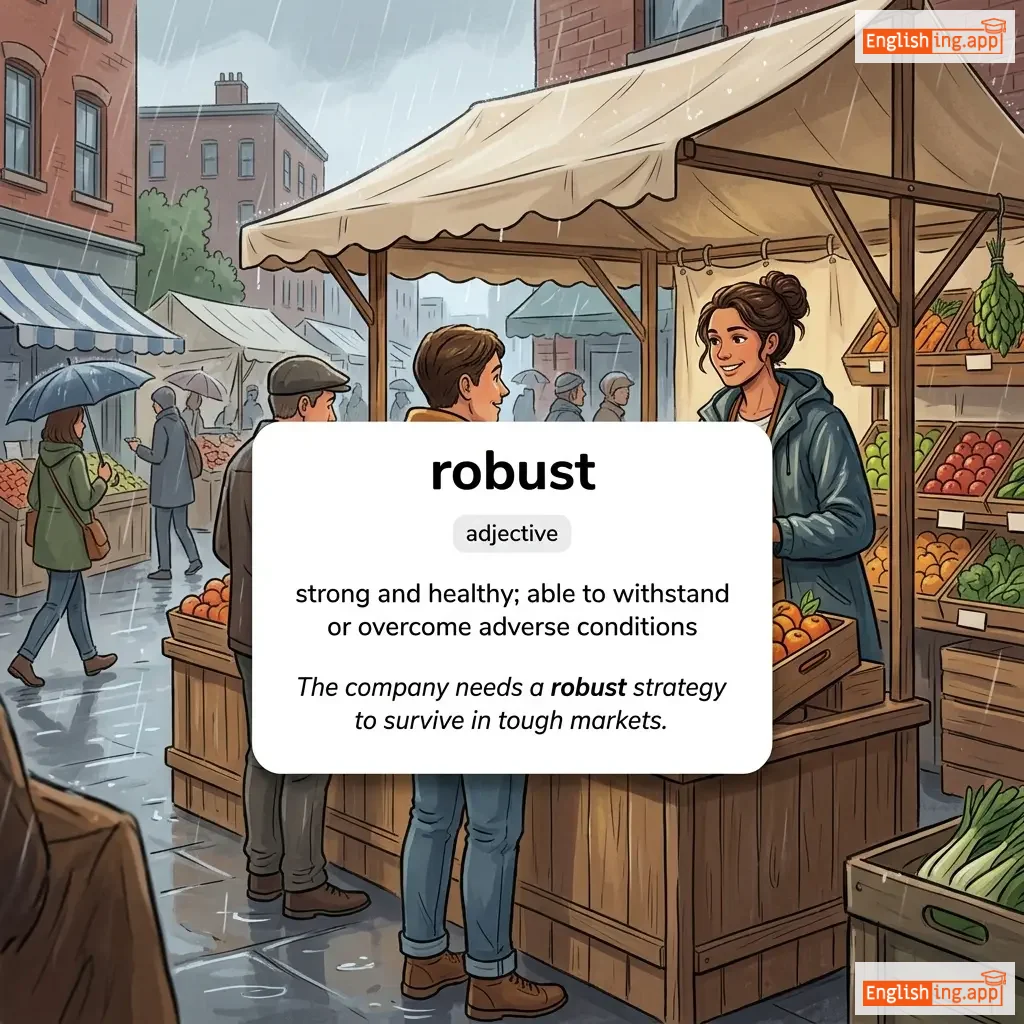
robust definition card — visual illustration of the meaning
adjective
/roʊˈbʌst/
丈夫 (jōbu)

strong and healthy; able to withstand or overcome adverse conditions

"The company needs a robust strategy to survive in tough markets."

"その会社は厳しい市場で生き残るために丈夫な戦略が必要です。" (Sono kaisha wa kibishī shijō de ikinokoru tame ni jōbu na senryaku ga hitsuyō desu.)
noun
/rɒk/
岩石 (ganseki)

a large, solid piece of mineral matter

"The mountain was made of solid rock."

"その山は固い岩石でできていました。" (Sono yama wa katai ganseki de dekiteimashita.)
noun
/rɑk sɔlt/
岩塩 (gan'en)

natural salt crystals formed from evaporated ancient seas; unrefined salt

"Rock salt is considered healthier than table salt."

"岩塩はテーブルソルトよりも健康的だと考えられています。" (Gan'en wa tēburu soruto yori mo kenkō-teki da to kangaerareteimasu.)
noun, verb
/ˈrɒkɪt/
幸せ (shiawase)

a missile or vehicle propelled by a rocket engine; to increase or move very quickly

"The company’s profits rocketed after the new product launch."

"彼女は賞を受け取ったとき、幸せを隠せませんでした。" (Kanojo wa shō o uketotta toki, shiawase o kakusemasen deshita.)
adjective
/ˈrɑː.ki/
岩だらけの; 不安定な; 難しい (iwa darake no; fuantei na; muzukashī)

full of rocks; unsteady; difficult

"The rocky path made hiking difficult for the tourists."
"岩だらけの道は観光客のハイキングを難しくしました。" (Iwa darake no michi wa kankōkyaku no haikingu o muzukashiku shimashita.)
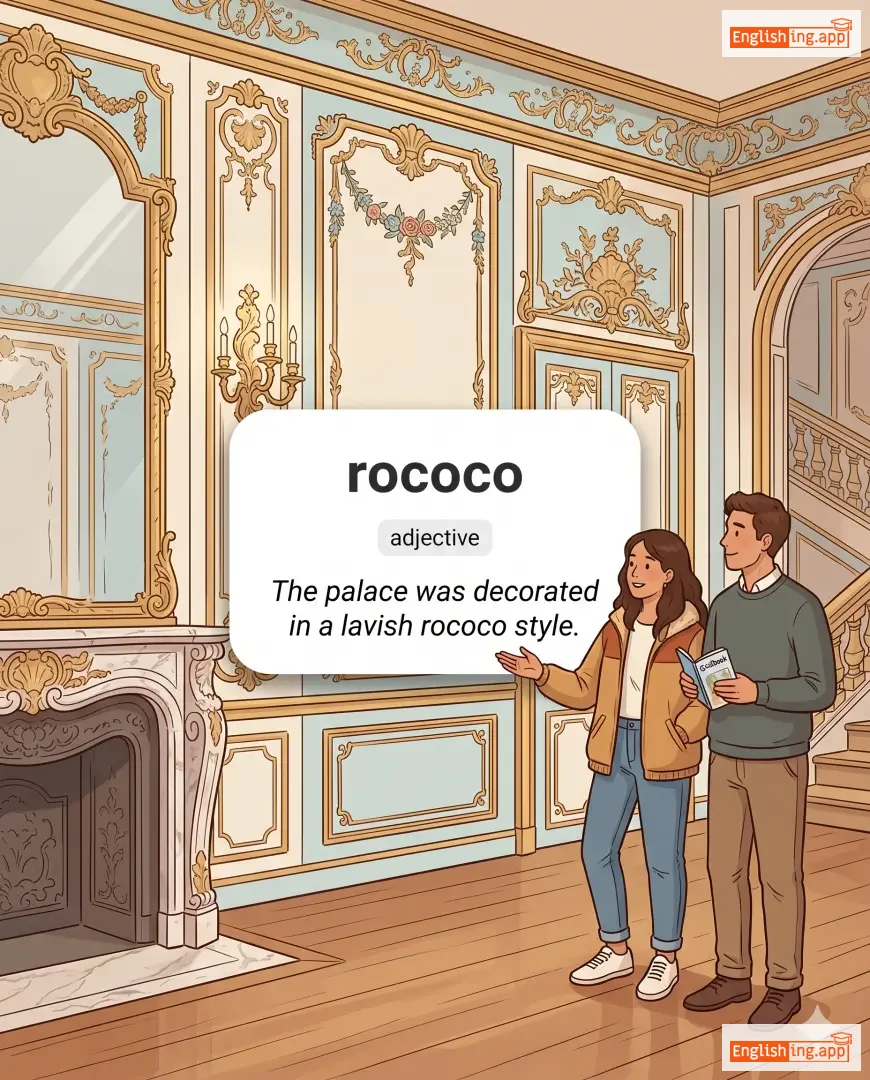
rococo definition card — visual illustration of the meaning
adjective
/rəˈkoʊkoʊ/
ロココ (rokoko)

characterized by ornate detail and elaborate decoration, especially in art, architecture, and design

"The palace was decorated in a lavish rococo style."

"宮殿は豪華なロココ様式で装飾されていました。" (Kyūden wa gōka na rokoko yōshiki de sōshoku sareteimashita.)