語彙集

英単語辞書 | 単語の意味、定義、例文

noun
/rɪˈvaɪvəl/
復活 (fukkatsu)

an improvement in the condition or strength of something

"The revival of the old traditions brought a sense of nostalgia."

"古い伝統の復活は懐かしい感覚をもたらしました。" (Furui dentō no fukkatsu wa natsukashī kankaku o motarashimashita.)
verb
/rɪˈvaɪv/
蘇生する (sosei suru)

To bring back to life, consciousness, or activity.

"The paramedics managed to revive the unconscious man."

"救急隊員は意識不明の男性を蘇生させることに成功した。" (Kyūkyū taiin wa ishiki fumei no dansei o sosei saseru koto ni seikō shita.)
noun
/ˌrɛv.əˈkeɪ.ʃən/
取り消し (torikeshi)

The act of officially canceling or withdrawing something.

"The court ordered the revocation of his license."

"裁判所は彼のライセンスの取り消しを命じました。" (Saibansho wa kare no raisensu no torikeshi o meijimashita.)
verb
/rɪˈvoʊk/
取り消す (torikesu)

To officially cancel or withdraw a decision, privilege, or right.

"The government decided to revoke his passport."
"政府は彼のパスポートを取り消すことを決定した。" (Seifu wa kare no pasupōto o torikesu koto o kettei shita.)
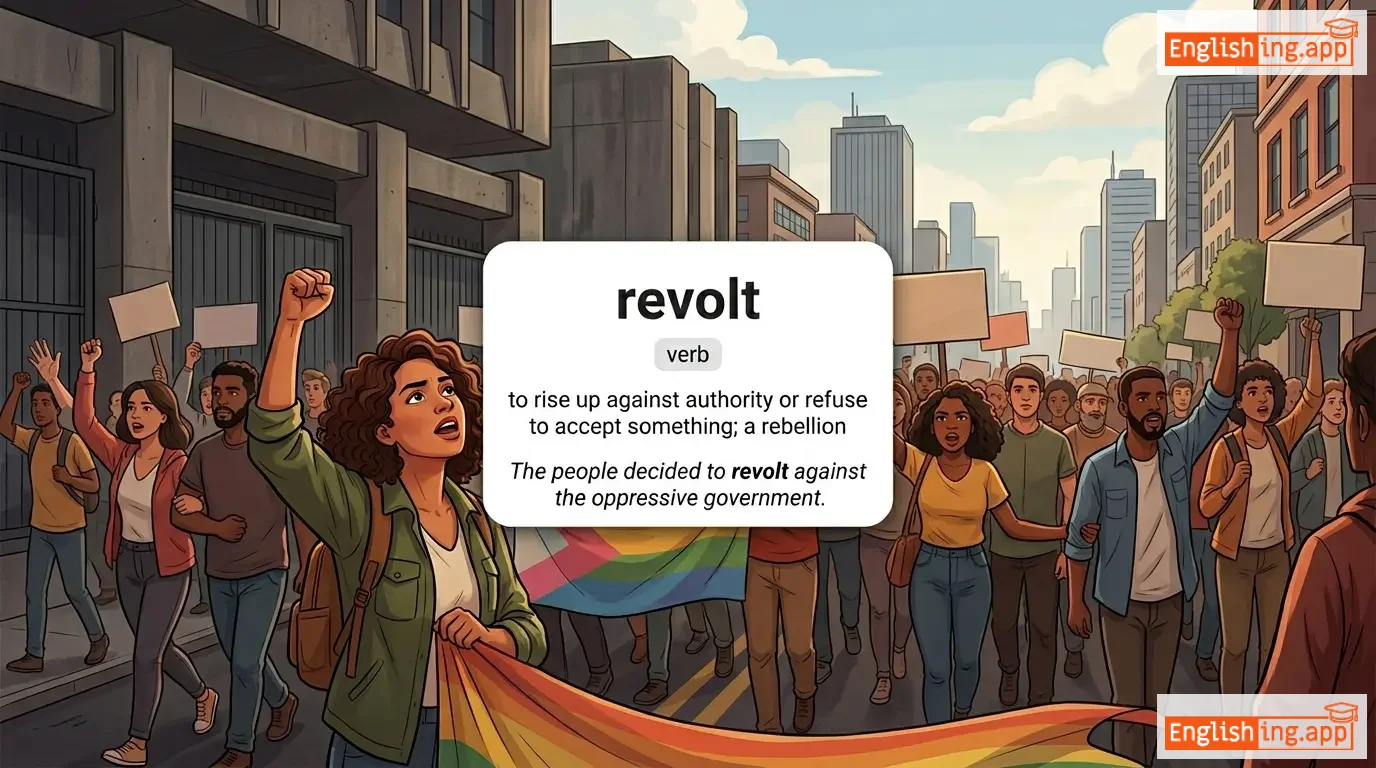
revolt definition card — visual illustration of the meaning
verb
/rɪˈvoʊlt/
反乱 (hanran)

to rise up against authority or refuse to accept something; a rebellion

"The people decided to revolt against the oppressive government."

"人々は圧制政府に対して反乱を決意した。" (Hitobito wa assē seifu ni taishite hanran o ketsui shita.)
adjective
/rɪˈvoʊltɪŋ/
むかつく (mukatsuku)

extremely unpleasant or disgusting

"The smell of the garbage was revolting."
"ごみのにおいはむかつくほどだった。" (gomi no nioi wa mukatsuku hodo datta)
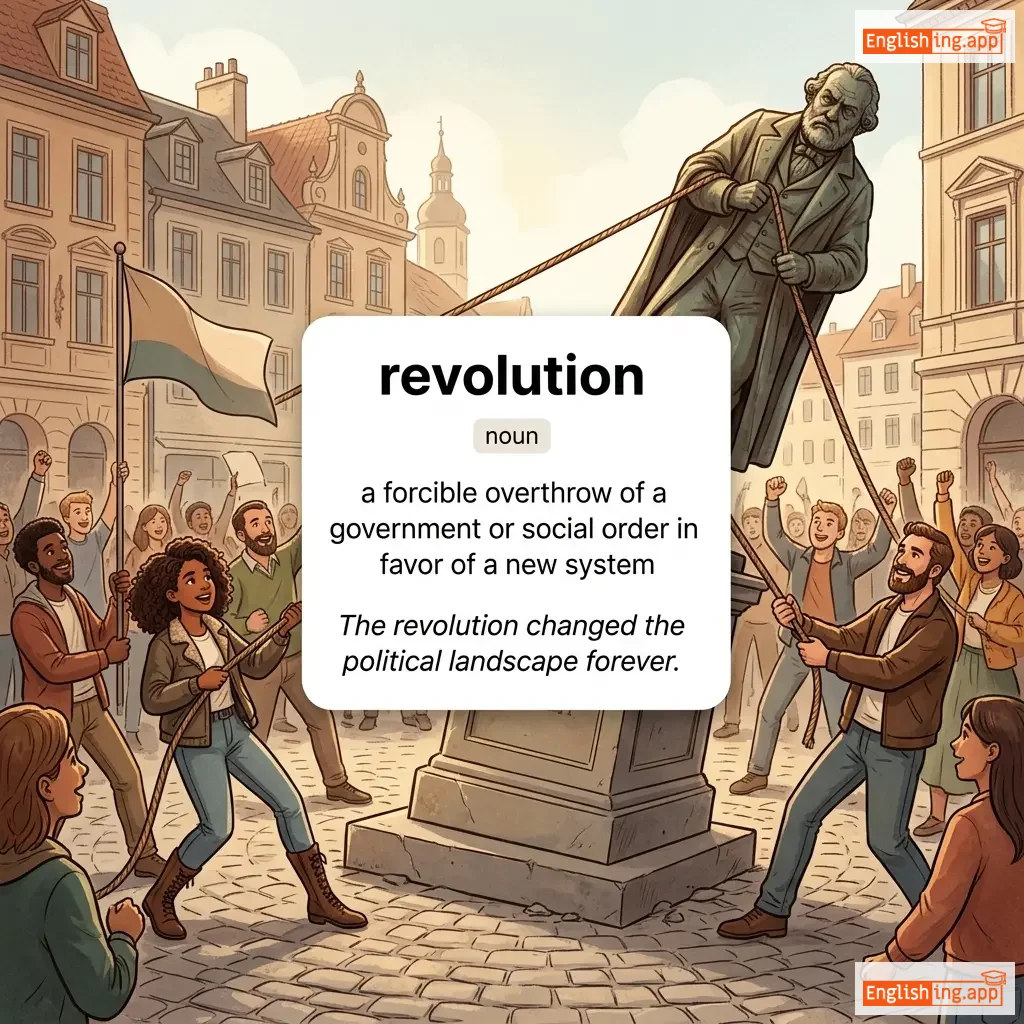
revolution definition card — visual illustration of the meaning
noun
/ˌrɛvəˈluːʃən/
革命 (kakumei)

a forcible overthrow of a government or social order in favor of a new system

"The revolution changed the political landscape forever."
"革命は政治の風景を永遠に変えました。" (Kakumei wa seiji no fūkei o eien ni kaemashita.)
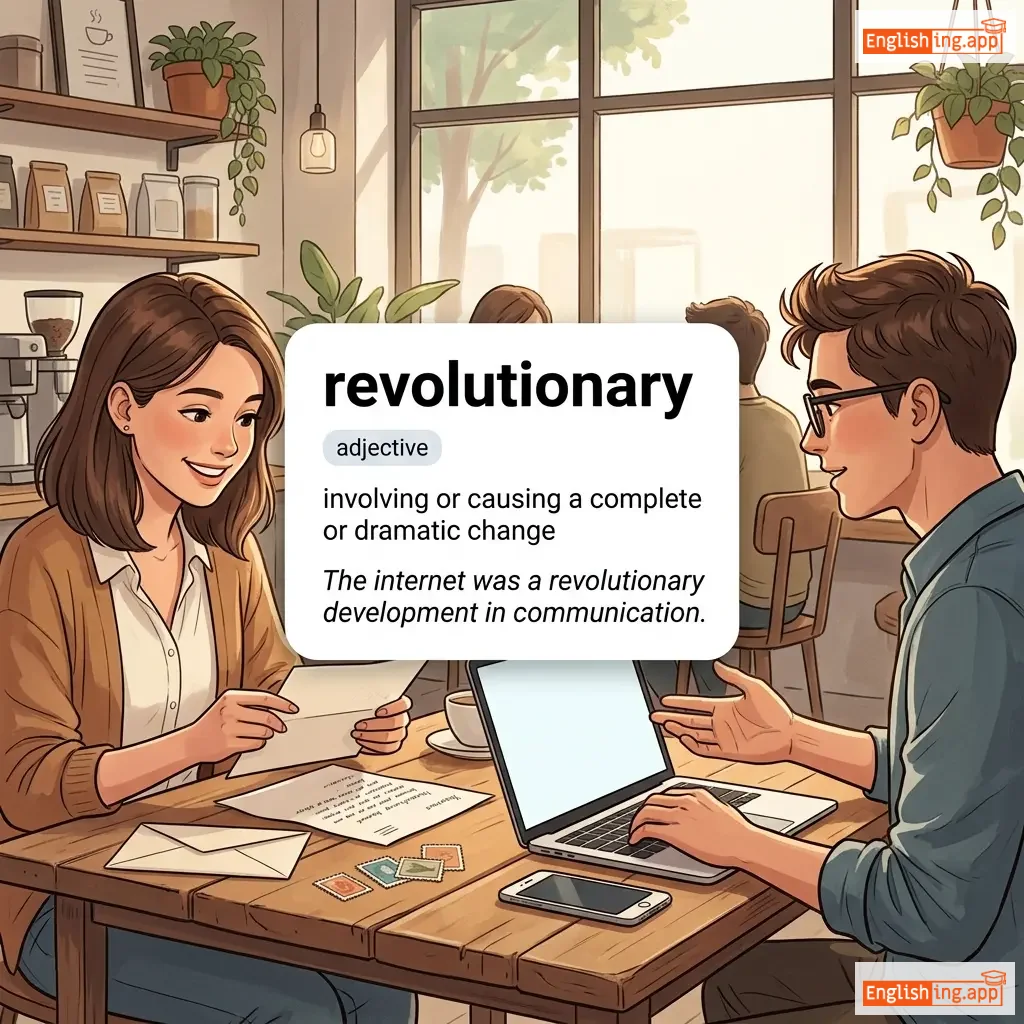
revolutionary definition card — visual illustration of the meaning
adjective
/ˌrɛvəˈluːʃəˌnɛri/
革命的 (kakumeiteki)

involving or causing a complete or dramatic change

"The internet was a revolutionary development in communication."
"インターネットは通信における革命的な進展でした。" (Intānetto wa tsūshin ni okeru kakumeiteki na shinten deshita.)
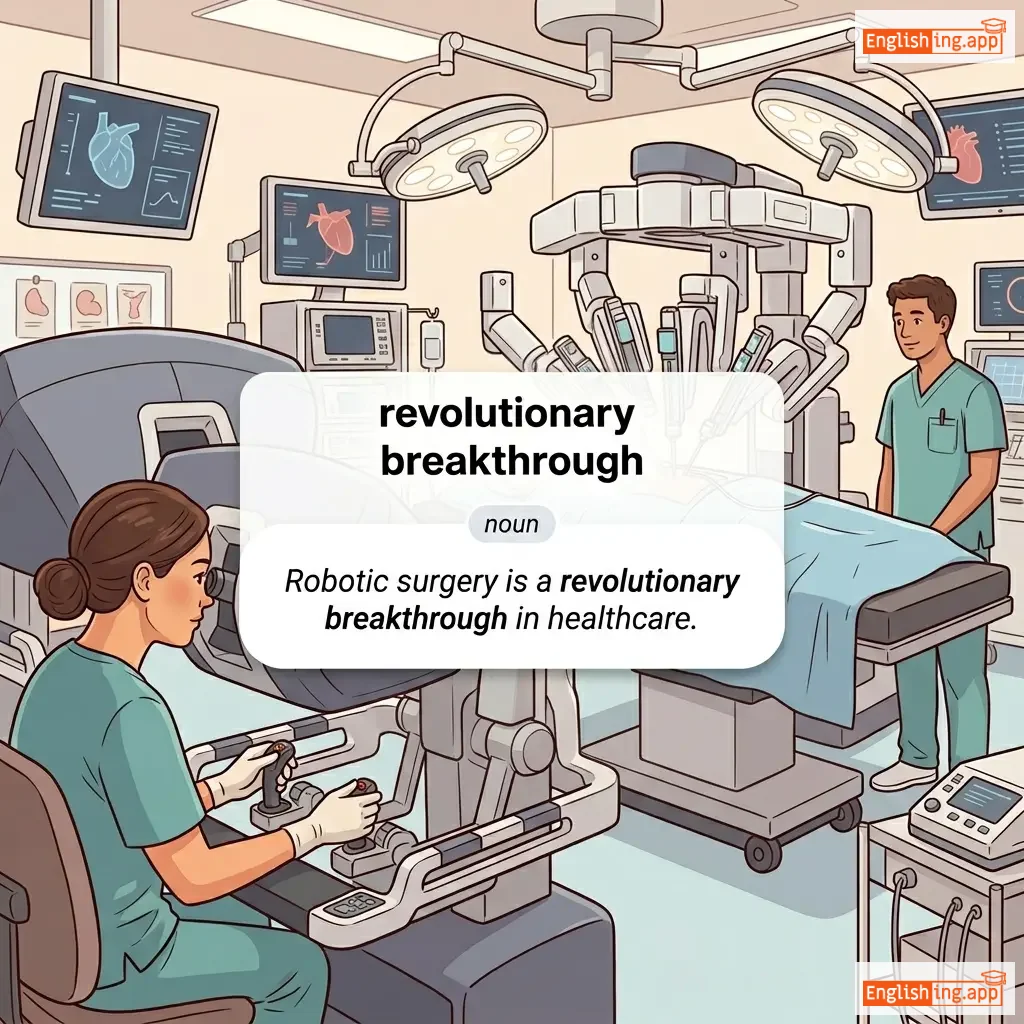
revolutionary breakthrough definition card — visual illustration of the meaning
noun
/ˌrev.əˈluː.ʃən.ər.i ˈbreɪk.θruː/
革命的な発見 (kakumei-teki na hakken)

A sudden, dramatic, and important discovery or development that changes everything.

"Robotic surgery is a revolutionary breakthrough in healthcare."
"ロボット手術は医療分野での革命的な発見です。" (Robotto shujutsu wa iryō bunya de no kakumei-teki na hakken desu.)
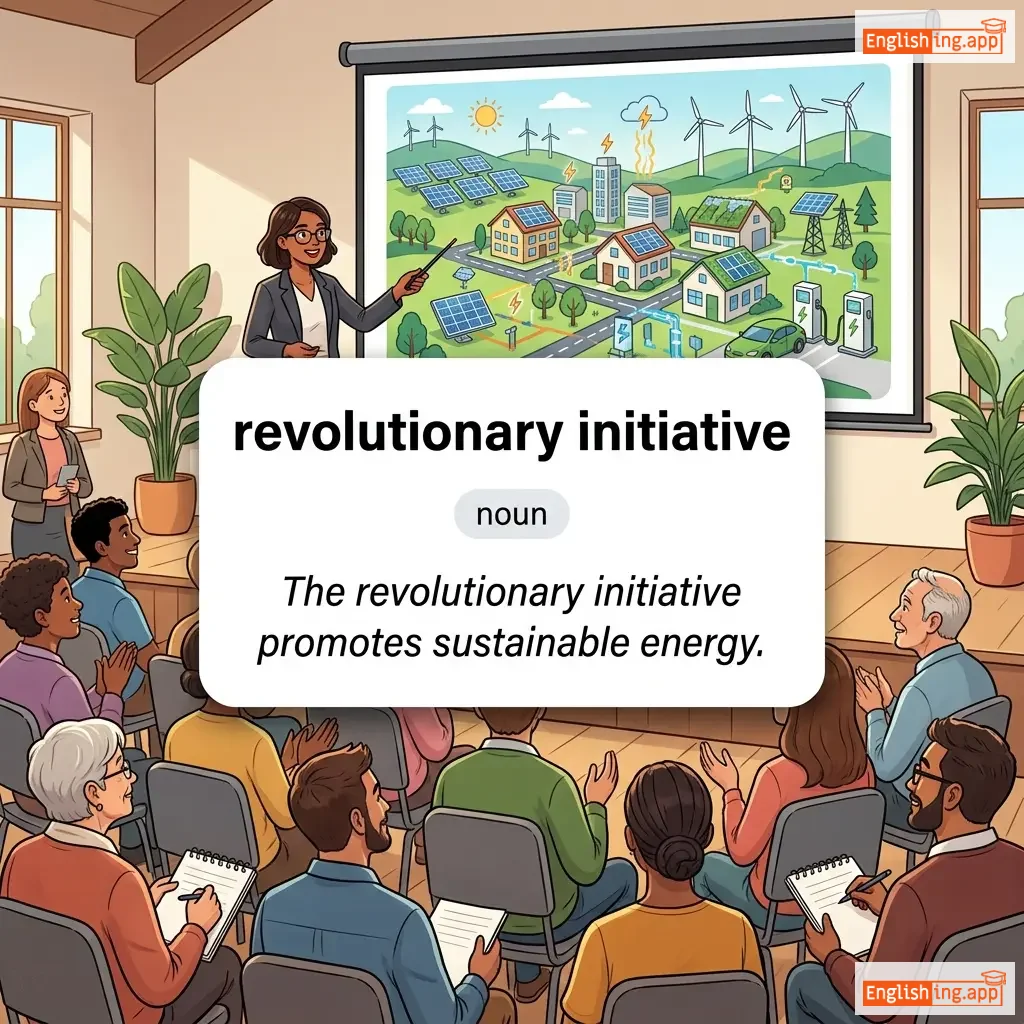
revolutionary initiative definition card — visual illustration of the meaning
noun
ˌrev.əˈluː.ʃən.ər.i ɪˈnɪʃ.ə.tɪv
革命的イニシアティブ (kakumeiteki inishiatibu)

A groundbreaking action or plan that brings about significant change or transformation.

"The revolutionary initiative promotes sustainable energy."
"革命的なイニシアティブは持続可能なエネルギーを促進します。" (Kakumeiteki na inishiatibu wa jizoku kanō na enerugī o sokushin shimasu.)
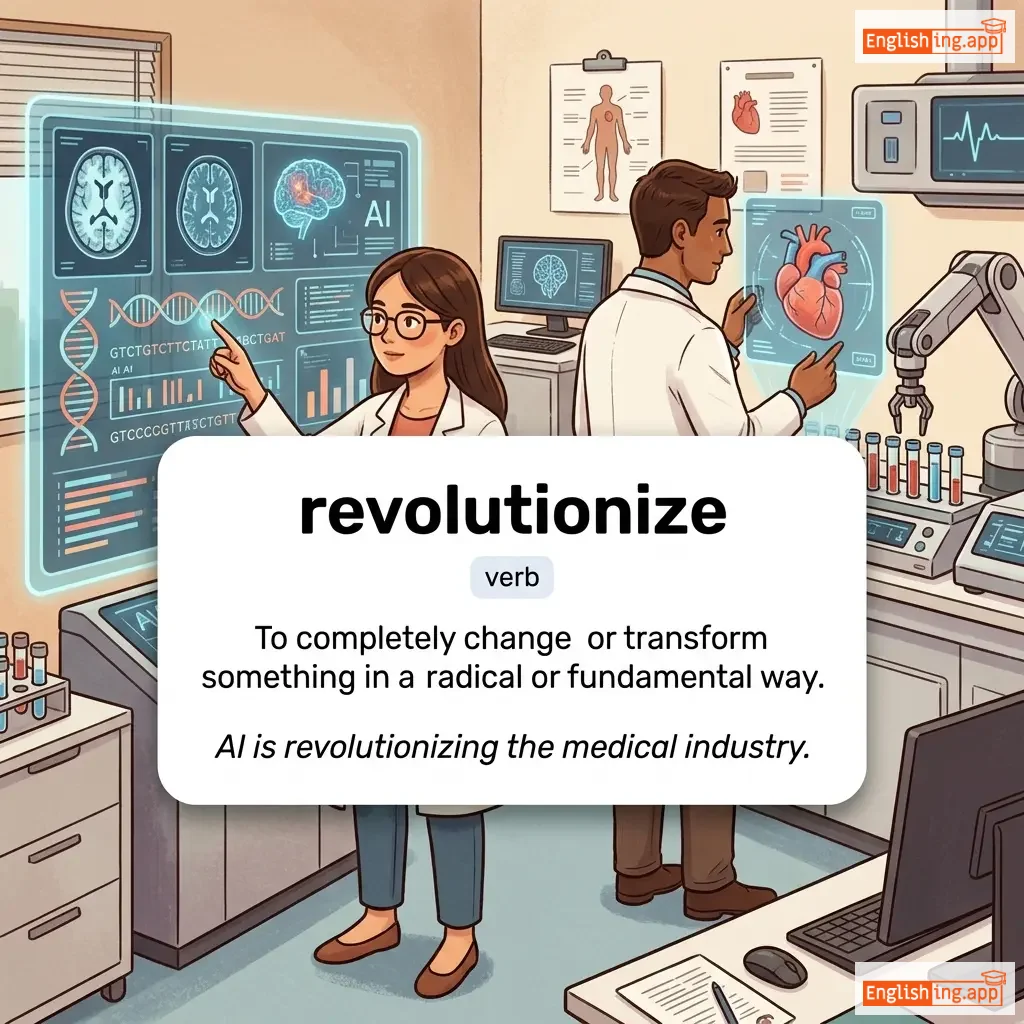
revolutionize definition card — visual illustration of the meaning
verb
ˌrev.əˈluː.ʃən.aɪz
革命的に変える (kakumei-teki ni kaeru)

To completely change or transform something in a radical or fundamental way.

"AI is revolutionizing the medical industry."
"AIは医療業界を革命的に変えています。" (AI wa iryō gyōkai wo kakumei-teki ni kaeteimasu.)
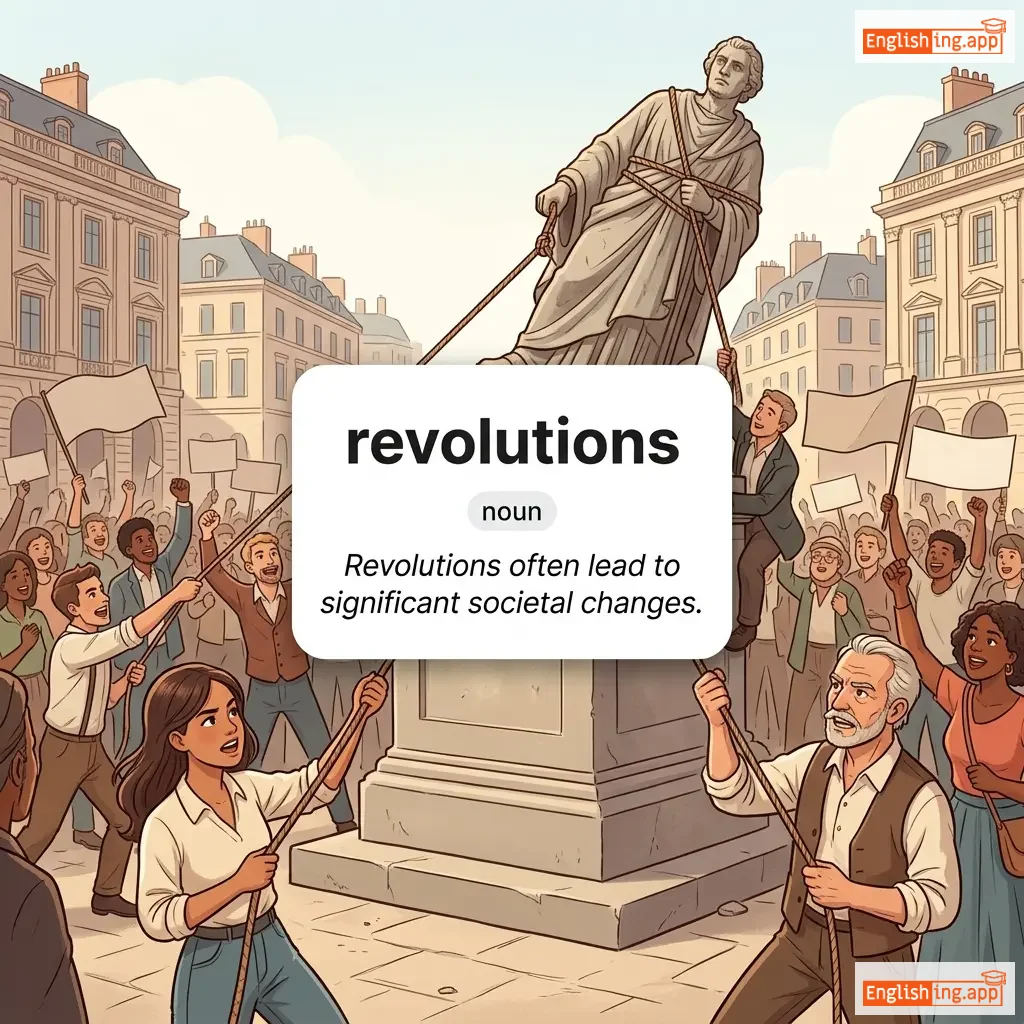
revolutions definition card — visual illustration of the meaning
noun
ˌrev.əˈluː.ʃənz
革命 (kakumei)

Dramatic and wide-reaching changes in political, social, or economic systems, often involving the overthrow of a government or social order.

"Revolutions often lead to significant societal changes."

"革命はしばしば社会的な変革をもたらす。" (Kakumei wa shibashiba shakai-teki na henka o motarasu.)
noun
/rɪˈvɒl.vər/
リボルバー (riborubā)

a pistol with revolving chambers enabling several shots to be fired without reloading

"The detective drew his revolver from its holster."

"探偵はホルスターからリボルバーを抜き取った。" (Tantei wa horusutā kara riborubā o nukitotta.)
noun
/rɪˈvʌlʃən/
嫌悪 (ken'o)

a strong feeling of disgust or repulsion

"She felt revulsion at the sight of the cruel act."

"彼女はその残酷な行為を見て嫌悪感を覚えた。" (Kanojo wa sono zankokuna kōi o mite ken'o-kan o oboeta.)
noun
/rɪˈwɔːd/
報酬 (hōshū)

something given in recognition of service, effort, or achievement

"He received a reward for returning the lost wallet."

"彼は失くした財布を返したことで報酬を受け取りました。" (Kare wa nakushita saifu o kaeshita koto de hōshū o uketorimashita.)
verb
/ˈræpsəˌdaɪz/
熱狂的に話す (nekkyōteki ni hanasu)

to speak or write with great enthusiasm and admiration

"He would often rhapsodize about his travels to Europe."

"彼はよくヨーロッパ旅行について熱心に話していた。" (Kare wa yoku Yōroppa ryokō ni tsuite nesshin ni hanashite ita.)
noun
/ˈræpsədi/
高揚した歌/賛美 (kōyō shita uta/sanbi)

an expression of great enthusiasm or an epic musical composition

"The singer’s performance was a rhapsody of emotions."
"歌手のパフォーマンスは感情のラプソディでした。" (Kashu no pafōmansu wa kanjō no rhapsody deshita.)
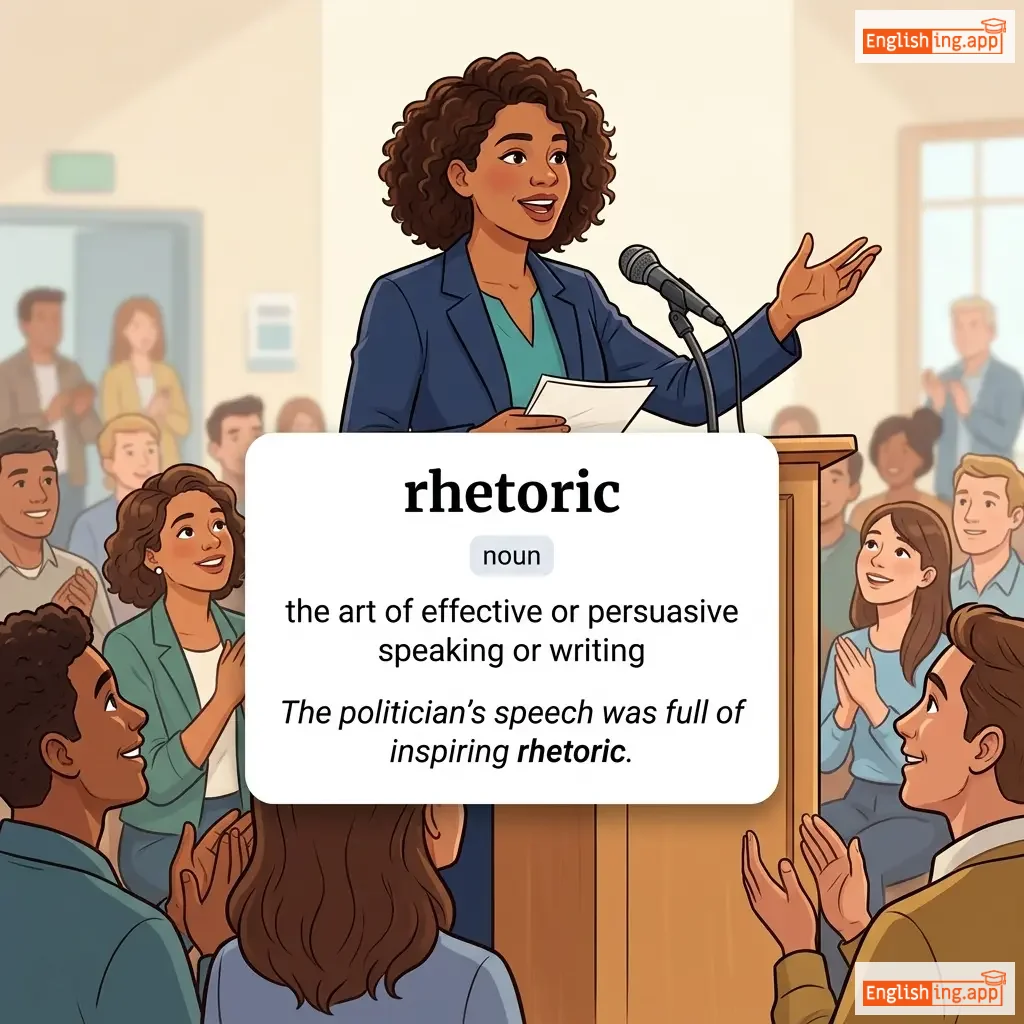
rhetoric definition card — visual illustration of the meaning
noun
/ˈrɛtərɪk/
修辞学 (shūjigaku)

the art of effective or persuasive speaking or writing

"The politician’s speech was full of inspiring rhetoric."

"その政治家のスピーチは、インスピレーションを与える修辞学で満ちていました。" (Sono seijika no supīchi wa, insupirēshon o ataeru shūjigaku de michite imashita.)
adjective
/rɪˈtɔːrɪkəl/
修辞的 (shūjiteki)

relating to the art of effective or persuasive speaking or writing; often a question asked to make a point rather than get an answer

"He asked a rhetorical question during the debate."

"彼は討論中に修辞的な質問をした。" (Kare wa tōronchū ni shūjiteki na shitsumon o shita.)
noun
/ˌrɛtəˈrɪʃən/
雄弁家 (yūbenka)

A person who is skilled in the art of rhetoric or persuasive speaking/writing.

"The rhetorician captivated the audience with his eloquence."

"雄弁家はその雄弁さで聴衆を魅了しました。" (Yūbenka wa sono yūbensa de chōshū o miryō shimashita.)
adjective
/ˈruːmi/
涙目 (namidame)

Watery, especially referring to the eyes.

"His rheumy eyes showed signs of age and fatigue."

"彼の涙目は年齢と疲れの兆しを示していた。" (Kare no namidame wa nenrei to tsukare no kizashi o shimeshite ita.)
noun
/raɪˈnɒs.ər.əs/
サイ (sai)

a large, heavy animal with thick skin and one or two horns on its nose

"The rhinoceros charged through the grassland."

"サイは草原を突進した。" (Sai wa sōgen o tosshin shita.)
noun
/ˈrɪðəm/
リズム (rizumu)

a strong, regular, repeated pattern of movement or sound

"The rhythm of the music made everyone want to dance."

"音楽のリズムはみんなを踊りたくさせた。" (Ongaku no rizumu wa minna wo odoritaku saseta.)
noun
/rɪb/
肋骨 (rekotsu)

one of the curved bones that form the rib cage in humans and animals, protecting the chest organs

"He broke a rib while playing football."

"彼はサッカーをしているときに肋骨を折った。" (kare wa sakkā o shite iru toki ni rekotsu o otta)
adjective
/ˈrɪbɔːld/
下品な冗談 (gehin na jōdan)

Referring to sexual matters in a humorous or vulgar way.

"The comedian’s ribald jokes made the audience laugh uncomfortably."

"コメディアンの下品な冗談は観客を不快にさせながら笑わせた。" (Komedian no gehin na jōdan wa kankyaku o fukai ni sasenagara warawaseta.)
noun
/ˈrɪb.ən/
リボン (ribon)

a long, narrow strip of fabric used for tying or decoration

"She tied her hair with a red ribbon."

"彼女は赤いリボンで髪を結びました。" (Kanojo wa akai ribon de kami o musubimashita.)
noun
/raɪs/
ご飯 (gohan)

a cereal grain that is the staple food of many countries

"Rice is an important part of the daily diet in many countries."

"ライスは多くの国々の日常的な食事において重要な部分を占めています。" (Raisu wa ooku no kuniguni no nichijou-teki na shokuji ni oite juuyou na bubun o shimemasu.)
noun
/raɪs ˈkʊkər/
電気炊飯器 (denki suihanki)

an electric appliance designed to cook rice automatically

"The rice cooker automatically switches off when the rice is perfectly cooked."

"ライスクッカーはご飯が完璧に炊けると自動でオフになります。" (raisu kukkā wa gohan ga kanpeki ni takeru to jidō de ofu ni narimasu)
adjective
/rɪʧ/
裕福 (yūfuku)

having a great deal of money or assets

"He became rich after his successful business venture."

"彼は成功したビジネスの後、裕福になった。" (Kare wa seikō shita bijinesu no ato, yūfuku ni natta.)
adjective
/ˈrɪkɪti/
ぐらつく (guratsuku)

Poorly made and likely to collapse; shaky.

"They crossed a rickety wooden bridge over the river."

"彼らは川を越える不安定な木製の橋を渡りました。" (Karera wa kawa o koeru fuantei na mokusei no hashi o watarimashita.)
noun
/ˈrɪk.ʃɔː/
リクシャ (rikusha)

a light two-wheeled passenger vehicle drawn by one or more people

"We took a rickshaw to reach the busy marketplace."

"忙しい市場に到着するためにリクシャを利用しました。" (Isogashī shijō ni tōchaku suru tame ni rikusha o riyō shimashita.)
verb
/rɪd/
取り除く (torinozoku)

to remove or get rid of something

"I need to rid the house of all the clutter."

"家の中のすべてのゴミを取り除く必要があります。" (Ie no naka no subete no gomi o torinozoku hitsuyou ga arimasu.)
noun
/ˈrɪdəns/
解放 (kaihō)

The action of getting rid of something unwanted or unpleasant.

"His departure was considered a welcome riddance by the team."

"彼の退職はチームにとって歓迎すべき解放と見なされた。" (Kare no taishoku wa chīmu ni totte kangei subeki kaihō to minasareta.)
adjective
/ˈrɪdən/
覆われた (oowareta)

Full of or dominated by something unpleasant.

"The country was ridden with corruption."

"その国は腐敗に覆われていた。" (Sono kuni wa fuhai ni oowarete ita.)
noun
/ˈrɪdəl/
なぞなぞ (nazonazo)

A question or statement designed to test ingenuity or puzzle the mind.

"The children enjoyed solving the riddle."

"子供たちはなぞなぞを解くのが好きでした。" (Kodomotachi wa nazo nazo o toku no ga suki deshita.)
verb
/raɪd/
乗る (noru)

to sit on and control the movement of something, typically a vehicle or animal

"She loves to ride her bike around the park."

"彼女は公園で自転車に乗るのが好きです。" (Kanojo wa kouen de jitensha ni noru no ga suki desu.)
noun
/ˈraɪdər/
ライダー (raidā)

A person who rides a horse, bicycle, motorcycle, or other vehicle.

"The rider fell off the horse."

"ライダーは馬から落ちました。" (Raidā wa uma kara ochimashita.)
noun
/rɪdʒ/
山の稜線または頂上 (yama no ryōsen mata wa chōjō)

a long, narrow hilltop, mountain range, or raised strip

"We walked along the mountain ridge."

"私たちは山脈の稜線に沿って歩きました。" (Watashitachi wa sanmyaku no ryōsen ni sotte arukimashita.)
verb
/ˈrɪdɪkjuːl/
嘲笑する (choushou suru)

To make fun of someone or something in a cruel or dismissive way.

"He was ridiculed for his strange ideas."

"彼は奇妙な考えのために嘲笑されました。" (Kare wa kimyou na kangae no tame ni choushou saremashita.)
adjective
/rɪˈdɪkjʊləs/
馬鹿げた (bakageta)

Deserving mockery; absurd or unreasonable.

"The idea of flying pigs is ridiculous."

"飛ぶ豚のアイデアは馬鹿げている。" (Tobu buta no aidea wa bakageteiru.)
adjective
/raɪf/
蔓延している (manyen shite iru)

widespread or common, often in a negative sense

"Corruption was rife in the old government system."

"腐敗は古い政府制度に蔓延していた。" (Fuhai wa furui seifu seido ni manyen shite ita.)
🔫

Rifle

noun
/ˈraɪfəl/

a type of long-barreled gun designed for accurate shooting

"The hunter carried a rifle to catch game."

noun
/rɪft/
亀裂 (kiretsu)

a serious break in a relationship; a split or crack

"A rift developed between the two friends after the argument."

"議論の後、二人の友達の間に亀裂が生じた。" (Giron no ato, futari no tomodachi no aida ni kiretsu ga shōjita.)
verb
/rɪɡ/
操作する (sousa suru)

to manipulate or control something dishonestly; to set up equipment

"The election was rigged by corrupt officials."

"選挙は腐敗した役人によって操作されました。" (Senkyou wa fuhai shita yakunin ni yotte sousa saremashita.)
noun, adjective, adverb
/raɪt/
権利 (kenri)

something that is morally good, fair, or just; or a legal/entitled claim

"Everyone has the right to free speech."

"誰もが自由な言論の権利を持っています。" (Daremo ga jiyuu na genron no kenri o motteimasu.)
adjective
/ˈraɪtʃəs/
正義 (seigi)

morally right or justifiable; virtuous

"She is known for her righteous actions and honesty."

"彼女は正義の行動と誠実で知られています。" (Kanojo wa seigi no kōdō to seijitsu de shirareteimasu.)
noun
/ˈraɪtʃəsnəs/
正義 (seigi)

the quality of being morally right or justifiable

"His life was dedicated to righteousness and truth."

"彼の人生は正義と真実に捧げられた。" (Kare no jinsei wa seigi to shinjitsu ni sasagerareta.)
adjective
/ˈraɪtfəl/
正当な (seitō na)

having a legitimate or just claim; proper or lawful

"She is the rightful owner of the property."

"彼女はその財産の正当な所有者です。" (Kanojo wa sono zaisan no seitō na shoyū-sha desu.)
adverb
/ˈraɪtli/
正しく; 適切に; 公正に (tadashiku; tekisetsu ni; kōsei ni)

correctly; properly; justly

"She rightly pointed out the mistakes in the report."
"彼女は報告書の誤りを正しく指摘した。" (Kanojo wa hōkokusho no ayamari o tadashiku shiteki shita.)
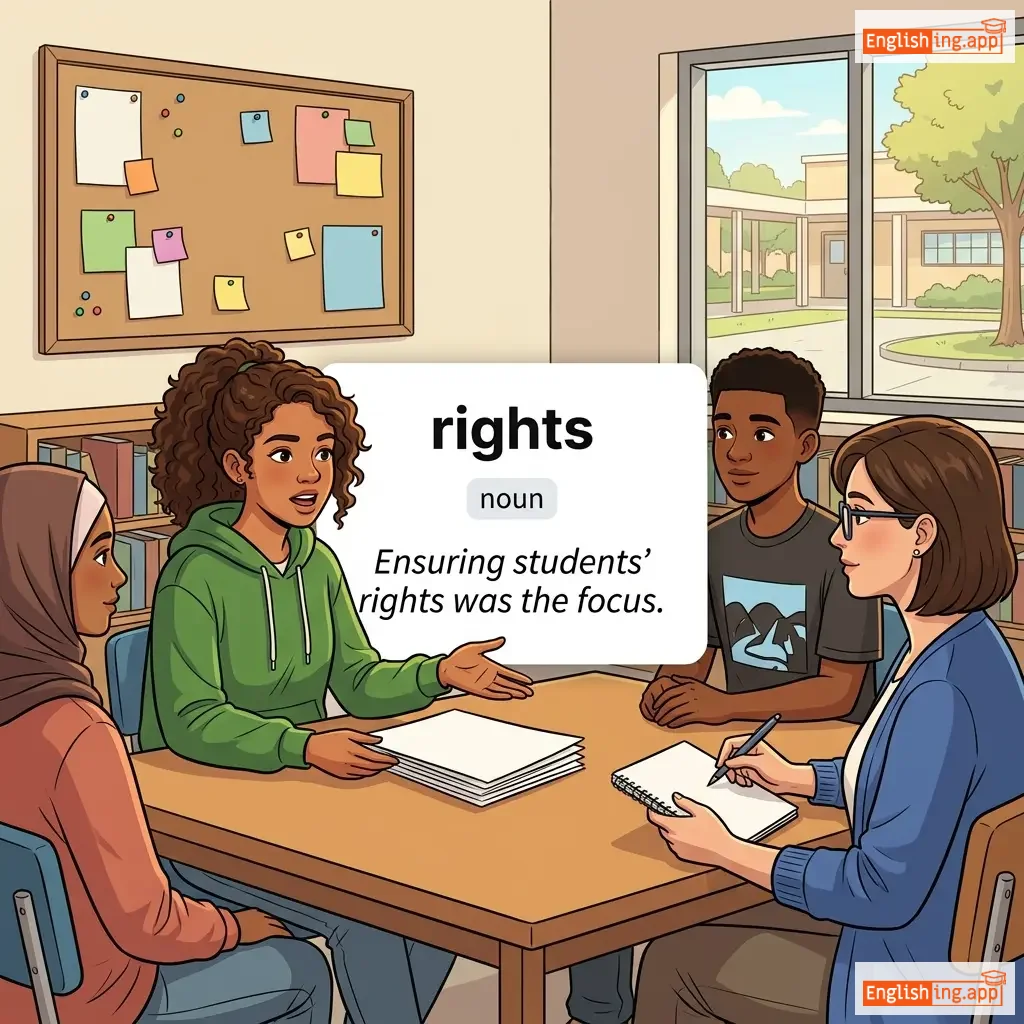
rights definition card — visual illustration of the meaning
noun
raɪts
権利 (kenri)

Things to which one has a just claim; the authority or power of having something.

"Ensuring students' rights was the focus."

"学生の権利を保障することが焦点でした。" (Gakusei no kenri o hoshou suru koto ga shōten deshita.)