
語彙集

英単語辞書 | 単語の意味、定義、例文

proposal definition card — visual illustration of the meaning
noun
/prəˈpəʊzəl/
提案 (teian)

a formal suggestion or plan put forward for consideration or discussion

"She submitted a proposal for the new project to the board."

"彼女は新しいプロジェクトの提案を委員会に提出しました。" (Kanojo wa atarashī purojekuto no teian o iinkai ni teishutsu shimashita.)
propose definition card — visual illustration of the meaning
verb
/prəˈpoʊz/
提案する (teian suru)

to suggest a plan or idea for consideration or discussion

"I propose that we meet tomorrow to discuss the project."

"私は明日プロジェクトを話し合うために会うことを提案します。" (Watashi wa ashita purojekuto o hanashiau tame ni au koto o teian shimasu.)
adjective
/prəˈpoʊzd/
提案された (teian sareta)

suggested or put forward for consideration or discussion

"The proposed changes will improve the system."

"提案された変更はシステムを改善します。" (Teian sareta henkō wa shisutemu o kaizen shimasu.)
noun
/ˌprɒpəˈzɪʃən/
提案, 計画 (teian, keikaku)

A statement, idea, or plan put forward for consideration or discussion.

"The company made a business proposition to the investors."

"会社は投資家にビジネスの提案をしました。" (Kaisha wa tōshika ni bijinesu no teian o shimashita.)
verb
/prəˈpaʊnd/
提案する (teian suru)

To put forward an idea, theory, or point for consideration.

"The professor propounded a new theory on climate change."
"教授は気候変動に関する新しい理論を提案しました。" (Kyouju wa kikou hendou ni kansuru atarashii riron wo teian shimashita.)
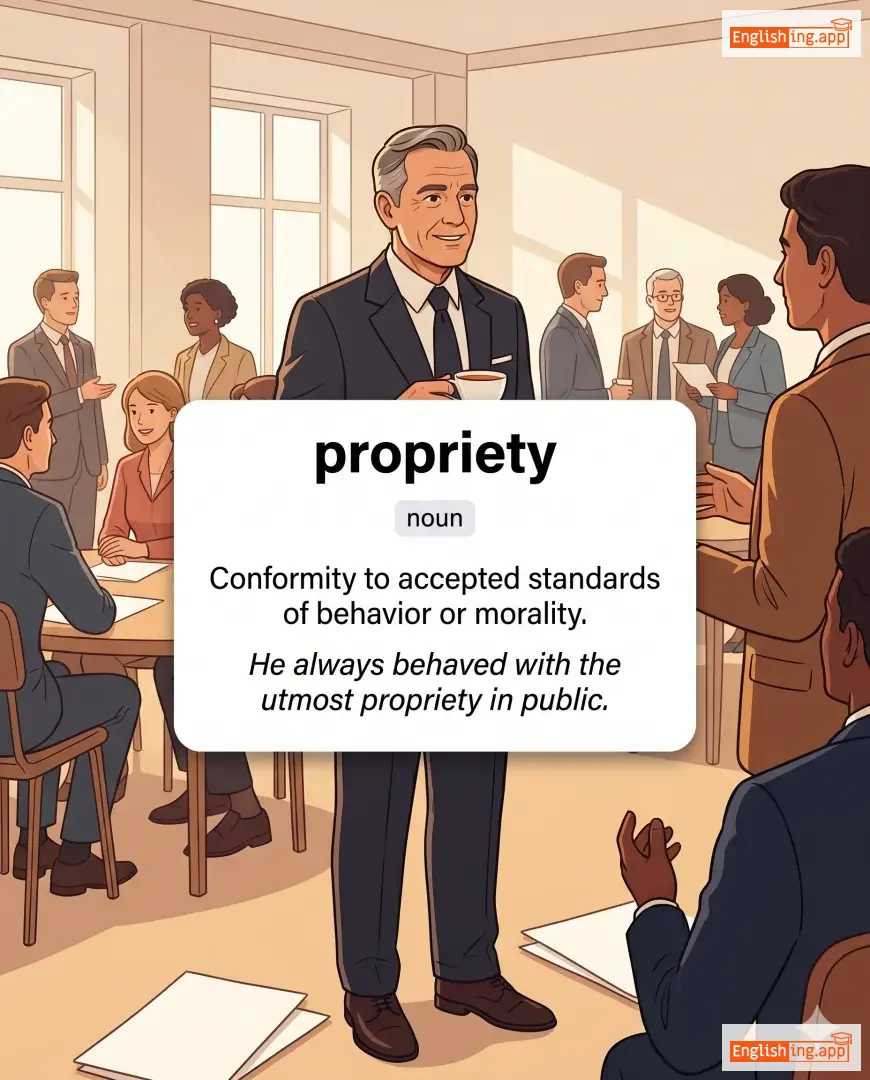
propriety definition card — visual illustration of the meaning
noun
/prəˈpraɪəti/
適切 (tekisetsu)

Conformity to accepted standards of behavior or morality.

"He always behaved with the utmost propriety in public."
"彼は公共の場で常に最大限の適切さを持って振る舞いました。" (Kare wa koukyou no ba de tsune ni saidaigen no tekisetsu-sa wo motte furumaimashita.)
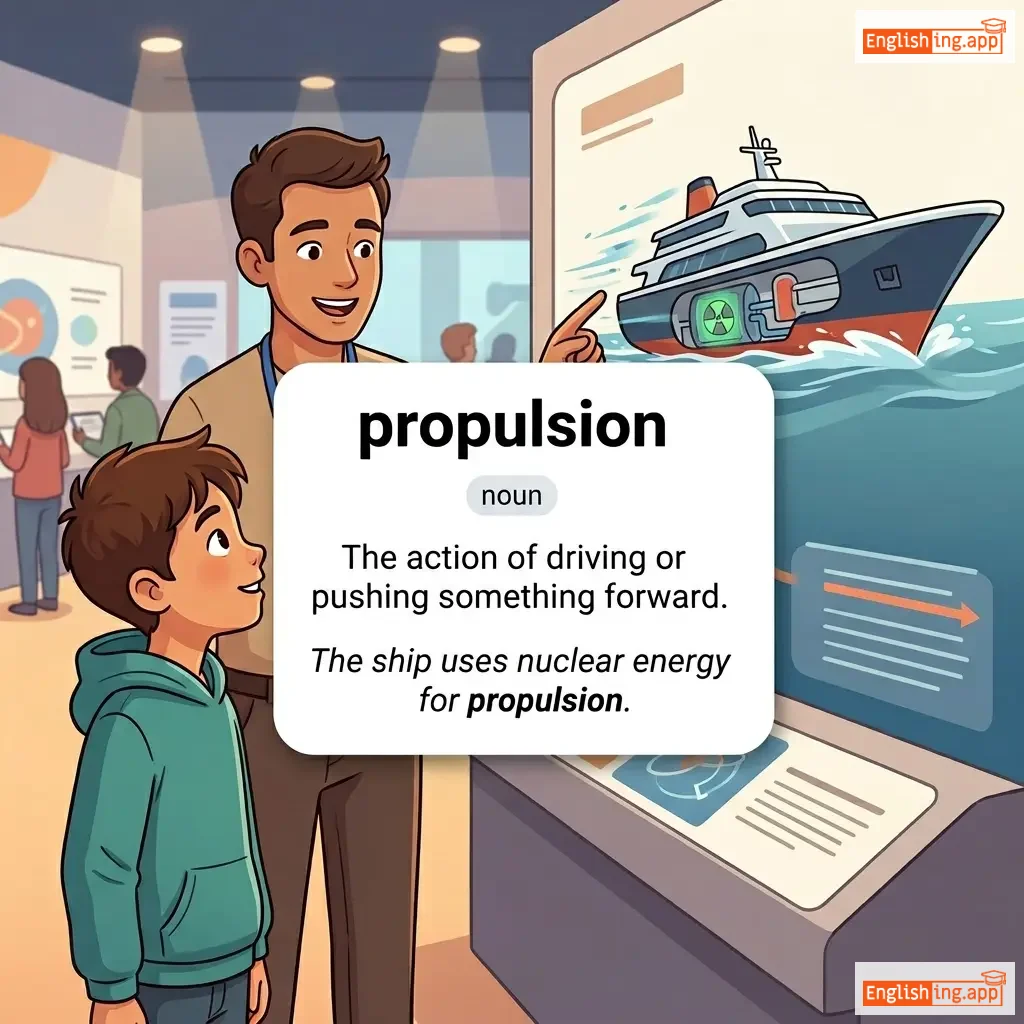
propulsion definition card — visual illustration of the meaning
noun
/prəˈpʌlʃən/
推進力 (suishinryoku)

The action of driving or pushing something forward.

"The ship uses nuclear energy for propulsion."

"その船は推進のために原子力を使用しています。" (Sono fune wa suishin no tame ni genshiryoku o shiyō shiteimasu.)
adjective
/prəˈpʌlsɪv/
推進的 (suishinteki)

Having the power to drive or push something forward.

"The propulsive force of the rocket lifted it off the ground."

"ロケットの推進力はそれを地面から持ち上げました。" (Roketto no suishinryoku wa sore o jimen kara mochiagemashita.)
verb
/prəˈroʊɡ/
議会を延期する (gikai wo enki suru)

to discontinue a session of a parliament or assembly without dissolving it

"The president decided to prorogue parliament until the crisis was resolved."

"大統領は、危機が解決するまで議会を延期することを決定しました。" (Daitouryou wa, kiki ga kaiketsu suru made gikai wo enki suru koto wo kettei shimashita.)
adjective
/proʊˈzeɪ.ɪk/
平凡な (heibon na)

ordinary, dull, or lacking imagination

"The teacher’s explanation was accurate but rather prosaic."

"先生の説明は正確でしたが、かなり平凡でした。" (Sensei no setsumei wa seikaku deshita ga, kanari heibon deshita.)
noun
/proʊˈsiː.ni.əm/
プロセニアム (puroseuniamu)

the part of a theater stage in front of the curtain; the arch framing the stage

"The actors bowed at the proscenium before leaving the stage."
"俳優たちは舞台を離れる前にプロセニアムでお辞儀をした。" (Haiyū-tachi wa butai o hanareru mae ni puroseuniamu de ojigi o shita.)
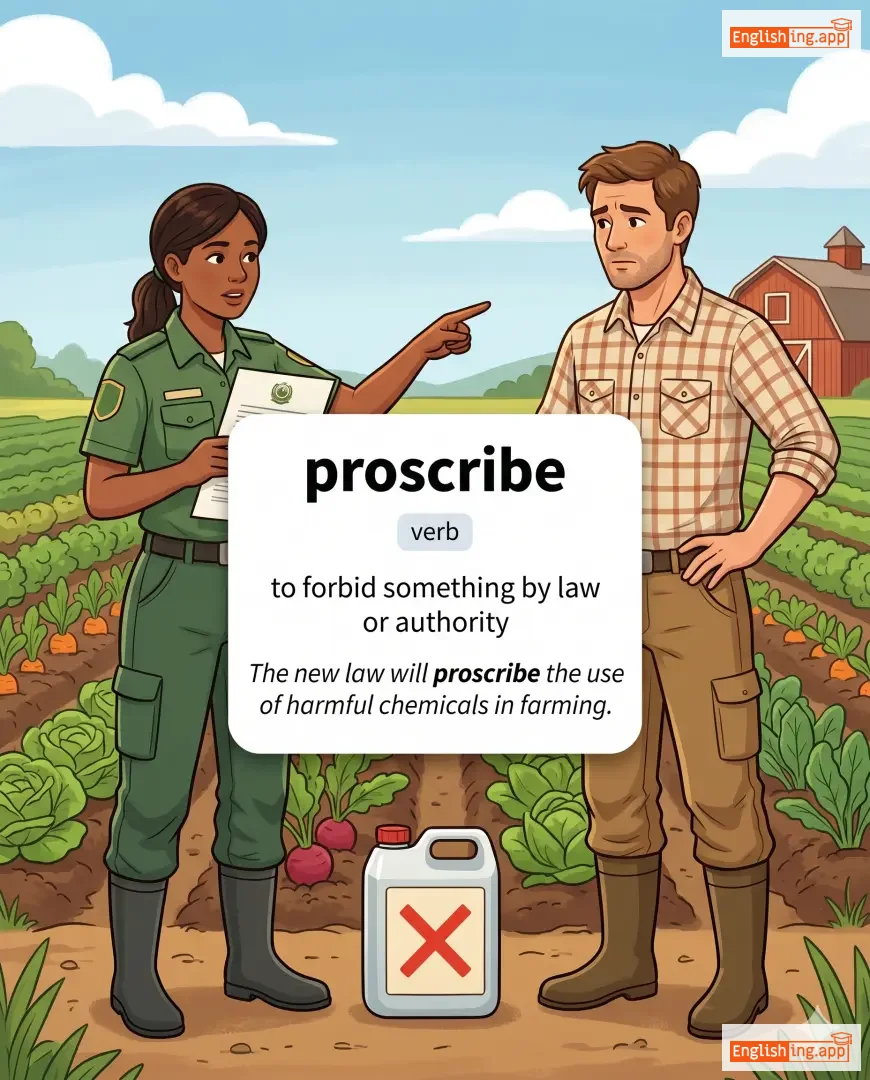
proscribe definition card — visual illustration of the meaning
verb
/proʊˈskraɪb/
禁止する (kinshi suru)

to forbid something by law or authority

"The new law will proscribe the use of harmful chemicals in farming."

"新しい法律は農業で有害な化学物質の使用を禁止します。" (Atarashī hōritsu wa nōgyō de yūgaina kagakubushitsu no shiyō o kinshi shimasu.)
noun
/proʊˈskrɪp.ʃən/
禁止 (kinshi)

the act of forbidding something, especially by law

"The proscription of child labor is an important human rights achievement."

"児童労働の禁止は人権の重要な成果です。" (Jidou roudou no kinshi wa jinken no juuyou na seika desu.)
verb
/ˈprɒsɪkjuːt/
起訴する (kiso suru)

to institute legal proceedings against someone

"The lawyer decided to prosecute the case after gathering sufficient evidence."

"弁護士は十分な証拠を集めた後、訴訟を起こすことを決めました。" (Bengoshi wa jyuubunna shouko wo atsumeta ato, sosou wo okosu koto wo kimemashita.)
noun
/ˌprɒsɪˈkjuːʃən/
起訴 (kiso)

The act of bringing a criminal charge against someone and pursuing legal action in court.

"The prosecution presented strong evidence against the defendant."

"起訴側は被告人に対して強力な証拠を提出しました。" (Kiso-gawa wa hikokunin ni taishite kyōryoku na shōko o teishutsu shimashita.)
noun
/ˈprɑsɪˌkjuːtər/
検察官 (kensatsukan)

a lawyer who represents the government in criminal cases

"The prosecutor argued that the defendant was guilty of the crime."

"検察官は被告が犯罪を犯したと主張した。" (Kensatsukan wa hikoku ga hanzai wo okashita to shuchou shita.)
noun
/ˈprɒsɪlaɪt/
改宗者 (kaizōsha)

A person who has converted from one belief, opinion, or religion to another.

"She became a proselyte after converting to a new faith."

"彼女は新しい信仰に改宗した後、改宗者になった。" (Kanojo wa atarashī shinkō ni kaishū shita ato, kaishūsha ni natta.)
verb
/ˈprɒsəˌlaɪtaɪz/
改宗させようとする (kaishuu saseyou to suru)

To try to persuade someone to convert to a different belief or religion.

"They tried to proselytize the villagers with their new ideas."

"彼らは新しいアイデアで村人たちを改宗させようとした。" (Karera wa atarashī aidea de murabito-tachi o kaishū saseyō to shita.)
noun
/ˈprɒsədi/
韻律学 (inrisshigaku)

The patterns of rhythm and sound used in poetry and speech.

"The professor explained how prosody affects the mood of a poem."

"教授は、韻律学が詩のムードにどのように影響するかを説明しました。" (Kyōju wa, inrisshigaku ga shi no mūdo ni dono yō ni eikyō suru ka o setsumei shimashita.)
prospect definition card — visual illustration of the meaning
noun
/ˈprɒspɛkt/
見込み (mikomi)

The possibility or likelihood of some future event occurring.

"The prospect of traveling abroad excited her."

"海外旅行の見込みが彼女を興奮させた。" (Kaigai ryokō no mikomi ga kanojo o kōfun saseta.)
adjective
/prəˈspɛktɪv/
将来性のある (shourai-sei no aru)

likely or expected to happen in the future; potential

"The company is meeting with prospective clients next week."

"その会社は来週、将来性のあるクライアントと会う予定です。" (Sono kaisha wa raishuu, shourai-sei no aru kuraianto to au yotei desu.)
noun
/ˈprɒspɛktər/
鉱物探鉱者 (kōbutsu tankō-sha)

a person who searches for mineral deposits, especially gold

"The prospector spent years in the mountains searching for gold."

"プロスペクターは金を探し続けるために山中で何年も過ごしました。" (Prospecter wa kin o sagashitsuzukeru tame ni sanchū de nannen mo sugoshimashita.)
prospects definition card — visual illustration of the meaning
noun
/ˈprɒs.pekts/
見通し (mitorishi)

The possibility or likelihood of some future event occurring.

"The prospects for growth look promising."

"成長の見通しは有望に見えます。" (Seichou no mitorishi wa yuubou ni miemasu.)
noun
/prəˈspɛktəs/
募集要項 (boshu yokou)

a printed document that advertises or describes a school, business, or investment offering

"The university sent out a prospectus to attract new students."

"大学は新しい学生を引き付けるために募集要項を送った。" (Daigaku wa atarashii gakusei wo hikitsukeru tame ni boshu yokou wo okutta.)
verb
/ˈprɒspər/
繁栄する (han'ei suru)

to succeed or flourish, especially in financial or business matters

"With hard work and determination, she managed to prosper in her career."

"一生懸命の努力と決意で、彼女はキャリアで成功しました。" (Isshōkenmei no doryoku to ketsui de, kanojo wa kyaria de seikou shimashita.)
prosperity definition card — visual illustration of the meaning
noun
/prɒˈspɛrɪti/
繁栄 (hanei)

the state of being successful, especially financially

"Education is often seen as the key to prosperity."

"教育はしばしば繁栄への鍵と見なされています。" (Kyouiku wa shibashiba hanei e no kagi to minasareteimasu.)
adjective
/ˈprɒspərəs/

successful in material terms; flourishing financially or in general well-being

"The town became prosperous after the new trade route opened."

adjective/verb
/ˈprɒstreɪt/
倒れる (taoreru)

lying stretched out on the ground with one's face downward, often as a sign of submission or exhaustion

"He lay prostrate on the ground after the long battle."

"長い戦いの後、彼は地面に倒れて横たわった。" (Nagai tatakai no ato, kare wa jimen ni taorete yokotawatta.)
protagonist definition card — visual illustration of the meaning
noun
/prəˈtæɡənɪst/
主人公 (shujinkou)

the main character or leading figure in a story, drama, or other work

"The protagonist of the novel struggles with her inner conflicts."

"その小説の主人公は彼女の内面的な葛藤と戦っています。" (sono shousetsu no shujinkou wa kanojo no naimen-tekina kattou to tatakatteimasu.)
adjective
/ˈproʊtiən/
多才多芸の (tasai tagu no)

tending or able to change frequently or easily; versatile

"She is a protean artist who experiments with many styles."

"彼女は多才多芸のアーティストで、さまざまなスタイルを試しています。" (Kanojo wa tasai tagu no atisuto de, samazama na sutairu o tameshiteimasu.)
protect definition card — visual illustration of the meaning
verb
/prəˈtɛkt/
保護する (hogo suru)

to keep safe from harm or danger

"It is important to protect your personal information online."
"個人情報をオンラインで保護することは重要です。" (Kojin jouhou o onrain de hogo suru koto wa juuyou desu.)
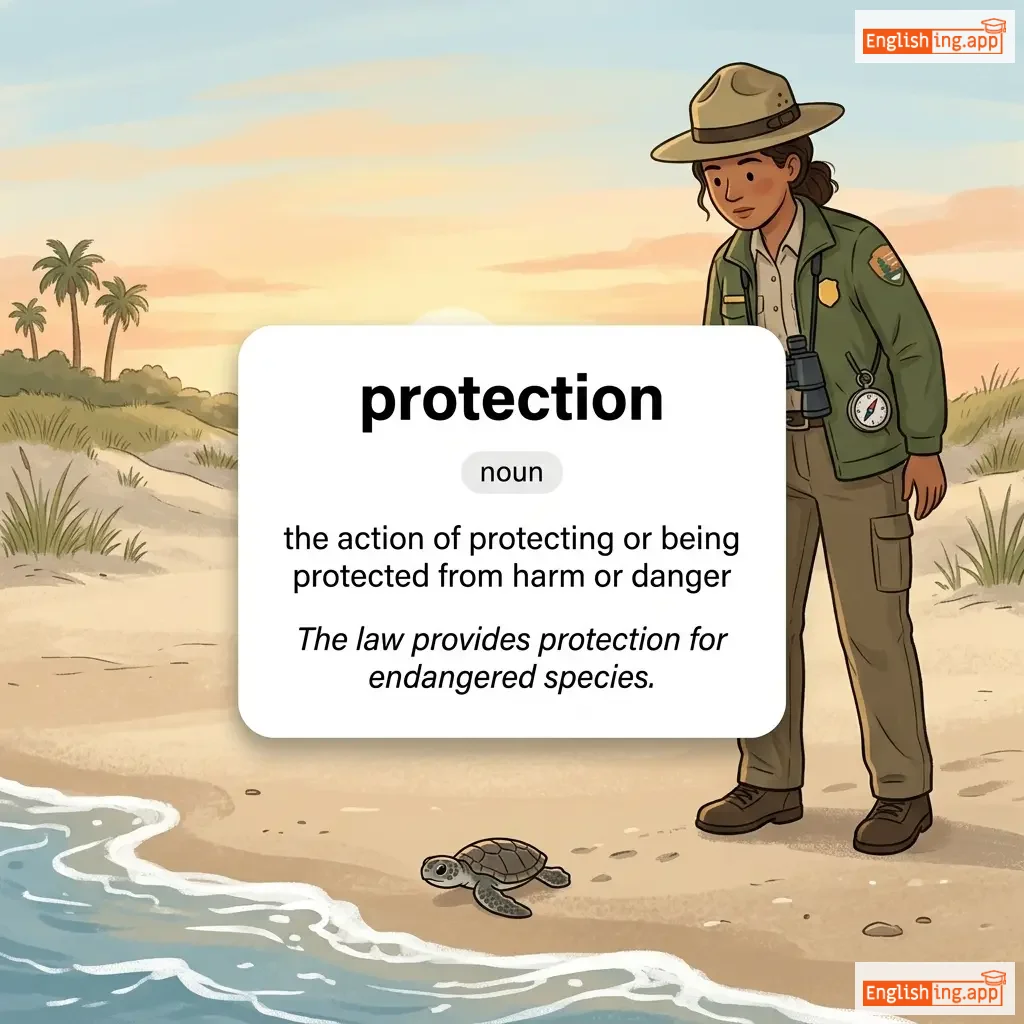
protection definition card — visual illustration of the meaning
noun
/prəˈtɛkʃən/
幸せ (shiawase)

the action of protecting or being protected from harm or danger

"The law provides protection for endangered species."
"賞を受け取ったとき、彼女は幸せを隠すことができませんでした。" (Shō o uketotta toki, kanojo wa shiawase o kakusu koto ga dekimasen deshita.)
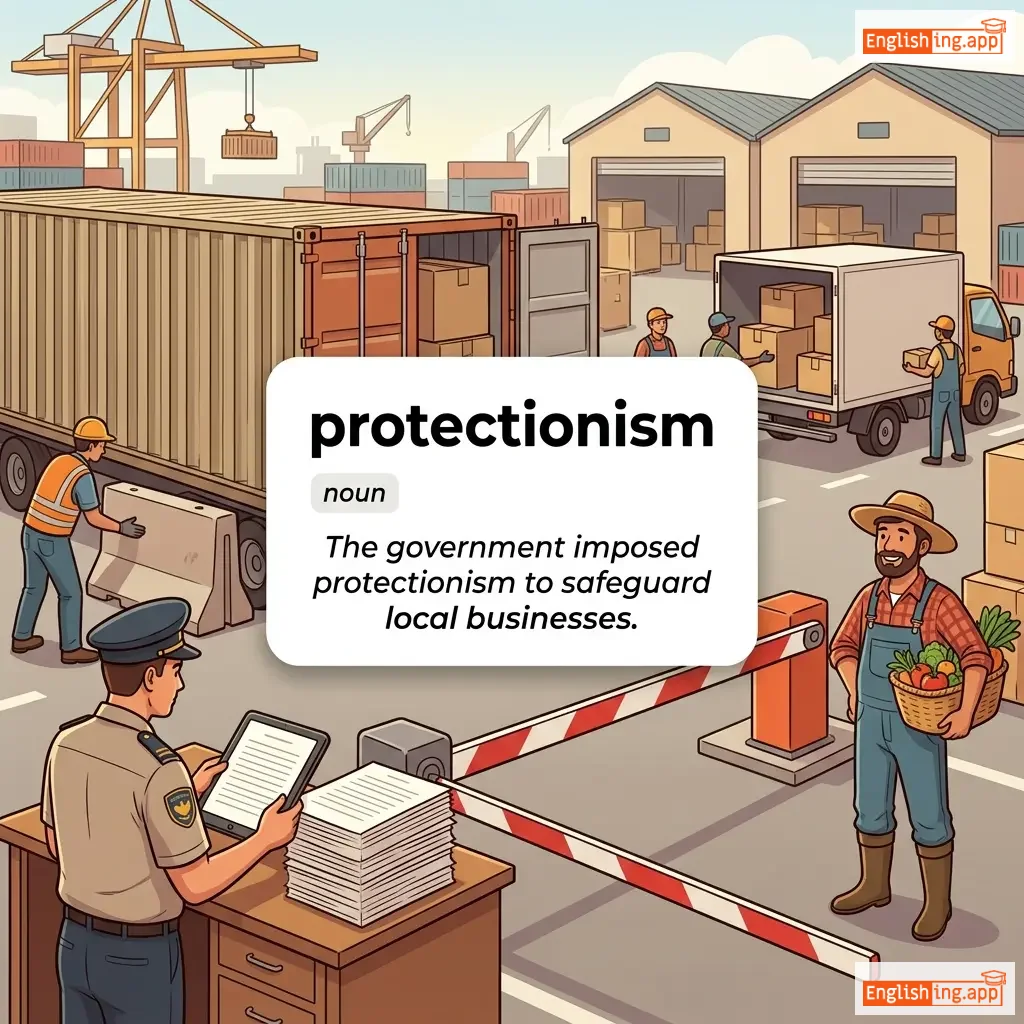
protectionism definition card — visual illustration of the meaning
noun
/prəˈtɛk.ʃəˌnɪz.əm/
保護主義 (hogoshugi)

A trade policy that restricts imports to safeguard domestic industries through trade restriction, economic nationalism, or isolationism.

"The government imposed protectionism to safeguard local businesses."

"政府は地元の企業を保護するために保護主義を導入した。" (Seifu wa jimoto no kigyou o hogo suru tame ni hogoshugi o dounyushita)
adjective
/prəˈtɛktɪv/
保護的な (hogo-teki na)

giving or capable of giving protection; shielding from harm or danger

"She wore a protective helmet while riding her bike."

"彼女は自転車に乗るときに保護的なヘルメットをかぶっていました。" (Kanojo wa jitensha ni noru toki ni hogo-teki na herumetto o kabutte imashita.)
noun
/prəˈtɛktər/
保護者 (hogo-sha)

a person or thing that protects someone or something

"The dog was seen as the family's protector."

"その犬は家族の保護者と見なされていました。" (Sono inu wa kazoku no hogo-sha to minasa rete imashita.)
noun
/prəˈtɛktərət/
保護国 (hogo koku)

A state that is controlled and protected by another.

"The small country became a protectorate of the empire."

"小さな国は帝国の保護国となった。" (Chīsana kuni wa teikoku no hogo koku to natta.)
noun
/ˈproʊtəˌʒeɪ/
弟子 (deshi)

a person who is guided and supported by an older and more experienced person

"The young artist was the protege of a famous painter."
"その若い芸術家は有名な画家の弟子でした。" (Sono wakai geijutsuka wa yūmei na gaka no deshi deshita.)
noun
/ˈproʊtiːn/

a molecule composed of amino acids essential for bodily functions

"Proteins are essential for building and repairing tissues in the body."

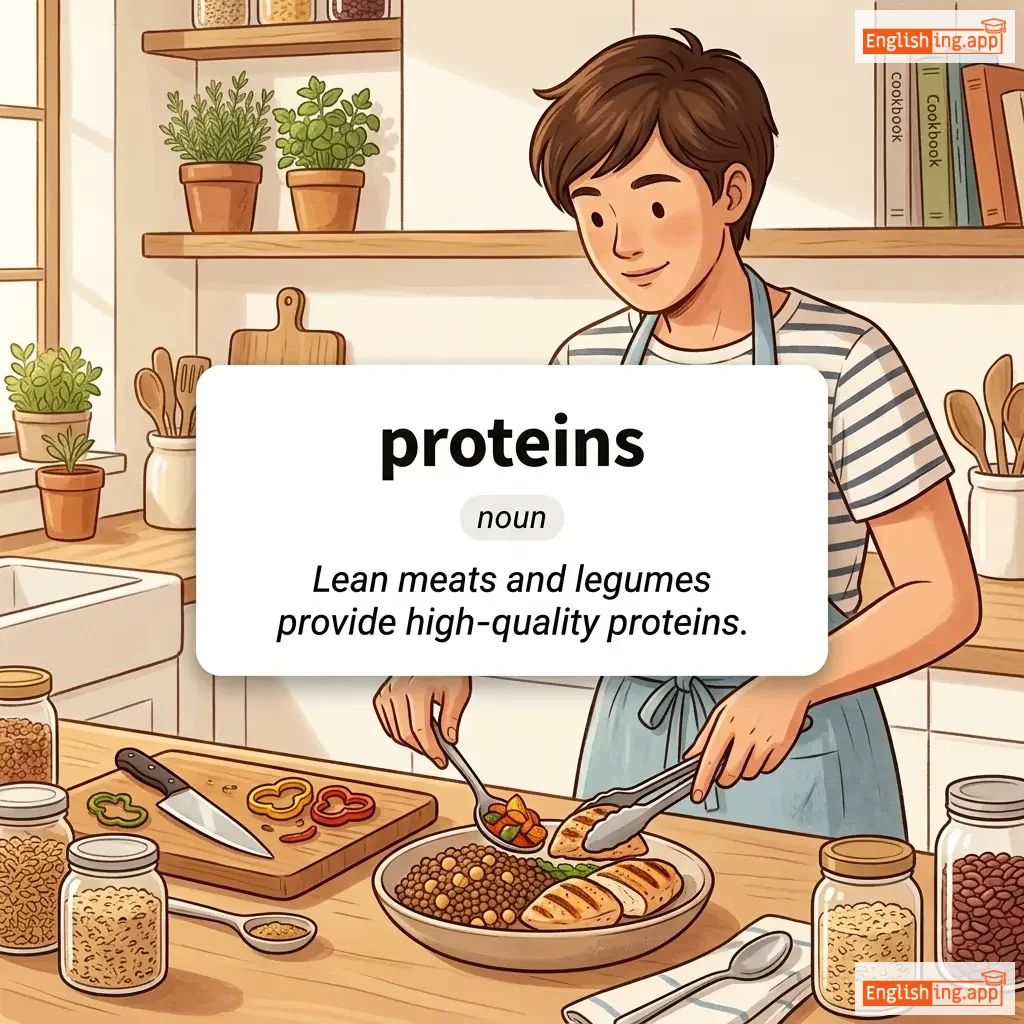
proteins definition card — visual illustration of the meaning
noun
/ˈprəʊ.tiːnz/
たんぱく質 (tanpakushitsu)

Large biomolecules consisting of amino acids that perform essential functions in living organisms, including building and repairing tissues.

"Lean meats and legumes provide high-quality proteins."
"Lean meats and legumes provide high-quality proteins." (Lean meats and legumes provide high-quality proteins.)
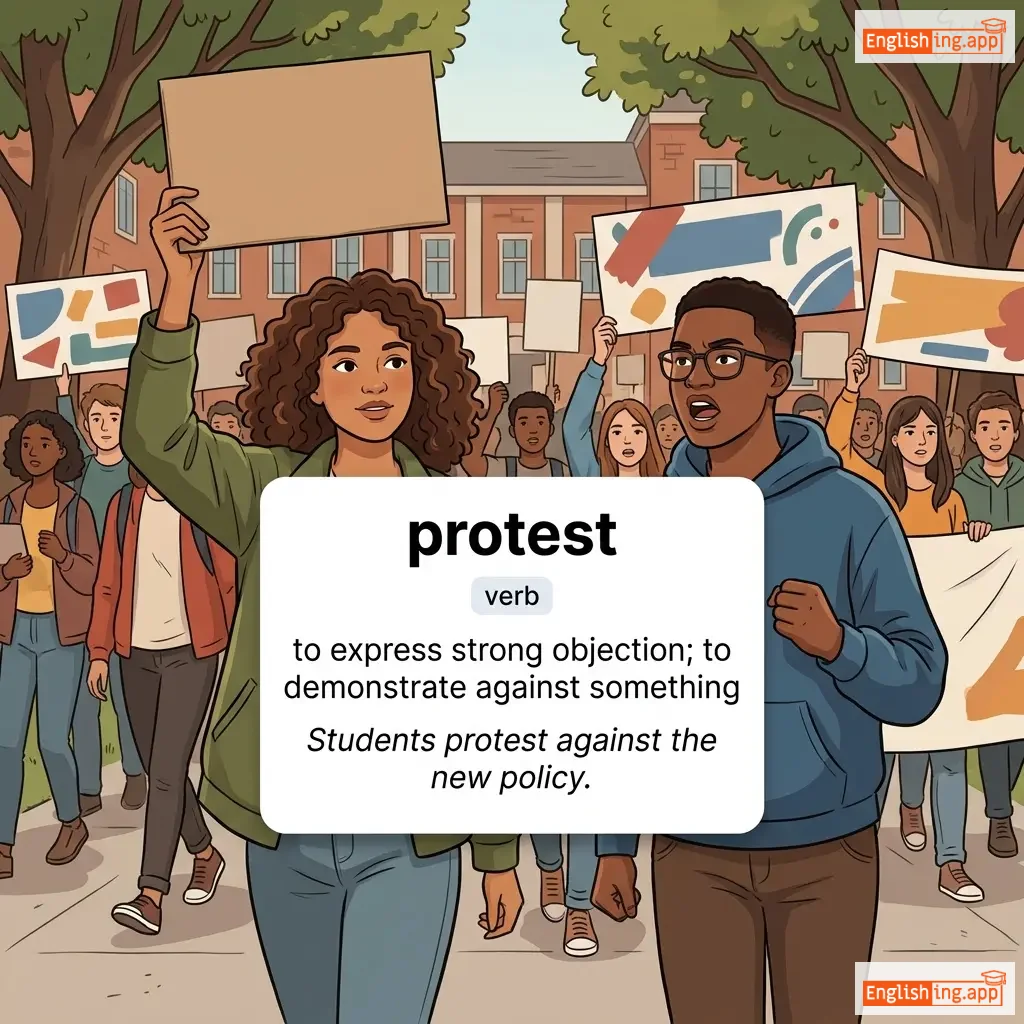
protest definition card — visual illustration of the meaning
noun
/ˈproʊtɛst/
抗議 (kougi)

a statement or action expressing disapproval of or objection to something.

"Thousands gathered in the square to protest the new law."

"何千人もの人々が新しい法律に反対して広場に集まった。" (Nan sen nin mono hitobito ga atarashii houritsu ni hantai shite hiroba ni atsumatta.)
noun
/ˈprɑːtɪstənt/
プロテスタント (purotesutanto)

a member of the Christian church that separated from the Roman Catholic Church during the Reformation

"Martin Luther was a key figure in the Protestant Reformation."

"マルティン・ルターはプロテスタント改革の鍵となる人物でした。" (Marutin Rūtā wa purotesutanto kaikaku no kagi to naru jinbutsu deshita.)
noun
/prəˈtɛstər/
抗議者 (kōgisha)

a person who takes part in a protest or demonstration

"The protester spoke passionately about the cause."

"抗議者はその原因について情熱的に話しました。" (Kōgisha wa sono gen'in ni tsuite jōnetsuteki ni hanashimashita.)
noun
/ˈproʊtəkɔːl/
プロトコル (purotokoru)

an official procedure or system of rules

"The security team followed strict protocol during the event."

"セキュリティチームはイベント中に厳格なプロトコルに従いました。" (Sekyuriti chiimu wa ibento-chuu ni genkaku na purotokoru ni shitagaimashita.)
noun
/ˈproʊtoʊˌmɑːrtɚ/
最初の殉教者 (saisho no junkyousha)

The first martyr in a cause or religion, often referring to the first Christian martyr.

"St. Stephen is known as the protomartyr of Christianity."

"聖ステファノはキリスト教のプロトマーティアとして知られています。" (Sei Sutefano wa Kirisutokyō no purotomātia toshite shirareteimasu.)
noun
/ˈproʊtoʊˌplæzəm/
プロトプラズム (purotopurazumu)

The living substance inside a cell, including the cytoplasm and nucleus.

"Scientists observed the movement of protoplasm under the microscope."

"科学者たちは顕微鏡でプロトプラズムの動きを観察しました。" (Kagakusha-tachi wa kenbikyō de purotopurazumu no ugoki o kansatsu shimashita.)
noun
/ˈproʊtəˌtaɪp/
プロトタイプ (purototaipu)

The first model or version of something, used as a sample for testing or improvement.

"The company built a prototype of the new smartphone before mass production."

"会社は大量生産の前に新しいスマートフォンのプロトタイプを作成しました。" (Kaisha wa tairyou seisan no mae ni atarashī sumātōfon no purototaipu o sakusei shimashita.)
verb
/proʊˈtrækt/
延長する (enchou suru)

To prolong or extend in time or duration.

"Negotiations were protracted for several months."

"交渉は数ヶ月間延長されました。" (Koushou wa suukagetsu kan enchou saremashita.)
protracted definition card — visual illustration of the meaning
adjective
/prəˈtræktɪd/
長引いた (nagabiita)

Lasting for a long time or longer than expected.

"The negotiation turned into a protracted process."

"交渉は長引いたプロセスに変わった。" (Kōshō wa nagabiita purosesu ni kawatta.)
verb
/proʊˈtruːd/
突き出る (tsukideru)

To stick out or extend beyond a surface.

"A nail was protruding from the wooden board."

"釘が木の板から突き出していた。" (Kugi ga ki no ita kara tsukidashiteita.)
noun
/prəˈtruːʒən/
突起 (tokki)

Something that sticks out or projects from a surface.

"The protrusion on the wall made it difficult to move the furniture."

"壁の突起により、家具を動かすのが難しくなった。" (Kabe no tokki ni yori, kagu o ugokasu no ga muzukashiku natta.)