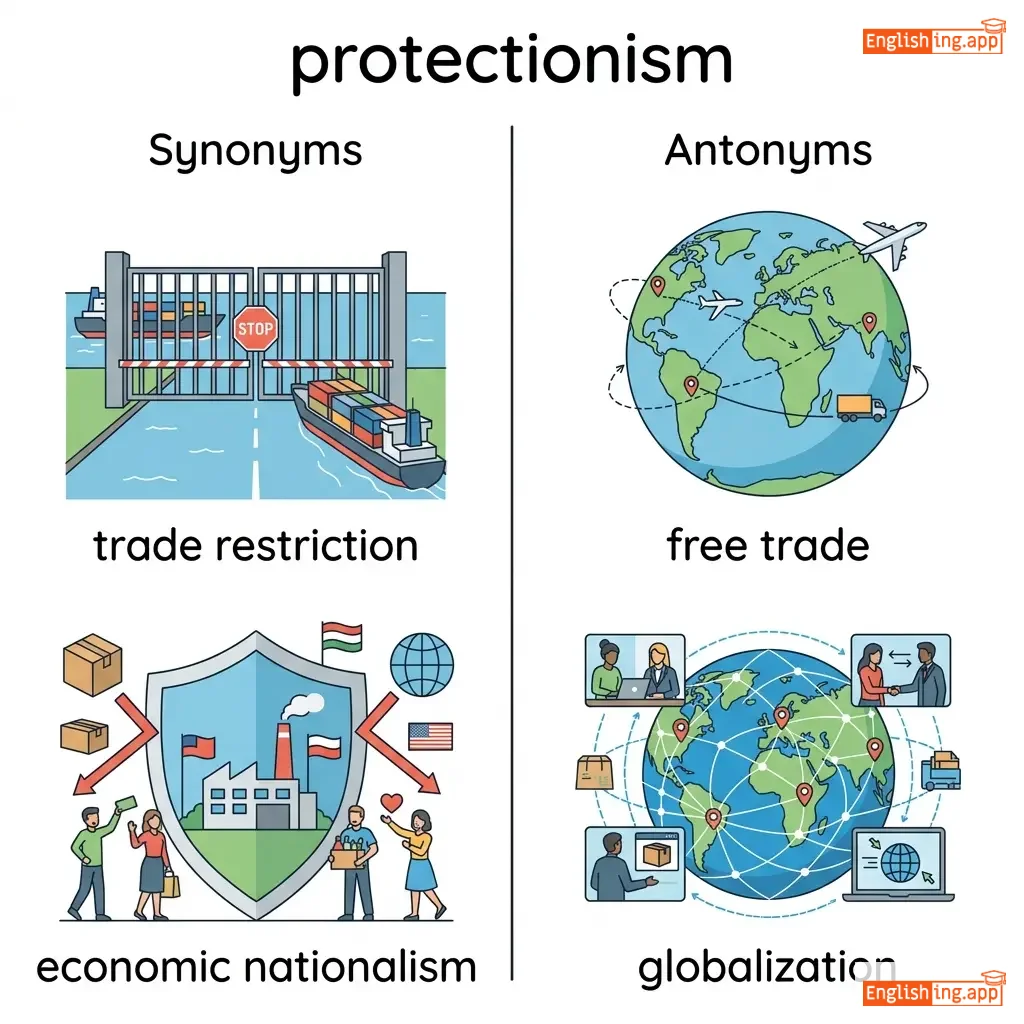
🛡️protectionism (プロテクショニズム)

noun
prəˈtɛk.ʃə.nɪ.zəm
保護主義 (hogoshugi)

意味

The theory or practice of shielding a country's domestic industries from foreign competition by taxing imports.
A trade policy that restricts imports to safeguard domestic industries through trade restriction, economic nationalism, or isolationism.
意味の翻訳
輸入品に税金を課すことによって、国内の産業を外国の競争から守る理論または実践。
Yunyuhin ni zeikin o kaku koto ni yotte, kokunai no sangyo o gaikoku no kyoso kara mamoru riron mata wa jissen.

例文

The government's protectionism helped local businesses grow.

政府のプロテクショニズムは、地元企業の成長を助けました。
Seifu no purotekushonizumu wa, jimoto kigyo no seicho o tasukemashita.

The government imposed protectionism to safeguard local businesses.
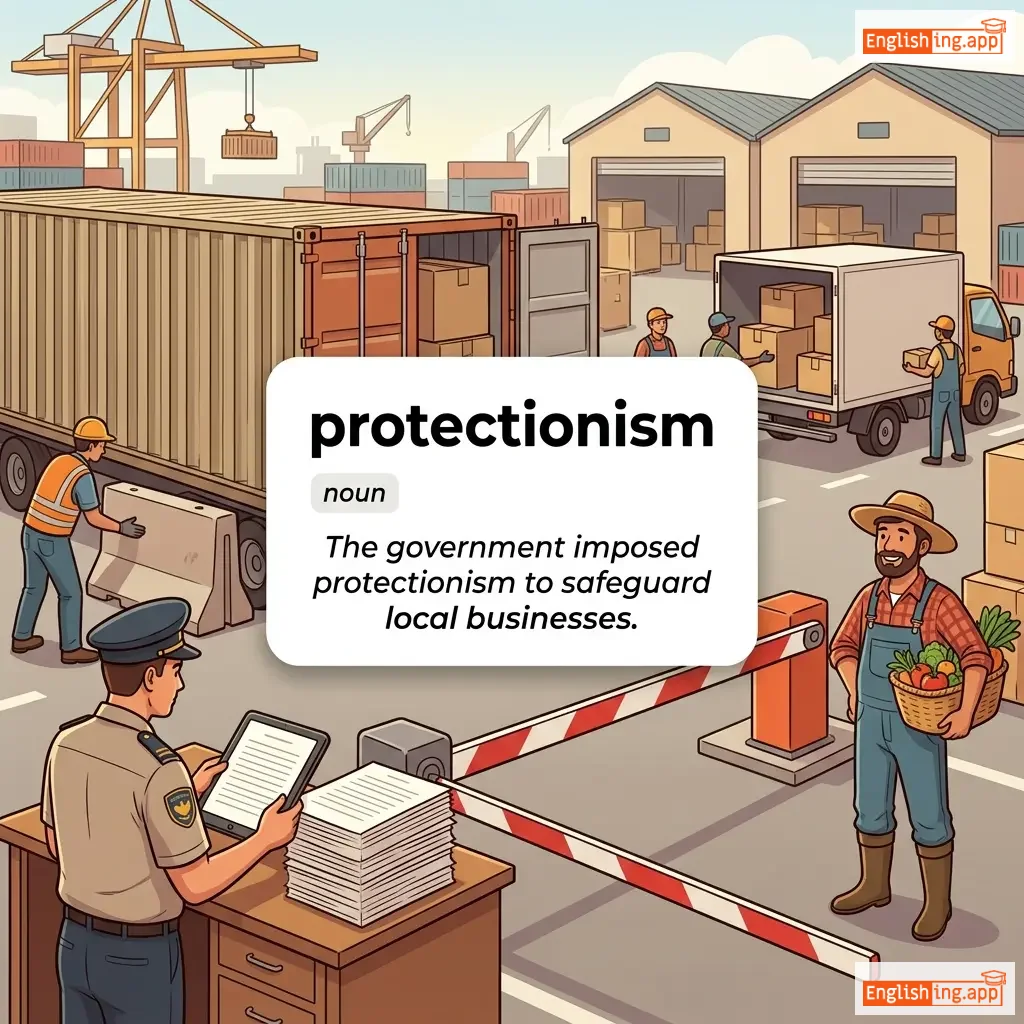
政府は地元の企業を保護するために保護主義を導入した。
Seifu wa jimoto no kigyou o hogo suru tame ni hogoshugi o dounyushita

同義語

trade restriction, tariff policy, economic isolation, economic nationalism, isolationism
エントリー 1
trade restriction, tariff policy, economic isolation
エントリー 2
trade restriction, economic nationalism, isolationism

対義語

free trade, liberalization, globalization, open markets
エントリー 1
free trade, liberalization, globalization
エントリー 2
free trade, globalization, open markets

関連語彙

a machine that carries people or goods up and down between floors in a building
A state in which opposing forces or influences are balanced.
the beginning or initial stage of something
a natural talent or ability; distinctive elegance or style
an outer garment worn over other clothes for warmth or protection
sweet crystalline substance used as a sweetener

さらに探索