語彙集

英単語辞書 | 単語の意味、定義、例文

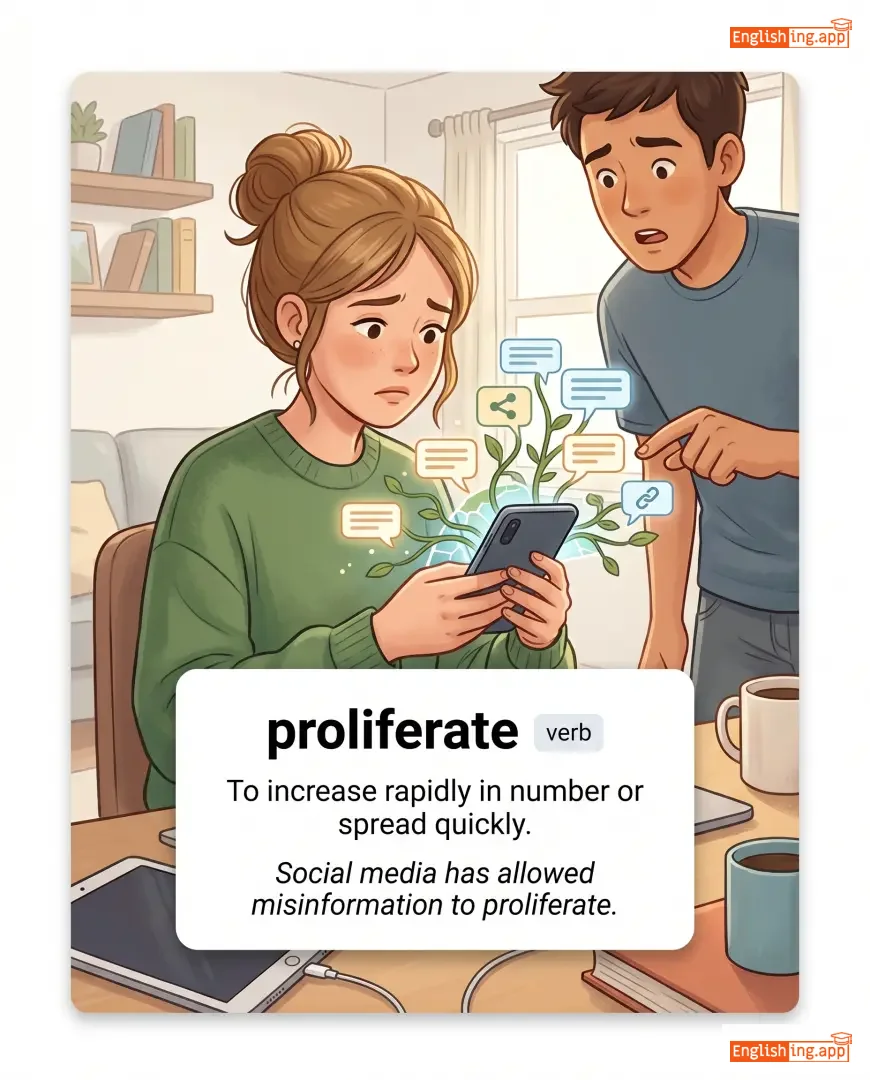
proliferate definition card — visual illustration of the meaning
verb
/prəˈlɪfəreɪt/
拡大する (kakudai suru)

To increase rapidly in number or spread quickly.

"Social media has allowed misinformation to proliferate."
"ソーシャルメディアは、誤った情報を急速に広めることを可能にしました。" (Sōsharu media wa, ayamatta jōhō o kyūsoku ni hiromeru koto o kanō ni shimashita.)
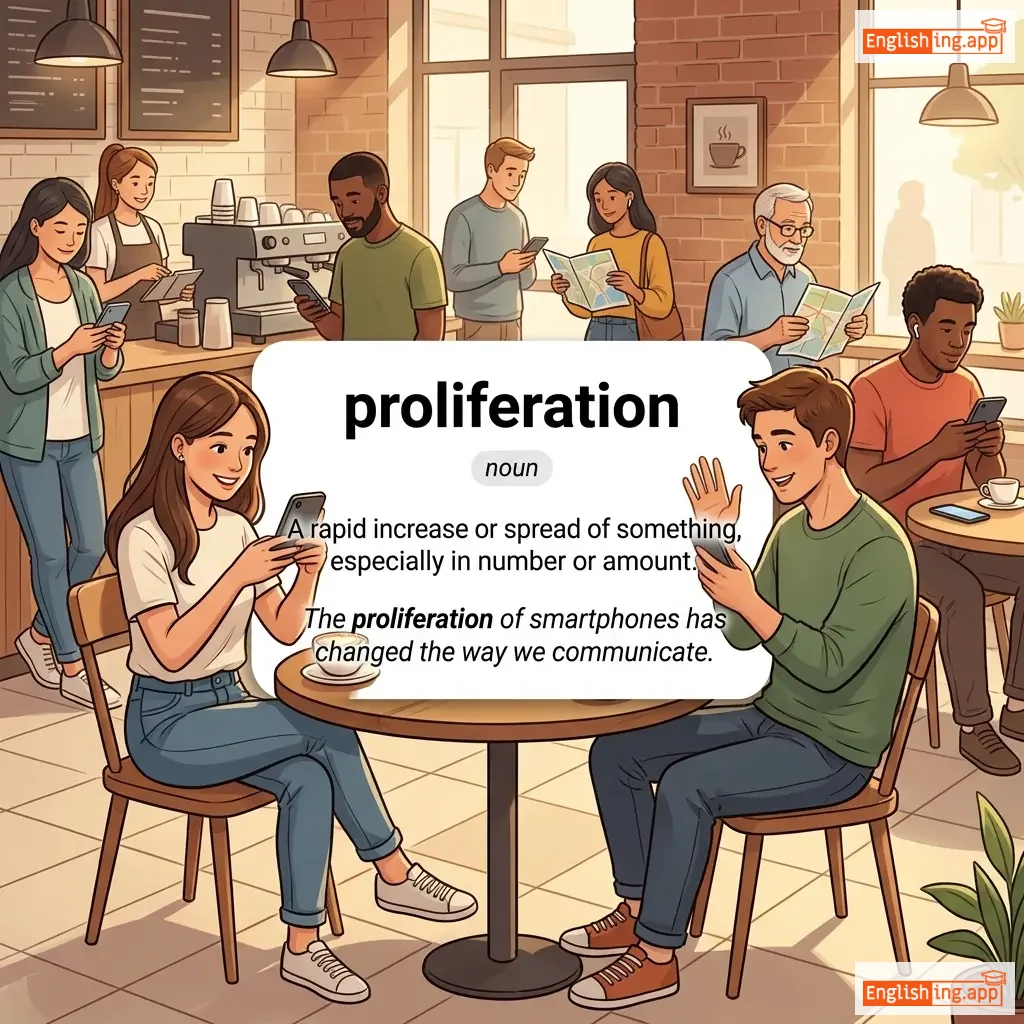
proliferation definition card — visual illustration of the meaning
noun
/prəˌlɪfəˈreɪʃən/
急増、拡大 (kyuuzou, kakudai)

A rapid increase or spread of something, especially in number or amount.

"The proliferation of smartphones has changed the way we communicate."

"スマートフォンの急増が私たちのコミュニケーション方法を変えました。" (Sumātōfon no kyūzō ga watashitachi no komyunikeeshon hōhō o kaemashita.)
prolific definition card — visual illustration of the meaning
adjective
/prəˈlɪfɪk/
多産の (tasan no)

producing many works, results, or offspring; highly productive

"She is a prolific writer who publishes several books a year."

"彼女は毎年数冊の本を出版する多産な作家です。" (Kanojo wa mainen sū-satsu no hon o shuppan suru tasan na sakka desu.)
adjective
/ˈprəʊ.lɪks/
長すぎる (nagasugiru)

using too many words; tediously lengthy

"The professor’s prolix lecture put many students to sleep."

"教授の冗長な講義は多くの学生を眠らせた。" (Kyōju no jōchō na kōgi wa ōku no gakusei o nemuraseta.)
noun
/prəˈlɪksɪti/
冗長 (jouchou)

the quality of being tediously wordy and long

"The book’s prolixity made it difficult to read in one sitting."

"本のプロリクシティは一度に読むのを難しくしました。" (Hon no purokishiti wa ichido ni yomu no wo muzukashiku shimashita.)
noun
/ˈprəʊ.lɒɡ/
序章 (shoshou)

an introduction to a book, play, or event

"The novel begins with a short prologue set in the past."

"その小説は、過去に設定された短いプロローグで始まります。" (Sono shousetsu wa, kako ni settei sareta mijikai puroorogu de hajimarimasu.)
prolong definition card — visual illustration of the meaning
verb
/prəˈlɒŋ/
延長する (enchou suru)

to make something last longer; to extend in time

"The treatment helped to prolong the patient’s life."
"治療は患者の命を延ばすのに役立ちました。" (Chiryō wa kanja no inochi o nobasu no ni yakudachimashita.)
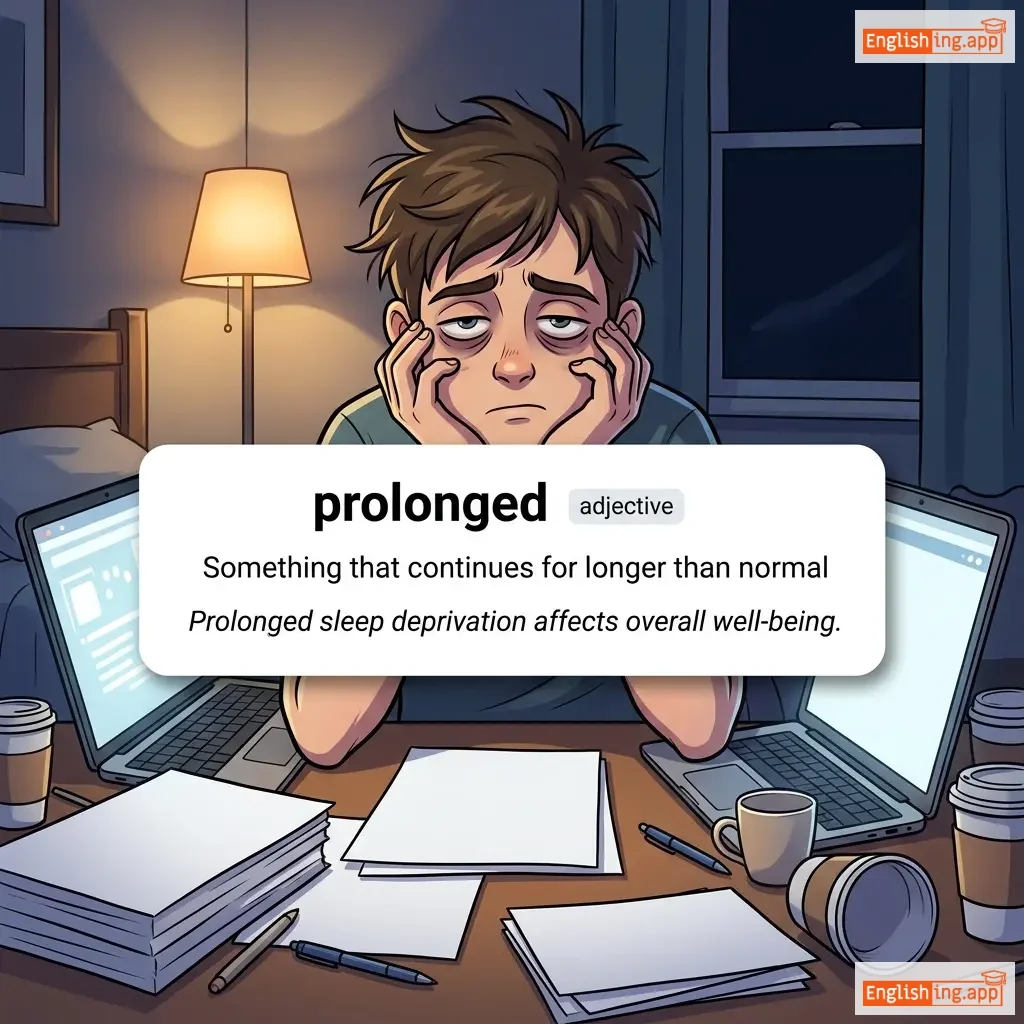
prolonged definition card — visual illustration of the meaning
adjective
prəˈlɒŋd
長引いた (nagaita)

Something that continues for longer than normal

"Prolonged sleep deprivation affects overall well-being."

"長引いた睡眠不足は全体的な健康に影響を与えます。" (Nagaita suimin busoku wa zentaiteki na kenkō ni eikyō o ataemasu.)
noun, verb
/ˌprɒməˈneɪd/
散歩 (sanpo)

A leisurely walk or stroll, especially in a public place for pleasure or display.

"They went for a promenade along the seaside."

"彼らは海辺をプロムナードしていました。" (Karera wa umibe o promenade shite imashita.)
noun
/ˈprɒmɪnəns/
名声 (meisei)

The state of being important, famous, or easily noticed.

"Her work gained prominence after the award."

"彼女の仕事は賞を受けた後、名声を得ました。" (Kanojo no shigoto wa shō o uketa ato, meisei o emashita.)
adjective
/ˈprɒmɪnənt/
顕著な (kenchona)

Important, famous, or easily noticeable.

"He is a prominent leader in the community."

"彼はコミュニティの中で著名なリーダーです。" (Kare wa komyuniti no naka de chomei na rīdā desu.)
adjective
/prəˈmɪskjuəs/
放蕩 (houtou)

Having or showing a casual and unselective approach, often used to describe indiscriminate sexual relationships.

"The novel depicts a character with a promiscuous lifestyle."

"その小説は、放蕩的なライフスタイルを持つキャラクターを描いています。" (Sono shōsetsu wa, hōtō-teki na raifusutairu o motsu kyarakutā o egaitemasu.)
noun
/ˈprɒmɪs/
約束 (yakusoku)

a statement that one will definitely do something or that something will happen

"I made a promise to help her with the project."

"私は彼女にプロジェクトを手伝うという約束をしました。" (Watashi wa kanojo ni purojekuto o tetsudau to iu yakusoku o shimashita.)
adjective
/ˈprɒmɪsɪŋ/
有望な (yūbō na)

showing signs of future success or potential

"She is a promising young scientist with great ideas."

"彼女は素晴らしいアイデアを持つ、有望な若い科学者です。" (Kanojo wa subarashī aidea o motsu, yūbō na wakai kagakusha desu.)
adjective
/ˈprɒmɪsəri/
約束的 (yakusoku no)

Containing or conveying a promise, especially in writing.

"He signed a promissory note to repay the loan."

"彼はローンを返済するために約束手形にサインしました。" (Kare wa rōn o hensai suru tame ni yakusoku tegata ni sain shimashita.)
noun
/ˈprɒm.ən.tɔːr.i/
(misaki)

A high point of land or rock projecting into a body of water.

"The lighthouse stood on a promontory overlooking the sea."

"灯台は海を見渡す岬の上に立っていた。" (Tōdai wa umi o miwatasu misaki no ue ni tatte ita.)
promote definition card — visual illustration of the meaning
verb
/prəˈmoʊt/
促進する / 宣伝する (sokushin suru / senden suru)

To support or encourage the growth, sale, or acceptance of something.

"The company worked hard to promote its new product."

"その会社は新しい製品を宣伝するために一生懸命働いた。" (Sono kaisha wa atarashī seihin wo senden suru tame ni isshoukenmei hataraita.)
noun
/prəˈmoʊ.tər/
プロモーター (puromōtā)

A person or organization that helps to organize or finance an event, business, or product launch.

"The promoter organized a concert for the new band."

"プロモーターは新しいバンドのためにコンサートを組織しました。" (Puromōtā wa atarashī bando no tame ni konsāto o sōshiki shimashita.)
promoting definition card — visual illustration of the meaning
verb
prəˈmoʊtɪŋ
促進 (sokushin)

To support or actively encourage a cause, venture, or aim; to help or encourage the progress or development of something.

"Promoting education can significantly improve children's lives."

"教育の推進は子どもたちの生活を大きく改善することができます。" (Kyoiku no suishin wa kodomotachi no seikatsu o ookiku kaizen suru koto ga dekimasu.)
noun
/prəˈmoʊʃən/
昇進, 宣伝 (shōshin, senden)

the act of raising someone to a higher position or of marketing something to increase sales or awareness

"The company announced a big promotion campaign for their new product."

"その会社は新しい製品のための大規模な宣伝キャンペーンを発表しました。" (Sono kaisha wa atarashī seihin no tame no daikibo na senden kyampēn o happyō shimashita.)
verb, noun, adjective
/prɑːmpt/
促す / 迅速 (unagasu / jinsoku)

To cause someone to take action; done without delay.

"His speech prompted the audience to ask questions."

"彼のスピーチは聴衆に質問を促しました。" (Kare no supīchi wa chōshū ni shitsumon wo unagashimashita.)
verb
/ˈprɑː.məl.ɡeɪt/
公布する (kōfusu suru)

To announce or make a law, decree, or idea officially known.

"The government promulgated new regulations on data privacy."

"政府はデータプライバシーに関する新しい規則を公布しました。" (Seifu wa dēta puraibashī ni kansuru atarashī kisoku o kōfu shimashita.)
adjective
/proʊn/
傾向 (keikou)

likely to suffer from or experience something, especially something unfortunate

"He is prone to headaches when he works too long."

"彼は長時間働くと頭痛にかかりやすい。" (Kare wa choujikan hataraku to zutsuu ni kakari yasui.)
noun
/prɔːŋ/
フォークの先端 (fōku no sentan)

a projecting pointed part, such as one of the pointed ends of a fork

"The fork has four prongs."

"フォークには4つの先端があります。" (Fōku ni wa yottsu no sentan ga arimasu.)
pronounce definition card — visual illustration of the meaning
verb
/prəˈnaʊns/
発音する (hatsuon suru)

to say words correctly; to declare officially

"She can pronounce French words perfectly."

"彼女はフランス語の単語を完璧に発音できます。" (Kanojo wa furansugo no tango o kanpeki ni hatsuon dekimasu.)
adjective
/prəˈnaʊnst/
顕著な (kenchona)

very noticeable or strongly marked

"There is a pronounced difference between the two styles."

"二つのスタイルの間には顕著な違いがあります。" (Futatsu no sutairu no aida ni wa kenchona chigai ga arimasu.)
noun
/prəˌnʌnsiˈeɪʃən/
発音 (hatsuon)

the way a word or language is spoken; the act or result of pronouncing words

"Her pronunciation of French words has improved significantly."

"彼女のフランス語の単語の発音は大きく向上した。" (kanojo no furansugo no tango no hatsuon wa ookiku koujou shita)
noun
/pruːf/
証拠 (shōko)

evidence or argument establishing a fact or the truth of a statement

"The detective presented proof of the suspect's guilt."

"探偵は容疑者の有罪の証拠を提示しました。" (Tantei wa yōgisha no yūzai no shōko o teiji shimashita.)
verb
/ˈpruːfˌriːd/
校正する (kousei suru)

to read written material and mark any errors

"She proofread the report before submission."

"彼女は提出前にレポートを校正した。" (Kanojo wa teishutsu mae ni repōto o kousei shita.)
noun
/prɒp/
小道具 (kōdōgu)

an object used on stage by actors during a performance; something that supports or holds up

"The actor forgot his prop on stage."

"俳優はステージで小道具を忘れた。" (Haiyū wa sutēji de kōdōgu o wasureta.)
noun
/ˌprɒpəˈɡændə/
プロパガンダ (puropaganda)

Information, especially biased or misleading, used to promote a political cause or point of view.

"The regime spread propaganda to control public opinion."
"政権は世論をコントロールするためにプロパガンダを広めた。" (seiken wa seiron o kontorōru suru tame ni puropaganda o hirometa.)
verb
/ˈprɒpəɡeɪt/

To spread or transmit an idea, belief, or information widely; also to reproduce in plants or animals.

"Scientists work to propagate the species in captivity."

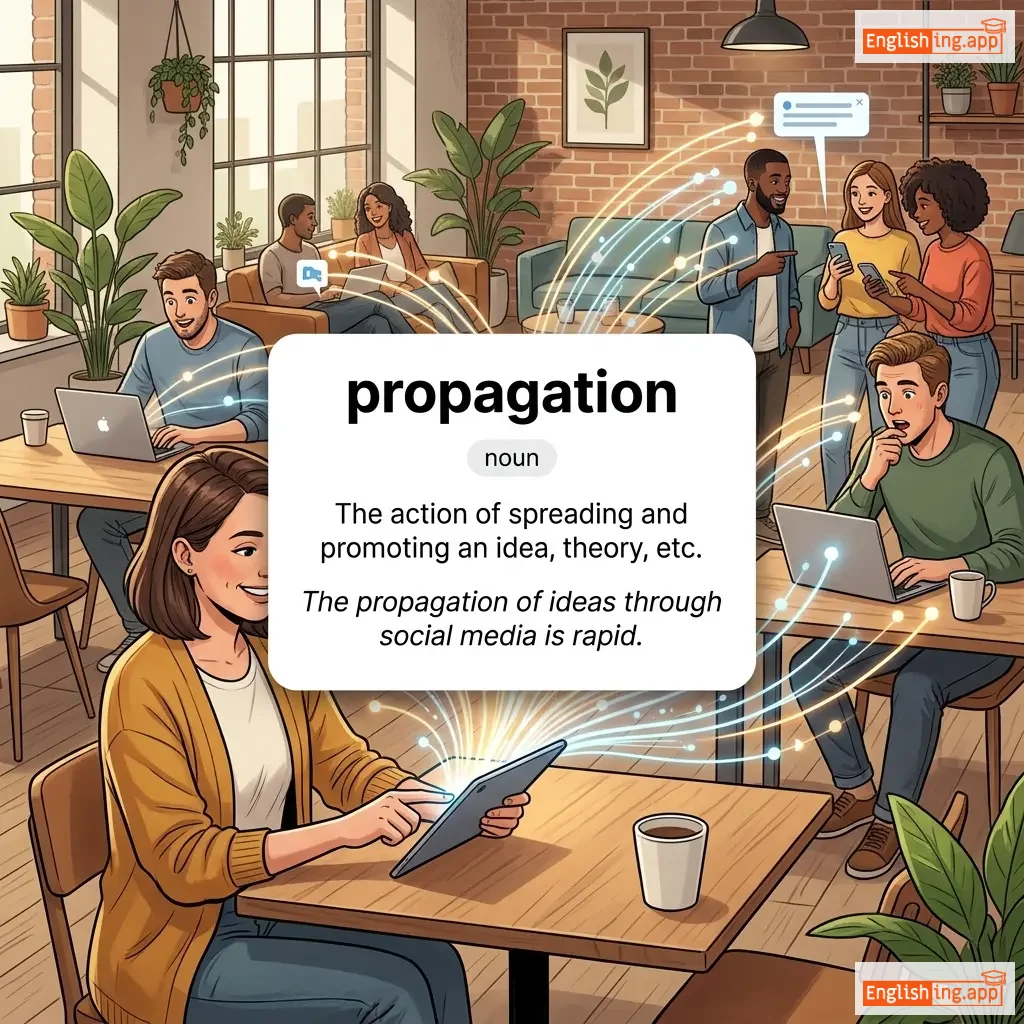
propagation definition card — visual illustration of the meaning
noun
/ˌprɒpəˈɡeɪʃən/
普及, 宣伝 (fukyuu, senden)

The action of spreading and promoting an idea, theory, etc.

"The propagation of ideas through social media is rapid."
"ソーシャルメディアを通じてアイデアの普及が急速に進んでいます。" (Sōsharumedia o tōjite aidea no fukyū ga kyūsoku ni sundeimasu.)
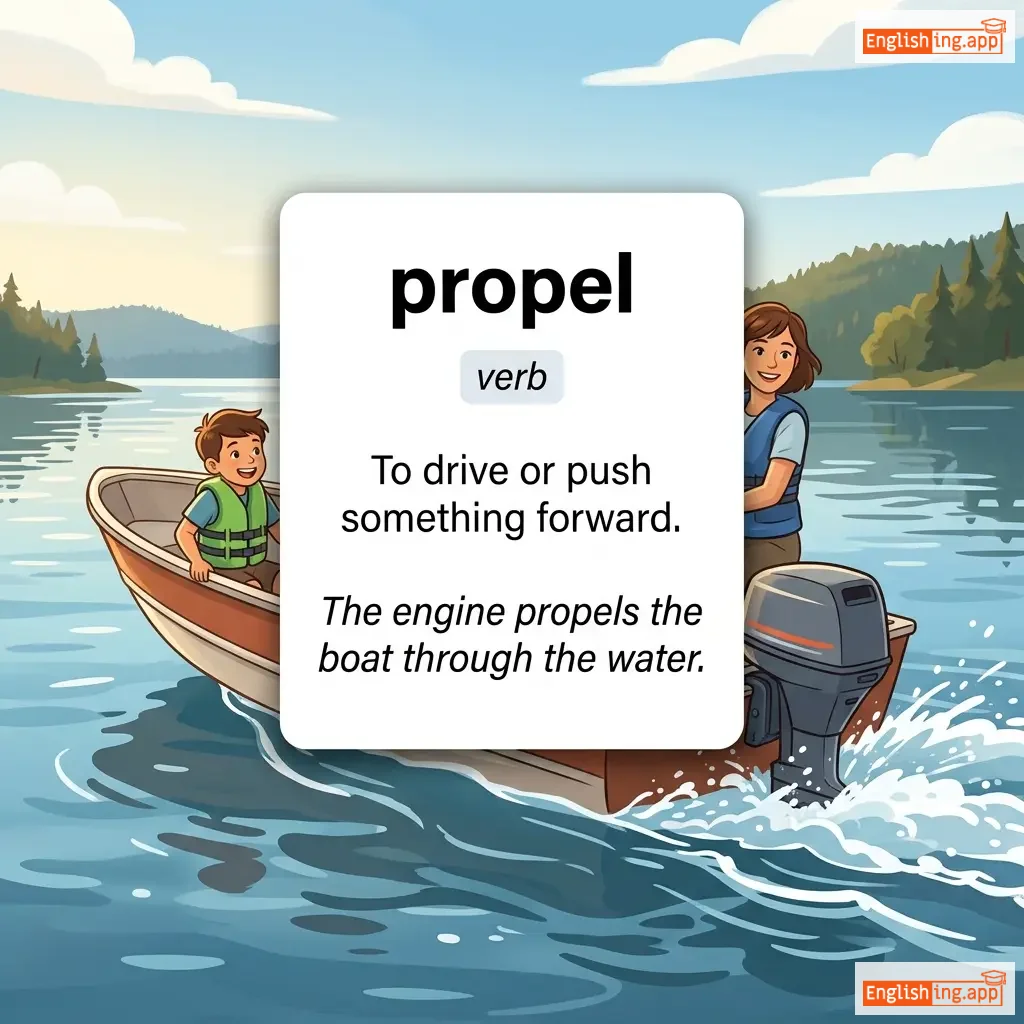
propel definition card — visual illustration of the meaning
verb
/prəˈpɛl/
推進する (suishin suru)

To drive or push something forward.

"The engine propels the boat through the water."

"エンジンはボートを水中で推進します。" (Enjin wa bōto o suichū de suishin shimasu.)
noun
/prəˈpɛlənt/
推進剤 (suishinzai)

A substance that drives or pushes something forward, especially fuel in rockets or engines.

"The rocket uses a liquid propellant to launch into space."

"ロケットは液体推進剤を使用して宇宙に打ち上げられます。" (Roketto wa ekitai suishinzai o shiyō shite uchū ni uchiageraremasu.)
noun
/prəˈpɛlər/
プロペラ (propeller)

A mechanical device with blades that rotates to drive a ship, aircraft, or other vehicle forward.

"The airplane’s propeller cut through the air with great speed."

"飛行機のプロペラは大きな速さで空気を切った。" (Hikōki no propeller wa ōkina hayasa de kūki o kitta.)
propensity definition card — visual illustration of the meaning
noun
/prəˈpɛnsəti/
傾向 (keikou)

a natural tendency or inclination to behave in a particular way

"She has a propensity to trust people too easily."

"彼女は人々をあまりにも簡単に信じる傾向がある。" (Kanojo wa hitobito o amari ni mo kantan ni shinjiru keikou ga aru.)
adjective
/ˈprɒpər/
適切な (tekisetsu na)

conforming to accepted standards of behavior or morality

"He made sure to wear proper attire for the interview."

"彼は面接のために適切な服を着ることを確認しました。" (Kare wa mensetsu no tame ni tekisetsu na fuku o kiru koto o kakunin shimashita.)
adverb
/ˈprɒpərli/
適切に (tekisetsu ni)

in the correct or suitable manner

"He performed the task properly to avoid mistakes."

"彼は間違いを避けるために仕事を正しく行いました。" (Kare wa machigai o sakeru tame ni shigoto o tadashiku okonaimashita.)
noun
/ˈprɒpərti/
財産 (zaisan)

a thing or things that belong to someone; possessions or real estate

"The old mansion is his family’s property."

"その古い屋敷は彼の家族の財産です。" (Sono furui yashiki wa kare no kazoku no zaisan desu.)
noun
/ˈprɒfəsi/
予言 (yogen)

a prediction or message about the future, often believed to be divinely inspired

"The prophecy foretold the rise of a great leader."

"その予言は偉大な指導者の登場を予見していた。" (Sono yogen wa idaina shidōsha no tōjō o yoken shite ita.)
verb
/ˈprɒfəsaɪ/
予言する (yogen suru)

to state or predict that something will happen in the future, especially as if divinely inspired

"The monk prophesied that peace would return to the land."

"その僧侶は平和がこの地に戻ると予言した。" (sono sou-ryo wa heiwa ga kono chi ni modoru to yogen shita.)
adjective
/prəˈfɛtɪk/
予言的 (yogen-teki)

accurately predicting or describing what will happen in the future

"His prophetic words came true after many years."

"彼の予言的な言葉は何年も後に現実となった。" (Kare no yogen-teki na kotoba wa nannen mo ato ni genjitsu to natta.)
adjective
/ˌprɒfɪˈlæktɪk/
予防的 (yobōteki)

intended to prevent disease or an unwanted outcome; protective

"The doctor prescribed a prophylactic treatment to prevent infection."

"医師は感染を防ぐために予防的な治療を処方しました。" (Ishi wa kansen o fusegu tame ni yobōteki na chiryō o shohō shimashita.)
noun
/prəˈpɪŋkwɪti/
近接 (kinsetsu)

the state of being close to someone or something; proximity

"The propinquity of their houses made them close friends."
"彼らの家の近接は、彼らを親しい友人にした。" (Karera no ie no kinsetsu wa, karera o shitashī yūjin ni shita.)
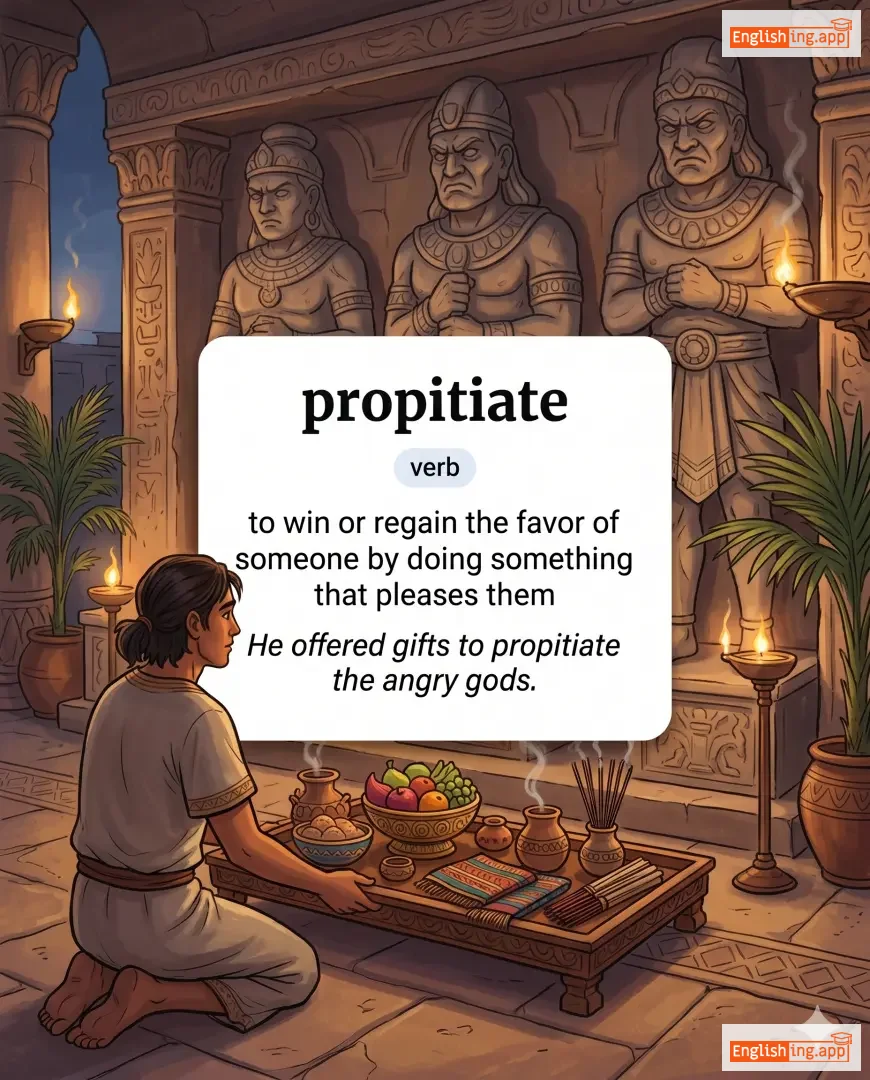
propitiate definition card — visual illustration of the meaning
verb
/prəˈpɪʃieɪt/
なだめる (nadameru)

to win or regain the favor of someone by doing something that pleases them

"He offered gifts to propitiate the angry gods."

"彼は怒った神々をなだめるために贈り物を捧げました。" (Kare wa okotta kamigami o nadameru tame ni okurimono o sasagemashita.)
adjective
/prəˈpɪʃəs/
好ましい (konomashii)

giving or indicating a good chance of success; favorable

"The sunny weather was a propitious start to the picnic."

"晴れた天気はピクニックにとって好ましい始まりでした。" (Hareta tenki wa pikunikku ni totte konomashii hajimari deshita.)
noun
/prəˈpoʊnənt/
支持者, 提案者 (shijisha, teiansha)

a person who advocates for or supports a particular idea, cause, or plan

"She is a strong proponent of renewable energy."

"彼女は再生可能エネルギーの強い支持者です。" (Kanojo wa saisei kanō enerugī no tsuyoi shijisha desu.)
noun
/prəˈpɔːʃən/

a part, share, or number considered in comparative relation to a whole

"The proportion of students passing the exam was high."

adjective
/prəˈpɔːrʃənət/
比例的な (hireiteki na)

Corresponding in size, degree, or intensity; balanced in relation.

"The punishment should be proportionate to the crime."

"罰は犯罪に比例するべきです。" (Batsu wa hanzai ni hirei suru beki desu.)