語彙集

英単語辞書 | 単語の意味、定義、例文

noun
/ˈɔːrətər/
演説者 (enzetsusha)

A person who delivers formal speeches with skill and eloquence

"The orator captivated the audience with his eloquence."

"演説者はその雄弁で聴衆を魅了しました。" (Enzetsusha wa sono yūben de chōshū o miryō shimashita.)
noun
/ˌɔːrəˈtɔːri.oʊ/
宗教音楽作品 (shūkyō ongaku sakuhin)

A large-scale musical composition for orchestra, choir, and soloists, usually on a sacred theme, performed without costumes or scenery.

"Handel's 'Messiah' is one of the most famous oratorios ever written."
"ヘンデルの『メサイア』は最も有名なオラトリオの1つです。" (Henderu no 'Mesaiya' wa mottomo yūmei na oratorio no 1tsu desu.)
oratory definition card — visual illustration of the meaning
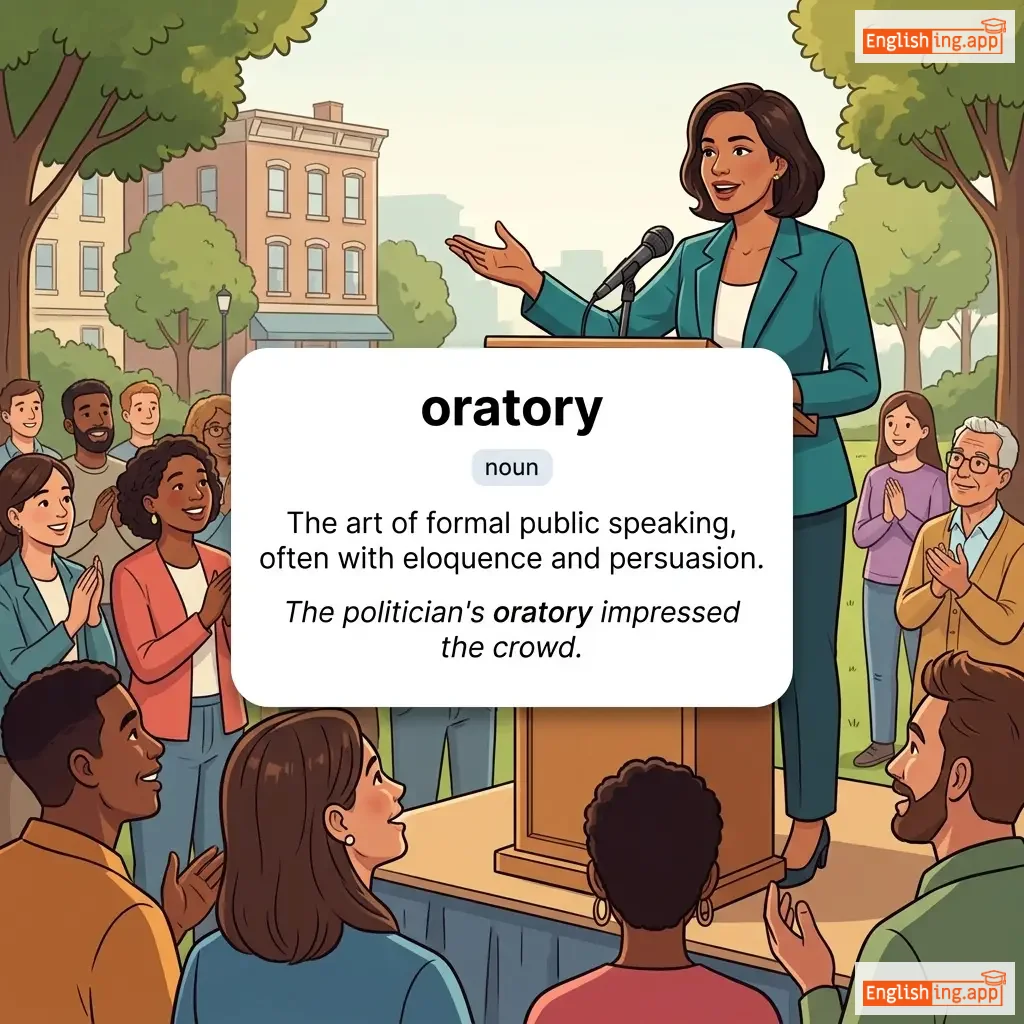
noun
/ˈɔːrəˌtɔːri/
雄弁術 (kyōbenshutsu)

The art of formal public speaking, often with eloquence and persuasion.

"The politician's oratory impressed the crowd."

"その政治家の雄弁術は群衆を感動させた。" (Sono seijika no kyōbenshutsu wa gunshū o kandō saseta.)
orbit definition card — visual illustration of the meaning
noun
/ˈɔːbɪt/
軌道 (kidou)

the curved path that a planet, satellite, or object follows around another body in space

"The Earth moves in an orbit around the Sun."

"地球は太陽の周りを軌道で回ります。" (Chikyuu wa taiyou no mawari o kidou de mawarimasu.)
noun
/ˈɔːkɪstrə/
オーケストラ (ōkesutora)

a large group of musicians playing different instruments together

"The orchestra performed beautifully at the concert."
"オーケストラはコンサートで素晴らしい演奏をしました。" (Ōkesutora wa konsāto de subarashī ensō o shimashita.)
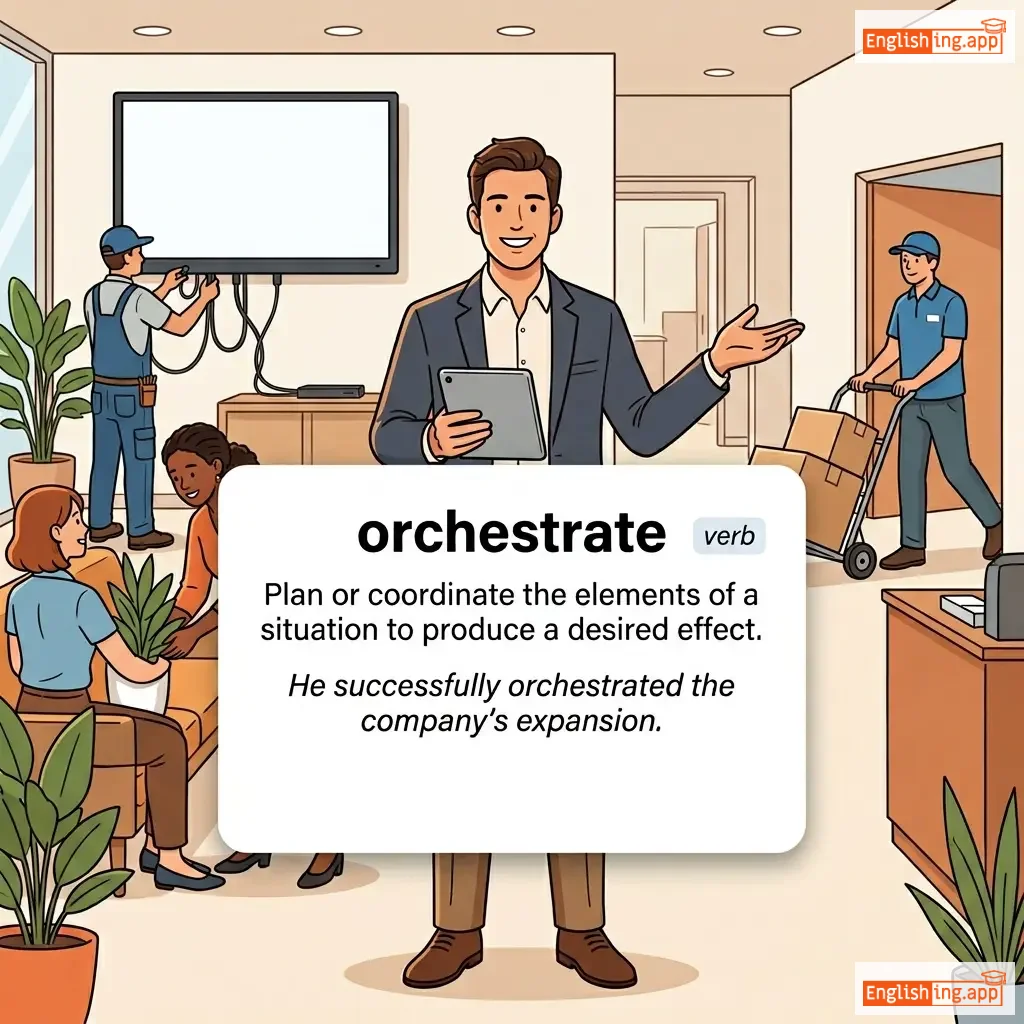
orchestrate definition card — visual illustration of the meaning
verb
/ˈɔːr.kɪ.streɪt/
指揮する (shiki suru)

Plan or coordinate the elements of a situation to produce a desired effect.

"He successfully orchestrated the company's expansion."

"彼は会社の拡張をうまく指揮した。" (Kare wa kaisha no kakuchō o umaku shiki shita.)
orchestrated definition card — visual illustration of the meaning
verb
ˈɔː.kɪ.streɪ.tɪd
精巧に組織された (seikou ni soshiki sareta)

Planned or coordinated carefully and deliberately.

"The attacks were orchestrated with precision."

"攻撃は正確に組織されていた。" (Kougeki wa seikaku ni soshiki sarete ita.)
noun
/ˈɔːrkɪd/
オーキッド (ookiddo)

a diverse family of flowering plants known for their exotic and often fragrant flowers

"The white orchid on the windowsill bloomed for months."

"窓辺の白いオーキッドは何ヶ月も咲き続けました。" (Madobe no shiroi ookiddo wa nan-kagetsu mo sakitsudzukemashita.)
verb
/ɔːrˈdeɪn/

To officially make someone a priest or minister; to decree or order something officially.

"The bishop will ordain three new priests this Sunday."

ordeal definition card — visual illustration of the meaning
noun
/ɔːrˈdiːl/
試練 (shiren)

A very difficult or painful experience, often lasting for a long time.

"The survivors went through a terrible ordeal after the earthquake."
"地震後、生存者は恐ろしい試練を乗り越えました。" (Jishin go, seizon-sha wa osoroshī shiren o norikoemashita.)
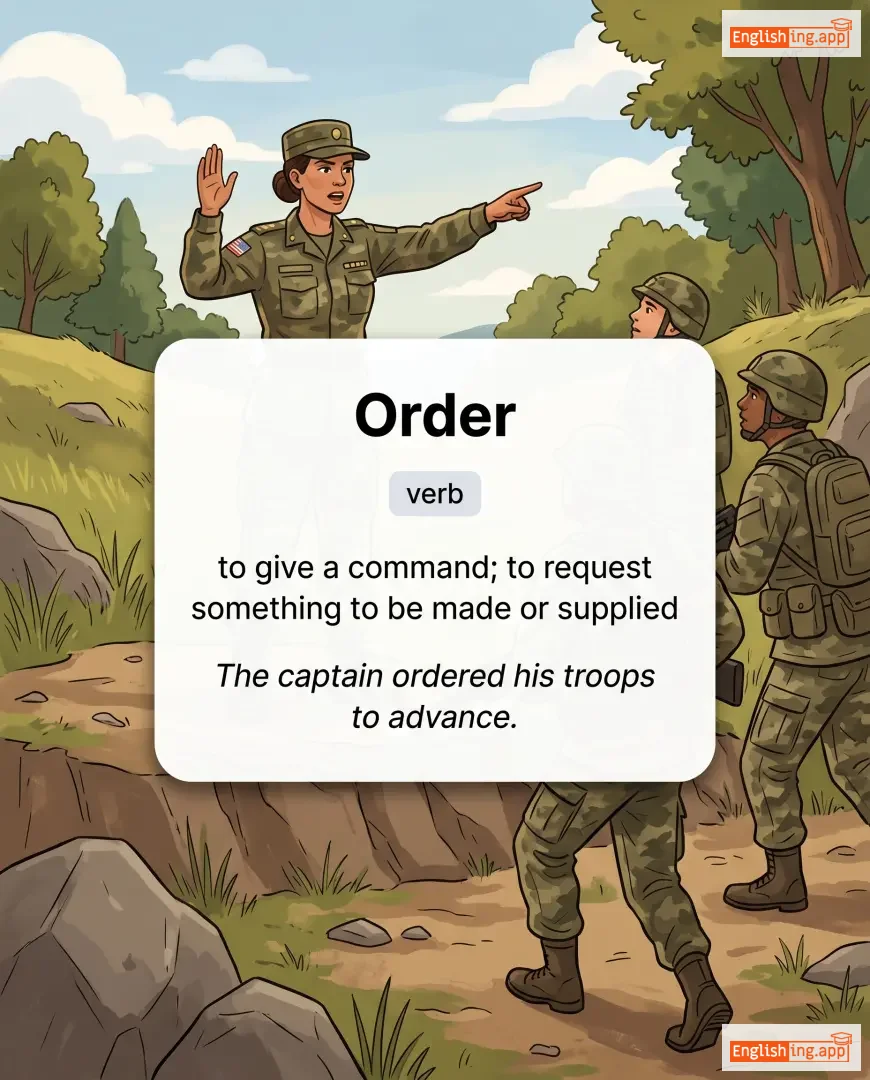
Order definition card — visual illustration of the meaning
noun
/ˈɔːdə(r)/
注文 (chūmon)

an arrangement or command; a request for something to be made, done, or delivered

"He placed an order for a new laptop."

"彼は新しいノートパソコンを注文しました。" (Kare wa atarashī nōtopasokon o chūmon shimashita.)
adjective
/ˈɔː.də.li/
整然とした; 系統的な; 平和的な (orderli)

well-organized; systematic; peaceful

"Please keep your desk orderly and clean."

"デスクを整然とした状態できれいに保ってください。" (Desuku o seiri sareta jōtai de kirei ni tamotte kudasai.)
adjective
/ˈɔːrdɪnəl/
順序数 (junjosu)

Relating to the order or position of something in a sequence (first, second, third, etc.).

"The ordinal number 'third' indicates position in a sequence."

"'第三'の順序数は、順番での位置を示します。" ('Dai san' no junjosu wa, junban de no ichi o shimeshimasu.)
noun
/ˈɔːrdɪnəns/
条例 (jōrei)

An authoritative rule, law, or decree issued by a city, town, or authority.

"The city council passed an ordinance banning smoking in public parks."

"市議会は公共公園での喫煙を禁じる条例を可決しました。" (Shigikai wa kōkyō kōen de no kitsuen o kinjiru jōrei o kaketsu shimashita.)
adjective
/ˈɔːrdəˌnɛri/
普通の (futsuu no)

Common, usual, or not special; something that happens regularly.

"She wore an ordinary dress to the party."

"彼女はパーティーに普通のドレスを着て行った。" (Kanojo wa paatii ni futsuu no doresu o kite itta.)
noun
/ˌɔːrdɪˈneɪʃən/
任命式 (ninmeishiki)

The ceremony of conferring holy orders or official religious authority.

"The church held a special service for the ordination of new priests."

"教会は新しい神父の任命のために特別なサービスを行いました。" (Kyōkai wa atarashī shinpu no ninmei no tame ni tokubetsu na sābisu o okonaimashita.)
noun
/ˈɔːrdnəns/
軍需品 (gunjuhin)

Military supplies including weapons, ammunition, and combat equipment.

"The army stored ordnance in a secure facility outside the city."

"軍隊は都市外の安全な施設に軍需品を保管していた。" (Guntai wa toshigai no anzen na shisetsu ni gunjuhin o hokan shite ita.)
noun
/ˈɔːɡən/
臓器 (zōki)

a part of the body that performs a specific function

"The heart is an important organ in the human body."

"心臓は人間の体の重要な臓器です。" (Shinzō wa ningen no karada no jūyōna zōki desu.)
organic definition card — visual illustration of the meaning
adjective
/ɔːrˈɡænɪk/
オーガニック (ōganikku)

Relating to or derived from living matter; produced without artificial chemicals.

"They prefer to eat organic fruits and vegetables."

"彼らはオーガニックな果物と野菜を食べるのを好みます。" (Karera wa ōganikku na kudamono to yasai o taberu no o konomimasu.)
organic farming definition card — visual illustration of the meaning
noun
ˈɔːr.ɡə.nɪk ˈfɑːr.mɪŋ
オーガニック農業 (ōganikku nōgyō)

Farming without chemical fertilizers and pesticides using natural methods.

"Organic farming reduces pollution and promotes healthier food."

"オーガニック農業は汚染を減らし、より健康的な食べ物を促進します。" (Ōganikku nōgyō wa osen o herashi, yori kenkō-teki na tabemono o sokushin shimasu.)
organic foods definition card — visual illustration of the meaning
noun
ɔːˈɡæn.ɪk fuːdz
オーガニック食品 (ooganikku shokuhin)

Food produced without the use of chemicals such as artificial pesticides, fertilizers, or other artificial agents.

"Organic foods are healthier than processed foods."

"オーガニック食品は加工食品よりも健康的です。" (Ooganikku shokuhin wa kakou shokuhin yori mo kenkou teki desu.)
noun
/ˈɔːɡənɪzəm/
生物 (seibutsu)

a living thing that has an organized structure and can grow and reproduce

"Every organism needs water to survive."
"すべての生物は生き残るために水を必要とします。" (Subete no seibutsu wa ikinokoru tame ni mizu o hitsuyō to shimasu.)
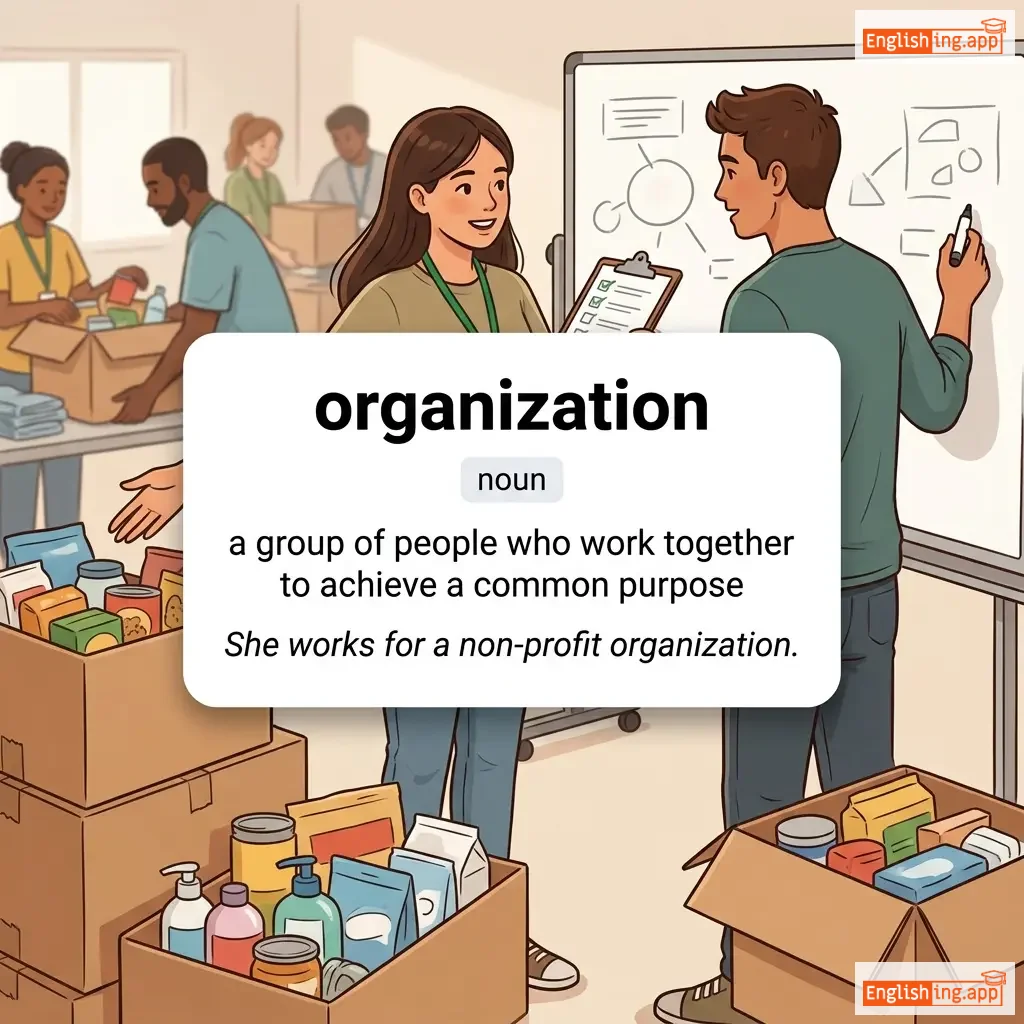
organization definition card — visual illustration of the meaning
noun
/ˌɔːɡənaɪˈzeɪʃn/
組織 (soshiki)

a group of people who work together to achieve a common purpose

"She works for a non-profit organization."

"彼女は非営利団体で働いています。" (Kanojo wa hieiri dantai de hataraiteimasu.)
adjective
/ˌɔːɡənaɪˈzeɪʃənəl/
組織的 (soshitekina)

relating to the structure or arrangement of a company or group

"He works on improving the organizational structure of the company."
"彼は会社の組織構造を改善するために働いています。" (Kare wa kaisha no soshikikōzō o kaizen suru tame ni hataraiteimasu.)
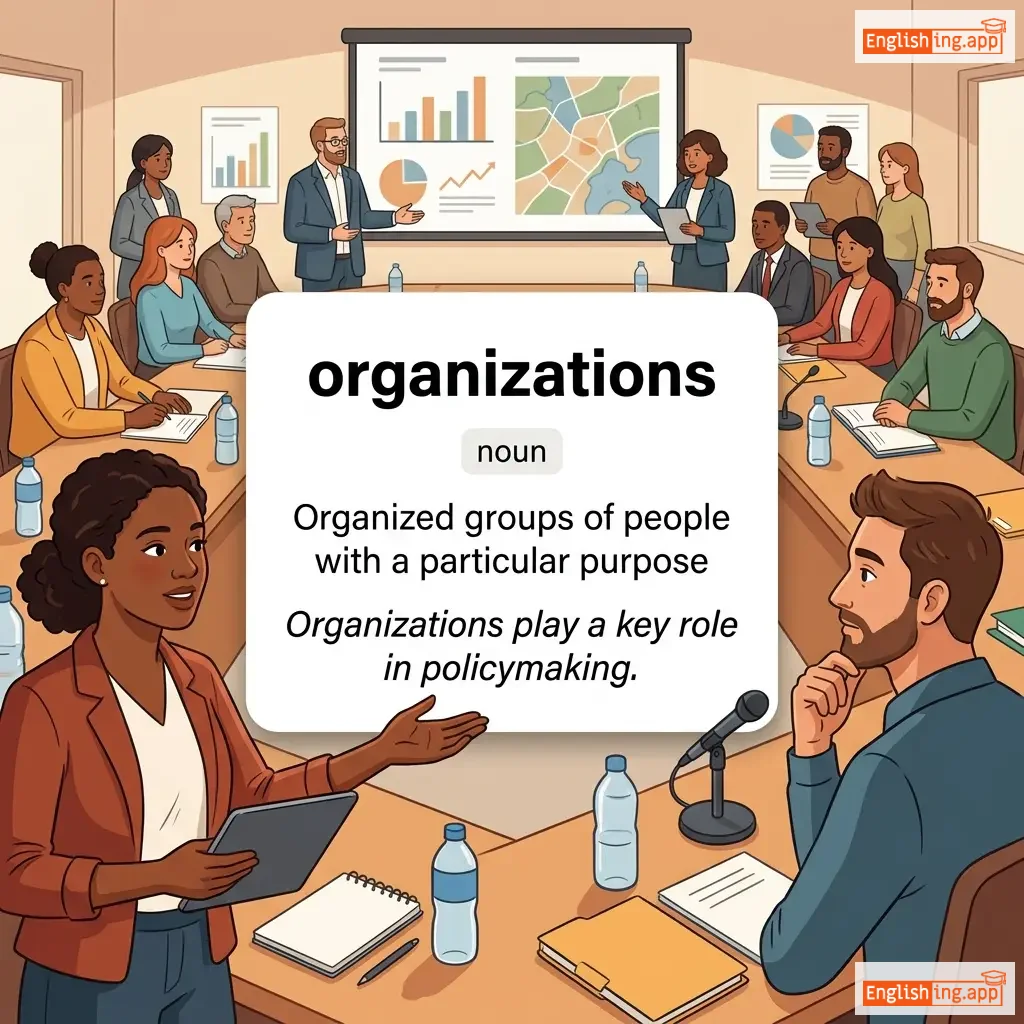
organizations definition card — visual illustration of the meaning
noun
ˌɔː.ɡən.aɪˈzeɪ.ʃənz
組織 (soshiki)

Organized groups of people with a particular purpose

"Organizations play a key role in policymaking."

"組織は政策形成において重要な役割を果たします。" (Soshiki wa seisaku keisei ni oite jūyōna yakuwari o hatashimasu.)
organize definition card — visual illustration of the meaning
verb
/ˈɔːɡənaɪz/
組織する (soshiki suru)

to arrange or systematize something

"They decided to organize a charity event for the community."

"彼らはコミュニティのためにチャリティイベントをオーガナイズすることに決めました。" (Karera wa komyuniti no tame ni chariti ibento o oganaizu suru koto ni kimemashita.)
organized definition card — visual illustration of the meaning
adjective
/ˈɔːrɡənaɪzd/
整理された (seiri sareta)

arranged or structured in a systematic and efficient way

"She always keeps her workspace neat and organized."

"彼女はいつも自分の作業スペースを整理して整頓している。" (Kanojo wa itsumo jibun no sagyō supēsu o seiri shite seiton shite iru.)
noun
/ˈɔːrɡənaɪzər/
主催者 (shusaisha)

a person who arranges or coordinates activities, events, or groups; a tool or item used to keep things in order

"She worked as the main organizer of the international conference."

"彼女は国際会議の主要な主催者だった。" (Kanojo wa kokusai kaigi no shuyo na shusaisha datta)
noun (plural)
/ˈɔːrdʒiːz/
オルギー (orugī)

Wild gatherings involving excessive indulgence in food, drink, or sexual activity.

"The ancient Romans were infamous for their lavish feasts and orgies."

"古代ローマ人は豪華な宴会とオルギーで悪名高かった。" (Kodai Rōmajin wa gōka na enkai to orugī de akumei takakatta.)
noun
/ˈɔːrdʒi/
乱行 (rangkō)

A wild party involving excessive indulgence, especially of a sexual nature.

"The novel described a scandalous orgy in a wealthy mansion."

"その小説は、裕福な邸宅でのスキャンダラスな乱行を描いています。" (Sono shōsetsu wa, yūfukuna teitaku de no sukyandarasuna rankō o egaiteimasu.)
verb
/ˈɔː.ri.ənt/

to align or position something relative to a particular point or direction

"The map helps tourists orient themselves in the city."

adjective
/ˌɔː.riˈen.təl/
東アジアの国々に関連する; 東方 (oriental)

relating to the countries of East Asia; eastern

"The museum has a beautiful collection of oriental art."

"博物館には美しいオリエンタルアートのコレクションがあります。" (Hakubutsukan ni wa utsukushī oriental āto no korekushon ga arimasu)
noun
/ˌɔː.ri.enˈteɪ.ʃən/
オリエンテーション (orientēshon)

the process of becoming familiar with a new situation or environment

"The company provides an orientation for all new employees."

"会社はすべての新しい従業員にオリエンテーションを提供します。" (Kaisha wa subete no atarashī jūgyōin ni orientēshon o teikyō shimasu.)
noun
/ˈɔː.rɪ.fɪs/
(kou)

an opening or hole, especially in the body or a device

"The medicine was applied through a small orifice in the device."

"薬は装置の小さな孔から適用されました。" (Kusuri wa souchi no chiisana kou kara tekiyou saremashita.)
noun
/ˈɒr.ɪ.dʒɪn/
起源 (kigen)

the point or place where something begins or is created

"The river has its origin in the mountains."

"その川は山々に起源を持っています。" (Sono kawa wa yamayama ni kigen o motteimasu.)
adjective
/əˈrɪdʒ.ɪ.nəl/
オリジナル (orijinaru)

existing from the beginning; not a copy or imitation

"This is the original manuscript of the novel."

"これは小説のオリジナルの原稿です。" (Kore wa shōsetsu no orijinaru no genkō desu.)
noun
/əˌrɪʒ.əˈnæl.ə.ti/
独創性 (dokusoosei)

the quality of being novel or unusual; the ability to think independently and creatively

"The artist's work showed great originality and creativity."

"アーティストの作品は大きな独創性と創造性を示した。" (aatisuto no sakuhin wa ookina dokusoosei to sozosei o shimeshita)
adverb
/əˈrɪdʒɪnəli/
元々 (motomoto)

in the beginning, at first

"Originally, she wanted to be a doctor."

"元々、彼女は医者になりたかった。" (Motomoto, kanojo wa isha ni naritakatta.)
verb
/əˈrɪdʒɪneɪt/
起源する (kigen suru)

to come into existence; to begin; to create or produce

"The tradition originated in ancient times."

"その伝統は古代の時代に起源を持っています。" (Sono dentō wa kodai no jidai ni kigen o motteimasu.)
noun
/ˈɒrɪz(ə)n/
祈り (inori)

a prayer, especially a devout or formal one

"He whispered a quiet orison before going to sleep."

"寝る前に静かな祈りをささやいた。" (Neru mae ni shizukana inori wo sasayaita.)
noun
/ˈɔːrnəmənt/
装飾品 (sōshokuhin)

A decorative object that adds beauty to something.

"The Christmas tree was decorated with colorful ornaments."

"クリスマスツリーはカラフルな装飾品で飾られていました。" (Kurisumasu tsurī wa karafuru na sōshokuhin de kazararete imashita.)
adjective
/ˌɔːrnəˈmɛntl/
装飾的な (shōshokuteki na)

Serving as decoration; decorative rather than functional.

"The garden was filled with ornamental plants."

"庭は装飾的な植物でいっぱいだった。" (Niwa wa shōshokuteki na shokubutsu de ippai datta.)
adjective
/ɔːˈneɪt/
華やかな (hanayakana)

elaborately or highly decorated

"The palace hall was filled with ornate furniture and paintings."

"宮殿のホールは華やかな家具と絵画でいっぱいだった。" (Kyuuden no hōru wa hanayakana kagu to kaiga de ippai datta.)
adjective
/ˈɔːrnəri/
気難しい (kimuzukashī)

bad-tempered and combative; stubborn

"The ornery old man refused to leave his chair."

"その気難しい老人は椅子を離れようとしませんでした。" (Sono kimuzukashī rōjin wa isu o hanareyō to shimasen deshita.)
noun
/ˌɔːrnɪˈθɒlədʒɪst/
鳥類学者 (chōruigakusha)

a scientist who studies birds

"The ornithologist spent years studying migratory birds."

"そのオルニソロジストは渡り鳥を研究するために何年も費やしました。" (Sono orunisorojisuto wa wataridori o kenkyū suru tame ni nannen mo費やしました。)
noun
/ˌɔːrnɪˈθɑːlədʒi/
鳥類学 (chōruigaku)

the scientific study of birds

"She pursued ornithology to understand the migration patterns of birds."

"彼女は鳥の移動パターンを理解するためにオルニソロジーを追求しました。" (Kanojo wa tori no idō pātern o rikai suru tame ni orunisorojī o tsuikyū shimashita.)
adjective
/ˈɔːrəˌtʌnd/
豊かで明確な声 (yutaka de meikaku na koe)

full, rich, and clear in sound; pompous in style

"The actor's orotund voice filled the theater."

"俳優の豊かな声が劇場に響き渡った。" (Haiyū no yutaka na koe ga gekijō ni hibiki watatta.)
noun
/ˈɔr.fən/
孤児 (koji)

a child whose parents are dead; someone without protective support

"The orphan was adopted by a loving family."

"その孤児は愛情深い家族に養子として迎えられました。" (sono koji wa aijou fukai kazoku ni youshi toshite mukaeraremashita.)
noun
/ˈɔr.fən.ɪʒ/
孤児院 (kojiin)

an institution for the care and education of children who have lost their parents

"The charity built a new orphanage for homeless children."

"チャリティーはホームレスの子供たちのために新しい孤児院を建てました。" (Charitī wa hōmuresu no kodomotachi no tame ni atarashī kojiin o tatemashita.)
adjective
/ˈɔːrθədɑːks/

conforming to traditional beliefs or practices

"He comes from a very orthodox family."