語彙集

英単語辞書 | 単語の意味、定義、例文

noun
/ˈɒkjʊlɪst/
眼科医 (genka-i)

An old-fashioned term for an eye doctor or ophthalmologist.

"The village oculist was known for treating various eye diseases."

"村のオキュリストは、さまざまな目の病気を治療することで知られていました。" (Mura no okyuristo wa, samazama na me no byōki o chiryō suru koto de shirarete imashita.)
adjective
/ɒd/
奇妙 (kimyou)

different from what is usual or expected; strange or peculiar

"He has some odd habits that surprise everyone."

"彼は皆を驚かせる奇妙な習慣を持っています。" (Kare wa mina wo odokaseru kimyou na shuukan wo motteimasu.)
noun
/ˈɒdəti/
奇異 (kii)

Something strange or unusual.

"The bright pink building was an oddity in the small town."

"その明るいピンクの建物は小さな町での奇異な存在でした。" (Sono akarui pinku no tatemono wa chiisana machi de no kii na sonzai deshita.)
adverb
/ˈɒdli/
奇妙に (kimyouni)

in a strange or unusual way; unexpectedly

"Oddly, he didn’t seem upset by the bad news."

"奇妙に、彼は悪い知らせにも動揺していなかった。" (Kimyouni, kare wa warui shiraseni mo douyou shite inakatta)
noun
/ɒdz/
確率 (kakuritsu)

the likelihood or probability of something happening; chances for or against something

"The odds of winning the lottery are very low."

"宝くじに当選する確率は非常に低いです。" (Takarakuji ni tousen suru kakuritsu wa hijou ni hikui desu.)
noun
/oʊd/
オード (ōdo)

a lyrical poem, often expressing praise or strong emotions

"The poet wrote an ode to the beauty of nature."

"詩人は自然の美に対するオードを書いた。" (Shijin wa shizen no bi ni taisuru ōdo o kaita.)
adjective
/ˈoʊdiəs/
忌まわしい (imawashii)

extremely unpleasant or repulsive

"The dictator was remembered for his odious crimes."

"その独裁者は彼の忌まわしい犯罪で記憶されました。" (Sono dokusaisha wa kare no imawashii hanzai de kioku saremashita.)
noun
/ˈoʊdiəm/
嫌悪 (ken'o)

general or widespread hatred or disgust directed toward someone as a result of their actions

"The scandal brought public odium on the corrupt minister."

"スキャンダルは腐敗した大臣に対する公衆の嫌悪を引き起こした。" (Sukyandaru wa fuhai shita daijin ni taisuru kōshū no ken'o o hikiokoshita.)
adjective
/ˌoʊdəˈrɪfərəs/
芳香のある (hōkō no aru)

having or giving off a smell, especially a strong or pleasant one

"The garden was filled with odoriferous flowers."

"庭は芳香のある花でいっぱいでした。" (Niwa wa hōkō no aru hana de ippai deshita.)
adjective
/ˈoʊdərəs/
臭い (nikui)

having or giving off a smell, often unpleasant

"The odorous garbage had to be taken out immediately."

"その臭いゴミはすぐに出さなければならなかった。" (Sono nikui gomi wa sugu ni dasanakereba naranakatta.)
noun
/ˈoʊ.dər/
臭い (nikui)

a distinctive smell, especially an unpleasant one

"The odour of fresh bread filled the kitchen."

"新鮮なパンの臭いがキッチンに広がった。" (Shinsen na pan no nikui ga kicchin ni hirogatta.)
odyssey definition card — visual illustration of the meaning
noun
/ˈɑːdəsi/
長い旅 (nagai tabi)

a long, adventurous journey; a series of experiences

"Her career has been an odyssey of challenges and achievements."

"彼女のキャリアは挑戦と成果の長い旅でした。" (Kanojo no kyaria wa chōsen to seika no nagai tabi deshita.)
preposition
/ʌv/
(no)

expressing the relationship between a part and a whole

"The book is on the table, in front of the window."

"本はテーブルの上にあり、窓の前にあります。" (Hon wa tēburu no ue ni ari, mado no mae ni arimasu.)
adverb
/ɔːf/
オフ (ofu)

away from a place, position, or time; not functioning

"He turned off the light before leaving the room."

"彼は部屋を出る前に電気をオフにしました。" (Kare wa heya wo deru mae ni denki wo ofu ni shimashita.)
adjective
/ˌɔːfˈkiː/
外れた音 (hazureta oto)

out of tune; not in accordance with expected standards

"The singer was slightly off-key during the performance."

"歌手はパフォーマンス中に少し外れた音だった。" (Kashu wa pafōmansu chū ni sukoshi hazureta oto datta.)
noun
/ˈɔːfəl/
内臓 (naizou)

the internal organs and entrails of an animal used as food; waste parts

"The butcher prepared sausages using pork offal."

"肉屋は豚の臓物を使ってソーセージを作った。" (Nikuya wa buta no zōmotsu o tsukatte sōsēji o tsukutta.)
adjective
/ˈɒf.biːt/
風変わり (fūgawari)

Unusual, unconventional, or different from the norm.

"She has a very offbeat sense of humor."

"彼女はとても風変わりなユーモアを持っています。" (kanojo wa totemo fūgawari na yūmoa o motte imasu.)
noun
/əˈfens/
違反; 犯罪 (ihan; hanzai)

a breach of law or rule; an annoyance or resentment

"Stealing is a serious offence punishable by law."

"窃盗は法律で罰せられる重大な違反です。" (Settō wa hōritsu de bassareru jūdaina ihan desu.)
verb
/əˈfɛnd/
侮辱する (bujoku suru)

to cause someone to feel upset, insulted, or annoyed

"She didn’t mean to offend anyone with her remarks."

"彼女は自分のコメントで誰かを怒らせるつもりはなかった。" (Kanojo wa jibun no komento de dareka o okoraseru tsumori wa nakatta.)
noun
/əˈfɛndər/
犯罪者 (hanzai-sha)

a person who commits a crime or does something wrong

"The police caught the offender quickly."

"警察はすぐに犯罪者を捕まえました。" (Keisatsu wa sugu ni hanzai-sha o tsukamaemashita.)
noun
/əˈfɛns/
犯罪 (hanzai)

an illegal act; a crime

"The offense was committed in broad daylight."

"その罪は昼間に犯されました。" (Sono zai wa hiruma ni okasaremashita.)
adjective
/əˈfɛnsɪv/
攻撃的 (kougekiteki)

Causing hurt, anger, or annoyance; also relating to attacking in sports or war.

"His offensive remarks upset everyone at the meeting."

"彼の攻撃的な発言は、会議にいた全員を不快にさせました。" (Kare no kougekiteki na hatsugen wa, kaigi ni ita zen'in o fukai ni sasemashita.)
offer definition card — visual illustration of the meaning
verb
/ˈɔːfər/
提供する (teikyō suru)

to present or give something to someone

"She offered him a gift for his birthday."

"彼女は彼に誕生日のためにプレゼントを提供した。" (Kanojo wa kare ni tanjōbi no tame ni purezento o teikyō shita.)
noun
/ˈɒfərɪŋ/
オファリング (ofaringu)

something that is given, especially as a gift or contribution

"The company’s latest offering is an eco-friendly car."

"会社の最新のオファリングは、エコフレンドリーな車です。" (Kaisha no saishin no ofaringu wa, ekofurendorī na kuruma desu.)
noun
/ˈɒfərtɔːri/
奉納 (hounou)

The part of a religious service when offerings are collected; the offering itself.

"The offertory was taken during the Sunday service."

"日曜日の礼拝中に奉納が取られました。" (Nichiyoubi no reihai chuu ni hounou ga toraremashita.)
adjective/adverb
/ˌɒfˈhænd/
軽率 (keisotsu)

Without previous thought or preparation; casual and sometimes dismissive.

"She gave an offhand reply to his serious question."

"彼女は彼の真剣な質問に対して、軽率な返答をした。" (Kanojo wa kare no shinken na shitsumon ni taishite, keisotsu na hentou wo shita.)
noun
/ˈɒf.ɪs/
オフィス (ofisu)

a room or building where people work, usually at desks

"She left the office early to attend a family event."

"彼女は家族のイベントに出席するために早くオフィスを出ました。" (Kanojo wa kazoku no ibento ni shusseki suru tame ni hayaku ofisu wo demashita.)
noun
/ˈɔːfɪsər/
警官 (keikan)

a person in a position of authority, especially in law enforcement

"The officer gave him a ticket for speeding."

"警官はスピード違反で彼にチケットを渡した。" (Keikan wa supīdo ihan de kare ni chiketto o watashita.)
adjective
/əˈfɪʃəl/
公式 (kōshiki)

relating to or connected with an authority or public office

"He is the official spokesperson for the company."

"彼は会社の公式なスポークスマンです。" (Kare wa kaisha no kōshiki na supōkusuman desu.)
adverb
/əˈfɪʃəli/
公式に (kōshiki ni)

in a formal or authorized way

"The building was officially opened by the mayor."

"その建物は市長によって公式に開かれました。" (Sono tatemono wa shichō ni yotte kōshiki ni hirakaremashita.)
verb
/əˈfɪʃieɪt/
執り行う (toriokonau)

To perform official duties, especially in a ceremony or as a referee.

"The priest will officiate the wedding ceremony."
"司祭が結婚式を司る。" (Shisai ga kekkonshiki o toriokonau.)
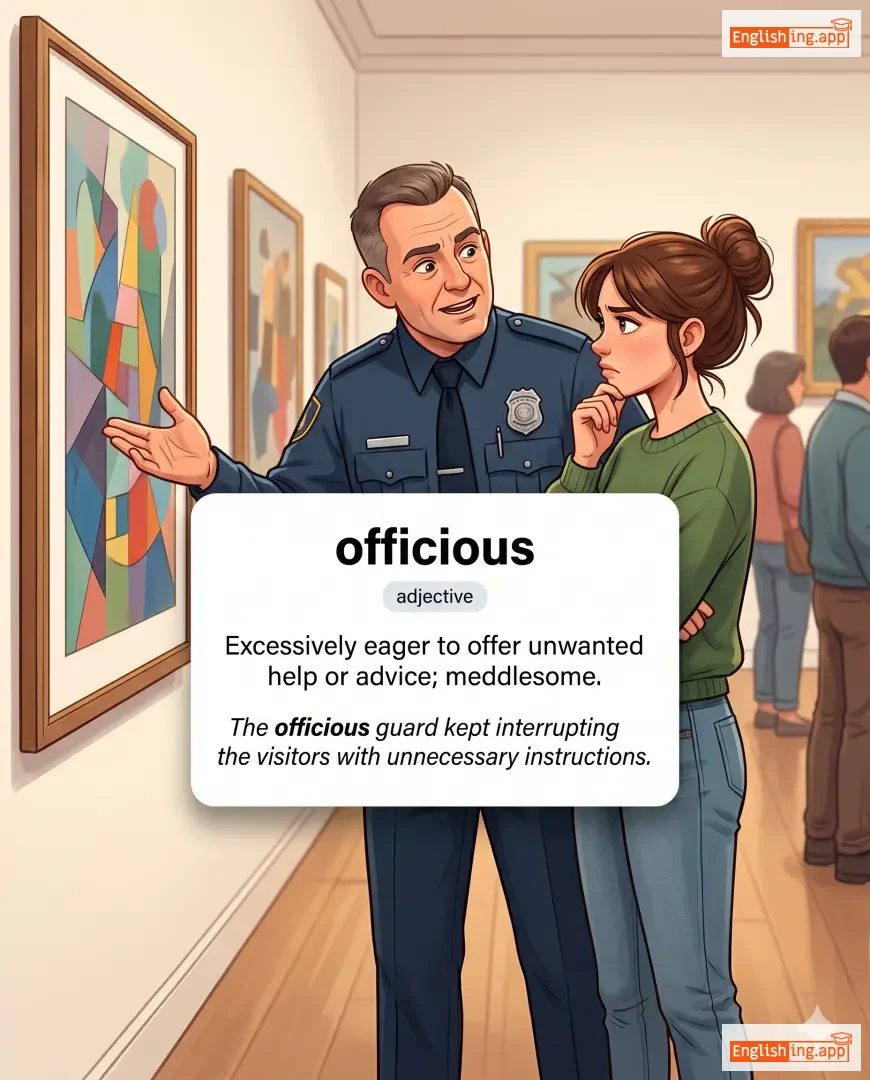
officious definition card — visual illustration of the meaning
adjective
/əˈfɪʃəs/
干渉的な (kanshouteki na)

Excessively eager to offer unwanted help or advice; meddlesome.

"The officious guard kept interrupting the visitors with unnecessary instructions."

"その干渉的な警備員は訪問者に不必要な指示で何度も中断させた。" (Sono kanshouteki na keibiin wa houmonsha ni fuhitsuyouna shiji de nando mo chuudan saseta.)
adjective
/ˈɒfɪʃ/
無愛想 (mu aisou)

Unfriendly, distant, or reserved in manner.

"He seemed offish at the party and avoided most conversations."

"彼はパーティーで無愛想に見え、大半の会話を避けていました。" (Kare wa pātī de mu aisou ni mie, taihan no kaiwa o saketemashita.)
verb
/ˈɒfsɛt/
相殺 (sōsai)

To counterbalance or compensate for something.

"The company's losses were offset by gains in other departments."

"会社の損失は他の部門での利益で相殺されました。" (Kaisha no sonshitsu wa hoka no bumon de no rieki de sōsai saremashita.)
noun
/ˈɒfʃuːt/
分岐 (bunki)

A branch or result that develops from something larger or more important.

"The startup was an offshoot of a major tech company."

"そのスタートアップは大手テクノロジー企業からの分岐でした。" (Sono start-up wa oote tekunorojii kigyou kara no bunki deshita.)
noun
/ˈɒf.sprɪŋ/
子孫 (shison)

a person's child or children; an animal's young

"The bird carefully fed its offspring."

"その鳥は注意深く自分の子孫に餌を与えました。" (Sono tori wa chūi bukaku jibun no shison ni esa o ataemashita.)
adverb
/ˈɔːfən/
しばしば (shibashiba)

frequently, many times

"I often visit my grandparents on weekends."

"私は週末にしばしば祖父母を訪れます。" (Watashi wa shūmatsu ni shibashiba sofubo o otozuremasu.)
verb
/ˈoʊɡəl/
じっと見る (jitto miru)

To look at someone with obvious sexual interest.

"He kept ogling the models on the runway."

"彼はランウェイのモデルたちを見続けた。" (Kare wa ranwei no moderu-tachi o mi tsudzuketa.)
👹

ogre

noun
/ˈoʊɡər/

A mythical monster, often depicted as large, hideous, and cruel; metaphorically, a cruel or terrifying person.

"The villagers feared the ogre who lived in the dark forest."

interjection
/oʊ/
オー (oo)

used to express surprise, realization, or understanding

"Oh, I didn't know you were here!"

"オー、あなたがここにいるとは思わなかった!" (Oo, anata ga koko ni iru to wa omowanakatta!)
noun
/ɔɪl/
(abura)

a viscous liquid derived from plants or animals, used for cooking, lubrication, or fuel

"She added some oil to the pan to fry the vegetables."

"彼女は野菜を揚げるためにフライパンに少し油を加えました。" (Kanojo wa yasai o ageru tame ni furaipan ni sukoshi abura o kuwaemashita.)
noun
/ˈɔɪl.mən/
石油業者 (sekiyū gyōsha)

a person who works in the oil industry; someone who sells oil or petroleum products

"The oilman discovered a new oil field in the desert."

"オイルマンは砂漠で新しい油田を発見した。" (Oiruman wa sabaku de atarashī yutō o hakken shita.)
adjective
/ˈɔɪl.i/
油っぽい; 油で覆われた; 脂っこい (aburappoi; abura de ōwareta; aburakkoi)

covered with oil; containing oil; greasy

"Her oily skin needs special care."

"彼女の油っぽい肌は特別なケアが必要です。" (Kanojo no aburappoi hada wa tokubetsu na kea ga hitsuyō desu.)
noun
/ˈɔɪntmənt/
軟膏 (nankou)

A smooth, oily substance applied to the skin for healing or soothing.

"The doctor prescribed an ointment for the burn on his arm."

"医師は彼の腕のやけどのために軟膏を処方しました。" (Ishi wa kare no ude no yakedo no tame ni nankou o shohō shimashita.)
adjective
/oʊˈkeɪ/
わかった (wakatta)

used to indicate agreement, approval, or understanding

"Okay, let's go to the park."

"わかった、じゃあ公園に行こう。" (Wakatta, jyaa kouen ni ikou.)
adjective
/əʊˈkeɪ/
大丈夫 (daijoubu)

used to express agreement or acceptance

"It's okay to leave early today."

"今日は早く帰るのは大丈夫です。" (Kyou wa hayaku kaeru no wa daijoubu desu.)
adjective
/oʊld/
古い (furui)

having lived for a long time; not new or young

"He still drives his old car."

"彼は今でも古い車を運転しています。" (Kare wa imademo furui kuruma o unten shiteimasu.)
adjective
/ˌoʊld ˈfæʃənd/
昔風の (mukashifū no)

not modern; belonging to an earlier time

"He still wears an old-fashioned hat."

"彼は今でも昔風の帽子をかぶっています。" (Kare wa imademo mukashifū no bōshi o kabutteimasu.)
noun
/oʊliˈændər/
オレアンダー (oreaandā)

a poisonous evergreen shrub with clusters of white, pink, or red flowers

"The beautiful oleander flowers bloomed in the garden despite their toxic nature."

"美しいオレアンダーの花が庭で咲いていましたが、その毒性に関わらず。" (Utsukushī oreaandā no hana ga niwa de saite imashita ga, sono dokusei ni kakawarazu.)
noun
/ɑːlˈfækʃən/
嗅覚 (kyūkaku)

The sense of smell; the process of detecting and perceiving odors.

"Dogs have a highly developed sense of olfaction."

"犬は非常に発達した嗅覚を持っています。" (Inu wa hijō ni hattatsu shita kyūkaku o motteimasu.)