語彙集

英単語辞書 | 単語の意味、定義、例文

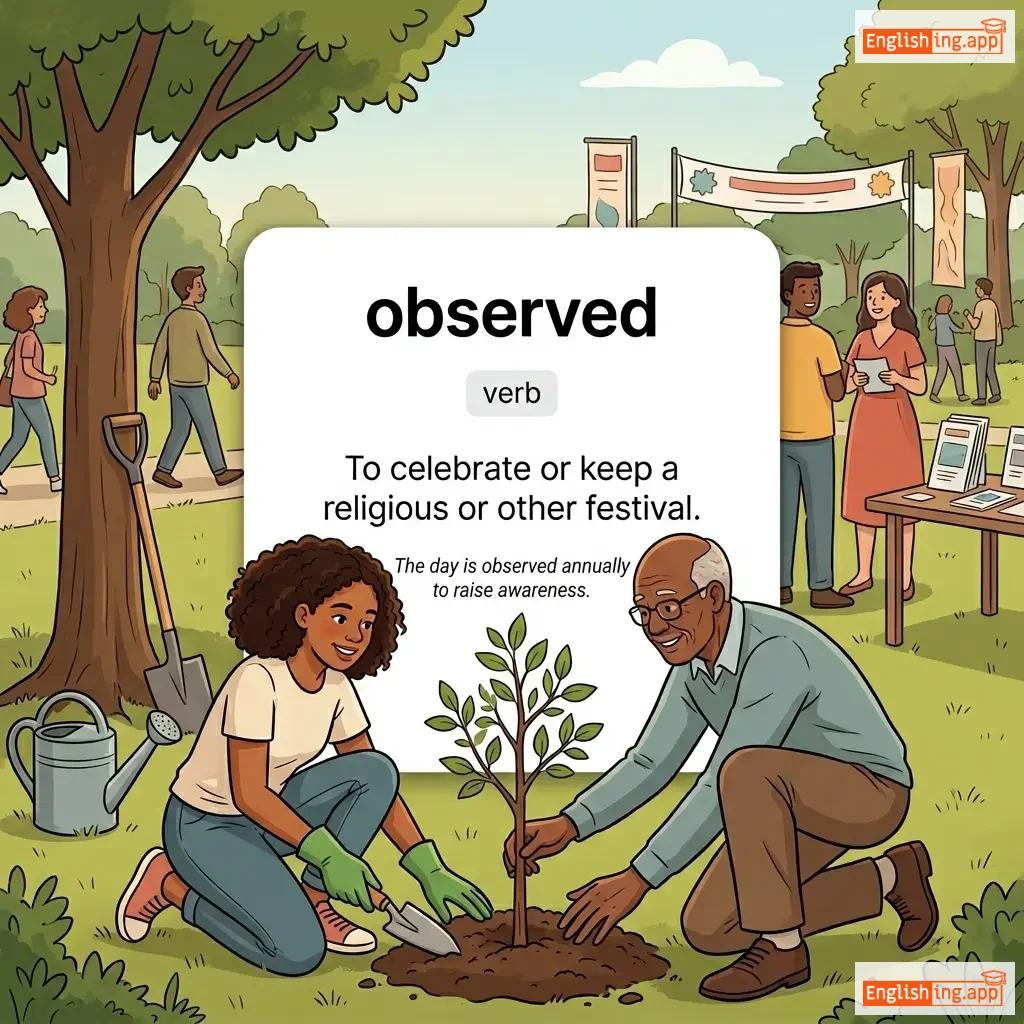
observed definition card — visual illustration of the meaning
verb
əbˈzɜːrvd
祝う (iwau)

To celebrate or keep a religious or other festival.

"The day is observed annually to raise awareness."

"その日は毎年意識を高めるために祝われます。" (Sono hi wa mainen ishiki o takameru tame ni iwaremasu.)
noun
/əbˈzɜːvər/
観察者 (kansatsusha)

a person who watches or notices something

"The observer took notes during the meeting."

"観察者は会議中にメモを取った。" (Kansatsusha wa kaigi chū ni memo o totta.)
verb
/əbˈsɛs/

To preoccupy or fill the mind of someone continually and to an excessive degree.

"She tends to obsess over small details."

noun
/əbˈsɛʃən/
執着 (shūchaku)

An idea, thought, or concern that continually preoccupies or intrudes on a person's mind.

"His obsession with success drove him to work day and night."

"成功への執着が彼を昼夜働かせた。" (Seikou e no shūchaku ga kare o chūya hatarakaseta.)
adjective
/əbˈsɛsɪv/
執着的 (shuchakuteki)

Relating to or characterized by an obsession; thinking about something too much.

"He has an obsessive interest in cleanliness."

"彼は清潔さに執着的な興味を持っています。" (Kare wa seiketsu-sa ni shuchakuteki na kyōmi o motteimasu.)
noun
/əbˈsɪdiən/
オブシディアン (黒いガラスのような火山岩) (obushidian (kuroi garasu no you na kazan gan))

A hard, dark, glasslike volcanic rock formed by rapid solidification of lava.

"The knife was made from sharp obsidian."
"ナイフは鋭いオブシディアンで作られていた。" (Naifu wa surudoi obushidian de tsukurarete ita.)
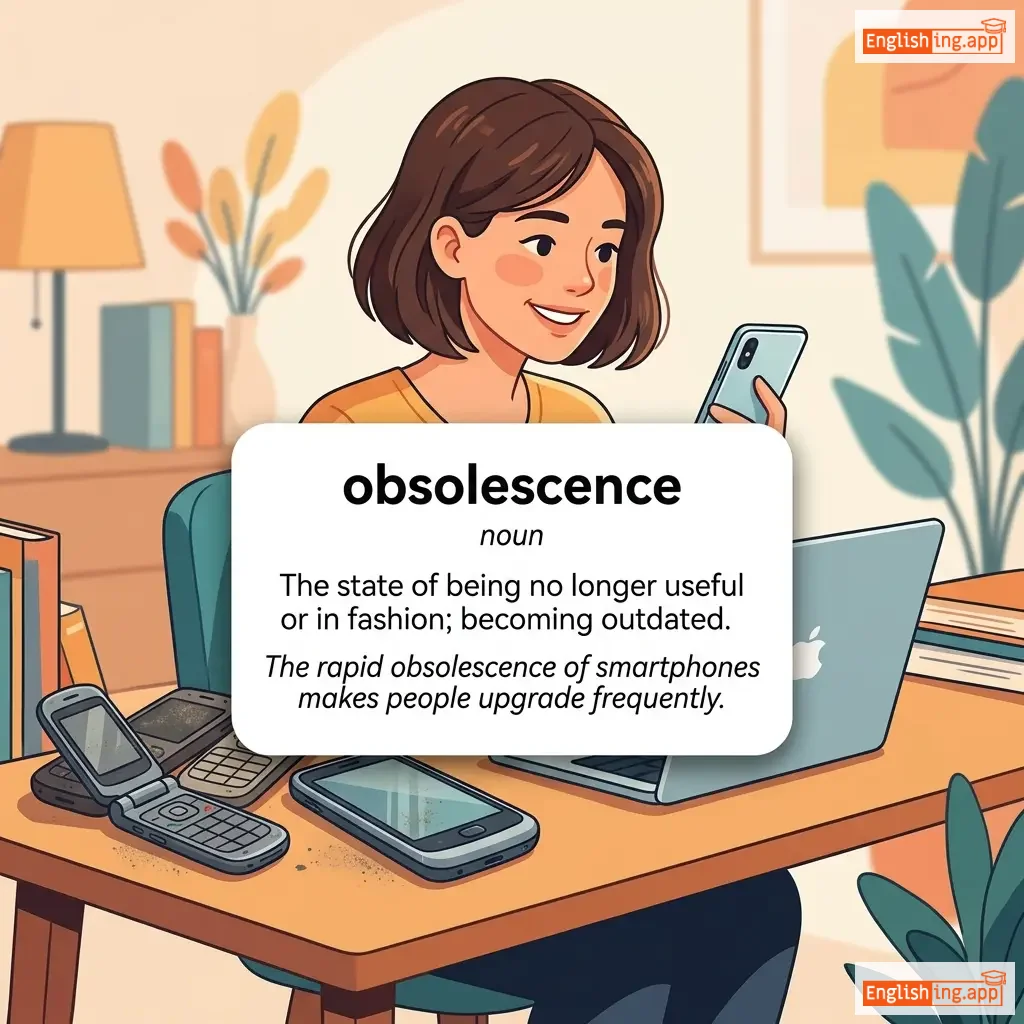
obsolescence definition card — visual illustration of the meaning
noun
/ˌɒbsəˈlɛsəns/
陳腐化 (chinpuka)

The state of being no longer useful or in fashion; becoming outdated.

"The rapid obsolescence of smartphones makes people upgrade frequently."

"スマートフォンの急速な陳腐化は人々に頻繁にアップグレードさせます。" (Sumātofon no kyūsokuna chinpuka wa hitobito ni hinpan ni appurēdo sasemasu.)
adjective
/ˌɒbsəˈlɛsnt/
時代遅れの (jidaiokure no)

Becoming outdated or on the way to becoming obsolete.

"The obsolescent technology could not compete with modern devices."

"時代遅れの技術は現代のデバイスには競争できなかった。" (Jidaiokure no gijutsu wa gendai no debaisu ni wa kyousou dekinakatta.)
adjective
/ˌɒbsəˈliːt/
時代遅れ (jidaiokure)

No longer in use or out of date.

"Floppy disks are now completely obsolete."
"フロッピーディスクは現在完全に時代遅れです。" (Furoppīdisuku wa genzai kanzen ni jidaiokure desu.)
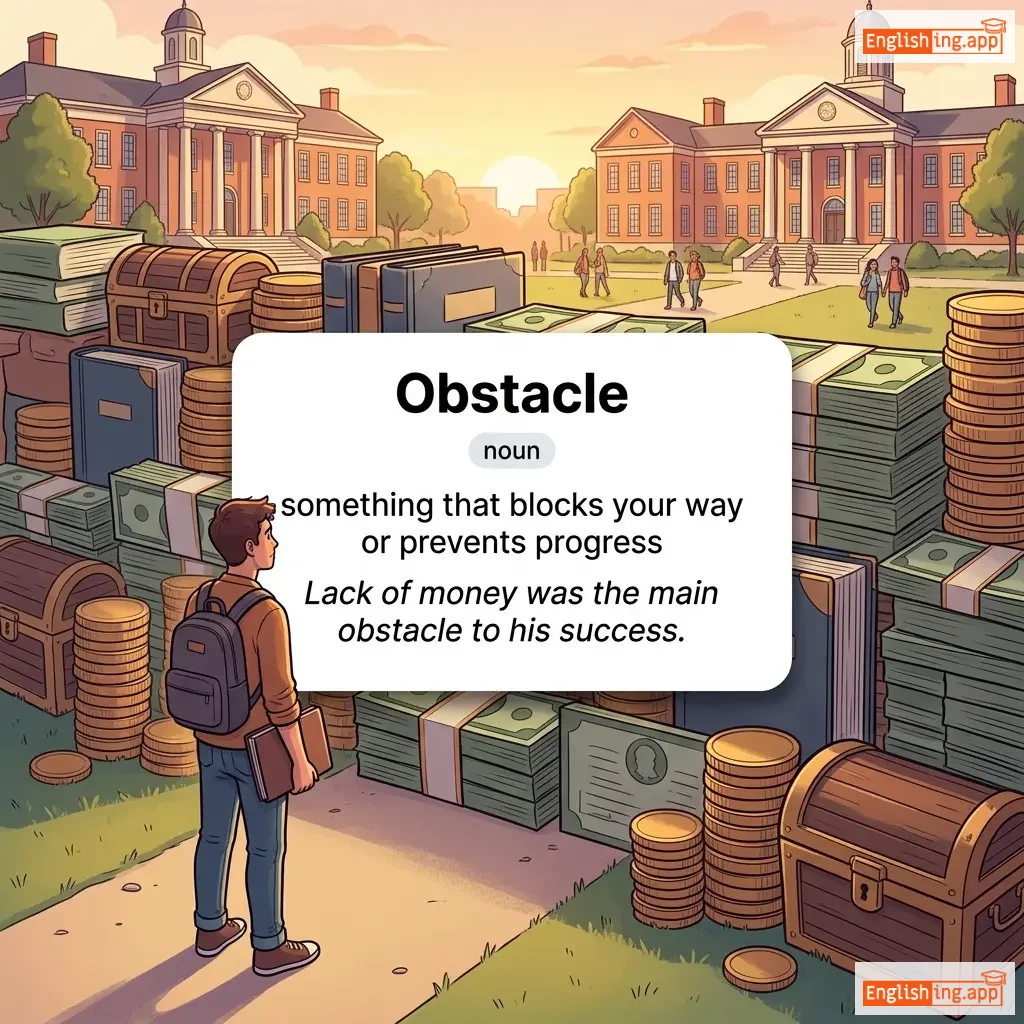
Obstacle definition card — visual illustration of the meaning
noun
/ˈɒbstəkəl/
障害 (shōgai)

something that blocks your way or prevents progress

"Lack of money was the main obstacle to his success."
"お金の不足は彼の成功への主要な障害でした。" (okane no fusoku wa kare no seikō e no shuyō na shōgai deshita.)
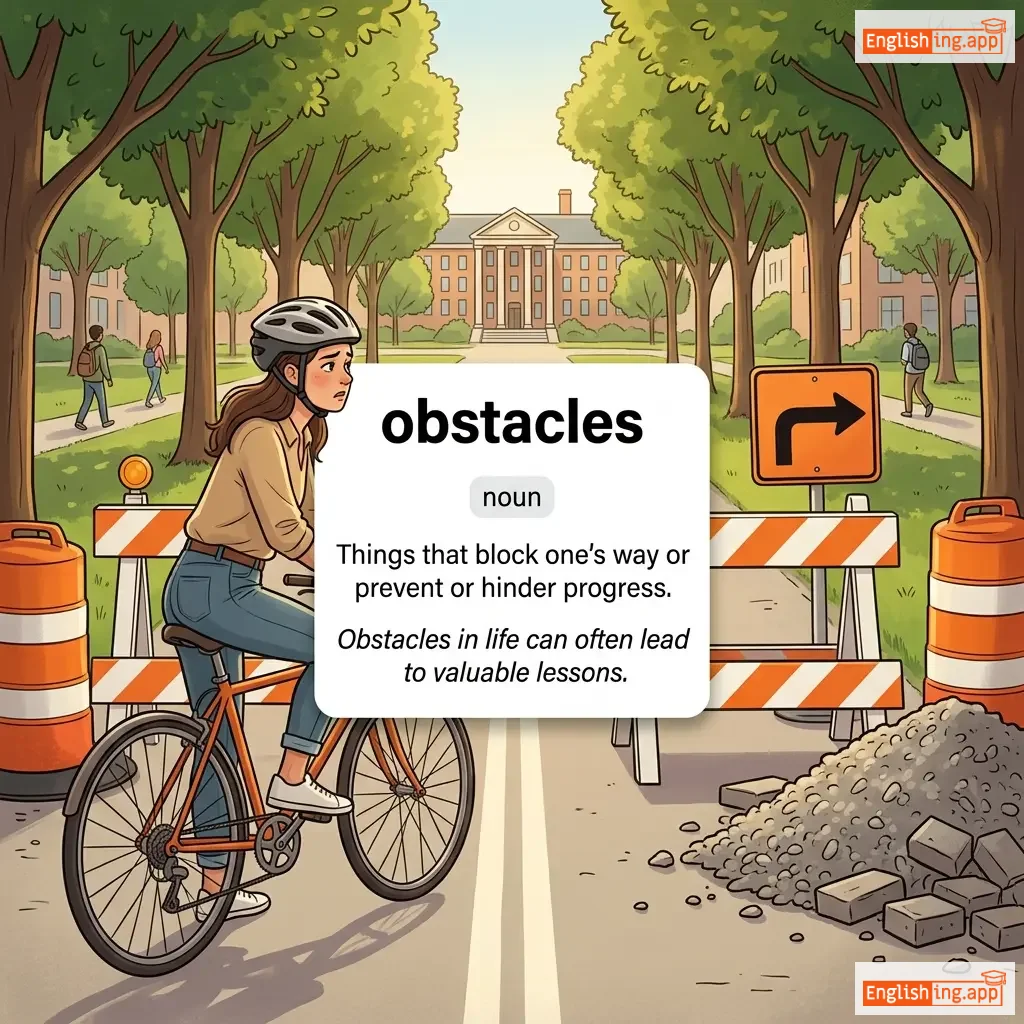
obstacles definition card — visual illustration of the meaning
noun
/ˈɒbstəkəlz/
障害物 (shougai-mono)

Things that block one's way or prevent or hinder progress.

"Obstacles in life can often lead to valuable lessons."

"人生の障害物はしばしば貴重な教訓に繋がる。" (Jinsei no shougai-mono wa shibashiba kichou na kyokun ni tsunagaru.)
noun
/ˌɒbstəˈtrɪʃən/
産科医 (sanka-i)

A doctor specializing in pregnancy, childbirth, and women's reproductive health.

"The obstetrician monitored the mother’s health throughout the pregnancy."

"産科医は妊娠中の母親の健康を監視しました。" (Sanka-i wa ninshin-chu no hahaoya no kenko o kanshi shimashita.)
noun
/əbˈstɛtrɪks/
産科 (sanka)

The branch of medicine dealing with childbirth and care of women giving birth.

"She is studying obstetrics to become a specialist in childbirth."
"彼女は産科を学んで、出産専門医になろうとしている。" (Kanojo wa sanka o manande, shussan senmoni ni narou to shite iru.)
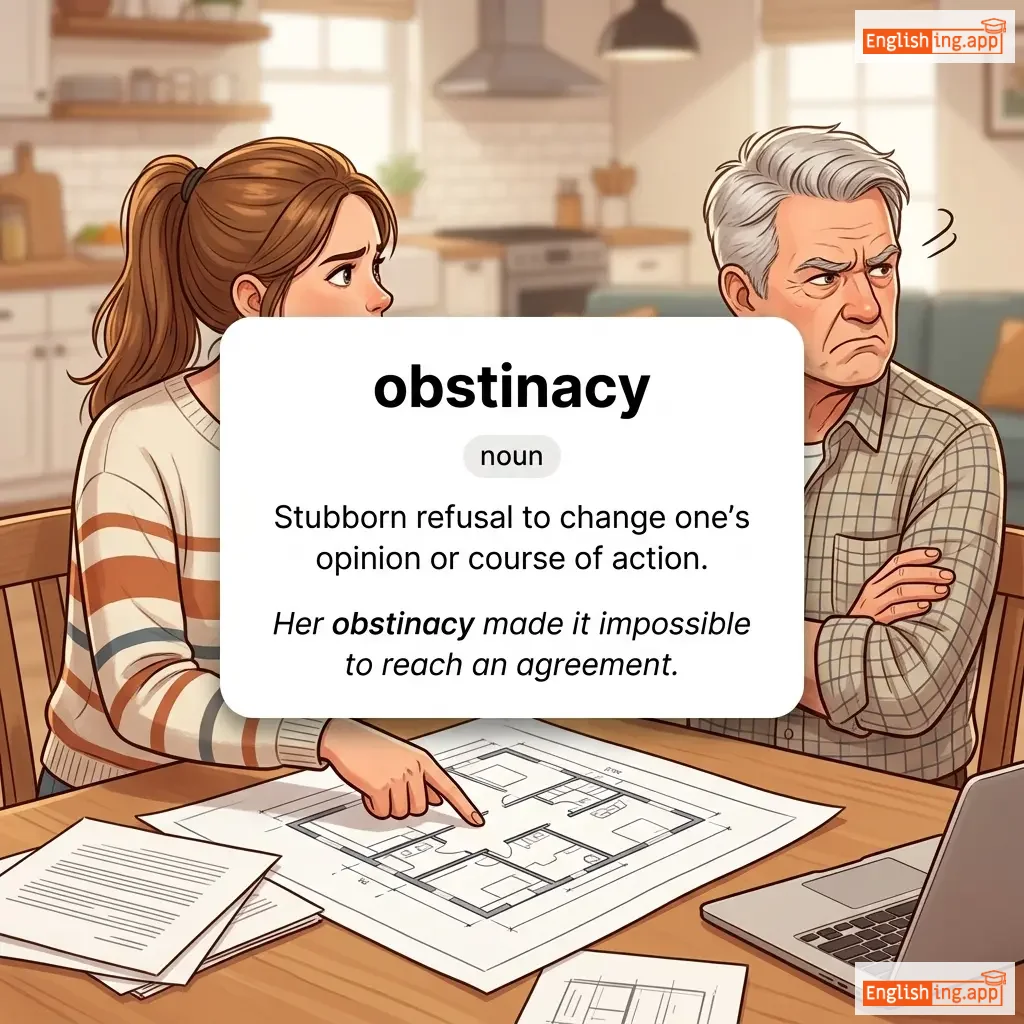
obstinacy definition card — visual illustration of the meaning
noun
/ˈɒbstɪnəsi/
頑固 (ganko)

Stubborn refusal to change one’s opinion or course of action.

"Her obstinacy made it impossible to reach an agreement."
"彼女の頑固さは、合意に達することを不可能にしました。" (Kanojo no gankosa wa, goi ni tassuru koto o fukanou ni shimashita.)
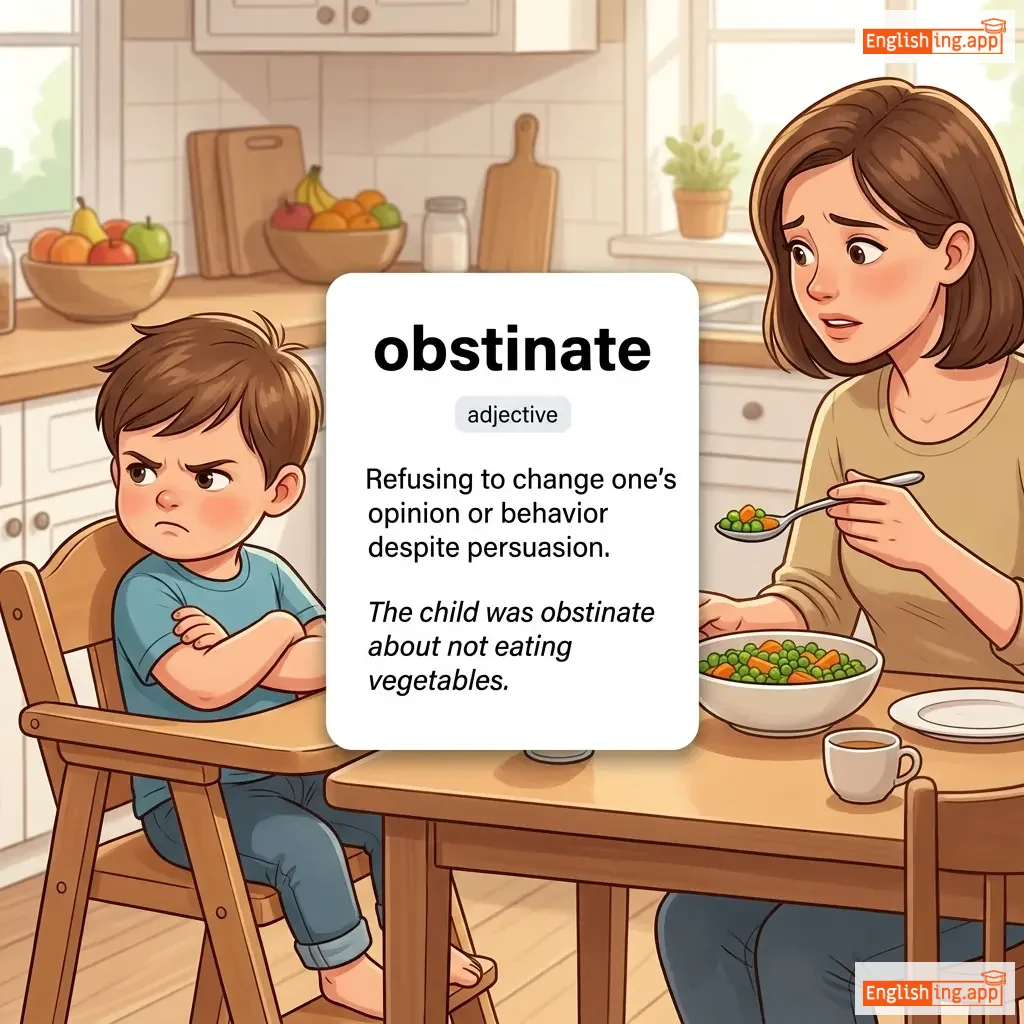
obstinate definition card — visual illustration of the meaning
adjective
/ˈɒbstɪnət/
頑固 (ganko)

Refusing to change one’s opinion or behavior despite persuasion.

"The child was obstinate about not eating vegetables."

"子供は野菜を食べないことで頑固だった。" (Kodomo wa yasai o tabenai koto de ganko datta.)
adjective
/əbˈstrɛpərəs/
騒がしくて制御が難しい (sawagashikute seigyo ga muzukashii)

Noisy and difficult to control.

"The obstreperous students disrupted the class."
"騒がしい学生たちが授業を妨害した。" (Sawagashī gakusei-tachi ga jugyō o bōgai shita.)
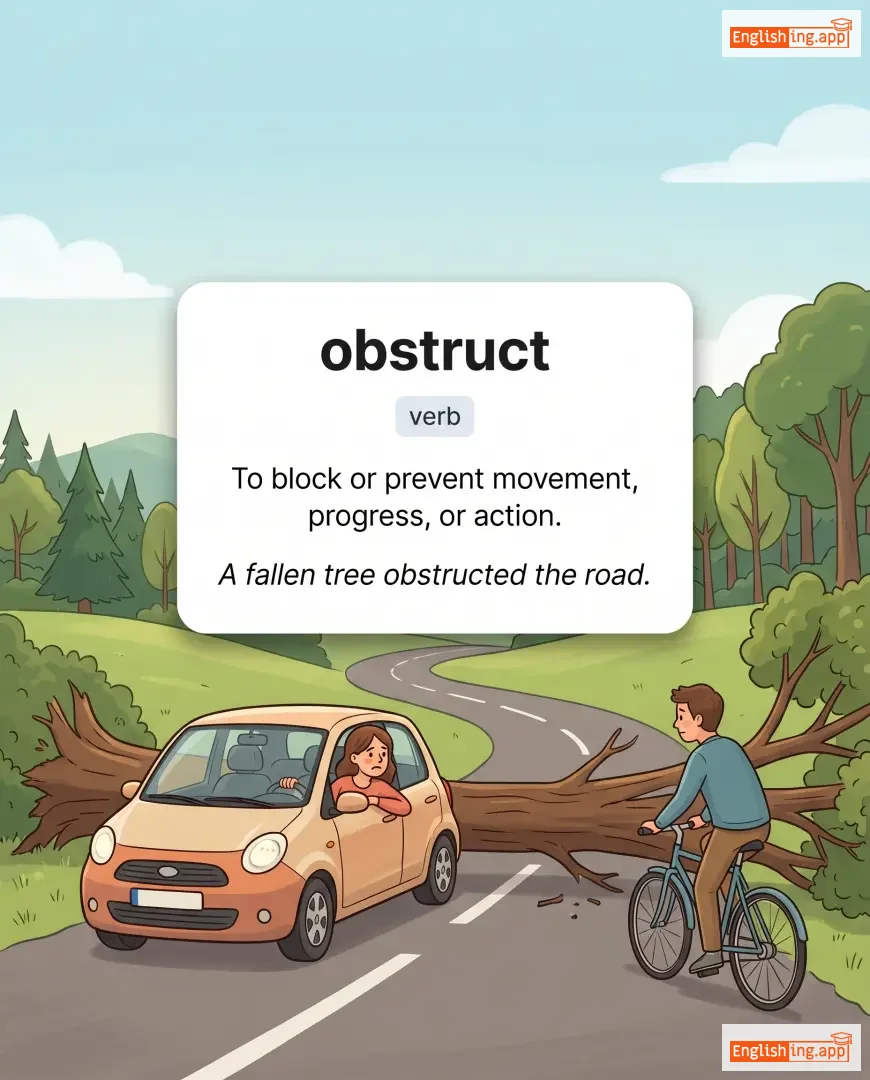
obstruct definition card — visual illustration of the meaning
verb
/əbˈstrʌkt/
妨害する (bōgaisuru)

To block or prevent movement, progress, or action.

"A fallen tree obstructed the road."

"倒れた木が道を塞いだ。" (Taoreta ki ga michi o fusaida.)
noun
/əbˈstrʌkʃən/
障害 (shougai)

Something that blocks or gets in the way; the action of obstructing.

"There was an obstruction on the railway track."

"鉄道の線路に障害がありました。" (Tetsudou no senro ni shougai ga arimashita.)
noun
/əbˈstrʌkʃənɪst/

a person who deliberately delays or prevents progress by being uncooperative or oppositional

"The obstructionist in the committee kept delaying the decision-making process."

adjective
/əbˈstrʌk.tɪv/
妨害的な (obstructive)

deliberately creating difficulties or preventing progress; hindering or blocking something

"The obstructive policies hindered economic growth."

"妨害的な政策は経済成長を阻害した。" (bougaitekina seisaku wa keizai seicho o sogai shita)
obtain definition card — visual illustration of the meaning
verb
/əbˈteɪn/
得る (eru)

to get, acquire, or secure something

"She managed to obtain a scholarship for her studies."

"彼女は学業のために奨学金を得ることができました。" (Kanojo wa gakugyō no tame ni shōgakukin o eru koto ga dekimashita.)
verb
/əbˈtruːd/
押し付ける (oshitsukeru)

to force oneself or one's ideas into a situation uninvited or inappropriately

"He didn’t want to obtrude into their private conversation."

"彼は彼らのプライベートな会話に押し付けたくなかった。" (Kare wa karera no puraibēto na kaiwa ni oshitsuketakunakatta.)
adjective
/əbˈtruːsɪv/
目障りな (meza warina)

noticeable in an unpleasant or unwelcome way; intrusive

"The advertisement was so obtrusive that it ruined the user’s experience."

"その広告はあまりにも目立ちすぎて、ユーザーの体験を台無しにしました。" (Sono kōkoku wa amari ni mo medachisugite, yūzā no taiken o dainashi ni shimashita.)
adjective
/əbˈtjuːs/
鈍い (nibui)

slow to understand; annoyingly insensitive; also refers to an angle greater than 90° and less than 180°

"He was too obtuse to realize the insult."

"彼は侮辱を理解するには鈍すぎた。" (Kare wa bukushoku o rikai suru ni wa nibui sugita.)
verb
/əbˈvɜːrt/
反転する (hanten suru)

To turn something so as to face in a different direction; in logic, to convert a proposition by negating both subject and predicate.

"The teacher asked the students to obvert the statement for practice."
"先生は生徒たちに練習のためにその声明をオブバートするように頼みました。" (Sensei wa seito-tachi ni renshū no tame ni sono seimei o obu bāto suru yō ni tanomimashita.)
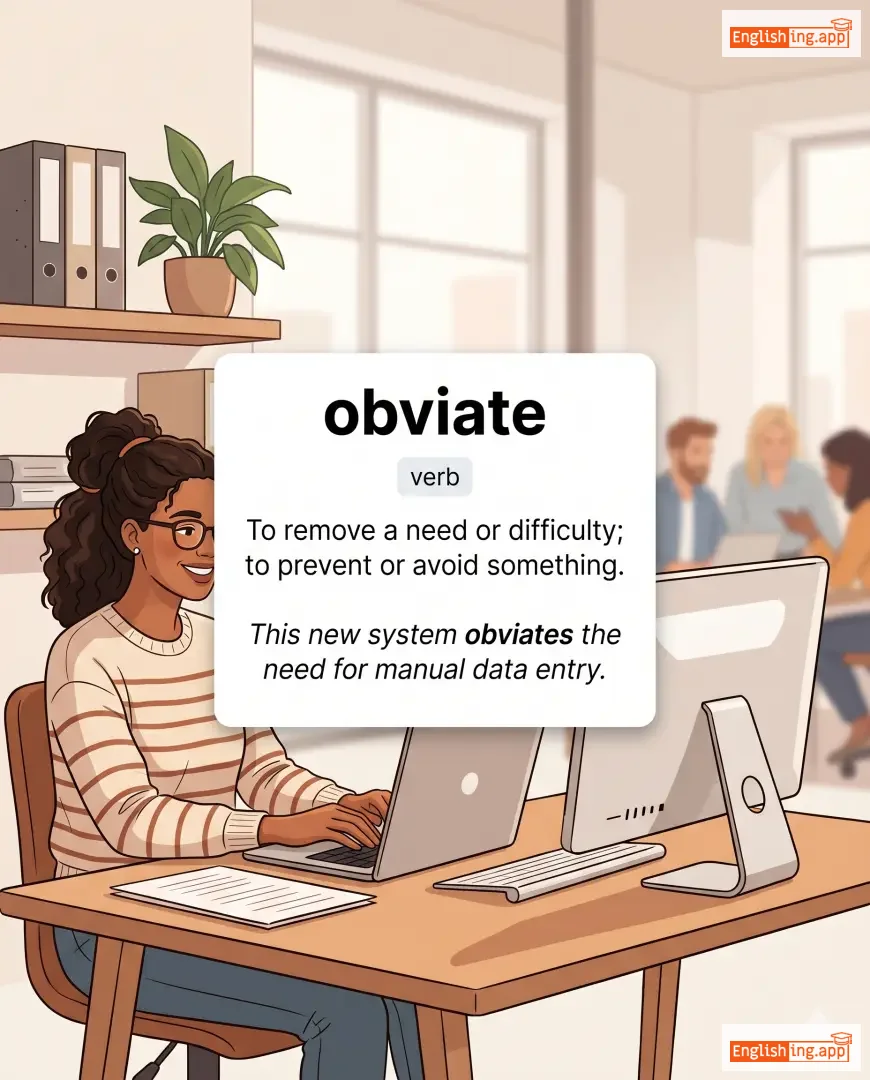
obviate definition card — visual illustration of the meaning
verb
/ˈɑːbvieɪt/
排除する (haijo suru)

To remove a need or difficulty; to prevent or avoid something.

"This new system obviates the need for manual data entry."

"この新しいシステムは手動データ入力の必要性を排除します。" (Kono atarashii shisutemu wa shudou deeta nyuuryoku no hitsuyousei o haijo shimasu.)
adjective
/ˈɒb.vi.əs/
明白 (meihaku)

easily perceived or understood; clear and apparent

"It was obvious that she was upset after the meeting."

"会議後、彼女が動揺していることは明白でした。" (Kaigi go, kanojo ga douyou shiteiru koto wa meihaku deshita.)
adverb
/ˈɒbviəsli/
明らかに (akirakani)

in a way that is easily perceived or understood; clearly

"Obviously, he didn’t read the instructions."

"もちろん、彼は指示を読まなかった。" (Mochiron, kare wa shiji o yomanakatta.)
noun
/əˈkeɪʒən/
機会 (kikai)

A particular time or event; a special or important happening.

"Her wedding was a joyful occasion for the whole family."

"彼女の結婚式は家族全員にとって楽しい機会でした。" (Kanojo no kekkonshiki wa kazoku zen'in ni totte tanoshī kikai deshita.)
adjective
/əˈkeɪʒənəl/
時々の (tokidoki no)

happening or done sometimes but not regularly or often

"He makes occasional visits to his hometown."

"彼は時々故郷に訪れます。" (Kare wa tokidoki furusato ni otozuremasu.)
adverb
/əˈkeɪʒənəli/
時々 (tokidoki)

from time to time; now and then

"I occasionally go for a walk in the park."

"私は時々公園を散歩します。" (Watashi wa tokidoki koen wo sanpo shimasu.)
noun
/ˈɒksɪdənt/
西洋 (seiyou)

The countries of the West, especially Europe and America.

"The Occident has a long history of philosophical thought."

"西洋には長い哲学的思考の歴史があります。" (Seiyou ni wa nagai tetsugakuteki shikou no rekishi ga arimasu.)
occlude definition card — visual illustration of the meaning
verb
/əˈkluːd/
閉塞する (ヘイソクスル)

To block or close up an opening or passage.

"The pipe was occluded by mineral deposits."

"パイプは鉱物の堆積物で閉塞されていました。" (Paipu wa kōbutsu no taisekimotsu de heisoku sarete imashita.)
occult definition card — visual illustration of the meaning
adjective
/əˈkʌlt/
オカルト (okaruto)

Relating to mysterious, supernatural, or magical powers and practices.

"She had always been fascinated by the occult and its hidden knowledge."

"彼女は常にオカルトとその隠された知識に魅了されていた。" (Kanojo wa jōni okaruto to sono kakusareta chishiki ni miryō sarete ita.)
noun
/ˈɒkjʊpənt/
乗客 (jōkyaku)

A person who resides in or is present in a house, vehicle, seat, or place.

"The car had three occupants at the time of the accident."

"事故の時、車には三人の乗客がいました。" (Jiko no toki, kuruma ni wa sannin no jōkyaku ga imashita.)
noun
/ˌɒkjʊˈpeɪʃən/
職業 (shokugyo)

a job or profession; the action or state of occupying a place

"Her occupation is a teacher at a local school."

"彼女の職業は地元の学校の教師です。" (Kanojo no shokugyo wa jimoto no gakkou no kyoushi desu.)
adjective; verb (past participle)
/ˈɒkjʊpaɪd/
使用中の;占領された (shiyouchuu no; senryou sareta)

being in use or taken; filled or lived in; controlled or held by force

"The room is occupied, so please wait outside."
"その部屋は使用中なので、外で待ってください。" (Sono heya wa shiyouchuu nanode, soto de matte kudasai)
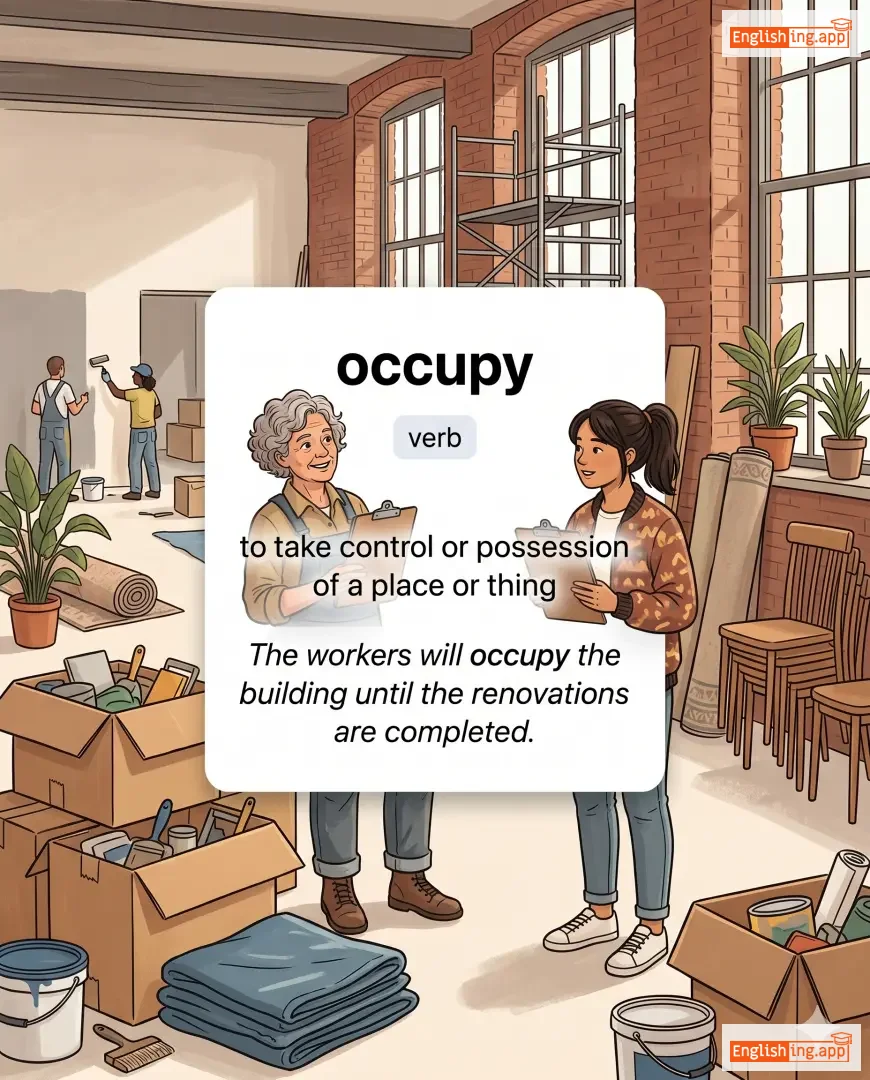
occupy definition card — visual illustration of the meaning
verb
/ˈɒkjʊpaɪ/
占拠する (senkyo suru)

to take control or possession of a place or thing

"The workers will occupy the building until the renovations are completed."
"労働者たちは改修が完了するまでその建物を占拠する。" (roudousha tachi wa kaishu ga kanryo suru made sono tatemono o senkyo suru.)
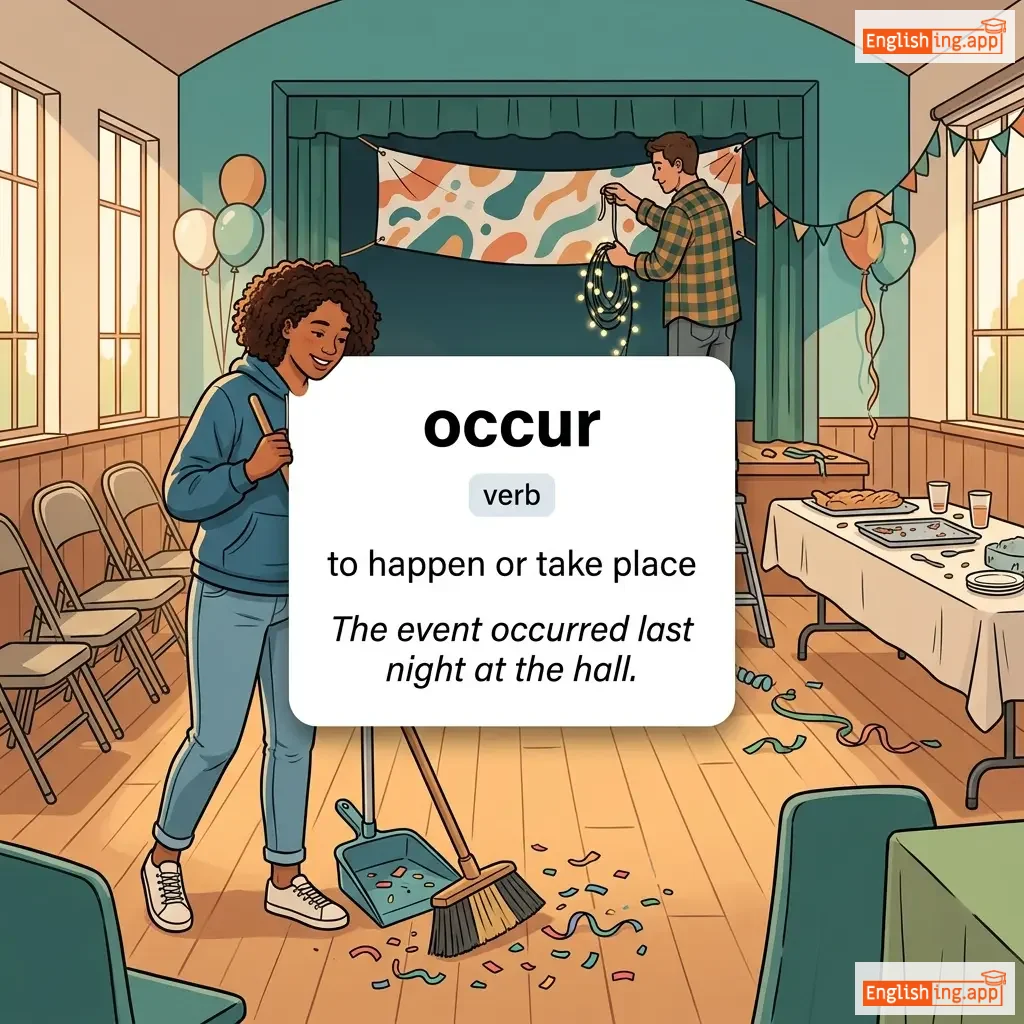
occur definition card — visual illustration of the meaning
verb
/əˈkɜːr/
発生する (hassuru)

to happen or take place

"The event occurred last night at the hall."

"その出来事は昨晩ホールで発生しました。" (Sono dekigoto wa sakuban hōru de hassei shimashita.)
noun
/əˈkʌrəns/
発生 (hassei)

An incident, event, or something that happens.

"The occurrence of such storms is rare in this region."
"この地域でそのような嵐が発生することはまれです。" (kono chiiki de sonoyou na arashi ga hassei suru koto wa mare desu)
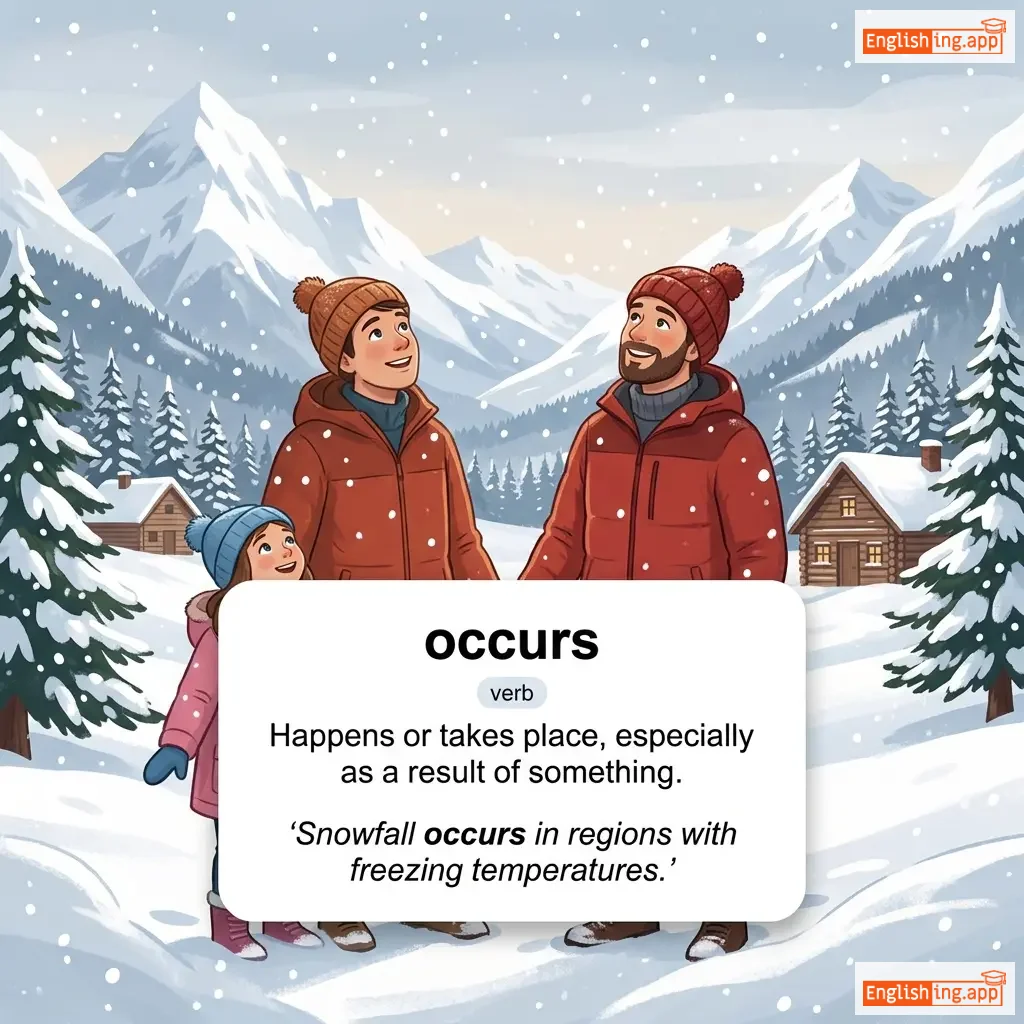
occurs definition card — visual illustration of the meaning
verb
অকার্স
起こる (okoru)

Happens or takes place, especially as a result of something.

"Snowfall occurs in regions with freezing temperatures."
"雪は氷点下の温度を持つ地域で起こります。" (Yuki wa hyōtenka no ondo o motsu chiiki de okorimasu.)
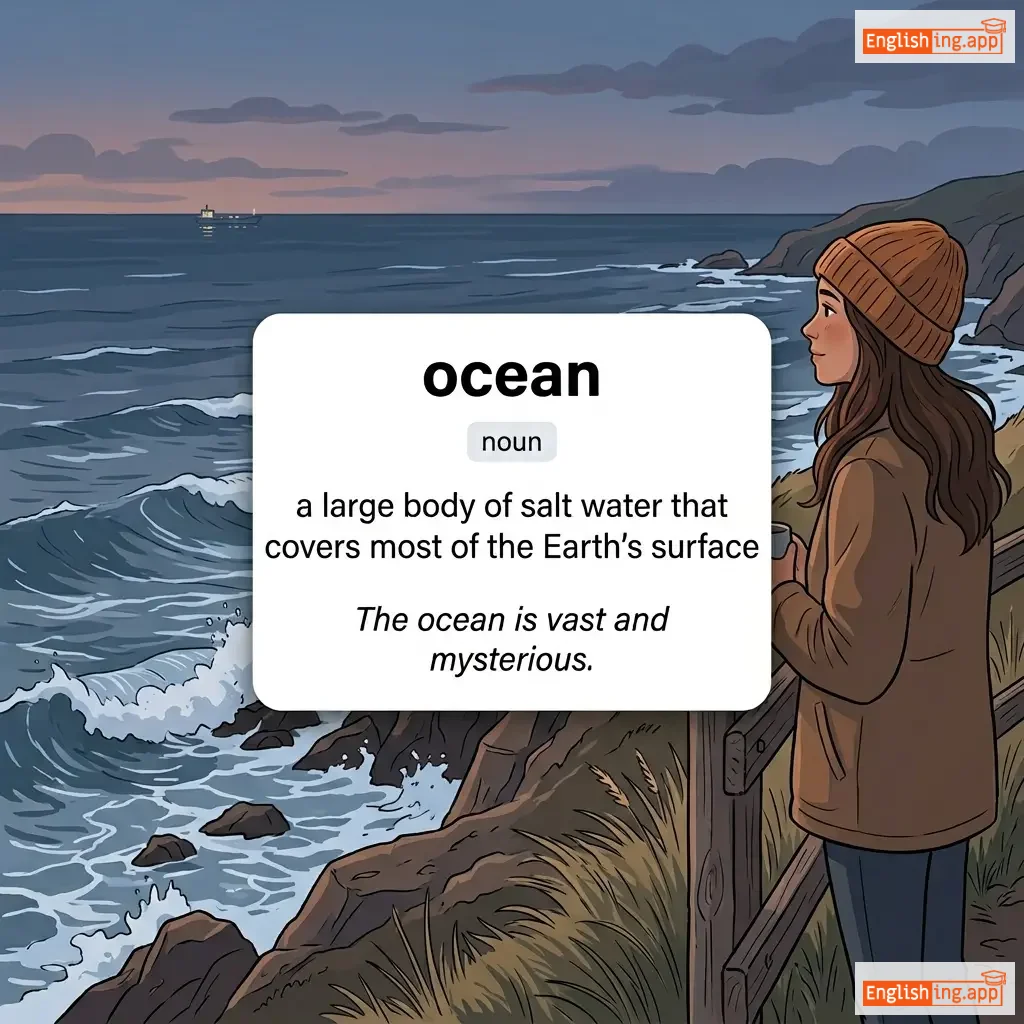
ocean definition card — visual illustration of the meaning
noun
/ˈoʊʃən/
海洋 (kaiyō)

a large body of salt water that covers most of the Earth's surface

"The ocean is vast and mysterious."
"海洋は広大で神秘的です。" (kaiyō wa kōdai de shinpiteki desu.)
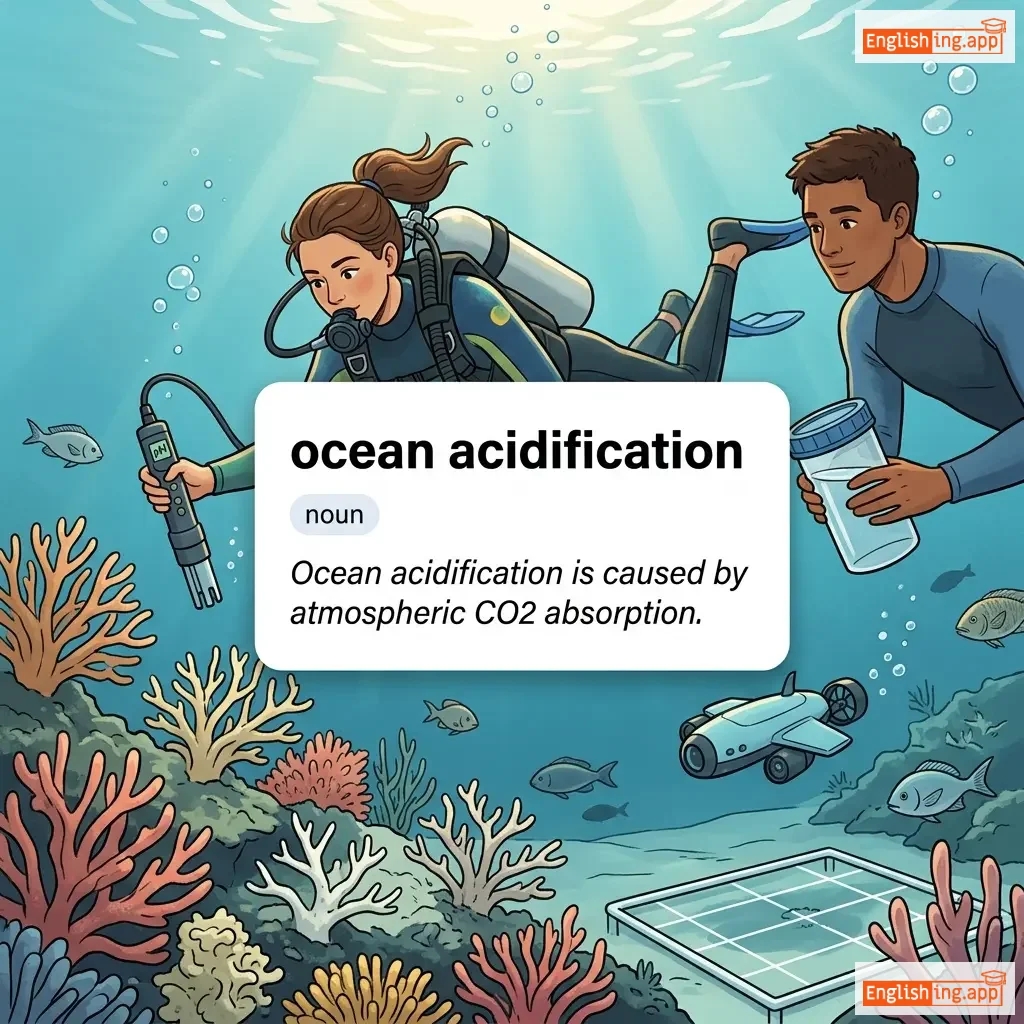
ocean acidification definition card — visual illustration of the meaning
noun
ˈoʊʃən əˌsɪdɪfɪˈkeɪʃən
海洋酸性化 (kaiyō sanseika)

The ongoing decrease in the pH of the Earth's oceans, caused by the absorption of carbon dioxide from the atmosphere.

"Ocean acidification is caused by atmospheric CO2 absorption."
"海洋酸性化は、大気中のCO2の吸収によって引き起こされます。" (Kaiyō sanseika wa, taiki-chū no CO2 no kyūshū ni yotte hikiokosaremasu.)
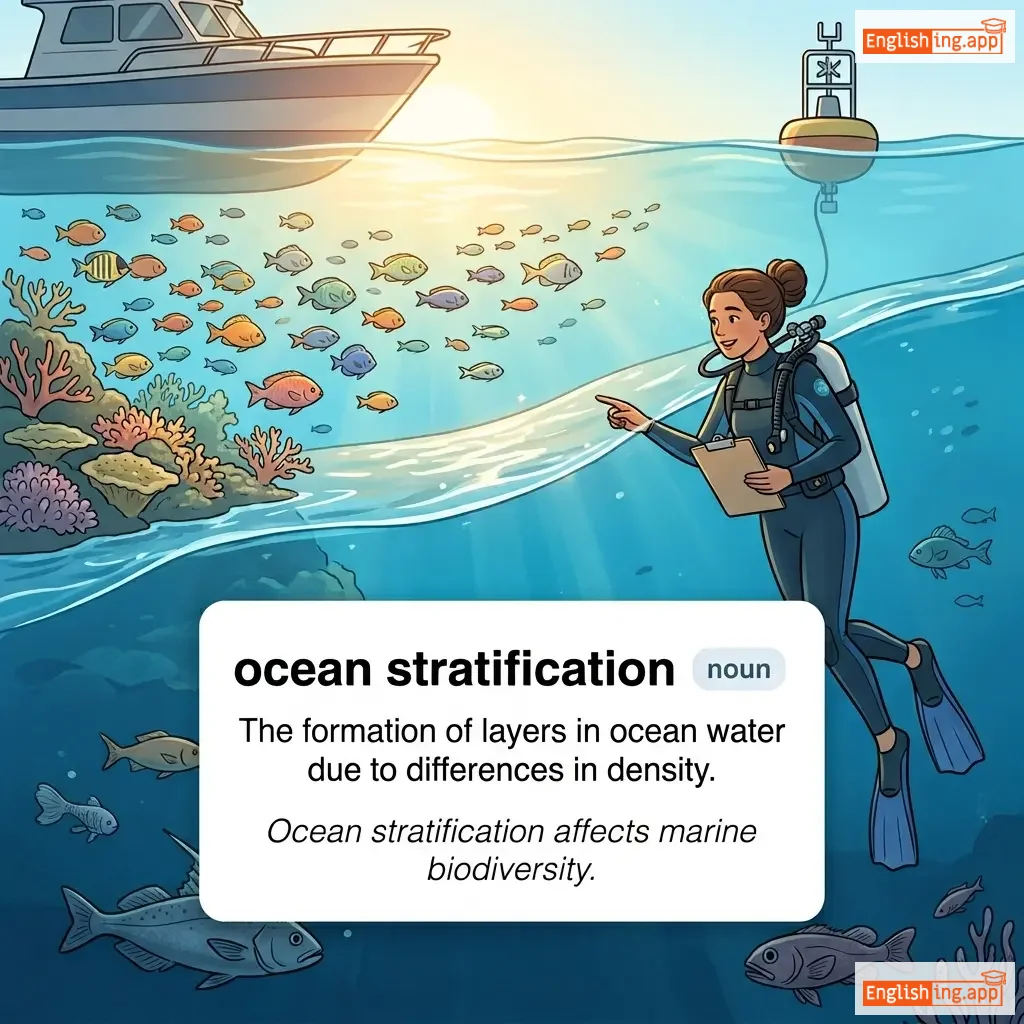
ocean stratification definition card — visual illustration of the meaning
noun
ˈoʊʃən ˌstrætɪfɪˈkeɪʃən
海洋の成層 (kaiyō no seisō)

The formation of layers in ocean water due to differences in density.

"Ocean stratification affects marine biodiversity."

"オーシャンストラティフィケーションは海洋生物多様性に影響を与えます。" (Ōshan sutoratifikēshon wa kaiyō seibutsu tayōsei ni eikyō o ataemasu.)
noun
/ˈɒktəɡən/
八角形 (hakkakukei)

A polygon with eight sides and eight angles.

"The stop sign is shaped like an octagon."

"ストップサインは八角形をしています。" (Sutoppu sain wa hakkakukei wo shiteimasu.)
noun
/ˈɒktɪv/

A series of eight musical notes, or the interval between one musical pitch and another with double its frequency.

"The singer's voice could easily reach the higher octave."

noun
/ɒkˈteɪvoʊ/
オクターヴォ (紙を8つに折りたたんで作られた本のサイズ) (okutāvo)

A size of book page resulting from folding a sheet of paper into eight leaves (sixteen pages).

"The old library contained rare octavo editions of Shakespeare."

"古い図書館にはシェイクスピアの珍しいオクターヴォ版がありました。" (Furui toshokan ni wa Sheikusupia no mezurashī okutāvo-ban ga arimashita.)
noun
/ɒkˈtoʊbər/
10月 (juugatsu)

the tenth month of the year in the Gregorian calendar

"The weather becomes cooler in October."

"10月になると天気が涼しくなります。" (juugatsu ni naru to tenki ga suzushiku narimasu)
noun
/ˌɒktədʒəˈnɛəriən/
80歳代の人 (80-sai dai no hito)

A person who is between 80 and 89 years old.

"The octogenarian still jogs every morning to stay healthy."

"そのオクトジェネリアンは毎朝健康を維持するためにジョギングをしています。" (Sono okutojenerian wa mai asa kenkou o iji suru tame ni jogingu o shiteimasu.)
adjective
/ˈɒkjʊlər/
眼科の (ganka no)

Relating to the eye or vision.

"The patient was referred to a specialist for ocular treatment."

"患者は眼科専門医に紹介されました。" (Kanja wa ganka senmon'i ni shōkai saremashita.)