語彙集

英単語辞書 | 単語の意味、定義、例文

noun
/ˈnoʊmæd/
ノマド (nomado)

A person who has no permanent home and moves from place to place.

"The desert was once home to nomads who lived by herding animals."

"砂漠はかつて動物を飼うことで生きていたノマドの家だった。" (Sabaku wa katsute doubutsu wo kau koto de ikiteta nomado no ie datta.)
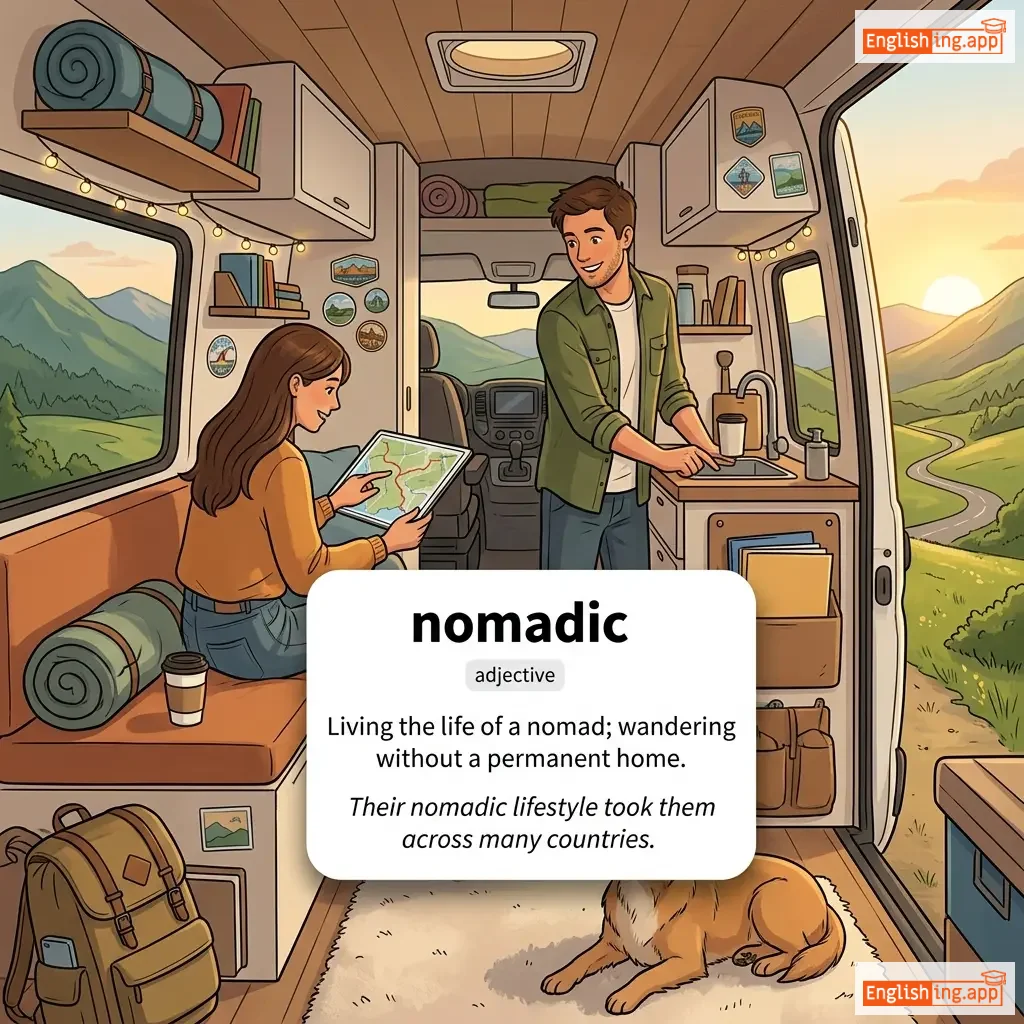
nomadic definition card — visual illustration of the meaning
adjective
/noʊˈmædɪk/

Living the life of a nomad; wandering without a permanent home.

"Their nomadic lifestyle took them across many countries."

noun
/ˈnoʊmənˌkleɪtʃər/
命名法 (meimeiho)

A system of names or terms used in a particular science, art, or field.

"The chemical nomenclature can be difficult for beginners to understand."

"化学的命名法は初心者には理解するのが難しい場合があります。" (Kagakuteki meimeiho wa shoshinsha ni wa rikai suru no ga muzukashii baai ga arimasu.)
adjective
/ˈnɒmɪk/
法則に関連する (hōsoku ni kanren suru)

Relating to laws, rules, or systems.

"The philosopher discussed the nomic necessity of natural laws."

"哲学者は自然法則のノミックな必要性について議論しました。" (Tetsugakusha wa shizen hōsoku no nomikku na hitsuyō-sei ni tsuite giron shimashita.)
adjective
/ˈnɒmɪnəl/
名目上の (meimoku-jō no)

Existing in name only; very small in amount.

"He was the nominal leader of the group but had no real power."
"彼はグループの名目上のリーダーだったが、実際の権限はなかった。" (Kare wa gurūpu no meimoku-jō no rīdā datta ga, jissai no ken'nendo wa nakatta.)
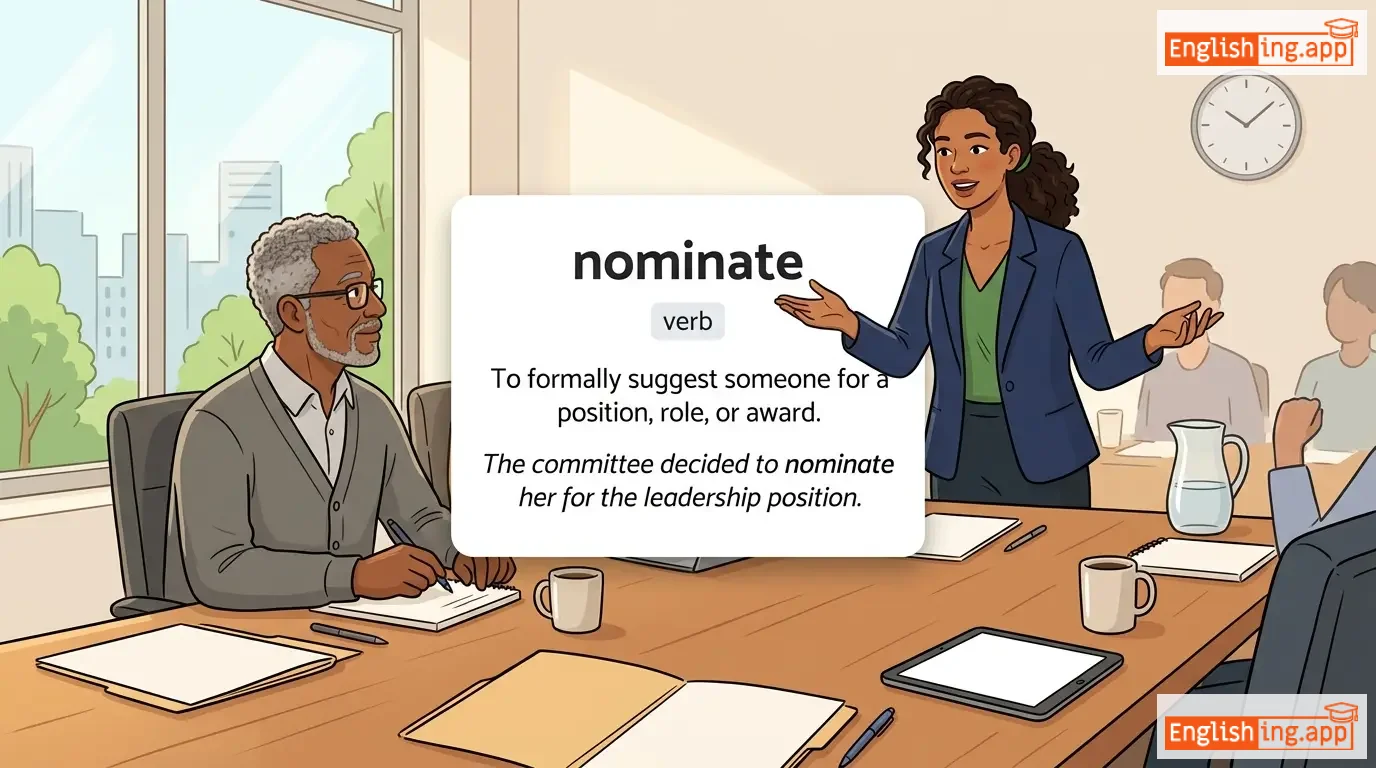
nominate definition card — visual illustration of the meaning
verb
/ˈnɒməˌneɪt/
指名する (shimei suru)

To formally suggest someone for a position, role, or award.

"The committee decided to nominate her for the leadership position."

"委員会は彼女をリーダー職に指名することを決定しました。" (Iinkai wa kanojo o rīdā-shoku ni shimei suru koto o kettei shimashita.)
noun
/ˌnɒməˈneɪʃən/
ノミネーション (nominēshon)

The act of formally proposing someone for a role, position, or award.

"Her nomination for the award surprised everyone."

"彼女の賞へのノミネーションは、皆を驚かせました。" (Kanojo no shō e no nomineeshon wa, mina o odorokasemashita.)
noun
/ˌnɒmɪˈniː/
ノミネートされた人 (nomineto sareta hito)

a person who is formally suggested or chosen for a position, award, or role

"She was the nominee for the Best Actress award."

"彼女は最優秀女優賞のノミネート者でした。" (Kanojo wa saiyuushuu joyuushou no nomineeto-sha deshita.)
noun
/ˌnɒn ˈsɛkwɪtər/
論理的に関連しない発言 (ronriteki ni kanren shinai hatsugen)

a statement or conclusion that does not logically follow from the previous statement

"His comment about the weather was a complete non sequitur during the budget discussion."

"予算の議論中、彼の天気に関するコメントは完全に論理的に関連しない発言だった。" (Yosan no giron-chū, kare no tenki ni kansuru komento wa kanzen ni ronriteki ni kanren shinai hatsugen datta.)
noun, adjective
/nɒn ˈkɒmbətənt/
非戦闘員 (hisen tōin)

a person not engaged in fighting during a war, such as civilians or medical staff

"The Red Cross workers were treated as non-combatants in the conflict."
"赤十字のスタッフは紛争で非戦闘員として扱われました。" (Aka jūji no sutaffu wa funsō de hisentōin toshite atsukaware mashita.)
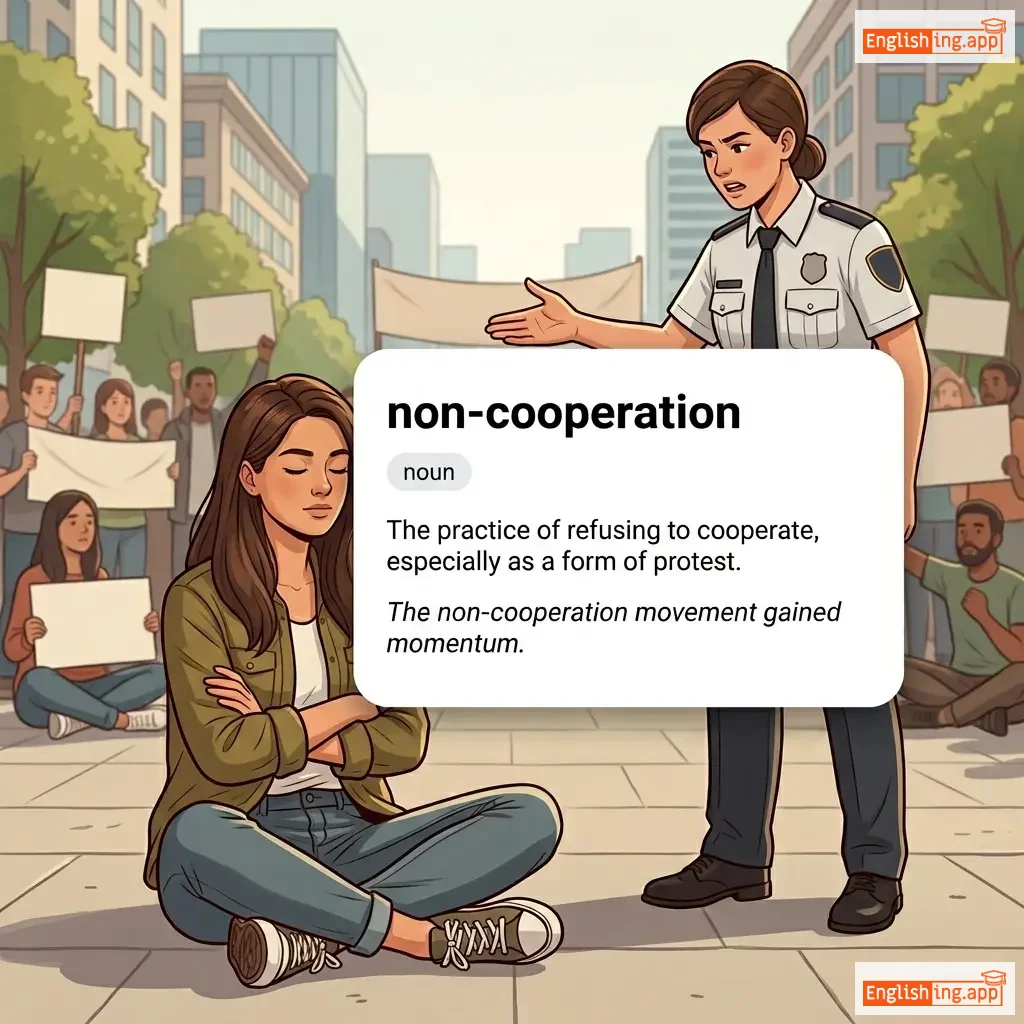
non-cooperation definition card — visual illustration of the meaning
noun
ˌnɒn.kəʊˌɒp.ərˈeɪ.ʃən
非協力 (hikyouryoku)

The practice of refusing to cooperate, especially as a form of protest.

"The non-cooperation movement gained momentum."

"非協力運動は勢いを得た。" (Hikyouryoku undou wa ikioi o eta.)
adjective
/ˌnɒn ɪɡˈzɪstənt/
存在しない (sonzai shinai)

not real or not present; lacking existence

"The supposed evidence turned out to be non-existent."

"仮定された証拠は存在しないことが判明しました。" (Katei sareta shōko wa sonzai shinai koto ga hanmei shimashita.)
noun; adjective
/ˌnɒnˈprɒfɪt/
非営利の (hieiri no)

an organization that does not operate for profit and reinvests surplus to achieve social goals; not intended to make financial profit

"She works for a non-profit that provides free education to underprivileged children."

"彼女は無料教育を提供する非営利団体で働いています。" (kanojo wa muryo kyoiku o teikyo suru hieiri dantai de hataraite imasu)
noun, adjective
/ˌnɒn ˈrɛzɪdənt/
非居住者 (hi kyojusha)

a person who does not live in a particular country or place permanently

"Non-resident students often pay higher tuition fees."

"非居住者の学生は、しばしば高い学費を支払います。" (Hi kyojusha no gakusei wa, shibashiba takai gakuki wo shiharai masu.)
adverb
/ˌnɒnˈstɒp/
ノンストップ; 途切れなく (non-stop; togire naku)

continuing without stopping; without interruption

"The train traveled non-stop from London to Paris."
"その列車はロンドンからパリまでノンストップで走った。" (Sono ressha wa Rondon kara Pari made non-stop de hashitta.)
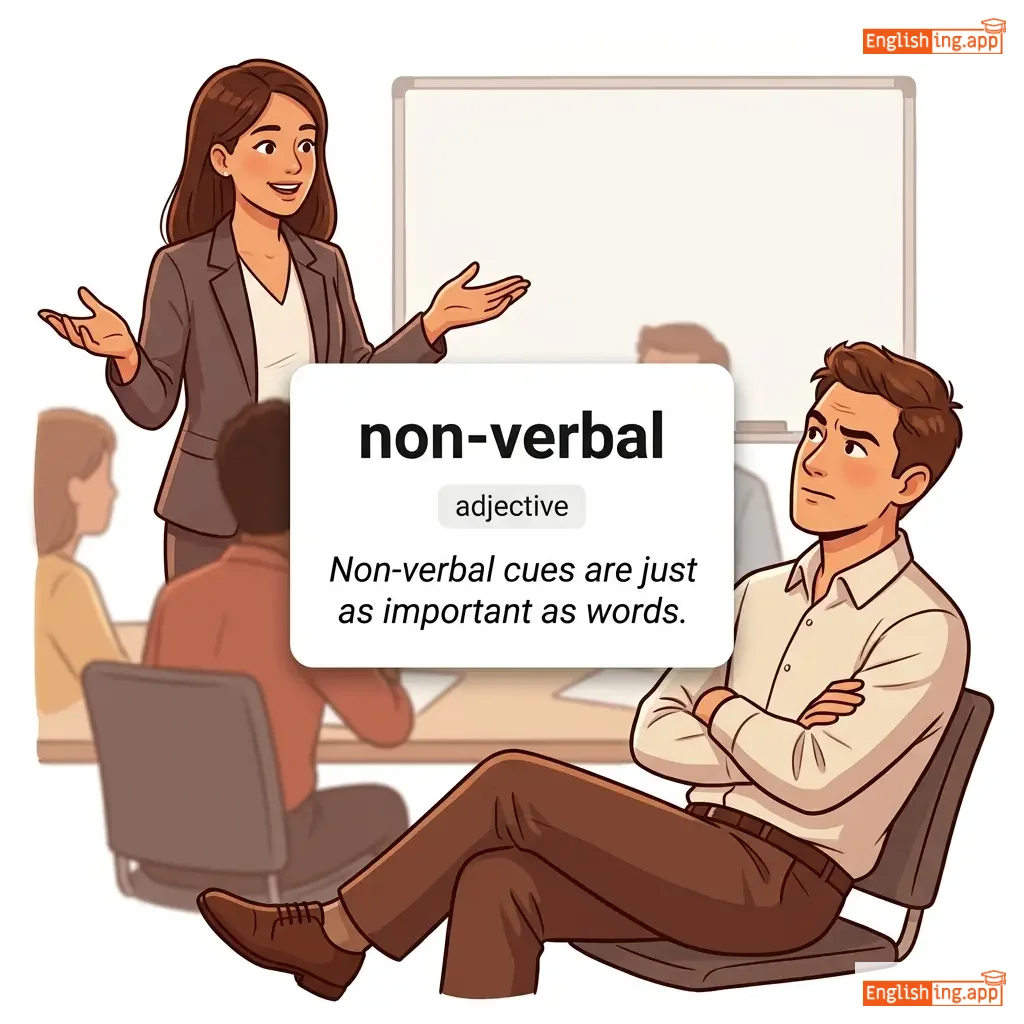
non-verbal definition card — visual illustration of the meaning
adjective
/ˌnɒnˈvɜː.bəl/
言葉やスピーチを使用せずに、ジェスチャー、ボディランゲージ、または顔の表情を通じて伝達される。 (Kotoba ya supīchi o shiyō sezu ni, jesuchā, bodi rangenji, matawa kao no hyōjō o tsūjite dentatsu sa reru.)

Not involving or using words or speech; communicated through gestures, body language, or facial expressions.

"Non-verbal cues are just as important as words."

"ノンバーバルキューは言葉と同じくらい重要です。" (Non-bābaru kyū wa kotoba to onaji kurai jūyō desu.)
noun
/ˈnɒn.ɪʤ/
未成年 (noneeji)

the period of being under the legal age of majority; youth or immaturity

"During his nonage, all legal decisions were made by his guardian."

"彼が未成年であった間、すべての法的決定は保護者によって下された。" (Kare ga miseinen deatta aida, subete no houteki kettei wa hogosha ni yotte kudasareta)
noun
/ˈnɒnʃələns/
無頓着 (mutonchaku)

A relaxed and calm state, showing lack of concern or interest.

"She answered the tough questions with surprising nonchalance."

"彼女は驚くべき無頓着で難しい質問に答えました。" (Kanojo wa odorokubeki mutonchaku de muzukashii shitsumon ni kotaemashita.)
adjective
/ˈnɒnʃələnt/

Appearing calm, casual, and unconcerned.

"He gave a nonchalant shrug and walked away."

adjective
/ˌnɒnkəˈmɪtl̩/

Not expressing or showing a clear opinion, decision, or commitment.

"She gave a noncommittal reply when asked about her future plans."

adjective
/ˌnɒndɪˈskrɪpt/
特徴のない (tokuchou no nai)

Lacking distinctive or interesting features; dull and unremarkable.

"He lives in a nondescript apartment building on the edge of town."

"彼は町の外れにある特徴のないアパートに住んでいます。" (Kare wa machi no hazure ni aru tokuchou no nai apāto ni sundeimasu.)
pronoun
/nʌn/
誰もいない (dare mo inai)

not any; no one; not one

"None of the students passed the exam."

"誰もその試験に合格しませんでした。" (Dare mo sono shiken ni goukaku shimasen deshita.)
noun
/nɒnˈentəti/
重要でない人物 (jūyō de nai jinbutsu)

A person or thing of no importance or significance.

"Once a powerful leader, he is now treated as a political nonentity."

"かつては強力なリーダーだったが、今では政治的なノンエンティティとして扱われている。" (Katsute wa kyōryoku na rīdā datta ga, ima de wa seiji-teki na nonentity toshite atsukawarete iru.)
🌧️➡️🏞️

nonetheless (ノンゼレス)

adverb
/ˌnʌnðəˈlɛs/
それにもかかわらず (sore ni mo kakawarazu)

in spite of that; nevertheless

"It was raining, but nonetheless, they went hiking."

"雨が降っていましたが、それにもかかわらず、彼らはハイキングに行きました。" (Ame ga futte imashita ga, sore ni mo kakawarazu, karera wa haikingu ni ikimashita.)
adjective
/ˌnɒnpəˈreɪl/
比類のない (hirui no nai)

Having no equal; unrivaled or matchless.

"Her beauty was considered nonpareil in the region."

"彼女の美しさはその地域で比類のないものと考えられていた。" (kanojo no utsukushisa wa sono chiiki de hirui no nai mono to kangaerarete ita)
verb
/ˌnɒnˈplʌs/
困惑させる (konwaku saseru)

To surprise and confuse someone so much that they are unsure how to react.

"The unexpected question seemed to nonplus the speaker."

"予期しない質問がスピーカーを困惑させたようだ。" (Yokishinai shitsumon ga supiikaa wo konwaku saseta you da.)
verb
/ˌnɒnˈplʌst/
困惑した (konwaku shita)

Past tense of nonplus; surprised and confused.

"She was completely nonplused by his sudden decision."

"彼女は彼の突然の決断に完全に困惑していました。" (Kanojo wa kare no totsuzen no ketsudan ni kanzen ni konwaku shite imashita.)
verb
/ˌnɒnˈplʌst/
困惑 (konwaku)

Past tense of nonplus; surprised and unsure how to react.

"He stood nonplussed at the strange remark."

"彼は奇妙なコメントに困惑して立ち尽くしていた。" (Kare wa kimyou na komento ni konwaku shite tachitsukushite ita.)
adjective
/ˌnɒnˈprɒfɪt/
非営利団体 (hi eiri dantai)

an organization that does not aim to make a profit, often serving a social or charitable purpose.

"She works for a nonprofit organization that helps children."

"彼女は子供たちを助ける非営利団体で働いています。" (Kanojo wa kodomotachi wo tasukeru hi eiri dantai de hataraiteimasu.)
noun
/ˈnɒnsəns/
ナンセンス (nansensu)

Words or ideas that have no meaning or make no sense.

"His explanation was pure nonsense."

"彼の説明は完全にナンセンスだった。" (kare no setsumei wa kanzen ni nansensu datta.)
adjective
/ˌnɒnˈtrɪviəl/
非自明 (hi jimmyo)

Not simple or easy; requiring effort or significant thought.

"Solving the equation turned out to be a nontrivial task."
"方程式を解くことは非自明な作業であることが分かりました。" (Hōteishiki o toku koto wa hi jimmyo na sagyō de aru koto ga wakarimashita.)
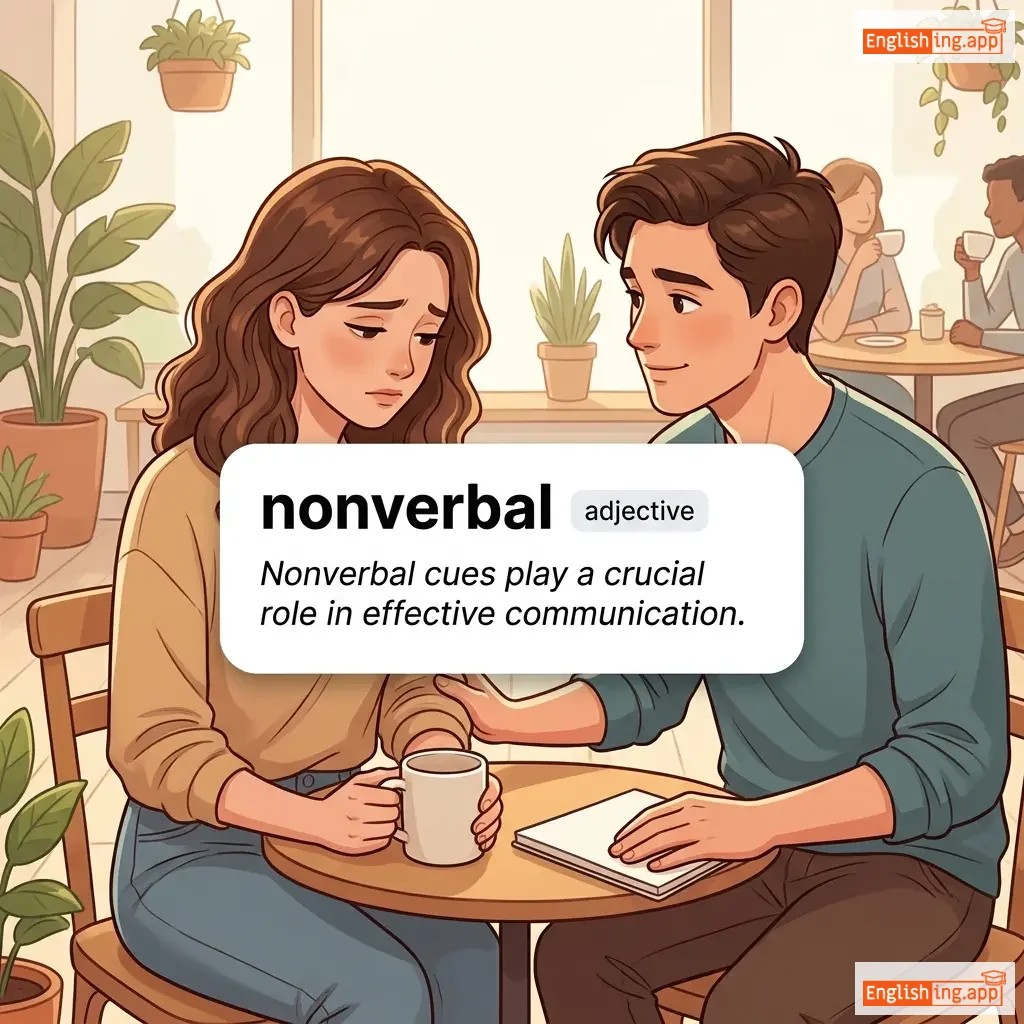
nonverbal definition card — visual illustration of the meaning
adjective
ˌnɒnˈvɜːr.bəl
非言語 (higengo)

Communication using body language, facial expressions, or gestures instead of words

"Nonverbal cues play a crucial role in effective communication."

"非言語の合図は効果的なコミュニケーションにおいて重要な役割を果たします。" (Higengo no aizu wa kouka-tekina komyunikeeshon ni oite juuyou na yakuwari o hatashimasu.)
noun (plural)
/ˈnuːdəlz/
(men)

long, thin strips of dough made from flour, water, or eggs, cooked and eaten as food

"She cooked noodles with vegetables for dinner."

"彼女は夕食に野菜入りの麺を作った。" (kanojo wa yuushoku ni yasai iri no men o tsukutta)
noun
/nuːn/
正午 (shōgo)

12 o'clock in the daytime; midday

"The meeting will start at noon."

"会議は正午に始まります。" (Kaigi wa shōgo ni hajimarimasu.)
noun
/nuːs/
ひも (himo)

A loop with a running knot, used especially for trapping or hanging.

"The cowboy tied a noose to catch the wild horse."

"カウボーイは野生の馬を捕まえるためにヌースを結んだ。" (Kaubōi wa yasei no uma wo tsukamaeru tame ni noosu wo musunda.)
🚫➡️🚫

nor (ノア)

conjunction
/nɔːr/
またはない (mata wa nai)

used to introduce a negative clause after a negative statement

"He didn't call, nor did he send a message."

"彼は電話をかけなかったし、メッセージも送らなかった。" (Kare wa denwa o kakenakatta shi, messeeji mo okurakanakatta.)
noun
/nɔːrm/
規範 (kihan)

An accepted standard or a usual practice.

"Wearing uniforms is the norm in many schools."

"多くの学校で制服を着ることが規範です。" (Ooku no gakkou de seifuku o kiru koto ga kihan desu.)
adjective
/ˈnɔː.məl/
正常 (seijou)

conforming to a standard; usual, typical, or expected

"It is normal to feel nervous before an interview."

"面接前に緊張するのは正常です。" (Mensetsu mae ni kinchou suru no wa seijou desu.)
noun
/ˈnɔːrməlsi/
正常 (seijou)

The condition of being normal; a return to usual or expected conditions.

"After the flood, the town struggled to regain a sense of normalcy."

"洪水の後、町は正常な状態を取り戻すために奮闘しました。" (Kousui no ato, machi wa seijou na joutai o torimodosu tame ni funtou shimashita.)
verb
/ˈnɔːrməlaɪz/
正常化する (seijouka suru)

to bring something back to a normal or standard condition; to make something conform to a standard

"The government took steps to normalize relations with neighboring countries."

"政府は関係を正常化するための措置を取った。" (seifu wa kankei o seijouka suru tame no sochi o totta)
adverb
/ˈnɔːməli/
通常 (tsūjō)

in a usual or expected way

"I normally wake up at 7 AM."

"私は通常午前7時に起きます。" (Watashi wa tsūjō gozen 7-ji ni okimasu.)
⚔️

Norman

noun
/ˈnɔːrmən/

A member of a people of mixed Scandinavian and Frankish origin who settled in Normandy, or relating to their culture.

"The Normans conquered England in 1066."

adjective
/ˈnɔːrmətɪv/
規範的 (kihanteki)

relating to rules, standards, or norms that govern behavior or beliefs

"The study focused on the normative aspects of cultural behavior."

"その研究は文化的な行動の規範的側面に焦点を当てました。" (Sono kenkyū wa bunka-teki na kōdō no kihanteki sokumen ni shōten o atemashita.)
noun
/nɔːrθ/
(kita)

the direction toward the top of a map or the opposite of south

"We traveled north to reach the mountains."

"私たちは山に到達するために北へ向かって旅しました。" (Watashitachi wa yama ni tōtatsu suru tame ni kita e mukatte tabimashita.)
noun
/ˌnɔːrθˈiːst/
北東 (hokutou)

the direction between north and east; a region or area located in that direction.

"The storm is moving toward the northeast."

"嵐は北東に向かって進んでいます。" (Arashi wa hokutou ni mukatte susundeimasu.)
adjective
/ˈnɔːðərn/
北部の (hokubu no)

relating to the north or situated in the north

"The northern part of the country is known for its cold climate."

"その国の北部は寒冷な気候で知られています。" (Sono kuni no hokubu wa kanrei na kikō de shirareteimasu.)
adverb
/ˈnɔːθwədz/
北へ (kita e)

towards the north; in a northerly direction

"The birds migrate northwards in spring."

"鳥たちは春に北へ移動します。" (Tori-tachi wa haru ni kita e idō shimasu.)
noun, adjective, adverb
/ˌnɔːrθˈwest/
北西 (hokusei)

the direction that is between north and west; situated in or moving toward this direction

"Seattle is located in the northwest of the United States."

"シアトルはアメリカ合衆国の北西部にあります。" (Shiatoru wa Amerika Gasshūkoku no hokuseibu ni arimasu.)
noun
/noʊz/
(hana)

the part of the face that contains the nostrils and is used for breathing and smelling

"He has a sharp nose and can smell things from far away."

"彼は鋭い鼻を持っており、遠くから物の匂いを嗅ぐことができる。" (Kare wa surudoi hana o motte ori, tōku kara mono no nioi o kagu koto ga dekiru.)
noun
/noʊz rɪŋ/
鼻リング (hana ringu)

a piece of jewelry worn through a piercing in the nose

"She got a small gold nose ring for her birthday."

"彼女は誕生日に小さな金の鼻リングをもらった。" (Kanojo wa tanjōbi ni chīsana kin no hana ringu o moratta.)