語彙集

英単語辞書 | 単語の意味、定義、例文

adjective
/nɪˈɡoʊ.ʃi.ə.bəl/
交渉可能 (koushou kanou)

Open to discussion or modification; capable of being bargained for.

"The salary offered is negotiable."

"提供された給与は交渉可能です。" (Teikyou sareta kyūyo wa koushou kanou desu.)
verb
/nɪˈɡoʊ.ʃi.eɪt/
交渉する (koushou suru)

To discuss something formally in order to reach an agreement.

"They negotiated a fair deal with the supplier."

"彼らはサプライヤーと公平な取引を交渉した。" (Karera wa sapuraiyaa to kouhei na torihiki wo koushou shita.)
noun
/nɪɡoʊˈʃiːeɪʃən/
交渉 (koushou)

a discussion aimed at reaching an agreement

"The negotiation between the two companies was successful."

"二社間の交渉は成功しました。" (Nishakan no koushou wa seikou shimashita.)
noun
/ˈneɪbər/
隣人 (rinjin)

a person living next door or nearby

"My neighbor lent me some sugar when I ran out."

"私の隣人は私が砂糖がなくなった時、砂糖を貸してくれました。" (Watashi no rinjin wa watashi ga satō ga nakunatta toki, satō o kashite kuremashita.)
noun
/ˈneɪbərˌhʊd/
近所 (kinjo)

a district or area around or near a particular place

"I grew up in a quiet neighborhood."

"私は静かな近所で育ちました。" (Watashi wa shizukana kinjo de sodachimashita.)
adjective
/ˈneɪbərɪŋ/
隣接する (rinsetsu suru)

situated near or next to another place; adjacent or nearby.

"They visited a neighboring village for the festival."

"彼らは祭りのために隣の村を訪れました。" (Karera wa matsuri no tame ni tonari no mura o otozuremashita.)
noun
/ˈneɪ.bər/
隣人; 近く (rinjin; chikaku)

a person who lives near or next to another person

"My neighbour is very friendly and helpful."

"私の隣人はとても親切で役に立ちます。" (Watashi no rinjin wa totemo shinsetsu de yaku ni tachimasu.)
adjective
/ˈneɪ.bər.ɪŋ/
隣接した; 近接した; 隣国の (rinsesshita; kinsetsu shita; ringoku no)

situated next to or very near; adjacent; bordering

"We often visit our neighbouring countries for trade."

"私たちは貿易のために隣国をよく訪れます。" (Watashitachi wa boueki no tame ni ringoku o yoku otozuremasu.)
conjunction
/ˈniːðər/
どちらも〜ない (dochira mo nai)

used to connect two negative alternatives

"Neither the manager nor the assistant could attend the meeting."

"マネージャーもアシスタントも会議に出席できなかった。" (maneja mo ashisutanto mo kaigi ni shusseki dekinakatta)
noun
/ˈnɛm.ə.sɪs/
敵 / ライバル (teki / raibaru)

A long-standing rival or an inescapable agent of downfall.

"For years, he considered his colleague to be his nemesis."

"何年もの間、彼は同僚を自分の敵だと思っていた。" (Nanen mono aida, kare wa douryou wo jibun no teki da to omotte ita.)
noun
/ˌniːoʊˈdɑːrwɪnɪzəm/
ネオダーウィニズム (neodaawinizumu)

A modern interpretation of Darwin's theory of evolution, integrating genetics and natural selection.

"Neo-Darwinism combines Darwin’s theory of natural selection with modern genetics."

"ネオダーウィニズムはダーウィンの自然選択説と現代遺伝学を組み合わせています。" (Neo-Darwinism wa Darwin no shizen sentaku setsu to gendai idengaku o kumiawase teimasu.)
noun
/ˌniːoʊˈlætɪn/
ネオラテン (neo raten)

The use of Latin language for scholarly, scientific, and literary purposes after the medieval period.

"Many scientific names are derived from Neo-Latin."

"多くの科学的な名前はネオラテンから派生しています。" (Ōku no kagakuteki na namae wa neo raten kara hassei shiteimasu.)
noun
/niːˈɒkrəsi/
未熟なまたは新しい官僚によって運営される政府 (Mijuku na mata wa atarashī kanryō ni yotte un'ei sareru seifu)

A government or leadership run by inexperienced or new officials.

"The sudden revolution led to a neocracy with inexperienced leaders."

"突然の革命は未経験のリーダーたちによるネオクラシーを生み出した。" (Totsuzen no kakumei wa mikeiken no rīdā-tachi ni yoru neokurashī o umidashita.)
adjective
/ˌniːoʊˈlɪθɪk/
新石器時代の (shin sekkī jidai no)

Relating to the later part of the Stone Age, when ground or polished stone weapons and tools prevailed.

"Neolithic communities began practicing agriculture and domesticating animals."

"新石器時代のコミュニティは農業を行い、動物を飼いならし始めた。" (Shin sekkī jidai no komyuniti wa nōgyō o okonai, dōbutsu o kainarashi hajimeta.)
noun
/niːˈɒlədʒɪzəm/
新造語 (shinzōgo)

A newly coined word or expression.

"The internet has given rise to many neologisms like 'selfie' and 'hashtag'."

"インターネットは「セルフィー」や「ハッシュタグ」などの多くの新造語を生み出しました。" (Intānetto wa 'serufī' ya 'hasshutagu' nado no ōku no shinzōgo o umidashimashita.)
noun
/niˈɒlədʒi/
新しい言葉の使用またはその起源の研究 (atarashii kotoba no shiyou matawa sono kigen no kenkyuu)

The use of new words or the study of their origin.

"The professor specialized in neology, studying the creation of modern slang."

"教授はネオロジーを専門とし、現代のスラングの創造を研究しました。" (Kyouju wa neorojī o senmon to shi, gendai no surangu no souzou o kenkyuu shimashita.)
noun
/ˌniːoʊˈpeɪɡənɪzəm/
ネオペイガニズム (neopeiganizumu)

Modern religious movements influenced by or claiming to be derived from the various historical pagan beliefs of pre-modern Europe.

"Neopaganism has gained popularity as people seek spiritual alternatives to mainstream religions."
"ネオペイガニズムは、人々が主流の宗教に代わる精神的な選択肢を探しているため、人気を集めています。" (Neopeiganizumu wa, hitobito ga shuryū no shūkyō ni kawaru seishinteki na sentakushi o sagashite iru tame, ninki o atsumeています。)
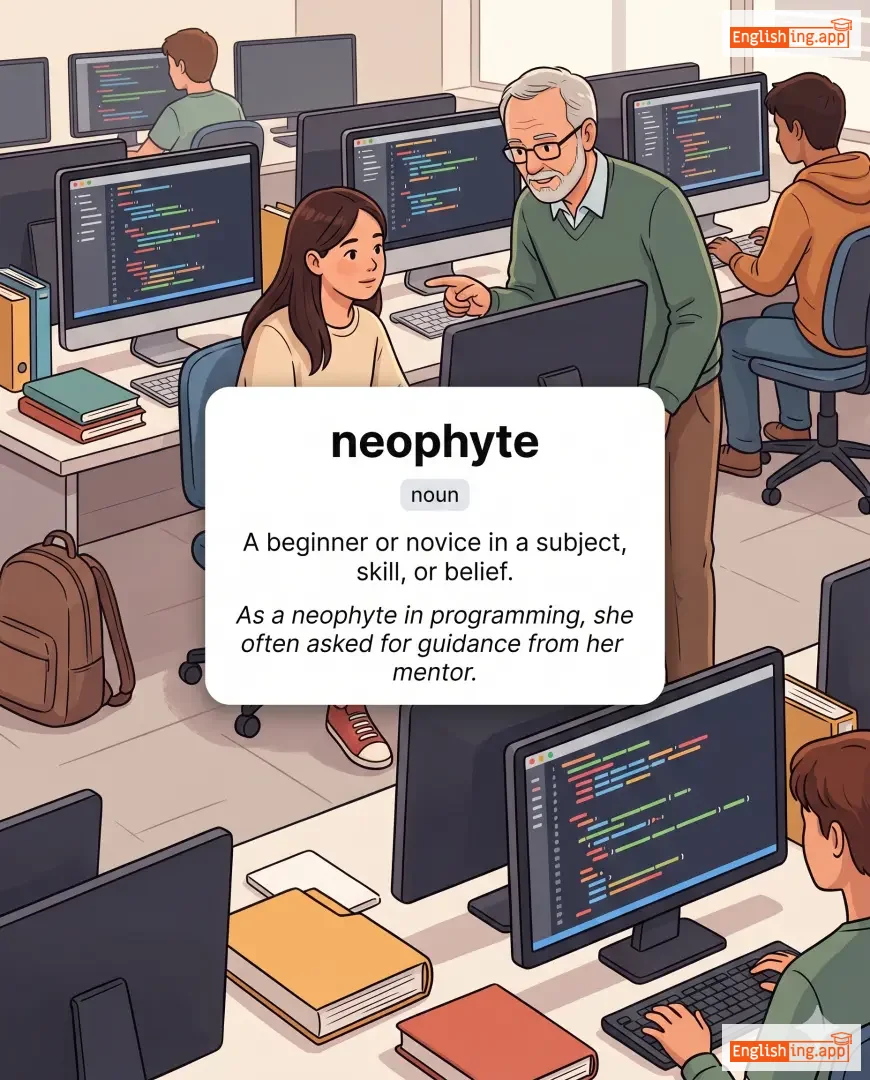
neophyte definition card — visual illustration of the meaning
noun
/ˈniːəˌfaɪt/
初心者 (shoshinsha)

A beginner or novice in a subject, skill, or belief.

"As a neophyte in programming, she often asked for guidance from her mentor."

"プログラミングの初心者として、彼女はよくメンターに指導を求めていた。" (Puroguramingu no shoshinsha to shite, kanojo wa yoku mentā ni shidō o motomete ita.)
noun
/ˈnefjuː/
(oi)

the son of one’s brother or sister

"My nephew is studying at the university."

"私の甥は大学で勉強しています。" (watashi no oi wa daigaku de benkyou shiteimasu)
noun
/ˈnɛpətɪzəm/
縁故主義 (enkoshugi)

The practice of giving unfair advantages to relatives, especially in jobs or positions of power.

"The company was accused of nepotism after the manager hired his brother."

"マネージャーが兄弟を雇った後、会社は縁故主義で告発されました。" (Manējā ga kyōdai o yatotta ato, kaisha wa enkoshugi de kokuhatsu saremashita.)
noun, verb
/nɜːrv/
神経; 勇気 (shinkei; yūki)

A bundle of fibers in the body that transmits signals between the brain and other parts; also courage or audacity.

"She gathered the nerve to speak in front of the large audience."

"彼女は大きな観客の前で話す勇気を持っていた。" (Kanojo wa ōkina kankyaku no mae de hanasu yūki o motte ita.)
adjective
/ˈnɜːrvəs/
緊張 (kinchou)

anxious, worried, or fearful about something

"She felt nervous before giving her presentation."

"彼女はプレゼンテーションの前に緊張していた。" (Kanojo wa purezentēshon no mae ni kinchou shite ita.)
noun
/nɛst/
(su)

a structure built by birds or other animals to hold their eggs or young.

"The bird built a nest in the tall tree."

"その鳥は高い木に巣を作った。" (Sono tori wa takai ki ni su o tsukutta.)
verb
/ˈnɛsəl/
寄り添う (yorisou)

to settle or lie comfortably within or against something

"The child nestled into her mother's arms."

"その子供は母親の腕に寄り添いました。" (Sono kodomo wa hahaoya no ude ni yorisoumashita.)
noun
/ˈnɛslɪŋ/
ひな鳥 (hinadori)

a young bird that has not yet left the nest

"The nestling waited for its parent to bring food."

"ひな鳥は親が食べ物を持ってくるのを待っていました。" (Hinadori wa oya ga tabemono o motte kuru no o matte imashita.)
noun
/nɛt/
(ami)

a piece of material made of threads or ropes woven together, used to catch or hold things

"The fisherman cast his net into the sea."

"漁師は網を海に投げた。" (Ryoushi wa ami wo umi ni nageta.)
adjective
/ˈnɛðər/
下の (shita no)

situated down or below; lower

"They explored the nether regions of the cave."

"彼らは洞窟の下の地域を探索した。" (Karera wa dōkutsu no shita no chiiki o tansaku shita.)
noun
/ˈnɛtl̩/
触れると痛みを引き起こす植物 (fureru to itami o hikiokosu shokubutsu)

a plant with stinging hairs that cause irritation when touched

"He accidentally brushed against the nettle and felt a sharp sting."

"彼は不注意でイラクサに触れて鋭い痛みを感じた。" (Kare wa fuchūi de irakusa ni furete surudoi itami o kanjita.)
adjective
/ˈnɛtlˌsʌm/
苛立たしい (iradattashii)

Causing irritation, annoyance, or difficulty.

"The nettlesome rules frustrated the workers."

"苛立たしい規則は労働者たちを苛立たせました。" (Iradattashii kisoku wa roudousha-tachi wo iradatasemashita.)
noun
/ˈnɛtˌwɜrk/
ネットワーク (nettowaaku)

A system of interconnected people, things, or computers.

"She built a strong professional network."

"彼女は強力なプロフェッショナルネットワークを作り上げた。" (Kanojo wa kyouryoku na purofesshonaru nettowaaku wo tsukuriageta.)
networking definition card — visual illustration of the meaning
noun
/ˈnɛtˌwɜːkɪŋ/
ネットワーキング (nettōwākingu)

The action of establishing connections and relationships, especially for career or business purposes.

"Networking is important for career development."

"ネットワーキングはキャリア開発にとって重要です。" (Networking wa kyaria kaihatsu ni totte jūyō desu.)
adjective
/ˈnjʊrəl/

Relating to nerves or the nervous system.

"Scientists study neural connections in the brain."

noun
/njʊˈrældʒə/
神経痛 (shinkei tsuu)

intense, often intermittent pain along a nerve pathway

"The patient suffers from neuralgia in her face."
"患者は顔に神経痛を抱えています。" (Kanja wa kao ni shinkei tsuu wo kakaeteimasu.)
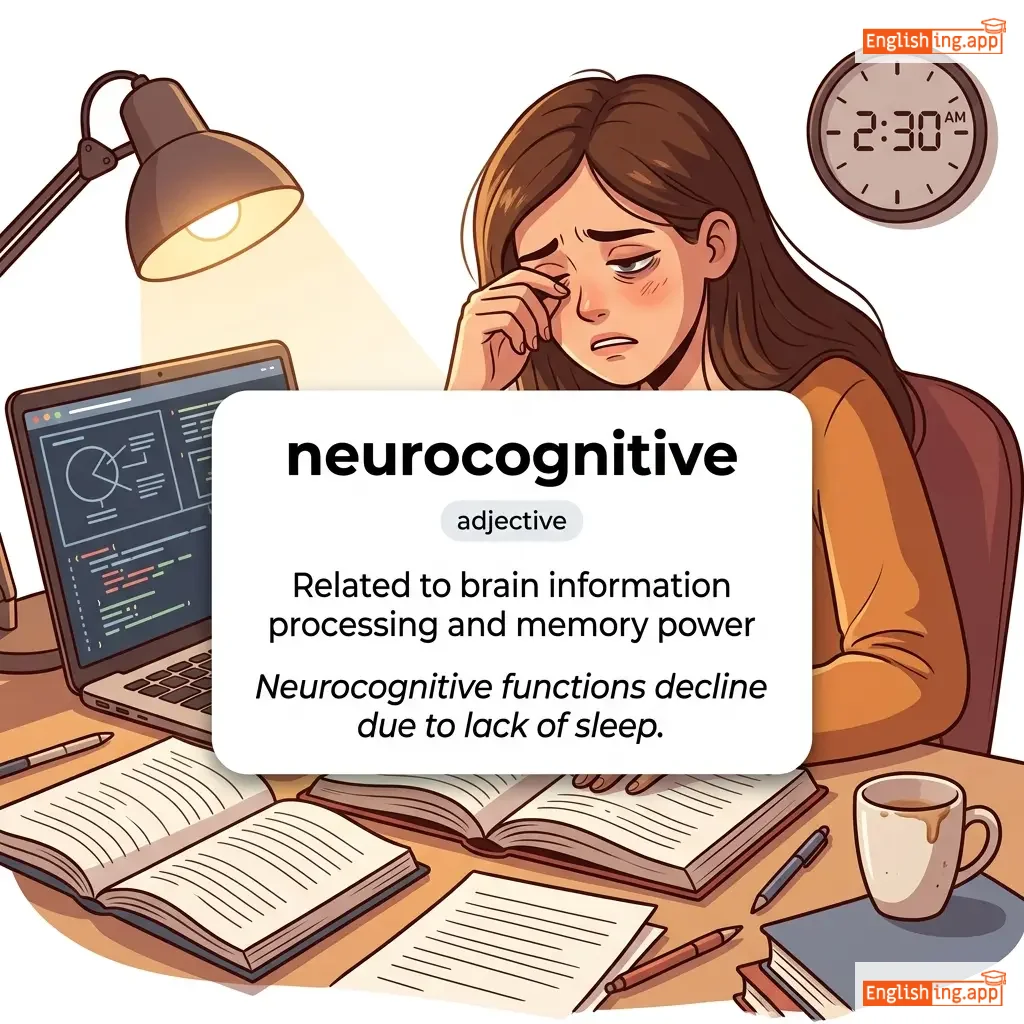
neurocognitive definition card — visual illustration of the meaning
adjective
ˌnjʊəroʊˈkɒɡnɪtɪv
神経認知的 (shinkei ninchiteki)

Related to brain information processing and memory power

"Neurocognitive functions decline due to lack of sleep."
"睡眠不足により神経認知的機能が低下する。" (Suimin busoku ni yori shinkei ninchiteki kinō ga teika suru.)
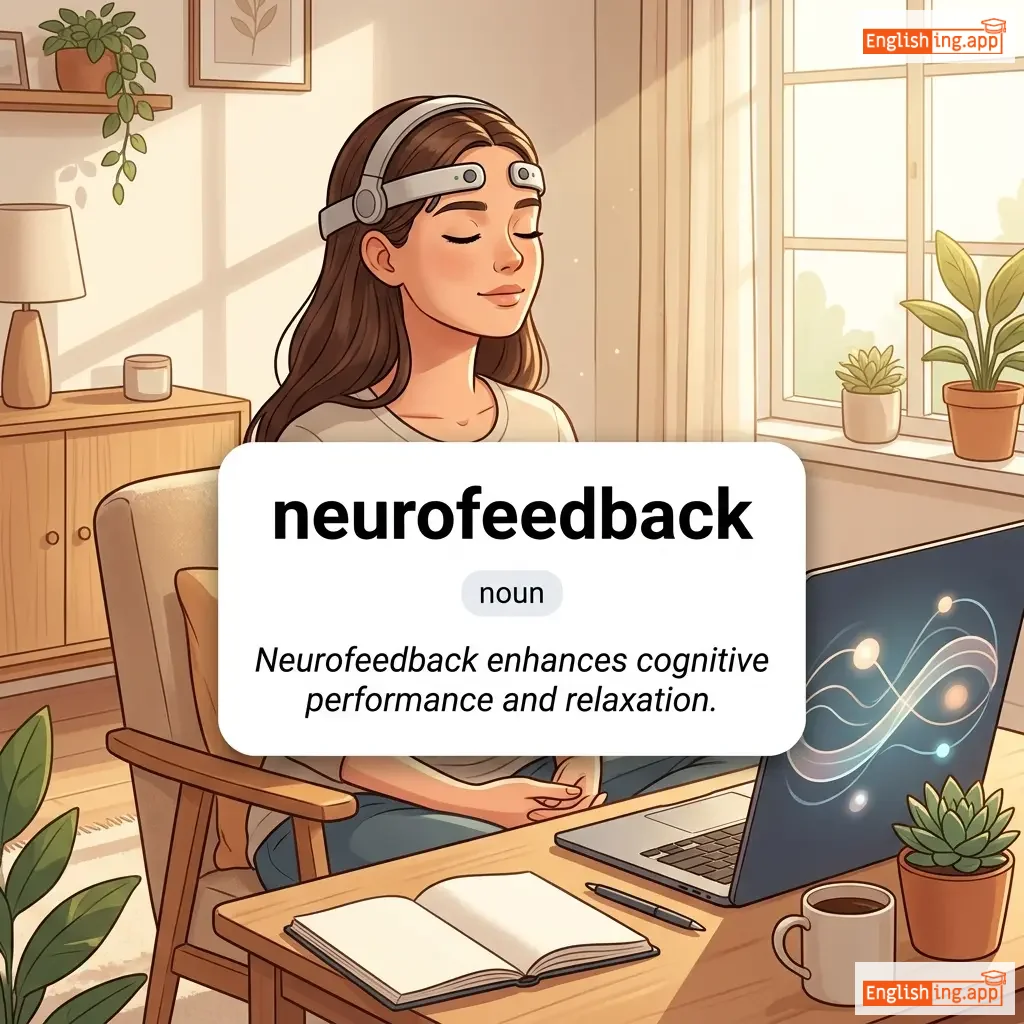
neurofeedback definition card — visual illustration of the meaning
noun
ˈnjʊə.rəʊ ˌfiːd.bæk
脳の活動をリアルタイムで表示し、脳機能の自己調整を教える技術 (nyuurofiidobakku)

A technique that uses real-time displays of brain activity to teach self-regulation of brain function.

"Neurofeedback enhances cognitive performance and relaxation."
"ニューロフィードバックは認知機能とリラクゼーションを高めます。" (Nyūro fīdobakku wa ninchi kinō to rirakuzēshon o takamemasu.)
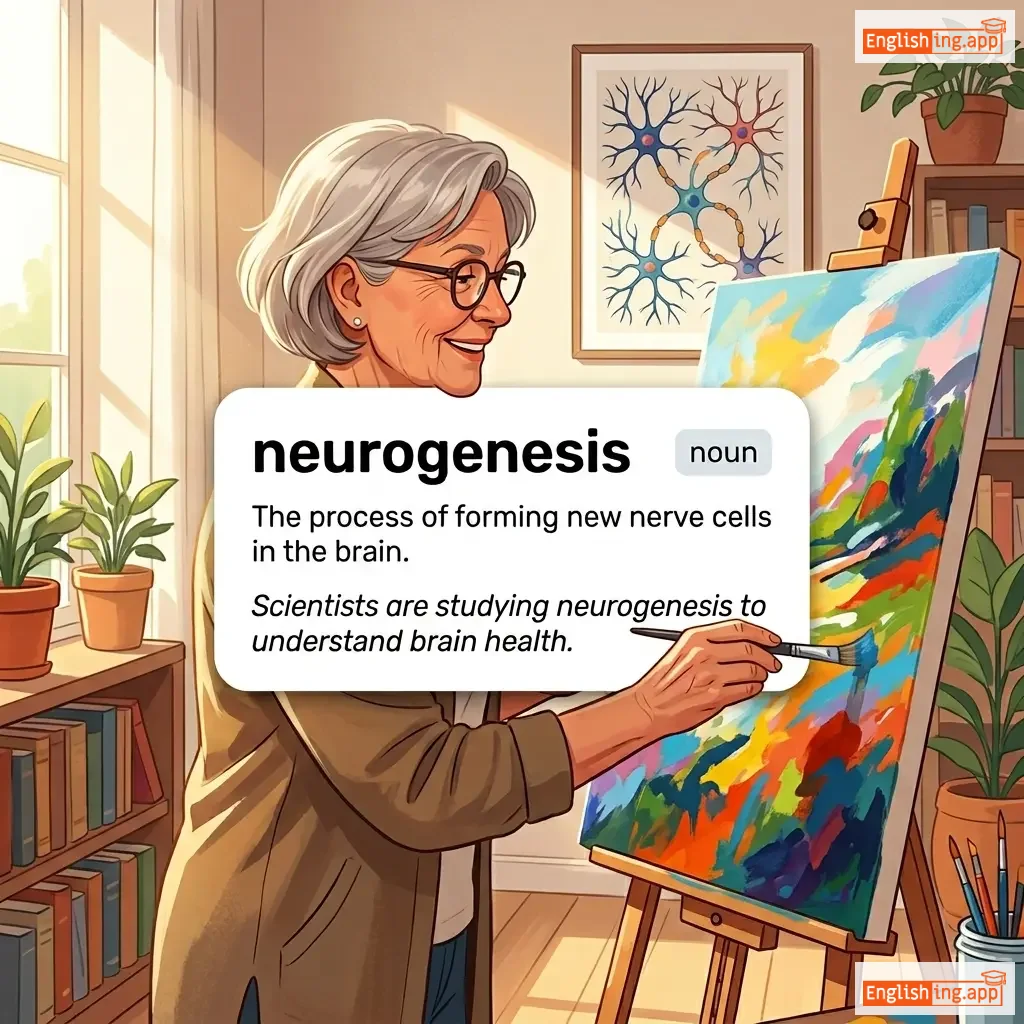
neurogenesis definition card — visual illustration of the meaning
noun
/ˌnjʊə.rəʊˈdʒɛn.ɪ.sɪs/
新しい神経細胞の形成プロセス (atarashii shinkei saibou no keisei purosesu)

The process of forming new nerve cells in the brain.

"Scientists are studying neurogenesis to understand brain health."
"科学者たちは神経発生を研究して、脳の健康を理解しようとしています。" (Kagakusha-tachi wa shinkei hassei o kenkyū shite, nō no kenko o rikai shiyou to shiteimasu.)
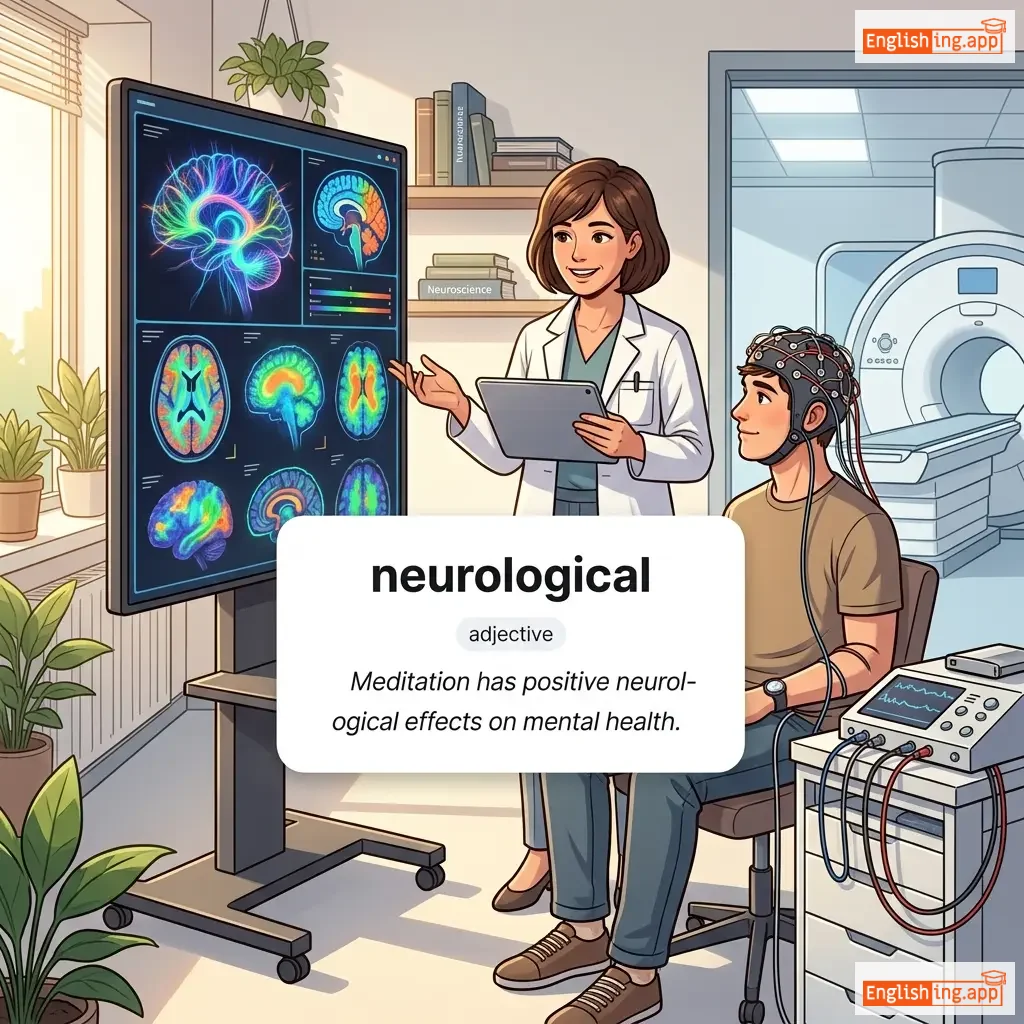
neurological definition card — visual illustration of the meaning
adjective
/ˌnjʊə.rəˈlɒdʒ.ɪ.kəl/
神経学的 (shinkei-gakuteki)

Relating to the anatomy, functions, and organic disorders of nerves and the nervous system.

"Meditation has positive neurological effects on mental health."

"瞑想は精神的健康に対して積極的な神経学的影響を与えます。" (Meisou wa seishinteki kenko ni taishite sekkyokuteki na shinkeigakuteki eikyō o ataemasu.)
noun
/njʊˈrɑːlədʒi/

The branch of medicine that deals with disorders of the nervous system.

"She specializes in neurology and treats patients with brain diseases."

neuroplasticity definition card — visual illustration of the meaning
noun
ˌnjʊə.rəʊ.plæsˈtɪ.sɪ.ti
神経可塑性 (shinkei kasosei)

The ability of the brain to reorganize itself by forming new neural connections throughout life.

"Meditation enhances neuroplasticity, improving memory and focus."
"瞑想はニューロプラスチック性を高め、記憶力と集中力を改善します。" (Meisou wa nyuuro purasuchikkusei o takame, kiokuryoku to shuuchuuryoku o kaizen shimasu.)
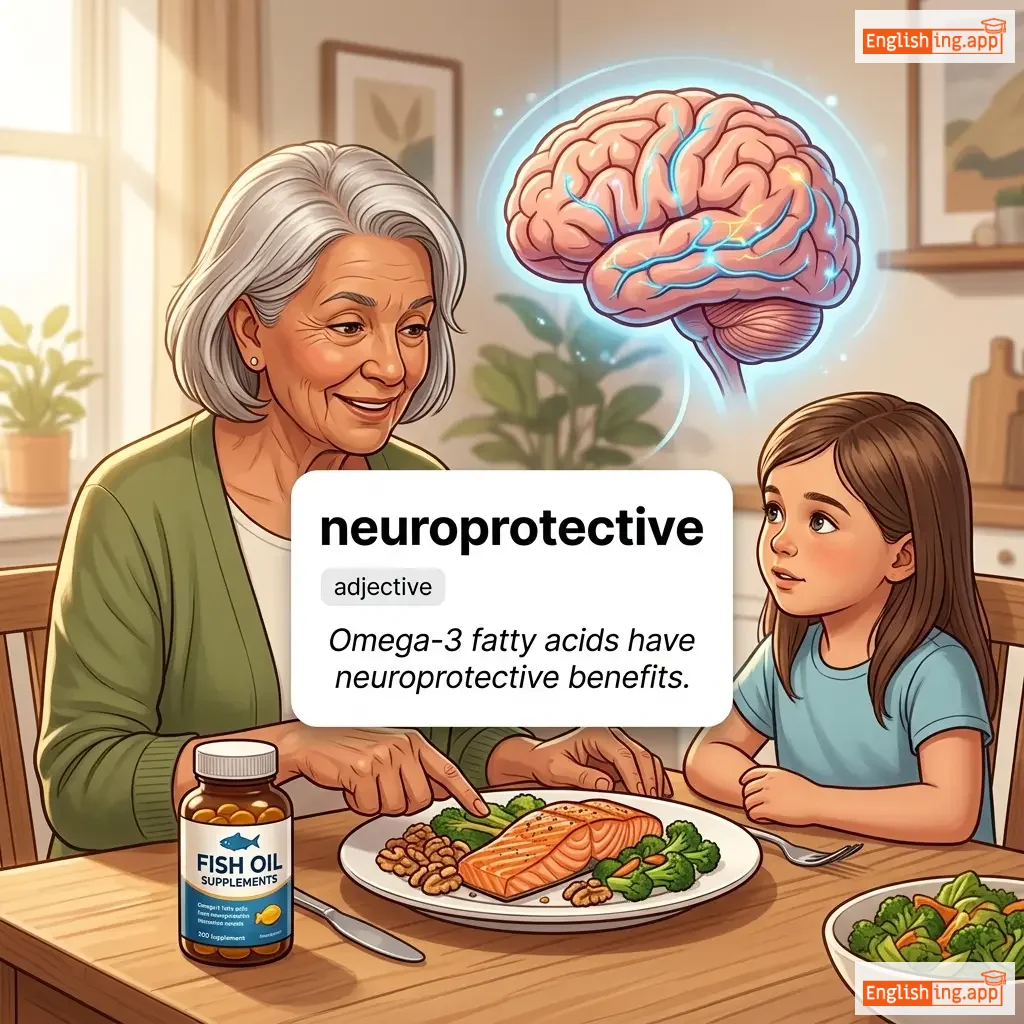
neuroprotective definition card — visual illustration of the meaning
adjective
ˌnjʊə.rəʊ.prəˈtek.tɪv
神経保護 (shinkei hogo)

Having the ability to protect nerve cells from damage, degeneration, or impaired function.

"Omega-3 fatty acids have neuroprotective benefits."
"オメガ-3脂肪酸は神経保護効果があります。" (Omega-3 shibousan wa shinkei hogo kouka ga arimasu.)
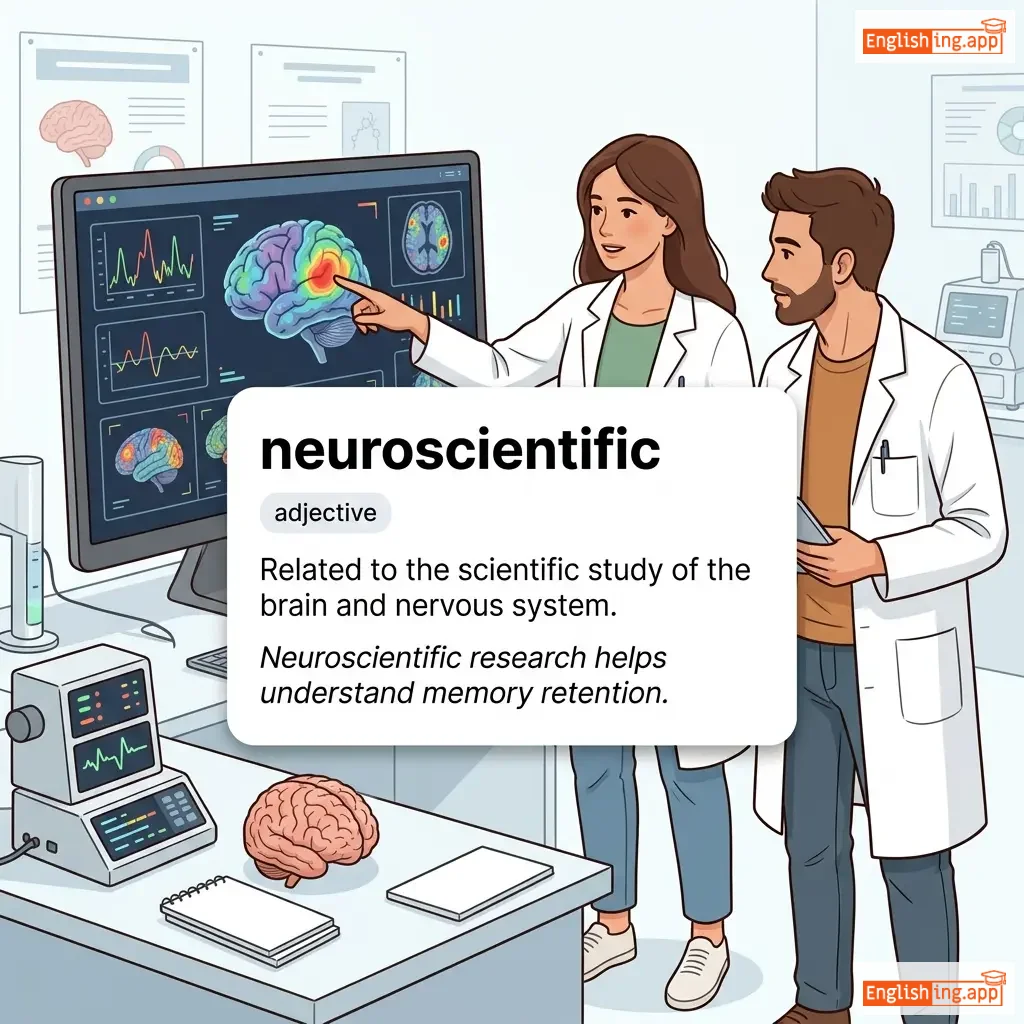
neuroscientific definition card — visual illustration of the meaning
adjective
ˌnjʊə.rəʊ.saɪənˈtɪ.fɪk
神経科学的 (shinkei kagakuteki)

Related to the scientific study of the brain and nervous system.

"Neuroscientific research helps understand memory retention."
"ニューロサイエンティフィックな研究は、記憶の保持を理解するのに役立ちます。" (Nyuuro saientifikku na kenkyuu wa, kioku no hoji wo rikai suru no ni yakudachimasu.)
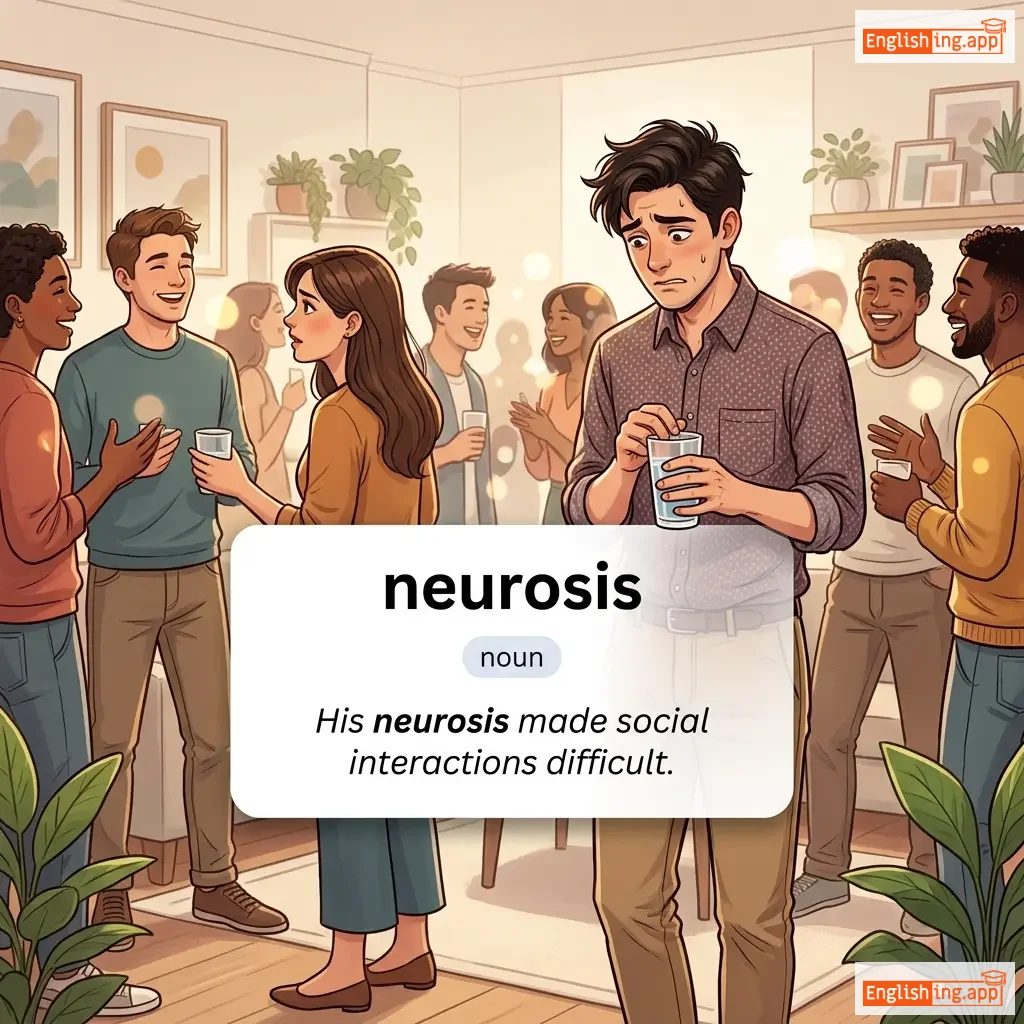
neurosis definition card — visual illustration of the meaning
noun
/njʊəˈrəʊ.sɪs/
神経症 (shinkeishou)

A relatively mild mental illness that is not caused by organic disease, involving symptoms of stress.

"His neurosis made social interactions difficult."
"彼の神経症は社会的な相互作用を困難にした。" (Kare no shinkeishou wa shakaiteki na sōgo sayō o kon'nan ni shita.)
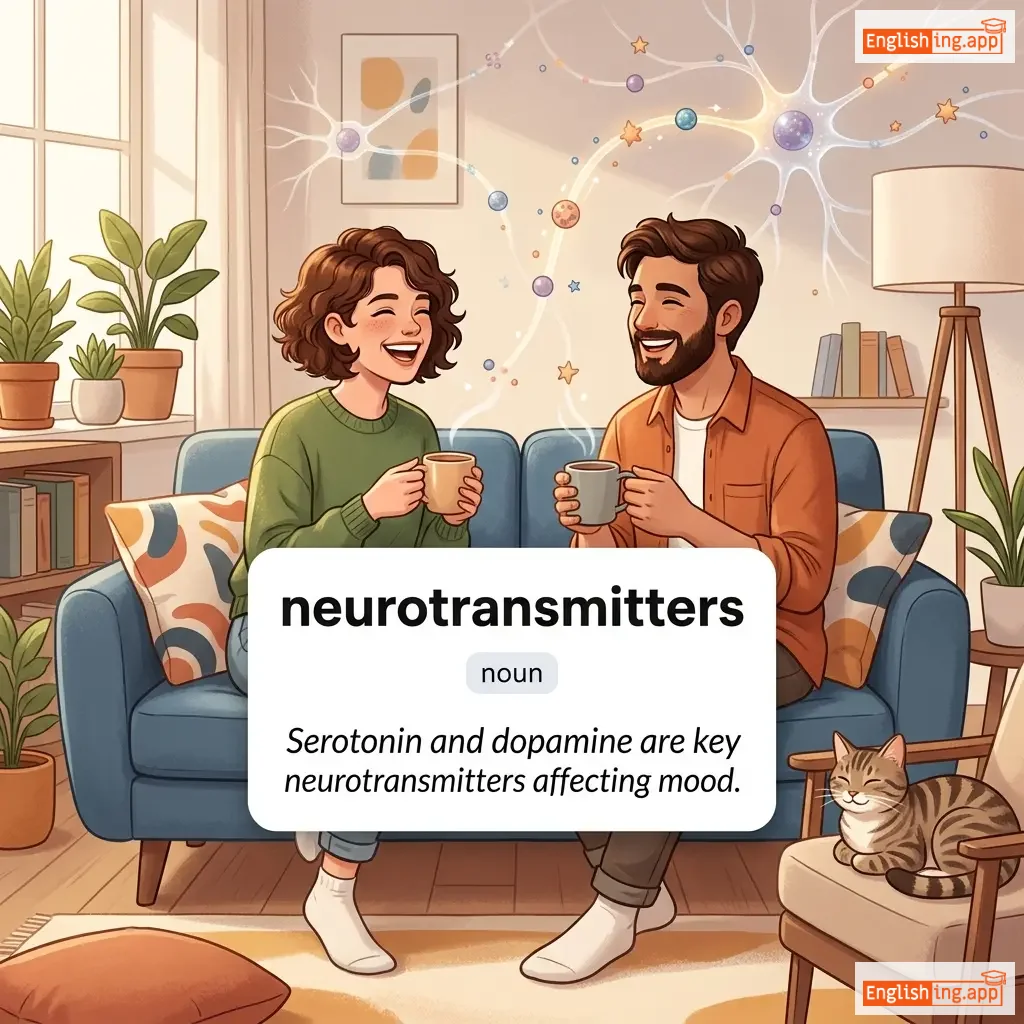
neurotransmitters definition card — visual illustration of the meaning
noun
/ˈnjʊə.rəʊ.trænsˌmɪt.ərs/
神経伝達物質 (shinkei dentatsu busshitsu)

Chemical messengers that transmit signals across nerve synapses, affecting mood, behavior, and cognitive functions.

"Serotonin and dopamine are key neurotransmitters affecting mood."

"セロトニンとドーパミンは気分に影響を与える主要な神経伝達物質です。" (Serotonin to Dopamine wa kibun ni eikyou wo ataeru shuyou na shinkei dentatsu busshitsu desu.)
verb
/ˈnuːtər/
去勢する (kyosei suru)

To remove the reproductive organs of an animal; or having no gender.

"They decided to neuter their cat to prevent more kittens."
"彼らは、もっと子猫が生まれないように、猫を去勢することに決めました。" (Karera wa, motto koneko ga umarenai you ni, neko wo kyosei suru koto ni kimemashita.)
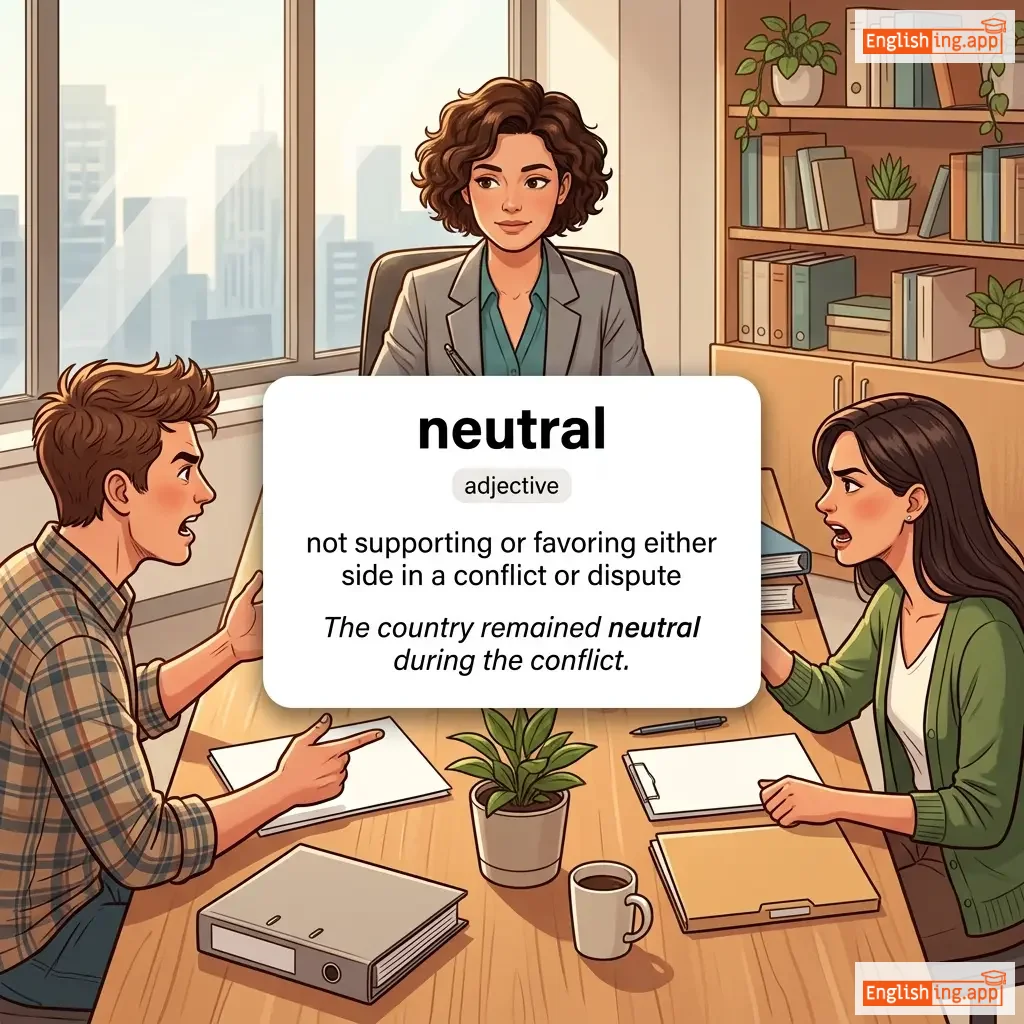
neutral definition card — visual illustration of the meaning
adjective
/ˈnjuːtrəl/
中立 (chūritsu)

not supporting or favoring either side in a conflict or dispute

"The country remained neutral during the conflict."
"その国は対立の間中立を保った。" (Sono kuni wa tairitsu no aida chūritsu o tamotta.)
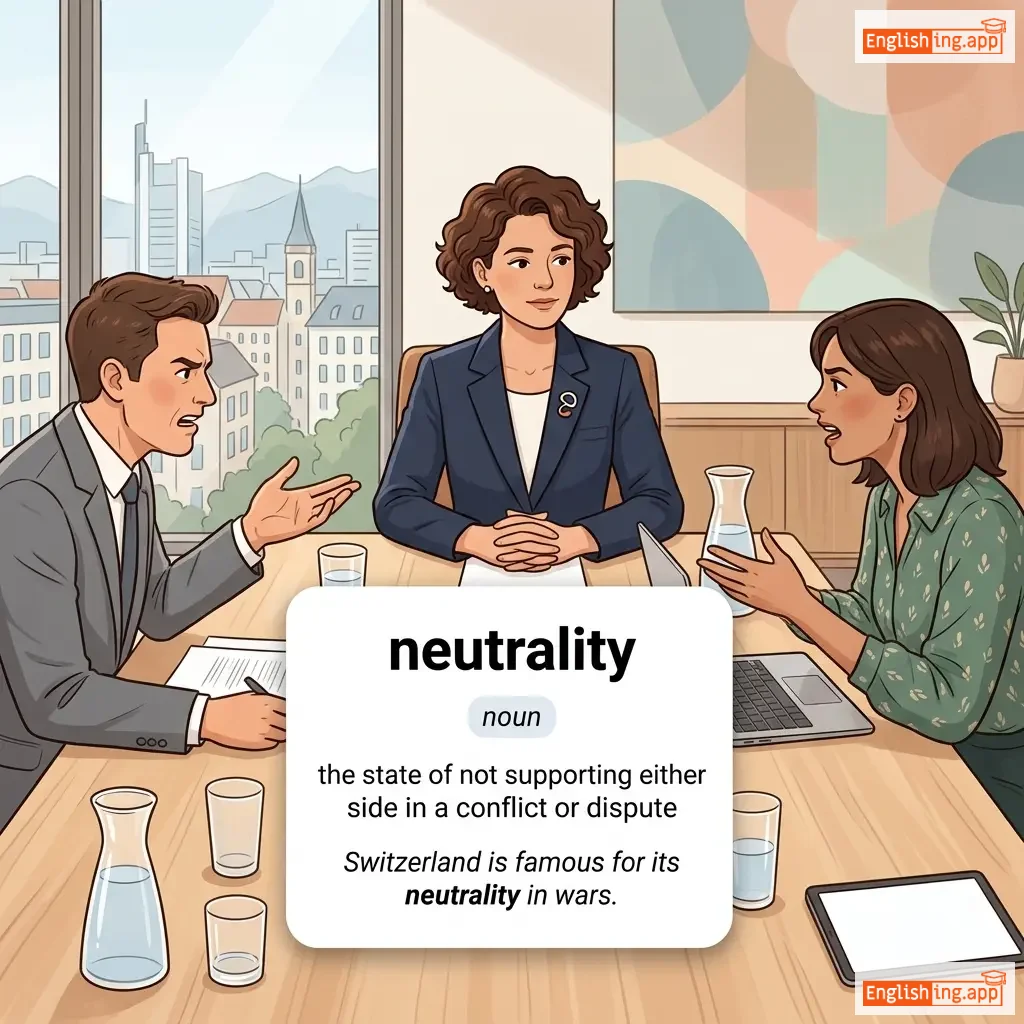
neutrality definition card — visual illustration of the meaning
noun
/nuːˈtræl.ə.ti/
中立 (chūritsu)

the state of not supporting either side in a conflict or dispute

"Switzerland is famous for its neutrality in wars."

"スイスは戦争での中立で有名です。" (Suisu wa sensō de no chūritsu de yūmei desu.)
verb
/ˈnjuːtrəlaɪz/
無力化する (muryokuka suru)

to make something ineffective or harmless

"The medicine helped neutralize the poison in his system."

"その薬は彼の体内の毒を無効にするのを助けました。" (Sono kusuri wa kare no tainai no doku o mukō ni suru no o tasukemashita.)
adverb
/ˈnɛvər/
決して (kesshite)

at no time in the past or future; not ever

"I have never seen such a beautiful sunset."

"私はこんなに美しい夕日を決して見たことがありません。" (Watashi wa konna ni utsukushii yūhi o kesshite mita koto ga arimasen.)
adverb
/ˌnɛvəðəˈlɛs/

in spite of that; however

"He was tired; nevertheless, he kept working."

adjective
/njuː/
新しい (atarashī)

recently made, discovered, or introduced; not existing before

"He bought a new car yesterday."

"彼は昨日新しい車を買いました。" (Kare wa kinō atarashī kuruma o kaimashita.)