語彙集

英単語辞書 | 単語の意味、定義、例文

adjective
/ˈnɔːtɪkəl/
航海 (koukai)

relating to ships, sailors, or navigation on water

"He studied nautical charts before setting sail."

"彼は出航前に海図を勉強しました。" (Kare wa shukkou mae ni kaizu wo benkyou shimashita.)
adjective
/ˈneɪvəl/
海軍の (kaigun no)

relating to a country's navy or military ships

"The country invested heavily in naval defense."

"その国は海軍防衛に多額の投資をしました。" (Sono kuni wa kaigun bōei ni tagaku no tōshi o shimashita.)
noun
/ˈneɪ.vəl fɔːrs/
海軍 (Kaigun)

the branch of a nation's armed services that conducts military operations at sea

"The naval force protected the country's coastline from enemy attacks."

"海軍は敵の攻撃から国の海岸線を守った" (Kaigun wa teki no kougeki kara kuni no kaiganssen o mamotta)
noun
/neɪv/
教会の中央部 (kyoukai no chuoubu)

the central part of a church building intended to accommodate the congregation

"The choir sang beautifully in the church nave."

"合唱団は教会のネイヴで美しく歌いました。" (Gasshoudan wa kyoukai no neivu de utsukushiku utaimashita.)
👶

Navel

noun
/ˈneɪvəl/

the small hollow or raised area in the middle of the stomach, also called the belly button

"The baby’s navel was carefully cleaned after birth."

adjective
/ˈnæv.ɪ.ɡə.bəl/
航行可能 (kōkō kanō)

Able to be sailed on or through by ships or boats.

"The river is navigable for large cargo ships."
"その川は大型貨物船にとって航行可能です。" (Sono kawa wa ōgata kamotsusen ni totte kōkō kanō desu.)
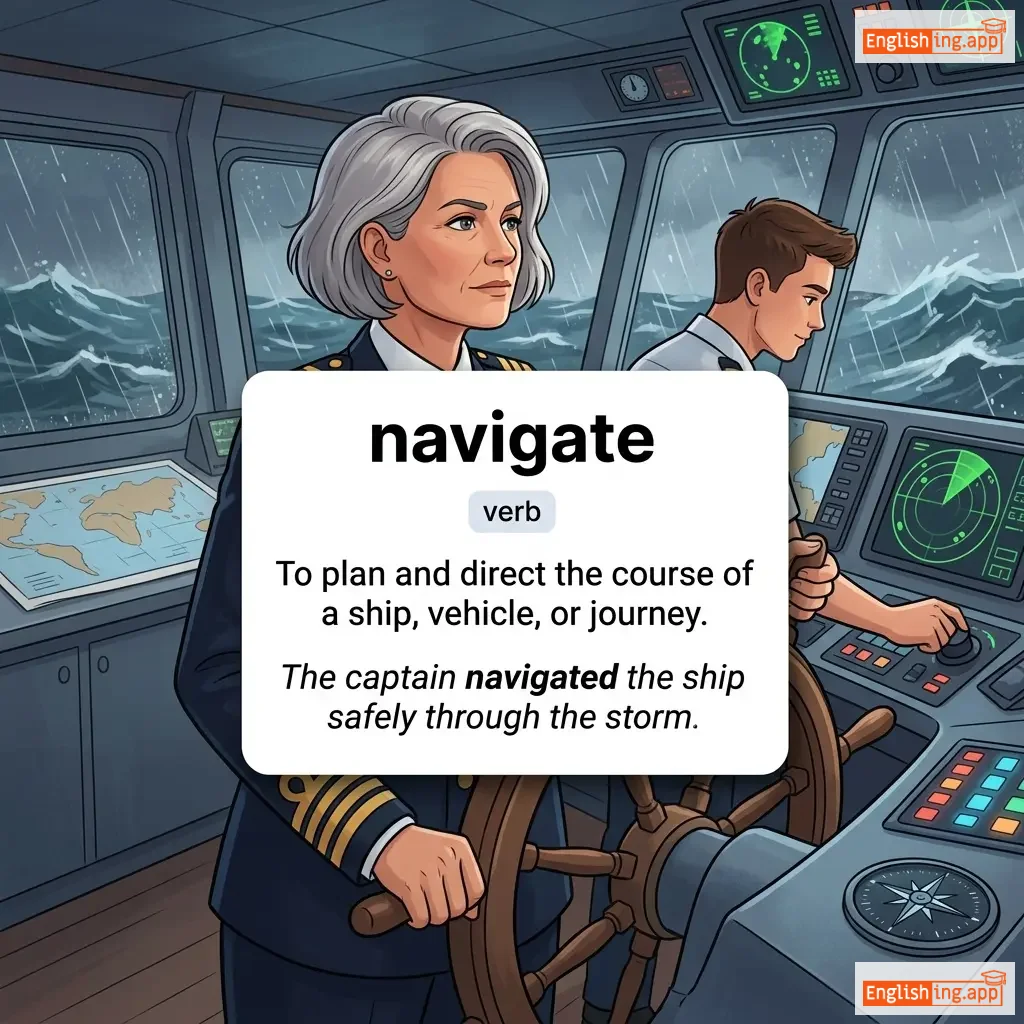
navigate definition card — visual illustration of the meaning
verb
/ˈnæv.ɪ.ɡeɪt/

To plan and direct the course of a ship, vehicle, or journey.

"The captain navigated the ship safely through the storm."

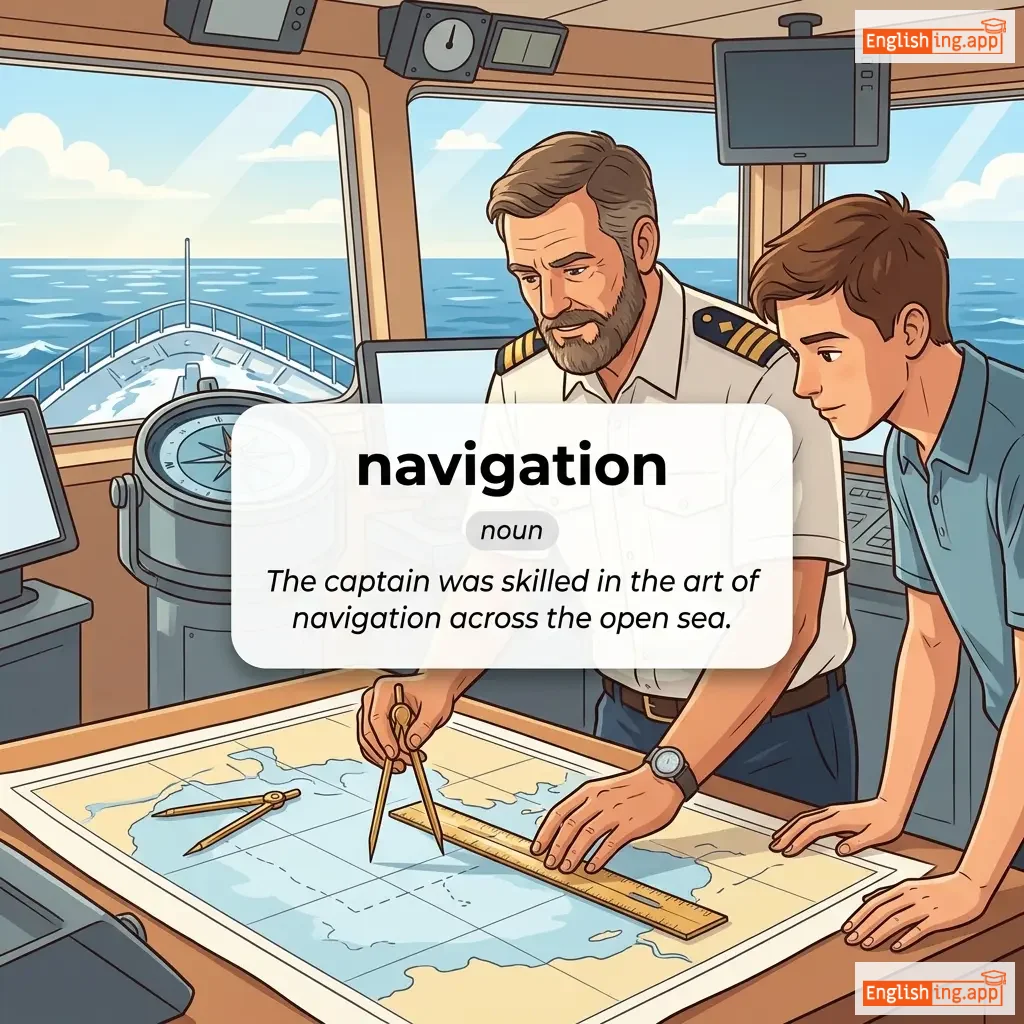
navigation definition card — visual illustration of the meaning
noun
/ˌnævɪˈɡeɪʃən/
ナビゲーション (navigēshon)

the process or activity of accurately determining one's position and planning and following a route

"The captain was skilled in the art of navigation across the open sea."

"キャプテンは開けた海での航海術に熟練していました。" (kyaputen wa aketa umi de no kōkaijutsu ni jukuren shiteimashita.)
noun
/ˈneɪvi/
海軍 (kaigun)

the branch of armed forces that conducts military operations at sea

"He joined the navy after graduating from college."

"彼は大学を卒業した後、海軍に入隊した。" (Kare wa daigaku o sotsugyō shita ato, kaigun ni nyūtai shita.)
noun
/ˈneɪˌseɪ.ɪŋ/
否定的な発言 (hiteiteki na hatsugen)

The act of expressing negative or pessimistic views.

"His constant naysaying discouraged the team."

"彼の絶え間ない否定的な発言はチームをがっかりさせました。" (Kare no taemanai hiteiteki na hatsugen wa chiimu wo gakkari saseshimashita.)
noun
/ˌɛn.biː.esˈpiː/
ノンブレイキングスペース (non breaking space)

a non-breaking space character in HTML used to prevent an automatic line break at its position

"Use   in HTML to add a space that won't break into a new line."

"HTMLで改行しないスペースを追加するために を使用します。" (HTML de kaigyō shinai supēsu o tsuika suru tame ni  o shiyō shimasu.)
noun
/niːp/
小潮 (shōchō)

A tide just after the first or third quarters of the moon when the difference between high and low tide is least.

"During a neap tide, the water level change is minimal."

"ニープタイドの間、水位の変化は最小限です。" (Nīpu taido no aida, suii no henka wa saishōgen desu.)
preposition
/nɪə(r)/
近く (chikaku)

At or to a short distance away; close in space, time, or relationship.

"There is a park near my house."

"私の家の近くに公園があります。" (Watashi no ie no chikaku ni kōen ga arimasu.)
adverb
/ˈnɪərbaɪ/
近く; 近所 (chikaku; kinjo)

close to; not far away; in the neighborhood

"There is a grocery store nearby."

"近くに食料品店があります。" (Chikaku ni shokuryouhinten ga arimasu.)
adjective
/ˈnɪəˌbaɪ/
近く (chikaku)

close to a particular place or person

"The nearest gas station is nearby."

"最寄りのガソリンスタンドは近くにあります。" (Moyori no gasorin sutando wa chikaku ni arimasu.)
adverb
/ˈnɪəli/
ほぼ (hobo)

almost, but not completely

"She nearly missed the bus."

"彼女はほぼバスに乗り遅れるところだった。" (Kanojo wa hobo basu ni noriokureru tokoro datta.)
adjective
/niːt/
きれい (kirei)

tidy, orderly, and well-arranged; simple and elegant

"His handwriting is very neat and easy to read."

"彼の手書きはとてもきれいで、読みやすいです。" (Kare no tegaki wa totemo kirei de, yomiyasui desu.)
adverb
/ˈniːtli/
きちんと; 清潔に (kichinto; seiketsu ni)

in a tidy and orderly way; carefully and precisely

"She arranged the books neatly on the shelf."

"彼女は本をきちんと棚に並べました。" (Kanojo wa hon o kichinto tana ni narabemashita.)
noun
/ˈneb.jʊ.lə/
星雲 (seiun)

A cloud of gas and dust in outer space, sometimes visible in the night sky.

"The Orion Nebula is one of the brightest in the sky."

"オリオン星雲は空で最も明るいものの一つです。" (Orion seiun wa sora de mottomo akarui mono no hitotsu desu.)
adjective
/ˈnɛbjələs/
曖昧な (aimaina)

Unclear, vague, or ill-defined; resembling a cloud or haze.

"His plan for the future was still nebulous and hard to understand."

"彼の未来に対する計画はまだ曖昧で、理解するのが難しかった。" (Kare no mirai ni taisuru keikaku wa mada aimai de, rikai suru no ga muzukashikatta.)
adverb
/ˌnɛsəˈsɛrɪli/
必ずしも (kanarazushimo)

as a necessary result; inevitably

"It doesn’t necessarily mean you’re wrong."

"それが必ずしもあなたが間違っていることを意味するわけではありません。" (Sore ga kanarazushimo anata ga machigatte iru koto o imi suru wake de wa arimasen.)
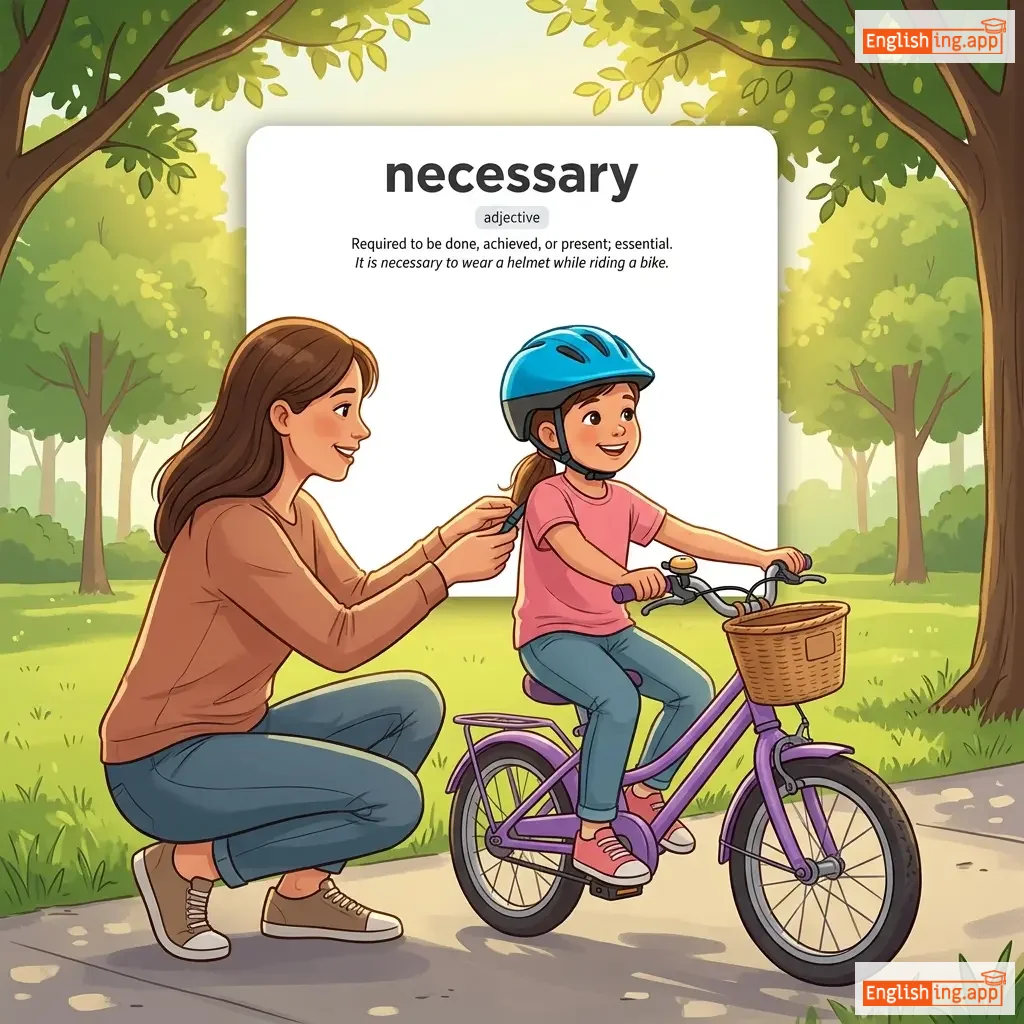
necessary definition card — visual illustration of the meaning
adjective
/ˈnɛsəsɛri/

Required to be done, achieved, or present; essential.

"It is necessary to wear a helmet while riding a bike."

verb
/nəˈsɛsɪteɪt/
必要とする (hitsuyou to suru)

To make something necessary or unavoidable.

"The heavy rains necessitated the cancellation of the event."
"激しい雨はイベントのキャンセルを避けられないものにしました。" (Hageshī ame wa ibento no kyansel o sakerarenai mono ni shimashita.)
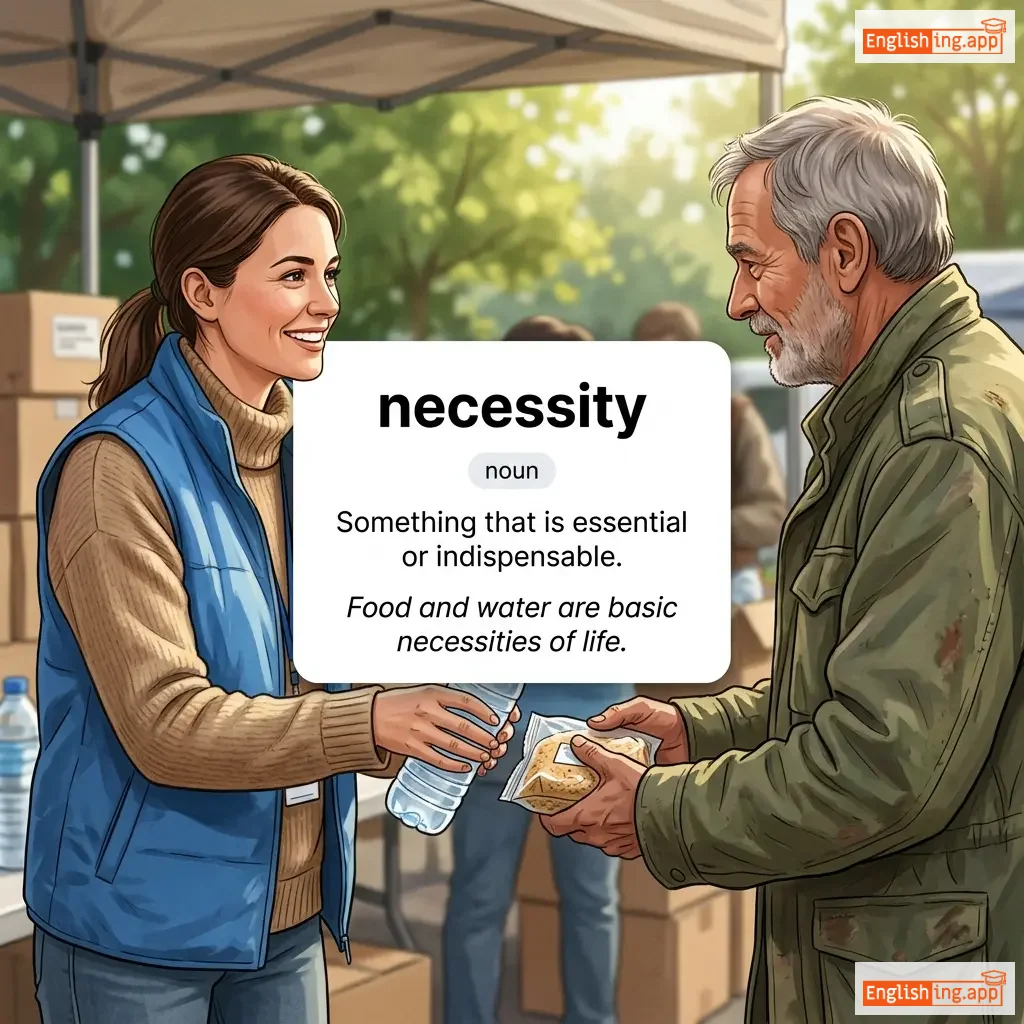
necessity definition card — visual illustration of the meaning
noun
/nəˈsɛsəti/
必要性 (hitsuyousei)

Something that is essential or indispensable.

"Food and water are basic necessities of life."

"食べ物と水は生活の基本的な必要性です。" (Tabemono to mizu wa seikatsu no kihonteki na hitsuyousei desu.)
noun
/nɛk/
(kubi)

the part of the body connecting the head and the shoulders

"She wore a necklace around her neck."

"彼女は首にネックレスをつけていた。" (Kanojo wa kubi ni nekkuresu wo tsuketeita.)
noun
/ˈnek.ləs/
ネックレス (nekkuresu)

a piece of jewelry that is worn around the neck

"She wore a beautiful diamond necklace to the party."

"彼女はパーティーで美しいダイヤモンドのネックレスをしていました。" (Kanojo wa pātii de utsukushī daiyamondo no nekkuresu o shite imashita.)
noun
/ˈnɛkˌlaɪn/
ネックライン (nekkurain)

the edge of a garment around the neck, especially as cut to form a particular shape

"The dress has a beautiful V-shaped neckline."

"そのドレスには美しいV字型のネックラインがあります。" (Sono doresu ni wa utsukushī V-ji-gata no nekkurain ga arimasu.)
noun
/ˈnek.taɪ/
ネクタイ (nekutai)

a strip of cloth worn around the neck under a shirt collar and tied in front

"He adjusted his necktie before the important meeting."

"彼は重要な会議の前にネクタイを調整した。" (Kare wa jūyōna kaigi no mae ni nekutai o chōsei shita.)
noun
/nɪˈkrɒlədʒi/
訃報 (fuhou)

An obituary notice or a list of people who have recently died.

"The newspaper published a necrology of notable figures who passed away that year."

"その新聞は、その年に亡くなった著名な人物のネクロロジーを発表しました。" (Sono shinbun wa, sono toshi ni nakunatta chomei na jinbutsu no nekuroji o happyō shimashita.)
🧙‍♂️

necromancer

noun
/ˈnɛkrəˌmænsər/

a person who practices necromancy; a wizard or magician who claims to communicate with the dead

"The villagers feared the old necromancer who lived at the edge of the forest."

noun
/ˈnɛkrəˌmænsi/
死霊術 (shireijutsu)

the practice of communicating with the dead, often to predict the future

"Ancient texts described rituals of necromancy performed by priests."

"古代の文献には、神父たちによって行われた死霊術の儀式が記述されています。" (Kodai no bunken ni wa, shinputa-tachi ni yotte okonawareta shireijutsu no gishiki ga kijutsusareteimasu.)
noun
/nəˈkrɒpəlɪs/
古代の墓地 (kodai no bochi)

a large ancient cemetery with elaborate tombs

"The archaeologists discovered artifacts in the necropolis of the ancient city."

"考古学者たちは古代都市のネクロポリスで遺物を発見しました。" (Kōkogakushatachi wa kodai toshi no nekuroposu de ibutsu o hakken shimashita.)
noun
/nɛˈkroʊsɪs/
壊死 (kaishi)

the death of body tissue due to disease, injury, or lack of blood supply

"The doctor explained that the patient’s wound showed signs of necrosis."
"医師は、患者の傷が壊死の兆候を示していると説明しました。" (Ishi wa, kanja no kizu ga kaishi no choukou wo shimeshiteiru to setsumei shimashita.)
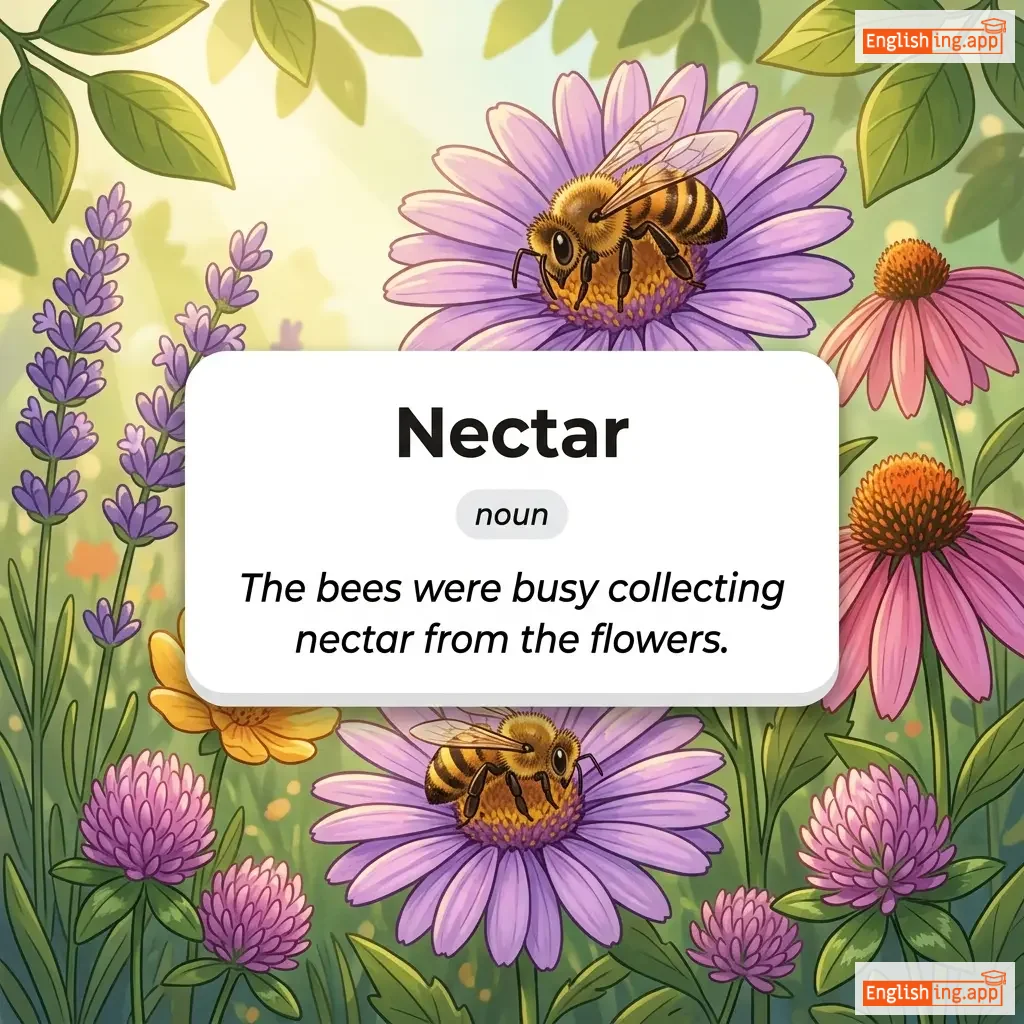
Nectar definition card — visual illustration of the meaning
noun
/ˈnɛktər/
甘露 (kanro)

a sweet liquid produced by flowers and collected by bees; in mythology, the drink of the gods

"The bees were busy collecting nectar from the flowers."

"蜂たちは花からネクターを集めるのに忙しかった。" (Hachitachi wa hana kara nekutā o atsumeru no ni isogashikatta.)
noun
/ˈnɛktəriːn/
ネクタリン (滑らかな皮の桃の一種) (nekutarin)

A smooth-skinned variety of peach.

"She bought a basket of fresh nectarines from the market."

"彼女は市場から新鮮なネクタリンのバスケットを買いました。" (Kanojo wa shijou kara shinzen na nekutarin no basuketto o kaimashita.)
need definition card — visual illustration of the meaning
verb
/niːd/
必要 (hitsuyō)

to require something or someone

"I need your help with this task."

"私はこのタスクにあなたの助けが必要です。" (Watashi wa kono tasuku ni anata no tasuke ga hitsuyō desu.)
noun, verb
/ˈniː.dəl/
(hari)

a small thin metal tool with a point used for sewing or injecting; to provoke or annoy someone

"The nurse used a sterile needle for the injection."

"看護師は注射のために滅菌された針を使用しました。" (Kangoshi wa chūsha no tame ni mekkin sareta hari o shiyō shimashita.)
adjective
/ˈniːd.ləs/
不必要な (nidoresu)

unnecessary; not required; without purpose

"The argument was needless and could have been avoided."

"その議論は不必要で、避けることができたはずだ。" (Sono giron wa fuhitsuyou de, sakeru koto ga dekita hazu da.)
noun
/ˈniːdəlwɜːrk/
刺繍, 手芸 (shishū, shugei)

The craft of sewing, embroidery, or knitting done with a needle.

"Her grandmother taught her the art of needlework."

"彼女の祖母は彼女にニードルワークの技術を教えました。" (Kanojo no sobo wa kanojo ni needlework no gijutsu o oshiemashita.)
adjective
/ˈniːdi/
困窮している (konkyū shite iru)

Lacking the basic necessities of life; poor.

"The charity provides food and shelter for needy families."

"その慈善団体は困窮している家族に食べ物と避難所を提供します。" (Sono jizen dantai wa konkyū shite iru kazoku ni tabemono to hinansho o teikyō shimasu.)
adjective
/nɪˈfɛəriəs/
邪悪な、犯罪者、または道徳的に悪い (jaaku na, hanzai-sha, matawa doutokuteki ni warui)

Wicked, criminal, or morally bad.

"The police uncovered a nefarious plot to cheat investors."

"警察は投資家を欺こうとする邪悪な陰謀を暴露しました。" (Keisatsu wa toushika wo azamikaou to suru jaaku na inbou wo bakuro shimashita.)
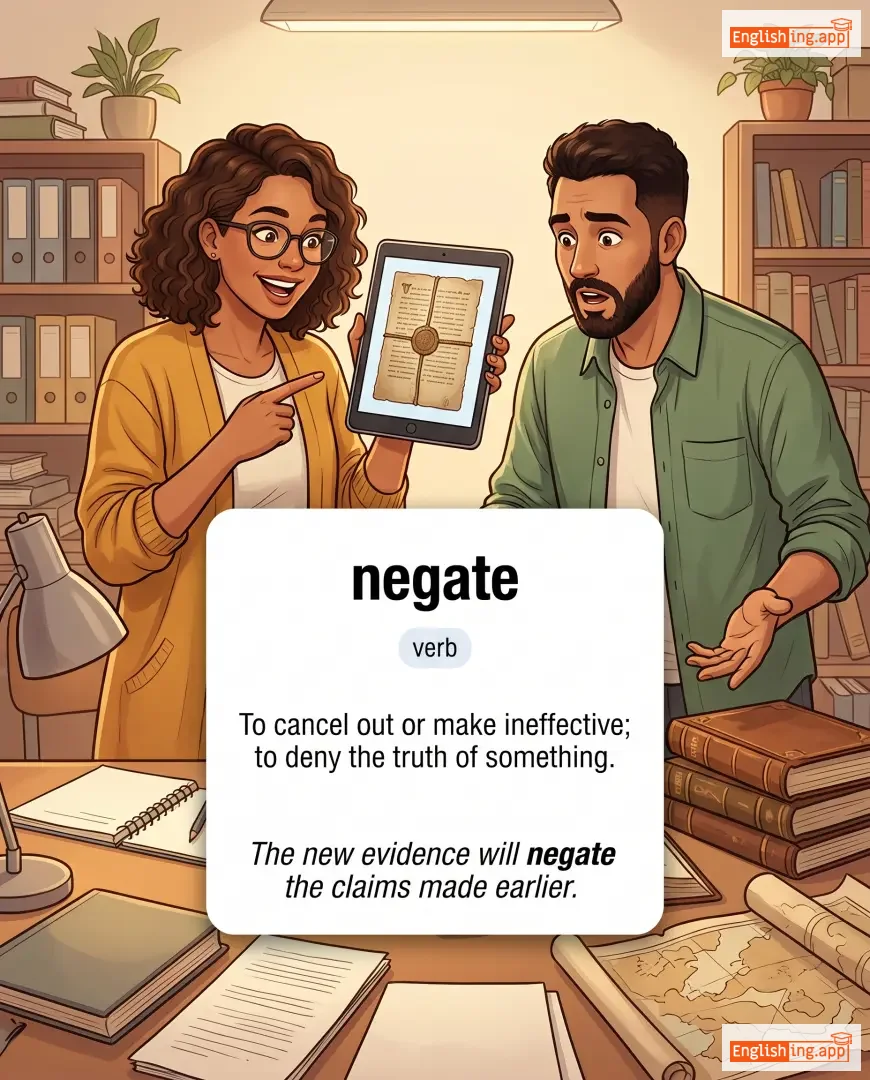
negate definition card — visual illustration of the meaning
verb
/nɪˈɡeɪt/

To cancel out or make ineffective; to deny the truth of something.

"The new evidence will negate the claims made earlier."

noun
/nɪˈɡeɪʃən/
否定 (hitei)

The act of denying something; the contradiction or absence of something.

"The theory is built on the negation of traditional beliefs."
"理論は伝統的な信念の否定に基づいています。" (Riron wa dentō-teki na shinnen no hitei ni motozuite imasu.)
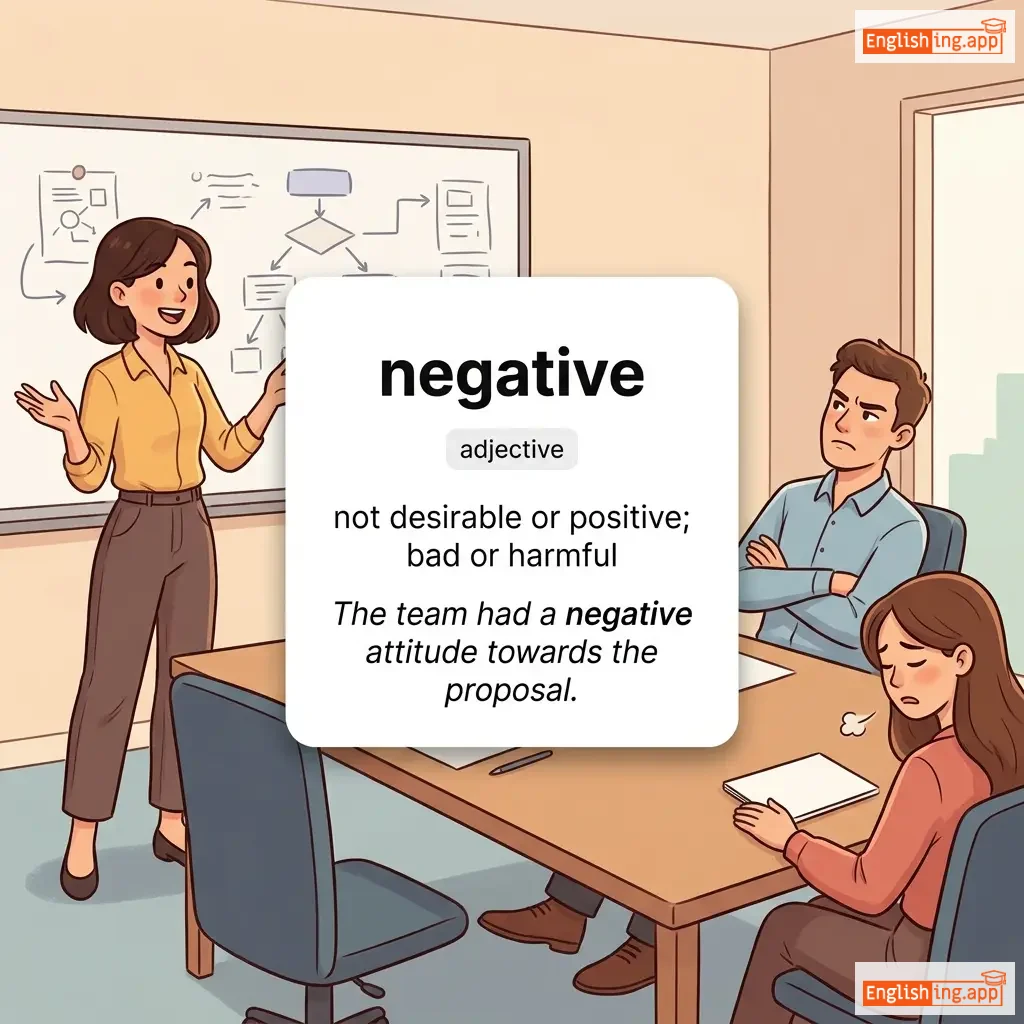
negative definition card — visual illustration of the meaning
adjective
/ˈnɛɡətɪv/
否定的 (hōteiteki)

not desirable or positive; bad or harmful

"The team had a negative attitude towards the proposal."
"チームは提案に対して否定的な態度を持っていました。" (Chīmu wa teian ni taishite hōteiteki na taido o motte imashita.)
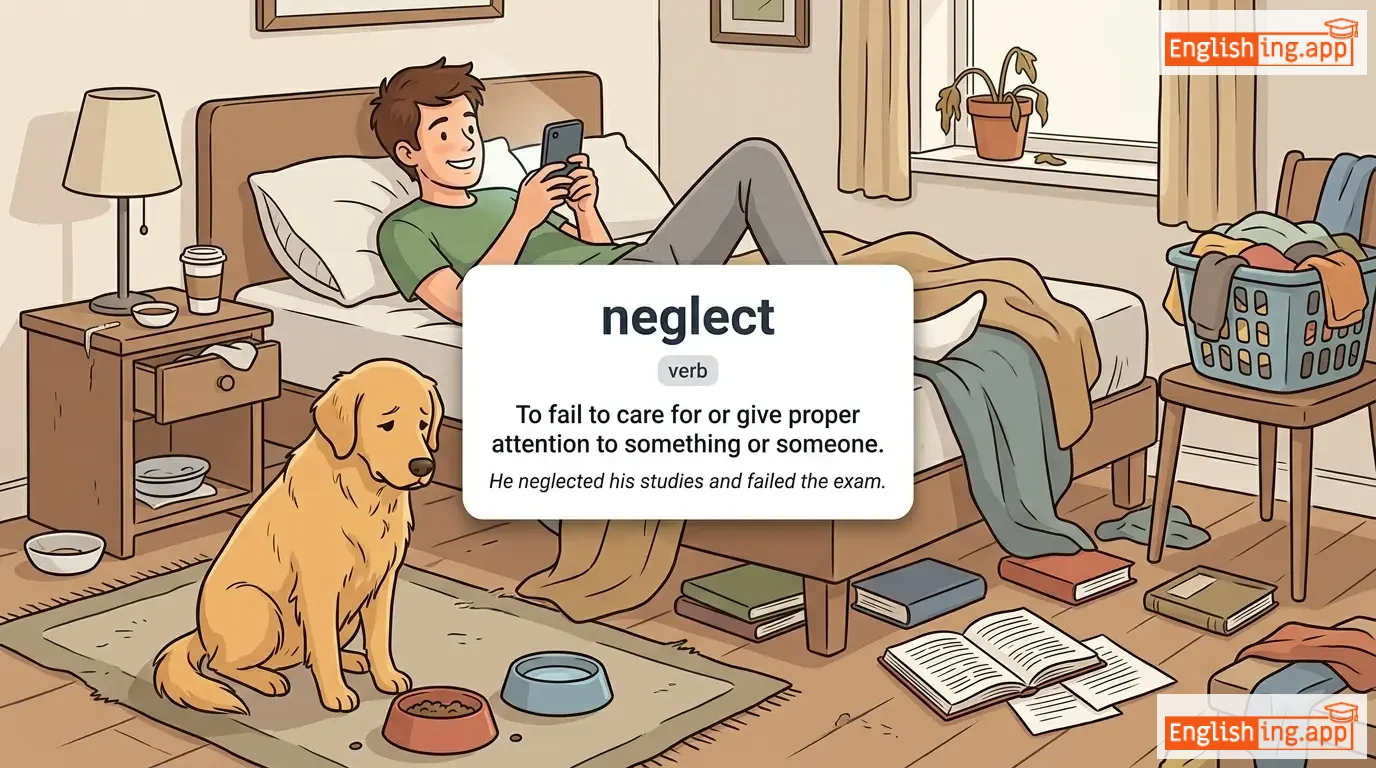
neglect definition card — visual illustration of the meaning
verb
/nɪˈɡlɛkt/
無視 (mushi)

To fail to care for or give proper attention to something or someone.

"He neglected his studies and failed the exam."

"彼は勉強を怠け、試験に落ちました。" (Kare wa benkyou o namakete, shiken ni ochimashita.)
adjective
/nɪˈɡlɛktfʊl/
無関心 (mukanshin)

Failing to give proper care or attention.

"The neglectful parent left the child alone for hours."

"無関心な親は子供を何時間も一人で放置した。" (Mukanshin na oya wa kodomo o nan-jikan mo hitori de hōchi shita.)
noun
/ˌnɛɡlɪˈʒeɪ/
軽いシルクの寝間着 (karui shiruku no nemaki)

A woman's light dressing gown, often made of thin or silky material.

"She wore a silk negligee before going to bed."

"彼女は寝る前にシルクのネグリジェを着ていました。" (Kanojo wa neru mae ni shiruku no negurije o kiteimashita.)
noun
/ˈnɛɡlɪdʒəns/
怠慢 (taiman)

Failure to take proper care in doing something, often resulting in damage or harm.

"The accident was caused by the driver's negligence."

"その事故は運転手の怠慢によって引き起こされました。" (Sono jiko wa untenshu no taiman ni yotte hikiokosaremashita.)
adjective
/ˈnɛɡ.lɪ.dʒənt/
不注意 (fuchūi)

Failing to take proper care in doing something; careless.

"The company was found negligent in providing workplace safety."

"その会社は職場での安全対策を提供する際に不注意だと判定されました。" (Sono kaisha wa shokuba de no anzen taisaku o teikyō suru sai ni fuchūi da to hantei saremashita.)
adjective
/ˈnɛɡ.lɪ.dʒə.bəl/
取るに足らない (toru ni taranai)

So small or unimportant as to be not worth considering; insignificant.

"The cost of the error was negligible."

"その誤りのコストは取るに足らないものでした。" (Sono ayamari no kosuto wa toru ni taranai mono deshita.)