語彙集

英単語辞書 | 単語の意味、定義、例文

noun
/mæn əv wɔːr/
戦艦 (senkan)

a warship; a naval vessel equipped with weapons for warfare

"The man of war sailed across the ocean to defend the coast."

"戦艦は海を越えて、海岸を守るために進んだ。" (senkan wa umi o koete, kaigan o mamoru tame ni susunda)
noun
/ˈmænˌiː.tər/
人食い (hito kui)

An animal that kills and eats humans; informally, a woman who is very assertive in relationships.

"The tiger became a notorious man-eater in the village."

"その虎は村で悪名高い人食いとなった。" (Sono tora wa mura de akumei takai hito kui to natta.)
noun
/ˈmænˌtræp/
人を捕まえる罠 (hito wo tsukamaeru wana)

A trap designed to catch or injure humans; informally, a woman considered dangerously attractive.

"The old castle had a man-trap at the entrance."

"古い城には入り口に人を捕まえる罠がありました。" (Furui shiro ni wa iriguchi ni hito wo tsukamaeru wana ga arimashita.)
noun/verb
/ˈmæn.ə.kəl/
手錠 (tejou)

A metal shackle for fastening someone's hands or ankles; also to restrain with such shackles.

"The prisoner was manacled before being taken to court."
"囚人は裁判所に連れて行かれる前に手錠をかけられました。" (Shuujin wa saibansho ni tsurete ikareru mae ni tejou o kakeraremashita.)
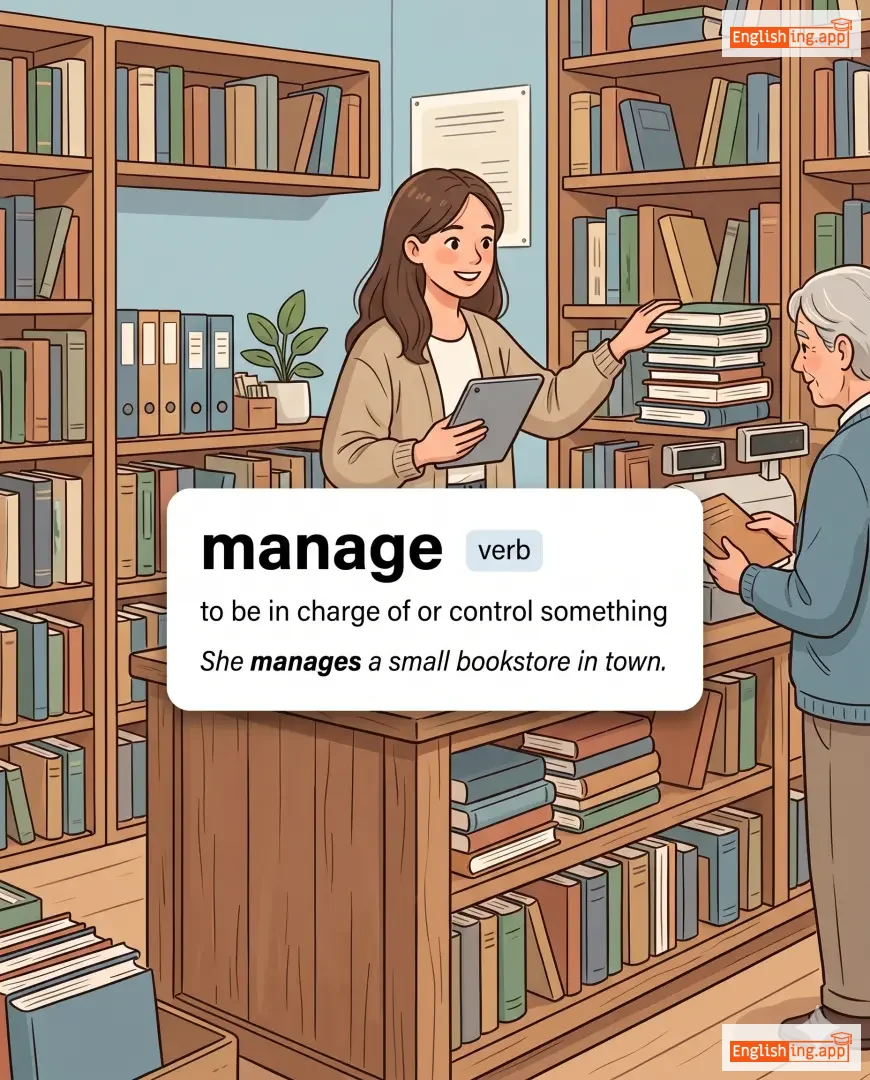
manage definition card — visual illustration of the meaning
verb
/ˈmænɪdʒ/
管理する (kanri suru)

to be in charge of or control something

"She manages a small bookstore in town."

"彼女は町の小さな書店を経営しています。" (Kanojo wa machi no chiisana shoten o keiei shiteimasu.)
adjective
/ˈmænɪdʒəbəl/
管理可能な; コントロールできる (kanri kanou na; kontorooru dekiru)

able to be controlled or dealt with; feasible

"The workload is manageable if we plan properly."
"作業負荷は計画通りにすれば管理可能です。" (Sagyou fuka wa keikaku doori ni sureba kanri kanou desu.)
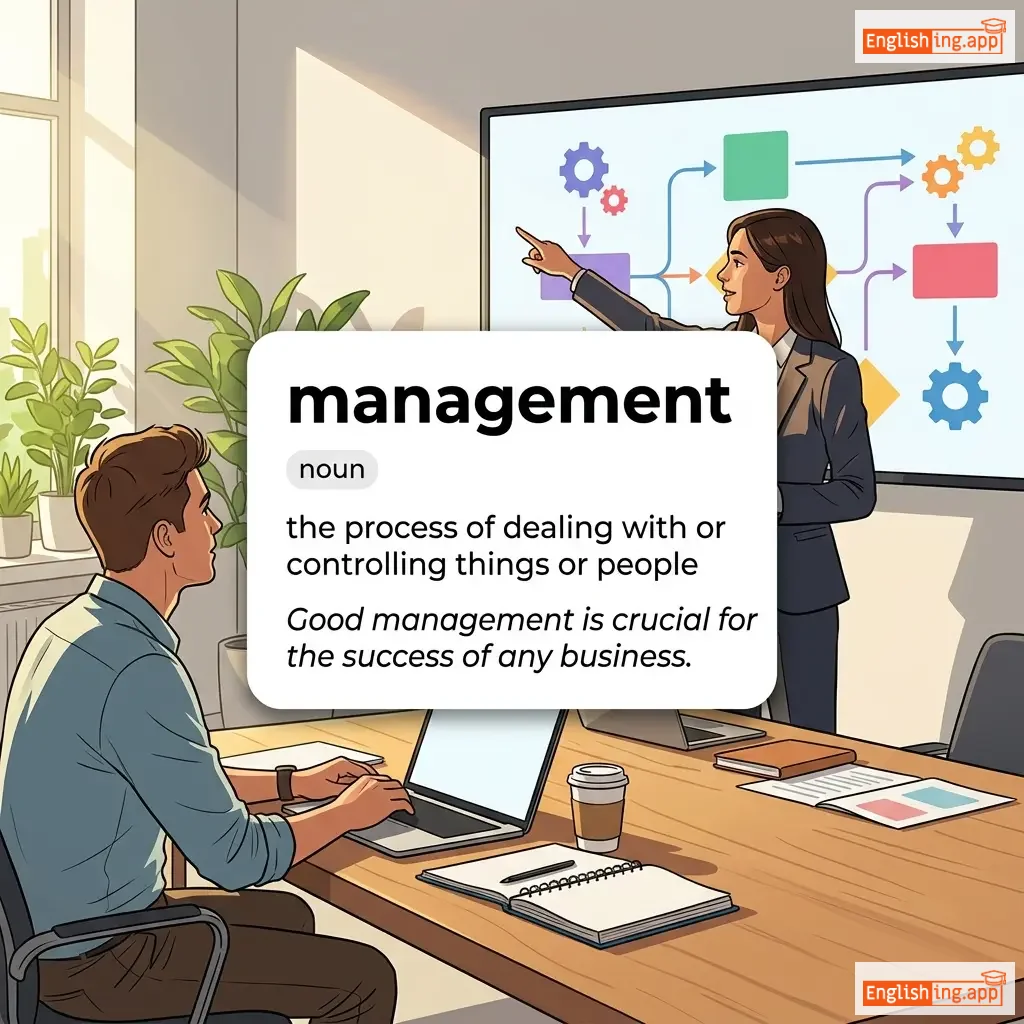
management definition card — visual illustration of the meaning
noun
/ˈmænɪdʒmənt/
マネジメント (manejimento)

the process of dealing with or controlling things or people

"Good management is crucial for the success of any business."

"良いマネジメントは、どんなビジネスにも成功のために重要です。" (Yoi manejimento wa, donna bijinesu ni mo seikou no tame ni juuyou desu.)
manager definition card — visual illustration of the meaning
noun
/ˈmænɪdʒər/
マネージャー (manējā)

a person responsible for controlling or administering an organization or group of staff

"The manager approved the new project plan."

"マネージャーは新しいプロジェクト計画を承認しました。" (Manējā wa atarashī purojekuto keikaku o shōnin shimashita.)
noun, verb
/ˈmæn.deɪt/
マンダト (mandato)

an official order or command; to give someone authority to act in a certain way

"The government issued a mandate to reduce carbon emissions."

"政府は炭素排出削減のためのマンダトを発行した。" (Seifu wa tanso haishutsu sakugen no tame no mandato o hakko shita.)
adjective
/ˈmæn.dəˌtɔːr.i/
義務的な (gimuteki na)

required by law or rules; compulsory

"Wearing seat belts is mandatory in most countries."

"ほとんどの国でシートベルトの着用は義務的です。" (Hotondo no kuni de shītoberuto no chakuyō wa gimuteki desu.)
noun
/meɪn/
たてがみ (tategami)

the long hair growing on the neck of a horse, lion, or other animal

"The lion shook its thick mane proudly."

"ライオンは誇らしげに太いたてがみを揺らした。" (Raion wa hokorashige ni futoi tategami o yurashita.)
✈️

maneuver

noun, verb
/məˈnuː.vər/

a planned or skillful movement or action; to move skillfully or carefully

"The pilot maneuvered the plane through the storm."

noun
/meɪndʒ/
疥癬 (kaisen)

a skin disease in animals caused by parasitic mites, leading to hair loss and sores

"The stray dog was suffering from mange."

"野良犬は疥癬に苦しんでいた。" (Nora inu wa kaisen ni kurushinde ita.)
verb
/ˈmæŋɡəl/
ひどく壊す (hidoku kowasu)

to severely damage or mutilate something, often by tearing or crushing

"The car was mangled in the accident."

"車は事故でひどく壊れた。" (Kuruma wa jiko de hidoku kowareta.)
noun
/ˈmæŋ.ɡoʊ/
マンゴー (mango)

a tropical fruit with yellow-orange skin and sweet juicy flesh

"The mango is known as the king of fruits."

"マンゴーは果物の王様として知られています。" (Mangō wa kudamono no ōsama toshite shirareteimasu.)
noun
/ˈmæŋɡoʊ fɪʃ/
スズキ (suzuki)

A popular white fish also known as barramundi or Asian sea bass

"Mango fish is prized for its delicate flavor and tender texture."

"スズキはその繊細な味と柔らかな食感で高く評価されています。" (suzuki wa sono sensai na aji to yawaraka na shokkan de takaku hyoka sareteimasu)
noun
/mæŋˈɡoʊ.li.ə/
マグノリア (magunoria)

a type of flowering tree with large, fragrant pink or white flowers

"The beautiful magnolia tree bloomed in spring with pink flowers."
"美しいマグノリアの木は春にピンクの花で咲きました。" (Utsukushī magunoria no ki wa haru ni pinku no hana de sakimashita)
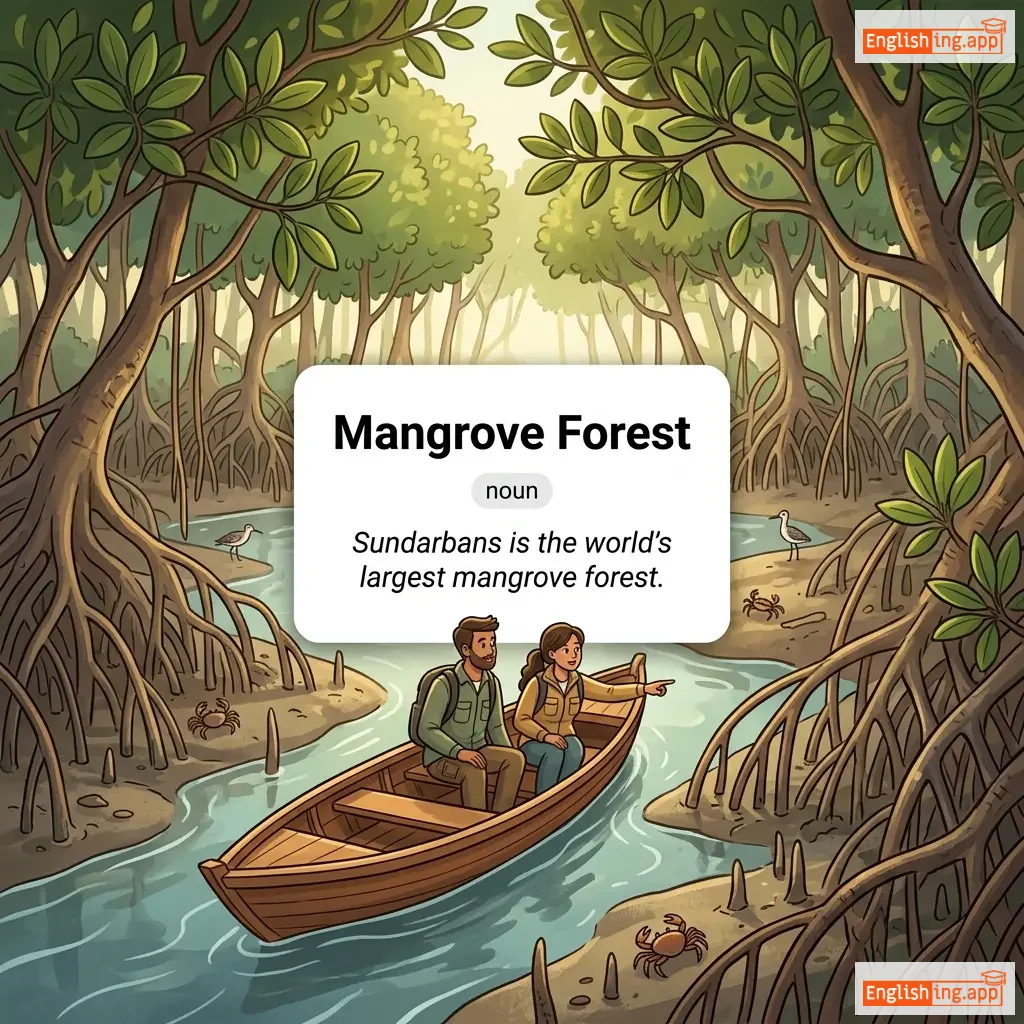
Mangrove Forest definition card — visual illustration of the meaning
noun
ˈmæŋɡroʊv ˈfɒrɪst
マングローブの森 (manguroobu no mori)

A coastal forest ecosystem characterized by salt-tolerant trees and shrubs that grow in intertidal zones.

"Sundarbans is the world's largest mangrove forest."

"スンダルバンズは世界最大のマングローブの森です。" (Sundarubanzu wa sekai saidai no manguroobu no mori desu.)
adjective
/ˈmeɪndʒi/
汚くて使い古された (kitanakute tsukaifurusareta)

in poor condition, shabby, dirty, or affected by mange

"The stray dog looked mangy and weak."

"迷子の犬は汚れて弱々しく見えた。" (Maigo no inu wa yogorete yowayowashiku mieta.)
noun
/ˈmeɪniə/
マニア (mania)

an extreme enthusiasm or obsession; a mental illness marked by excitement

"There was a mania for collecting rare stamps."

"珍しい切手を集めるためのマニアがありました。" (Mezurashī kitte o atsumeru tame no mania ga arimashita.)
noun
/ˈmeɪniæk/
マニア (mania)

a person who behaves in a wildly foolish, dangerous, or violent way

"The driver was speeding like a maniac."

"運転手はマニアのようにスピードを出していた。" (Untenshu wa mania no yō ni supīdo o dashiteita.)
adjective
/məˈnaɪəkəl/
狂気の (kyōki no)

behaving like a maniac; showing excessive enthusiasm or madness

"He gave a maniacal laugh during the movie."
"彼は映画の間に狂気の笑い声を上げた。" (Kare wa eiga no aida ni kyōki no warai o ageta.)
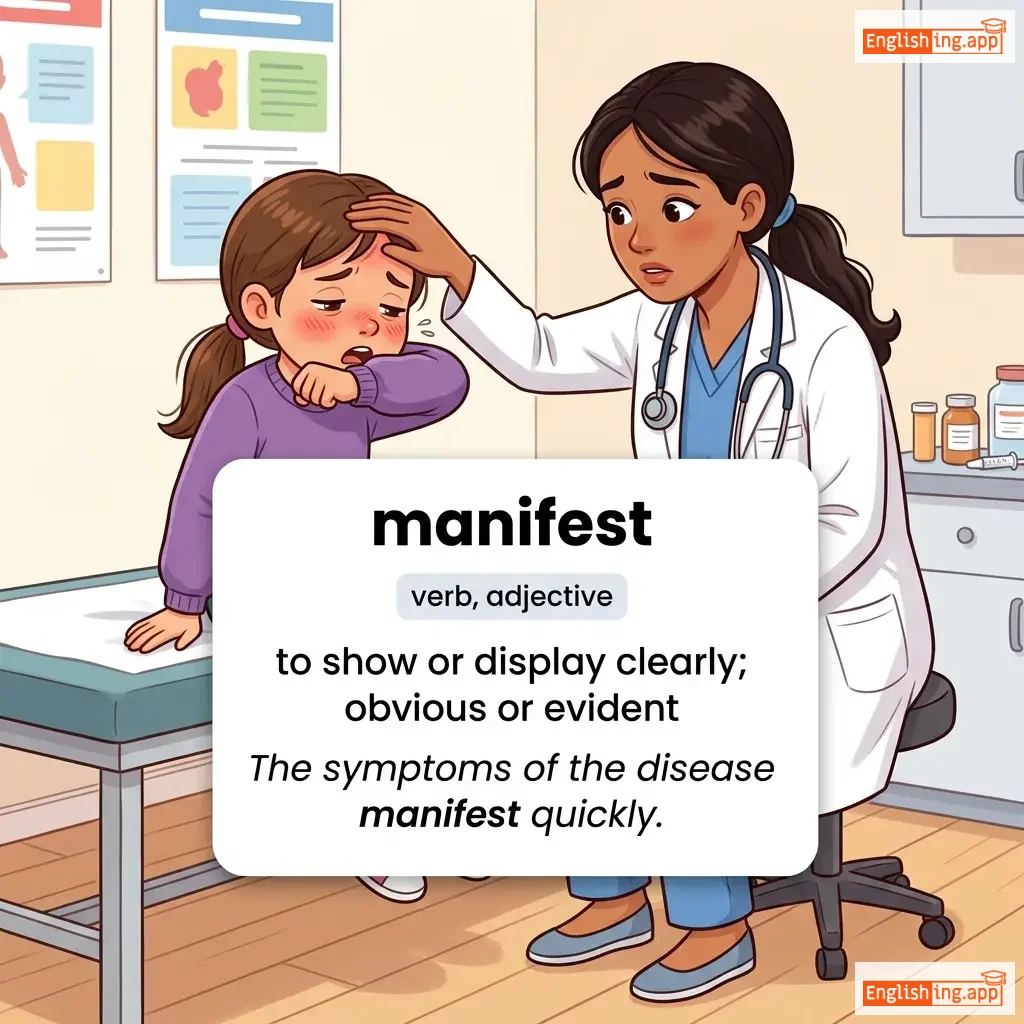
manifest definition card — visual illustration of the meaning
verb, adjective
/ˈmænɪˌfɛst/
現れる (arawareru)

to show or display clearly; obvious or evident

"The symptoms of the disease manifest quickly."
"病気の症状はすぐに現れます。" (Byouki no shoujou wa sugu ni arawaremasu.)
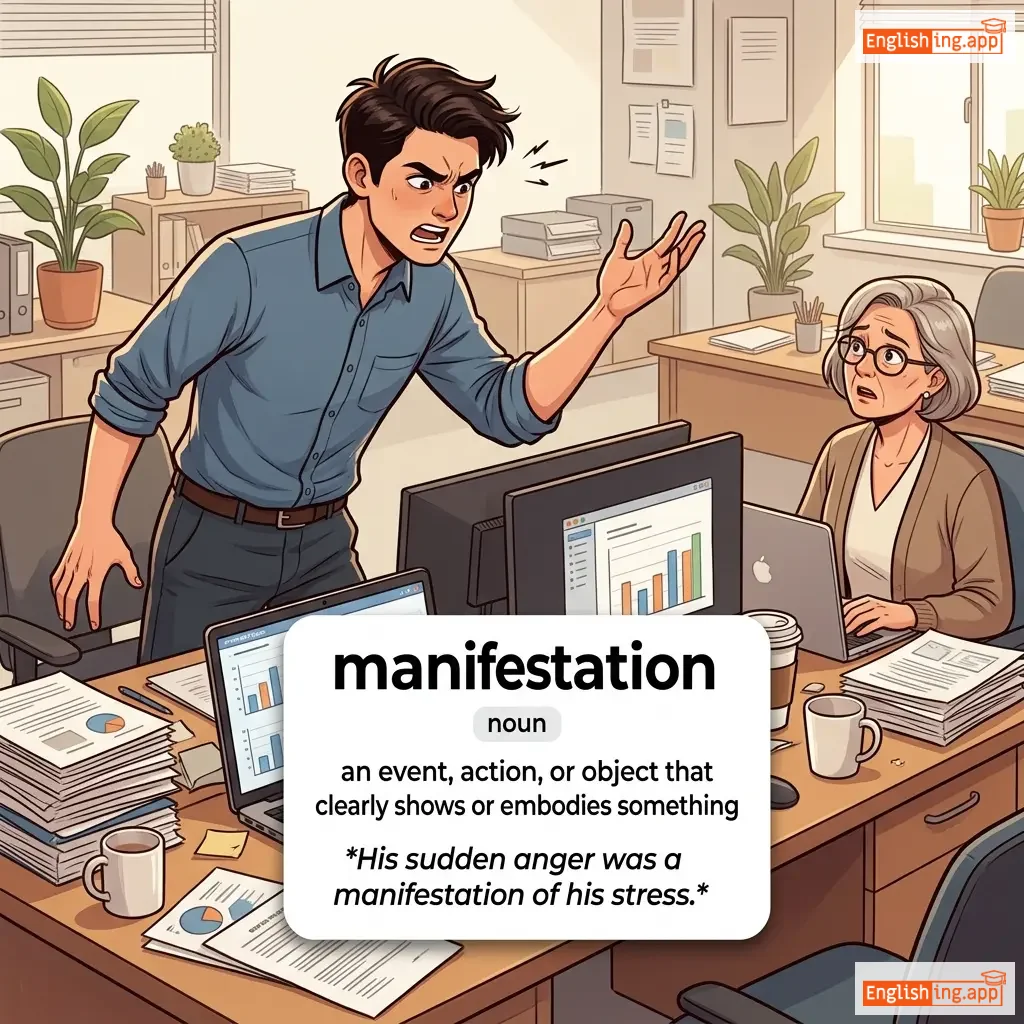
manifestation definition card — visual illustration of the meaning
noun
/ˌmænɪfɛˈsteɪʃən/
現れ (araware)

an event, action, or object that clearly shows or embodies something

"His sudden anger was a manifestation of his stress."

"彼の突然の怒りは彼のストレスの現れだった。" (Kare no totsuzen no ikari wa kare no sutoresu no araware datta.)
noun
/ˌmænɪˈfɛstoʊ/
マニフェスト (manifesto)

a public declaration of policy and aims, especially by a political party

"The party released its manifesto before the election."

"党は選挙前にマニフェストを発表した。" (Tō wa senkyo mae ni manifesto o happyō shita.)
adjective, noun
/ˈmænɪˌfoʊld/
多様な (tayō na)

many and various; having many different forms

"The benefits of exercise are manifold."

"運動の利点は多様です。" (Undō no riten wa tayō desu.)
🕹️

manipulate

verb
/məˈnɪpjəˌleɪt/

to control or influence someone or something cleverly or unfairly

"He tried to manipulate the results in his favor."
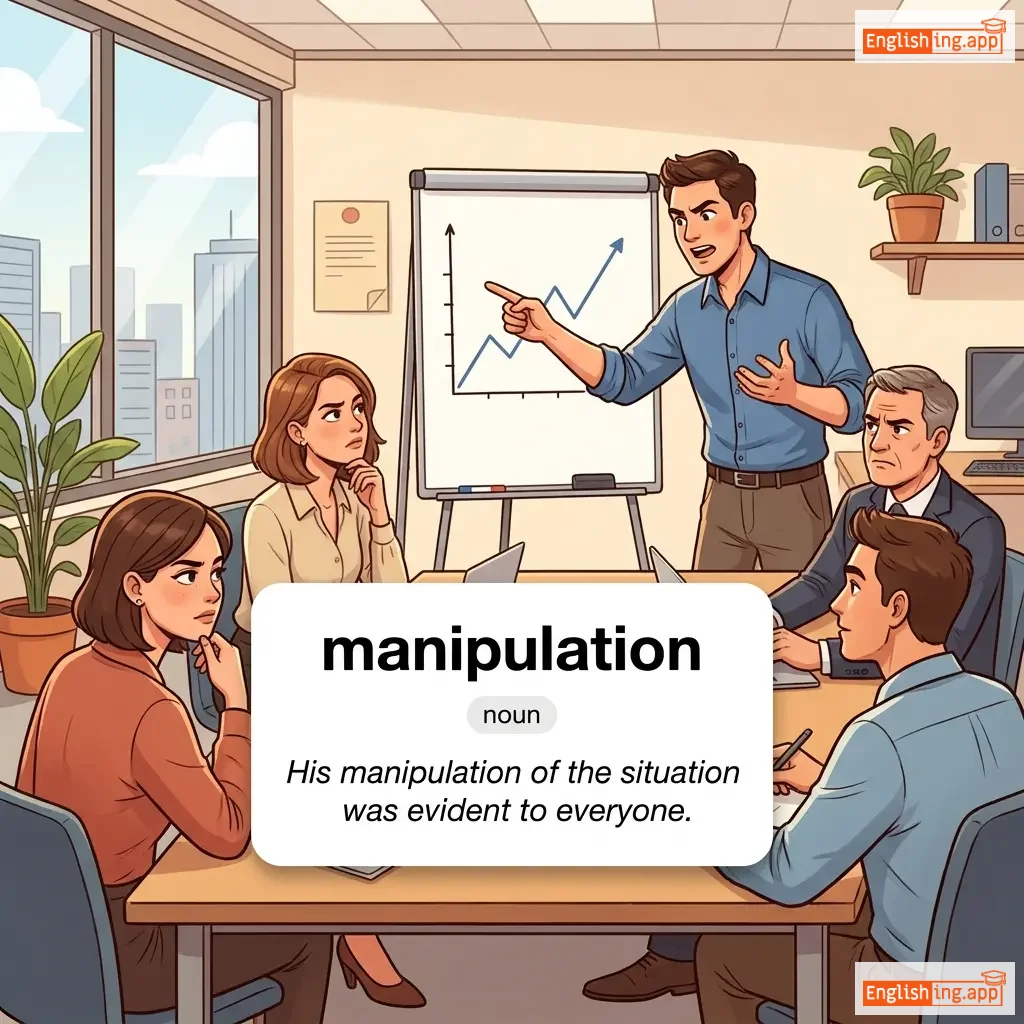
manipulation definition card — visual illustration of the meaning
noun
/məˌnɪpjʊˈleɪʃən/

the action of controlling or influencing something or someone cleverly or unfairly

"His manipulation of the situation was evident to everyone."

adjective
/ˈmæn.laɪk/
男性的 (danseiteki)

Having qualities or characteristics traditionally associated with a man; manly.

"His manlike courage impressed everyone in the village."

"彼の男性的な勇気は村の皆に感動を与えました。" (Kare no danseiteki na yūki wa mura no mina ni kandō o ataemashita.)
noun
/ˈmæn.li.nəs/
男らしさ (otokorashisa)

The quality of being manly; courage, strength, and honor associated with men.

"His manliness was admired by his peers."

"彼の男らしさは仲間たちに賞賛された。" (kare no otokorashisa wa nakama-tachi ni shōsan sareta.)
adjective
/ˈmæn.li/
男らしい; 勇敢な; 大胆な (manri)

having qualities traditionally associated with men; brave; courageous

"He showed manly courage during the crisis."

"危機の中で、彼は男らしい勇気を示しました。" (Kiki no naka de, kare wa otokorashī yūki o shimeshima-shita.)
adjective
/ˌmænˈmeɪd/
人工の (jinkō no)

something created or built by humans rather than occurring naturally

"This lake is manmade, not natural."

"この湖は人工のもので、自然のものではありません。" (Kono mizuumi wa jinkō no mono de, shizen no mono de wa arimasen.)
noun
/ˈmænɪkɪn/
マネキン (manekin)

a life-sized model of a human figure used by shops to display clothes

"The mannequin in the shop window was dressed in a red gown."

"ショップのウィンドウのマネキンは赤いドレスを着ていた。" (Shoppu no u~indō no manekin wa akai doresu o kite ita.)
noun
/ˈmænər/
マナー / 方法 (manā / hōhō)

a way in which something is done or happens

"He spoke in a polite manner."

"彼は礼儀正しく話しました。" (Kare wa reigi tadashiku hanashimashita.)
adjective
/ˈmæn.əd/
不自然な / 気取った (fushizen na / kidotta)

Having or showing a particular manner, especially an artificial or affected one.

"The actor’s performance was too mannered to feel natural."

"俳優の演技はやりすぎて、自然には見えなかった。" (Haiyū no enki wa yarisugite, shizen ni wa mie nakatta.)
noun
/ˈmæn.əˌrɪz.əm/
(heki)

A habitual way of speaking or behaving; a distinctive personal trait.

"One of his funny mannerisms is scratching his head when he’s nervous."

"彼の面白い癖の一つは、緊張しているときに頭を掻くことです。" (Kare no omoshiroi heki no hitotsu wa, kinchō shite iru toki ni atama o kaku koto desu.)
verb
/məˈnuː.vər/

To move skillfully or carefully; to guide or manipulate into a desired position.

"The driver skillfully manoeuvered the car through the narrow street."

noun
/ˈmænər/
邸宅 (teitaku)

A large country house with lands; the main house of an estate.

"The old manor stood proudly on the hill for centuries."
"古い邸宅は何世代にもわたって丘の上に誇らしげに立っていました。" (Furui teitaku wa nan-sedai ni mo watatte oka no ue ni hokorashige ni tatte imashita.)
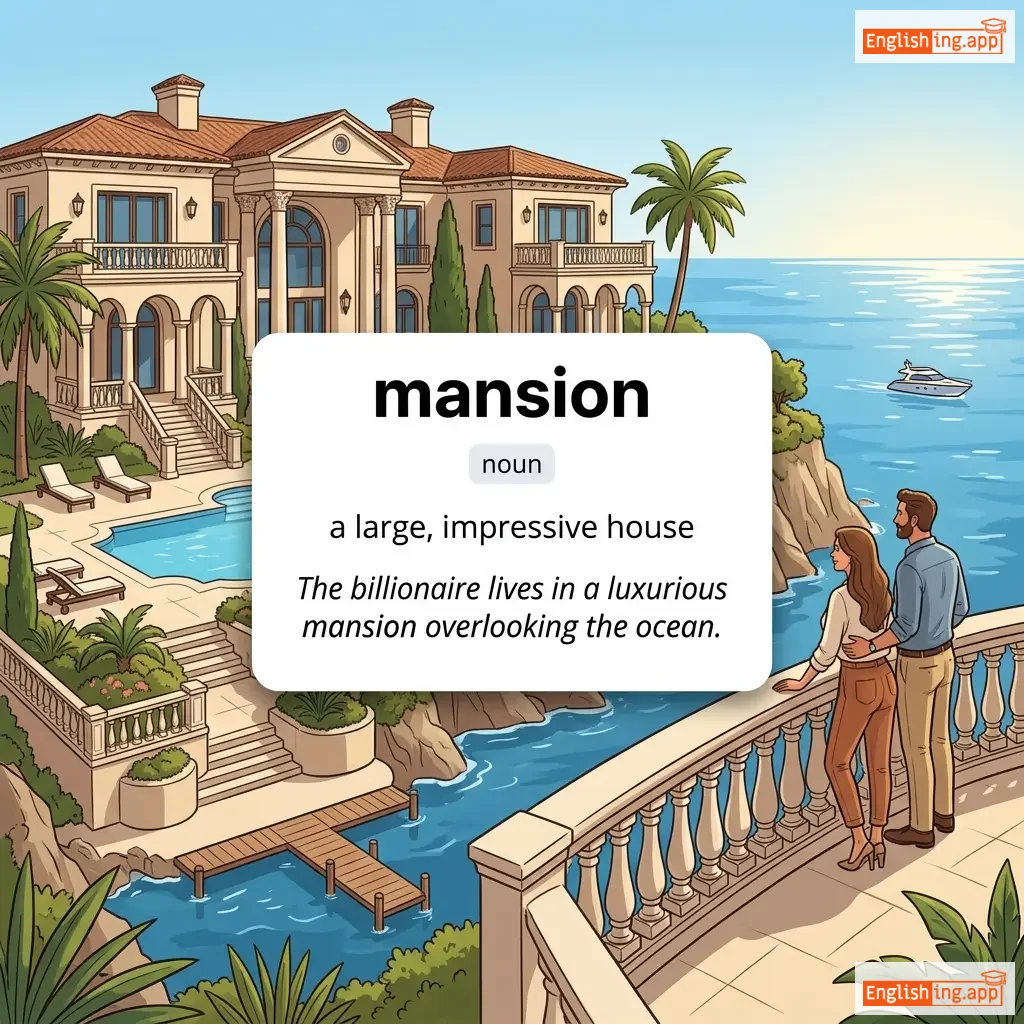
mansion definition card — visual illustration of the meaning
noun
/ˈmænʃən/
幸せ (shiawase)

a large, impressive house

"The billionaire lives in a luxurious mansion overlooking the ocean."

"彼女は賞を受け取ったとき、幸せを隠すことができませんでした。" (Kanojo wa shō o uketotta toki, shiawase o kakusu koto ga dekimasen deshita.)
noun
/ˈmæntl̩/
暖炉の上の棚 (danro no ue no tana)

A shelf above a fireplace, often used for decoration.

"She placed family photos on the mantel above the fireplace."

"彼女は家族の写真を暖炉の上の棚に置きました。" (Kanojo wa kazoku no shashin o danro no ue no tana ni okimashita.)
noun
/ˈmæntl̩/
マント, 責任 (manto, sekinin)

A cloak or covering; also the layer of the earth between the crust and the core.

"The leader assumed the mantle of responsibility."

"リーダーは責任の重みを担った。" (Rīdā wa sekinin no omomi o ninatta.)
noun
/ˈmænjuəl/
マニュアル (manual)

a handbook or guide that provides instructions on how to do or operate something

"You should read the user manual before setting up the device."

"デバイスを設定する前に、ユーザーマニュアルを読んでください。" (Debaisu wo settei suru mae ni, yūzā manyuaru wo yonde kudasai.)
adverb
/ˈmæn.ju.ə.li/
手動で; 物理的な労力を使って; (shudō de; butsuriteki na rōryoku o tsukatte)

by hand; using physical effort rather than machines

"The data was entered manually into the system."

"データは手動でシステムに入力されました。" (Dēta wa shudō de shisutemu ni nyūryoku saremashita.)
manufacture definition card — visual illustration of the meaning
verb
/ˌmænɪˈfæktʃər/
製造する (seizou suru)

to make something in large quantities using machinery

"The company manufactures high-quality electronics."

"その会社は高品質な電子機器を製造しています。" (Sono kaisha wa kōhinshitsu na denshi kiki o seizō shiteimasu.)
noun
/ˌmænjəˈfæktʃərər/
製造業者 (seizōgyōsha)

A person or company that makes goods in large quantities.

"The manufacturer produces cars for the global market."

"製造業者はグローバル市場向けに車を生産しています。" (Seizōgyōsha wa gurōbaru shijō muke ni kuruma o seisan shiteimasu.)
noun
/ˌmænjəˈfæktʃərɪŋ/
製造業 (seizōgyō)

the process of making products on a large scale using machinery

"The country is investing heavily in the manufacturing sector."

"その国は製造業に大規模に投資しています。" (sono kuni wa seizōgyō ni daikibo ni tōshi shiteimasu.)
noun
/ˌmænjəˈmɪʃən/
奴隷解放 (dorei kaihō)

The act of a slave owner freeing their slaves.

"The manumission of the slaves marked a turning point in history."

"奴隷の解放は歴史の転換点を示しました。" (Dorei no kaihō wa rekishi no tenkantei o shimeshimashita.)
verb
/ˌmæn.juˈmɪt/
奴隷解放 (dorei kaihou)

to release from slavery or servitude; to set free

"The landowner decided to manumit his slaves."
"地主は奴隷を解放することに決めました。" (Jishu wa dorei wo kaihou suru koto ni kimemashita.)
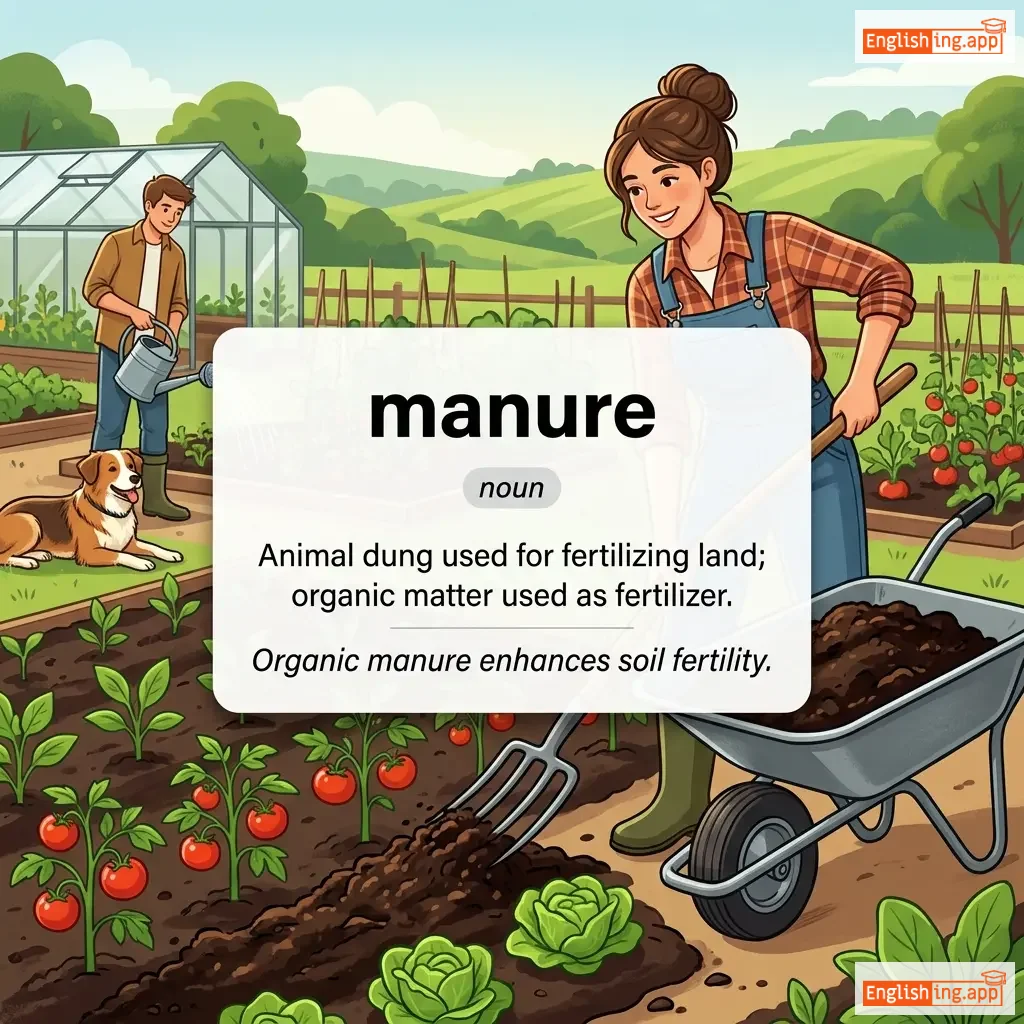
manure definition card — visual illustration of the meaning
noun
məˈnjʊər
肥料, 家畜の糞 (hiryo, kachiku no fun)

Animal dung used for fertilizing land; organic matter used as fertilizer.

"Organic manure enhances soil fertility."

"有機肥料は土壌の肥沃度を高めます。" (Yūki hiryo wa tojō no hiwokudo o takamemasu.)
noun
/ˈmæn.juˌskrɪpt/
手稿 (shukou)

a handwritten or typed document, especially a writer’s draft before publication

"The author submitted her manuscript to the publisher."

"作家は彼女の手稿を出版社に提出しました。" (Sakka wa kanojo no shukou o shuppansha ni teishutsu shimashita.)