語彙集

英単語辞書 | 単語の意味、定義、例文

adverb
/ˈmeɪnli/
主に (omoni)

for the most part; chiefly

"The audience was mainly composed of students."

"観客は主に学生で構成されていました。" (Kankyaku wa omoni gakusei de kousei sarete imashita.)
noun
/ˈmeɪnstriːm/
主流 (shuryuu)

the ideas, attitudes, or activities that are regarded as normal or conventional; the dominant trend in opinion or fashion

"Social media has become a mainstream source of news for many people."
"ソーシャルメディアは多くの人々にとって主流のニュースソースとなった。" (Sōsharumedia wa ōku no hitobito ni totte shuryū no nyūsu sōsu to natta.)
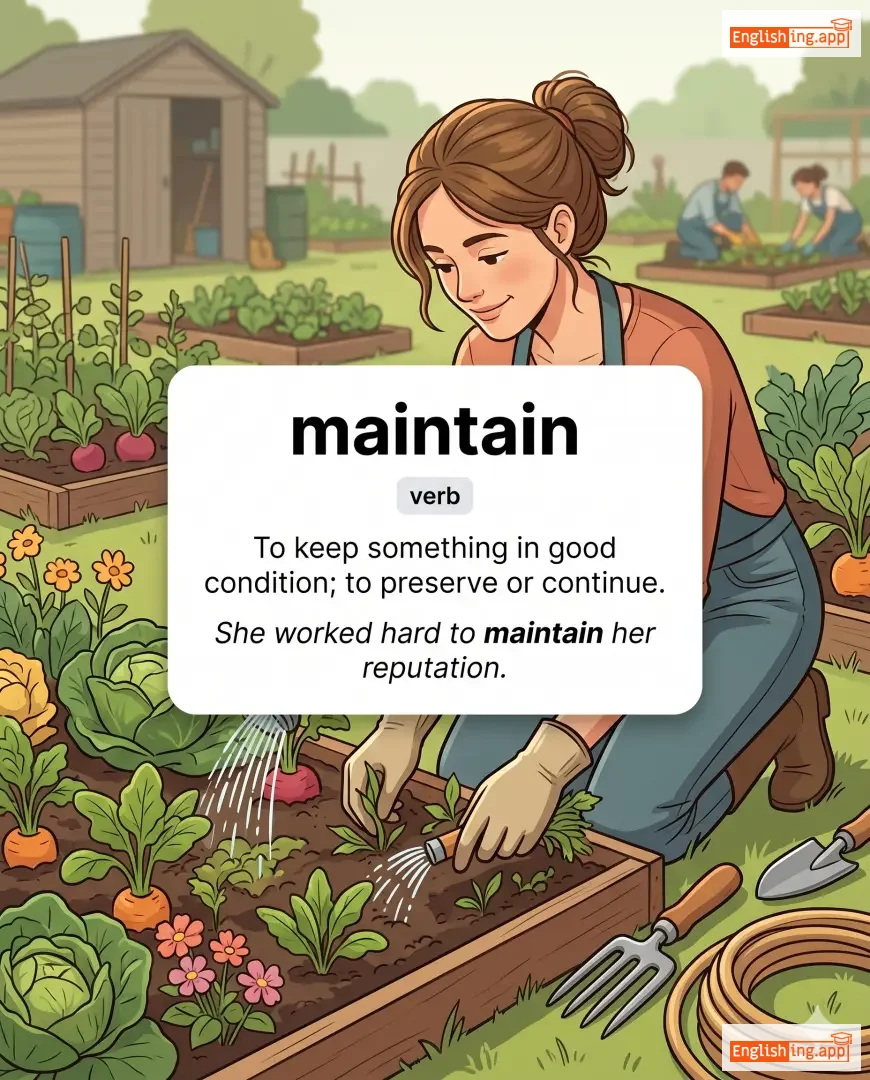
maintain definition card — visual illustration of the meaning
verb
/meɪnˈteɪn/
維持する (iji suru)

To keep something in good condition; to preserve or continue.

"She worked hard to maintain her reputation."
"彼女は評判を維持するために一生懸命働きました。" (Kanojo wa hyōban o iji suru tame ni isshōkenmei hatarakimashita.)
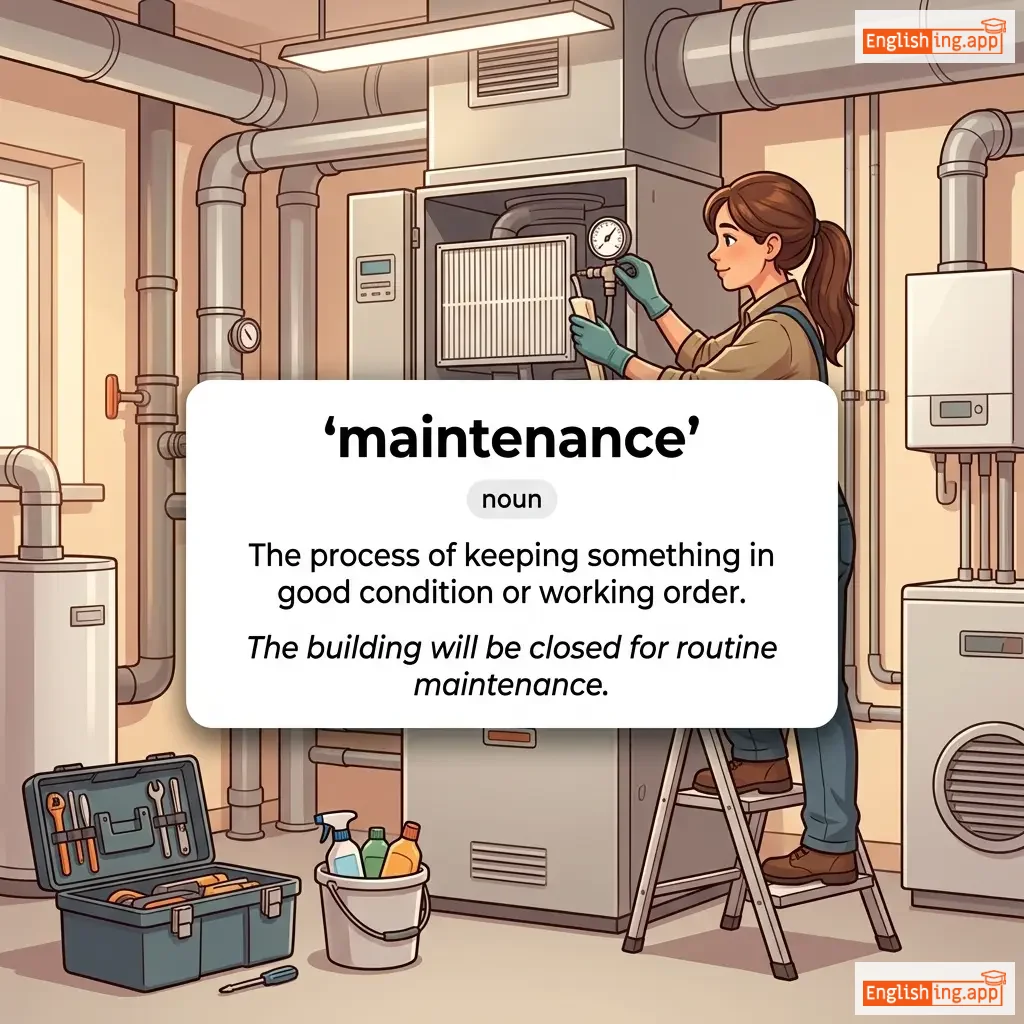
maintenance definition card — visual illustration of the meaning
noun
/ˈmeɪntənəns/
メンテナンス (mentenansu)

The process of keeping something in good condition or working order.

"The building will be closed for routine maintenance."

"その建物は定期的なメンテナンスのために閉鎖されます。" (Sono tatemono wa teikiteki na mentenansu no tame ni heisa saremasu.)
noun
/meɪz/
トウモロコシ (toumorokoshi)

a tall cereal plant grown for its large yellow grains, also called corn

"Farmers harvested the maize in late autumn."
"農家は秋の終わりにトウモロコシを収穫しました。" (Nouka wa aki no owari ni toumorokoshi wo shuukaku shimashita.)
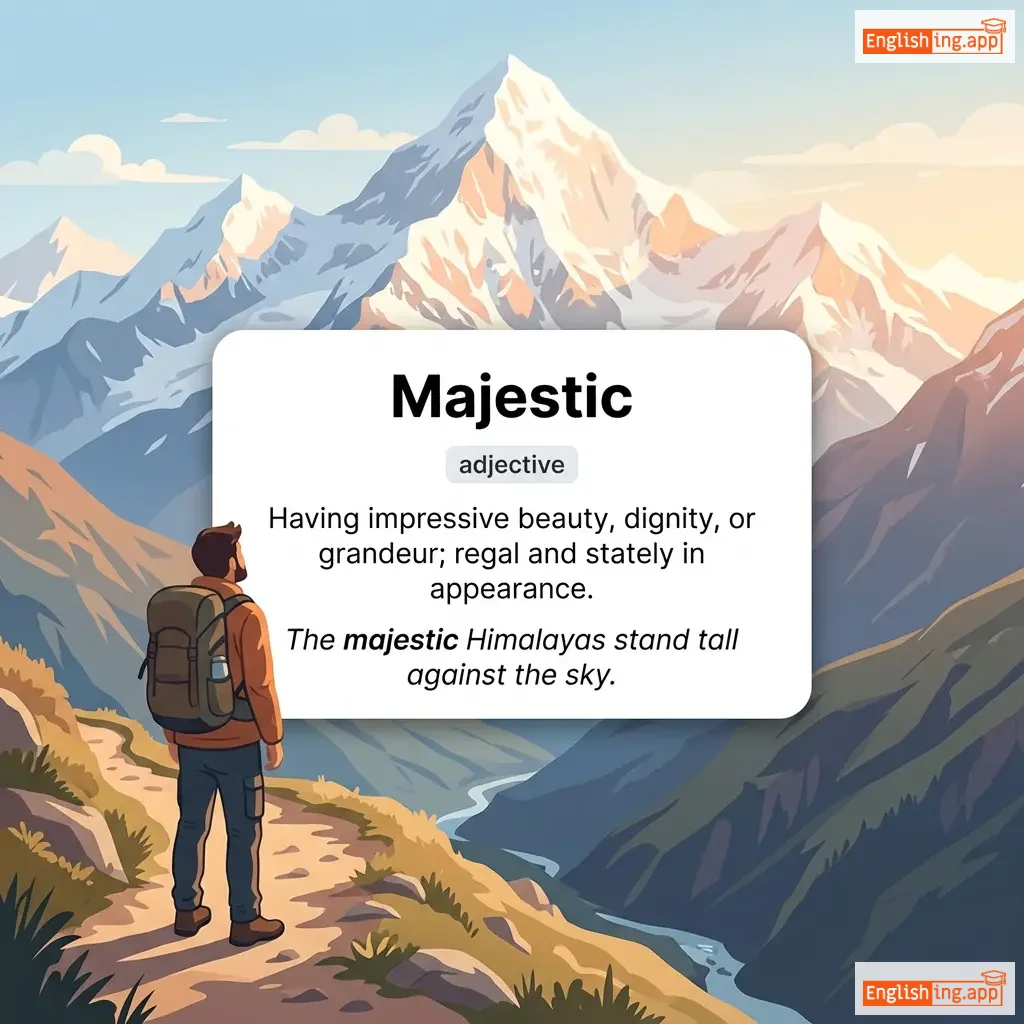
Majestic definition card — visual illustration of the meaning
adjective
məˈdʒes.tɪk
壮大な (sōdaina)

Having impressive beauty, dignity, or grandeur; regal and stately in appearance.

"The majestic Himalayas stand tall against the sky."

"壮大なヒマラヤ山脈は空に向かって高くそびえ立っています。" (Sōdaina Himaraya sanmyaku wa sora ni mukatte takaku sobietatteimasu.)
adjective
/ˈmeɪdʒər/
重要な (jūyōna)

important, serious, or significant

"Climate change is a major concern for the world."
"気候変動は世界にとって重大な懸念事項です。" (kikō hendō wa sekai ni totte jūdaina shinpai jikō desu.)
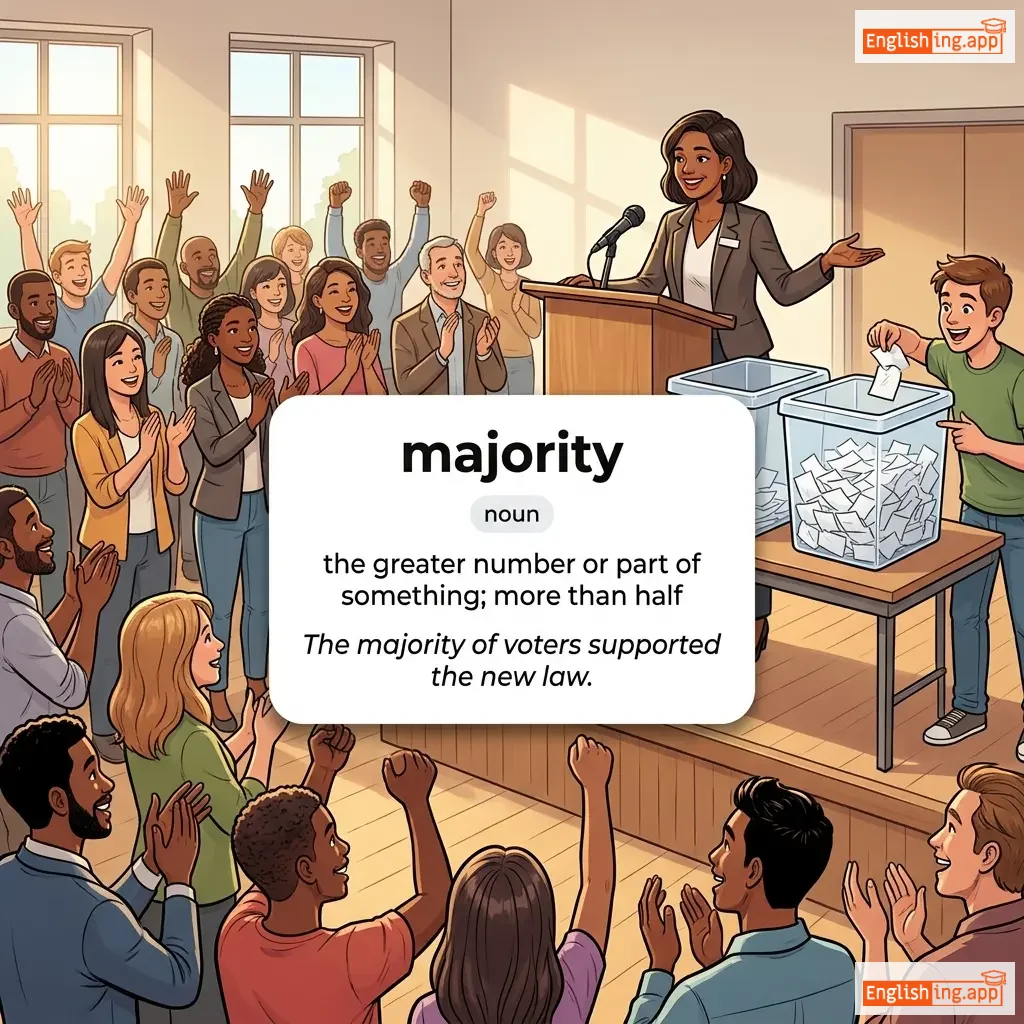
majority definition card — visual illustration of the meaning
noun
/məˈdʒɒrəti/
多数 (tasuu)

the greater number or part of something; more than half

"The majority of voters supported the new law."

"有権者の多数が新しい法律を支持しました。" (Yuken-sha no tasuu ga atarashii houritsu o shiji shimashita.)
verb
/meɪk/
作る (tsukuru)

to create, build, or cause something to happen

"She can make delicious cakes."

"彼女は美味しいケーキを作れます。" (Kanojo wa oishii keeki o tsukuremasu.)
noun
/ˈmeɪkər/
創造者 (sozo-sha)

a person or thing that makes or produces something

"He is a famous movie maker in Hollywood."

"彼はハリウッドの有名な映画製作者です。" (kare wa hariruddo no yuumei na eiga seisakusha desu.)
adjective
/ˈmeɪkˌʃɪft/
即席の (sokuseki no)

used as a temporary substitute; improvised

"They used boxes as a makeshift table."

"彼らは箱を即席のテーブルとして使った。" (Karera wa hako o sokuseki no tēburu to shite tsukatta.)
noun
/ˈmeɪkʌp/
化粧 (keshou)

cosmetics used to enhance or alter appearance

"She applied makeup before the party."

"彼女はパーティーの前に化粧をした。" (Kanojo wa pātī no mae ni keshou o shita.)
noun
/ˈmeɪkɪŋ/
制作 (seisaku)

the process of producing or constructing something

"The making of the movie took over two years."

"映画の制作には2年以上かかりました。" (Eiga no seisaku ni wa 2-nen ijō kakarimashita.)
adjective
/ˌmæləˈdrɔɪt/
不器用 (bukiyou)

clumsy or awkward in movement or behavior

"His maladroit attempt at fixing the chair made it worse."

"椅子を修理しようとした彼の不器用な試みは、さらに悪化させた。" (Isu o shuuri shiyou to shita kare no bukiyou na kokoromi wa, sara ni akka saseta.)
noun
/ˈmælədi/
病気 (byouki)

a disease or disorder of the body or mind; a serious problem

"The doctor treated the malady with great care."

"医者は病気を慎重に治療しました。" (Isha wa byouki wo shinchou ni chiryou shimashita.)
noun
/məˈleɪz/
不調 (fuchou)

a general feeling of discomfort, illness, or unease whose exact cause is difficult to identify

"After the long journey, she felt a general malaise."

"長時間の旅行の後、彼女は一般的な不調を感じました。" (Choujikan no ryokou no ato, kanojo wa ippan-teki na fuchou o kanjimashita.)
noun
/ˈmæləprɒˌpɪzəm/
誤用語 (goyōgo)

the mistaken use of a word in place of a similar-sounding one, often with amusing effect

"He is famous for his malapropism when speaking in public."

"彼は公衆の前で話すときに誤用語で有名です。" (Kare wa kōshū no mae de hanasu toki ni goyōgo de yūmei desu.)
adjective, adverb
/ˌmæləprəˈpoʊ/
不適切 (futekisetsu)

inappropriate or unsuitable; at an inconvenient or inappropriate time

"His comment was malapropos during the serious discussion."

"真剣な議論中に彼のコメントは不適切だった。" (Shinken na giron-chuu ni kare no komento wa futekisetsu datta.)
noun
/məˈlɛəriə/
マラリア (mararia)

a serious infectious disease spread by mosquitoes, causing fever, chills, and sweating

"Malaria is a common disease in tropical regions."

"マラリアは熱帯地域で一般的な病気です。" (Mararia wa nettai chiiki de ippantekina byōki desu.)
noun
/məˈlɑː.ti/
マラティ (malati)

a fragrant climbing plant with small white flowers, commonly known as jasmine

"The malati vine covered the garden wall with sweet-smelling flowers."

"マラティのツルが甘い香りの花で庭の壁を覆っていました。" (Malati no tsuru ga amai kaori no hana de niwa no kabe wo otteimashita)
noun
/ˈmæl.kənˌtɛnt/
不満な人 (fuman na hito)

A person who is dissatisfied or rebellious; one who is not content.

"The malcontent voiced his grievances against the government."

"不満な人は政府に対して不平を述べました。" (Fuman na hito wa seifu ni taishite fuhei wo nobemashita.)
noun/adjective
/meɪl/
男性 (dansei)

a man or boy; relating to men or boys

"The school has more male teachers than female teachers."

"学校には女性の教師よりも男性の教師が多い。" (Gakkou ni wa josei no kyoushi yori mo dansei no kyoushi ga ooi.)
noun
/ˌmæl.əˈdɪk.ʃən/
呪い (noroi)

A curse or the utterance of a curse.

"The witch cast a malediction upon the village."

"魔女は村に呪いをかけた。" (Majo wa mura ni noroi o kaketa.)
noun
/ˈmæl.əˌfæk.tər/
悪党 (akutou)

A person who commits a crime or does evil.

"The malefactor was arrested for the robbery."

"その悪党は強盗で逮捕された。" (Sono akutou wa goutou de taiho sareta.)
adjective
/məˈlɛfɪsənt/
邪悪 (jaaku)

Causing harm or destruction, especially by supernatural means.

"The maleficent witch cursed the young princess."

"その悪しき魔女は若い王女に呪いをかけました。" (Sono ashiki majo wa wakai ōjo ni noroi o kakemashita.)
adjective
/ˌmæl.əˈfɪʃ.ənt/
悪意のある (akui no aru)

Doing harm or evil; having a harmful effect.

"The maleficient acts of the tyrant ruined the kingdom."

"暴君の悪意のある行為は王国を滅ぼした。" (Bōkun no akui no aru kōi wa ōkoku o horoboshita.)
noun
/məˈlɛvələns/
悪意 (akui)

The state or condition of being malevolent; having or showing a wish to do evil to others.

"His malevolence was clear in the cruel way he treated his rivals."

"彼の悪意は、彼がライバルを扱う残忍な方法において明らかだった。" (Kare no akui wa, kare ga raibaru o atsukau zan'ina hōhō ni oite akirakadaった.)
adjective
/məˈlɛvələnt/
悪意のある (akui no aru)

Having or showing a wish to do evil or harm to others.

"The malevolent glare in his eyes frightened the children."

"彼の目に浮かぶ悪意のある視線は子供たちを怖がらせた。" (Kare no me ni ukabu akui no aru shisen wa kodomotachi o kowagaraseta.)
noun
/mælˈfiːzəns/
公務員の不正行為 (koumuin no fusei koui)

Wrongdoing or misconduct, especially by a public official.

"The mayor was accused of malfeasance in office."
"市長は職務中の不正行為で告発された。" (Shichou wa shokumu-chuu no fusei koui de kokuhatsu sareta.)
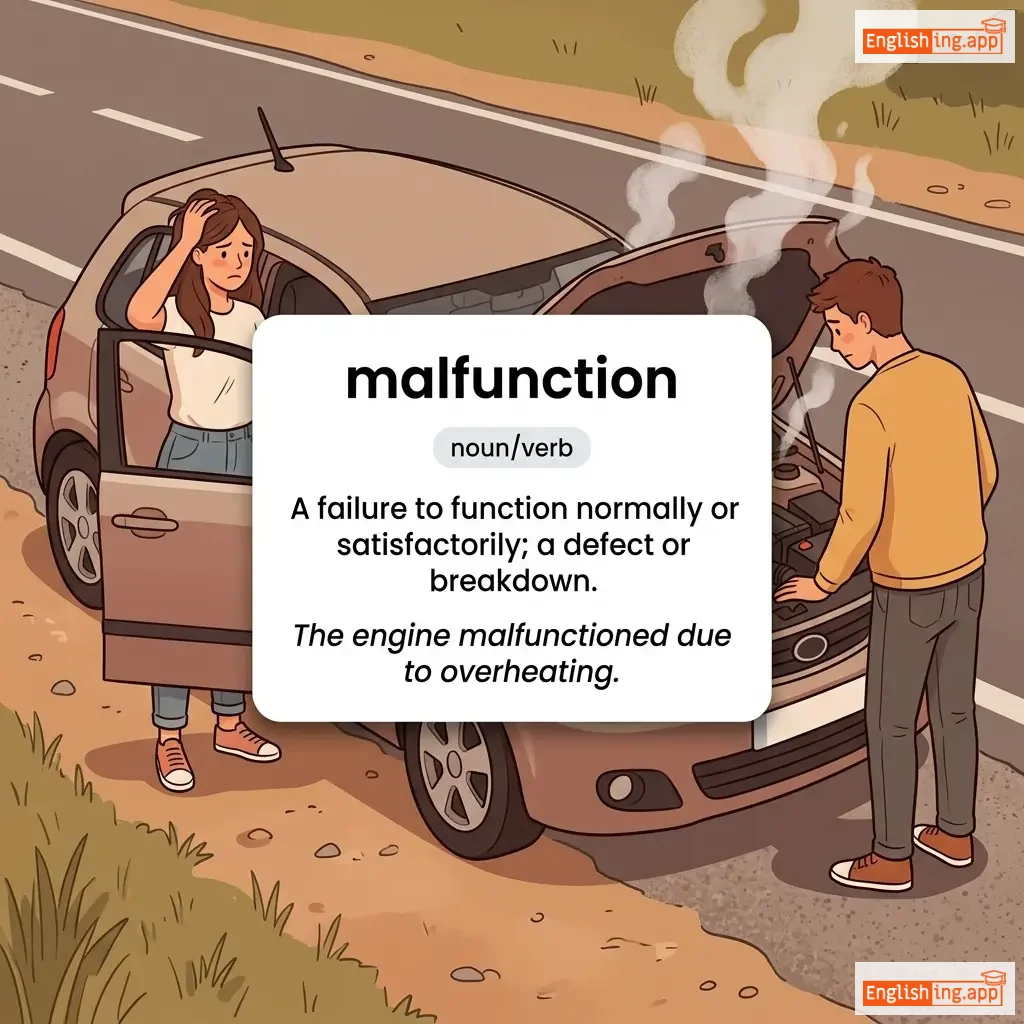
malfunction definition card — visual illustration of the meaning
noun/verb
mælˈfʌŋk.ʃən
故障 (koshou)

A failure to function normally or satisfactorily; a defect or breakdown.

"The engine malfunctioned due to overheating."

"エンジンは過熱のため故障しました。" (Enjin wa kanetsu no tame koshou shimashita.)
noun
/ˈmælɪs/
悪意 (akui)

The intention or desire to do evil or cause harm.

"She bore no malice towards her former friend."

"彼女は元の友人に対して悪意を抱いていなかった。" (Kanojo wa moto no yuujin ni taishite akui o idaite inakatta.)
adjective
/məˈlɪʃəs/
悪意のある (akui no aru)

Characterized by malice; intending or intended to do harm.

"The hackers launched a malicious attack on the company’s system."

"ハッカーたちは企業のシステムに悪意のある攻撃を仕掛けた。" (Hakkā-tachi wa kigyō no shisutemu ni akui no aru kōgeki o shikaketa.)
Malign definition card — visual illustration of the meaning
🗣️

Malign

verb
/məˈlaɪn/

to speak harmful untruths about someone; to slander or defame

"She felt hurt when her rivals tried to malign her reputation."

adjective
/məˈlɪɡnənt/
悪性 (akusei)

dangerous or harmful in influence or effect; medically, tending to invade and destroy tissue

"Doctors confirmed that the tumor was malignant."
"医師はその腫瘍が悪性であることを確認しました。" (Ishi wa sono shuyou ga akusei de aru koto wo kakunin shimashita.)
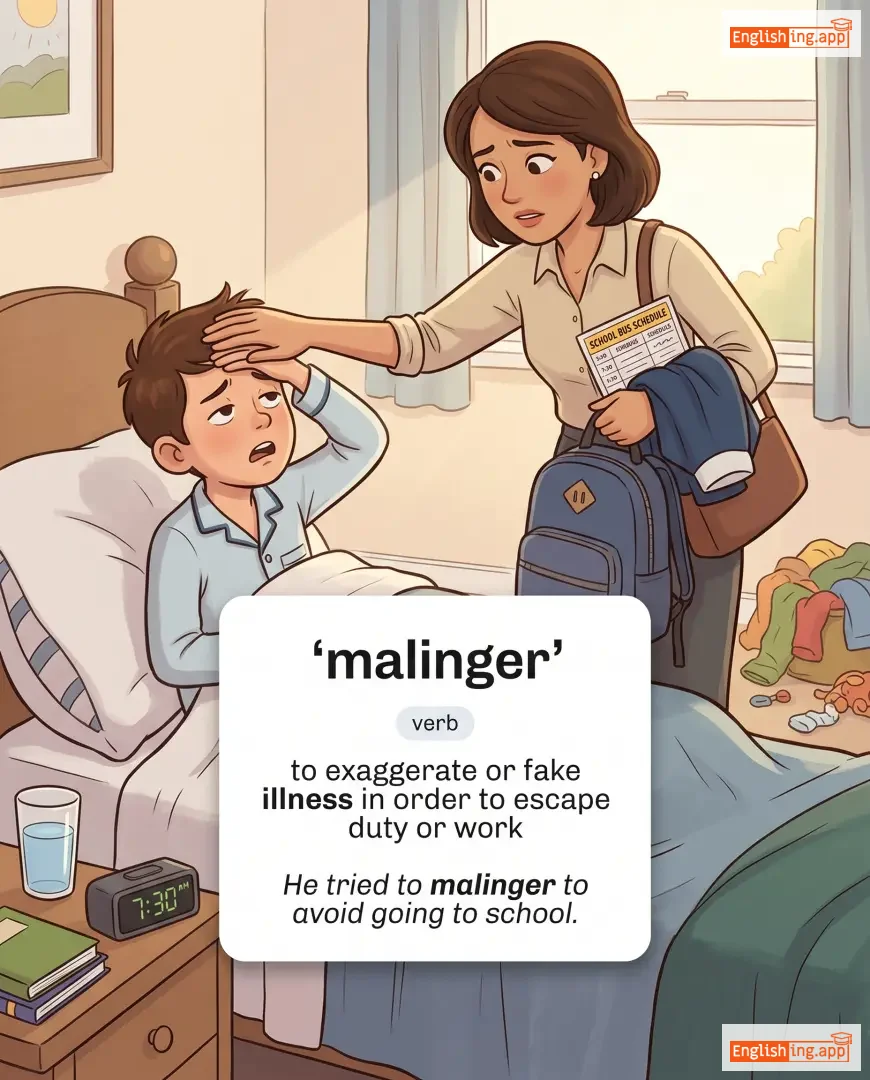
malinger definition card — visual illustration of the meaning
verb
/məˈlɪŋɡər/
病気を装う (byouki o yosou)

to exaggerate or fake illness in order to escape duty or work

"He tried to malinger to avoid going to school."
"彼は学校に行くのを避けるためにマリンジャーしようとした。" (Kare wa gakkou ni iku no o sakeru tame ni malingā shiyou to shita.)
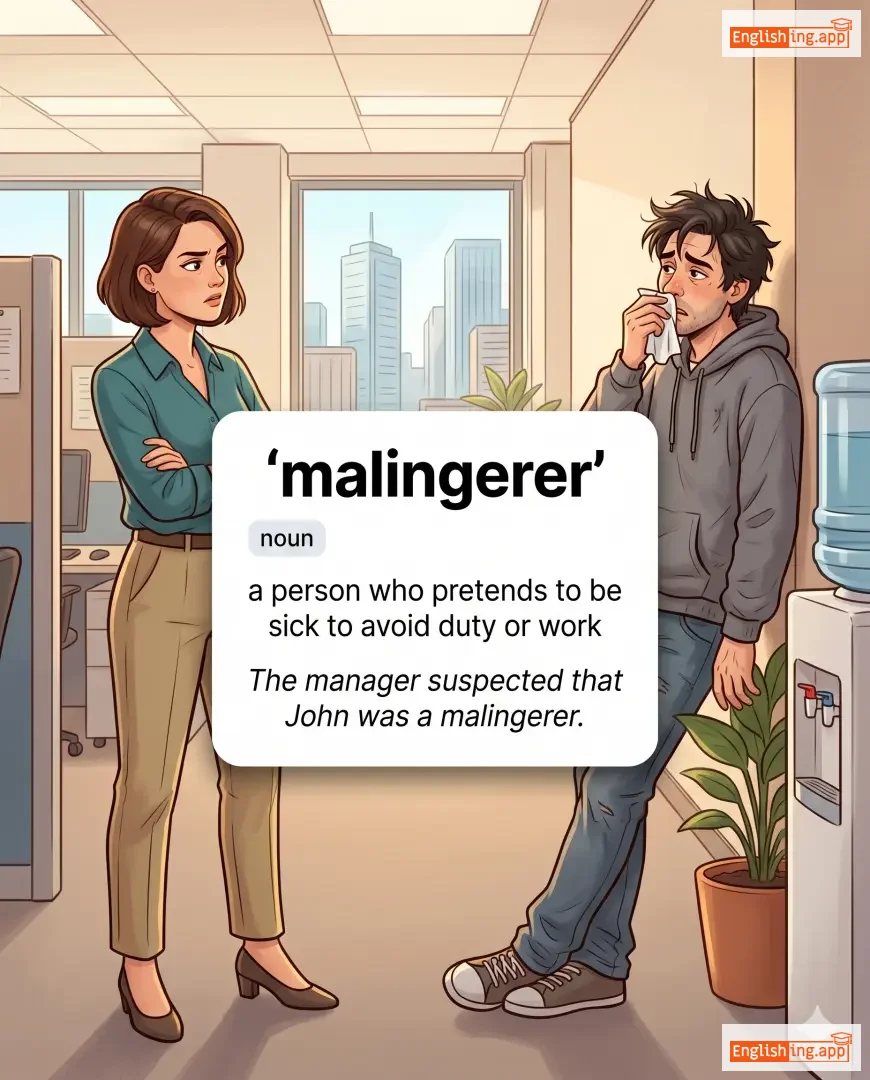
malingerer definition card — visual illustration of the meaning
noun
/məˈlɪŋɡərər/
病気を装う人 (byouki wo yosou hito)

a person who pretends to be sick to avoid duty or work

"The manager suspected that John was a malingerer."

"マネージャーはジョンがマリンガラーだと疑っていた。" (Manejā wa Jon ga Maringarā da to utagatte ita.)
noun
/mɔːl/ or /mæl/
ショッピングモール (shoppingu mōru)

a large building or series of connected buildings containing shops and restaurants

"They went to the mall to buy new clothes."
"彼らは新しい服を買うためにショッピングモールに行きました。" (Karera wa atarashī fuku o kau tame ni shoppingu mōru ni ikimashita.)
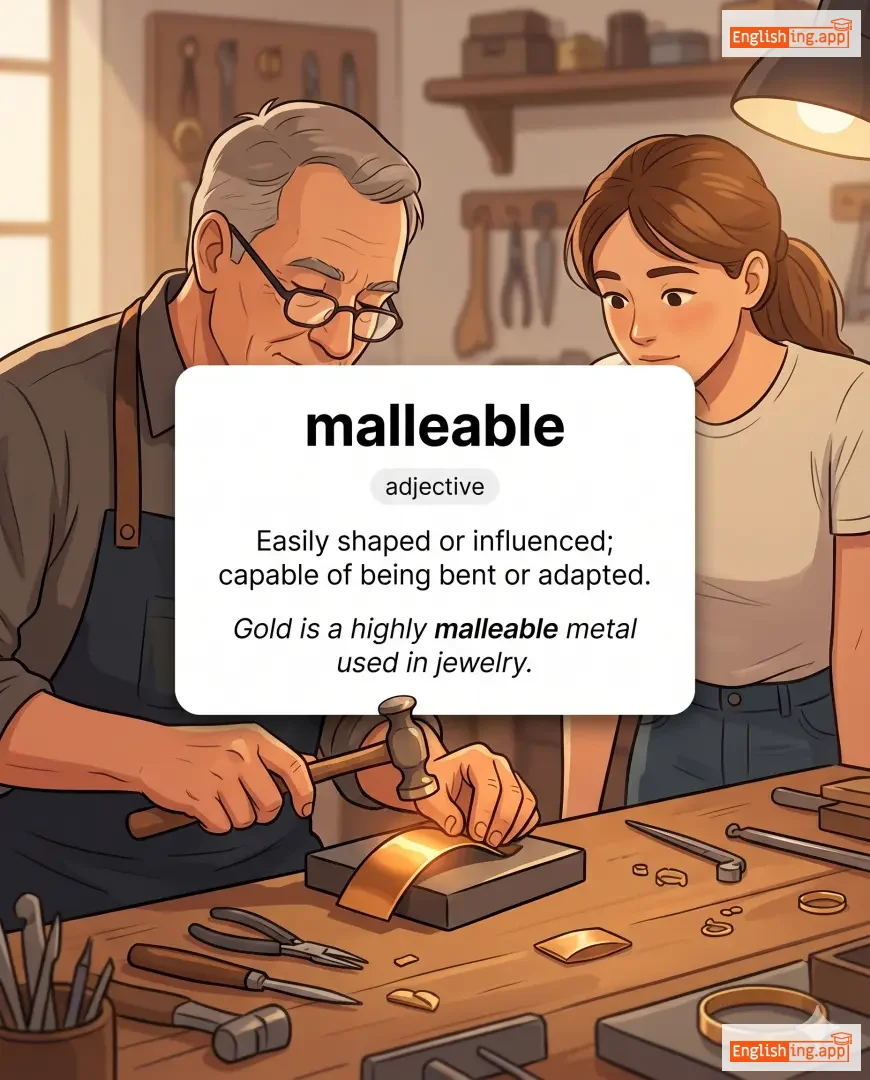
malleable definition card — visual illustration of the meaning
adjective
/ˈmæliəbl̩/
柔軟な (nyūn'nan na)

Easily shaped or influenced; capable of being bent or adapted.

"Gold is a highly malleable metal used in jewelry."

"金は非常に柔軟な金属で、ジュエリーに使用されます。" (Kin wa hijō ni nyūn'nan na kinzoku de, juerī ni shiyō saremasu.)
noun
/ˈmælɪt/
木槌 (kizuchi)

A tool with a large, usually wooden head, used for hitting something without damaging it.

"He used a mallet to drive the chisel into the wood."

"彼は木槌を使ってノミを木に打ち込んだ。" (Kare wa kizuchi o tsukatte nomi o ki ni uchikonda.)
noun
/ˈmælɪt fɪʃ/
殻魚 (kara uo)

A marine fish with a hard shell-like covering, found in coastal waters

"The mallet fish is known for its unique protective shell covering."
"マレットフィッシュは独特な保護殻で知られています。" (maretto fisshu wa dokutokuna hogo kaku de shirarete imasu)
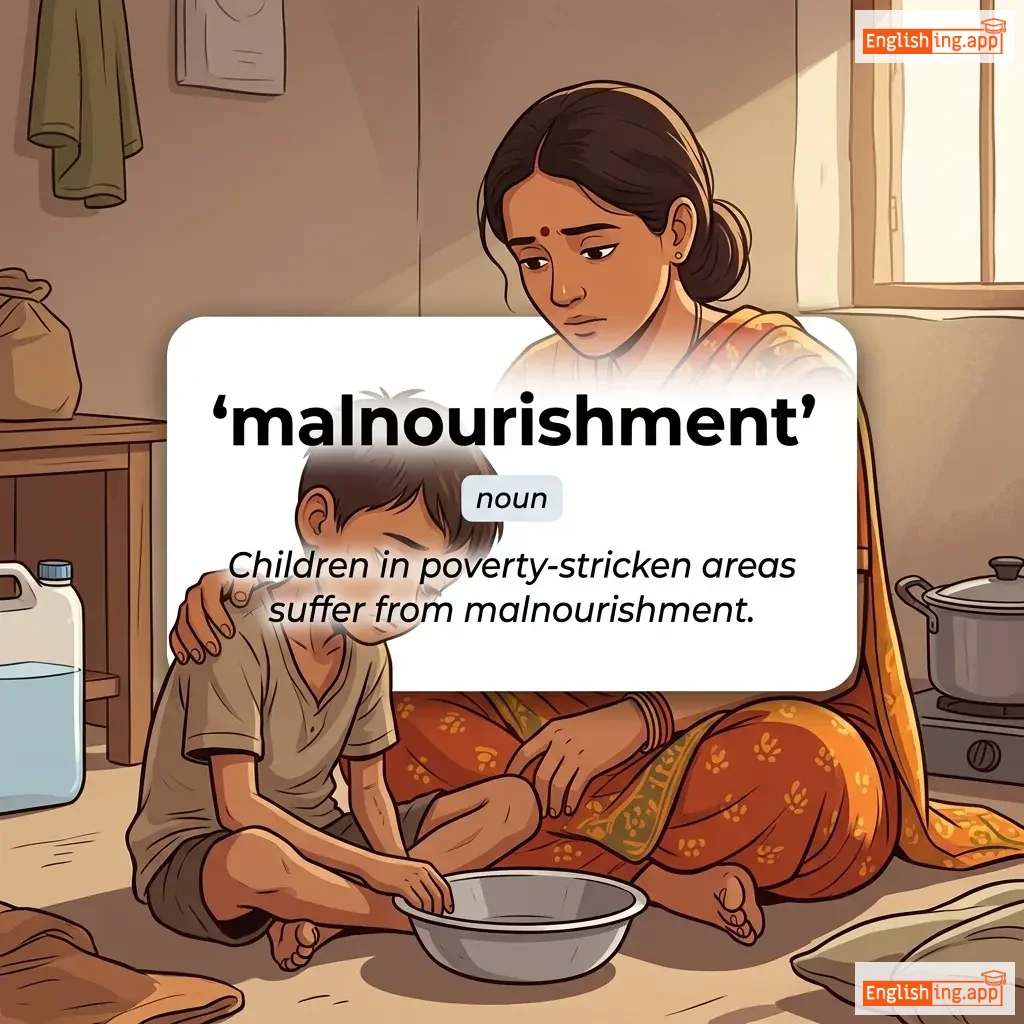
malnourishment definition card — visual illustration of the meaning
noun
mælˈnʌr.ɪʃ.mənt
栄養失調 (eiyou shicchou)

Lack of proper nutrition, caused by not having enough to eat, not eating enough of the right things, or being unable to use the food that one does eat.

"Children in poverty-stricken areas suffer from malnourishment."

"貧困地域の子供たちは栄養失調に苦しんでいます。" (Hinkon chiiki no kodomotachi wa eiyou shicchou ni kurushindeimasu.)
noun
/ˌmælnuːˈtrɪʃən/
栄養失調; 不適切な栄養 (eiyou shicchou)

Lack of proper nutrition; poor nourishment

"Malnutrition among children is a serious public health concern."

"子供たちの間で栄養失調は深刻な公衆衛生の問題です。" (kodomotachi no aida de eiyou shicchou wa shinkoku na koushuu eisei no mondai desu.)
noun
/ˌmælˈoʊdər/
不快な匂い (fukai na nioi)

An unpleasant smell; bad odor.

"The garbage bin gave off a terrible malodor."

"ゴミ箱は恐ろしい不快な匂いを発していました。" (Gomibako wa osoroshī fukai na nioi o hasshite imashita.)
adjective
/ˌmælˈoʊdərəs/
悪臭の (akushū no)

Having a very unpleasant smell.

"The malodorous room made everyone leave quickly."

"悪臭の部屋はみんなを急いで出させた。" (Akushū no heya wa minna o isoide dasa seta.)
noun
/mælˈpræktɪs/
職業上の不正行為 (shokugyōjō no fuseikōi)

Improper, illegal, or negligent professional behavior

"The surgeon was sued for malpractice after the failed operation."

"外科医は手術に失敗した後、マルプラクティスで訴えられました。" (Geka-i wa shōjutsu ni shippai shita ato, marupurakutisu de uttaeraremashita.)
noun
/ˈmɔːl.tə/
マルタ (Maruta)

a sweet citrus fruit similar to orange, also known as blood orange or sweet orange

"Malta is a popular citrus fruit in Bangladesh known for its sweet taste and high vitamin C content."

"マルタは、甘い味と高いビタミンC含有量で知られる、バングラデシュで人気のある柑橘類です。" (Maruta wa, amai aji to takai bitamin C ganyouryou de shirareru Banguradeshu de ninki no aru kankitsurui desu.)
verb
/ˌmælˈtriːt/
虐待する (gyakutai suru)

To treat someone cruelly or unfairly.

"The law punishes those who maltreat animals."

"法律は動物を虐待する者を罰します。" (Hōritsu wa dōbutsu o gyakutai suru mono o basshimasu.)
noun
/ˈmæm.əl/
哺乳類 (honyūrui)

A warm-blooded animal with hair or fur, and females produce milk for their young.

"The whale is the largest mammal on Earth."

"クジラは地球上で最も大きな哺乳類です。" (Kujira wa chikyūjō de mottomo ōkina honyūrui desu.)
noun/adjective
/ˈmæm.əθ/

An extinct large elephant-like animal with long curved tusks; also means something huge.

"The company faced a mammoth challenge during expansion."

noun
/mæn/
男性 (dansei)

an adult human male

"The man helped the child cross the street."

"その男性は子供が通りを渡るのを手伝いました。" (Sono dansei wa kodomo ga tōri o wataru no o tetsudaimashita.)